







Abstract
Although spiritual experiences in ecotherapy are increasingly recognized for their therapeutic potential, little is understood about how participants experience spirituality in ecotherapy and how they describe the psychological significance of these experiences. This gap calls for a synthesis of qualitative findings to clarify the qualities and therapeutic effects of these experiences. This systematic review employed thematic synthesis to integrate findings from diverse qualitative and mixed-method studies into a unified dataset. The integrated data were then analyzed using reflexive thematic analysis, through which key themes were identified. Three themes illuminate participants’ spiritual experiences: Witnessing Life Essence Through the Lens of Nature, Immersion in the Immediacy of Nature, and A Sense of Oneness With the Natural World. Additionally, three themes reflect participants’ understandings of the therapeutic effects of those experiences: Self-Acceptance Through Processing Remaining Pain, Liberation From the Constraints of the Past, and Reclaiming Hope Through a Renewed Sense of Life Purpose. Taken together, these findings suggest that spiritual experiences in ecotherapy appear to play a role in facilitating the therapeutic process. Such experiences may also promote participants’ pro-environmental attitudes and restore their sense of hope amid environmental crises.
Introduction
Ecotherapy, also known as nature-based therapy, is a therapeutic approach that integrates natural settings, activities, or processes into the therapeutic experience and is grounded in ecological consciousness, which is understood as a psycho-spiritual connectedness with nature (Doherty, 2016; White, 2011). This approach emphasizes the ecological dimensions of self, identity, and behavior, addressing well-being at scales ranging from the personal to the planetary. In practice, ecotherapy is a broad term encompassing various forms, such as walk-and-talk therapy, horticultural therapy, and wilderness therapy, all of which highlight the healing potential of engaging with nature. A systematic review of meta-analyses found that physical interaction with nature enhances human cognitive functioning, social abilities, and physical and mental health and fosters a stronger psychological connection to nature (Barragan-Jason, Loreau, de Mazancourt, Singer, and Parmesan, 2023). The growing recognition of the therapeutic potential of natural environments underscores the unique capacity of ecotherapy to address both physical and psychological well-being (Summers and Vivian, 2018).
While there is increasing consensus on the importance of fostering interactions between humans and the natural environment, a gap remains in understanding how connectedness with nature is formed. Lengieza and Swim (2021) highlighted the lack of theoretical frameworks explaining this process and called for further inquiry into the mechanisms by which people build connections with nature. In the field of ecopsychology, spiritual experiences in nature are regarded as a vital means of fostering a deeper connection with the natural world (Snell, Simmonds, and Webster, 2011). This perspective emphasizes the importance of individual subjective experiences in the relationship with nature, where encounters with the spiritual and sacred serve as sources of inspiration and healing. Empirical research supports this framework, identifying spirituality as a mediator in the relationship between engagement with nature and psychological well-being (Kamitsis and Francis, 2013; Trigwell, Francis, and Bagot, 2014). In this context, ecotherapy can emerge as a distinctive approach, providing participants with opportunities to discover their own spirituality in natural environments and foster a deeper connection with nature.
Spirituality
Spirituality is challenging to define with a single definition due to its multidimensional and often subjective nature. de Brito Sena, Damiano, Lucchetti, and Peres (2021) conducted a systematic review of prominent and highly cited definitions of spirituality within the health care field, proposing a conceptual framework that highlights connection with the divine, nature, art, community, and other dimensions through beliefs, practices, and experiences. At an individual level, spirituality is deeply personal and often remains private, shaped by personal beliefs and lived experiences related to the sacred (West, 2011). What constitutes the sacred, however, varies across cultural traditions and may exist independently of organized religion or doctrinal beliefs about a divine being (Carey, 2018; Fleming and Ledogar, 2008). Within the field of ecopsychology, spiritual experiences are frequently described as animistic encounters with nature, in which the natural world is experienced as intelligent, communicative, and sacramental (Snell et al., 2011). Aligned with this emphasis on subjectivity, the present study positions personal spiritual experiences as central to understanding spirituality.
Spirituality in nature and ecotherapy
Nature is widely recognized as a source of spiritual inspiration, providing a space for connection, reflection, and transcendence that fosters experiences often described as spiritual (Fredrickson and Anderson, 1999). These nature-based spiritual experiences have been shown to enhance psychological well-being, foster personal growth and transformation, and encourage pro-environmental behaviors, as reported by participants in qualitative studies (Naor and Mayseless, 2020a; Snell and Simmonds, 2012). Within ecotherapy, such encounters may be intentionally facilitated by practitioners through immersive and creative engagement with the natural environments (Naor and Mayseless, 2021). Building on this understanding, Naor and Mayseless (2020b) proposed a model highlighting the therapeutic value of spirituality in nature, conceptualizing nature itself as an embodiment of spirituality. Collectively, these findings suggest that spiritual experiences in nature may play a vital role in ecotherapy, contributing meaningfully to the psychological well-being of participants.
Eco-anxiety and hope
Eco-anxiety refers to distress arising from perceived or anticipated environmental degradation and is used to describe a spectrum of emotional responses, including grief, helplessness, despair, and existential concerns about meaning and mortality (Pihkala, 2018). Although often portrayed as maladaptive and paralyzing, recent scholarship views eco-anxiety as a potentially adaptive response that can motivate engagement when accompanied by hope (Betro’, 2024). In this framing, Eco-Hope, which is described as the belief that a desirable future remains possible despite uncertainty, has been identified as central to resilience and psychological well-being among those experiencing eco-anxiety (Malboeuf-Hurtubise et al., 2024). While psychological and creative strategies can support constructive engagement with eco-anxiety (e.g., Jukes et al., 2024), its existential dimensions often call for spiritual resources, as individuals grapple with questions about meaning of life and one’s relationship to the whole cosmos (Pihkala, 2018). In this regard, spiritually oriented activities may offer pathways for addressing existential aspects of eco-anxiety and cultivating more adaptive forms of hope.
Research question
Despite growing recognition of the therapeutic potential of spiritual experiences in ecotherapy, there remains a limited understanding of how participants experience spirituality in ecotherapy and how they describe the psychological significance of these experiences. In response to these concerns, this review aims to explore the spiritual experiences of individuals engaged in ecotherapy by synthesizing findings from existing research. It seeks to offer valuable insights into the role of spirituality in ecotherapy and its impact on psychological well-being. Specifically, this review addresses the following research questions:
How do participants in existing studies describe their spiritual experiences in ecotherapy? How do participants describe the psychological significance of their spiritual experiences in ecotherapy?
Methods
This review employed thematic synthesis as outlined by Thomas and Harden (2008) to integrate findings from diverse qualitative and mixed-method studies into a unified dataset. The initial stages, such as identifying and selecting studies for inclusion, appraising their quality, and extracting relevant data, were conducted following the procedures of thematic synthesis (Thomas and Harden, 2008). Subsequently, the extracted dataset was organized and managed in NVivo (Lumivero, 2017) and analyzed using reflexive thematic analysis in accordance with the Braun and Clarke (2022) six-stage framework for data analysis.
The combination of these two analytic methods was well aligned with the research questions of this review. Thematic synthesis, which draws on both meta-ethnography and grounded theory, was developed to synthesize qualitative studies addressing questions of intervention need, appropriateness, and effectiveness (Barnett-Page and Thomas, 2009). However, the present review focused on the lived experiences of ecotherapy participants and the meanings they attributed to those experiences. To address these interpretive aims, the study adopted reflexive thematic analysis that is a theoretically flexible approach (Braun and Clarke, 2022). This sequential integration allowed the review to retain the systematic structure of thematic synthesis while deepening the interpretive engagement characteristic of reflexive thematic analysis.
Search procedures
Three main criteria (i.e., spirituality, ecotherapy, and qualitative research methodology) were used to identify studies that contain information about spiritual experiences of participants, including both facilitators and service users, in ecotherapy. A range of keywords with similar meanings in this field were incorporated during the search process to broaden the search results. The search terms employed in this review are as follows:
“spiritual$” OR “ecospiritual$” OR “eco-spiritual$” “ecotherapy” OR “nature therapy” OR “horticultural therapy” OR “green therapy” OR “wilderness therapy” OR “nature-based therapy” OR “outdoor therapy” OR “walk and talk” OR “forest therapy” OR “adventure therapy” “interview$” OR “discussion$” OR “narrative” OR “focus group$” OR “statement$” OR “conversation$” OR “subjective experience$” OR “self-report” OR “mixed method” OR “qualitative” OR “content”
The search was conducted using the following databases: PsycINFO, Web of Science, MEDLINE, Embase, Scopus, CINAHL, and Google Scholar. These databases were selected for their relevance to psychological and therapeutic work and to maximize the inclusion of studies, including dissertations.
Eligibility criteria
This systematic review includes qualitative empirical studies published in English up to December 2024. For mixed-method studies, only data derived from qualitative research methods were extracted. However, quantitative studies and nonempirical literature, such as theoretical articles, literature reviews, and meta-analyses, were excluded, as the research questions aim to explore the depth of spiritual experiences in ecotherapy through personal narratives rather than through quantification. Moreover, this review employs thematic synthesis to integrate qualitative findings and reflexive thematic analysis to analyze the data, both of which are methodologically incompatible with quantitative data.
The review focuses on ecotherapy that involves nature-based activities intentionally designed to promote purposeful engagement with nature and are facilitated by trained professionals. Accordingly, ecotherapy in this review is distinguished from general nature exposure by the presence of structured and purposeful therapeutic processes guided by facilitators. For the purposes of this review, nature is defined as outdoor environments that encompass both living organisms (e.g., plants, animals, fungi, and microorganisms) and nonliving elements (e.g., soil, water, air, rocks, and minerals). Purposeful engagement with nature is characterized by sensory interaction with natural environments, which may vary in spatial scale and frequency. Thus, studies employing animal-assisted therapy or virtual nature interventions were excluded, as these approaches typically occur indoors and often lack direct engagement with outdoor settings. Guided by these inclusion and exclusion criteria, the study selection followed the Preferred Reporting Items for Systematic Reviews and Meta-Analyses guidelines to ensure a systematic and transparent identification approach (Page et al., 2021), as illustrated in Figure 1.
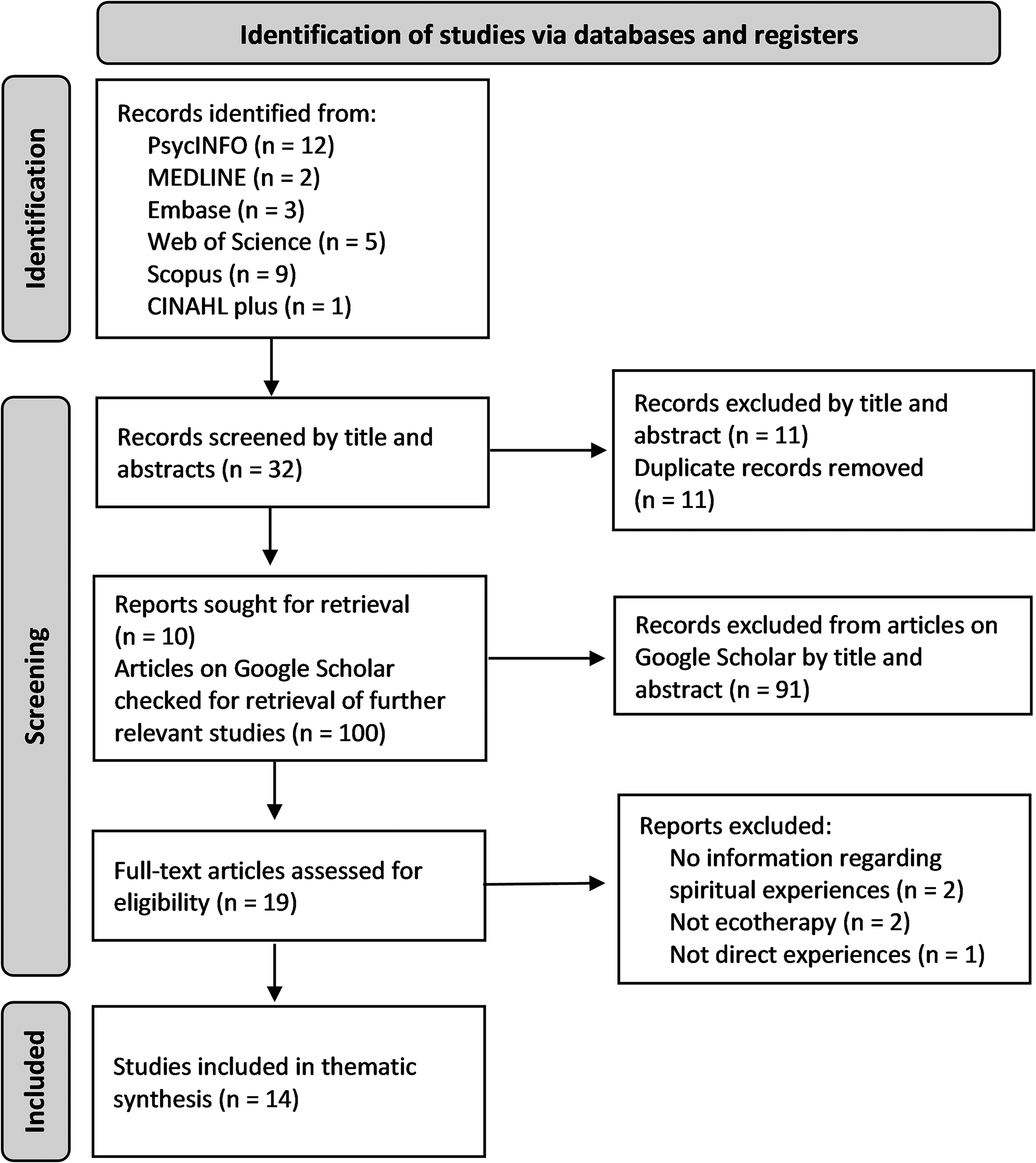
PRISMA flow diagram for identification of studies via databases and registers. PRISMA, Preferred Reporting Items for Systematic Reviews and Meta-Analyses.
Quality assessment
After the screening process, all included studies were evaluated using the Quality Assessment for Diverse Studies (QuADS) appraisal tool to assess methodological and reporting quality across heterogeneous study designs (Harrison, Jones, Gardner, and Lawton, 2021). The QuADS tool is an updated version of the widely used Quality Assessment Tool for Studies with Diverse Designs (Sirriyeh, Lawton, Gardner, and Armitage, 2012) and consists of 13 criteria rated on a 4-point scale from 0 to 3, with higher scores indicating stronger quality. The first author conducted the quality appraisal for all studies, and the co-author cross-checked the assessments for accuracy. No studies were excluded based on quality, as each contributed relevant insights to the synthesis, allowing for a comprehensive and inclusive review.
The QuADS assessment demonstrated variability across studies in several quality domains (see Table 1). The strongest ratings were found in the clarity of research aims, appropriateness of study design, descriptions of data collection procedures, and analytic methods. Lower ratings were observed in the rationale for chosen data collection tools, reporting of recruitment information, and evidence of stakeholder involvement. Given the overall strength of the appraisal outcomes, all studies were retained in the synthesis without assigning weight to their findings. Nevertheless, awareness of methodological strengths and limitations enabled the authors to interpret the findings with appropriate caution, particularly when quotations were drawn from studies with less detailed methodological reporting.
Quality Checklist Based on Harrison et al. (2021) QuADS Appraisal Tool
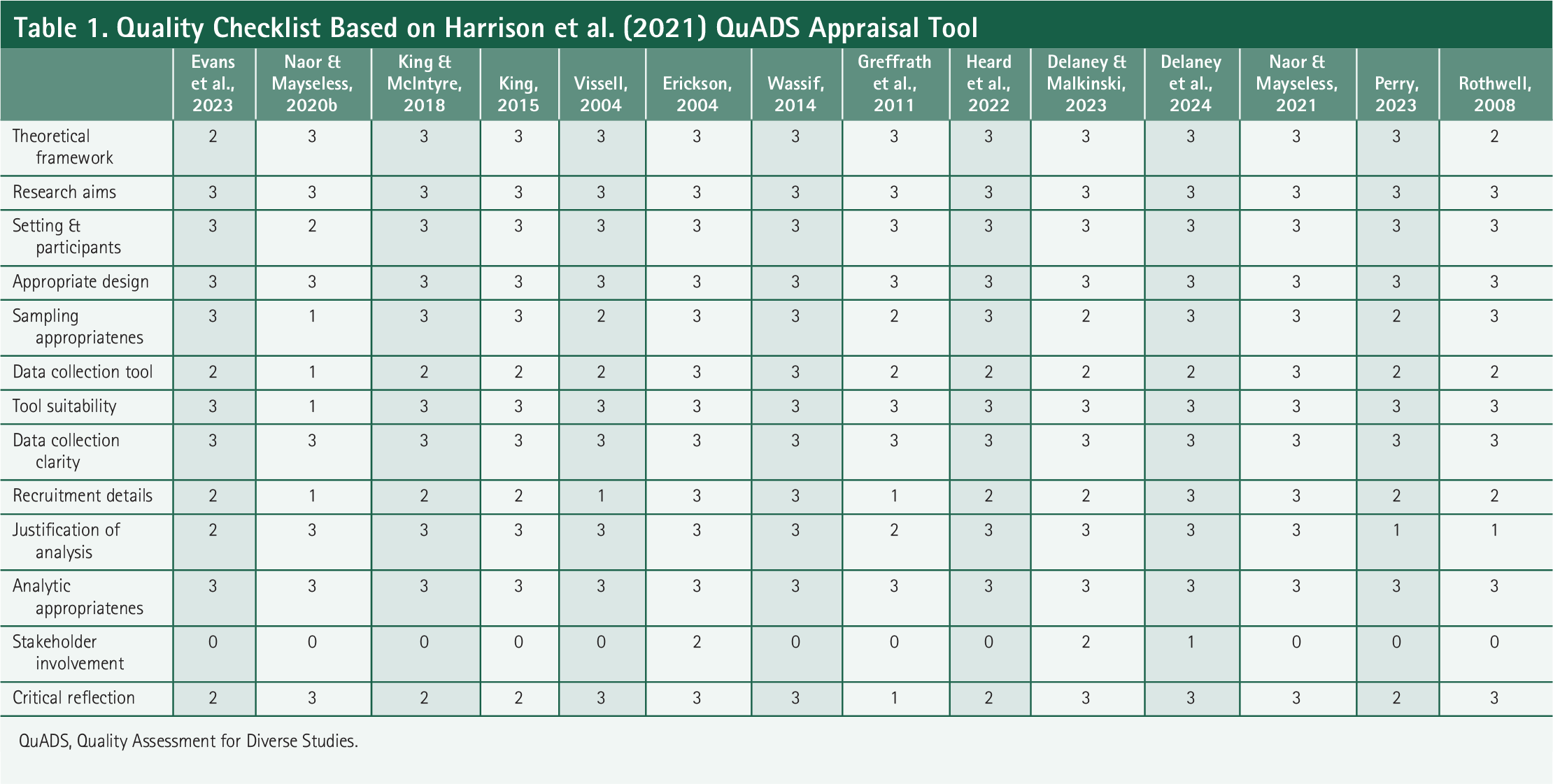
QuADS, Quality Assessment for Diverse Studies.
Characteristics of included studies
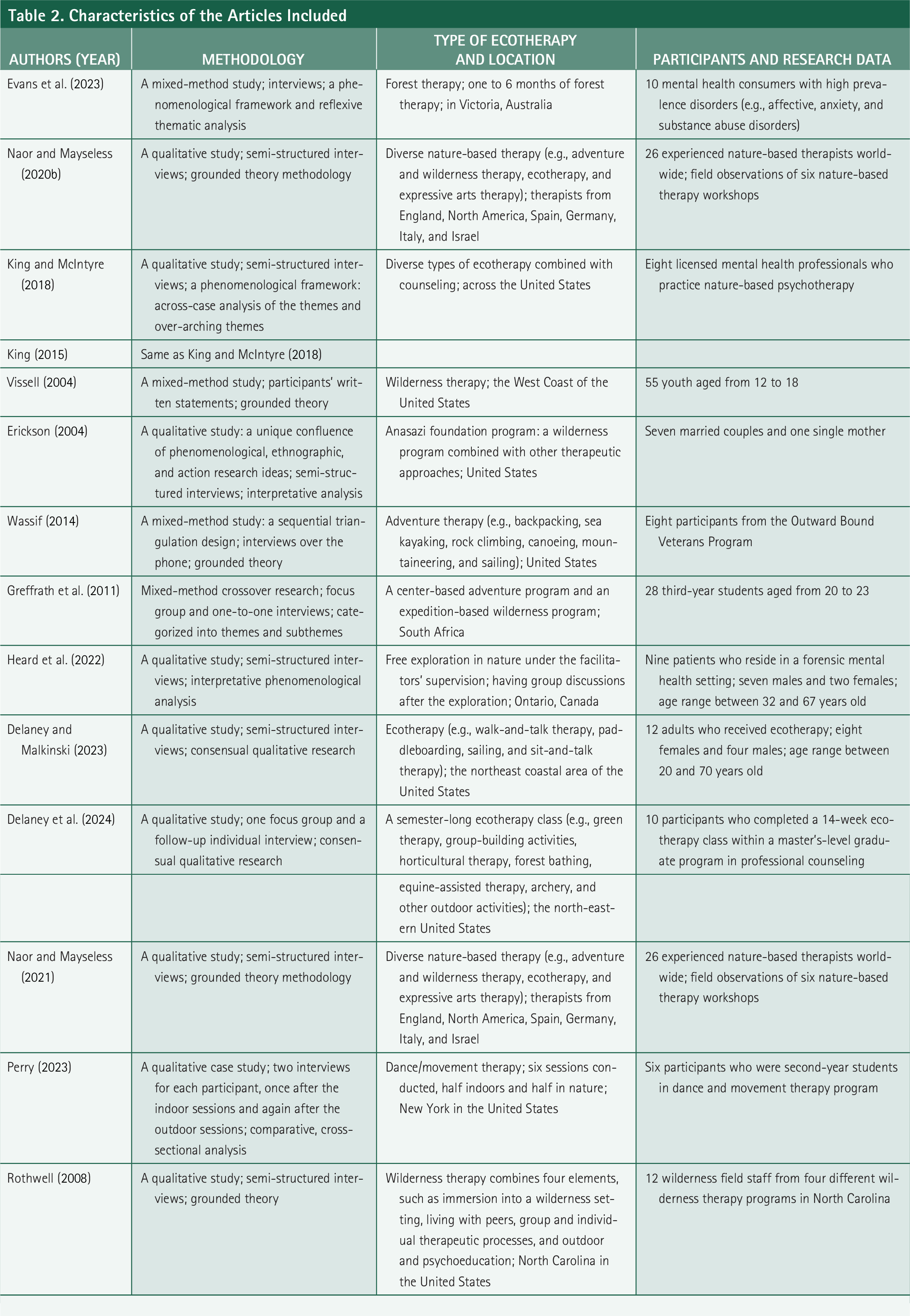
A total of 14 studies were included after all the search procedures for the thematic synthesis (see Table 2). Of these, 10 were qualitative studies and 4 were mixed-method studies. Except for one study that utilized participants’ written statements, all studies collected data through interviews. The analysis methods varied, including interpretative phenomenological analysis, grounded theory, and consensual qualitative research. All types of ecotherapy represented in the included studies fit the definitional scope used in this review. Each intervention involved a structured program designed to promote purposeful engagement with nature, included direct sensory interaction with outdoor natural environments, and was facilitated by trained professionals. In this context, wilderness therapy (Rothwell, 2008) and dance/movement therapy (Perry, 2023) were included in this review because both approaches incorporate structured programming, support therapeutic engagement with nature, and are delivered by qualified facilitators. Nine studies focused on service users of ecotherapy, four on facilitators, and one on staff members from ecotherapy organizations. Nine studies were conducted in the United States, three in Australia, South Africa, and Canada, and two studies involved ecotherapists from England, North America, Spain, Germany, Italy, and Israel.
Characteristics of the Articles Included
Data extraction
The review extracted data about ecotherapy participants’ spiritual experiences from the findings and discussion section of the included studies. This process was conducted by the first author, which introduces the potential risk of cherry-picking and may threaten the validity of the data due to reliance on the author’s interpretation of spirituality (Morse, 2010). To mitigate this risk, the first author included only data explicitly labeled with or under the terms, such as spirituality, transcendence, or peak experiences. The data collected consisted of direct quotes from the participants in the studies, rather than the authors’ interpretations provided within those studies. The verbatim data were subsequently entered into NVivo software for qualitative analysis.
Although all included studies were treated equally and no weighting was assigned to their findings during analysis, the extent of data contribution varied across studies due to differences in data richness and relevance to the research questions. For instance, the study by Naor and Mayseless (2020b) provided the largest proportion of participant data referenced across all six codes. This prominence reflects the direct focus of their research on participants’ spiritual experiences in ecotherapy, which yielded richer and more detailed qualitative material compared with other studies in which spirituality was only partially addressed. Consequently, participant quotes from Naor and Mayseless (2020b) were cited most frequently in this review’s findings. To ensure balanced representation within the findings, data from all included studies were incorporated at least once, with each theme supported by participant quotes from a minimum of four different studies.
Data analysis
Thematic analysis was conducted following the guidelines outlined by the Braun and Clarke (2022) six stages of thematic analysis. The initial stage of analysis adopted an inductive approach, acknowledging the varied depths and forms of spiritual experiences reported by participants in ecotherapy. Afterwards, a latent approach was employed to examine underlying meanings embedded in the data. Given the ineffable and subtle nature of spiritual experiences (Coyle, 2008), the analysis was informed by relativist and experiential perspectives to better understand how individuals made sense of their experiences. Coding was conducted flexibly, with codes ranging in length from a few words to entire paragraphs, depending on the conceptual relevance of each meaning block. After the coding process, the first author identified and developed salient themes that addressed the research questions.
For instance, when the first author encountered a participant’s statement, “…my backpacking experience became a vision quest, and the key to that was finding a personal power spot…” (King, 2015, p. 74), he initially coded this quote as gaining meaning in life. Upon closer examination of the expressions “vision quest” and “personal power spot,” he interpreted this spiritual experience as possibly helping the participant clarify the direction they wished to pursue in life and motivating them to move toward it. Observing similar patterns of finding life purpose and a renewed sense of hope across other participants, the first author organized this code under the theme Reclaiming Hope Through a Renewed Sense of Life Purpose. This example illustrates how analytic interpretation progressed from initial coding to theme generation.
Researchers’ positionality
The first author, Minwoo Kang, is a trainee counseling psychologist at the University of Manchester. His research approach is grounded in eco-centric values and phenomenological epistemology. His perspective is also significantly influenced by a Buddhist way of living, and he is undergoing ecotherapy training at the Tariki Trust, which integrates Buddhist teachings into nature-based practice (Brazier, 2017). These philosophical foundations have profoundly shaped his worldview and understanding of spirituality, likely influencing the coding process in this study.
The second author, Terry Hanley, is a Professor of Counselling Psychology at the University of Manchester within the Manchester Institute of Education. In this systematic review, he served as the first author’s supervisor, contributing primarily by fostering reflexivity and ensuring the ethical conduct of the research. The authors met monthly for research supervision to discuss progress, challenges, and next steps in the research process.
Reflexivity and trustworthiness
The first author has personally experienced spirituality in nature during a period of searching for his life’s meaning. These experiences provided a broader perspective on what is truly important and ultimately inspired his career change and this research focus. His eco-centric and phenomenological orientation informed the choice of a qualitative approach, integrating thematic synthesis and reflexive thematic analysis grounded in relativist and experiential perspectives. Accordingly, the analysis in this review focused on people’s lived experiences and their sense-making of spiritual experiences in ecotherapy.
This study was conducted amid growing environmental concerns such as global warming and biodiversity loss (Patil, Sharma, and Mhatre, 2021). Within these global challenges, the research may offer insight into spirituality as a potential pathway for fostering human interactions with the natural environment and supporting psychological well-being. Throughout the analytic process, the first author maintained a reflexive diary to record reflections on his assumptions and emerging insights. These reflections were discussed monthly with the second author, who has expertise in qualitative research. The discussions addressed code groupings, theme development, and interpretive meanings to ensure conceptual coherence with reflexive thematic analysis and grounding in the data.
Ethical considerations
A formal ethical review was not required for this study, as it involved the use of secondary data derived from previously published research and grey literature. Nevertheless, in accordance with the ethical guidance proposed by Vergnes, Marchal-Sixou, Nabet, Maret, and Hamel (2010), the first author reviewed the ethical procedures of all included studies and confirmed that each had obtained informed consent from its participants. All quotations presented in the findings are verbatim and are clearly referenced to indicate their original source.
Findings
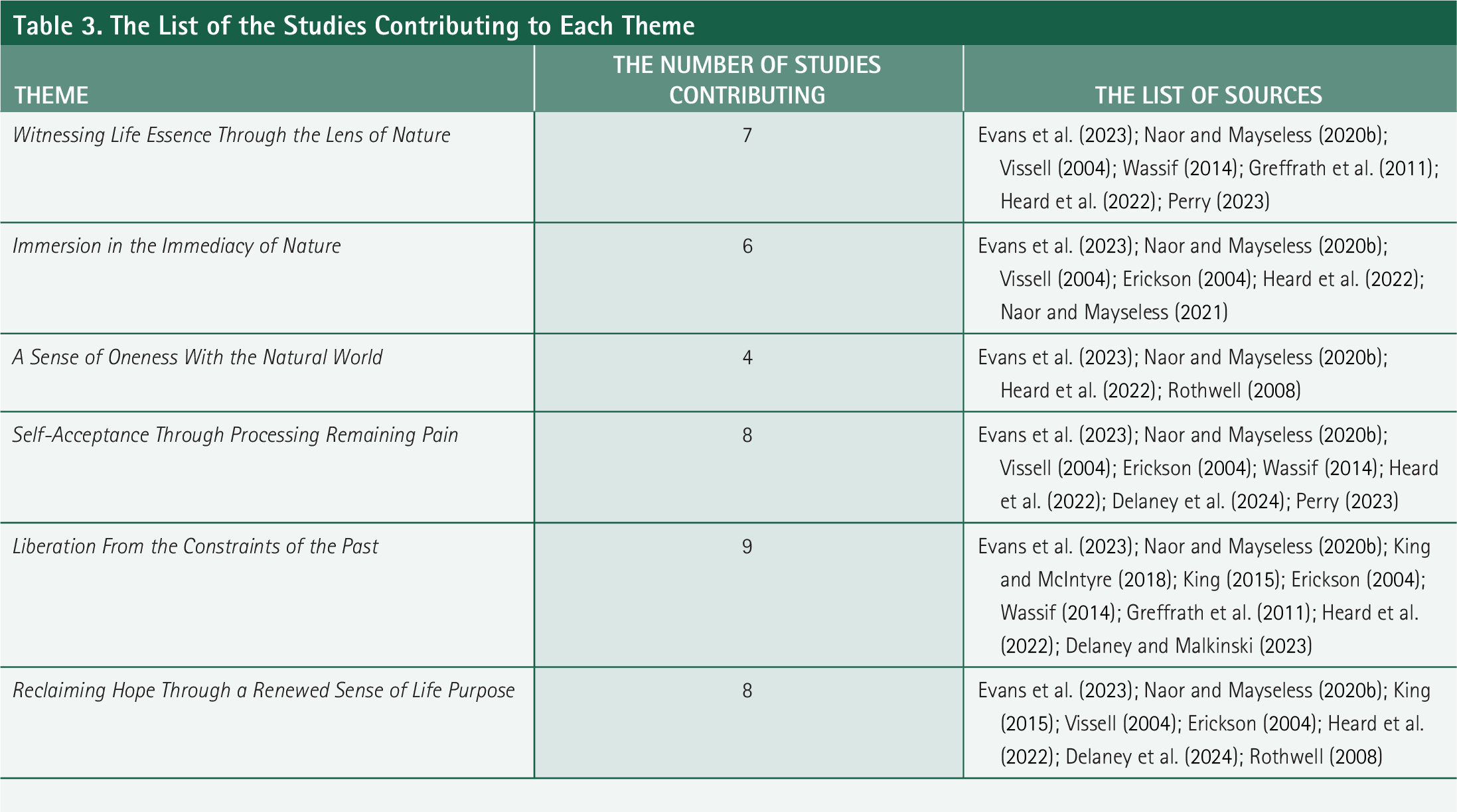
This review identified three themes describing the nature of spiritual experiences among ecotherapy participants: Witnessing Life Essence Through the Lens of Nature, Immersion in the Immediacy of Nature, and A Sense of Oneness With the Natural World. In relation to its therapeutic effects, three additional themes were reported: Self-Acceptance Through Processing Remaining Pain, Liberation From the Constraints of the Past, and Reclaiming Hope Through a Renewed Sense of Life Purpose. Table 3 shows the studies contributing to each theme and their frequencies.
The List of the Studies Contributing to Each Theme
Spiritual experiences of ecotherapy participants
Ecotherapy participants often expressed frustration with their inability to articulate spiritual experiences in words. For instance, a participant in Greffrath, Meyer, Strydom, and Ellis (2011, p. 357) study described their sense of spiritual upliftment, stating, “Yes, to me it actually is in terms of no words… so… there aren’t words, I could not find words, I lacked words…” Despite this difficulty, an exploration of the underlying meanings in their accounts enabled the identification of three themes that illustrate their spiritual experiences in ecotherapy.
Theme 1: Witnessing Life Essence Through the Lens of Nature
Participants’ spiritual experiences seemed to encompass moments of witnessing natural phenomena as signs, metaphors, or cycles of life, allowing them to reflect on their personal lives and perceive deeper truths about existence, such as life and mortality. One ecotherapy facilitator described nature as both a “mirror” and a source of “metaphor” in ecotherapy, through which individuals can “find wisdom and acknowledge nature as a personal resource” (Naor and Mayseless, 2021, p. 290). This metaphoric dialog with nature was sometimes perceived as synchronized with participants’ personal life stories. One participant reflected on this sense of alignment, stating “In synchronicity, there is something very spiritual, as in anything that lets you feel that your story is in sync with all the other stories in the world” (Naor and Mayseless, 2020b, p. 123). Another participant described a mystical encounter with a rattlesnake, interpreting it as a symbolic sign of personal transformation: “When I was on solo, I almost stepped on a rattlesnake that was in my camp. While I was talking to one of the staff, she told me that the rattlesnake was a sign of rebirth and change” (Vissell, 2004, p. 130).
One of the key insights participants gained from their spiritual experiences was an awareness of the natural cycle of life. One participant reflected: “And it was just a realisation, through seeing all that nature, … going back to that type of rhythm or there’s something happening that is going to happen anyway” (Evans et al., 2023, p. 333). Similarly, another participant acknowledged the continual transition between life and death in nature, observing that “the transition between life and death [is] occurring every day in nature and life goes on” (Naor and Mayseless, 2020b, p. 124). For participants who experienced spirituality in nature, this recognition of life’s cyclical nature was understood as the natural “balance of the universe” (Heard, Scott, and Yeo, 2022, p. 9), which helped them confront the realities of life and death. These accounts illustrate how such spiritual encounters enabled the participants to contemplate nature as a source of meaning, symbolism, and insight into life’s cyclical processes.
Theme 2: Immersion in the Immediacy of Nature
Spiritual encounters among the participants frequently involved being fully present in the moment, where heightened sensory awareness and appreciation of nature’s beauty or vastness allowed for feelings of awe and a broader perspective. These experiences ranged from simple observations, such as one participant stating, “I describe it as being surrounded by nature. It’s always interesting to get fresh air and to observe the animals and trees and everything to do with nature” (Heard et al., 2022, p. 8), to a deeper sense of presence:
…just to know that in my eyes, what God has created here, just taking a second and when I walk outside or feel the wind in my face, to just appreciate what we have. It kind of rekindled that for me. (Wassif, 2014, p. 116)
Since spiritual experiences in ecotherapy occur through direct interaction with nature, the immersion in the immediacy of nature appears to be a fundamental component of encountering spirituality.
These immersive experiences in nature take two primary forms: being struck by the beauty of nature and experiencing a sense of insignificance in the face of its vastness. The immediate focus on the natural surroundings allowed participants to acknowledge the beauty of nature. One participant reflected “My last night when it was about sunset, I was sitting on a stump alone, and I felt the breeze, and it played a song. It made me cry” (Vissell, 2004, p. 129). Conversely, another participant described a feeling of smallness in relation to nature’s immensity: “You’re just up in Estes Park, and it’s huge and it makes you realize, like I’m just a little piece of this enormous thing” (Naor and Mayseless, 2020b, p. 124). However, rather than evoking discomfort, this experience was described as comforting, helping the participant put life “in perspective” and making their “problems feel smaller” (Naor and Mayseless, 2020b, p. 124). Together, these narratives demonstrate how participants viewed their immediate embodied interaction with nature as an integral part of their spiritual experience.
Theme 3: A Sense of Oneness with the Natural World
Participants expressed a sense of interconnectedness with the more-than-human world, characterized by belonging, shared fate, and an expanded ecological identity, often described as “interconnected relationships” (Naor and Mayseless, 2020b, p. 124). At a deeper level, participants reported a profound sense of oneness with the natural world, as illustrated by one participant: “I was out observing nature, being one with nature” (Heard et al., 2022, p. 8). This sense of unity appears to be facilitated by spirituality, and participants perceived this process as “natural,” akin to the gradual blending of tea in a cup: “Your tea bag and your tea cup, after a while it’s all tea” (Rothwell, 2008, p. 48).
This connection was not confined to the immediate outdoor environment but extended to “everything else” (Naor and Mayseless, 2020b, p. 124), including the continuum of time. One participant reflected on this broader perspective: “I felt like seeing there were old growth and rotting and new growth. I felt a certain sense that it’s okay, there’s something connected between it all” (Evans et al., 2023, p. 333). This expansive awareness of existence appeared to cultivate a sense of comfort in nature, allowing participants to feel at home: “You feel like you’re at home” (Heard et al., 2022, p. 8).
Within this intimate context, participants developed a strong sense of shared fate with nature as part of a larger community. One participant articulated this perspective:
Every human being is designed to participate with nature, humans and the more-than-human world as an animate soul community of others… and in a particular way to belong. This is the foundation of what we are as human beings. It’s more than personal; it’s at a species level. (Naor and Mayseless, 2020b, p. 124)
These reflections highlight the role of spirituality in deepening participants’ ecological identity, fostering a sense of belonging within the greater web of life. These accounts demonstrate how participants felt a sense of oneness by realizing relational connections with the natural world through spiritual experiences.
The therapeutic effects of spiritual experiences in ecotherapy
Participants offered varied interpretations of their spiritual experiences, attributing a broad range of meanings to them. The meanings ascribed to these experiences seem to reflect a healing process that encompasses acceptance and processing of remaining pain, liberation from past constraints, and the reclamation of hope through new life purpose. For example, one counseling student noted that cultivating a deeper spiritual relationship with nature through ecotherapy mirrored their “own healing journey” (Delaney, Rian, and Owenburg, 2024, p. 11). Although this process may not be linear, the collective narrative underscores the therapeutic impact of spiritual experiences across a broad temporal scale, from past reflections to future aspirations. The following themes illuminate some of the therapeutic effects that participants attributed to their spiritual experiences in ecotherapy.
Theme 1: Self-Acceptance Through Processing Remaining Pain
Spiritual experiences in ecotherapy appeared to support therapeutic healing by providing participants with reflective space to process unresolved emotional pain and move toward greater self-acceptance. Some participants described these experiences as engaging in dialog with their divine presence. For example, one participant stated, “When I’m outside, it’s definitely that I can hear from God better and converse with him about stuff that is happening in my life and stuff that’s coming up” (Wassif, 2014, p. 116). This reflective process enabled them to release lingering emotions in nature; one participant explained, “It was cleansing. It felt like, um, it felt like I could release everything and just like let go” (Perry, 2023, p. 223). After releasing these remaining emotions, participants described feeling “valued and connected” to nature (Heard et al., 2022, p. 10).
Moreover, this healing process facilitated self-acceptance, as participants learned from nature’s inherent acceptance that transcends conventional judgments of right or wrong. As one participant noted, “I saw a lot of myself and in seeing myself helped me accept who I am and that’s a feeling, good or bad, right or wrong, I can accept it and that’s a good thing” (Erickson, 2004, p. 131). This unconditional self-acceptance appeared to extend toward others as well; another participant remarked, “You have to forgive people for the little things and let the stuff go” (Erickson, 2004, p. 132). Ultimately, participants reported that this process helped them recognize and embrace their limitations, weaknesses, and imperfections, as illustrated by the comment, “What’s important in my life is not what or how I try to control things, but how I react to the things I can’t” (Vissell, 2004, p. 128). Together, these accounts illustrate how spiritual experiences in ecotherapy may promote therapeutic change by helping individuals release emotional burdens and cultivate a compassionate, accepting relationship with themselves and others.
Theme 2: Liberation from the Constraints of the Past
Spiritual experiences in ecotherapy also appeared to facilitate therapeutic transformation by enabling participants to loosen the grip of past constraints and reconnect with a more expansive sense of self. Several participants articulated a reorientation of their belief systems, noting that their spiritual experiences in ecotherapy afforded them the freedom of “staying out of the box” (Erickson, 2004, p. 103). One participant argued that spiritual experience in nature “reorients you and your belief systems about how the world functions and how it can be healing in different ways” (King, 2015, p. 74). Another shared a profound personal transformation, stating, “[Forest therapy] has changed my whole life… It’s really aligned my body and my brain and my soul. And it’s just kind of given me the freedom to be” (Evans et al., 2023, p. 333). Such expressions underscore a shift from a confined understanding of self toward a more expansive identity.
Participants also reported experiencing a sense of presence and inner knowing that transcended conventional societal roles. One participant described this state as, “It’s knowing that you can exist, just being present without a cultural, social identity… the experience of existing without being functional is very, very powerful and empowering” (Naor and Mayseless, 2020b, p. 125). This reconnection with inner spirituality was further illustrated by another participant’s remark: “I feel like I’ve just had a greater connection with my own spirituality when I’m out in nature when I’m surrounded by trees” (Delaney and Malkinski, 2023, p. 334). The liberation from past constraints appeared to enable participants to experience the “positive energy” of the natural environment (Heard et al., 2022, p. 8). Additional reports indicated that this energy was imbued with feelings of “gratefulness” (King and McIntyre, 2018, p. 122), “love” (Erickson, 2004, p. 105), and an invitation to simply “chill out” (Wassif, 2014, p. 116). These narratives suggest that spiritual experiences in ecotherapy may contribute to participants’ therapeutic growth by fostering psychological liberation, renewed self-understanding, and openness to new ways of being.
Theme 3: Reclaiming Hope Through a Renewed Sense of Life Purpose
Spiritual experiences appeared to create a space for participants to contemplate questions about life’s purpose and their relationship with the broader ecosystems. One participant described how such an experience helped them clarify their life direction and take steps toward it: “My backpacking experience became a vision quest and the key to that was finding a personal power spot, where you walk into the wilderness until you find your place in nature” (King, 2015, p. 74). This process also appeared to facilitate self-reflection regarding their role as members of nature, a process described as “a vision quest” (King, 2015, p. 74) and “a hero’s journey” (Rothwell, 2008, p. 41) that involved self-development and overcoming inner fears. Another participant explained this transformative process by stating, “beginning again with a new heart and then not allow any of that old thinking and that old behavior to come back in and just work against that” (Erickson, 2004, p. 134).
Moreover, finding their role as part of nature appeared to provide participants with a renewed sense of purpose aligned with pro-environmental attitudes. For instance, one participant highlighted how awareness of one’s role within the ecosystem could shift one’s perspective: “an awareness of your role within the ecosystem… a sense of purpose, you… start to see yourself as a caretaker of that area and it becomes like home” (Naor and Mayseless, 2020b, p. 125). Another participant described a spiritual calling received from a grove of trees: “I literally got a sense from this particular grove of trees… that [the grove] said, you need to share [your spiritual realization] with other people… And little by little, I kept feeling that call, and so I said, ok, I’ll see what I can do” (King, 2015, p. 67).
This newfound understanding of their lives appeared to empower participants to derive the renewed meaning of life and restore their hope for what they desire, aligning with their values. One participant described how a renewed perspective on family relationships during ecotherapy deepened family connections and rekindled hope for the future:
During [ecotherapy] experience… [daughters] accepted from us our apologies for mistakes that we’ve made with them and they accepted from us our love in a whole different way… I think that’s the reason that we have the hope that we do with them. (Erickson, 2004, p. 105)
Another shared that spiritual awareness “showed me there was some sort of care and connection to nature and the world… to have hope and faith, to recognize how we celebrate… our connection to nature as people, as humans” (Heard et al., 2022, p. 10). Together, these accounts suggest that spiritual experiences in ecotherapy may have therapeutic value by fostering reflection on existential questions and nurturing a renewed sense of hope for both personal well-being and the natural world.
Discussion
By synthesizing qualitative data from 14 empirical studies, this review explored the spiritual experiences of ecotherapy participants and their associated therapeutic effects. Spiritual experiences were characterized as moments in which participants immersed in nature, witnessed the essence of life, and experienced a sense of oneness with the world. These findings largely align with Witt’s (2013) conceptualization of spiritual nature experiences, emphasizing the themes of presence, self-expansion, and interconnectedness. Furthermore, this review suggests that these spiritual experiences in ecotherapy may facilitate a healing process through which participants come to accept and liberate themselves, ultimately discovering a renewed sense of life purpose. While Naor and Mayseless (2020b) model of the therapeutic value of spirituality in nature corresponds with some aspects of these findings, divergent interpretations were identified, particularly concerning therapeutic effects such as the reclamation of hope observed in this review.
Ecotherapy participants in this review often reported witnessing the natural life cycle, including themes of birth and death, during their spiritual experiences in nature. Such observations appeared to facilitate an existential realization about the transience of life, enabling individuals to embrace the inherent essence of being human. For instance, Yang, Staps, and Hijmans (2010) highlighted the role of spirituality in supporting cancer patients confronting existential crises, noting that it helped individuals embrace the finitude of life by fostering a renewed sense of life meaning and facilitating the transcendence of a constrained ego. Similarly, Arrieira et al. (2017) demonstrated that integrating spirituality into palliative care can foster a sense of life’s continuity, alleviate suffering, and support the natural acceptance of death, potentially leading to a deeper appreciation of life. These findings align with the therapeutic potential of spirituality identified in this review, indicating that spiritual experiences may facilitate acceptance of life’s fundamental realities, including mortality, and thereby alleviate the suffering associated with attachment to a fixed sense of self.
The experience of insignificance while immersed in the vastness of nature seems linked with the therapeutic effect of an expanded view of the self by liberating individuals from past constraints. Spiritual experiences have been shown to evoke awe, mediated by the feeling of small self, wherein individuals, both religious and non-religious, perceive themselves as minor in relation to something vastly greater (Preston and Shin, 2017). This awareness of larger forces signifies a psychological expansion of the self-concept, which is associated with heightened self-esteem and a stronger sense of collective identification, particularly identification with all humanity (Tyson, Hornsey, and Barlow, 2022). The findings of this review further suggest that in the context of ecotherapy, such collective identification may extend beyond humanity to encompass the natural environment, reinforcing a deep interconnectedness between individuals and the more-than-human world.
This collective identification with all beings, encompassing both humanity and nature, can be viewed as an expression of oneness with the natural world: a state described by Cornell (2020, p. 138) as “harmony with all living things.” Such experiences have been shown to inform pro-environmental worldviews, enhance feelings of environmental responsibility, and even influence career choices (Witt, 2013). Moreover, spiritual oneness, reflecting the inherent unity of all phenomena, is positively associated with pro-environmental attitudes and behaviors (Garfield, Drwecki, Moore, Kortenkamp, and Gracz, 2014). This shift in worldview may represent a transformation from an anthropocentric perspective to an eco-centric worldview, which acknowledges humankind as merely one element within an interdependent web of life (Costigan, 2007). Collectively, a sense of oneness fostered through spiritual experiences in ecotherapy may play a critical role in reshaping worldviews toward a more eco-centric perspective and in cultivating a renewed sense of life purpose aligned with environmental companionship.
The unique contribution of this review is the identification of how spiritual experiences of participants in ecotherapy can foster a sense of hope not only for individuals but also for the natural world. The hope reported by participants was experienced through their active engagement and exploration in ecotherapy. In this sense, the form of hope identified in this review aligns closely with Active Hope as introduced by Macy and Johnstone (2012), which emphasizes a process of doing rather than passively having hope. Active hope involves three key steps: taking a clear view of reality, identifying what one hopes for, and taking steps to move forward (Macy and Johnstone, 2012). Although only a few participants explicitly described the final step of taking actions, the first two steps resonate with the themes identified in this review, namely Witnessing Life Essence Through the Lens of Nature and Reclaiming Hope Through a Renewed Sense of Life Purpose.
Although previous research has acknowledged the role of spirituality in nature as a source of hope and healing (Bell, Dennis, and Brar, 2022), the current review may be among the first to identify the potential for cultivating a sense of hope through spiritual engagement with nature in ecotherapy. The findings in this review suggest that spiritual experiences in ecotherapy may cultivate active hope by supporting individuals in exploring their worldview and life purpose, particularly through confronting existential dimensions of life (Macy and Johnstone, 2012). This may illuminate one of the ways in which spirituality contributes to building hope, which has been described as “a key element for survival and emotional resilience” (Pihkala, 2018, p. 554). In an era marked by the threat of environmental crises, this insight is particularly significant as it provides a pathway for individuals to engage constructively with challenging emotions (Bell et al., 2022) and to shift from eco-anxiety to eco-hope, a transition that may be vital for the well-being of both people and the planet (Betro’, 2024).
Practice implications
This review suggests that participants in ecotherapy often described spiritual dimensions in their experiences, which they perceived as supportive of their therapeutic process. Practitioners may therefore wish to remain open to spiritual experiences when they arise naturally, integrating them in ways that honor clients’ own meanings in their healing journey. Such openness may create space for exploring existential concerns and experiences of hope (Pihkala, 2018). The findings also highlight a perspective within ecopsychology that views spiritual experiences as one way individuals make sense of their relationship with the natural world (Snell et al., 2011). This points to potential avenues for further inquiry into how spirituality may be understood as part of the relational processes through which people interpret their connection with nature. Overall, practitioners and researchers might consider spirituality as a lens through which individuals articulate interconnectedness and hope in the context of environmental concerns.
Limitations
This review includes only data labeled with terms such as spirituality, transcendence, or peak experiences. Nevertheless, spirituality is broadly defined and deeply personal, making it challenging to determine which experiences qualify as spiritual. This limitation complicates efforts to focus solely on experiences related to the divine or transcendent, as these concepts are also open to interpretation. Some participants described their spiritual experiences using terms such as mystery, magical, or transpersonal, which may not be captured in this review (e.g., Naor and Mayseless, 2020b). Therefore, these findings represent only a subset of spiritual experiences in ecotherapy.
The included studies employed diverse ecotherapy approaches, including walk-and-talk therapy, adventure-based programs, and dance and movement therapy, often integrated with other modalities such as group discussions, psychoeducation, or individual counseling. Some approaches also incorporated religious elements, such as the Anasazi Foundation program, which combines ecotherapy with Judeo-Christian teachings (Erickson, 2004). Given the difficulty of isolating ecotherapy from other factors, the reported spiritual experiences may not be solely attributable to participants’ interactions with nature in ecotherapy.
Future directions
While some research has explored spirituality in ecotherapy through interviews with ecotherapists or service users, such studies were often part of broader projects (e.g., Naor and Mayseless, 2020b) or did not explicitly investigate the therapeutic value of spiritual experiences in ecotherapy (e.g., Heard et al., 2022). Future studies should examine the spiritual experiences of ecotherapy participants to deepen the understanding of their meaning and therapeutic effects. Furthermore, this review provides a preliminary look at how spiritual interactions with nature in ecotherapy may foster a sense of hope. Considering current environmental crises, further research into spirituality in ecotherapy and its role in building hope could offer valuable insights into its potential to promote well-being for both individuals and the natural world.
Conclusion
This review explored how participants experience spirituality in nature within ecotherapy and how they describe the psychological significance of these experiences. The findings indicated three key characteristics of participants’ spiritual experiences, namely witnessing life essence, immersion in nature, and a sense of oneness, which may foster greater self-acceptance, liberation from the past, and a sense of hope among participants. Notably, this review highlights how participants described their spiritual experiences as deepening their sense of connectedness with the natural world in ecotherapy. This deepened connectedness, as described by participants, appeared to play a role in their therapeutic processes.
Beyond individual well-being, this review suggests that participants understood their spiritual experiences in ecotherapy as shaping their ecological awareness and sense of hope in relation to their renewed perspectives. It also underscores the potential relevance of diverse ecotherapy approaches and nature-based spirituality within mental health contexts, particularly in response to ongoing environmental crises. Such an approach may support the recognition of our ecological self and the development of an eco-centric perspective, fostering a sense of interconnectedness and hope amid environmental crises.
Authors’ Contributions
M.K.: Conceptualization; data curation; formal analysis; investigation; methodology; project administration; writing—original draft; and writing—review of editing. T.H.: Conceptualization; methodology; project administration; supervision; validation; and writing—review and editing.
Footnotes
Author Disclosure Statement
The authors declare that there are no conflicts of interest.
Funding Information
This research received no specific grant from any funding agency.