






Abstract
Study Design:
Retrospective Cohort Study.
Objective:
Yearly, bicycle and scooter accidents in the Netherlands amount to 90 thousand emergency department visits. Maxillofacial injuries are common after cycling or scooter accidents. To prevent these injuries, helmet use might be beneficial. However, the effect of helmet use on maxillofacial injuries remains unclear. The aim of this retrospective study is to assess the effect of helmet use on maxillofacial injuries in patients who had a bicycle or scooter accident.
Methods:
We collected data from the emergency department of the Erasmus Medical Center in the period from October 2017 to October 2019. Patients that were involved in a bicycle or scooter accident and subsequently received a CT scan of the head were included. We compared the incidence of maxillofacial injuries in helmeted cyclists and scooter users to non-helmeted users. Descriptive and analytic statistics were computed. Level of statistical significance was set at p < 0.05.
Results:
Helmet use among scooter users was associated with a significant reduction in maxillofacial fractures (p < 0.001) and soft tissue injuries (p < 0.001). Helmet use among cyclists was not associated with a reduction in maxillofacial fractures (p = 0.17) or soft tissue injuries (p = 0.30). Helmet use was not associated with a reduction in soft tissue injuries of the lower face in both cyclists (p = 0.47) and scooter users (p = 0.24)
Conclusions:
Helmet use should be considered among cyclists and scooter users to prevent maxillofacial injuries. Especially unhelmeted scooter users might benefit from helmet use as this is associated with a lower incidence of maxillofacial injuries.
Introduction
Almost one third of all road fatalities in the Netherlands can be attributed to cycling accidents, this is one of the highest rates in Europe. 1 In the Netherlands, cycling is one of the most important ways of transportation; more than a quarter of all trips are made by bicycle. 2 With an estimated 23 million bicycles, the Netherlands has more bicycles than citizens. 3 However, bicycle use leads to high rates of accidents and injuries. In 2017, around 75.000 Emergency Department (ED) visits were a result of cycling accidents, of which 20% involved an electronic bicycle (E-bike). 4 In that same year, scooter accidents resulted in 15.000 ED visits. Regarding the number of accidents per driven kilometer, scooters appear to cause most accidents among all road users. 4 With the recent introduction of electric sharing scooters in urban areas and the increase in sales of E-bikes, road accidents with these scooters and E-bikes are a growing problem for road safety as well.5,6
Especially craniofacial injuries, including maxillofacial fractures, are often seen in accidents involving (electronic) bicycles and scooters.7–10 In literature, the incidence rate of cycling related facial fractures varies (3-19.7%).11–13 The highest incidence (19.7%) was found in Amsterdam, the Netherlands. Boffano et al. attributed this high number to the frequent use of bicycles in the Netherlands relative to bicycle use in Italy. 11
Facial fractures can lead to a wide range of functional problems. 14 Moreover, traumatic maxillofacial injuries are associated with psychological problems and a decreased quality of life.15,16 Therefore, prevention of maxillofacial fractures is important.
A legal obligation of helmet use for cyclists and scooters users might be an effective measure in the prevention of facial fractures. However, the role of helmet use on maxillofacial fractures remains unclear and has been subject to discussions in recent literature. Two earlier meta-analyses from 2017 and 2018 found that a helmet protects against head injuries and maxillofacial fractures of the upper- and midface, but not against injuries of the lower face.17,18
Infrastructure and regulations differ among countries and might influence the protective effect of helmets. In the Netherlands, helmet use is not mandatory for bicycles and scooters with a maximum speed of 30km/h. However, some municipalities have additional regulations. In Amsterdam for instance, helmets are obligatory for all scooter drivers.
The goal of this retrospective study was to explore the association of the occurrence of maxillofacial injuries in patients who were involved in bicycle or scooter accidents with the use of a helmet at the accident. Moreover, this study aims to provide more evidence and insight for possible future regulations on helmet use, especially in the Netherlands, where scooters and bikes are used extensively.
Methods
Design
The current study is a monocentric retrospective cohort study at the Emergency Department (ED) of Erasmus Medical Center in Rotterdam, the Netherlands.
Setting
The Erasmus Medical Center is a tertiary trauma center located in the city center of Rotterdam which covers a main part of the high-level trauma cases in the south west of the Netherlands. Yearly, around 35.000 patients visit this emergency department.
Patient Population (Inclusion Criteria)
All consecutive patients (≥ 18 years) with a head trauma after a bicycle or scooter accident, who presented at the ED between October 2017 and October 2019 and subsequently received a head Computed Tomography (CT) scan, were included in the study. Patients younger than 18 years were excluded. Patients were identified by searching the electronic health record registry. Obviously, all head trauma patients with a Glasgow Coma Score (GCS) of <12 receive a head CT scan. In patients with Mild Traumatic Brain Injury (MTBI) the indication for a head CT was based on the CT in Head Injury Patients (CHIP) prediction rule. 19
In recent literature, the term “scooter” has been used for different types of vehicles. In this study, the term scooter was used for seated two-wheeled motorized vehicles. In the Netherlands, a subdivision is made between scooters with maximum speed of 30 km/h, for which helmet use is not mandatory and scooters with a maximum speed of 45km/h, for which helmet use is mandatory.
Study Outcome
The primary outcome of this study was the incidence of maxillofacial fractures and soft tissue injuries in patients who had encountered a bicycle or scooter accident.
Secondary outcomes were the associations between helmet use and injury patterns of the face and head and overall mortality. This included the association of helmet use on the incidence of dental trauma, skull fractures and skull base fractures.
Tertiary outcomes were the association between maxillofacial fractures and skull and skull base fractures, traumatic brain injury (TBI) and mortality; and the difference in injury rates between the included group and the excluded group.
Variables
Patient characteristics, as collected from the electronic medical records, were; age, gender, helmet use, collision type, collision speed, vehicle type and intoxications. For vehicles, the following subdivision was made in data collection; bicycles, E-bikes, sports bikes (including mountain bikes), and scooters. For further statistical analysis, all bicycle types were combined into one group. Collision type was subdivided into two categories; collisions with a non-motorized vehicle or one-sided accidents (which includes falls and collisions with still standing objects); and collisions with a motorized vehicle (cars, scooters, motorcycles, busses, trams, trucks). If a maxillofacial fracture was clinically suspected, a craniofacial CT scan was performed. Soft tissue injuries of the face included any abrasion, laceration, bruise, scratch, cut or degloving injury as reported by the emergency physician. Skull fractures and TBI were diagnosed with a head CT. TBI included any subdural, subarachnoid, intracerebral or epidural bleeding. All CT scans were assessed by an experienced radiologist.
Statistical Analysis
Descriptive statistics were used to assess baseline characteristics and incidence rates. Continuous variables were presented as medians and first and third quartile (Q1-Q3). Categorical variables were presented as counts and proportions. Comparison of continues variables between groups was conducted using the Mann-Whitney U test. Comparison of categorical variables between groups was done with the Pearson Chi-squared test or Fisher’s exact test as appropriate. Binary logistic regression analysis was used to adjust for covariates in associations between dependent and independent variables. Patients with unknown helmet use were excluded from the analysis of the primary study outcome. Statistical analysis was performed in IBM Statistical Package for Social Sciences version 25. The level of significance was set at p < 0.05.
Ethics
This study was approved by the Erasmus Medical Center Medical Ethics Committee. MEC- 2019- 0806
Results
A total of 689 patients were included in this study. The median age was 47.0 years, with a male to female ratio of 63:37. Most accidents were bicycle related (57.8%), and most often one sided (59.9%). Helmet use was underreported and unknown in 68.8% of the cases. Intoxication status and collision speed were underreported in respectively 68.9% and 78.5% and therefore not included in primary outcomes. Overall, scooters were more involved in accidents involving other motorized vehicles than bicycles (p = 0.002). In Table 1 all patient characteristics are shown.
Patient Characteristics.
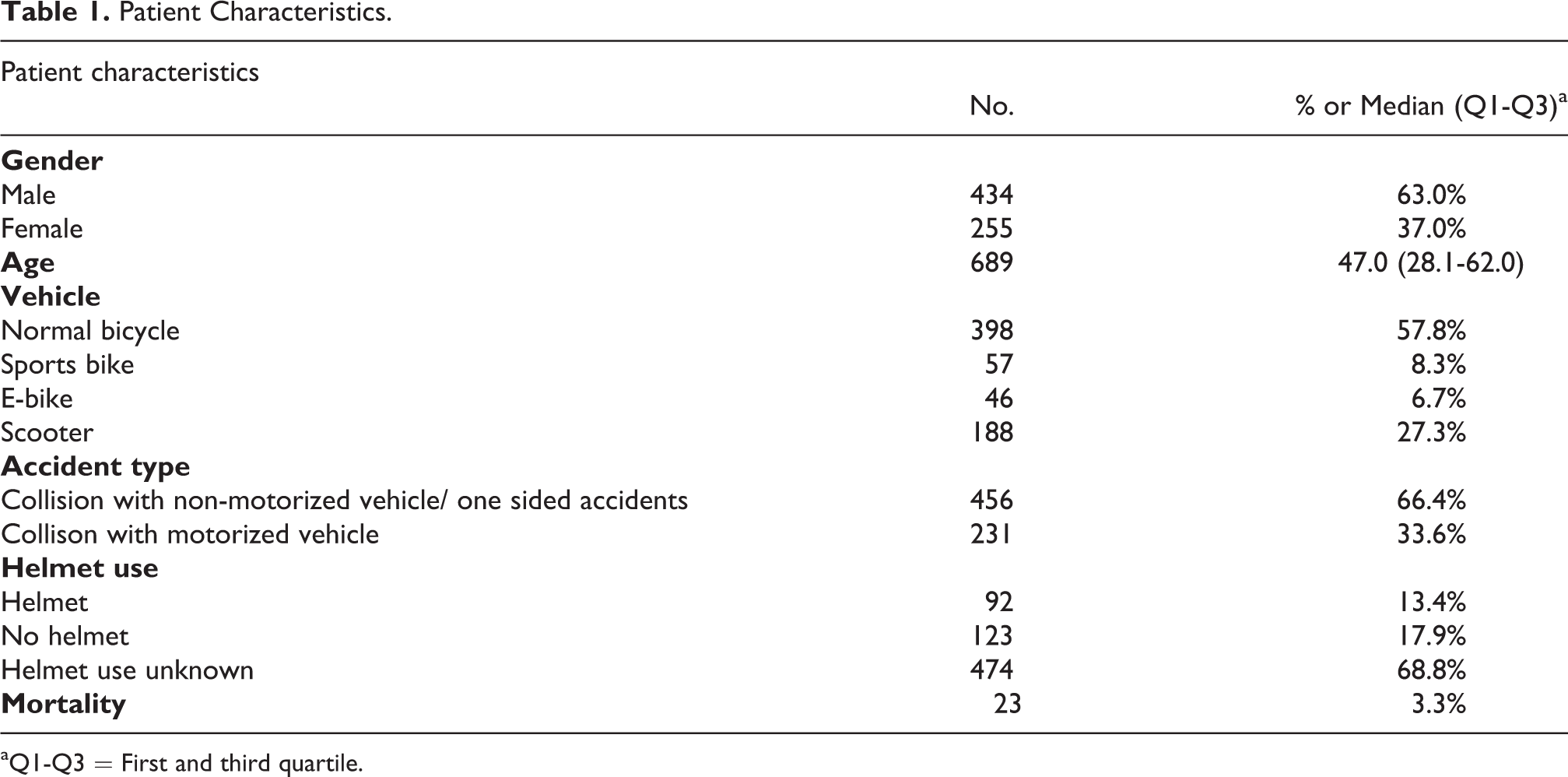
aQ1-Q3 = First and third quartile.
Helmet use was the highest in the age group 50-64 years (53.4%), and the lowest in the age group 18-29 years (36.6%). Data on helmet use varied between the different vehicles groups; e.g. for normal bicycles, data on helmet use was documented in only 17 (4.3%) of the 398 cases, whereas helmet use in scooters was documented in 143 (76.1%) cases.
Table 2 shows the injury characteristics of helmeted and unhelmeted patients. Within the unhelmeted group, scooters were overrepresented with 78.0%. In the helmeted group there seemed to be only a small difference between bicycles and scooters (45 vs 47). For accident-type and mortality, no significant differences were found between the helmeted and unhelmeted group. No evidence was found for difference in helmet use between men and women.
Injury Characteristics.
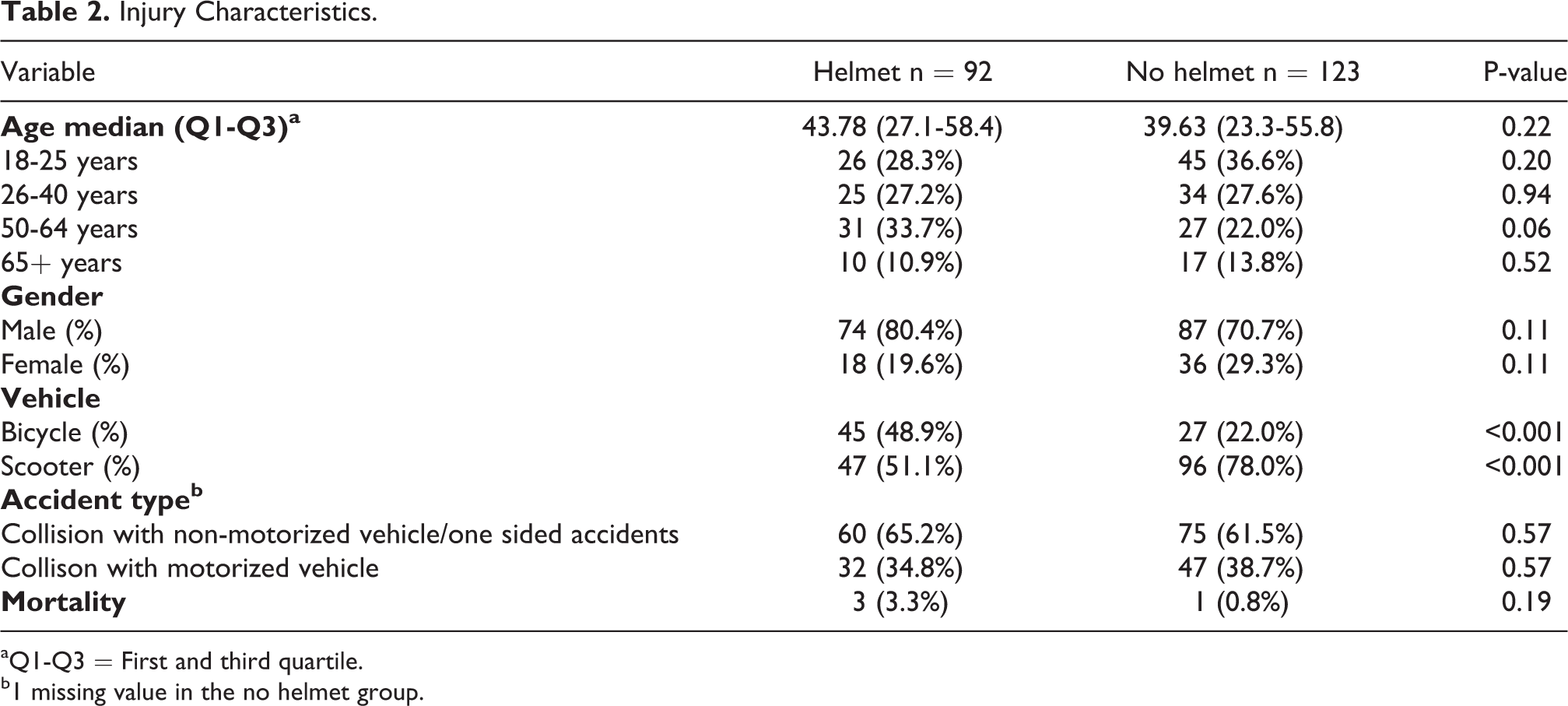
aQ1-Q3 = First and third quartile.
b1 missing value in the no helmet group.
For all vehicle groups combined, maxillofacial fractures were present in 16.3% of the patients who used a helmet, compared to 41.5% of the patients who did not use a helmet. After adjusting for age and gender, a negative association was found between helmet use and maxillofacial fractures (p < 0.001).
Table 3 shows the odds ratios and the corresponding p-values for maxillofacial fractures between helmeted and unhelmeted patients. In cyclists, no association was found between helmet use and maxillofacial fractures (p = 0.17). Helmet use in scooter drivers was associated with a reduction in maxillofacial fractures in general (p < 0.001), and the orbital bone in particular (p < 0.001). As patients were usually diagnosed with several maxillofacial fractures, the numbers of specific fractures do not add up to the amount of cases with any maxillofacial fracture.
Odds Ratios for Maxillofacial Fractures Between Helmeted and Unhelmeted Cyclists and Scooter Users.
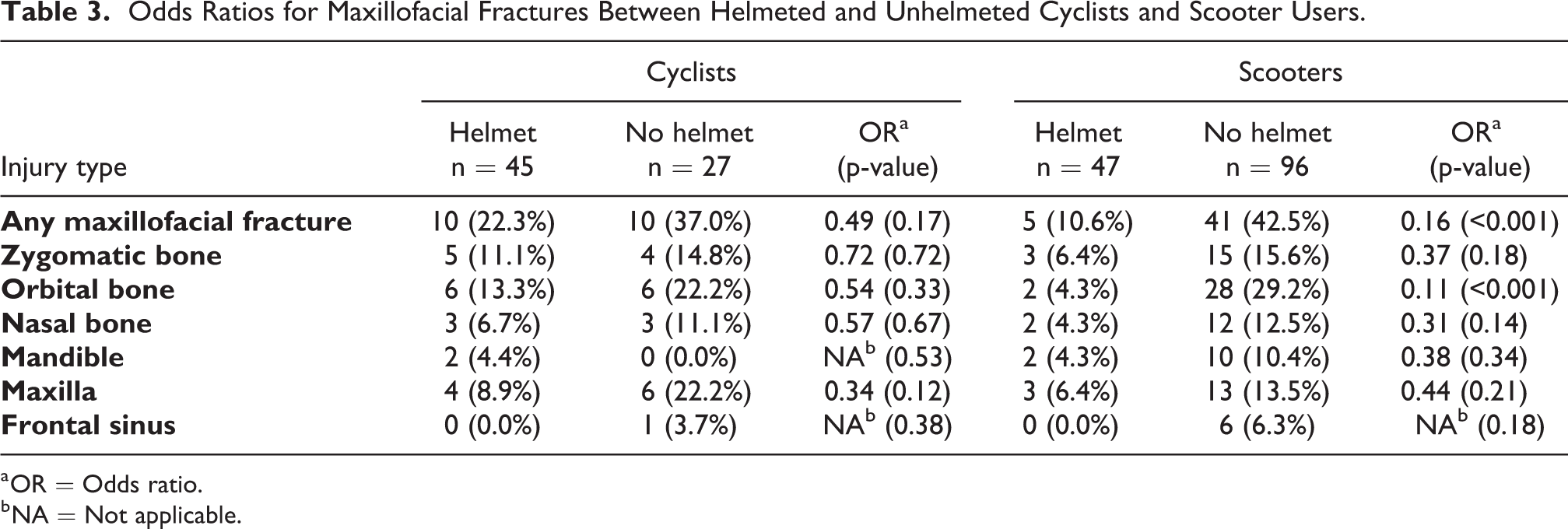
a OR = Odds ratio.
b NA = Not applicable.
Table 4 shows the odds ratios for the different injuries between helmeted and unhelmeted patients. For cyclists, no association was found between helmet use and maxillofacial soft tissue injuries (p = 0.30). Helmet use in cyclists was associated with less skull base fractures (p = 0.042). For scooter drivers, helmet use was associated with less upper (p < 0.001) and midface (p = 0.004) soft tissue injuries in addition to a reduction of TBI, skull base fractures and skull fractures.
Odds Ratios for Maxillofacial and Head Injuries Between Helmeted and Unhelmeted Cyclists and Scooter Users.
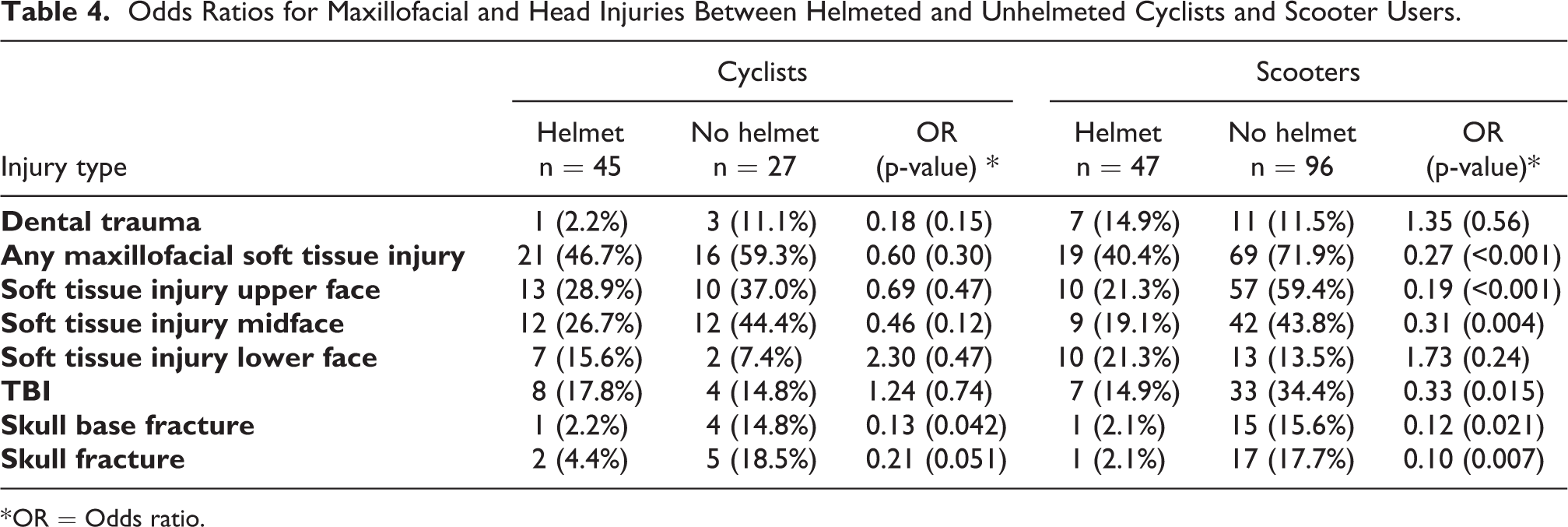
* OR = Odds ratio.
Maxillofacial fractures in all patients (n = 689) were associated with a significant increase in maxillofacial soft tissue injuries (OR: 5.41, p < 0.001), TBI (OR: 3.38, p < 0.001), skull base fractures (OR: 5.73, p < 0.001), skull fractures (OR: 6.47, p < 0.001), and an increased mortality rate (OR: 3.76, p = 0.001).
No significant differences in facial injury rates were found between the included group, of which the helmet status was known, and the excluded group, of which the helmet status was unknown.
Discussion
In this study, helmet use was associated with a reduction in facial fractures and facial soft tissue injuries in patients after a scooter accident. With regard to specific soft tissue injuries in scooter accidents, helmet use lead to a reduction in upper face and mid face injuries. Among cyclists, no association was found between helmet use and the rate of either facial fractures or facial soft tissue injuries.
A legal obligation of helmet use for cyclists, E-bikers and scooters users, and subsequently an increase in helmet use, can prevent maxillofacial fractures, maxillofacial soft tissue injuries, brain injury and mortality. Previous research on head injuries in general has already shown that stricter regulations on helmet use seem to be effective in the prevention of head injuries, while repealing helmet regulations leads to increased rates of head injuries.20–23 As bicycle and scooter accidents are very common in the Netherlands, and thereby a great burden for patients and the Dutch healthcare system, it is essential to study the effects of helmet use in these types of accidents.14–16,24 Subsequently, it is also important to study the effects of helmet use in order to take measures that could prevent maxillofacial injuries. This retrospective study shows the effect of helmet use on maxillofacial injuries and injury patterns in patients presented at the ED after a bicycle or scooter accident.
In this study, helmet use was documented in 31.2% of all cases. The rate of helmet documentation differed among different vehicles; within the bicycle group, the percentage of documented helmet status was 4.3%. These percentages are lower compared to other studies, with documented helmet status in 76.3%-100% of the cases.25,26 However, helmet use for bicycles is not mandatory and fairly uncommon in the Netherlands. 4 Given the fact that the use of helmets is uncommon, physicians are probably less likely to report this in the electronic health records. We assume that this is the reason why helmet status was unknown in most cyclists.
For bicycle accidents, helmet use was not significantly associated with a reduction in maxillofacial fractures and maxillofacial soft tissue injuries. This is not in line with the current literature. The protective effects of helmet use among cyclists have been reported in earlier studies. Previous literature stated that helmet use reduces maxillofacial fractures and soft tissue injuries in cyclists, although specific injury patterns remain unclear.17,18,27 A possible explanation could be that the sample size of the current study might be too small. Therefore, no further statistical analysis of helmet use on specific maxillofacial fractures could be performed. Interestingly, it could be hypothesized that bicycle accidents often have lower collision speed, and therefore cause fewer facial injuries compared to accidents involving motorized vehicles. In addition, the exclusion of cases of which helmet use was unknown might have influenced our data. However, we did not find significant differences in injury rates between the included and excluded group, which limits the effect of the missing data on the results.
In this study, primary and secondary outcomes could not be adjusted for possible confounding factors (e.g. helmet type, collision speed, intoxication) due to missing values. Therefore, further prospective research, with larger numbers is needed to reveal the full extent of the effects of helmet use on maxillofacial injuries in cyclists. Larger numbers would also allow further statistics on specific vehicle types, such as E-bikes and electric scooters, which is interesting because of the increasing popularity of these vehicles.
According to the literature, helmets seem to be unbeneficial in the prevention of soft tissue injuries of the lower face, which is similar to the results of this study. The role of helmets with chin protection is an interesting subject for future research. 27
For scooter accidents, helmet use was associated with significant reduction in maxillofacial fractures and soft tissue injuries of the lower- and midface, suggesting that helmet use by scooter drivers is protective against maxillofacial injuries. This is in line with earlier studies on helmet use in motorcycles and mopeds, that show reduction in maxillofacial fractures and soft tissue injuries.28–31 Johnson et al. and Cristian et al. found no reduced risk of lower face injuries, which is in line with the current study.28,32 This is concerning as Lee at al. concluded that maxillofacial injuries in motorcyclists are most often seen in the lower face. 33 The type of helmet might also be important in the prevention of lower face injuries. Previous reports have shown that helmet type, as well as correct helmet use, affect the effectiveness of the helmet.34,35 Brewer et al. showed that open faced helmets might offer less protection to the face than full faced helmets, however these results were not correlated to any specific part of the face and were not conclusive. 35 In the current study, it remained unclear which helmet type was used (full faced, open faced). Possibly, full faced helmets are more protective against lower face injuries, compared to open faced helmets but this remains unclear and requires further research.
In the Netherlands, helmet use and speed limits are dependent on the type of scooter, and helmet regulations differ between municipalities. The overall maximum speed for scooters in the Netherlands is 45km/h. Previous reports have shown that accident speed increases injury severity and head injury.10,36 Therefore, this study targets a specific group of scooter accidents which, to our knowledge, has not been reported before in literature.
The association of maxillofacial fractures with other injuries was evaluated as well, as these fractures might be important in predicting brain or skull injury. In this study, facial fractures were associated with more maxillofacial soft tissue injuries (OR: 5.41, p < 0.001), traumatic brain injury (OR: 3.38, p < 0.001), skull base fractures (OR: 5.73, p < 0.001), skull fractures (OR: 6.47, p < 0.001) and mortality (OR: 3.76, p = 0.001). Emergency physicians should therefore be cautious for head and brain injuries in patients with diagnosed maxillofacial fractures as stated in earlier research. 37
The results of the current study should be seen in the light of some limitations. First, as mentioned earlier, the sample size of this study might be too small to reveal significant differences. Moreover, given the retrospective study design, there are many missing data for some of the variables. Therefore, results could not be adjusted for possible confounders. Furthermore, the identification of patients was performed by an initial search in the electronic record registry. First, all patients who underwent a head CT scan were selected. Then, all bicycle or scooter accidents were selected by hand. This might have led to missed inclusions of MTBI patients who did not undergo a head CT scan. However, according to the CHIP prediction rule, basically all head trauma patients will receive a head CT scan after a significant bicycle or scooter accident. Therefore, the expected number of missed inclusions is low.
Cycling and scooter safety in the Netherlands remains an actual and important topic. Yearly, bicycle-related injuries alone account to 70 000 emergency department visits and 416.7 million euros in costs. 24 In the literature, helmets seem to be effective in the prevention of maxillofacial injuries in bicycle and scooter accidents. However, prospective research is needed in order to further evaluate specific helmet effects and better understand injury patterns, especially lower face injuries. Furthermore, studies on costs-effectiveness and helmet information programs are needed, which might contribute to future legislation on helmet use in cyclists and scooter users.
Conclusion
Helmet use is essential in preventing maxillofacial injuries in scooter accidents and the obligation of helmet use among scooter drivers should be considered. Helmet use among scooter drivers was associated with a reduction in maxillofacial fractures, soft tissue injuries, TBI, skull base fractures and skull fractures. The effect of helmet use on soft tissue injuries of the lower face injuries is still ill defined in current literature. Helmet use among cyclists was associated with a reduction in skull base fractures but not in maxillofacial injuries.
Footnotes
Declaration of Conflicting Interests
The author(s) declared no potential conflicts of interest with respect to the research, authorship, and/or publication of this article.
Funding
The author(s) received no financial support for the research, authorship, and/or publication of this article.
