






Abstract
Importance
The cause of idiopathic toe walking (ITW) remains unclear, though impaired sensory processing has often been hypothesized to be linked to ITW.
Objectives
The objective of this article is to review the literature on toe-walking to identify how sensory processing contributes to ITW.
Data Sources
Four databases (CINAHL, Pubmed, PsychINFO, and SCOPUS) were searched for papers related to sensory processing and ITW published prior to July 2024. References of retrieved papers were reviewed for additional sources.
Study Selection and Data Collection
The PRISMA guidelines for scoping review were used to abstract the data following Joanna Briggs Institute methodology. Inclusion criteria were examined and papers included at least one sensory system related to ITW was studied. Papers were excluded if toe walking was due to diagnosed neurological, orthopedic, or genetic conditions.
Findings
Our scoping review identified 13 published articles relevant to examining sensory processing in children with ITW. Studies explored differences in vibration perception, light touch, proprioception, vestibular, visual processing, sensorimotor functional assessments, and parental surveys of sensory processing. Six of the papers were included in a meta-analysis on vibration perception threshold that failed to reach significance (p = .12). Despite heterogeneity across studies in participants, methods, and outcomes, a meta-analysis for atypical scores from parent-report sensory processing survey data yielded significant differences between children with ITW and typical controls (p < .0068).
Conclusions and Relevance
Children with ITW demonstrate impairments across multiple domains of sensory processing and sensory-motor function suggesting an underlying relationship between ITW and sensory differences. Children with ITW, however, represent a diverse group of individuals with significant between-subjects variability in which senses are impaired, and which outcome measures best capture these differences.
Plain Language Summary
This review was undertaken to examine the role sensory processing differences play in idiopathic toe walking (ITW). ITW is defined as consistent walking on toes (without heel strike) that is not due to other medical conditions. The results of this review showed that atypical responses to sensory stimuli are frequently reported in children with ITW. These differences were observed across multiple domains of sensory processing. However, the differences in sensory processing in children with ITW varied greatly among individuals in terms of which senses showed impaired processing. Furthermore, children with ITW often have reduced range of motion in their ankles, reduced strength, and difficulty with balance. Sensory-based interventions show potential for modifying walking patterns in children with ITW.
Introduction
During the development of gait, Halleman and colleagues found toe walking was present in 53% of foot strikes during the first week of independent walking, but they also indicated that they found initial heel contact develops within weeks of independent walking gait (Hallemans et al., 2003, Sala & Cohen, 2013). A second longitudinal analysis by Hallemans et al. (2006) found that with 20 weeks of walking experience 70% of footfalls were classified as an initial heel strike, 26% as foot flat contact and only 4% as initial forefoot contact. When gait continues to show consistent initial toe contact beyond 2 to 3 years of age, the gait pattern is considered atypical (Caselli et al., 1988; Pernet et al., 2010; Sutherland et al., 1980). In such cases, heel strike is not observed, and weight bearing is translated through the forefoot during most of the gait cycle (Oetgen & Peden, 2012).
In some children, toe-walking can be attributed to impairments in the neuromuscular (e.g., spasticity, cerebral palsy, Duchenne muscular dystrophy, peripheral neuropathy, and tethered cord) and musculoskeletal system (e.g., bone deformity and club foot) (Beyaert et al., 2020; Flaugh et al., 2024; Tileston et al., 2022; Wu et al., 2023). However, when toe-walking, lack of contact with the heel at initial contact, is observed in the absence of identifiable neurological or musculoskeletal pathology, the gait pattern is considered idiopathic toe walking (ITW) (Bauer et al., 2022; Shulman et al., 1997; Sobel et al., 1997; Williams et al., 2014). Children with ITW may be able to produce initial heel contact when asked but prefer to walk on their forefoot for no apparent medical or biomechanical reason. In a study to investigate the natural history and prevalence of ITW, Engstrom and Tedroff, recruited a population sample of 1436 healthy children aged 5.5 years and found ITW was present in 4.9% of their sample (Engström & Tedroff, 2012).
Persistent idiopathic toe walkers often experience pain and difficulty with posture and balance (Engelbert et al., 2011; Irving et al., 2006; López-López et al., 2021; Shulman et al., 1997; Sobel et al., 1997, van Bemmel et al., 2014). Additionally idiopathic toe-walking may cause bilateral shortened Achilles tendons, which can limit heel contact and lead to the need for surgical intervention (Bauer et al., 2022).
There has been debate and discussion surrounding the cause of ITW. Some researchers and clinicians hypothesize a link between ITW and impaired somatosensory processing. However, there is limited research examining these hypotheses (Ganley & Behnke, 2016; Williams et al., 2010, 2012). Proposed sensory processing problems may include sensory seeking behaviors, tactile defensiveness, poor proprioceptive awareness, vestibular dysfunction, and difficulties with sensory modulation (Ayres & Robbins, 2005; Blanche et al., 2012; Donne et al., 2023; Ganley & Behnke, 2016; Kranowitz, 2006; Sobel et al., 1997; Wick & Zanni, 2010, Williams et al., 2014). Even less well studied are the types of interventions which might reduce somatosensory impairments and/or enhance sensory processing in children with ITW. To understand mechanistically how impaired sensory processing is related to ITW, we undertook a scoping review to identify ITW studies which included sensory outcome measures or sensory-based interventions as part of the design.
A search of the literature published between 1997 and 2024 revealed systematic reviews describing differences in ITW and cerebral palsy (Schlough et al., 2020), treatment interventions for ITW (Caserta et al., 2019a; van Kuijk et al., 2014), and the identification of methods to quantify lower limb changes associated with ITW (Caserta et al., 2019b). However, we identified two systematic reviews with similar aims to our scoping review. One article was published in French (Andre et al., 2021) and one in English (Donne et al., 2023). The article, written in French, was translated by one of the authors (OYR), who is fluent in both French and English. The Andre et al. (2021) paper included six studies ranging from 1997 to 2018. They specifically looked at pain and ITW and did not include articles which discussed other sensory systems. The Donne et al. (2023) review included papers from 2013 to 2021, but they also included conference abstracts in the review. Although some articles in the Donne paper are included in our review, we have added papers published through July 2024. These two reviews were helpful because they supported our hypothesis assessment of the sensory system is relevant to the examination of children with ITW.
The purpose of this scoping review is to (1) identify the sensory systems evaluated in research studies of children with ITW, (2) identify the sensory testing instruments or measurement tools used to assess and/or distinguish children with ITW from their typically developing peers, and (3) identify how children with ITW respond to interventions using different types of sensory stimuli.
A preliminary search of Medical Literature Analysis and Retrieval System ON-LINE (MEDLINE), the Cochrane Database of Systematic Reviews, and Joanna Briggs Institute (JBI) Evidence Synthesis was conducted, and we found no current or underway systematic or scoping reviews covering the same topic as our scoping review. For our scoping review, we included experimental designs and quasi-experimental study designs (including randomized controlled trials, nonrandomized controlled trials, before and after studies, and interrupted time-series studies). In addition, analytical observational studies including prospective and retrospective cohort studies, case-control studies, and analytical cross-sectional studies were considered for inclusion. This review also considered descriptive observational study designs, including case series, individual case reports, and descriptive cross-sectional studies for inclusion. This study restricted its scope to peer-reviewed journal articles to ensure that all included data met a standardized level of rigor to ensure reproducibility of the search strategy within literature databases.
Methods
Search Terms and Strategy
This scoping review is conducted in accordance with the JBI methodology for scoping reviews (Peters et al., 2020). The review title is registered at Open Science Framework (https://osf.io/gsaj2). In August 2021, a search was run using Cumulated Index in Nursing and Allied Health Literature (CINAHL) and Public MEDLINE (PubMed) through the Virginia Commonwealth University (VCU) library. Updated searches were conducted in January 2023 and July 2024. The search terms focused on “idiopathic toe walking” (and variations of the term) and “sensory” (including all the sensory systems). We excluded specific medical diagnosis in the PubMed search to limit the patient population to only idiopathic toe walking. Toe walking studies related to neurological and/or genetic disorders were excluded. Table 1 details the search terms used, and the article yield from each database. Searches were conducted by a research librarian at VCU.
Search History.

Figure 1 shows the search process following the Preferred Reporting Items for Systematic reviews and Meta-Analyses (PRISMA-ScR) guidelines (Moher et al., 2009). From these searches, a total of 761 nonduplicate citations were identified for screening. While most articles were published in English, one article published in Spanish (Lopez-Lopez et al., 2021) and one in Japanese (Futagi et al., 2001) were identified. These two articles were translated using Google Gemini (Google, 2025) by using the prompt “Translate to English” with the original paper added as a pdf file, and included in the screening and review process described below.
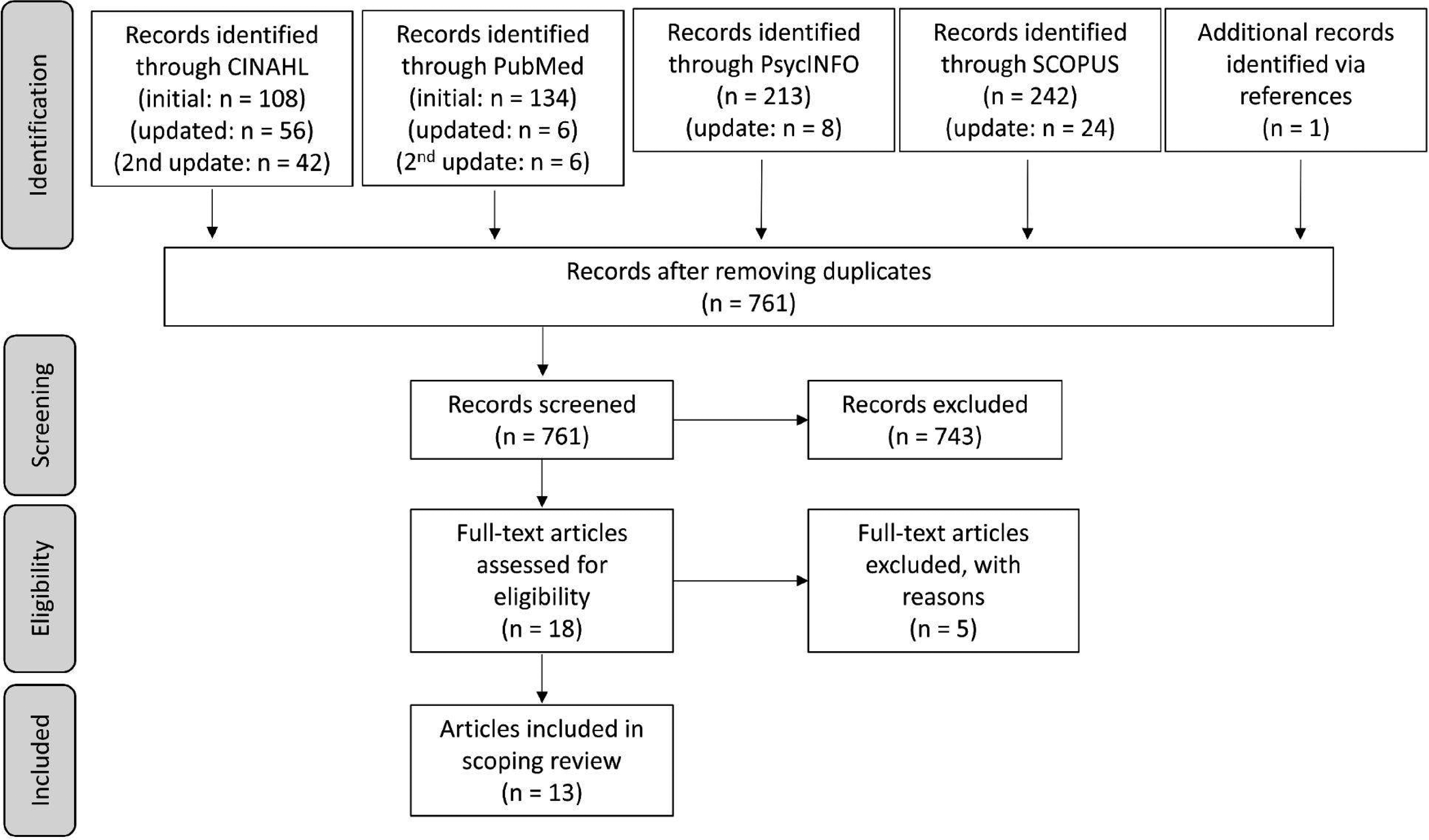
Search process using PRISMA guidelines.
Screening
Using the online Rayyan software (Rayyan, 2024), a database of all the articles identified in our initial search (n = 761) was created. Each author (VWTC, GLG, MGB, and OYR) completed a first level, blind screening of the database. Each author is either a pediatric clinician and/or researcher in the fields of physical medicine and rehabilitation, physical therapy, and occupational therapy. Each panel member has more than 15 years of clinical experience, working with children with idiopathic toe walking as well as extensive research backgrounds in pediatrics.
For the first level screening, each author individually determined whether to include, exclude or further discuss each article based on the title and abstract. Articles were included for full review if they met the following criteria: a participant group including children with toe walking or idiopathic toe walking, a focus on examining sensory processing with a minimum of one of the sensory systems mentioned, and publication in a peer reviewed journal. Articles were excluded if they considered other neuromuscular, orthopedic, or genetic conditions even if toe walking was mentioned, examined toe walking based only on nonsensory related behaviors (gait, range of motion [ROM], etc.) without consideration of sensory processing. Studies that included children with autism and Attention-Deficit/Hyperactive Disorder (ADHD) were not specifically excluded unless those children were also reported to have other neuromuscular, orthopedic, or genetic conditions.
Following the blinded screening, a summary report generated using the Rayyan software grouped the articles into three categories: 100% matches for inclusion (n = 16) or exclusion (n = 686) and articles which did not reach the 100% match level (n = 56). To reach a consensus on the full-text articles to include in the final review, the group met in person to discuss the 56 articles that did not reach the 100% match category. Based on a discussion of each article the group reached a consensus of which articles to include to achieve the final full-review article list (n = 18) (see Figure 1).
The 18 full text articles were retrieved, and each article was independently assessed for final inclusion in the scoping review by the four authors. The level of evidence for each article was assessed using the Level of Evidence guidelines from the Oxford Center for Evidence-Based Medicine (Howick et al., 2009). The group also evaluated the quality of evidence of each article using the JBI critical appraisal tool for analytical cross-sectional studies (Joanna Briggs Institute, 2017). Additionally, all the authors met to discuss their scores for each of the 18 articles and to reach a consensus regarding the final group of articles to include in this scoping review (n = 13) (see Table 2).
Description of Included Articles in Scoping Review.

• Definition of Descriptive and Experimental (https://ori.hhs.gov/education/products/sdsu/res_des1.htm) 4/24/23.
Note. *Cohorts matched in age, but interaction of age and ITW with ITW demonstrated lower body mass index values (body mass index values within typical range on predicted clinical growth charts).
AADFROM=active ankle dorsiflexion range; ADHD= Attention-Deficit/Hyperactive Disorder; CASP=Child and Adolescent Scale of Participation; DOF=degrees of freedom; ENMG=electro neuro-myography; FASD=fetal alcohol spectrum disorder; IMU=inertial measurement unit; ITW= idiopathic toe walking; KTK=Körperkoordinations Für Kinder; LTT=light touch threshold; MTP=metatarsophalangeal joint; PDFROM=Passive Ankle Dorsiflexion ROM; ROM= range of motion; SCP=Sensory Challenge Protocol; SIPT=Sensory Integration and Praxis Test; SOT=Sensory Organization Test; SPM-Home=Sensory Processing Measure-Home Form; SPM-P Home=SPM Preschool Home; SSP=Short Sensory Profile; TGMD-3=Test of Gross Motor Development-3; TW=toe walking.
During the final review, five of the initial eighteen articles were excluded; one paper was a protocol paper and did not contain empirical data (de Oliveira et al., 2019), a second paper focused on the reliability of the scoring between raters (Ali et al., 2020), a third paper was excluded due to the use of an intervention (foot orthoses and high top boots) that is not exclusively sensory-based (Michalitsis et al., 2019), a fourth paper was originally included but later removed as it was withdrawn from circulation by the journal publisher (Pelykh et al., 2014). For the fifth paper, although they demonstrated vestibular dysfunction, the description of the children in the toe walking group was unclear, potentially including children with neurological conditions (Montgomery & Gauger, 1978).
It is important to note that one article included in the final scoping review was a paper co-authored by Grant-Beutler (Pollind et al., 2019), that paper was only reviewed by three authors (VWTC, GLG, and OYR). Another paper we included in the review (Chu et al., 2023) was authored by three of this paper's authors (VC, GLG, and MGB). To minimize bias, that paper was reviewed by OYR and an external reviewer (RS, see Acknowledgements section) who is the director of Rehabilitation Science and Engineering at Virginia Commonwealth University School of Medicine.
Data Extraction
After completing the full review protocol, 13 studies were identified for this review, and the following information was extracted from each study: (1) first author and publication year, (2) study design, (3) study location, (4) sample size, (5) presence of a control group, (6) age, race, and gender of the participants, (7) diagnosis, (8) sensory measures used and outcomes, (9) motor outcome measures, and (10) functional assessment and outcomes (see Table 2).
Meta-Analysis
After reviewing the articles included in this scoping review, a number of them contained information that could be analyzed in greater depth through a meta-analysis. While not a standard to include a meta-analysis in a scoping review, there is a precedence as indicated in a number of contemporary examples (Chen et al., 2023; Riccardi & Ciccia, 2021). Since multiple papers reported data on vibratory perception threshold and sensory processing based on parent report questionnaires, we felt a meta-analysis combining the results from these studies was warranted. A meta-analysis will allow us to draw stronger conclusions than summarizing results from individual papers. Data were extracted from the articles and used to determine a Hedge's g (interval or ratio data) or an odds ratio (categorical data) using the Practical Meta-Analysis Effect Size Calculator (Wilson, 2023). In one article (Ganley & Behnke, 2016) the data for the meta-analysis were contained only in a figure. FIJI is just ImageJ (FIJI) was used to extract data from a table in one article, and two authors were personally contacted to gather data for the meta-analysis (McHugh et al., 2021; Williams et al., 2014). Data for the meta-analysis were entered into a dataset on excel and then uploaded into the statistical software, R (v4.4.0; R Core Team, 2024). The R package “meta” was used to calculate a generic inverse variance meta-analysis and create a Forest plot.
Results
Characteristics of the Articles Extracted
Table 2 contains information on the level and quality of evidence, the study design, presence of a control group, the number and description of participants and the outcomes assessed from the 13 articles included in this review. Twelve (86%) of the 13 articles were ranked as a 3b level of evidence with the remaining article (Pollind et al., 2019) ranked as a level 4. Using the JBI Critical Appraisal Checklist for Analytical Cross Sectional Studies, the 13 articles score between 4 to 8 out of a maximum score of 8 with a mean score of 6.4 (s.d. = 1.3). When examining study design, there were 11 descriptive studies including five classified as Case-Control and six as Observational. The remaining two studies were intervention designs and included a pre–post design and a pilot study with outcomes measured during intervention.
Study Participants
All 13 studies reported on child participants. The number of toe walking participants ranged from 5 to 51 with a mean of 19.2 (s.d. = 12.3). Ten (77%) of the studies included a control group with a range of 9 to 30 control participants and a mean number of 17.4 (s.d. = 7.2) control participants. The mean age of ITW participants reported in the 11 descriptive articles was 7.5 years (2.1) with a range of 6.0 to 13.0 years. The two intervention articles reported age ranges of 4.8 to 14.8 and 1.6 to 6.8 years with no mean age reported. The mean gender reported in all 13 articles was 60% male (.1%). Twelve of the studies reported between 47% to 70% male participants with the 13th study reporting 91% male. Five of the 13 articles reported ITW participants with diagnoses of ADHD and/or post preterm birth. Two articles (Chu et al., 2023; Hines et al., 2024) reported inclusion of participants with autism and developmental delay. Hines et al. (2024) reported all the previous diagnoses plus low tone/hypotonia, sensory processing dysfunction, and developmental coordination disorder. McHugh et al. (2021) reported three control participants with ADHD. All other studies either did not report any diagnoses in their toe-walking groups or reported eliminating these diagnoses. Outcomes measured in the 13 articles varied widely. All outcomes measured in the articles are listed in Table 2.
Methods and Outcomes of the Studies
Review of specific methods and results for specific sensory system assessments, motor specific assessments, and functional assessments which integrate sensory, and motor are listed in Table 3. Assessment of vibratory perception threshold and the sensory processing survey were used most frequently across the 13 studies. The results of these studies demonstrate inconsistencies with variability in participants included and methods of testing. In the 13 studies, measurement outcomes included:
Vibratory Perception Threshold: This was reported as an outcome measure in four observational articles and one intervention article (Chu et al., 2023; Fanchiang et al., 2015; Ganley & Behnke, 2016; Williams et al., 2012, 2014). In all five articles, both position of testing and area of stimulation varied across the articles with no recommendations for a standard testing position, location of stimulation or frequency for research or clinical use. Sensory Processing Surveys: These were reported as an outcome measure in six articles with four using the Sensory Processing Measure (Chu et al., 2023; McHugh et al., 2021; Rossi et al., 2018; Williams et al., 2014), one using the Short Sensory Profile (Ganley & Behnke, 2016), and one using the 5 to 15 Revised Perception Domain (Engstrom et al., 2012). Three out of six articles included participants and controls with autism or ADHD (Chu et al., 2023; Ganley & Behnke, 2016; McHugh et al., 2021) (see Table 3). Other Sensory Assessments: Two articles were designed to assess sensory systems other than vibratory perception threshold. Chu et al. (2023) tested tactile processing, ankle proprioception and employed a sensory challenge protocol. The H-reflex was assessed by Rossi et al. (2018). Other Motor Level Assessments: Five of the 13 articles included motor level assessments (Chu et al., 2023; De Oliveira et al., 2021; Hines et al., 2024; Rossi et al., 2018; Shulman et al., 1997). Four descriptive studies reported on active and/or passive ROM at the ankle (Chu et al., 2023; De Oliveira et al., 2021; Rossi et al., 2018; Shulman et al., 1997). While position and method were inconsistent in these studies (see Table 2), they all reported decreased ankle dorsiflexion in the ITW groups. One article (Hines et al., 2024) examined pressure distribution on the bottom of the foot and found the ITW group demonstrated no difference in pressure distribution on the fore- vs. rearfoot, while the control group demonstrated significantly higher pressure on the rearfoot. Rossi et al. (2018) reported a significant likelihood that the ITW group reported pain in their lower extremities compared to the control group. Functional Assessments Integrating Sensory: Of the 13 articles reviewed, all but two (Ganley & Behnke, 2016; McHugh et al., 2021) reported on a functional assessment integrating sensory input. Three (Chu et al., 2023; Fanchiang et al., 2016; Rossi et al., 2018) of 11 descriptive studies and both intervention studies evaluated gait (Fanchiang et al., 2015; Pollind et al., 2019). Chu et al. (2023) examined foot pressure as well as gait characteristics in their analysis. Four of 13 articles utilized a standard functional measure including the Test of Gross Motor Development-3 (Chu et al., 2023), the Körperkoordinations Für Kinder test (KTK; De Oliveira et al., 2021), the DeGangi-Berk (Shulman et al., 1997), and the Bruininks–Oseretsky Test of Motor Proficiency-II (Williams et al., 2014). Balance was assessed using the Sensory Organization Test in 2 of 13 articles (Chu et al., 2023; Hines et al., 2024). Two articles examined prone extension (Hines et al., 2024; McHugh et al., 2021). Additional functional assessments used in a single article included upper extremity weight bearing (Hines et al., 2024), wall squats/unsupported squats and supine flexion (McHugh et al., 2021), forward bend and stand with feet on ground (Rossi et al., 2018), and the Schilder's Arm Extension test (McHugh et al., 2021). Functional surveys completed by parents used in a single article included the 5 to 15 and the Child and Adolescent Scale of Participation (Hines et al., 2024).
Comparison of Methods and Results for Specific Sensory Systems, Motor Systems, and Integration of Sensory Systems During Functional Assessments from Reviewed Articles.

Note. ADHD= Attention-Deficit/Hyperactive Disorder; ADT= Adaptation Test; BOT-2= Bruinicks-Oseretsky Test of Motor Proficiency-2; CASP= Child and Adolescent Scale of Participation; EDA= electrodermal activity; ITW= idiopathic toe walking; SCP= Sensory Challenge Protocol; SIPT= Sensory Integration and Praxis Test; SOT= Sensory Organization Test; SPM=Sensory Processing Measure; TGMD-3= Test of Gross Motor Development-3.
Vibratory Perception Threshold
Methods used to assess the sensory systems included direct assessment of the children and/or parent surveys to determine children's general observed response to sensory input. The most common method reported in the articles to directly assess a sensory system was vibration perception threshold. The results from these four articles were not consistent. A fifth article examined vibratory perception threshold prior to and following 1 min of whole-body vibration and reported an increase in the vibratory perception threshold following the intervention (Table 3).
Data from four articles were used in the meta-analysis on vibratory perception threshold. As data were being extracted from the four descriptive and one intervention article, the authors noted that the data from two articles by the same author was duplicated. As a result, we only had four sets of distinct data to extract. Combining the data and calculating a Hedge's g from the results of the four articles that measured vibration perception threshold pose difficulty secondary to articles reporting both hyposensitive and hypersensitive responses. With effect sizes being both negative and positive, these results would wash out any potential conclusions. In reality, these children may score at both extremes so it may be more clinically valuable to examine the number of children who scored outside the typical range. With this in mind, we removed the sign on the Hedge's g for the results analyzed. Using the absolute value of the Hedge's g, the R package meta was used to calculate a generic inverse variance meta-analysis. Individual hedge's g values with 95% confidence intervals and a random effects model Hedge's g = 1.02 (95% CI −.48 to 2.52), p = .12, I2 = 71% (95% CI 17.1% to 89.9%) (see Figure 2). While the overall result was not significant and the 95% confidence interval large, it does provide for the possibility that children who toe walk have a high potential to score outside the typical range on the vibration perception threshold. The large I2 value highlights the heterogeneity of the article results which may be influenced by the varied methods of data collection.
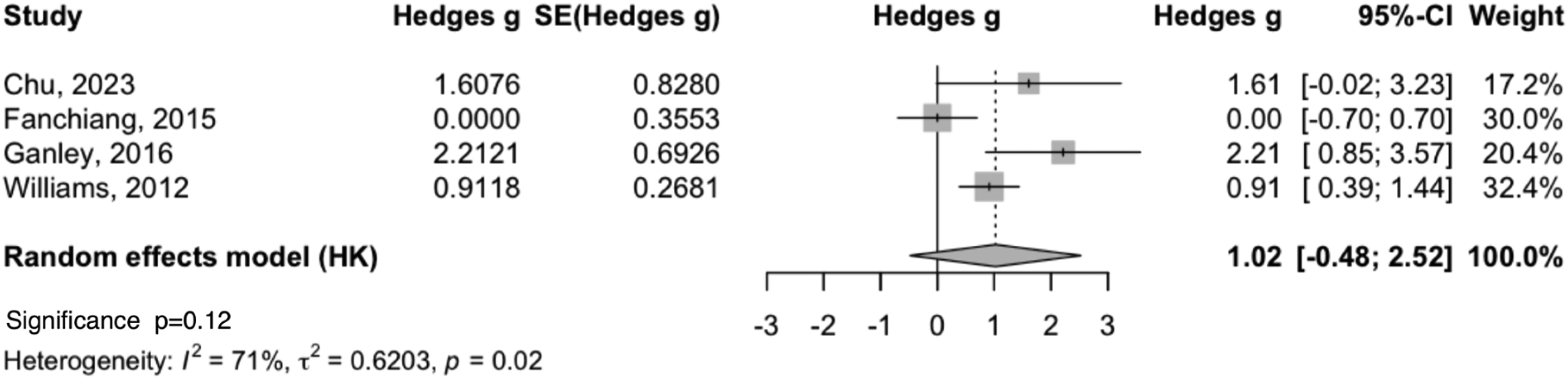
Hedges g meta-analysis on data for vibratory perception threshold from four studies.
Parent Reported Sensory Integration Surveys
Three of six articles which included parent reports of their child's sensory integration function, were used for a meta-analysis. Meta-analysis was completed using odds ratios on the number of typical and toe walking participants who scored “suspect” on any area of the surveys compared to participants in both groups that scored “normal.” The R package meta was used to calculate a generic inverse variance meta-analysis. The estimated random effects odds ratio = 2.68 (se = 0.99), p < .0068, I2 < 59% (see Figure 3). I2 value drops to <1% when McHugh et al. (2021) was removed from the analysis, suggesting the variability in the data is driven by this study. While the additional two articles (Engstrom et al., 2012; Williams et al., 2014) did not contain data included in the meta-analysis, their results support the results (see Table 3).
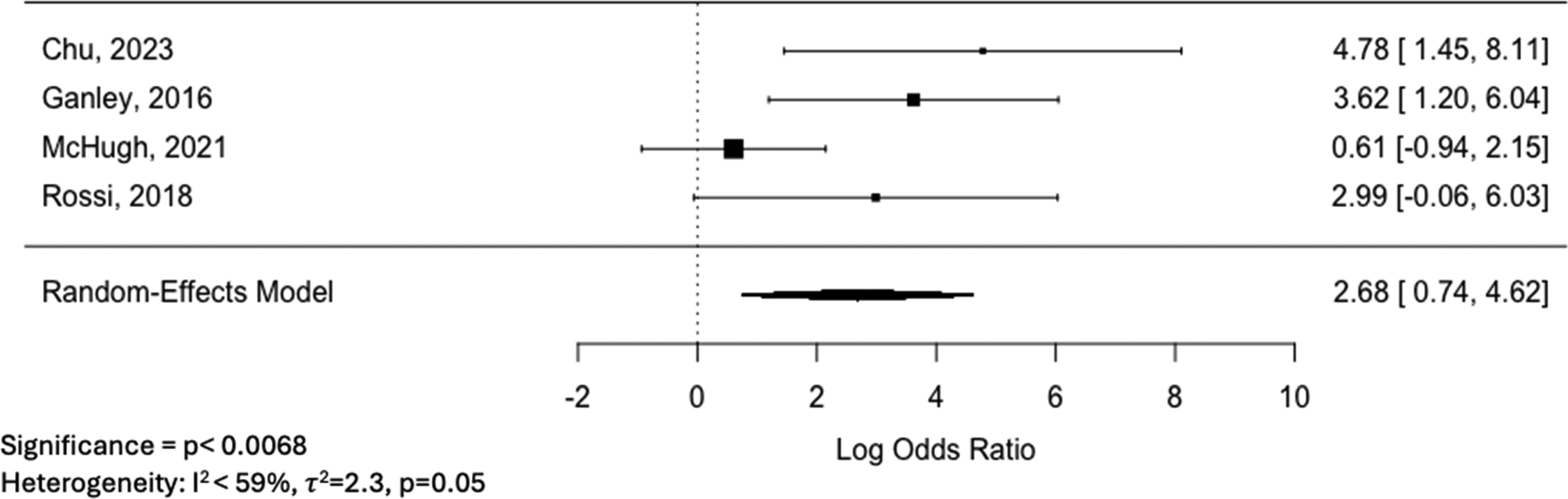
Odds ratio meta-analysis from four of six studies reporting parent surveys regarding their child's sensory integration. Odds ratios were determined on any abnormal score on any section of the survey compared to typical scores on all sections of the survey.
Discussion
While children with ITW have no defined neuropathology by standard clinical measures like magnetic resonance imaging (MRI) and electromyography (EMG), clinicians and researchers that work with this population are aware that differences between children with ITW and typically developing (TD) children extend beyond the gait pattern. This scoping review identifies research evaluating sensory function in children with ITW and includes survey-based assessments, direct quantitative measurement of sensory perception, electrophysiological testing, sensory-motor function tests, neuropsychiatric and developmental assessments, and lastly approaches using sensory based interventions to try to treat toe walking.
Survey-Based Assessments
Subjective parent surveys provide a starting point for examining how children respond to everyday sensations such as tactile, visual, auditory, and kinesthetic experiences. Four studies (Chu et al., 2023; Ganley & Behnke, 2016; McHugh et al., 2021; Rossi et al., 2018; Williams et al., 2014) presented survey data from parents of children with ITW using either the Short Sensory Profile (SSP) (Dunn, 1999) or the Sensory Processing Measure (SPM) (Parham et al., 2007). Except for McHugh et al. (2021), these studies consistently reported differences in vision, body awareness, and balance compared to typical controls. Pooled data from the four studies produced an odds ratio of 3.72 (p < .001) that children with ITW will score significantly outside the norm in at least one domain of the SSP or the SPM. Parent reported outcomes such as this may offer a valid first step with which to identify and explore sensory processing differences in children with ITW. Both the SSP and the SPM produced similar results.
Quantitative Measurement of Sensory Processing
Several objective measurements of sensory processing were carried out including vibration perception threshold (VPT), light touch using Semmes Weinstein monofilaments (SMW), proprioception, and H reflex testing. Of these, VPT was the most frequently reported, however, studies reported conflicting findings (Chu et al., 2023; Fanchiang et al., 2015; Ganley & Behnke, 2016; Williams et al., 2012). Williams et al. (2012) found that children with ITW demonstrated a hypersensitive response to vibration compared with TD children, whereas Ganley and Behnke (2016) and Chu et al. (2023) noted a decreased response to vibration in ITW. Fanchiang et al. (2015) found no difference. Ganley and Chu also found that VPT does not follow a normal distribution in ITW but rather, there is a subset of hyporesponsive individuals and a subset that is not different from TD kids. Variability in study procedures and inclusion criteria may account for the disparity between the studies. Whether comorbid disorders covaried with tactile hyposensitivity was not reported. Despite significant variability in methodology and results, if we eliminate directionality and determine the likelihood of a child with ITW having an abnormal VPT (>2SD lower or higher than mean VPT) our meta-analysis including data from four studies suggests that children with ITW may be more likely to have abnormal VPT compared with TD children with a relatively large effect size (Hedges g 1.02, p = 0.12). Standardizing methodology for measuring VPT in children with ITW that specifies anatomic location, vibration frequency, and patient positioning will help better understand the relationship between VPT sensitivity and toe walking.
Chu et al. explored additional sensory domains including light touch, proprioception, vestibular, and visual processing (Chu et al., 2023). In a sample of 10 children with ITW Chu et al. found that 9 of 10 participants had at least one atypical response. Participants often demonstrated differences across multiple domains of sensory function, however, there was no single measure for which all individuals with ITW were atypical. For example, some participants had atypical processing of vibration and touch but demonstrated typical processing of vestibular stimuli. Some children with ITW had atypical vestibular processing with typical tactile processing.
A single study measured the H-reflex, a measure of the afferent nerve conduction to the spinal cord and the efferent conduction to the triceps surae. On average the H-reflex latency and amplitude in ITW patients was not different from TD, however, outlier values were only present in children with ITW, with 1 of 26 having maximum H-reflex above the upper limit of normal and 2 of 26 having absent responses.
In aggregate these data suggest that there is significant heterogeneity in the sensory phenotype of children with ITW. Because integration of multiple sensory inputs is necessary for generating a coherent perceptual map, this may indicate that disruption of any one or more sensory systems may result in toe walking. Conversely, toe walking alters the distribution of ground contact pressure on the foot and center of mass displacement such that the maturation of senses such as vibration, touch, vision, and vestibular function may be altered secondary to toe walking behavior rather than cause toe walking.
Strength and Flexibility
Reduced passive ROM was reported by two authors (De Oliveira et al., 2021; Rossi et al., 2018). Reduced active ROM was also reported (Chu et al., 2023; Rossi et al., 2018). Rossi's study broadened the range of variables assessed and also found that children with ITW also had reduced hamstring ROM. Reduced ROM in children with ITW or in these children was associated with limitations in holding dynamic poses such as maintaining heels to the ground while squatting, and musculoskeletal changes like excessive external rotation of the foot and ankle. A single paper, assessing strength, found that children with ITW had triceps surae strength equivalent to typical children but had reduced tibialis anterior strength (De Oliveira et al., 2021). Despite consistent reporting of reduced ROM and dorsiflexion strength in children with ITW, these studies cannot determine whether reduced ROM is a primary problem or rather acquired from repetitively utilizing less ROM in the gastrocnemius and/or less force in the tibialis anterior during gait.
Developmental Assessments
Two papers (Engström et al., 2012; Shulman et al., 1997) used parental surveys to examine the presence of neuropsychiatric and developmental diagnoses in ITW. Engstrom et al. administered the Five to Fifteen Survey (FTF) to parents of 51 children with ITW aged 5 to 15. A higher percentage of children in the study group scored above the 90th percentile, suggestive of moderate dysfunction, in all eight domains of the FTF including motor skills, executive function, perception, memory, language, learning, social skills, emotional behavior, compared with the typical children. In five domains (motor skills, executive functions, memory, language, and learning) a higher proportion of children with ITW scored in the 98th percentile, heralding significant dysfunction (Engström et al., 2012). Shulman et al. found that in a sample of 13 children, 1.6 months to 6.8 years of age, 10 were found to have atypical scores in at least one domain of development with the following distribution of impairments: 62% expressive language, 54% receptive language, 33% fine motor, 40% visuomotor, and 27% gross motor (Shulman et al., 1997).
Balance and Sensory-Motor Function
Impairments in balance and sensory motor function were reported by four separate authors using a diverse assortment of tests. Children with ITW had reduced coordination and balance on all four domains of the KTK with composite scores significantly lower in the ITW group (p < .01) (De Oliveira et al., 2021). Children with ITW had significantly lower scores on the Bruininks–Oseretsky Test of Motor Proficiency (BOT-2) and on the balance subset of the Sensory Integration and Praxis Test (Williams et al., 2014). Twenty-seven, 27%, had impaired fine motor and 33% had impaired gross motor function when compared with normative values on the Peabody fine and gross motor scale of the Peabody Developmental Motor Scales (Shulman et al., 1997). Children with ITW had lower composite scores on the Sensory Organization Test (SOT) and the Adaptation Tests (ADT) for balance (Chu et al., 2023). Children with ITW showed significant impairments in postural control tasks including Schidler's arm position test p = .05, supine flexion p = .021, prone extension p = .026, and wall squats p = .003 (McHugh et al., 2021). ITW and TD children were not different on the Degangi–Berk test of sensory motor integration or the Test of Gross Motor Development 2nd edition (TGMD-2) (Chu et al., 2023). While the majority of studies reported deficits in balance and sensory-motor function in children with ITW, no single test is used consistently to define these deficits.
Interventions
Investigators tried multiple approaches to modify the toe walking gait by external influences on the sensory system. Two studies provided different walking surfaces to children with ITW (Chu et al., 2023; Fanchiang et al., 2016). Walking on a gravel surface resulted in decreased heel height at 32% of the gait cycle (HR32) compared with when the children walked on vinyl or carpet surfaces (Fanchiang et al., 2016). Children with ITW asked to walk on turf had an average footprint length of 84% of their foot length compared with 68% on vinyl suggesting improved heel-toe walking on the turf surface. Treating subjects with ITW with 1min sessions of whole-body vibration (WBV) had no effect on HR32 (Fanchiang et al., 2015). Pollind et al. developed an insole capable of distinguishing heel strike events from forefoot strike events. When children wearing insoles were toe walking, a vibration cue would remind them to change to a heel strike pattern. In five participants with habitual toe walking, investigators found that participants would correct their gait in response to the stimulus and maintain the correction for an average of 13 s before returning to forefoot striking (Pollind et al., 2019).
Limitations
This scoping review had important limitations. First, we had a relatively limited number of studies that explored sensory function in children with ITW, so we were unable to achieve statistical significance with meta-analysis of any single sensory processing measure. Second, variations in experimental set up may have led to divergent conclusions regarding the directionality and extent of sensory differences between children with ITW and typical cohorts. Third, there was variability between studies regarding the inclusion of children with comorbid neuropsychiatric conditions such as autism and ADHD. How these comorbidities influence sensory outcomes independently is not known.
Conclusion
The studies in this review identified numerous differences between children with ITW and children with typical gait patterns related to sensory processing, strength, ROM, development, and neuropsychiatric wellness. The consistent presence of differences across multiple domains support the viewpoint that ITW is in fact not idiopathic. Based on our analysis, multiple studies indicated differences in vibratory perception thresholds, however, the meta-analysis of the differences only approached statistical significance. Given these results are based on aggregated data from a small number of studies, this would be a sound area to explore in future research studies. This is also supported by our meta-analysis of survey results from parents of children with ITW, who consistently report atypical sensory function on questionnaires. These parent insights confirm that children with ITW demonstrate sensory processing differences compared with typically developing children. While not all parents report sensory differences in the same domain, it is imperative to further explore the types of sensory concerns identified by the parents to determine if there are sensory profiles related to ITW and develop and test interventions to address this diagnosis.
Creating a mechanistic model in which one or multiple sensory domains begets toe walking remains a challenge. Obstacles in creating such a model include (1) lack of uniformity in methodology for testing the sensory system and (2) ITW may not be a singular disorder but rather an outcome that results from a constellation of differences in sensory-motor integration. That is, it remains to be investigated whether sensory deficits are the cause of ITW or if ITW causes sensory domain deficits. The fact remains that sensory deficits are clearly associated with ITW.
Footnotes
Acknowledgments
The authors would like to thank Talicia Tarver, research and education librarian at the VCU Health Sciences library, who assisted with the database searches, as well as Dr. Ronald Seel, the director of Rehabilitation Science and Engineering at VCU School of Med, who served as a second reviewer for the article authored by VWTC, GLG, and MGB (Chu et al., 2023).
Author Contributions
VWTC, GLG, MGB: Conceptualization.
MGB: Data curation and formal analysis.
VWTC, GLG, MGB, OYR: Investigation.
VWTC: Project administration.
VWTC, MGB: Visualization.
VWTC, GLG, MGB, OYR: Writing—original draft.
VWTC, GLG, MGB, OYR: Writing—review & editing.
Funding
The authors received no financial support for the research, authorship, and/or publication of this article.
Declaration of Conflicting Interests
The authors declared the following potential conflicts of interest with respect to the research, authorship, and/or publication of this article: VWTC and GG are authors on one of the papers reviewed, and MGB is an author on two of the papers reviewed in this manuscript. The authors report no other competing interests to declare.
