







Abstract
Biobanks have become critical infrastructures for cancer research, supporting prevention, early detection, therapy development, and follow-up studies. Over the past three decades, cancer biobanks in Europe have expanded from local sample collections to a coordinated network profoundly embedded in international research activities and initiatives. This narrative review is based on a targeted literature and document search in PubMed, Scopus, and Web of Science, as well as European Commission portals and infrastructure websites (1995–2025). Keywords included cancer biobank, BBMRI-ERIC, Horizon Europe, governance, GDPR, interoperability. Sources were screened for relevance to European cancer biobanking initiatives, infrastructures, and governance frameworks. The analysis highlights the role of major European initiatives (FP5–FP9, Horizon Europe, Cancer Mission, Europe’s Beating Cancer Plan) and infrastructures (Biobanking and BioMolecular Resources Research Infrastructure—European Research Infrastructure Consortium [BBMRI-ERIC], canSERV, UNCAN.eu) in shaping cancer biobanking. Achievements include the establishment of large transnational cohorts, the provision of more than 400 oncology services, and growing interoperability standards. Persistent challenges relate to data protection (General Data Protection Regulation), consent management, interoperability (Minimum Information About Biobank Data Sharing and Findable, Accessible, Interoperable, Reusable principles), sustainability, and translation into clinical practice. Cancer biobanks are irreplaceable entities of European cancer research. Their future lies in strengthening governance, ensuring long-term sustainability, enhancing interoperability, and engaging patients and stakeholders. Cancer biobanks contribute to fostering innovation and defining future research. BBMRI-ERIC remains the pivotal gateway, enabling individual biobanks to integrate into large-scale European and international research efforts.
Introduction
The European population is increasingly challenged by demographic and lifestyle-related health risks, including aging, unhealthy behaviors, and unequal access to care. Among the diseases affecting the European Union (EU) population, cancer remains one of the leading causes of morbidity and mortality. It can affect individuals regardless of age, gender, or social status, representing a tremendous burden for patients, families, and societies at large. Each year, the European Union reports approximately 2.7 million new cancer diagnoses, 1.3 million deaths, and an estimated €200 billion in economic costs. 1 Projections for 2040 are alarming, with the number of new diagnoses expected to rise above 3.24 million annually. 2
The EU response emphasizes the four cornerstones of cancer control: prevention, early diagnosis, personalized treatment, and long-term survivorship care. These efforts rely on coordinated actions by all relevant stakeholders, including researchers, clinicians, health care providers, patients, and patient organizations.
According to the Organisation for Economic Co-operation and Development/European Commission Country Cancer Profiles Synthesis Report 2025, 3 cancer is an expanding public health challenge in the EU, partly due to population aging and the increasing number of people living with a history of cancer. While positive trends are observed in some risk factors—notably reductions in smoking—overweight, obesity, physical inactivity, and poor diet are rising among adults and adolescents, undermining prevention efforts.
Screening participation also demonstrates concerning patterns. Half of EU countries have seen declines in breast cancer screening uptake, and two-thirds report reductions in cervical cancer screening. Nevertheless, there have been notable advances: most Member States have introduced population-based colorectal cancer screening over the past 15 years, supporting earlier detection and improved outcomes. 4 Innovative approaches, including self-sampling, are being explored to expand participation and reduce inequalities between population groups.
At the same time, cancer survival rates are improving, driving increased prevalence and highlighting the need for robust survivorship and quality-of-life programs. EU Member States are investing in palliative care services and developing rehabilitation initiatives tailored to long-term survivors. 3
In response to these trends, the EU has launched and strengthened a series of strategic initiatives and infrastructures—including the Europe’s Beating Cancer Plan, the Cancer Mission, BBMRI-ERIC (Biobanking and BioMolecular Resources Research Infrastructure—European Research Infrastructure Consortium), canSERV (Cancer Research Services project—Horizon Europe [HE], Providing cutting-edge cancer research services across Europe), and HE (2021–2027)—designed to address the complex and evolving cancer landscape.
Together, these programs represent a coordinated effort to reduce the cancer burden and ensure equitable, sustainable improvements in cancer prevention, diagnosis, treatment, and survivorship across Europe.
Cancer biobanks play a pivotal role in the European Research Area as enablers of high-quality, interoperable resources for cancer research and innovation. Within the framework of Europe’s Beating Cancer Plan and the EU Cancer Mission, biobanks are recognized as cornerstones for advancing prevention, early detection, diagnosis, treatment, and survivorship by providing structured access to biological samples and associated data.1,5 The integration of biobanking infrastructures such as BBMRI-ERIC ensures harmonized standards, governance, and transnational accessibility, while projects like canSERV operationalize these resources by offering researchers seamless access to a wide catalogue of oncology-focused services.6,7 Supported by the funding architecture of HE (2021–2027), this coordinated ecosystem reduces fragmentation, promotes equity of access across Member States, and accelerates translation of research outputs into clinical and public health benefits for European citizens.
Methods
This article is conceived as a narrative review focusing on European initiatives in cancer biobanking. The work is a narrative review with a policy-oriented perspective, synthesizing both scientific literature and official EU documents.
The search was conducted in international bibliographic databases and institutional portals: PubMed/MEDLINE, Scopus and Web of Science, and Google Scholar; official EU portals: Horizon Europe, European Commission, BBMRI-ERIC, canSERV, and UNCAN.eu; and EU policy papers, EU reports, working group documents.
The search used controlled terms and free-text keywords: “cancer biobank” OR “oncology biobank,” “BBMRI-ERIC,” “Horizon Europe” OR “Framework Programme,” “biobank governance” OR “ELSI biobank,” “MIABIS” AND “data interoperability,” “GDPR” AND “cross-border research.”
The search covered 1995–2025 to capture developments from the start of the EU Framework Programme 5 (FP5).
Inclusion
English-language publications, direct relevance to EU projects, cancer biobanking, or ethical/legal aspects.
Exclusion
Non-relevant texts, duplications, and purely national studies without a European context.
Current Landscape
Cancer causes 2.7 million diagnoses, 1.3 million deaths, and €200 billion in costs annually in the EU. 1 Projections exceed 3.2 million diagnoses by 2040. 2 Biobank development started with FP5 and the progress in cancer biobanking in the following programmes is presented in Table 1, including time frame, focus, and key outputs.
European Union Framework Programmes Relevant to Cancer Biobanking
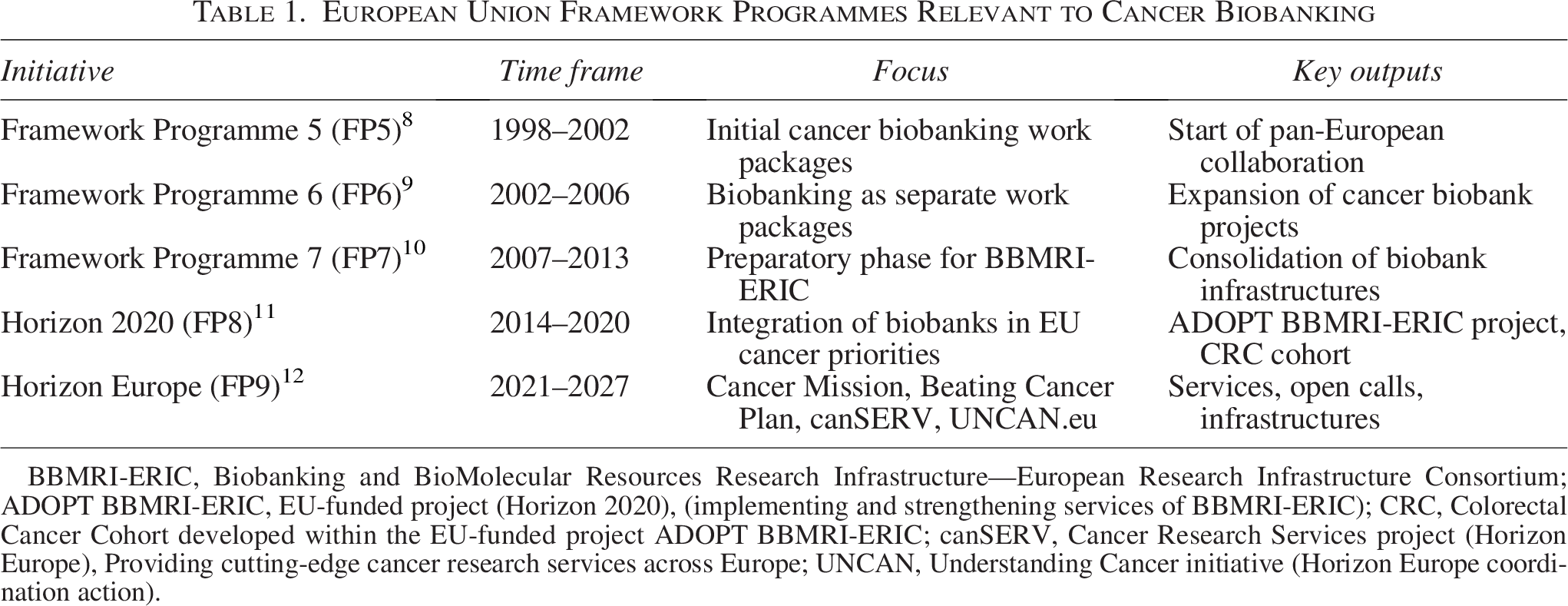
BBMRI-ERIC, Biobanking and BioMolecular Resources Research Infrastructure—European Research Infrastructure Consortium; ADOPT BBMRI-ERIC, EU-funded project (Horizon 2020), (implementing and strengthening services of BBMRI-ERIC); CRC, Colorectal Cancer Cohort developed within the EU-funded project ADOPT BBMRI-ERIC; canSERV, Cancer Research Services project (Horizon Europe), Providing cutting-edge cancer research services across Europe; UNCAN, Understanding Cancer initiative (Horizon Europe coordination action).
During the FP5 and FP6 Framework Programmes, the European Commission supported a series of foundational biobanking and tissue-banking initiatives that played a critical role in shaping today’s structured European biobank landscape. Although operating under heterogeneous terminology—ranging from “tissue networks” to early “biosample repositories”—these projects collectively established the first coordinated European efforts in tissue collection, quality assurance, data harmonization, and cross-border sample sharing.8,9 This period represents a crucial developmental phase in which technical standards, operational concepts, and collaborative practices were tested and validated, ultimately enabling the emergence of more formalised infrastructures such as BBMRI under FP7 and the biobanking capacities that now underpin Europe’s cancer research strategies. 13
The European Union considers the EU Member States as world leaders in the development of biobanking infrastructure to support research, making substantial annual investments to support such initiatives. 13 Biobanks are embedded in complex networks of research collaborations that span regions, countries and the globe. 9 The development of biobanks has been recognized as a major challenge in the European Union over the past three decades. Consequently, the establishment, support, and long-term operation of biobanking infrastructures have become a central focus of successive EU Framework Programmes for research, development, and innovation—namely FP5, FP6, FP7, FP8 (Horizon 2020)—and have been further reinforced under HE. The main objectives and key contributions of these programmes are summarized in Table 2.
Major European Union Initiatives Relevant to Cancer Biobanking
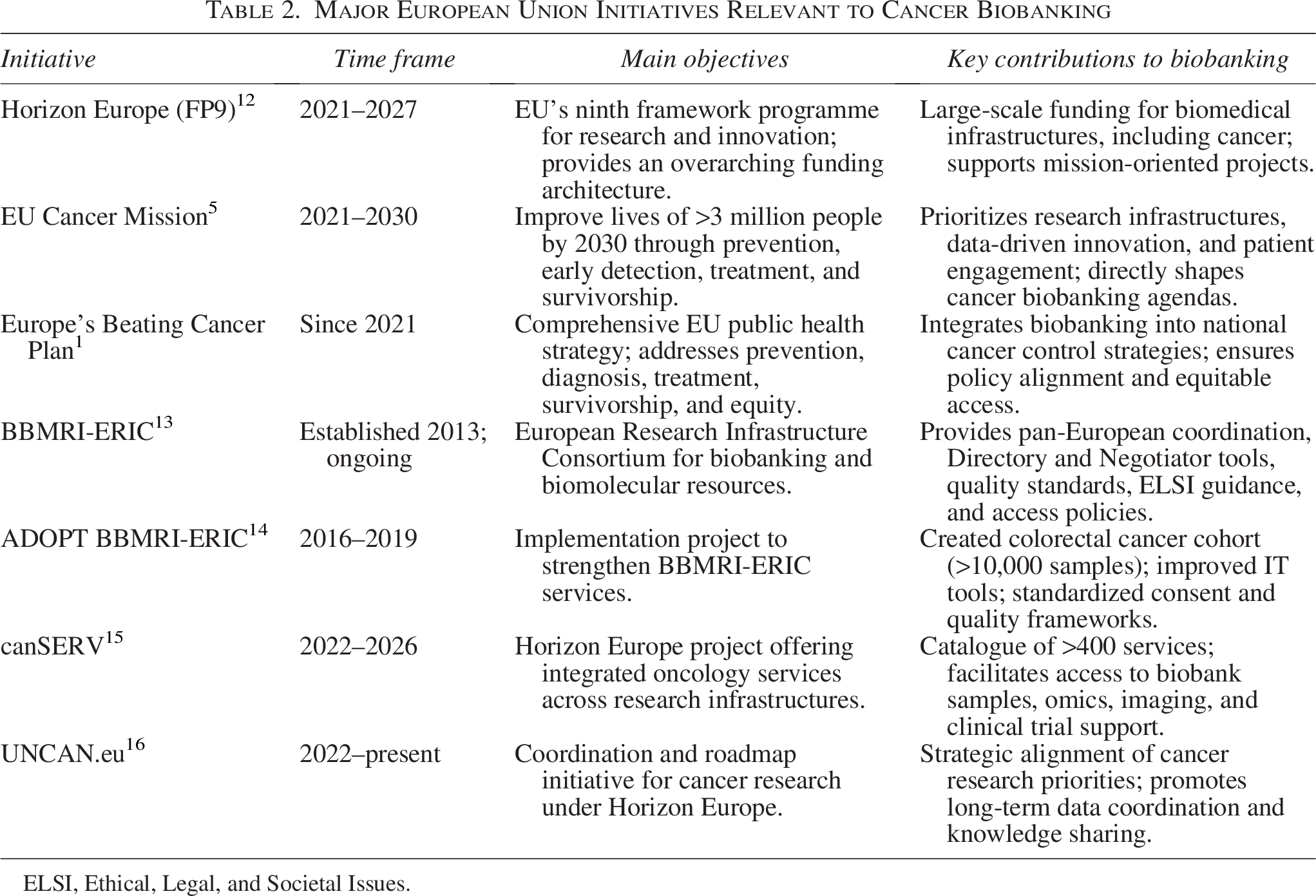
ELSI, Ethical, Legal, and Societal Issues.
Biobanks became an integral part of many cancer-related projects in European research, and BBMRI-ERIC—a pan-European network of biobanks—is the largest biobank network in the world.
Key European Initiatives and Infrastructures
Horizon Europe
HE is the EU’s ninth key funding program for research and innovation for 2021–2027 with a budget of €93.5 billion. 12 HE provides the overarching funding architecture for biomedical infrastructures and cancer research. Within this framework, the Cancer Mission has been established as a flagship initiative with the explicit goal of improving the lives of more than three million Europeans by 2030. 5 It promotes better prevention, earlier diagnosis, more effective treatment, and improved quality of life for cancer survivors. Mission prioritizes research infrastructures (IRs), data-driven innovation, and patient engagement, directly shaping the agenda for cancer biobanking and related services.
Complementing these research-focused efforts, Europe’s Beating Cancer Plan functions as the EU’s comprehensive public health strategy. 1 While not a research program itself, it establishes policy drivers and funding streams that reinforce and extend Cancer Mission activities. Its focus areas include cancer prevention, early detection, equitable access to diagnosis and treatment, and survivorship support. Importantly, the Europe’s Beating Cancer Plan emphasizes reducing inequalities across EU Member States and encourages the integration of biobanking and data infrastructures into national cancer control strategies.
Taken together, these three instruments are mutually reinforcing:
HE provides the financial and structural framework for innovation. Cancer Mission translates research priorities into tangible projects and infrastructures. Europe’s Beating Cancer Plan ensures policy alignment and uptake into health systems.
This coordinated approach reduces redundancy, strengthens connections between infrastructures such as BBMRI-ERIC and canSERV, and accelerates the translation of biobanking resources into meaningful benefits for patients, researchers, and societies across Europe.
BBMRI-ERIC
The BBMRI-ERIC is the cornerstone of European biobanking. 13 Established in 2013, BBMRI-ERIC connects more than 500 biobanks and over 3,000 sample collections across its Member States.
Key contributions include.
Directory and Negotiator: Providing searchable access to biobanks and a central request mechanism. Common Service ELSI (Ethical, Legal, and Societal Issues): Supporting GDPR (General Data Protection Regulation) implementation, consent templates, and legal/ethical advice. Quality Management Services: Developing ISO-based certification and standard operating procedures.
BBMRI-ERIC has enabled researchers to locate, request, and access biosamples on an unprecedented scale, while ensuring compliance with ethical and legal requirements. Importantly, it has served as a training and capacity-building hub, reducing disparities in infrastructure across Europe.
canSERV
Launched as a project under HE in 2022, canSERV (Providing cutting-edge cancer research services across Europe) integrates multiple ESFRI (European Strategy Forum on Research Infrastructures) biomedical IRs into a single-entry service platform for oncology. 15 Its goal is to provide seamless transnational access to specialized services, including genomics, imaging, model systems, clinical trial support, and access to high-quality biobank samples.
Key achievements to date
Catalogue of services: More than 400 oncology-related services offered by ∼130 providers. Open calls: Enabling academic and clinical researchers to apply for free-of-charge access to services, reviewed by peer evaluation. Integration: Coordinated involvement of BBMRI-ERIC, EATRIS (European Advanced Translational Research Infrastructure in Medicine), ECRIN (European Clinical Research Infrastructure Network), Euro-BioImaging (European RI for Imaging Technologies in Biological and Biomedical Sciences), ELIXIR (Distributed infrastructure for life-science data), and others.
13
By lowering barriers to advanced technologies and biobank resources, canSERV accelerates translational cancer research and demonstrates the value of an integrated service model.
UNCAN.eu
The Understanding Cancer (UNCAN.eu) Horizon Europe coordination action initiative reflects a strategic ambition to integrate cancer research across Europe. 16 It is closely linked to both HE and Europe’s Beating Cancer Plan, serving as a platform for data sharing, research coordination, and long-term policy alignment.
Main objectives
Establishing a Knowledge Centre on Cancer to coordinate data integration and research outputs. Developing roadmaps for cancer research priorities, including prevention, early detection, and treatment. Facilitating connections between national cancer plans, research infrastructures (RIs), and EU-level strategies.
UNCAN.eu plays a complementary role by shaping the strategic vision, ensuring that European research outputs translate into actionable policies and equitable health outcomes.
By combining resources, services, and governance, these initiatives collectively strengthen Europe’s ability to deliver innovative cancer research and improve outcomes for patients across EU Member States. Main focus, strengths, weaknesses, and outputs are summarized in Table 3.
Comparative Evaluation of Major European Cancer Biobanking Initiatives
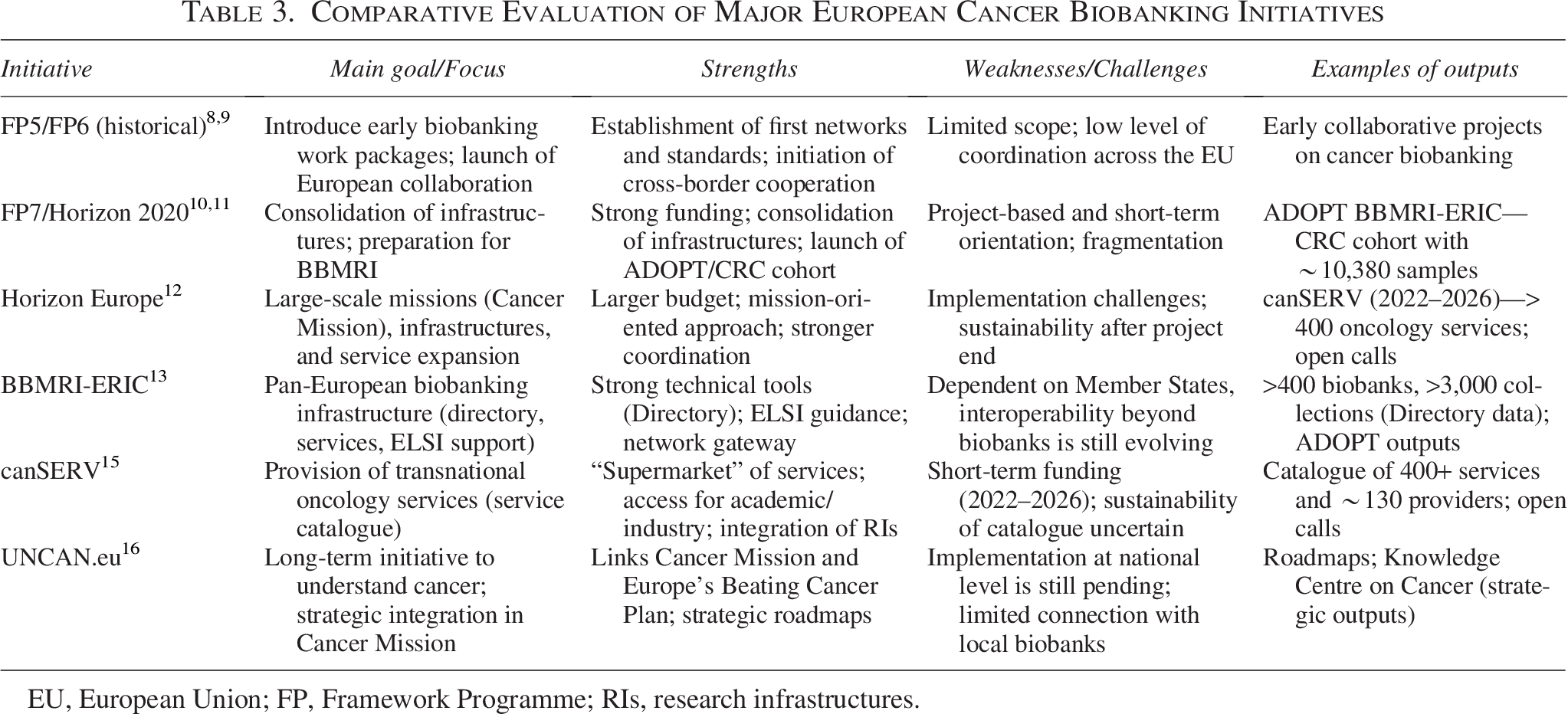
EU, European Union; FP, Framework Programme; RIs, research infrastructures.
Contribution of ADOPT BBMRI-ERIC/CRC cohort—Measurable research outputs (ADOPT is a project of BBMRI-ERIC)
The pan-European colorectal cancer cohort (CRC cohort) comprises 10,480 datasets—including clinical and pathological data and tumor tissue in formalin-fixed paraffin-embedded (FFPE) or frozen form—collected from 25 biobanks across 12 European countries. The cohort also includes whole-slide image (WSI) scans of FFPE blocks over 26 terabytes of WSI data, enabling digital pathology or computational-pathology research. 14
Contribution of canSERV project—Measurable research outputs
By 2025, canSERV’s unified service catalogue offered 531 oncology-relevant services provided by 167 distinct service providers across Europe. The consortium brings together 19 European partners—including major European RIs such as BBMRI-ERIC, EURO-BIOIMAGING, ELIXIR, INFRAFRONTIER, and ECRIN, covering the full translational oncology pipeline from biomaterials and biobanking to maging, biomolecular data, disease models, to clinical trial support. 15
ELSI in European cancer biobanking
ELSI considerations are central to biobank operations, balancing scientific advancement with individual rights. The European framework ensures technical and organizational safeguards for data confidentiality and integrity. Despite harmonization efforts, national interpretations of GDPR can create barriers to cross-border research, highlighting the need for consistent EU-level guidance and federated access models.2,3
Cross-border material and data access
GDPR represents the baseline for data transfers. Differences in national implementations and additional requirements can create barriers. Transfers within or outside the EU require Data Transfer Agreements and Material Transfer Agreements to define responsibilities, permitted uses, and security measures.17,18
Consent approaches
Informed consent remains a central ethical instrument for biobank participation. Common models include:
Optimal consent models remain under discussion, tailored to biobank-specific contexts.
Metadata and interoperability
The MIABIS standard (Minimum Information About Biobank Data Sharing) and FAIR principles (Findable, Accessible, Interoperable, Reusable) ensure discoverability and reuse of samples and data.22,23 MIABIS 3.0 Core has become the “de facto” biobank information standard within the EU.
Governance
Effective governance ensures responsible management of biological samples and associated data while maximizing research value. GDPR defines genetic and health data as special categories, requiring lawful processing bases, safeguards, and protection of data subject rights. Harmonized governance, such as BBMRI-ERIC policies, provides standardized access procedures, ethics review, and transfer agreements, reducing fragmentation and building trust.24–26
Sustainability
Sustainability determines the long-term value of biobanks across financial, technical, and social dimensions.
Financial sustainability: Diversified funding (national support, grants, service revenues) reduces dependency on short-term projects.
27
Technical sustainability: Continuous investment in IT infrastructure, data curation, and quality management ensures compliance with evolving standards.
28
Social sustainability: Public trust, participant engagement, and transparency maintain alignment with societal expectations.
29
Metrics such as access requests, publications, and translational outcomes provide evidence of impact and justify continued investment. 30
Opportunities and recommendations
Cancer biobanks are evolving from traditional repositories to dynamic infrastructures, enabling data-driven discovery and translation (see Table 4). High-quality samples associated with clinical/molecular data, and standardized services support the full cancer research continuum—from prevention and early detection to treatment development and survivorship studies. Integration with imaging, organoid, and virtual biobanks expands innovation opportunities, while adherence to interoperability standards and ELSI governance ensures accessible and trustworthy resources.
Mapping the Role of Cancer Biobanks in the Research Pipeline
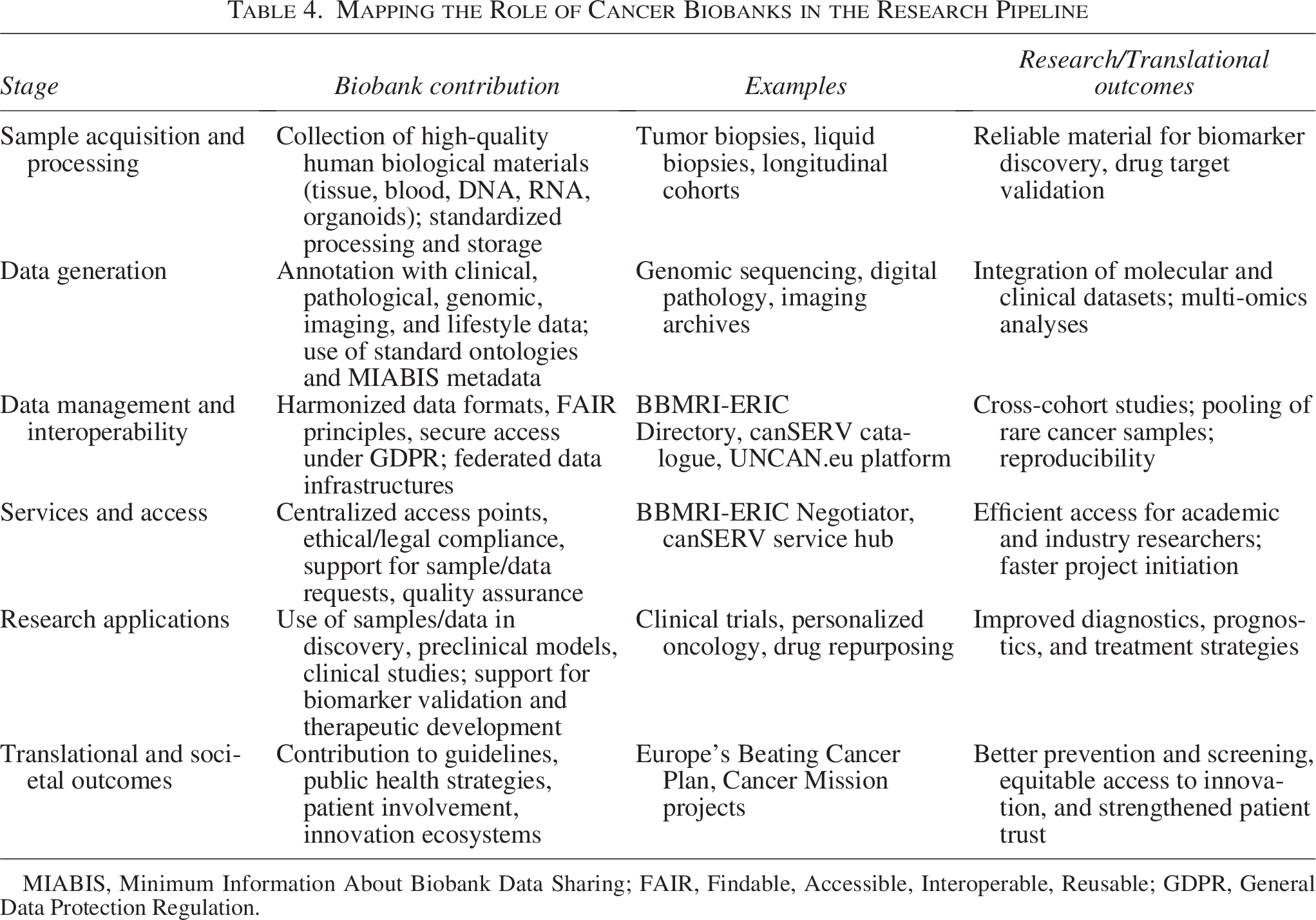
MIABIS, Minimum Information About Biobank Data Sharing; FAIR, Findable, Accessible, Interoperable, Reusable; GDPR, General Data Protection Regulation.
Centralized access points, ethical oversight, and quality-controlled services via BBMRI-ERIC and canSERV bridge the gap between basic research and clinical application. Biobanks are not only facilitators of individual projects but also strategic enablers of precision oncology and public health impact across Europe.
Challenges and Conclusions
Challenges
Key challenges for the coming years include:
Data protection and cross-border access: Harmonized solutions like federated data models are needed. Consent management: Lack of harmonized best practices complicates international collaboration. Interoperability and standards: Gaps persist despite MIABIS and FAIR (principles for data management) adoption. Sustainability and funding: Long-term business models, including public-private partnerships, are underdeveloped. Equity and inclusiveness: Limited participation from low- and middle-income countries risks reinforcing inequalities. Translation into clinical practice: Infrastructures support discovery, but measurable patient impact is inconsistent.
Conclusions
Over more than two decades, European framework programs have progressively shaped the landscape of cancer biobanking and biomedical infrastructures:
FP5–FP6 (1998–2006): Initiated cross-border collaboration and early networking.8,9 FP7 (2007–2013): Consolidated efforts, prepared BBMRI.
10
Horizon 2020 (2014–2020): Integrated biobanking into cancer research priorities, e.g., ADOPT BBMRI-ERIC and CRC cohort.11,14 HE (2021–2027): Linked biobanking to Cancer Mission and Europe’s Beating Cancer Plan; operationalized by canSERV and coordinated by UNCAN.eu.5,7,16
BBMRI-ERIC has become the largest and most comprehensive biobanking infrastructure worldwide, offering interoperable IT tools, harmonized access policies, quality standards, and ELSI frameworks.28,31 Its FP10 (2028–2034) Position Paper emphasizes: accelerating research in cancer, rare diseases, and pediatrics; strengthening international partnerships; and consolidating research efforts with diversified funding. 6
As the European research landscape moves toward FP10 (2028–2034), coordinated investment in biobanking, data infrastructures, and translational cancer research will be essential to sustain progress achieved under previous Framework Programmes. The priorities outlined below highlight concrete, actionable areas where targeted support can accelerate interoperability, strengthen quality and governance, and enhance the scientific and societal impact of shared resources. Each priority is accompanied by indicative metrics to enable transparent monitoring of progress and to support evidence-informed policy planning across the European Research Area.
FP10 actionable policy and research priorities with indicative metrics
Strengthen mission-oriented research portfolios: ≥30% FP10 R&I (Research and Innovation) budget allocated to mission-driven, cross-sectoral programmes. Scale-up translational and implementation research: ≥20% increase in funded projects progressing from TRL 4–6 to TRL 7–9 (TRL—Technology Readiness Level). Enhance data interoperability and open science uptake: ≥80% of FP10 projects are compliant with FAIR data standards and open-access publication. Boost collaborative infrastructures and cross-border testbeds: ≥10 new EU-level shared research/testbed platforms. Accelerate SME (small- and medium-sized enterprises) and deep-tech innovation pathways: ≥25% increase in successful SME scale-up cases supported through FP10 instruments. Integrate societal and environmental impact assessment: All mission projects include standardized impact metrics (e.g., health, climate, equity indicators). Improve policy uptake of R&I outputs: Annual reporting mechanism linking FP10 results to EU and national policy updates.
The trajectory from FP5 to HE shows evolution from fragmented activities to coordinated, interoperable, service-oriented infrastructures. Biobanks, through BBMRI-ERIC, canSERV, and UNCAN.eu, are strategic pillars of precision oncology and public health in Europe, with FP10 representing a critical opportunity to consolidate gains, institutionalize cross-infrastructure collaboration, and ensure enduring biomedical impact.
Footnotes
Author Disclosure Statement
The author has no conflicts of interest. No conflicting financial interests exist.
Funding Information
This work was supported by the large RI project BBMRI.cz, reg. no. LM2023033.
Author’s Contributions
J.K. is the only author of the article and is responsible for conceptualization, writing, and editing.