







Abstract
Introduction:
Bacteria can deteriorate spermatozoal quality during semen cryopreservation, compromising artificial insemination (AI) success. Antibiotics are included in extenders to reduce the harmful effects of bacterial contamination. To the best of our knowledge, this is the first study to evaluate antibiotics in ring-necked pheasant semen cryopreservation.
Objectives:
This study was designed to assess the efficiency of antibiotics (gentamicin, streptomycin, penicillin) on sperm quality and total aerobic bacterial count (TABC) of cryopreserved ring-necked pheasant (Phasianus colchicus) semen.
Methods:
Semen from eight males (40 ejaculates) was pooled, diluted with Red Fowl Extender, and divided into five treatments including a control; experiments were repeated five times. Samples were cryopreserved using 10% glycerol and stored at −196°C. Sperm quality was assessed at multiple stages postdilution, postcooling, postequilibration, and post-thaw, along with fertility outcomes via AI. TABC was determined by culturing thawed samples at 37°C.
Results:
All antibiotic treatments significantly improved semen quality compared with the control, with the streptomycin–penicillin (SP) combination yielding the best results across all stages. The SP group exhibited higher acrosome integrity and sperm livability (p < 0.01). Fertility trials showed higher fertilization and hatch rates in the postdilution group compared with the post-thaw group. TABC was below the detectable limits (<1.0 × 10⁴ colony-forming units [CFU]/mL) in all the antibiotic-treated extenders compared with 1.1 × 10⁴ CFU/mL in the control.
Conclusion:
This study supports the use of antibiotic-enriched extenders to reduce bacterial contamination and enhance reproductive outcomes in avian AI programs, with potential benefits for conservation. Further work is recommended to elucidate mechanisms and optimize antibiotic concentration for long-term storage.
Introduction
The conservation of wildlife species, particularly those facing habitat loss and reproduction problems, has become a major concern globally. 1 One of the wildlife species of crucial ecological and economic value is Ring-necked pheasant (Phasianus colchicus). This bird not only contributes to biodiversity but also holds economic importance in game hunting and farming industries. However, human activities and habitat destruction have led to a decrease in their population. 2 Recent research highlights that maintaining reproductive health and genetic diversity is essential for the long-term survival of such species.3,4 In this regard, studies focusing on reproductive interventions in conservation biology have gained increasing attention.5–7
Captive breeding combined with AI using cryopreserved semen has proven to be a beneficial tool for wildlife conservation and maintaining genetic diversity in birds. 3 Cryopreservation of semen ensures long-term storage and transfer of genetic material, facilitating AI and reducing genetic bottlenecks. 6 However, bacteria found in cryopreserved semen can significantly harm the quality of the semen and might directly compete with sperm to take nutrition or may produce harmful metabolic by-products.7,8 Previous studies on mammalian semen, such as in buffalo bulls, have demonstrated that microbial interactions and oxidative stress can significantly influence post-thaw sperm quality. 5 Similarly, oxidative stress has been identified as a key factor affecting sperm motility, viability, and acrosome integrity following cryopreservation in avian semen. 9
Bacterial contamination during semen collection and storage poses a substantial threat to sperm integrity and fertility. Studies have reported bacterial loads in avian semen ranging from 10³ to 106 CFU/mL, often leading to reduced motility, acrosome damage, and oxidative stress.7,10 Addressing these issues requires strategies such as the use of antibiotics in semen extenders to minimize microbial growth and improve semen quality. While several additives (e.g., antioxidants, amino acids) have been studied in mammalian semen preservation,11,12 there is limited research evaluating the impact of antibiotics on avian sperm quality, particularly in ring-necked pheasants. Moreover, studies directly assessing bacterial load and sperm functionality in cryopreserved pheasant semen remain scarce, representing a clear knowledge gap. 13
Therefore, the present study aims to explore for the first time the effects of gentamicin, streptomycin, and penicillin on sperm quality and TABC of frozen semen of ring-necked pheasant. We hypothesize that the addition of antibiotics to semen extenders during cryopreservation will reduce bacterial contamination and improve post-thaw sperm quality in Ring-necked pheasants.
Materials and Methods
Ethical statement
The study was approved by the Board of Advanced Studies and Research (BASR), University of Lahore, Pakistan (Meeting 47, Item 25A), and was conducted in accordance with institutional and national guidelines for animal care and use. Informed consent was not applicable, as this study did not involve human participants.
Microbial analysis
Preparation of culture media
To check the growth of bacterial colonies, culture media was prepared by adding 5 g of bacteriological agar (Oxoid, England), 20 g of Tryptone Soya agar (Oxoid), and 0.5 g of yeast extract (Oxoid) to 500 mL of distilled water. 14 The culture medium was autoclaved and then poured into sterile petri plates. Plates were then incubated at 37°C for 24 hours and visually inspected for sterility before use. Afterward, the plates were kept at 37°C for 24 hours and then checked.
Total aerobic bacterial counting
TABC of frozen semen of ring-necked pheasant was determined at 37°C of thawed samples by the Miles Misra technique. 15 Lines were drawn on an agar plate with the help of a waterproof marker that divided the area into eight sectors. A drop of 0.02 mL from the sample was inoculated in every sector. A total of four drops were used per sample dilution. After drying the drops, the plates were incubated at 37°C for 24 hours. A sample with around 30 colonies per drop was chosen, and a digital colony counter was used to count the colonies. The average count per sample was calculated based on four drops.
Semen processing
Extender preparation
The Red Fowl Extender (RFE) was prepared with sodium glutamate (2.1 g), D-fructose (1.15 g), polyvinyl pyrrolidone (0.6 g), potassium acetate (0.5 g), and glycine (0.2 g) were added into 100 mL of distilled water. The formulation of RFE was based on previously published avian extender recipes. 16 The extender pH was maintained at 7.0.
Sample collection and quantitative evaluation
To collect semen samples from eight sexually mature ring-necked pheasant, an abdominal massage technique was used. 17 Semen was collected in the morning twice per week from each bird to balance sperm recovery and animal welfare. This frequency is commonly used in avian semen studies to allow recovery between collections and reduce variation associated with repeated daily collections. 18 Each pheasant gave a total of five ejaculates during the span of the study. Accordingly, 40 ejaculations were collected in almost 3 weeks. Immediately after collection, semen samples were evaluated for physical characteristics, including volume (measured with a micropipette), color (visually assessed as milky-white to creamy, indicating normal concentration), and pH (determined using narrow-range pH paper, expected range 7.0–7.4). These parameters were recorded for each ejaculate prior to pooling. Each ejaculate was transferred into sterile collection tubes and placed in a 37°C water bath to maintain sperm motility and viability until pooling. All ejaculates collected on the same day were pooled in equal volumes within 30 minutes to minimize individual variation and to obtain a homogeneous sample for experimental treatments.
For the measurement of the collected samples, a micropipette was used. The volume of semen was taken in microliters. Semen was placed on a prewarmed slide at 37°C to observe motile sperms using a phase-contrast microscope (400×, Olympus BX20, Japan). The concentration of sperm was assessed by getting 1 µL of the semen sample and 200 µL of the solution of formal citrate, which was prepared by adding 37% formaldehyde (1 mL) in 2.9% sodium citrate (99 mL) with the help of an instrument called the Neubauer chamber (Marienfeld, Germany). Each sample was measured three times (triplicate readings), and the mean ± SD was calculated for accuracy. The analysis was performed in triplicate to minimize inaccuracy. Fresh pooled semen samples were maintained in a 37°C water bath for 15 minutes (holding time) before dividing into aliquots for extender treatment.
Processing of semen with prepared extender and storage
Following initial evaluation, the pooled semen was divided into five equal aliquots (each representing one treatment group) to ensure uniform sperm concentration and equal total semen volume across treatments. Each aliquot was extended with a RFE, with antibiotics introduced at the following concentrations: gentamicin 500 µg/mL, streptomycin 1000 µg/mL, penicillin 1000 IU/mL, and a combination (SP) of streptomycin 1000 µg/mL + penicillin 1000 IU/mL. The chosen antibiotic concentrations were selected based on previously published optimization approaches for semen additives and antimicrobial use in semen extenders and on concentrations reported to reduce bacterial load while preserving sperm function. 19 The antibiotic-free extender served as the control. All the treatments were given names such as gentamicin, streptomycin, penicillin, SP, and control, respectively.
Semen aliquots were kept at 37°C during extender addition and antibiotic treatment to prevent cold shock. Samples were then gradually chilled to 4°C, supplemented with 10% glycerol, equilibrated for 10–15 minutes, and loaded into 0.5 mL French straws. The straws were sealed, taped, and placed in labeled goblets, then placed above vapors of liquid nitrogen almost 5 cm above its level in a liquid nitrogen tank for 10 minutes to freeze the samples (from 4°C to 80°C). After 10 minutes, the samples were dipped down into liquid nitrogen to cryopreserve at −196°C. For thawing (performed after at least 24 hours in liquid nitrogen), straws were placed in a 37°C water bath for 30 seconds; after thawing, samples were kept at 37°C and assessed for motility, viability, and membrane integrity within 4 hours.
Semen quality assays
Sperm motility
To determine the spermatozoal motility a small drop (5ul) of diluted (1:1) sample was placed over a prewarmed (at 37°C) slide under a 400× phase-contrast microscope as suggested by Zemjanis. 20 Sperm motility percentage was determined using a phase-contrast microscope (400×) by counting at least 200 spermatozoa in randomly selected fields and calculating the percentage of motile sperm relative to the total observed.
Sperm plasma membrane integrity
Sperm membrane integrity was estimated by hypo-osmotic swelling (HOS) following Daoud et al. 21 The HOS test involved mixing 1 gram of sodium citrate with 100 mL of distilled water to create the test solution. Briefly, 5 µL of the sample was added to 50 µL of HOS solution and incubated at 37°C for 15 minutes. A droplet was then examined on a prewarmed slide under phase-contrast microscopy (100× oil-immersion objective with 10× eyepiece). Approximately 200 spermatozoa were counted for each sample. Spermatozoa exhibiting swollen tails and noninflamed heads were considered to have intact plasma membranes (Fig. 1). Results are presented as percentages.
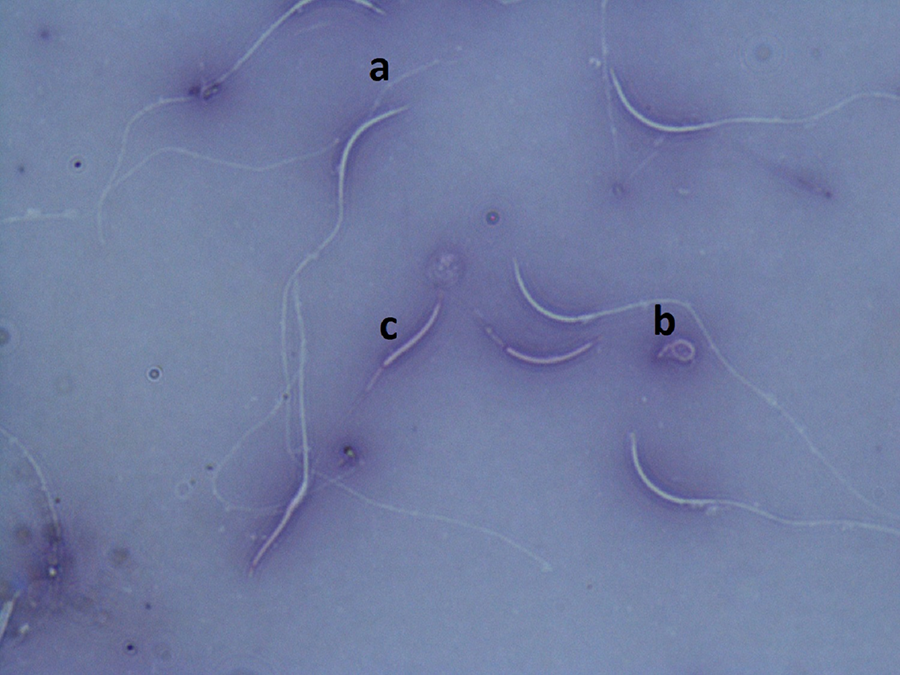
Plasma membrane integrity (PMI) of ring-necked pheasant spermatozoa evaluated by the hypo-osmotic swelling (HOS) test.
Sperm livability
To assess the sperm livability (percentage of live sperms/total number of sperms), Lake Glutamate solution was prepared following Ansari et al. 22 One drop of semen was mixed with 12 drops of stain, a smear was prepared, air-dried, and examined under oil immersion (100× objective). Approximately 200 spermatozoa were scored; unstained sperm were considered alive while pink/red stained sperm were counted as dead (Fig. 2). Results are reported as percentages.
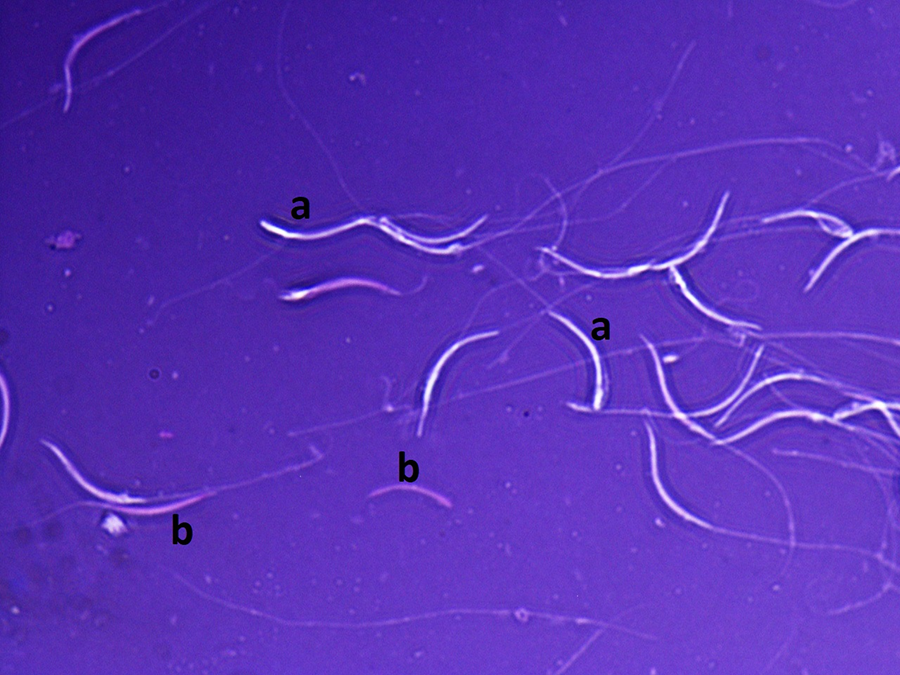
Sperm livability assessed using eosin-nigrosin staining.
Acrosome integrity
The acrosomal integrity of ring-necked pheasant was evaluated by the Giemsa staining procedure.23–25 Slides were air-dried and fixed in neutral formal saline (5% formaldehyde) for 30 minutes, then stained with Giemsa for 1.5 hours. At least 200 spermatozoa were evaluated per slide under 1000× magnification (oil immersion). Intact acrosomes showed uniform staining, whereas disrupted acrosomes presented irregular or absent staining (Fig. 3).
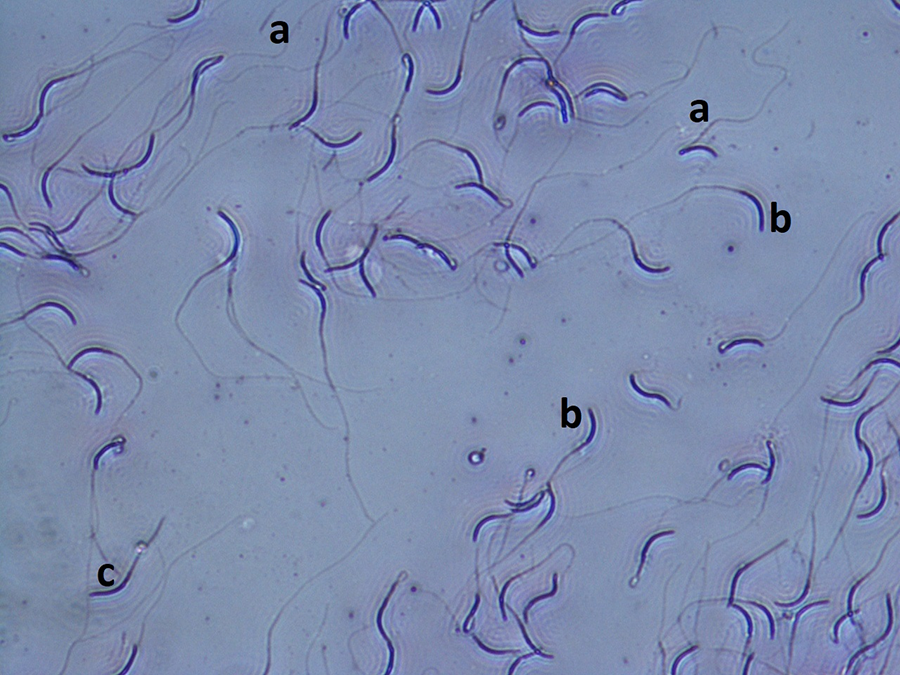
Acrosome integrity of ring-necked pheasant spermatozoa using Giemsa staining.
Removal of glycerol and AI
Glycerol was removed from the semen samples before fertility measurements. The thawed samples were progressively diluted with Lake Centri medium at 5°C to a final dilution of 1:4 (v/v) using the following steps: 1:0.07, 1:0.18, 1:0.33, 1:0.6, 1:1.24, and 1:1.58 (v/v), each step at 2-minute intervals. These stepwise dilution steps, adapted from standard cryoprotectant removal protocols, were used to minimize osmotic and oxidative stress during glycerol removal. 26 The samples were then centrifuged at 600 × g for 10 minutes, the supernatant was discarded, and the pellets were measured to determine volume and concentration of sperm with a digital photometer ACCUREAD® (IMV Technologies, France). 27
For artificial insemination (AI), 15 female pheasants were divided equally into six groups (n = 2–3 per treatment) corresponding to the five antibiotic treatments and one control. Each female was inseminated with freshly diluted or frozen-thawed semen containing approximately 270–300 million sperm, using an AI gun (IMV Technologies, France) fitted with a glass pipette. The insemination depth was maintained at 4 cm. 28
Fertility assessment
Egg collection commenced 2 days after the first insemination and continued for up to 6 days. Collected eggs were set in an automatic incubator, maintaining a temperature of 37°C–38°C and relative humidity of 86%–90%. The eggs were rotated daily using an automatic rotator, which was stopped 3 days prior to hatching. Fertility was assessed by candling the eggs on day 7 of incubation, as outlined by Rakha et al.
16
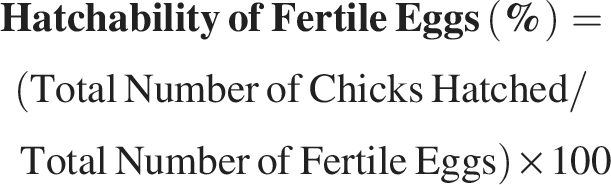
Fertility attributes were calculated using the following formulas:


Statistical analysis
Semen quality parameters at different cryopreservation stages were analyzed using one-way Analysis of Variance (ANOVA)(α = 0.05) under a Completely Randomized Design, followed by Tukey’s HSD test for mean comparisons. Analyses were conducted in SPSS v.25 (IBM Corp.), while fertility data were evaluated using the chi-square test in Megastat® (v.7.25, McGraw-Hill). The limited number of males (n = 8) was due to ethical and availability constraints; however, repeated ejaculates (n = 40) and five experimental replicates helped strengthen the data. Although no a priori power analysis was conducted, future studies should include larger sample sizes for validation. 29
Results
Effect of antibiotics on sperm quality parameters
The data on the effect of antibiotics on sperm quality parameters at various stages of cryopreservation are given in Figures 4–7. All antibiotics tested effectively limit bacterial growth. Assessing their impact on sperm quality parameters offers valuable insights into effective microbial control while preserving sperm function. After dilution, motility was highest in the penicillin-treated group (88.33 ± 5.77%) and lowest in the control (78.33 ± 2.89%). Although mean motility values declined gradually through cooling, equilibration, and thawing stages, the SP (combined antibiotics) group consistently maintained the highest motility across all stages, particularly after thawing (80.00 ± 1.00%), compared with the control (67.00 ± 1.73%). However, one-way ANOVA showed no significant differences among treatments at any stage (p = 0.16), though the SP combination appeared to better preserve motility during cryopreservation (Fig. 4).
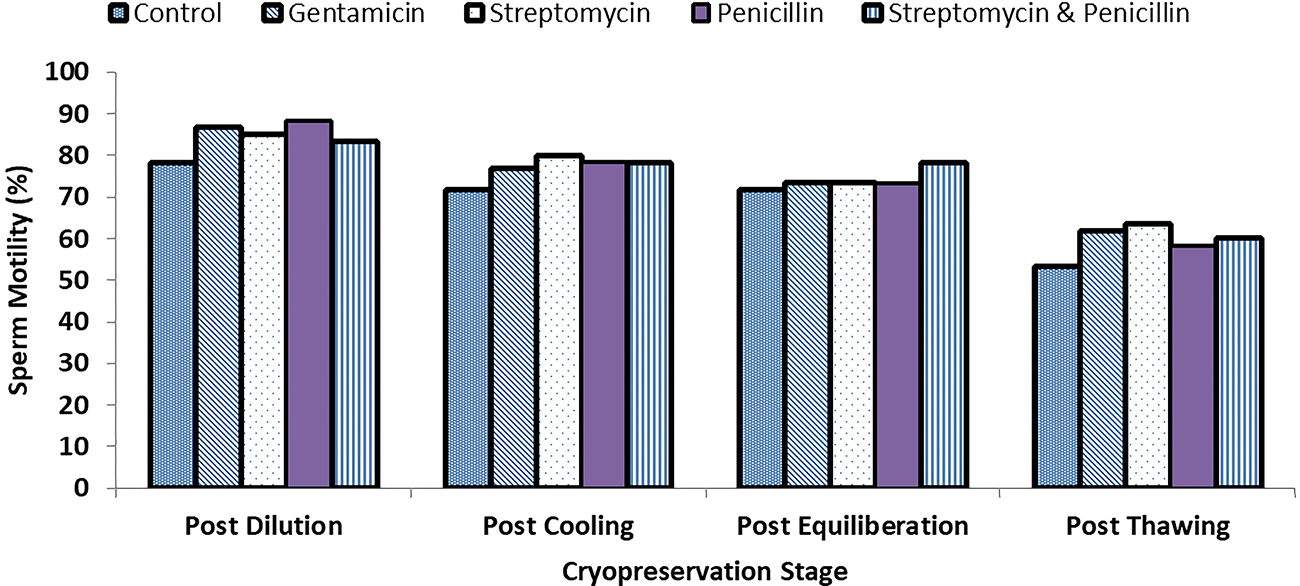
Effect of antibiotic treatments on sperm motility at different cryopreservation stages. Treatments: control, gentamicin (500 µg/mL), streptomycin (1000 µg/mL), penicillin (1000 IU/mL), and SP (streptomycin + penicillin; 1000 µg/mL + 1000 IU/mL). Data = mean ± standard deviation (SD) (n = 8); one-way ANOVA.
Plasma membrane integrity (PMI) values showed a similar trend to motility, with slightly higher percentages in the antibiotic-supplemented groups than in the control. Post-thaw PMI ranged from 70.67 ± 9.61% in the control to 78.67 ± 4.93% in the streptomycin-treated samples. ANOVA revealed no significant differences among treatments at any stage (p > 0.05), likely due to small sample size and biological variability among ejaculates. Despite the lack of statistical significance, the consistently higher mean PMI in antibiotic groups suggests a modest protective effect on the sperm plasma membrane during freezing and thawing (Fig. 5).
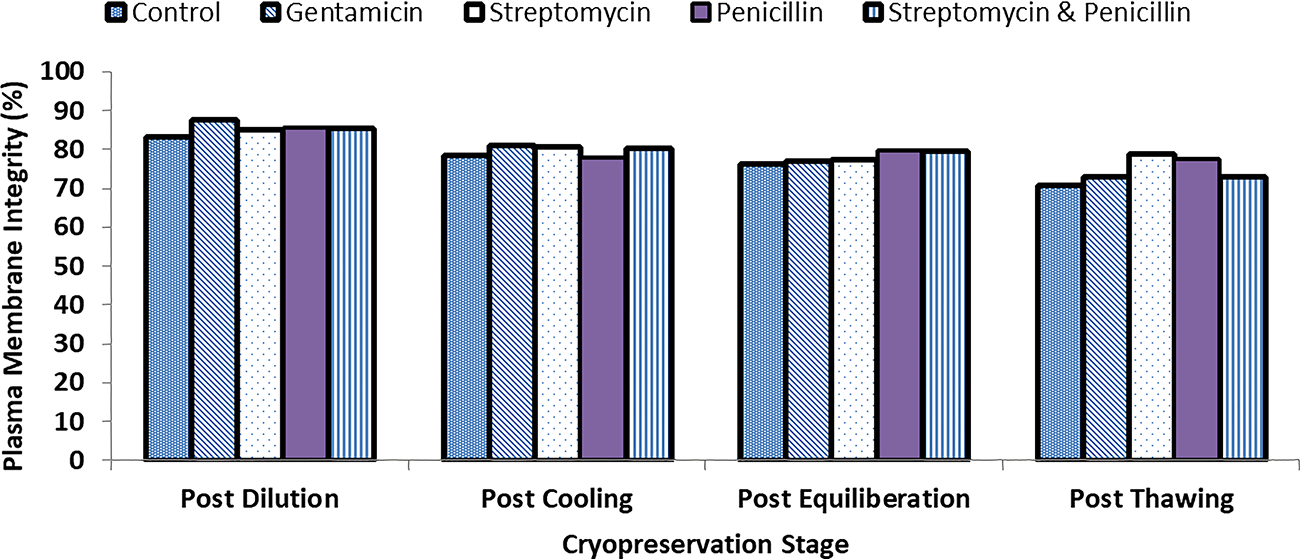
Effect of antibiotics on sperm plasma membrane integrity (PMI) during cryopreservation. Gentamicin and SP showed higher PMI than control, indicating better membrane protection. Mean ± SD (n = 8); analyzed by ANOVA.
Acrosome integrity showed significant variation at different stages. At postdilution, the highest integrity (86.33 ± 1.86) was shown by SP, being the only treatment superior to control (p = 0.0036)). During postcooling, group differences remained significant (p = 0.00055), and again SP showed the highest integrity (85.00 ± 0.89). At the postequilibration stage, no significant differences were found (p = 0.061), but SP indicated a consistent trend of higher value (79.67 ± 1.52). The differences were highly significant at post-thawing stage (p < 0.0001) with SP preserving the highest acrosome integrity (80.00 ± 0.89), followed by streptomycin, and Tukey’s post hoc analysis confirming that SP was significantly better than the control (Fig. 6).
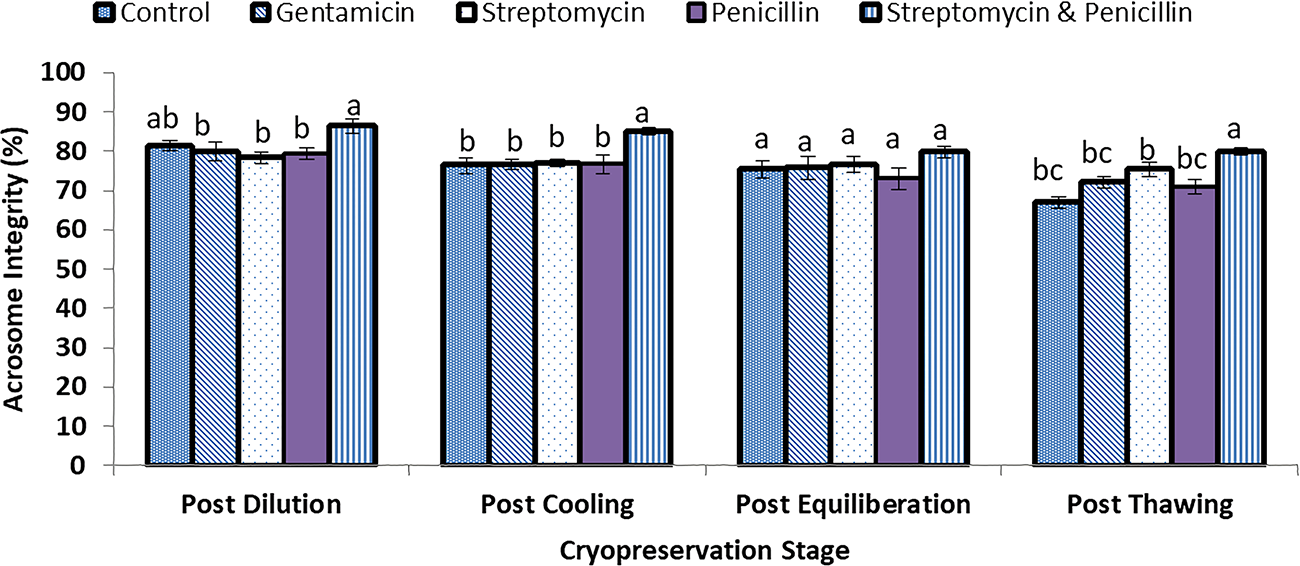
Effect of antibiotics on sperm acrosome integrity at different cryopreservation stages. SP maintained the highest acrosome integrity post-thaw, outperforming individual antibiotics. Data = mean ± SD (n = 8); ANOVA + Tukey’s HSD (Honestly Significant Difference).
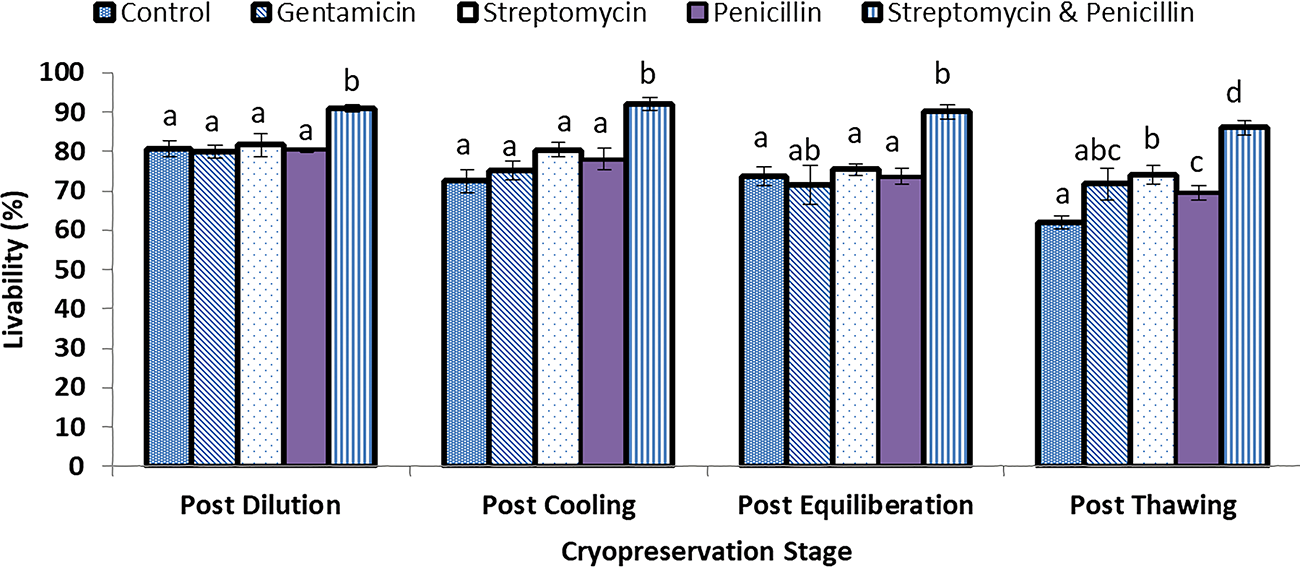
Effect of antibiotic treatments on sperm livability during cryopreservation. SP (streptomycin + penicillin) achieved significantly higher post-thaw livability (p < 0.001), confirming superior cryoprotection. Data = mean ± SD (n = 8); ANOVA + Tukey’s HSD.
The combination of SP consistently demonstrated the highest sperm livability across all cryopreservation stages. The SP group showed notably higher livability percentages across all stages, with post-thaw values (86.00 ± 1.79%) substantially exceeding those of the control (62.00 ± 1.55%). One-way ANOVA revealed significant treatment effects at postdilution (p = 0.0036), postcooling (p = 0.00045), and post-thaw stages (p < 0.0001), while postequilibration differences approached significance (p = 0.0611). Tukey’s HSD post hoc comparisons confirmed that the SP group exhibited significantly higher livability than the control and most single-antibiotic treatments (p < 0.01). These outcomes indicate that the SP combination consistently provided the most robust protection against cryo-induced cellular damage (Fig. 7).
Fertility assessment
A comparative analysis of fertility performance between the postdilution and post-thawing stages is presented in Table 1. There was a consistent decline in fertility performance after thawing. The average number of eggs laid per day was higher in the postdilution group (14.8 ± 0.6) than in the post-thaw group (12.4 ± 0.7). Fertility percentage was significantly higher in the postdilution group (78.4 ± 2.4%) compared with post-thaw (64.7 ± 3.1%) (p < 0.05). To enhance the reliability of these estimates, 95% confidence intervals (CIs) were calculated. Fertility in the postdilution group was 78.4% (95% CI: 73.7–83.1%), while in the post-thaw group it was 64.7% (95% CI: 58.5–70.9%). Hatch performance showed a similar trend, with more chicks hatched (9.8 ± 0.5 vs. 6.8 ± 0.6) and higher hatch rates (66.2 ± 2.7% vs. 54.7 ± 3.2%) in the postdilution group. The 95% CI for hatch rate was 60.9–71.5% (postdilution) and 49.0–60.4% (post-thaw). However, hatchability of fertile eggs remained comparable between groups (84.5 ± 3.2% vs. 85.2 ± 3.6%), with overlapping confidence intervals (95% CI: 78.0–91.0% vs. 78.4–92.0%), confirming no statistically significant difference (p > 0.05). These results indicate that while cryopreservation adversely affects fertilization and hatch rates, it does not significantly impair postfertilization embryo viability.
Fertility Performance of Ring-Necked Pheasant (Phasianus colchicus) at Postdilution and Post-Thaw Stages Following Cryopreservation (Mean ± SD)
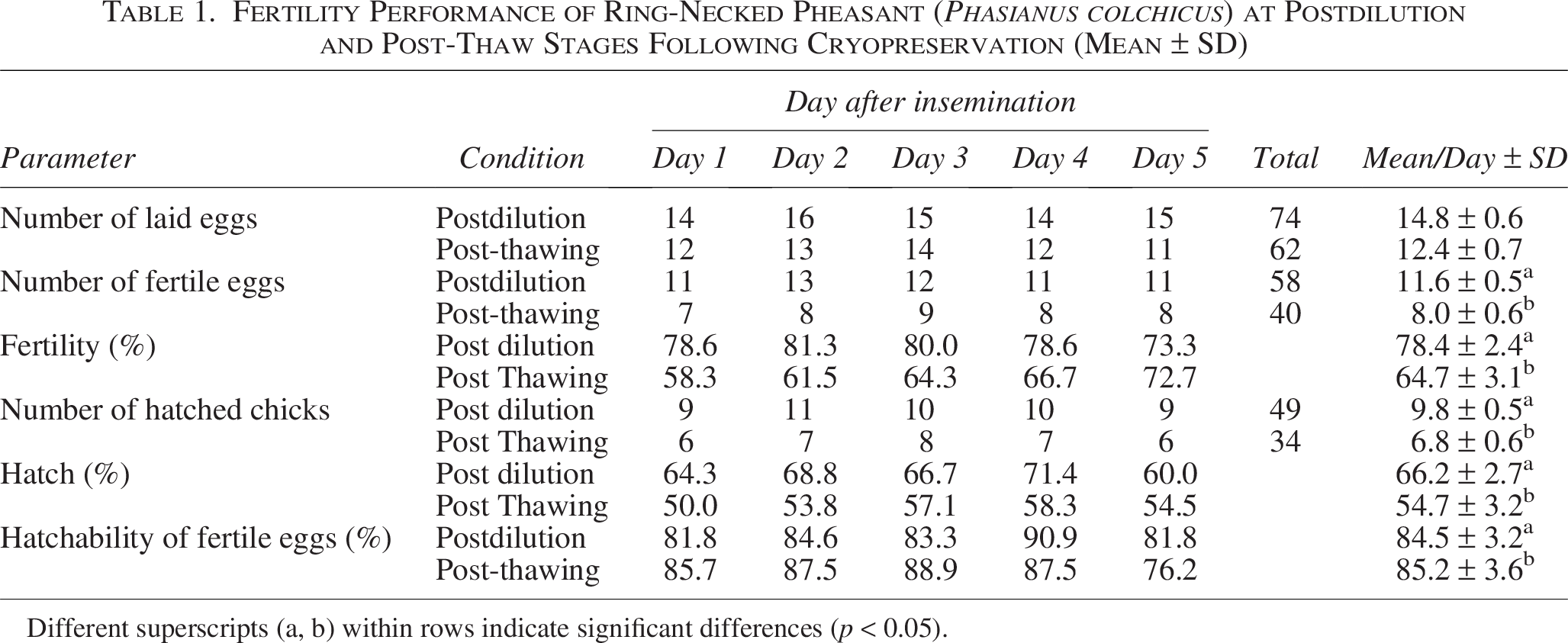
Different superscripts (a, b) within rows indicate significant differences (p < 0.05).
Total aerobic bacterial count
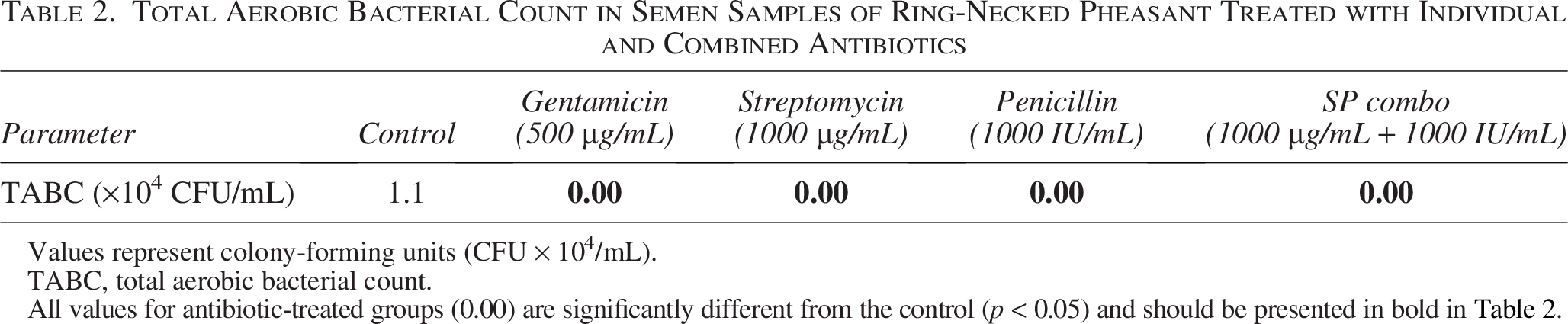
The addition of antibiotics to semen extenders resulted in complete inhibition of aerobic bacterial growth in all the treated groups. TABC was 0.00 (1 × 10⁴ CFU/mL) in all the extenders treated with antibiotics, that is, gentamicin (500 µg/mL), streptomycin (1000 µg/mL), penicillin (1000 IU/mL), and SP (1000 µg/mL–1000 IU/mL) compared with control, which was 1.1 (1 × 10⁴ CFU/mL) as presented in Table 2.
Total Aerobic Bacterial Count in Semen Samples of Ring-Necked Pheasant Treated with Individual and Combined Antibiotics
Values represent colony-forming units (CFU × 104/mL).
TABC, total aerobic bacterial count.
All values for antibiotic-treated groups (0.00) are significantly different from the control (p < 0.05) and should be presented in bold in Table 2.
Discussion
The current study explains the comparative effectiveness of routinely used antibiotics such as gentamicin, streptomycin, and penicillin, and their synergistic combination (SP), in maintenance of sperm quality parameters at various cryopreservation levels, specifically, motility, membrane and acrosome integrity, livability, fertility, and microbial suppression. The findings hold significant implications for optimizing avian semen cryopreservation protocols, where post-thaw sperm viability and fertility remain tough challenges.30–32 The results hold significant implications for optimizing avian semen cryopreservation protocols. However, limitations such as the small sample size and lack of long-term storage evaluation should be acknowledged, as they may influence the broader interpretation of reproductive performance. 33
Effect on sperm motility
The nonsignificant but persisting improvement of postdilution and after-cooling sperm motility seen across all antibiotics is consistent with earlier results reporting that antibiotics, primarily antimicrobial, but might also have preservative effects against oxidative stress and membrane destabilization.34,35 Throughout the cooling phase, the superiority of streptomycin is consistent with the results of Khan et al., 36 in which aminoglycosides were shown to maintain the membrane potential and limit lipid peroxidation induced by cold shock. Although such post-thaw motility reduction is, of course, well proven in cryobiology, 37 treatments maintained somewhat higher motility than controls, implying that there are remaining protective effects which might explain somewhat preserved membrane integrity. 38
Plasma membrane integrity
Gentamicin consistently produced the highest PMI values, and this can be explained by the dual antimicrobial and antioxidant characteristics that it possesses, as reported before in cases of bovine and ovine models.39–41 The absence of statistically significant differences may be related to the sample size or to biological variability, but the trends confirm the literature that gentamicin inclusion into extenders exhibits reduced microbial contamination and reactive oxygen species (ROS) accumulation.42,43 Although mechanistic assays were not performed in the present study, previous research indicates that antibiotics can stabilize sperm membranes, reduce ROS generation, and limit capacitation-like changes during cryopreservation.44–48 These indirect protective effects, in addition to bacterial reduction, may explain the enhanced post-thaw sperm quality, and future studies should verify these mechanisms in P. colchicus.
Acrosome integrity
The SP treatment exhibited superior acrosomal preservation, particularly during the postdilution and post-thaw stages, outperforming individual antibiotics. Since the acrosome is especially sensitive to cryo-induced enzymatic leakage and oxidative injury,49,50 the high post-thaw acrosomal integrity (80%) observed in SP-treated samples underscores the benefits of combined antimicrobial and antioxidative protection. This outcome supports previous studies demonstrating that multicomponent protective agents can improve sperm cryoresistance via antioxidative mechanisms.47,51,52
Sperm livability
The livability trends support the above-mentioned results, which found the SP again to be the most efficacious treatment at all stages, obtaining significant improvement over controls (p < 0.001). Livability is coupled with both cellular metabolic status and the integrity of membranes and hence places SP in a pluralistic protectant category. Similar results were obtained by Bucak et al. 53 and Bergeron and Manjunath, 54 who emphasized the importance of antibiotic combinations and seminal plasma protein interactions in extending the life span of sperm under cryo-stress. The greater retention of livability after thawing of SP (86%) is further proof of its abilities to neutralize the osmotic and ROS caused by cryo-injury.48,55
Fertility assessment
As a result of ice crystal formation, stress due to oxygen and changes in the membranes, sperm may incur sublethal damage that negatively affects their fertilizing ability.56–58 Post-thaw fertility declined significantly (from 78.4% postdilution to 64.7% post-thaw), a trend similar to that reported for other avian species. 59 Similar patterns have been reported in mammalian studies where oxidative stress and toxic by-products reduce sperm functionality. 60 However, hatchability of fertile eggs is equivalent for both groups, which indicates that after fertilization, embryonic development is normal in both groups, consistent with prior observations. 61
TABC and cytotoxicity
The absence of aerobic bacterial growth in samples treated with gentamicin, streptomycin, penicillin, or their SP mixture confirms the strong antimicrobial capacity of these agents.62–64 At the tested concentrations (gentamicin: 500 µg/mL; streptomycin: 1000 µg/mL; penicillin: 1000 IU/mL; SP: 1000 µg/mL–1000 IU/mL), no cytotoxic effects on sperm motility, PMI, or livability were observed. This observation is consistent with reports assessing cellular stress and cytotoxicity in reproductive tissues under various treatments. 65
Although long-term cryostorage was not evaluated in this study due to limited sample availability during the short breeding season, our 24-hour assessment aligns with recent avian studies.66,67 Previous work has reported that antibiotics in semen extenders do not impair sperm quality in avian cryopreservation. 7 Moreover, Pariz et al. 68 showed that long-term storage, even up to 12 years, did not significantly affect sperm survival compared with samples stored for 24 hours. The SP combination has generally produced neutral or beneficial outcomes in both avian and mammalian semen.7,69–71 Nonetheless, a key limitation of the present study remains the lack of extended storage data, and future work should investigate the long-term effects of antibiotics in P. colchicus semen.
Conclusion
The tested concentrations of gentamicin (500 µg/mL), streptomycin (1000 µg/mL), penicillin (1000 IU/mL), and SP (1000 µg/mL–1000 IU/mL) had no adverse effects on sperm motility, PMI, or viability. Among all treatments, the SP combination yielded a statistically significant improvement (p < 0.05) in post-thaw sperm livability and acrosome integrity, indicating its enhanced protective efficiency during cryopreservation. It is therefore suggested that gentamicin, Streptomycin, and penicillin can be used for cryopreservation of semen of ring-necked pheasant without compromising sperm quality. The superior performance of the SP combination highlights its potential to improve AI outcomes and to support conservation breeding initiatives in avian species. Future investigations should focus on optimizing antibiotic concentrations, defining the synergistic mechanisms of SP protection, and assessing the influence of extended cryostorage durations to further enhance semen preservation efficacy.
Footnotes
Acknowledgments
The authors are sincerely grateful to Dr. Shamim Akhter, PMAS Arid Agriculture University, Rawalpindi, for her invaluable guidance and for accommodating them in her esteemed Animal Physiology Lab.
Authors’ Contributions
B.A.R. and S.A. designed the experiment and reviewed and proofread the article. A.I. completed the experiment as part of her M. Phil thesis and composed the article. U.A. helped in sample collection. I.N. helped in composing the article.
Author Disclosure Statement
All authors have confirmed that they have no conflicts of interest to disclose.
Funding Information
No funding was received for this article.