







Abstract
Compared to men, women less often attain high-level positions and generally have lower status in society. In smaller groups, the relative influence of men and women depends on gender composition, but research is inconclusive regarding the relation between gender composition and female influence. Studies of nonhuman primates show that when females are in the minority they become more dominant over males, but only when conflict levels are high, because under these conditions men fight among each other. Similarly, here we show, in two studies with mixed gender groups (N = 90 and N = 56), that women were more dominant in groups with a high percentage of men and high levels of conflict. This depends on gender differences in aggressive behavior, inducing more aggressive behavior in women eliminated this increase in female dominance. Our work reveals that status relations between the genders among nonhuman primates can generalize to humans.
In most societies, men are more influential than women. For example, women only constitute 22% of parliament around the world, hold only 26% of senior-level manager or board positions within Fortune 500 companies (Catalyst, 2015), and only 24% of full professorship positions at universities (National Science Foundation, 2015). This implies that, if women are represented in important decision-making bodies, they often face a majority of men (O’Brien, Scheffer, van Nes, & van der Lee, 2015). This may undermine the influence women have in society; in such mixed gender groups, men are often found to be more influential than women, particularly in groups in which women are in a minority (Craig & Sherif, 1986; R. A. Johnson & Schulman, 1989; Karpowitz, Mendelberg, & Shaker, 2012; Myaskovsky, Unikel, & Dew, 2005; Taps & Martin, 1990). Such male over female dominance shows, for example, in higher ratings of contribution to the group or greater (perceived) influence on the group product for male as compared to female group members (Carli, 2001; Propp, 1995).
These findings are largely consistent with previous theoretical approaches. For example, expectations states theory assumes that women have low status within groups because gender is associated with certain (diffuse) status characteristics (e.g., gender stereotypes) that influence expectations of successful task contribution in a group. This affects women’s status in the group and has a direct impact on actual levels of influence (Berger, Rosenholtz, & Zelditch, 1980; Ridgeway, 2001). Similarly, other approaches suggest that society’s beliefs regarding the lower power of women translate into power relations: Women are less influential, employ more submissive interaction styles, and are disliked more than men when they display influential but role incongruent, agentic, behavior (Eagly & Karau, 1991; Glick & Fiske, 1996; Sidanius & Pratto, 2001).
However, while there is reason to assume that women are often less influential than men, especially when the percentage of men in a group is high, the relation between sex ratio (i.e., the ratio of women vs. men in a group) and the relative influence of women versus men is actually far from clear. In the few studies that have directly examined this, some studies have found that women were relatively more influential in groups in which they were in a minority (Fuegen & Biernat, 2002; also Karpowitz et al., 2012, be it that women remained less influential than men).
Interestingly, research on nonhuman primates could shed light on this issue. It points to the importance of levels of conflict or, in the case of nonhuman primates, intensity of aggression within a group. Studies of nonhuman primates reveal that female dominance over males is actually greater in groups with lower percentages of females and thus higher percentages of males, but only when the level of aggression is high and males are clearly more intense in their aggression than females (Hemelrijk, 2000; Hemelrijk, Wantia, & Isler, 2008). When males are more often in conflict with each other, as is the case in groups that have higher percentages of males, some males will repeatedly lose conflicts, thus lowering their influence in the group. Consequently, females become more influential and rise in the hierarchy; they become dominant over those males who were defeated. This does not happen in more “egalitarian” primate groups because here levels of aggression among males are low (Hemelrijk et al., 2008).
If such processes among nonhuman primates would generalize to human groups, they may explain conflicting findings in research on group composition and female dominance in humans. In humans, men are overall more (physically and verbally) aggressive than women (e.g., Eagly & Steffen, 1986; but see Crick & Grotpeter, 1995 for gender differences in relational aggression). Moreover, evolutionary psychologists have pointed to an association between levels of conflict and sex ratio (Buss & Schmitt, 1993; Pedersen, 1991): Men are more likely to be in conflict with each other when there is a high proportion of men in a group. For example, studies on economic decision-making show that the greater the proportion of men, the greater the competition between men and the more likely men engage in risky (and sometimes maladaptive) behavior (Griskevicius et al., 2012). There are two reasons why such high levels of competition and aggression among men are found in populations with more men than women: Under these conditions, men tend to meet men more often statistically, and they tend to fight more frequently over scarce resources (Barber, 2003; Hemelrijk et al., 2008; Wilson & Daly, 1985).
Building on research on nonhuman primates (Hemelrijk et al., 2008) and evolutionary psychology (e.g., Buss & Schmitt, 1993; Griskevicius et al., 2012), we hypothesize that in groups with a high proportion of men and high levels of conflict, the relative influence of women as compared to men (i.e., female dominance) becomes greater. Note that female dominance is conceptualized at the group level, referring to the relative influence ranking of women versus men in a particular group (in contrast to individual-level influence like peer ratings of influence of a particular group member).
In humans, aggressive behavior (e.g., fighting over resources) should translate into attempts to dominate others, such as by enforcing one’s own opinions and ideas over those of others (Brewer, Mitchell, & Weber, 2002). Therefore, our present study of human groups, focused on task conflict, defined as disagreement among group members about the task at hand (Jehn, 1995, p. 258). Across two studies, we examined whether sex ratio and task conflict determined female dominance. Study 1 employed a coordination task to test our basic hypothesis that female dominance is positively related to the proportion of men in a group when task conflict is high but not when task conflict is low. Female dominance is relatively high with a high proportion of men and high conflict levels. Study 2 used a decision-making task to examine whether this hypothesis only holds in groups in which men are more aggressive than women.
The goal of the present research was to examine whether and how the lower representation of women translates into greater female dominance. These results may ground our insights on female dominance in human groups more firmly in biological and evolutionary theories of male and female behavior and, ultimately, increase our understanding of what may move women forward in power and rank.
Study 1: Coordination Task
See Table 1 for descriptives and correlations of main variables. Our first study was part of a larger study and was originally consisted of 127 groups of students in Business Administration of a Dutch university. We excluded 31 groups comprising only one gender, 3 groups that had missing data and 3 groups based on outlier analyses (Cook’s distance > .10; critical value = .043). This left 90 groups of mixed gender (369 men, 217 women, 3 missing values; average group size = 6.53; ranging between 6 and 8 group members; mean age for men = 18.67 years, for women = 18.43 years). They participated in this study as part of a classroom exercise, and sample size was determined by the number of students in the course. A (post hoc) test of statistical power showed that, with a sample size of 90 groups and with statistical power set at 0.80 and α at .05, the minimum effect size that can be reliably detected is f 2 = .09 (a small to medium sized effect; Gpower; Faul, Erdfelder, Lang, & Buchner, 2007).
Means and Correlations of Main Variables (Study 1).
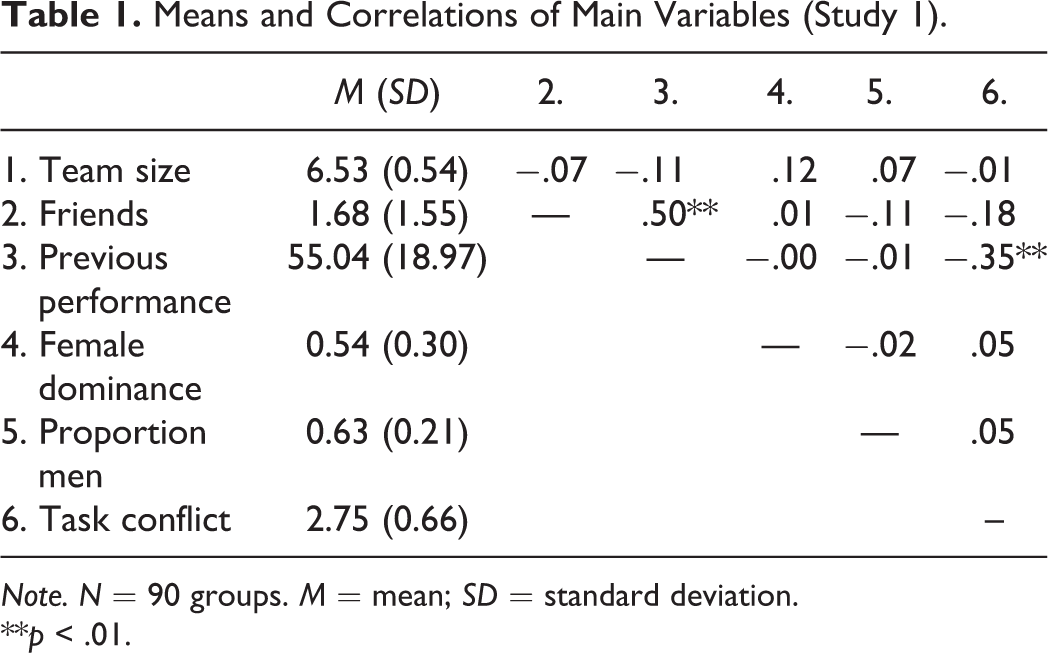
Note. N = 90 groups. M = mean; SD = standard deviation.
**p < .01.
Participants played 10 one-minute rounds of an “improvement game” in which they completed “orders” that entailed sorting differently colored M&M’s candies into bags with a specified number of different colored M&M’s per bag. These orders had to be completed under time pressure which made the task difficult. Per one-minute round, groups had to complete seven orders. Group performance depended on how many bags were accurately filled within the given time. After the 5th round, there was a group discussion about how to improve performance in the following (6th–10th) rounds.
Before starting the game, participants completed questionnaires assessing demographics (see Supplemental Online Material) and number of friends within the group. After the group discussion, between Rounds 5 and 6, each individual rated each fellow group member regarding his or her influence during the discussion. The rating of each person by fellow group members (excluding self-ratings) was averaged within each group. We used the average rating by the fellow group members to compute an overall influence score of each individual group member (see Supplemental Online Material). Group members showed high agreement in their ratings of the influence of a specific person, intraclass correlation coefficient (ICC) (1) = .38, p < .001; ICC (2) = .80, showing that ratings reflected a shared perception in the group of influence of a specific person (see also Supplemental Online Material for additional analyses). Following methods in primatology (see Hemelrijk et al., 2008; Surbeck & Hohmann, 2013), a group-level score of female dominance was computed by ordering group members within each group from the highest to the lowest influence score and assessing, per female group member, how many men were lower in influence (counting males at the same level as .5 points) and dividing that score by the maximum score all women together could achieve in the group. Perceptions of task conflict were assessed with four items (Jehn, 1995; e.g., how frequently were there conflicts about ideas in your team; Cronbach’s α = .81, 1 = fully disagree to 7 = fully agree; see Supplemental Online Material). Scores of task conflict were averaged within each group to form a measure of perceived task conflict within the group. Group members showed high agreement, ICC (1) = .24, p < .001; ICC (2) = .67, indicating a shared perception of task conflict within groups. Because task conflict during discussion may have been a consequence of poor performance in the first five rounds, we also assessed a score of group performance prior to the group discussion (percentage of bags filled correctly).
We investigated whether proportion of men in a group (sex ratio) and level of conflict affected female dominance in groups. We hypothesized that, like in primate groups (Hemelrijk et al., 2008), the proportion of men in a group is positively associated with female dominance when conflict level in the group is high but not when conflict level is low. Consequently, we expected that female dominance would be high especially when both the proportion of men in the group and conflict levels were high.
Results and Discussion of Coordination Task
To test hypotheses, we performed a multiple regression analysis with standardized group size and number of friends (control variables), proportion of male group members, group-level perception of task conflict, and the interaction between proportion of males and task conflict on female dominance. Because female dominance was conceptualized and computed at the group level, this analysis was performed at the group level (N = 90 groups). Results revealed the expected interaction between proportion of men and task conflict, accounting for 12% variance, and no significant main effects of task conflict and proportion of men (Table 2).
Hierarchical Regression Analyses Predicting Female Dominance for Study 1.
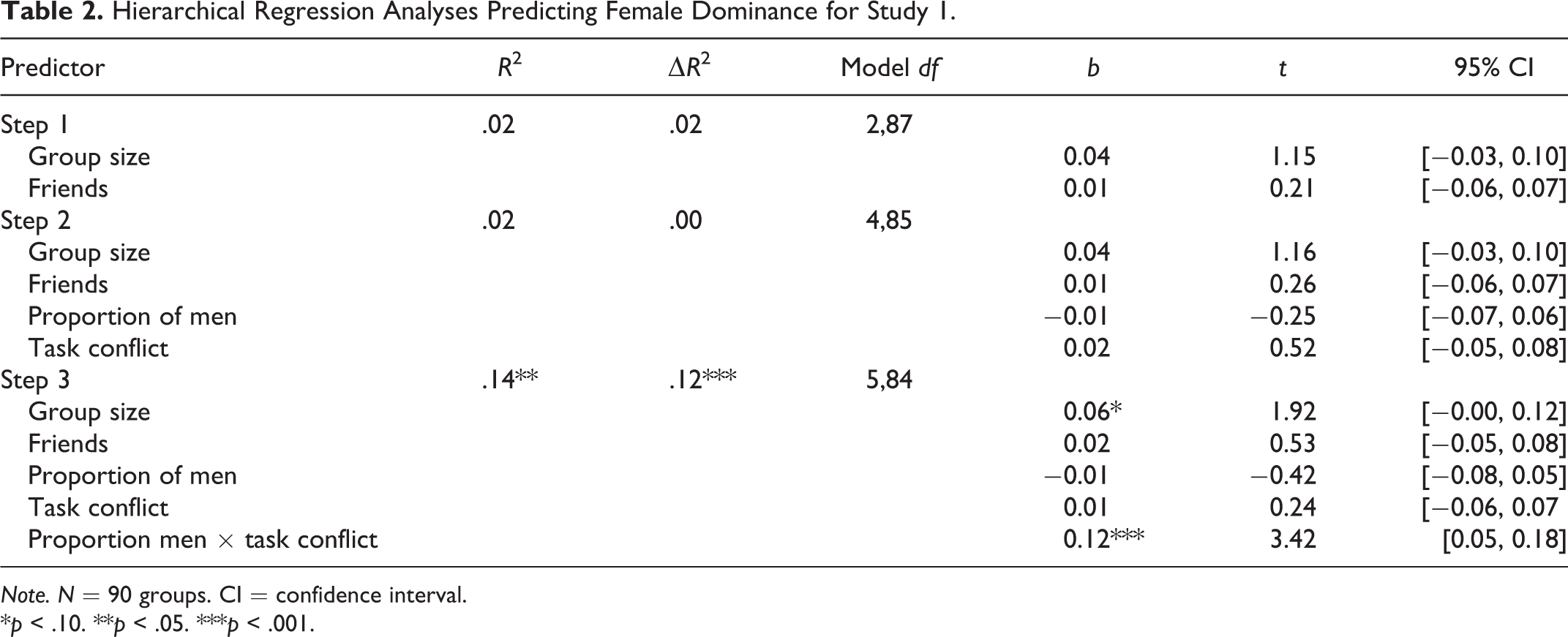
Note. N = 90 groups. CI = confidence interval.
*p < .10. **p < .05. ***p < .001.
In groups with low levels of task conflict, women were less dominant the higher the proportion of men in the group, b = −0.13, 95% CI [−.22, −0.03], t(84) = −2.73, p = .01. This is consistent with earlier findings that women in minority positions have relatively little influence (e.g., Blau, 1977; Dasgupta, Scircle, & Hunsinger, 2015; Kanter, 1977; Propp, 1995). Conversely, and as predicted, when task conflict was high, women became more dominant the higher the proportion of men, b = 0.10, 95% CI [0.01, 0.18], t(84) = 2.23, p = .03 (Figure 1). Therefore, our results mirror findings among nonhuman primates: Women become more dominant in groups in which there is a high proportion of men and a high level of conflict.
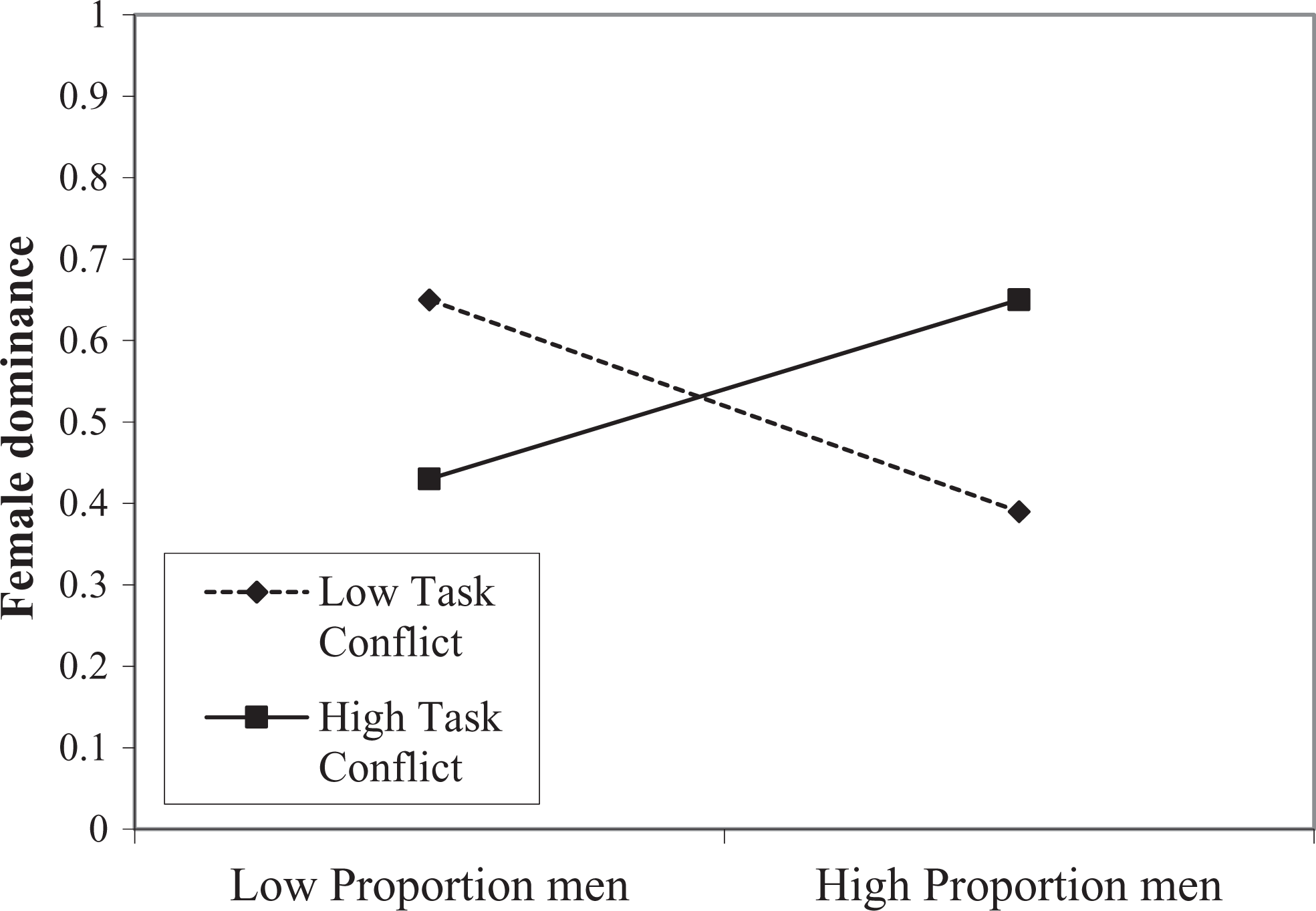
Interaction effect of proportion of males by task conflict on female dominance (Study 1).
Regarding reasons for task conflict, a regression with group size and friends as control variables (both p > .75), and proportion of men and previous performance (i.e., in Rounds 1–5) as predictors, showed that only previous performance, b = −0.23, 95% CI [−0.38, −0.08], t(84) = −3.12, p < .01, but not proportion of men, b = 0.03, 95% CI [−0.10, 0.17], t(84) = 0.48, p = .64, was related to task conflict (total R 2 = .13). Thus, reported task conflict within groups did not increase in groups composed of more men, but rather in groups that had poor previous performance.
Study 2: Group Decision Task
Study 1 revealed that, consistent with research among nonhuman primates, female dominance was higher when the proportion of men and levels of conflict within the group were high. Under low levels of conflict, a higher proportion of men was associated with lower female dominance. Study 2 aimed to replicate this effect with a decision-making rather than a coordination task. Moreover, in line with primate studies, we examined whether female dominance occurs primarily when men are higher in levels of aggression than women: Only when men are more fiercely aggressive than women, will women gain more influence. We included an experimental manipulation aimed at eliminating the gender difference in aggression. We also included a measure of aggressive behavior, the extent to which men versus women forcefully imposed their opinion in the group. Previous work reveals that, during conflicts, men tend to use forcing behavior more than women (Davis, Capobianco, & Kraus, 2010; Holt & DeVore, 2005; Thomas, Fann Thomas, & Schaubhut, 2008).
Study 2 originally consisted of 65 teams of students of the Faculty of Business Administration of a Dutch university who participated as part of a classroom exercise. Three gender homogenous teams were dropped. Two teams cheated on the exercise (i.e., students had heard the correct answer from previous participants). Four teams were omitted based on outlier analyses of female dominance (Cook’s distance > .06, the critical value). This left 56 groups of mixed gender (173 men and 111 women; average group size = 5.07; SD = 0.85; range between 3 and 7 group members; mean age for men = 19.27 years; for women = 18.78 years). Sample size was determined by the number of participants in this course. A post hoc power analysis, using Gpower, revealed that this sample size of 56 groups would be sufficient to detect a moderately strong effect size, f 2 ≥ .15; with power = 0.80 and α = .05.
In their groups, participants completed a winter survival task (D. W. Johnson & Johnson, 1991). They learned that their airplane had crashed in a cold and remote region. They had managed to save 15 items from the plane (e.g., a gun, an area map). Their task was to select 3 items (of 15) most useful for survival. Before completing the task (first individually, then as a group), participants filled out demographic information (see Supplemental Online Material). We also introduced our experimental manipulation at this point. 1 Given that this survival task is a male-oriented task (Rogelberg & Rumery, 1996), we manipulated task-related beliefs about gender capabilities. In the control condition (27 groups), we gave no further information about the task. In the experimental condition (29 groups), participants were told people often believe that men are better at these tasks than women, but that research had consistently shown that men and women are equally good at this type of task (see Supplemental Online Material). This would give women the feeling that their opinion should also count and stimulate more aggressive forcing behavior. Indeed, convictions of the accuracy of one’s attitudes are related to more forcing behavior in conflict situations (Rios, DeMarree, & Statzer, 2014).
Participants then completed the winter survival task individually before working in groups. Groups had 15 minutes to make a group decision after which participants individually completed a questionnaire in which they rated all group members on the degree of influence they had had during the discussion (group members were identifiable by a group member number attached to clothing). As in Study 1, agreement among group members was high, ICC (1) = .48, p < .001; ICC (2) = .79.
The measure of influence was used to compute a female dominance score, as in Study 1. We measured perceptions of task conflict within the group, as in Study 1, Cronbach’s α = .80, ICC (1) = .37, p < .001, ICC (2) = .75.
To measure own perceptions of aggressive behavior within the group, at the individual level, we used the forcing scale of the Dutch Scale of Conflict Handling, which measures the extent to which individuals impose their own points of view on others (De Dreu, Evers, Beersma, Kluwer, & Nauta, 2001). 2 This measure had 4 items, rated on a 5-point scale (not at all–very much; e.g., “I pushed my own point of view”; α = .76). 3 We checked the manipulation of beliefs about gender capabilities by a single item (“in the instructions, I was told that . . .”) with possible answers “men and women are equally good at the winter survival task,” “women are better than men-,” or “men are better than women-” at the winter survival task.
Results and Discussion of Group Decision Task
See Table 3 for descriptives and correlations of main variables.
Means and Correlations of Main Variables (Study 2).
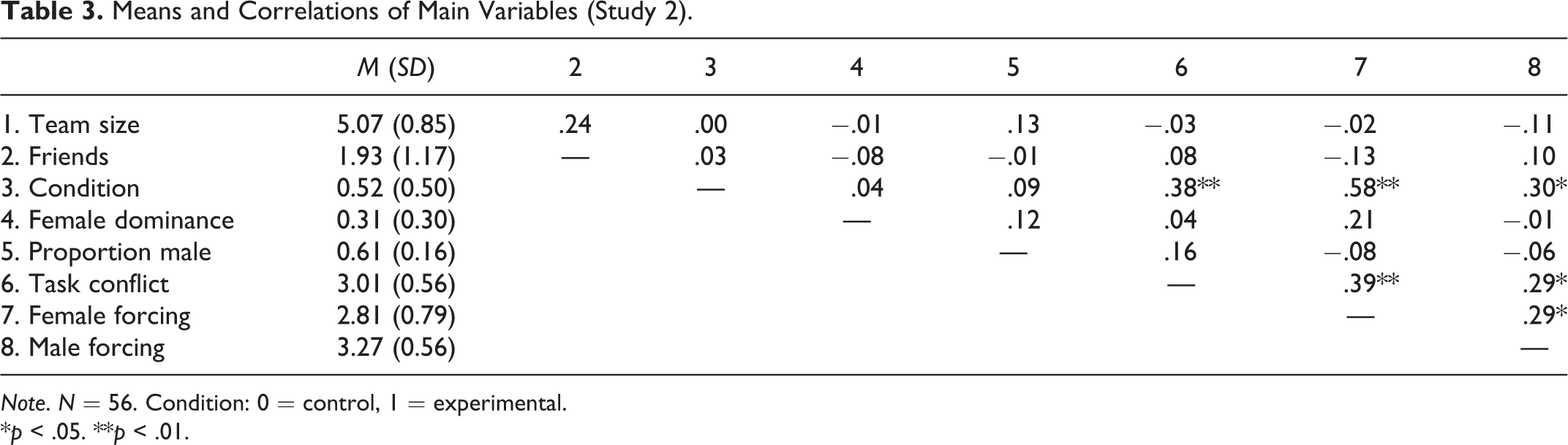
Note. N = 56. Condition: 0 = control, 1 = experimental.
*p < .05. **p < .01.
Manipulation check
Participants indicated what they had been told regarding the capabilities of men and women in the winter survival task. χ2 Analyses indicated that men and women were more often perceived to be equally capable in the experimental condition compared to the control condition, χ2(2; N = 271) =10.76, p < .01 (13 missing). Our manipulation worked as intended (see Supplemental Online Material).
Conflict and aggression (forcing)
We first considered whether, as predicted, gender differences in levels of aggression (measured via forcing behavior) would be reduced in the experimental condition. Because within one group members can differ in the amount of forcing (e.g., depending on gender), this analysis was performed at the individual level, taking into account that members were nested within groups. In a multilevel regression, with members nested within groups, we assessed forcing behavior as a function of group size and number of friends (control variables), gender, condition, proportion of men, and all interactions among gender, condition, and proportion of men. This analysis showed main effects of gender, b = 0.72, 95% CI [0.43, 1.01], t(224) = 4.85, p < .001, and of condition, b = 0.88, 95% CI [0.53, 1.23], t(183) = 4.97, p < .001. These two main effects were qualified by a significant interaction between gender and condition, b = −0.53, 95% CI [−0.93, −0.12], t(223) = −2.56, p = .01. This regression explained 14% of the variance in forcing. No further effects were significant (all p > .30). As hypothesized, men used forcing more than women in the control condition, b = 0.72, 95% CI [0.43, 1.02], t(105) = 4.91, p < .001, but this gender difference disappeared in the experimental condition, b = 0.20, 95% CI [−0.09, 0.47], t(115) = 1.35, p = .17 (Figure 2). This indicates that when women and men consider themselves equally powerful (in this case regarding capabilities), levels of forcing among women became similar to those of men.
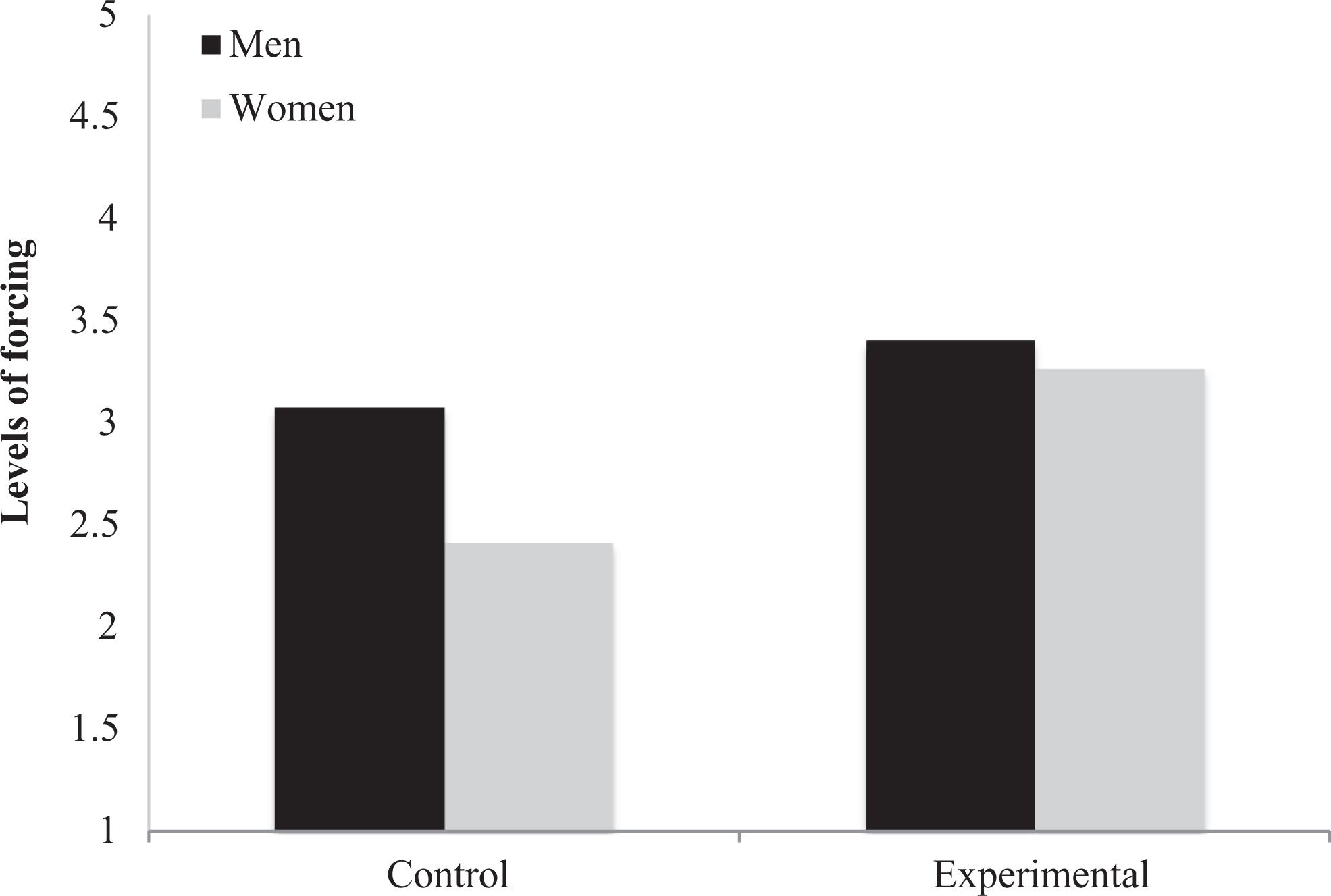
Male versus female forcing in the control and experimental condition (Study 2).
We next assessed whether our manipulation raised the general level of conflict within the group. A linear regression (at the group level) with perceived task conflict as a dependent variable, proportion of men, condition, and the interaction between condition by proportion of men as predictors, as well as group size and number of friends as control variables, only showed a main effect of condition, b = 0.41, 95% CI [0.12, 0.70], t(50) = 2.83, p < .01, that accounted for 16% of variance. Conflict levels were higher in the experimental condition (M = 3.21; SD = 0.53) than in the control condition (M = 2.78; SD = 0.52). No other main or interaction effects were significant, all p > .60. Giving participants information that men and women are equally capable thus increased conflict. This increase in conflict is likely due to an increase in levels of aggression in women. Indeed, we found a significant correlation between female forcing and levels of conflict in the experimental (r = .39, p = .04) but not in the control condition (r = .04, p = .85).
Female dominance
At the individual level, influence ratings were related to actual influence in the group outcome: We found that the overlap in individual preferences before discussion and group choice of items correlated with influence scores of a group member (r = .40, p < .001).
At the group level, we expected to replicate the interaction between proportion of men and task conflict on female dominance in the control condition, but not when men and women were equally aggressive (in the experimental condition). To examine this hypothesis, we conducted a regression analysis with female dominance as the dependent variable. Because female dominance was conceptualized and measured at the group level, results were analyzed at the group level. Condition was dummy coded (i.e., [0, 1] for the control and experimental condition, respectively). As further predictors, we included standardized measures of group size and number of friends (control variables), main effects of task conflict and proportion of men; three two-way interactions among task conflict, proportion of men, and the condition dummy; and the three-way interaction (task conflict × proportion men × condition dummy; see Aiken & West, 1991). As predicted, we found a significant three-way interaction among condition, proportion of men, and task conflict, b = −0.26, 95% CI [−0.48, −0.04], t(46) = −2.38, p = .021, that accounted for 10% variance in female dominance. No further effects were significant (all p > .10; Table 4).
Hierarchical Regression Analyses Predicting Female Dominance for Study 2.
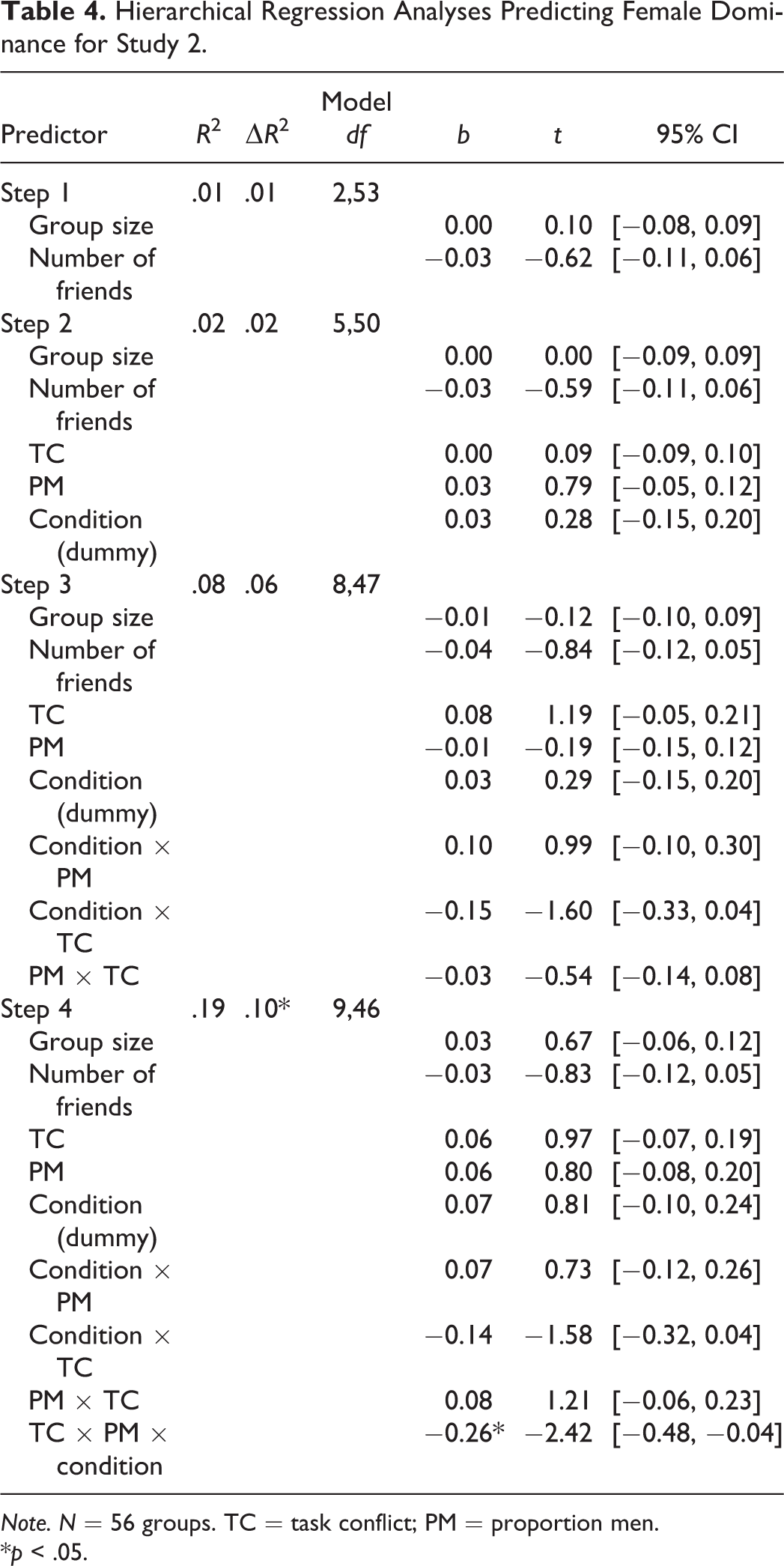
Note. N = 56 groups. TC = task conflict; PM = proportion men.
*p < .05.
To further understand these results, we conducted regression analyses in the control and experimental conditions separately. In each of these regressions, we entered standardized measures of group size and number of friends (control variables), task conflict, proportion men, and the task conflict by proportion men interaction. The interaction between task conflict and proportion men on female dominance was positive and significant in the control condition, whereas this was not the case in the experimental condition—although there was a negative trend (Table 5).
Regression Analyses Predicting Female Dominance Within the Control and the Experimental Condition.
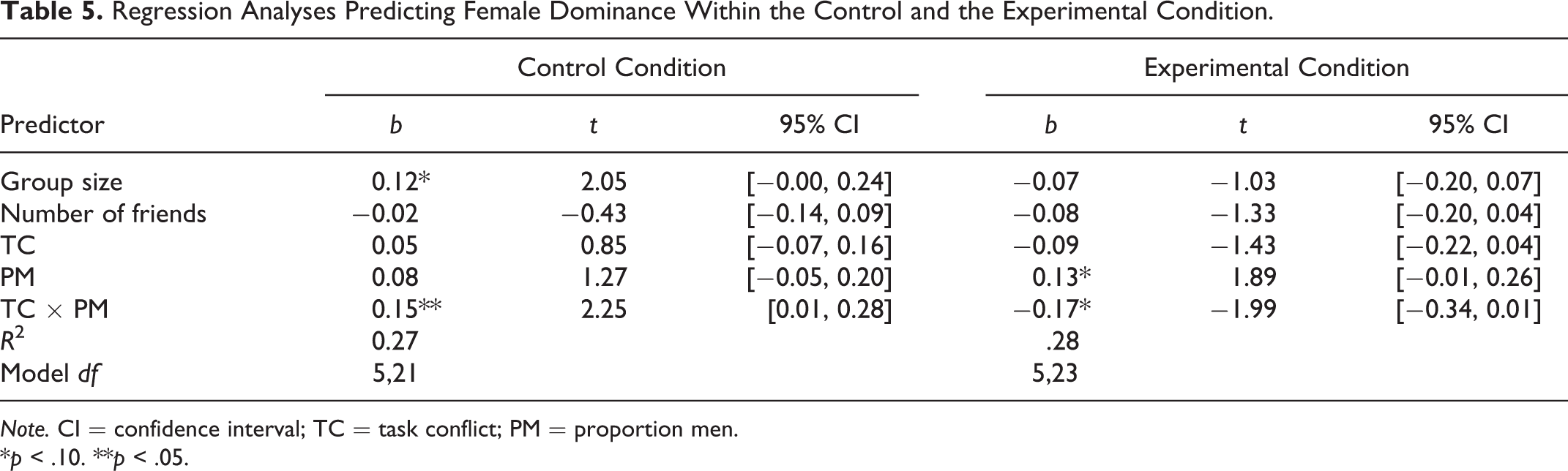
Note. CI = confidence interval; TC = task conflict; PM = proportion men.
*p < .10. **p < .05.
Figure 3 shows that in the control condition (top panel), when task conflict was low, there was no significant relation between proportion of men and female dominance, b = −0.12, 95% CI [−0.26, 0.03], t(21) = −1.69, p = .11. Confirming our hypotheses, in line with Study 1, the proportion of men was positively related to female dominance when task conflict was high, be it marginally, b =0.16, 95% CI [−0.03, 0.34], t(21) = 1.80, p = .09. In the experimental condition, the pattern was the opposite (Figure 3, bottom panel). Here, the proportion of men had a positive effect on female dominance when task conflict was low, b = 0.21, 95% CI [0.02, 0.39], t(23) = 2.28, p = .03. When task conflict was high, proportion of men was unrelated to female dominance, b = −0.09, 95% CI [−0.29, 0.12], t(23) = −0.85, p = .40. Possibly, when conflict was low, and men and women were aware that they are equally capable, women became more dominant and men accepted such dominance given these equal capacities.
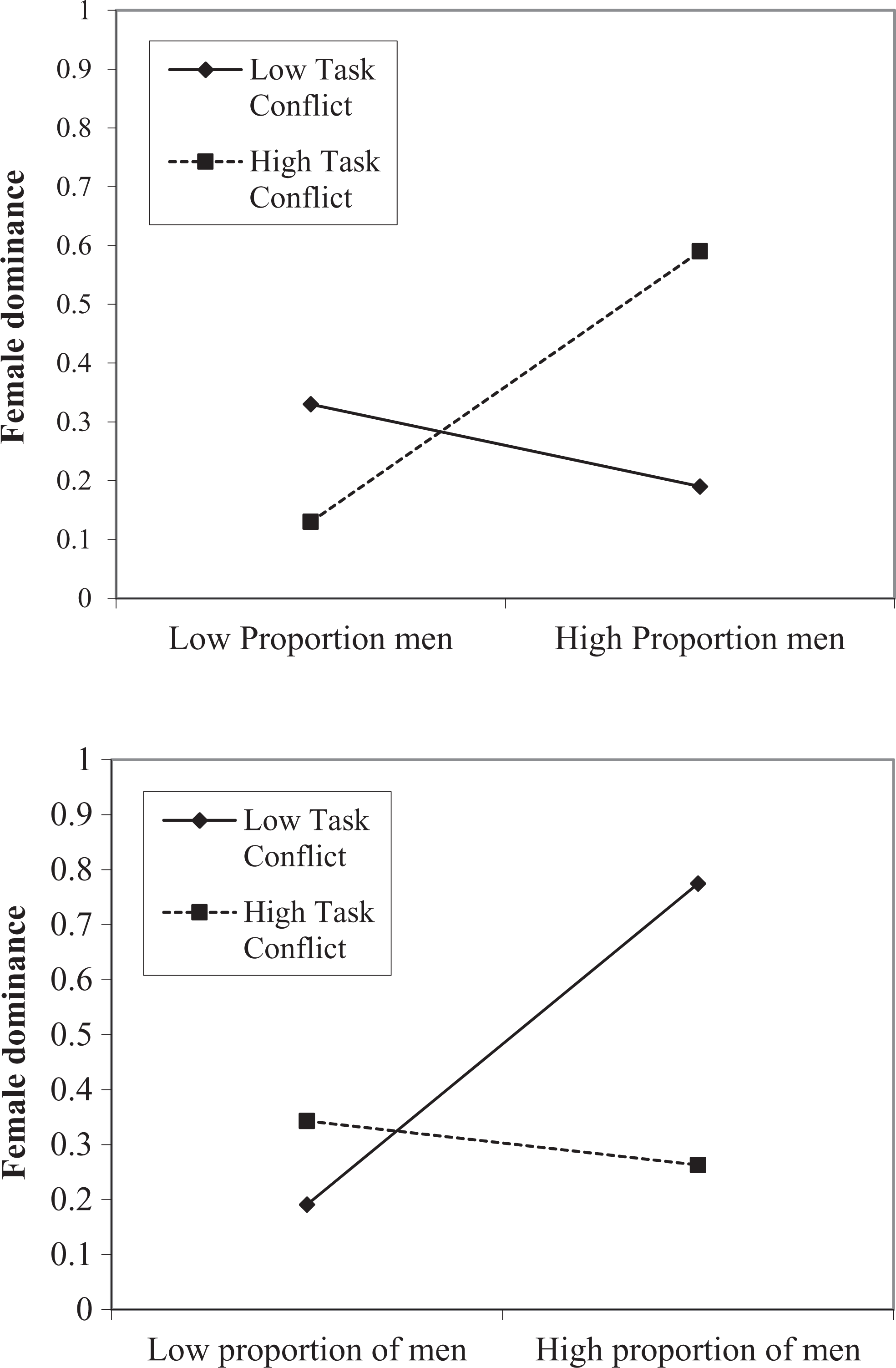
Female dominance in the control condition (top panel) and the experimental condition (bottom panel) (Study 2).
Importantly, moving beyond the first study, the present results reveal that women became more dominant in groups where there was a high proportion of men, high levels of conflict, and male group members were higher in aggression than their female counterparts. Note that this is also the situation occurring naturally: Men tend to be more (physically and verbally) aggressive than women in their behavior (Bettencourt & Miller, 1996; Eagly & Steffen, 1986).
General Discussion
Does increasing the number of women in a group, such as a company board, make women more influential? Are women’s voices less likely to be heard when they form the minority of a group, as most prior research suggests? Research on nonhuman primates reveals that this need not be the case under certain conditions: In groups with high levels of aggression (particularly in men) and a high proportion of males relative to females, female primates rise to higher ranks (Hemelrijk et al., 2008). We examined whether, under these conditions, results generalize to humans and how the gender composition of groups affects the relative influence of men and women.
Results reveal that the relation between gender composition and female (vs. male) dominance critically depends on conflict levels and conflict behavior of men and women. Our two studies suggest that increasing the proportion of men in the group only reduces female influence when conflict levels are low. However, when conflict levels are high, female dominance actually is higher when there are fewer women in the group. This is consistent with work on nonhuman primates (Hemelrijk et al., 2008), which indicates that in groups with high levels of aggression, the high level of aggressive interactions results in some male primates “losing” their rank and level of dominance. This allows female primates to be victorious over males and rise in rank. Similarly, our studies suggest that when levels of conflict among men are intense—as is the case in groups with many men—this gives women opportunities to gain influence. Importantly, Study 2 showed that such perceived influence was also related to actual influence; those persons who were perceived as more influential also had a greater input into the outcome of the group, such that their personal preferences were more strongly reflected in the group decision.
We studied underlying processes of female dominance by eliminating gender differences in aggression. Based on research among nonhuman primates, we reasoned that female dominance occurs because men are more aggressive than women and thus engage in coercing behavior and conflict with each other (see Holt & DeVore, 2005). In Study 2, we therefore eliminated gender differences in aggressive behavior by increasing levels of aggression in women (Rios et al., 2014). Indeed, our manipulation stimulated women to join the conflict and caused women to engage in more aggressive conflict strategies (i.e., forcing), which, ironically, reduced their influence when conflict levels were high. This should not imply that women are better off maintaining a subordinate position when making decisions in mixed gender groups, yet it speaks to the value of refraining from “joining the conflict” as this is likely to undermine the position of women in the group.
The present work also taps into an important question for research on both nonhuman and human primates regarding how conflict causes an increase of female dominance in groups where males are in the majority. On the one hand, as suggested by researchers of nonhuman primates, conflict among men may leave a vacuum for women to rise in rank (Hemelrijk, 2000; Hemelrijk et al., 2008). On the other hand, women may possess qualities that make them particularly suitable for dealing with conflict, such as unique leadership qualities: Women may be more oriented toward maintaining relationships and avoiding escalation of conflict (Eagly & Karau, 1991). This last explanation suggests that men and women use different conflict handling strategies. However, Study 2 revealed that women also become immersed in conflict and engage in aggressive strategies (forcing), but that this undermines their position. Moreover, looking at gender differences across a wider range of conflict management strategies in Study 2 (see Supplemental Online Material), we see no gender differences in the more proactive conflict management strategies, such as compromising or problem solving. Consequently, our results seem more consistent with the vacuum explanation in which women rise to higher ranks by refraining from aggressive behavior. More specifically, this implies that women in a team with high levels of conflict and many men may become more influential because the men are involved in conflict with each other, weakening the position of some of these men. This allows women to become more influential relative to the weaker men (and possibly to men who are distracted by the conflict).
More research in this direction, focusing specifically on the nature of interactions of both sexes in both humans and nonhuman primates (e.g., qualitative data), should validate this process. It would be interesting to reflect on the meaning of female dominance. We operationalized dominance based on judgments of relative influence. Yet, what affects whether someone is seen as influential or not? Hawley and colleagues point out that social dominance need not reflect aggressive strategies but can be achieved through prosocial and cooperative behavior (Hawley, 1999; Hawley, Little, & Card, 2008). This approach is consistent with our findings: Aggressive behavior such as forcing potentially backfires when group members use this tactic in a conflict. It may lead to stalemate and low rather than high influence when a battle is lost. Prosocial behavior may be an influential alternative. This could especially be the case for women who experience backlash effects when using masculine, gender incongruent strategies, such as aggressive behavior (Rudman & Phelan, 2008). Taken together, this work provides interesting avenues for future research and suggests that it may be important to study other types of influential behavior.
For now, the present work provides important insights on conflict strategies in human and nonhuman primates (Hemelrijk & Ek, 1991) and suggests that inconsistencies in findings of humans in small groups, regarding whether or not women become dominant relative to men, may depend on levels of conflict within these groups.
Conclusions
There is no easy road to achieve gender equality. Our work indicates that increasing the proportion of women in important decision-making bodies (e.g., gender quotas) (Stroebe, Wang, & Wright, 2015) may not be a guarantee for success: When levels of conflict within a group, such as a company board, are high, such gender quotas may undermine female dominance. Our message is also a positive one, one in which women can gain power even when in the minority—as long as they do not engage in forcing behavior or join in the conflict. Moreover, these results map onto what we see in nonhuman primates (e.g., Watts, 2010), grounding findings in human groups more firmly in biological and evolutionary theories of male versus female behavior.
Footnotes
Declaration of Conflicting Interests
The author(s) declared no potential conflicts of interest with respect to the research, authorship, and/or publication of this article.
Funding
The author(s) received no financial support for the research, authorship, and/or publication of this article.
Supplemental Material
The data supplements are available in the online version of the article.
Notes
References
Supplementary Material
Please find the following supplemental material available below.
For Open Access articles published under a Creative Commons License, all supplemental material carries the same license as the article it is associated with.
For non-Open Access articles published, all supplemental material carries a non-exclusive license, and permission requests for re-use of supplemental material or any part of supplemental material shall be sent directly to the copyright owner as specified in the copyright notice associated with the article.
