







Abstract
First impressions are heavily influenced by emotional expressions such as smiles. In face-to-face contact, smiling individuals are perceived as warmer and as more competent than nonsmiling individuals. In computer-mediated communication, which is primarily text-based, the “smiley” (☺) constitutes the digital representation of a smile. But is a smiley a suitable replacement for a smile? We conducted three experiments to examine the impact of smiley use on virtual first impressions in work-related contexts. Our findings provide first-time evidence that, contrary to actual smiles, smileys do not increase perceptions of warmth and actually decrease perceptions of competence. Perceptions of low competence in turn undermined information sharing. The adverse effects of smiley use are moderated by the formality of the social context and mediated by perceptions of message appropriateness. These results indicate that a smiley is not a smile. The findings have implications for theorizing on the social functionality of virtual emotional expressions.
“Smile and the world smiles with you,” the saying goes. In keeping with this adage, studies show when it comes to first impressions, smiling individuals are perceived as more attractive, sincere, trustworthy, warm, and competent (Ames & Johar, 2009; Beaupré & Hess, 2003; Belkin & Rothman, 2017; Hess, Adams, & Kleck, 2005; Ozono et al., 2010; Staw & Barsade, 1993). Accordingly, smiling people are approached more cooperatively than their nonsmiling counterparts (Gueguen & De Gail, 2003; Mussel, Goritz, & Hewig, 2013; Van Kleef, 2016). With both personal and professional relationships increasingly formed via computer-mediated communication (Weisbuch, Ivcevic, & Ambady, 2009), the question arises whether the digital representation of a smile commonly used in such interactions—the “smiley” (☺)—has effects similar to real smiles. We investigated the effects of smiley use on first impressions, examining two key variables that are known to be positively impacted by smiles: perceived warmth and competence.
Warmth and competence are two fundamental dimensions of person perception (Fiske, Cuddy, & Glick, 2007). Warmth refers to traits that reflect a person’s perceived social intentions, such as trustworthiness, sincerity, kindness, and friendliness. Competence relates to traits that reflect a person’s capacity to pursue goals and intentions, such as efficacy, skill, confidence, and intelligence (Cuddy, Fiske, & Glick, 2008). People judge others predominantly on the basis of their perceived warmth and competence (Judd, James-Hawkins, Yzerbyt, & Kashima, 2005). Judgments of warmth and competence, in turn, have important repercussions for a wide variety of outcomes in social and organizational settings, including hiring decisions, information sharing, allocation of resources, and cooperation (Abrams, Cross, Lesser, & Levin, 2003; Cuddy, Glick, & Beninger, 2011; Stirrat & Perrett, 2010).
Emotional expressions play a pivotal role in conveying social information (Van Kleef, 2009), and smiles in particular have been found to communicate both warmth and competence (Hess et al., 2005; Ozono et al., 2010). The advent of social media and computer-mediated communication begs the question of how such perceptions are shaped by digital representatives of the smile: smileys. Does the use of smileys in text-based communication have similar impression formation effects as smiles do in face-to-face contact?
Forming opinions about others occurs swiftly, based on minimal cues picked up during first encounters (e.g., Ballew & Todorov, 2007; Willis & Todorov, 2006). First impressions can have pervasive social consequences (e.g., Rule & Ambady, 2008), which may even persist despite counterevidence from later encounters (Kammrath, Ames, & Scholer, 2007). Most work on first impressions has been conducted on face-to-face interactions and swift judgments of facial features. Yet, in today’s increasingly technological world, people often “meet” for the first time online during text-based interactions.
Computer-mediated communication is a prevalent medium for forming relationships in the workplace, especially across geographical distances (Johri, 2012; Weisbuch et al., 2009). In text-based communication, partners are unable to observe each other’s facial expressions. Nevertheless, emotions are reliably identified and even spread between interactants via computer-mediated communication (Cheshin, Rafaeli, & Bos, 2011; Van Kleef, De Dreu, & Manstead, 2004). Beside words, computer-mediated communication provides an arsenal of paralinguistic cues, such as graphic representations of emotions (emoticons), including the smiley (Walther & D’Addario, 2001).
Emoticons are extensively used in instant messaging (Derks, Bos, & Grumbkow, 2008; Garrison, Remley, Thomas, & Wierszewski, 2011) and on websites, where the smiley is the most frequently applied emoticon (Provine, Spencer, & Mandell, 2007). Emoticons are also in growing use in personal and professional e-mails (Kato, Kato, & Akahori, 2007; Skovholt, Gronning, & Kankaanranta, 2014; Wall, Kaye, & Malone, 2016). Skovholt, Gronning, and Kankaanranta (2014) found that 17.7% of work-related e-mails they examined included at least one emoticon, and Wall, Kaye, and Malone (2016) found that emoticons are used in e-mails even more than in text messages. This indicates that smiley usage is prevalent, even in professional settings, suggesting that there is ample opportunity for smileys to influence virtual first impressions (Hancock & Dunham, 2001; Wall et al., 2016).
Despite their prevalence, the benefits versus perils of smiley usage in the context of work-related computer-mediated communication are poorly understood. In particular, tension exists between experimental evidence and practitioner recommendations. On the one hand, experimental evidence indicates that smileys can help set a positive tone in text-based communications (Crystal, 2001; Derks, Fischer, & Bos, 2008; Lo, 2008; Luor, Wu, Lu, & Tao, 2010; Walther & D’Addario, 2001). Use of emoticons (including smileys) has been found to have a positive impact on the writer’s perceived agreeableness (Fullwood & Martino, 2007; Wall et al., 2016). Similarly, the use of smileys is perceived to reflect positive emotions and humor (Derks, Bos, et al., 2008; Huang, Yen, & Zhang, 2008; Kaye, Wall, & Molone, 2016). On the other hand, there are suggestions that smileys can have a negative impact in work-related contexts. Smileys may be seen as childish and be interpreted as a sign of poor verbal ability (Provine et al., 2007). Accordingly, Munter, Rogers, and Rymer (2003) argued that emoticons may harm senders’ credibility in business correspondence, and business communication guides warn against using emoticons in formal correspondence (Krohn, 2004).
Emotions as social information (EASI) theory (Van Kleef, 2016) postulates that emotional expressions are more likely to have disadvantageous consequences for the expresser to the degree that they are perceived as inappropriate for the context. Inappropriateness entails a mismatch between what one perceives as normative and fitting in a particular context and what is actually shown (Shields, 2005; Van Kleef, Homan, & Cheshin, 2012). Given that smileys may be seen as childish and unprofessional, smileys are likely to be perceived as relatively inappropriate in formal work settings. Perceptions of inappropriateness may in turn shape observers’ inferences of the expresser’s warmth and competence (Gross & Guerrero, 2000). Consistent with this possibility, Derks, Bos, and Grumbkow (2008) found that people use fewer emoticons in task-oriented settings than in socioemotional contexts, conceivably because they anticipate negative outcomes of smiley use in work settings.
The Present Research
The present study constitutes the first systematic investigation of the effects of smileys on first impression formation in work settings. Specifically, we examined (1) whether smileys increase perceptions of warmth and competence in a manner similar to real smiles or, alternatively, undermine such perceptions; (2) whether the use of smileys has behavioral consequences for responses to and interactions with the smiley user; and (3) what the appropriateness-related boundary conditions are for any positive and negative effects of smiley use.
We first compared the influence of smileys on perceptions of warmth and competence with the influence of a photographed smile (Experiment 1). We then extended this investigation by incorporating a behavioral outcome (information sharing), examining perceptions of warmth and competence as possible mediators (Experiment 2). Finally, we addressed the issue of appropriateness by examining the moderating role of context (formal vs. informal) and the mediating role of perceived appropriateness in explaining the impact of smileys on impression formation (Experiment 3).
Experiment 1
We compared the impact of smileys on perceptions of warmth and competence with the impact of a photographed smile.
Pilot
We conducted a pilot study to determine the appropriate number of smileys in the main study. One hundred and eighty U.S. citizens were recruited using Amazon’s Mechanical Turk (MTurk). Nine participants were excluded for failing an attention question, rendering a final sample of 171 (41% female, age = 33.43, SD = 10.33). Participants were randomly assigned to one of the five conditions of a between-subjects design: no smileys, one smiley, two smileys, three smileys, and four smileys. Participants read a short e-mail similar to that used in the main study and afterward rated the e-mail’s appropriateness and indicated the presence or absence of emoticon/s in the e-mail.
Analyses revealed significant differences in perceived appropriateness between the control and one-smiley conditions, t(167) = 3.34, p < .002, and between the two- and three-smiley conditions, t(167) = 2.01, p = .03, but not between the one- and two-smiley conditions, t(167) = 0.60, p = .87. However, in the one-smiley condition, 14% of participants reported seeing no smiley, whereas in the two-smiley condition only 3% failed to see the smileys. After excluding participants who had failed to see smileys, we found more significant differences in appropriateness between the control and one-smiley conditions, t(161) = 3.67, p < .001, and no differences between one- and two-smiley conditions, t(161) = 0.37, p = .64. These findings suggest that the impact of one and two smileys is similar, but that we would risk participants not noticing the smiley if used only one smiley. We therefore used two smileys in our manipulation.
Method
Participants
Based on power analysis, 1 206 undergraduates from the University of Amsterdam participated in return for course credit. Three participants were excluded due to missing data, leading to a final sample of 203 (76% female, Mage = 20.34, SD = 2.52).
Procedure and Design
After providing demographics, participants imagined working on a project with three teammates from different countries to create a presentation for students wishing to study abroad. The international framing was used to preclude anticipation of prior acquaintance with teammates.
Participants were randomly assigned to one of the four conditions: (1) a photographed neutral face, (2) a photographed smiling face, (3) a greeting text without smileys, and (4) a greeting text with smileys (see Table 1). The photographs were taken from the Amsterdam Dynamic Facial Expression Set (Van Der Schalk, Hawk, Fischer, & Doosje, 2011). We included picture-only conditions to see if we could replicate previous findings that smiling faces increase perceptions of warmth and competence in the absence of additional information. To control for possible gender effects, the photographs randomly displayed male or female faces, and in both text conditions, the greeting was signed by “Alex,” a gender-neutral name.
The Stimuli Used in Experiment 1.
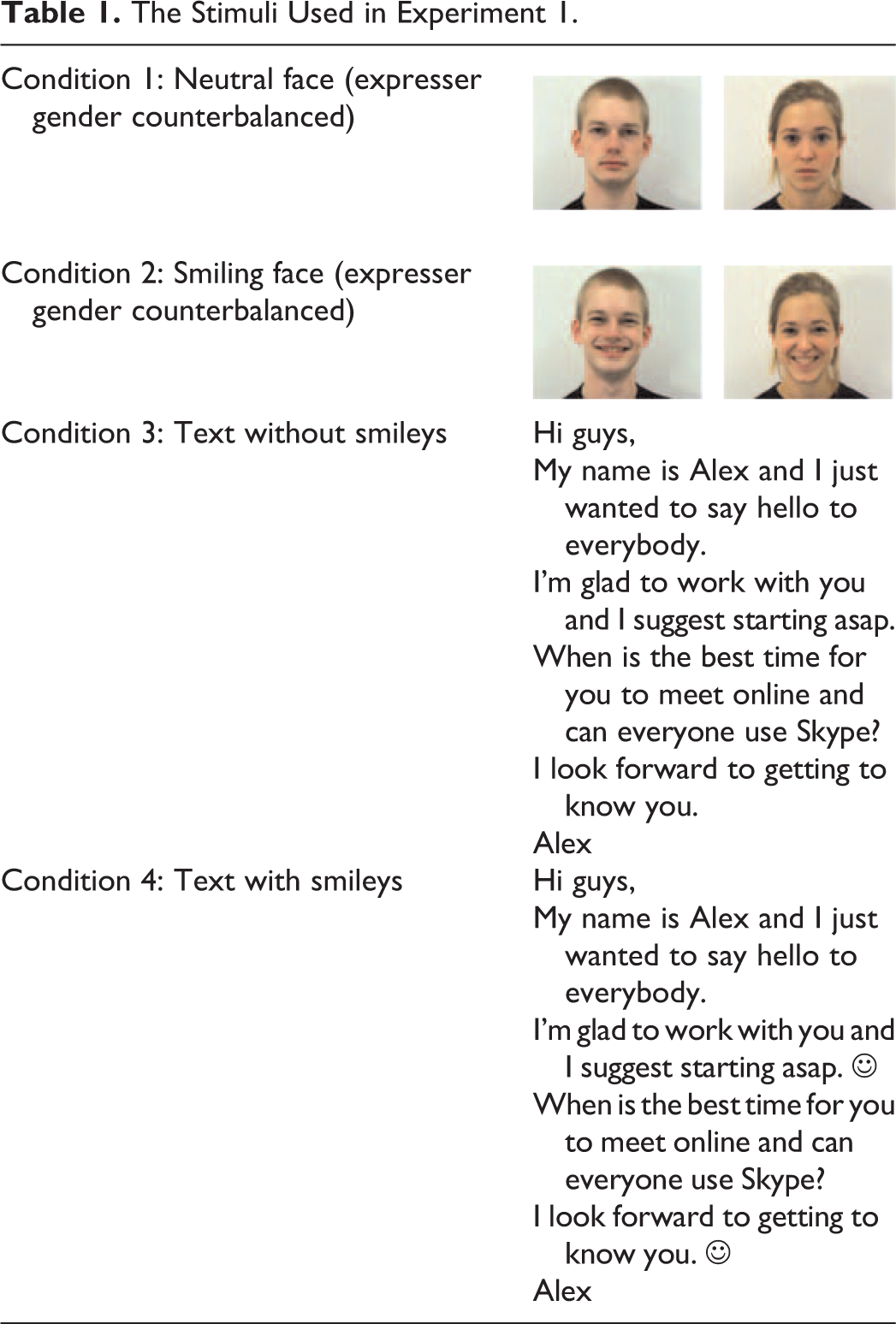
Emoticons can be represented using keyboard symbols (e.g., colons and parentheses; Garrison et al., 2011) or can be converted into a pictorial depiction. Given that Microsoft Office programs such as Outlook often automatically convert the colon–dash–parenthesis combination:-) into a pictorial smiley ☺, and in light of evidence that pictorial smileys have a greater impact on assessments of writers’ commitment and on perceivers’ mood (Ganster, Eimler, & Kramer, 2012), we used the pictorial form.
Measures
In all experiments, we used 7-point Likert-type scales, unless stated otherwise. We included gender, age, and self-reported English proficiency as control variables.
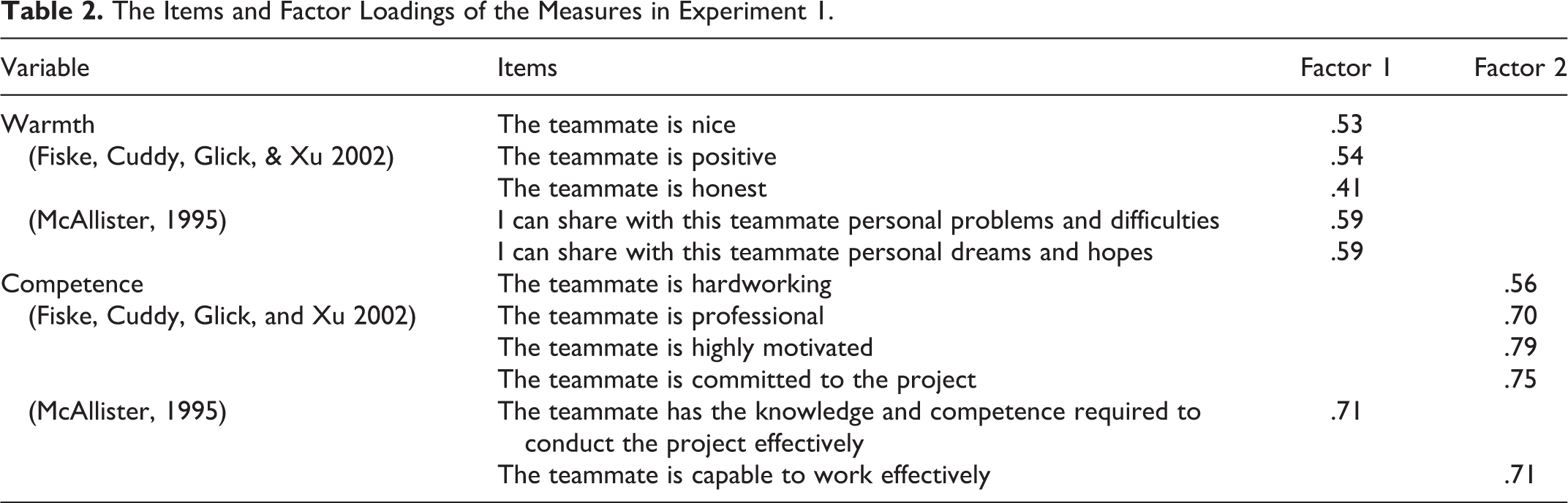
To measure perceived warmth and competence, we used items developed by Fiske, Cuddy, Glick, and Xu (2002), with the addition of a few conceptually similar items from the affective-based and competence-based trust scales of McAllister (1995). Exploratory factor analysis (EFA) showed that the added items fit well with those from the original scales of Fiske et al. (2002; λ1 = 4.51, λ2 = 1.58, 63.50% variance explained). Perceived warmth was thus measured using 5 items (α = .75) and perceived competence using 6 items (α = .76; see Table 2).
The Items and Factor Loadings of the Measures in Experiment 1.
Results and Discussion
A one-way analysis of variance (ANOVA) and three planned contrasts were conducted. Table 3 demonstrates descriptive statistics and correlations. Participants’ age, gender, and English proficiency were not significantly related to the dependent variables and therefore excluded from further analyses.
Descriptive Statistics and Correlations for Experiment 1.
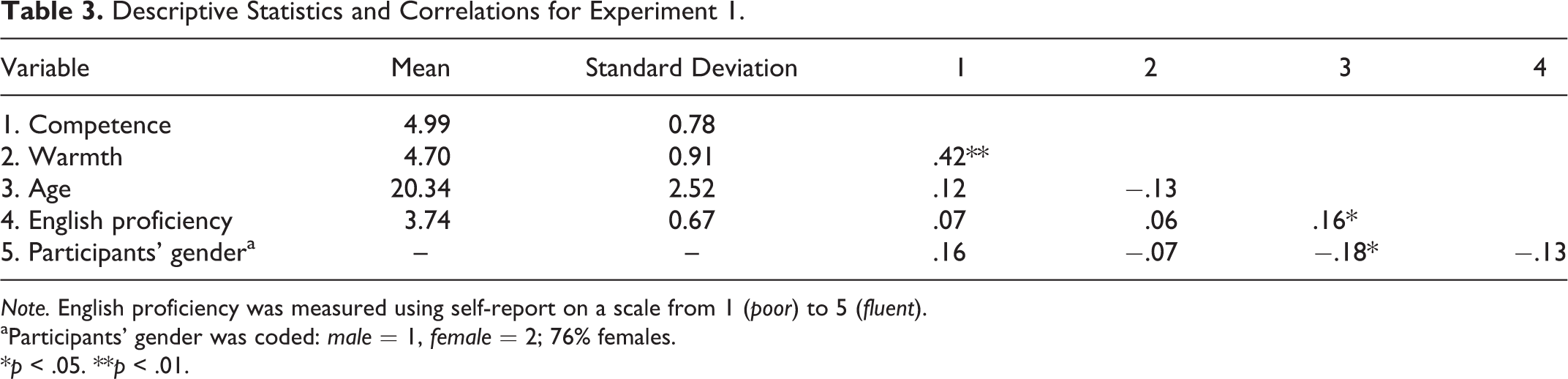
Note. English proficiency was measured using self-report on a scale from 1 (poor) to 5 (fluent).
aParticipants’ gender was coded: male = 1, female = 2; 76% females.
*p < .05. **p < .01.
Perceived Warmth
The one-way ANOVA was significant, F(3, 199) = 22.25, p < .001. The first planned contrast test compared the two photographed faces (smiling and not smiling). The smiling person was evaluated as significantly warmer than the nonsmiling person, t(199) = 7.71, p < .001, d = 1.30 (see Figure 1). The second test compared the message-with-smiley and smiling-photograph conditions. This revealed a significant difference, t(199) = 3.42, p = .004, d = 0.80, indicating higher perceived warmth in the smiling-photograph condition than in the smiley condition. The third test compared the smiley and text-only conditions, and revealed marginally higher perceptions of warmth in the smiley condition, t(199) = 1.90, p = .058, d = 0.52 (see Figure 1).
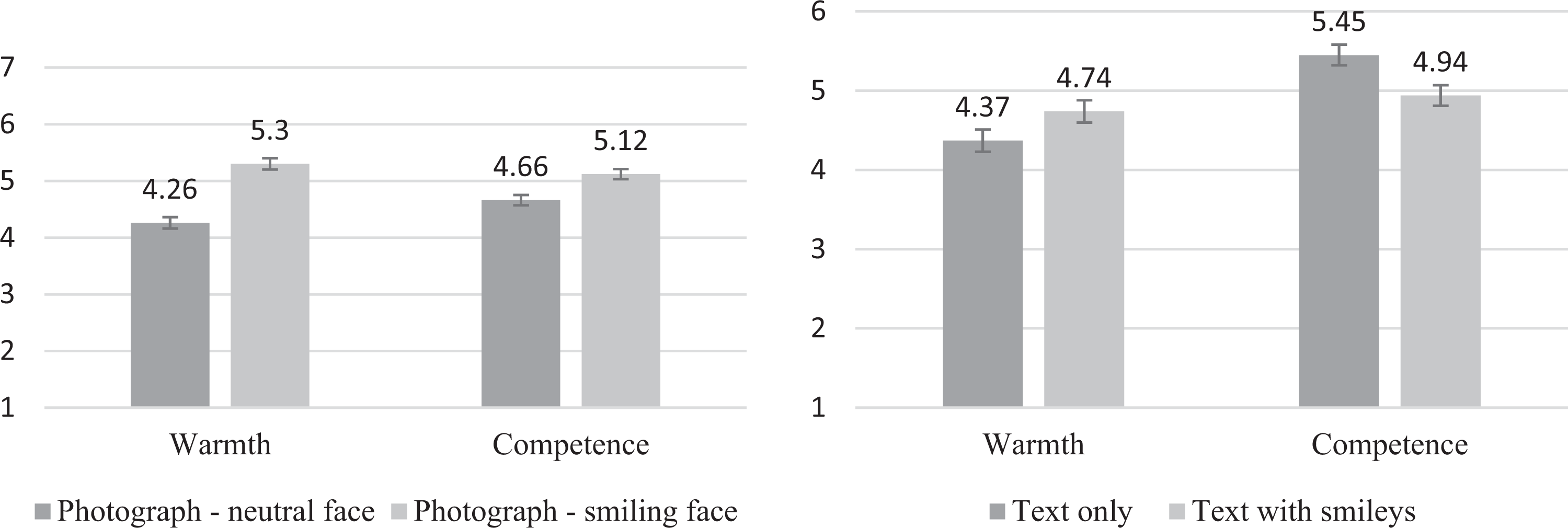
Perceptions of warmth and competence presented separately for the photograph conditions (neutral vs. smiling face) and for the text conditions (text only vs. text with smileys) including standard errors (Experiment 1).
Perceived Competence
The one-way ANOVA was significant, F(3, 199) = 9.86, p < .001. The first planned comparison (comparing the two photographed faces) revealed a significant difference, t(199) = 3.67, p < .001, d = 0.62, with the smiling person perceived as more competent than the nonsmiling person (see Figure 1). In the second test, no difference was found between the message-with-smiley and smiling-photograph conditions, t(199) = 1.19, p = .23, d = 0.26. In the third test (comparing the smiley and text-only conditions), we found a significant difference, t(199) = 2.88, p = .004, d = 0.73: The person whose greeting included smileys was perceived as significantly less competent than the person whose greeting comprised only text (see Figure 1).
Overall, the results of Experiment 1 show that smiling is perceived as normative behavior that communicates both competence and warmth, whereas text conveys high levels of competence, but low levels of warmth (Byron, 2008). However, while a smile significantly increased perceptions of both warmth and competence compared to a neutral face, smileys only marginally increased perceived warmth, and significantly reduced perceived competence, compared to a text-only message.
Experiment 2
Based on Experiment 1, smileys do not appear to function as visual representations of actual smiles, at least in terms of the effects on perceptions of warmth and competence in work-related computer-mediated communication. In Experiment 2, we sought to replicate the smiley results using a different sample. We also aimed to extend the findings in two ways.
First, we incorporated a behavioral outcome, namely, information sharing, examining perceptions of warmth and competence as possible mediators. People tend to act more trustfully and cooperatively in response to smiles as compared with other facial expressions (Gueguen & De Gail, 2003; Mussel et al., 2013). However, behavioral consequences of smileys have not been tested empirically. We chose information sharing as a behavioral response, because geographic distance implies less shared knowledge and because studies suggest that people are less open to sharing knowledge via computer-mediated communication than face-to-face (Johri, 2012; Mesmer-Magnus, DeChurch, Jimenez-Rodriguez, Wildman, & Shuffler, 2011). Based on Experiment 1, we predicted that smiley use would reduce perceptions of the writer’s competence while having minimal impact on the writer’s warmth and consequently would lessen participants’ willingness to share information.
Second, based on gender stereotypes pertaining to emotional expressions (Plant, Hyde, Keltner, & Devine, 2000), we explored the possible role of gender. Extant findings with regard to gender and use of emoticons are mixed. Some work suggests that women use more emoticons than men (Wolf, 2000), whereas other studies (Fullwood, Orchard, & Floyd, 2013; Luor et al., 2010) found no gender differences in frequency of emoticon use. Nonetheless, it is conceivable that gender stereotypes about emotions lead people to infer the gender of an unknown other person based on their use of emoticons (Lea & Spears, 1992). We therefore measured the perceived gender of the writer and explored possible implications of this perception on assessments of warmth and competence and on subsequent information sharing.
Method
Participants and Design
Based on power analysis recommending a sample size of 97, 2 we recruited 100 participants online from over 30 countries. We used the snowball method (Noy, 2008) to test the robustness and external validity of the results by including participants who had experience working in global teams. We excluded eight participants from Asian countries, which use different types of emoticons (Aoki, 1995), and two participants whose English proficiency was insufficient. The final sample included 90 individuals representing 29 different nationalities in North and South America, Western and Eastern Europe, and the Middle East (58% female, Mage = 32.52 SD = 5.09). A between-subjects design with two conditions—text only and smileys—was implemented.
Procedure
Similar to Experiment 1, a global team scenario was employed. Participants read an e-mail, supposedly sent by a future teammate. They then rated the person’s warmth and competence. The e-mails and signature were similar to those in Experiment 1, but this time, we asked participants to indicate “Alex’s” gender and to write an e-mail in reply.
Measures
Perceived warmth and competence
Items were the same as in Experiment 1 (α = .71 and α = .84, respectively).
Information sharing was operationalized by counting words in the reply e-mail written by participants, based on the assumption that a greater word count implies more information sharing (Pennebaker, Mehl, & Niederhoffer, 2003).
Perceived gender
Participants indicated whether they thought the writer was female or male.
Control variables included nationality, education, age, and English proficiency.
Results and Discussion
Participants’ gender, nationality, age, and education were not significantly related to the dependent variables and therefore excluded from further analyses. English proficiency was significantly correlated with perceived competence. We therefore controlled for English proficiency using one-way analysis of covariance (ANCOVA; see Table 4 for descriptives and correlations).
Descriptive Statistics and Correlations for Experiment 2.
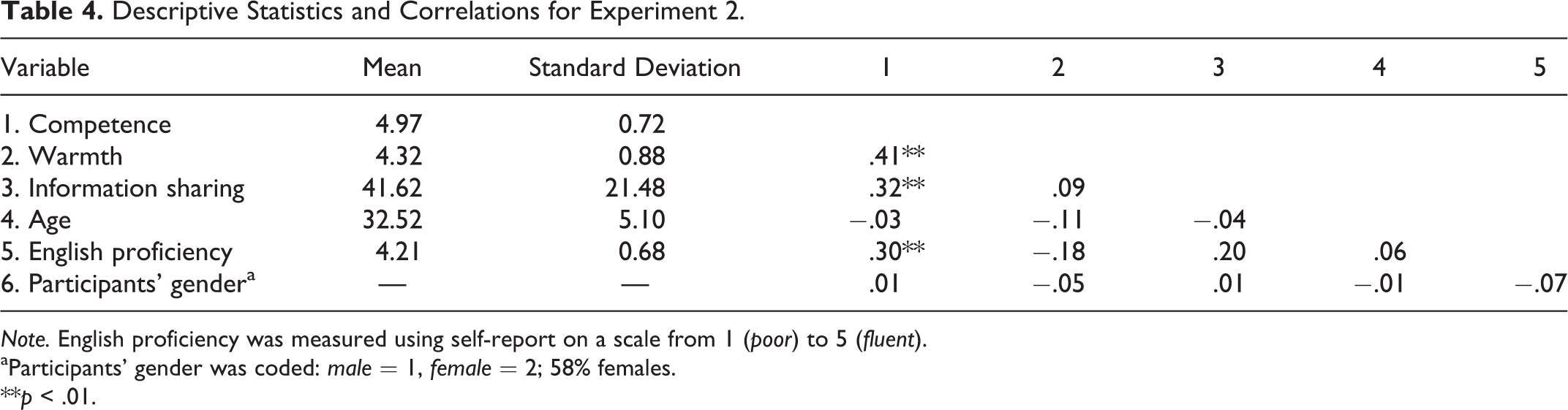
Note. English proficiency was measured using self-report on a scale from 1 (poor) to 5 (fluent).
aParticipants’ gender was coded: male = 1, female = 2; 58% females.
**p < .01.
Perceived Warmth and Competence
ANCOVA revealed no significant differences between the control and smiley conditions on perceived warmth, F(1, 87) = 1.42, p = .25, d = 0.09). There was a significant effect on perceived competence, F(1, 87) = 6.26, p = .003, d = 0.43, showing higher competence ratings in the control condition than in the smiley condition.
Information Sharing
Information sharing was significantly lower in the smiley condition than in the control condition, F(1, 87) = 4.50, p = .014, d = 0.57 (see Table 5 for means and standard deviations).
Means and Standard Deviations for Warmth, Competence, Information Sharing, and Perceived Gender as a Function of Smiley Use in Experiment 2.

Note. Different superscripts within rows denote significant differences between the smiley condition and the control condition (p < .05). SD = standard deviation.
We conducted a bootstrap procedure (1,000 resamples) to examine whether the negative effect of smiley use on information sharing was mediated by perceived competence and/or warmth. We found that competence perceptions mediated the smiley effect (95% CI [−5.77, −0.09]), but warmth perceptions did not (95% CI [−0.81, 1.56]). Perceptions of warmth were not associated with information sharing (p = .79; see Figure 2).
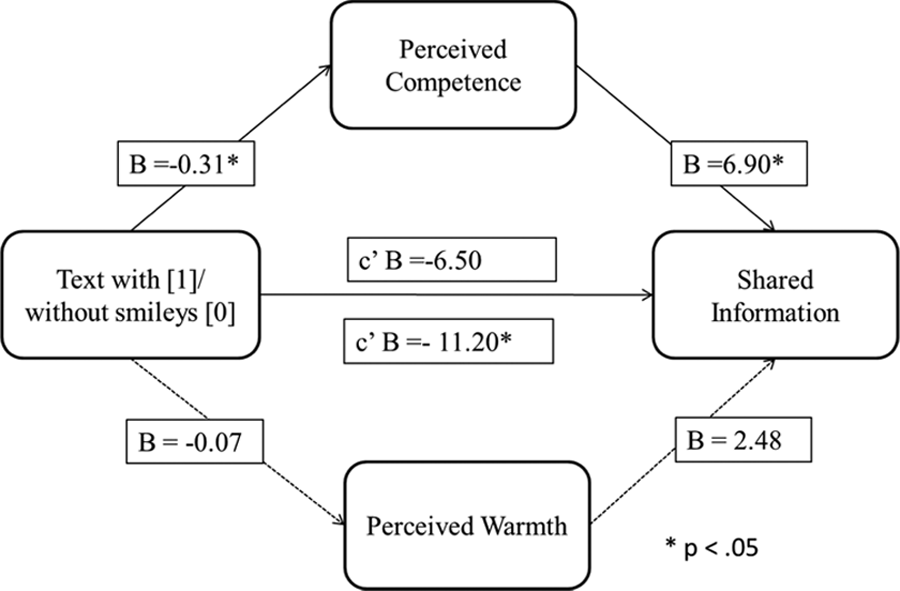
The mediation model for Experiment 2 with unstandardized coefficients. Both mediators were tested simultaneously (Model 4, Hayes, 2013).
Perceived Gender
In the smiley condition, the writer was more frequently identified as female than as male (χ2 = 3.89, p = .04). However, perceptions of the writer’s gender had no impact on perceived competence, t(89) = 0.63, p = .74, perceived warmth, t(89) = 0.48, p = .63, or information sharing, t(89) = 0.89, p = .37. Perceived gender also did not moderate effects of smiley usage on perceptions of warmth (p = .30) or competence (p = .20), indicating that the effects of smiley use on first impressions held irrespective of perceived gender.
Altogether, the results of Experiment 2 replicate and extend those of Experiment 1: Smileys had a negative effect on perceptions of competence and no effect on perceptions of warmth. Moreover, we observed adverse downstream consequences of smiley use for information disclosure.
Experiment 3
Our final experiment provides a direct test of why using smileys in work-related contexts backfires. We propose that smileys are perceived as inappropriate in formal work settings, because they violate norms of formal communication (Kaye et al., 2016; Vignovic & Thompson, 2010). Workplace communications involve both formal modes of information sharing and informal talk, such as gossip, chat, and so on (Beersma & Van Kleef, 2011). Both communication channels are vital for organizational life, yet they differ in their norms, and what seems inappropriate in one context might be normative in the other (Kurland & Pelled, 2000). As noted above, theory postulates that emotional expressions are more likely to have adverse consequences for the expresser to the degree that they are perceived as inappropriate for the context (Van Kleef et al., 2012). Given that smileys may be seen as unprofessional (Provine et al., 2007), the use of smileys is likely to be perceived as relatively inappropriate in formal work settings, and such perceptions of inappropriateness may have negative downstream consequences for perceptions of the expresser’s warmth and competence (Gross & Guerrero, 2000). Based on this logic, we examined the formal versus informal nature of the context as a moderator of the impact of smileys on perceived warmth and competence, testing the perceived appropriateness of the message as the mediating mechanism.
Method
Participants and Design
Following a power analysis recommendation for a sample of 84, 3 we recruited 92 U.S. citizens using Amazon’s MTurk. Seven participants failed an attention question and were excluded, leaving a final sample of 85 (47% female, Mage = 36.16, SD = 12.40). A 2 (text only vs. text with smileys) × 2 (formal vs. informal context) between-subjects design was employed.
Procedure
Participants read an e-mail purportedly written by a new employee to an unfamiliar administrative assistant, with a question about a staff meeting (formal condition) or a social gathering (informal condition). The message either contained no smileys (control) or two smileys (smiley condition; see Table 6). As in the previous experiments, participants evaluated the warmth and competence of the employee. In addition, participants evaluated the e-mail’s appropriateness.
The E-Mail Participants Read in the Four Conditions of Experiment 3.
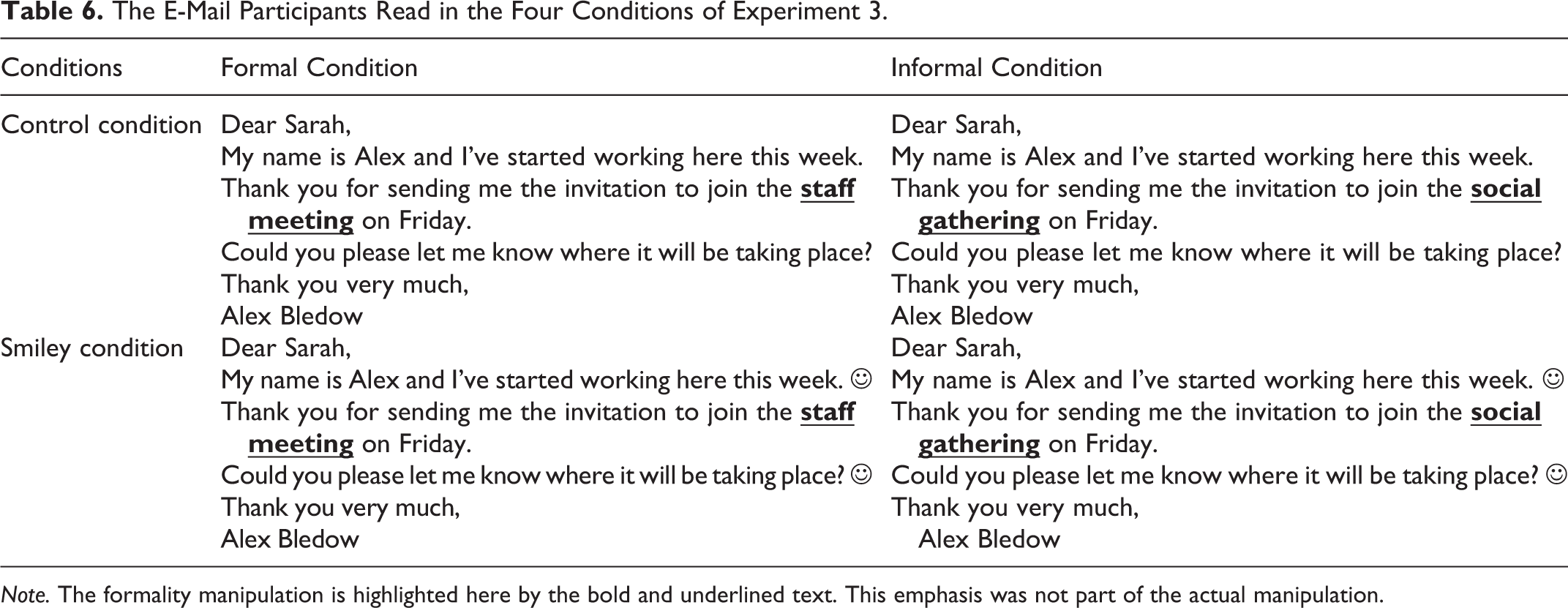
Note. The formality manipulation is highlighted here by the bold and underlined text. This emphasis was not part of the actual manipulation.
Measures
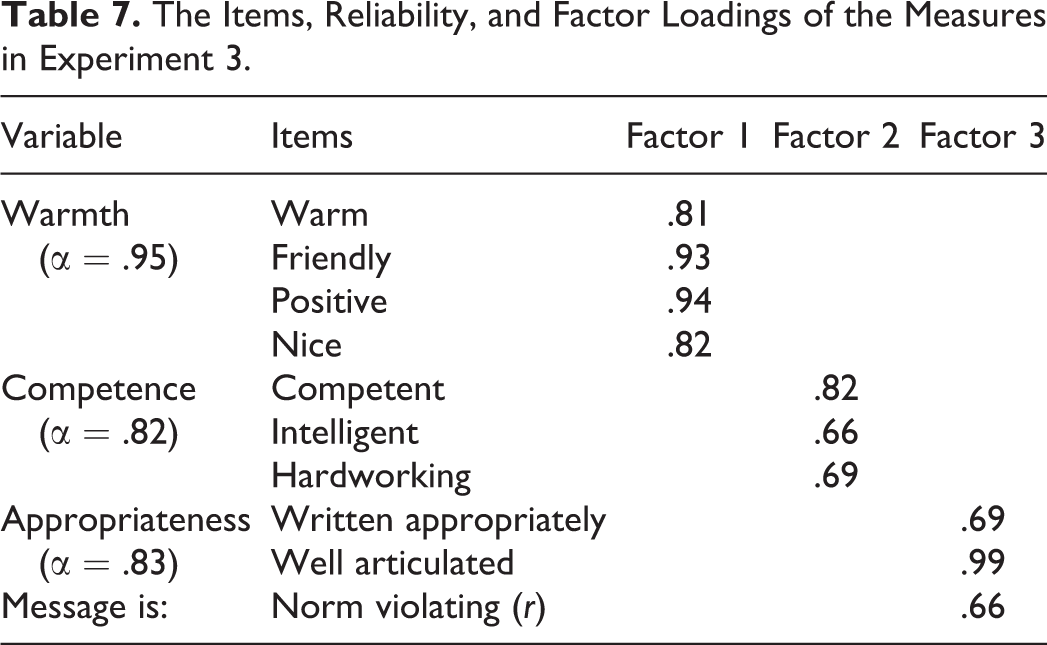
Table 7 presents the items used to measure perceived warmth, competence, and appropriateness, including scale reliabilities and factor loadings. EFA supported the empirical distinctiveness of the measures (λ1 = 4.35, λ2 = 2.70, λ3 = 1.28, 80.36% variance explained).
The Items, Reliability, and Factor Loadings of the Measures in Experiment 3.
Results and Discussion
Descriptive statistics are presented in Table 8.
Descriptive Statistics and Correlations for Experiment 3.

Note. English proficiency was measured using self-report on a scale from 1 (poor) to 5 (fluent).
aParticipants’ gender was coded: male = 1, female = 2; 47% females.
*p < .05. **p < .01.
Perceived Warmth
Participants’ gender correlated with perceived competence and appropriateness (Table 8), therefore, we controlled for gender using two-way ANCOVA. The test revealed no significant main effects of smiley, F(1, 80) = 2.26, p = .11, d = 0.34, or formality conditions, F(1, 80) = 1.15, p = .32, d = 0.06, on perceived warmth, but a marginally significant two-way interaction, F(1, 80) = 2.38, p = .058, d = 0.49. 4 Planned contrasts showed that, consistent with our previous findings, perceived warmth was not influenced by smileys in the formal context, t(81) = 0.69, p = .55, d = 0.18. However, in the informal context, perceived warmth was significantly higher in the smiley compared with the control condition, t(81) = 3.30, p < .003, d = 1.00 (see Figure 3).
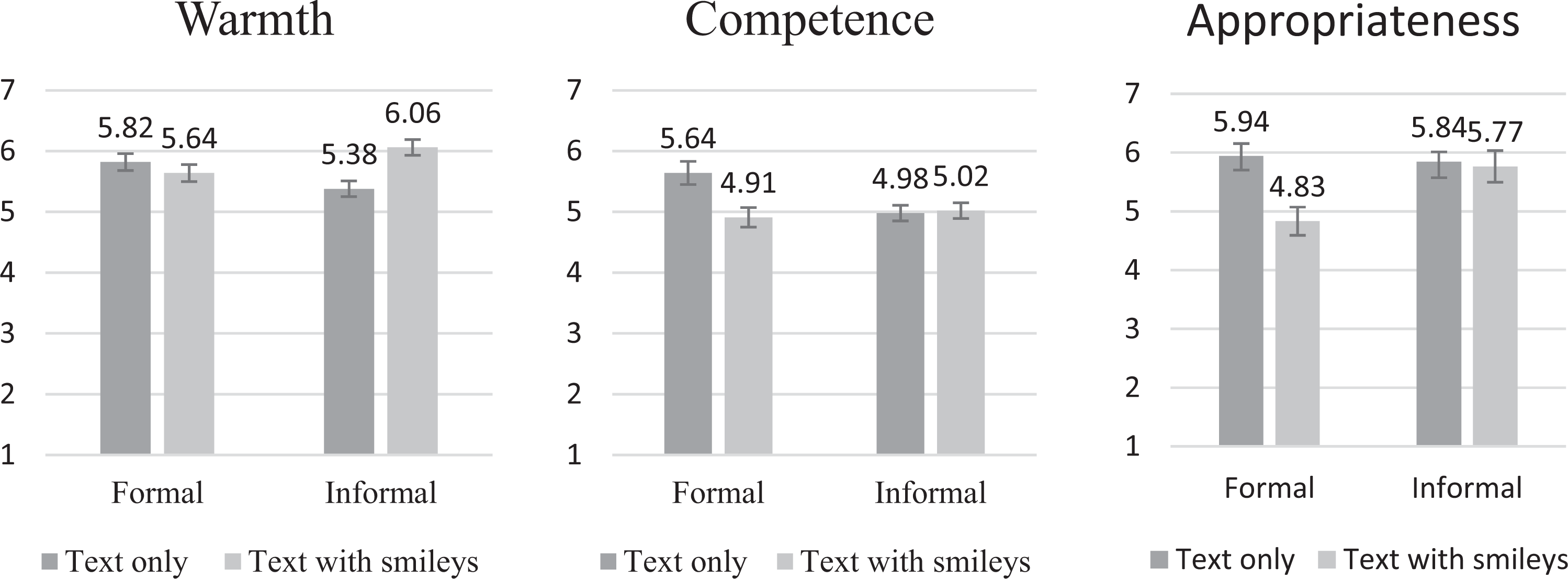
Perceptions of warmth and competence as a function of smiley use in formal and informal contexts including standard errors (Experiment 3).
Perceived Competence
Two-way ANCOVA showed a significant main effect of smiley condition, F(1, 80) = 7.83, p = .001, d = 0.72; a marginal effect of formality, F(1, 80) = 2.89, p = .06, d = 0.26; and a significant interaction, F(1, 80) = 5.57, p = .001, d = 0.52, on perceived competence. Planned contrasts showed that in the formal context, perceived competence was significantly higher in the control condition compared to the smiley condition, t(81)= 3.55, p < .001, d = 0.87. In the informal context, there was no significant difference between the conditions, t(81) = 0.42, p = .68, d = 0.13 (see Figure 3).
Appropriateness
Two-way ANCOVA revealed a significant main effect of smiley condition, F(1, 80) = 4.56, p = .01, d = 0.49; a marginally significant effect of formality, F(1, 80) = 2.93, p = .059, d = 0.31; and a significant interaction, F(1, 80) = 4.34, p = .003, d = 0.45, on e-mail appropriateness. Planned contrasts showed that in the formal context, perceived appropriateness was significantly higher in the control condition than in the smiley condition, t(81) = 3.07, p < .004, d = 0.96. In the informal context, there was no significant difference between the conditions, t(81) = 0.29, p = .77, d = 0.08 (see Figure 3).
The mediating role of appropriateness was examined using the moderated mediation procedure by Hayes (2013; Model 7; 1,000 bootstrap resamples), which revealed that perceived appropriateness partially mediated the effects of smiley use in the formal condition on perceived warmth (95% CI [−.66, −.08]) and competence (95% CI [−.69, −.12]; see Figure 4).
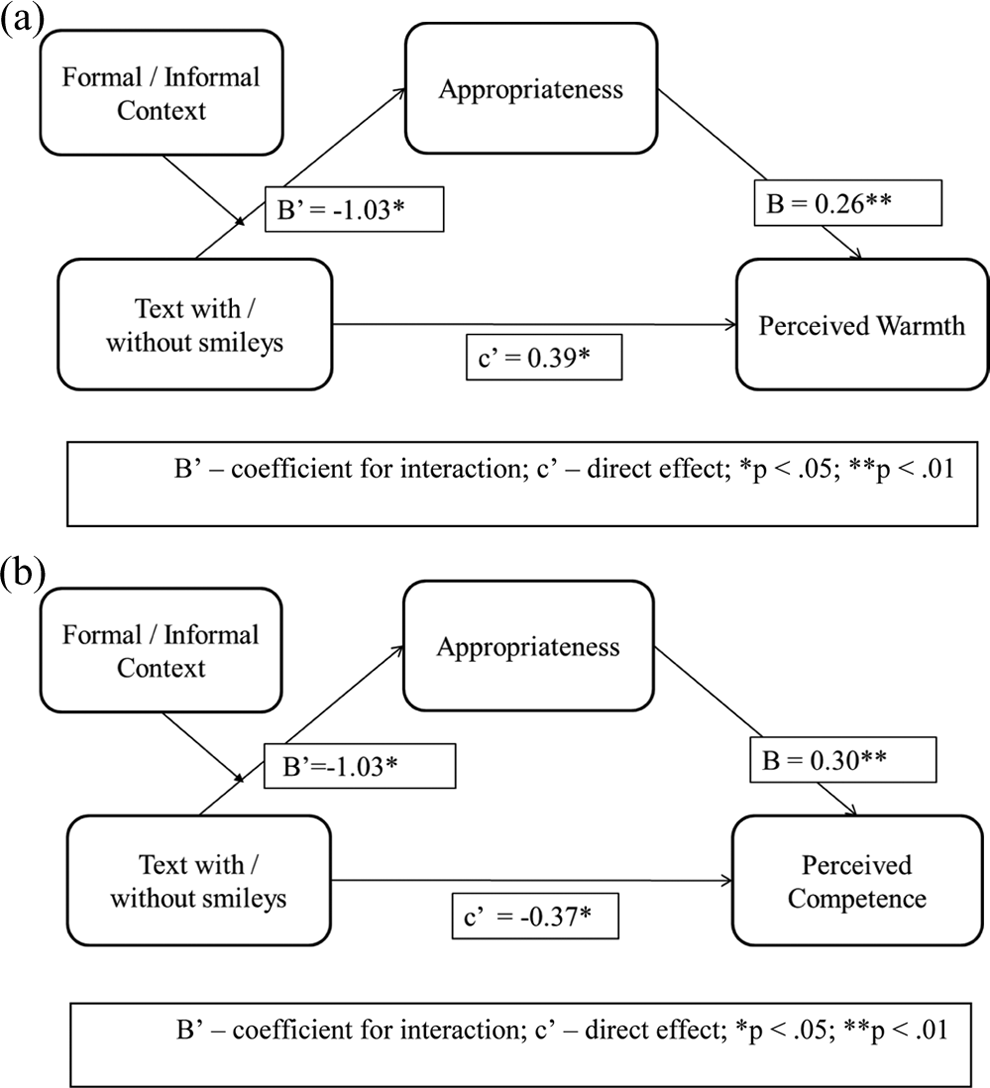
(a) Moderated mediation model for perceived warmth with unstandardized coefficients. (b) Moderated mediation model for perceived competence with unstandardized coefficients.
Altogether, Experiment 3 offers insight into the contingencies and underlying mechanisms of the effects of smileys on first impressions. Smileys reduced assessments of competence and had no impact on perceived warmth in a formal setting. However, smileys had positive effects on perceptions of warmth and no effect on perceived competence in an informal setting. These effects were partially mediated by perceptions of (in)appropriateness.
General Discussion
Anecdotal observations and empirical findings converge to suggest that smiles fuel favorable first impressions (e.g., Ames & Johar, 2009). We examined whether the digital representation of a smile—the smiley (☺)—has a similar effect on first impressions in computer-mediated communication. While empirical research has shown that smileys have a positive effect on message tone (e.g., Lo, 2008), practitioners advise against using them in work settings (e.g., Krohn, 2004). We investigated the effects of smiley usage in work settings on social perceptions of warmth and competence in first impressions. In three experiments, we consistently find that, contrary to actual smiles, smileys do not increase perceptions of warmth and actually reduce perceptions of competence. Moreover, these lower perceptions of competence reduced recipients’ information sharing behavior. The negative effects of smiley use were limited to formal settings, where smileys were perceived as inappropriate. In informal settings, the effects were reversed, with no impact of smileys on perceived competence and a positive impact on perceived warmth.
Our findings contribute to the fast-growing literature on the social effects of emotions (see Van Kleef, Cheshin, Fischer, & Schneider, 2016). Emotional expressions are presumed to regulate social exchange by means of their social-signaling function (Keltner & Haidt, 1999; Parkinson, Fischer, & Manstead, 2005; Van Kleef, 2009), and smiles in particular have been found to facilitate social interactions. The current study indicates that such effects do not extend to the use of smileys, at least not in formal settings. The findings therefore have implications for theorizing about the social functions of emotions and especially for the representation of emotions in computer-mediated communication. A growing body of research suggests that emotional displays are “functionally equivalent” in the sense that the direction of effects is similar irrespective of expressive modality (Van Kleef et al., 2012). However, these studies have thus far not systematically tested the effects of emoticons. Our findings suggest that smileys are perceived differently than actual smiles, at least on first impressions in work settings, contradicting the theoretical suggestion that a smiley functions similarly to a smile (Derks et al., 2007; Walther & D’Addario, 2001).
EASI theory stipulates that emotional expressions exert social influence by eliciting inferential and/or affective processes in observers (Van Kleef, 2016). Our focus here was on perceivers’ inferences of an expresser’s warmth and competence. We did not consider possible affective influences of smileys, such as emotional contagion (Barsade, 2002; Hatfield, Cacioppo, & Rapson, 1994). It is possible that smileys trigger similar affective responses as smiles do (e.g., mimicking the smile, feeling happy), even if cognitive responses differ between smiles and smileys as demonstrated here. More research is needed to examine this possibility. Furthermore, our focus was limited to first impressions in work-related contexts via e-mail. Future research could further examine the functionality of smileys in established relationships, across different types of social settings, and across different computer-mediated communication platforms.
Emotional expressions are interpreted partly in light of gender stereotypes (Plant et al., 2000). Our findings contribute to this literature by revealing that smiley usage is associated with gender perceptions (i.e., smiley users were more often perceived to be women than men). However, these gender perceptions were not associated with perceptions of warmth and competence, and they did not moderate effects of smiley usage on perceived warmth and competence. Our results thus suggest that the effects of smiley use on social perceptions occur regardless of the expresser’s perceived gender.
Our findings have practical implications for virtual first-impression management. Although smileys may help convey a positive tone in written messages (Walther & D’Addario, 2001), their adverse effects on first impressions of competence may outweigh these benefits. As such, our findings underline the common advice in business guides that the use of smileys in formal contexts should be avoided, regardless of age or gender. However, future research is needed to examine the effects of smiley use beyond first impressions, both in formal work settings and in more informal settings.
Belgian surrealist painter René Magritte famously subtitled his painting of a pipe “This is not a pipe,” illuminating the notion that a representation of an object is not the real thing. Similarly, our findings demonstrate that a smiley is not a smile. Smileys may serve important functions in computer-mediated communication, such as emphasizing positive intentions, clarifying irony, or suggesting a positive mood (Derks, Fischer, et al., 2008). However, when used in formal work settings, smileys—unlike actual smiles—have a negative impact on interpersonal first impressions.
Footnotes
Authors’ Note
The experiments were approved by the institutional review board of the University of Amsterdam, the Netherlands.
Acknowledgments
The authors wish to acknowledge the editor and the anonymous reviewers for their insightful comments. The authors wish to thank Birgit Bunt and Rafaëla Ellensburg for their valuable contribution.
Declaration of Conflicting Interests
The author(s) declared no potential conflicts of interest with respect to the research, authorship, and/or publication of this article.
Funding
The author(s) disclosed receipt of the following financial support for the research, authorship, and/or publication of this article: This research was supported by a grant from the Netherlands Organization for Scientific Research awarded to the last author (NWO 452-09-010).