







Abstract
Two studies investigate how science, technology, engineering, and math (STEM) professors’ fixed mindsets—the belief that intelligence is fixed and unchangeable—may induce stereotype threat and undermine women’s performance. In an experiment (N = 217), we manipulated professors’ mindset beliefs (fixed vs. growth) within a course syllabus. While both men and women perceived the fixed mindset professor to endorse more gender stereotypes and anticipated feeling less belonging in the course, women reported these effects more than men. However, only for women did this threat undermine performance. In a 2-year longitudinal field study (884 students enrolled in 46 STEM courses), students who perceived their professor to endorse a fixed (vs. growth) mindset thought the professor would endorse more gender stereotypes and experienced less belonging in those courses. However, only women’s grades in those courses suffered as a result. Together, these studies demonstrate that professors’ fixed mindset beliefs may trigger stereotype threat among women in STEM courses.
Women make up almost half of the national workforce, yet they account for only 28% of science, technology, engineering, and math (STEM) workers in the United States (National Science Board, 2018). Although women now outperform men in their non-STEM classes, women receive a larger “grade penalty” in their STEM courses compared to men (Koester et al., 2016; Matz et al., 2017). That is, the difference between STEM and non-STEM grades is smaller for men than women, suggesting that women’s performance in STEM is undermined relative to their potential. While there are many reasons for the lower performance of women in STEM, the cues hypothesis suggests that threatening situational cues convey whether stigmatized groups are valued in a particular context (Murphy et al., 2007; Murphy & Taylor, 2012). Threatening cues such as the lack of representation of women (Murphy et al., 2007) and STEM’s “bro” culture (Cheryan et al., 2009) make women feel like they do not belong in STEM and contribute to lower performance relative to potential in the STEM pipeline (Hill et al., 2010). We hypothesize that a STEM professor’s mindset beliefs about intelligence—their beliefs about the fixedness or malleability of ability (Dweck, 1999)—serve as a situational cue that reinforces gender stereotypes and undermines women’s performance in STEM courses.
Professors who endorse fixed mindset beliefs endorse the idea that ability is innate and predetermined—that students either have a particular ability or they don’t. In contrast, professors who endorse growth mindset beliefs hold that ability is malleable—that it can be developed over time with effort, learning, help-seeking, and applying the right strategies (Dweck, 1999; Dweck & Leggett, 1988). Professors communicate their mindset beliefs through their formal and informal interactions with students. For example, professors who endorse more of a fixed (vs. growth) mindset are more likely to make quick judgments of students’ abilities based on a single test performance and recommend that struggling students drop difficult courses rather than seek resources that will improve their learning (Rattan et al., 2012). Pedagogical practices like these tend to be ineffective and demotivating to most students. In fact, students report feeling less motivated and earn lower grades in courses taught by professors who self-report more fixed (vs. growth) mindset beliefs (Canning et al., 2019). Consistent with prior research (Canning et al., 2019; Muenks et al., 2020), we hypothesize that faculty’s fixed mindset beliefs will have a negative effect for all students, on average. After all, most students generally care about being perceived as smart and competent (e.g., Covington, 2000; Ryan & Pintrich, 1997). When faculty believe that only students with innate ability are smart and competent, it makes all students feel more vulnerable and causes them to question their belonging (Muenks et al., 2020).
Yet, while prior research suggests that fixed mindset messages are problematic for all students, we hypothesize that STEM faculty’s fixed mindset beliefs create a context of stereotype threat—putting women at risk of confirming negative stereotypes about their group in those professors’ classes. By communicating that ability is innate, professors who endorse a fixed mindset signal to students that only the innately smart students will do well in their class. Because the cultural stereotypes about which groups have innate STEM abilities are widely known (Nosek et al., 2002; Storage et al., 2020), both men and women might expect professors who signal a fixed (vs. growth) mindset to endorse more gender stereotypes about who can perform well in STEM. According to stereotype threat theory, perceiving someone in power to stereotype your group—such as a professor in a classroom context—will reduce your sense of belonging in the environment that that person controls (Spencer et al., 1999; Steele, 1997). Therefore, if women worry about being judged in terms of negative stereotypes, it may reduce their feelings of belonging, which can hamper academic performance (Spencer et al., 1999; Steele, 1997).
At present, all of the research in this area—which includes only a handful of studies—supports our theorizing but has been purely correlational in nature and largely not focused on gender (Canning et al., 2019; Muenks et al., 2020). One paper focused on professor mindset beliefs and student gender, examined women’s forecasts of their potential performance in a hypothetical course (where students guessed what kind of grade they thought they might get; LaCosse et al., 2020), not actual performance on standardized tests or in college STEM courses. Indeed, no research to date has shown a causal link of faculty mindset beliefs on women’s performance that explains a significant portion of the gender gap in STEM.
Two other related belief systems (i.e., brilliance beliefs and universal–nonuniversal beliefs) have been conceptualized as orthogonal to and empirically distinguished from the more traditional fixed-growth mindset beliefs (e.g., Muenks et al., 2020; Rattan et al., 2018). For instance, Leslie et al. (2015) found that professors’ beliefs about brilliance (i.e., whether performance at the very top of a field requires brilliance) when aggregated to the discipline level correlate with the number of women enrolled in U.S. PhD programs, suggesting that brilliance beliefs—at the field level—may discourage the pursuit of advanced education among women. The present research complements this work by examining how more traditional fixed-growth mindset beliefs are causally linked to performance in a local context (i.e., classroom performance vs. participation/pursuit of a PhD in a field). Similarly, Rattan et al. (2018) examined a different belief system. They found that professors who espouse “universal” (i.e., everyone can be successful) or “nonuniversal” (i.e., only a few people can succeed) beliefs caused women to feel less belonging in that context—and they did not establish a causal link to performance. The current research focuses on professors’ more classical, “Dweckian” beliefs about the fixedness or malleability of intelligence (Dweck, 1999), and we provide the novel, causal link to women’s STEM performance.
In the present research, we conducted an experiment and a longitudinal field study that extends previous research by examining the consequences of faculty mindset beliefs for women’s and men’s performance in STEM. This research is also the first to directly examine stereotype threat as a mechanism that explains how faculty mindset cues might affect men and women differently. According to stereotype threat theory, women experience stereotype threat when others judge or evaluate their group in terms of negative group stereotypes (Spencer et al., 1999; Steele, 1997). These stereotyping concerns are associated with lower feelings of belonging in a context (e.g., Murphy et al., 2007; Logel et al., 2011; Schmader et al., 2008) and can result in lower performance relative to contexts in which stereotype threat is removed (e.g., Inzlicht & Ben-Zeev, 2003; Schmader, 2002; Sekaquaptewa & Thompson, 2003; Spencer et al., 1999, 2016). That is, we hypothesize that faculty’s fixed mindset beliefs would first engender threat regarding the potential for group-based stereotyping (e.g., “my professor endorses gender stereotypes”), which would then lead students to experience the psychological consequences of stereotype threat (here, lower belonging in that setting), which could ultimately disrupt intellectual performance (Figure 1). Thus, across two studies, we test the following hypotheses:
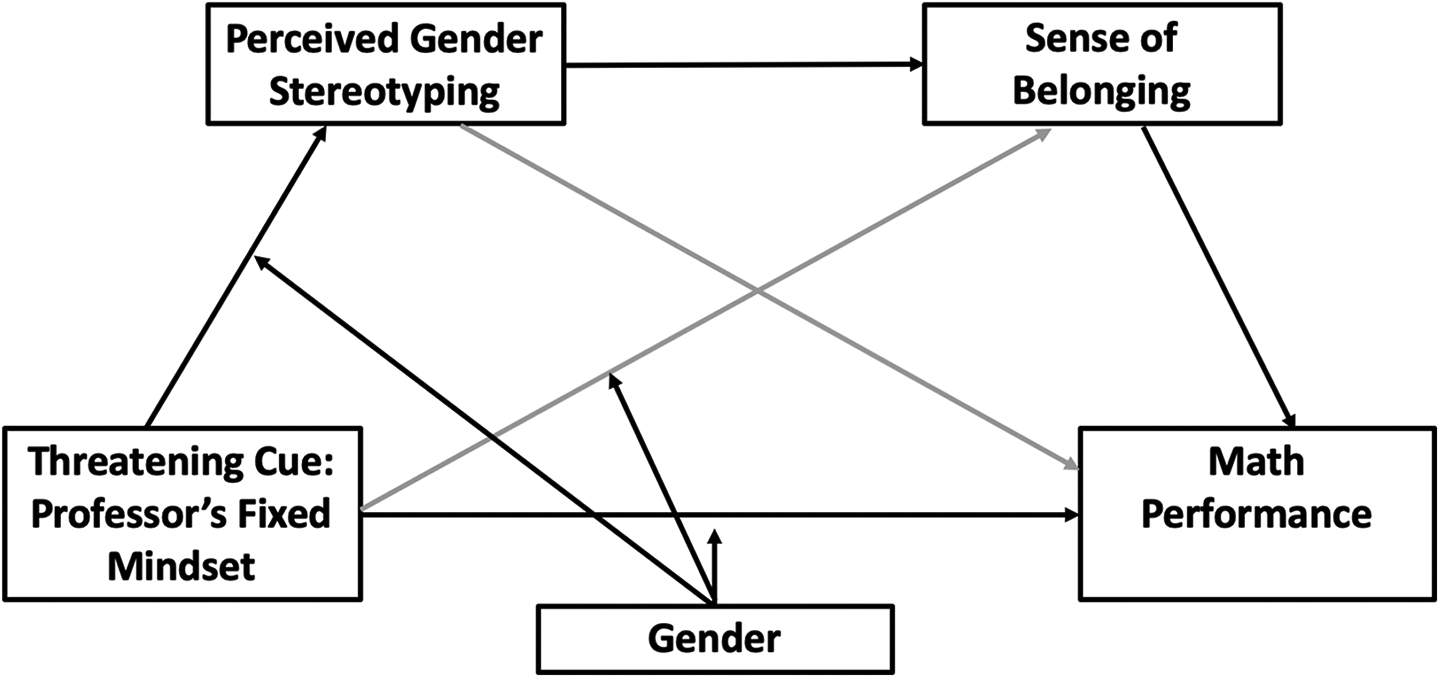
Visualization of the theoretical model. Note. Professor’s fixed mindset beliefs are theorized to first engender threat regarding the potential for group-based stereotyping (e.g., “my professor endorses gender stereotypes”), which would then lead students to experience the psychological consequences of stereotype threat (i.e., lower belonging in that setting), which could ultimately disrupt math performance. This indirect effect is theorized to be moderated by gender (i.e., stronger effects for women compared to men).
Study 1
Study 1 employed experimental methods to investigate the theorized causal links between STEM faculty’s mindset beliefs, students’ expectations that their (fixed mindset) professor is more likely to endorse gender stereotypes, students’ anticipated belonging in the professor’s course, and their performance on that professor’s STEM exam.
Method
Design and Participants
The experiment consisted of a 2 (faculty mindset: growth or fixed) × 2 (participant gender) factorial design. A power analysis using G*Power Version 3 (Faul et al., 2007) with 80% statistical power and an α of .05 estimated that a sample size of 200 students would be needed to detect a small effect size (f 2 = .2). Participants were recruited from the psychology department’s human subjects pool in exchange for course credit. The study was described as a study about students’ impressions of courses at the university (but did not explicitly mention math). We recruited 217 undergraduates (M age = 19.13, SD = 1.20; 133 women and 84 men; 71% White, 13% Asian, 7% Black, 4% Hispanic, and 5% Other). All participants were included in the analyses; however, degrees of freedom vary slightly due to a small amount of missing data on some measures.
Procedure
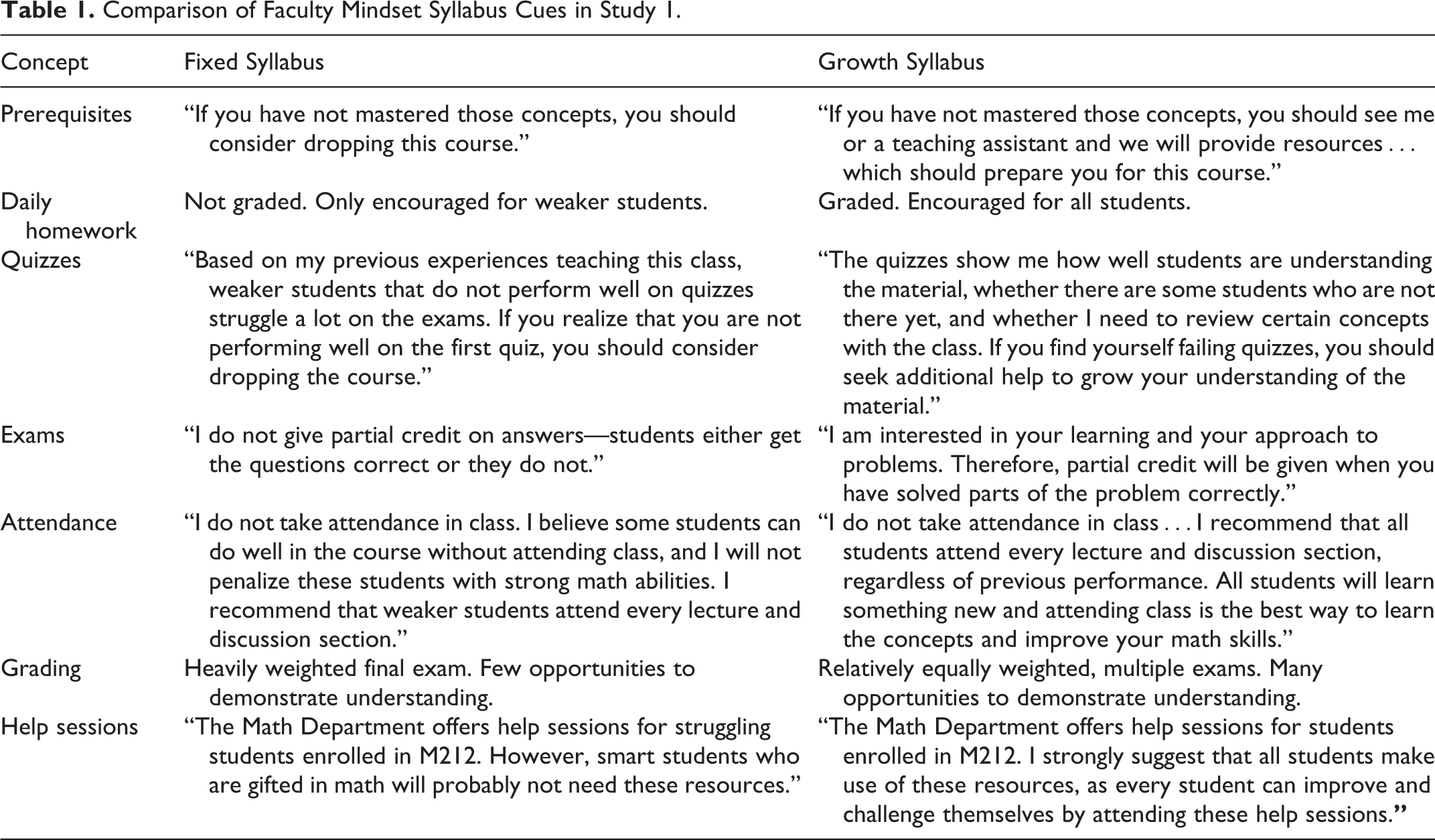
Upon arriving at the lab, students were told that a Calculus professor at the university was working with the psychology department to test a placement exam that the professor was considering using for admittance to their Calculus II class. Students were asked to read the professor’s syllabus, complete a survey about their impressions of the course, and then complete the professor’s placement exam. Students were randomly assigned to either the fixed or growth mindset professor condition. The mindset cues embedded in the syllabi were sourced from actual college math faculty’s syllabi and constructed according to the cues categories that signaled fixed or growth mindset faculty beliefs to students in a separate set of focus groups we conducted with 40 undergraduate students (see Supplemental Materials). The fixed and growth mindset cues reflect a high degree of external validity and were drawn from the language, behaviors, and class policies (e.g., descriptions of prerequisites, grading policies, and office hour policies) that communicated to focus group students that the professor endorsed a fixed or growth mindset.
The fixed mindset syllabus included language and practices that suggested to students that the professor believed that intelligence is fixed (e.g., “Students that struggled in Calculus I will not be able to keep up with the course material”). In contrast, the growth mindset syllabus included language and practices that suggested that the professor believed intelligence is malleable and that students could increase their abilities (e.g., “If you have not mastered those concepts yet, you should see me or a TA and we will provide resources…which should prepare you for this course”). Table 1 includes a comparison of the faculty mindset cues (complete syllabi and measures are provided in Supplemental Materials).
After reading the syllabus, students completed a questionnaire that assessed their perceptions of the professor’s mindset beliefs (as a manipulation check), the degree to which students expected the professor to endorse gender stereotypes, and their anticipated sense of belonging in the professor’s course. Next, students were given 20 min to complete the ostensible course placement test, which consisted of 30 multiple-choice GRE math questions used in previous stereotype threat research (Schmader, 2002). See the Supplemental Materials for how the placement test was described according to condition. Following the exam, the study concluded with a questionnaire that assessed students’ demographic information and personal mindset beliefs.
Comparison of Faculty Mindset Syllabus Cues in Study 1.
Measures
Manipulation Check: Perceived Professor’s Fixed Mindset
Five items adapted from the Dweck (1999) Theories of Intelligence Scale assessed students’ perceptions of the professor’s mindset beliefs (e.g., “The professor in this class seems to believe that students have a certain amount of intelligence, and they really can’t do much to change it,” α = .96).
Perceived Stereotype Endorsement
Two items assessed students’ expectations that the professor would endorse gender stereotypes (e.g., “I think the professor in this class would endorse gender stereotypes,” r = .91, p < .01). We chose to use this shortened scale to minimize demand characteristics in a short laboratory setting, and it is identical to previous research that measures this construct (LaCosse et al., 2020).
Anticipated Belonging
Four items adapted from Murphy and Zirkel (2015) assessed students’ anticipated sense of belonging in the course (e.g., “If you were a student in this class, how much would you feel that you “fit in” during this class?” α = .90).
Math Test Performance
The placement test consisted of 30 GRE math problems adapted from Schmader (2002). Performance was indexed by calculating the total number of problems solved correctly (M = 9.11, SD = 4.79).
Covariate: Personal Mindset Beliefs
Students’ personal mindset beliefs were entered as a covariate in all analyses to assess the effect of the professor mindset manipulation independent of students’ personal mindset beliefs. Two items from the Dweck (1999) Theories of Intelligence Scale assessed students’ personal mindset beliefs (e.g., “You have a certain amount of intelligence, and you can’t really do much to change it,” r = .70, p < .01). Statistical significance did not differ on any test when students’ personal mindset beliefs were removed from the models (Supplemental Table S1).
Results
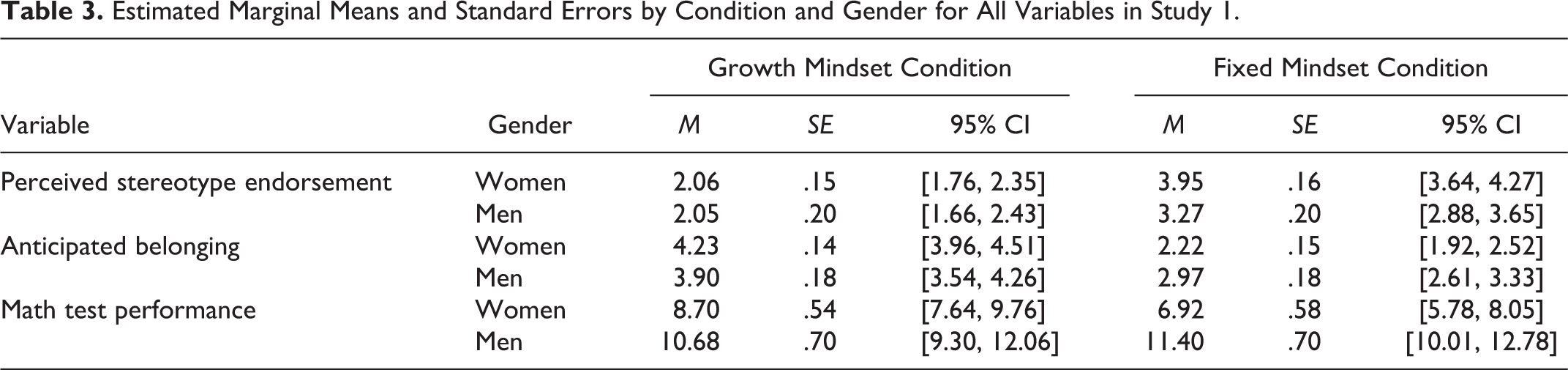
See Table 2 for model results for all dependent variables, see Table 3 for means and descriptive statistics by condition and gender, and see Table S2 for results with suspicious participants removed.
Model Results for All Dependent Variables in Studies 1 and 2.
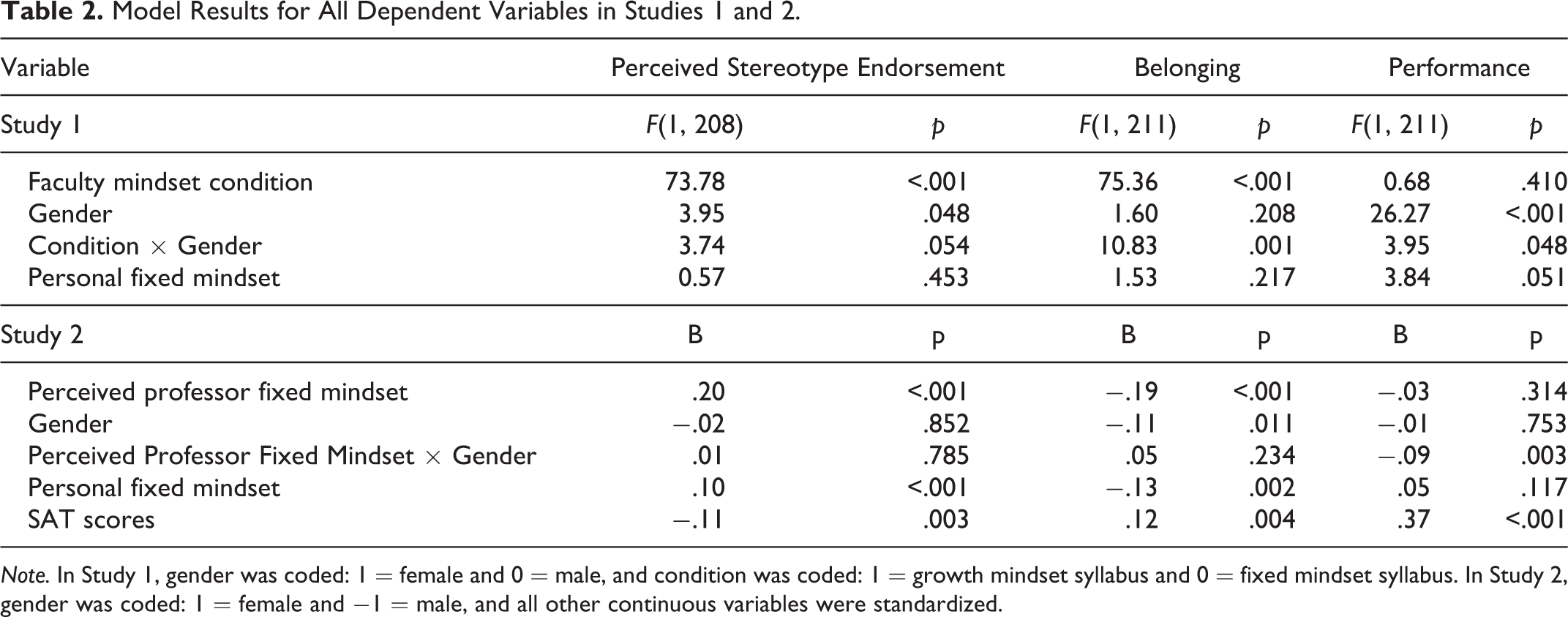
Note. In Study 1, gender was coded: 1 = female and 0 = male, and condition was coded: 1 = growth mindset syllabus and 0 = fixed mindset syllabus. In Study 2, gender was coded: 1 = female and −1 = male, and all other continuous variables were standardized.
Estimated Marginal Means and Standard Errors by Condition and Gender for All Variables in Study 1.
Manipulation Check
As intended, students perceived the fixed mindset professor to endorse significantly more fixed mindset beliefs (M = 5.02, SD = .84) than the growth mindset professor (M = 2.03, SD = .96), t(215) = 24.31, p < .001, Cohen’s d = 3.31.
Perceived Stereotype Endorsement
Both men and women expected the fixed mindset professor to endorse gender stereotypes to a greater extent than the growth mindset professor, F(1, 208) = 73.78, p < .001,
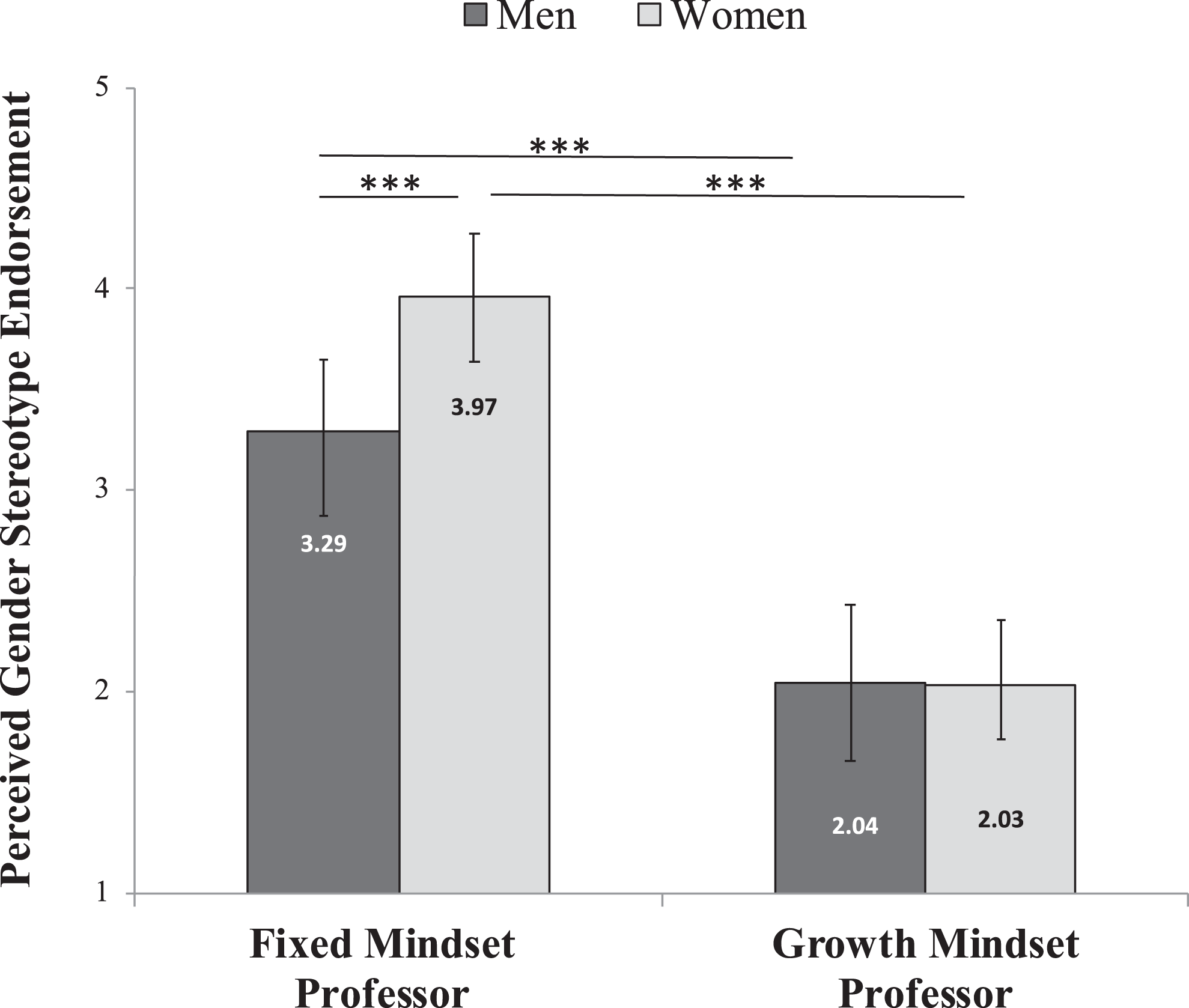
Expectations that the professor would endorse gender stereotypes as a function of student gender and professor mindset beliefs. Note. Error bars represent 95% CI. *p < .05. **p < .01. ***p < .001.
Anticipated Belonging
When the professor communicated a fixed (vs. growth) mindset, both men and women anticipated feeling less belonging in the course, F(1, 211) = 75.36, p < .001,
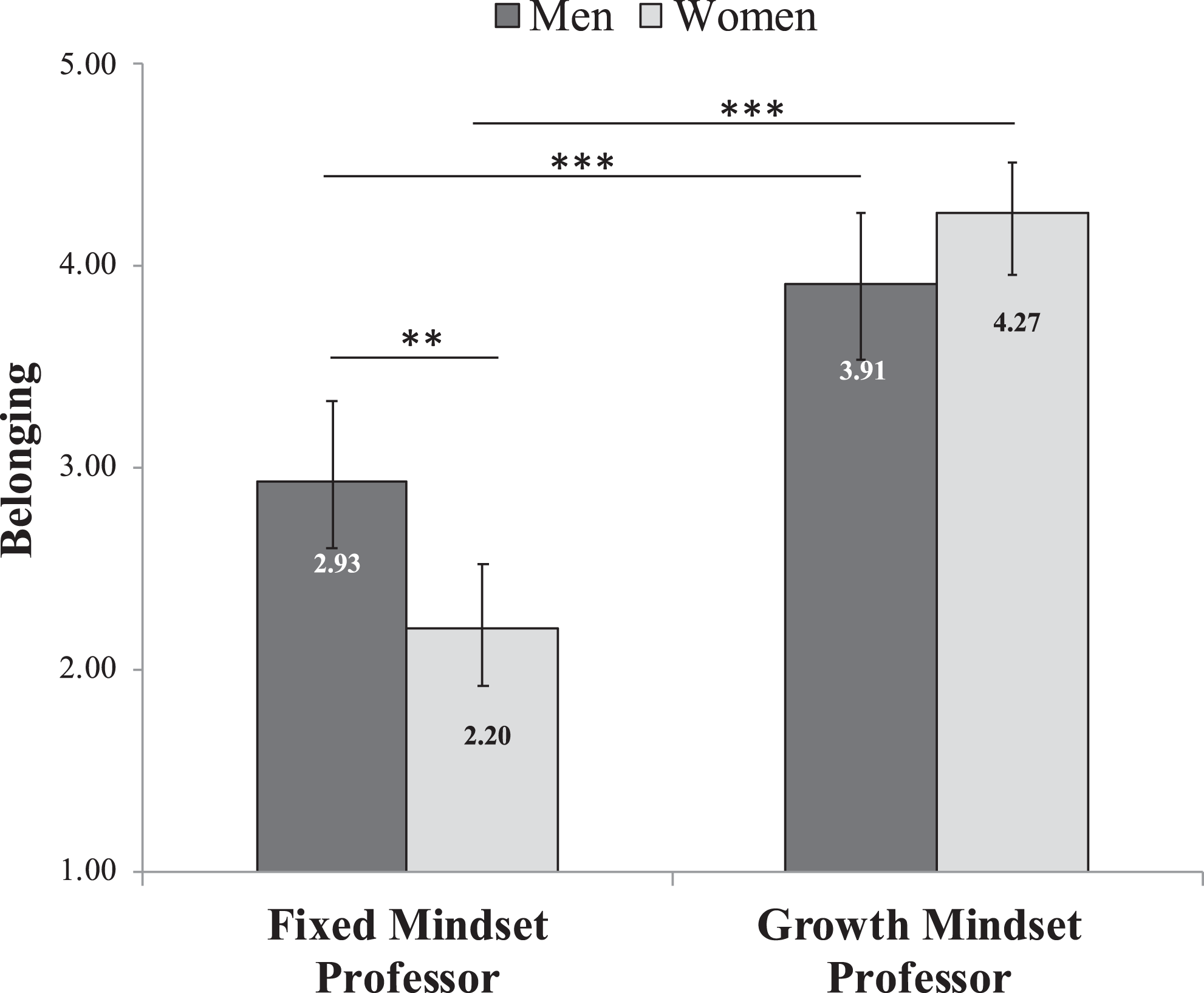
Mean anticipated belonging in the professor’s Calculus II course, as a function of student gender and professor mindset beliefs. Note. Error bars represent 95% CI. *p < .05. **p < .01. ***p < .001.
Math Test Performance
We found a significant interaction between condition and student gender on math performance, F(1, 211) = 3.95, p = .048,
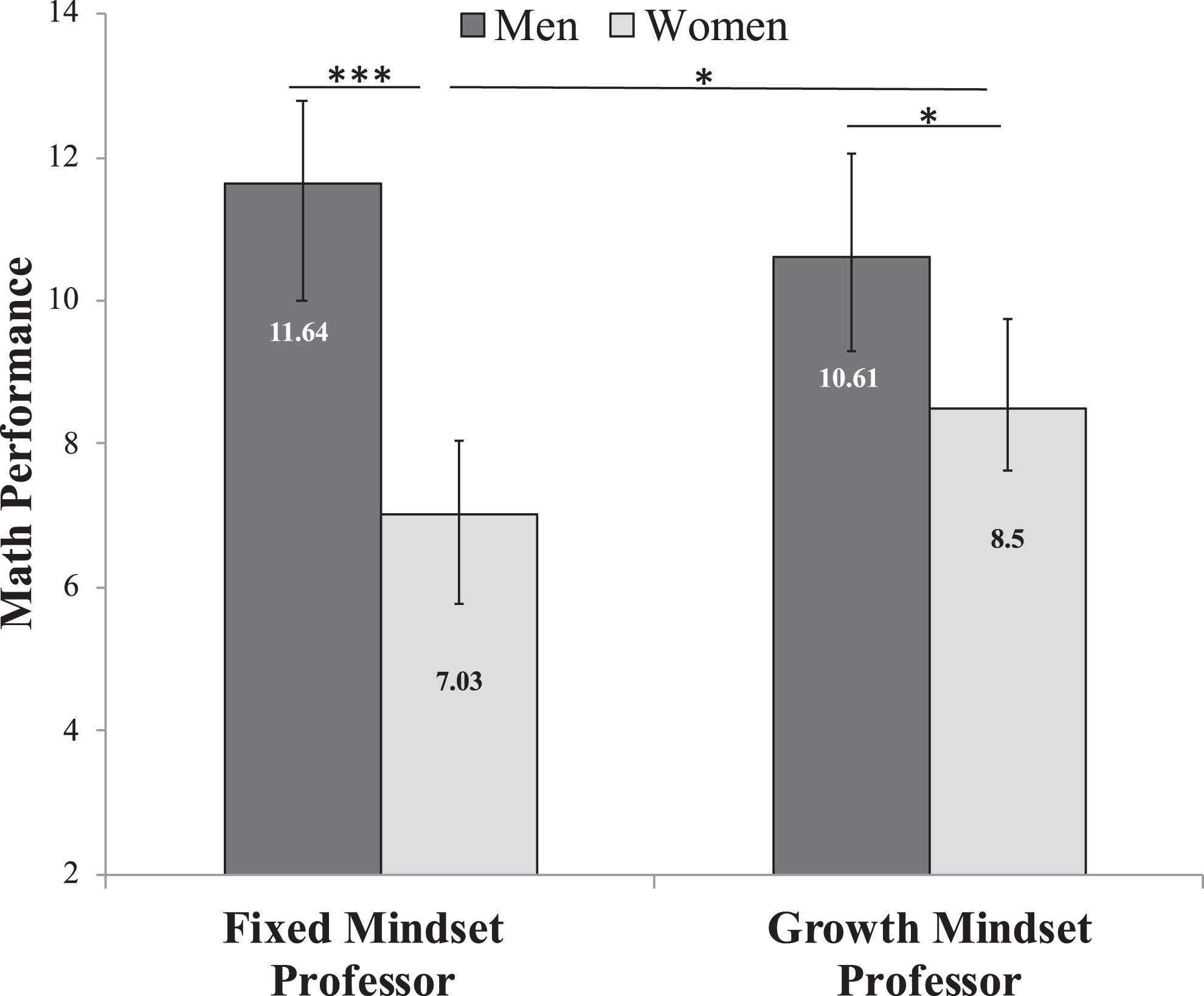
Mean math performance as function of student gender and professor mindset beliefs. Note. Error bars represent 95% CI. *p < .05. **p < .01. ***p < .001.
Mediation
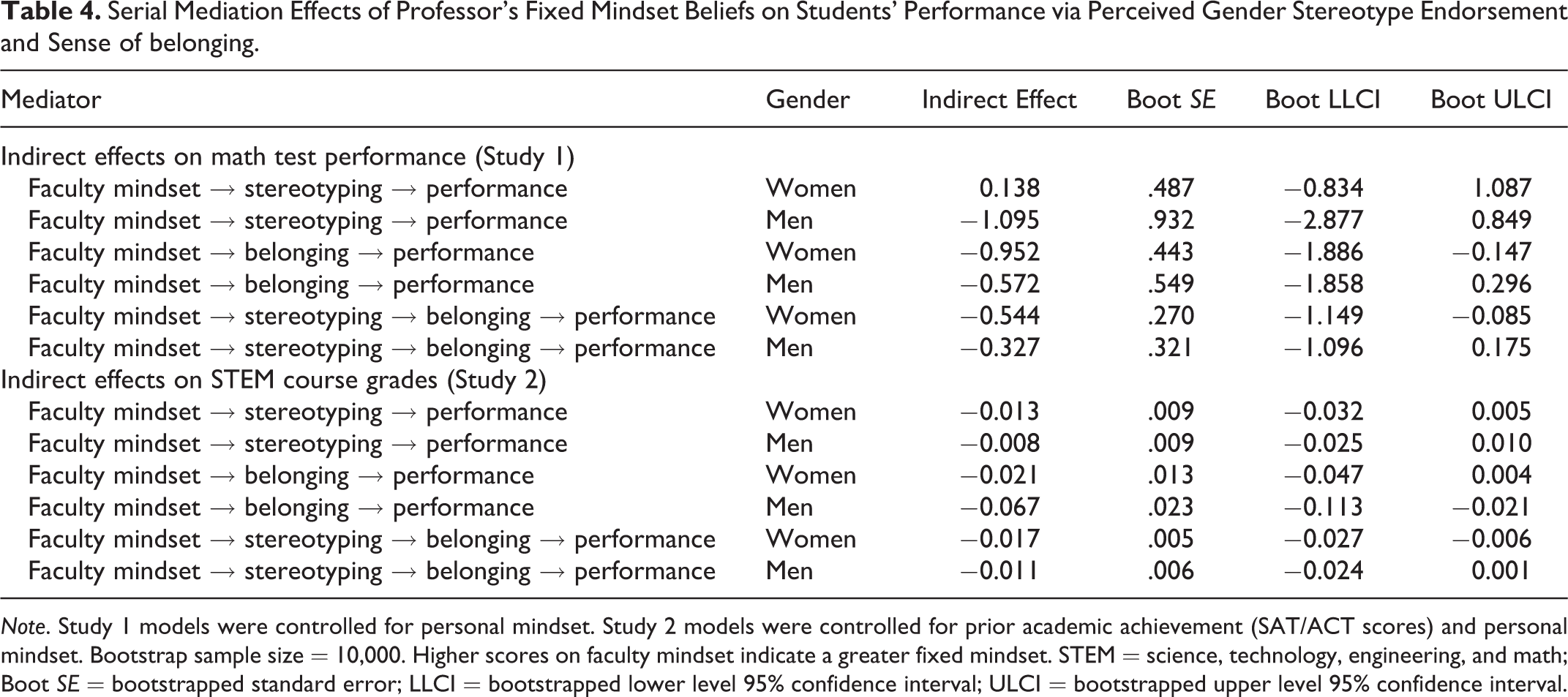
A test of moderated mediation explored the psychological processes that mediated the effect of faculty mindset on performance for men and women. We chose to fit serial mediation models based on the theoretical model proposed in stereotype threat theory (Spencer et al., 1999; Steele, 1997). That is, we hypothesized that the faculty’s fixed mindset beliefs would first engender a threat regarding potential group stereotyping, which would then lead students to experience lower belonging, which would ultimately disrupt academic performance (Figure 1). We conducted a serial moderated mediation analysis (Model 89) using Hayes’s (2018) Process Macro for SPSS Version 28 and 10,000 bootstrapped samples. We tested the indirect effect of professor mindset on students’ math performance through perceived gender stereotyping and sense of belonging, with gender as a moderator (Table 4). The indirect effect was significant for women, indirect effect = −.54, 95% CI [−1.1492, −0.0854]. However, this indirect effect was not significant for men, indirect effect = −.33, 95% CI [−1.0962, 0.1752], suggesting that professors’ fixed mindset beliefs had a more powerful effect on women’s psychological experiences and performance compared to men.
Serial Mediation Effects of Professor’s Fixed Mindset Beliefs on Students’ Performance via Perceived Gender Stereotype Endorsement and Sense of belonging.
Note. Study 1 models were controlled for personal mindset. Study 2 models were controlled for prior academic achievement (SAT/ACT scores) and personal mindset. Bootstrap sample size = 10,000. Higher scores on faculty mindset indicate a greater fixed mindset. STEM = science, technology, engineering, and math; Boot SE = bootstrapped standard error; LLCI = bootstrapped lower level 95% confidence interval; ULCI = bootstrapped upper level 95% confidence interval.
Study 2
Study 1 revealed that faculty’s fixed mindset beliefs increased both women’s and men’s expectations that the professor would endorse gender stereotypes and lowered students’ anticipated belonging. However, consistent with the stereotype threat hypothesis, we found that only women—and not men—performed at a level below their potential when the professor communicated fixed mindset beliefs, and this performance effect was mediated by women’s expectations that the fixed mindset professor would endorse gender stereotypes, which also reduced their sense of belonging in the professor’s class. A limitation of Study 1 is that participants had no direct experience with the professor—they simply relied on the syllabus to make their judgments. Do these relationships hold among men and women enrolled in actual STEM courses, where students report their feelings of belonging in class (instead of anticipated belonging) and where their course grades are on the line (instead of an ostensible placement test)? We hypothesized that women (vs. men) would underperform relative to their potential when they perceive their STEM professor to endorse more fixed (vs. growth) mindset beliefs.
Method
Participants
We recruited 1,027 undergraduate students (64.5% female; 76.0% White, 10.0% Asian/Asian American, 5.1% Hispanic, 5.1% Black, 2.5% Biracial, and 1.3% Other) over 2 years who were enrolled in one of 46 large introductory-level STEM courses 1 offered at a large, public Midwestern university. Thirty-five students withdrew from the course after completing the first survey, 65 did not complete the questionnaire measures, and 43 were missing one or more covariates, leaving a final sample of 884 students. According to a power analysis conducted in G*Power Version 3.1 (Faul et al., 2007), the current sample size has .99 power to detect a medium effect size of f 2 = .05, and .91 power to detect a small effect size of f 2 = .01 (Kotrlik & Williams, 2003) in a linear regression analysis with four predictors.
Procedure
After the drop deadline of the term, students completed a survey in which they reported their perceptions of their STEM professor’s mindset beliefs and their own personal mindset beliefs. In the final weeks of the semester, students completed an end-of-semester survey in which they reported the degree to which they thought the professor endorsed gender stereotypes and reported their sense of belonging in the course. After the term was complete, students’ course grades were retrieved from university records.
Measures
Perceived Professor’s Mindset Beliefs
Six items adapted from Dweck (1999) assessed students’ perceptions of their STEM professor’s mindset beliefs.
Perceived Stereotype Endorsement
Two items assessed students’ perceptions that their professor endorsed gender stereotypes (e.g., “My professor in this course seems to believe that men are often more suited than women to do advanced work in this field,” r = .81, p < .001); 140 participants (62 men and 78 women) did not complete these items, leaving a sample of 744 participants for analyses with this measure.
Belonging
Seven items assessed students’ sense of belonging in the course (e.g., “I feel like I belong in this class,” α = .93); 140 participants also did not complete these items, leaving a sample of 744 participants for analyses with this measure.
Grade in STEM Course
Students’ final grade in their STEM course was retrieved from the university’s academic records (0.0–4.0 scale).
Covariates: Personal Mindset and SAT
Students’ personal mindset beliefs and SAT scores were entered as covariates to assess the effect of perceived professor mindset over and above students’ own personal mindset beliefs and their prior academic achievement. Personal mindset beliefs were measured with the same items as Study 1 (r = .81, p < .001). Consistent with best practices in educational research, we added SAT as a covariate in Study 2 because we wanted to control for students’ prior performance. Students’ SAT (or ACT equivalent) scores were collected via academic records. Significance did not differ when covariates were removed from the models (Supplemental Table S1).
Analytic Model
Because students were nested within 46 courses, we ran multilevel regression models using the lme4 package (Bates et al., 2015) for R Version 3.3.1 (R Core Team, 2016), using restricted maximum likelihood (Table 2). We used the lmerTest package to obtain t tests and p values for fixed effects using Satterthwaite approximations of degrees of freedom (Kuznetsova et al., 2017). All continuous variables were standardized so that coefficients can be interpreted as effect sizes (Lorah, 2018). To test the indirect effects model, we fit multilevel serial mediation models for women and men separately, with the lavaan package for R (Rosseel, 2012).
Results
Perceived Stereotype Endorsement
The more students perceived their professor to have a fixed (vs. growth) mindset, the more they thought their professor endorsed gender stereotypes, B = .20, p < .001. The interaction was not significant, B = .01, p = .785, suggesting that the effect of perceived professor mindset on perceived stereotype endorsement did not differ by student gender.
Belonging
The more the students perceived their professor to have a fixed (vs. growth) mindset, the less belonging they felt in class, B = −.19, p < .001. The interaction between perceptions of professor mindset and student gender was not significant, B = .05, p = .234, indicating that the effect of perceived professor mindset on students’ sense of belonging in class did not differ by men and women.
Grade in STEM Course
There was a significant interaction on students’ grades in their STEM course, B = −.09, p = .003 (Figure 5). When the professor was perceived to endorse more fixed mindset beliefs, men significantly outperformed women, Mmen = 3.25, M women = 3.06; t(878) = 2.39, p = .017, earning approximately one fifth of a grade point higher than women. However, when the professor was perceived to endorse more growth mindset beliefs, the gender gap in performance was eliminated, Mmen = 3.14, Mwomen = 3.30; t(878) = 1.87, p = .062.
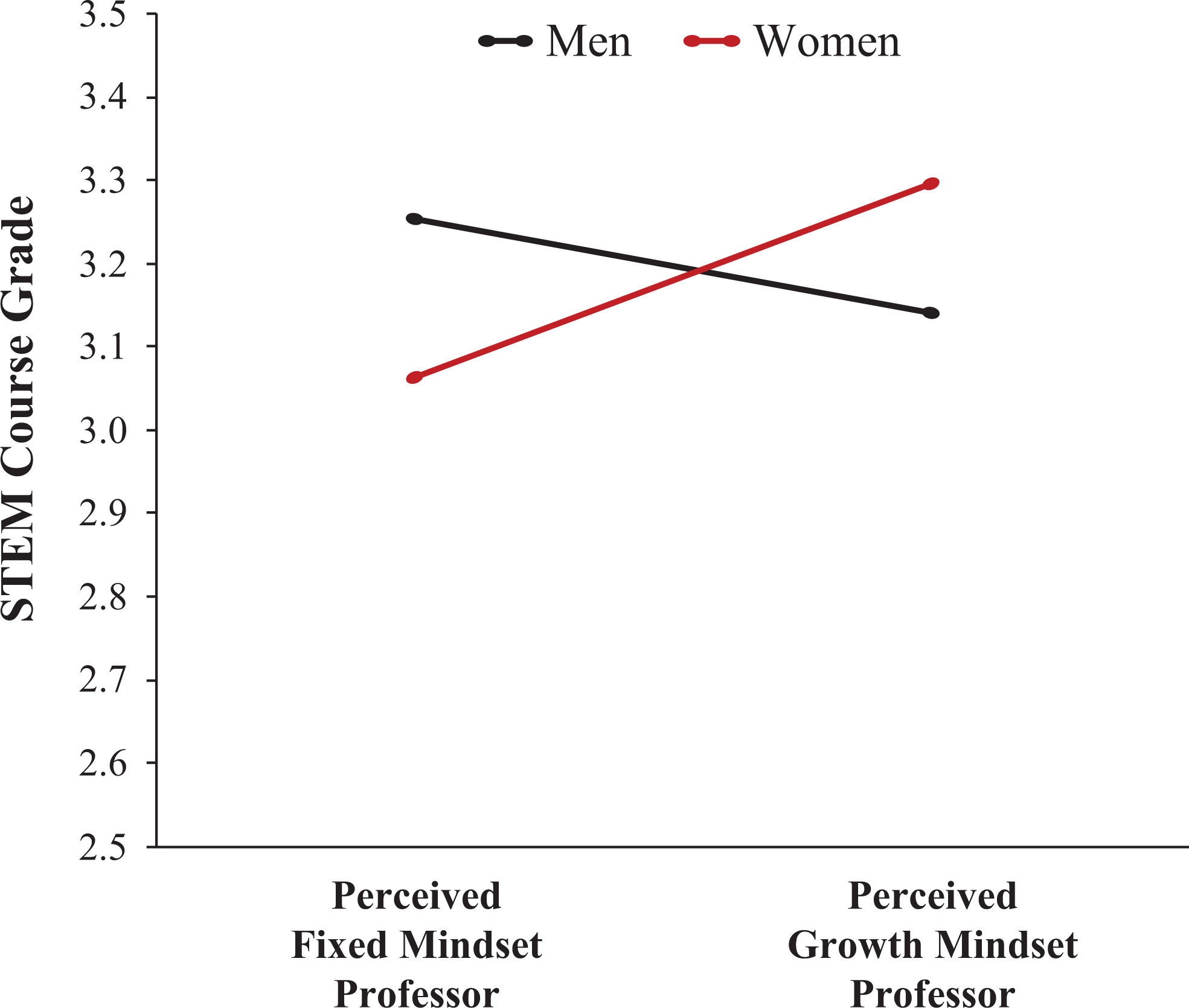
science, technology, engineering, and math (STEM) course grade as a function of student gender and perceived professor mindset. Note. Predicted values are computed from the interaction between perceived professor mindset beliefs (fixed = +1 SD, growth = −1 SD) and student gender.
Mediation
Next, we tested the serial mediation model in which students’ perceptions of their STEM professor’s mindset beliefs predicted their perceptions of gender stereotyping and sense of belonging in class, which in turn predicted students’ grades in their STEM course (Table 4). This indirect effect was significant for women (indirect effect = −.017, 95% CI [−0.027, −0.006]) but not for men (indirect effect = −.011, 95% CI [−0.024, 0.001]). In other words, faculty’s fixed mindset beliefs triggered stereotype threat among women. When the professor communicated more of a fixed mindset to students, women thought the professor would endorse gender stereotypes and felt lower belonging, which in turn, predicts lower performance in the professor’s course. Men did not experience stereotype threat. While men also expected fixed mindset professors to endorse gender stereotypes and questioned their belonging, men’s abilities are not negatively stereotyped in STEM settings. Thus, we did not see a significant indirect effect on performance for men that included perceptions of gender stereotype endorsement. Instead, there was significant indirect effect for men only through belonging (indirect effect = −.067, 95% CI [−0.113, −0.021]).
Discussion
Perceiving that one’s professor endorses a fixed (vs. growth) mindset has been linked to a host of negative outcomes for students, including greater psychological vulnerability (Muenks et al., 2020), lower motivation (LaCosse et al., 2020; Rattan et al., 2012), and lower grades (Canning et al., 2019). Until now, most studies have only speculated that STEM professors’ fixed mindset beliefs instigate stereotype threat that could undermine women’s academic performance. The present research makes novel contributions to this literature by demonstrating a causal relationship between perceived faculty mindset beliefs, the psychological experience of stereotype threat, and women’s performance in STEM (Study 1). Moreover, these relationships were replicated among a large, longitudinal sample of undergraduates in their actual STEM courses (Study 2). Taken together, these findings suggest that STEM professors who communicate fixed mindset beliefs create a context of stereotype threat in their courses, undermining women’s—but not men’s—performance.
Specifically, Study 1 found that both men and women expected fixed (vs. growth) mindset STEM professors to endorse gender stereotypes to a greater extent, and they anticipated feeling less belonging in those courses. However, these effects were much larger for women than for men, suggesting that faculty’s fixed mindset beliefs may be particularly threatening to people who belong to groups whose abilities are impugned by negative cultural stereotypes (i.e., women in STEM). Moderated mediation showed that these negative psychological experiences, in turn, predicted women’s (but not men’s) lowered performance.
Study 2 examined these relationships in a longitudinal field study with a large real-world sample of undergraduate students in their actual STEM courses. Again, we found that men and women expected their STEM professor to endorse gender stereotypes to a greater extent and experienced a lower sense of belonging in class when they perceived that their professor endorsed more fixed (vs. growth) mindset beliefs. In this real-world sample, these psychological effects were equally strong for men and women; however, gender moderated the faculty mindset effect on students’ course performance—when students perceived that their professor endorsed more fixed mindset beliefs, men earned significantly higher grades than women at the end of the term. However, when students perceived that their professor endorsed more growth mindset beliefs, men and women performed equally well.
Why would STEM professor’s fixed mindset beliefs undermine women’s but not men’s performance? In both studies, men and women thought the fixed mindset professor would endorse gender stereotypes and felt a lower sense of belonging in those courses. However, only for women did these negative psychological experiences result in lower performance. We suggest that this is because fixed faculty mindsets raise a question that is readily answered by cultural stereotypes: If professors believe that some students have innate ability and others don’t, which students have it? According to widely known cultural stereotypes, men have innate STEM ability, not women (e.g., Furnham et al., 2002; Storage et al., 2020). Stereotype threat theory suggests that identity-threatening cues (here, faculty’s fixed mindset beliefs) would first engender threat regarding the potential for group-based stereotyping (e.g., “my professor endorses gender stereotypes”), which would then lead women to experience the psychological consequences of stereotype threat (here, lower belonging in the setting), which ultimately disrupts intellectual performance (Spencer et al., 1999; Steele, 1997).
For men, the process is different. While men also expect fixed mindset professors to endorse gender stereotypes and question their belonging in these fixed mindset courses, men’s abilities are not negatively stereotyped in STEM settings. Thus, we would not expect to see a significant indirect effect on performance for men that includes perceptions of gender stereotype endorsement. Ultimately, faculty’s fixed mindset beliefs do not trigger concerns among men about being personally subjected to negative group–based ability stereotypes (i.e., they perceive that the instructor is likely to endorse gender stereotypes, but those stereotypes do not disadvantage their group). The fact that men’s sense of belonging is lower in fixed mindset contexts is also not surprising as fixed mindset beliefs put everyone at risk of not being seen as “having” the innate abilities prized by fixed mindset faculty. As other studies show by their main effects of faculty mindset beliefs (e.g., Canning et al., 2019; Muenks et al., 2020), fixed faculty mindset beliefs are bad for all students psychologically.
Taken together, our findings suggest that the beliefs faculty communicate to their students are extremely powerful—professors who communicate that intelligence is fixed lead students to question their belonging in class and worry about being stereotyped. As a result, stigmatized students (e.g., women in STEM fields) are less likely to succeed in courses taught by professors who communicate fixed (vs. growth) mindset beliefs. Low performance in early “gateway” STEM courses can keep students from enrolling in additional STEM courses or force them to change majors, effectively expelling them from the STEM pipeline (Holden & Lander, 2012). Moreover, uncertainty about whether one belongs in STEM can discourage even high-performing students from persisting in STEM (Smith et al., 2013; Walton et al., 2012). Thus, given the implications of fixed faculty mindsets for women’s performance in STEM, future research should investigate exactly what faculty are saying and doing that communicate their mindset beliefs; this understanding will help faculty create growth mindset cultures that minimize stereotype threat and reduce inequalities in STEM.
Supplemental Material
Supplemental Material, sj-docx-1-spp-10.1177_19485506211030398 - Professors Who Signal a Fixed Mindset About Ability Undermine Women’s Performance in STEM
Supplemental Material, sj-docx-1-spp-10.1177_19485506211030398 for Professors Who Signal a Fixed Mindset About Ability Undermine Women’s Performance in STEM by Elizabeth A. Canning, Elise Ozier, Heidi E. Williams, Rashed AlRasheed and Mary C. Murphy in Social Psychological and Personality Science
Footnotes
Acknowledgment
We thank Katherine Muenks, Dorainne Green, Kathryn Kroeper, Benjamin Oistad, and Shahana Ansari for help with design and data collection.
Author Contributions
Mary C. Murphy developed the study concept. Elizabeth A. Canning and Elise Ozier performed the data analysis and interpretation under the supervision of Mary C. Murphy. Elizabeth A. Canning drafted the manuscript, and Elise Ozier, Heidi E. Williams, and Mary C. Murphy provided critical revisions. All authors contributed to study design and data collection and approved the final version of the manuscript for submission.
Declaration of Conflicting Interests
The author(s) declared no potential conflicts of interest with respect to the research, authorship, and/or publication of this article.
Funding
The author(s) disclosed receipt of the following financial support for the research, authorship, and/or publication of this article: This research was supported by two NSF grants (DRL-1450755 and HRD-1661004) and a grant (INV-016864) from the Bill and Melinda Gates Foundation (BMGF) awarded to Mary C. Murphy.

Supplemental Material
The supplemental material is available in the online version of the article.
Note
References
Supplementary Material
Please find the following supplemental material available below.
For Open Access articles published under a Creative Commons License, all supplemental material carries the same license as the article it is associated with.
For non-Open Access articles published, all supplemental material carries a non-exclusive license, and permission requests for re-use of supplemental material or any part of supplemental material shall be sent directly to the copyright owner as specified in the copyright notice associated with the article.
