







Abstract
This article analyses the multifaceted issue of judges’ freedom of expression on social media within the framework of the European Convention on Human Rights (ECHR). The engagement by judges in public discourse has resulted in the potential for conflicts to arise between their right to freedom of expression and their duty of discretion. This article examines the European Court of Human Rights (ECtHR) case law concerning Article 10 of the ECHR, which protects freedom of expression, and the distinctive constraints applicable to judges in light of their role. By means of a comprehensive analysis of recent ECtHR cases, including Danilet v Romania, the article demonstrates how the exercise of judicial freedom of expression is moderated by the context and subject matter of the expression, particularly when conveyed via social media. Furthermore, the article assesses the impact of these constraints on the judicial conduct of Belgian judges, with a particular focus on their use of social media and adherence to professional standards, particularly within labour courts and labour tribunals. The research findings indicate that, while existing guidelines provide a foundation, the application of these standards by judges is influenced more by personal and professional ethical considerations than by ECtHR jurisprudence. Furthermore, many judges are reluctant to accept a hierarchy-based approach to the protection enshrined in the right to freedom of expression. This article advocates for further research across a range of legal jurisdictions to refine guidelines on judges’ freedom of expression on social media. Ultimately, this should ensure a balance between democratic freedoms and judicial responsibilities in an evolving digital landscape.
Introduction
One of the key aspects of changing digital circumstances in the employment context concerns the right to freedom of expression. Employees now have a unique opportunity to exercise their freedom of expression, for example, by sharing both positive and negative information about their employers quickly and widely on their social media platforms. The potential for harm to employers’ interests has led many to adopt social media policies, in which employees’ duty of loyalty to their employers serves as a key basis for restricting their freedom of expression. The process of digitalisation therefore highlights the conflicting rights of employees and employers, and may even exacerbate the tension between these rights compared to when information was not so easily disseminated.
The tension between these conflicting rights exists in both the private and public sectors. Indeed, civil servants, too, must adhere to specific duties of loyalty and discretion towards their employers - the state authorities - and must accept certain limitations on their right to freedom of expression. This is equally true for members of the judiciary, who represent a distinct category of civil servants, and who will be the subject of this contribution. Like any other citizen, judges have the right to free speech. However, given their specific role as guarantors of justice, judges must assure their impartiality and authority and can therefore be expected to exercise their freedom of expression with restraint. As judges are part of the digital society, the delicate balance between their right to free speech and their duty of discretion also applies to their social media use. In the recent case of Danilet v. Romania, 1 the European Court of Human Rights (ECtHR) offered valuable insights into this relatively new phenomenon of judges expressing themselves on social media.
In this contribution, the Danilet case will serve as the starting point to explore jurisprudential guidelines on judges’ free speech on social media platforms, emphasising expressions made on matters of public interest matters. Subsequently, the relationship between theory and practice is examined through the analysis of a pilot survey conducted among a group of judges in the Belgian labour courts and tribunals. This research, which focuses on the ECHR framework and excludes perspectives from other areas of international law (for example, the International Covenant on Civil and Political Rights (ICCPR)), aims to stimulate debate and future research on one of the most pivotal aspects of our democracy: the right to freedom of expression.
Protection of judges’ freedom of expression on social media
Right to freedom of expression: theoretical framework
Article 10(1) of the European Convention on Human Rights (ECHR) guarantees everyone's right to freedom of expression. This right includes the freedom to hold opinions and to receive and impart information and ideas without interference by public authorities. 2 The ECtHR has repeatedly affirmed that this freedom is one of the essential foundations of a democratic society, and one of the basic conditions for its progress and for everyone's self-fulfilment. 3 However, this fundamental right is not absolute. The exercise of the freedom of expression carries with it duties and responsibilities and may therefore be subject to restrictions. 4 However, these restrictions must be interpreted strictly. To assess whether a restriction to the freedom of expression is legitimate, it must pass the ‘three-part test’ of (i) being prescribed by law, (ii) pursuing a legitimate aim, and (iii) being necessary in a democratic society. 5 To evaluate whether this last condition has been met, the competent authorities and the ECtHR must engage in a final balancing exercise. In this process, the proportionality of the interference with the right to freedom of expression in relation to the legitimate aim pursued is examined, as well as the relevance and adequacy of the justification provided. In evaluating the proportionality of an interference, factors such as the fairness of the proceedings and the severity of the penalties imposed are taken into account. The relative weighting of these and other criteria, some of which are analysed further in this contribution, will ultimately determine whether the balance tips in favour of the freedom of expression, and thus whether a violation of Article 10 ECHR has occurred. 6 The aforementioned considerations apply equally in the context of employment, irrespective of whether the employment is in the public or the private sector. 7 Nevertheless, Article 10(2) ECHR acknowledges that the exercise of freedom of expression ‘carries with it duties and responsibilities’, requiring a certain degree of restraint, particularly for civil servants who are bound by a duty of loyalty and discretion. 8 Notwithstanding the fact that states may enforce such duties, civil servants are still protected under Article 10. In balancing the interests of the state with those of individuals, the ECtHR places significant emphasis on ensuring that the ‘duties and responsibilities’ are duly considered, thus justifying the granting of a certain margin of appreciation to national authorities in evaluating the proportionality of the interference in question in relation to the aim pursued. 9
The aforementioned approach is also applicable when a judge's freedom of expression is constrained during the performance of their duties, reflecting the judiciary's prominent position among state organs in a democratic society. 10 Indeed, judges enjoy the right to freedom of expression regardless of their function. Nevertheless, the specific role of the judiciary in society necessitates that judges adhere to a duty of discretion. 11 This duty is pursued with a specific objective in mind: the speech of judges is received as the expression of an objective assessment which commits not only the person expressing their opinion, but also, through them, the entire justice system. 12 Therefore, it can be expected of judges that they show restraint in exercising their freedom of expression in all cases where the authority and impartiality of the judiciary are likely to be called into question. 13 On the other hand, given the increasing importance attached to the separation of powers and the importance of safeguarding the independence of the judiciary, any interference with a judge's freedom of expression calls for close scrutiny. A reasonable balance therefore needs to be struck between the degree to which judges may be involved in society and the need for them to be, and to be seen as, independent and impartial in the discharge of their duties. 14
The examination of an interference with the freedom of expression of judges on social media platforms 15 has only been at issue in two recent ECtHR cases. 16 The ECtHR recognises that online communication contributes significantly to improving the public's access to news and information, thus serving an essential objective of free speech and justifying a strong protection of judges’ expressions. However, it is important to acknowledge the significant risks involved, given the notable differences between information on the World Wide Web and that found in the written press. In particular, the capacity of the former to store and spread information is a key factor to consider. 17 The following subsection will examine the protection granted to judges’ opinions on public interest issues expressed on social media platforms in light of the ECtHR's Danilet v. Romania case. In this case, the ECtHR had to assess for a second time whether a judge's right to free speech had been violated after he had shared views on his Facebook account.
Case of Danilet v. Romania
Facts of the case
Mr. Danilet, a judge at the district court of Cluj, was known for his active participation in discussions on democracy and the judicial system. In 2019, he posted two messages on his Facebook page, which had around 50,000 subscribers, in which he criticised the government and its influence on the public institutions. He stated in a first message that abuses committed by those in power had undermined, disorganised and destroyed the credibility of public institutions like the police and the army. He suggested that these institutions were under political control and questioned the compatibility of these events with the Constitution. 18 In a second message, Mr. Danilet shared a press article in which a prosecutor had expressed his views on the management of criminal cases by the public prosecutor's office and the difficulties encountered by prosecutors in dealing with the cases assigned to them. He commented on this article by stating: ‘Here's a prosecutor with blood in his veins: he talks openly about releasing dangerous prisoners, about our governments’ bad ideas regarding legislative reform, and about lynching magistrates!’ 19
In summary, a disciplinary investigation was initiated for compromising the honour and image of the judiciary and for failing to adhere to the obligation of discretion. 20 This resulted in a 5% reduction in salary for a period of two months. Mr. Danilet sought to overturn the decision, but the Romanian High Court upheld the disciplinary measure. He subsequently submitted an appeal to the ECtHR. 21
In the following paragraphs, we will focus only on the Court's considerations that are most relevant to our analysis. However, it should be noted that the aforementioned ‘three-part test’ was also applied in this case. With regard to the first condition, which requires that any interference be ‘prescribed by law’, the Court not only demands the existence of legislation, but also that it is sufficiently foreseeable and accessible. The Court observed that the applicable rules were formulated in general terms and open to multiple interpretations, particularly with reference to terms like ‘honour’ and ‘good image of the judiciary’. This raised questions as to the foreseeability of the legislation. Nevertheless, the Court determined that, given Mr. Danilet's position, he should have been able to understand the scope of those rules. 22 As is often the case, the application of the final condition - necessity in a democratic society (cf. proportionality) - proved to be the most challenging aspect to resolve. The following discussion will therefore concentrate primarily on these elements of the judgment.
Expressions on matters of public interest
The Strasbourg Court reiterated that debates on the functioning of the judicial system in a democratic society concern matters of public interest, which enjoy a heightened protection under Article 10 ECHR. Judges who express views relating to the separation of powers and the need to preserve the independence of the judiciary enjoy a high level of protection, both in traditional and social media outlets. Indeed, the judiciary guarantees the existence of the rule of law and the public has the right to be informed about issues in this regard. Any interference with these expressions must therefore be examined carefully, and Member States only have a limited margin of appreciation. 23
As the expressions shared by Mr. Danilet concerned matters of public interest, they enjoyed a high level of protection. However, the level of protection was determined by more than only the public interest character of the expressions concerned. Indeed, not all judges’ expressions on matters of public interest are equally protected. In the context of judges expressing on public interest matters, the profile of the speaker appears to be next in importance to the ECtHR. A prominent speaker who discusses issues of public interest enriches public knowledge and therefore deserves strong protection. 24 Yet, it is not always clear in what role judges express themselves on social media: should they always be considered prominent speakers because of their function as judges or, on the contrary, as individuals irrespective of their employee status, because the social media use is in their private life?
In the Danilet case, the ECtHR applied the general principles that apply to individuals participating in debates of general interest. Indeed, Mr. Danilet was engaged in a debate of public interest that was not strictly within the domain of justice and he did not occupy a high hierarchical position. The Strasbourg Court therefore conducted a strict proportionality test. 25
Interestingly, the Court did not reach a unanimous decision. Judges KUCSKO-STADLMAYER, EICKE and BORMANN did not agree on, among others, the application of the general rules. They argued that the principles that apply to judges in their capacity as civil servants with a duty of discretion should to be applied in this case. 26 Judge RĂDULEŢU, on the other hand, asserted that the protection of freedom of expression must prevail in the absence of case law defining clear and predictable principles regarding the extent of judges’ duty of discretion, especially when it concerned matters of public interest and a balance of competing interests by the national courts was lacking. 27
Borderline cases
As Judge RĂDULEŢU stated, the Danilet case showed the difficulty in determining which rules apply regarding the extent of judges’ duty of discretion in relation to the protection of their freedom of expression. 28 This is also reflected in the sometimes difficult exercise of classifying certain views expressed by judges into the typologies of expressions proposed by scholars. 29 These typologies have the advantage of predicting the level of protection that will most likely be granted to a certain expression, but some expressions are not so easy to fit into one category.
In short, three different types of expressions by judges can be distinguished: expressions linked to the judicial decision-making sphere, expressions linked to a judge's private sphere (such as political opinions) and expressions on behalf of the judiciary in the public interest. In some cases, the categorisation of a specific expression will be evident. However, it is sometimes possible that a specific expression may be associated with more than one category. To illustrate, an expression that relates to a pending case and thus falls into the category of the judicial decision-making sphere, where judges are expected to exercise maximum restraint, may also concern a matter of public interest because the expression highlights the malfunctioning of the democratic system. 30 In such cases, the expression enjoys a high level of protection due to the weight of the public interest topic, even though the speaker is expected to exercise his freedom of expression with restraint given his ‘duties and responsibilities’. This intertwining cannot surprise, given the many criteria that must be considered when balancing the different interests at stake, where it is not always clear which criterion influences the other. As ROWBOTTOM states, ‘the Article 10 jurisprudence has developed a flexible test that attempts to protect the speech that is most important in a democracy’, but this comes ‘at the cost of transparency’. 31 We would like to refer to Judge RĂDULEŢU's statement and suggest that, in borderline cases, it may be worth considering a balance that favours individual freedom over the state's interest. 32
Expressions on social media
The difficulty in determining the applicable principles is certainly true in the context of social media, where the private and professional spheres tend to merge, making it more difficult to determine the profile of the speaker. 33 Despite these challenges, the topic of the social media post serves, in our opinion, as a starting point to determine the applicable rules. Once the public interest element is clear, we can categorise the speaker based on their profile, as suggested above in supra 2.2.2. First, general principles applicable to all individuals may apply when statements are made in the public interest, which typically enjoys a high degree of protection. Second, less protection is afforded when the content of the message threatens the authority and impartiality of the judiciary. In such cases, judges are expected to exercise restraint in their freedom of expression. This expectation requires judges to exercise maximum discretion in their decision-making functions in order to preserve their image as impartial judges. Finally, there is greater protection when the message relates to the safeguarding of the judicial system and democracy, particularly when the speaker holds a higher hierarchical position and therefore acts on behalf of the judiciary. 34
The consequent criteria to be considered in the balancing exercise are the context in which the views are expressed, and the circumstances, the background and the factual basis of the expressions, the severity and nature of the imposed sanctions, the potential chilling effect, the fairness of proceedings, and the procedural guarantees. 35 The social media context is assessed within the context and circumstances of the expression. In the Danilet case, the ECtHR reiterated that other factors mitigating the effects of internet users’ messages on the legitimate interests protected by Article 10(2) ECHR may be considered. The sending of a message in an environment reserved for professionals in a particular field may be one such factor if the dissemination of that message is too limited to cause significant damage, as was the case in Kozan v. Turkey. 36 However, even though Mr. Danilet had taken risks by using his publicly available Facebook account, the Court found that his messages were not clearly unlawful, defamatory, hateful or calls to violence, and did not reduce protection because of this context. 37 The value of the expression - the public interest and the absence of a harmful character - thus seemed to outweigh the social media context and the related reach of the message. 38
Ultimately, the weighting exercise led the ECtHR to conclude that the national courts did not balance the interests at stake properly. Particular weight was given to the fact that the national courts considered the chilling effect of the disciplinary sanction as a positive factor, since it would discourage Mr. Danilet from making similar remarks in the future. The fact that the courts did not impose the least severe sanction also contributed to the chilling effect of the sanction, both in relation to Mr. Danilet as to other judges. Taking all elements into account, the ECtHR concluded that there had indeed been a violation of Article 10 ECHR. 39 However, on the 24 June 2024, the Romanian Government requested to refer the Danilet case to the Grand Chamber. 40 Taking into account the dissenting opinions as discussed above, it remains to be seen whether the ECtHR's decision will stand.
It is still unclear how the ECtHR's guidelines will be applied to judges expressing views on social media about matters unrelated to the public interest. It can be expected that the principles applicable to the traditional media will be transposed, as was the case in Danilet v. Romania and Kozan v. Turkey. This would mean that the balancing exercise will be conducted by considering the criteria as discussed in Baka v. Hungary. 41 The weighting given to each of these criteria will eventually determine whether the interference is necessary in a democratic society. 42
Impact of judges’ deontological obligations and existing guidelines on judges’ freedom of expression on social media: preliminary pilot survey
The preceding section shows that judges must consider their function and the duties inherent to it when they wish to express themselves on social media. The judicial guidelines and typologies presented in the literature may enhance the understanding of the level of protection afforded to different types of expressions, thereby stimulating free speech on certain topics. Nevertheless, the outcome of a case is contingent upon a multitude of criteria. This makes it challenging to predict which views judges will be permitted to express on social media and which they will not.
Although these guidelines exist and can be helpful to a certain extent, up to now, the extent to which the existing jurisprudential guidelines effectively guide judges in exercising their freedom of expression on social media has not been examined. Furthermore, whether the function and the consequent deontological obligations of judges affect the exercise of their free speech on social media in practice has not previously been investigated. In what follows, we will discuss the results of a preliminary pilot survey that was conducted to address these questions.
Notes on the methodology
The preliminary pilot survey was conducted among a heterogenous group of 42 judges at the Belgian labour courts and tribunals. This group was selected because they adjudicate disputes between employees and employers, placing them in a unique position to assess the balance to be struck between employees’ freedom of expression and employers’ interests. Considering their expertise, knowledge of their own rights and duties, and the hierarchical diversity of judges sitting in labour courts and tribunals, this group was well positioned to offer preliminary insights on this subject.
Respondents were recruited according to the snowball principle. An e-mail invitation was sent to the First Presidents of the labour courts, who then distributed it further to potential participants. Respondents who did not fill in more than 75% of the survey were removed from the data analysis. The final group consisted of 41 respondents (N = 41). Eleven (26.83%) of the total respondents were judges in a labour court, and 30 (73.17%) were judges in a labour tribunal. 43 Thirty-nine respondents (95.12%) were professional judges and two (4.88%) were substitute judges, both with the main profession of lawyer. Of the 39 professional judges, 10 (24.39%) had a representative function, of whom four (10.26%) were First Presidents of a court, three (7.69%) were Presidents of a tribunal, two (5.13%) were Section Presidents of a tribunal, and one (2.56%) was Vice-President of a tribunal.
A qualitative approach was adopted to capture the individual experiences of the respondents. A structured online survey was used, which was designed and filled in using the online tool Qualtrics XM. The survey was available from 22 April 2024 until 13 May 2024. The respondents had the option to complete the survey via laptop or smartphone. Prior to beginning the survey, respondents were required to read and agree to the informed consent provisions. All respondents provided written informed consent. To ensure confidentiality, the data were anonymised. 44 The Vrije Universiteit Brussel did not require ethical approval for this study.
The questions that were asked during the survey were drawn from three sub-research questions, which can be found in the Appendix to this article (Table 1). The responses to these questions were processed through thematic analysis. Before commencing the analysis, a labelling scheme was developed. This labelling scheme was iteratively expanded during the analysis with new labels derived from the respondents’ answers. 45 Occasionally, labels were also removed or combined into the same category. The answers were coded according to this labelling scheme. The identified labels, which can be consulted in the Appendix (Table 1) were then used as the foundation for formulating the results.
Sub-research questions and corresponding labels.
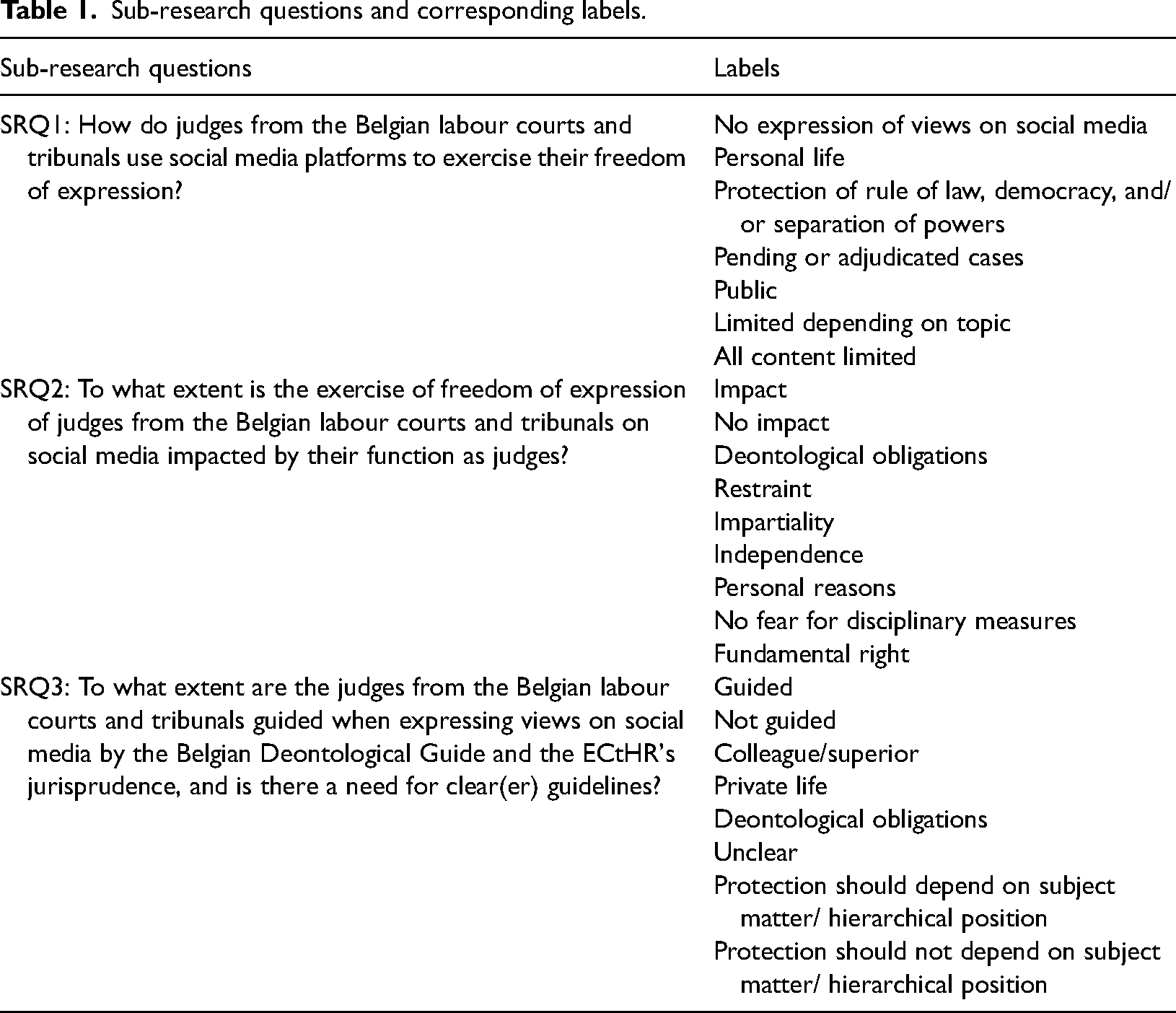
Sub-research questions and corresponding labels.
Upon request, all data collected during this research can be made available for review. 46
In view of this journal's objective of increasing and fostering debate and knowledge specifically within the field of labour law, it seems appropriate to limit the discussion to the most pertinent findings, which are essential for understanding the key results of the study. To facilitate a comprehensive analysis, the results will be presented in two distinct thematic categories (3.2.1. and 3.2.2.).
Respondents’ social media use and its correspondence with the ECtHR's guidelines
Of the 41 respondents, 20 (48.78%) indicated that they express or have expressed their views on social media. Of the 20 respondents, three held positions in a labour court and 17 held positions in a labour tribunal. This signifies that 27.27% of the respondents sitting in a labour court and 56.67% of the respondents sitting in a labour tribunal share views on social media. Of the 10 respondents occupying a representative position in a court or tribunal, five indicated that they engage or have engaged in social media posting. Of these five respondents, one had a representative function in a labour court, and four had representative functions in a labour tribunal. One of these four respondents indicated that they are no longer active on social media because of a future mandate.
When asked about the subject matters on which respondents express their views on social media, it appears that 13 (65%) of those who engage in social media posting do so about matters pertaining to their personal lives. Ten respondents (50%) express views on public interest matters. All judges with a representative role who post on social media share views related to the public interest, three also share on matters of their personal lives, and one respondent shares views on pending or adjudicated cases. Sixteen respondents (80%) who express their views on social media indicated that they limit the content to a select group of followers (Figure 1), mostly friends and family.
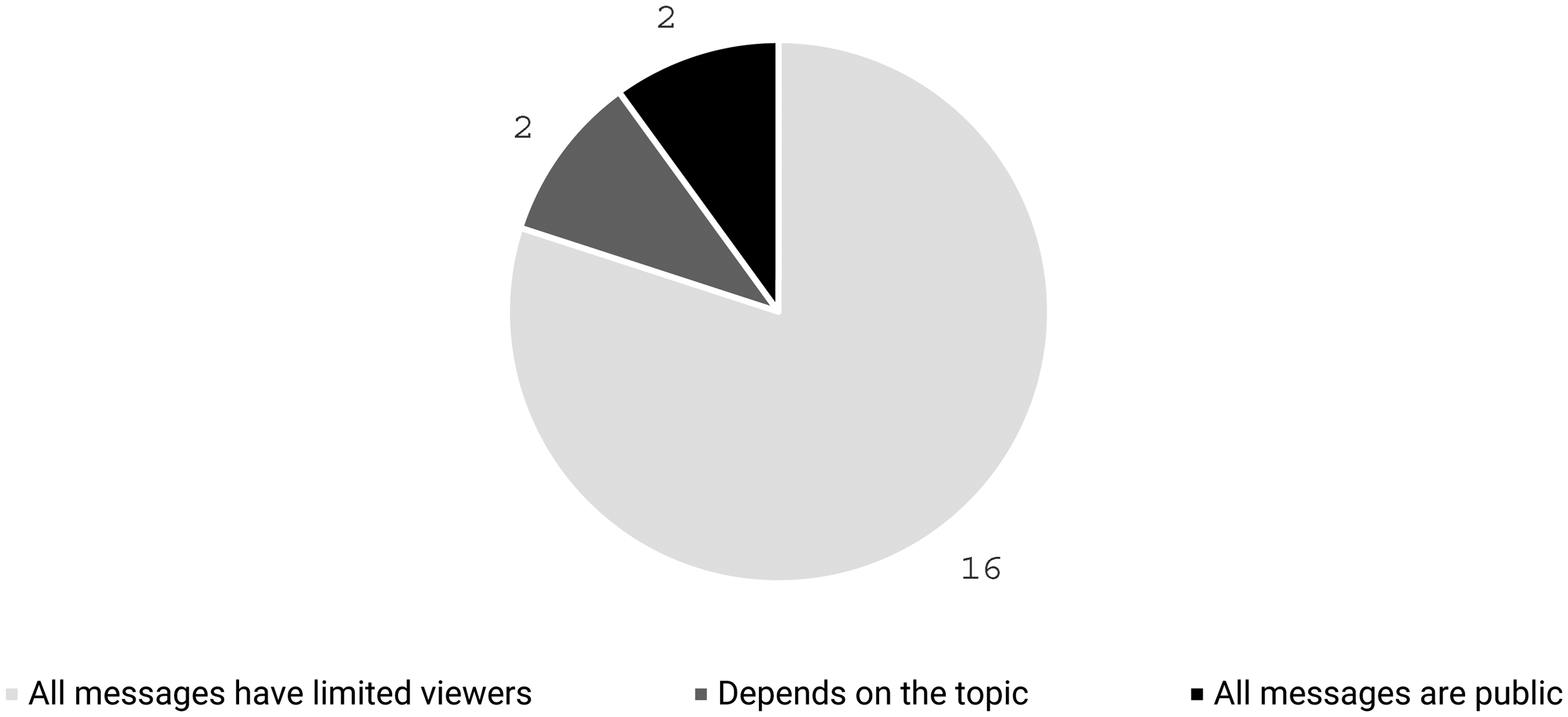
Limitation of content.
Fifteen respondents (75%) who reported that they engage in social media posting indicated that they consider their deontological obligations prior to posting. However, they do not consult the Belgian Judicial Code of Conduct, 47 which sets out the principles of professional conduct according to which judges are required to act to ensure the legitimacy and public confidence of the judiciary, based, among others, on the case law of the ECtHR. Eleven respondents who do not consult the Code indicated that they have a comprehensive understanding of their deontological obligations and therefore consider it unnecessary to turn to the Code for guidance. In terms of the necessity for strict guidelines on judges’ freedom of expression on social media (Figure 2), 32 out of the total 41 respondents indicated that their deontological obligations are sufficient to determine their scope for expressing views on social media. Eight respondents indicated that it is currently unclear which topics may be discussed on social media, and clearer guidelines are necessary. One respondent suggested that given that social media is still a relatively new phenomenon, further constructive investigation is recommended.
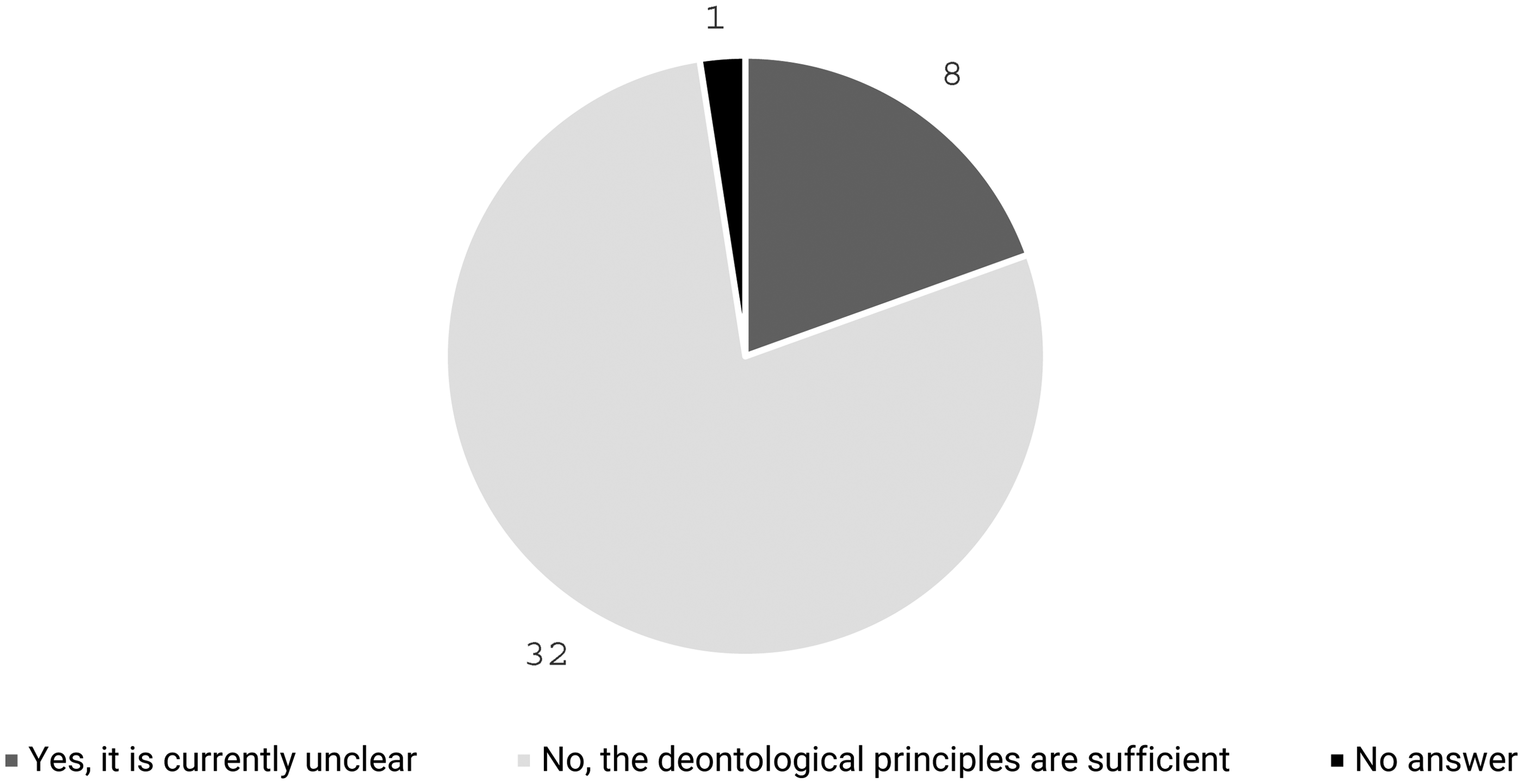
Should there be strict guidelines in place governing the topics that a judge may discuss on social media?
Of the 21 respondents who stated that they refrain from expressing their views on social media, 13 (61.9%) indicated that their deontological obligations are the reason for this. Most of the respondents who indicated that their decision not to share is related to their deontological obligations mentioned their duty of discretion as the reason for abstaining from sharing expressions on social media. A smaller proportion of respondents cited the duty of impartiality and independence as reasons for this decision.
Of the 20 respondents who share opinions on social media, 12 (60%) mentioned that they refrain from sharing opinions on certain subject matters due to their role as judges. Of the 18 respondents who limit the visibility of their social media content to a select group of viewers, 17 indicated that they do so to maintain the privacy of their personal lives. Additionally, 12 of the 18 respondents cited their deontological obligations as a reason for this restriction too.
When asked whether they experienced their deontological obligations as a restriction on their freedom of expression on social media (Figure 3), 21 out of 41 respondents mentioned they either agree or strongly agree with this statement. Three respondents explicitly referred to their duties to safeguard the authority and impartiality of the judiciary. Eleven either disagree or strongly disagree with this statement. Five respondents mentioned that they would not wish to express their opinions on social media anyway.
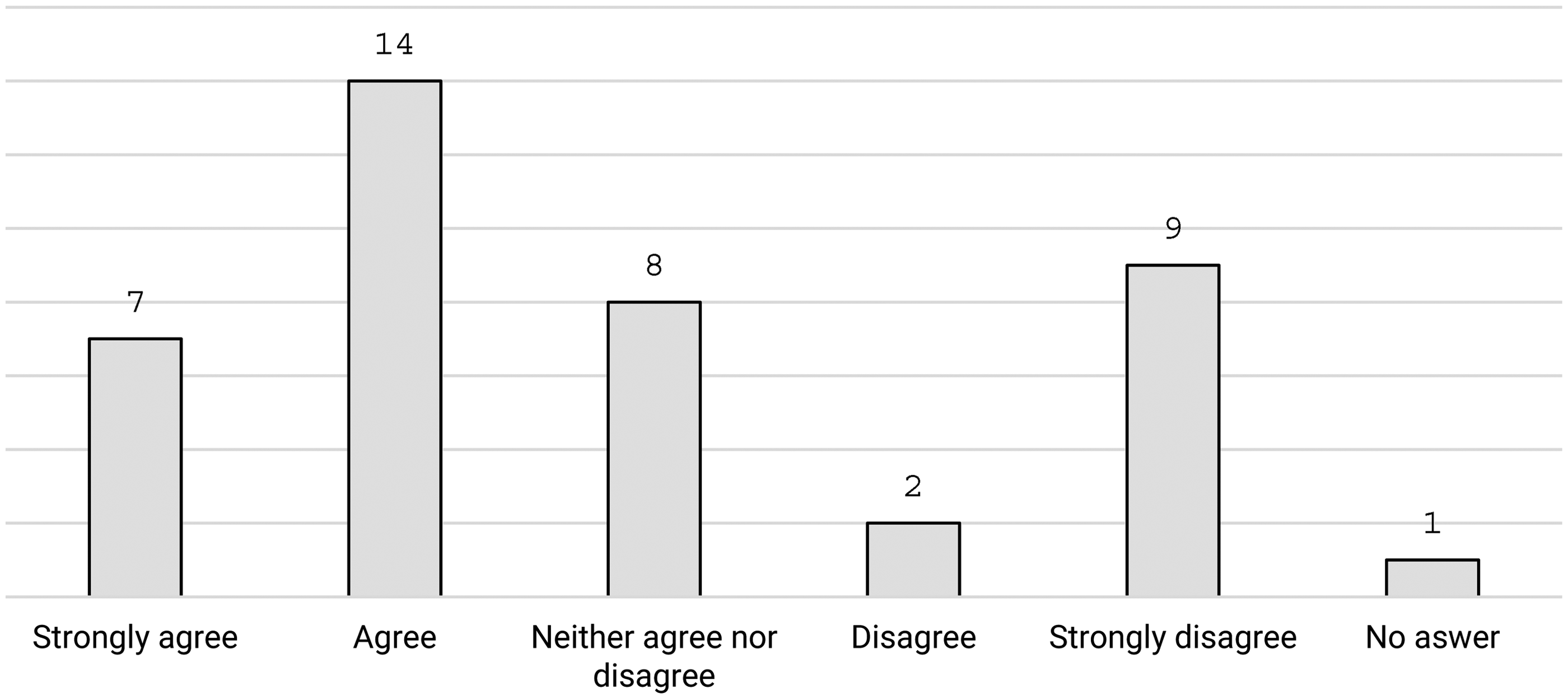
Experience of deontological obligations as restriction on freedom of expression on social media.
In response to the question of whether the respondents consider it important that judges may freely express their views on social media, 13 respondents (31.71%) indicated that they consider it important. Most of them mentioned that it is a fundamental right that is essential in a democratic society, but they also emphasised that deontological obligations must always be respected, and that the importance of the exercise of this right depends on the topic and the context of the expression. Fifteen respondents (36.59%) indicated that they do not consider it important. Most of them referred to the duty of impartiality, independence, and discretion as the rationale for this position. Some respondents indicated that there are alternatives for expressing their views, such as official websites, designated press judges, or the reasoning behind judgements. Eight respondents (19.51%) did not provide an answer, and five respondents (12.20%) did not explicitly indicate whether they consider it important or not, citing arguments both for and against.
The following section presents an interpretation of the results outlined in the preceding section. The authors would like to stress that the interpretation of the results should be approached with caution due to the limited sample size. Furthermore, it is not intended that the findings should be considered as representative nor applicable to all judges. Indeed, the principal objective of this study is to stimulate debate on the subject of judges’ freedom of speech on social media and to encourage further research in this area.
Theory versus practice? ECtHR's guidelines on judges’ free speech on social media
As previously discussed, opinions expressed by judges (on social media) are not all afforded the same degree of protection. The specific subject matter of the expression in question and the hierarchical position of the individual are significant factors in determining the extent to which expressions are protected. For example, a social media post written by the First President of a labour court addressing the independence of the judiciary is likely to receive robust protection. Conversely, the views of a professional judge without a prominent position in a labour tribunal that could potentially undermine the authority and independence of the judiciary would receive considerably less protection, given the greater weight that would be given to the speaker's duty of discretion.
One of the hypotheses to be tested in this pilot study was therefore whether judges occupying higher hierarchical positions would engage more in social media communication, as was expected based on the ECtHR's jurisprudence. This assumption is based on the broader safeguards typically afforded to judges in prominent roles, given that they are aware that their statements are generally granted greater protection, particularly in light of significant attention being paid to maintaining the separation of powers and safeguarding judicial independence. Interestingly, the study revealed a higher prevalence of social media posting among respondents sitting in labour tribunals compared to those adjudicating in labour courts, although judges in labour courts could be regarded as occupying a higher hierarchical position given that they adjudicate cases in appeal. Furthermore, the data demonstrated that respondents with a representative function in labour tribunals exhibited a greater degree of social media activity than those with a representative position in labour courts. This contrasts with the hypothesis, which suggested that respondents in higher representative roles (e.g., in labour courts) would be more inclined to engage in social media posting. These findings suggest that judges with higher hierarchical positions are less inclined to exercise their right to free speech on social media. A possible explanation is that a higher hierarchical position implies a heightened sense of responsibility towards maintaining discretion and upholding the impartiality and authority of the judiciary. These findings also suggest a discrepancy between the actual use of social media and the standards set out in the jurisprudential guidelines. Indeed, this finding is consistent with the observation that the majority of respondents expressed disagreement with the principle of differential protection of expressions based on the hierarchical position of the speaker. For further details, please refer to our blog post in Global Workplace Law & Policy. 48
On the contrary, the respondents’ social media use seems to align more with the ECtHR's guideline regarding the different level of protection provided depending on the subject matter of the expression. Indeed, the respondents’ agreement with this ECtHR's guideline is apparent from the survey, in which the majority indicated that they agree with a different level of protection of expressions depending on the expressions’ topic (cf. blog post). 49 This is also reflected in the content of the posts made by respondents who did not have a representative function. These posts predominantly focus on personal matters and to a slightly lesser extent on public interest matters, while they do not relate to the judicial decision-making sphere. Interestingly, a somewhat different pattern emerges among respondents in representative roles who are active on social media: they all express views on public interest matters, with little more than half sharing matters of their personal lives and one respondent sharing views on pending or adjudicated cases. This social media use by the respondents with a representative function was hypothesised in light of the ECtHR's case law, according to which expressions by judges with a high hierarchical position on public interest matters receive strong protection. In the absence of case law on the sharing of opinions on social media related to judges’ private lives, it would be premature to draw any strong conclusions concerning the alignment of the use of social media by the respondents without representative functions with the ECtHR's guidelines. However, as discussed in section 2, it is probable that this case law will be in line with the case law on traditional media outlets, which seems to align with the respondents’ social media use.
Furthermore, it is notable that 80% of respondents who engage in social media posting limit the audience of their posts to a select group of followers. This appears to be consistent with the duty of discretion and is also implied by the ECtHR as being good practice. However, it has not yet been ruled that there has been no violation of Article 10 on the grounds of not limiting followers. Furthermore, the impact of such a restriction on a judge's right to freedom of expression and on the enhancement of public knowledge, which is a fundamental aspect of freedom of expression in democratic societies, cannot be underestimated.
A final finding relates to the necessity for strict guidelines on judges’ social media use. The majority of respondents indicated that there is no necessity for explicit guidelines delineating the types of views that may or may not be expressed on social media. They asserted that the deontological obligations are sufficient to determine this. Nevertheless, as the findings discussed above demonstrate, it appears that not all respondents agree with the jurisprudential guidelines and the Belgian Code of Conduct that has been drafted based on these. This discrepancy could be attributed to the ongoing disagreement within the ECtHR itself (cfr. the aforementioned dissenting opinions) and the borderline cases that make it challenging to establish clear-cut distinctions and guidelines. It is notable that, despite the apparent discrepancy between theory and practice and the tendency of respondents to primarily adhere to deontological obligations rather than the Code, the most recent version of the Belgian Code, published one day after the closing date of the survey, establishes more stringent guidelines on the social media use of judges. 50 A discrepancy between policymaking and practice therefore seems to exist as well.
Theory parallel with practice? Impact of the respondents’ function as judges on their free speech on social media
Given the ‘duties and responsibilities’ outlined in section 2, it appears that, at least in theory, judges must accept certain limitations on their free speech because of their function. The question of whether this reflects in practice and, if so, whether the respondents agree with this limitation, constituted a key aspect of the survey.
The study demonstrates that the majority of respondents make decisions regarding their social media use, i.e., not engaging in social media posting or engaging in social media posting but only on certain subject matters and/or restricted to a limited audience, based on their deontological obligations, notably the duty of discretion. Often, this appears to coincide with their personal preferences for maintain a certain degree of privacy regarding their personal lives. Still, half of the respondents appear to experience their deontological obligations as a restriction on their free speech on social media. Nevertheless, less than half of the respondents indicated that they consider it important that judges may freely express their views on social media. However, this should be interpreted cautiously, as most of the respondents explained their answer by taking a more moderate stance. For instance, many respondents who indicated that they do not consider this important explained their answer by referring to the impartiality and authority of the judiciary as a key reason for the importance of judges maintaining discretion on social media. Conversely, respondents who mentioned that they consider judges’ free speech on social media important also nuanced their answer by noting, for example, that discretion always had to be exercised.
Taken together, the results do seem to suggest that most of the respondents agree with their freedom of expression on social media being limited given the ‘duties and responsibilities’ inherent to their function as judge. A possible explanation is that judges are well aware of their deontological obligations, as evidenced by the results of the study (cf. Figure 2), and support the reason behind these obligations, even though this may affect their individual fundamental rights.
It merits further research to determine whether analogous patterns can be observed in the judiciary beyond those observed among judges in labour tribunals and labour courts. Furthermore, comparative research across different jurisdictions could yield valuable insights, facilitating an understanding of the social and institutional factors that shape judges’ perspectives on freedom of expression in the digital age.
Conclusion
It is beyond question that judges have the right to freedom of expression in both traditional and social media. Nevertheless, judges are expected to exercise their free speech with moderation, given the intrinsic responsibilities and duties associated with their function. It is thus imperative to seek a balance. However, achieving this balance has consistently proven to be an arduous task. This is particularly evident in the context of the increasingly digitalised world, where social media platforms facilitate the rapid and widespread dissemination of information, thereby heightening the potential for conflicts to arise.
The ECtHR's Danilet case again demonstrated that the principles governing judges’ free speech on traditional media are applicable to social media too. The typologies developed by scholars, as well as the jurisprudential guidelines, may be translated to this new context. Public interest speech is therefore expected to remain highly protected, no matter the platform. However, factors such as the role of the speaker and the reach of the message must be taken into account to ultimately determine the level of protection granted. In light of the numerous criteria to be taken into account, it is challenging to make accurate predictions regarding the level of protection that will be afforded to all forms of expressions. This is particularly the case when the issue at hand represents a borderline scenario that also encompasses the impact of social media platforms on the traditional context of expressing opinions, such as the potential reach of the message.
The results of the pilot survey reflect this challenge and show that the relationship between theory and practice regarding judges’ free speech on social media is complex and nuanced. Indeed, the findings reveal a higher prevalence of social media use among judges in less prominent hierarchical positions, thus challenging the hypothesis that judges in higher positions would be more active online (cf. heightened protection), as would be consistent with the ECtHR case law. Additionally, while judges tend to align their social media activity with their deontological obligations and the ECtHR's guidelines regarding a different protection of expressions depending on the subject matter, there is notable disagreement with the guideline of differential protection based on hierarchical status. These findings suggest a tension between the jurisprudential standards and the practical realities of judges’ social media use. Whether this should be resolved by clearer guidelines that reconcile theory with practice is doubtful, as the study reveals that deontological obligations seem to be a more accepted guideline than a Code of Conduct. Although the data indicate a discrepancy between theory and practice in certain respects, they also demonstrate an acceptance of the limitations on judges’ free speech due to their judicial role. This is demonstrated by the fact that a significant proportion of respondents indicated that the impartiality and authority of the judiciary are of greater importance, in their view, compared to less restricted expression.
In conclusion, it can be said that there remains a lack of clarity around judges’ freedom of expression on social media platforms, both in theory and in practice. The conflicting opinions within the ECtHR itself seem to reflect this. It will be interesting to see whether the Grand Chamber can overcome this in the Danilet case.
Footnotes
Declaration of conflicting interests
The authors declared no potential conflicts of interest with respect to the research, authorship, and/or publication of this article.
Funding
The authors received no financial support for the research, authorship, and/or publication of this article.
