






Abstract
This study investigates the synthesis of thermo-reversible biopolymers from sago starch utilizing supercritical CO2 (scCO2) solvent instead of conventional organic solvents. The process involved a two-step reaction: (1) transesterification of starch with methyl 2-furoate in scCO2, followed by (2) a cross-linking reaction utilizing Diels-Alder chemistry with 1, 1′-(methylenedi-4, 1-phenylene)bismaleimide (BM), where the solid starch granules were used in both reaction steps. The research demonstrated that the degree of substitution (DS) of the starch ester was maximized at specific parameters: 10 MPa pressure, a K2CO3 catalyst ratio of 0.3 mol/mol anhydroglucose unit (AGU), and a temperature of 100°C. The resulting cross-linked products exhibited thermo-reversible behavior, as confirmed by changes in degree of cross-linking (DC) values with annealing temperature. The degree of cross-linking (DC) was found to be directly influenced by the annealing temperature, with the maximum and minimum values observed at 50°C and 150°C, respectively. The relationship between annealing temperature and degree of cross-linking suggests that the cross-linked starch product possesses thermoplastic properties, allowing for potential recycling and reprocessing, a significant improvement over conventional cross-linked starch. Furthermore, the final product demonstrated enhanced thermal stability compared to both native and esterified starches, which is a desirable characteristic for various industrial applications.
Introduction
An extensive study of bioplastics and their modification has been carried out recently. The research mainly focuses on finding a new alternative to reduce the high use of conventional plastics that are not environmentally friendly and non-biodegradable. The world’s conventional plastic production reached 400.3 million tons in 2022 and estimated to reach between 902 Mt to 1124 Mt.1,2 The best solution to conventional plastic problems is substituting plastic manufacturing materials with biopolymers to produce biodegradable plastic. In addition, using biopolymers to synthesize plastics has a positive impact in reducing the use of petroleum to manufacture conventional plastics 3 and supporting the sustainable values of the final product.
Biodegradable plastics can be synthesized from biopolymer materials such as starch and cellulose.4,5 Among others, sago starch has the potential to be used as a biopolymer resource for biodegradable plastics production. The reason is due to the high amylose content in sago starch. The higher amylose content causes the biodegradable plastic to exhibit stronger and more flexible properties than normal amylose content. Native sago starch cannot be used directly to synthesize biodegradable plastics due to the drawbacks in their properties, such as non-resistance to acid and thermal treatment, poor mechanical ability, and a tendency to absorb large amounts of water (hydrophilic). To improve the properties, a modification process needs to be carried out to obtain starch properties compatible with the properties of biodegradable plastics3,5,6 Common chemical modification methods widely used in synthesizing starch based biodegradable plastics are esterification/transesterification and cross-linking. 6
Cross-linking of starch is a chemical modification method for improving starch properties, especially to achieve a higher thermal and mechanical resistance. The cross-linked product gives a significant challenge for recycling.7–11 The latter is caused by the irreversible covalent bonds formed between starch molecules that prevent the material from being thermally reprocessed, similar to traditional thermosetting plastics. Recent research on thermo-reversible cross-linking of starch via Diels-Alder chemistry using organic solvents (dimethyl sulfoxide, DMSO) allows thermal breaking and reforming of cross-link networks.8,12 These so-called Diels-Alder and retro Diels-Alder properties enable bioplastics with desired cross-linked starch properties and improved sustainability via recycling.8,12 Despite the advantages of employing Diels-Alder chemistry in the synthesis of thermo-reversible cross-linked starch, the use of organic solvents in conventional methods (such as DMSO) still raises concerns since most organic solvents are less environmentally benign due to volatility and toxicity. Therefore, there is a strong incentive to find more benign and environmentally safe solvent alternatives like supercritical CO2. 13
In the last decade, many studies have been conducted to replace organic solvents with more environmentally friendly solvents such as supercritical CO2. Supercritical CO2 (scCO2) has the potential to be used as a green solvent because it is non-toxic, inert, and can act as a plasticizer.14–17 The plasticizing effect of scCO2 will lower the polymer’s glass transition temperature (Tg), cause the polymer to become more flexible, and induce swelling. The latter enhances the diffusivity of catalysts and reactants into the biopolymer matrices and leads to a higher mass transfer rate.17,18 Compared with the reaction in an organic solvent, the reaction with supercritical CO2 has an advantage in the product separation from the solvent. Furthermore, the product can be separated from the solvent by adjusting the pressure and temperature to room conditions, where CO2 will turn into a gas and automatically separate from the product.15–17
This paper aims to study the potential application of scCO2 as a solvent to synthesize a thermo-reversible biodegradable plastic from sago starch using Diels-Alder (DA) chemistry. There are two consecutive reactions involved in the synthesis, which are the transesterification of sago starch with MF to produce the intermediate starch furoate products, followed by the DA reaction between starch furoate and BM to obtain the starch cross-linked product (Scheme 1) where the solid starch granules were used in both reaction steps. Reaction scheme of transesterification of starch with MF (1) and cross linking of starch furoate with BM (2). Reproduced from H Muljana et al.
12
(with permissions).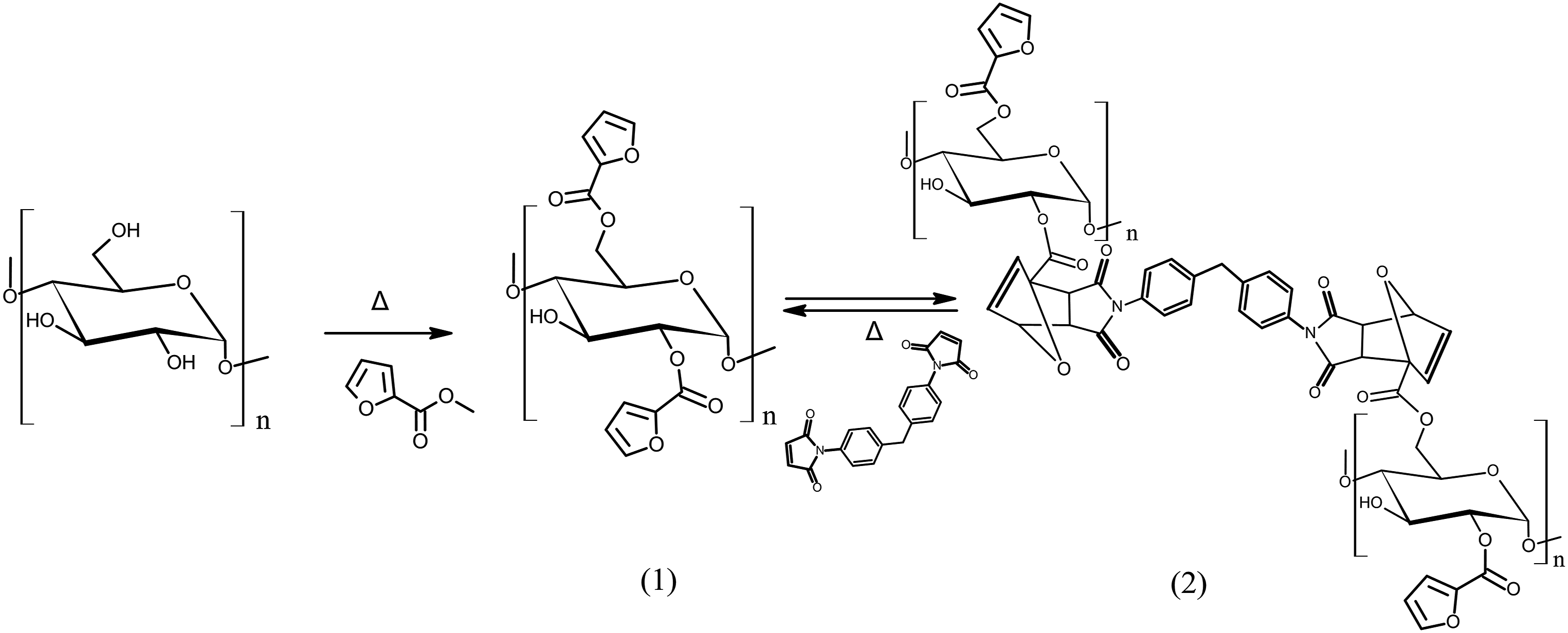
In this work, CO2 was employed as the solvent for the initial transesterification step. The subsequent use of CO2 in the second reaction step is ongoing and will be reported separately in a future publication. Although CO2 has been utilized as a solvent for various starch modification reactions, such as the trans/esterification of starch with different vinyl/methyl fatty acids and acetic anhydride, and the benzoylation of starch using vinyl benzoate,13,16,17 the specific combination studied here, namely the transesterification of starch with methyl 2-furoate in a CO2 medium followed by a Diels-Alder reaction, is novel and has not been previously reported in the literature.
Therefore, it is crucial to study further the influence of various process parameters on the reactivity and thermo reversible properties of the resulting cross-linked starch products. This study investigated the effects of relevant process variables on the efficiency of both the transesterification and Diels-Alder (DA) coupling reactions. Furthermore, we assessed how these variables eventually influenced product properties, specifically on the degree of substitution (DS) and the degree of cross-linking (DC), as well as the resulting chemical, thermal, and morphological characteristics of the final material. We performed analysis using Fourier Transform Infrared (FTIR) spectroscopy, Thermal Gravimetric Analysis (TGA), Scanning Electron Microscopy (SEM), and X-Ray Diffraction (XRD) to ensure a comprehensive understanding of the relationship between process and product properties.
Materials and methods
Materials
Commercial-grade native sago starch (starch content of 84.6% wt/wt, water content of 16.9% wt/wt) was purchased from PT Bina Sago Lestari. Methyl 2-furoate was purchased from Tokyo Chemical Industry (MF, >98% Tokyo, Japan). Analytic grade potassium carbonate (K2CO3, >99%), chloroform (CHCl3, >99%), sodium hydroxide (NaOH, >97%), and oxalic acid dihydrate were purchased from Merck (Singapore). Analytical grade methanol (99.8 %), 1, 1′-(methylenedi-4, 1-phenylene) bismaleimide (BM, 95%), dimethyl sulfoxide (DMSO, >99.5%) and hydrochloric acid (HCl, 37%) were purchased from Sigma Aldrich (Singapore). High- purity CO2 (>98% volume) and N2 (>98% volume) were purchased from Sangkuriang (Indonesia).
Experimental set-up
The setup of the high-pressure reactor is shown in Figure 1. It comprises heating systems with a temperature controller, a high-pressure pump unit (Chrom Tech, P2024 SFC) equipped with a cooling system, CO2 and N2 cylinders, and a magnetic stirrer controller. The high-pressure pump was used to introduce CO2 to the reactor with a volumetric rate of 0.01 – 24 mL/min to a maximum pressure of 68 MPa. High pressure reactor set up equipped with a HPLC pump.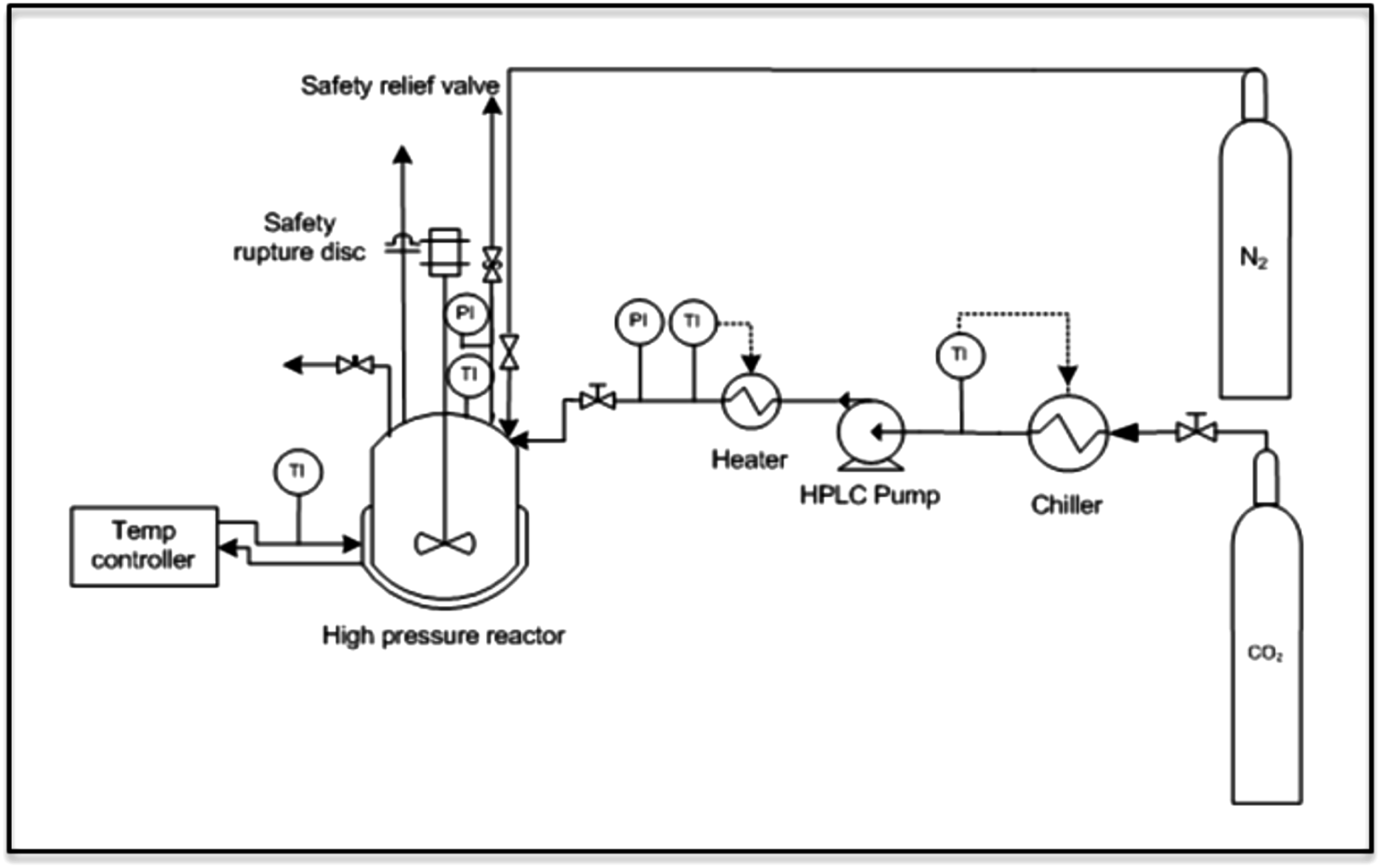
Synthesis of starch furoate in supercritical CO2
The starch esters were prepared by reacting native sago starch with MF using K2CO3 as a catalyst according to the published procedure with a slight modification. 13 The batch reactor was charged with native starch (3 g, dry basis), MF (2 mol/mol AGU), and K2CO3. To eliminate any remaining air, the reactor was flushed with N2. The reactor was then heated and pressurized with CO2. After reaching the desired pressure (10 MPa and 15 MPa) and temperature (100°C and 120°C), the reactant was mixed by turning on the magnetic stirrer. The reactor was cooled to room temperature and depressurized after the reaction (t = 6 h). The product work-up consists of several steps, which were separation of the solid from the liquid phase, followed by a washing step to remove unreacted MF from the solid product with methanol and RO water, a filtration step, and finally a drying step until constant weight in a vacuum oven at 70°C.
Cross-linked reaction between starch furoate and BM via diels-alder (DA) chemistry
The cross-linking between starch furoate and BM was done according to the method applied in the previous work. 12 Starch furoate (1 g dry basis), CHCl3 (20 g), and BM (0.25, 0.5, and 1 mol/mol AGU) were inserted into a round-bottom flask. At 50°C, the solution was mixed using a magnetic stirrer for 3 h. The solution was subsequently subjected to slow evaporation for 24 h in a fume hood to isolate the cross-linked starch from the solvent. The cross-linked starch was then annealed in an oven at varying temperatures (50°C, 70°C, and 150°C) for 24 h.
Analytical equipment
Fourier transform infrared (FTIR) spectra were acquired using potassium bromide (KBR) pellets in the absorption range of 400 – 4000 cm−1 (50 scans with 4 cm−1 resolution). The FTIR measurements were performed using FTIR Prestige 21 Shimadzu (Kyoto, Japan). FTIR peak deconvolution was performed on all spectra using PeakFit software combined with a Savitzky-Golay filter and Gaussian fitting (a minimum R2 of 0.95) to quantify changes in peak intensity. TGA measurements were done using a Hitachi STA 7300 (Hitachi, Japan). The TGA samples (10 mg) were heated to 900°C in an inert atmosphere at a heating rate of 10°C/min. XRD diffractograms were acquired from 4° to 40°(2θ) with a scanning rate of 1°/min on a Bruker D8 Advance XRD System (Bruker AXS, Germany). DSC measurements were performed using a Linseis Chip – DSC 100 (Linseis GmbH, Germany) in a nitrogen atmosphere. Approximately 10 mg of the sample was placed in a sealed aluminum pan. Heating and cooling runs were performed between 0°C and 200°C at a rate of 10°C/min; three cycles used for the measurement. The first cycle served to erase previous thermal history, while the overall DSC analysis aimed to investigate the thermal reversibility of the cross-linked samples. SEM analyses were performed using a Hitachi SU 3500 (Hitachi, Japan) at an accelerating voltage of 10 kV. Prior to analysis, samples were sputter-coated with a gold layer (20–30 nm thickness) using a Hitachi MC1000 Sputter Coater (Hitachi, Japan) to enhance conductivity and image quality.
Determination of degree of substitution (DS) and degree of cross-linking (DC)
The DS and DC analyses were performed using the experimental procedure published in our previous work with a slight modification.
12
The starch furoate samples (1 g) were hydrolyzed in a shaker water-bath with NaOH (0.5 M, 15 mL) for 4 h at 30°C, and the excess alkali was neutralized (pH = 7) using HCl (0.1 M). The DS value was then calculated using the following equation (1)
12
:

The DC was determined by dissolving the cross-linked starch (Wo) in DMSO for 3 h. Then, the remaining solid (undissolved cross-linked starch, W1) was separated from the liquid, dried, and weighted. The DC was calculated by following equation (2)
12
:

Result and discussion
The synthesis of cross-linked starch in this study was carried out with two reaction steps. The first step was a transesterification reaction using supercritical CO2 as the solvent to form starch ester (starch furoate), while the second step was a Diels-Alder reaction to cross-link the ester and BM. The influence of K2CO3 intake, reaction temperature, and pressure on the degree of substitution (DS) value and the effect of BM intake and annealing temperature on the degree of cross-linking (DC) of the Diels-Alder (DA) reaction, including the changes of the starch morphology, chemical and thermal properties of the starch and its modified products, were investigated and discussed in this section.
Transesterification of sago starch with methyl-2-furoate (MF) in supercritical CO2 (sc CO2)
The transesterification reaction in this work uses starch in its solid phase, which is not dissolved beforehand, in contrast to our previous work in organic solvents. 12 This solid-phase reaction in scCO2 offers the advantage of simpler separation between the modified product and the solvent, as this can be accomplished by simply depressurizing the autoclave. Additionally, the diffusion of CO2 into the solid starch matrices provides a plasticizing effect, further enhancing the diffusion of the reagent inside the starch granules and eventually increase the overall reaction rate as well. 16 In addition, the transesterification reaction of sago starch with MF in supercritical CO2 is a nucleophilic substitution reaction where initially the K2CO3 catalyst deprotonates the starch to form an active starch alkoxide, which then reacts further with the carbonyl group of MF to form the starch furoate. 12
Figure 2 shows the FTIR spectra of both native and the esterified starch in the 500 – 1750 cm−1 absorption range. The typical peaks of native starch appear at the absorption range of 1647-1651 cm−1 and 1420 cm−1, corresponding to hydrogen bonding water (δ OH) and CH bending vibrations (δ CH), respectively. Another relevant peak for native starch is in the absorption range of 900–1300 cm−1, which corresponds to a highly coupled C–O and C–C vibrational modes of the starch backbone, reflecting the molecular structure of starch.11,19–21 After the transesterification reaction, the appearance of symmetric stretching of the carbonyl group (ν C=O) in the modified starch matrices is seen in the FTIR spectra (Figure 2) at the absorption wavelength of 1706-1713 cm−1.12,16,22–24 The latter indicates the presence of the furoate ester group in the modified starch, as evidenced by the spectroscopic analysis, confirms the successful esterification reaction using supercritical CO2. FTIR spectra of native sago starch (a) and starch furoate (b) at the absorption range of 1750 cm−1 – 500 cm−1.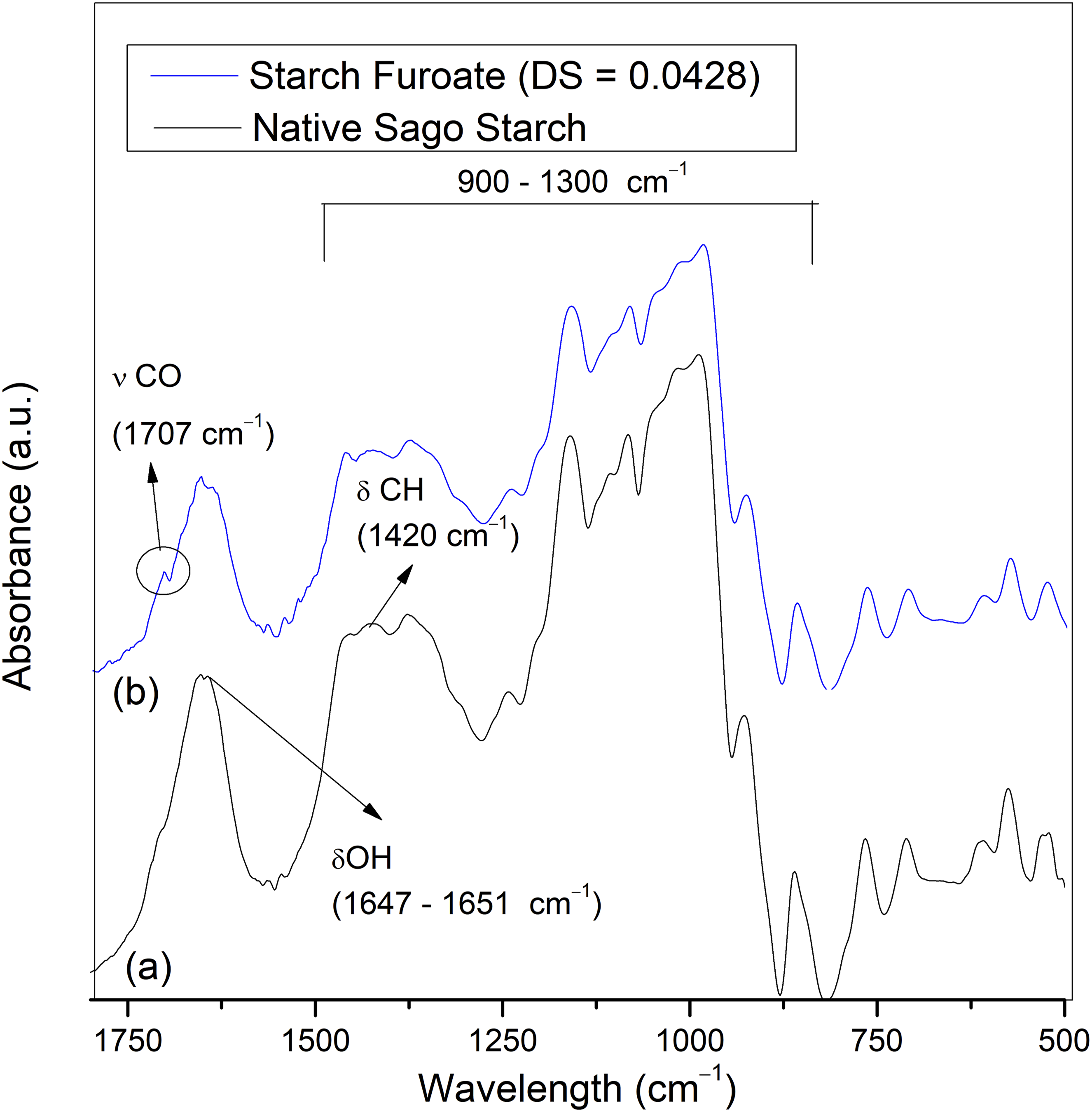
SEM analysis was conducted to analyze the morphological changes of the starch granules prior to (Figure 3(a)) and after transesterification (Figure 3(b)). It can be seen that native sago starch has a spherical and oval granule shape with a smooth surface12,25 (Figure 3(a)), while, starch furoate granules tend to agglomerate, thus formed a larger particle, and some of the granules show a rough surface compared with the surface of the native counterparts (Figure 3(b)). The agglomeration may be caused by the presence of furoate groups (Figure 2(b), the appearance of symmetric stretching of carbonyl group (υ C=O) at absorption band of 1707 cm−1, which increases the intermolecular hydrogen bonds and leads to the agglomeration of the particles.
16
SEM photographs of native sago starch (a), sago starch furoate (DS = 0.0154) (b), cross-linked sago starch furoate ((DS = 0.0154) with BM (c) and the image with magnification to show morphological changes after cross-linking (d). All of pair images (a-c) were taken with low (400× – 500×) and high magnification (3000× – 5000×). Image (d) was made to emphasize the morphological changes after crosslinking on the selected starch granules in the SEM image of cross-linked sago starch furoate with BM (image (c)).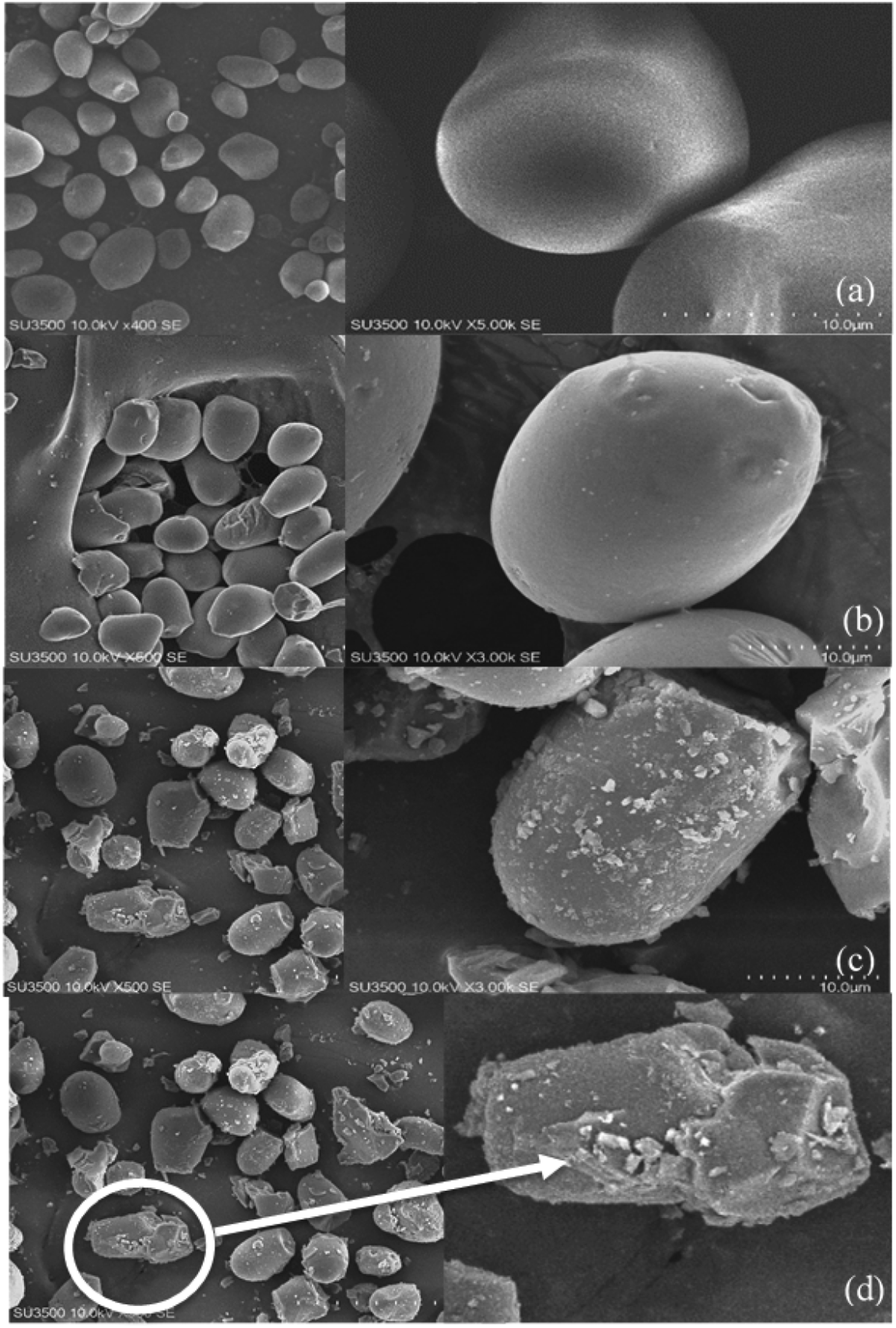
The influence of pressures, temperatures and K2CO3 ratio on the DS values
The transesterification experimental condition and the obtained DS values.
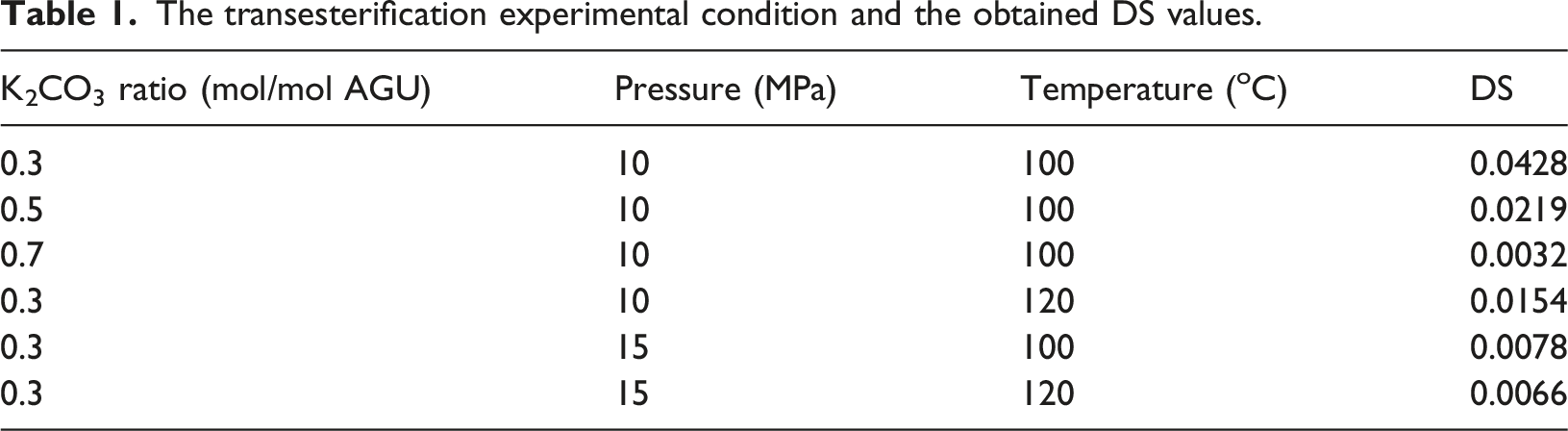
As shown in Table 1, the highest DS value (0.0428) was obtained with a K2CO3 ratio of 0.3 mol/mol AGU, a pressure of 10 MPa, and a temperature of 100°C. Moreover, the smallest DS value was achieved at a K2CO3 ratio of 0.7 mol/mol AGU, pressure of 10 MPa, and temperature of 100°C.
The effect of pressure on the DS value is shown in Figure 4. It can be seen that in all cases (all temperatures), DS values decrease with pressure. The trend may be related to the compressive effect of CO2 on the starch matrices at higher pressure.13,16,19 The compressive effect reduces the free volume of the matrices, a reduction in the diffusion rate of the reactants (in this case, MF) inside the granules, and eventually leads in a lower DS value. In addition, a higher processing pressure enhances the formation of the hydrogen bonds between the functional hydroxyl groups (-OH) in the starch granules. It has a negative impact on the reactivity. The latter also causes a decrease in the DS values.
26
The DS values at different pressures and temperatures. The experiments were conducted at K2CO3 intake of 0.3 mol/mol AGU.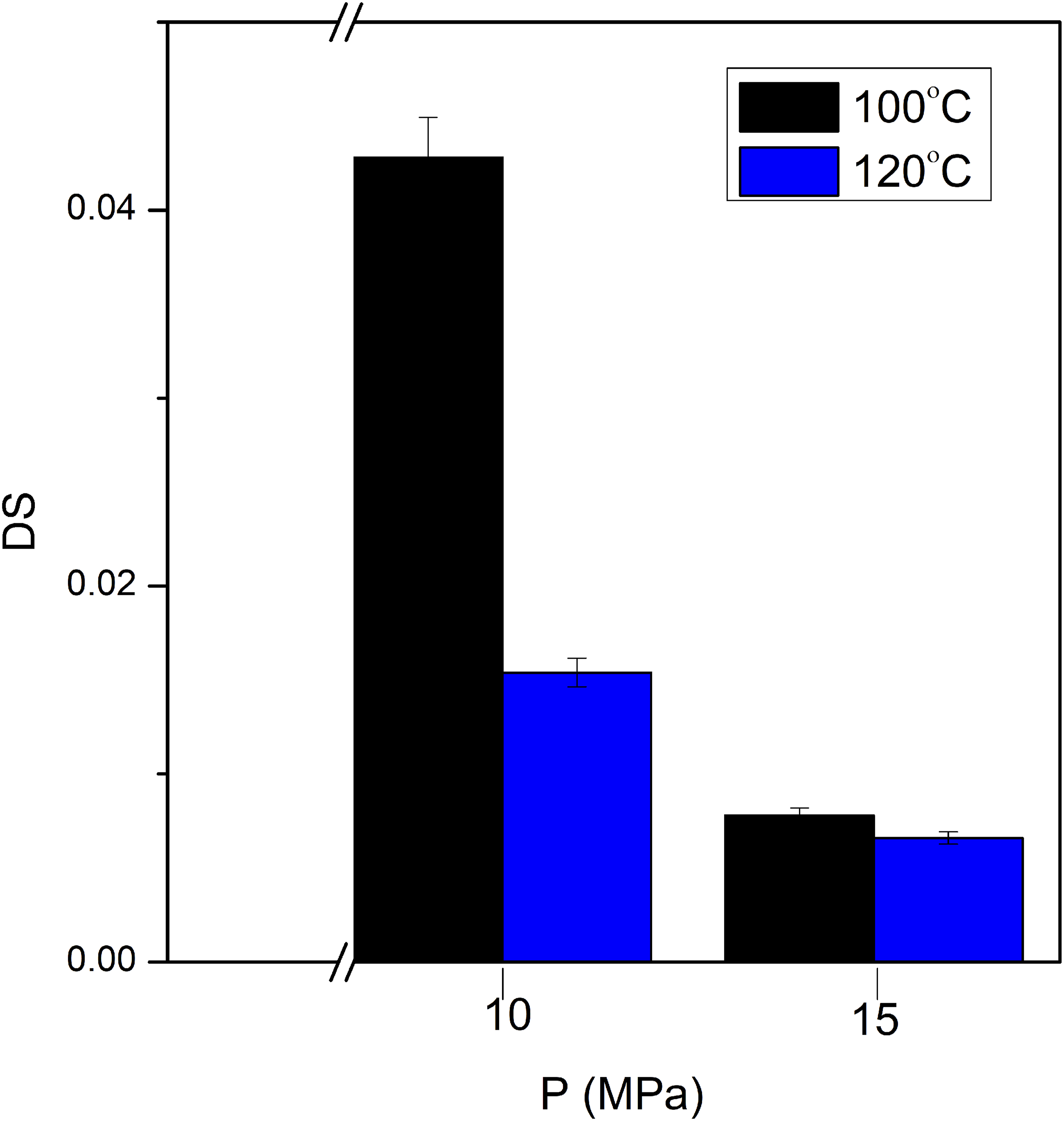
Not only the compressive effect, but the presence of CO2 may also plasticize the amorphous part of the starch, increase the free volume of starch matrices, and lead to an increase in the diffusion rate of MF enabling it to further react with OH groups and form the expected starch furoate. The plasticizing effect helps the reactivity and increases the DS values at lower pressure.16,23,27 Therefore, the interplay between compressive and plasticizing effects plays a role and determines the final DS values of the starch ester products.13,16,17
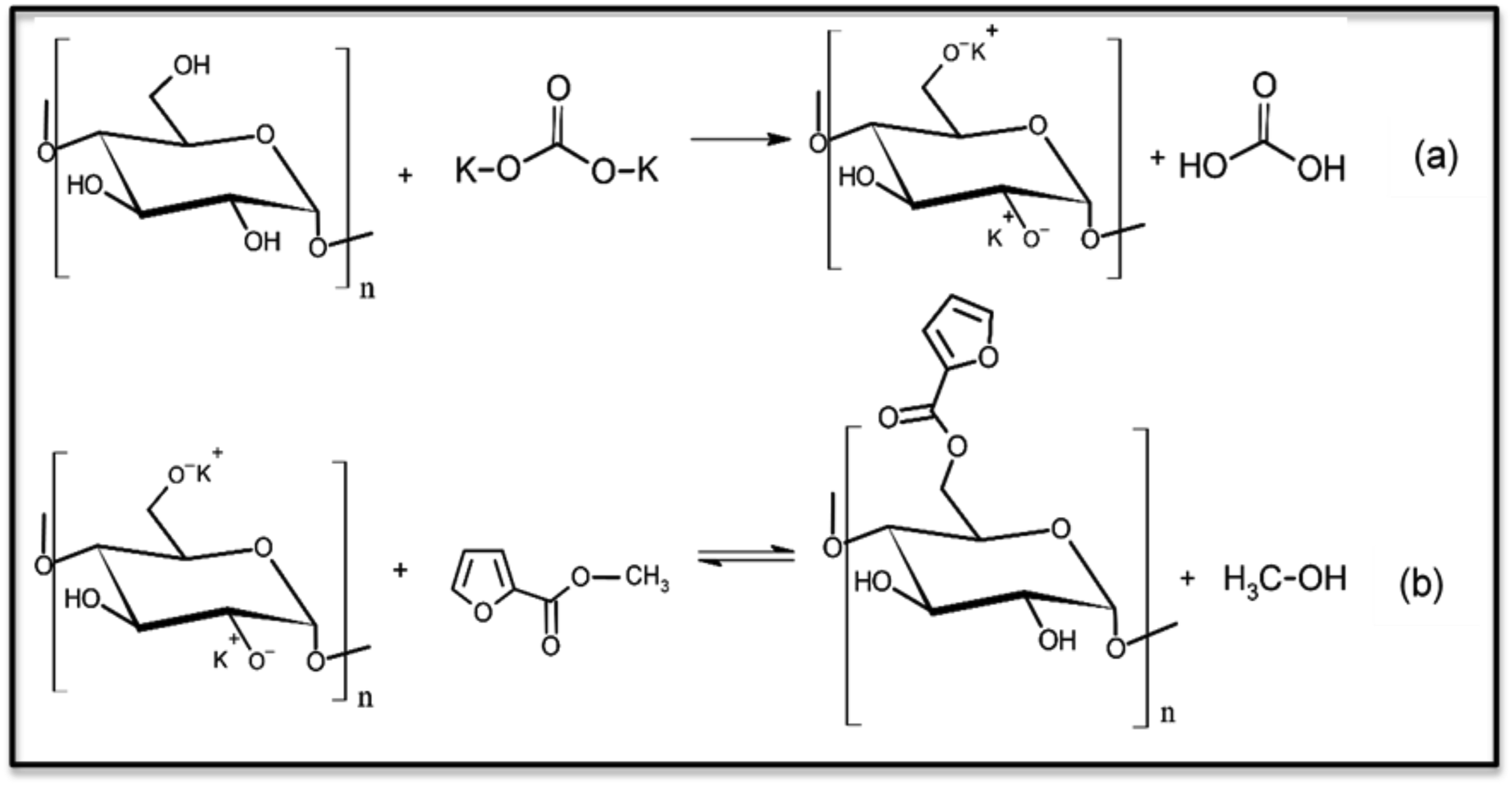
A similar trend to the influence of pressure can also be seen in the effect of K2CO3 on the DS value. DS value decreases with K2CO3 intake (see Figure 5). Theoretically, higher catalyst intake enhances the reaction rate (Scheme 2). In this case, at higher K2CO3 intake, more protons (H+) can be deprotonated from the hydroxyl group (-OH) of starch to form a highly reactive starch alkoxide (ST-O-) with negative nucleophiles to further react with carbonyl groups on MF to form starch furoate.12,16 The DS values at different catalyst intake. The data were obtained at temperature of 100°C and pressure of 10 MPa. Reaction scheme of transesterification of starch with MF showing the role of an alkaline salt base (K2CO3) catalyst to form a starch alkoxide (a) and to further react with MF (b). Reproduced from H Muljana et al.
12
(with permissions).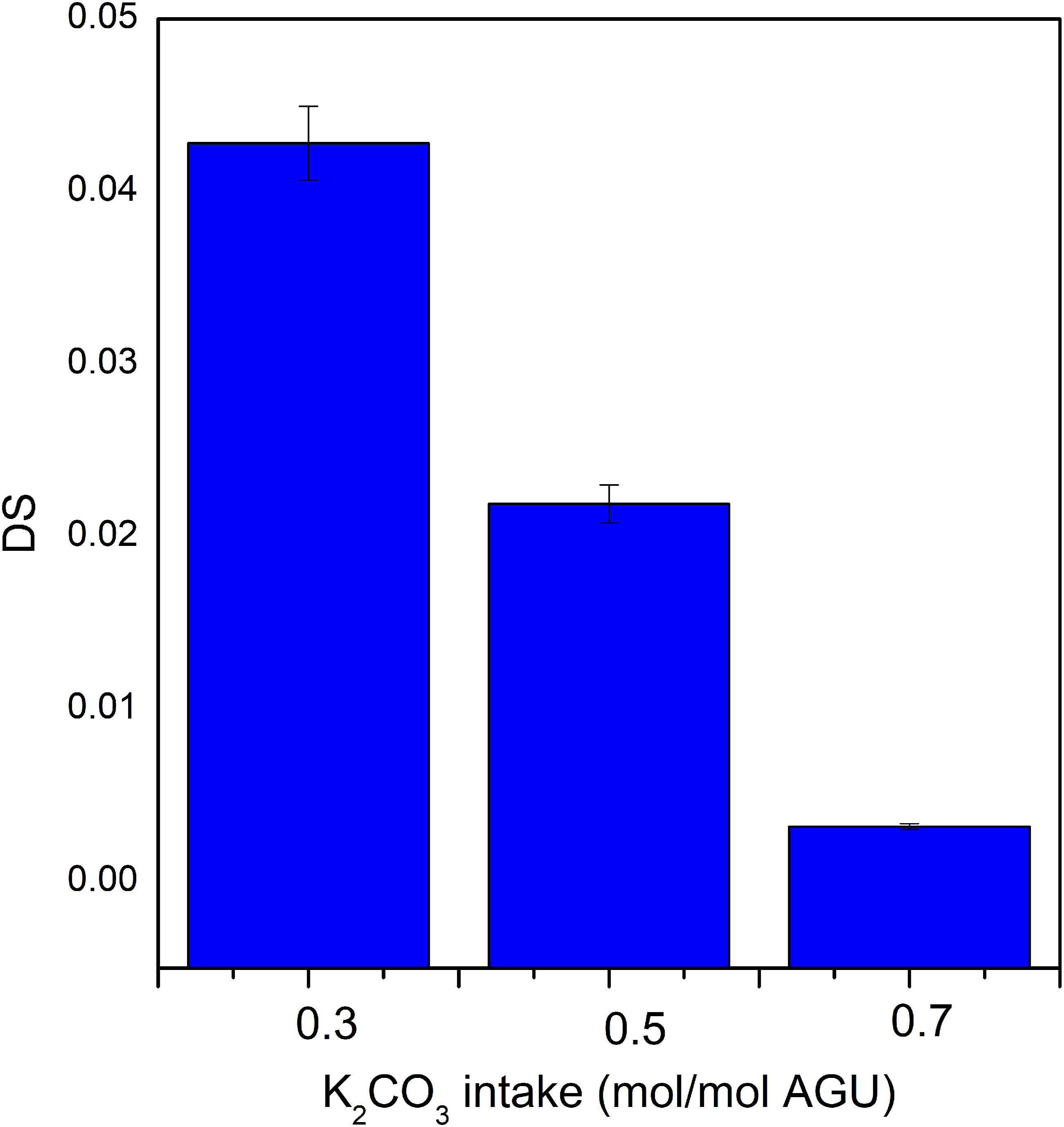
Surprisingly, this is not the case for the experimental results obtained. The opposite results may be related to the possible occurrence of the side reaction, which is being enhanced by the presence of the catalyst. The possible side reactions, such as the hydrolysis reaction of the starch ester, can be catalyzed by K2CO3, as reported earlier in several literature studies.13,16 The hydrolysis reaction may occur due to the formation of KOH and methanol, leading to the de-esterification reaction and eventually decreasing the amount of ester (lower DS values). 28
Not only does the effect of catalyst intake have a significant influence on the side reaction, but temperature also favors the side reaction, especially at higher temperatures (T = 120°C, Figure 4). It is plausible that an increase in temperature from 100°C to 120°C reduces the DS value from 0.0428 to 0.0154 and from 0.0078 to 0.0066 at pressures of 10 MPa and 15 MPa, respectively. In this case, the decrease in DS value implies that the side reaction rate is faster compared with the main transesterification at higher temperature, and this may be strongly related to the higher activation energy value of the side reaction compared with the main reaction. The latter will influence the kinetic constant formulated by the Arrhenius equation 29 and determine the overall reaction rate. However, additional experiments to elucidate the kinetics, including the activation energy values, are still required in the future.
In addition, by comparing these results with those of our recently published work, in which we reported the synthesis of starch furoate using dimethyl sulfoxide (DMSO) as the reaction solvent, it is clear that the current work yielded a relatively low degree of substitution compared with the reported values. Within the same experimental windows: reaction time of 6 h, temperature value of 120°C, and K2CO3 intake of 0.3 mol/mol AGU, the reported DS of starch furoate values were in the range of 0.22 – 0.32. 12 The observed differences in reactivity between this work and our previous study may be closely related to the variations in phase behavior during starch modification associated with the two solvents: DMSO and supercritical CO2.
The reaction between starch and MF in DMSO occurs in a homogeneous phase, where starch and MF dissolve in DMSO; thus, the overall reaction rate is solely determined by its kinetics. Since starch does not dissolve in the supercritical CO2, but in the other way around, CO2 can dissolve into starch matrices; therefore, the reaction between starch and MF occurs in a complex multiphase system where solid starch interacts with the scCO2 system, or the possibility of having more complex multiphase systems involving supercritical-gas-liquid MF-solid starch system.16–18
Even though a multiphase reaction system is being dealt with, several strategies can be implemented to ensure the industrial-scale upscaling of this complex reaction. Among these, sufficient knowledge must be possessed regarding how the overall reaction rate is affected by the phase behavior of the systems involved (solid starch, MF, catalyst, and the supercritical CO2 medium). The strategy includes an in-depth study of how mass transfer occurs outside the solid surface and how the solubility of MF and CO2 is achieved within the starch particles. The reaction locus determines whether the reaction occurs on the surface or inside the starch granule. 18 To fully understand the reaction and optimize the process, additional experiments are necessary. These experiments should focus on determining the locus of the reaction and the phase behavior of the system under different temperature and pressure conditions in supercritical CO2. Gaining this information is crucial for identifying the rate-determining steps, which are an important prerequisite for the industrial commercialization of the process on a larger scale.
Diels Alder (DA) cross-linking reaction between starch esters and BM
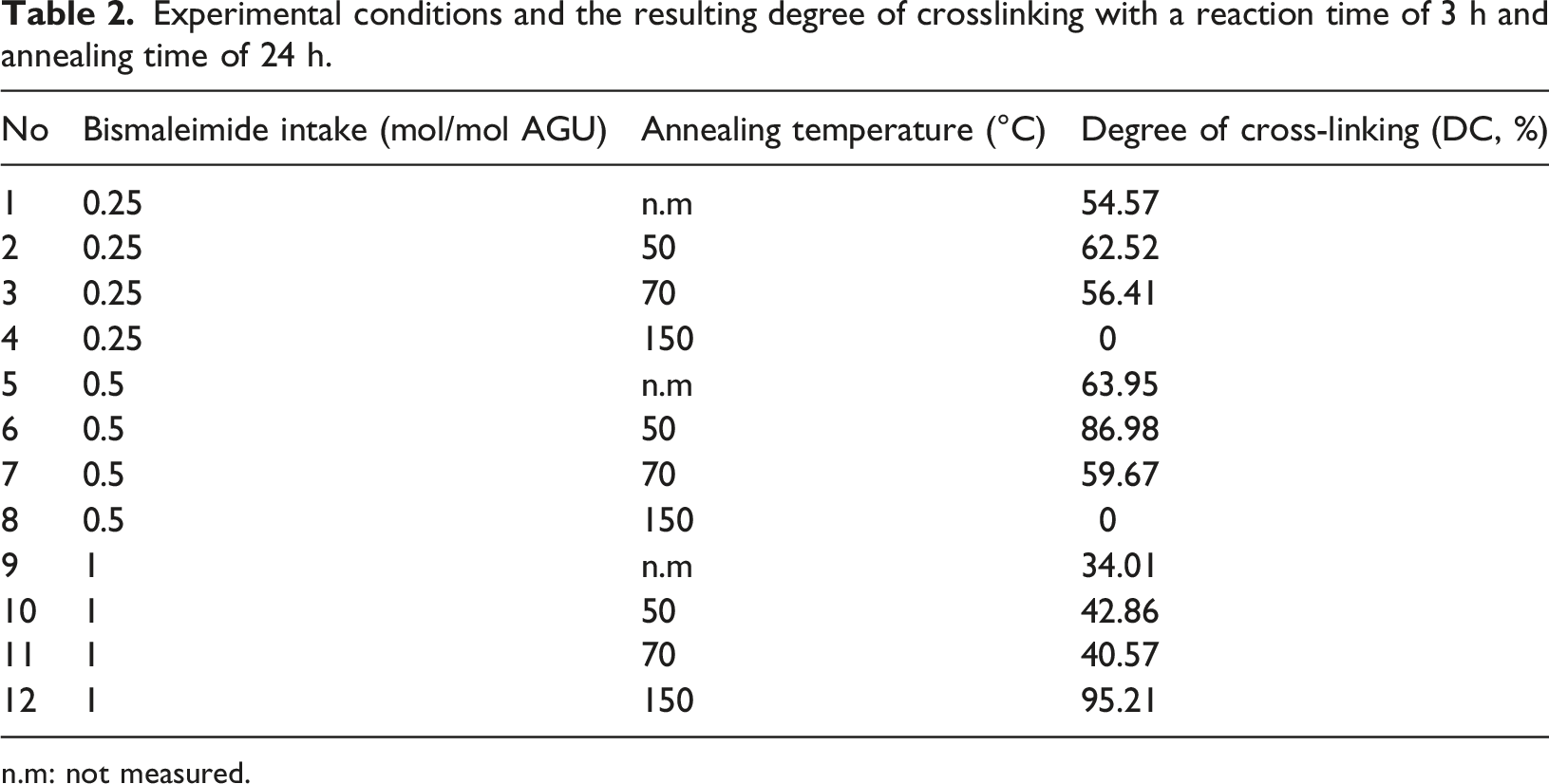
Experimental conditions and the resulting degree of crosslinking with a reaction time of 3 h and annealing time of 24 h.
n.m: not measured.
Figure 6 shows the FTIR spectra of the ester and its cross-linked products. It is important to show that after cross-linking, additional peaks and distinct shoulders appear at the absorption band of 1509 cm−1 and at the absorption band of 1173 cm−1 in the FTIR spectra of cross-linked starch, respectively. The peak and the shoulder are not visible in the spectrum of starch furoate. The peak at the absorption band of 1509 cm−1 corresponds to the C=C of the aromatic rings of BM (ν CH=CH), while the shoulder at 1173 cm−1 is assigned to the DA adduct (C-O-C, δ DA ring). The presence of the two functional groups indicates that the cross-linking step between starch furoate and BM was successfully done.8,11,12,30 FTIR spectra of starch furoate and cross-linked starch in the absorption range of 2000 cm−1 – 1400 cm−1 (a) and 1400 cm−1 – 500 cm−1 (b). A vertical line is drawn to highlight changes at the 1173 cm−1 absorption band.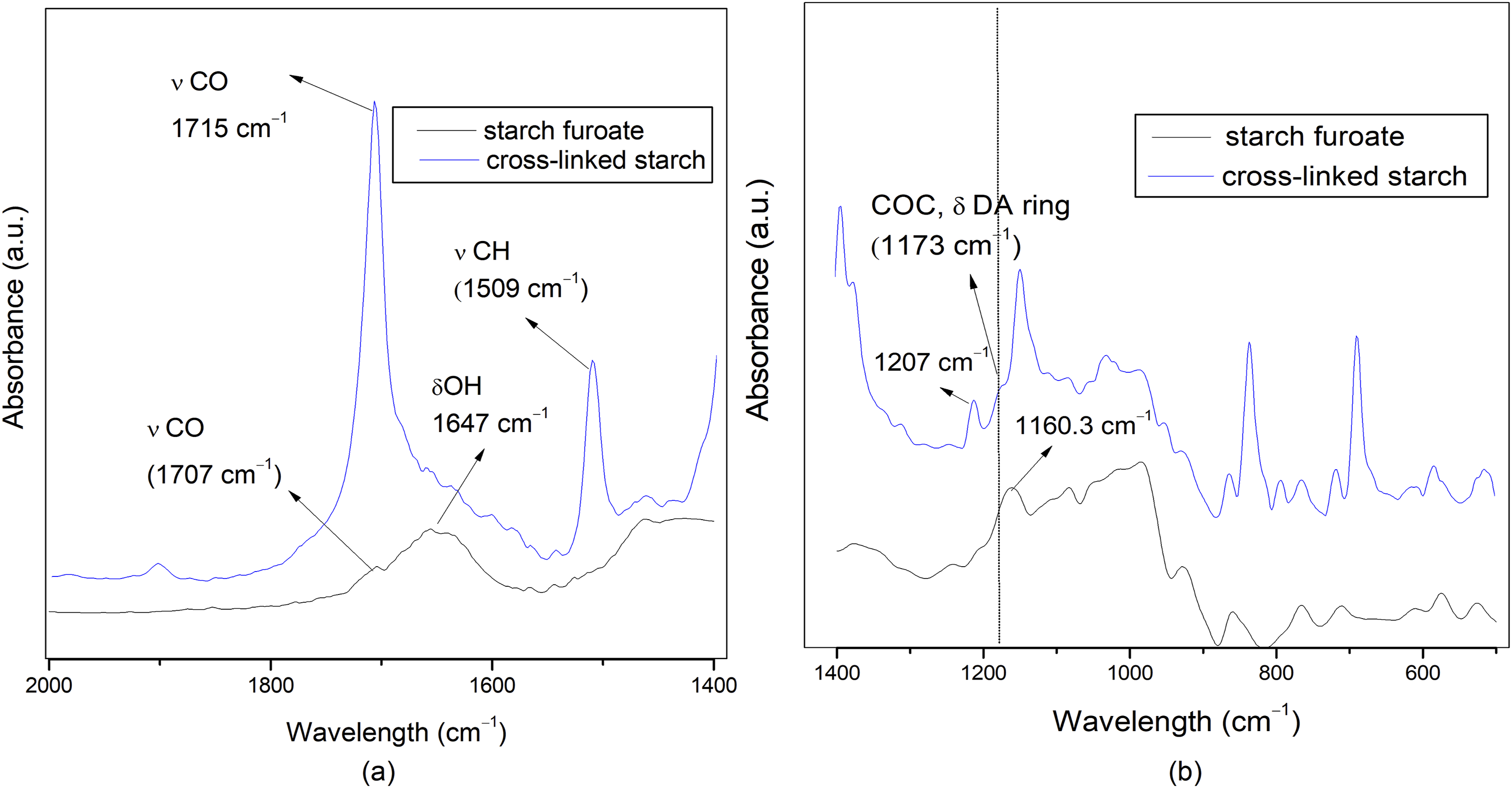
Moreover, comparison of SEM micrographs (Figure 3(b) and (d)) of the intermediate starch ester and the final products reveals substantial morphological alterations. The enhanced degree of cross-linking within the starch backbone, facilitated by furan-BM cross-linking, results in agglomeration of starch granules and fusion of some granules. This fusion leads to the formation of new, solid granules exhibiting distinct morphology and structure relative to native starch. 12
The diffractograms of the native sago starch and its modified product are shown in Figure 7. The changes in the chemical structure and the crystallinity of the starch matrices were altered after modification, especially after the cross-linking step between furan and BM (Figure 7). Figure 7(a) and (b) show that native sago starch and starch furoate exhibit a semi-crystalline structure comprising both amorphous and crystalline domains.12,25 The typical C-type crystalline structure is observed, as evidenced by the presence of several diffraction peaks at 2θ values of 8.4°, 15°, 17.0°-17.3°, 17.9°, and 23.0°-23.2° in both diffractograms.12,25 This finding shows that the crystalline structure of native sago does not change even after the esterification under the supercritical CO2 step. The diffractogram of native sago starch (a), and its derivatives, the starch ester with DS of 0.0428 (b) 1, 1′-(methylenedi-4, 1-phenylene) bismaleimide (BM) (c), and the cross-linked starch product (d).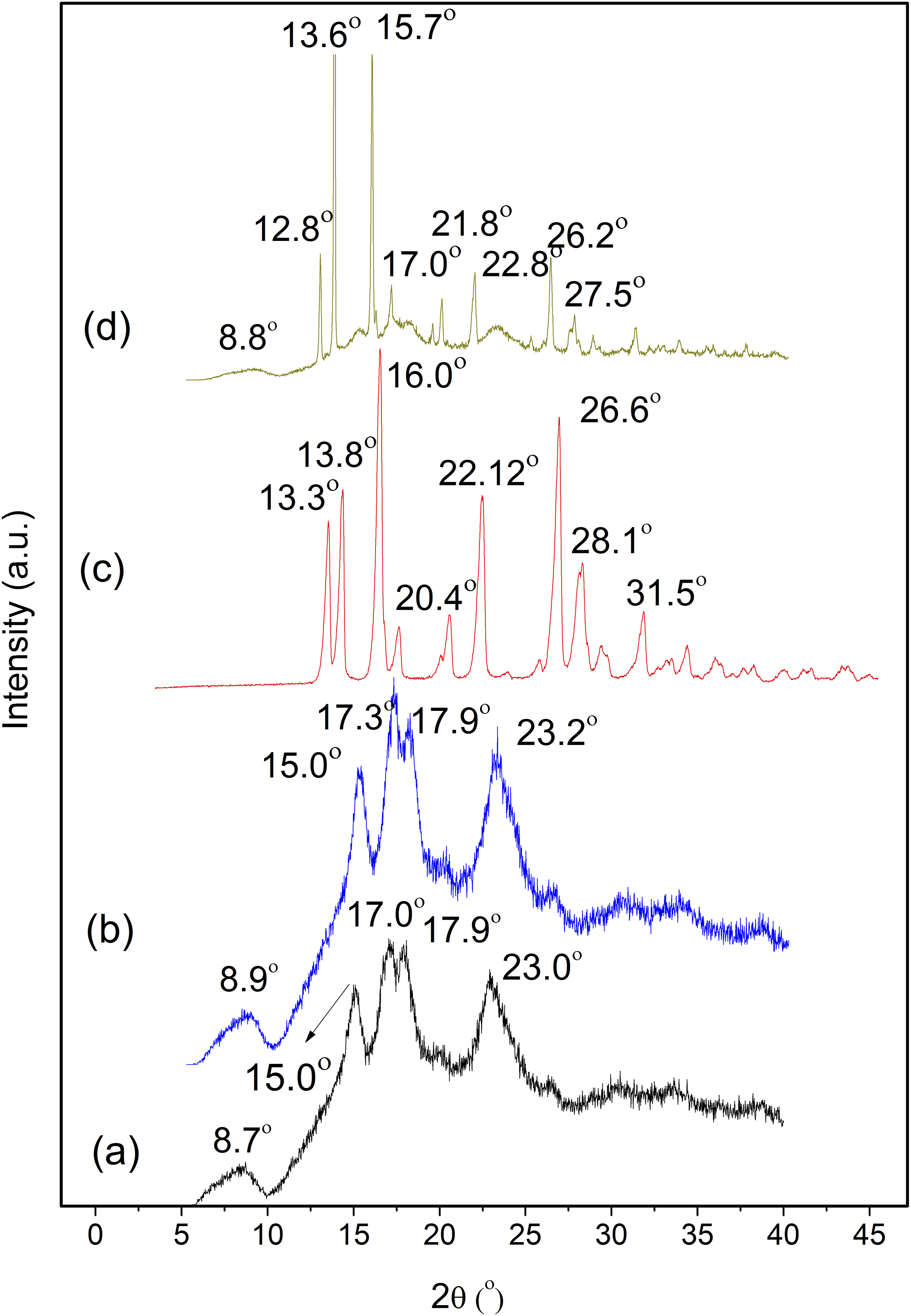
After cross-linking, significant changes in the crystallinity of the final product compared with its native and the ester product were observed. As shown in Figure 7(d), cross-linking with BM results in a diffraction pattern characterized by sharp peaks at 8.8°, 12.8°, 13.6°, 15.7°, 17.0°, 21.8°, 22.8°, 26.2°, and 27.5°. The presence of these crystalline peaks along with a broad region under the peaks at 12.8° – 26.2° region strongly indicates the presence of the amorphous region of semi crystalline starch structure. Furthermore, the peaks within the 12.9° − 33.9° diffraction range are consistent with the typical peaks of the highly crystalline BM as cross-linker, suggesting its influence on the final structure of the cross-linked products.12,31 The crystallinity changes are in line with the findings in our previous works, 12 and as expected, this implies the success of the cross-linking reaction between starch furoate that was produced with scCO2 as solvent and BM via DA chemistry.
Thermal properties of the starch and its modified products
The differences in thermal stability as measured with Thermal Gravimetry Analysis (TGA) between native sago starch and its derivative products (starch furoate and cross-linked starch) are shown in Figure 8. The initial degradation temperature (To = Tonset, Figure 8(b)) of starch furoate is higher (To = 236.1°C) compared with that of native starch (To = 206.4°C). The finding is in contrast with the thermal stability of the starch furoate that was reported in our previous work, where the thermal stability of the starch furoate (To = 187.3°C) is lower than that of native sago starch (To = 206.4°C). The trend may be explained by the possible higher loss in crystallinity during the reaction between starch and MF in DMSO compared with the one in supercritical CO2, where the disruption in crystallinity is strongly influenced by the reactivity, as evidenced by higher resulting DS values obtained in the previous work (DS = 0.32) compared with the one reported in this work (DS = 0.0428).12,32 TGA of native sago starch, starch furoate with DS of 0.0428 and starch cross-linked annealed at 50°C for 24 h (a) and the first derivatization of each thermogram (DTGA) (b). Note. To = Tonset, Toff = Toffset, Tp = Tpeak.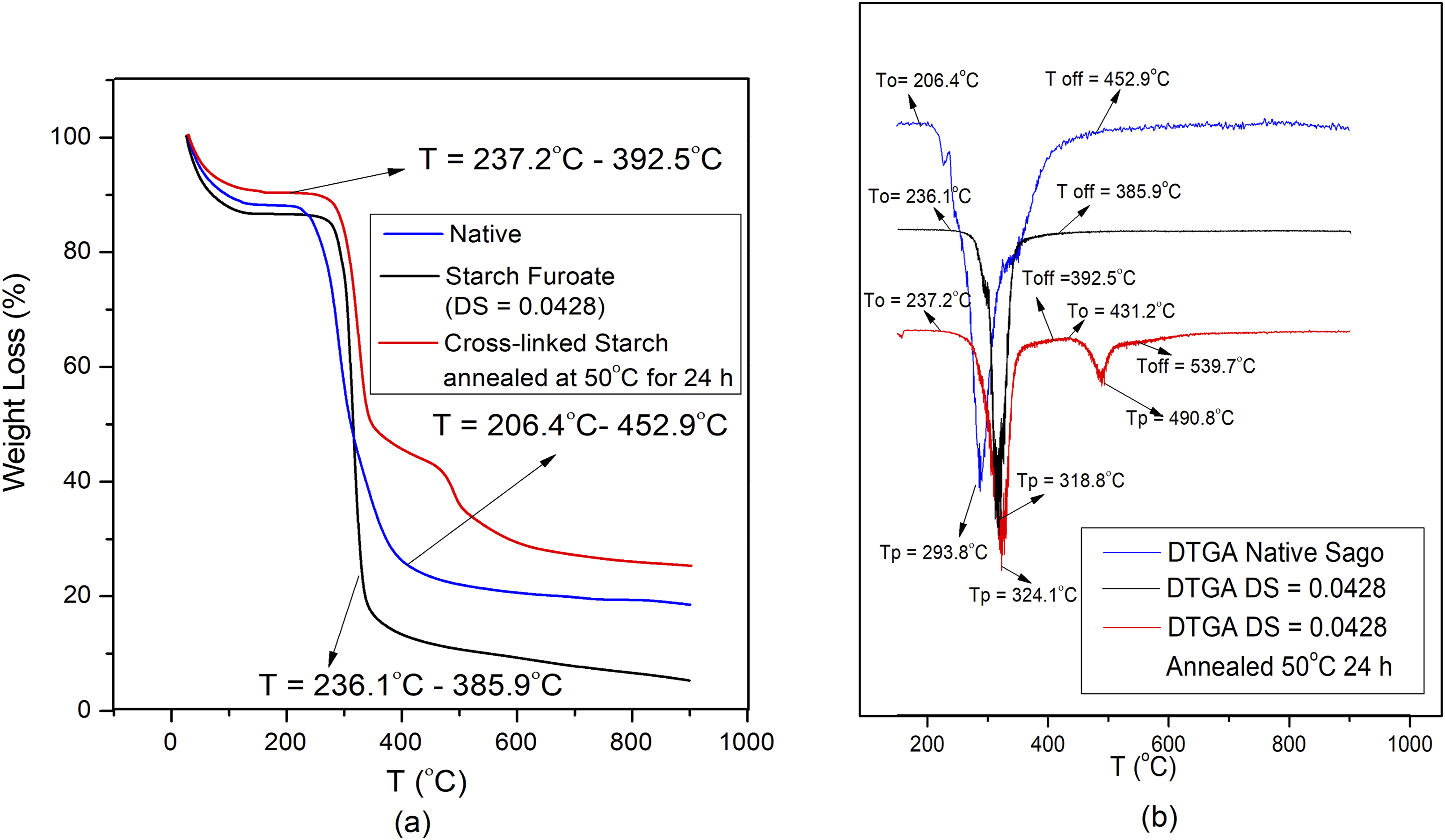
In addition, thermal stability increases as shown in the thermogram of the cross-linked starch and its first derivatization (Figure 8(a) and (b)). As expected, the cross-linked network available in the starch structures improves the thermal stability of the final products (To = 237.2°C).12,32,33 A second degradation stage is observed between 431.2°C and 539.7°C (Figure 8), likely corresponding to the degradation or evaporation of the bismaleimide (BM) monomer following the retro Diels-Alder (DA) reaction.34,35
Not only the changes in the degradation temperature, but also the different amount of char produced after cross-linking are observed in the TGA measurement (Figure 8(a)). The cross-linked starch products exhibit a higher char yield of 25.2% wt/wt, compared to 17.7% wt/wt for native starch and 5.6% wt/wt for starch ester products. The higher char content likely results from the aromatic moieties introduced by the furan pendant group and bismaleimide, as well as potential aromatization of the Diels-Alder adduct at elevated temperatures (>150°C).36–38 There are two key findings from the TGA results are crucial for future studies and applications of this product. Firstly, an improved thermal stability of the final product, even at a low DS value (0.0428). This result highlights the advantage of using supercritical CO2 as a solvent in transesterification reactions, where the plasticizer effect of CO2 can reduce damage to the crystalline structure of starch. Secondly, the formation of char is due to the aromatization of the Diels-Alder adduct at high temperatures (T >150°C).37,38 This results in the formation of permanent cross-linked as confirmed by TGA results (Figure 8).
Thermal-reversibility of the cross-linked starch
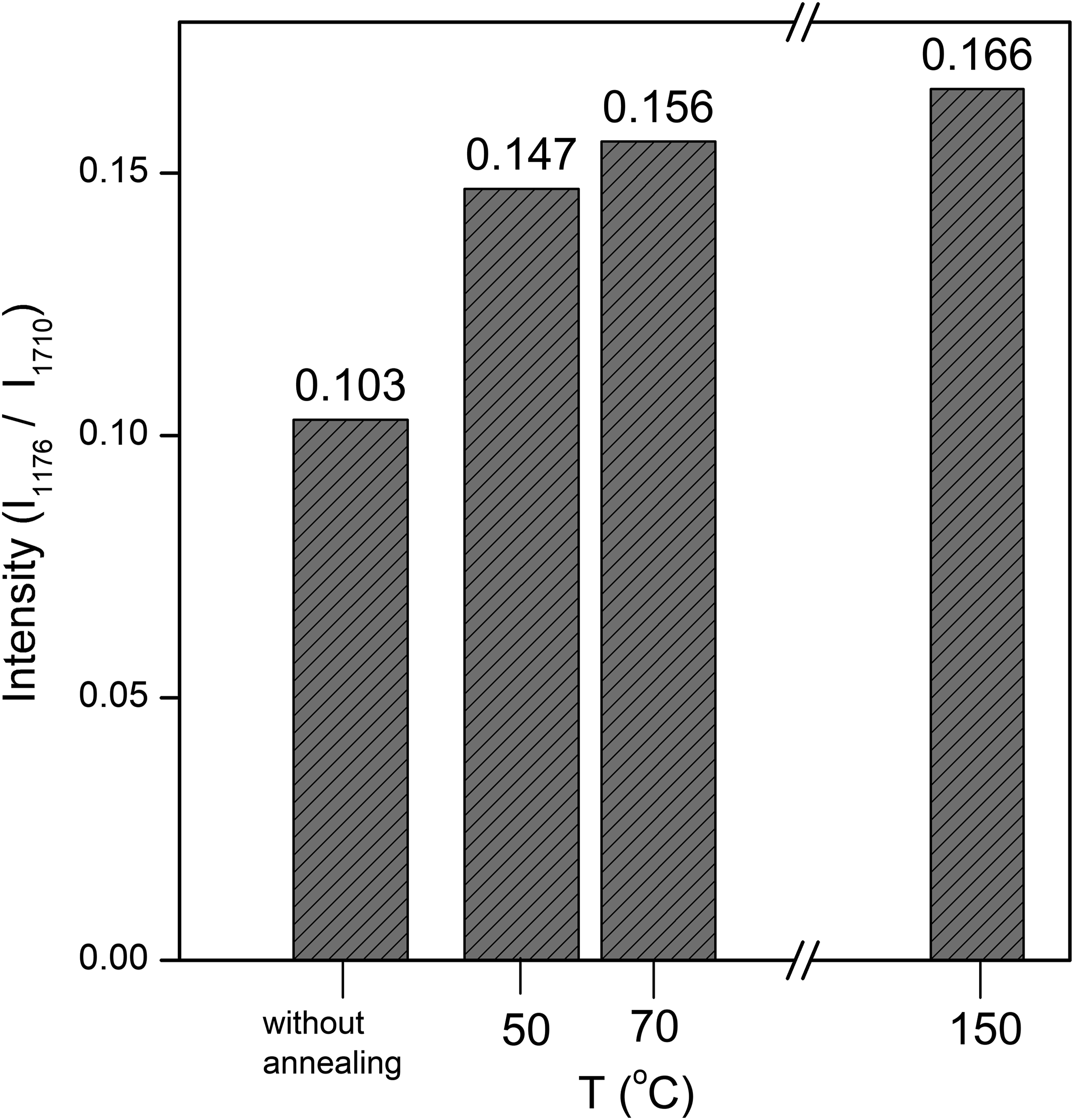
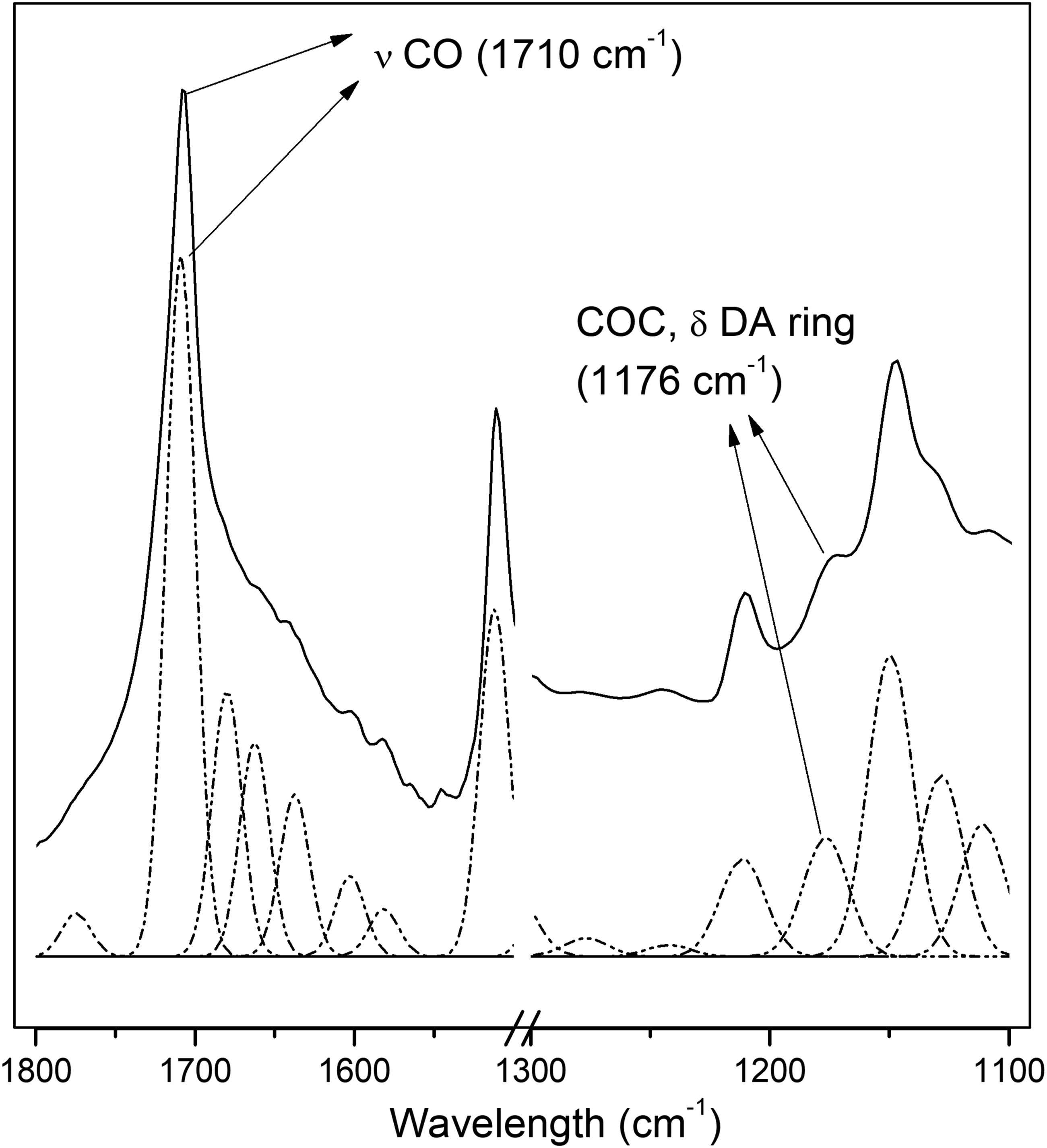
In addition to an improved thermal strength, one of the expected product characteristics in this study is the appearance of thermal reversibility properties in the cross-linked starch product. In this study, the thermal reversibility properties were investigated by observing changes in degree of cross-linking (DC) values at various annealing temperatures (Table 2 and Figure 9), as well as changes in the intensity of relevant peaks (Figure 10) that occur due to cross-linking at different annealing temperatures. The latter were observed by calculating the intensity changes of two relevant peaks at the deconvoluted FTIR spectra (Figure 11) which are the peak in the range of 1174–1178 cm−1 and the peak in the range of 1705–1715 cm−1, indicating the Diels-Alder (DA) adduct (C-O-C) and carbonyl (C=O symmetric stretching (υ CO sym)) group of starch furoate and BM rings, respectively (Figure 11). The carbonyl peaks were chosen as a reference for calculating changes in the DA bridge bond because it is theoretically unchanged during the cross-linking reaction.12,38,39 Degree of cross-linking of the final product at different annealing temperatures and different BM intake. All experiments were done using intermediate product with DS of 0.0428, reaction time of 3 h and annealing time of 24 h. The changes in the intensity ratio of two relevant peaks (I1176 cm−1/I1710 cm−1) of the annealed cross-linked starch product with different temperatures (DS = 0.0428, BM = 0.3 mol/mol AGU). Deconvolution of FTIR spectra of cross-linked starch with DS of 0.0428 annealed at 70°C for 24 h.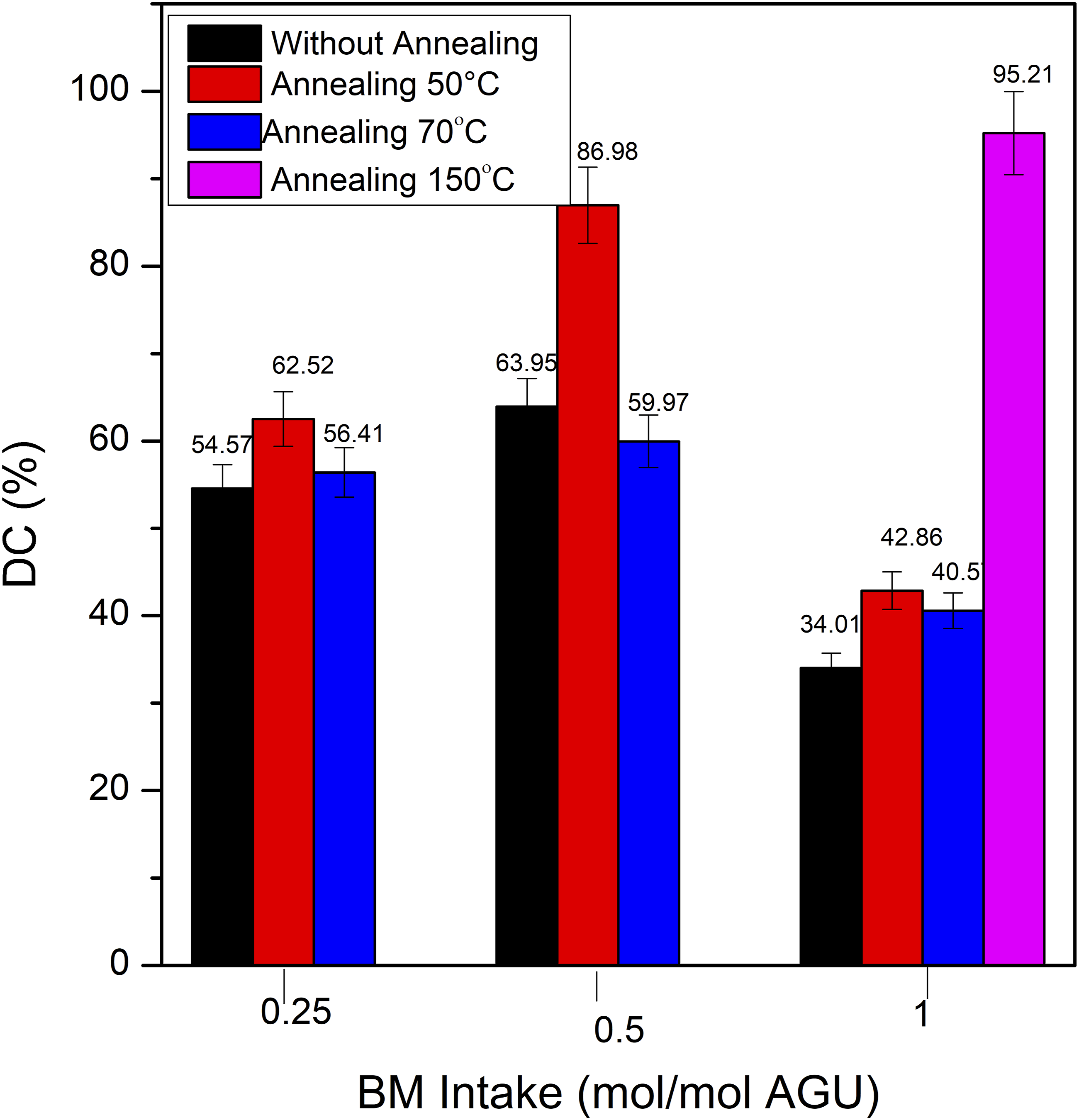
The thermal reversibility of the final product is evident from the changes DC values (Table 2 and Figure 9). Specifically, an increase in DC is observed when the product is heated at 50°C for BM variations of 0.25, 0.5, and 1 mol/mol AGU, suggesting a positive influence of BM intake on the DA reaction rate.12,40 In addition, increasing the annealing temperature to 70°C causes the cross-linking degree to decrease, and at 150°C, the cross-links DA adducts are entirely lost (DC value = 0%). This trend indicates the formation and breakage of the cycloadduct as caused by the differences in the DA and retro Diels-Alder (RDA) reaction rates at various temperatures, a defining feature of thermally reversible products. The same temperature range that shows the temperature for DA reaction (50–70°C) and retro DA (150°C) has also been reported in several published reports, including our previous work.8,11,12,37
On the contrary, a different observation can be seen at a BM ratio of 1 mol/mol AGU, where at 150°C, the product’s degree of cross-linking unexpectedly increases to 95.21% after annealing. Although further research is still needed to confirm this, the explanation may be related to the formation of permanent cross-links at a temperature of 150°C due to the aromatization reaction of the cycloadduct,37,38 so that the formation of the adduct is no longer affected by DA or RDA reactions. The formation of permanent cross-links at high temperatures was also confirmed through TGA measurements (Figure 8). It is clear from the obtained thermograms (Figure 8) that the cross-linked starch product produced more char than native starch and starch furoate (see above).
The changes in the intensity ratio of the two peaks (I1176/I1710) as measured for the cross-linked starch product with a BM ratio of 0.5 mol/mol AGU at various annealing temperatures are shown in Figure 10. It is clear from the figure that the peak intensity increases with increasing annealing temperature. However, this trend is in contrast to the degree of cross-linking (DC, Figure 9) results, wherein DC values decreased at a temperature of 150°C, except for a BM ratio of 1 mol/mol AGU (as explained above). The difference in FTIR observation results and DC calculation is possible because FTIR detect not only the presence of DA cycloadduct on both sides of the BM, forming a desired cross-linking network (see Scheme 1), but also incomplete formation of cross-linking adducts after de-cross-linking reaction (retro DA) at a temperature of 150°C. 12 Consequently, although it shows the highest intensity ratio at 150°C, the product has a lower degree of cross-linking, in line with the result shown in Figure 9.
In addition, this work shows that the starch furoate, as the intermediate product synthesized in supercritical CO2, can react with bismaleimide to form thermo-reversible cross-linked starch. The thermal ranges for the Diels-Alder and retro Diels-Alder (rDA) reactions agree with those previously reported in our research group. However, the degree of cross-linking observed ranged from 34.01% to 86.98%, which is lower than previously reported values (22.2%–91.1%), 12 except for reactions conducted at 150°C (with a bismaleimide intake of 1 mol/mol AGU), where a higher degree of cross-linking (95.21%) was achieved due to the possible formation of permanent cross-linked in the starch matrices.
Up till now, verification of the thermal reversibility of the cross-linked starch product has been limited to FT-IR analysis and the determination of the degree of cross-linking (DC) via the product dissolution method. These two current methods provide initial evidence supporting a robust thermal reversibility. However, more direct evidence could be obtained through Differential Scanning Calorimetry (DSC). In DSC, the reversible Diels-Alder (DA) and retro-DA reactions are typically identified by exothermic transitions (cooling) and endothermic transitions (heating), as reported previously, where two transitions were observed at the temperature range of 125°C – 150°C (heating cycles) and at 50°C – 100°C (cooling cycles) corresponded to the endothermic transition (ascribed to retro DA) and broad exothermic transitions (ascribed to DA reaction step), respectively. 12
Unfortunately, this is not the case for the current work; the DSC measurements did not show exothermic or endothermic transitions, as shown in Figure 12. The absence of these transitions was not entirely unexpected and is likely due to the low degree of substitution (DS) achieved in this study (max DS of 0.048), compared to our earlier work using DMSO (max DS of 0.61). This low DS led to fewer furoate groups being grafted onto the starch matrix, making the DA and retro-DA transitions between the furoate and BM difficult to detect by DSC. Thus, the limited degree of substitution provided by the current modification strategy hinders the detection of thermo-reversible behavior via DSC analysis. DSC thermograms of cross-linked starch furoate (DS = 0.048) with BM, annealed at a temperature of 50°C for 24 h, illustrating the heating and cooling cycles (2nd and 3rd).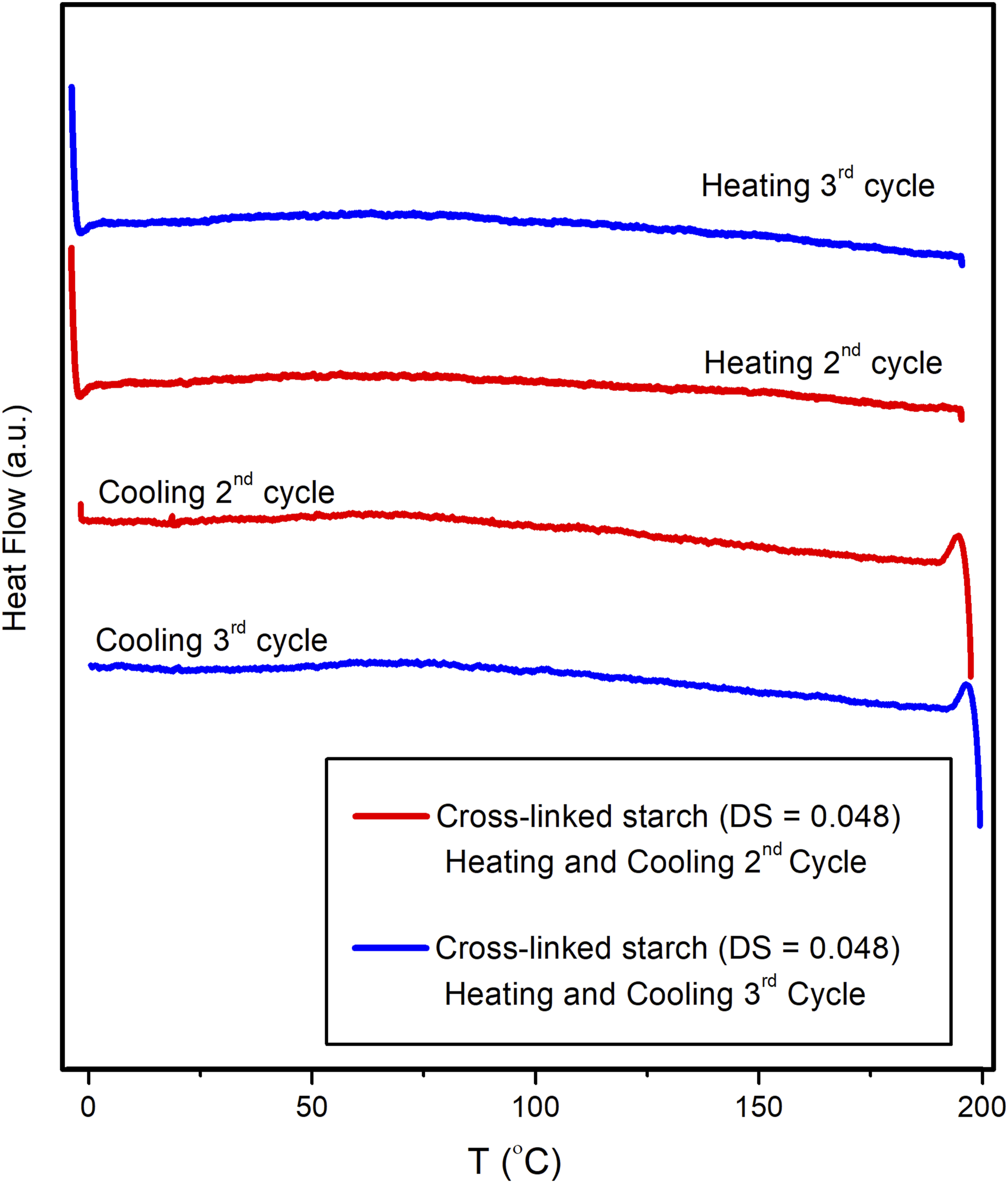
In addition, the limited density of furoate groups and BM also influenced the chain mobility of the semi-crystalline polymer. Eventually, they hindered the appearance of exothermic and endothermic transitions in DSC, as reported in literature. 41 The latter may be caused by less change in chain mobility due to the lower DS value compared with that at higher DS, and this might, in turn, affect the strain on the cross-linking points, thus influencing the appearance of the DA adduct in the DSC measurement as well. Consequently, to address the limitations of DSC measurements at these levels, one may assume that the DS value must be increased through an optimization study and eventually enable the practical observation of thermal transitions during subsequent DSC analysis Therefore, to overcome the limitations of DSC measurements at these levels, an optimization study is necessary to increase the DS value. The increase should facilitate the precise observation of thermal transitions in subsequent analyses.
Conclusions
This study successfully utilized an environmentally benign method for synthesizing thermo-reversible biopolymers from sago starch, employing supercritical CO2 (scCO2) as a sustainable alternative to conventional organic solvents. There are two reactions involve in the synthesis, which are the transesterification of starch and methyl 2-furoate (MF) in a batch high pressure reactor with supercritical CO2 and follow with the cross-linking reaction between starch furoate and 1, 1′-(methylenedi-4, 1-phenylene) bismaleimide (BM) via Diels Alder chemistry. The effect of several important process parameters such as pressures (10 and 15 MPa), catalyst ratio (K2CO3, 0.3, 0.5, and 0.7 mol/mol (Anhydroglucose unit (AGU)), and temperatures (100 and 120°C) on the degree of substitution of starch (DS) were systematically studied in the first reaction steps. The starch ester product has a DS value range of 0.0032 to 0.0428. The highest DS values is accessible at pressure of 10 MPa, K2CO3 ratio of 0.3 mol/mol AGU, and a temperature of 100°C.
After cross-linking with BM, the resulting products show a thermo-reversible behavior due to Diels-Alder (DA) and retro DA reactions between furan groups and bismaleimide. The occurrence of these thermo-reversible properties leads to the recyclability and re-workability of the final product, which is often considered difficult in most cross-linking of polymer including bioplastics. In addition, the cross-linked products exhibit better thermal properties than their native and ester products, a desirable characteristic for various industrial applications. The next development phase requires in-depth studies of the reaction’s phase behavior and rate-determining step, data that are crucial for improving and optimizing reactivity (to achieve higher DS) and for designing an efficient, successful commercial scale up.
Footnotes
Acknowledgements
The authors acknowledge the Advanced Characterization Laboratories Bandung (National Research and Innovation Agency), the Research Center for Nanosciences and Nanotechnology (Bandung Institute of Technology), and GreenLabs Bandung for providing facilities and technical support. Financial support from the Indonesia Toray Science Foundation (ITSF, Grant No. 001/I/ITSF/SEK/2019) is also gratefully acknowledged. The authors acknowledge the use of Grammarly software to revise the manuscript for grammatical errors and proofreading.

Author contributions
Krisnawan Souw: Methodology and Sample Preparation, Data Analysis, Writing—Original Draft Preparation. Vin Cent: Methodology and Sample Preparation, Writing—Original Draft Preparation. Tony Handoko: Supervision, Writing—Original Draft Preparation. Henky Muljana: Conceptualization, Supervision, Data Analysis, Writing—Review and Editing.
Funding
The authors disclosed receipt of the following financial support for the research, authorship, and/or publication of this article: This work was funded by the Indonesia Toray Science Foundation (No: 001/I/ITSF/SEK/2019).
Declaration of conflicting interests
The authors declared no potential conflicts of interest with respect to the research, authorship, and/or publication of this article.