






Abstract
This study presents the development of hydrophobic polymeric films from bacterial cellulose (BC) produced by fermenting banana pseudostem juice and mature coconut water, two underutilized agricultural byproducts. Carnauba wax was applied as a surface coating in 1–3 layers, with and without hot pressing. The coating substantially increased hydrophobicity, with water contact angles rising from 56° in the uncoated film to over 100° in multilayer-coated films, although the films did not exhibit oleophobic behavior based on silicone oil contact angle measurements. The coating also significantly reduced water absorption from 91.45% in the uncoated film to 10.37% and 5.63% in the coated and coated–hot-pressed films, respectively, while water holding capacity decreased from 86.28% to 57.70% and 54.36%. Hot pressing produced a smoother and more homogeneous surface morphology, as observed by SEM. ATR–FTIR analysis supported the increase in hydrophobicity through reduced O–H and H–O–H band intensities. XRD analysis confirmed that the cellulose I crystalline structure remained intact after coating, while additional peaks corresponding to crystalline carnauba wax were observed. DSC revealed a melting transition of carnauba wax around 52°C, with hot-pressed samples showing an additional higher-temperature melting event. TGA indicated reduced moisture uptake but lower thermal stability, with degradation onset decreasing from 267°C in the uncoated film to 200–212°C in coated samples. Overall, multilayer carnauba wax coating provides a simple, solvent-free approach to improve the water resistance of BC films while preserving their structural integrity, making them promising for moisture-sensitive food packaging applications.
Introduction
Plastic, an integral part of modern life, offers strength, lightness, and affordability. However, its widespread use, especially as food packaging, has resulted in severe environmental repercussions, particularly due to its slow degradation process. 1 The burgeoning plastic waste crisis poses threats to aquatic ecosystems and exacerbates flooding issues caused by obstructed waterways. 2 Addressing this challenge requires innovative solutions, and one promising avenue is the development of biodegradable polymeric films.
Biodegradable polymeric films, unlike traditional plastics, break down into water and carbon dioxide when exposed to microorganisms, leaving no harmful residues in the environment. 3 Among various biopolymer candidates, bacterial cellulose (BC) stands out because of its high purity, nanoscale fibrillar network, and excellent mechanical strength. 4 Bacterial cellulose can be produced by Komagataeibacter xylinus from the fermentation of various sugar sources, including agricultural waste. 5
Our recent work demonstrated that banana pseudostem juice and mature coconut water, two abundantly available agricultural by-products, can serve as dual substrates for BC biosynthesis, yielding films with tensile strength values as high as 112.7 MPa. This substrate combination is unique because banana pseudostem juice and mature coconut water provide fermentable sugars and minerals, enabling high-yield BC production with minimal supplemental nutrient. The production process is energy-efficient, solvent-free, and valorizes agricultural waste that is otherwise underutilized. 6
Despite these advantages, a key limitation remains: the inherently hydrophilic nature of BC, which restricts its application in moisture-sensitive food packaging. Hydrophobicity can be improved through blending, chemical surface modification, or coating. Blending hydrophobic additives often causes phase separation and deteriorates mechanical properties.7,8 Chemical modification typically requires organic solvents and may compromise biodegradability. In contrast, coating offers a solvent-free, surface-only approach that maintains biodegradability and is relatively simple to apply.9–11
In this study, we explored carnauba wax coating as a strategy to enhance BC hydrophobicity. Carnauba wax, derived from the Brazilian palm, has a high melting point, is biodegradable, and possesses antioxidant and antimicrobial properties. 12 Although wax coatings have been applied to paper, bio-mulch films, and starch-based films,7,13–15 their application to bacterial cellulose (BC) films has been scarcely reported, and establishing genuine water resistance remains a challenge. We implemented a unique combination of substrate utilization, coating strategy, and thermal consolidation to demonstrate the novelty of our work from prior studies. Firstly, regarding the substrate source, we explicitly state that unlike studies using conventional media or commercial synthetic media,4,5 our BC matrix is uniquely derived from the fermentation of two underutilized agricultural byproducts: banana pseudostem juice and mature coconut water. 6 Secondly, regarding the coating strategy, existing studies aiming to hydrophobize BC typically rely on either single-layer wax applications 16 or internal matrix blending. 17 In contrast, we introduce a sequential multilayer carnauba wax coating paired with a hot-pressing treatment to promote better adhesion and penetration. The single-layer carnauba applications on cellulose yield moderate hydrophobicity (e.g., contact angles around 84°) 16 and internal beeswax blending can deteriorate the matrix’s structural integrity. 17 Hence, the quantitative improvement achieved by our specific method, emphasized the shift from a hydrophilic state (56.17°) to a highly hydrophobic state (105.68°) exceeding 100°, which surpasses the barrier properties typically achieved by standard single-layer wax treatments. This further demonstrates that our multilayer and thermal consolidation strategy significantly outperforms standard single-layer treatments, offering a high-performance, solvent-free alternative for moisture-sensitive food packaging.
Here, we present the effects of multiple coating cycles and hot-pressing treatment on the hydrophobicity and physical properties of BC films derived from banana pseudostem juice and coconut water. This approach introduces a novel combination of (i) sustainable BC production from waste-derived substrates and (ii) multilayer carnauba wax coating with thermal consolidation, offering a promising route toward high-performance, eco-friendly packaging materials.
Methods
Materials
The banana pseudostem (Musa acuminata x Musa balbisiana) was procured from a small banana plantation located in South Konawe, Southeast Sulawesi, Indonesia. We collected mature coconut water from a shredded coconut seller in Kendari. The coconut water was usually discarded by the seller. The starter culture of Komagataeibacter xylinus was sourced from a nata de coco factory situated in Kendari. In the production of bacterial cellulose-based films, we also used cane sugar (Gulaku), acetic acid (Dixi), ammonium sulfate (Petrokimia Gresik), and carnauba wax (Kimia Market).
Production of bacterial cellulose-based films
Sample preparation followed the method reported in 6, using a 1:1 ratio of banana pseudostem juice and coconut water. The medium was adjusted to pH 4.5 and supplemented with 0.5% (w/v) ammonium sulfate and 10% (w/v) cane sugar prior to fermentation. The mixture was inoculated with Komagataeibacter xylinus and incubated under static conditions for 10 days at room temperature (±27°C).
At the end of the incubation period, a gelatinous bacterial cellulose pellicle formed at the air–liquid interface. The pellicle was harvested and purified by washing and soaking in distilled water until a neutral pH was achieved, to remove residual medium components. The bacterial cellulose was then air-dried between two clamped perforated metal sheets to obtain bacterial cellulose films. The obtained bacterial cellulose film (Control) was further characterized using ATR–FTIR and XRD analyses to confirm its chemical structure and crystalline properties.
Coating of bacterial cellulose-based films
Carnauba wax was melted at 60°C and applied to the bacterial cellulose-based films using a roller-coating technique to ensure uniform deposition. Each side of the film received one pass of the wax-coated roller, followed by air-drying at room temperature for 7 min. Coating applications were performed once (R1), twice (R2), or three times (R3). For designated samples, a hot-press treatment (40°C, 4 s) was applied after each coating cycle to enhance layer uniformity. Samples without hot pressing were labeled S0, whereas those receiving hot pressing were labeled S1. A schematic image of the production of bacterial cellulose films and the coating treatments is shown in Figure 1. A schematic image of bacterial cellulose films production and coating with hot press treatment.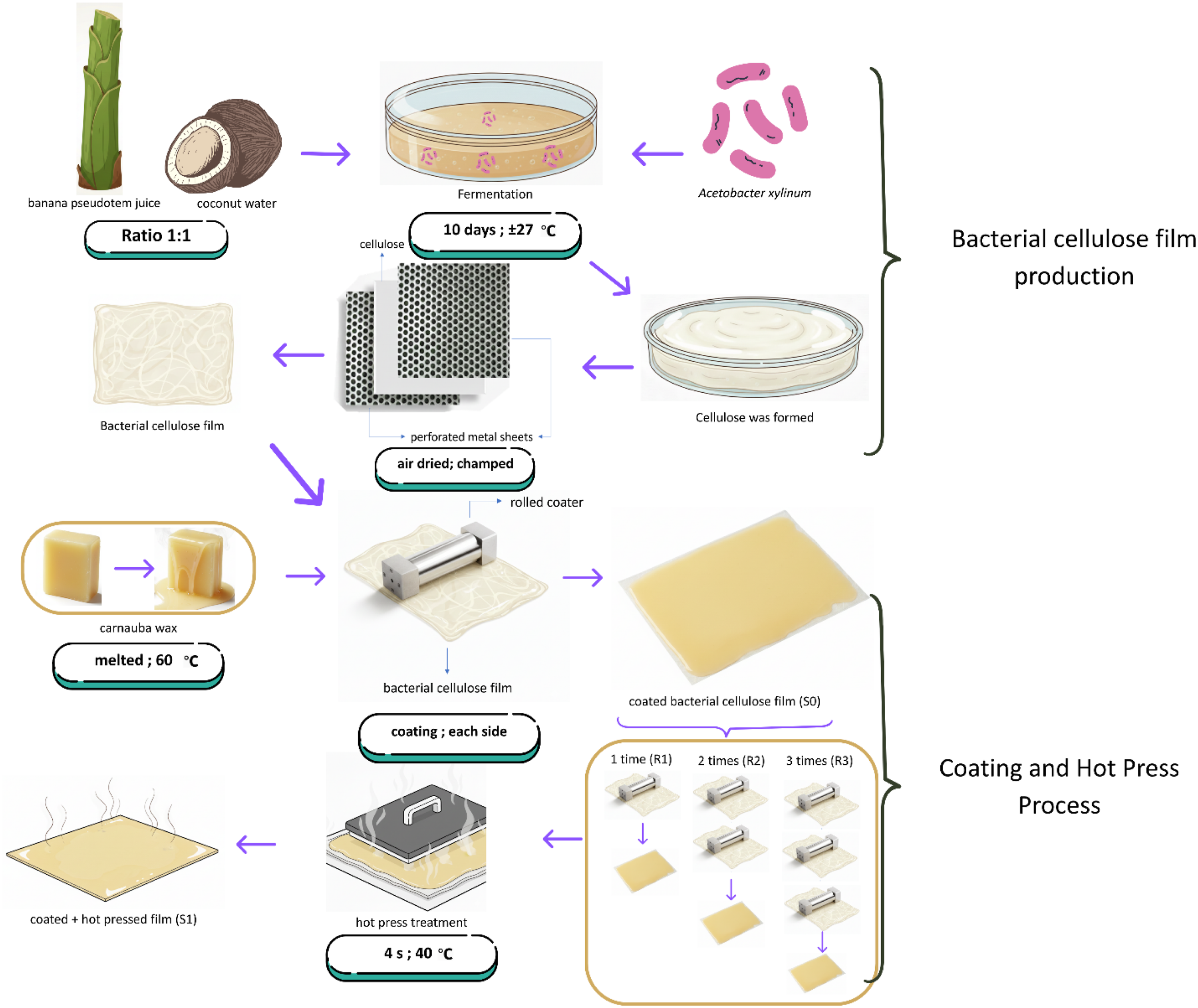
Analysis
Contact angle
The water contact angle measurements were conducted using a digital camera to capture the contact angles on the test material’s surface. The testing procedure involved attaching the sample to a glass slide, followed by the application of water using a 100 µL micropipette. Images of the water droplets on the sample were captured at 30-s intervals over 2 min (0 s, 30 s, 60 s, 90 s, and 120 s). Subsequently, the images of the samples were analyzed for their contact angles using a CorelDraw 2021. The analysis was done triplicate, and the results are reported as mean ± standard deviation to reflect measurement variability. The CorelDraw software was used only as an image-processing tool to determine the angle between the droplet’s baseline and the surface tangent. Although CorelDraw is not a specialized contact-angle analysis program, its use for manual angle determination has been documented in several peer-reviewed studies.18–20 Possible sources of uncertainty include droplet positioning, surface heterogeneity of the films, and manual angle determination during image analysis.
In addition to water, silicone oil was also used to assess oleophobicity. For silicone oil, the contact angle was recorded immediately after droplet placement without replication. All images were analyzed using the same image-processing method described above.
Water absorption and water holding capacity (WHC)
Water absorption of the films was determined according to the method of
21
with slight modifications. Air-dried film samples were weighed to obtain the initial weight (Wd) and then immersed in distilled water for 24 h under constant agitation at room temperature. After soaking, the films were removed from the water, gently blotted with tissue paper to remove excess surface water, and weighed (Wt). Water absorption was calculated using the following equation:

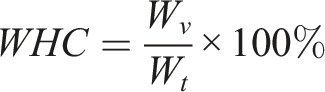
The water holding capacity (WHC) of the hydrated films was subsequently determined. After the weight Wt was recorded, the soaked films were subjected to vortex mixing for 2 min to remove loosely bound water. The films were then weighed again (Wv). WHC was calculated using the following equation:
All measurements were performed in triplicate.
Morphology
The morphology of the bacterial cellulose-based film was analyzed using a scanning electron microscope (SEM) (JSM-6510, JEOL, Japan). Prior to imaging, the bacterial cellulose-based film samples were sputter-coated with a thin layer of gold. Micrographs were obtained at different magnifications (100, 200, and 1000x) under an accelerating voltage of 10–15 kV. Scanning was performed on both the surface and the cross-section of the material.
Fourier transform infrared (FTIR)
The chemical structure of the film was analyzed using an attenuated total reflectance-Fourier transform infrared spectrometer (ATR-FTIR) (Nicolet iS10, Thermo Scientific, USA). Spectra were recorded in the wavenumber range of 4000–400 cm−1 with a spectral resolution of 4 cm−1 and 32 scans per sample. The obtained spectra were analyzed to identify characteristic functional groups and possible interactions among the film components.
Thermal analysis
Thermal analysis was conducted using both a Differential Scanning Calorimetry (DSC) and Thermogravimetric Analysis (TGA) instrument (STA200RV, Hitachi, Japan). DSC and TGA were carried out to observe the melting and degradation temperature of the samples. A single representative run is presented, consistent with common practice in literature due to the high reproducibility of DSC and TGA measurements.8,11,14 In the DSC test, a sample of 0.1 g was placed in an aluminum pan, and the sample was then positioned in the combustion chamber, which was purged with nitrogen gas at a flow rate of 20 mL/minute. The method involved heating the sample from −10°C to 250°C at a heating rate of 10°C/minute. For the TGA analysis, the sample was gradually heated from 25°C to 500°C at a rate of 5°C/minute, with a continuous flow of nitrogen gas at a rate of 20 mL/minute.
Color analysis
The color properties of the films were evaluated using a WR10 colorimeter based on the CIE Lab* system. Measurements were conducted under calibrated conditions on visually uniform samples, and the reported values are considered representative. The instrument provided L* (lightness), a* (red–green), and b* (yellow–blue) values for each sample. Color difference (ΔE) between the coated and uncoated films was calculated using the following equation:

This analysis was performed to quantify the visual changes in film appearance resulting from the wax coating treatment.
Crystallinity
The crystalline structure of the films was analyzed using an X-ray diffractometer (PANalytical Aeris, Malvern Panalytical, Netherlands) equipped with a Cu anode operated at 40 kV and 15 mA. Diffraction patterns were collected over a 2θ range of 5–90° with a step size of 0.01°. To determine the crystallinity index (CI) of the bacterial cellulose, the diffraction peaks were deconvoluted using a pseudo-Voigt fitting function. The broad peak in the region of approximately 19.5–21.5° was assigned to the amorphous phase, while the remaining peaks were considered crystalline. The CI was calculated by dividing the total area of the crystalline peaks by the total area of all fitted peaks (crystalline + amorphous). 22 A sample of the peak-fitting graph used for CI determination is provided in Supplemental 3.
Statistical analysis
Water contact angle data was analyzed using one-way analysis of variance (ANOVA) and Tukey’s post hoc test (α = 95%) with Minitab Pro 16.2.0.0.
Results and discussion
Contact angle
The hydrophobicity of a bacterial cellulose-based film can be assessed using water contact angle analysis, where materials with a contact angle below 90° are generally classified as hydrophilic, while those exceeding 90° are deemed hydrophobic.
23
As illustrated in Figure 2, the average contact angle values for bacterial cellulose-based films coated with carnauba wax were much higher over a 120-s duration compared to the non-coated control samples. The contact angle of the control sample was less than 60°, which was typical for a cellulose based film.
24
In contrast, the contact angle of the wax-coated film ranged from 80 to 105°. Samples with contact angles higher than 90° for 2 minutes were R2S0, R3S0, and R3S1. Water contact angles of carnauba wax-coated polymeric films. Legend: number of coating applications: R1: once, R2: twice, R3: trice; S1: with hot press treatment; S0: without hot press treatment; Control: uncoated polymeric film. Contact angles at 120 s that do not share a letter are significantly different (p<0.05). Data are presented as mean ± standard deviation.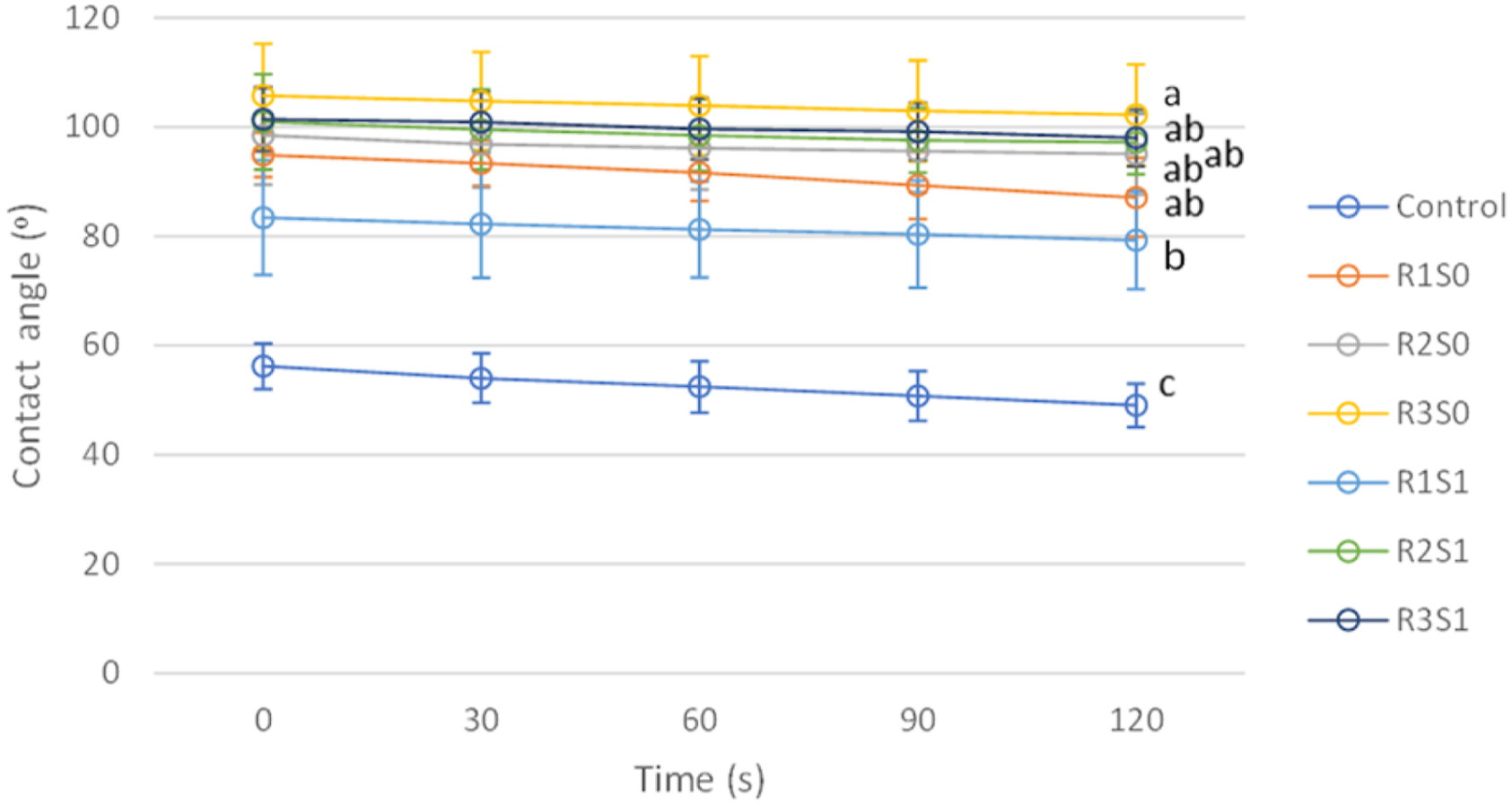
The hydrophobicity of the BC films increased with multilayer carnauba wax coating, achieving a maximum water contact angle of 105.68 ± 9.57° for the R3S0 sample, compared to 56.17 ± 4.20° for the uncoated film. This performance is promising when evaluated against quantitative data from other wax-modified cellulosic materials. For example, a water contact angle of 84° was reported for reconstituted BC bioleather treated with a single layer of carnauba wax, 16 indicating that the multilayer approach adopted in this study provides improved moisture barrier performance.
Higher contact angles have been reported in other studies, such as 124° through the incorporation of 40 wt% beeswax into the BC suspension, 17 and up to 153° using silica-functionalized BC nanofibrils combined with beeswax. 25 However, these approaches involve bulk modification or additional functionalization steps, which may alter the internal structure or require more complex processing strategies.
In contrast, the surface-only carnauba wax coating applied in this study is achieved through a simple and solvent-free process. Based on the relatively unchanged crystallinity index after coating, which will be further discussed in XRD Section, this approach is suggested to maintain the inherent nanofibrillar structure of the BC matrix.
The standard deviation values of the water contact angle ranged from 3.98 to 10.51, indicating slight variability among replicates, which may be attributed to factors such as droplet positioning, surface heterogeneity of the films, and variability in contact angle determination during image analysis. Despite this variability, the overall trend remained consistent. An increase in the number of wax coating applications was directly correlated with higher contact angle values, with the highest average observed for samples coated three times (R3 samples). Representative images of the water droplets used for contact angle analysis of Control, R3S0, and R3S1 have been included in Supplemental 1 to visually demonstrate the differences between uncoated and wax-coated bacterial cellulose-based films.
The increase in the contact angle with a higher number of coating applications was anticipated because bacterial cellulose-based film with a greater number of coating layers exhibited thicker carnauba wax layers. Carnauba wax served as a barrier, preventing water from coming into contact with the cellulose matrix in the polymeric film. 26 Similar results were also reported by, 9 where contact angle of membranes with 2-3 coating layers is higher than ones with single coating layer. However, excessive coating layers (>5) may have an adverse effect on the contact angle such as contraction and cracking due to gaps formed through water absorption and drying in the layer. 10
Interestingly, the hot press treatment (S1 samples) appeared to slightly decrease the contact angle in comparison to samples without hot press (S0 samples), although the reduction was not statistically significant (p > 0.05). For example, the contact angle for R3S0 was measured at 102.19°, while the corresponding value for R3S1 was slightly lower at 97.99° at 120 s. The hot press treatment might decrease the contact angle due to the loss of some carnauba wax during the hot press process. Some of the carnauba wax likely adhered to the surface of the hot press, which may have resulted in a thinner carnauba wax layer in the S1 samples compared to the S0 samples. Other possibility was that the wax was melted during hot press and absorbed by the cellulose fibers, as observed by Santos et al. 13 Despite R3S1 having a slightly lower contact angle than R3S0, its smoother surface may be preferable for applications such as packaging. The smooth surface of R3S1 is also corroborated by SEM results, which will be discussed in Morphology Section.
Silicone oil contact angle measurements were also conducted to assess the films’ oleophobicity (Figure 3). In contrast to water, silicone oil exhibited lower contact angles on the wax-coated films than on the uncoated control, as shown in the supplementary oil droplet images (Supplemental 2). This behavior aligns with the non-fluorinated, aliphatic nature of carnauba wax, which imparts hydrophobicity but does not provide oleophobic characteristics. Consequently, the coated films did not demonstrate oleophobic behavior. Silicone oil contact angles of carnauba wax-coated polymeric films. Legend: number of coating applications: R1: once, R2: twice, R3: trice; S1: with hot press treatment; S0: without hot press treatment; Control: uncoated polymeric film.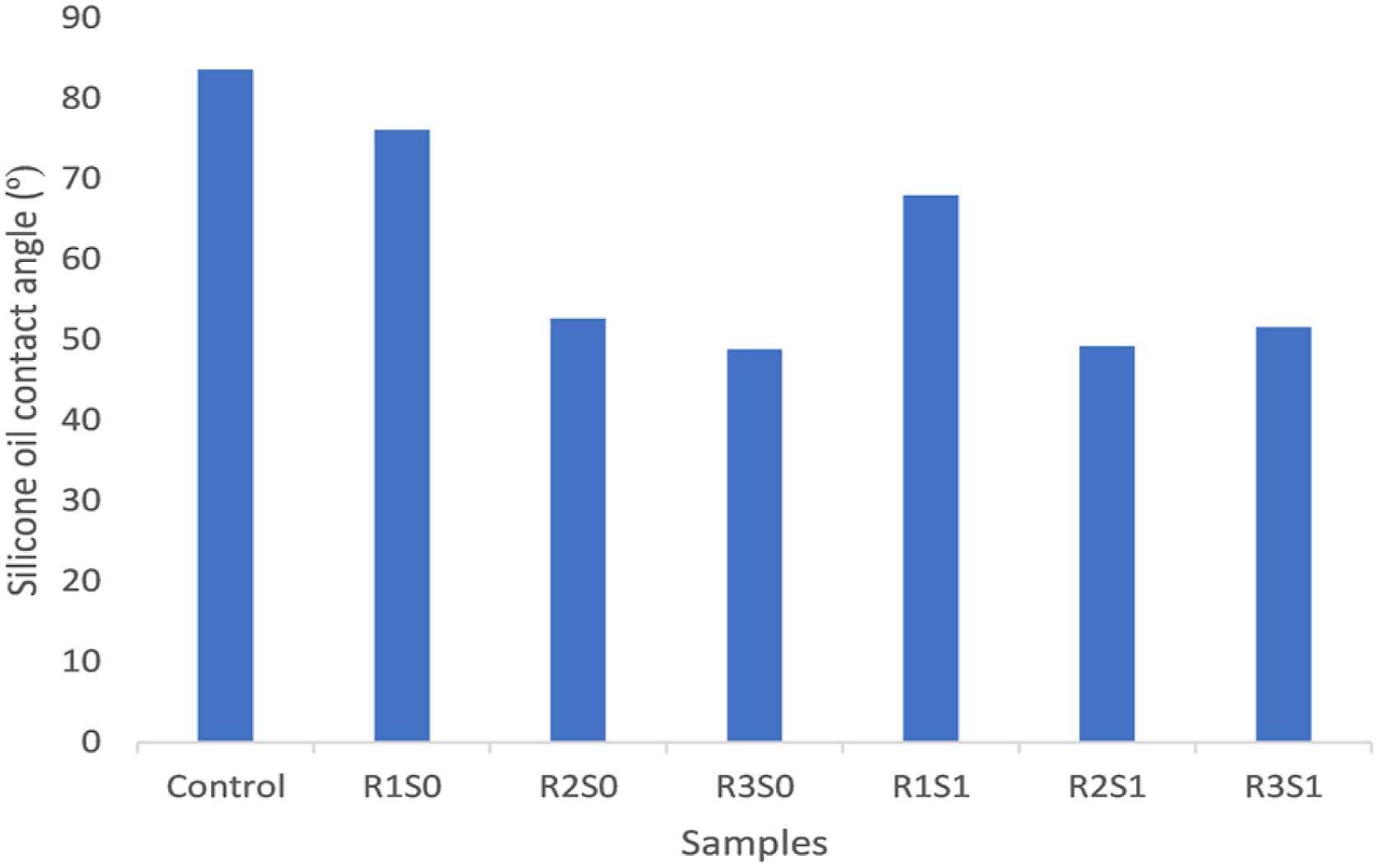
Water absorption and water holding capacity (WHC)
Water absorption and water holding capacity (WHC) of bacterial cellulose-based films.
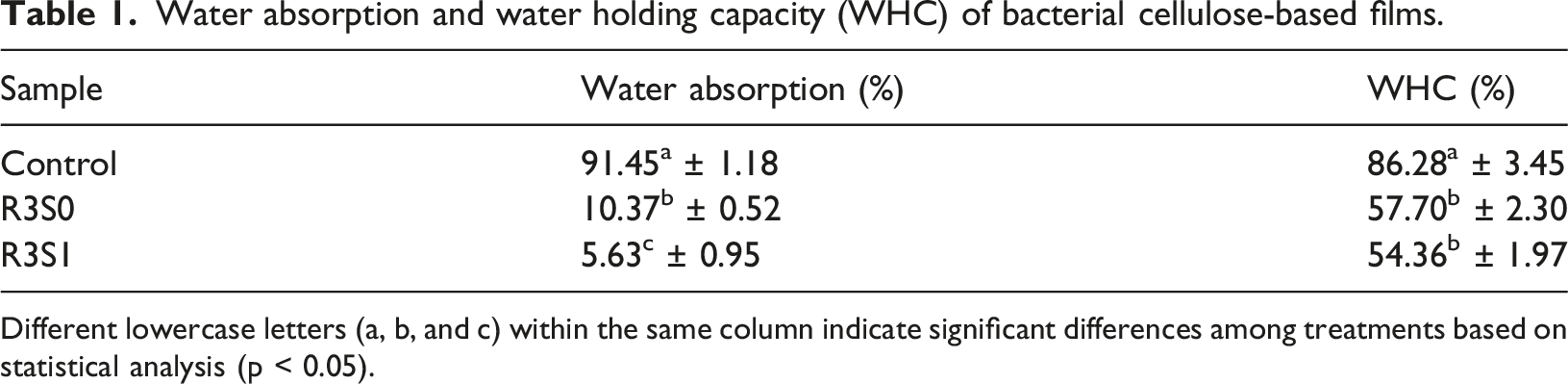
Different lowercase letters (a, b, and c) within the same column indicate significant differences among treatments based on statistical analysis (p < 0.05).
The control film exhibited the highest water absorption value (91.45 ± 1.18%), indicating the strong affinity of bacterial cellulose for water. This behavior is expected because bacterial cellulose contains abundant hydroxyl groups that readily interact with water molecules through hydrogen bonding. The water absorption value obtained in the present study falls within the range previously observed for bacterial cellulose films. In our earlier work, water absorption values of 96–140% were reported for bacterial cellulose films produced under different conditions. 27 Similarly, A water absorption capacity of approximately 150% after 24 h of immersion was reported, 28 whereas a lower value of around 65% was observed. 29 Such variation among studies is likely related to differences in bacterial cellulose production conditions, film thickness, drying methods, crystallinity, and fiber network structure, all of which can influence the accessibility of water to the cellulose matrix.
In contrast, coating the films with carnauba wax significantly reduced water absorption to 10.37 ± 0.52% in R3S0 and 5.63 ± 0.95% in R3S1. These values correspond to reductions of approximately 89% and 94%, respectively, relative to the control film. Furthermore, the water absorption of R3S1 was significantly lower than that of R3S0, suggesting that hot pressing enhanced the effectiveness of the wax coating in preventing water penetration.
The WHC values followed a similar trend. The control film exhibited a significantly higher WHC (86.28 ± 3.45%) than the coated films, indicating that once hydrated, the bacterial cellulose network was highly effective at retaining water. The extensive nanofibrillar structure of bacterial cellulose is known to entrap large amounts of water within its interconnected network through capillary forces and hydrogen bonding interactions.
Coating with carnauba wax significantly reduced WHC to 57.70 ± 2.30% in R3S0 and 54.36 ± 1.97% in R3S1. The lower WHC values suggest that the wax coating reduced the amount of water retained within the film structure by limiting water access to the hydrophilic cellulose matrix. Unlike water absorption, however, no significant difference in WHC was observed between R3S0 and R3S1. This result indicates that although hot pressing further improved the barrier against water uptake, it did not substantially alter the ability of the absorbed water to remain entrapped within the film once hydration had occurred.
Morphology
The morphological analysis was conducted using a Scanning Electron Microscope (SEM). Scanning was performed on both the surface and cross-section of the uncoated bacterial cellulose-based film (control), wax-coated film without hot pressing (R3S0), and wax-coated film subjected to hot pressing (R3S1) (Figure 4). The control sample had a common surface appearance of the bacterial cellulose based film, with a dense interconnected fibrous surface. This fibrillar structure is commonly reported for bacterial cellulose and is responsible for its high mechanical strength and cohesive matrix formation.
30
Morphology of polymeric films captured using scanning electron microscope (SEM).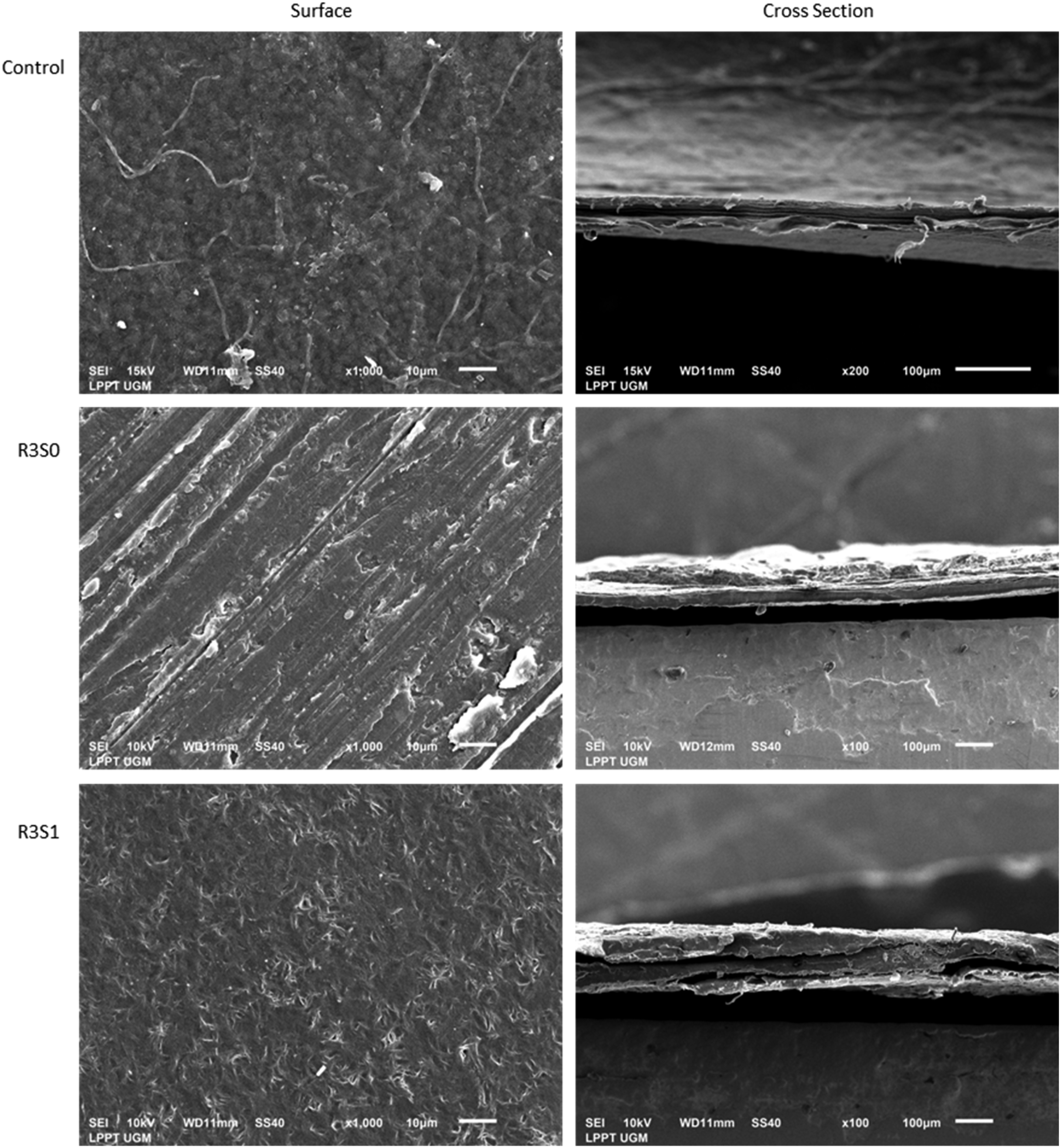
Following coating with carnauba wax (R3S0), the film surface became partially covered by a continuous wax layer. Linear features observed on the surface appeared to align with the coating direction, suggesting that the coating process influenced wax distribution. The deposited wax partially masked the underlying cellulose network. Such surface coverage may contribute to reduced surface wettability and improved resistance to moisture transfer by creating an additional hydrophobic barrier.
The morphology of R3S1 differed from that of R3S0. After hot pressing, the film surface appeared smoother and more homogeneous, while traces of the cellulose fiber network remained visible. Similar observations have been reported by Santos et al., 13 who suggested that heating causes carnauba wax to soften and spread more uniformly across the cellulose substrate. The smoother appearance observed in R3S1 may therefore indicate redistribution of molten wax over the film surface, resulting in improved interfacial contact between the wax and cellulose matrix.
The cross-sectional image of R3S0 revealed a visibly thicker region of carnauba wax compared to the control sample. However, in both R3S0 and R3S1, the boundary between the wax layer and the bacterial cellulose matrix was not sharply defined, limiting the ability to quantify coating thickness accurately. Notably, comparison between R3S0 and R3S1 shows that the apparent wax layer is less pronounced in R3S1. This observation may suggest possible redistribution or partial melting of the wax during the hot-press process, resulting in a more uniform surface morphology. However, this interpretation is inferred from surface observations rather than direct evidence of wax penetration into the cellulose matrix.
Fourier transform infrared spectroscopy analysis
ATR-FTIR was used to evaluate the chemical structure of bacterial cellulose-based film and to predict the interactions between the carnauba wax with the film matrix. Figure 5 shows the ATR-FTIR spectra of the control, R3S0, and R3S1 samples. The spectra in the control sample exhibit a typical bacterial cellulose-based film, as previously reported by.
6
The spectra displayed peaks at 3700-3000 cm−1 corresponding to OH stretching and hydrogen bonding, at 3000-2800 cm−1 indicative of CH bonding, at 1641 cm−1 indicating the present of absorbed water, at 1425 cm−1 and 897 cm−1 representing the cellulose crystalline and amorphous regions, respectively, and at 1540 cm−1 for carboxylate moieties suspected to be residues of acetic acid.6,31 ATR-FTIR spectra of R3S0, R3S1, and control samples.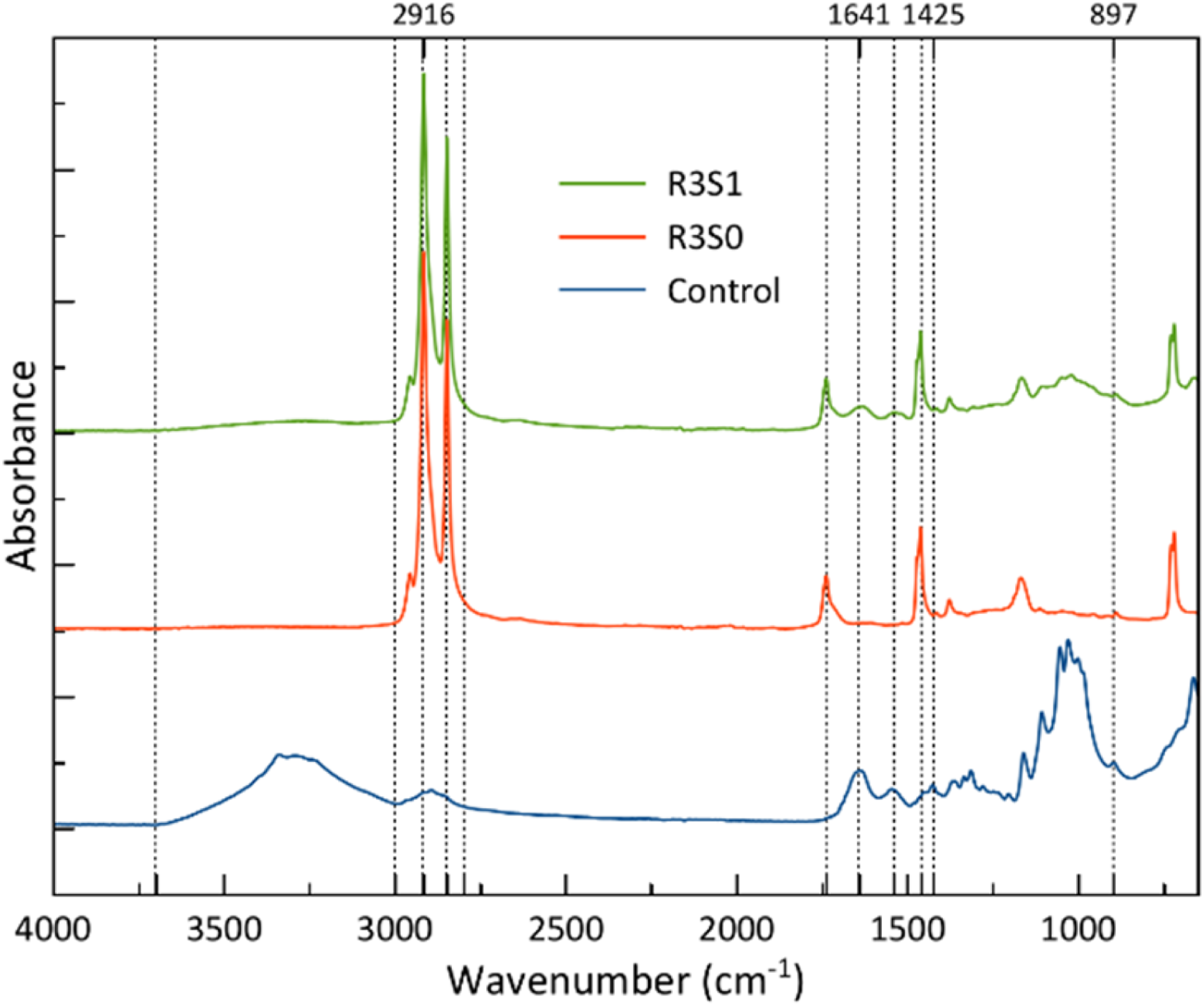
After coating with carnauba wax, substantial changes in the spectra were observed. In R3S0, the characteristic cellulose peaks became significantly less pronounced, while bands associated with carnauba wax dominated the spectrum. The absorption bands at 2916 and 2848 cm−1 representing both CH2 anti-symmetry and symmetry that attributed to the presence of alkanes, at 1738 cm−1 corresponding to the C = O from esters, and at 1461 cm−1 for skeletal vibration of benzene.32,33 The predominance of wax-related peaks suggests that the cellulose surface was effectively covered by the wax layer, which is consistent with the SEM observations showing a continuous coating on the film surface. When the coating layer was thinner, as in R3S1 sample, the peaks that corresponded to cellulose film were more pronounced.
An increase in film hydrophobicity is supported by the FTIR results, particularly the reduced intensities of the O–H stretching band (3700–3000 cm−1) and the H–O–H bending band at 1641 cm−1. These peaks reflect the extent of hydrogen bonding and water absorption in the cellulose matrix.9,31 As shown in Figure 5, both peaks are markedly diminished in the coated samples compared to the control, indicating fewer available hydroxyl groups and reduced interaction with water. This reduction in surface polarity aligns directly with the higher water contact angle observed in the coated films, confirming that the carnauba wax layer effectively enhances hydrophobicity.
Another important point was that the peaks corresponded to the crystalline and amorphous regions of cellulose in coated samples shifted to the lower wavenumber relative to the control sample. In addition, although it may not be clearly seen from Figure 5, the highest peak for the -OH stretching also shifted to the lower wavenumber in R3S1. It was 3340 cm−1 for control sample and 3283 for R3S1 sample. Such shifts may indicate changes in the local hydrogen-bonding environment of the cellulose network following wax deposition and hot-press treatment. 34 Although carnauba wax is predominantly hydrophobic, its minor ester-containing fraction may interact with cellulose hydroxyl groups, leading to alterations in intermolecular interactions at the interface. The more pronounced shift observed in R3S1 suggests that hot pressing may have promoted closer contact between the wax and cellulose matrix, consistent with the smoother morphology observed in the SEM micrographs.
Thermal analysis
Effects of coating with carnauba wax on the thermal properties of the bacterial cellulose-based film were evaluated with DSC and TGA. The DSC thermograms of the uncoated film (Control), the coated film (R3S0), and the coated–hot-pressed film (R3S1) are shown in Figure 6. DSC thermogram (up) and TGA thermogram (down) of coated and uncoated polymeric films.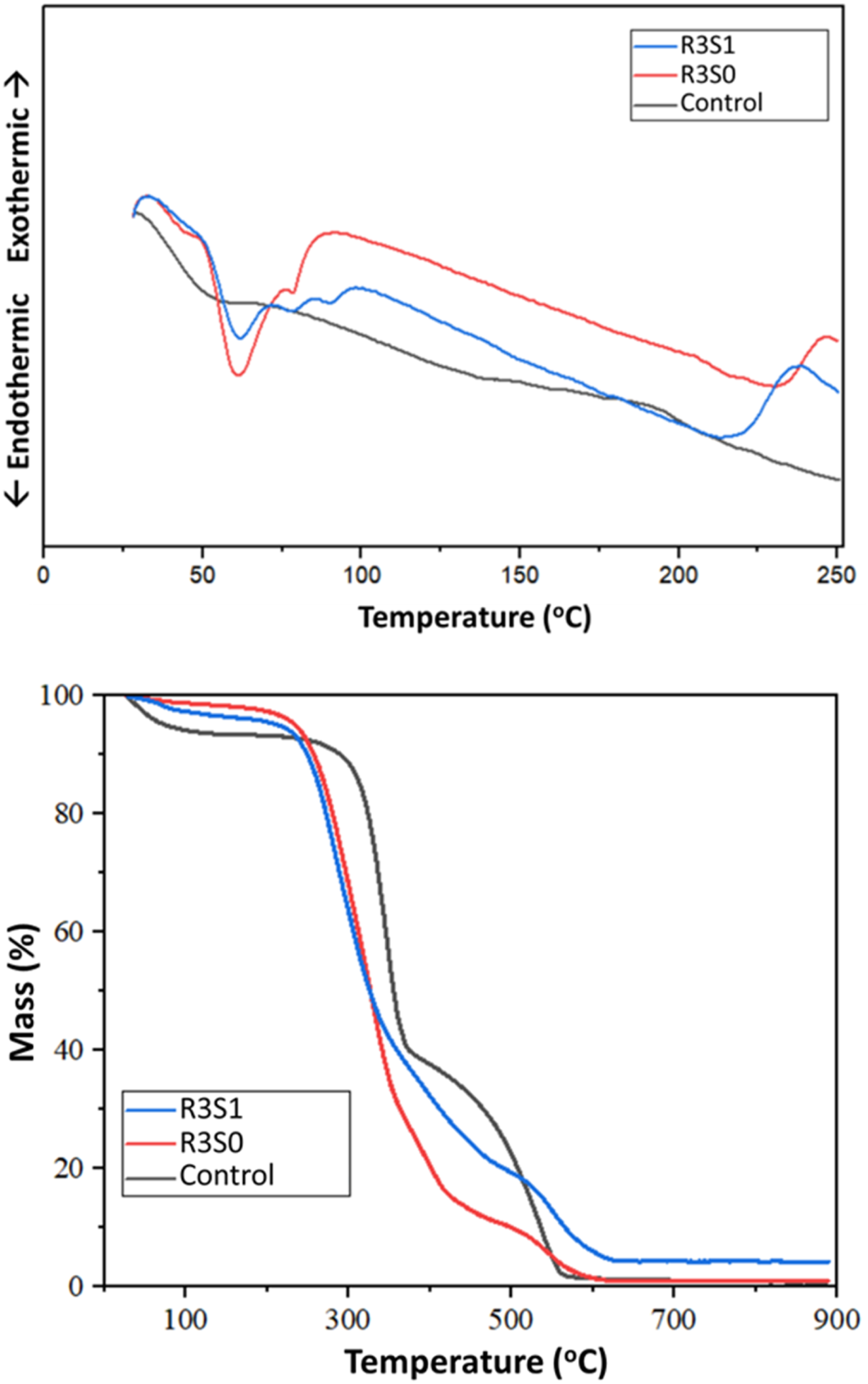
The coated samples display distinct endothermic peaks associated with the melting of carnauba wax—features that are absent in the uncoated control. The appearance of these peaks confirms the presence of wax on the film surface and is consistent with the FTIR results that demonstrated the incorporation of wax-related functional groups. Compared with R3S0, the hot-pressed sample (R3S1) exhibits an additional higher temperature melting event, indicating that the wax layer in R3S1 melts in multiple stages. This phenomenon may be attributed to structural reorganization of the wax during hot pressing, which could promote the formation of more thermally stable crystalline domains or alter the distribution of wax within the cellulose network. Research by 35 produced similar results, where heat treatment on wood with wax coating resulted in a higher melting temperature.
The interaction between bacterial cellulose-based film and moisture is evident in the TGA thermogram. After heating at temperatures of 80–100°C, the mass reduction of the control sample was approximately three times that of the coated samples. Mass reduction at these temperatures was attributed to the evaporation of the sample’s moisture. 36 The lower moisture-related mass loss observed in R3S0 and R3S1 indicates that the carnauba wax coating effectively reduced water uptake by limiting the exposure of hydrophilic cellulose hydroxyl groups to the surrounding environment. This interpretation is consistent with the FTIR results, which showed reduced intensity of hydroxyl- and water-related absorption bands, as well as the increased hydrophobicity observed in the coated films.
When incorporating natural waxes into polysaccharide matrices, the thermal stability of the coated films reflects a predictable and well-documented results. The wax-coated BC films (R3S0 and R3S1) employed in this study showed initial degradation between 200°C and 212°C whereas the highly crystalline uncoated BC film demonstrated a main degradation onset of 267°C. The intrinsic thermal limitations of biological waxes gets reflected in this consistent quantitative reduction, as the aliphatic chains in plant and animal waxes (such as beeswax, candelilla, and carnauba) typically begin decomposing near 200°C. 36 Similar quantitative shifts have been reported in other biopolymer composites; for instance, incorporating carnauba wax nano emulsions into starch-based films has been shown to lower the degradation onset temperature from 319°C to 314°C or lower, depending on the wax concentration, due to the wax’s lower thermal tolerance compared to the structural biopolymer. 11 Chemical cross-linking, surface esterification, or blending with high-temperature synthetic polymers are the alternative strategies to hydrophobize BC to maintain thermal stability; however, these methods generally necessitate the use of organic solvents, extended reaction times, and complex processing conditions.
This degradation and melting temperatures serve as indicators of the thermal stability of the carnauba wax-coated bacterial cellulose-based film, offering insights into the maximum temperature tolerance during application. Coated films may be unsuitable for applications involving elevated temperatures, such as hot filling or warm storage conditions, and are better suited for low-temperature or dry-food packaging where thermal exposure is minimal (<50°C), such as in fresh produce, bakery items, dehydrated foods, and dry snacks.
Color analysis
Color parameters (L*, a*, b*, and ΔE) of bacterial cellulose-based films.
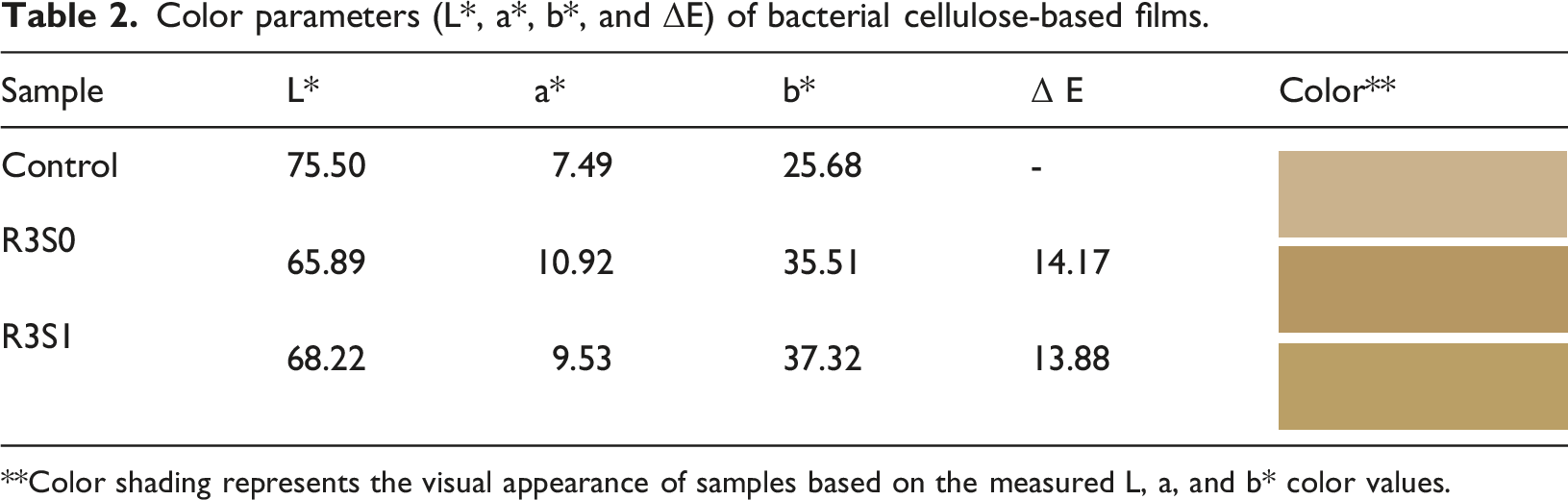
**Color shading represents the visual appearance of samples based on the measured L, a, and b* color values.
XRD analysis
The crystalline characteristics of the films were further examined using X-ray diffraction (XRD), and the resulting patterns are shown in Figure 7. The control (uncoated) film exhibited the typical cellulose I crystalline structure of bacterial cellulose, with three dominant peaks at approximately 14.4°, 16.8°, and 22.7°.
37
Notably, the absence (or near absence) of a broad amorphous hump at 2Ɵ 19.5-21.5o22 indicates that the bacterial cellulose in this study is highly crystalline (CI 99.3%), consistent with its well-known nanofibrillar organization produced by microbial fermentation.38,39 In addition, it should be noted that CI values are highly dependent on the analysis method used. The peak deconvolution approach applied in this study provides an estimation of crystallinity by separating crystalline and amorphous contributions; however, different methods may yield systematically different CI values. Therefore, the reported CI should be interpreted as a method-dependent estimate rather than an absolute value.
22
XRD patterns of uncoated and coated films.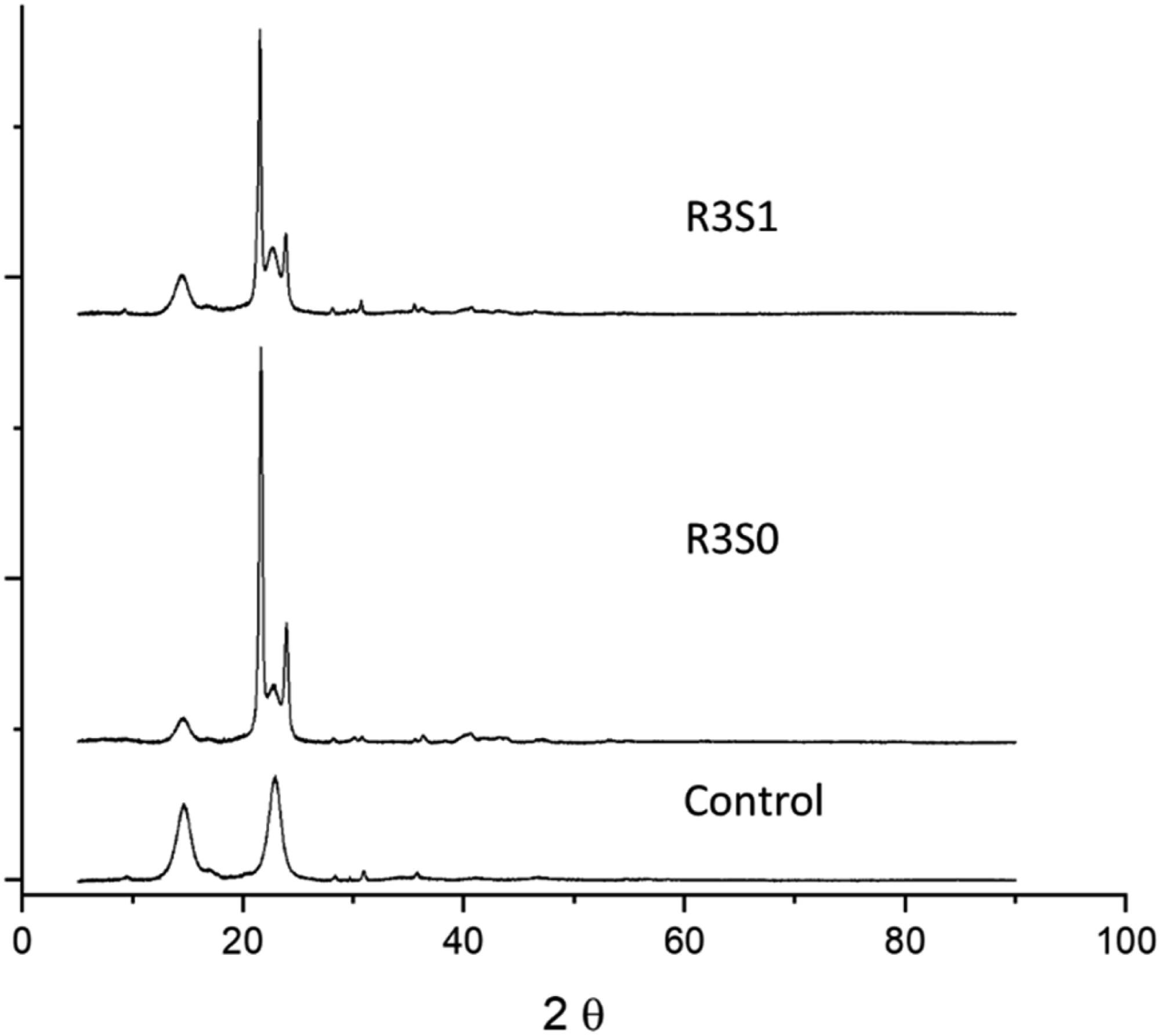
The characteristic cellulose I peaks remained visible in both coated samples (R3S0 and R3S1) and appeared at similar 2θ positions to those observed in the control film. The absence of peak shifts indicates that the coating and hot-press treatments did not alter the fundamental crystalline structure of bacterial cellulose. This observation suggests that the treatments primarily affected the film surface rather than inducing structural modification within the cellulose crystal lattice.
Although the positions of the cellulose peaks remained unchanged, their intensities decreased in the coated samples. This reduction is likely associated with surface coverage by carnauba wax, which partially attenuated the diffraction signal originating from the underlying cellulose matrix. The observation is consistent with SEM and FTIR results, both of which indicated substantial deposition of wax on the film surface.
In addition to the cellulose-associated peaks, the coated films displayed two strong diffraction peaks at around 21.5° and 23.9°, which are characteristic of crystalline carnauba wax. 40 These peaks were visibly more intense in R3S0 than in R3S1. This difference is consistent with the earlier observation that the hot press treatment reduces the thickness of the wax layer, resulting in a comparatively thinner coating in R3S1 and therefore lower wax peak intensity. Overall, the XRD results confirm that while the bacterial cellulose crystallinity remains structurally intact, the coated films incorporate an additional crystalline phase from carnauba wax, with the intensity of wax-related peaks reflecting the relative coating thickness.
An important avenue for future research is presented by the inherent seasonal and geographical variability of agricultural by-products even though, the dual-waste substrate of banana pseudostem juice and mature coconut water proved highly effective for BC production. Biosynthesis kinetics of Komagataeibacter xylinus can be impacted through natural differences in the sugar concentrations, nitrogen levels, and mineral profiles of media. Such variations may alter the density, porosity, and fibril thickness of the resulting BC network. The effectiveness of the hot-pressing and coating strategy relies on the wax physically penetrating and anchoring into the cellulose matrix. Hence, Fluctuations in the network’s porosity could directly impact the adhesion strength and uniform distribution of the carnauba wax. A critical next step for ensuring consistent quality in scaled-up packaging applications would be on investigating how the seasonal compositional shifts affect the structural integrity and barrier properties of the final composite.
In addition, further characterization of the films could provide a deeper understanding of their potential applications. Future research may build on the present work by incorporating comprehensive mechanical testing and biodegradability evaluation (e.g., soil burial or composting studies) to more fully assess the performance and environmental profile of these materials.
Conclusions
This study demonstrates that multilayer carnauba wax coating, combined with hot-pressing treatment, is an effective approach to enhance the hydrophobicity of bacterial cellulose-based films produced from banana pseudostem juice and mature coconut water. The coating increased the water contact angle from 56.17° in the uncoated film to as high as 105.68° with three coating layers. Although hot pressing slightly reduced the final contact angle, it improved the overall surface uniformity of the coated films. The coating also substantially reduced water absorption from 91.45% in the uncoated film to 10.37% and 5.63% in the coated and coated–hot-pressed films, respectively, while water holding capacity decreased from 86.28% to 57.70% and 54.36%, confirming a marked reduction in water uptake and retention. ATR–FTIR, SEM, and thermal analyses further supported the improved moisture resistance of the coated films.
A clear trade-off was observed, as the improved hydrophobicity was accompanied by reduced thermal stability; the onset of degradation decreased from 267°C in the uncoated film to 200–212°C in wax-coated films. This underscores the need to match the material to applications where moisture resistance is prioritized over high-temperature performance.
Overall, this work provides new insights into the interactions between multilayer wax coatings, thermal consolidation, and the bacterial cellulose network—an area that remains relatively underexplored. This study demonstrates a meaningful improvement in barrier properties by converting highly hydrophilic, sustainable bacterial cellulose into a more hydrophobic material through a novel, solvent-free process. The findings also indicate the potential industrial relevance of these solvent-free, waste-derived BC films for moisture-sensitive food packaging, particularly in applications where enhanced water resistance is more critical than thermal stability. While these surface-level enhancements provide a foundation for sustainable packaging alternatives, further studies on comprehensive mechanical performance and biodegradability are recommended to fully validate the composite’s suitability for commercial food packaging applications.
Supplemental Material
Supplemental Material - Hydrophobic film based on bacterial cellulose from fermented banana pseudostem juice and coconut water with carnauba wax coating
Supplemental Material for Hydrophobic film based on bacterial cellulose from fermented banana pseudostem juice and coconut water with carnauba wax coating by Mariani L. Mariani, Raudhatul Firdausi, Tamrin Tamrin, Sri Rejeki, Muhammad Iqbal Kusumabaka Rianse, Suganya Jeyaprakash, R. H. Fitri Faradilla in Polymers from Renewable Resources.
Footnotes
Acknowledgements
The authors acknowledge that the schematic images depicting the methodological steps were created using an AI-based image generation tool and that AI assistance was also used for grammar refinement; all scientific concepts, designs, and interpretations were solely determined by the authors.

Author contributions
Mariani L Mariani: conceptualization, formal analysis, methodology, supervision, writing-original draft; Raudhatul Firdausi: formal analysis, investigation, methodology, visualization, writing-original draft; Tamrin Tamrin: conceptualization, funding acquisition, writing-review & editing; Sri Rejeki: conceptualization, funding acquisition, project administration, resources, writing-review & editing; Muhammad Iqbal Kusumabaka Rianse: conceptualization, funding acquisition, project administration, resources, writing-review & editing; Suganya Jeyaprakash: methodology, validation, writing-review & editing; RH. Fitri Faradilla: conceptualization, data curation, funding acquisition, methodology, supervision, validation, writing-review & editing.
Funding
The authors disclosed receipt of the following financial support for the research, authorship, and/or publication of this article: This work was supported by Universitas Halu Oleo (UHO) through the fundamental research grant from Dana Dipa UHO 2022 [grant number SP DIPA-023.17.2.677510/2023].
Declaration of conflicting interests
The authors declared no potential conflicts of interest with respect to the research, authorship, and/or publication of this article.
Data Availability Statement
Supplemental Material
Supplemental material for this article is available online.
References
Supplementary Material
Please find the following supplemental material available below.
For Open Access articles published under a Creative Commons License, all supplemental material carries the same license as the article it is associated with.
For non-Open Access articles published, all supplemental material carries a non-exclusive license, and permission requests for re-use of supplemental material or any part of supplemental material shall be sent directly to the copyright owner as specified in the copyright notice associated with the article.
