







Abstract
Much of the research on the effects of age in the workplace has ignored the role of contextual factors, and the intersection of multiple group identities. In seeking to address these shortcomings, we provide a theoretical integration and review. First, we review the literature on contextual factors that determine age salience. We then provide a review of the major and competing theories on the consequences of multiple subordinate group status on work outcomes. Finally, we seek to integrate these multiple streams of thought into a unified framework, by identifying when and how competing aspects of group membership become salient, and the consequences of category membership constellations for various subgroups of older workers. A theoretical framework and accompanying propositions are presented.
Keywords
The notion that older workers experience negative work outcomes relative to their younger peers is now well documented (Bal, Reiss, Rudolph, & Baltes, 2011; Gordon & Arvey, 2004). 1 As also evidenced by a number of reviews of the literature, much of the research has focused on negative stereotypes and unfair consequences for older versus younger adults (Bal et al., 2011; Finkelstein, Burke, & Raju, 1995; Gordon & Arvey, 2004; Kite, Stockdale, Whitley, & Johnson, 2005; Posthuma & Campion, 2009). However, there is little research examining age and age-based stereotypes alongside other group memberships such as race and sex, with their accompanying stereotypes; such research is needed in order to advance our understanding of age bias at work (Posthuma & Campion, 2009). That is, to the extent that human beings are complex beings, it makes little sense to conceptualize “older workers” as a unitary category, for no one is merely “older” nor “younger,” and everyone is an “older” or “younger” something or other (e.g., “younger male,” “older female,” “older White male”).
Although some research summarizes the extent to which evaluations of older workers differ by sex (Kite et al., 2005), to the best of our knowledge, no published research has systematically examined the tripartite relation between age, sex, and tribe 2 as related to the consequences and outcomes of work. Finally, little research has been conducted examining alternative work contexts where age-based stereotypes may be more or less prevalent, or where age may be more or less salient (Posthuma & Campion, 2009). That is, no such situational differences in age salience have been studied alongside the just-noted trio in regards to age. This is a nontrivial issue, for age, sex, and tribe are arguably the most salient points of demographic distinction across cultures, and given that the impact of individual differences on psychological outcomes is indelibly context-bound. The current paper brings attention to these gaps, by providing an integrative summary of research that highlights different work outcomes expected for younger and older job incumbents, male and female, White and non-White, and in situations that may make age more or less salient. This is an especially timely topic to address as our workforce ages. As the number of older workers increase, attention is needed to understand their workforce participation, integration in organizations, and productivity, across demographic and social categories.
A theoretical framework and accompanying propositions are presented. The framework and accompanying propositions seek to integrate multiple competing theories regarding the confluence of multiple-group membership on work outcomes, including the double jeopardy hypothesis, (cf. Barnum, Liden, & DiTomaso, 1995; Berdahl & Moore, 2006), the double advantage hypothesis (Epstein, 1973; Hosoda, Stone, & Stone-Romero, 2003), ethnic prominence theory (Derous, Ryan, & Nguyen, 2012; Kang & Chasteen, 2009), the subordinate male hypothesis (Derous & Ryan, 2012; Derous et al., 2012), and intersectional invisibility/tokenism theory (Purdie-Vaughs & Eibach, 2008; Sesko & Biernat, 2010). Additionally, the framework also specifies when these different and competing streams of thought will alternatively receive support, by specifying the moderating role of contextual age salience on these intersections of multiple-group membership. The framework we propose seeks to understand these dual influences of multiple-group membership and contextual age salience on outcomes that are generated both by individuals themselves (self-based outcomes such as job satisfaction and turnover intentions), and by relevant others (other-based outcomes such as unfair discrimination in selection, training, or promotions). That is, we recognize two independent sources of possible outcomes that impact workers—the workers themselves, and relevant interactors within the organizational environment. We thereby allow for the model to broadly apply to studies that are either based on the perspective of the individual worker, or to studies that view stereotyping and unfair discrimination from an organizational perspective. Thus, the dual influences of multiple-group membership and contextual age salience may alternatively affect individual worker perceptions, attitudes, emotions, and behaviors, the perceptions, attitudes, emotions, and behaviors of relevant organizational actors (i.e., managers, HR decision makers), or both. 3
The growing older worker population and ageism at work
According to the Bureau of Labor Statistics of the United States of America (as summarized in a report by the American Association of Retired Persons [AARP], 2013), there are currently over 44 million individuals aged 50+ in the U.S. workforce; by 2020, those aged 55+ are expected to further increase their share of the labor force to 38%. Labor force participation rate for those aged 65+ has commensurately increased since 1990, with the labor force participation rate for this latter group expected to be approximately 22% by 2020 (AARP, 2013). Age discrimination also appears to be growing in tandem with the rapid graying of the workforce. According to the Equal Employment Opportunity Commission of the United States (EEOC), the number of age discrimination cases brought to the EEOC has increased over the last 15 years, and specifically by approximately 150%, from fiscal year 1997 through fiscal year 2012 (EEOC, 2013). Moreover, older workers seeking reemployment also face longer periods of unemployment; 2010 jobs data suggest over 50% of men aged 55+ were unemployed for over 6 months, whereas only 25% of men aged 25–30 were unemployed for over 6 months (Orr, 2010). Similar demographic trends are projected to occur across the Atlantic, with the proportion of older workers in European Union (EU) economies expected to increase by approximately 140% within the next 20 years, and with the old-age dependency ratio (the extent to which an economy relies upon older workers) expected to almost double within the next couple of decades in EU nations (EU, 2010).
Despite the trends, the overall effect size of age bias in psychological research has been small to medium; only small differences have been found across study settings, age bias has been found to be larger in within-subject designs, and individuating information has consistently been found to result in more favorable evaluations of older workers (Bal et al., 2011; Finkelstein et al., 1995; Gordon & Arvey, 2004; Kite et al., 2005). Small effect sizes may be due, in part, to the fact that people tend to hold both positive and negative job-relevant age stereotypes. The most prevalent negative stereotypes of older workers include perceptions of incompetence and inadaptability; on the positive side, older workers are perceived to be both warm and stable (Cuddy & Fiske, 2002; Gordon & Arvey, 2004; Posthuma & Campion, 2009). Despite the positive stereotypes, meta-analytic evidence indicates there to be small but stable effects of age bias in both evaluations and stereotypes against older workers (Bal et al., 2011; Finkelstein et al., 1995; Gordon & Arvey, 2004).
Age salient situations
Perry and Finkelstein (1999) argue that hiring decision makers engage in a matching process, whereby worker- and job-related cues are matched to determine the extent to which a particular applicant is inferred to be suitable for the job in question. Cues may include both objective information and stereotypes, and certain cues may be especially salient in particular situations. If these cues provide a mismatch between the job and the job applicant, and consist of nonobjective stereotypical information, unfair discrimination is likely to result against the member of the stereotyped group (Perry & Finkelstein, 1999). Thus, an employer may utilize an objective cue, an older job applicant’s age, and stereotypes regarding the group that the applicant’s age makes him a part of, such as older workers being more resistant to change. Such mismatches potentially exacerbate pernicious consequences related to group membership, making age especially disadvantageous in situations that make salient negative age-based stereotypes.
Theory and research in social psychology triangulate toward the just-noted view. According to context perspectives, social context influences how people’s stereotypes of certain groups impact their perceptions and behaviors. Social identity theorists argue that we have “situational selves” in which our category membership changes depending on which of the many social categories we belong to is made salient (Fiske, 1998; Pettigrew, 1981). When age is made salient by social context, people are characterized as “old” or “young”, and other social group characteristics are ignored (Kruse & Schmitt, 2006). When age-based stereotypes are negative, older workers in age salient situations are likely to be discriminated against.
Typically, researchers (e.g., Cleveland, Festa, & Montgomery, 1988) have varied age salience by having raters make absolute decisions (e.g., by asking if raters would hire an older worker) versus comparative decisions (e.g., by asking raters to evaluate whether to hire an older or a younger candidate) or by varying the age diversity in the applicant pool (such that age would be more salient when fewer older applicants were competing with many younger applicants). Recently, Reeves (2013) showed that older workers perceived more age discrimination when they occupied jobs dominated by younger workers and when they had younger supervisors. Reeves suggested that the younger age of the typical incumbent made age salient, such that older workers were made to feel “behind schedule.” Casper, Rothermund, and Klaus (2011) found that information regarding age categories (young vs. old) interacted with specific contextual cues that made age-relevant stereotypes salient, such that age-related cues emerged most often in situations emphasizing relevant age stereotypes for older adults. In another series of experiments, Diekman and Hirnisey (2007) found that older adults received lowest hirability evaluations relative to younger adults when applying for jobs in dynamic as opposed to stable companies (i.e., a situation that makes inadaptability stereotypes salient). These authors further found that stereotypic inferences concerning target adaptability possessed explanatory power in predicting hirability evaluations beyond the influence of age, global evaluations, and extent of contact with older adults. Thus, age salience tends to be operationally defined as creating a context in which older workers are a numerical minority in a particular job or by comparing older workers to jobs that require characteristics stereotypically associated with younger workers. Summarily, the extant literature suggests that older workers are most disadvantaged when the context makes salient negative stereotypes regarding old age (incompetence, inadaptability).
The intersections between multiple groups of social membership
Just as “older workers” are multifarious in their diversity, so are the different experiences of different types of older workers. Individuals necessarily occupy multiple social categories simultaneously, and the intersections between these experienced categories can help inform science of minority members’ unique experiences and outcomes (Cole, 2009). The intersectional view suggests that individual experiences can be interpreted in light of one’s unique group structural positions, and that analyses should consider separate subgroup differences (Cole, 2009). Because a single category focus (i.e., “older workers”) oversimplifies the complex nature of inequality, intersectional theory calls for incorporating multiple strands of diversity into framing work experiences and outcomes, with corresponding analyses that take into account the complex interplay between these social categories (Özbilgin, Beauregard, Tatli, & Bell, 2011). Although the intersectional perspective has had a long history of use in critical race feminism (Cole, 2009), and in the understanding of work experiences of minority women (Epstein, 1973, 2010), it has but largely received short shrift in the literature on older workers, excepting limited application under the rubric of multiple group categorization (Crisp, Stone, & Hall, 2006; Gaertner & Dovidio, 2000).
Intersectional theory views category memberships as processes in and of themselves, with distinct consequences for distinct combinations of multiple group memberships (Cole, 2009). Intersectional theory finds confluence with the social psychological literature on multiple categorizations. Categorization leads to stereotyping of group members, both by others and from the self (Crisp & Turner, 2011). Such crossed categories can alternatively inhibit or accentuate negative/positive consequences, depending upon the particular categorical combinations that are activated within the cognitive processes of the perceiver (Crisp & Turner, 2011). Categorical combinations can also lead to “emergent attributes” (original emphasis), whereby a unique categorical membership and related consequences is generated as a product of multiple group memberships (Crisp & Turner, 2011). Such crossed categories can have beneficial or detrimental effects on the self, depending upon which aspects of group memberships (e.g., “old,” “male,” “Black”) are salient (Crisp & Turner, 2011). There are thus multiple concepts of the self, and particular self-concepts may be activated in particular situations (Brewer, 1991, 2007; Turner, 1985). The salience of any level of self-categorization is based upon the particular frame of reference, with the category becoming salient at one level less abstract than the one by which comparisons are made (Brewer, 1991, 2007; Turner, 1985). Consequences of multiple group membership therefore vary depending upon the particular combination of group memberships at play, and depending upon the idiosyncratic activation of context-bound stereotypes. To this end, a number of competing theories exist.
Theories regarding consequences of multiple group membership
Double jeopardy hypothesis
The double jeopardy hypothesis states that joint effects of subcategory membership will doubly disadvantage minorities, and specifically that members of more than one disadvantaged group will be commonly perceived as possessing the negative stereotypes associated with each group membership (Barnum et al., 1995). Therefore, an older worker in general may be stereotyped as lacking adaptability, and an older female worker may be viewed as both lacking adaptability and emotional stability (Brewer, Dull, & Lui, 1981). The double-jeopardy hypothesis has largely been applied to the study of minority women in the United States, and Black women in particular, and has been theorized to explain lower income, fewer benefits, and a higher unemployment rate for Black women than Black men, White women, and White men (Fox & Hesse-Biber, 1984; Sanchez-Hucles, 1997); lower labor market rewards for Black women even after controlling for human capital and organizational-level variables (Petrie & Roman, 2004); and higher reported incidence of racial and sexual harassment among Black women as compared to other demographic groups (Buchanan & Fitzgerald, 2008). Support for the double jeopardy hypothesis has also been found in non-U.S. populations, and with minority female groups besides Black females. Yap and Konrad (2009) found support for the double jeopardy hypothesis in explaining lower promotion rates for minority women vis-à-vis other demographic subgroups in a Canadian sample. Rebhun (2008) found evidence of lower rates and poorer quality of employment among Asian-African immigrant females as compared to nonimmigrants and Asian-African immigrant males in an Israeli sample. Derous et al. (2012) found double jeopardy against Arab women in résumé screening activities. Hom, Roberson, and Ellis (2008) found that Black, Hispanic, and Asian women quit jobs at higher rates than White women and minority men. Berdahl and Moore (2006) found evidence of double jeopardy in workplace harassment across all (major) minority female groups in the US, as compared to Whites and minority males.
As per the just-summarized literature, two versions of the double jeopardy hypothesis have been advanced, including (a) additive and (b) interactive effects of subgroup membership. The former postulates that double minority groups suffer the additive, negative, consequences of both subgroup memberships, while the latter indicates that the combination of dual subgroup memberships is more pernicious than simply the sum of each subgroup membership status. In a direct test of these competing hypotheses, Berdahl and Moore (2006) found the effects of double jeopardy to be additive across all minority female groups, while the interactive version did not receive support. Given the empirical support for the additive hypothesis, we assume the additive version of double jeopardy in this paper.
Double advantage hypothesis
Running counter to the double jeopardy hypothesis is the double advantage hypothesis, which states that select combinations of subgroup memberships (e.g., Black female) result in advantages accrued to the double minority group, and reasons that the nature of such subgroup stereotypes would be qualitatively different from stereotypes associated with either of the single subgroups (Hosoda et al., 2003). For example, Black women are often perceived as capable, competent, self-reliant, and ambitious, while Blacks in general are often stereotyped to be lazy and unambitious, and women in general may be stereotyped to be dependent and incapable of rigorous work (Hosoda et al., 2003; Ladner, 1971). Thus, Blacks in general are stereotyped to be aggressive, insubordinate, and lacking in motivation, whereas Black females are stereotyped to be single, responsible, caring mothers (Shih, 2002). Like the double jeopardy hypothesis, research in support of the double advantage hypothesis has largely focused on the experiences of Black women. In her seminal study, Epstein (1973) found a sample of Black female professionals to occupy higher status jobs (e.g., professor, doctor, lawyer), and attain greater educational achievements than their male counterparts. In a more contemporary policy-capturing study, Hosoda et al. (2003) found that, although both White and Black females received higher job suitability ratings than their male counterparts when low-cognitive jobs were concerned, only Black females received higher suitability ratings than their male counterparts for high-cognitive jobs. Similarly, Toutkoushian, Bellas, and Moore (2007) found that Black female faculty members earned 24% more in gross wages than comparable faculty of other demographic subgroups.
Ethnic prominence
In contrast to both double jeopardy and double advantage theories is ethnic prominence theory, which indicates that numerical ethnic minority status will override other categories (e.g., age, sex), thereby increasing salience and accessibility of such stereotypes (Derous et al., 2012). Ethnic prominence is theorized to occur both because ethnic (e.g., Black, Arab) antipathy and discrimination is more conflictual than nonethnic stereotypes (e.g., old, woman), and because individuals are more likely to think of themselves in terms of social group memberships that are numerical minorities rather than majorities (Levin, Sinclair, Veniegas, & Taylor, 2002). As predicted by ethnic prominence theory, Levin et al. (2002) found that for Black and Latina females, perceived ethnic discrimination predicted variability in expectations of both group and personal discrimination, but that perceived gender discrimination did not; the alternate pattern of results was found for White females. In another study, Remedios, Chasteen, and Paek (2012) found that Asian women made stronger internal attributions to explain racism than sexism, reported experiencing more depression following a race-based rejection than a sex-based rejection, and reported perceiving more racism than sexism in their environments. In yet another study, participants perceived anger/happiness to last longer/shorter and appear sooner/later on an old White male face when compared to a young White male face, thus demonstrating the expected effect of age-based prejudice; the reverse was found when comparing old Black male faces to young Black male faces (Kang & Chasteen, 2009). As explained by Kang and Chasteen (2009), these findings suggest that younger minority males are likely to be subject to a separate and more pernicious set of stereotypes than older minority males, insofar as consequences arguably related to work (e.g., affect/mood) are concerned. In fact, corresponding research via the “subordinate male” hypothesis suggests that ethnic male stereotypes may be far more complex than intuitively presumed.
The subordinate male hypothesis
Following from ethnic prominence theory is the subordinate male hypothesis, which indicates that minority males may be more disadvantaged relative to both dominant ethnic group members and minority females, because threat and conflict are primarily associated with male intergroup conflict, and given the salience of ethnicity over other subgroup memberships (Derous & Ryan, 2012; Derous et al., 2012). In line with this reasoning, Derous and Ryan (2012) found that adverse impact when screening resumes of male applicants with an Arab name but Dutch affiliation was significantly higher as compared to female applicants with Arab names. More strikingly, Peterson, Philpot, and O’Shaughnessy (2007) found that in a study of African Americans on the boards and board committees of the U.S. Fortune 500, and after controlling for corporate and individual difference factors, Black male directors, as compared to White males, White females, and Black females, were less likely to sit on boards with more organizational power such as executive and finance, and more likely to sit on boards with less organizational power such as public relations and audits.
Intersectional invisibility, tokenism
In contrast to all of the above perspectives, all of which assume salience of one or more multiple group memberships, intersectional invisibility and token theory suggest that multiple subordinate group identities may render one invisible in contrast to others with only a single subordinate group membership, because such individuals do not readily fit the prototype of any one subordinate group (Purdie-Vaughs & Eibach, 2008). Thus, it is suggested that the intersecting identities of individuals with multiple subgroup memberships render them to be marginal members within marginalized groups, resulting in social invisibility (Purdie-Vaughns & Eibach, 2008). Furthermore, because such individuals do not fit any particular prototype, it is expected that they become mere tokens of minority status, associated with multiple group memberships yet perceived as being none of the above, with unpredictable consequences in regard to experiences in the social and professional domains (Cole, 2009; Purdie-Vaughns & Eibach, 2008). In support of intersectional invisibility/tokenism theory, it has been found that as compared to White males/females and Black males, faces of Black females were least likely to be recognized, and statements made by Black women in a group discussion were least likely to be correctly attributed (Sesko & Biernat, 2010). Accordingly, this line of thought may suggest that invisibility is beget by oddity, and may thus lead to unpredictable outcomes in the social sphere.
One line of reasoning that finds confluence here, and that is understudied within the sphere of organizational science, draws upon structural integration theory, incorporating dimensions of power distribution and overall employee organizational profiles, and indicates the extent to which diversity is integrated into an organization’s formal channels of hierarchy (Cox, 1994). In short, structural integration theory examines the “proportionate representation of various culture groups in the total workforce of an organization” (Cox, 1994, p. 177). Utilizing this view, Bowens, Fritzsche, and Marcus (2012) conducted a laboratory experiment and predicted that Black women would experience double jeopardy when there was proportional representation of Black female managers; conversely, when there was less than proportional representation, it was expected that Black female managers would benefit from the novelty effects generated by being symbolic tokens, and experience a double advantage. Results confirmed these predictions, with Black female managers receiving more favorable evaluations when the organizational structure was less than proportional (i.e., only a token number of Black females in the organizational power structure), and unfavorable evaluations or double jeopardy when there was balanced representation. Furthermore, the double advantage effect occurred most significantly for upper level managers as compared to midlevel and lower level managers. This latter finding may buttress the view that tokenism may be advantageous, because it is precisely within the ranks of upper management that Black females are least well represented (Davidson, 1997). Extrapolating from these results, we may reason that when highly symbolic tokenism of a target out-group occurs, such target out-group members may benefit from being categorized as nominal and novel, and thereby enjoy advantages relative to other out-group members. However, when the token minority group membership is not especially salient, it is likely that members of such a target out-group may fall prey to the intersectional invisibility effect.
Contextual influences on multiple age group memberships
Summarily, it can be seen that multiple competing theories exist to explain the consequences of multiple subordinate group memberships, all of which run counter to each other, and all of which have received at least some support in the psychological literature. The reason for these conflicting views is likely to be a result of contextual factors. That is, theoretical prevalence of any one of these competing streams of thought that seek to explain individual and demographical differences between inevitably, and multiply, categorized individuals is postulated to be predicated upon mere context. In fact, such a view is hardly new to psychological science, for it has long been accepted that behavior (or reports thereof) is but a product of the individual and the environment (Mischel, 1973).
Illustratively, Hosoda et al. (2003) found support for double advantage theory when comparing high-cognitive jobs, but not when comparing low-cognitive jobs. Hom et al. (2008) found overall support for double jeopardy theory in regards to quit rates, but found support for the subordinate male hypothesis (minority men quit more than minority women) when the proportion of females in a job was high. Derous et al. (2012) found support for ethnic prominence theory when low-status jobs were considered, but found support for double jeopardy theory when high-status jobs were considered. Taylor, Charlton, and Ranyard (2012) found ethnic prominence to explain perceptions of graduate job acquisition for posthigher education job seekers when Black females were considered, but found support for double jeopardy theory instead when East Indian females were considered.
Thus, it appears that no one size fits all—experienced work outcomes appear to be resultant of the unique constellation of one’s subgroup memberships, coupled with particularistic aspects of the context that are most prominent given one’s idiosyncratic combination of subgroup memberships. This perspective corresponds to the postulation that multiple subgroup membership is itself a process variable that creates particular contextual nuances given an individual’s idiosyncratic constellation of said memberships (Cole, 2009), and that influences the way that situational factors are likely to impact an individual’s experience, given multiple and competing stereotypes. That is, any one of the above noted competing theories regarding subgroup membership may find support, given the particular combination of subgroup membership in situ. We thus advance multiple directions of hypotheses corresponding to these multiple and competing contexts. We do this in regard to situational salience of age, thereby treating age as the focal demographic predictor, because it is the only demographic variable that affects all individuals—some may be male and some female, some may be White and some Black, but all grow old (Butler, 1980). Buttressing this view, evidence also suggests that age, where older adults are concerned, dominates category representation over both sex and nationality (Schneider, 2004).
The intersectional salience of ageism: A framework
In our view, a “one-size-fits-all” approach toward the study of older workers is a lacuna, because it ignores the fact that societal and demographic memberships overlap. That is, every older worker is either an older male worker or an older female worker; every older worker is either a member of the dominant societal group or a member of a minority group. Ignoring such subgroup differences understates the complexity of relations between categorical information and outcomes (cf. Allport, 1954/1979; Brewer, 1991, 2007; Gaertner & Dovidio, 2000). We propose that complex, multiple-group memberships arise from constellations of primary group memberships, including age, gender, and tribe-based memberships. The unique multiple-group categorical memberships that are created influence age-based outcomes in organizational contexts that make age a salient demographic variable. The framework proposed is displayed in Figure 1.
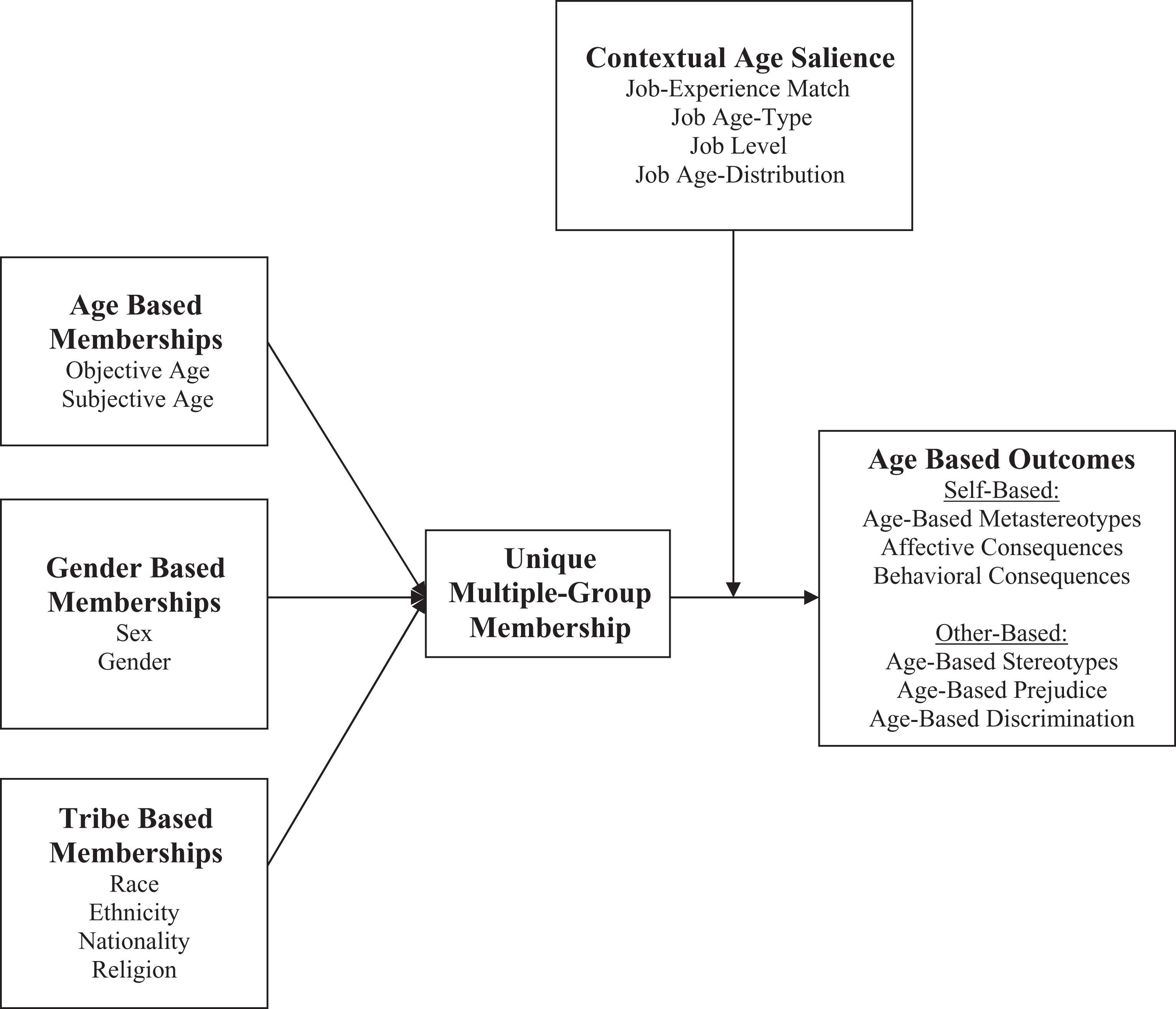
Intersection Salience of Ageism (ISA): A framework.
As shown in Figure 1, age group membership includes not just objective chronological age, but also subjective age, or the extent to which one is perceived to be old (Barak & Schiffman, 1981). The latter and much understudied dimension arguably better reflects culturally conceptualized perceptions of old age (Bertolino, Steiner, & Zaniboni, 2011; Settersten & Mayer, 1997). We define gender group membership both in terms of whether an individual is biologically male or female (sex) and in terms of whether an individual self-identifies as being either male or female within the social sphere (gender). We broadly define tribe-based memberships to include major demographically derived differences that result in tribally based distinctions among members of a society (cf. Goffman, 1971). These include race (e.g., White, Black, Hispanic), ethnicity (e.g., Italian, Irish), religion (e.g., Christian, Muslim, Jew), nationality (i.e., ethnicity within internationally mixed contexts), and nativity (local vs. foreign-born status within a particular society). Although we recognize the importance of broadly defining age, sex, and tribe, we limit our initial propositions to objective age, sex (rather than gender), and race (Black vs. White), in order to make the scope of our current paper manageable, and in the interests of theoretical coherence. Over time, we expect to expand the theoretical propositions that follow to be more inclusive of the broader definitions described previously.
Consistent with the tripartite model of ageism (Bal et al., 2011), self-based outcomes include cognitive, affective, and behavioral outcomes. We further suggest that outcomes derive from the individual her/himself and from relevant others. Both of these, in our view, are paramount to gaining a holistic understanding regarding the phenomenon of age bias at work, for the realm of behavior extends both to the immediate actor (the self) and to relevant interactors (others). Other-based outcomes broadly include age prejudice (affective), age discriminatory (behavioral), and age stereotyping (cognitive) displayed by relevant others. Self-based outcomes include affective consequences of work for older workers (e.g., job satisfaction, organizational commitment), behavioral consequences of work for older workers (e.g., turnover intentions), and/or cognitive metastereotypes 4 regarding older workers. Accordingly, theoretical propositions extend to both eventualities (i.e., “experience more negative/less positive outcomes”; here, “experiences” are understood to be derived both from the self and from others).
As shown in Figure 1, situational salience of age is expected to moderate relations between work outcomes and the unique multiple-group category membership that is expected to arise as a function of age, gender, and tribe, in tandem. Thus, the focal moderator, contextual age salience, is defined to be aspects of the job context that make the age category itself to be salient (or not). According to theory and research on the category formation process and consequent stereotype formation (Allport, 1954/1979; Brewer, 1991, 2007; Gaertner & Dovidio, 2000), age-salient contexts will act to make age the most dominant category among the tripartite of age-, gender-, and tribe-based memberships; in the absence of such contextual age salience, the more visible categories of tribe, and especially, gender, will take precedence. By this definition, it is expected that the mere occurrence of age salience in a given context is key. That is, although situations may be salient for (i.e., positively age-biased toward older workers, or old-typed) or against (i.e., negatively age-biased toward older workers, or young-typed) older workers, it is not the valence of salience but its existence that is relevant. Age-salient job contexts include job age type (e.g., “deejay” as a young-typed job or “security guard” as an old-typed job; Avolio, Waldman, & McDaniel, 1990; Reeves et al., 2013), job age distribution (e.g., “bartender” being a job where most incumbents are younger or “taxi driver” as being a job where most incumbents are older; Reeves et al., 2013), job level (i.e., a job that is below career-graded age norms for an older worker; cf. Lawrence, 1988), and job–experience match (i.e., a currently held job that does not match an older worker’s previous job history; cf. Fritzsche & Marcus, 2013).
Hence, the framework we present intertwines the role of context in making age membership salient with the unique multiple-group membership created via the intersections of age-, gender-, and tribe-based memberships, and explains their joint roles in predicting work outcomes for older workers of different stripes. Because of the focus on category membership and categorical salience, we conceptualize the focal contextual moderator as being the extent to which the category of prime interest, age, is salient; we postulate that one’s unique demographic constellation with regard to these demographic variables will determine work outcomes differently depending upon whether or not one or another aspect of the self is likely salient within a given context. In doing so, we acknowledge the roles of myriad other macro- (e.g., economic and political factors; Branine & Glover, 1997) and micro-organizational variables (e.g., individual differences in personality, empathy, and gratitude; Allan, Johnson, & Emerson, 2014) that may alternatively exist within the sphere of an individual’s work experience. However, within the scope of this paper, and in the interest of theoretical coherence, we treat all other potential such moderating factors as being of secondary importance, insofar as explanation regarding the intersections of age membership and work outcomes is concerned.
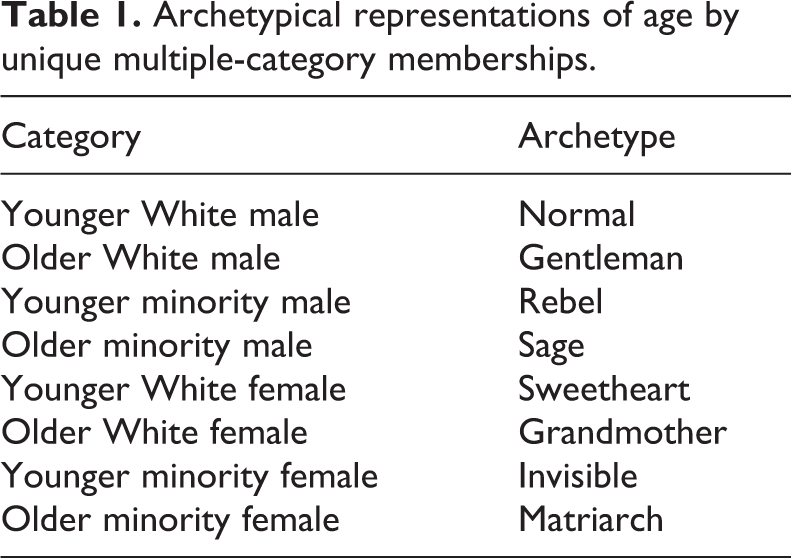
The multiple group memberships that result from the conjoint effects of age, sex, and tribal categories are associated with archetypes. Archetypes for different categories of age membership are listed in Table 1. The archetypes classify different categorical intersections of multiple-group membership according to their unique cognitive representations. Consistent with demographical representations among the Fortune 500 companies and among U.S. and European heads of state, it is logical to expect older White males to be archetyped as “leaders.” Consistent with classical theories of prejudice, we may expect that those individuals who fall within the most rarefied and privileged of social groups—being furthest from natural death and who both belong to both the dominant societal tribe and the dominant societal gender (i.e., younger White males; Goffman, 1971)—to be archetyped as the norm, or “normal.” Conversely, as consistent with cognitive-processing schemas identified for older versus younger Black males (Kang & Chasteen, 2009; Shih, 2002), minority males are here archetyped to be either “rebels” if they are younger, or “sages” if they are older. Minority females, in contrast, are archetyped to be either “invisible” (Purdie-Vaughns & Eibach, 2008; Sesko & Biernat, 2010), or, in the case of older minority females, as “matriarchs” (Dorio, Borman, & Fritzsche, 2007). Younger White females, though, and consistent with popular representations of beauty in contemporary Western media, are archetyped as being “sweethearts”; in contrast, as research on older females indicates, we may expect older females of the dominant societal group, White, to be archetyped as “grandmothers” (Hummert, 1990). Hence, as shown in Table 1, qualitatively different exemplars are representative of the various categorical memberships that arise given age, and these exemplars typify wholly different personalities and personal attributes. From the intersectional perspective, which posits demography as psychological process (Cole, 2009; Özbilgin et al., 2011), the qualitatively different nature of these various archetypes are expected to result in qualitatively different stereotypes and attitudes spawned toward the different archetypical personalities. Thus, for example, a sage triggers different types of reactions than a rebel.
Archetypical representations of age by unique multiple-category memberships.
Propositions
Where White males are concerned, we expect either none or only small differences in experienced work outcomes between older and younger individuals, regardless of the likelihood of age salience. That is, we postulate that the de facto “older worker,” the White male, is not a pure “minority group” member because older White males are the dominant societal group in contemporary Western society. As evidence, in the 113th United States Congress (the current congress as of this writing), the mean age is 57.0 years for the U.S. House of Representatives and 62.0 years for the U.S. Senate, 81% of this 535-people group body is male, and 82% of it is White (Manning, 2013). Across the Atlantic, the lion’s share of EU premieres is both White and male; across the South Pacific, both Australia and New Zealand are premiered by White male heads of state. In other words, given that contemporary Western society is largely run by older White males, it is logical to expect that such individuals will be subtyped as “leaders” and experience work outcomes comparable to their younger peers, no matter the likely situational salience of age. In fact, given that the vast majority of studies on ageism at work have conceptualized the de facto “older worker” as a White male, this may be one reason why effect sizes of age stereotyping and prejudice have generally been found to be small (Bal et al., 2011; Gordon & Arvey, 2004). Hence, from an interactive perspective, it is possible that job/life experiences of older White males make it less likely for them to experience negative stereotyping and behaviors against them at work; these circumstances may well result in a lack of negative job outcomes vis-à-vis other groups of older workers.
From a statistical standpoint, this would imply that the effect of age group membership on work outcomes will be weaker when older White males are the target, as compared to other groups.
For older minority males, when age is likely not salient, it may be expected that ethnicity will naturally take prominence for older minority males, given ethnic prominence (Kang & Chasteen, 2009). Coupled with expected biases against older adults and workers in general (Bal et al., 2011; Finkelstein et al., 1995; Gordon & Arvey, 2004; Kite et al., 2005; Posthuma & Campion, 2009), we expect that age salience being absent, older minority males will be construed minorities first, and thereby subordinate. Coupled with the weaker and mere outgroup status of being older, we expect such individuals to be subject to the subordinate male hypothesis (Derous & Ryan, 2012; Derous et al., 2012; Peterson et al., 2007).
When age likely becomes salient, given fundamentally different and basic affective processes impacting upon older and younger minority males (Kang & Chasteen, 2009), it may be reasonable to expect that different subsets of stereotypes will be present for younger and older minority males, and that mere ethnicity will no longer hold prominence. That is, to the extent that young minority males are subtyped to be lazy, unmotivated, and delinquent (Kang & Chasteen, 2009; Shih, 2002), we expect the process of experienced subgroup membership (Cole, 2009) to generate self-stereotyping that may result in more negative and less positive work outcomes for these individuals. However, to the extent that older minority males (e.g., older Black males) are subtyped to be sage, paternal, and patient (i.e., the sage archetype; Kang & Chasteen, 2009), we may expect experienced subgroup membership to result in more positive and less negative work outcomes for these individuals in such situations. That is, because the stereotypes associated with older minority males are more positive than those associated with younger minority males, we can expect that the outcomes would be more positive.
Where older White females are concerned and when age is not salient, we may expect them to be construed as members of the dominant societal group (as suggested by ethnic prominence theory), and thereby be more likely to experience more positive and less negative work outcomes relative to other females (cf. Berdahl & Moore, 2006; Buchanan & Fitzgerald, 2008; Derous et al., 2012; Fox & Hesse-Biber, 1984; Hom et al., 2008; Petrie & Roman, 2004; Rebhun, 2008; Sanchez-Hucles, 1997; Yap & Konrad, 2009, for supporting streams of evidence).
When age is salient, and given that older adults naturally hold minority status vis-à-vis younger adults (Bal et al., 2011; Finkelstein et al., 1995; Gordon & Arvey, 2004; Kite et al., 2005; Posthuma & Campion, 2009), we expect that older White females will be subtyped as a minority female group in relation to their younger or male counterparts, because it may now be expected that ethnicity no longer takes prominence, and age overrides. That is, when age likely becomes salient, we expect older White women to self-view as “older female” as opposed to “White female.” Given this double minority status, we expect that such individuals will experience the additive and pejorative consequences of double minority status (Berdahl & Moore, 2006; Buchanan & Fitzgerald, 2008; Derous et al., 2012; Fox & Hesse-Biber, 1984; Hom et al., 2008; Petrie & Roman, 2004; Rebhun, 2008; Sanchez-Hucles, 1997; Yap & Konrad, 2009). Further buttressing this point, older women are more often subject to patronizing stereotypes and pejoratives (e.g., “spinster,” “hag,” “dried out,” “grandma”), whereas older males are more often aggrandized (“John Wayne,” “distinguished,” “old fox,” “playboy”; Hummert, 1990). The archetype of the older White female is “caretaker” or “grandmotherly,” which are generally not valued characteristics in the workplace. Hence, in situations where age is likely to be psychologically salient, it may reasonably be construed that older White females will experience the negative consequences of age and without the positive associations of being White in a Western society.
Where older, non-White, females are concerned, we expect that idiosyncratic archetypes will form regarding this latter group. That is, we expect either intersectional invisibility or novelty generated by tokenism to define the experiences of older minority females. From an intersectional invisibility perspective, because few such exemplars exist in contemporary society, individuals who do not fit any readily available prototype may become cognitively filtered out (Cole, 2009; Purdie-Vaughns & Eibach, 2008; Sesko & Biernat, 2010). Hence, older minority females may simply become invisible, and suffer the negative consequences of being a neglected and marginal out-group. In such a case, we may expect the marginalized out-group member, older minority female, to fall victim to mere ageism, and be evaluated negatively. However, when the token status is particularly salient, as in the case of the previously discussed Bowens et al.’s (2012) experiment, we may reason the token minority member (older minority female in this case) to become viewed as nominal but novel, and thereby benefit from advantages that may accrue to highly symbolic and meaningful representations of the token out-group. She is expected to be attributed the characteristics of “strong matriarch” which is closely aligned to the characteristics ascribed to successful leaders (Dorio et al., 2007).
Conclusion
This paper presents a framework from which to empirically examine the varied experiences of older workers from different backgrounds who find themselves in situations in which age may be more or less salient. The focus of this paper is on how, when age is made salient through social context, older workers are likely to experience discrimination relative to their younger counterparts. Yet, the impact of age salience is different for older workers of different race and sex categories. In other words, multiple group membership is a variable that creates different stereotypical characterizations or archetypes that are expected to produce qualitatively different experiences for individuals of different backgrounds.
It should be noted that the propositions for older minority males and older minority females are similar. However, although experienced work outcomes are likely to be similarly affected by the absence or presence of age group salience across both of these subgroups, it may be construed that different stereotypes may be at play in each case. Namely, stereotyping and prejudice can widely take two forms: Negative or hostile prejudice, and benevolent or patronizing prejudice. For example, Hummert (1990) found older adults to simultaneously be viewed in terms of being “hopeless, inarticulate, and feeble” while also being “snobbish, demanding, and inflexible,” thereby being subtyped as both “impaired” (a patronizing attitude) and “curmudgeon-like” (a negative attitude). Summarizing the content of stereotypes against older adults, Cuddy and Fiske (2002) found overall stereotypes against older targets to be patronizing in nature, or “doddering, but dear.” Hence, older adults are viewed as both warm and congenial in terms of positive personality but also incompetent and unable to learn (negative ability). Such patronizing attitudes are particularly prevalent against older females, who are viewed as both “impaired” and “dried out,” in contrast to older males who are more likely to be seen as “distinguished” (Hummert, 1990). Thus, both women and older adults are seen as vulnerable and weaker groups, thereby deserving of patronizing attitudes and lesser work advantages. However, as reviewed, ethnic prominence theory would suggest that older minority women are better poised to overcome the effects of patronizing stereotypes than are older White women. In contrast, the nature of tribe-based (race, ethnicity) prejudice is more conflictual than other intergroup biases (Levin et al., 2002). Negative stereotypes against minority males tend to be centered around the idea of them being threats, captured especially in cognitions against younger minority males such as “delinquent,” aggressive,” and “juvenile” (Kang & Chasteen, 2009; Shih, 2002). As reviewed earlier, such hostile subtypes are less applied to older minority males, with the net effect that they are viewed more positively on personality dimensions when compared to their younger counterparts, presumably because of less hostile cognitions being directed against them (Kang & Chasteen, 2009).
As the previous discussion on potentially differing stereotypes shows, contextual age salience is itself a largely perceptual phenomenon. 5 Therefore, age salience may have different meanings to different people, or even change depending upon the cultural context, because a job that may be viewed as “age-typed” in one culture may not be so in another culture. Although it is beyond the scope of the current investigation to fully investigate the potential role of the cultural context, we initially propose here that researchers be judicious in the operationalization of age salience with regard to the cultural context at hand, and take care to ensure that this contextual variable is broadly viewed through the prism of age by a majority of individuals in a given population. For example, although Americans may differ in their idiosyncratic perceptions of age salience, jobs related to information technology are normatively perceived to be more suitable for younger workers, whereas professorial jobs are largely perceived to be more suitable for older workers (Reeves et al., 2013). Hence, although individual perceptions may vary, normative stereotypes held by the majority of Americans with regard to this particular set of jobs would render them to be age-salient situations.
We limited our initial propositions to objective age, sex, and race, but it is important to acknowledge that group membership itself is also largely perceptual. For example, my chronological age might be 45 years, but I may perceive myself to act as a 60 year old, while others might think I look 35. To the extent that there is a mismatch between objectively and subjectively measured demographics, subjective perceptions will be the predominant drivers of cognitive, attitudinal, and behavioral outcomes.
This begs the question of whether self or other reports of demography are more important to workplace outcomes and what happens when there is a mismatch between self and other reports. Workplace personality theorists have examined this issue. According to socioanalytic theory (J. Hogan & Holland, 2003; R. Hogan, 1983, 1991, 1996), self-perceptions form a person’s identity—how one wishes to be regarded by others. Others’ perceptions, in contrast, create one’s reputation—how one is regarded by others. Thus, identity explains social behavior whereas reputation describes social behavior. According to Hogan, success is achieved when identities and reputations are aligned. When misaligned, reputation drives most workplace outcomes, as other people judge performance and provide opportunities (training, promotion). If we extend this idea to the perception of demographic characteristics, we might argue that poorer outcomes will occur when self and other reports conflict. And, others’ reports will likely drive workplace outcomes. Thus, via a relational and socioanalytic theoretical lens (J. Hogan & Holland, 2003; Tsui & Gutek, 1999), the multiple-group memberships of both older workers and their relevant organizational interactors may hold consequences for work outcomes, with archetypes originating from relevant others predicting work outcomes.
Summary and directions for future research
For years, intersectionality theorists have struggled with how to empirically examine the effects of multiple group membership (e.g., see review by Nash, 2008). Clearly, empirical research examining the intersection of the four primary variables proposed here (age, sex, race, and age salience) will necessarily be complex. We here suggest a number of ways by which research within this paradigm may be effectively tackled.
For initial tests of the postulated relations, we suggest that studies be conducted within laboratory-based settings, in order to best establish causality of relations with respect to the focal variables. To this end, we recognize that experimental conceptualizations of the four variables in tandem may be exercises in futility within the purview of between-subjects analyses as per the general linear model (see Liakhovitski, Stone-Romero, & Jaccard, 2008, for evidence on the lack of power in factorial designs within I/O psychology). To overcome this issue, we advocate alternatively either the use of mixed-subject designs (i.e., varying one or more demographic categories across participants with sequence counterbalancing while simultaneously keeping the focal moderator as a between-subjects treatment), and/or sequential and replicative experiments whereby demographic categories are varied in tandem with the contextual moderator variable (e.g., Age + Sex + Situational Salience of Age; Age + Tribe Situational Salience of Age). For field studies, we similarly recommend a systematic replication-based approach, whereby at least one of the three key demographic categories are held constant, either by design or by statistical control, across replications.
Another key empirical issue is how to operationalize age salience. It is not a particularly daunting task in laboratory studies, where context can be tightly controlled; researchers may thus quite easily vary manipulations with respect to this focal moderator. In field settings, however, we recognize that the choice of operationalizations may be more constricted. In such cases, we recommend that researchers choose to study jobs that clearly lend themselves to contrasts on the spectrum of age salience (e.g., examination of older workers within very junior vs. very senior jobs; examination of older workers making within- vs. between-career job transitions; examination of older workers working in clearly young- vs. clearly old-typed jobs).
Summarily, we may conclude that, as reviewed here, the “one-size-doesn’t-fit-all” approach on age (i.e., the intersectional view; Cole, 2009; Ozbilgin et al., 2011), makes both theoretical and epistemological sense. As evidenced in the previous lines also, and by the abundance of competing yet equally logical theories in its purview, the intersectional view has yet but been inconsistently applied to the examination of age-based outcomes within the realm of work and organizational psychology. Such a limitation is, in our view, debilitating, for it is perhaps not possible to gain any measure of nuance in the understanding of complex beings, with but facile representations of said beings. That is, to the extent that not a one of us is merely “old” nor “young,” and to the extent that each and every one of us is always an “old” or “young” something or other (e.g., “old”; “older female”; “older White female”), it does our science little justice to continue forth as if we were but mere and unitary demographic checkboxes. To the extent that work lives are experienced within particularistic work contexts, we thus advance forth a view with regard to the ways by which these multiple and conjoint forces of demography may be experienced by individuals, across the multitudes of work settings, and that themselves call forth one or another aspect of an individual’s demography.