






Abstract
This article applies social exchange theory (SET) principles to the context of algorithmic management (AM), where algorithmic systems act as a technological intermediary between workers and organization. We propose a theoretical model that examines how AM shapes worker-organization social exchange relationships. We posit that organizational choices regarding AM shape system materiality, which workers evaluate through heuristic signals of procedural, informational, and distributive justice. These justice evaluations provide cognitive bases for workers’ trust in the AM system, which in turn shapes trust in the organization. This organizational trust reinforces the norm of reciprocity, fostering workers’ reciprocative behaviors toward the organization. Our model suggests that traditional social exchange principles apply to algorithmically mediated worker-organization relationships, yet require some theoretical modification, offering both theoretical insights and practical guidance for AM use.
Keywords
Introduction
The advent of digitization, computer algorithms and artificial intelligence (AI) 1 has transformed industries worldwide, leading workers to find themselves managed not by human supervisors alone, but by algorithmic systems that can monitor and evaluate their performance, assign tasks, determine compensation, and even make discipline and termination decisions (Fernández-Macías et al., 2025; Parent-Rocheleau & Parker, 2022). From delivery drivers whose routes are algorithmically optimized and assigned, to warehouse workers whose productivity is tracked by automated systems, to caregivers whose schedules are generated based on real-time performance data, millions of workers now operate under what scholars term “algorithmic management” (AM) (Lee et al., 2015; Rani et al., 2024). AM is defined as “[…] the use of algorithms by an organization to partially or completely execute workforce management functions […]” (Parent-Rocheleau et al., 2024, p. 25). The fundamental principle underlying AM is the delegation of managerial authority to algorithmic systems that can operate with varying degrees of autonomy from human oversight.
AM systems can now be found in 90% of workplaces in the USA and 79% in Europe (Milanez et al., 2025), affecting workers across diverse industries including caregiving, hospitality, manufacturing, retail, and logistics (Boccardo et al., 2022; Dupuis, 2025; Rani et al., 2024; Spektor et al., 2025). This widespread adoption has blurred the boundaries between different forms of work, with algorithmic management spreading from the gig economy 2 (e.g., Uber) into conventional employment contexts (Keegan & Meijerink, 2025), facilitating the shift towards a more on-demand and datafied form of work.
AM differs from traditional management practices and technologies in several critical ways. Unlike conventional HR systems or performance management tools that require human managers to interpret outputs and make final decisions, AM systems can autonomously execute managerial functions (Hillebrand et al., 2025; Jarrahi et al., 2021). While previous workplace technologies primarily served as decision-support tools (e.g., traditional electronic HRM systems), AM systems can replace human judgment entirely in diverse management functions (Parent-Rocheleau & Parker, 2022). Contrary to constructs like e-leadership where electronic systems serve as a communication medium to communicate decisions through technology (Avolio & Kahai, 2000), AM systems use algorithms to autonomously execute managerial functions. For example, in ride-hailing platforms, AM can directly monitor drivers’ behaviors, assign tasks (e.g., match drivers to riders), set goal quotas, evaluate performance, set compensation through dynamic pricing, and even execute job termination (i.e., deactivation) (Cameron, 2024; Rosenblat, 2018). This autonomous capability allows AM to bypass traditional human managerial intervention and directly implement organizational decisions. Consequently, algorithmic systems function as direct organizational representatives to workers, fundamentally disrupting the traditional worker-organization relationships (Cameron, 2024; Duggan et al., 2023; Sherman et al., 2025). This shift erodes the buffering role of human managers between the organization's practices or decisions and the employees, creating a new dynamic where algorithms become the direct face of the organization by embodying and enacting organizational intentions in their direct interactions with workers (Jarrahi et al., 2021; Sherman et al., 2025).
These changes raise profound questions about the nature of worker-organization relationships. For decades, Social Exchange Theory (SET) principles have been a cornerstone framework for understanding how workers and organizations build mutual trust and engage in reciprocal behaviors that extend beyond formal contractual obligations (Blau, 1964; Cropanzano & Mitchell, 2005). SET distinguishes between economic exchanges, based on contractual agreements, and social exchanges, which encompass high-quality relationships reflected by trust that influence voluntary, discretionary behaviors benefiting the organization (Ahmad et al., 2023; Cropanzano et al., 2017). In the workplace, workers can develop social exchange relationships with the organization and its members (Cropanzano et al., 2017).
However, AM's introduction challenges SET's traditional principles in the workplace by positioning algorithmic systems as technological intermediaries in the worker-organization relationship. Technological intermediaries are systems that stand between two parties in a relationship, shaping how each party perceives and interacts with the other by executing actions on behalf of one party (based on Duggan et al., 2020; Sherman et al., 2025). In this intermediated relationship, algorithmic systems operate through different pathways and processes that may fundamentally alter how workers perceive and respond to perceived organizational treatment (Duggan et al., 2023; Keegan & Meijerink, 2025; Kellogg et al., 2020; Möhlmann et al., 2021). This raises critical questions about SET's continued relevance and applicability in AM contexts: How do workers evaluate organizational treatment when algorithms are used to manage their work? Do the justice perceptions and trust-building processes central to SET operate differently when algorithms execute managerial functions? Can workers engage in voluntary and discretionary behaviors that go beyond their job contracts to help their organization even when undergoing AM? These questions highlight the need for examining SET's core concepts of fairness, trust and reciprocity in algorithmically mediated worker-organization relationships.
Research on AM has grown quickly in the past years but remains fragmented, limiting our integrated understanding of the worker-organization relationship. On the one hand, research extensively shows that AM can negatively impact work conditions and prompt worker resistance (Kadolkar et al., 2025; Noponen et al., 2024). On the other hand, studies also suggest that the repercussions of AM on worker-organization relationships are contingent on implementation choices and workers’ different perceptions (Cameron, 2022, 2024; Edwards et al., 2024; Meijerink & Bondarouk, 2023; van Zoonen et al., 2024). In a technology-mediated relationship with the organization, workers’ behaviors are likely to be jointly shaped by their views of the algorithmic systems’ and broader relationship with the organization (Bankins et al., 2024; Kadolkar et al., 2025; Möhlmann et al., 2021; Sherman et al., 2025). Researchers have notably highlighted the important role of fairness perceptions in algorithmically managed jobs (Jabagi et al., 2025; Newman et al., 2020; Robert et al., 2020). However, we still lack a coherent model for understanding how these system-specific perceptions relate to broader worker-organization social exchange relationships and key constructs like organizational trust and discretionary behaviors towards the organization.
Moreover, a systematic review found that theorization of AM beyond the gig economy remains limited and that “[…] most existing research [on AM] is largely atheoretical” (Kadolkar et al., 2025, p. 18). This underscores the need for a robust, generalizable theoretical model that can guide researchers in understanding AM's impact on worker-organization relationships. Integrating the multidisciplinary literature on AM, organizational psychology, information systems, and human resources management, this article examines whether SET's foundational principles applied to worker-organization relations remain applicable in AM contexts and where theoretical refinement is needed to account for algorithmic intermediaries.
We propose a theoretical model that examines how organizational choices in AM design shape system characteristics that serve as fairness heuristics, shaping workers’ justice evaluations of the algorithmic system itself, which in turn influences trust in both the system and the broader organization, which ultimately affects workers’ reciprocative behaviors toward the organization. Our theoretical model and theoretically grounded propositions suggest that the fundamental social exchange principles of fairness, trust, and reciprocity remain relevant in AM contexts, yet the pathways through which these processes unfold demand theoretical refinement. This article provides an understanding of how and why worker-organization social exchange operates under AM, offering both theoretical insights and practical guidance on how AM can still foster beneficial worker attitudes and behaviors. Our theoretical model contributes to the current literature on AI in organizations by clarifying how traditional social exchange principles persist in algorithmically driven management environments.
Social Exchange Theory
The contemporary mobilization of SET in organizational psychology is deeply rooted in a lineage of influential work, whose origins go back to Blau's (1964) seminal work on social exchange relationships. Building on these foundations, Organ (1988) extended and applied Blau's theoretical work to the complex dynamics of worker-organization relationships, marking a significant point in the development of managerial research on this subject (Ahmad et al., 2023; Colquitt et al., 2013; Cropanzano & Mitchell, 2005).
Blau (1964) distinguished between economic and social exchanges. Economic exchanges are based on a formal exchange of obligations (e.g., a worker's labor in exchange for a wage agreed in the job contract). Social exchanges occur in valued relationships that extend beyond these contractual transactions and refer to “[…] voluntary actions of individuals that are motivated by the returns they are expected to bring and typically do in fact bring from others” (Blau, 1964, p. 91). They require a higher level of investment and trust, as they are based on unspecified favors and benefits, along with the felt obligation to eventually reciprocate. As Blau (1964) noted, “[…] the nature of the return cannot be bargained about but must be left to the discretion of the one who makes it” (p. 93).
Organ (1988) extended SET by explaining why some workers go beyond the specified economic exchange with their organization to engage in social exchanges. He notably stated that perceived benefits determine social exchange quality, which drives reciprocative behavior (Colquitt et al., 2014; Cropanzano et al., 2017). Benefits are defined as “[…] voluntary, beneficial actions by one exchange partner that are expected to create a desire to give back on the part of the other” (Colquitt et al., 2014, p. 600), while reciprocative behaviors are “voluntary, beneficial actions by one exchange partner that are believed to exemplify giving back to the other” (Colquitt et al., 2014, p. 600). These behaviors are largely grounded in Gouldner's (1960) norm of reciprocity, which is described as a universally accepted standard of helping those who help us and refraining from hurting them (Cropanzano & Mitchell, 2005; Gouldner, 1960). Figure 1 represents this chain of explanation.

Representation of Organ's (1988) chain of explanation (based on Colquitt et al., 2014, p. 600).
Since neither party can impose reciprocal behaviors nor negotiate the value and extent of this reciprocity, “[…] social exchange requires trusting others to discharge their obligations” (Blau, 1964, p. 94). Mutual trust is therefore a fundamental requirement for high-quality social exchange. Specifically, individuals must voluntarily accept vulnerability within informal exchanges, trusting that the other party will eventually reciprocate beneficial actions (Blau, 1964). This principle has led many SET researchers to focus on trust as a reflection of social exchange quality (Colquitt et al., 2014; Cropanzano et al., 2017). Trust is defined as “[…] the willingness of a party to be vulnerable to the actions of another party based on the expectation that the other will perform a particular action important to the trustor, irrespective of the ability to monitor or control that other party” (Mayer et al., 1995).
The postulates of SET regarding trust and reciprocative behaviors have received substantial empirical support over the last decades (Ahmad et al., 2023; Colquitt et al., 2013, 2023; Cropanzano et al., 2017). However, the rise of AM, introducing a technological intermediary into worker-organization exchanges, raises critical questions that necessitate an examination of SET in such context. The next section takes a closer look at the AM phenomenon.
The Context of Algorithmic Management
Although computer algorithms have existed for decades, their power and applications have grown exponentially in recent years. This technical advancement is largely due to the integration of AI, particularly machine learning (ML), which enables algorithms that improve their performance through experience (Hillebrand et al., 2025). Since the mid-2000s, progress in ML has been driven by larger datasets, increased computational capabilities, and breakthroughs in computer science (Hillebrand et al., 2025; Leicht-Deobald et al., 2019). The emergence of generative AI in the early 2020s, capable of creating original content such as text or images based on vast datasets, exemplifies these advances. Such technical innovations enable the use of complex systems without requiring in-depth knowledge of information systems, making them more accessible to organizations (Hillebrand et al., 2025).
Within this evolving landscape, and distinct from generative AI used for content creation, algorithms are increasingly being entrusted with significant management functions, contributing to the growing implementation of AM across industries (Fernández-Macías et al., 2025; Milanez et al., 2025; Rani et al., 2024). Specifically, these advancements enable algorithms to serve three types of purposes: descriptive (i.e., analyzing and explaining past events and their influence on the present), predictive (i.e., estimating the likelihood of future events and behaviors), and prescriptive (automating decisions or actions based on various scenarios) (Leicht-Deobald et al., 2019; Meijerink & Bondarouk, 2023). For example, in retail, descriptive algorithms can aggregate performance data and track sales goal completion rates, predictive algorithms can predict customer traffic and prescriptive algorithms can generate and distribute personalized work schedules accordingly (Boccardo et al., 2022; Vargas, 2021). From these different types of purposes, AM systems can perform managerial functions revolving around the direction, evaluation and discipline of workers, such as monitoring, goal setting, scheduling, performance rating, compensation, and even job termination (Kellogg et al., 2020; Meijerink & Bondarouk, 2023; Parent-Rocheleau & Parker, 2022). Moreover, workers may be highly exposed to some AM functions while experiencing little or no exposure to others, yet still be considered subject to AM (Parent-Rocheleau et al., 2024). For instance, a worker may be highly algorithmically monitored and evaluated through performance ratings while their scheduling and compensation remain managed by humans, making exposure to AM a matter of degree rather than a binary condition.
Importantly, many contemporary AM systems incorporate machine learning capabilities that enable them to “learn” from new data and change their decision-making processes over time. This learning capacity means that AM systems can evolve their management approaches based on accumulated performance data and outcome patterns (Hillebrand et al., 2025). While this adaptive capability can potentially improve decision quality, it also introduces unique challenges for workers who need to constantly evaluate how the changes affect their work.
AM represents a fundamental shift from human-centered managerial decision-making to algorithm-driven processes that perform management functions traditionally executed by human managers (Gal et al., 2020; Tarafdar et al., 2023). AM systems distinguish themselves from conventional organizational technologies by positioning algorithms as autonomous management agents that execute decisions without requiring human interpretation, rather than serving as passive decision-support tools (Parent-Rocheleau et al., 2024; Stark & Vanden Broeck, 2024). This autonomous capability allows AM to directly implement organizational decisions (Kadolkar et al., 2025). The current manuscript thus focuses on the limited theoretical understanding of AM roles as a direct technological intermediary in the worker-organization relationship.
To clarify AM's distinctiveness, we contrast it with traditional human management approaches. In traditional management, human managers adopt managerial practices based on organizational strategies, but can adapt their approach based on individual worker circumstances, provide immediate explanations for decisions based on dialogue, and modify processes when situations warrant flexibility (Hillebrand et al., 2025; Leavitt et al., 2025). Critically, the manager is a human with whom workers can develop a relationship. This traditional approach enables workers to develop social exchange relationships with both their supervisors and their organization (Colquitt et al., 2013; Cropanzano & Mitchell, 2005).
Moreover, AM is distinct from constructs such as e-leadership, defined “[…] as a social influence process mediated by [Advanced Information Technology] to produce a change in attitudes, feelings, thinking, behavior, and/or performance with individuals, groups, and/or organizations” (Avolio & Kahai, 2000, p. 617). Critical distinctions exist in both the role of algorithms and the degree of automation. AM employs advanced algorithms rather than simply using technology as a communication medium and, importantly, AM involves autonomous execution of managerial functions without human intervention. E-leadership, in contrast, uses technology to mediate human leadership where the human leader still makes all decisions and communicates them through digital channels (Avolio et al., 2000). For example, a manager using video conferencing to conduct performance reviews represents e-leadership, whereas an algorithm that automatically monitors workers, evaluates performance and assigns tasks represents AM. The key difference lies in whether technology serves as a medium for human managers or as automating managerial functions.
AM fundamentally alters social exchange dynamics through worker-organization technological intermediation. The organization-worker relationship becomes more direct and prominent, while human management may be put aside or reconfigured depending on the scope of AM deployment and its weight in the managerial process (Hillebrand et al., 2025). This technological intermediation strengthens the direct organization-worker connection. In this reconfigured dynamic, workers can evaluate algorithmic fairness and form attitudes toward AM systems, but they are fundamentally engaging with organizational intentions expressed through technological means rather than forming relationships with the algorithms themselves (Sherman et al., 2025). This distinction becomes critical when algorithmic systems fail or damage worker trust. Unlike human managers who can engage in dialogue and responsive trust repair, algorithmic systems, unless they succeed in learning from their mistakes and readjust unfair decisions, are less likely to restore damaged relationships (Gillespie & Dietz, 2009; Tarafdar et al., 2023). Consequently, the burden of trust repair falls on organizational intervention. This technological mediation intensifies how organizational intentions are expressed through AM (Stark & Vanden Broeck, 2024). The current manuscript thus focuses specifically on AM's role as a direct technological intermediary in the worker-organization relationship, with human managers’ roles acknowledged as important but outside the scope of our theoretical focus.
To provide clarity on the distinctiveness of the AM context, Table 1 illustrates how AM creates fundamental differences in the worker-organization relationship from traditional human management and e-leadership across key mechanisms of social exchange relationships.
Traditional Human Management, e-leadership, and Algorithmic Management.
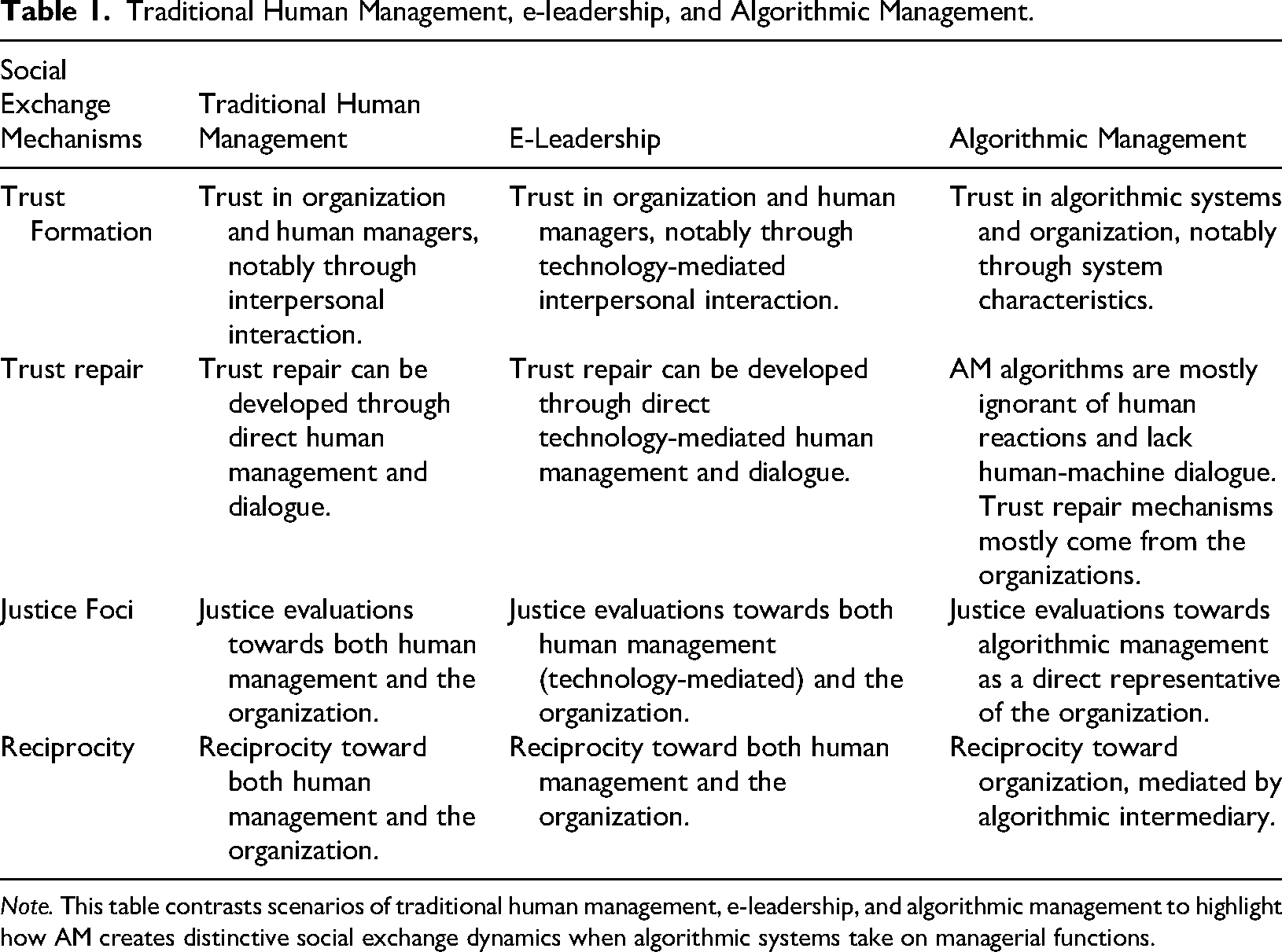
Note. This table contrasts scenarios of traditional human management, e-leadership, and algorithmic management to highlight how AM creates distinctive social exchange dynamics when algorithmic systems take on managerial functions.
The literature on AM has expanded rapidly since it was first coined by Lee et al. (2015). Many scholars highlight AM's adverse impact on workers and its tendency to leverage worker-organization exchanges that are purely economic, as it can exacerbate power asymmetries between workers and organizations by increasing managerial control and reducing worker autonomy (Barati & Ansari, 2022; Curchod et al., 2020; Duggan et al., 2023; Kellogg et al., 2020; Veen et al., 2020). However, other scholars offer a more nuanced view, indicating that AM's effects depend on factors such as organizational choices and workers’ perceptions (e.g., Cui et al., 2024; Edwards et al., 2024). Empirical studies show that workers do not systematically resist AM, and some perform their duties proficiently, even surpassing their designated job roles (e.g., Cameron, 2022, 2024; Möhlmann et al., 2021). This suggests the possibility of a quality worker-organization social exchange dynamic in the presence of AM.
The next section explores that possibility by developing a model that applies SET principles and integrates current knowledge on AM, examining worker-organization relations in the context of AM and the underlying mechanisms of this technologically-mediated social exchange. This relationship becomes particularly salient under AM because algorithms serve as direct organizational representatives, making organizational intentions and values more salient to workers than in traditional human management structures. For instance, an algorithm that rigidly monitors task completion time down to the second directly signals organizational values of control and standardization, whereas a human manager might exercise discretion (Barati & Ansari, 2022). Figure 2 illustrates our theoretical model.
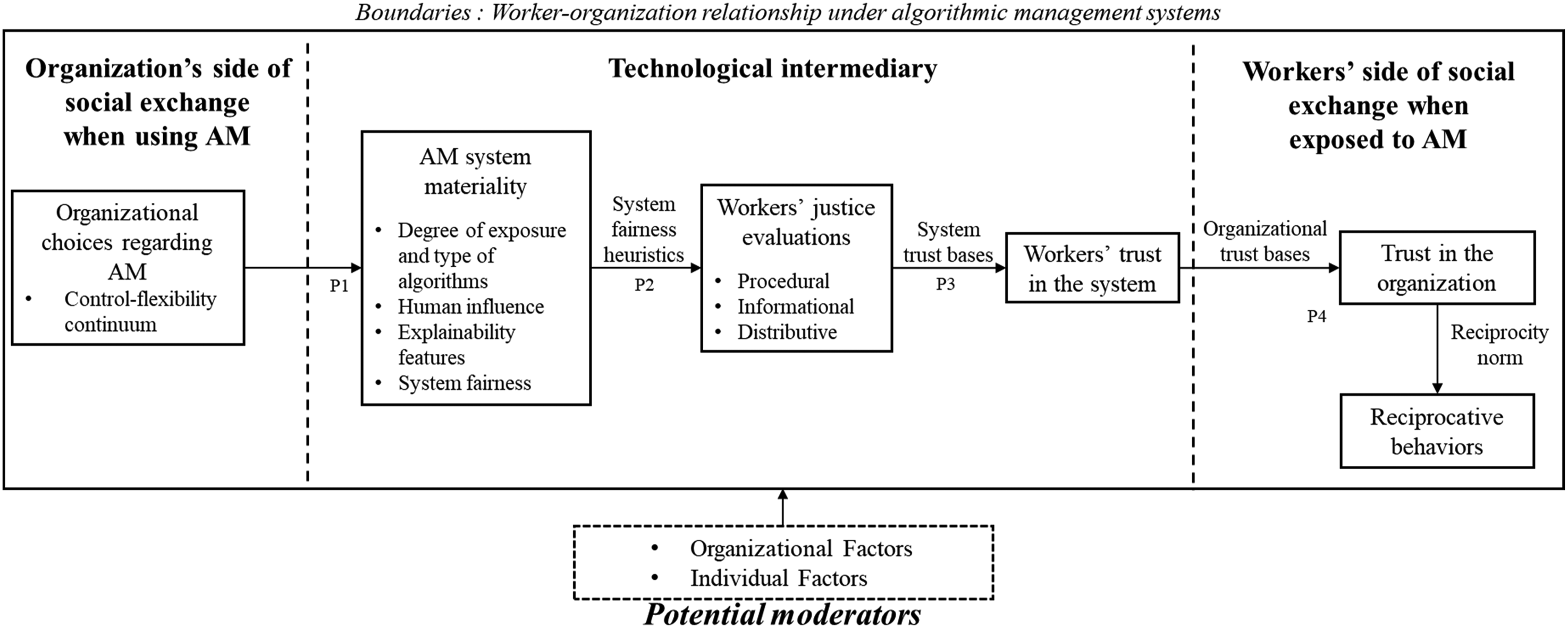
Theoretical model: how algorithmic management affects worker-organization social exchange relationships.
Theoretical Model
Organizational Choices Shaping the AM System
Organizational choices determine how AM systems materialize, ultimately shaping their impact on worker-organization exchanges (Jarrahi et al., 2021; Keegan & Meijerink, 2025). System materiality is defined as the physical or tangible attributes of the technology (Leonardi & Barley, 2010). We argue that strategic orientations toward AM exist along a control-flexibility continuum, ranging from a compliance-based approach (focused on control) to a risk-taking approach (focused on flexibility) (Marabelli et al., 2021). These choices are guided by prevailing relational dynamics and managerial beliefs about workers’ capabilities and motivations (Jin & Liu-Lastres, 2025; Ravenelle, 2019).
Drawing on research examining the different forms AM systems can take (e.g., Kadolkar et al., 2025; Keegan & Meijerink, 2025; Kellogg et al., 2020; Leicht-Deobald et al., 2019; Parent-Rocheleau & Parker, 2022; Parent-Rocheleau et al., 2024), we identify four key interrelated characteristics that emerge consistently as critical organizational choices shaping system materiality and worker experiences: 1) degree of exposure and type of algorithms, 2) human influence, 3) explainability features, and 4) system fairness. These represent the primary characteristics through which organizational strategic orientations toward control versus flexibility become manifest in the actual AM system workers encounter.
First, the degree of worker exposure to AM dimensions and managerial algorithms employed varies greatly from one context to another (Kadolkar et al., 2025; Leicht-Deobald et al., 2019; Parent-Rocheleau et al., 2024). This system characteristic represents the degree of completeness by which the system serves as a technological intermediary between the organization and the workers and bypasses human management, ranging from partial to complete automation. For example, in long-haul truck driving, algorithms automatically monitor drivers’ hours and locations via e-logs, evaluate driving performance, calculate distance-based pay, and enforce time regulations (Levy, 2023), while in manufacturing settings, algorithmic systems can largely automate production scheduling and task allocation while leaving other managerial tasks to humans (Dupuis, 2025).
Second, human influence, that is the extent to which workers have a voice, exert control over the system, opt out if desired, and contribute input, represents another key AM characteristic (Parent-Rocheleau & Parker, 2022). For example, some AM systems allow workers to reject certain assignments or provide input regarding productivity targets, while most of them don’t provide such options (Alasoini et al., 2023; Cui et al., 2024; Möhlmann et al., 2021). Third, system explainability, refers to the availability of explanations regarding algorithmic decision-making, as well as the active measures or procedures taken to clarify and detail the system's internal functions (Barredo Arrieta et al., 2020; Shin et al., 2022). For instance, AM systems can clearly explain what data is monitored and how performance scores are calculated, but they are often opaque, leaving workers unable to understand how their actions affect their evaluations or learn from feedback (Bujold et al., 2022; Rahman, 2021).
Fourth, system fairness encompasses the absence (or minimization) of bias and discrimination, the accuracy and appropriateness of decisions, the relevance and legitimacy of input criteria, and the protection of data privacy (Parent-Rocheleau & Parker, 2022). System fairness is largely reflected by human actions, such as conducting algorithmic audits to detect data bias, ensuring productivity metrics accurately reflect worker contributions, and implementing proper data protection measures (Cui et al., 2024; Parent-Rocheleau & Parker, 2022).
These four characteristics materialize differently depending on organizational orientation along the control-flexibility continuum. Organizations with a very strong compliance-based orientation tend to expose the workforce to a higher degree of AM dimensions to enhance direct control and standardized processes, and reduce uncertainty regarding worker behaviors, notably through prescriptive algorithms with minimal human intervention (Marabelli et al., 2021; Ravenelle, 2019). While this approach can increase operational efficiency, it also limits worker input and flexibility, makes decision-making processes more opaque, and increases power asymmetries (Jin & Liu-Lastres, 2025; Kougiannou & Mendonça, 2021; Veen et al., 2020). Given that empirical research suggests that most organizations currently lean toward a compliance-based orientation, this may explain why AM systems are often reported to have negative consequences for worker autonomy (Gagné et al., 2022; Kadolkar et al., 2025; Noponen et al., 2024).
On the opposite end of the continuum, risk-taking AM orientations accept the uncertainties of worker behavior and thus favor lower levels of automation and exposure to AM functions. Rather than completely replacing human management judgment, AM is more often used as a complementary tool (Jarrahi et al., 2021; Jin & Liu-Lastres, 2025; Lamers et al., 2022; Ravenelle, 2019). Organizations leaning towards this approach tend to: 1) incorporate processes that allow workers to suggest refinements and collaborate on system improvements, 2) conduct algorithmic audits to analyze the fairness of algorithmic operations while identifying issues, and 3) incorporate explainability features (Cui et al., 2024; Parent-Rocheleau & Parker, 2022; Spektor et al., 2023).
AM Systems Influencing AM Justice Evaluation
According to fairness heuristic theory (FHT), in order to navigate complex and uncertain environments, workers rely on salient fairness cues and mental shortcuts (heuristics) to determine whether they can safely affiliate with other parties (Lind, 2001). In the context of AM, workers closely monitor fairness-related signals from the system, as it directly influences managerial decisions and serves as a key source of fairness heuristics (Fieseler et al., 2019; Geissinger et al., 2022; Robert et al., 2020; Starke et al., 2022). Moreover, the learning and adaptive capabilities of AM systems accentuate the need for workers to constantly re-evaluate the justice of the system as it may change over time, making fairness heuristics salient in this context. Since AM is an information system that enacts managerial procedures and organizational choices, distinct from a human supervisor or the entire organization, it represents a unique foci of justice evaluations in the workplace (Bankins et al., 2022; Robert et al., 2020). We posit that the materiality of AM systems influences workers’ AM justice evaluations of these systems by providing heuristic signals.
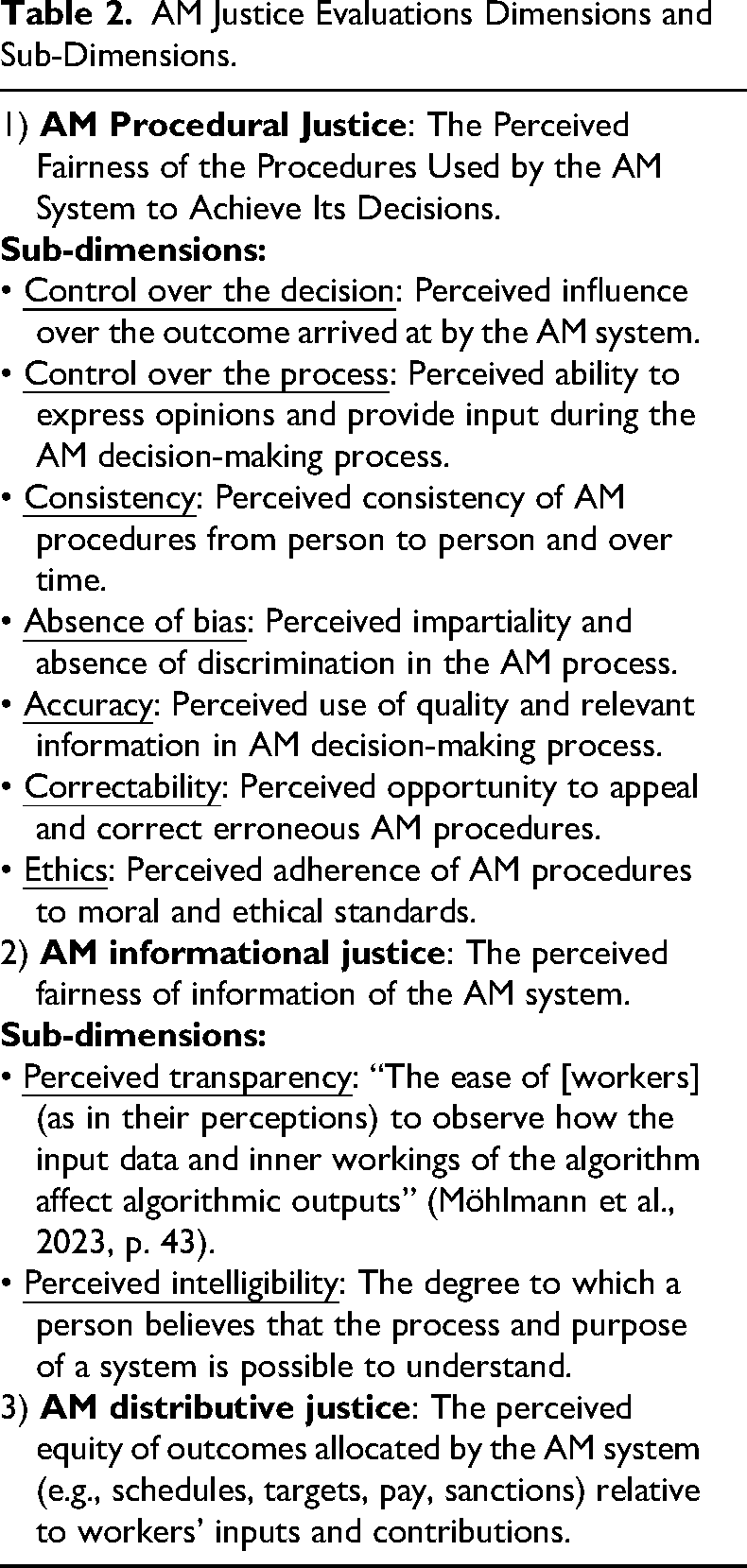
Building on organizational justice, a central tenet of SET (Colquitt et al., 2013, 2023), we conceptualize AM justice evaluations with three dimensions: 1) AM procedural justice (based on Colquitt, 2001; Leventhal, 1980; Thibaut & Walker, 1975, 1978), 2) AM informational justice (based on Bies & Moag, 1986; Colquitt, 2001), and 3) AM distributive justice (based on Adams, 1963; Colquitt, 2001) 3 . Table 2 defines the dimensions and sub-dimensions of AM justice evaluations.
AM Justice Evaluations Dimensions and Sub-Dimensions.
AM System Influencing AM Procedural Justice
Procedural justice is fostered through perceived control over the decision and over the process (Thibaut & Walker, 1975, 1978) and by perceived adherence to fair process criteria, namely consistency, absence of bias, accuracy, correctability, and ethics (Leventhal, 1980). The following examples illustrate how AM materiality (i.e., degree of AM exposure and type of algorithms, level of human influence, presence of explainability features, and, critically, the objective fairness of the system) can influence procedural justice perceptions.
To begin, AM systems that allow high human influence, such as enabling workers to provide input, modify, or reject certain task assignments, enhance perceived control over both the decision and the process. Conversely, highly automated, non-negotiable decisions and processes reduce perceptions of procedural justice (Kadolkar et al., 2025; Parent-Rocheleau & Parker, 2022). Additionally, AM can introduce perceived procedural inconsistency, as learning algorithms can continuously adjust managerial processes in response to new data (e.g., surge pricing in ride-hailing services) (Kellogg et al., 2020; Meijerink & Bondarouk, 2023). Moreover, AM systems that rely on biased or incomplete datasets can lead to algorithmic discrimination, undermining perceptions of absence of bias (Gal et al., 2020; Tambe et al., 2019). Furthermore, while AM systems can aggregate large volumes of data from diverse sources (e.g., environmental sensors, client reviews, peer evaluations), workers may perceive these data sources as inadequate or reductionist, overlooking qualitative and contextual information that should inform decision-making (Duggan et al., 2020; Newman et al., 2020). This reduces perceptions of accuracy. Additionally, the absence of formal appeal mechanisms or the lack of explainability in decision-making can increase the effort required to challenge algorithmic outcomes, reducing perceptions of system correctability (Duggan et al., 2023; Kellogg et al., 2020). Finally, AM can raise ethical concerns such as privacy violations and data confidentiality (Barati & Ansari, 2022; Gal et al., 2020; Tambe et al., 2019). If AM systems are perceived as violating ethical norms, workers may assess the system as low in procedural justice.
AM System Influencing AM Informational Justice
Based on the AM literature, we propose that AM informational justice is evaluated through perceptions of system transparency and intelligibility 4 , with the latter having two components: 1) process intelligibility (i.e., the “how” or the degree to which a person believes that the way in which a system achieves its results is possible to understand) and 2) purpose intelligibility (i.e., the “why” or the degree to which a person believes that the reason for the system's existence is possible to understand) (mostly based on Barredo Arrieta et al., 2020; Cui et al., 2024; Kellogg et al., 2020; Möhlmann et al., 2023; Parent-Rocheleau & Parker, 2022). While perceived transparency and intelligibility are related, they remain distinct. Greater perceived access to information (i.e., transparency) does not guarantee greater intelligibility, as information regarding the system may be overly intricate, technical, or detached from workers’ practical concerns (Gal et al., 2020; Langer & König, 2023; Newman et al., 2020).
Research highlights the significance of perceived transparency and intelligibility for workers in the context of AM (e.g., Bucher et al., 2021; Bujold et al., 2022; Heiland, 2025; Möhlmann et al., 2023; Rosenblat, 2018; Veen et al., 2020). In general, due to the inherent complexity of algorithmic systems and human curiosity, individuals tend to scrutinize system inputs, processes, and objectives to better understand their outcomes (Langer & König, 2023; Shin et al., 2022; Turel & Kalhan, 2023). In the context of AM, because the systems directly impact their work, workers are particularly sensitive to access to information and whether they see the system as intelligible when forming their evaluations of informational justice (Heiland, 2025; Rahman, 2021; Robert et al., 2020). However, AM systems can be highly opaque and ambiguous, particularly when they rely on complex AI models with low explainability features, leading to lower perceptions of justice (Cameron, 2022; Kellogg et al., 2020; Möhlmann et al., 2023; Rahman, 2021). Moreover, the learning and adaptive nature of AI-based AM systems adds additional complexity to informational justice. Workers may struggle to understand not only current decision logic but also why and how that logic changes over time (Langer & König, 2023). This dynamic opacity can be problematic for informational justice when workers receive contradictory information at different time points or when information becomes outdated as the system learns and evolves. We propose that variations in materialization of AM systems, particularly explainability features, provide workers with fairness heuristics regarding transparency and intelligibility, shaping their perceptions of AM informational justice (Ochmann et al., 2024).
AM System Influencing AM Distributive Justice
Traditionally, workers assess distributive fairness through equity-based comparisons, where workers evaluate whether their input-output ratio (e.g., effort vs. rewards) is fair relative to others (Colquitt et al., 2013, 2023; Cropanzano et al., 2007). In the context of AM, the objective fairness of AM allocations is critical. Theoretically, AM systems can rigorously collect, analyze, and calculate workers’ contributions to ensure precise and optimal resource allocation (Bokanyi & Hannak, 2020). However, when flaws, biases, or inaccuracies are present, AM outputs can reinforce perceptions of inequity (Bujold et al., 2022; Duggan et al., 2023).
That said, distributive justice is a perception, meaning that even if AM systems objectively distribute resources equitably, workers may still perceive the distribution as unfair. Explainability features play a crucial role in shaping these perceptions by influencing how workers understand their input-output ratio. When AM decision-making is opaque or lacks clear justifications, workers struggle to determine the system distribution of rewards (Möhlmann et al., 2023), making it difficult to assess whether their actual input-output ratio is fair. Conversely, AM explainability features influence perceptions of distributive justice by clarifying how input data informs managerial decisions, reducing confusion, and misinterpretation of resource allocations (Bujold et al., 2022; Langer & König, 2023; Parent-Rocheleau & Parker, 2022).
Distributive justice perceptions are also shaped by variations in AM exposure to different managerial functions, influencing which inputs and outputs serve as fairness heuristics (Bujold et al., 2022; Parent-Rocheleau et al., 2024). For example, workers subject to high algorithmic compensation are more likely to scrutinize wage fairness, whereas those exposed to automated task assignments may assess fairness through workload distribution. If workers believe that the AM systems emphasize certain metrics (e.g., speed, quantity) while failing to adequately distribute the associated outcomes (e.g., wages or workload), they are likely to experience lower distributive justice.
AM Justice Evaluations Influencing Trust in the System
Trust is a core mechanism of social exchanges according to SET and has been conceptualized as being directed toward a supervisor or the organization (Colquitt et al., 2013). However, in the context of AM, research indicates that trust can form by interactions with algorithms, giving rise to a distinct foci: the AM system itself (Gagné et al., 2022; Li & Bitterly, 2024). This form of trust reflects workers’ willingness to be vulnerable to decisions and actions facilitated (or executed) by the AM system.
While the last decades have provided a rich literature on end-users or operators’ trust in AI and automation (e.g., Glikson & Woolley, 2020; Hoff & Bashir, 2015), the perspective of workers managed by algorithms remains underexplored, as this phenomenon remains relatively new (Höddinghaus et al., 2021; Kadolkar et al., 2025). For example, the willingness of human operators to rely on automation in their tasks has been studied in depth, providing rich insights into how different factors can lead to a degree of operator trust that matches system capabilities, leading to appropriate use (Hoff & Bashir, 2015; Lee & See, 2004). An example of such studies would be a pilot appropriately trusting the ability of the auto-pilot and knowing when to take over (Lee & See, 2004). However, in the context of AM, workers are not users of the system nor are they operators; rather, the organization is the user, and the workers undergo it (Li & Bitterly, 2024). Consequently, the attitudinal process and implications of trust in AM systems are different. Workers need not trust that they can delegate their tasks to machines, but they need to be willing to be vulnerable to managerial processes undertaken by machines. This represents a vertical trust towards automated management instead of a lateral trust towards a work tool (Kong et al., 2026). This distinction is crucial because vertical trust involves accepting vulnerability to authority and hierarchical decision-making, while lateral trust involves collaborative tool use and shared control.
In this perspective, trust in AM is a unidimensional construct that can be informed by different bases (Legood et al., 2023). One key trust base relevant to AM is cognition about the trustee, that is workers’ assessments of whether they have good reasons to hold positive expectations about the AM system (Cropanzano et al., 2017; Legood et al., 2023; McAllister, 1995). Good reasons to trust are built on perceived ability, benevolence, and integrity. Ability refers to “[…] a trustee's competencies and skills to exert influence in a specific domain”, benevolence is “[…] a trustee's positive orientation toward the trustor and desire to do good to the trustor”, and integrity is “[…] a trustee's consistent adherence to a set of trustor-approved principles” (Li & Bitterly, 2024, p. 1795). Building on organizational justice literature (Colquitt et al., 2013, 2023) and the broader trust research showing that different trust referents have distinct antecedents (Kong et al., 2026), we posit that, similar to traditional organizational justice and trust, AM justice evaluations shape trust in the system. Specifically, perceptions of procedural, informational, and distributive justice contribute to trust in distinct ways, reinforcing the three positive cognitions about the trustee.
It is important to note that justice dimensions and trustworthiness dimensions are conceptually distinct, but that the former influence the latter. For example, accuracy reflects workers’ perceptions that the AM system is based on quality information (Colquitt, 2001; Leventhal, 1980), whereas perceived ability reflects workers’ broader judgments about whether the system possesses the capacity to effectively perform its managerial functions (Mayer et al., 1995). A system may be perceived as accurate in information processing yet still be judged as having low ability if, for example, workers believe the algorithms are biased, the system lacks consistency, or that distributive justice is low. Thus, justice perceptions serve as heuristic signals that inform and influence, but are not equivalent to trustworthiness assessments.
When workers perceive procedural justice as high, they are more likely to view the AM system as competent and reliable. Sub-dimensions such as consistency, accuracy, and correctability reinforce the perception that the system makes predictable and rational decisions (Shin et al., 2022). Beyond its role in signaling competence, procedural justice also influences perceptions of benevolence and integrity. Workers tend to anthropomorphize AM systems due to their managerial functions, attributing intentionality and motivation to them (Sherman et al., 2025). When an AM system allows worker input, provides opportunities to correct errors, and demonstrates respect for ethical considerations, workers are more likely to sense that the system is more of an ally in the work process rather than a distant “species” (Li & Bitterly, 2024; Turel & Kalhan, 2023). Conversely, when algorithmic decision-making is biased, inaccurate or inconsistent, workers may perceive the system as exploitative or detached, eroding trust (Cropanzano et al., 2023; Turel & Kalhan, 2023).
AM informational justice also plays a role in shaping trust through its two distinct sub-dimensions: transparency and intelligibility. High transparency is a double-edged sword that can reinforce or erode trust. It allows workers to form better assessments of the system, but can reveal either alignment or misalignment with worker interests. Thus, transparency does not guarantee high trust but rather enables better informed trust judgments (Hertel et al., 2025). In contrast, intelligibility more directly influences trust. When workers believe they are able to understand the system, they are more likely to trust that it is neither arbitrary nor unpredictable, that it serves a legitimate purpose and can fulfill its intended functions effectively, thereby reinforcing perceptions of its trustworthiness (Shin et al., 2022; Turel & Kalhan, 2023). Conversely, when workers lack transparency and intelligibility regarding AM, they may see it as an unfamiliar and detached entity with hidden motives, fostering suspicion and undermining cognitions of its benevolence and integrity (Ochmann et al., 2024; Turel & Kalhan, 2023).
Moreover, when AM systems are seen as distributing rewards equitably, workers are more likely to view the system as competent and well-intentioned (Bankins et al., 2022; Lee et al., 2019; Robert et al., 2020). As AM systems allocate resources in ways that align with workers’ perceptions of equity, workers may interpret the system as “caring”, reinforcing cognitions of benevolence and integrity (Bankins et al., 2022; Turel & Kalhan, 2023). Conversely, when AM distributive justice is perceived as low, skepticism arises regarding the system's ability to allocate resources appropriately (Bankins et al., 2022; Rosenblat, 2018). Moreover, it can exacerbate a sense of power asymmetry, reinforcing the idea that the system is exploiting workers rather than equitably compensating them for their contributions (Barati & Ansari, 2022; Curchod et al., 2020; Gagné et al., 2022; Rosenblat, 2018).
When AM systems fail to meet justice expectations and trust is damaged, organizations may need to employ trust repair strategies. Research suggests that effective trust repair requires both verbal accounts (acknowledgments of failure and apologies where appropriate) and substantive actions to address underlying system deficiencies (Gillespie & Dietz, 2009; Kramer & Lewicki, 2010). In the context of AM, this may involve both technical modifications to improve the system and organizational responses that acknowledge system failures and demonstrate renewed commitment to fairness (Gillespie & Dietz, 2009).
We also argue that, in the context of AM systems, AM procedural justice has a greater direct impact. This is because AM systems greatly disrupt traditional management procedures, making procedural justice more salient and providing direct cognitions about the trustee (i.e., the AM system) (Jabagi et al., 2025; Newman et al., 2020). Additionally, consistent with research showing that different practices have differential effects on various trust referents (Kong et al., 2026), the disruption of traditional management procedures likely makes procedural aspects of AM particularly influential in shaping trust toward the AM system. Taken together, when AM systems are perceived as procedurally, informationally, and distributively just, trust is fostered by reinforcing cognitions of ability, integrity, and benevolence.
Workers’ Trust in the AM System Influencing Trust in the Organization and Reciprocative Behaviors
In the context of AM, the system functions as a technological intermediary between the organization and the worker, reflecting the organization's strategic choices and operational preferences (Jarrahi et al., 2021; Lamers et al., 2024; Ravenelle, 2019; Schafheitle et al., 2020). As a technological intermediary, trust in the system plays a central role in shaping worker-organization dynamics. While trust in the AM system and trust in the organization represent distinct trust referents, we posit that trust in the AM system functions as a proxy for workers’ trust in the organization, which subsequently increases reciprocative behaviors.
Trust in the AM system significantly influences trust in the organization. Organizational practices signal organizational intentions and capabilities, influencing employee trust in the organization (Kong et al., 2026). Similarly, the trustworthiness of the system reflects the organization's competence in using management tools and the reliability of its decision-making processes (Legood et al., 2023). Given that AM systems enact organizational strategic choices and operational preferences (Jarrahi et al., 2021), workers interpret these systems as organizational artifacts that reflect managerial intentions and values. Beyond technical abilities, the trustworthiness of the AM system embodies the organization's broader ethos and intent concerning the worker-organization relationship (Jarrahi et al., 2021; Lamers et al., 2022; Lamers et al., 2024). When workers perceive the AM system as trustworthy, this conveys the organization's benevolence through its demonstrated concern for workers’ work conditions and its integrity through its adherence to maintaining high-quality relationships. Conversely, when trust in the AM system is low, workers may interpret this as a sign that the organization lacks managerial and technical ability, does not have their best interests at heart, or disregards the quality of the relationship, as reflected in its failure or unwillingness to implement a more trustworthy system (Duggan et al., 2023; Gagné et al., 2022; Rahman, 2021).
Workers’ trust in the organization then shapes reciprocative behaviors. The reciprocity norm in SET suggests that individuals engaged in high-quality social exchange relationships are more likely to exhibit behaviors that benefit their exchange partners (Cropanzano & Mitchell, 2005; Gouldner, 1960). This norm underpins a willingness to reciprocate, meaning that workers who perceive positive treatment from their organization are prompted to contribute to its success.
This norm still holds in the context of AM. We argue that reciprocity norms persist in AM contexts because workers ultimately recognize the organization (not the algorithm) as the exchange partner that makes managerial and strategic choices about the system features and worker treatment and ultimately benefits from workers’ behaviors (Cameron, 2024). When workers trust the organization, they are more likely to go beyond their formal job requirements, exhibiting higher levels of reciprocative behaviors (Ahmad et al., 2023; Colquitt et al., 2013; Duggan et al., 2023). Reciprocative behaviors encompass, for example, organizational citizenship behavior
5
and high task performance (Ahmad et al., 2023; Cropanzano et al., 2017).
Potential Moderators
We outline key potential moderators of the proposed relationships, pertaining to both workers and the organization, to maintain focus on factors most relevant to the two actors examined in our manuscript (workers and organizations). As adding all the specific moderators is out of scope for the current article, these have not been specified in Figure 2.
At the individual level, workers’ skills, knowledge and familiarity with technology may moderate diverse relations (Bankins et al., 2024). Higher digital literacy might present a double-edged sword. It could lead to more refined and nuanced evaluations of system capabilities and limitations, potentially affecting positively (if the system's capabilities become more apparent) or negatively (if its limitations become more apparent) the AM materiality and perceived justice relationship (Bankins et al., 2024; Stein et al., 2015). Moreover, workers with greater technological knowledge may better distinguish between system inherent flaws and organizational choices, potentially buffering negative reactions in the relationship between trust in the system and trust in the organization (Bankins et al., 2024). Individual differences in algorithmic aversion represent another critical moderator of both perceptions and attitudes towards technology. Systematic preferences against algorithmic decision-making may weaken the perception of just AM and buffer the positive effects of perceived just AM systems on trust (Bankins et al., 2024; Turel & Kalhan, 2023). For example, the AM system could distribute work fairly, but workers could have strong prejudice from algorithmic aversion and still perceive it as unreliable. Moreover, workers may generally distrust algorithms, even when they are perceived as fair to some degree, and distrust the organization for using them (Turel & Kalhan, 2023).
At the organizational level, organizational climate may moderate how workers interpret AM systems. A climate of technological enthusiasm that prides itself on adopting the latest technological trends may normalize AM usage even if the system materialized with shortcomings, buffering negative perceptions and attitudes towards AM (Bankins et al., 2024; Delfanti, 2021; Gagné et al., 2022). Moreover, climates characterized by low psychological safety may amplify perceived injustice and distrust in AM (Edmondson, 1999). Workers who do not feel supported to take risks and make mistakes without fearing negative repercussions may feel uncomfortable with an algorithmic system supervising their work and the datafication of their behaviors, perceiving AM as a threat to their work conditions (Bankins et al., 2024; Schafheitle et al., 2020; Turel & Kalhan, 2023). Job type might also moderate AM effects. Highly standardized work environments such as logistics and manufacturing may make workers more favorable toward AM compared to knowledge work requiring creativity and discretion, potentially affecting the relationship between AM system materiality and justice evaluations (Dupuis, 2025; Rani et al., 2024). Similarly, while AM almost feels like an industry norm in high prevalence sectors like last-mile delivery, employees of other industries (e.g., healthcare) might perceive AM as an infringement of established and expected workplace conditions, more negatively impacting perceptions and attitudes towards AM (Cropanzano et al., 2023; Keegan & Meijerink, 2025). Finally, the presence and strength of worker representation mechanisms in the organization, such as labor unions, may moderate AM materialization. Strong union representation can leverage power resources to negotiate explainable AM deployment guidelines, secure worker input in the system, establish grievance procedures for algorithmic decisions, and resist certain implementation choices, thereby buffering how organizational choices translate into AM materializations (Dupuis, 2025; Kellogg et al., 2020).
Discussion
This article introduces a theoretical model that applies social exchange theory (SET), to theoretically examine worker-organization social exchanges in the context of algorithmic management (AM). The proposed model articulates how organizational choices shape the materialization of AM systems, influencing workers’ AM justice evaluations and, ultimately, their trust in the AM system. As a technological intermediary, trust in AM serves as a proxy for trust in the organization, which in turn drives reciprocative behaviors towards the organization. Our theoretical model is central to understanding how AM functions as a technological intermediary within the worker-organization social exchange relationship.
By integrating insights from SET and the multidisciplinary AM literature, we further relax the binary perspective of AM's effects as inherently positive or negative. Instead, this article highlights that the impact of AM on worker-organization relationships is complex and depends on multiple factors, notably organizational choices and workers’ perceptions and attitudes. Theoretical and practical contributions of our model, as well as avenues for future research, will be discussed using Whetten's (1989) questions of what's new, why now and so what.
What's new?
By incorporating AM as a technological intermediary, our theoretical model applies SET principles and related constructs to the era of AM and the broader introduction of AI technologies in management practices. Its primary contribution is the theoretical application of SET principles to account for the rapid technological developments in workforce management. Our theoretical model encompasses the role of AM as a technological intermediary in worker-organization social exchanges. In doing so, it clarifies how traditional social exchange processes both persist and are transformed in environments where digital technologies, such as AI, are increasingly influential.
Our model reveals three specific ways traditional SET principles require adaptation in AM contexts. First, the intermediary role of algorithms disrupts traditional reciprocity mechanisms, implying that certain SET principles cannot be straightforwardly applied to AM contexts. Specifically, the traditional SET emphasis on relationship development through repeated personal interactions and mutual vulnerability does not translate directly into an AM-workers relationship as algorithms lack consciousness, empathy, or the capacity for genuine relationship formation (Lamers et al., 2022; Sherman et al., 2025). Thus, workers do not reciprocate directly toward the AM system itself, but build a relationship and redirect reciprocative behaviors toward the organization. Second, justice evaluation processes are transformed as a new justice foci is introduced in the treatment of workers. While procedural, informational, and distributive justice remain relevant, workers’ evaluations are directed towards the system and they function as heuristic signals allowing workers’ to assess organizational intentions and their relationship. Third, trust formation becomes more elaborated and sequential as both trust in the system and the organisation plays a role in the worker-organisation relationship. Workers develop both system trust and organizational trust, with the former influencing the latter. These adaptations preserve SET's core logic while accounting for the technological intermediation that fundamentally reshapes how workers experience and respond to organizational treatment.
Despite these necessary adaptations, our theoretical model recognizes the value of what is not new, drawing on the foundational theory of social exchange and core related theories such as organizational justice. While it integrates new cognitive processes related to AM, it remains grounded in established SET psychological mechanisms such as trust and reciprocative behaviors. This shows that traditional organizational psychology theories remain highly relevant in workplaces increasingly shaped by digitalization and AI, though they require some modifications and interdisciplinary perspectives. We argue that, to ensure human-centered digitalization of work, organizational psychology theories are more relevant than ever (Parker & Grote, 2022).
Why now (and Enduring Relevance)?
Initially identified in the gig economy, in which it serves to manage millions of people (Noponen et al., 2024), AM is now also spreading to conventional work settings. Increasing reports of AM in various sectors indicate a rising trend (Fernández-Macías et al., 2025; Milanez et al., 2025; Rani et al., 2024), highlighting the timeliness and urgency of our theoretical model in understanding relational dynamics in AM contexts. Given that academic research takes time, it is also reasonable to consider that knowledge of the extent to which these systems are used in practice and across sectors represents the tip of the iceberg.
Moreover, recent conceptual developments and empirical research now allow us to deductively integrate knowledge and develop explanations about workers’ relationship with their organization in an AM context through a SET lens. Although AM conceptual and empirical work has advanced our understanding of this phenomenon significantly, our model addresses the need for theoretical integration and development to explain how and why AM intermediaries affect worker-organization social exchanges.
Beyond the present moment, questions regarding how organizational psychology theories apply to the era of AI at work will remain theoretically important. As AM systems evolve and implementation continues, and as new technologies further reshape worker-organization relationships, the core question our model addresses, that is how social exchange theory applies in the context of AM, will only grow in relevance. Our theoretical model therefore offers an important contribution that is useful now and beyond.
So What for Practice?
A key implication of our theoretical model is that the current trial-and-error approach to AM usage may be responsible for many of the negative outcomes reported in the literature (Gagné et al., 2022; Noponen et al., 2024). By integrating diverse and at times contradictory literature on AM, our model helps practitioners navigate decision-making by clarifying how and why AM use influence worker-organization social exchange quality. Our manuscript offers guidelines for a more deliberate practice and human-centered approach to AM implementation, emphasizing system materiality, justice evaluations, and trust-building mechanisms to foster positive worker-organization relationships.
For organizations, this manuscript provides a set of explanatory propositions that predict how trust, both in the AM system and the organization, drives workers’ reciprocative behaviors and, therefore, performance. By outlining explanatory propositions, we offer insights into the mechanisms that drive worker-organization relationships in algorithmically managed environments. However, if AM systems fail to meet expectations, organizations will need to employ appropriate trust repair strategies, combining technical improvements with organizational responses that show renewed commitment to fairness (Gillespie & Dietz, 2009).
Given that the proposed theoretical model is a new theoretical development, practitioners should approach the implementation of AM systems with caution until further empirical validation is achieved.
So What for Future Research?
This article opens multiple research avenues by providing a theoretical foundation for studying worker-organization social exchanges in AM contexts and AI in organizations. Future research could empirically test the propositions of our theoretical model, validate its constructs, and expand or refine its theoretical arguments to further establish its explanatory power. They could notably validate and examine the materiality of AM and its proposed antecedents and outcomes (e.g., types of managerial algorithms, human influence, explainability features or system fairness).
Future research could also examine other constructs that have been linked to SET, such as perceived organizational support, organization-member exchange or commitment, to test if trust is indeed the best reflection of social exchange quality in a context of AM (Colquitt et al., 2014). Researchers could also explore the impact of other organizational justice foci (i.e., towards a supervisor or the organization as a whole) in relation to AM justice evaluations and on the broader proposed theoretical model. Moreover, research could investigate how a higher quality of social exchange in the AM context could impact various outcomes that go beyond the scope of our theoretical model, such as worker well-being (Edwards et al., 2024).
While the present article focuses on workers and organization, to further enhance our theoretical model's comprehensiveness, research should further explore the implications of human managers and the different forms human-algorithms co-management can take (Hillebrand et al., 2025; Leavitt et al., 2025). Longitudinal research could examine how the role of human managers is modified and evolves alongside AM, the agency of human managers, and its impact on our proposed theoretical model.
Such longitudinal work could also examine how the technologically mediated relationship between workers and the organization evolves over time, as workers’ views of the AM system and the broader organization can change with experience (Cameron, 2024). Researchers could also explore how shifts in the organization's choices toward AM and increases in system presence over time affect workers’ evaluations and relationship with the organization (Ravenelle, 2019). Relatedly, research could examine how increasingly collaborative AM designs shape workers’ subjective experience of undergoing the technological intermediation of AM.
Additionally, while our model focuses on systems that execute managerial functions, as generative AI increasingly enters workforce management, future research should examine whether its conversational and content-generation capabilities influence worker-organization relationships and potentially affect additional organizational actors (e.g., human managers and colleagues). In particular, greater integration of generative AI with AM systems over time may enable new forms of trust repair that predictive AM systems currently lack, as generative AI is capable of human-machine dialogue, although research also warns of risks such as sycophantic responses that could distort workers’ evaluations and attitudes (Cheng et al., 2026). The core principles of our model, especially the notion of technological intermediary, serve as a foundation for such research.
Footnotes
Author's Note
Antoine Bujold, Department of Organisation and Human Resources, École des sciences de la gestion, Université du Québec à Montréal (ESG UQAM), 1250 rue Sanguinet, Montréal (Québec), H2X 3E7.

Ethical Approval and Informed Consent Statements
Not applicable
Funding
Quebec's research fund for society and culture (Grant number : 350044).
The International Observatory on the Societal Impacts of AI and Digital Technology (OBVIA).