







Abstract
Prestressed concrete is highly being preferred as material for construction in the case of strategic and relevant structures such as, for instance, nuclear containments, armor deposits, shelters, bridges, and military bunkers. It is highly durable, fire and corrosion resistant, and non-porous. In order to study the influence of prestressing on the mechanics of deformation, energy absorption capacity, and failure modes of concrete targets, finite element simulations have been carried out using hard steel bullets and compared with the experiments carried out by the authors earlier. Prestressed concrete targets of plan size 450 mm × 450 mm and thickness of 80 mm were impacted by 0.5-kg hard steel projectiles. The concrete was designed to obtain an unconfined compressive strength of 48 MPa. An initial stress of 10% magnitude of compressive strength was induced by 4-mm-diameter high-tensile-strength (1700 MPa) steel wires in prestressed concrete targets. A grid of 8-mm-diameter steel bars was inserted in the reinforced and prestressed concrete targets to enable the straight comparison between these concretes. The prestressing in concrete has been found to be effective in reducing the volume of scabbed material as well as the ballistic resistance of prestressed concrete targets. The ballistic limit of prestressed concrete with 10% induced stress was found to be, respectively, 14% higher than that of the plain concrete target and 10.2% higher than the reinforced concrete. Failure modes predicted through finite element simulations were found in agreement with that of the actual results.
Introduction
The study of ballistic characteristics of plain and reinforced concrete is extremely important in order to design the important strategic structures such as nuclear containment, bunkers, bridges, and dams. The penetration mechanism of concrete barrier is relatively more complex than the metals due to its complex material behavior. During modern decades the study of the response of plain or reinforced concrete targets under ogive-nosed projectile impact has been enhanced by a number of experimental and analytical works (Forrestal et al., 1994; Li et al., 2005; Warren et al., 2004, 2014; Wen and Yang, 2014).
A consistent improvement in strength and performance over last few decades transformed the concrete into most suitable construction material worldwide. Hanchak et al. (1992) carried out ballistic experiments on 48 and 140 MPa reinforced concrete targets of plan size (610 mm × 610 mm) and 178-mm thickness against ogival-nosed 0.5-kg projectiles. The concrete targets were reinforced by three layers of 5.69-mm-diameter steel reinforcement grid. They established that even an intensification of the compressive strength by around three times had no significant influence on the resistance of the target respect to impacts. In contrast with that, the ballistic experiments carried out by Shirai et al. (1997) on targets realized by 35 and 57 MPa reinforced concrete provided clear evidences on the fact that material strength has a major role to halt the penetration of the projectile and to limit the effect of scabbing in the material. Hanchak et al. (1992) verified that an almost negligible effect on the residual velocities can be related to the reinforcement. However, Liu and Ning (2009) suggested that the capacity of reinforced concrete carrying dynamic loads is significantly related to the magnitude of reinforcement, explaining why targets in plain concrete performed worse than the ones in reinforce concrete at higher ratios of reinforcement and the opposite occurred at low ratios. A mesoscale material model for concrete at was developed to simulate the impact test to evaluate the dynamic material properties of concrete at high strain rate (Hao et al., 2010). Adhikary et al. (2015) have performed experiments and numerical simulation of drop-weight test on reinforced concrete beams to study the response of failure modes with increasing drop-weight height.
The dynamic crack propagation and impact load carrying capacity of prestressed concrete railway sleepers at varying support conditions and rate of loading (Kaewunruen and Remennikov, 2009, 2010, 2011; Xiang and Nianzhi, 1994) have been investigated in the cases of single and multiple impact loads. Under hard track condition (ballast thickness of 250 mm), the crack length in sleeper was found to be higher and the propagation of crack is faster than in soft track condition (ballast thickness of 100–150 mm). Under both of these support conditions, however, the failure occurred in flexure and longitudinal splitting. The prestressed concrete rock sheds are used in various countries to avoid casualties against falling rocks (Delhomme et al., 2007; Ishikawa et al., 2002). In an investigation of impact response of T- and Γ-shaped prestressed concrete rock sheds (Delhomme et al., 2007) studied through prototype experiments, the T-shaped frame has been found to rationally disperse the sectional forces over the whole structure and offered 1.7 times more resistance than Γ-shaped frame. Researches on the capacity of the concrete respect to the blast load resistance clarified that an initial prestressing can have effect on the deflections in concrete elements, reducing them both in maximum and residual terms, and was also found to be effective in delaying the appearance and growth of flexural cracks (Chen et al., 2015). Along this line of investigation, in Pavlovic et al. (2017), several finite element (FE) models were used to provide an accurate discretization of the phenomena related to the projectile impact on reinforced concrete. In particular, to compare the non-linear response of material, several simulations were carried out based on Riedel–Hiermaier–Thoma (RHT) material models available in different commercial finite element method (FEM) codes. The RHT material model, available in LS-DYNA, predicted that the experiments are in agreement, and hence, it was found most suitable model to simulating the projectile impact on concrete targets.
Similar investigations were also realized on other constructive materials, as in Fragassa (2016) and Pavlovic and Fragassa (2016), where a detailed models and FE techniques were compared with the scope at investigating the viscoelastic response in stoneware.
The present investigation aims to explore the possible influence of the initially induced stress on the energy absorption, ballistic response, and failure modes of prestressed concrete target against ogive-nosed projectile impact. The prestressed concrete plates of dimension (450 mm × 450 mm × 80 mm) were subjected to 0.5-kg ogival-nosed (3 Calibre Radius Head (CRH)) hard steel projectiles at normal incidence and compared with the experiments carried out in the previous study (Rajput et al., 2017a, 2017b). To further explore the mechanics of deformation, the impact experiments were reproduced through FE simulations. The failure modes, extent of damage, and energy absorption capacity of prestressed concrete target have been obtained through projectile impact experiments and compared with numerical results.
Target preparation
The concrete mix was realized in accordance with the IS 10262 Indian Standard with the aim to obtain a 28-day unconfined compressive target characterized by a 48-MPa strength. A number of trials were conducted with many configurations of cement, potable water, river sand, and coarse aggregate. The final composition of the mix had, in 1 m3 of concrete, 440 kg of cement, including 40% of water, 730 kg of river sand, and 1050 kg of coarse aggregate with a typical size of 10 mm (details in Table 1). The uniaxial compression tests were performed on 150-mm cube specimens after 28 days curing in tap water, according to the IS 456:2000 and IS 10262, and an average unconfined compressive strength of 46–51 MPa was obtained. However, the ballistic experiments have been carried out after 3–4 months of casting the specimens.
Constituents of concrete.

W/C: water/cement.
In these specimens, characterized by a square shape with span of 450 mm and thickness of 80 mm, a unidirectional prestress 10% of unconfined compressive strength was introduced by pretensioning of high-strength steel wires 1700 MPa of 4-mm diameter. The target was also reinforced with 8-mm deformed steel bars of tensile yield strength 415 MPa @ 80-mm c/c both ways with a clear cover of 15 mm (Figure 1(a)). The ogival-nosed (3 CRH) hard steel projectiles of mass 0.5 kg have been prepared on lathe machine (see Figure 1(b)).
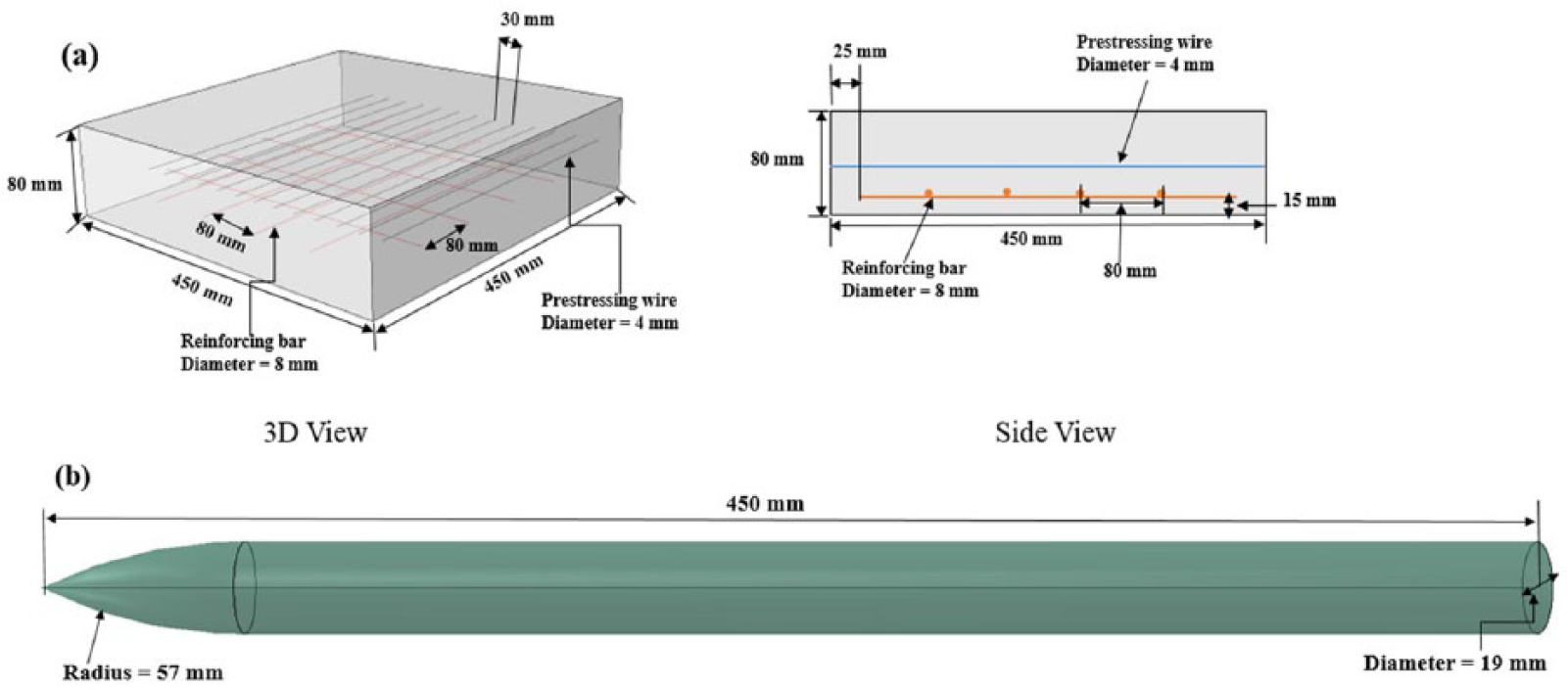
Detailing of (a) prestressed concrete target (all dimensions in mm) and (b) projectile.
A total number of 13 strands were inserted in the target to induce 10% prestress (see Table 2). Each strand anchored at one side and was stretched from the next end with the help of a hollow hydraulic jack. Thus, the initial stress of about 5.0 MPa was induced in the (450 mm× 450 mm× 80 mm) concrete target. The strands were correctly positioned and fixed using steel wedges. The losses in prestress related to phenomena as elastic shortening, friction, creep, and shrinkage were also considered assuming to be 15% of the initial stress. This procedure is in accordance with the recommendation in IS 1343:2012. The method recommended by the European Committee on Concrete (1970) also includes a great number of variables, therefore achieves great flexibility, in the estimation of losses in prestressing.
Calculation of effective stress for inducing initial prestress in the target.
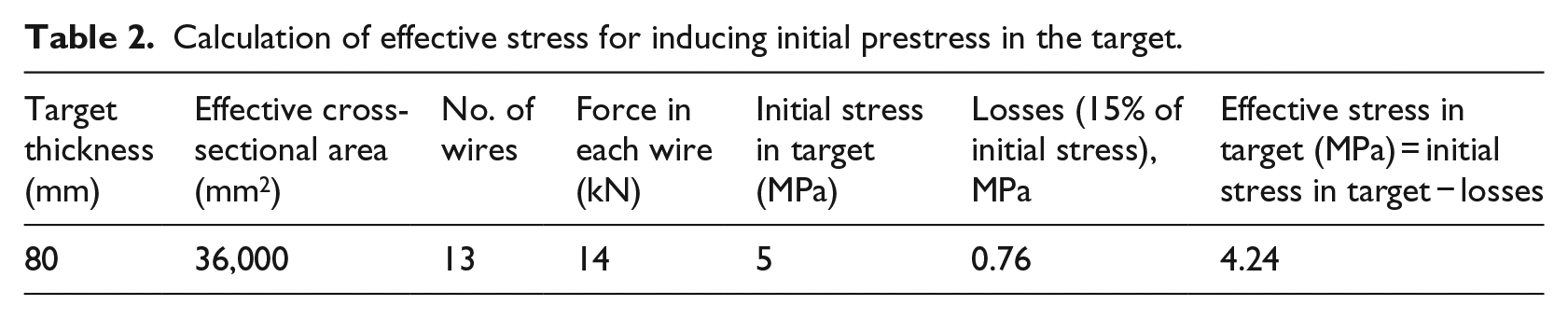
The effective magnitude of prestress in the target after deducing the losses was calculated to be 4.24 MPa (see Table 2). The concrete was poured in the square steel molds, compacted with the needle vibrator, and the concrete surface was finished. The curing of concrete targets lasted 28 days and was done thanks to wet gunny bags (details in Figure 2). The wedges were then released to transfer the stress in the concrete.
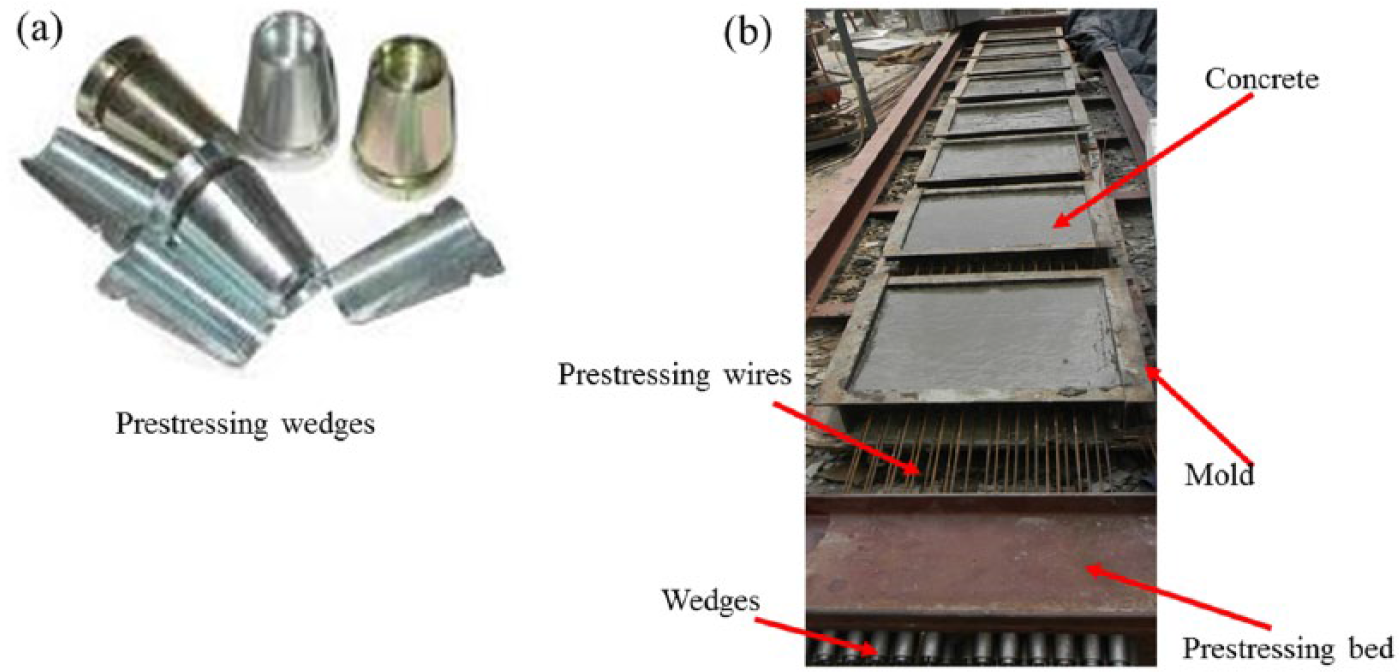
Details of prestressing: (a) steel wedges and (b) casting of prestressed concrete.
Geometric and FE modeling
The geometric modeling of the concrete targets and the projectile was carried out using ABAQUS preprocessor. The square target plates of span 450 mm × 450 mm × 80 mm were modeled as three-dimensional (3D) deformable continuum, and the reinforcement in the reinforced concrete targets was provided as ϕ8 mm @ 80-mm c/c both ways. The reinforcement modeled as 3D deformable truss was replicated to form a grid at the required spacing and then inserted in the body of the concrete with a cover of 15 mm, shown in Figure 1(a). The embedded constraints were assigned between the reinforcement and concrete to enable perfect bond between the host and the guest elements. In the prestressed concrete targets, the prestressing strands modeled as 3D deformable truss were inserted at the center of thickness (in one direction) to enable the development of uniform prestressing force throughout the thickness (Figure 1(a)). The cylindrical ogival-nosed projectile, with 0.5 kg of mass, 19-mm diameter, and 225-mm of length, was discretized using 3D analytical rigid shell (Figure 1(b)). A reference point was assigned to the centroid of each of the projectiles for assigning mass and rotary inertia. The contact between projectile and target was carefully considered using built-in kinematic contact algorithms. In particular, the projectile was assumed as master and nodes on the surface of the target as slaves. The friction coefficient was considered 0.05. The projectile was also assigned surface-to-surface contact with reinforcement in reinforced concrete and the reinforcement and prestressing strands in prestressed concrete target using kinematic contact option assuming negligible friction. The edges of the target were fixed by constraining all the degree of freedom.
The meshing of the target was carefully carried out for obtaining accurate results within reasonable CPU time. The mesh convergence study was carried out by varying the size of element in the impact area of target from 0.7 to 3 mm3 with keeping unity aspect ratio and a constant element size of 5 mm3 in the outer region. The resistance of the target decreased with the decrease in the element size, and the results converged corresponding to element size of 1 mm3. The element size in the central core was, therefore, considered to be 1 mm3 in all the simulations. 3D brick elements, characterized by eight nodes and a reduced integration (C3D8R), were used for meshing (see Figure 3). The number of elements in the impact and outer region was 80 and 27, respectively, resulting 391,049 number of elements of concrete. Figure 3 shows several details regarding the target discretization using FEs in the case of prestressed concrete.
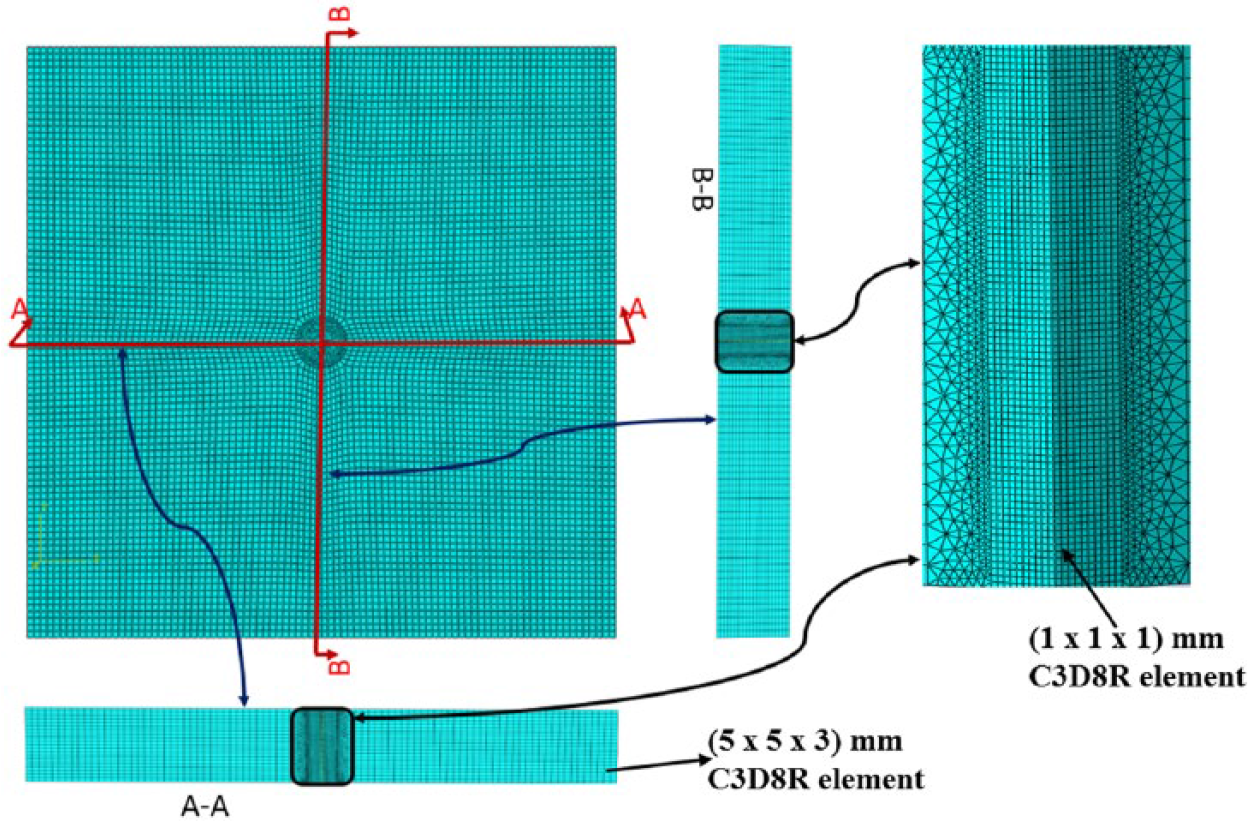
Plan and cross section of finite element model of 80-mm-thick concrete target.
Constitutive modeling of concrete, reinforcement, and prestressing wires
The FE simulations has been carried out in two steps: in the first step, initial stresses were induced in the concrete targets using static analysis in ABAQUS standard, and thereafter, the projectile impact simulations have been performed in the second step using ABAQUS/Explicit. An initial prestressing force of approximately 10% of the characteristic compressive strength of concrete was induced in the target plates (Table 2) by introducing pretension in the prestressing wire and carrying out static analysis on ABAQUS/Standard to enable complete transfer of prestress. The prestress thus induced has been incorporated as initial stress state in the target for carrying out further numerical simulation for ballistic impact on ABAQUS/Explicit code into the second step.
The concrete damaged plasticity (CDP) model was preferred for considering the condition of initial stress in the concrete. This advanced model is established on the conception of isotropic damaged elasticity in strict combination with isotropic tensile and of compressive plasticity, with the aim at representing the post-elastic behavior of concrete under conditions of tension and compression. Sadique et al. (2013) have considered CDP model into the account for incorporating the response of concrete under uniaxial compressive loads (in terms of stress–strain relations). The behavior of concrete in tension was predicted using the Hillerborg’s fracture energy criterion (Hillerborg, 1985; Hillerborg et al., 1976) employing the energy required to open a unit crack area,
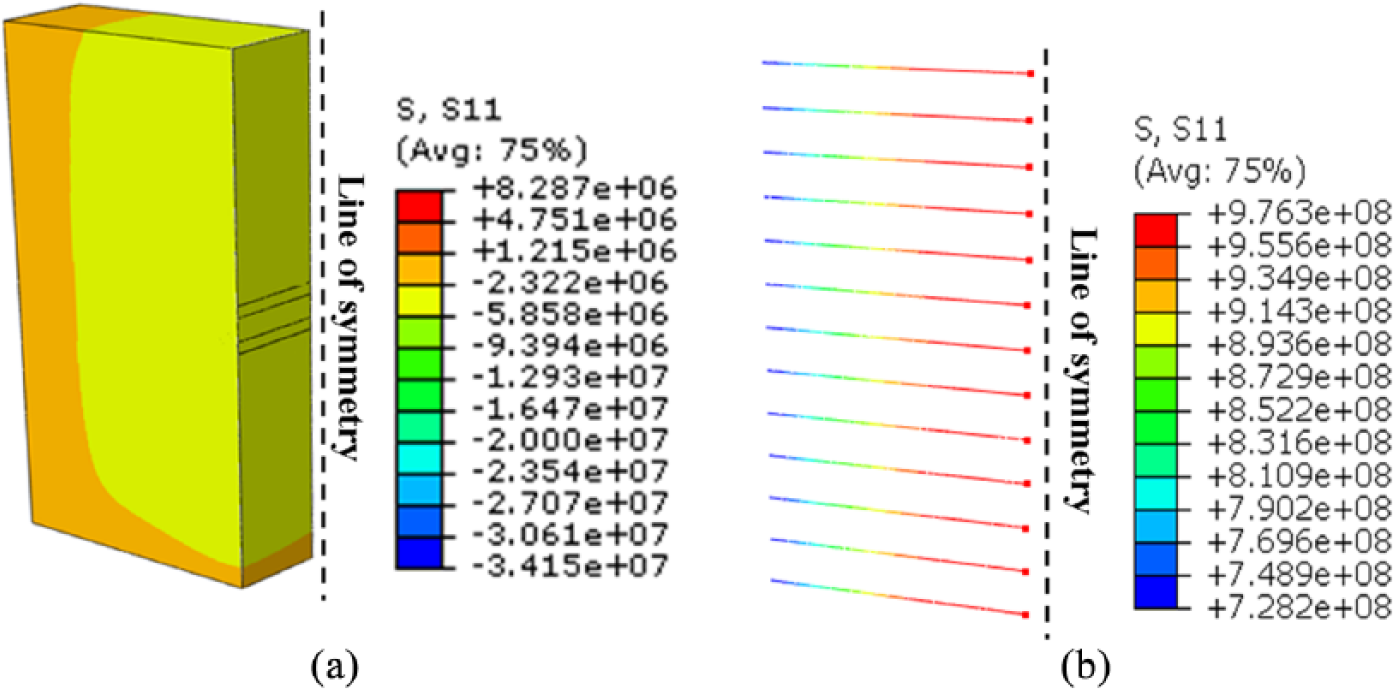
Symmetric half model of initially stressed concrete target: (a) concrete and (b) prestressing wires.
Furthermore, in second phase of simulation, the constitutive behavior for simulating the ballistic response of concrete was taken in consideration in accordance with the elasto-viscoplastic material model proposed by Holmquist–Johnson–Cook (HJC) (Holmquist et al., 1993). The HJC model calculates the normalized equivalent strength, σ*, of concrete as a function of pressure and strain rate, through a simplistic uncoupled approach taking into consideration the mechanisms of cracking and compaction

where

where

where D1 and D2 are damage parameters while
The constitutive behavior of reinforcement and prestressing strands during ballistic impact was incorporated using the Johnson–Cook elasto-viscoplastic material model (Johnson and Cook, 1983, 1985) The model is best suited for metals and assumes the equivalent von Mises stress

where A, B, n, C, and m are material parameters;

where T is the current temperature,

where
The equivalent plastic failure strain,

where the difference
The strength of the concrete plates was significantly lesser than that of the hard steel projectile. Hence, the projectile was modeled as a non-deformable or rigid body. During experiments, the deformation of projectile was found to be insignificant. However, some scratches were noticed near the nose of the projectiles. Hence, this assumption was found to be justified.
Ballistic experiments and FE simulations
The projectile impact experiments and FE simulations were performed to obtain the ballistic characteristics of prestressed concrete targets. The impact experiments carried out with the help of pneumatic gun capable to launch a 0.5-kg projectile at a speed of 280 m/s. The barrel was 18-m long in the way to enable an adequate acceleration of the projectile for obtaining the necessary speed. The trajectory was simplified considering the projectile with an orthogonal impact on the target (see Figure 5). The projectile was impacted at center of the target; however, the target was kept fixed at all the edges. Impacts occurred in a range between 90 and 225 m/s of projectile impact velocities. A high-speed video camera (Vision Research Phantom V411) was used to record the projectile striking and residual velocities. The camera frame rate was kept in the range of 15,000–20,000 to record the impact experiments. The projectile after perforation was safely collected in a robust steel box placed 1.5 m behind the target.
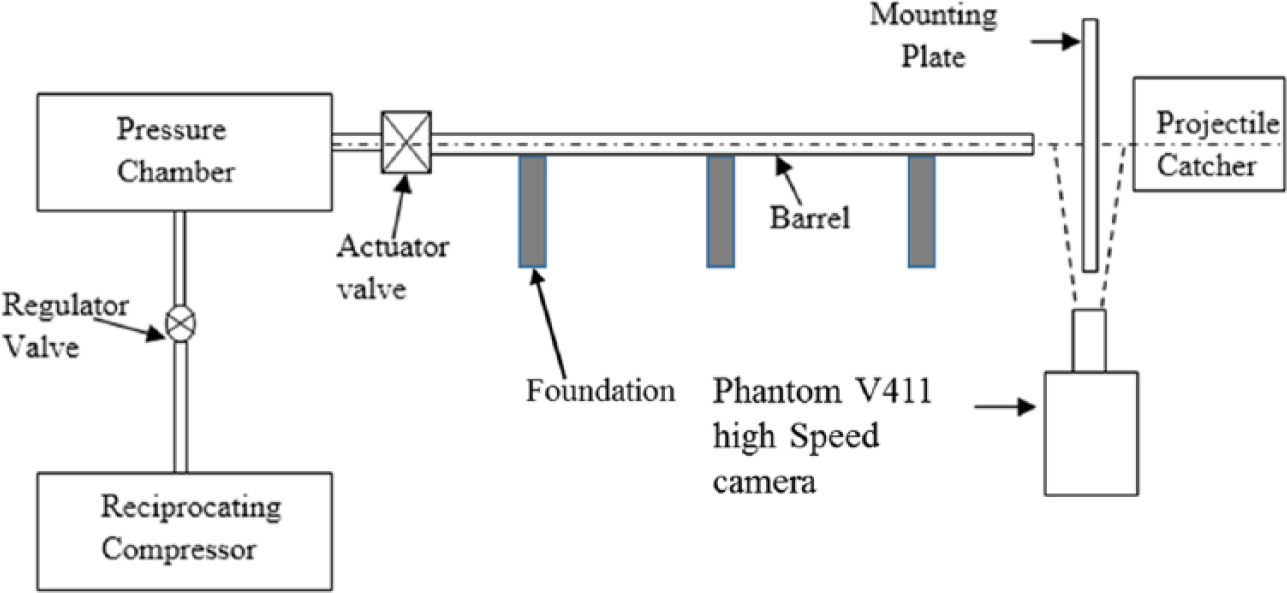
Graphical illustration of experimental setup of pneumatic gun.
The numerical simulations were able to strictly predict several aspects of the impact on the prestressed concrete as the failure modes, residual speeds, and ballistic limits of targets. The acquired impact and residual projectile velocities and failure modes of prestressed concrete targets were compared with that of the plain and reinforced concrete targets obtained in the previous experimental study (Rajput et al., 2017a). The failure modes of the targets were found to be dependent upon the type of concrete and the incidence velocity of projectile. Targets in plain concrete showed conditions of brittle failure. Thick radial cracks, 3- to 7-mm wide, originating from the impact location, developed across the target thickness and traversed over entire span leading to brittle failure of the target. In case of reinforced and prestressed concrete targets, there was no observable cracks could be found in the experiments. The FE simulation could not be able to predict tensile cracking in plain concrete targets due to the limitation of the HJC model to adequately address the tensile cracking in concrete (see Figure 6).
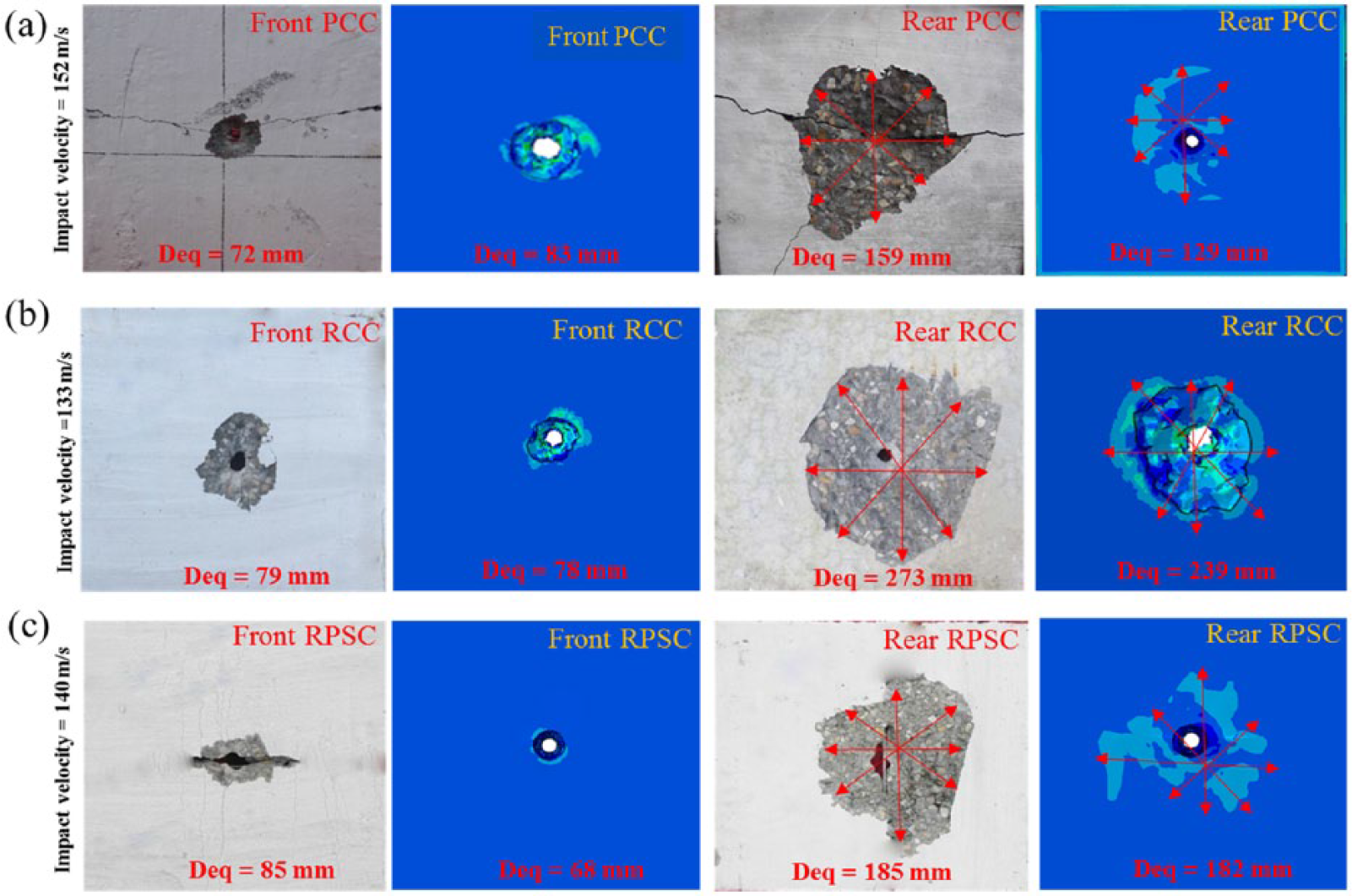
Tested specimens of 80-mm thickness: (a) plain, (b) reinforced, and (c) prestressed concrete targets.
Quantification of damage and ballistic resistance
The equivalent diameter (Deq) of the front and rear surface crater was defined as the average value between the four diameters measured in different orientations (see Figure 6). The details of measures for equivalent diameters are reported in Table 3. It can be noticed that the front surface shows a low level of damage, and additionally, its variation with respect to impact speed and concrete properties was negligible. On the contrary, the impact speed had a significant influence on the rear surface crater. For a given concrete, the diameter of the crater, in the case of rear surface, decreased with the increase in the projectile speed. Furthermore, for a specific incidence velocity, higher size in the crater was recognized in the case of prestressed concrete target, followed by reinforced and plain concrete cases. However, it should be noticed that the depth of rear surface crater was found shallow (in depth) for prestressed concrete target.
Equivalent crater diameter in different concrete targets.
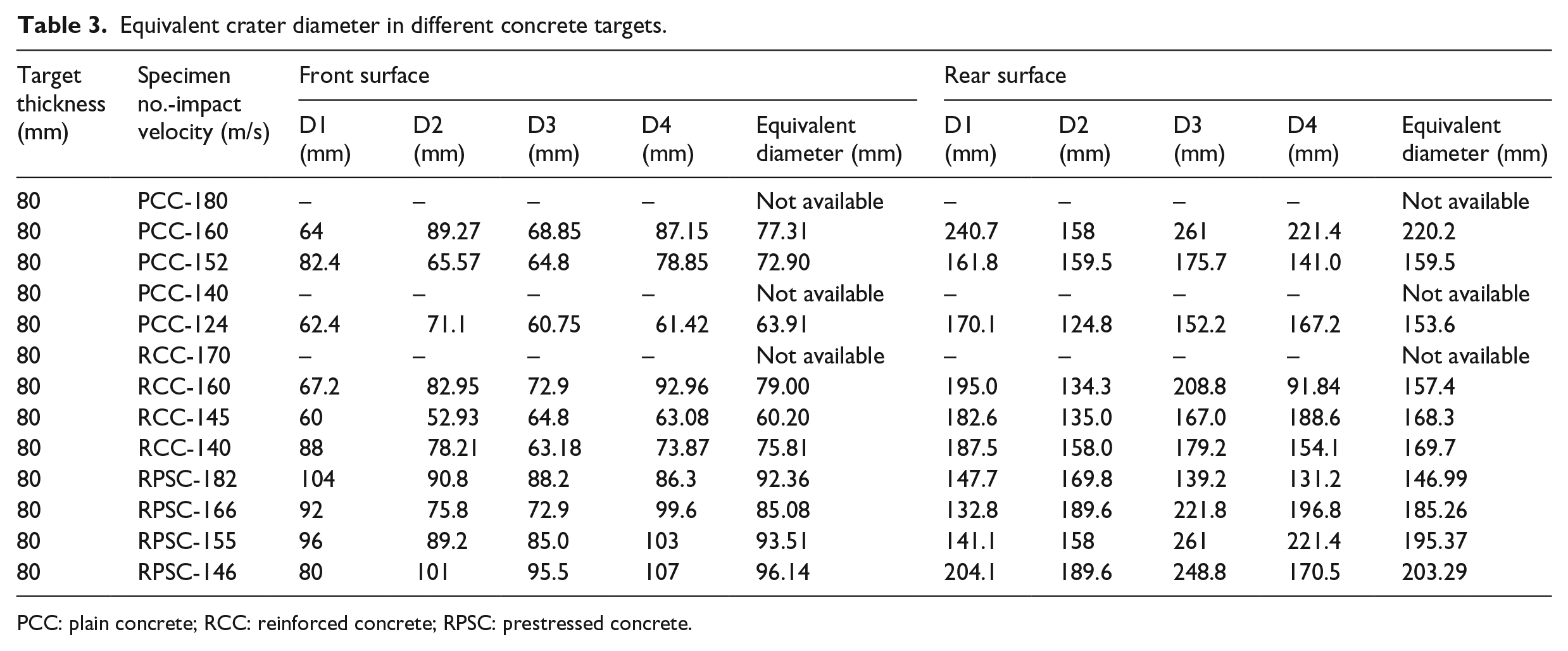
PCC: plain concrete; RCC: reinforced concrete; RPSC: prestressed concrete.
In order to provide additional information regarding the damage induced in the different concrete targets (e.g. in terms of eroded material), the volume of craters was obtained for each target (see Table 4).
Volume eroded in the case of different concrete targets.
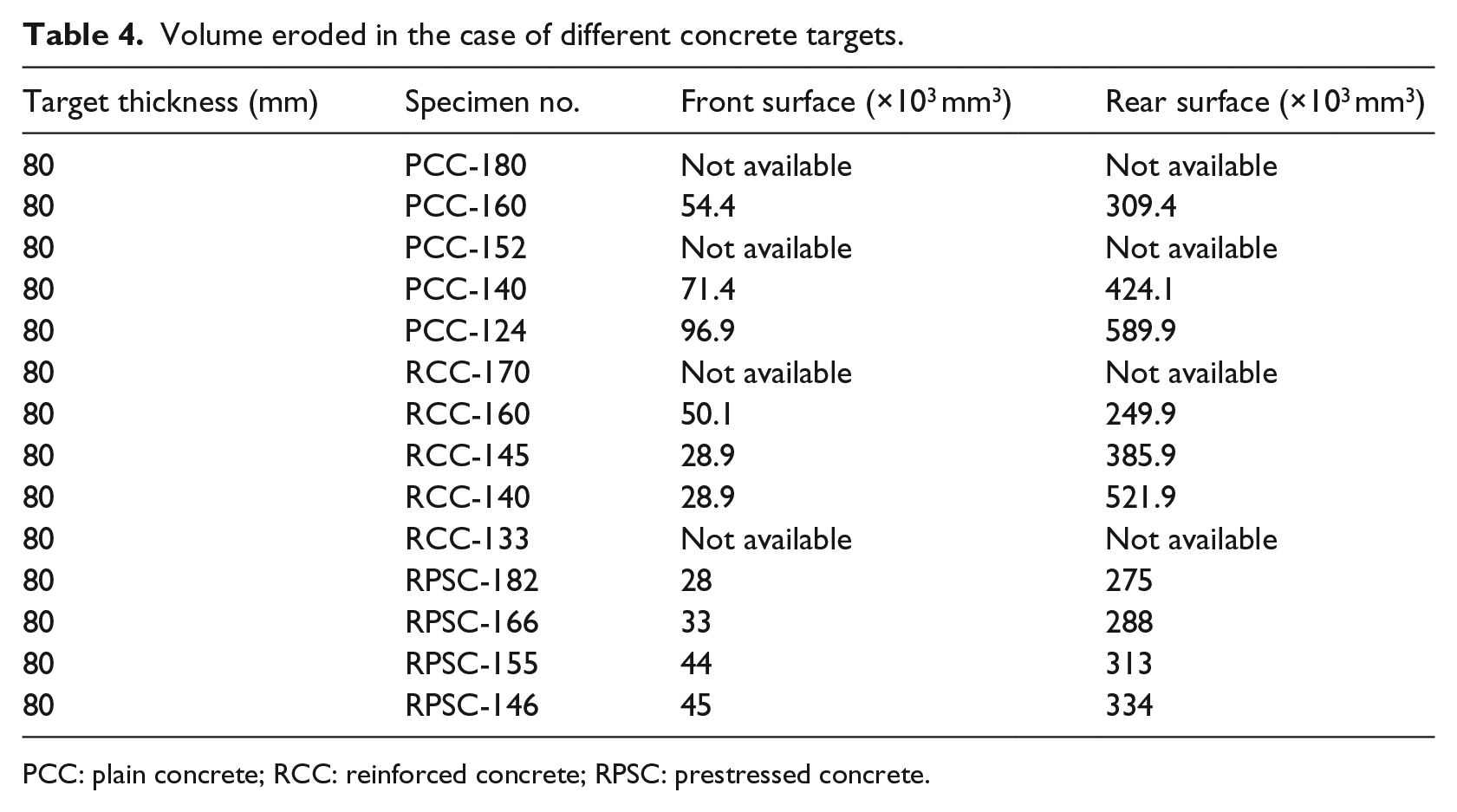
PCC: plain concrete; RCC: reinforced concrete; RPSC: prestressed concrete.
The volume of spalling has been noticed to be rather low, and additionally, its variability could not be appreciated with respect to the projectile speed and the type of concrete. Furthermore, the volume of scabbing has shown to be more influenced by the incidental velocity than by the type of concrete. In particular, this volume increased with the decrease in the incidence velocity. The volume of scabbing was highest in the plain concrete, followed by reinforced and 10% prestressed concrete (see Figure 7(a) to (c)).
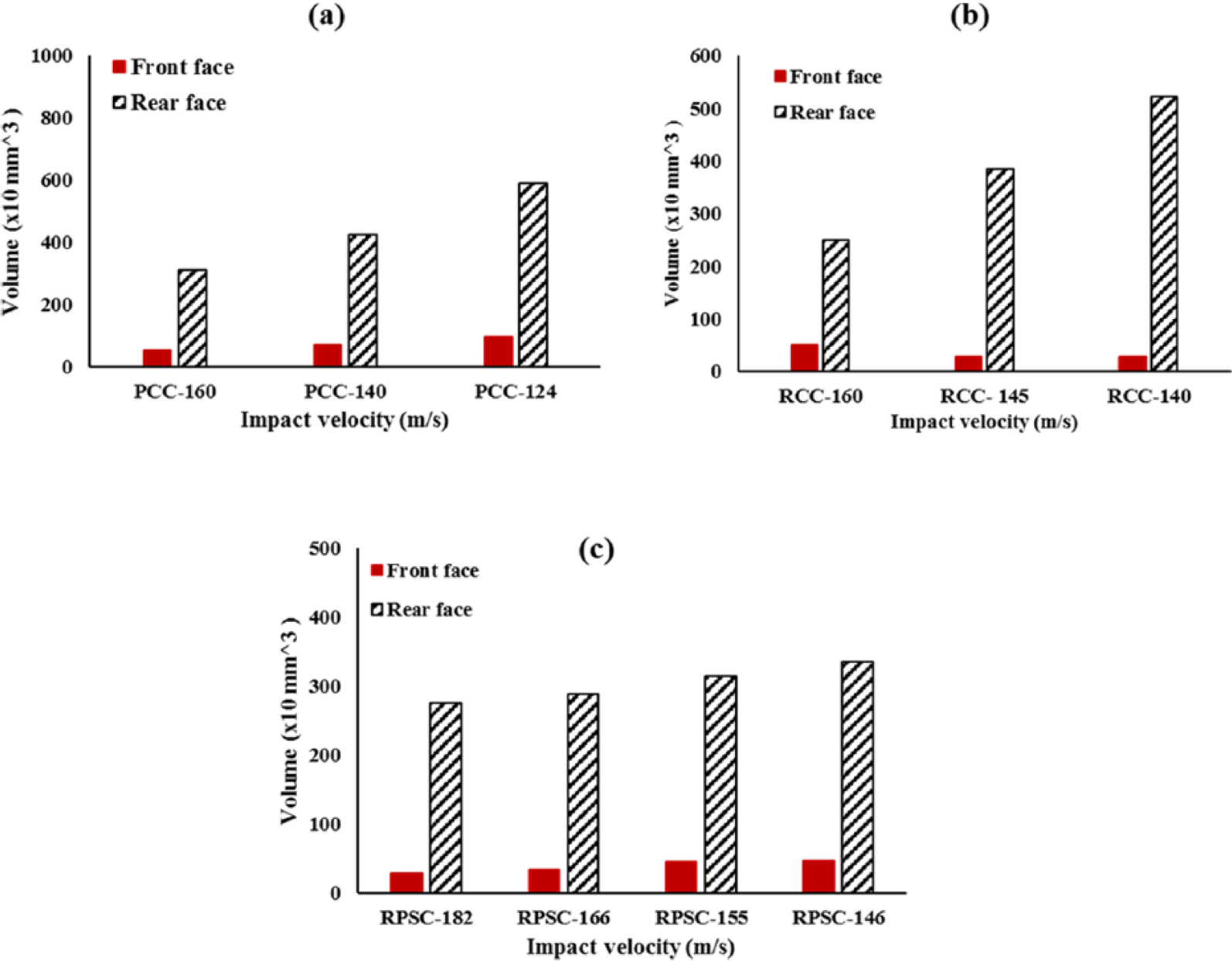
Scabbing and spalling effect for a 80-mm target in the case of (a) plain, (b) reinforced, and (c) prestressed concrete.
The FE simulations have predicted failure modes, crater diameter, and residual velocities of projectile in agreement with the residual velocities of the projectile obtained through ballistic impact experiments.
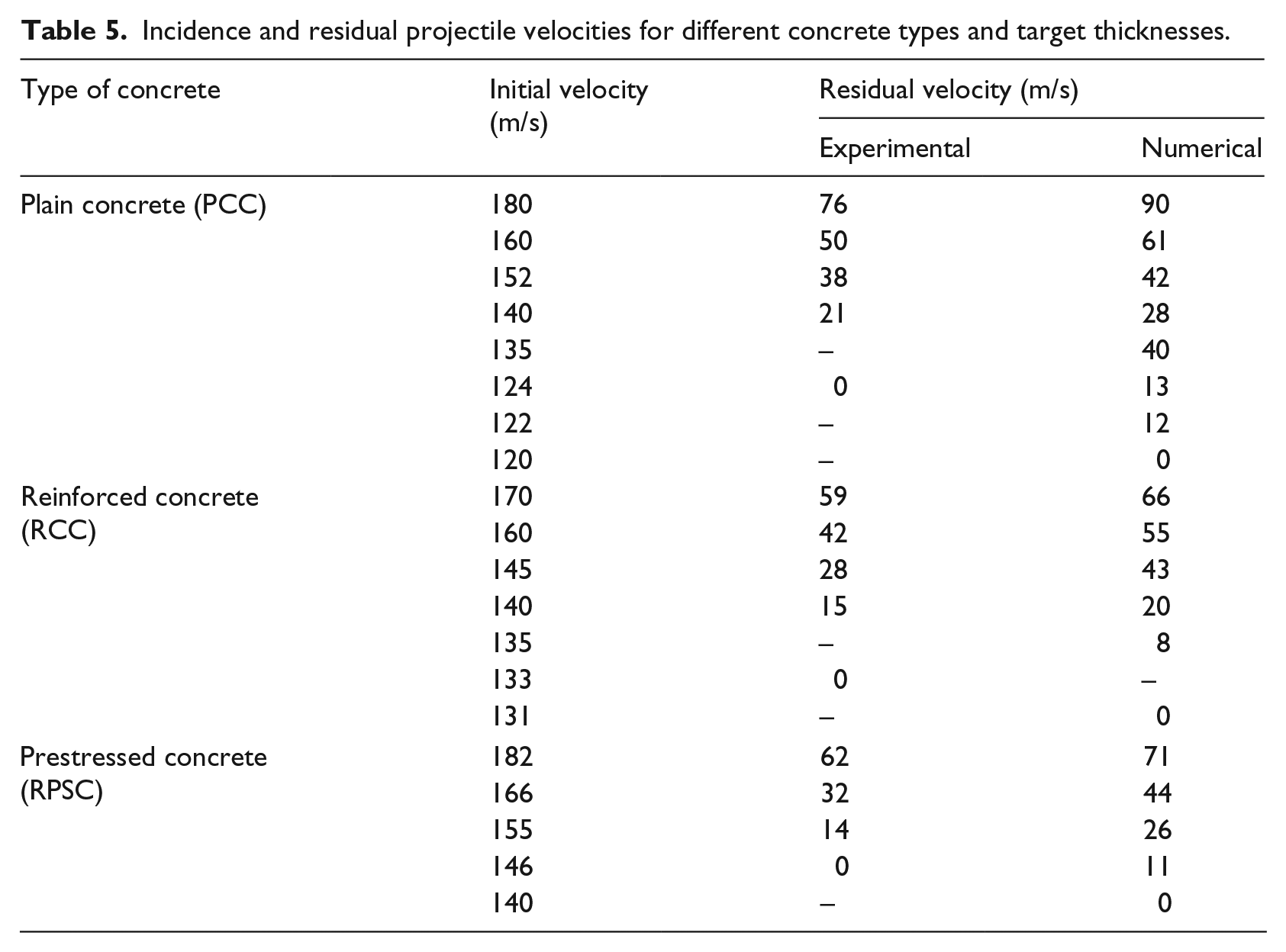
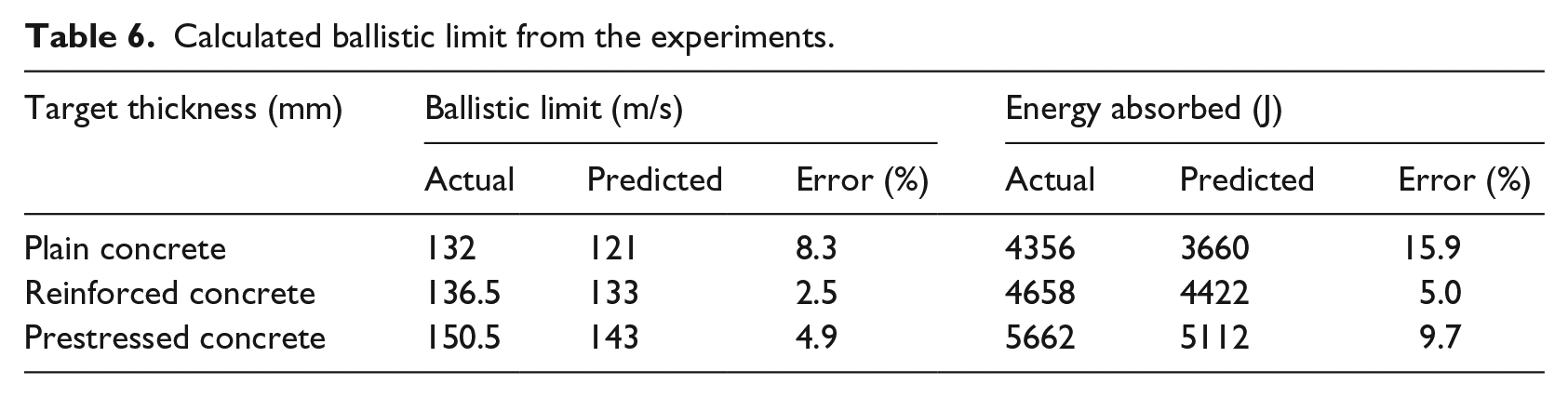
The impact and residual velocities were obtained using a high-speed video camera, as shown in Table 5. The actual and predicted velocities of the projectile impacting on the target are plotted in Figure 8. The overall resistance of the concrete to the ballistic impacts has been measured and increased with the decrease in the impact speed (see Figure 8). This effect was found most relevant for prestressed concrete followed by reinforced and plain concrete, respectively. The ballistic limits of the concretes under investigation have been obtained as the average of the highest velocity giving partial penetration and the lowest velocity giving a complete perforation of the target (see Table 6). The ballistic limit of prestressed concrete targets measured through the experiments was found to be 10.2% and 14% higher than the reinforced and plain concrete targets, respectively. The energy absorption capacity of the prestressed and reinforced concrete targets was found to be 30% and 7% higher than that of the plain concrete target (see Table 6).
Incidence and residual projectile velocities for different concrete types and target thicknesses.
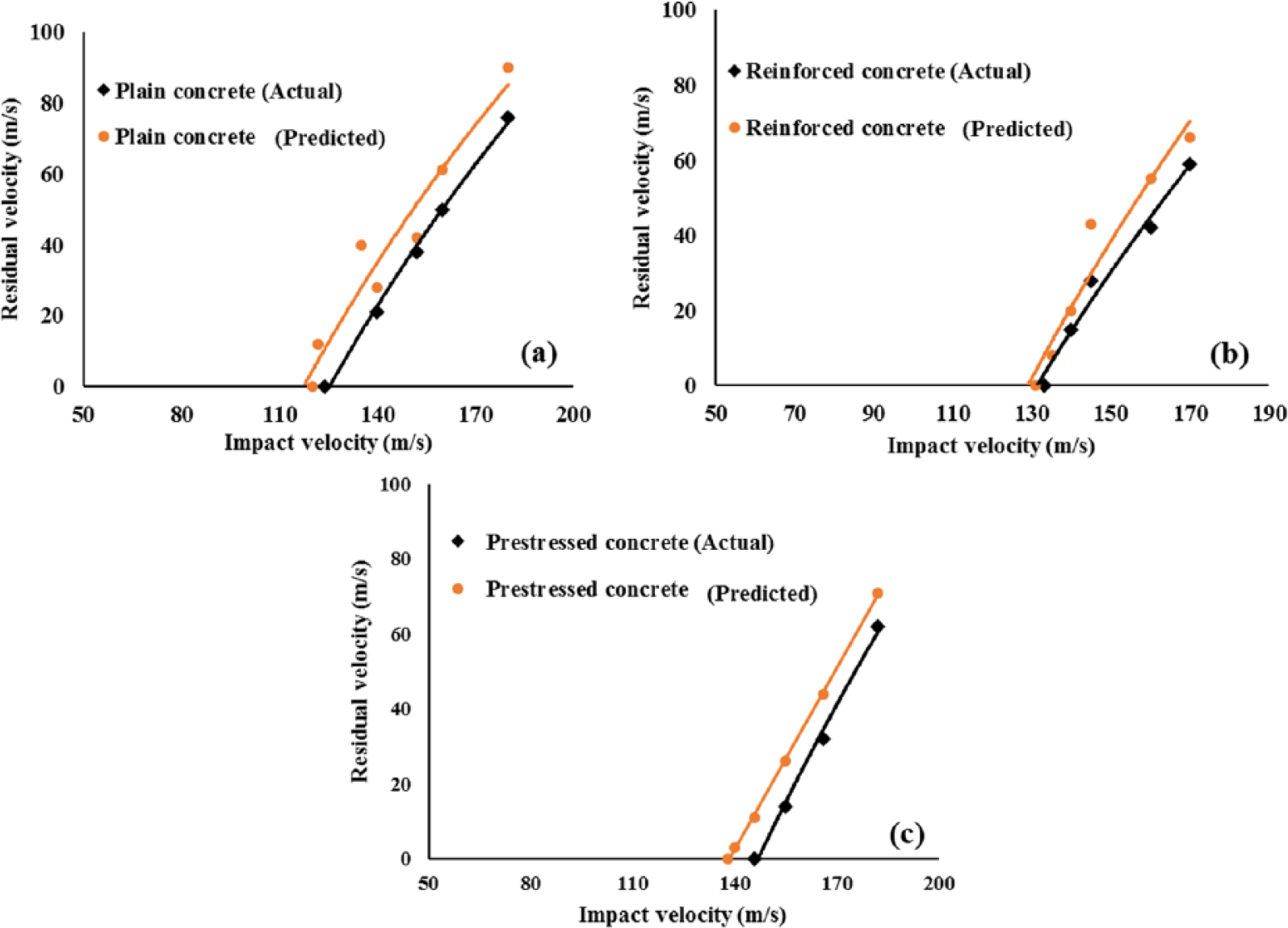
Comparison between actual and predicted residual velocities of projectiles subjected to: (a) plain, (b) reinforced, and (c) prestressed concrete.
Calculated ballistic limit from the experiments.
The initial prestressing has proved to be effective in minimizing the damage and improving ductility of concrete. It is noteworthy that the damaging effect of the projectile impact on the concrete is due to the presence of tensile component in the stresses. Besides, since the presence of an initial compressive stress, the magnitude of tensile stress decreased. Therefore, the prestressed concrete underwent comparatively lesser damage and offered higher ballistic resistance in comparison with reinforced and plain concrete targets.
Conclusion
The projectile impact experiments have been performed on the prestressed concrete (48 MPa) targets and compared with the experiments earlier carried by (Fragassa, 2016; Pavlovic and Fragassa, 2016) on the plain and reinforced concrete targets. The ballistic limit of prestressed, reinforced, and plain concrete target was predicted with the deviation of 5%, 3%, and 8% of actual results, respectively. Due to the introduction of prestresses in the concrete plates, there is a huge decrease noticed in the volume of scabbing. The magnitude of volume that was ejected from the concrete target was found to be decreased with the increasing projectile impact velocity.
For given projectile impact velocity, the equivalent size of crater was found higher in case of prestressed concrete; however, the depth of crater was found shallow in comparison with targets in reinforced or plain concrete. Hence, the initial prestressing has proved to be effective in minimizing the damage and improving ductility of concrete. It is also found that the highest ballistic resistance was offered by the prestressed concrete target, followed by reinforced and plain concrete targets.
Footnotes
Declaration of conflicting interests
The author(s) declared no potential conflicts of interest with respect to the research, authorship, and/or publication of this article.
Funding
The author(s) disclosed receipt of the following financial support for the research, authorship, and/or publication of this article: This work was supported by the Science and Engineering Research Board, Department of Science and Technology, India, through the research grant no. SB/S3/CEE/0032/2014 for carrying out this study.