







Abstract
Sandwich panels are widely used in various industries such as aerospace, marine, and automotive due to their high strength-to-weight ratio and excellent energy absorption capability. In this study, the ballistic resistance of sandwich panels with aluminum 1050 and polyurea face sheets and semi cylindrical and hemi-spherical quasi-corrugated cores are numerically investigated. The effects of curvature, core wave geometry, number and arrangement of core layers, presence of the polyurea layer, and projectile impact location on the core are examined. The panels are subjected to high-velocity impacts (ranging from 50 to 408 m/s) using a flat-nosed cylindrical projectile with a diameter of 7.62 mm and a length of 25.4 mm. The main objective of this study is to enhance the specific ballistic resistance (strength-to-weight ratio) of sandwich panels. The main results indicate that by changing the core geometry from flat to curved, the ballistic limit velocity and the specific ballistic strength increased by 7.5% and 6%, respectively. In single-layer cores, changing the core wave geometry from hemi-spherical to semi-cylindrical resulted in a 12.3% increase in ballistic limit velocity and a 26.1% increase in specific ballistic strength. In double-layer cores, rearranging the layers with different wave geometries (from semi cylindrical–hemi spherical to hemi spherical–semi cylindrical) led to increases of 4.2% and 22.1% in ballistic limit velocity and specific ballistic strength, respectively. The use of a polyurea face sheet in the sandwich panel increased the ballistic limit velocity and specific ballistic strength by 37.7% and 45.7%, respectively.
Introduction
Sandwich panels with quasi-corrugated cores have attracted considerable attention as advanced structural components in engineering applications due to their high strength-to-weight ratio and superior specific energy absorption capability. These novel geometries, through the formation of complex deformation patterns, enable efficient stress distribution and enhance impact performance under severe dynamic loading conditions. The investigation of the ballistic resistance of these structures under high-velocity impact conditions plays a crucial role in optimizing their performance in aerospace, automotive, and protective equipment industries. In recent years, numerous studies have been conducted on the ballistic resistance of sandwich panels and the effects of core thickness and geometry, face sheet thickness and material, as well as projectile type and geometry on the ballistic behavior of targets subjected to high-velocity impacts. The majority of these studies have reported improvements in the ballistic resistance of sandwich panels against high-speed impacts. Dolati and Shariati (2022) numerically and experimentally investigated the high-velocity impact response of composite sandwich panels with trapezoidal corrugated cores. Their results indicated that the use of Twill glass fibers in the core, combined with a (0°/±45°/90°)s layup sequence in the face sheets, produced the highest energy absorption and ballistic resistance. Moreover, hemi spherical projectiles traveled along their path without deviation, whereas deviations in other projectile types led to a reduction in the damaged area of the specimens. Zhang, R. et al. (2025) investigated the ballistic resistance of hybrid metallic corrugated sandwich panels incorporating ceramic insertions under single and multi-hit impact conditions. The results show that the inclusion of ceramic elements increases the ballistic limit velocity by approximately 20–35% compared to conventional metallic corrugated cores. Energy absorption capacity is also significantly enhanced, with reported improvements on the order of 30% depending on the impact location and ceramic distribution. The study demonstrates that impact location plays a critical role, with off-center and multi-hit scenarios leading to noticeable variations in penetration resistance. Overall, the hybrid corrugated–ceramic design offers a substantial improvement in ballistic performance while maintaining a lightweight structural configuration. Wang et al. (2023) investigated the ballistic behavior of sandwich panels with corrugated cores reinforced with an elastomer layer under high-velocity projectile impacts (700–1400 m/s). Experimental results showed that adding the elastomer layer increased ballistic resistance and energy absorption by up to 28.7% compared to panels without the elastomer, while reducing projectile penetration depth by 32%. Additionally, stress distribution became more uniform, and plastic deformation in the face sheets decreased by up to 19%. Numerical simulations exhibited good correlation (R2 = 0.92) with experimental data, confirming the accuracy of the results. Ahmadi and Liaghat (2020) proposed a novel analytical model to predict the ballistic limit and residual velocity of sandwich panels subjected to high-velocity impacts from flat-nosed cylindrical projectiles. Their findings indicated that crushing and fracture of the core material accounted for 58% to 80% of the total energy absorbed by foam-cored sandwich panels. Zhang et al. (2022) used numerical simulations to investigate the ballistic resistance of circular corrugated sandwich structures. The results showed that employing UHMWPE fibers as the top face sheet significantly enhanced the ballistic resistance compared to an all-metal structure. Furthermore, a hybrid configuration with a composite top face sheet, aluminum core, and aluminum bottom face sheet demonstrated superior performance in energy absorption and projectile velocity reduction compared to fully aluminum structures. Peng Zhang et al. (2019) investigated the ballistic resistance of low-carbon steel plates coated with polyurea against impacts from cubic projectiles. Polyurea layers with low and high hardness were applied to the front and back surfaces of the steel plates. The study revealed that front coatings significantly enhanced ballistic resistance and specific energy absorption compared to rear coatings for both low- and high-hardness polyurea. Overall, using steel plates with high-hardness polyurea on the front surface of the target resulted in the highest ballistic resistance. Kösedağ and Ekici (2025) investigated the ballistic performance of sandwich structures with different core and face-sheet configurations under high-velocity projectile impact. Numerical simulations and experimental observations are used to compare penetration resistance, energy absorption mechanisms, and failure modes across various sandwich designs. The results show that core configuration and material selection play a critical role in governing ballistic limit velocity and back-face deformation. Certain sandwich configurations demonstrate improved ballistic resistance by enhancing stress redistribution and delaying core collapse during impact. The study provides comparative insights that support the optimization of sandwich panel design for lightweight ballistic protection applications. Alavi Nia and Kazemi (2020) investigated the ballistic resistance of sandwich structures with aluminum face sheets and polyurethane foam cores graded with different densities. The study showed that increasing the density and thickness of the foam core led to higher ballistic limits and energy absorption. Additionally, for sandwich structures with the same mass, the ballistic limit of panels with graded foam cores in three-layer and five-layer configurations was 10.37% and 5.57% higher, respectively, than that of a single-layer foam core with average density. Abbasi et al. (2018) examined the effects of core layering and layer arrangement on the ballistic resistance of sandwich structures under high-velocity impacts. They used steel cylindrical projectiles with hemi spherical noses, 8 mm in diameter and 20 mm in length, with initial velocities ranging from 180 to 320 m/s. The results indicated that core layering increased the ballistic limit of the sandwich structures, and panels with four-layer cores in various arrangements exhibited ballistic limit velocities 5% to 8% higher than those of single-layer core panels. Additionally, for single-layer core structures, increasing the core density led to a higher ballistic limit velocity. Ahmadi et al. (2020) experimentally investigated the impact resistance of sandwich panels with hybrid foam cores under high-velocity impacts. In this study, high-velocity impact tests were conducted using a light gas gun and a flat-nosed cylindrical steel projectile with a 10 mm diameter, and the ballistic limit was measured. The results showed that ballistic resistance decreased with an increasing volume fraction of microballoons, while the panel with a 40% microballoon volume fraction required the highest energy for penetration. Furthermore, the incorporation of nanofillers into the hybrid foam core increased the ballistic limit velocity by up to 10%. Roham et al. (2020) experimentally investigated the ballistic behavior of sandwich panels with corrugated cores under high-velocity impacts from cylindrical flat-nosed projectiles. The sandwich panel cores were made of aluminum with a thickness of 0.3 mm and featured trapezoidal and triangular cross-sections. The results indicated that the ballistic limit and energy absorption of panels with triangular cores were 18% higher than those with trapezoidal cores. Wang X et al. (2022) investigated the shock resistance of metallic corrugated core sandwich panels strengthened with an elastomeric coating through combined experimental and numerical analyses. The results show that the application of the elastomer layer leads to a substantial reduction in permanent back-face deformation, on the order of several tens of percent, compared to uncoated panels under identical loading conditions. Additionally, the elastomer-strengthened panels exhibit noticeably higher energy absorption capacity and delayed onset of core collapse during high-rate loading. Numerical simulations indicate that the coating enhances stress redistribution within the corrugated core and reduces localized plastic strain concentrations. Overall, the study quantitatively demonstrates that elastomeric strengthening can significantly improve the dynamic and shock resistance of lightweight sandwich structures. Fabrizio and Di Lorenzo (2023) investigated the penetration resistance of composite sandwich structures with a honeycomb core coated with a polyurethane elastomer under high-velocity impact. Experimental and numerical results indicate that the elastomer-coated specimens exhibit a noticeable increase in ballistic limit velocity compared to uncoated configurations. The presence of the elastomer layer significantly reduces back-face deformation and delays the onset of core crushing and face-sheet failure. Quantitatively, the coated structures demonstrate improved energy absorption capacity and more distributed damage patterns, with reductions in localized stress concentration on the order of several tens of percent. The study confirms that elastomeric coatings are an effective means of enhancing penetration resistance and impact tolerance in lightweight sandwich structures. Komeh and Feli (2024) examined the effects of geometric configuration of corrugated cores on the ballistic resistance and energy absorption of sandwich panels with composite face sheets under high-velocity impacts. The sandwich panels consisted of carbon- and glass-fiber-reinforced composite face sheets and aluminum-based corrugated cores in square, trapezoidal, arch, sinusoidal, and triangular shapes. The results indicated that sandwich panels with trapezoidal and square corrugated cores experienced contact forces over larger areas, resulting in higher ballistic limits, greater energy absorption, and larger damage zones. Brovik et al. (2002) used projectiles with three different nose shapes (flat, hemispherical, and conical) in ballistics tests to penetrate Weldox 460 E steel plates. They concluded that the projectile nose shape significantly affects both energy absorption and target failure patterns during penetration. Moslemi et al. (2018) conducted numerical and analytical investigations of the ballistic penetration of flat-nosed projectiles into ceramic targets at high velocity (1000 m/s) with impact angles of 0°, 15°, 30°, and 45°. The results showed that increasing the impact angle reduced target penetration. Moreover, when an 8 mm diameter projectile impacted the target, a decrease in the impact angle led to a lower residual velocity. Flores et al. (2011) examined the ballistic performance of single-, double-, and triple-layer metallic plates made of Weldox 700E steel, 7075-T6 aluminum, or combinations of these materials. The study demonstrated that single-layer plates exhibited better ballistic performance than multilayer plates made of the same material, although this effect diminished at higher impact velocities. Additionally, double-layer plates with a thin aluminum front sheet and a thick steel backing showed higher ballistic resistance than multilayer steel plates with a similar areal density. Cai et al. (2015) conducted numerical and experimental investigations on the ballistic resistance of TC-128 steel plates coated with polyurea. Their results demonstrated that the presence of a polyurea layer increased the ballistic limit velocity and reduced the post-penetration hole diameter. Yue Xin et al. (2019) studied the numerical and experimental response of polyurea-coated steel plates under high-velocity impacts. The energy absorption capability was evaluated for cases where polyurea was applied on the front layer, back layer, and both sides of the plate. The study showed that direct exposure of polyurea to the impact resulted in higher energy absorption. Moreover, increasing the polyurea thickness enhanced its impact resistance. Najafi et al. (2018) investigated the penetration of 14.5 mm caliber bullets into ultra-high-strength steel plates Hardox 450 and Hardox 500 with a thickness of 30 mm. The study revealed that Hardox 500 with 30 mm thickness could reliably resist complete bullet penetration at an initial velocity of 911 m/s, whereas under the same conditions, the bullet fully penetrated Hardox 450. Çelik and Gürol (2025) evaluated both mechanical properties and ballistic resistance of high-hardness armor steel joints using fully austenitic and sandwich (hard-faced) welding designs. The sandwich joint configuration with a hard-faced interlayer achieved partial penetration (≈11 mm) under 7.62 × 51 mm AP ballistic impact, compared to complete penetration in the fully austenitic weld, indicating superior ballistic performance. Mechanical testing revealed that the sandwich joint’s yield strength and tensile strength were reduced by roughly 41% and 27%, respectively, compared to the fully austenitic joint due to the brittle hard-faced layer, while both configurations-maintained military-standard hardness levels within the heat-affected zone. Charpy impact toughness results showed the sandwich joint’s weld region absorbed ≈34 J and its HAZ region ≈45 J, corresponding to ≈70% and 125% increases over the base metal, though still lower than the austenitic joint’s toughness. These findings demonstrate that the sandwich welding design offers a robust compromise between improved ballistic resistance and acceptable mechanical performance for armor steel applications Ha et al. (2022) experimentally and numerically investigated the ballistic resistance of T351-2024 aluminum alloy plates with varying thicknesses under flat-nosed projectile impacts. The aluminum alloy plates had thicknesses of 2, 4, 4.82, and 8 mm. The results indicated that the plates failed primarily through shear fracture regardless of the target thickness, and it was also observed that increasing the target thickness reduced the ballistic limit velocity. Pradeep Kumar et al. (2025) investigated experimentally and numerically the ballistic impact resistance of a novel sandwich composite comprising silica aerogel, viscoelastic sorbothane, and graphite layers. The optimized layer sequence (graphite face, aerogel intermediate, Sorbothane backing) exhibits superior resilience against shockwaves and bullet impacts, with no observable surface damage after shock treatment at an average reflected pressure of 12 bar. Experimental findings demonstrate that when silica aerogel serves as the strike face, penetration resistance improves significantly compared to configurations with graphite outer layers. Aerogel’s low density (≈0.0011 g/cm3) combined with its high stiffness enhances energy absorption, extending ballistic limit under projectile impact (e.g., resisting velocities above typical air-gun testing conditions ≈300 m/s). The study highlights that tailored material selection and hybrid composite design can substantially improve impact and shock resistance in lightweight protective structures Borovik et al. (2009) also investigated experimentally and analytically the mechanisms and parameters of sharp-rod projectiles and 7.62 mm APM2 projectiles impacting 5083-H116 aluminum plates. Hardened steel rods with a diameter of 20 mm, length of 95 mm, and mass of 197 g were launched using a gas gun at velocities ranging from 230 to 370 m/s. The measured ballistic limit velocities for APM2 projectiles were 4%, 6%, and 12% lower than those of the hardened steel rods for targets with thicknesses of 20, 40, and 60 mm, respectively. Chen and Hao (2012) numerically investigated a multi-arch double-layered blast-resistant sandwich panel under impulsive loading. Their results showed that the multi-arch configuration significantly reduced panel deflection and improved energy dissipation compared with conventional single-layer corrugated cores of similar mass, and furthermore led to a more uniform stress distribution in both the core and the face sheets. Chen and Hao (2014) experimentally and numerically investigated the dynamic response of multi-arch double-layered sandwich panels subjected to uniform impulsive loading. They concluded that the double-layered multi-arch configuration significantly reduced the maximum mid-span deflection compared with single-layer panels of similar mass. The experiments also confirmed that the curved core geometry promotes more effective load redistribution and energy absorption. Li et al. (2018) numerically investigated sandwich panels with a bi-directional load-self-cancelling (LSC) core subjected to blast loading. Their results showed that the LSC core significantly reduced the impulse transmitted to the face sheets compared with conventional corrugated cores of similar mass. The bi-directional curved geometry led to a more uniform stress distribution and improved energy dissipation in the core.
A review of recent studies indicates that the ballistic resistance of panels with semi cylindrical and hemi spherical quasi-corrugated cores has not been thoroughly investigated. Therefore, in the present study, sandwich panels with 1050 aluminum cores featuring either semi-cylindrical waves or hemi-spherical cavities (in single or multi-layer configurations) and aluminum 1050–polyurea face sheets were employed to enhance the ballistic resistance of the targets against flat-nosed steel projectiles. It is anticipated that the core surface curvature, multilayer core configuration, and the incorporation of a polyurea layer will have a significant effect on the ballistic performance of the panels.
Problem definition
Numerous studies have been conducted on the ballistic resistance of sandwich panels under high-velocity impacts. However, structures combining polyurea and 1050 aluminum as face sheets with panels featuring specially designed core geometries, as proposed in this study, have not yet been investigated. It is anticipated that this combination will enhance the ballistic resistance of sandwich panels. Therefore, the use of polyurea and aluminum face sheets in combination with semi-cylindrical or hemi-spherical quasi-corrugated cores, as well as the examination of the effect of the number of core layers on the ballistic performance of sandwich panels, can be considered the innovation of this research. The overall configuration of single- and multi-layer quasi-corrugated core sandwich panels examined in this study is illustrated in Figures 1–6. (a) The first proposed sandwich panel with a single-layer semi-cylindrical quasi-corrugated core, (b) the core used in the panel, (c) front view (cross-section) of the core. (a) The second proposed sandwich panel with a two-layer semi-cylindrical quasi-corrugated core, (b) the core used in the panel, (c) front view of the core. (a) The third proposed sandwich panel with a single-layer hemi-spherical cavity core, (b) the core used in the panel, (c) front view of the core. (a) The fourth proposed sandwich panel with a two-layer hemi-spherical cavity core, (b) the core used in the panel, (c) front view of the core. (a) The fifth sandwich panel with a two-layer core combining hemi-spherical and semi-cylindrical waves, (b) the core used in the panel, (c) front view of the core. (a) The sixth sandwich panel with a two-layer core combining semi-cylindrical and hemi-spherical waves, (b) the core used in the panel, (c) front view of the core.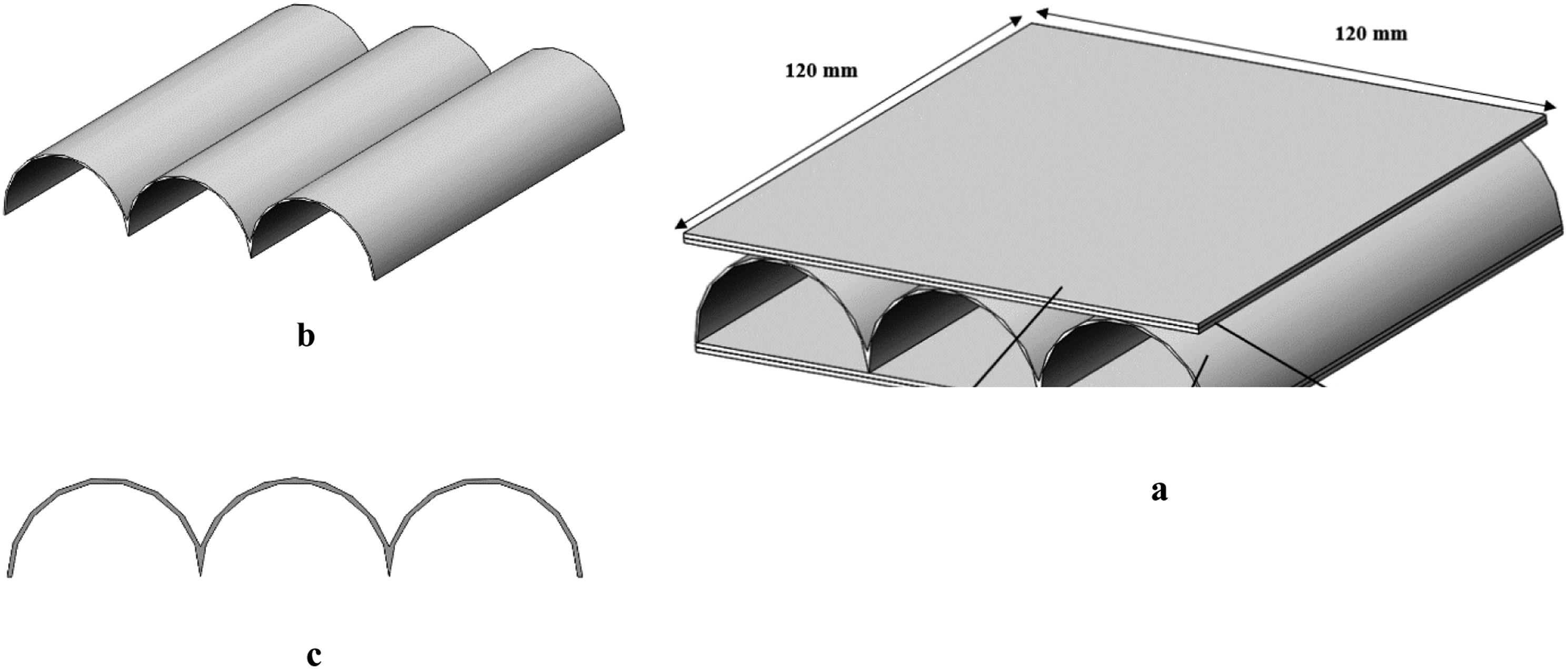
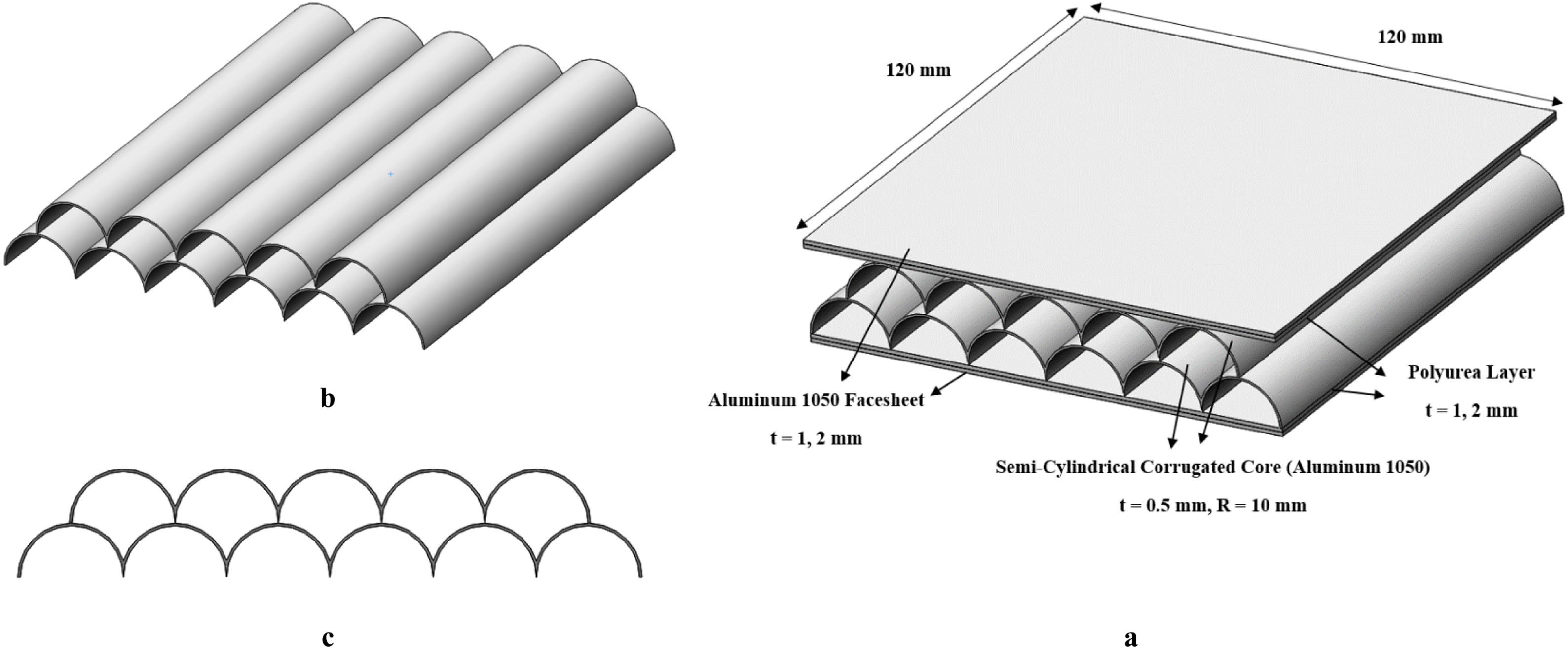
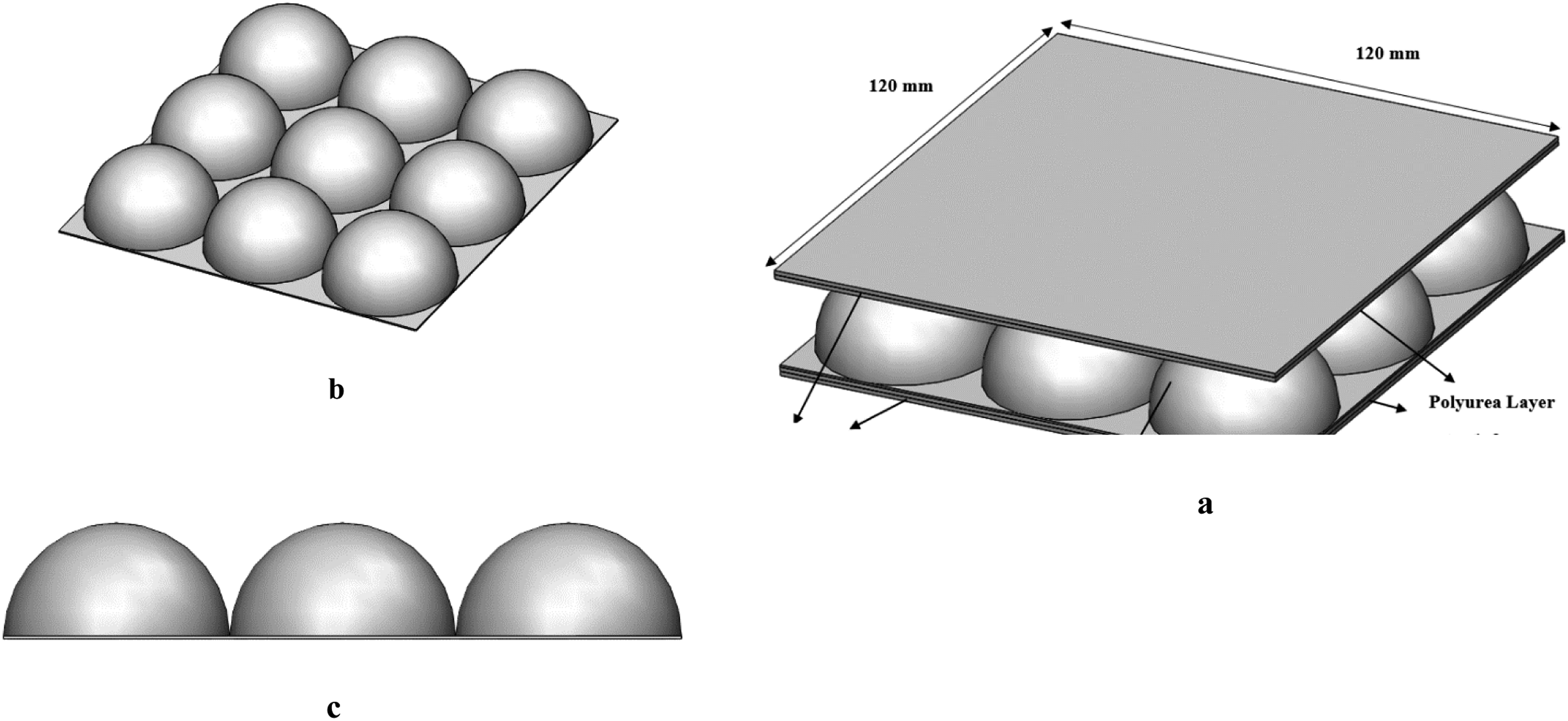
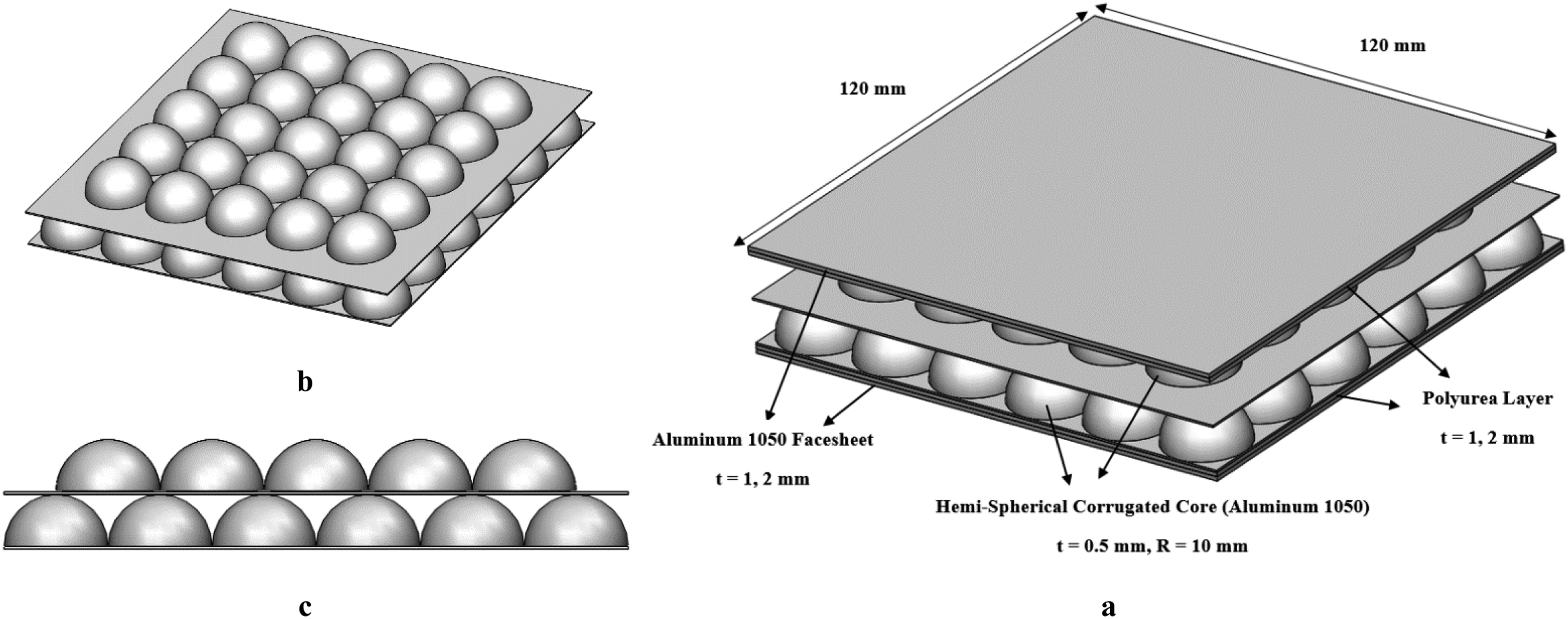
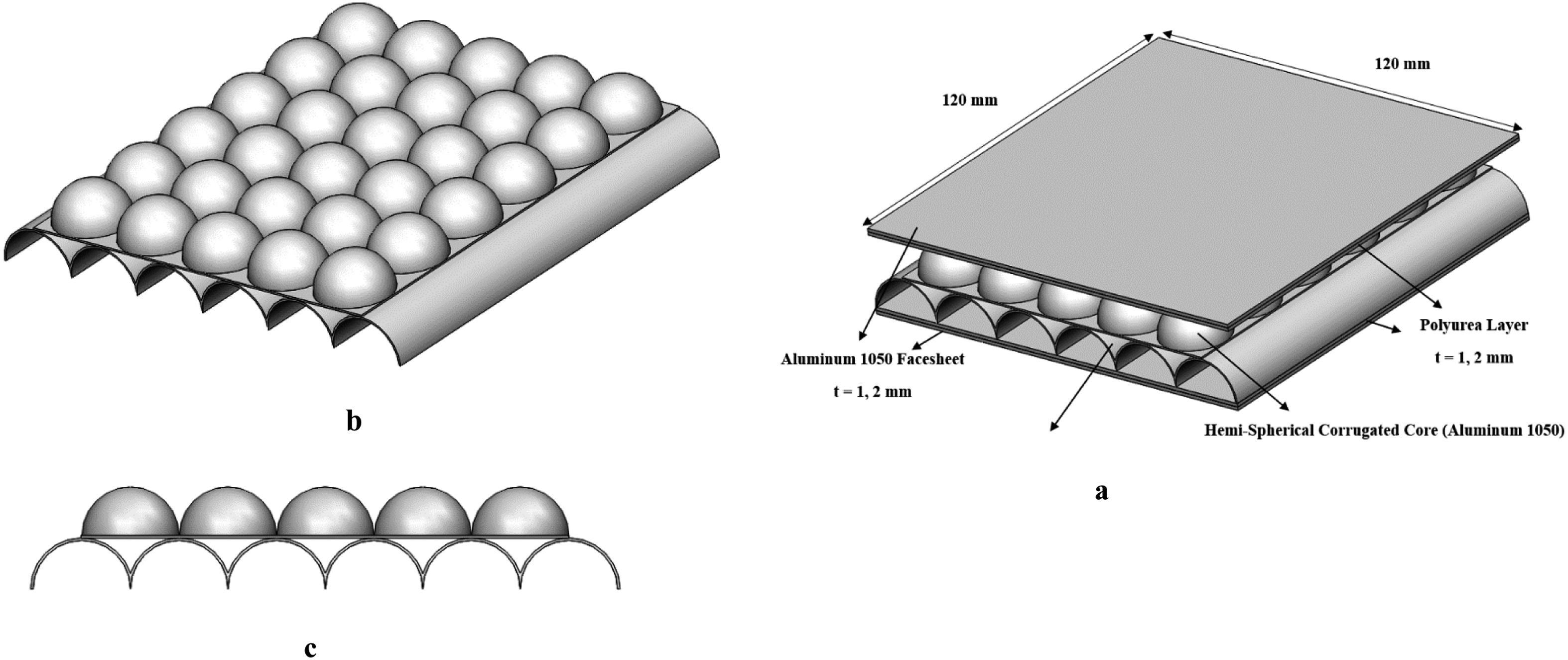
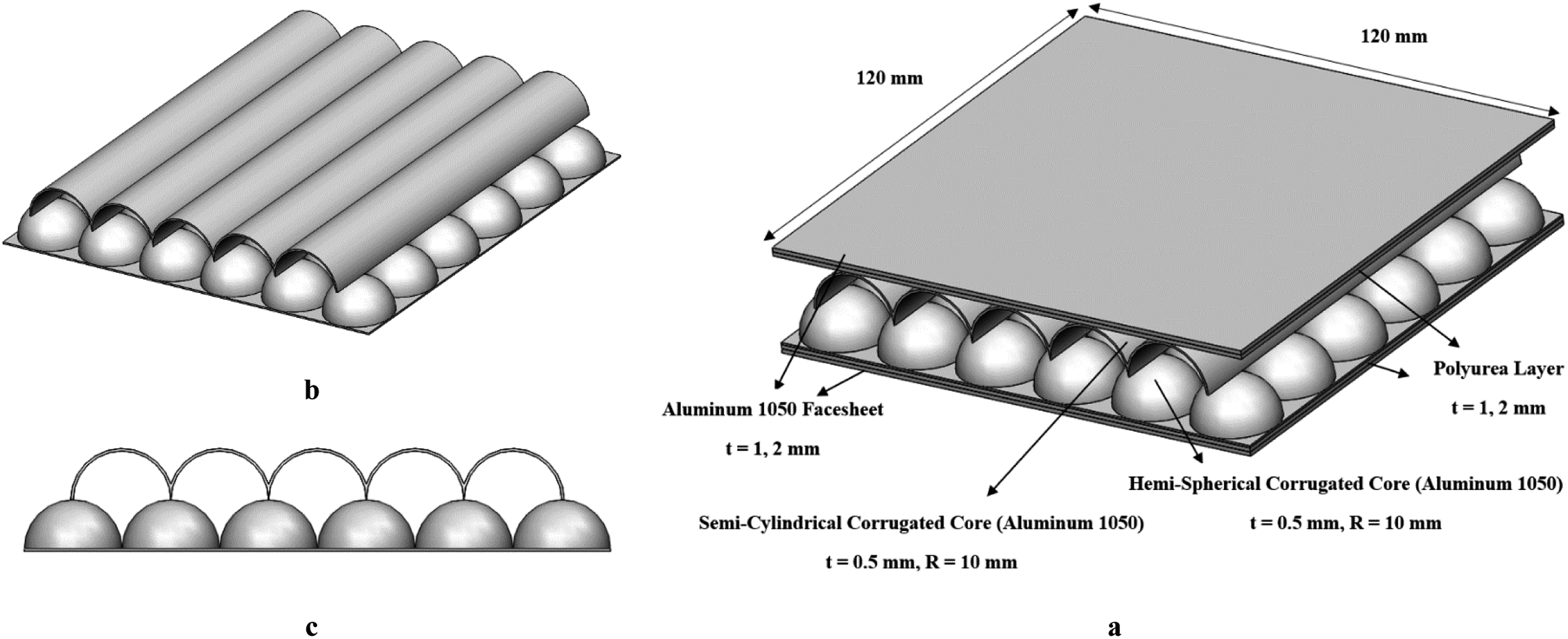
In these structures, aluminum sheets are used as the outer face sheets, and a polyurea sheet is applied on both sides of the quasi-corrugated core. The panel surface dimensions are 120 × 120 mm. Another factor examined in this study is the projectile impact location, for which three suggested impact points on the sandwich panel are considered (Figure 7). In this research, the effects of the following three factors on the ballistic resistance of the sandwich panels are investigated: (1) Core Curvature: When a projectile strikes a curved surface, its velocity vector is generally not normal to the surface. The velocity can be decomposed into components normal and tangential to the surface. The kinetic energy contributing to structural damage is associated with the normal component. Therefore, curving the impact surface reduces the effective kinetic energy causing damage to the structure. (3) Projectile Impact Location: The considered impact points on the sandwich panels are shown in Figure 7. Projectile impact locations on the sandwich panel: (a) top of the wave, (b) middle of the wave, (c) junction between two waves.
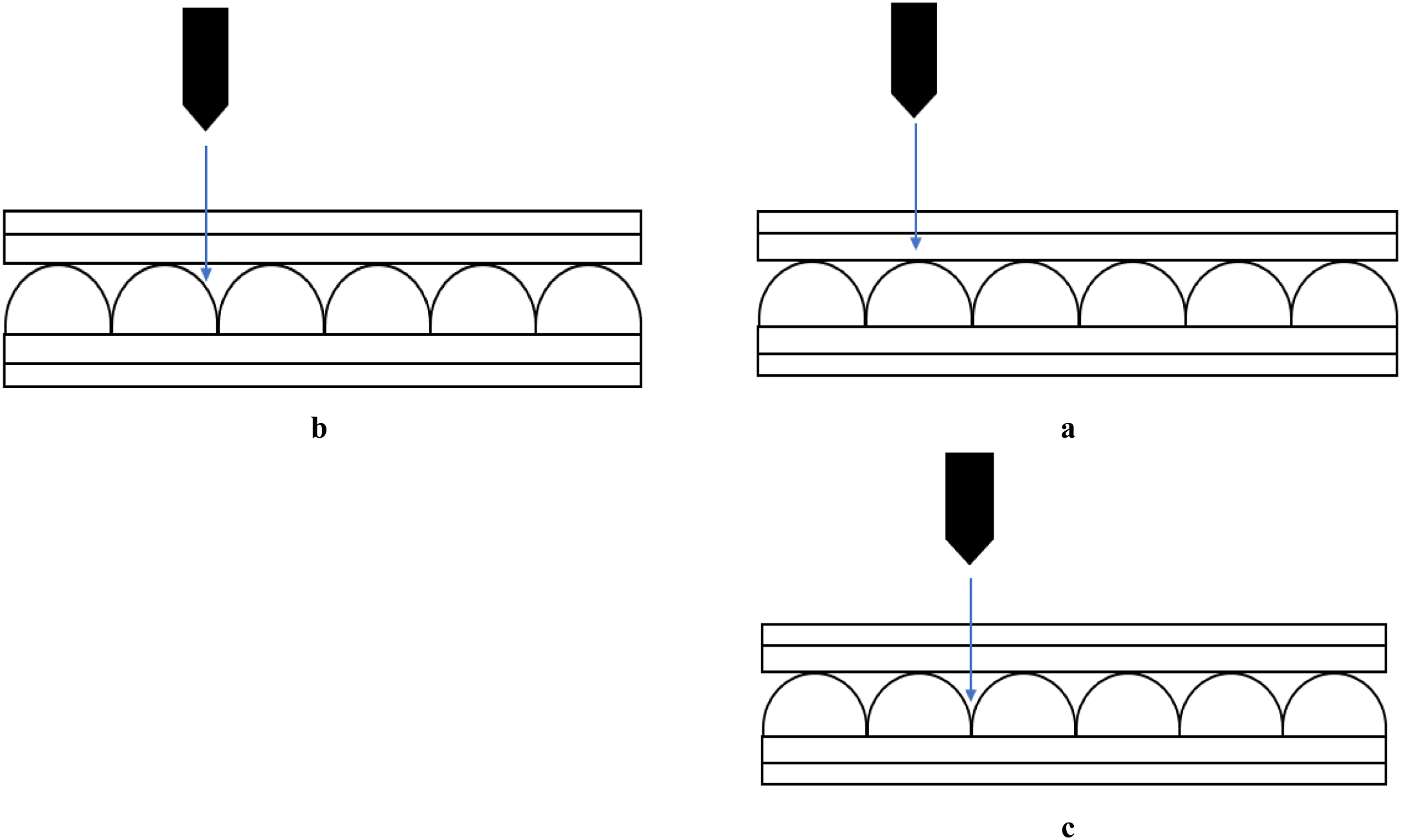
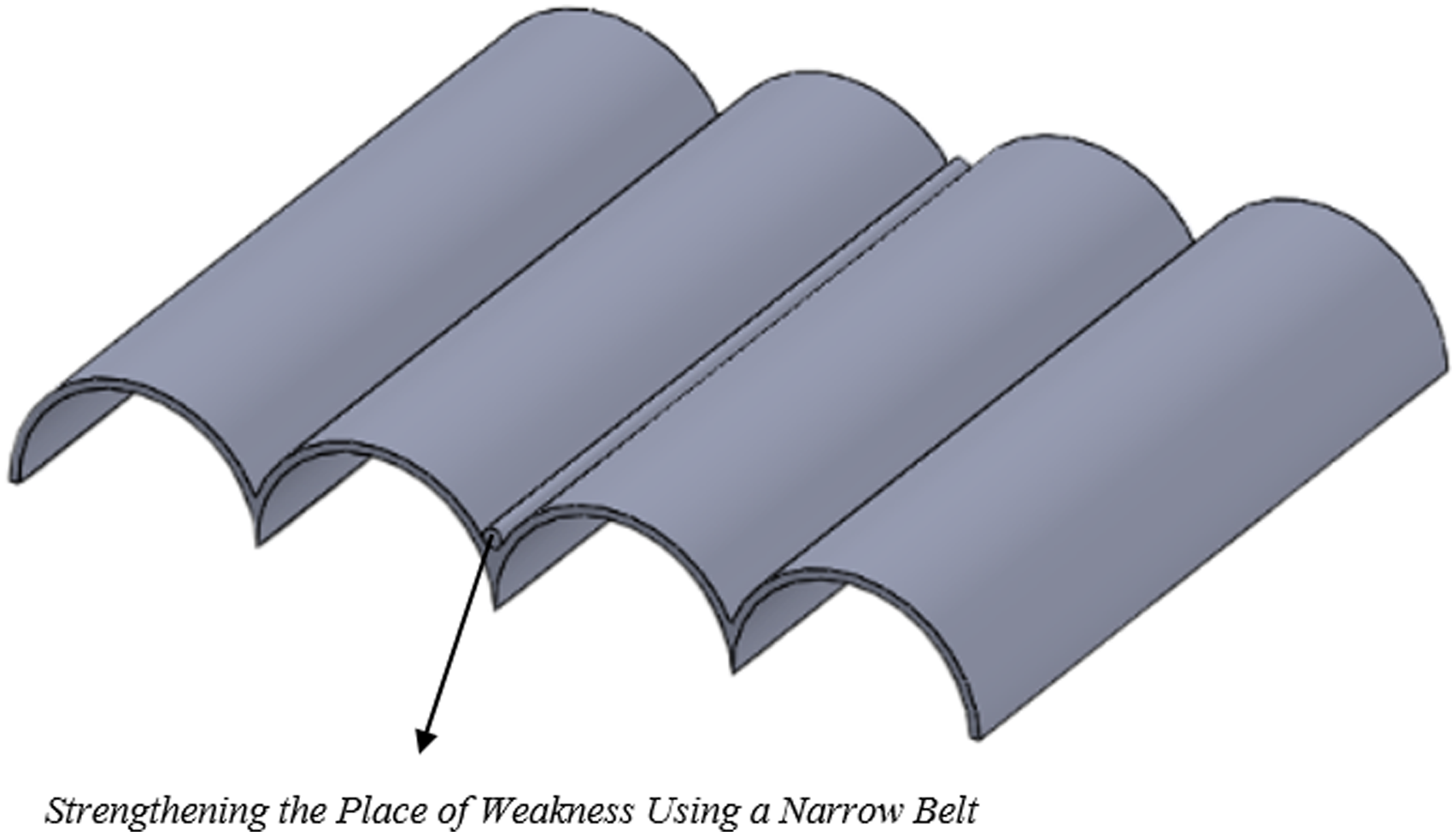
In projectile impacts on the sandwich panel, the junction between two waves (Figure 7(c)) represents a weak point in the core. Two approaches have been considered to address this weakness: (a) Use of a Second Core Layer: In this case, the weight of the sandwich panel increases (Figures 2, 4–6). (b) Local Reinforcement of the Weak Point: This reinforcement can be implemented by applying a narrow belt at the weak location (Figure 8). Reinforcement of the impact location (Figure 7(c)) using a narrow belt.
Simulation
The penetration of a rigid flat-nosed (cylindrical) projectile into the sandwich panels was simulated using the R11 version of the explicit nonlinear finite element software LS-DYNA. Accurate simulation requires proper selection of material models and equations of state, as well as correct application of physical conditions such as boundary conditions, contact surfaces, and element types suitable for the problem. The meshing of the sandwich panels was performed in ABAQUS. The following general considerations were applied in the simulation: (a) The face sheets consist of two parts: metallic (aluminum or steel) and non-metallic (polyurea). (b) The core is made of aluminum sheets configured as single- or multi-layer quasi-corrugated cores. (c) Core sheets are shaped into two different geometries: (i) semi-cylindrical waves, and (ii) hemi-spherical waves. (d) The thickness of the sheets (both core and aluminum face sheets) ranges from 0.5 to 2 mm. (e) The impact velocity is in the range of several hundred meters per second. (f) The projectile is modeled as a steel cylinder.
Materials and properties
The materials used in the sandwich panels are described as follows: (a) Aluminum 1050 Sheet
Aluminum 1050 sheets were used for both the face sheets and the core.
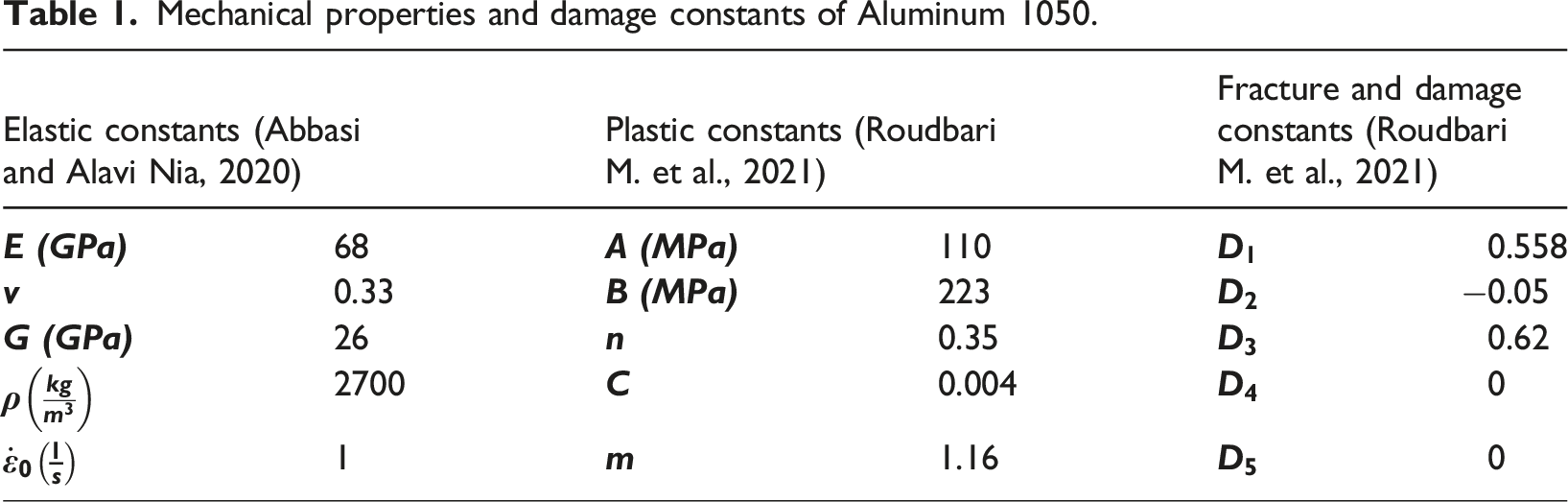
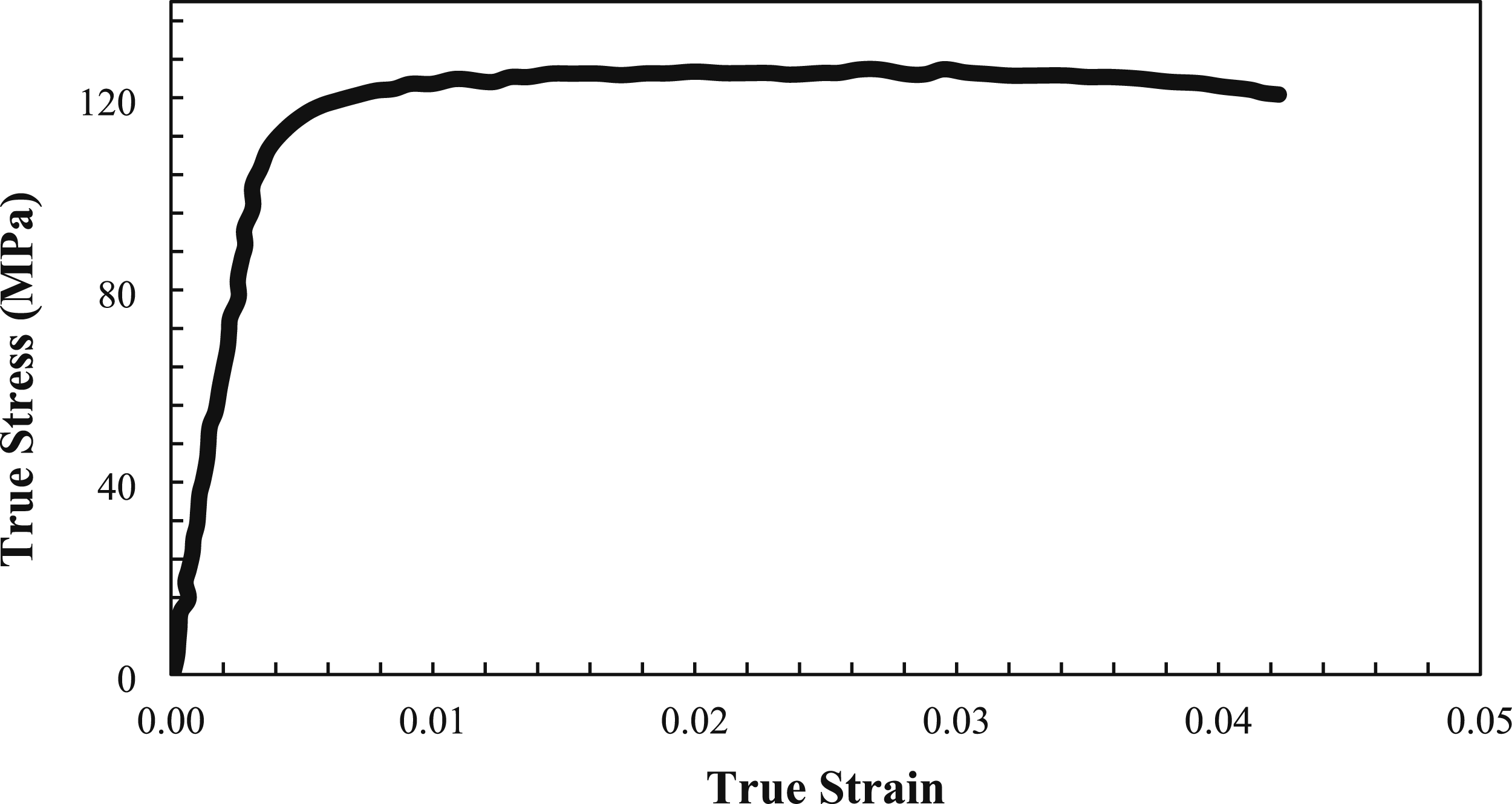
The thickness of the face sheets was 1 mm and 2 mm, while the core sheet had a thickness of 0.5 mm. The geometry of the core waves was semi-cylindrical and semi-spherical. The mechanical properties and stress–strain diagram of Aluminum 1050 are presented in Table 1 and Figure 9, respectively. In the simulations, the Johnson–Cook material and damage model (MAT_015_JOHNSON_COOK) was employed to model the Aluminum 1050 sheets (Roudbari M. et al., 2021). (b) Polyurea Mechanical properties and damage constants of Aluminum 1050. Stress–strain curve of Aluminum 1050 (Abbasi and Alavi Nia, 2020).


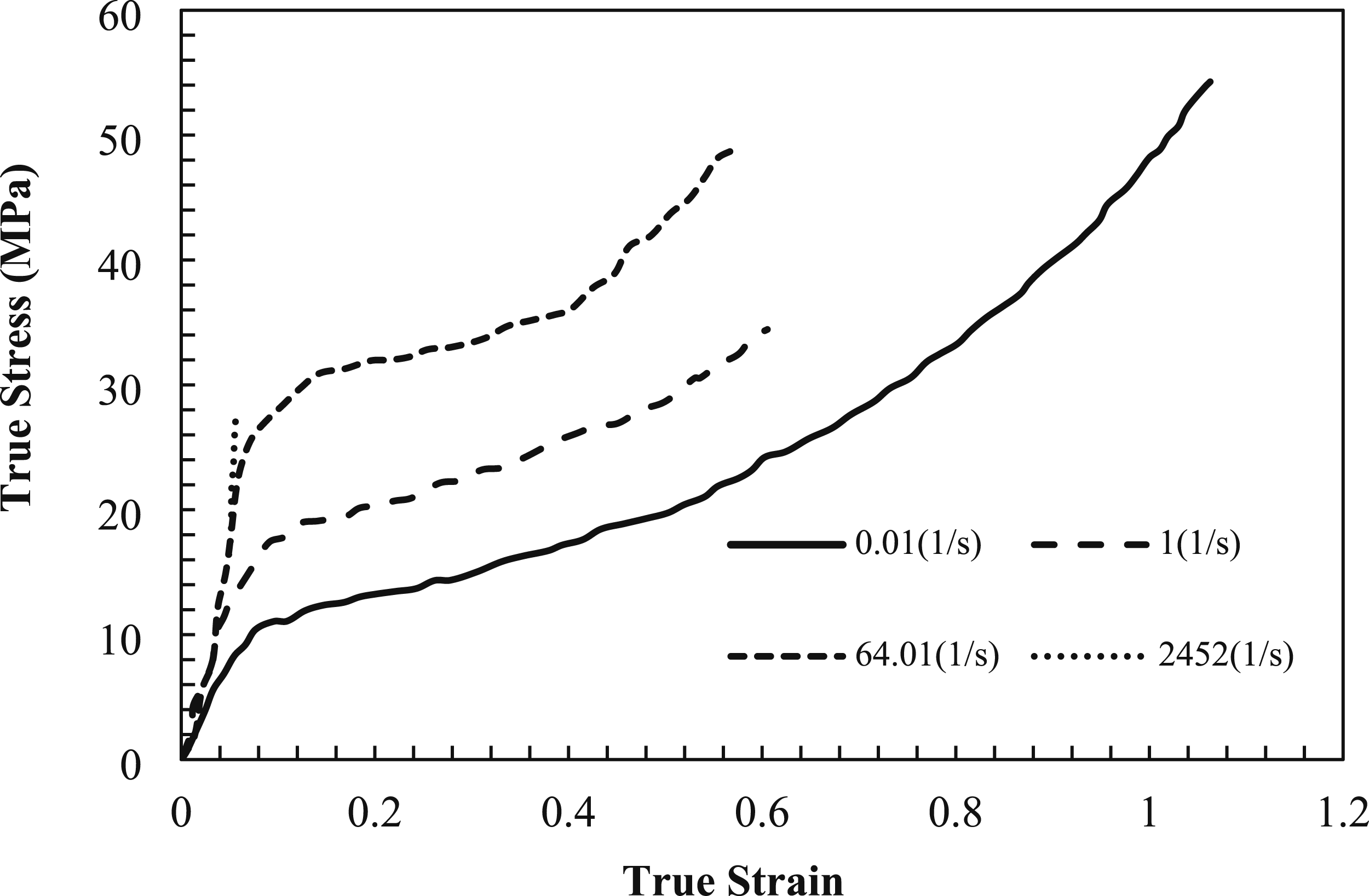
Polyurea was used as an interlayer between the aluminum face sheets and the core in the panels. The thickness of the polyurea sheet is 1 mm. The mechanical properties and stress–strain curves of polyurea at different strain rates are presented in Table 2 and Figure 10, respectively. The mechanical behavior of polyurea was modeled using the Mooney–Rivlin material model (MAT_027_MOONEY_RIVLIN_RUBBER) (Damith M. et al., 2014). (c) Projectile Mechanical properties (Part A) and Mooney-Rivlin constants (Part B) for Polyurea material (Damith M. et al., 2014). Stress–strain curves of polyurea at different strain rates (Hao W. et al., 2019).

Mechanical properties of the projectile (Thimmegowda and Sabapathy, 2004).

Sample coding
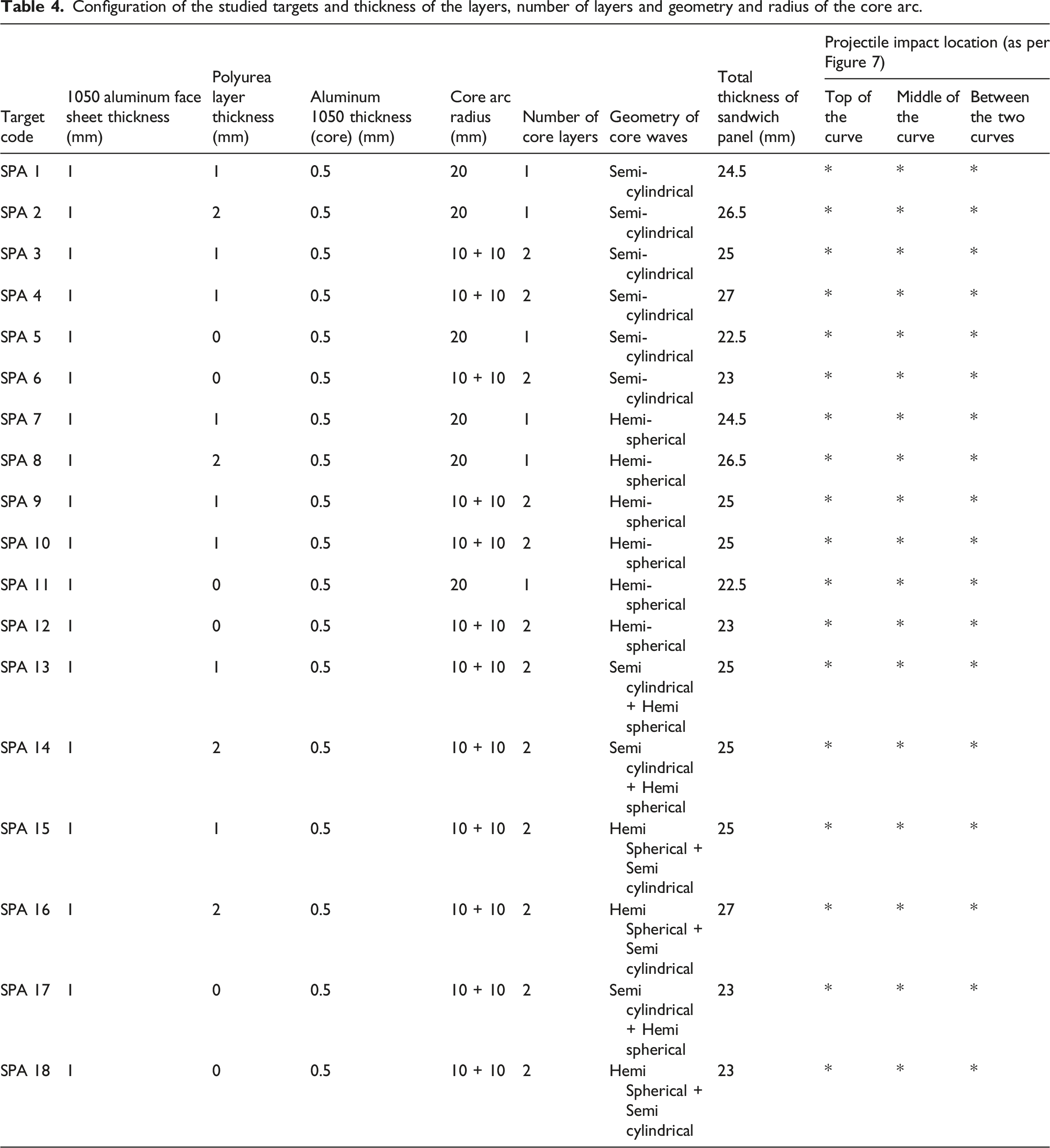
Configuration of the studied targets and thickness of the layers, number of layers and geometry and radius of the core arc.
Boundary and initial conditions
In the simulations, the degrees of freedom and rotations of all outer edges of the target in all directions were constrained. The initial condition applied was the velocity initial condition, which assumed that the velocity of all projectile elements in the Y-axis direction was equal to the initial velocity of the projectile before impacting the target (Figure 11). Boundary and initial conditions of SPA1 sandwich panel.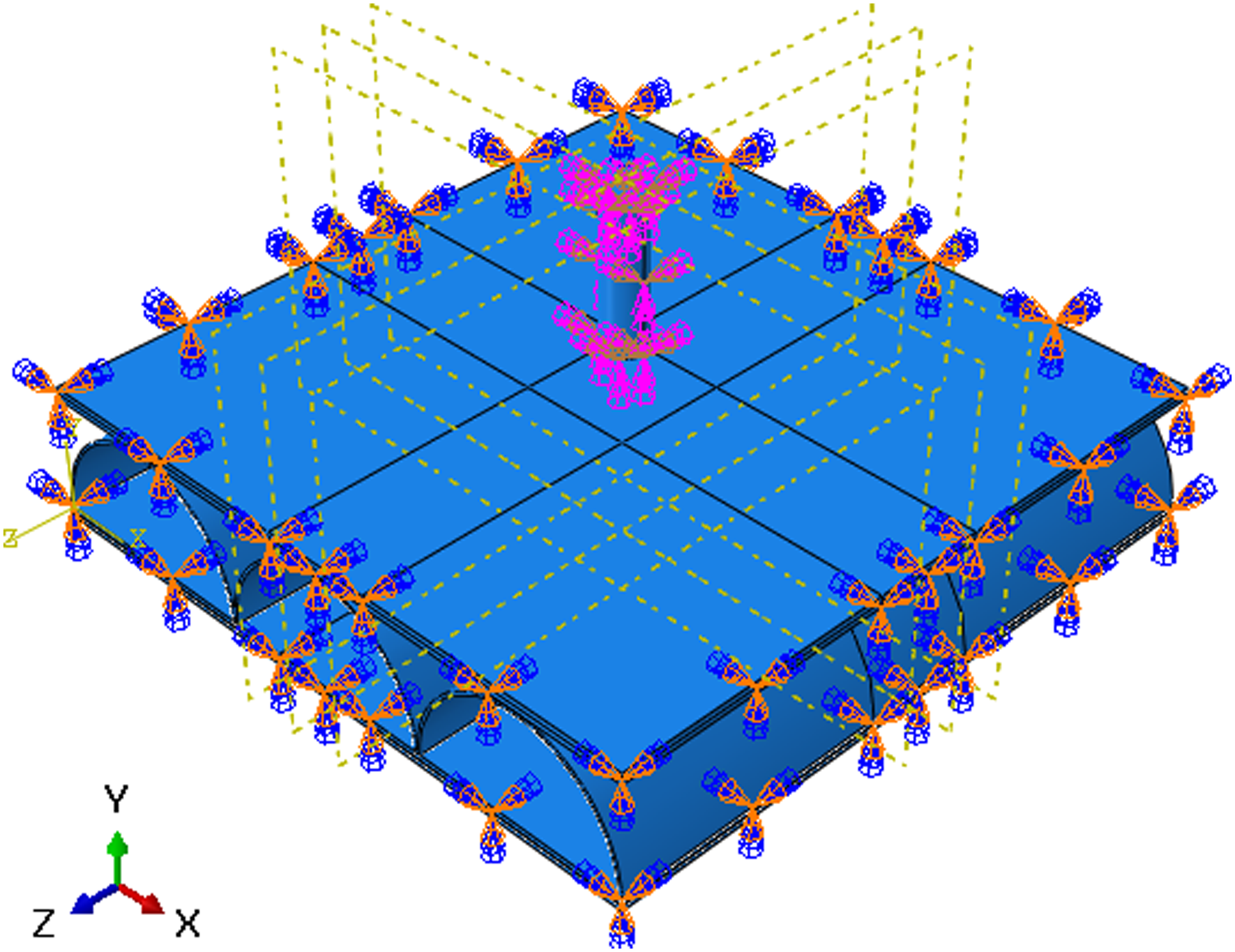
Definition of contact
In the simulation of the impact of a projectile and a sandwich panel, two types of contact are introduced. The first type of contact is CONTACT SURFACE TO SURFACE. This type of contact is considered for the impact between the panel components, namely the upper and lower face sheets and the core. The second type of contact is CONTACT ERODING SURFACE TO SURFACE, which is a destructive surface-to-surface impact between the projectile and the sandwich panel.
Discretization and mesh convergence
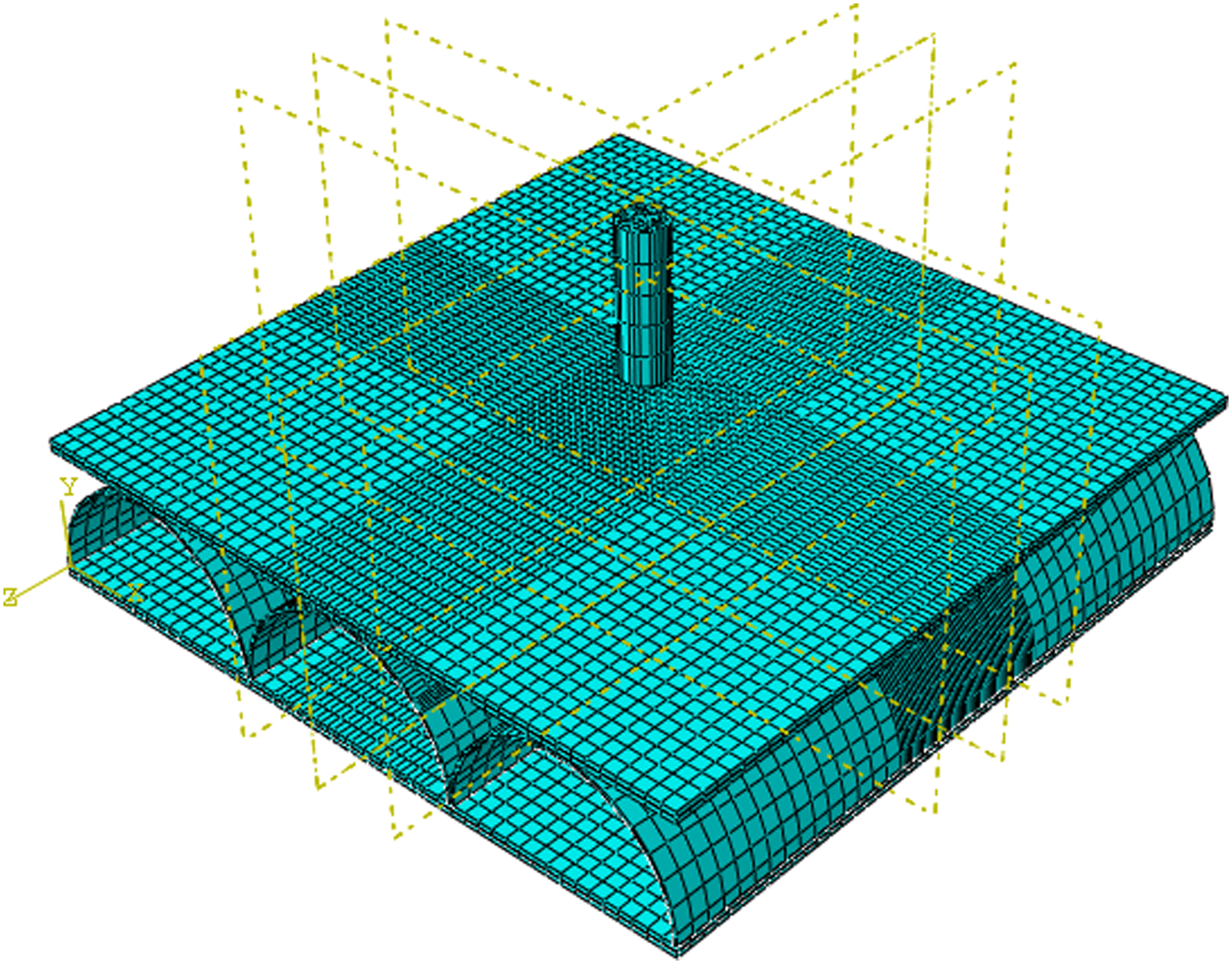
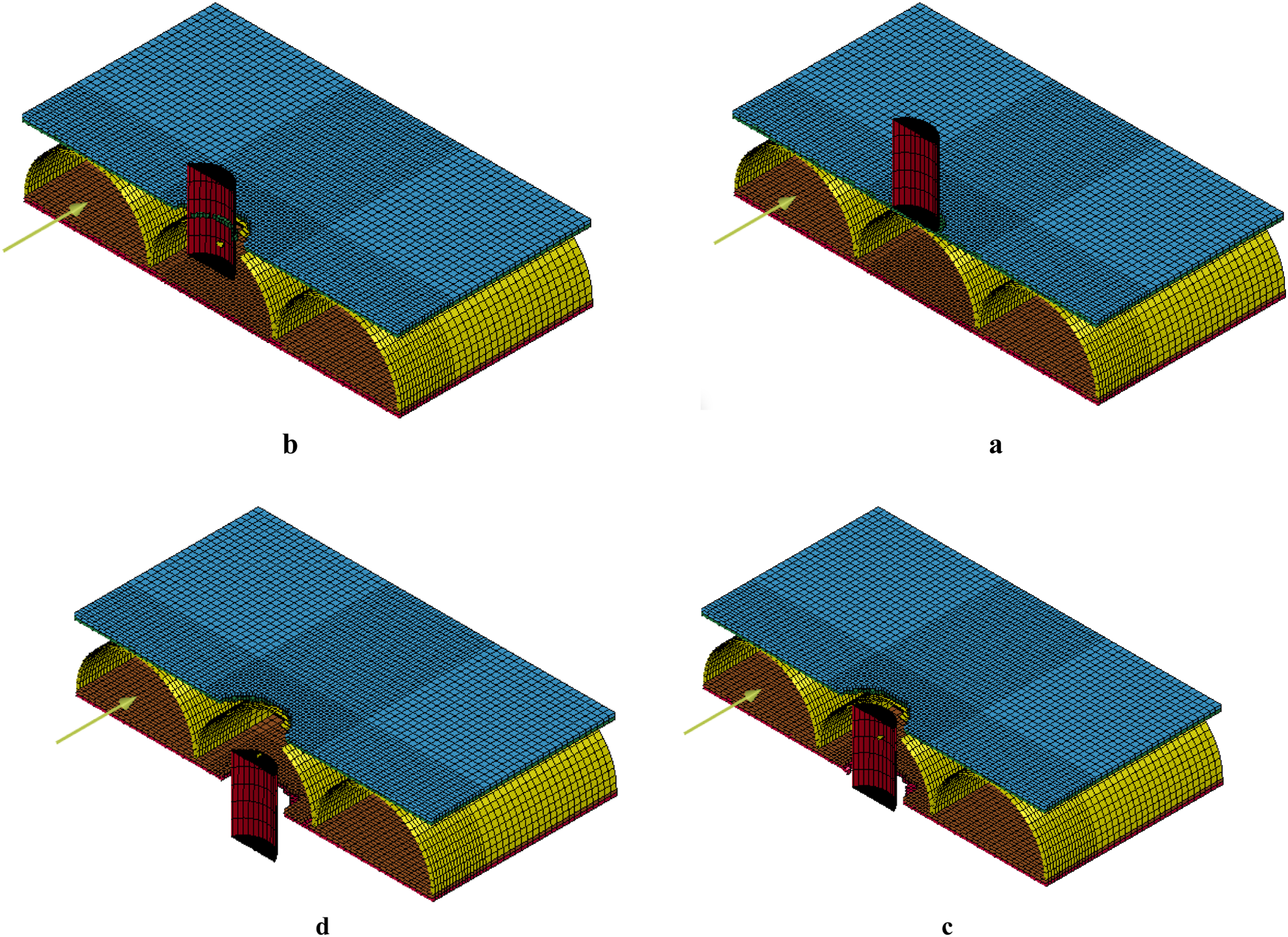
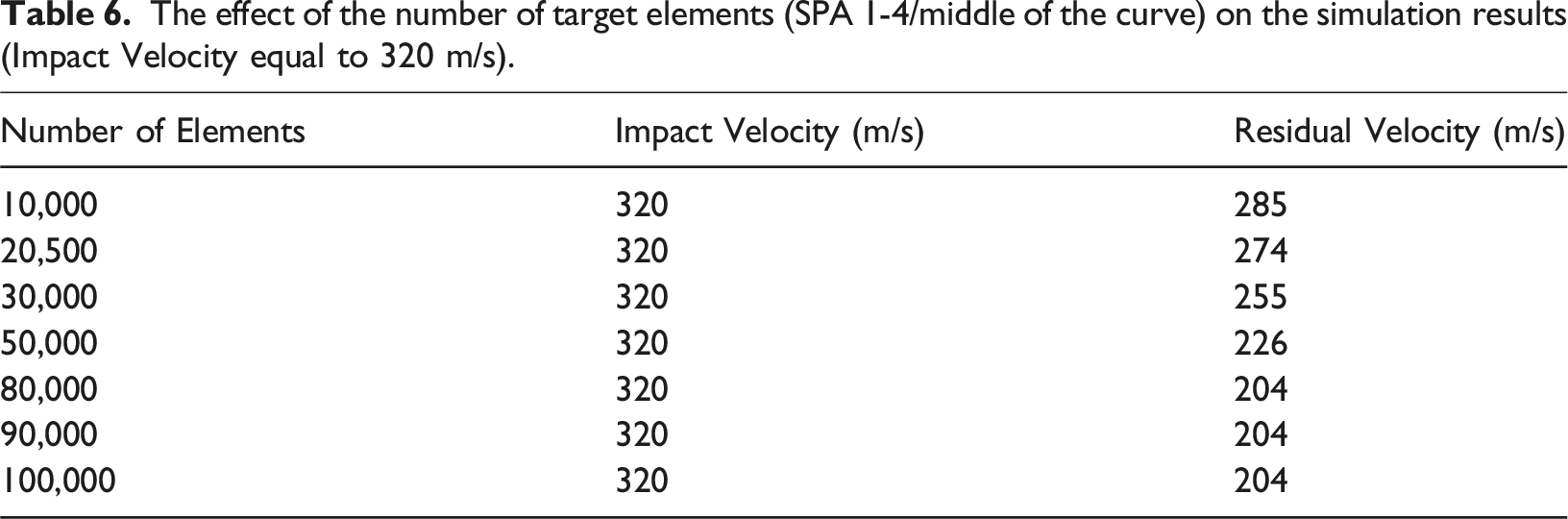
To reduce the cost of simulation and have sufficient accuracy, it is necessary to mesh correctly. For this purpose, meshes around the projectile impact site are created with smaller dimensions, and the further away from the impact site this mesh is, the larger it becomes by a certain ratio. Now, the appropriate number of elements in this mesh must be determined. Initially, the number of elements is arbitrarily selected and the simulation is performed. Then, the number of elements is increased to the point where the output of the problem converges to an almost constant value and independent of the meshing. To study mesh convergence, a sandwich structure (SPA1) with an impact velocity of 320 m/s was used. The results of the mesh convergence study are presented in Figure 12. Figure 13 shows the finite element model of one of the sandwich panels (SPA1). The number of target elements is 10,000 elements and the types of elements used for the surfaces and core are SOLID and C3D8T. In this meshing, QUAD-STRUCTURED elements are used for the surfaces and (SWEEP) HEX-DOMINATED elements are used for the core. Figure 14 shows the penetration of the projectile in the SPA1 sample. The total penetration time of the projectile is 0.002 seconds. Since the element erosion technique is used to eliminate the elements in the projectile path, the elements are removed after reaching the desired criterion, so the plugs caused by the collision cannot be observed. Table 5 shows the number of elements for all targets. The results of the effect of the number of elements on the residual velocity of the projectile are presented in Table 6. Based on Table 6, it is observed that as the number of elements increases, the residual velocity of the projectile decreases. As the number of elements decreases beyond a certain limit, no change is observed in the residual velocity value and the results converge. Projectile residual velocity changes depending on the number of SPA1 target elements. Finite element model of SPA1 sandwich panel. Projectile penetration stages in sample SPA1-4 (projectile impact location top the curvature) (a) at the moment the projectile impact the sandwich panel (b) at one-half of the total penetration time (c) at three-quarters of the total penetration time (d) at the moment the projectile exits the sandwich panel. Number of elements of each target in the simulation. The effect of the number of target elements (SPA 1-4/middle of the curve) on the simulation results (Impact Velocity equal to 320 m/s).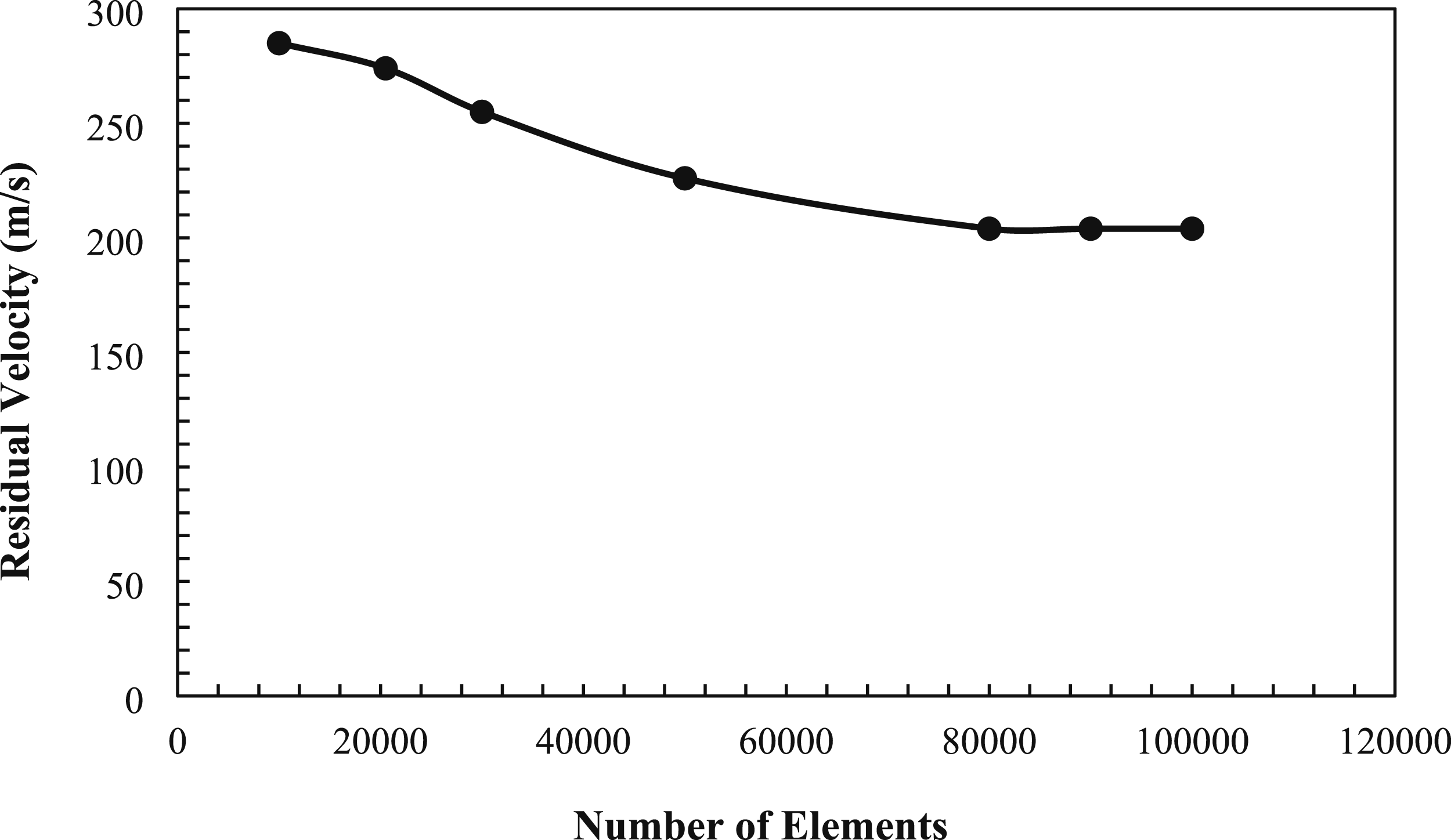

Results and discussion
In this section, first the validation of the simulation results is discussed and then the complete simulation results are presented and the effect of the parameters of the radius of curvature of the core wave, wave geometry, single or double layer and core arrangement, projectile impact location and polyurea layer on the ballistic limit as well as the specific ballistic strength (specific ballistic strength is the ratio of the energy dissipated by the sandwich panel to the total mass of the sandwich panel. The unit of specific ballistic strength is
Validation of simulation results
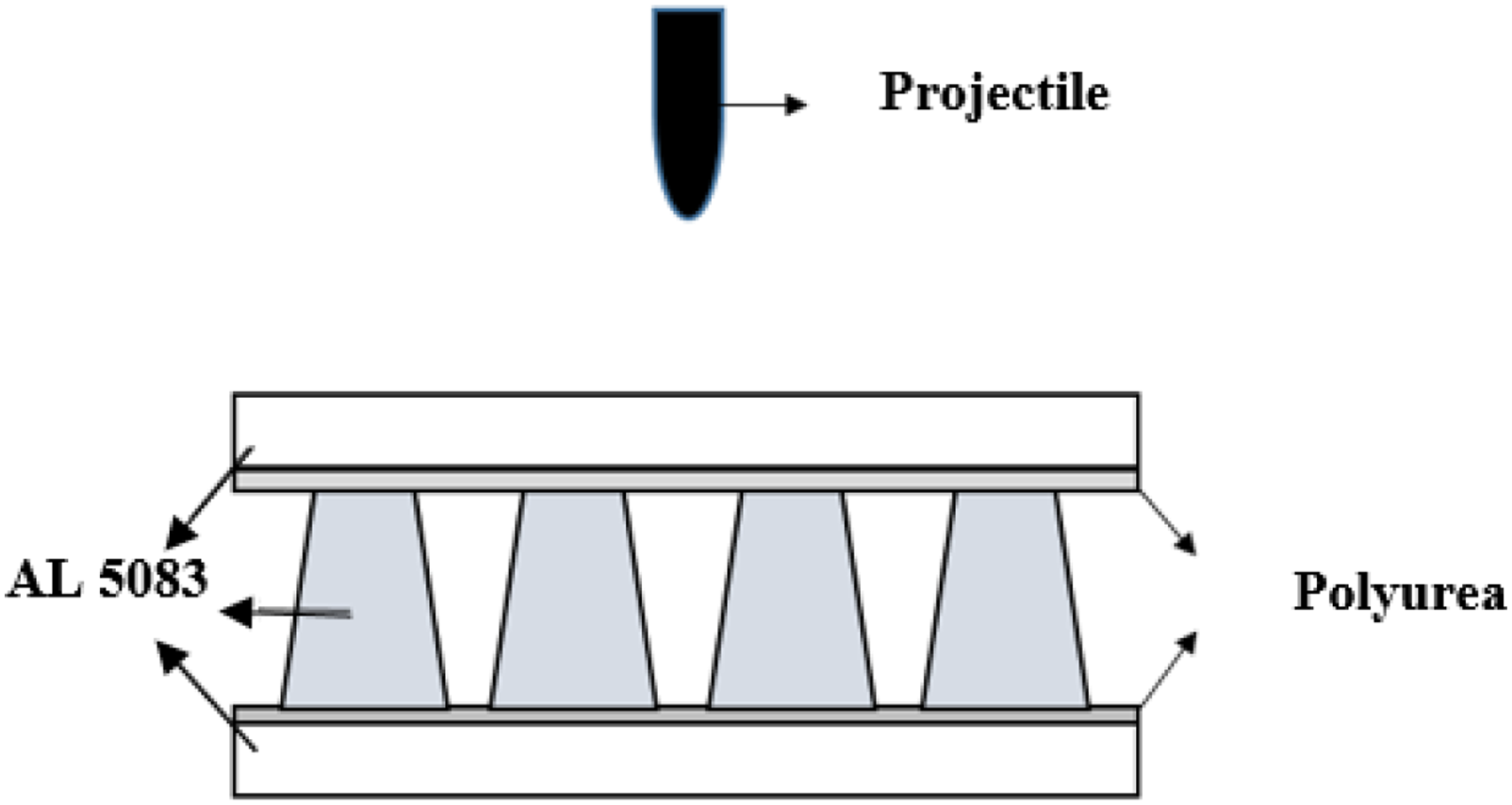
Figure 15 Validation of the numerical model by comparison with experimental results reported in Mohotti D. et al. (2015). For simulation validation, the target shown in Figure 16 of Mohotti D. et al. (2015) was modeled using LS-DYNA and the numerical results were compared with the corresponding experimental data. The sandwich panel consists of five layers, including two aluminum 5083 face sheets with thicknesses of 8 mm, a trapezoidal quasi-corrugated aluminum core with a thickness of 2 mm, and two polyurea layers with thicknesses of 4 mm, with overall dimensions of 100 × 200 mm. The comparison of ballistic limit curves shows that the ballistic limit velocity obtained from the experimental results of Mohotti D. et al. (2015) and the present numerical model are 814 m/s and 821 m/s, respectively. The resulting difference in ballistic limit is approximately 0.8%, demonstrating good agreement between the numerical simulation and experimental data. Comparison of reference experimental results (Mohotti D. et al., 2015) with simulated model results. Dimensions of sandwich panel (Mohotti D. et al., 2015).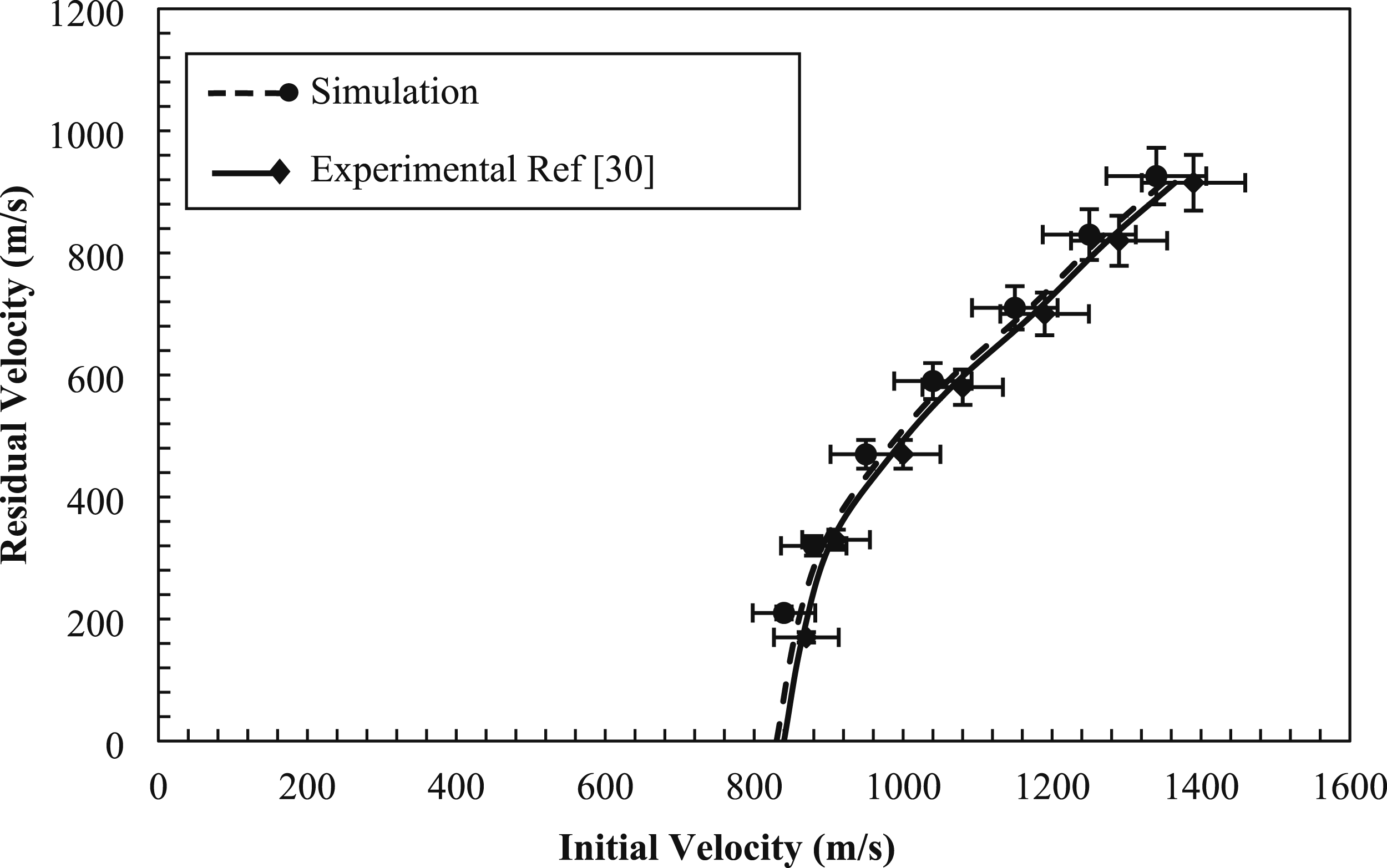
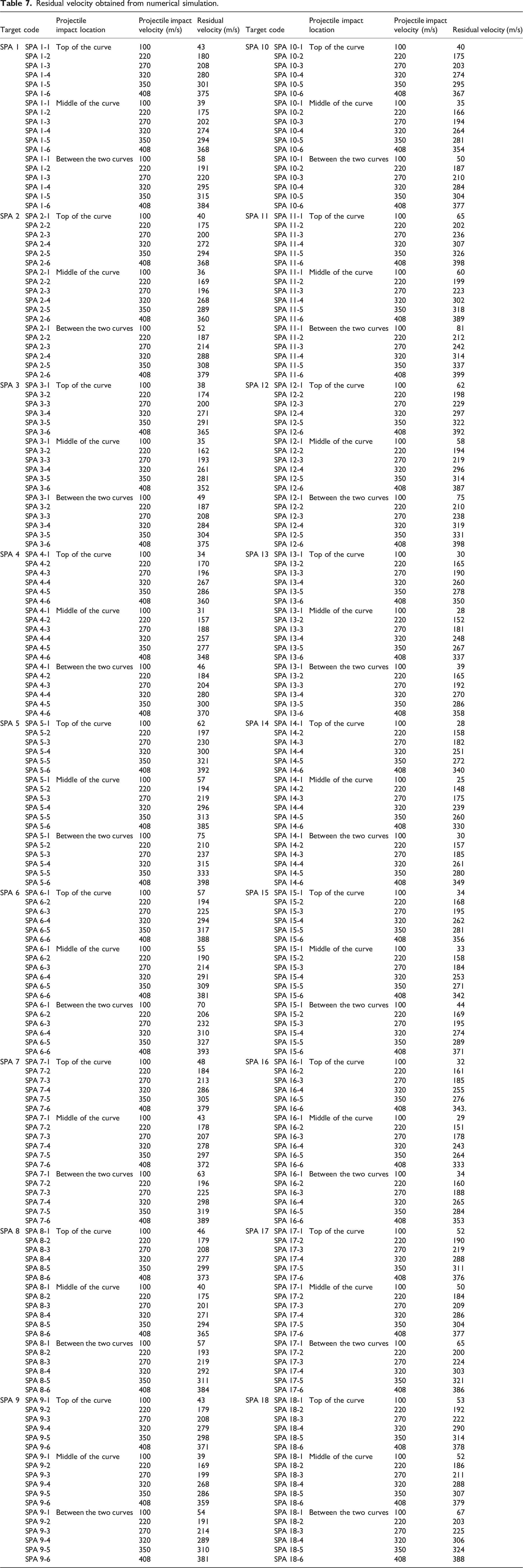
Complete results from numerical simulation
Effect of core curvature
As explained in previous sections, when a projectile hits a curved surface, the velocity vector of the projectile is often not perpendicular to the curve, and it can be decomposed into two components perpendicular to the surface and tangential to the surface. Part of the velocity that causes structural damage is related to the kinetic energy of the vertical component of the velocity. As a result, curving the impact surface reduces the effective kinetic energy in structural damage.
Figure 17 shows the effect of core curvature on the ballistic limit. The ballistic limit results of the sandwich panel sample with code SPA9 (between two curvatures) and the sandwich panel with a flat core in Mohotti D. et al. (2015) are compared. In Mohotti D. et al. (2015), the thickness of the aluminum and Polyurea skins and the core are similar to the sandwich panel sample with code SPA9. From the results of Figure 17, it is clear that by creating curved waves in the core, the ballistic limit of the sandwich panel increases by 7.5%. Also, by calculating and comparing the specific ballistic strength of the sandwich panel sample with code SPA9 (166.9 Effect of core curvature on Residual velocity changes depending on projectile impact velocity.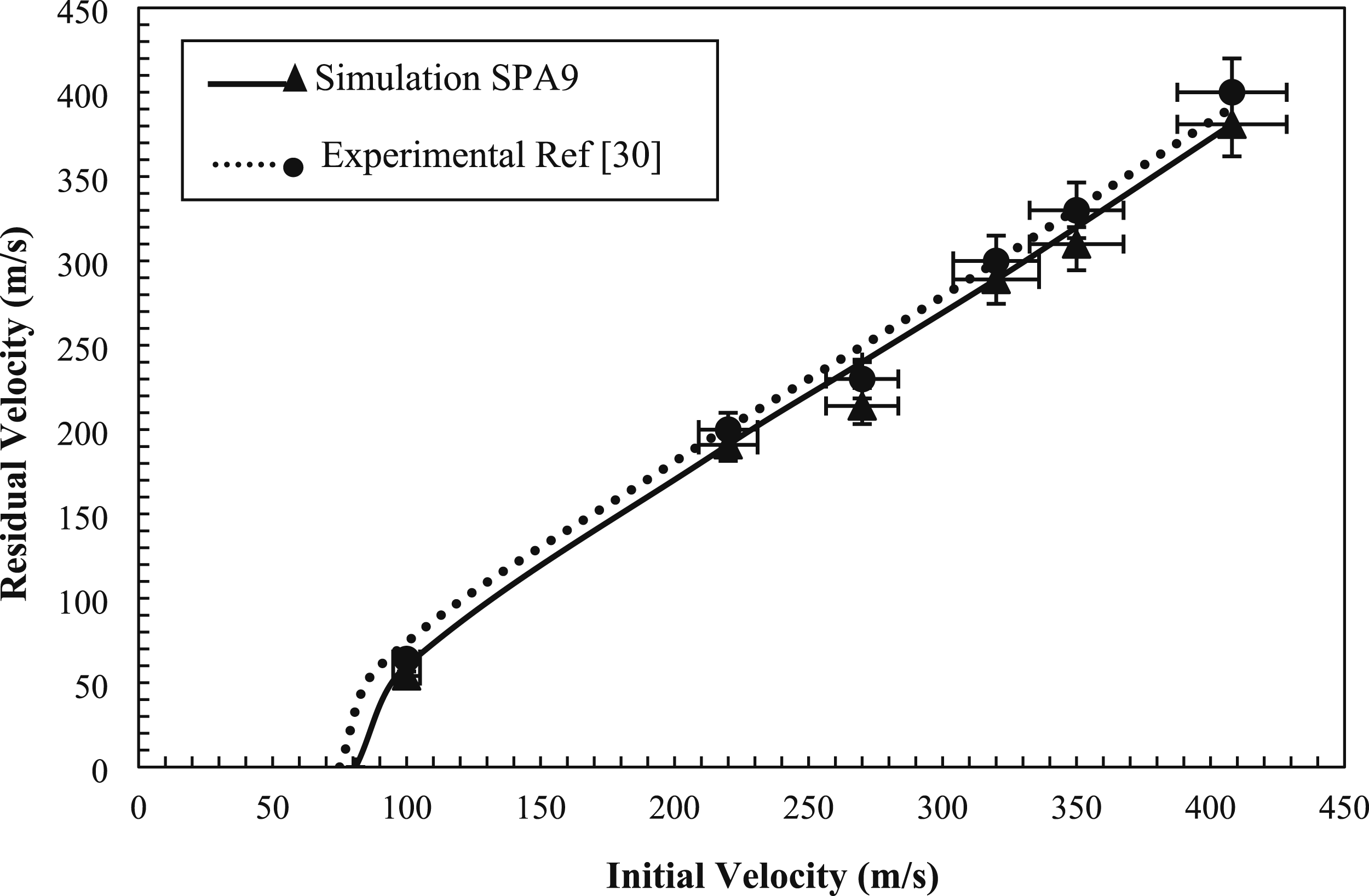
Effect of core wave geometry
Figure 18 shows the effect of core wave geometry (semi cylindrical and hemi spherical) on the ballistic limit. Panels SPA1 and SPA7 (projectile impact point above the curvature) were selected to investigate the effect of core geometry. Samples SPA1 and SPA7 represent sandwich panels with semi-cylindrical and hemi spherical cores, respectively. It is clear from Figure 18 that the ballistic limit of samples SPA1 and SPA7 is 73 and 65 m/s, respectively (the impact point of the curve with the horizontal axis indicates the value of the ballistic limit). Because when a projectile is fired at a sandwich panel with a cylindrical core, a larger surface area is in contact with the projectile than with a hemi spherical core, as a result, by changing the core geometry from hemi spherical to hemispherical, the ballistic limit increases by 12.3%. Also, by calculating and comparing the specific ballistic strength values of samples SPA1 (150.6 Effect of core wave geometry on the ballistic limit.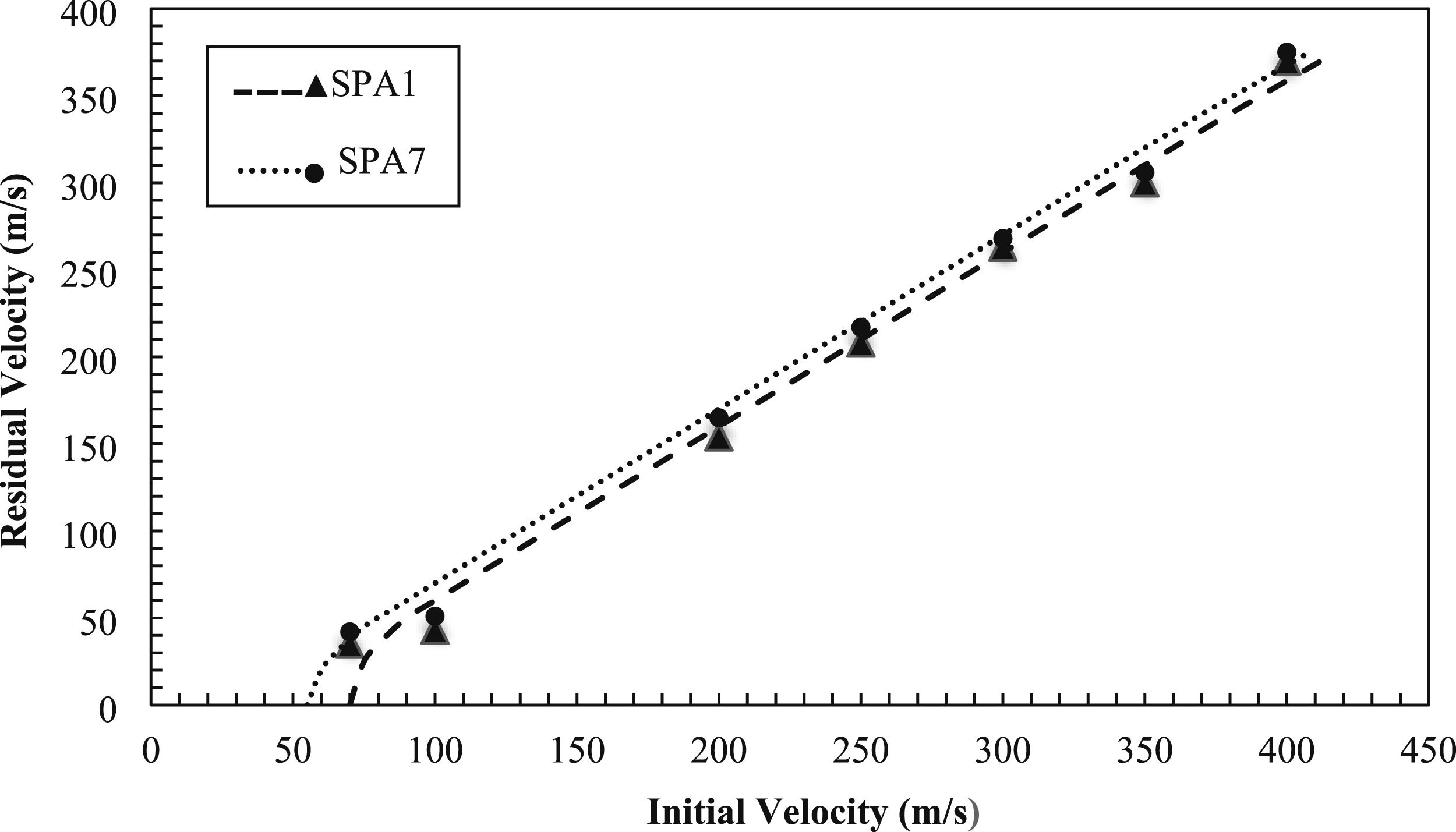
Effect of core arrangement
To investigate the effect of core arrangement, SPA13 and SPA15 panels (projectile impact location above the curvature) were selected. SPA13 and SPA15 samples represent sandwich panels with semi cylindrical-hemi spherical and hemispherical-semi cylindrical core arrangements, respectively. Figure 19 shows the effect of core arrangement on the ballistic limit. According to this figure, the ballistic limit of SPA13 and SPA15 panels is 95 and 91 m/s, respectively. Because when a projectile is impacted at a sandwich panel with a cylindrical core, a larger surface area is in contact with the projectile than with a hemi spherical core, as a result, by changing the core arrangement from SPA15 sample to SPA13 sample, the ballistic limit increases by 2.4%. Also, by calculating and comparing the specific ballistic strength values of samples SPA13 (249.6 Effect of core arrangement on ballistic limit.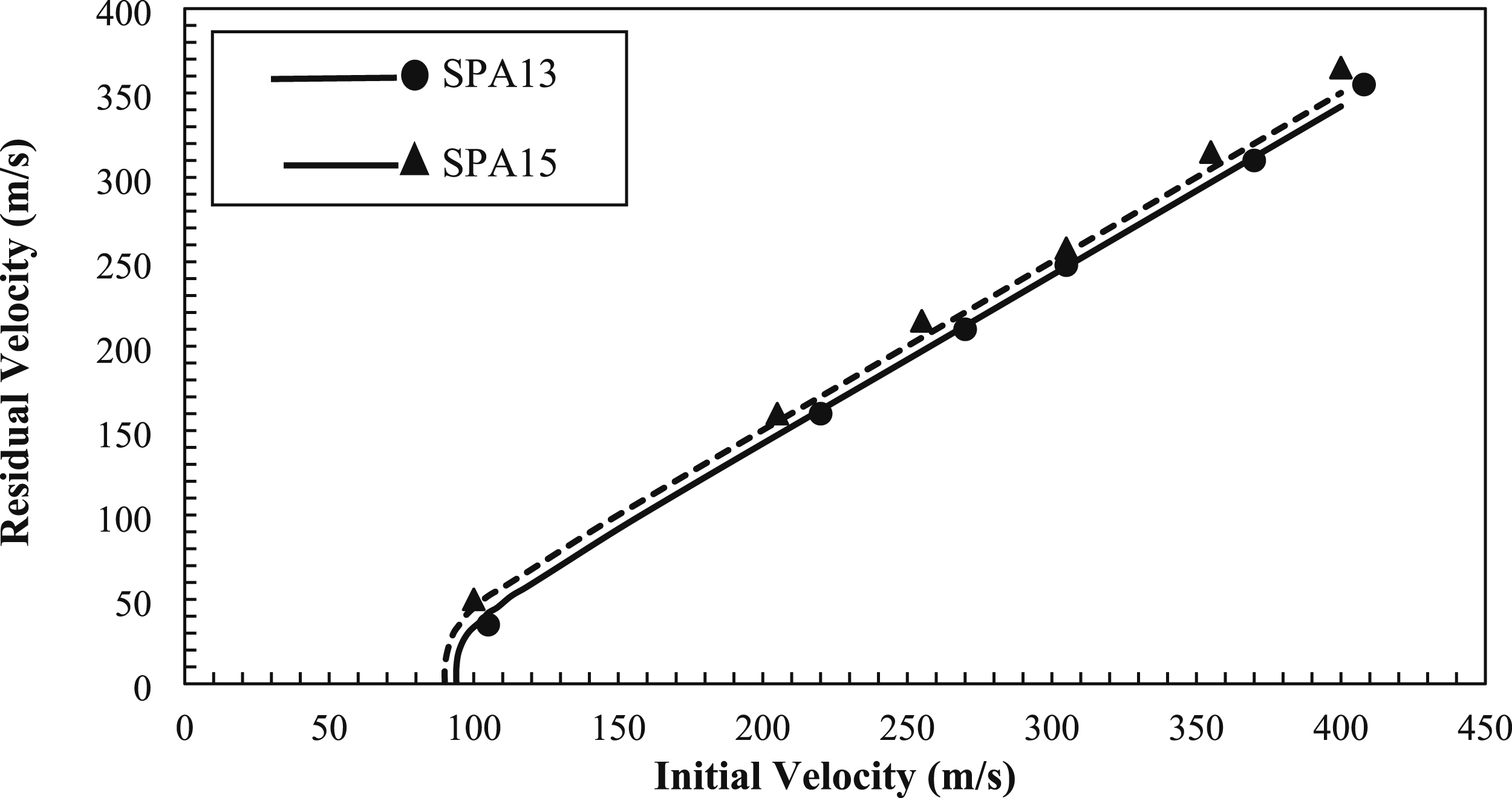
Effect of the number of core layers
Panels SPA1 and SPA3 (projectile impact location top of the curvature) are considered to investigate the effect of single and double core layers (semi cylindrical). Samples SPA1 and SPA3 represent sandwich panels with single and double core layers (semi-cylindrical), respectively. Figure 20 shows the effect of the number of core layers (semi cylindrical) on the ballistic limit. According to this figure, the ballistic limit of samples SPA1 and SPA3 is 73 and 100 m/s, respectively. When the number of curved layers in the panel core increases, the number of times the velocity vector is divided into components perpendicular and tangential to the surface after colliding with it also increases. As a result, the amount of useful projectile energy to penetrate and destroy the target decreases, and in this case, the ballistic limit increases. Effect of the number of layers of a semi-cylindrical core on the ballistic limit.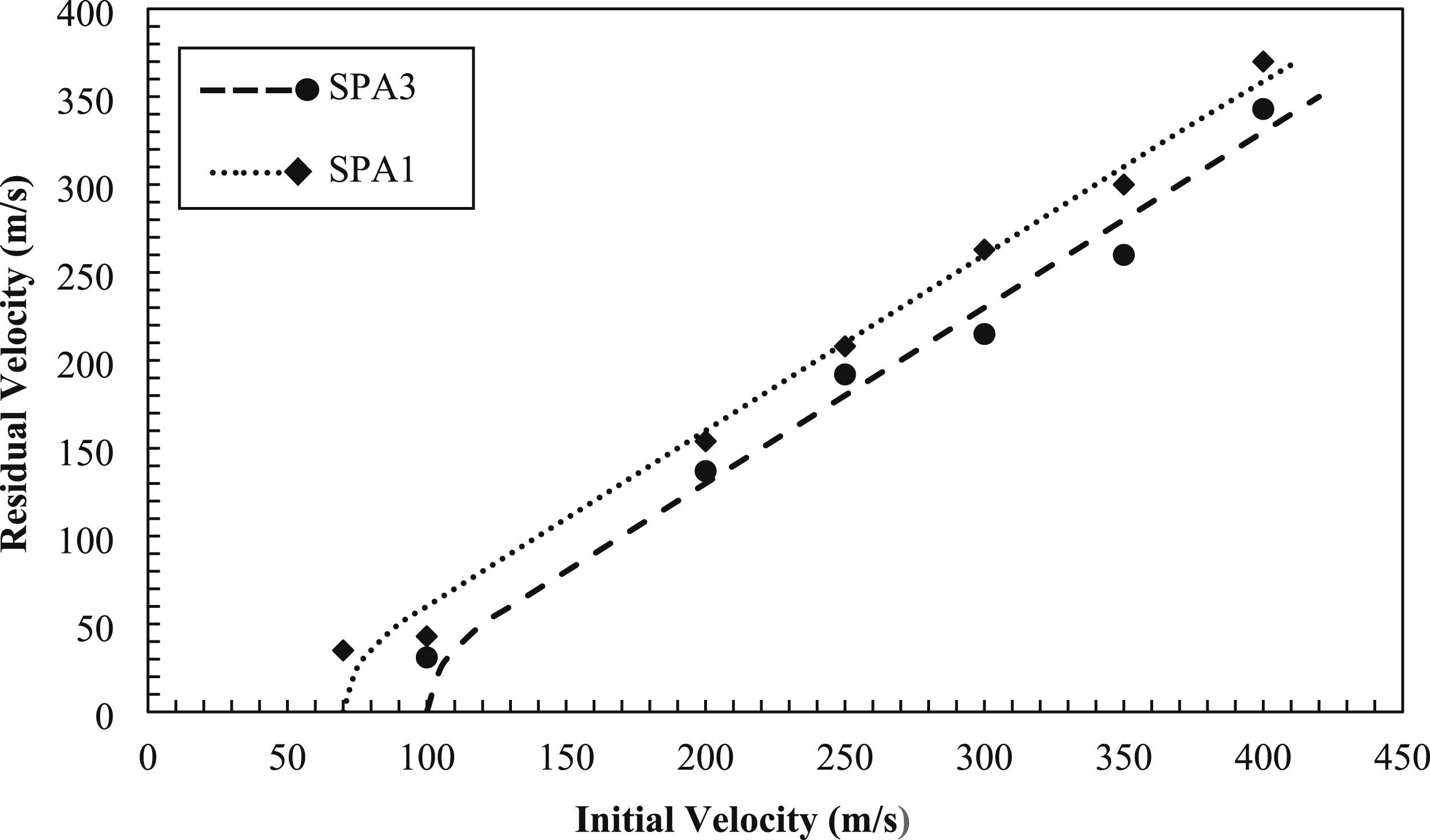
Also, by calculating and comparing the specific ballistic strength of samples SPA1 (150.6
Figure 21 shows the effect of single and double-layer (hemi spherical) cores on the ballistic limit. Samples SPA7 and SPA9 represent sandwich panels with single and double-layer (hemispherical) cores, respectively (projectile impact point above the curvature). It is clear from Figure 21 that the ballistic limit of samples SPA7 and SPA9 is 65 and 81 m/s, respectively. Due to the increase in the number of core layers and by reducing (Part 4-3) the velocity vector twice when hitting the curved surface, as a result, the strength and thickness of the sandwich panel, the ballistic limit increases by 24.6%. Also, by calculating and comparing the specific ballistic strength of samples SPA7 (119.4 Effect of the number of hemi spherical core layers on the ballistic limit.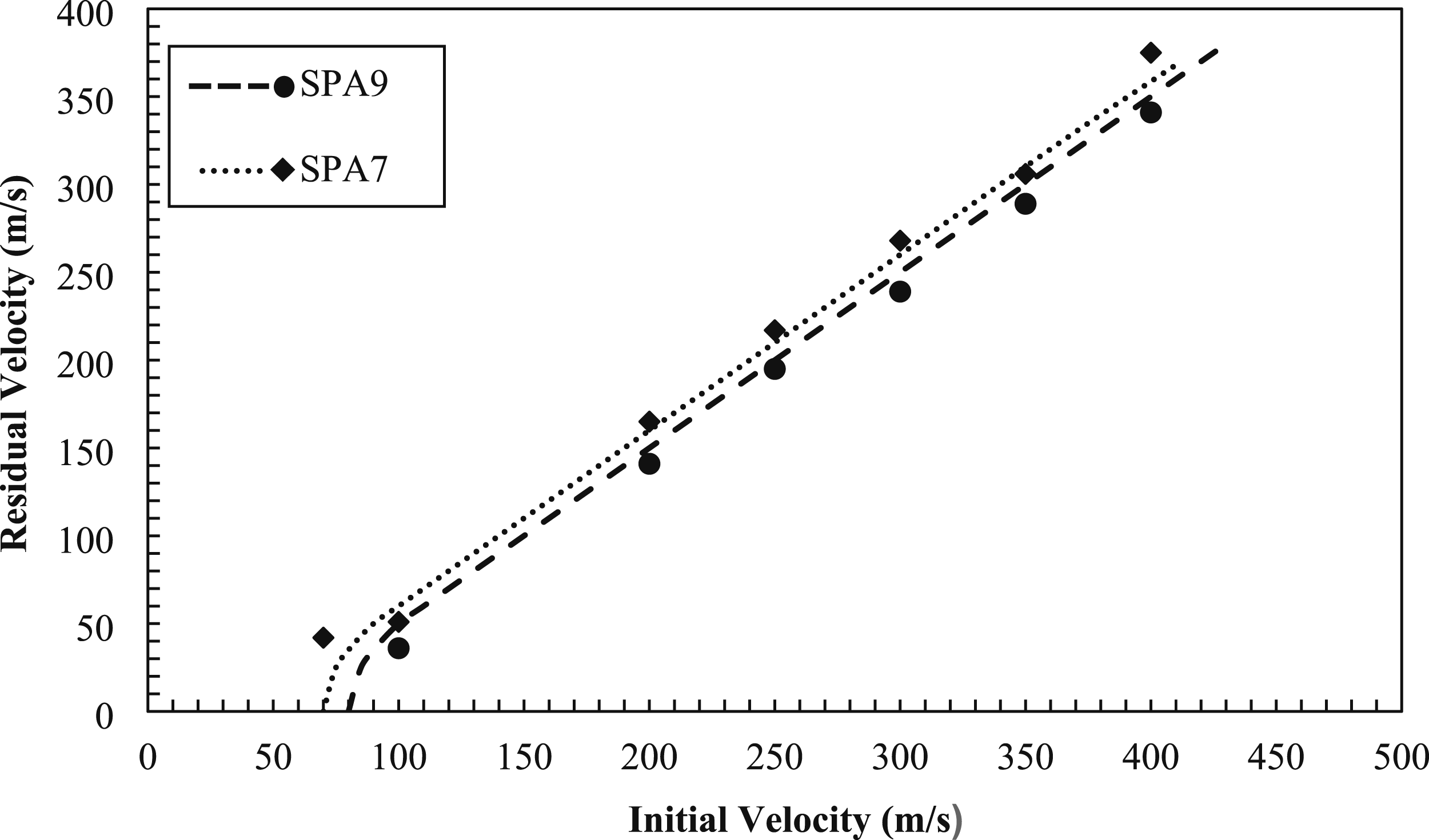
Effect of the projectile impact location on the sandwich panel core
Figure 22 shows the effect of the projectile impact location on the ballistic limit. Panel SPA1 was selected to investigate the effect of the projectile impact location. From the results of Figure 22, it is clear that the ballistic limit of the panels shown in Figure 7(a)–(c) (without belt) and Figure 8 (with belt) is 73, 80, 62 and 66 m/s, respectively. As a result, the impact mode of Figure 7(b) has a higher ballistic limit than Figures 7(a) and (c) (without belt) and Figure 8 (with belt) by 8, 22.5 and 17.5%, respectively. When a projectile hits a curved surface, the velocity of the projectile is often not perpendicular to the curve, and the velocity vector can be decomposed into two components perpendicular to the surface and tangential to the surface. What causes the destruction of the structure is related to the kinetic energy of the vertical component of the velocity. Therefore, when a projectile strikes the top of the curvature of the core, the magnitude of the vertical component of the velocity, and consequently its effective kinetic energy for penetration, is greater than when it strikes other areas of the core’s curvature. Therefore, the point of impact of the projectile can have a significant effect on penetration depth and ballistic limit. Effect of projectile impact location on ballistic limit.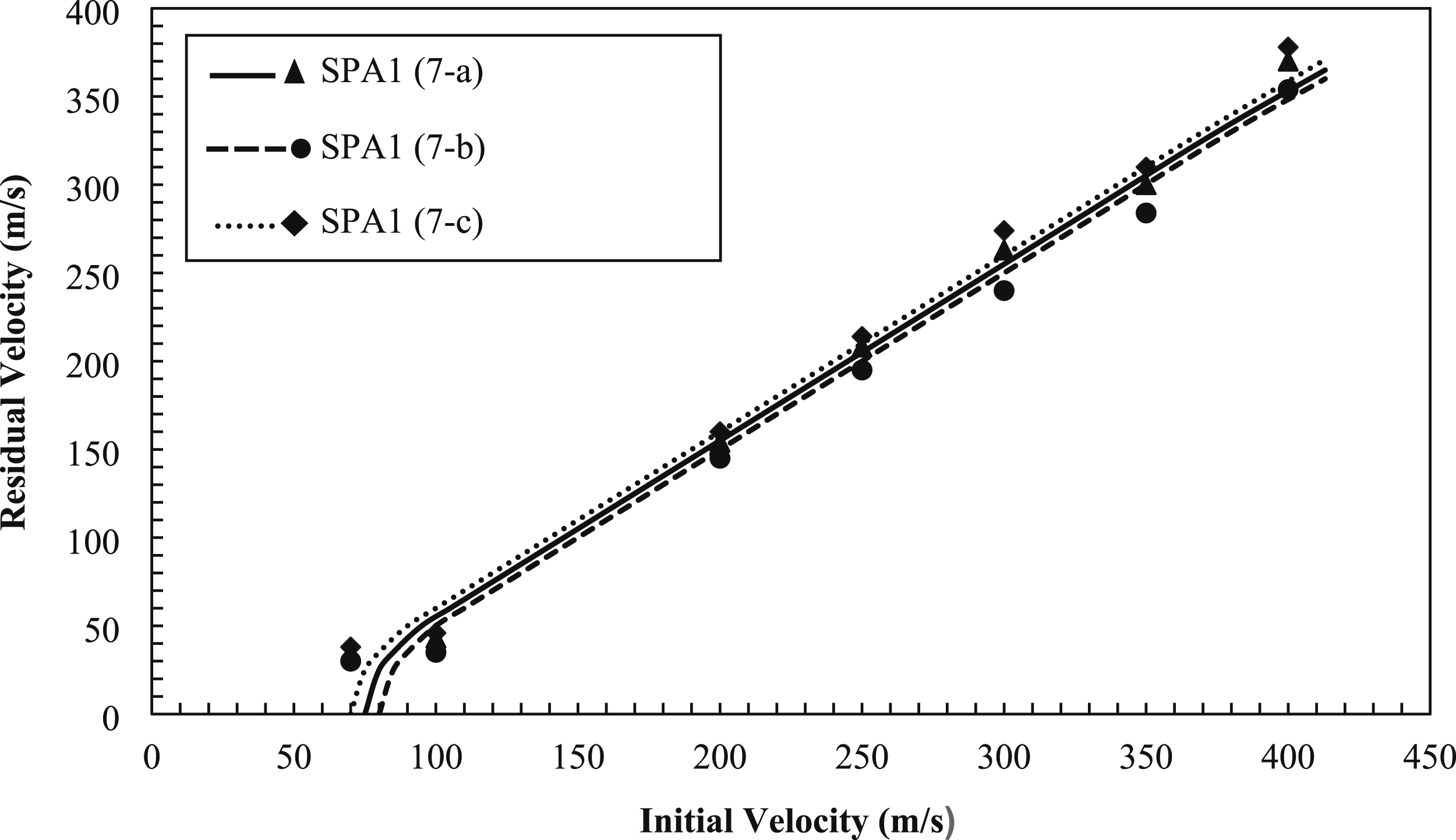
Also, the specific ballistic strength of the sandwich panel with the code SPA1 when the projectile hits the middle, between (with the belt) and above the curve is 150.6, 145.4 and 140.8 (
Effect of polyurea layer
Polyurea is the latest technology of protective coatings in the world and a new generation of polyurethanes that has excellent mechanical, chemical and impact resistance and is used in a wide range of industrial fields. This material is widely used in military industries due to its suitable elastic properties and is considered a type of impact resistance (Szafran and Matusiak, 2016). Panels SPA1 and SPA5 (the impact site of a high-curvature projectile) were selected to investigate the effect of the Polyurea coating. Samples SPA1 and SPA5 represent sandwich panels with and without a Polyurea coating, respectively. Figure 23 shows the effect of using a Polyurea coating on the ballistic limit. According to Figure 23, the ballistic limit of samples SPA1 and SPA5 is 73 and 53 m/s, respectively. Due to the increase in strength and thickness of the sandwich panel, the use of Polyurea coating in the sandwich panel increases the ballistic limit by 37.7%. Also, by calculating and comparing the specific ballistic strength values of samples SPA1 (150.6 Effect of the presence of a Polyurea layer on the ballistic limit.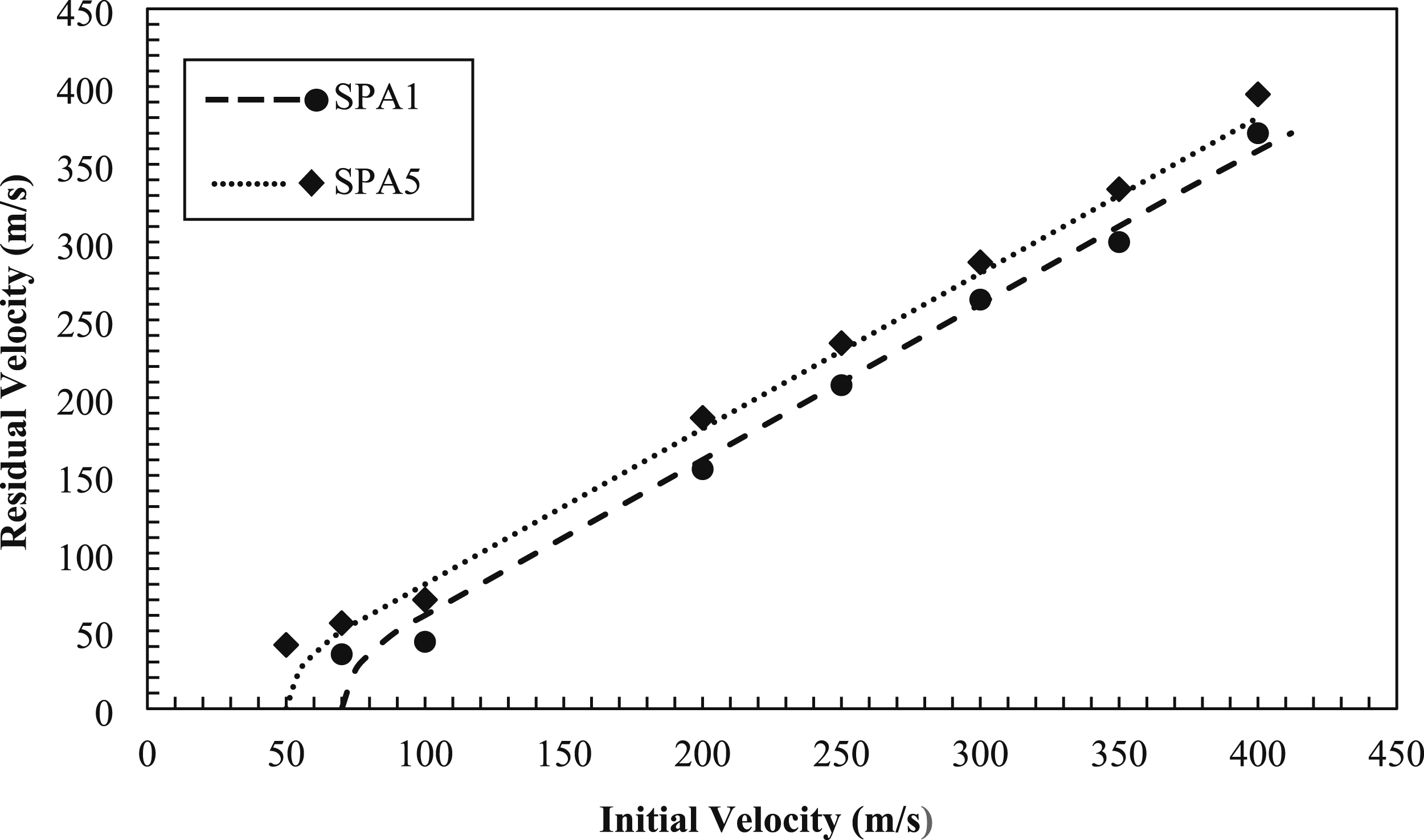
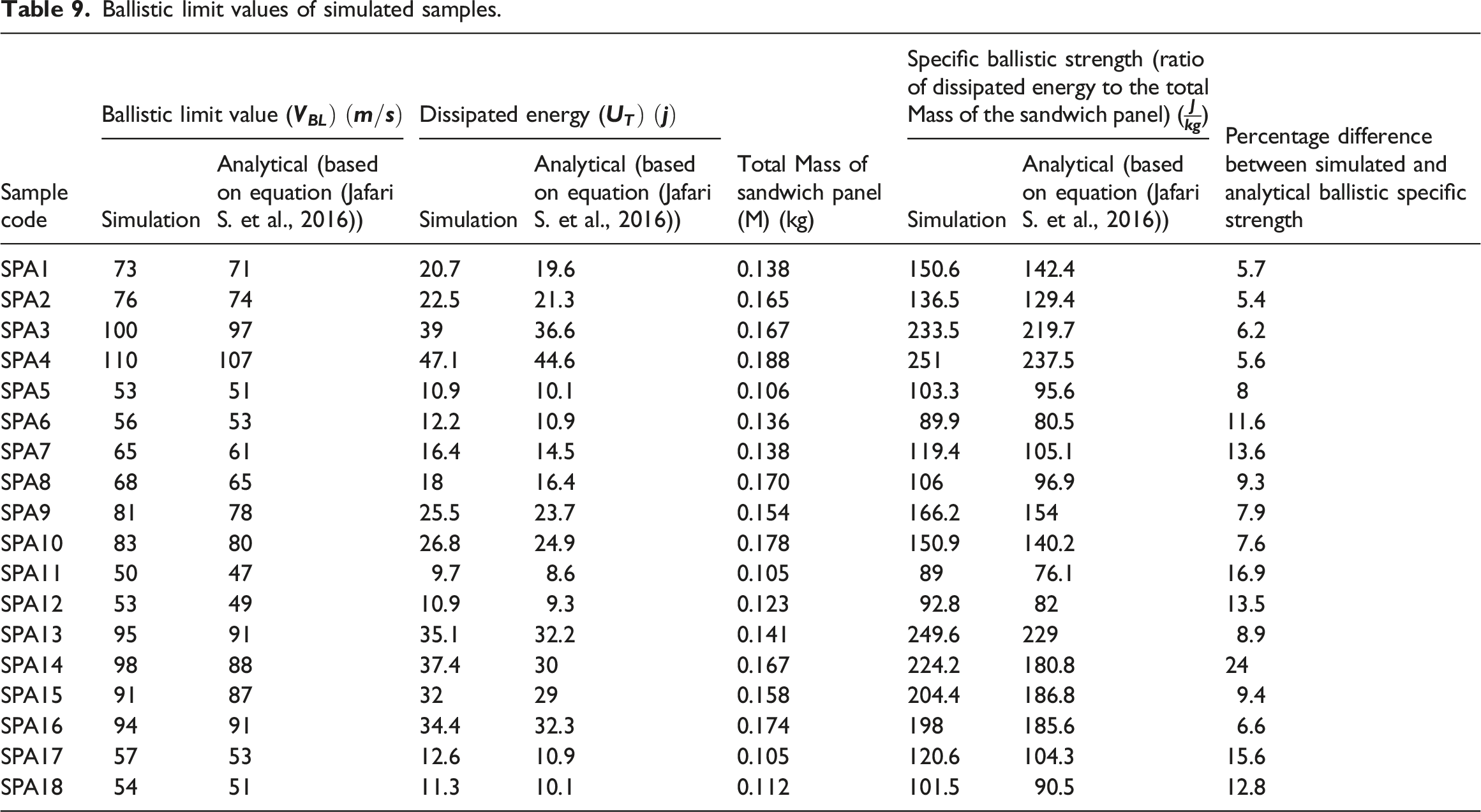
Ballistic limit of simulated samples
Calculation of the dissipated energy of the samples by analytical method (Jafari S. et al., 2016).
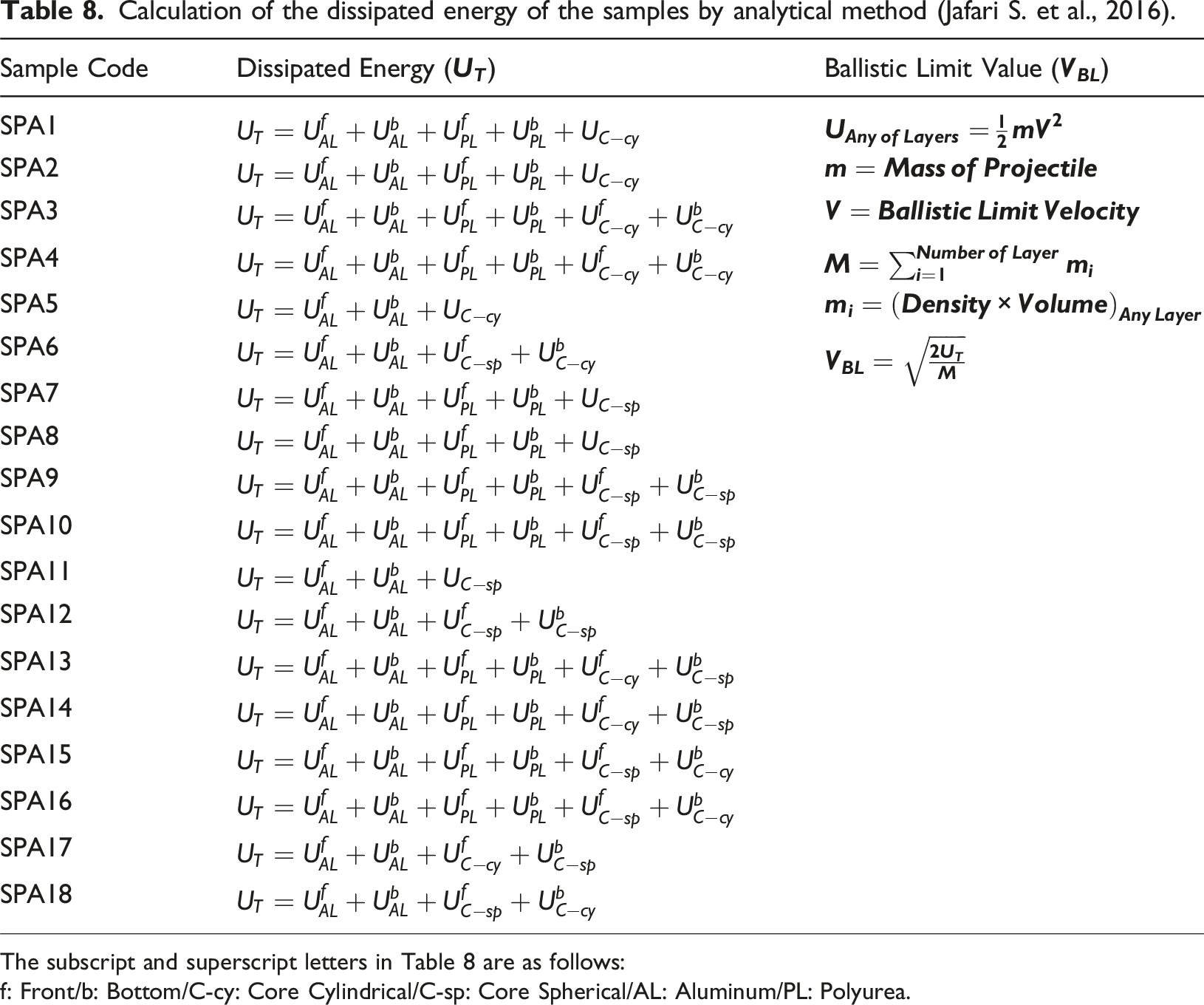
The subscript and superscript letters in Table 8 are as follows:
f: Front/b: Bottom/C-cy: Core Cylindrical/C-sp: Core Spherical/AL: Aluminum/PL: Polyurea.
Ballistic limit values of simulated samples.
DOE (design of experimental)
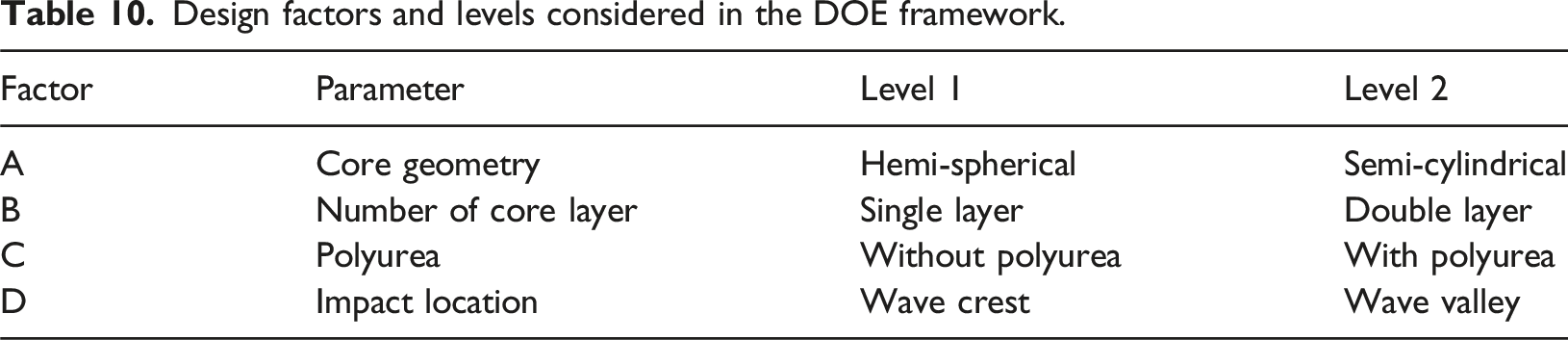
To strengthen the methodological rigor of the numerical investigation and to provide a systematic basis for comparing the influence of multiple design variables, a design of experiments (DOE)-based framework was incorporated into this study. Rather than relying on a purely trial-and-error parametric approach, the DOE methodology enables structured evaluation of governing parameters and facilitates extraction of design-oriented insights for sandwich panels subjected to ballistic impact.
Design factors and levels considered in the DOE framework.
Response variables used in the DOE analysis.

Relative influence ranking of design parameter based on DOE analysis.
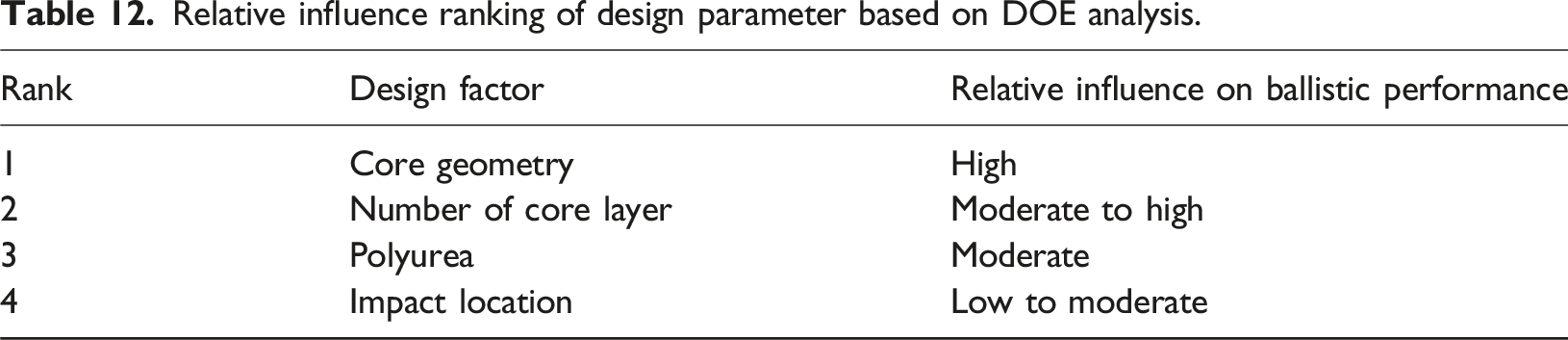
Based on the DOE framework and the comparative evaluation of all 18 investigated sandwich panel configurations, the overall ballistic performance was assessed in terms of both ballistic limit velocity and ballistic specific strength. Among the examined configurations, SPA13 demonstrated the most favorable balance between ballistic resistance and weight efficiency. While some configurations achieved higher ballistic limit velocities by increasing the number of core layers, these improvements were accompanied by a significant reduction in specific ballistic strength due to increased structural mass. In contrast, SPA13 provided the highest combined ballistic performance without unnecessary mass addition and was therefore identified as the optimal sandwich panel configuration within the investigated design space.
Conclusion
In this study, the ballistic resistance of sandwich panels with 1050 Aluminum-Polyurea face sheets and aluminum cores with semi-cylindrical or hemi spherical waves (single-layer and double-layer) was investigated. The projectile was in the form of a flat steel cylinder and the impact velocities ranged from 50 to 408 m/s. Also, the effects of core geometry, presence of Polyurea layer, single or double-layer core, projectile impact location, and specific ballistic strength of sandwich panels were investigated. The most important results of the study are as follows: • Introducing curved waves in the core enhances both the ballistic limit and the specific ballistic strength (7.5 and 6 respectively) of the sandwich panel. This suggests that incorporating core curvature is an effective strategy to improve impact resistance while maintaining a lightweight design, making it a recommended approach for protective panel design. • Changing the core wave geometry from hemi-spherical to semi-cylindrical (in single-layer cores) significantly increases the ballistic limit and specific ballistic strength (12.3 and 26.1 respectively). Designers aiming for higher impact resistance should consider semi-cylindrical core shapes for single-layer panels to maximize both ballistic limit and specific strength. • Rearranging the core layers from SPA15 to SPA13 improves ballistic limit and specific strength (2.4 and 22.1 respectively). This indicates that optimal sequencing of core layers is important; for double-layer cores, designers should consider SPA13-like arrangements to achieve higher ballistic efficiency. • Incorporating a Polyurea coating substantially enhances both the ballistic limit and specific ballistic strength (37.7 and 45.7 respectively). Protective panels should therefore include a Polyurea layer to achieve superior impact resistance without significant weight penalty. • Increasing the number of semi-cylindrical core layers increases the ballistic limit (36.9%) but reduces specific ballistic strength (55%) due to added weight. Designers must balance between higher ballistic limit and panel weight, selecting the number of layers according to application requirements. • Similarly, adding more hemi-spherical core layers raises the ballistic limit (24.6%) while decreasing specific ballistic strength (39.1%). This trade-off should be carefully considered during panel design to achieve desired protection with minimal weight. • If the projectile impact location is as shown in Figure 7(b), the ballistic limit of the panel increases by 8, 22.5, and 17.5% compared to the cases shown in Figure 7(a) and (c) (without belt), and (8) (with belt), respectively. Also, by changing the projectile impact location to between the two curves, the specific ballistic strength value increased by 6.5%. Designers should account for probable impact points in practical applications and may reinforce weak zones or adjust core geometry accordingly. • Among the 18 sandwich panel samples examined, the ballistic limit and specific ballistic strength values of the optimal panel (SPA13) increased by 47.3 and 64.3%, respectively, compared to the weakest sandwich panel (SPA11). This highlights that careful selection of core geometry, layer arrangement, and Polyurea coating can dramatically improve panel performance, providing clear guidance for designing high-efficiency protective sandwich structures.
Footnotes

Funding
The authors received no financial support for the research, authorship, and/or publication of this article.
Declaration of conflicting interests
The authors declared no potential conflicts of interest with respect to the research, authorship, and/or publication of this article.