






Abstract

The 2017 General Election in Wales was historic, but not in the manner anticipated. Instead of the predicted collapse, Labour won a major victory.
Democratic politics in Wales has long been characterised by one-party dominance. The Labour party have come first (in both seats and votes) in every general election from 1922 onwards. Before Labour dominance there was a sustained Liberal hegemony in the half-century preceding World War I. The obverse of this dominance is sustained Conservative weakness: the Tories last won a general election in Wales way back in 1859.
For a while, it appeared that 2017 would see an historic change in Welsh voting behaviour. The first Welsh opinion poll of the campaign, published the Monday after Theresa May announced the snap election in April, saw a sharp spike in Conservative support, giving them a ten-point lead over Labour. Suggestions that this poll might be an outlier were quashed by the next one, in early May, which put Tory support at an all-time high in Wales, on 41 percent.
Early in the campaign everything appeared to favour the Conservatives. Theresa May was far more popular than Jeremy Corbyn: indeed, she was the most popular politician in Wales, something wholly unprecedented for a Tory. And in Euro-sceptic Wales, which had voted for Brexit, the focus of the Conservative campaign was striking a chord. Voters ranked Brexit as the most important electoral issue, rated the Conservatives as clearly the best party to handle it, and the Tories were hoovering up vast proportions of those Welsh voters who had voted for Ukip just two years previously.
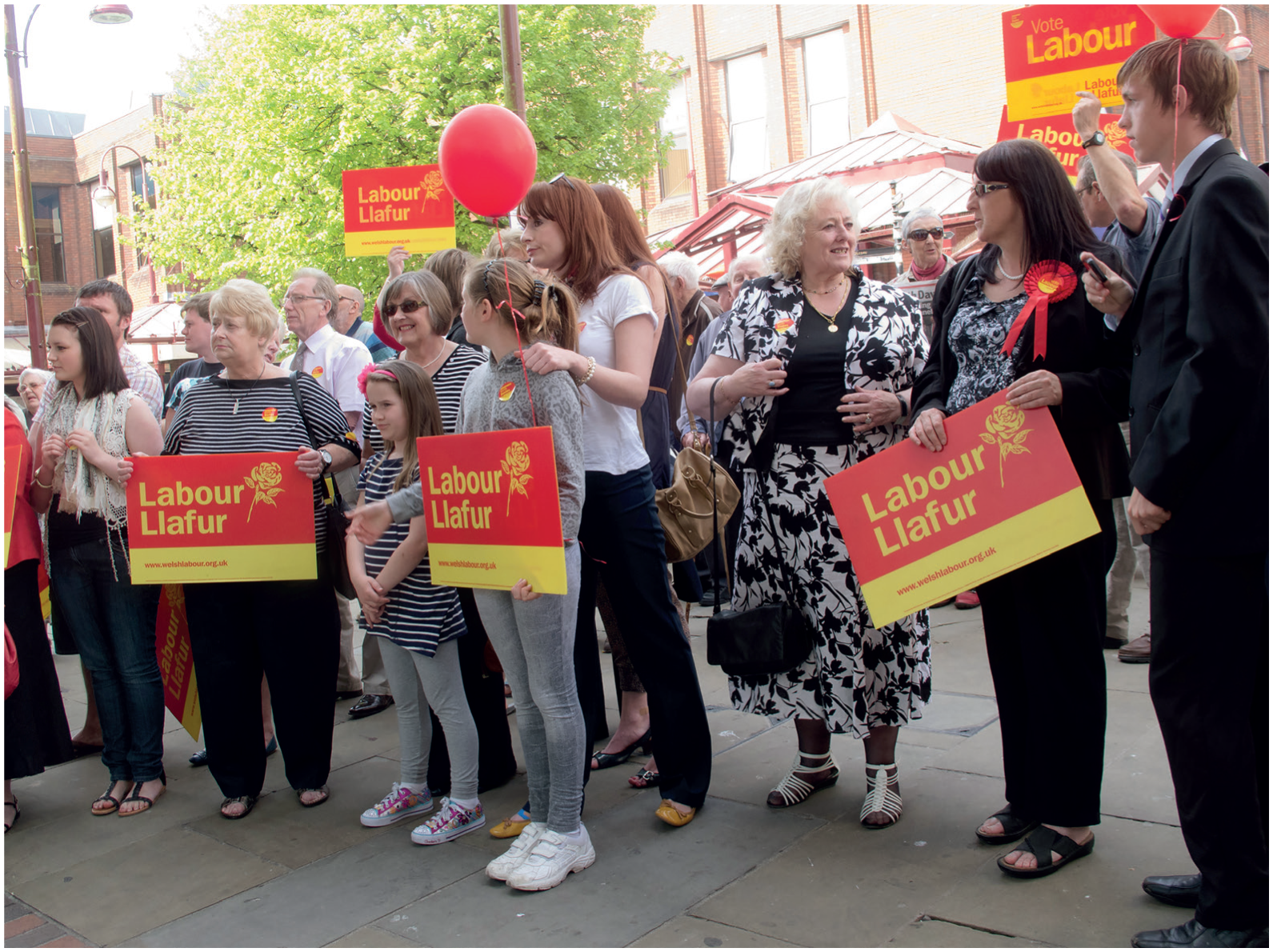
Then things began to change. The Labour fightback in Wales was led by the First Minister, Carwyn Jones. Two years ago he had been largely invisible in the Labour general election campaign. Now Jones was the main face and voice of Labour’s campaign materials, with Jeremy Corbyn almost invisible. He also represented the party in Welsh television debates, where two years previously, Labour’s case had been advocated by Shadow Welsh Secretary Owen Smith. This focus was understandable: the previous year’s National Assembly election, and the May 2017 local elections, had shown that even in difficult times Labour in Wales could still win when fighting as Welsh Labour.
But Labour might have over-done the ‘Welshing-up’ of their campaign. As in the rest of Britain, the campaign period saw an extraordinary turn-around in the public fortunes of the two main UK party leaders. Figure 1 charts the average popularity ratings of Theresa May and Jeremy Corbyn, alongside Carwyn Jones and Plaid Cymru leader Leanne Wood, throughout the election campaign. Rarely have the public reputations of two political leaders changed so quickly as those of May and Corbyn.
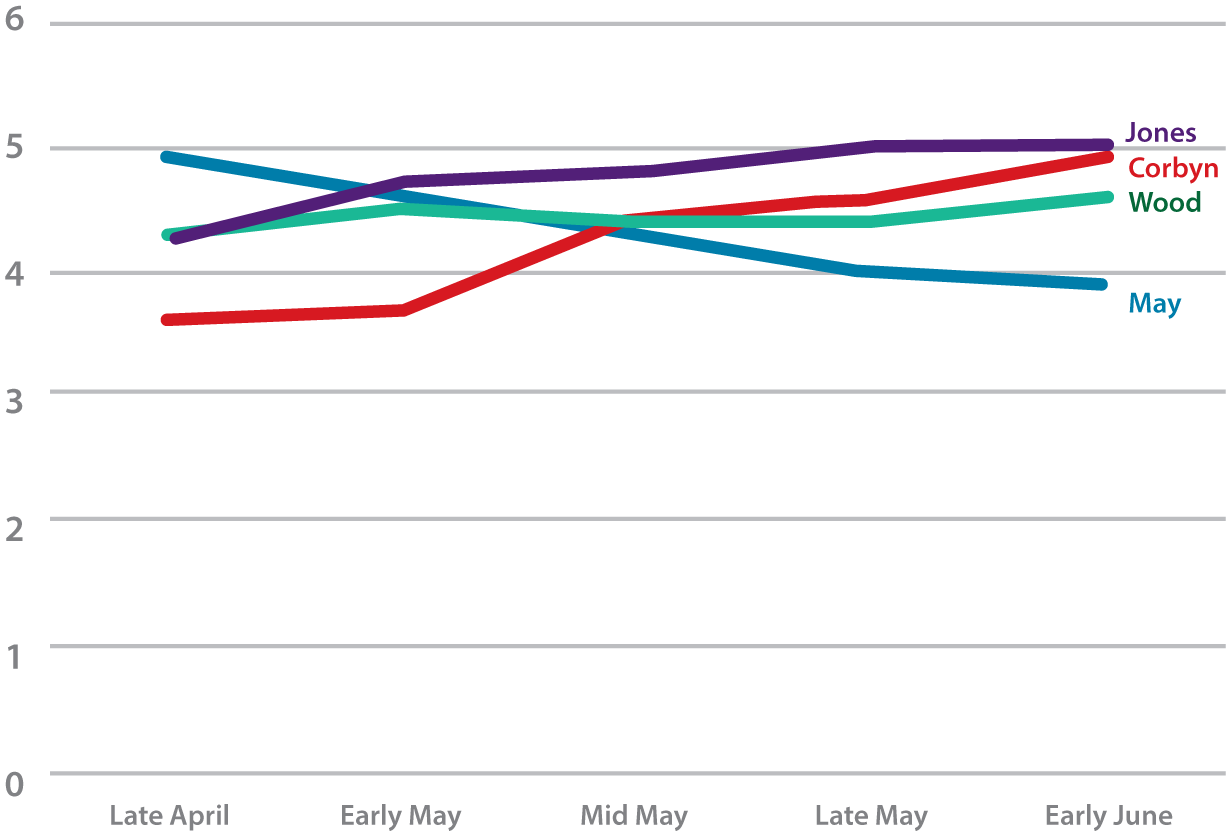
Average Ratings (out of 10) for Party Leaders in Wales, 2017
The final Welsh poll of the campaign, published on the eve of voting, showed Labour further consolidating its renewed advantage (Table 1). But with all Welsh polls being conducted by YouGov, and that pollster among the more Labour-friendly at the time in Britain-wide polls, there remained considerable uncertainty as to the result on the day. In the event, things turned out as outlined in the table.
2017 Election Result in Wales (changes on 2015)
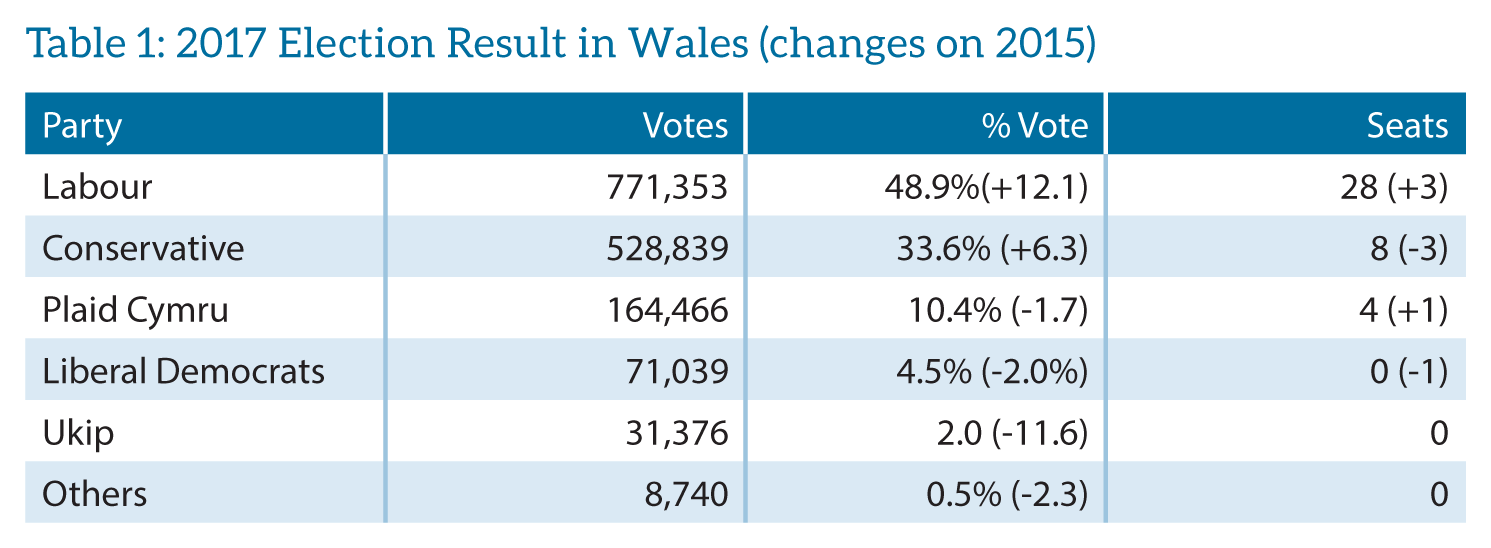
For Labour, the result was a triumphant outcome to an election that had been looking like a disaster only weeks previously. The party won their highest vote share in Wales since the first Blair landslide of 1997. This was widely interpreted as a personal vindication for the First Minister, who emerged from the election with his standing significantly enhanced. Labour’s three seat gains gave it a better haul than in either 2010 or 2015: Gower and the Vale of Clwyd were ultra-marginals that should have fallen Labour’s way on the national swing, but Cardiff North was more unexpected and made Wales’ capital city once again wholly Labour in its parliamentary representation.
The Conservatives actually secured their best Welsh vote share in a general election since 1935. But the outcome in terms of seats was still a major disappointment. Perhaps the early polls had led to resources going to the wrong places: Theresa May had launched the party’s Welsh campaign in Bridgend, a marginal seat for Westminster that is represented in the Assembly by Carwyn Jones. Instead of seeking significant gains, it turned out, the Tories would have been better off fighting to hold what they already had. Immediately after the election, there were loud complaints about the lack of input from the Welsh party into the campaign, and calls for a clear Welsh leader of the party.
Plaid Cymru had a very mixed election. Their one seat gain, Ceredigion, enabled them to equal their highest Westminster representation ever. But in their other key target seat of Ynys Môn, their candidate (and former party leader) Ieuan Wyn Jones slipped to third place. Overall, their vote share was the worst for 30 years, and Plaid actually lost their deposit in almost half of Wales’ 40 constituencies.
In the end, it was the Liberal Democrats rather than the Tories who experienced an historic general election outcome in Wales. But this was not historic in a way any Lib-Dem would have wished. The 2015 election had seemed as bad as things could get for the Lib-Dems. Yet now their vote share fell a further two percentage points, their deposit was lost in all but four constituencies, and their final Welsh MP ousted. For the first time since 19th century franchise expansion, there were no Liberal or Liberal Democrat Welsh MPs. Indeed, only Ukip’s electoral performance made that of the Lib-Dems look a little less bad. In 2015 Ukip had saved their electoral deposit in every Welsh seat; now, as their overall vote share fell by more than four-fifths, every Ukip candidate in Wales lost their deposit. With their National Assembly group increasingly fractured and shambolic, Ukip’s brief Welsh flowering may already be over.
Overall, 2017 in Wales saw electoral continuity rather than historic change: this was number 26 in Labour’s long run of successive Welsh general election triumphs. If the hung parliament runs to its full five-year term there will have been a full century of unbroken Labour general election victories in Wales. A party doesn’t remain the dominant force somewhere for a century just by accident. The main lesson of the 2017 election from Wales may be simply never to under-estimate the resilience of Welsh Labour.
Footnotes
Roger Scully is Professor of Political Science, and Acting Director of the Wales Governance Centre, at Cardiff University.