






Abstract


Online campaigning is expected to be a major feature of the next British general election. Ahead of that vote,
The 2019 General Election saw an unprecedented deluge of online political advertising. A remarkable 53 per cent of all election spending on advertising was spent on digital platforms. With the next general election coming into view there are growing calls to reform political advertising and end deceptive campaign practices, particularly online. Just five years on from Cambridge Analytica, there is still concern that online political advertising can be manipulative, misleading and problematic for democracy. And yet, whilst people are familiar with stories of personality profiled ads and voter suppression activities, when we think about our own experience of political advertising on platforms such as Facebook, it’s rare to recall particularly concerning practices. This raises an important question: exactly how is political advertising being used in elections?
To answer this question, we created a research team at the University of Sheffield composed of staff and students. Working together, we coded over 2,500 Facebook adverts placed by national political party accounts, party leaders and ‘satellite campaign’ groups - which are non-party groups promoting particular electoral outcomes - during the 2019 General Election campaign. Each advert was coded by two researchers using a new framework we developed, that sought to identify the type of persuasion strategy being used in each advert. Specifically, we were looking to see whether ads focused on outcomes, used evidence, referenced reputation, were aimed at particular communities, contained targeting data, or used another persuasive strategy. Whilst we’re currently writing up our findings of this project, in this article, we reflect on what we learned about election adverts from this coding activity. Highlighting ten key takeaways, we consider whether current online advertising practices raise concerns and then look ahead to the next general election to pose three questions for future research.
Ten key takeaways
Much of the narrative around online political advertising has been incredibly negative. Whether highlighting concerns about divisive and misleading microtargeting, foreign interference or misinformation, online political advertising is often viewed in a negative light. Yet, having reviewed hundreds of ads, we found uneven evidence to support these concerns.
1. Targeting was less specific than expected
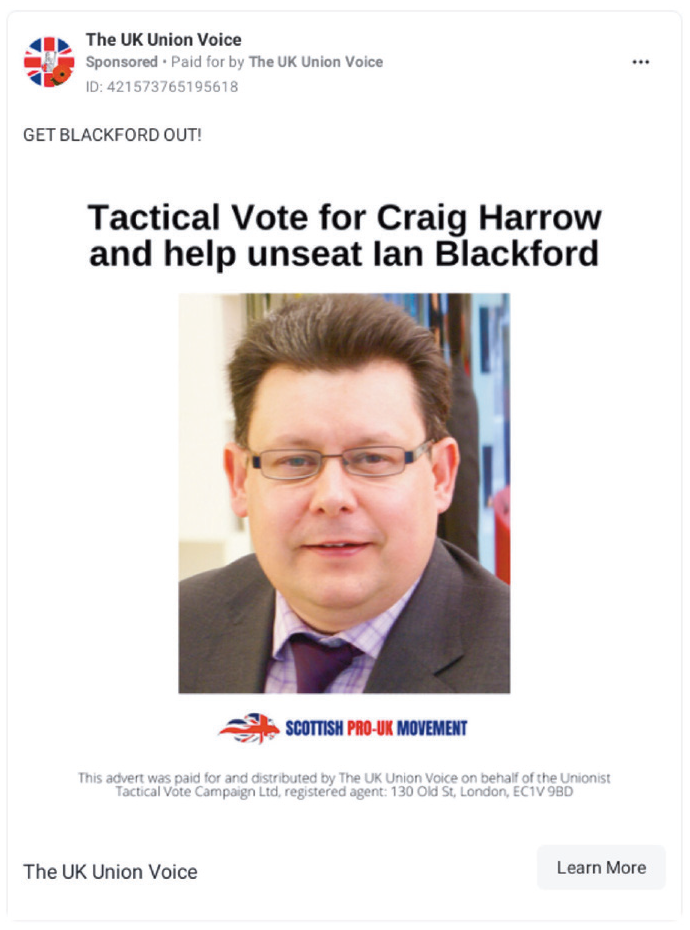
Much has been written about the rise of targeted political advertising, and there has been specific concern about the potential for campaigners to target people based on their interests or demographic traits in ways that may be manipulative (Zuiderveen Borgesius et al., 2018). Yet within our dataset we found that visible forms of targeting focused almost exclusively on location, with references to a specific constituency or candidate. On occasion, we did see some evidence of group-based targeting, with ads using photos of particular target audiences (such as young people for Labour and families for the Conservative Party), but this wasn’t commonplace. Our analysis did not look at the targeting parameters selected by advertisers and so we can’t draw definitive conclusions without further analysis, but based on what we saw, adverts did not appear to be overtly targeted to different groups.
2. Ads are often not unique
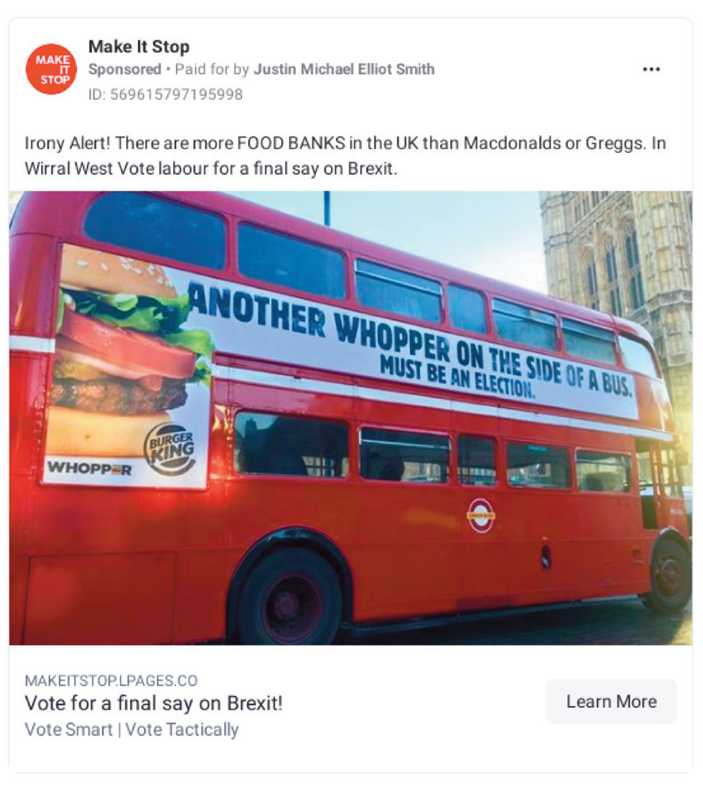
There have also been worries that campaigners could create hundreds of ads with subtly different messages. Although we did see many different ads, it was striking that a small cadre of adverts were replicated many times, either with superficial or no differences. This was especially apparent in advertising that carried a non-specific slogan coupled with location-based targeting such as ‘Your vote has never been more important. Vote Conservative in [targeted location] to get Brexit done and unleash Britain’s potential’.
The high frequency of these adverts is likely due to the widespread appeal of their generic message, while capitalising on a false sense of ‘uniqueness’ engendered by location-based targeting. It may also reflect campaigners’ limited capacity to create huge numbers of unique ads. And yet, many adverts did appear only once or a handful of times. This raises an important question for further research: how successful are these divergent strategies, and do similar or different adverts have different effects?
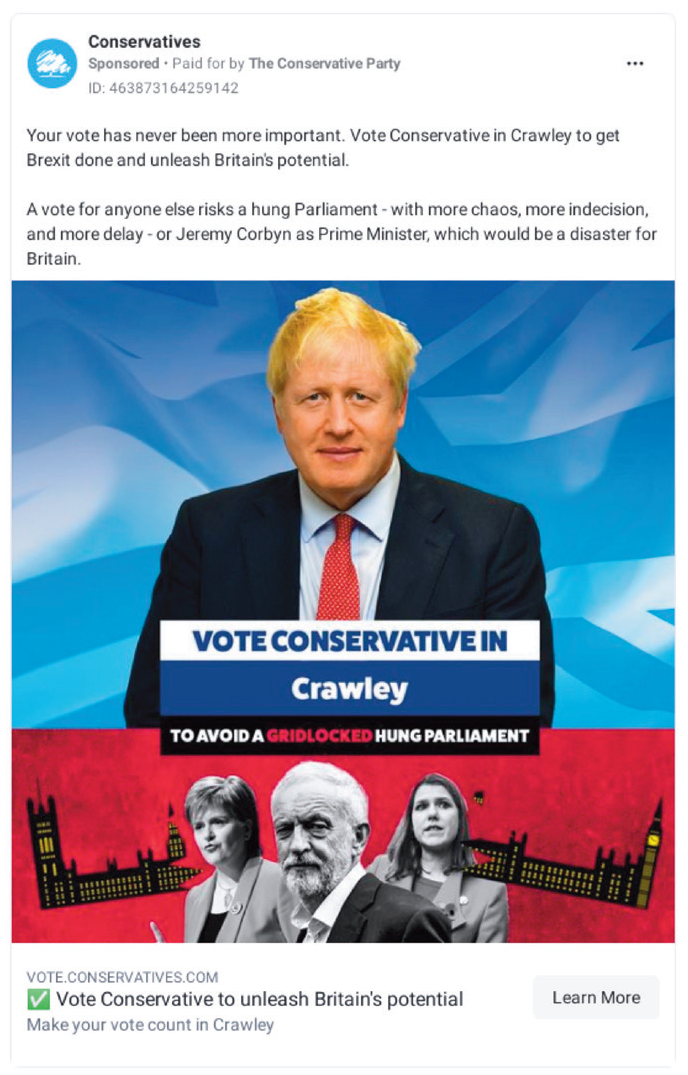
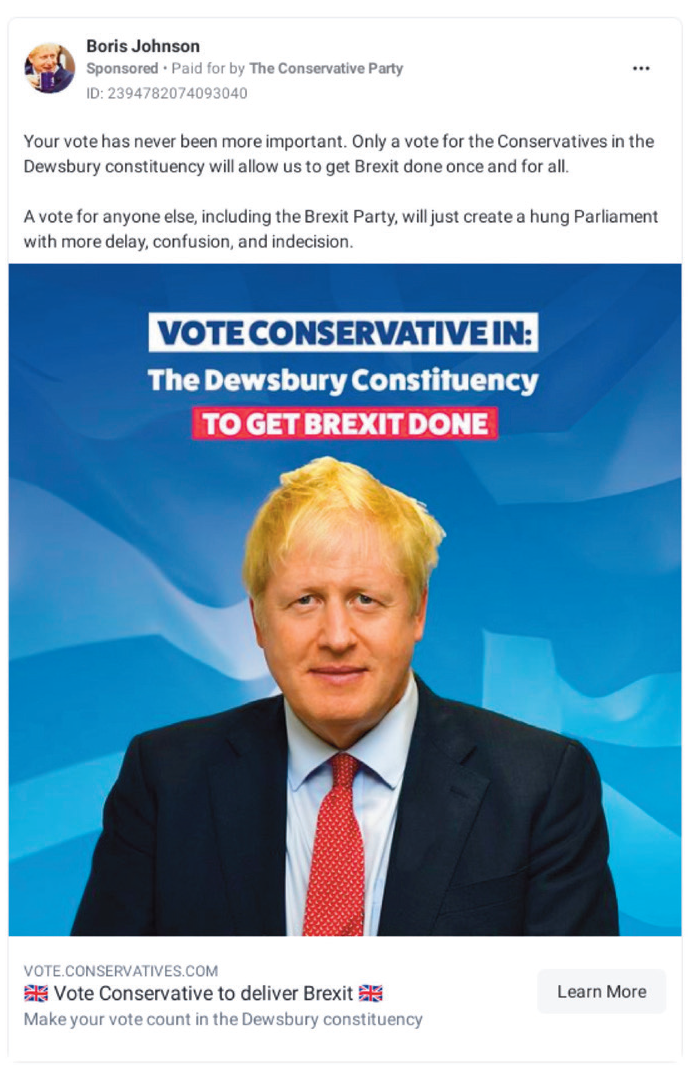
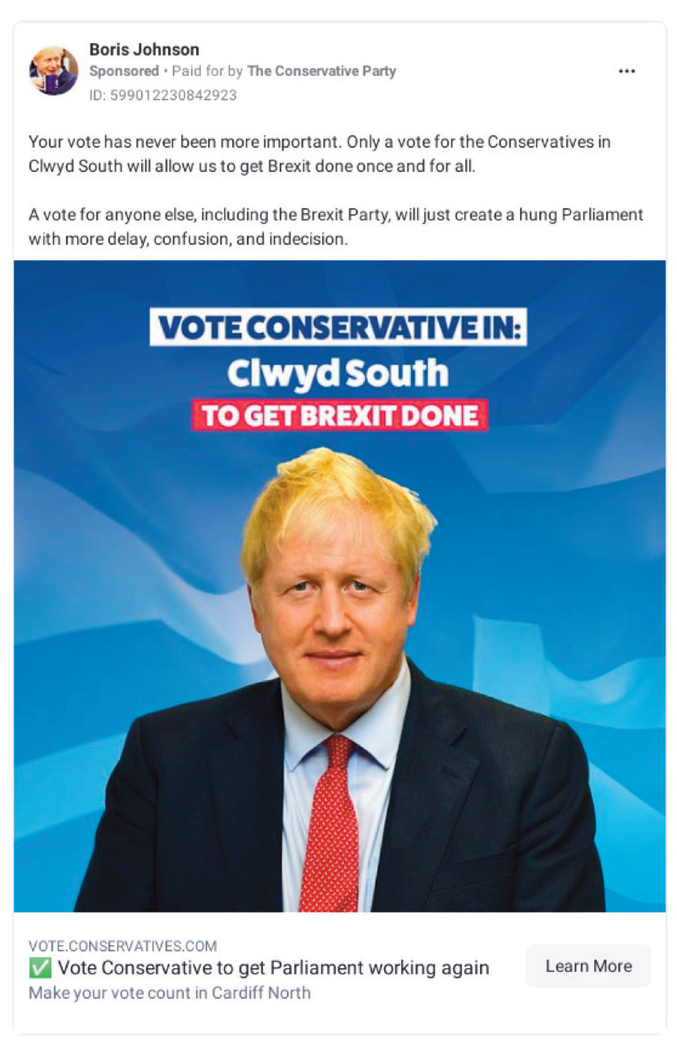
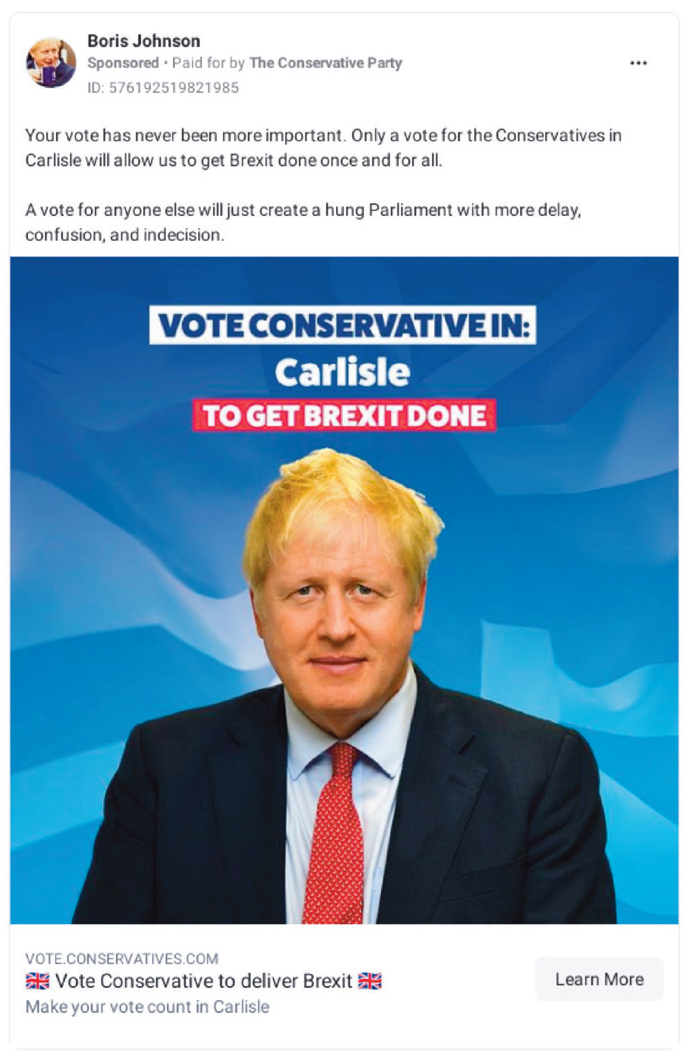
There have also been worries that campaigners could create hundreds of ads with subtly different messages. Although we did see many different ads, it was striking that a small cadre of adverts were replicated many times, either with superficial or no differences.
3. Negative foreign ties were emphasised
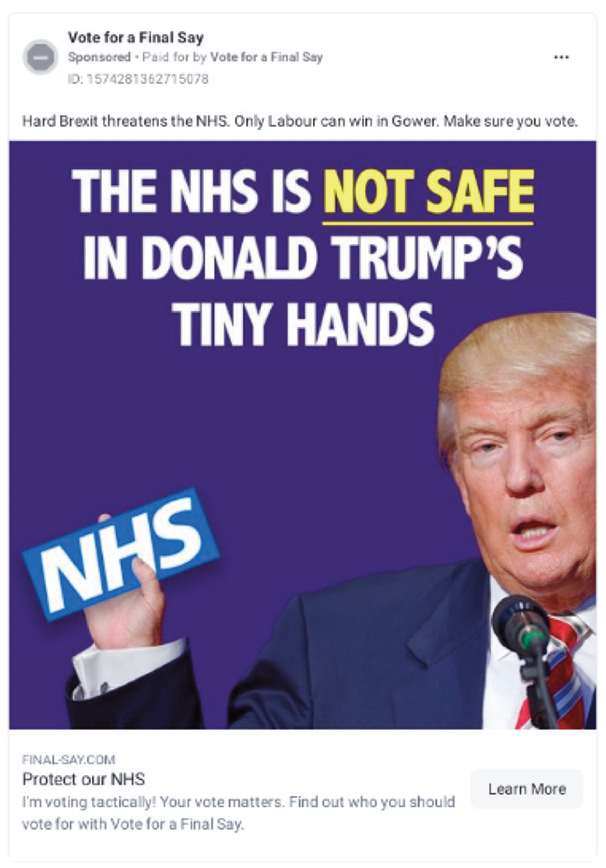
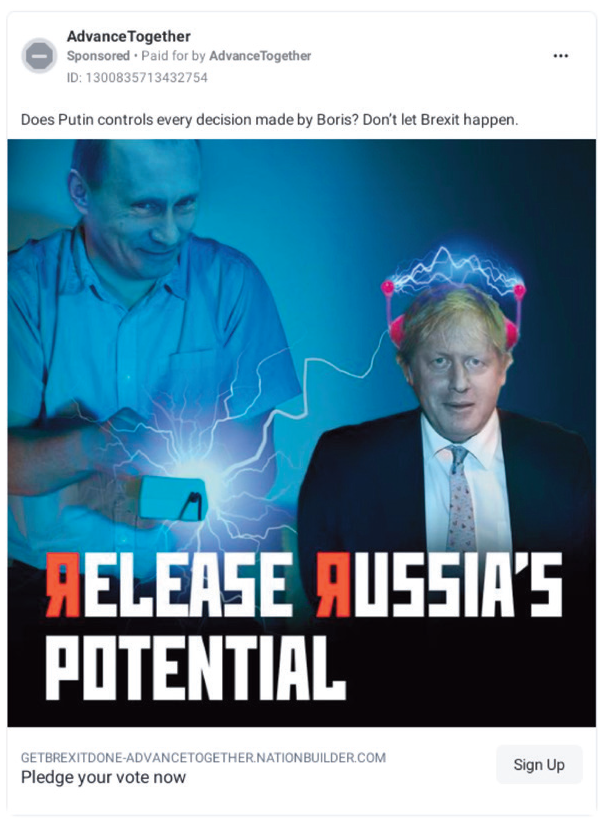
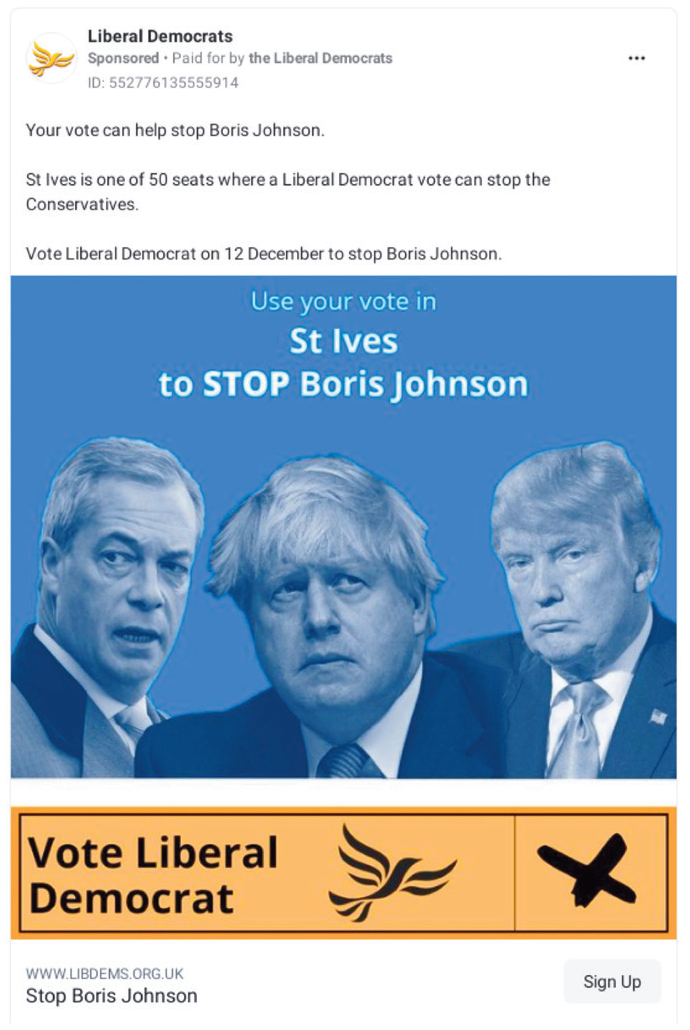
Another prominent topic of concern has been the potential for foreign interference. Whilst our analysis wasn’t looking at ads placed by overseas actors, we did find several ads that attempted to link specific candidates or political parties to foreign figures. These ads often used images of figures such as Donald Trump and Vladimir Putin to wordlessly evoke negative emotions or controversial ties. Within our dataset this type of message was most commonly used to discredit the Conservatives and Boris Johnson. Adverts talked about the Conservative government ‘selling’ the NHS to Trump and played upon the idea of Russian interference - often implying that Putin and Russia would manipulate Johnson and the Conservatives. Foreign actors did, therefore, feature, but not as we’d expected.
4. There is evidence of non-compliant advertising
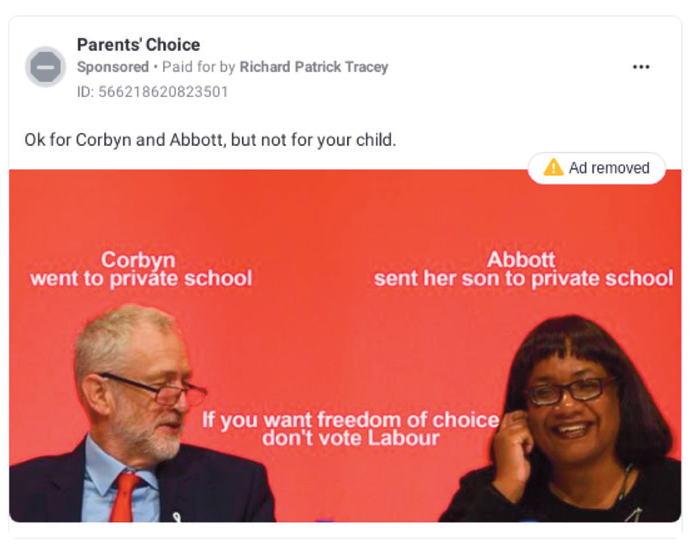
One interesting feature of our database is that it contained information on whether an advert had been removed/taken down from Facebook for non-compliance with Meta’s advertising rules. Within our data a fascinating minority of the adverts had been removed, suggesting there is evidence of non-compliant practice. Although we couldn’t see the reason given for an ad’s removal, it appeared that more ads placed by satellite campaign groups were removed than ads from political parties. Indeed, whilst the Conservative Party ads seemed largely compliant, satellite groups on the political right (with names like Capitalist Worker) had several ads removed. It may be that these satellite groups were engaged in more deliberate attempts to spread misinformation - and hence were removed - but it could also be the case that these groups made simple mistakes about disclosure rules because they are less professional operations than political parties. Further analysis is therefore needed to work out exactly what was happening, but it could be that certain campaigners are engaged in more problematic behaviours than others.
Within our data a fascinating minority of the adverts had been removed, suggesting there is evidence of non-compliant practice.
5. Adverts often don’t substantiate their claims
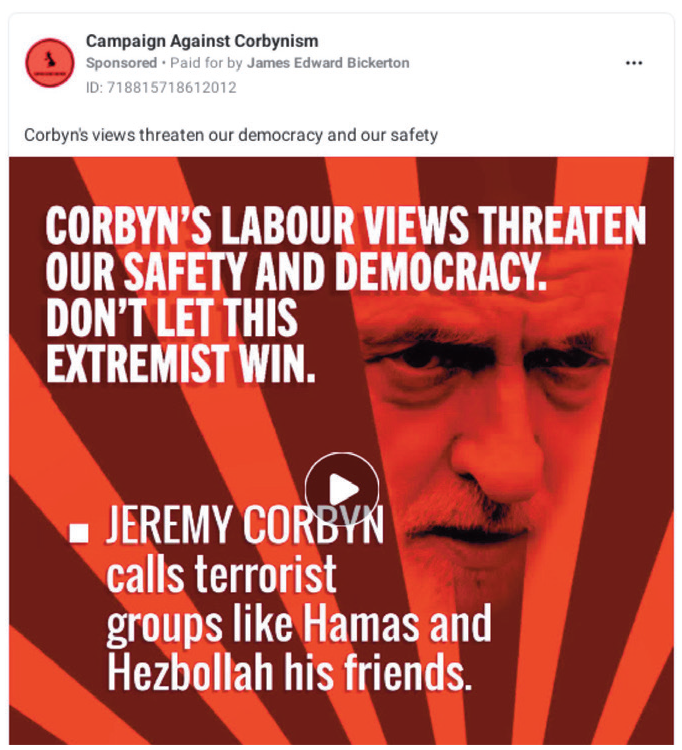
Another issue frequently raised in relation to online political ads is that they spread misinformation and fake news. One of the things we were therefore particularly interested in was the use of evidence. Whilst we did find many ads citing external sources to validate their claims, many others did not. It was here that we saw perhaps the most concerning practice: online ads making claims about the past actions of a candidate but without providing evidence. It was common for ads to make claims such as ‘so and so said this’ or ‘Corbyn’s views threaten our democracy and our safety’. This suggests that the use of evidence in ads is far from consistent and there may be a case for introducing standards around the kind of claims (and evidence) that is compatible with healthy public debate.
Further insights
Looking beyond these negative themes, we identified a number of other interesting features around who was placing ads and what advertising focused on.
6. Third-Party advertising was common
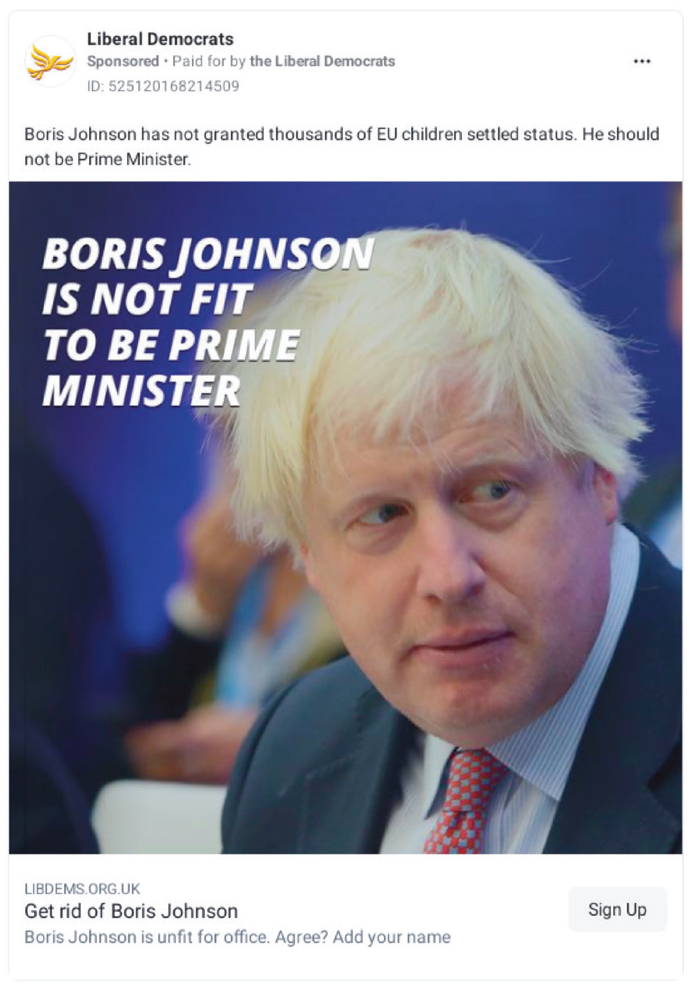
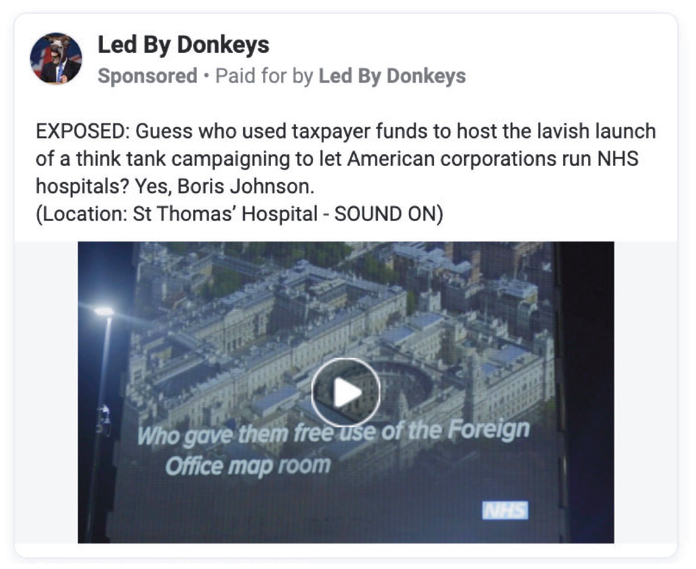
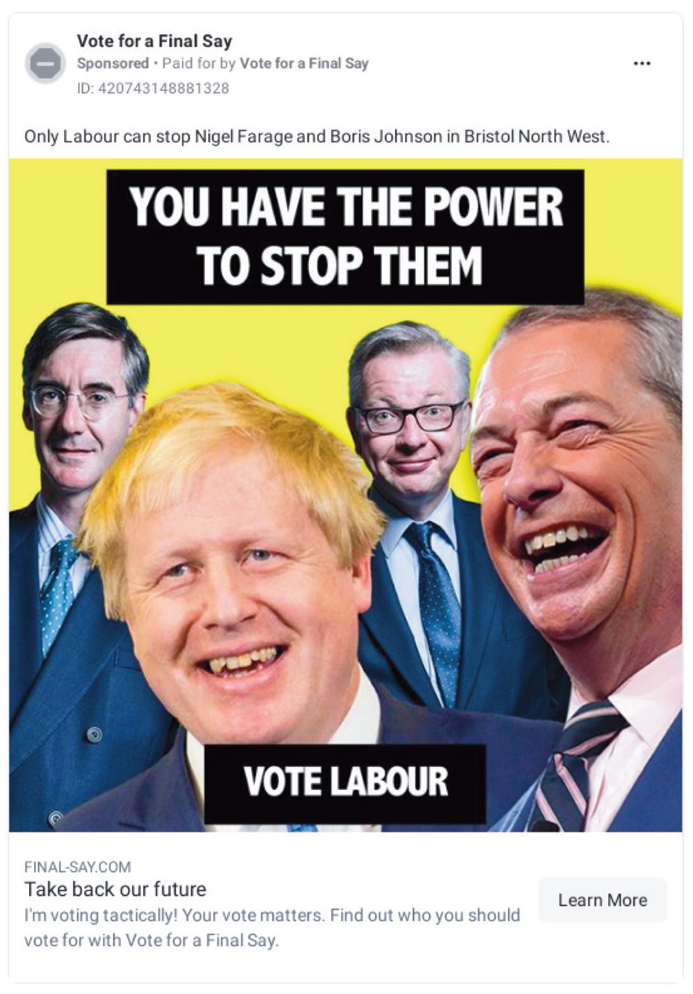
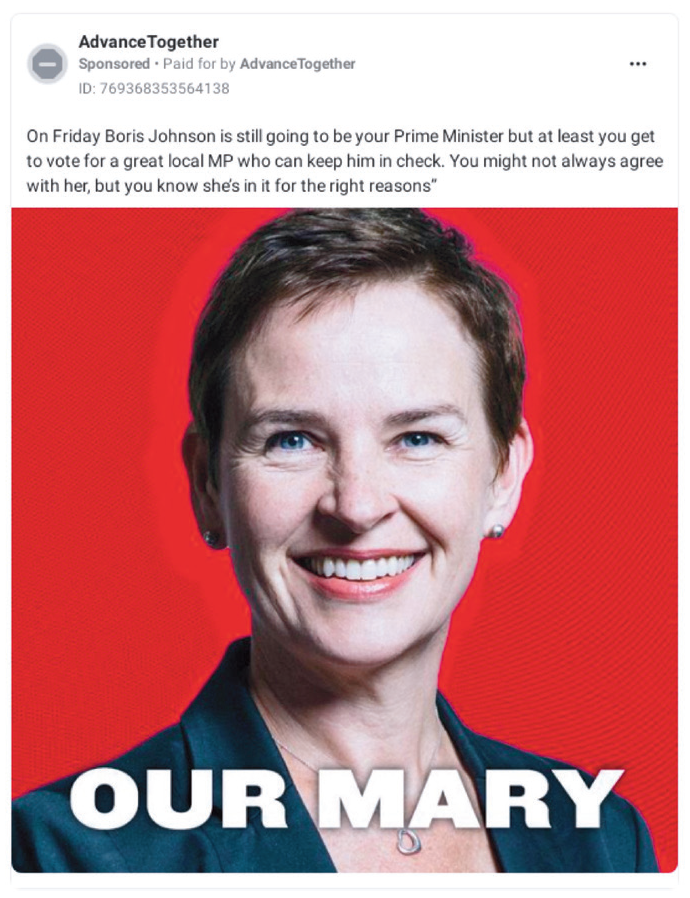
One of the interesting things to emerge in this data was the differences in the ads placed by different actors. Our coding showed that a large proportion of the digital advertising in the 2019 General Election was paid for by third parties, including organisations such as the Fair Tax Campaign, AdvanceTogether and Vote for a Final Say. These organisations often used more issue-based advertising strategies than the parties themselves, focusing, for example, on Brexit, taxation, or the abolition of private schools. Ads from these sources also often contained attacks on reputation, with advertising by Led By Donkeys and Campaign Against Corbynism, for example, targeting individual candidates and leaders. This seemed to be more prominent than in ads placed by parties. For example, observe the strong contrast in the language used by the Liberal Democrats’ advert: ‘Boris Johnson is too divisive to be Prime Minister’ and Led By Donkeys’: ‘EXPOSED: Guess who used taxpayer cash to host the lavish lunch of a think tank campaigning to let American corporations run NHS hospitals? Yes, Boris Johnson’. Such examples suggest that the source can have an impact on advertising tone and content.
7. Voter registration was a high priority on the left
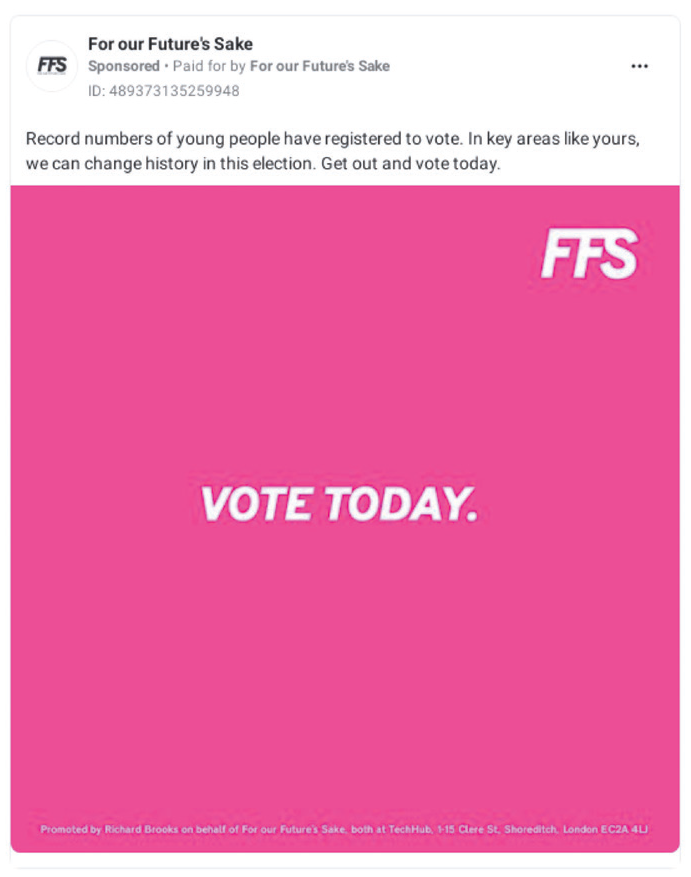
When it came to what ads were focused on, the vast majority concentrated on election outcomes, but we also found many ads promoting voter registration. Notably, we perceived a disparity between left- and right-wing campaigners, as it was those on the left of the political spectrum that were most likely to run ads promoting voter registration. This might reflect the importance of demographics in British politics. Younger voters are more likely to be left-leaning, but they are also less likely to vote, perhaps explaining campaigners’ different use of this kind of ad. From this perspective, advertising trends provide a useful way of observing how political parties may respond to demographic changes.
8. Negative attacks outweighed positive promises
One interesting aspect of previous research on vote choice has been the degree to which voters judge parties on their record in government or their future promises and policies. Within our ads we found that campaigners focused less than anticipated on what they would do if elected and more on the need to keep other parties out. This led to the use of negative and often attacking messaging, focused on an almost tribal style of deterrence as a means of encouraging support. Where positive messaging was evident it tended to be focused on often vague, positive outcomes as opposed to specific policy pledges, suggesting that manifesto pledges and commitments did not play a prominent role in online campaigns.
9. Personality politics thrives
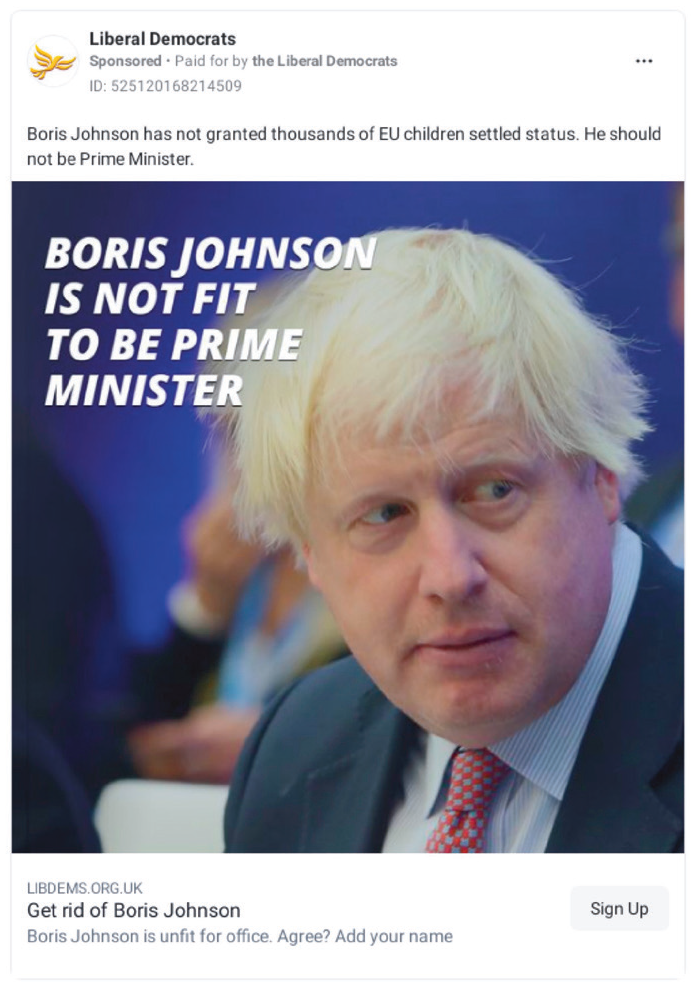
Much has been made of the ‘Presidentialisation of UK politics’, and a growing focus on personalities as opposed to policies. Within the ads we saw this trend was commonplace, with numerous personal attacks and a focus on leaders and their personal characteristics. Many ads focused on Boris Johnson’s lack of trustworthiness, whilst Jeremy Corbyn’s views were often attacked and Labour ministers were painted as hypocritical. Often, personality was used in a negative manner as an attempt to discredit, but we did find the odd positive ad, where the virtues of a specific person were emphasised.
10. Brexit and NHS were topical issues
When it came to advert content, ads often focused on Brexit or the NHS. The Conservative Party’s ads reflected its key message for the 2019 campaign: that a majority in Parliament for the Conservatives led by Boris Johnson would enable them to ‘Get Brexit Done’. A huge proportion of the Conservative Party’s adverts contained this slogan, along with a picture of Boris Johnson, as the party campaigned on his personal popularity rather than issues. In addition to this focus on Brexit, the NHS remained a hugely important factor. Conservative adverts mentioned the NHS less frequently than others and often used it to promote Brexit, linking this issue to increased funding. Labour and other opposition parties dedicated more time to the NHS, stressing the links between the decline of the service and the length of Conservative government. Ads by satellite campaigns also suggested the NHS was under threat from Donald Trump if the Conservatives were elected or often included nurses and doctors highlighting issues with funding and workload. These two issues therefore dominated the issue-agenda within the ads we coded.
When it came to advert content, ads often focused on Brexit or the NHS. The Conservative Party’s ads reflected its key message for the 2019 campaign: that a majority in Parliament for the Conservatives led by Boris Johnson would enable them to ‘Get Brexit Done’.
Cause for concern?
Looking back over our findings - and reflecting on the narrative about online political advertising that has come to dominate current debate - our coding found limited evidence that ads are being used in duplicitous ways. Whilst we did find concerning practices around the use of unsubstantiated claims, and we saw a lot of negative and attack advertising, we also saw limited evidence of microtargeting and little to support the idea that people are being manipulated.
Indeed, it was striking that a lot of ads were positive and focused on the potential for positive outcomes to emerge from a vote for a particular party. Based on our analysis, it therefore seems that a more nuanced narrative is needed to capture how political ads are being used. There are clearly some concerning practices that could be addressed through codes of conduct or tighter regulation, but there is also much that seems to be rather innocuous and wholly compatible with healthy democratic debate. Based on our experience, at least, it seems that the level of concern is over inflated.
Questions for the next general election:
Having spent a large amount of time looking back at the 2019 General Election, it is particularly interesting to think about the questions that our analysis offers for the next general election. With the next election due by January 2025, it is likely that we will see political ads become more common over the next year. For researchers interested in the use of online political advertising, there are several thought-provoking questions worth exploring:
1. Does online political advertising differ depending on who is placing the ad?
Our coding suggested that satellite campaign groups and third-party actors are placing more negative and attacking ads than parties or leaders. This may be an effective campaign tactic by making others responsible for advancing less palatable campaign messages - so it will be interesting to see if this happens at the next election and whether scrutiny should therefore be focused on these actors’ ads.
2. Will foreign actors and particularly Russia and the US feature as a source of threat?
Back in 2019, Putin and Trump were evoked in a surprising number of ads as posing a threat to the UK. Given the dramatic changes in international politics, and particularly the war in Ukraine, it will be interesting to see if this threat is still evoked, or whether other actors are portrayed as the source of concern.
3. Will overt targeting be more or less evident?
Targeting has been a source of significant concern, but we found it was mainly constituency names and candidates that signalled targeted messaging. Since 2019, important new data has been made available to allow researchers to study the targeting criteria that was used for specific ads, so it will be interesting to look and see how prevalent targeting is, and if messaging does vary in ways we could not detect. It is also important to note that new constraints are in place on social media platforms that make it harder for campaigns to engage in highly personal targeting. It may therefore be that less targeting occurs than during 2019, and it will be interesting to trace the extent to which this practice occurs and is signalled to the audience.

Footnotes
Acknowledgements
This project formed part of a wider research project being conducted by Professor Kate Dommett, Professor Tom Stafford, Dr Nikos Aletras, Dr Junyan Zhu and Dr Samuel A. Mensah at the University of Sheffield as part of the Leverhulme Trust funded grant: RPG-2020-148 ‘Understanding Online Political Advertising.
Isaac Silver, Ren Thompson, William Bruce, James Brown and Clover Hamilton are politics students at the University of Sheffield. Kate Dommett is Professor of Politics at the University of Sheffield.