






Abstract

As President, Joe Biden promised a return to ‘business as usual’ after the unpredictability of Donald Trump.
© Media Punch / Alamy Stock Photo
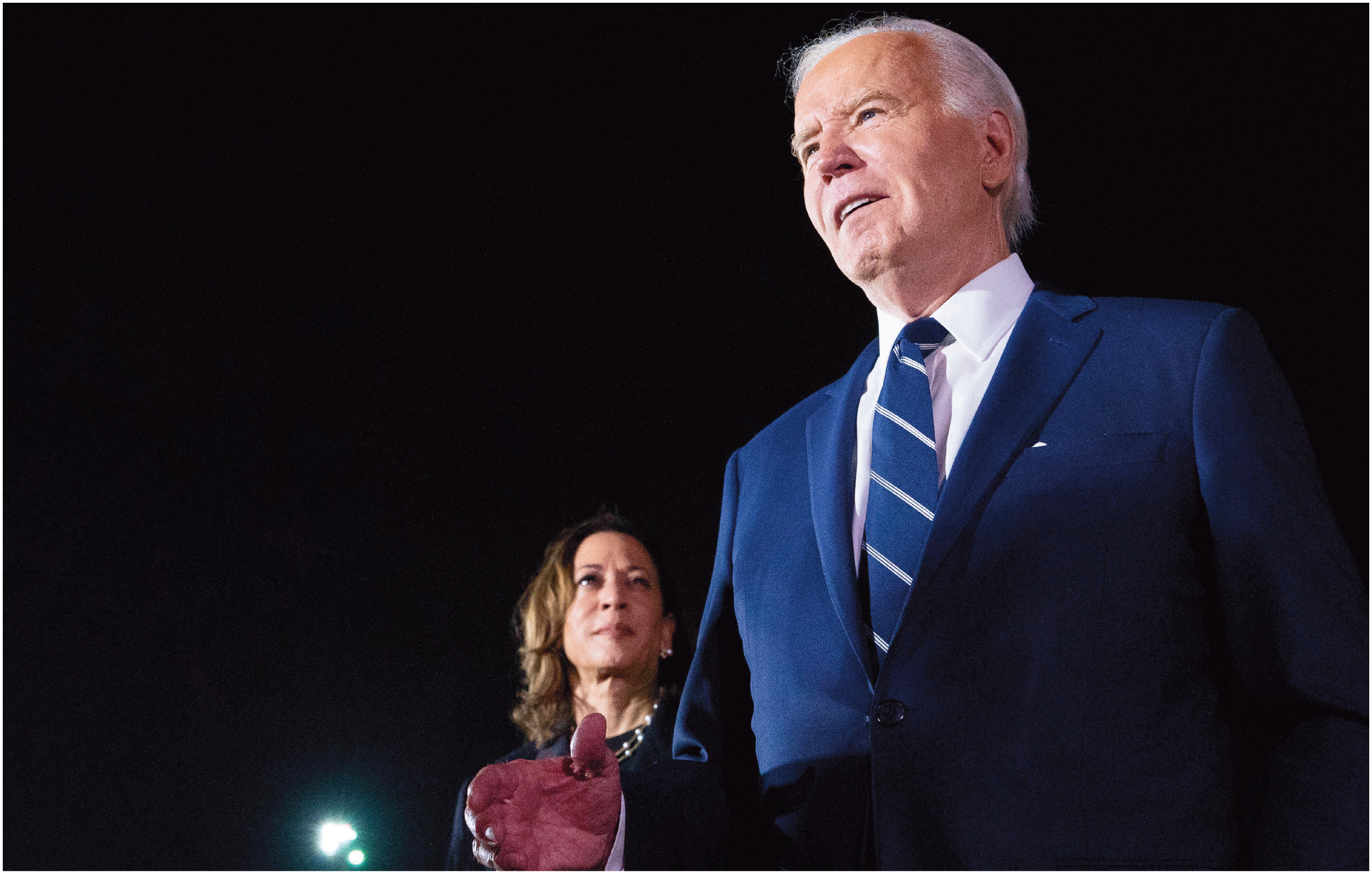
On 4 February, 2021, newly elected President Joe Biden spoke at the US Department of State in front of the press and the department’s staff, introducing his new Secretary of State Anthony Blinken. Outlining his priorities for the State Department in his administration, Biden declared, ‘the message I want the world to hear today: America is back. America is back. Diplomacy is back at the centre of our foreign policy.’
This message was obviously intended to reassure the audience, both domestic and international. Barely one month after the seismic events of 6 January there was a real need for this reassurance. The world had watched in real-time as rioters stormed the US Capitol, attempting to prevent Congress from certifying the 2020 US presidential election results. After years of a chaotic administration under Donald Trump, the 6 January riots only drew more attention to the state of US domestic politics.
Evidently, Biden considered the impact of his predecessor’s conduct, and the events of 6 January, sufficiently damaging to the reputation of the US internationally that this ‘America’s back’ message was needed to establish the tone for his administration’s foreign policy. During the preceding presidential campaign, US ‘credibility’ and ‘influence’ had been the key themes Biden highlighted, and he carried this over after the inauguration. In his inaugural address, Biden had indicated how he intended to achieve this, stating that his administration would ‘repair our alliances and engage with the world once again’.
Now, as we approach the 2024 US presidential elections, it is time to explore how American foreign policy has changed over the past four years, reviewing whether we have seen this promised return to normalcy. In short, has American foreign policy recovered from the Trump presidency? This coming election will be a key turning point when it comes to the impact of Trump on US foreign policy and its global influence. If Trump wins in 2024, we will see whether he can overturn Biden’s attempts to restore US foreign policy to a prelapsarian ‘normal’. If he loses to Kamala Harris, we will see whether Trump was merely a flash-in-the-pan, or whether there will be a lasting influence from his ‘Make America Great Again’ (MAGA) movement.
Biden’s priorities
Biden entered office in an unprecedented context in US politics. He won the presidency and the incumbent, Trump, refused to accept this result. Consequently, he also refused to begin the transition process, not only further demonstrating the polarisation of US politics between Democrats and Republicans, but also greatly complicating the process of the Biden administration taking office. Following the events of 6 January, National Guard troops were still in place around the Capitol, and Covid cases in Washington DC peaked in mid-January.
Once positioned behind the Oval Office’s Resolute desk, Biden drew a stark contrast between himself and his predecessor’s policies. He signed more executive orders in his first 100 days than any predecessor since Harry Truman, many aimed at reversing Trump-era policies. Some were amongst the most significant and controversial policies of the Trump administration, such as overturning the ‘Muslim ban’, stopping funding for the ‘Border Wall’, and cancelling the Keystone XL pipeline. Others were more symbolic, such as ending the ban on transgender people serving in the US military. In foreign policy, Biden highlighted the key challenges that he thought his administration would need to confront before 2025: China and Russia’s ‘advancing authoritarianism’, and global challenges such as climate change, and nuclear proliferation. These big policy reversals, both significant and symbolic changes, helped to establish the change in tone and intent from the Trump to the Biden administration.
Challenging Trump
Many of Biden’s executive orders in his first 100 days explicitly reversed Trump-era policies. On Covid, the Biden administration re-asserted a ‘business-as-normal’ approach through the seriousness with which they took on the pandemic. On climate change, Biden returned the US to the 2015 Paris agreement. Arguably, Trump’s withdrawal from global climate action efforts was less of a departure from the normal conduct of US policy than was the case in other areas. Since the Kyoto Protocol, the US has needed to be dragged into action on climate change for years. Beyond reversing some Trumpian policies the Biden administration has made minimal impact on global efforts to coordinate climate action: however, in recent months, Biden has also ear-marked $50 billion to addressing climate change, on top of commitments to ‘reduce U.S. emissions by 50-52% from 2005 levels in 2030, create a 100% carbon pollution-free power sector by 2035, and achieve a net-zero economy by 2050’. If we see Donald Trump return to the White House next January, this is likely an area for another policy reversal.
Meanwhile, the Biden administration has remained hesitant to restart the ‘Iran Nuclear Deal’, despite overtures from Tehran. Whilst Biden’s campaign promises may have indicated a wish to reverse this Trump-era demolition of the Iran Deal, in office, his administration expressed concerns over Iranian progress on nuclear technology as a reason for the caution in resurrecting the deal. It appears that this is an area where Trump and Biden were more aligned than it may have appeared on the campaign trail. If re-elected in November, Trump is unlikely to seek negotiations with Iran, but is also unlikely to confront Iran given his other foreign policy priorities.
Russia
On US-Russia relations, the Trump administration was a marked departure from previous US approaches. Trump showed a striking admiration for Vladimir Putin and often appeared at pains to talk down the Russian President’s threats to US interests. Trump even claimed to believe Putin’s assurances over the opinion of the CIA, while the Mueller investigation revealed concerning links between the Trump presidential campaign and Russia.
Over the past four years, simply by treating Russia and Putin as a competitor rather than as a potential friend, US foreign policy has returned to a more typical footing. Biden sought to establish ‘guardrails’ in the relationship between the two Cold War adversaries, seeking stability to focus on dealing with China. Initial attempts to establish this stable relationship made some progress. Looking back from 2024 this might seem implausible, but the US-Russia summit in June 2021 demonstrated some willingness to engage from Putin. Even when the Russian government set out an incredibly implausible list of demands in December 2021 with troops exercising on the Ukrainian border, Biden’s team were willing to sit down with Russian counterparts.
After the Russian invasion of Ukraine, which US intelligence had publicly anticipated, Biden’s administration took a leading role in the international response. Alongside EU and NATO allies, the US was able to coordinate a sanctions response with a huge impact on the Russian economy. From this baseline, Western allies were able to provide Ukraine with a range of military equipment. Whilst the US did not always lead in providing this weaponry, they should be commended for establishing an international coalition where members were encouraged to provide support to Ukraine. Both Trump and his running mate J.D. Vance have indicated they would immediately cease US support for Ukraine. As such, this will be an area where US allies in Europe will need to prepare for significant changes and a lack of US leadership on the issue.
However, this US-led international coordination has been limited in scope. Beyond the European theatre, where US allies are starkly aware of the potential threat of Russian aggression, international buy-in to the US anti-Russia narrative is minimal. Infamous examples of the Biden administration’s limited persuasion skills include India refusing to cease purchasing Russian oil and gas, and the refusal of Latin American nations who own Soviet-era or German Leopard 2 tanks to provide these to Ukraine in exchange for US-made replacements.
China
Both the Trump and Biden administrations focused on China as a major competitor. Whilst Trump used this to distinguish his approach from predecessors, Biden has not departed significantly from Trumpian policies towards China. Whilst rhetoric changed, the practice has been more consistent than may perhaps be expected from other policy areas: despite the criticism of these Trump-imposed trade tariffs on Chinese goods, the Biden administration decided to maintain them, and even increased the tariff on electric vehicles fourfold in 2024.
Nevertheless, a key priority in Biden’s policy towards China has been to promote competition over conflict. Even while working with allies to help Ukraine confront Russia, the US has been able to maintain sufficient focus on this US-China competition. As a key foundation for modern computing, smartphones and communication infrastructures, semiconductors are key to US-China economic and military competition. As such, the US has invested heavily in semiconductor production, restricted exports of semiconductors, and further invested in science and technology.
Conclusion
The past four years have been incredibly eventful in world politics. The end of the Covid-19 pandemic, the Russian invasion of Ukraine, and the Hamas attack on Israel and subsequent Israeli war in Gaza are each seismic events on their own, let alone in conjunction. For US foreign policy, this period has been equally significant. Whilst Biden has sought to show that ‘America’s back’, Trump’s legacy is still identifiable. As such, this November will be a key turning point for US foreign policy. A Trump victory will allow the former President to continue his challenge to established norms of US foreign policy, a Harris victory will further distance the ‘MAGA’ movement from US diplomacy.
The past four years have been incredibly eventful in world politics. The end of the Covid-19 pandemic, the Russian invasion of Ukraine, and the Hamas attack on Israel and subsequent Israeli war in Gaza are each seismic events on their own, let alone in conjunction. For US foreign policy, this period has been equally significant. Whilst Biden has sought to show that ‘America’s back’, Trump’s legacy is still identifiable.
Back in March 2020, Biden identified the ‘credibility’ and ‘influence’ of the US being two key areas where Trump’s leadership had been so damaging to US status and power. Whilst the past four years has not reversed the entirety of Trump’s legacy in US foreign policy, he has made significant inroads into restoring both the US credibility and influence that he had thought so damaged by Trump.
On both the Covid pandemic and climate change, the past four years have reestablished US credibility, although expectations of the US on climate action are typically already low. Nuclear proliferation and the ‘Iran Nuclear Deal’ appears to have been a bridge too far. Whilst Biden’s policy towards Russia was resoundingly derailed by the Russian invasion of Ukraine in 2022, he should be commended for restoring predictability to US foreign policy around which allies can coordinate a collective response.
In contrast to the policy towards Russia, on China Biden has been able to enact the policy he intended without derailment. The focus on competition over conflict has been maintained, and Biden has been able to set the agenda for much of this competition. In four years following the unpredictability of Trump, Biden can be satisfied with a job well done. He has not restored US hegemony nor reversed US decline, but he has strengthened the US position, and reinvigorated US credibility and influence. Kamala Harris, Biden’s Vice President and now the Democratic presidential nominee, has signalled that she will stay tough on China and Russia – and has also criticised Israel’s handling of aid into Gaza. But the exact contours of a ‘Harris doctrine’ on foreign policy remain to be seen.
Footnotes
Christopher Featherstone is an Associate Lecturer in Politics and International Relations at the University of York.