






Abstract

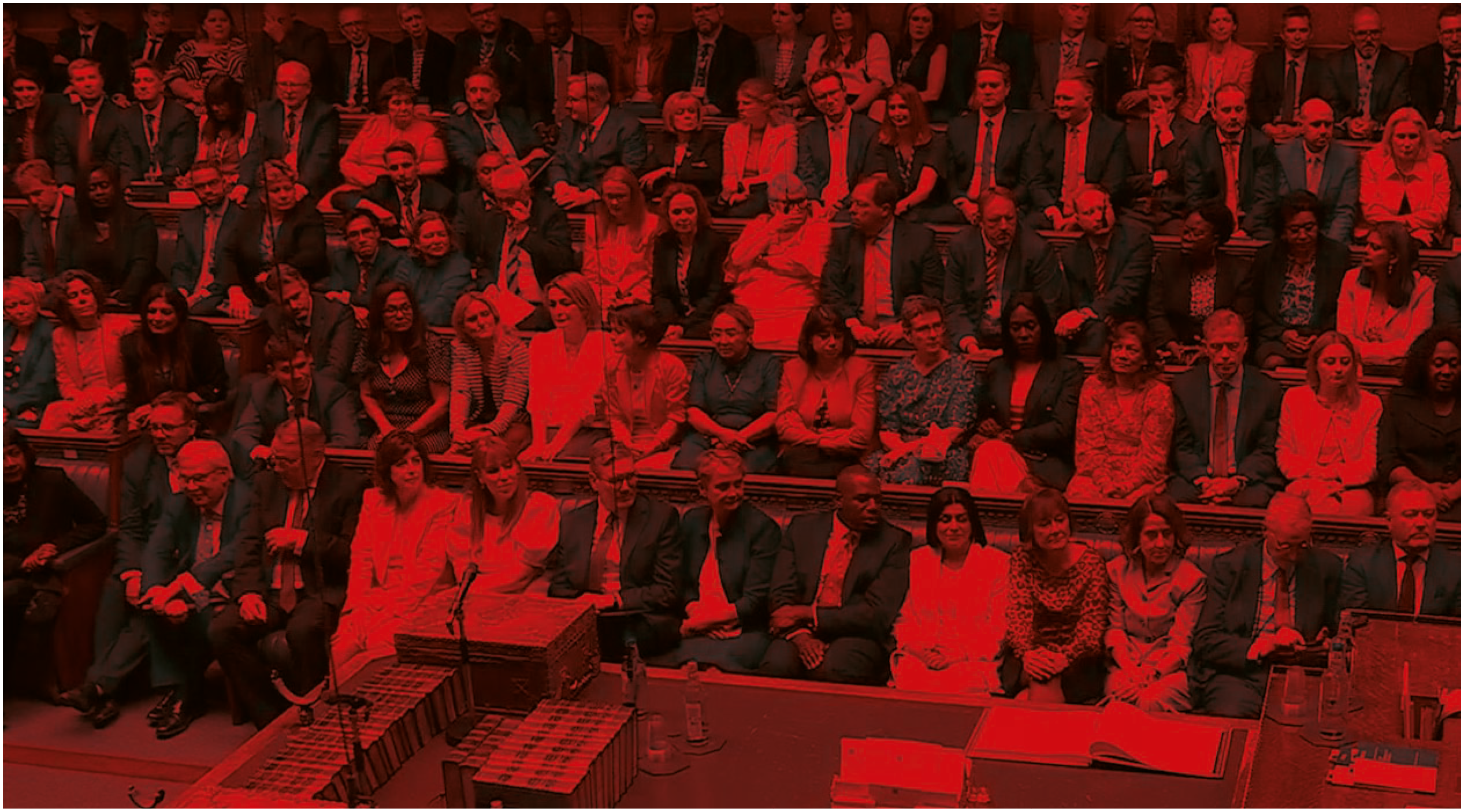
© House of Commons/UK Parliament / Alamy Stock Photo

Keir Starmer has promised to change Britain. But the British state is riven by fragmentation, centralisation and an asymmetric system of government.
A change in the party of government is a rare event in UK politics. The June 2024 Labour Party victory - only the fourth time in post-war history it has wrestled power from the Conservatives in office - is therefore understandably regarded as a significant shift in the electoral landscape. After a rocky first eight months, whether Kier Starmer and his new government will achieve its admirable primary objective - to re-wire the UK state -remains an open question.
The Labour Party election campaign homed in on one simple message that was also the title of its manifesto: ‘Change’. At the heart of the contemporary UK state is a governing paradox. It remains heavily shaped by a dominant British Political Tradition that reflects a particular conception of democracy which centralises elite control and leaves Westminster and Whitehall resistant to meaningful reform. At the same time, the governance landscape has become increasingly complex, fragmented and, we would argue, chaotic and incoherent. To rebalance power in the UK state, Starmer’s government must grapple with and overcome the consequences of a now deeply entrenched governing paradox.
The paradox at the heart of the UK governance model
The United Kingdom’s political system has long been one of the most asymmetrically skewed of all liberal democracies. The power that central government commands, especially the way that the public finances are managed by an overly dominant Treasury department, sets Britain apart. But there is a peculiarity. The British state has been on a journey of transformation over the last four decades driven by two notable features - the partial devolution of power downwards from Westminster and Whitehall to the territories and regions of the UK and, crucially, a ‘New Public Management’ (NPM) agenda of public sector reform, which has fundamentally changed the way public services are delivered.
These two countervailing features create something of a paradox: the British state has become increasingly fragmented over time, yet the power commanded by central government remains unrivalled. How can this be? The brief answer is that the more central government has tried to both download and off-load responsibilities elsewhere, the more it has sought to adapt or create new mechanisms of accountability and control to enhance its power and authority.
The succinctness of this response masks more than it reveals about the complex dynamics at play. Despite public sector fragmentation and the growing complexity of contemporary governance, the UK is heavily constrained by its ‘pre-modern’ state form and the ‘legitimising myths’ surrounding its antiquated political traditions. The recurring problems of the UK state can therefore in part be attributed to a failure to modernise, leaving structural problems unaddressed as it muddles through by continuously grafting incremental reforms onto a flawed system. The UK’s 19th century model of government continues to concentrate power at the centre but has long since ceased to be fit for purpose in the 21st century (Richards et al. 2024). Here, we unpack this paradox in more detail by, first, setting out the contours of this governing tradition and, second, exploring how fragmentation has increasingly created tensions and contradictions within it.
The British Political Tradition
This British Political Tradition is crucial for understanding the nature of UK governance and political statecraft. It is defined in terms of a limited conception of democracy based on a conservative notion of responsibility, accountability to Parliament, and an emphasis on consistency, prudence and leadership, non-ideological pragmatism and strong, seamless government. Its prescribed mode of governance, the Westminster model, highlights the unitary character of the British State, organised around the principle of parliamentary sovereignty. In what can be referred to as a ‘power-hoarding’ approach to governing, it provides an elitist form of top-down government based on a high concentration of power at the centre. While its origins can be traced back beyond the 18th century, its relevance is still visible today in shaping the mindset of Westminster’s governing class and its approach to doing politics. Crucially, it can be used to question whether the current Starmer government reforms are likely to lead to any meaningful change in UK governance.
The fragmentation of UK governance
The origin of fragmentation emerges with the introduction of a set of New Public Management (NPM)-inspired reforms to public services, first introduced in the 1980s by the Thatcher administration. This agenda has moulded the operation of government ever since. The broad principles of NPM are that policy is more effective and efficient if shaped by market criteria. Where possible services should be privatised (such as energy and water), contracted out (such as provision of IT services or cleaning and maintenance) or subject to some form of quasi-market criteria by providing citizens with a choice of service providers, as in health or schools, usually informed by performance tables.
The record of NPM is at best mixed. The most detailed study by Hood and Dixon (2015) concludes that, contrary to the promises of increased efficiency and reduced costs, NPM has led to higher costs and more complaints. Certainly, the current failings regarding privatised water companies, rail companies and a wide range of outsourced public service providers, illustrates the topicality of this debate.
NPM and governance complexity
Forty years of NPM have fundamentally shifted how public services are delivered, from traditionally standardised, bureaucratic forms of public administration, to a complex and varied array of delivery mechanisms. The examples are all-encompassing, but illustratively: prisons have been privatised or run by private contractors; homelessness services are delivered at arm’s-length by third sector bodies (charities); and schools are increasingly no longer under the control of local government but operate through academies and multi-academy trusts, which, in principle, are self-governing. Auxiliary services, such as facilities management, are often outsourced. Some core services are still largely provided by the state, such as policing. But even in this area, several tasks within police authorities are contracted out to private sector organisations.
British public administration has become a complex geography of different bodies with different responsibilities, and often overlapping and confused lines of responsibilities. Illustratively, in terms of Special Educational Needs (SEN), schools - both maintained and academies - are responsible for provision, local authorities must meet statutory requirements and are ultimately accountable for outcomes, and funding is provided by central government through various highly complex mechanisms. This confused ‘dual system’ can lead to a situation where it is not clear who is responsible for providing what and to a degree the level of provision provided depends on the particular school or, in some cases, the outcomes of time consuming and often distressing appeals processes.
How best to conceptualise the state of the UK?
This complex pattern of service delivery has led some commentators, led by Rod Rhodes, to argue that the British political system of governance is ‘differentiated’. In other words, rather than power being centralised in Westminster and Whitehall as it was, it is now distributed widely across the governance landscape. Others have talked of a new era of ‘meta-governance’ in which central government’s role has become one of strategic management of the multitude of policymakers and providers involved in delivering everyday public services. Their characterisation of fragmentation may be accurate, but their understanding of political power less so.
It is undoubtedly the case that the British system has become more disaggregated, such that we would also argue it has become increasingly chaotic and incoherent, as new forms of governance are layered onto the existing governing traditions that draw lineage from the tenets of the Westminster model. But there has been no meaningful attempt to rethink our constitutional arrangements, meaning the British Political Tradition and its associated features laid out above remain fundamentally in play. The problem this creates is two-fold: 1] there remains an asymmetry in the nature of political power in the UK and 2] a deepening governance problem, whereby Britain has become subjected to a process which Diamond et al (2024) call ‘hyperactive incrementalism’, whereby a cycle of initiatives and reforms are introduced in an attempt to resolve seemingly intractable problems, but in the context of a flawed model, so compounding the existing problems in a ratchet-like effect.
Asymmetry at the heart of UK governance
Despite UK governance becoming increasingly fragmented, there has not been a meaningful redistribution of political power. Crucially, with the British Political Tradition remaining to the fore, it is inaccurate to equate fragmentation with pluralism (a wider distribution of power). Power still flows from above not below, with the principle of parliamentary sovereignty left untouched as a legitimising mythology. In practice, what stems from this political culture is a system which continues to be underpinned by structural power inequalities across a notable range of fault lines, including gender, race and class.
In 2025, Britain is one of the most unequal countries in Europe with one in six families facing financial hardship. Similarly, women are disproportionately represented in lower income positions and as Hussain (2024) reveals, the nature of intersectionality of race, class and gender creates a double (or treble) bind that sees certain sections of the population subject to multiple discriminations and disadvantages that are reinforced by the political processes. Differential access to decision-making results in the perpetuation of a Westminster governing class that retains an elitist approach to governing manifested in a ‘Whitehall knows best’ political culture. Where power has been given away, it is done so through a top-down ‘delegated authority’ mindset, not one seeking to instil meaningful bottom-up democratic and pluralistic power. Consequently, significant asymmetries remain baked-in to the British political system, with power still disproportionally concentrated at the centre of government. This is why the power paradox remains undiminished.
Will devolution break the British political tradition?
The Labour government’s agenda admits, rhetorically at least, that there is a need for fundamental change and a re-set in UK governance. In his first major speech as Prime Minister, in August 2024, Starmer declared that his government’s primary objective was to ‘fix the foundations of the country’ with an approach that ‘works with people, not does things to them’. His rhetoric may have been enthused with pluralistic sentiment, but more important is the reality and how it translates into political practice. It is here that we turn to Labour’s approach to devolution.
The early signs are that asymmetries once again can be seen in the current government’s plans for devolution. The need for a shift of power from the centre to the regions is widely accepted in England by most politicians, reflecting a rolling process of regional devolution started by the 2010 Coalition government. The Starmer government has promised to both continue and ‘complete’ this process.
The December 2024 English Devolution White Paper states: ‘England is one of the most centralised countries in the developed world. Devolution across England is fundamental to achieving the change the public expect and deserve’. It contains some promising and important ‘change’ proposals including giving strategic powers to mayors in areas such as transport, skills and education, housing, the environment and business. Importantly, there is a desire to reduce the incoherent nature of public services by, for example, allowing mayors to join-up delivery locally and encourage more mayors with authority over larger, combined police, fire and ambulance services. Lessons are being drawn from existing pockets of success. All these changes are crucial in redistributing power away from Westminster and to local communities.
The problem is the government’s approach retains a delegated authority mindset, whereby strong elements of the old Westminster/Whitehall-dominated system remain woven within these proposals. First, is seems that the new system is being imposed top-down. There has so far been very little room for local stakeholders, never mind participation by citizens, and indeed some of the changes will mean power shifting upwards to a regional level rather than downwards to local people. Second, the government is creating strategic authorities focused on delivering economic growth. In other words, they seem to be largely mechanisms for the delivery of the government’s economic priorities, rather than for responding directly to the needs of local communities. Third, and perhaps most important, the Treasury will continue to control the totality of finance available and so, as with government departments, is likely to exert considerable influence over the setting of economic priorities. There is no provision for the new authorities to raise their own funds and set their own policy agendas.
The fundamental problem is that the traditional modus operandi of the British state appears increasingly staid - even antiquated - in the context of the incoherent governance landscape that has evolved in recent decades.
Finally, the whole system is hamstrung by the problem of accountability. Whilst the convention of ministerial responsibility remains a cornerstone of the British constitution, it is very difficult to prevent ministers intervening locally - think here of the recent kerfuffle over 20mph speed zones. This is a consequence of the feeling that they are the ones that must answer to Parliament if things go wrong. This of course does not stop regular blame shifting as an increasingly prevalent feature of the UK’s incoherent system of accountability. It does, however, mean that party politics in Westminster has the potential to trump the desire to devolve power. The proposed new system further complicates the lines of responsibility and fails to emphasise the need for the new bodies to have downward accountability to citizens rather than upward accountability to Westminster. The proposal of something like the Public Accounts Committee to hold the new bodies to account further emphasises the idea that accountability is upward-facing in the Westminster system, not downwards to the voters of specific regions and localities.
Will change be forthcoming?
The emerging picture illustrates how resilient the foundational tenets of the British Political Tradition remain, even though there has been a ‘permanent revolution’ in public sector reform operating since the 1980s. Despite a growing consensus that far too much is controlled from London, no prime minister has properly grasped the nettle of reform. The power offered by the comfort blanket of the Westminster model remains politically expedient.
The fundamental problem is that the traditional modus operandi of the British state appears increasingly staid - even antiquated - in the context of the incoherent governance landscape that has evolved in recent decades. The evidence suggests that the public is losing patience with the hyperactivity of successive governments that has delivered little in the way of meaningful change. The lesson for Starmer’s Labour is that it should honour its rhetoric and resist the political temptation to exert its dominance over regional and local actors under the UK’s asymmetric system of government. To solve the governing paradox bequeathed to it, Starmer’s Labour must understand that in a system of executive dominance, the real exercise of power is to give it away.
Footnotes
Acknowledgements
All three authors received funding from the Nuffield Foundation for the project ‘Public Expenditure, Planning and Control in Complex Times’ https://sites.manchester.ac.uk/public-expenditure-planning-and-control/. David Richards and Sam Warner received additional funding for ‘The UK Productivity-Governance Puzzle: Are UK’s Governing Institutions Fit for Purpose in the 21st Century?’ - The ESRC Productivity Institute 