






Abstract
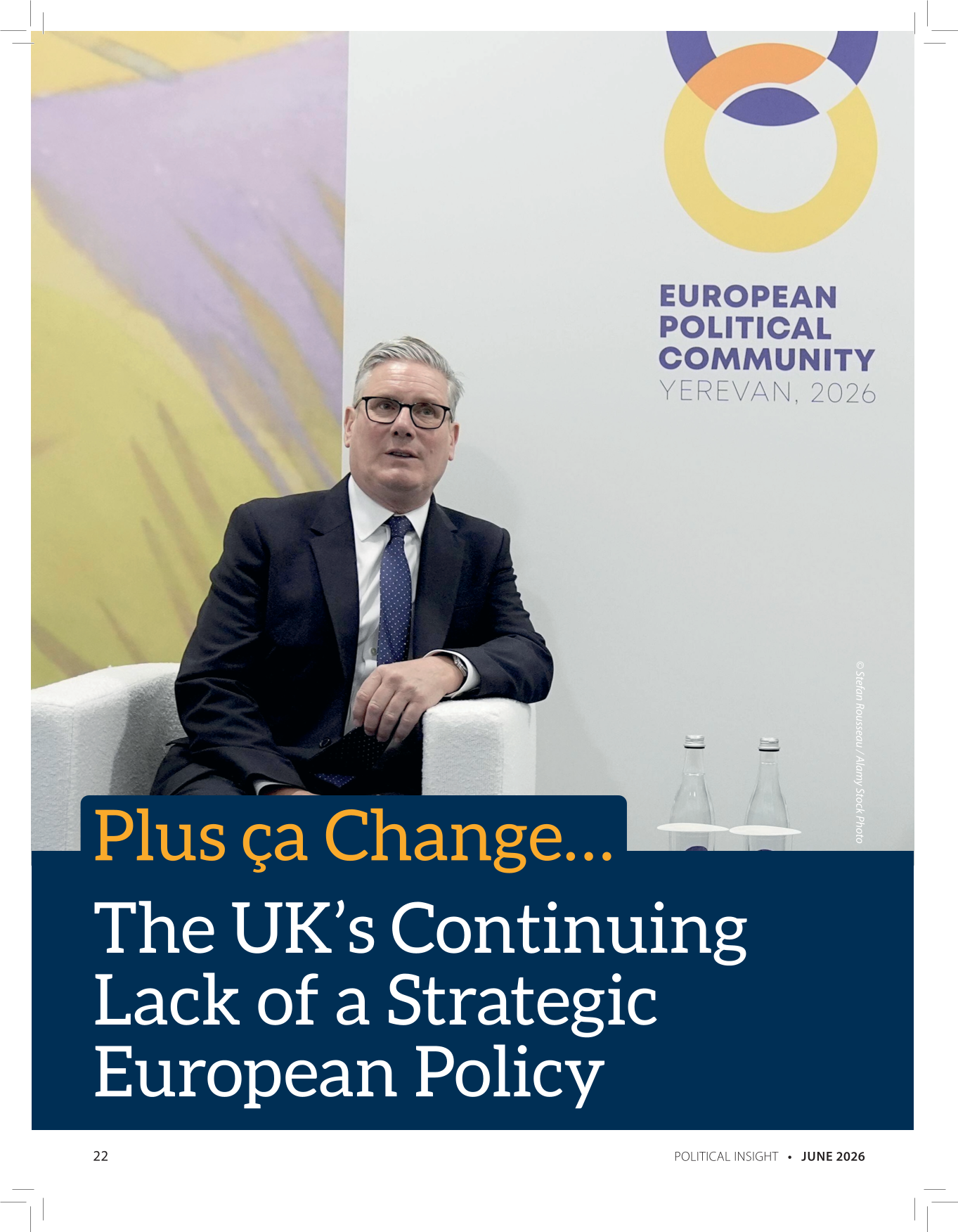
© Stefan Rousseau / Alamy Stock Photo
Ten years on from the Brexit referendum, Simon Usherwood finds Britain no closer to a mature debate about Europe – and asks whether the political system is congenitally incapable of producing one.
On the Monday after the May 2026 local elections, with Labour reeling from heavy losses across the UK, Keir Starmer delivered a high stakes reset speech. As leadership contenders circled, the Prime Minister declared that ‘incremental change won’t cut it’. Starmer identified various areas where radical progress was needed – most notably on Europe.
Speaking at Coin Street Neighbourhood Centre in Waterloo, central London, Starmer decried the failure of Brexit to make the UK richer, safer or with less migration over the past decade. And then he announced, well, nothing more than support for a youth mobility scheme that had been under negotiation for the past year; a scheme that he himself had declared unacceptable in the run-up to the 2024 General Election. Those who would replace Starmer, such as Wes Streeting or Andy Burnham, might be more willing to say that rejoining is a desirable endpoint, but not one that should be pursued straightaway, even when their intermediate goals of single market membership will be no quicker nor less problematic.
Labour’s leading figures are not alone in British politics in being able to complain about the failures of policy towards the European Union (EU) but unable to offer solutions that systematically address those failures. If the 2016 referendum was supposed to be a panacea for all the country’s woes, then the settling of debate and the creation of a new consensus has been very much less successful than even the limited achievements in the wake of Britain’s first referendum on Europe in 1975.
The 2016 referendum saw the mobilisation of national campaigns, the media full of debate about the merits and costs of each option and the public spending more time thinking about the matter than usual. A decision was reached and acted upon, supposedly to settle the matter for good. But public satisfaction with European policy remains low, activists push repeatedly for changes to that policy and politicians’ general unwillingness to talk about ‘Europe’ is less about there being nothing to discuss as it is about a recognition of the fraught and fractious nature of the subject.
Those who would replace Starmer, such as Wes Streeting or Andy Burnham, might be more willing to say that rejoining is a desirable endpoint, but not one that should be pursued straightaway, even when their intermediate goals of single market membership will be no quicker nor less problematic.
Why might this be? How have a referendum and a decade of political debate not managed to produce a policy that is either popular or durable?
Things aren’t what they used to be
The first observation is that things keep on happening. Not only have both the UK and the EU evolved and changed over time, but so too has the rest of the international system. These changes have materially impacted the opportunity structures for the specific UK-EU relationship.
Even the period since 2016 has seen significant shifts that call into question many of the assumptions made during the referendum campaign. The Leave vision of a country unshackled from a sclerotic Europe, free to make the most of building ties with the more dynamic parts of the global economy, has run into first the Covid pandemic and then the general turn away from trade liberalisation towards protectionism.
Likewise, the increasingly active threat from a Russia that opened a full-scale war on Ukraine in 2022, has been compounded by the fracturing of long-held certainties about the transatlantic relationship, especially (but not exclusively) under President Trump. The UK is still one of the world’s largest economies and military powers, but the experience of the past decade has been mostly one of underlining the limits of that size. In a world where allies seem to be harder to find and realist concerns about the need to look after one’s own interests first and foremost are more prominent, the attraction of the EU as a partner seems much clearer than before.
That said, we should not forget that the bipolar international order of the 1970s also collapsed with the Berlin Wall, setting up the conditions for the vigorous globalisation around the millennium, which in turn opened up space in British politics to call into question whether Europe was too small a place for the UK to focus its attentions; a key part of the run-in to the referendum. The peace dividend from the end of the Cold War made possible an early move to build global connections.
In short, whatever might seem ‘right’ for UK-EU relations at any given point has always been at risk of being affected by wider events that expose the shortcomings of that particular settlement, offering a tantalising glimpse of how things could be different.
The force of gravity
A second observation is that for all these systemic changes, some things stay constant. Most notably, the UK is still located right next to the European Union. Even when British political attention turns elsewhere, it cannot avoid the necessity of recognising that matters European also matter in the UK.
Economically, the UK continues to be most connected, and integrated, with the European market. The numerous trade deals that the country concluded with states around the world post-withdrawal served to highlight that even taken all together they offered only a small offset to the losses incurred by ending participation in the EU’s single market: the British economy would be roughly 4-5 per cent larger than it is now if Brexit had not happened.
Moreover, as almost all economic theory predicts, gravity models of trade still hold true in the contemporary economy: the amount of trade one does with partners declines exponentially with distance. So, participation in the Comprehensive and Progressive Agreement for Trans-Pacific Partnership (CPTPP) – the Asia-Pacific trade bloc that post-Brexit Britain joined – will likely remain much more marginal to most British businesses than border controls across the English Channel.
That the post-membership UK-EU relationship has focused primarily on trade reflects this geographical proximity. But the ramping up of cooperation in more contentious areas – security and defence, police and judicial cooperation, immigration – also speaks to the functional necessity of neighbouring powers having similar challenges and threats. And that in turn requires an active and evolving political and policy debate about how to manage this.
Getting Brexit done?
Of course, such a debate is one of the elements that British politicians and publics have been most allergic to. Part of the reason Boris Johnson’s 2019 slogan of ‘Get Brexit Done’ was so successful was its double meaning: not simply finish the process set in train by the referendum but do so in order that we all never have to talk about the matter again.
This has been perhaps the most important reason for the non-resolution of what the UK’s relationship with the EU, or ‘Europe’ more broadly, should be: the failure of the domestic political system to internalise the country’s position as an integral part of the European system.
This has been especially evident in the past decade, as the UK has tried to work out what to do with the referendum decision, not least because neither Leave nor Remain set out a clear plan of what voting for them would practically lead to. Instead, the referendum became presented as a means to realise whatever vision of the country a voter might have, regardless of whether that necessitated a particular relationship to the EU or of whether it was reconcilable with all the other visions other voters might have.
This ‘one weird trick’ approach – vote for us and get what you want – might have been understandable, both as a campaign strategy and as a function of a political system with declining levels of trust in politicians. But it speaks to a lack of deep interest in how the EU works or how it impacts everyday lives. Voters and politicians might be aware of individual aspects, but with little conceptualisation of how these fit together, much less of how we might evaluate their relative importance.
Throughout the long negotiations to withdrawal, and through to the present day, successive governments have worked out their policy by deciding what their MPs or their electoral base might support, rather than what the EU might be willing to offer. Witness the famous meeting at the Prime Minister’s retreat at Chequers in July 2018, when Theresa May sought to bring her Cabinet into line over a proposal for a ‘facilitated customs arrangement.’ This was the meeting that saw deep divisions and the departure of Johnson, then the Foreign Secretary, and David Davis, the Brexit Secretary, before May could wrangle support. Yet the EU had already been very clear that this proposal was not acceptable, raising the question of why Number 10 had felt it was worth the fight.
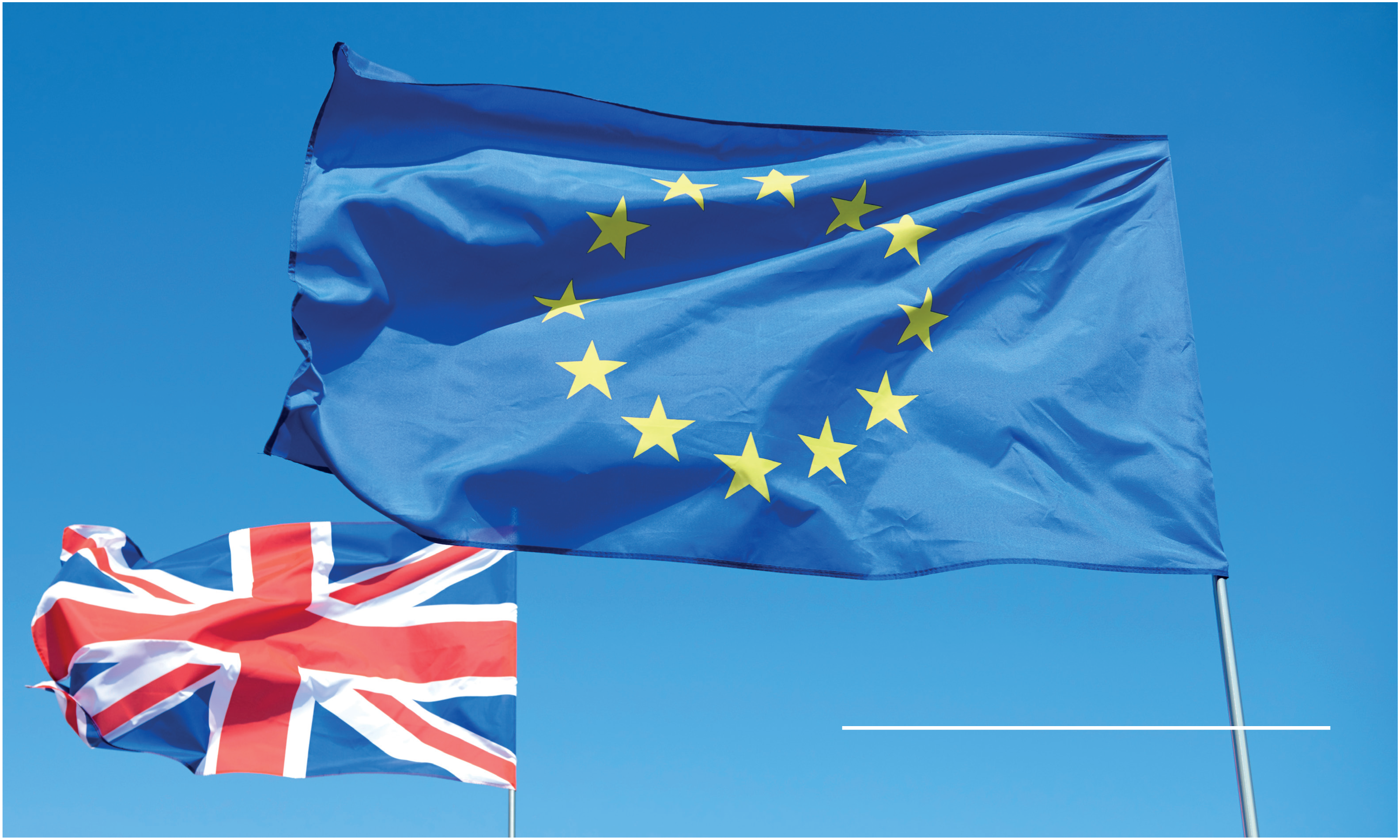
If the past decade has taught one thing, it is that the UK seems almost congenitally unable to discuss European integration, and the UK’s place in it, in a manner that will produce the kind of considered policy that proves more resilient than that of the past.
More recently, the ‘reset’ negotiations begun in 2025 under the Labour government have exposed the milder version of such problems. With a range of topics under discussion, including youth mobility, emissions trading and sanitary and phytosanitary standards, the process has required ministers to make judgements about the trade-offs these agreements involve. Youth mobility might improve mutual understanding and shared values, but also has financial implications (via a proposed extension of domestic university fees to EU nationals) and will show up as a likely increase in net migration. Harmonising food standards will remove an important barrier to trade, but also means the UK has to follow rules made in the EU without British representation or voting.
It would be simple to ascribe this to a continuation of a binary Leave-Remain model of talking about EU relations; it is either wonderful or terrible. But this model long predates the 2016 referendum. Consider how Labour switched its view of European integration in the 1980s as a function of wanting to contrast itself with Margaret Thatcher’s growing scepticism. Or how the widespread British resistance to any deep integration in post-war Europe rapidly turned to a desire to join the newly-formed European Economic Community within a few years of its establishment in 1957.
The EU has always been treated as a mirror for British politicians, but one in which they see what they want to. The willingness to engage deeply with the processes through which the EU works seems very limited, not helped by a media more comfortable producing stories about whether marmalade will have to be labelled as ‘orange marmalade’ (to pick a recent example) than substantive pieces on the balance of political forces in the European Council or the work package of the Commission.
With, not of Europe?
If the past decade has taught one thing, it is that the UK seems almost congenitally unable to discuss European integration, and the UK’s place in it, in a manner that will produce the kind of considered policy that proves more resilient than that of the past. It is hard to think of a set of events that could have done any more to put such questions front and centre in public and political debate than the referendum and the subsequent unfolding of processes and decisions. For most, Brexit got done, even if they don’t know quite how, or whether they actually like how it looks.
This is not an especially British situation – no member state has been particularly good at working out how to integrate the national and the European – but the UK’s self-image is a further complication. Unlike most other European states, the UK sees itself as able to make quite profound choices about its place in the world; its size, its history and its outlook make it almost obligatory that British politicians talk of an agency that is not always at one with the practice.
Certainly, the UK has more choice than most. But a reductive view of the EU as good or bad, coupled with limited understanding of how proximity means it cannot be ignored, means that a richer debate – one that speaks about trade-offs and invites a broad range of voices to fit these into a set of principles that might help guide future decisions – seems as distant now as it did on the morning of 8 May 2015, when David Cameron’s Conservatives won an unexpected Commons majority and it became clear that a referendum was coming. Starmer’s post-election pivot, hedged and reactive, suggests we are not much closer to having that debate today.
Footnotes
Professor Simon Usherwood is Professor of Politics and International Studies at The Open University and former Senior Fellow of the UK in a Changing Europe initiative.