







Abstract
Students often find discontinuation between classroom learning and out-of-school practice. As Generation Z and millennials are avid users of Instagram and Instagram Stories, this research aims to study the perceived effectiveness of social media on language exposure and learner engagement, with a learner’s perceived proficiency as a moderating effect. A total of 202 Malaysian Chinese Independent Secondary School Senior 2 and Senior 3 students took part in the Google Form survey. This quantitative study employed partial least squares structural equation modelling for data analysis. The results showed that Instagram Stories are perceived to be effective and useful as it contributes to language exposure and learner engagement agentically, cognitively, and emotionally. However, a learner’s perceived proficiency was not found to be a significant moderator. Future studies point towards exploring English learning outside of the classroom context using other engaging social media tools such as TikTok and more.
Keywords
Introduction
Ideally, the end goal of formal, structured classroom language learning should be out-of-classroom application. However, the issue arises when students find discontinuation between classroom learning and out-of-school practice. Febrina (2017) stated that one reason behind the discontinuation is due to the lack of authentic learning materials. The materials in schools are usually designed and simplified by teachers to accommodate the examination curriculum, hence making them seem unnatural and non-authentic, reflective of the study by Qi (2005). These materials are often unable to reflect real-world applications and they do not provide enough exposure to students. Rojo and Echols (2018) found that children portray a higher willingness to learn when they are exposed to a target language. Under the current situation, traditional grammar-translation instruction and the lack of authentic exposure to the target language makes it difficult for students to understand and grasp even simple grammatical knowledge (Yang, 2020).
According to Hortigüela-Alcalá et al. (2019), social media such as Instagram provides online interaction that garners learners’ interest and motivation in learning. It is further elucidated that the introduction of mobile phones has made social media easily accessible by students, facilitating a readily available ecosystem for students to acquire information. Instagram was founded in 2010 as a social media platform for photo and video sharing. Social media is often used extensively to update life events and moments with friends. Lee (2023) referred to the phenomenon as informal language learning where she attributed the popularity of social media to the technological features it offers, such as the ability to be content creators and instantaneous ‘on the move’ engagement. Similarly, Carpenter et al. (2020) described the intensive and multifaceted use of Instagram that made it popular among teachers and educators.
Considering that Instagram is one of the most frequently used social media platforms by students as they spend countless hours on it (Handayani, 2015; Hwang and Cho, 2018), it is thus important to investigate how educators can capitalise on its use in learning. Recent trends in mobile-assisted language learning include animation or video instruction on social media (Meirbekov et al., 2023; computer-mediated communication (CMC) via text, video, or voice chat (Muntaha et al., 2023); and microblogging (Korucu-Kış, 2023). Researchers in the field (Alnujaidi, 2017; Carpenter et al., 2020; Erarslan, 2019; Mansor and Abd Rahim, 2017) found that Instagram can be used as a tool for English as a second language (ESL) learning. However, it was noted that there is a gap in research as Instagram has not been studied in depth for the use of language learning purposes (Erarslan, 2019). According to Carpenter et al. (2020), learners often mix the use of Instagram for both personal and professional identities, making it even harder to trace students’ learning progress accurately and empirically. Another research gap to fill is the use of different features on Instagram to fit the purpose of learning. As the most popular image-based social media, Instagram included the feature of Instagram Stories in 2016, which allows users to create short content of up to 15 s that will last for up to 24 h (Lu and Lin, 2022). Similar to that of SnapChat, as the content is considered less persistent, there is a higher chance of users showing their ‘true’ self (Punyanunt-Carter et al., 2017).
In measuring language learning in social media contexts, several fundamental concepts should be explored. Language exposure denotes the extent to which learners are immersed in the target language environment, measured through factors such as the frequency and duration of exposure to language content. According to Al Zoubi (2018), language exposure is measured in terms of the level of English contact outside of classroom to facilitate language acquisition. Learner engagement pertains to the active involvement and interaction of individuals with language content and it is believed that meaningful learning occurs when learners are actively engaged (Rajabalee et al., 2020). In Garcia et al.’s (2022) study, the authors equated engagements to metrics such as likes, shares, and comments on TikTok that posed as a possible form of nanolearning. Similarly, Instagram promotes engagement by learner participation in interactive features on Stories such as polls or quizzes. Learner engagement can be further classified into emotional engagement, cognitive engagement, agentic engagement, and behavioural engagement, making learner engagement a multidimensional construct (Reeve and Tseng, 2011 in Zainuddin et al., 2020). Perceived proficiency, on the other hand, relates to learners’ subjective assessments of their own language skills, often gauged through self-reported measures or self-assessment surveys (Aloraini and Cardoso, 2022). Together, these concepts form the basis for evaluating social media platforms as tools for language learning.
The research objectives of this study are as follows. 1. To determine if there is a positive relationship between students’ perceived effectiveness of social media and learner language exposure. 2. To determine if there is a positive relationship between students’ perceived effectiveness of social media and learner engagement. 3. To determine if there is a moderating effect of perceived proficiency on the relationship between students’ perceived effectiveness of social media and learner language exposure. 4. To determine if there is a moderating effect of perceived proficiency on social media on the relationship between students’ perceived effectiveness of social media and learner engagement.
Literature review
The theoretical foundation discusses both the conceptual and operationalised meanings of the undertaken variables, which help to rationalise the measurement in this study. This section focuses on the literature background related to social media for language learning, perceived effectiveness, language exposure, learner engagement, and perceived proficiency.
Social media as a tool for language learning
The concept of integrating social media into education has rapidly gained global traction, revolutionising traditional teaching methodologies and expanding learning opportunities. Across the globe, educators leverage platforms such as Facebook, Twitter, and Instagram to facilitate dynamic interactions, collaborative learning, and knowledge sharing among students (Aloraini and Cardoso, 2022; Anderson and Lord, 2016; Carpenter et al., 2020; Erarslan, 2019; Garcia et al., 2022; Georgakopoulou, 2021; Gomes, 2020; Greenhow and Lewin, 2016; Hortigüela-Alcalá et al., 2019; Lee, 2023; Mansor and Abd Rahim, 2017; Zainuddin et al., 2020). These platforms offer diverse multimedia features, enabling educators to deliver engaging content, foster peer-to-peer communication, and cultivate digital literacy skills essential for the 21st-century workforce. Hence, educators can probe what the audience enjoy to customise lessons to maximise learning potential while being flexible by opening their doors to various sources of knowledge access (Ilin, 2022). In Malaysia, the adoption of social media in education reflects similar trends, albeit within the context of unique cultural and linguistic landscapes. Malaysian educators harness platforms such as Facebook, WhatsApp, and YouTube to enhance classroom instruction, provide supplementary learning resources, and promote active student engagement (Zainuddin et al., 2020). Additionally, social media serves as a bridge to overcome geographical barriers, facilitating distance learning initiatives and expanding access to education, particularly in remote or underserved areas.
Research on social media language learning began as early as 2010 when Hart and Steinbrecher (2011) explored how pre-service and in-service teachers used Facebook to create meaningful, knowledge-creating conversations that are just-in-time. Moreover, The Innovative Technologies for an Engaging Classroom (iTEC) project (Greenhow and Lewin, 2016) investigated the incorporation of social media platforms such as Facebook and Twitter into educational settings. It provided learning packages to educators teaching 7 to 14-year-old students, suggesting a pedagogical transition through the utilisation of social media. One of the key reasons behind this shift is concerning the application of social constructivist theory, which contributes to the process of language learning (Aloraini and Cardoso, 2020). Greenhow and Lewin (2016) also mentioned the importance of informal learning via social media due to the presence of authentic exchange between the learner and the topic-oriented community.
Instagram as a tool for language learning
Instagram offers a potent platform for language learning, particularly through multimodal and visual learning approaches. Research indicates that such methods are highly effective for language acquisition as they engage multiple senses and modes of understanding (Korucu-Kış, 2023). Instagram’s format, which integrates images, videos, and text provides a rich and dynamic learning environment that caters to diverse learning styles. Visual stimuli aid in comprehension and retention, while interactive features such as polls and quizzes promote active engagement and application of language skills. It is without a doubt that language learning has now fallen into the hands of amateur experts (Bhatia, 2018).
Despite concerns about the informal language often used on Instagram, it is important to note that for the purpose of this study, informal learning can be a structured event for pedagogical purpose (Tommaso, 2024) whereby educational content on the platform can be sourced from reputable sources such as the British Broadcasting Corporation (BBC), the Cable News Network (CNN), and other credible news outlets. By curating content from reliable sources, language learners are exposed to authentic language usage and contexts (Febrina, 2017; Qi, 2005), enhancing their linguistic proficiency while mitigating the risk of encountering improper language. Therefore, Instagram, with its multimodal learning opportunities and curated educational content, which offers a compelling and effective platform for language learning, aligning with contemporary pedagogical approaches, was used in this current study.
Besides, another key feature of social media such as Instagram is its ‘instantaneity’. It could be used to refer to the reporting of live-breaking news (Poell and Van Dijck, 2015), gratification of social interaction or personal identity (Lu and Lin, 2022), and network and community (Gomes, 2020). To view it from the perspective of a language learning classroom, these settings are great not only for student engagement, but it also promotes out-of-classroom real-time learning (Anderson and Lord, 2016). Carpenter et al. (2020) discovered that the premise for an educator’s Instagram can be loosely categorised into two main concepts, namely affinity space and teacherpreneurship. Affinity space is referred to as the place where people convene for a shared topic while teacherpreneaurship is a dispersion of content knowledge but with personal financial motivation. Thus, there is a mixing of personal and professional purposes for educators. In Gomes’s (2020) paper, in exploring online communities of Instagram share stories about their learning experience, it matches previous literature on the network principles of autonomy, diversity, openness, and interactivity. Due to its multimodality, Instagram is then perceived to be a great informal environment to generate a positive impact on learners’ linguistic repertoires, identities, and emotions. For the use for pedagogical purpose, even though there is a lack of literature on Instagram specifically, most students share a positive perception towards the inclusion of social media in language learning (Aloraini and Cardoso, 2022). Hence, the construct of the perceived effectiveness is conceptualised as the perception of informal pedagogical use in language learning.
As brought forth by the popularity of SnapChat, other social media platforms (e.g., Facebook and Instagram) have rolled out shortened formats of storytelling. The short storytelling format is usually brief, written elliptically to reflect current issues or events (Georgakopoulou, 2021) that inspire reactions such as a like, emoticon reaction, poll, quiz, or open-ended response. According to Lu and Lin (2022), the feature behind Instagram Story is that users can create short 15-s content that is available for viewing for 24 h. Not only that it allows for the sharing of moment now now; according to Georgakopoulou (2021), with multi-authoring, negotiation, and contestation, stories have enticed users to perform habitual updates to engage with the stories by either tapping or scrolling on other users’ stories or posting one of their own. Studies on the capitalisation of Instagram Stories for learning are scarce despite its popular use among teenagers. One of such studies is conducted by Lu and Lin (2022) whereby they looked into users’ gratification and engagement relationship with Instagram Stories and discovered eight motivating factors behind its use, namely exploration, self-enhancement, perceived functionality, entertainment, social sharing, relationship building, novelty, and surveillance. On language learning, Erarslan (2019) found that the use of both Instagram post and Stories made students feel good when they practise the four skills of English.
Social media and language proficiency in the Malaysian ESL context
In evaluating the effectiveness of social media platforms such as Instagram for reaching Malaysian ESL students, several key criteria come to the forefront. First, social media reach serves as a fundamental indicator, measuring the extent to which content penetrates the target audience (Zainuddin et al., 2020). This encompasses daily story views and reactions, offering insights into the overall visibility of educational material. With the high usage of Instagram among the students, the utilisation of audience preferences can maximise engagement (Ilin, 2022). Second, learner engagement provides a clear picture on the level of interaction and involvement elicited from users. According to Garcia et al. (2022), indicators such as likes, replies, and personal messages provide invaluable data on the resonance and interest generated by the content. Lastly, language exposure emerges as a critical criterion, especially for ESL learners, evaluating the degree to which platforms facilitate immersion in the target language (Al Zoubi, 2018). Analysing linguistic features and the duration of engagement with English content offers a nuanced understanding of how effectively social media platforms contribute to language acquisition and proficiency development among Malaysian ESL students.
In assessing language proficiency among Malaysian ESL students who are engaged with social media platforms such as Instagram, it is important to acknowledge the diverse backgrounds and educational contexts of learners as these students are from Chinese Independent Secondary Schools throughout the nation. Given this variability, proficiency measurement criteria often rely heavily on self-reported perceptions and research has expressed the limitations surrounding the notion (Calamlam et al., 2022; Ventista, 2018). However, to complement these self-assessments, the study also considers indicators of engagement and exposure to language content on social media. As learners navigate different language environments, their levels of engagement, including interaction frequency and participation in language-related activities, along with exposure to diverse language content, can offer valuable insights into their language development. By combining self-reported proficiency data with observations of engagement and exposure, researchers can obtain a more nuanced understanding of the relationship between social media usage and language proficiency among Malaysian ESL students. With the above-mentioned contextualisation of language exposure and learner engagement, the review of studies in these areas will be explored in the following sections.
Social media and language exposure
There is extensive previous literature on language exposure in relation to the use of social media (Azzolini et al., 2022; Greenhow and Lewin, 2016; Maor, 2003). One of the earliest instances is the implication of online teaching tools on learner experience; as Maor (2003) explains, with a social constructivist framework in mind, online tools can promote interaction, collaboration, and experiential learning, where the exposure of being a part of the learning community triumphs over individual learning. Azzolini et al. (2022) conducted a comprehensive comparative study between formal instruction and informal exposure, and found that countries and language distance may only account for part of the English language competence. School factors, family background, and exposure to English in society all play crucial roles. Particularly, exposure to both traditional method of learning and using English on the internet is found to be vital regardless of the language distance of the country, and it also seems to surpass a school’s formal instruction (Azzolini et al., 2022). In reconceptualisation of bridging formal and informal learning, Greenhow and Lewin (2016) explored how students can autonomously work on seeking expertise in course content, language learning, and cultural identities. It may be due to the multimodality of social media that paves social construction, however, with varied exposure, the specific learning outcomes may vary from person to person. In a language learning context, language exposure is conceptualised as the extent to which language exposure can impact language acquisition (Al Zoubi, 2018). As such, H1 is postulated as follows:
There is a positive relationship between students’ perceived effectiveness of social media and learner language exposure.
Social media and learner engagement
One of the most popular conceptualisations of learner engagement is by Fredricks et al. (2004) which categorised learner engagement into three main parts, namely behavioural, emotional, and cognitive domains. Behavioural engagement refers to the act of active participation; emotional engagement refers to the positive or negative reactions towards the prompts, inspiring willingness to learn; while cognitive engagement is the idea of investment for a learner to take on more challenging tasks. With the Check & Connect programme studied by Anderson et al. (2004), other than behavioural and cognitive engagement, the literature was extended to include other domains, including that of academic engagement and psychological engagement. Academic engagement refers to task on time or academic learning time while psychological engagement refers to the interconnected relationship between a learner and teachers and peers. Reeve and Tseng (2011) proposed another aspect of learner engagement, which is the agentic engagement associated with constructive motivation. It is an extension of the linear relationship between teacher and student, and agentic engagement pushes the boundary by including self-directed learning and students’ agentic involvement in learning. Agentic engagement can also be evident when students use tools outside the control of the teaching team as it empowers students and increases participation (Hall, 2008). This highly modifiable aspect of engagement is especially prevalent in the online learning environment (Zainuddin et al., 2020). The conceptualisation of learner engagement in an informal language learning setting should therefore encapsulate the observable multidimensional constructs of emotional engagement, cognitive engagement, and agentic engagement. With that, H2 is postulated as follows:
There is a positive relationship between students’ perceived effectiveness of social media and learner engagement.
A learner’s perceived proficiency as a moderating effect
Gamble and Wilkins (2014) explored Japanese students’ perceptions and attitudes of participating in activities through Facebook for language learning. Both the quantitative and qualitative results have contradictions as the quantitative data point towards a slightly negative attitude towards Facebook language activities while the qualitative data showed a positive attitude. This has led to the notion of students’ perceptions being affected by their perceived proficiency. Perceived proficiency may hinder the process of language learning indirectly, as in Watanabe and Swain (2008), whereby students’ perceived proficiency has brought marked differences in the nature of peer assistance during group work activities. Su (2021) conducted a study on college students in Taiwan and discovered that students tend to perceive their overall English proficiency and speaking confidence as low while their speaking anxiety as high despite showing the ability to exhibit multiple communication strategies. Li et al. (2015) made a comparison between American English language learners and native English speakers and found that the students reported somewhat equal access to technology but they do not share a similar specific purpose used in learning, resulting in what the researchers coined as a digital divide. The inconsistencies in the negative correlation in Grade 8 self-perceived English skills for the bloggers and non-bloggers versus the strong positive correlation for Grade 6 English language learners have further deepen the gap in research. Thus, it can be inferred that there may be a perceived proficiency difference in the relationships between learners’ perceived effectiveness of social media use, language exposure, and learner engagement. H3 and H4 were posited as follows:
There is a moderating effect of perceived proficiency on the relationship between students’ perceived effectiveness of social media and learner language exposure.
There is a moderating effect of perceived proficiency on social media on the relationship between students’ perceived effectiveness of social media and learner engagement.
Methods
Sample
This study employed a quantitative survey method research design and there is a total of 202 participants. The target population in this study is the Chinese Independent High School students in Malaysia who are interested in preparing for their Unified Examination Certificate (UEC) by means of Instagram. As Chinese Independent High School is categorised under private schools in Malaysia, the examination system is slightly different from the national curriculum. The reason behind the school type is so that the students’ L1 (Chinese) can be used as a main medium of instruction for non-language subjects such as mathematics, science, and more. According to the Malaysia Independent Chinese Secondary Schools Education Blueprint, English is a compulsory subject for Junior (typically aged 13 to 15) and Senior students (aged 16 to 18). A typical classroom size would range from 20 to 45 students and the focus of instruction is to help students prepare for the UEC, which is considered a high-stake examination that directly contributes to college or university enrolment.
Descriptive statistics.
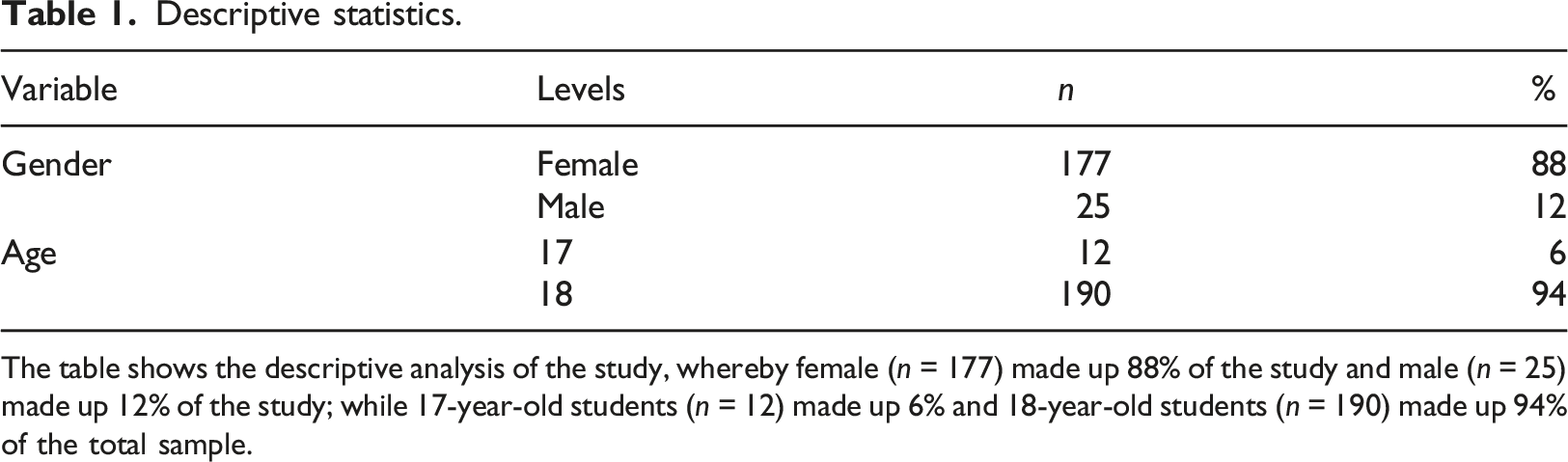
The table shows the descriptive analysis of the study, whereby female (n = 177) made up 88% of the study and male (n = 25) made up 12% of the study; while 17-year-old students (n = 12) made up 6% and 18-year-old students (n = 190) made up 94% of the total sample.
Ethical consideration
Ethical and legal protocols were rigorously followed throughout the duration of this study, adhering to pertinent data protection laws and regulations. No personal data that could potentially disclose the identity of the students, whether in the real or virtual world, were processed. All measures were taken to anonymise and depersonalise the data, ensuring strict compliance with legal and ethical standards.
Social media initiative
The study uses an existing Instagram account @ot.english that serves the exact purpose of preparing students for the UEC. The Instagram account is set as a public account. It is an initiative by teachers whereby daily quizzes, trivia, exercises, giveaways, or live sessions will be conducted periodically. The goal of the account is to provide a platform for students to learn non-academic related content that are both current and thought provoking, hence most materials are from recent news or articles. The prompts on Instagram Stories can be in a multiple-choice quiz format, fill-in-the-blanks format, or a poll. The main audience for this account is the Chinese Independent High School students who either follow the account on recommendation by word of mouth or found the account actively by searching for information related to the UEC. With around 1400 followers, they are made up of 57% females and 43% males. The majority of followers are from Penang, Kuala Lumpur, and Johor Bahru while 70% of the followers aged between 18 and 24.
Instrumentation
This study adapted Aloraini and Cardoso’s (2022) perceived usefulness and affective feeling towards social media in language learning to collect participants’ perceived effectiveness of social media. Here, 10 out of the 11 items were selected and one item deemed redundant was omitted as participants are already avid social media users. The measure is a 5-point Likert scale. The Cronbach’s alpha for the construct, perceived effectiveness, is reliable at 0.906 (Taber, 2018).
The scale on language exposure was adapted from Al Zoubi’s (2018) exposure to English language and language acquisition. Out of all the items, only five items are relevant to the study as this is not a classroom activity, hence items related to homework, speaking, checking of understanding, or acquisition are not taken in. The measure is a 5-point Likert scale. The Cronbach’s alpha for the construct, language exposure, is considered fairly high at 0.765 (Taber, 2018).
Learner engagement is a multidimensional construct, and the scale is adapted from Reeve and Tseng (2011) in Zainuddin et al. (2020) on how gamified e-quizzes can help in student learning and engagement. As the study is not set in a classroom setting, only emotional engagement (5 items), cognitive engagement (3 items), and agentic engagement (4 items) are selected as the behavioural dimension in terms of active participation in class is not measurable. Similarly, several items are omitted as the participants are engaging with Instagram Stories individually after school hours, thus there are no classroom practices such as feedback, collaboration, progress tracking, competition, or problem-solving. A total of 12 items are selected for the study and the measure is a 5-point Likert scale. The Cronbach’s alpha for emotional engagement (0.807), cognitive engagement (0.847), and agentic engagement (0.867) all are considered robust and acceptable (Taber, 2018).
All items are reviewed by a university lecturer and a secondary school teacher. Items are revised according to the comments and suggestions from the experts.
Data collection procedure
The survey was conducted using Google Form via Instagram account. Before the survey, the main purpose of the study was attached along with the disclaimer. The participation was strictly anonymous and participants could choose to opt out at any time. The participants could contact the researchers via Instagram chats if they had questions when answering the survey items.
Data analysis procedure
The study employed a partial least squares structural equation modelling (PLS-SEM) using the SmartPLS v.3.3.9 computer software for data analysis. The PLS-SEM approach is used to analyse the first and second second-order model (Hair et al., 2017; Thien et al., 2021). The study consists of one second-order construct, namely learner engagement, with three first-order constructs: emotional engagement, cognitive engagement, and agentic engagement.
This study engaged a two-stage approach that involves the assessment of reflective measurement model, followed by the assessment of a structural model (Hair et al., 2019). For the assessment of the measurement model, the first-order constructs are first measured to ensure both the convergent and discriminant validity were established. According to Hair et al. (2019), convergent validity is the extent to which the construct converges to explain the variance of its items while discriminant validity is the extent to which a construct is empirically distinct from other constructs in the structural model.
For convergent validity, there are three parameter estimates for the validity to be established. First, the average variance extracted (AVE) for all items on each construct with a cut-off value of 0.50 implies that the construct explains 50% or more of the variance of the items. Second, the internal consistency in terms of estimation of Cronbach’s alpha and composite reliability (CR) with a cut-off value of 0.7 for CR. Third, the indicator reliability (loading values) with the cut-off value of 0.70.
For discriminant validity, the heterotrait-monotrait ratio (HTMT) is employed as suggested by Henseler et al. (2015). It refers to the mean value of the item correlations across constructs relative to the value above 0.90 to suggest the absence of discriminant validity. Similar procedures were applied to the assessment of the measurement model of the second-order constructs. The analysis continued with the assessment of structural model to reliably test relationships between the constructs and the possible mediation effect. Next, the two-stage approach proposed by Fassott et al. (2016) was used for the moderating effects of learners’ perceived proficiency.
Results
Preliminary analysis
Data analytics from Instagram Stories during peak seasons, such as before major examinations, reveal a high level of student activity on the platform. With approximately 200–300 views per story and 60–80 interactions on polls, quizzes, and open-ended questions, students demonstrate their engagement with educational content. Primarily, students engage with news stories, participating in grammar quizzes focusing on error identification, word formation, and vocabulary synonyms. Moreover, many students contribute to the platform by responding to open-ended questions, sharing opinions, and personal stories, either openly or privately to the account manager. This active participation is further evidenced by likes, shares, and saves, with a notable example being a reel post garnering 2112 views, 27 likes, 39 shares, and 3 saves, alongside 69 interactions. Notably, the predominant navigation pattern indicates forward and next story navigation, showcasing sustained interest and interaction with the content. These findings underscore that students are actively engaged in learning even though it occurs incidentally within the social media context.
Assessment of reflective measurement model (first-order constructs)
Assessment of measurement model of first-order constructs.
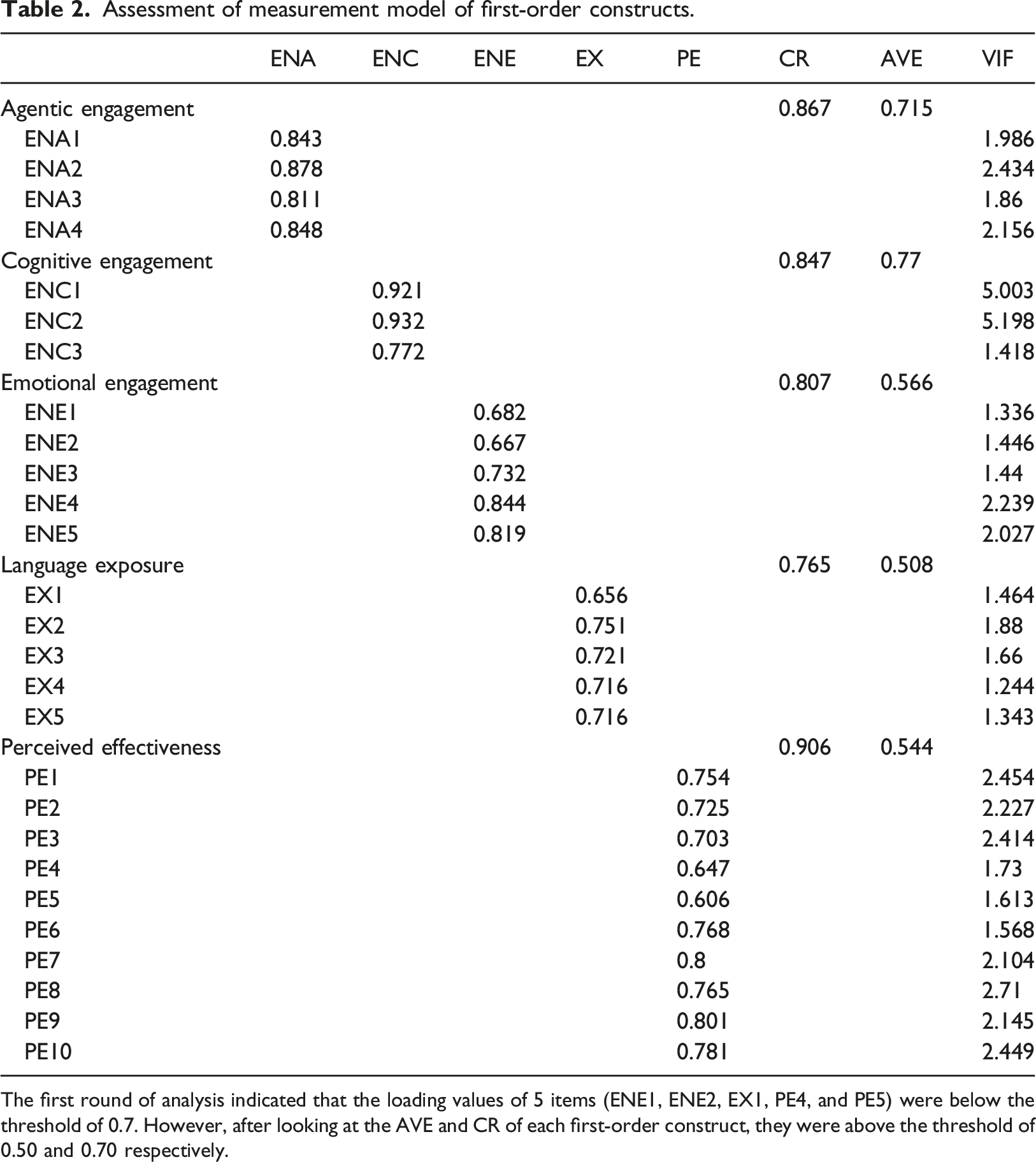
The first round of analysis indicated that the loading values of 5 items (ENE1, ENE2, EX1, PE4, and PE5) were below the threshold of 0.7. However, after looking at the AVE and CR of each first-order construct, they were above the threshold of 0.50 and 0.70 respectively.
Results of HTMT0.90 of first-order constructs.
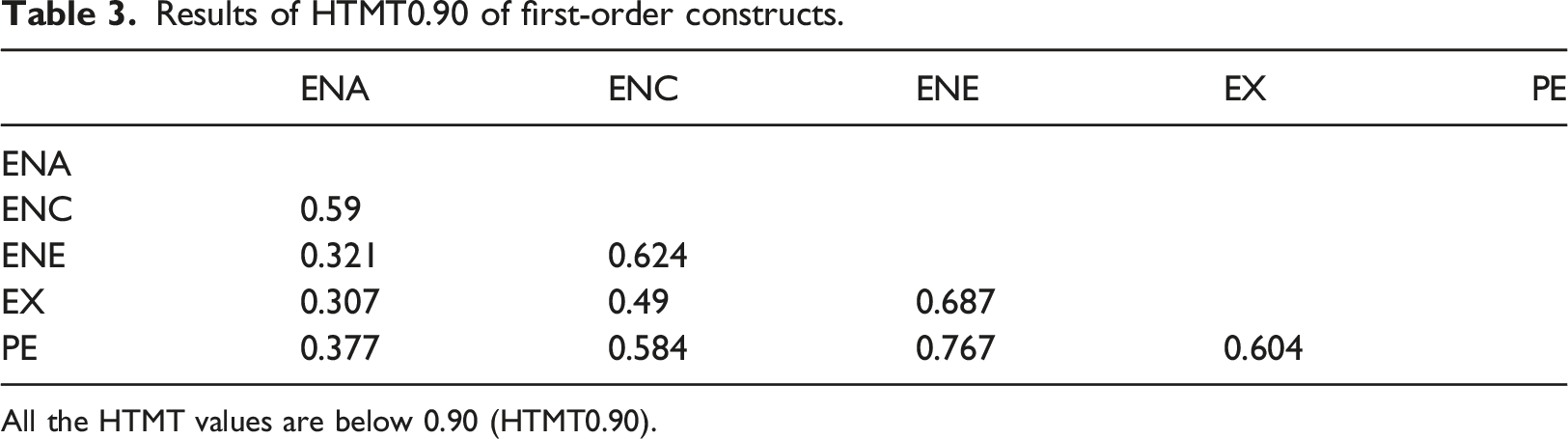
All the HTMT values are below 0.90 (HTMT0.90).
Assessment of reflective measurement model (second-order constructs)
Assessment of measurement model of second-order constructs.
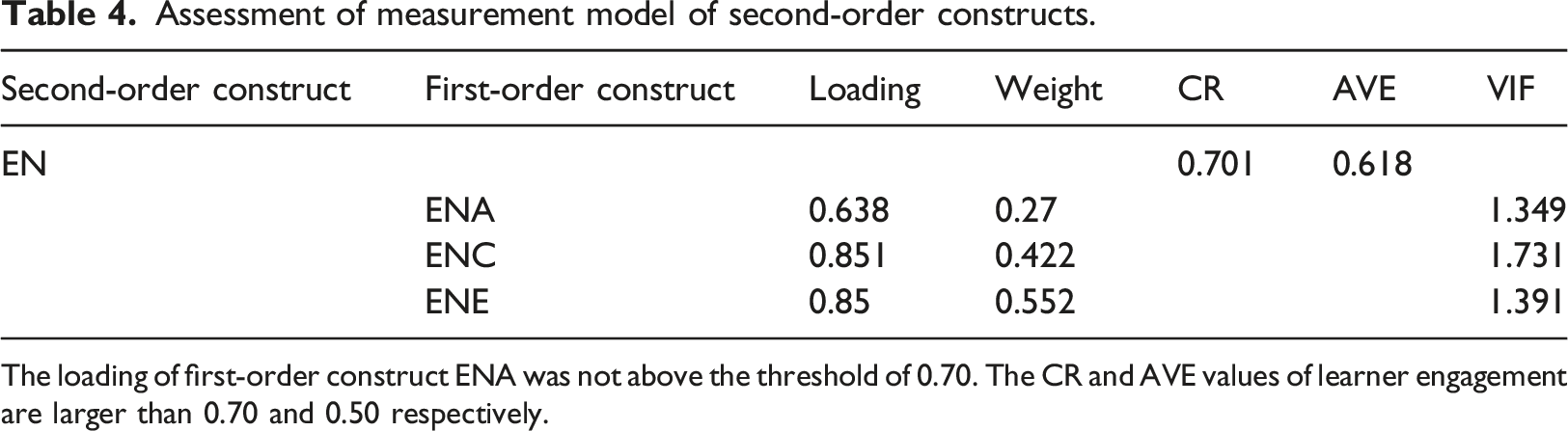
The loading of first-order construct ENA was not above the threshold of 0.70. The CR and AVE values of learner engagement are larger than 0.70 and 0.50 respectively.
Results of HTMT0.90 of second-order constructs.
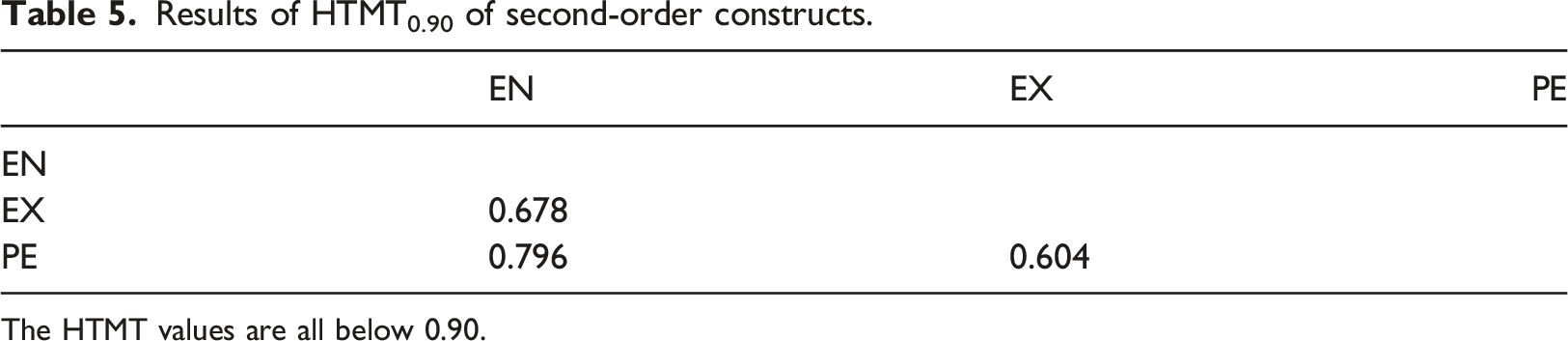
The HTMT values are all below 0.90.
Assessment of structural model
Summary of results.
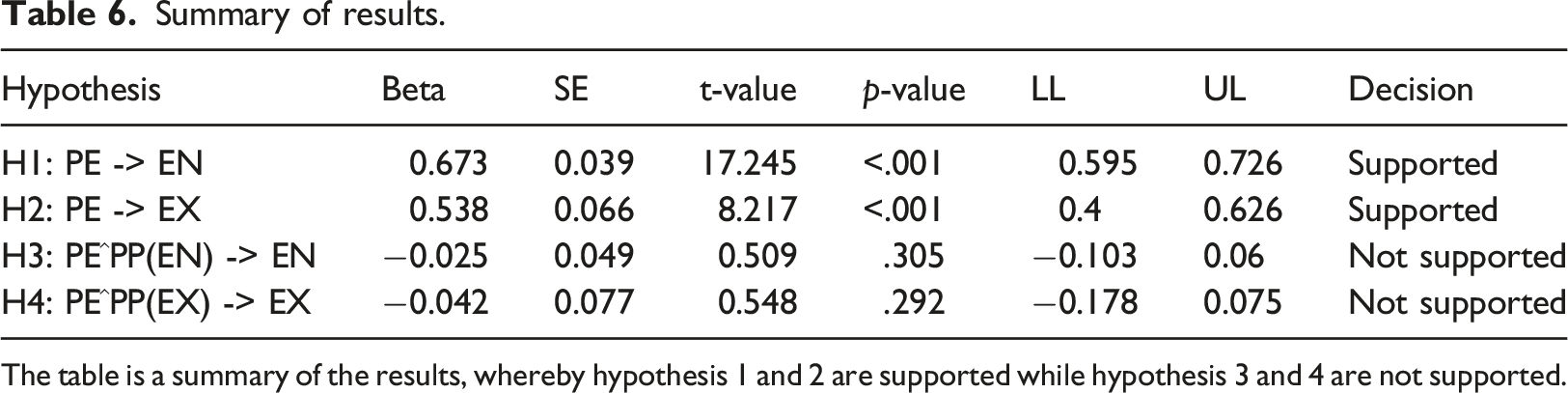
The table is a summary of the results, whereby hypothesis 1 and 2 are supported while hypothesis 3 and 4 are not supported.
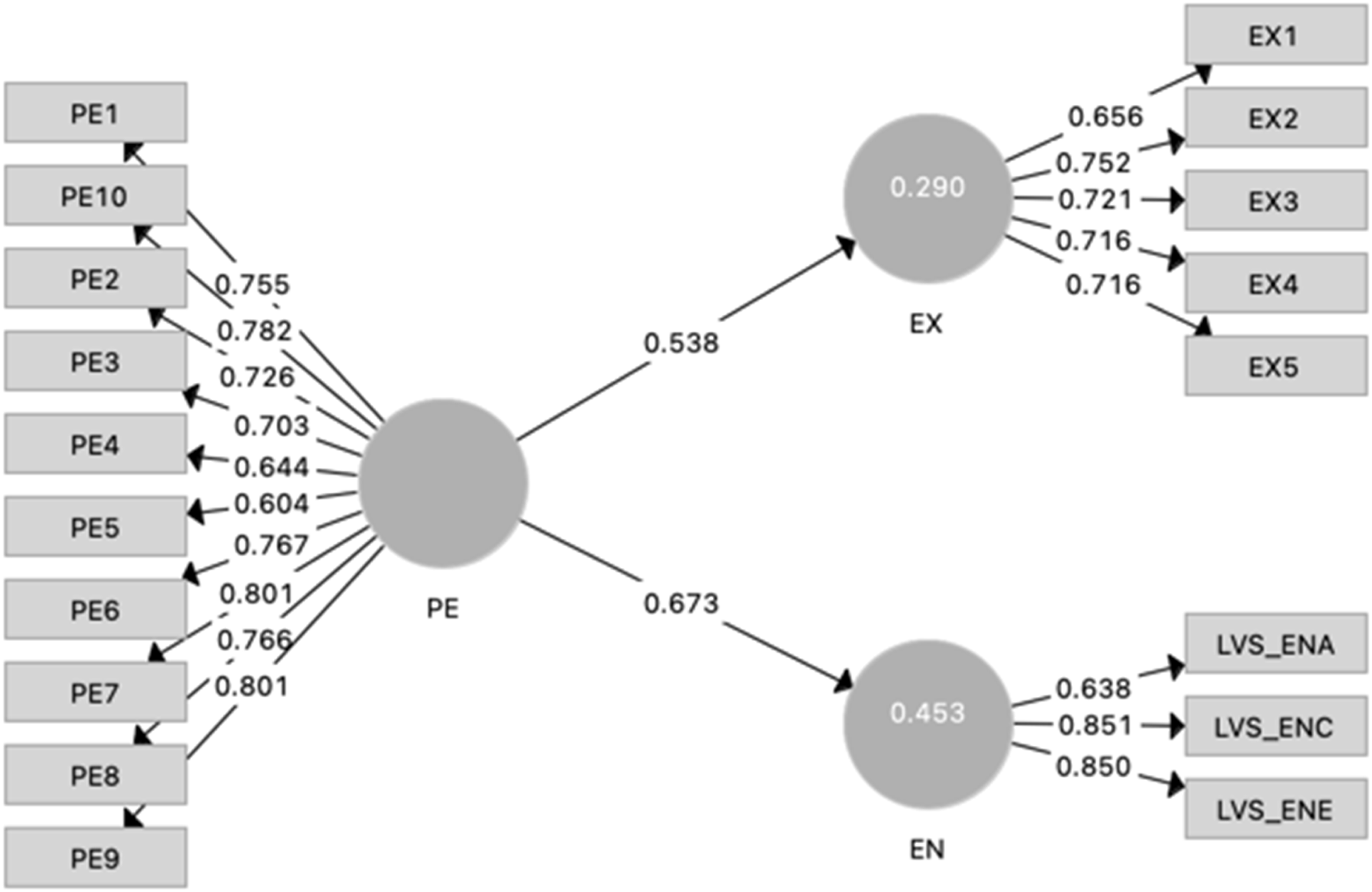
Structural model. Perceived effectiveness contributes 29% variance explained on language exposure and 45.3% variance explained on learner engagement.
Table 6 and Figure 2 show that perceived proficiency on learner engagement (β = −0.025, p = .306) and language exposure (β = −0.042, p = .294) have no significant moderating effects on perceived effectiveness of social media at the significance level of .05. Hence, H3 and H4 were not supported. Moderating effect of a learner’s perceived proficiency (language exposure and learner engagement). Perceived proficiency on learner engagement is β = −0.025, p = .306 and language exposure is β = −0.042, p = .294 at the significance level of .05.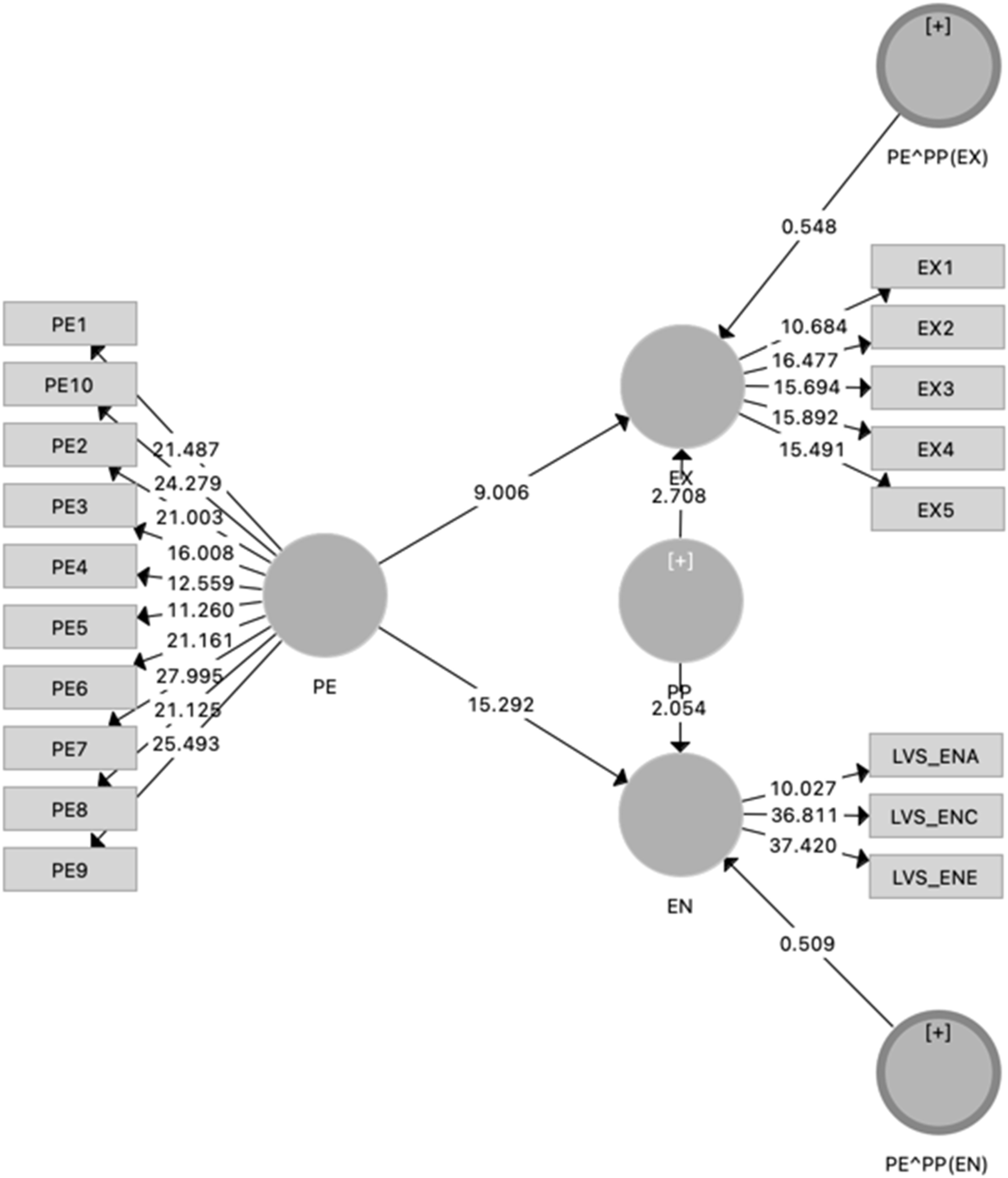
Discussion
This study investigates the relationships between perceived effectiveness of social media with language exposure and learner engagement coupled with contextual influence of perceived English proficiency in a Malaysian secondary student context, especially in the case of Chinese Independent High Schools. This study informed the following important findings.
First, the relationship between perceived effectiveness of social media and language exposure was examined. The results show significant direct effects of perceived effectiveness on language exposure, which indicated a student’s positive perception of Instagram Stories’s effectiveness is a strong predictor of language exposure. In the case of Chinese Independent High Schools, as the main medium of instruction is predominantly Chinese, the positive perception shows that students are willing to venture digitally to enhance their L2 language learning. This echoes Greenhow and Lewin’s (2016) study whereby they noted that with varying degree of participation digitally, young people can connect the gap between formal and informal learning as communities outside of classroom. Carpenter et al. (2020) also reiterated that the Instagram Stories feature allows for an informal contact with the language as it allows for varying privacy and formality. The informality of Instagram Stories thus renders it an untouched goldmine for educators to exploit and for learners to be exposed to the target language in a casual and colloquial manner. This phenomenon is also described as incidental learning as what was conceptualised by Marsick and Watkins (1990), whereby incidental learning is the by-product of other activities such as intrapersonal connection, in this case on social media and Instagram Stories. It may or may not be driven by institutions, but with a community of practice, it is said that it can leverage informal and incidental learning (Marsick et al., 2006).
Second, the relationship between perceived effectiveness of social media and learner engagement was investigated. The results show significant direct effects of perceived effectiveness of social media on learner engagement, indicating that perceived effectiveness of Instagram Stories is a strong predictor of learner engagement. While language engagement helps in promoting psychological commitment to active learning (Rajabalee et al., 2020), as iterated by Lu and Lin (2022), users of Instagram Stories find it easier to engage and contribute to the content for relationship building and social sharing in a more personal and private way. In language learning, this predisposition can aid in the reduction of learner anxiety compared to that of a formal classroom setting, as echoed by the sentiment expressed by Ilin (2022) on the flexibility of offering various ways to access knowledge to enhance learning potential by catering to individual preferences for how and where they learn. In Chinese Independent High Schools, as with most secondary schools in Malaysia, there is a strong emphasis on examinations and test results, hence the classroom focus would often mean that inadvertently, there will be a washback effect. With reference to Horwitz et al. (1986), the foreign language classroom anxiety (FLCA) theory states that language anxiety negatively correlates with learner achievement. When choosing a platform to publish language content, choosing one that is learner-friendly will not only increase engagement, but there is a higher chance for learners to better achieve their learning goals with reduced anxiety.
To further discuss learner engagement, the results show that social media is a strong predictor of all the dimensions, including that of agentic, cognitive, and emotional engagement. First, Lu and Lin (2022) stated that in agentic engagement, content creation is associated with students’ constructive motivation. In Instagram Stories, students can partake in reactions, discussions, and other activities autonomously, reflecting on what Horváthová (2016) proposed about learner autonomy and decision-making. It was said that a learner may have the ability to make active decisions but the willingness depends on having the motivation and confidence to take charge. As these are students who actively seek out learning platforms, it can be said that the students have high agentic engagement to begin with. Students with high agency can thus take ownership of their learning experience despite the tool being predominantly out of the teacher’s control (Hall, 2008). Second, the cognitive dimension of learner engagement posits that students are more invested to take risks (Fredricks et al., 2004) as they engage in the world of social media. Another contribution to the cognitive dimension is the reduced load when dealing with Instagram Stories compared to a normal classroom task. As students are in a more relaxed and informal manner when engaging with Instagram stories, the typical classroom complexities would be temporary forgone, making them more likely to act on the prompts given. Third, the emotional dimension of social media shows that students find affective support virtually with Instagram stories. The finding is similar to that of Lyu and Lai (2022) as the engagement promotes a sense of belonging among learners who are well-connected digitally. With the typical classroom size being 20 to 45 students, students may not be able to find their voice among the many. Hence, Instagram Stories can be an alternative for both the instructors and students to communicate outside the school context, building meaningful relationships while also learning informally.
Third, the results from the moderating effect of perceived proficiency on social media on the relationship between students’ perceived effectiveness of social media and learner engagement and language exposure show no significant moderating effects. This is a new finding that can be used due to the inconsistent findings of a learner’s perceived proficiency which found mixed relationship (Gamble and Wilkins, 2014; Li et al., 2015; Watanabe and Swain, 2008). The findings implicate that a learner’s perceived effectiveness of social media is not fully explained by perceived proficiency and may likely be attributed to other factors such as language of communication, motivation, or other internal or external factors. This is also a gap in literature that is useful for future research.
Practical implications and theoretical contribution
The results of this study have practical implications for educators, students, and other educational stakeholders. First, educators may exploit the informal learning setting of social media such as Instagram Stories to bring the classroom beyond the traditional four walls. Not only that it is empirically proven to enhance language exposure and learner engagement, it creates a basis for informal and incidental learning. Since Generation Z and the millennials are the dominant users of Instagram (Lu and Lin, 2022), educators should thus capitalise on its use to reach out to students instead of only providing explicit instruction in the classroom.
Second, students can readily make a confident stride towards being an autonomous learner by the constant practice of self-directed learning. In this globalised world, the internet provides a host of content readily available for further exploration and discovery. As students made up a huge part of social media, they spend a lot of time on the never-ending scrolling of posts and Instagram Stories. With the right following, relevant learning content can appear on their Instagram Stories to create a temporal situational learning condition. With the learners’ active learning ability, it is then up to the learner’s willingness to engage in the content to make the interaction meaningful (Horváthová, 2016). Third, it can also provide insights to other educational stakeholders such as educational agencies or institutions to disseminate information and learning materials via Instagram Stories to both increase the reach and marketability of ideas.
The theoretical implication is that this research addresses an existing gap in terms of mobile-mediated language learning. Research on Instagram and Instagram Stories has rarely been discussed in terms of educational contribution and its significance despite a growing number of student users among them. Considering this, the research has contributed to the literature of perceived effectiveness of social media in terms of language exposure and learner engagement, making platforms such as Instagram Stories a viable tool for informal and incidental learning.
Limitations and recommendations for future work
This study is limited to a quantitative methodology. Thus, future studies could point towards a qualitative support of evidence in understanding the use of social media in education. This study is also done on an open platform without classroom instruction, hence traditional constructs of perceived effectiveness, language exposure, and learner engagement relating to classroom instruction have to be modified and adapted. The measurement of perceived proficiency of the language also relies on self-reported perceptions which may contain student bias that may cloud actual learner behaviour (Calamlam et al., 2022; Ventista, 2018). Furthermore, the sample size was relatively moderate and convenient sampling was used. As such, future studies could engage in a larger sample size to ensure the data are representable and generalisable. In view of the different types of social media, future work could also look into other platforms such as TikTok or YouTube on how they could be used for education purposes. Not only that, future studies could also explore the nuances of knowledge sharing and networking opportunities via social media to provide a more comprehensive understanding of how these platforms contribute to collaborative learning and professional development among students and educators alike. Another limitation could be the lack of in-depth demographic analysis regarding age and gender within the Malaysian ESL student population, more specifically, how age and gender dynamics influence students’ preferences, behaviours, and learning experiences on social media platforms, providing valuable insights for designing tailored language learning interventions and strategies.
Conclusion
In conclusion, this research complements and extends previous literature on the relationships between perceived effectiveness on social media, language exposure, and learner engagement with a learner’s perceived proficiency as moderating effect. The results support most literature that Instagram Stories are perceived to be effective and useful as it contributes to language exposure and learner engagement agentically, cognitively, and emotionally. The study also contributes to the stakeholders, including the teachers, students, and educational agencies to capitalise on the use of Instagram stories in reaching beyond the four walls of a classroom. Finally, the study points towards future direction of research on Instagram Stories and its potential as an informal and incidental learning platform that is learner-driven.
Footnotes
Author’s note
Parts of the paper was presented at The National and International Conference on Education (NICE) 2023 in Hatyai, Thailand.
Acknowledgements
Thank you Dr Thien Lei Mee for teaching me and guiding me in this research, especially in terms of SEM instruction.
Declaration of conflicting interests
The author(s) declared no potential conflicts of interest with respect to the research, authorship, and/or publication of this article.
Funding
The author(s) received no financial support for the research, authorship, and/or publication of this article.
