






Abstract
As digital media becomes an integral part of children’s lives, especially through platforms like YouTube and OTT services, it is essential to understand how this exposure impacts language acquisition. This study introduces Felicity, a deep learning model that combines Bidirectional Associative Memory Neural Networks (BAMNN) and BERT to analyze how digital content influences children’s vocabulary development. The model aims to examine not only the acquisition of formal language skills but also how children pick up informal language, slang, and idiomatic expressions through media consumption. The research utilizes a variety of Natural Language Processing (NLP) techniques, such as tokenization and semantic pattern detection, to enable the model to process a wide array of language data. This includes both written transcripts from digital media and spoken language from children’s interactions with the media. The use of BERT enhances the model’s ability to capture contextual meaning, while BAMNN aids in memory association and the long-term retention of acquired vocabulary. Through a comparative analysis, the study shows that BAMNN, when combined with BERT, outperforms traditional language models in areas such as slang detection, vocabulary retention, and noise resilience. This research offers valuable insights into how digital media can shape children’s language learning and suggests that future educational content should incorporate these findings to create more engaging and effective learning experiences for young audiences. The results also have significant implications for content creators, educators, and policymakers, helping them design media content that promotes language development.
Keywords
Highlights
• A novel concept called felicity, which is designed using a deep learning model that evaluates the efficiency of digital media content in English vocabulary acquisition. • The deep learning model utilized is a Bidirectional Associative Memory Neural Network (BAMNN) and a bidirectional encoder Representation from transformers. • Different Natural Language Processing (NLP) techniques, such as tokenization, semantic pattern detection, and part-of-speech tagging, have been used. • Comparative study with the conventional and recent classifiers estimates that the proposed BAMNN approach surpasses all the existing techniques in terms of slang detection accuracy, memory associate accuracy, noise robustness, and long-term dependency capture.
Statement of novelty
The novelty of this study lies in the introduction of a deep learning model, Felicity, which leverages a Bidirectional Associative Memory Neural Network (BAMNN) and Bidirectional Encoder Representations from Transformers (BERT) to analyze the impact of digital media on children’s language acquisition. Unlike traditional classifiers, this approach excels in slang detection, memory association, noise robustness, and capturing long-term dependencies. The paper explores new NLP techniques, including tokenization and semantic pattern detection, to evaluate the efficiency of content from OTT platforms and YouTube in enhancing English vocabulary. Furthermore, it offers valuable insights for linguists, educators, and policymakers on the evolving influence of digital media on language development. This innovative methodology sets a new standard in the study of media-driven language acquisition.
Introduction
Social media’s fast growth has drastically altered how kids receive and engage with language-rich information. For numerous kids around the world, online video portals like YouTube and Over-the-Top (OTT) service providers like Amazon Prime, Disney+, and Netflix have turned into an essential part of their everyday lives (Nguyen and Grzonka, 2024). These devices, in contrast to standard broadcasting, provide individualized, unlimited access to a variety of English-language material, such as provided by users’ videos, academic series, animated series, blogs with video content, and comments on games. There are significant concerns over how this change in the way people consume media may affect the language growth of young kids.
It is commonly acknowledged that the initial stages, which encompass the preschool years to preadolescence, are crucial for language and cognitive development. Children quickly pick up unfamiliar words, principles of grammar, phonetic designs, and language usage throughout this period, both formally and informally. Broadcast coverage of real language can enhance classroom education by providing embedded and interesting learning opportunities (Eljak and Ibrahim, 2024). But this knowledge also gives one the ability to use colloquial language, idioms, and culturally rooted communication methods that might not be compatible with traditional language training.
Although the media’s instructional possibility has been recognized by conventional studies, more advanced, data-driven methods are becoming required to comprehend how particular kinds of electronic material affect language acquisition. A new approach to researching this impact is provided by the use of machine learning algorithms and NLP techniques (Vijay and Kumar, 2024). These systems can categorize vocabulary by type (academic, colloquial, and slang), correlate monitoring activity with language results, and detect linguistic trends in vocal information subtitles and video transcription. Through such evaluations, studies can gain an increased awareness of how and what kids acquire from online resources, going beyond cursory assessments.
The purpose of this research is to examine how YouTube videos and OTT networks affect young children’s learning of English phrases, slang, and terminology. The study looks for patterns in language adoption that are either directly or indirectly impacted by media intake by using machine learning algorithms for pattern recognition and syntactic feature retrieval (Sunar and Khalid 2024). The results could help influence the development of more grammatically stimulating material for younger viewers and educate parents, teachers, translators, and media creators about the function of online recreational activities in language acquisition. This study proposed bidirectional memory networks-driven deep NLP for analysing the media-driven language acquisition among children.
The rest of the work is organized as follows: the recent works are reviewed in Section 2. The proposed methodology is presented in Section 3. The results and discussion are presented in section 4. Finally, the work is concluded in section 5.
Literature survey
In the constantly growing environment of digital learning materials, sentiment analysis has become a crucial technique for evaluating the value of YouTube instructional videos. Yogeshkannah et al. developed machine learning and NLP methods to evaluate and recognize the emotional tone and perspectives portrayed in these videos (Martina Jose Mary et al., 2024). By building a complex model that can understand sentiment in a variety of languages, this effort aims to give instructors, content suppliers, and learners important insights into the psychological consequences of educational resources. To improve the caliber of online education and establish a setting that encourages effective education across linguistic and cultural divides. Language acquisition was improved by regular consumption of extensive linguistic information. Therefore, the majority of online resources don’t have mutual contact that was more beneficial for language acquisition.
These days, videos on various gadgets serve as a valuable informational and stimulating resource for children from an early age. The potential effects of screen time on the growth of language in kids have been the subject of numerous studies. Bhutani et al. described the connection between screen time and language development in children (Bhutani and Gupta, 2024). Using predetermined parameters, the data set was systematically searched for previous studies on the effects of screen usage on language growth in children under the age of 12 as part of this analysis of scope. The evaluation followed the Preferred Reporting Items for Systematic Reviews and Meta-Analyses extension for Scoping Reviews (PRISMA-ScR) methodology. Focuses on the crucial growth period between birth and 12 months, when language abilities are developing rapidly and are significantly influenced by the environment. Hence, evaluations are challenging since trials differ in terms of methods, screening kinds, and outcomes.
Self-Regulated Learning (SRL) was supported by educational technology, and Adaptive Learning Technology (ALT) is becoming increasingly important, as it can offer learners individualized support. Mejeh et al. developed NLP with accurate contextual adaptive learning in an ALT (Mejeh and Rehm 2024). At first, it concentrated on creating an ALT that takes learners’ needs into account. It investigated how NLP might be used to gather relevant learner data that is necessary for offering dynamic assistance in SRL. More customization than just various choices of analysis, improved assistance for a range of learning types, adaptive strategies in real-time, and flexible distribution of content and comments. Therefore, it was unsuccessful due to issues with code swapping, dialect variations, and external languages.
A major factor in the ongoing innovation of instructing English as a Foreign Language (EFL) was the extensive application of Artificial Intelligence (AI). Wang et al. evaluated the usefulness of AI in offering personalized learning routes and educational assistance for EFL training (Wang and Wu, 2024). It also infers relevant educational paradigms and instructional techniques. According to the findings, using AI-powered language learning systems improves English vocabulary performance in EFL guidance, and using driven by AI portable language acquisition apps for both in-class assessments and self-assessments successfully increases vocabulary capacity for learning. It allows for immediate contrast with conventional approaches, assisting teachers in making well-informed choices regarding the incorporation of AI into educational programs. However, it was challenging to make generalizations about AI because tests may be impacted by the strengths or weaknesses of certain algorithms.
Frameworks known as Over-the-Top (OTT) have been regarded as an effective form of media. Examining how over-the-top technologies might be used to maximize the educational experience for students was the aim of the investigation. Chopra et al. implemented a grounded theory methodology based on the data through a three-level coding procedure (Chopra 2025). The various ideas were determined to be observational, analytical, edutainment, group, and adaptive learning. The five ideas were used to build a theoretical framework for improving the educational process. The study shows that OTT-based education can produce more adaptable, engaging, and student-oriented interactions by the current learning systems. It can study at any moment and from any location, fitting in with different itineraries and learning speeds. It was not included in a structured system.
Proposed methodology
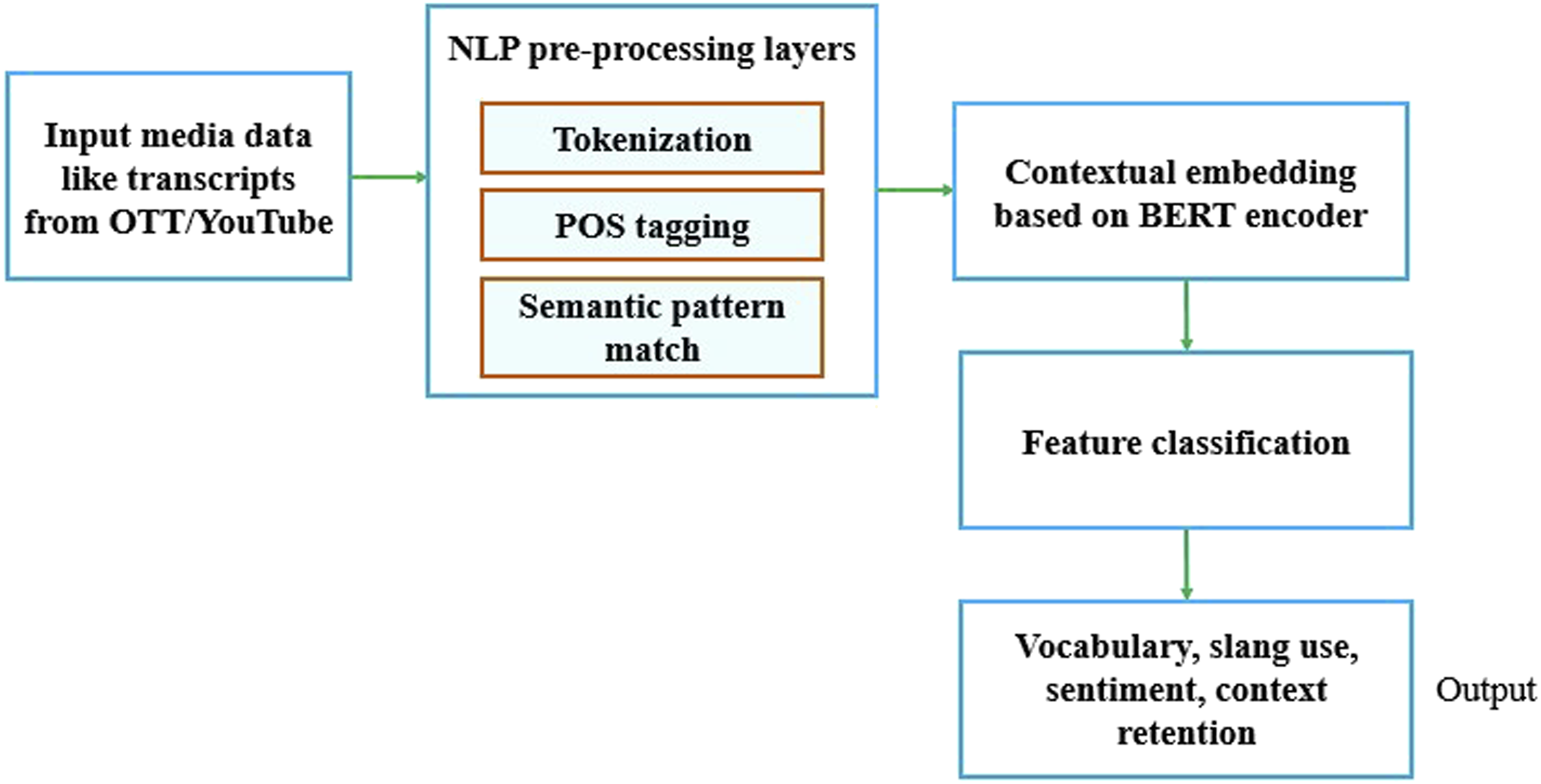
The proposed methodology is to predict the media-driven language acquisition among children. This work proposed bidirectional memory networks-driven deep NLP for analysing the media-driven language acquisition among children. Figure 1 displays the proposed architecture diagram. Proposed workflow model.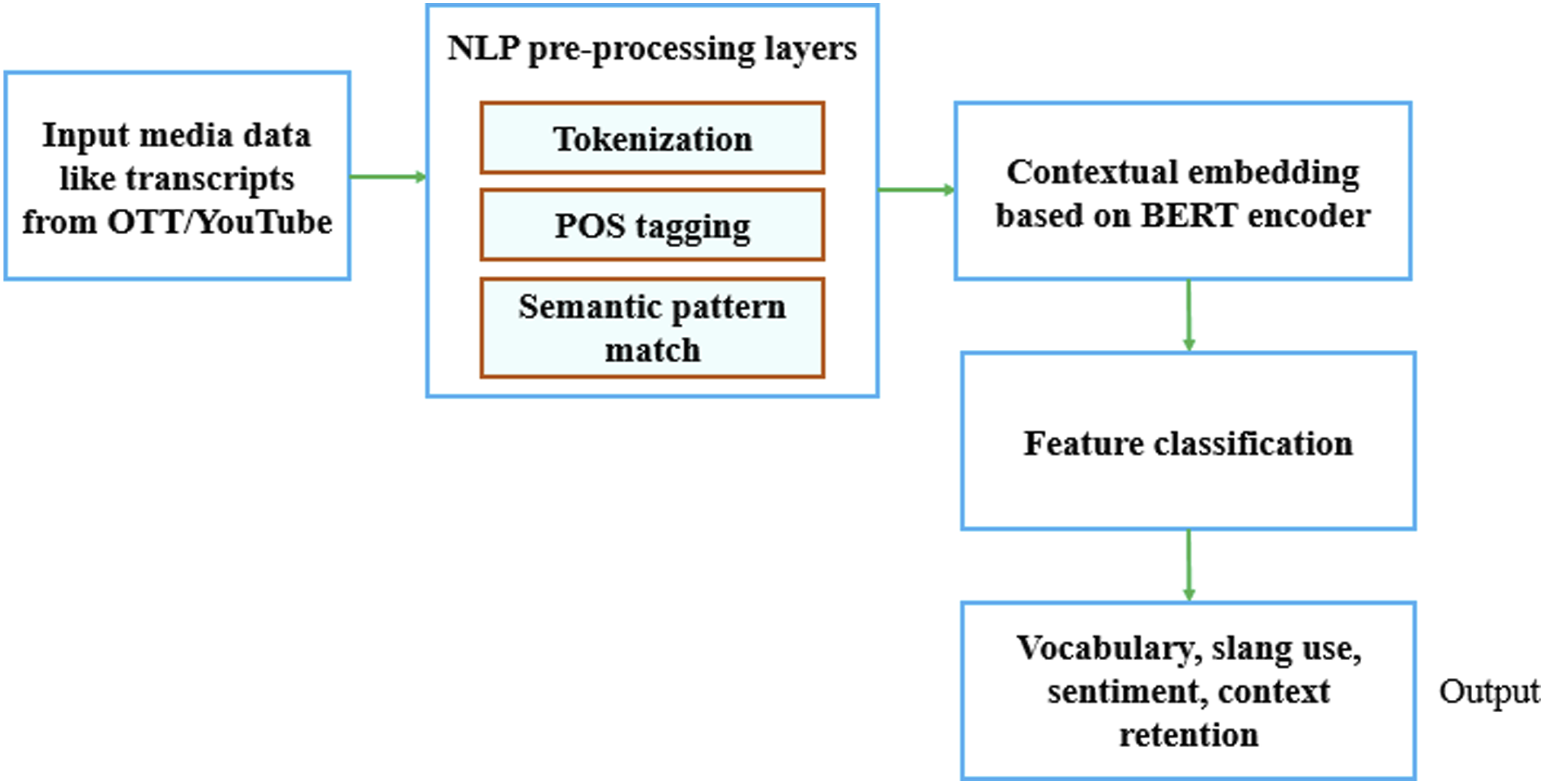
Data collection
The real-world and language samples and digital media transcripts are the two primary sources that comprise the dataset. In every context, the linguistic input children obtained from language or digital content was reflected with a comparative corpus. The transcriptions of popular children’s content across OTT platforms and YouTube curate a digital media corpus that refers initial subset. An influencer-driven entertainment, vlogs, educational segments, and animated storytelling characterize the selection criteria that involve series and videos. For quality assurance, review manually, clean, and extract the auto-generated transcripts and official subtitles. The media exposes the linguistic stimuli to children as a proxy.
The data collection and direct participant observation construct the child language corpus. The written and spoken modalities collect the language samples. The audio recordings of informal dialogue, group conversation, and storytelling tasks audio recording capture spoken language. Based on short dialogues and paragraphs, the media experiences, characters, and children were asked to designate their favorite shows collect the written data. To ensure children’s natural and comfortable behavior, the non-invasive and participant data anonymization process conducts all data collection activities. For input and output languages, allow a comprehensive linguistic landscape provided by these two corpora.
Participant observation
To collect authentic language samples, a qualitative model employs participant observation for analyzing digital media influences. For a minimum of 3 to 5 hours per week, an OTT platform or YouTube video consumes participants. During vocabulary acquisition, the developmental sensitivity to language input selects the age group. The semi-structured and naturalistic setting collects observational data. In casual group conversations, the storytelling activity is encouraged, and the spontaneous spoken language is captured with audio-recorded sessions. For linguistic analysis, generate the transcripts from these recordings and obtain written language samples related to media content, YouTuber, and watched videos. Insights into stylistic preferences, sentence structures, slang adoption, and vocabulary usage provide these written expressions.
A non-intrusive role is maintained via an observation process. The digital content influences expressions or linguistic patterns, and the media consumption document utilizes field notes. The media language triggers social responses and emotional identification. Systematically annotates features like vocabulary diversity, sentiment polarity, and slang based on language samples. The media sources appear to express and phrase with particular attention. The multimedia input influences the real-world linguistic behavior that enables participant observation. Based on children’s writing and speech, the data ensured for reflective actual and contextually grounded usage.
Pre-processing
Pre-processed vocabulary type.

The set rules are like grammar, with the sentence generated via language. An important impact on spoken and written languages is the structure of flexibility. Due to language development level, the appearance of a language may differ, and the characteristic is verified by utilizing part-of-speech.
Large-scale language model
The pre-trained language model is Bidirectional Encoder Representations from Transformers (BERT) (Haviv et al., 2021). The bidirectional structure with several layers designs the BERT that describes different applications of NLP based on state-of-the-art performance. The reflecting context is embedded with natural language models. The Word Piece Tokenizer resolves the problem of OOV and starts and ends the sentence by adding “[SEP]” and “[CLS]”. Train the information phrase in the context and the conjunction utilized to segment the feature. Figure 2 shows the BERT model and the combination of each token. BERT model and the combination of each token.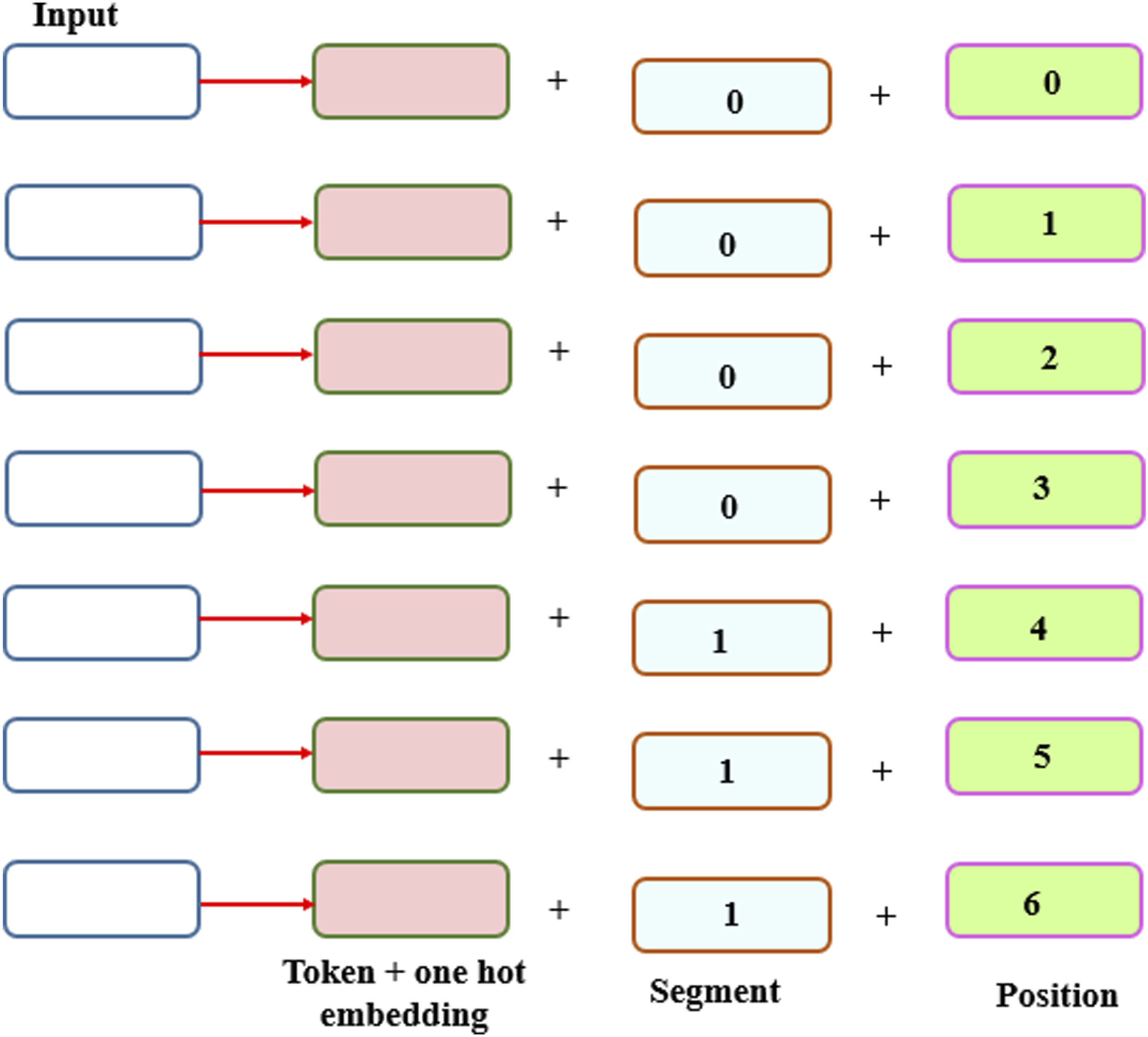
Embedding part of speech
Each language token-unit splits the token in NLP tasks, and the vector represents this. The distributed model performs an embedding of words and the similarity among words effectively expressed. The conversations collect the transcription data and verify the child’s lexical diversity, regardless, the irrespective of language development level of the child. Recognize the language impairments with the substantial variation among normal children and compare across the age groups. The LSA-based measuring indicator measures and the parts of speech advantages are produced (Xia 2023). The one-hot encoding represents the neural network on words trained using word2Vec. Figure 3 displays Continuous Bag-of-Words (CBOW) based word2Vec training methods. Word2Vec architecture, (a) Skip-gram model and (b) CBOW model.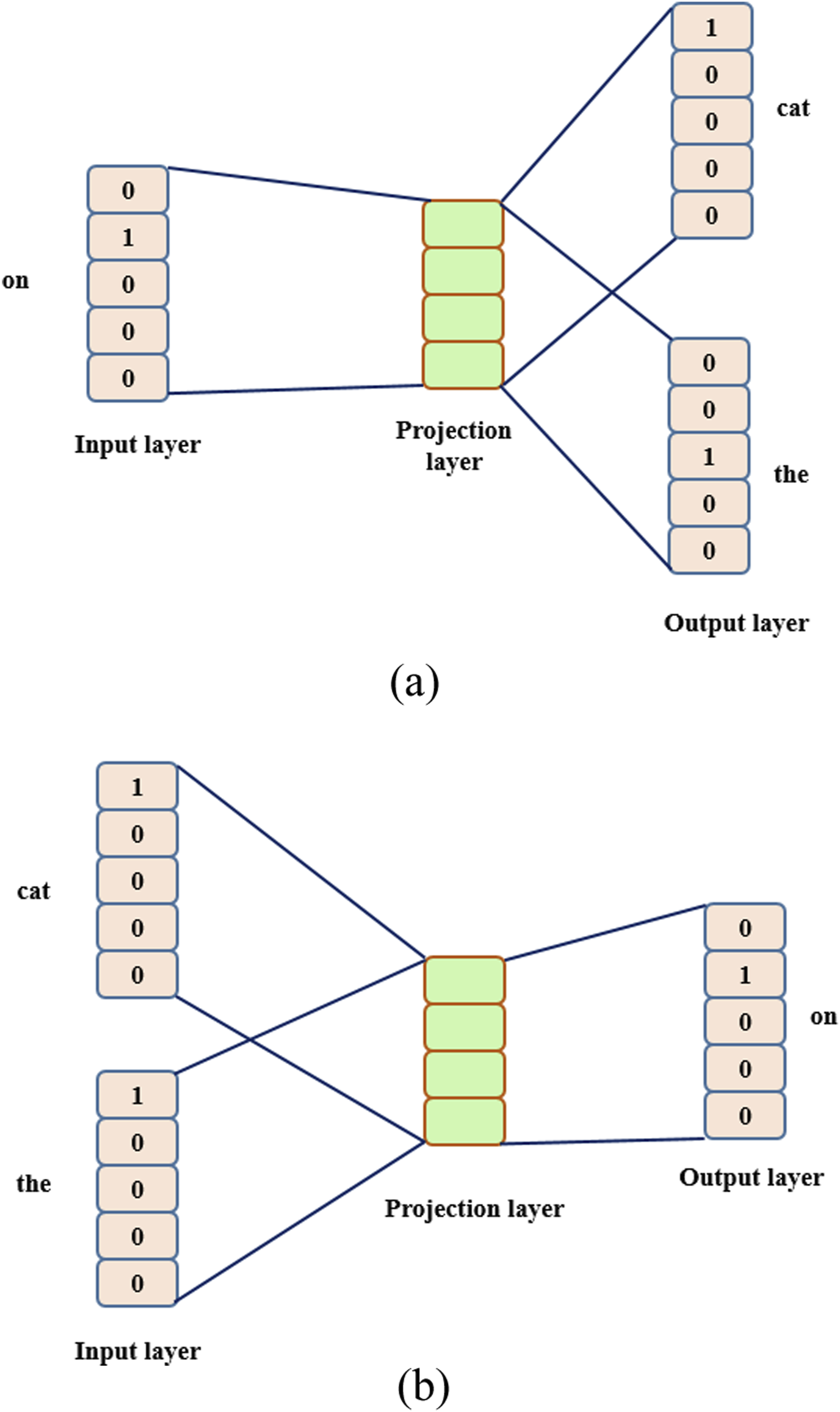
Bidirectional association neural network (BAMNN)
The binary noise is simulated to train the BAMNN. The neural network with the activation function-based training facilitated from bipolar form (−1 and 1) and converts the binary strings has 0 and 1s. The random binary noise is simulated to target and 16-bit random inputs based on 50 epochs. In 

The part of speech by age group with linguistic rules in words is determined by applying a BANN. For part-of-speech and learning word features, the weights are shared via convolutional layers. The Gaussian error linear unit is the combination of an activation function, 256 filters, 3 sizes of convolutional filter and a convolutional layer.
The relation of X from the Gaussian distribution is
The GELU function is set as the activation function, and 512 is an individual trained layer. The feature language development level is classified and the output layer is the final FC layer. The formula below shows the softmax function, and it sets the activation.



According to i
th
batch, the j
th
vector is
Results and discussion
The results and analysis section presents the deep learning model-based acquisition of language patterns influenced by digital media among the children. The quantitative analysis and the qualitative observations are described in this section.
Comparative study of POS tagging and traditional grammar checking
Comparative study based on POS tagging.

BAMNN-based semantic pattern recognition
For the training of the BAMNN paired dataset, incorporating the media content features and patterns generated with children is taken. This establishes the mappings related to the associated memory for the stimulus and response.
The proposed approach will predict both the forward and reverse predictions. The association accuracy based on the mapping memory is analyzed and compared with Yogeshkannah et al. (Martina Jose Mary et al., 2024), Bhutani et al. (Bhutani and Gupta, 2024), Mejeh et al. (Mejeh and Rehm 2024), and Wang et al. (Wang and Wu, 2024). The mapping accuracy of the proposed work is around 97%. This shows the children effectively expressing a media-derived semantic equivalent. The other approaches Yogeshkannah et al. (Martina Jose Mary et al., 2024), Bhutani et al. (Bhutani and Gupta, 2024), Mejeh et al. (Mejeh and Rehm 2024), and Wang et al. (Wang and Wu, 2024) showed association memory of 78%, 88%, 83%, and 90% respectively. The graphical determination of association accuracy based on the methods is shown in Figure 4. Association accuracy vs. methods.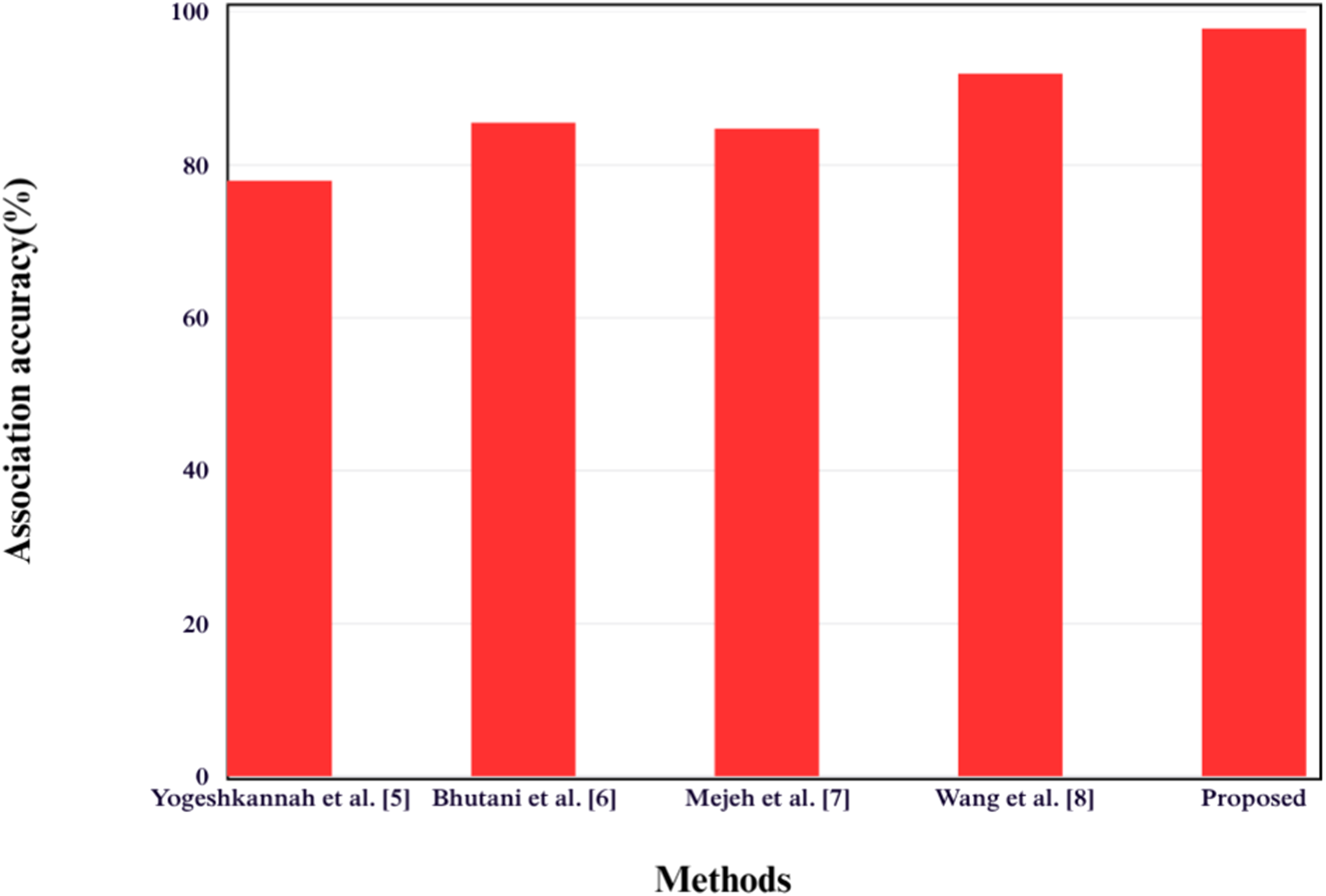
The training efficiency based on epoch is shown in Figure 5(a) for the comparison Yogeshkannah et al. (Martina Jose Mary et al., 2024), Bhutani et al. (Bhutani and Gupta, 2024), Mejeh et al. (Mejeh and Rehm 2024), and Wang et al. (Wang and Wu, 2024) existing works are taken. The epochs conducted are from 1 to 10. The training efficiency of the proposed method is higher, with 95% at the 10th epoch. Meanwhile other approaches Yogeshkannah et al. (Martina Jose Mary et al., 2024), Bhutani et al. (Bhutani and Gupta, 2024), Mejeh et al. (Mejeh and Rehm 2024), and Wang et al. (Wang and Wu, 2024) attained training accuracies of 82, 80, 86, and 88% respectively as shown in figure. The retention of the work is compared with Yogeshkannah et al. (Martina Jose Mary et al., 2024), Bhutani et al. (Bhutani and Gupta, 2024), Mejeh et al. (Mejeh and Rehm 2024), and Wang et al. (Wang and Wu, 2024) and graphically plotted in Figure 5(b). The retention is plotted with retention vs. sequence length and taken 0 to 50 and grouped into 0-10, 10-20, 20-30, 30-40, and 40 to 50. The retention is higher when the sequence length is lower and lower when the sequence length increases. The retention when the sequence length is around 40 to 50 is 0.83 for the proposed work. Comparative study (a) Training efficiency vs. epoch, and (b) Retention vs. sequence length.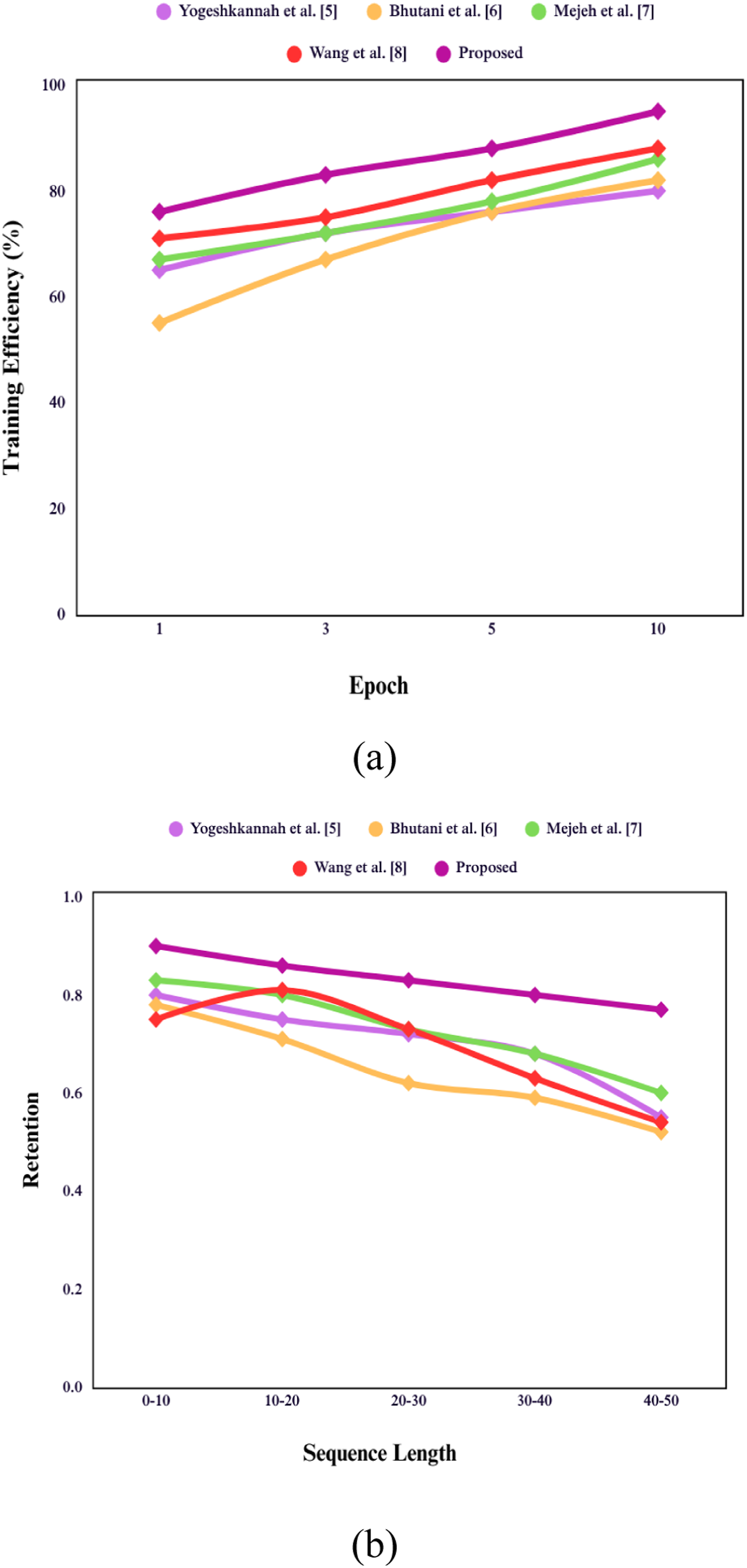
The comparative study based on the long-term dependency capture against token distance and the F1-score against slang type is plotted in Figure 6(a) and (b). The long term dependency capture of the proposed and existing works Yogeshkannah et al. (Martina Jose Mary et al., 2024), Bhutani et al. (Bhutani and Gupta, 2024), Mejeh et al. (Mejeh and Rehm 2024), and Wang et al. (Wang and Wu, 2024) are higher at the lowest token distance of about 5 and decreases with the token distance increases. The long term dependency capture of proposed and Yogeshkannah et al. (Martina Jose Mary et al., 2024), Bhutani et al. (Bhutani and Gupta, 2024), Mejeh et al. (Mejeh and Rehm 2024), and Wang et al. (Wang and Wu, 2024) when the token distance 20 are around 82%, 66%, 70%, 69%, and 71% respectively. The F1-score is used to measure the slang detection performance, and for that, it is plotted against slang type. Three types of slang are chosen like media slang, regional slang, and hybrid/blended slang. The slang detection of the proposed work is higher with around 95%, 90% and 91% respectively for the slang types of media, regional and hybrid as shown in Figure 6(b). Comparative study (a) Long-term dependency capture vs. token distance, and (b) F1-score vs. slang type.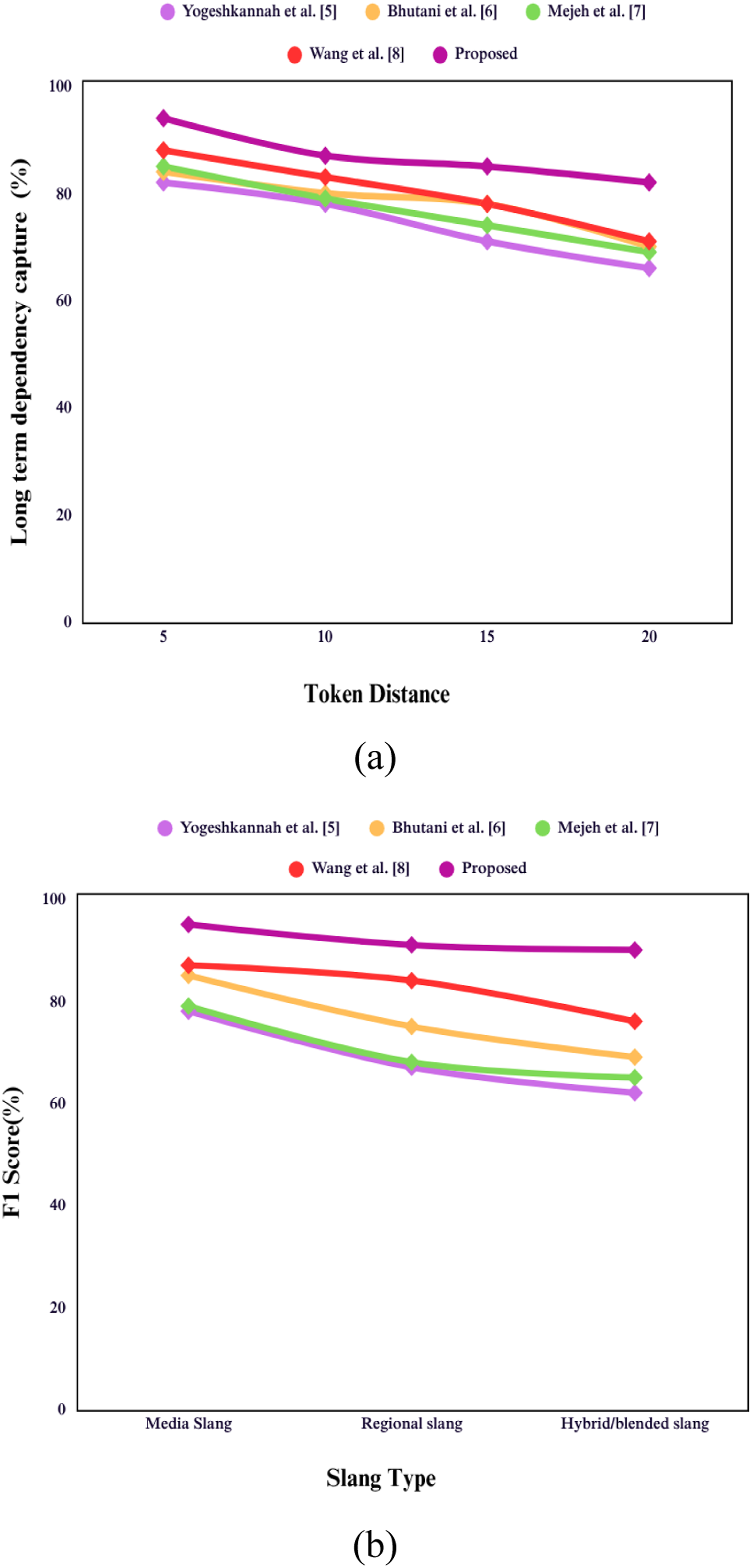
Conclusion
The work in this article provides insight into the deep learning based powerful structure for analyzing language acquisition by children on a digital platform like OTT. For this, the integrated BAMNN and transformer-based encoder BERT has been implemented. With the deployment of conventional NLP tools, including semantic modeling, slang usage, vocabulary shifts, and sentiment orientation among the children are predicted. The proposed work shows better performance in predicting context retention and long-term dependencies than the previous and traditional approaches. As a conclusion, it is predicted that the exposure of digital platforms reshapes children with respect to linguistic norms and impacts education and language norms in a positive as well as negative way.
Footnotes

Funding
The author received no financial support for the research, authorship, and/or publication of this article.
Declaration of conflicting interests
The author declare that they have no known competing financial interests or personal relationships that could have appeared to influence the work reported in this paper.
Data Availability Statement
Data will be made available upon reasonable request.