







Abstract
Boeing is a leading American aerospace and defense company that has a long history dating back to 1916. William Boeing, in Seattle, Washington, founded the company and focused initially on building seaplanes for commercial and military use. Throughout its history, Boeing has taken several risks that have helped to shape the company into the global powerhouse it is today. One of the earliest examples of this is the company's decision to shift its focus from building seaplanes to building land-based aircraft in the 1920s. This move was risky at the time, as the market for land-based aircraft was still relatively untested, but it ultimately paid off as the demand for air travel proliferated in the following years. Another significant risk that Boeing took was the development of the 747, which was the first wide-body commercial airliner. This massive project required a significant investment in time and money, which later proved to be a huge success and established Boeing as the leader in the commercial aircraft industry. Boeing has traditionally adopted this risky business strategy, popularly known as “bet the business strategy,” which is characterized by a high risk of product failure in every new product development cycle. So far, Boeing has successfully navigated each cycle, allowing the company to maintain its market leadership and generate good financial returns.
Keywords
Boeing is a leading American aerospace and defense company that has a long history dating back to 1916 1 . William Boeing, in Seattle, Washington, founded the company and focused initially on building seaplanes for commercial and military use 2 . Throughout its history, Boeing has taken several risks that have helped to shape the company into the global powerhouse it is today 3 . One of the earliest examples of this is the company’s decision to shift its focus from building seaplanes to building land-based aircraft in the 1920s 4 . This move was risky at the time, as the market for land-based aircraft was still relatively untested, but it ultimately paid off as the demand for air travel proliferated in the following years. Another significant risk that Boeing took was the development of the 747, which was the first wide-body commercial airliner 5 . This massive project required a significant investment in time and money, which later proved to be a huge success and established Boeing as the leader in the commercial aircraft industry. Boeing has traditionally adopted this risky business strategy, popularly known as “bet the business strategy,” which is characterized by a high risk of product failure in every new product development cycle. So far, Boeing has successfully navigated each cycle, allowing the company to maintain its market leadership and generate good financial returns.
Boeing was confronted with the Airbus A320 Neo, a larger, more expensive, and fuel-efficient competitor aircraft, which necessitated the development of a more economical and fuel-efficient aircraft. In response, the 737 MAX model was introduced, maintaining the company’s business strategy. Boeing 737 Max had larger and more fuel-efficient engines on the aircraft. However, these modifications affected the aerodynamics and handling characteristics of the plane which posed potential safety risk as there seemed an increased tendency for the nose of the aircraft to pitch up which needed to be addressed 6 . To address the safety risk Boeing developed Maneuvering Characteristics Augmentation System (MCAS) to counteract the increased nose-up tendency of the aircraft. MCAS was intended to automatically adjust the horizontal stabilizer to prevent the aircraft from stalling. However, the system relied on data from a single angle of attack sensor, making it vulnerable to erroneous readings 7 .
Boeing’s reputation took a major hit due to the two deadly, unfortunate crashes of the 737 MAX passenger carrier, which later led to the global grounding of its whole fleet. This put the company’s product reliability in jeopardy, particularly in the commercial aviation categories. Against this background, the case attempts to unravel business strategies which were used by Boeing to address the crises while successfully competing with its key competitor, Airbus.
The Boeing 737 MAX problem refers to the fact that the 737 MAX aircraft type was temporarily grounded following two catastrophic disasters in 2018 and 2019. After 346 individuals were killed in the Lion Air Flight 610 and Ethiopian Airlines Flight 302 crashes, there is concern regarding aviation security 8 . According to an investigation, the major cause of both events was a defective piece of software within the aircraft’s flight control system known as the Maneuvering Characteristics Augmentation System (MCAS) 9 . As a result, the Boeing 737 MAX has been grounded by several regulatory agencies and airlines worldwide. Subsequently, Boeing modified the MCAS system as well as other components of the plane. Even though it is not yet in service in many countries, the FAA and several other regulatory agencies have approved the Boeing 737 MAX for flying 10 . To address the situation, there was a slight change in the leadership at Boeing. Following Dennis Muilenburg’s departure on January 13, 2020, due to concerns with the 737 MAX aircraft, Boeing appointed David Calhoun as CEO, compounding the company’s ongoing problems. Calhoun took over an airline that was already dealing with the fallout from the 737 MAX disasters, widespread industry change, and the impact of the COVID-19 epidemic on demand for air travel. Despite applying cost-cutting measures and making production modifications, Boeing faced persistent financial difficulties. Calhoun’s primary goals were to recertify the 737 MAX and restore Boeing’s credibility. He tackled challenging challenges in the aircraft industry and concentrated on regaining stakeholder trust. Boeing is still facing hurdles on its route to recovery, highlighting the importance of strategic leadership and adaptability in the aerospace industry.
The Boeing company and the need for 737 max
Boeing, the world’s largest aviation corporation, was founded in 1916 by William E. Boeing. The company’s products include commercial aircraft, defense equipment, space items, and other equipment. The corporation, the industry leader and a top US exporter, provides airline services in over 150 countries, including commercial and military planes, launch systems, weaponry, and other communication systems 11 . Boeing’s technology and innovation constantly cater to evolving client demands in the commercial aviation and military industries. The primary activities of Boeing include creating technological solutions, arranging finance and service options for their customers. Boeing’s headquarters are in Chicago, and it employs over 140,000 people globally. Apart from Boeing Capital Corporation, the company has three business units: commercial aircraft, military, space, and security 12 . More than 50% of its revenue for Boeing comes from its commercial segment, and the company produces the 737, 767, 747, 777, and 787 family of aircraft along with the Boeing Business Jet range. They also manufacture a family of freighters, carrying 90% of the world’s cargo 13 .
The only competition for the 737 family was due to the variants of the Airbus A320 family. The introduction of the A320 Neo family as an ultra-fuel-efficient alternative got Boeing to launch a new variant for the 737 series 14 . The ground clearance for A320 was large so that they could accommodate large-diameter engines. This variant was well received, so Boeing wanted to replicate fuel efficiency in the 737 series. Moreover, the ground clearance for 737 planes was small. Hence, they had to push the engine nacelles even further, creating design inefficiency for a new variant named the 737 MAX 15 . Engine nacelles are a streamlined enclosure for the engine of an aircraft. The engines on the 737 Max were repositioned slightly forward and higher on the wings compared to previous 737 models. This change, known as the engine nacelle placement, was intended to optimize the aircraft’s aerodynamics and reduce drag.
However, the engines’ relocation had an unforeseen consequence. It changed the handling characteristics of the aircraft, forcing the nose to pitch up under certain situations, notably at AOA. To address this issue, Boeing introduced the MCAS, a software system designed to automatically adjust the horizontal stabilizer and counteract the pitch-up tendency.
In addition, Boeing marketed the 737 Max as a more fuel-efficient version of the previous aircraft 737 New generation (NG), and the pilots did not need considerable training for new aircraft. Boeing claimed that the 737 Max would offer approximately 14% better fuel efficiency compared to the previous 737 NG models. This improvement was primarily achieved through various design enhancements, including the repositioning of the engines, advanced aerodynamics, and the incorporation of new fuel-efficient engine technology 16 . The design inefficiency caused the planes to nose up at high engine power levels. To stabilize the aircraft in such a situation, Boeing added an MCAS instead of aerodynamic redesigning. 17 .
The factors contributing to the crisis
Lion Air Flight 610, a 737 MAX 8 flown by the Indonesian carrier Lion Air, crashed in the Java Sea on October 29, 2018, killing all 189 passengers and crew members on board 18 . The MCAS was triggered, forcing the nose of the aircraft to lean downward. The reason for the disaster was first unknown; however, analysis of data from the plane’s flight data recorder indicated that the MCAS had been triggered, causing the plane’s nose to descend 19 . On March 10, 2019, Ethiopian Airlines Flight 302, another Boeing 737 MAX 8, crashed shortly after departure from Addis Abeeba. The accident killed all 157 people on board. The major cause of the incident was revealed to be the MCAS system, which had activated in the same manner as in the Lion Air disaster 20 .
Based on the investigation’s findings, the MCAS system, designed to prevent the aircraft from stalling, was activated by a single sensor tracking the angle of attack (AOA) and was not cross-checked with a second sensor. 21 . Even though the technology was intended to help prevent the plane from stalling, it did not. Resulting in the system to not function correctly and continue to push the plane’s nose down, even though there was no danger of the aircraft stalling 22 . Furthermore, the pilots needed adequate training on the correct protocols to follow if the MCAS system failed. However, the pilots were not informed about the MCAS system until after the first crash and Boeing blamed pilots for their inability to control the aircraft under stall conditions. Following the two incidents, Curtis Ewbank, a senior Boeing engineer, filed an internal ethics complaint in 2019 alleging management squelching of a system that may have revealed flaws in the AOA sensors. Ewbank has recently declared publicly, “I was ready to speak up for safety and quality… Boeing executives were more concerned with money and schedule than with safety or quality.” 23
Boeing’s and regulatory agencies’ responses
After the crash of the two planes, Boeing was heavily criticized for how it handled the situation. Boeing had neglected to warn airlines and pilots about the MCAS technology and provide the necessary training in the event of its failure 24 . Loses incurred due to the accident were huge, most of which were in terms of settlements with the relatives of accident victims and reimbursement to airlines forced to cancel flights due to the grounding. Later, it was also revealed that the Federal Aviation Administration (FAA) had played a significant role in granting necessary approvals to 737, casting doubt on the agency’s credibility 25 .
Over the years, the FAA had formed a close relationship with Boeing, resulting in a lack of independent monitoring. The FAA delegated some safety assessments to Boeing, allowing the company to perform certain certification tasks on its own. This approach is known as the Organization Designation Authorization (ODA) program. The article by USA today points out that this delegation of authority might have resulted in a conflict of interest, as Boeing had a vested interest in getting the 737 MAX certified quickly. This close relationship might have compromised the FAA’s ability to adequately assess the safety of the 737 MAX 26 .
Furthermore, the FAA failed to detect and comprehend the hazards connected with the MCAS, a flight control system involved in the crashes. The FAA did not thoroughly evaluate Boeing’s safety culture during the certification process. It indicates that the FAA’s oversight did not adequately assess potential organizational pressures and influences that could have compromised safety decisions made by Boeing. FAA’s certification process failed to recognize the potential dangers of MCAS and underestimated its impact on the aircraft’s handling 27 .
Boeing responded by releasing an updated version of the software that drives the MCAS system and providing additional training to pilots 28 . Furthermore, the FAA issued an emergency airworthiness directive requiring the installation of the software update as well as further training. However, several different regulatory organizations and airlines have temporarily grounded all 737 MAX flights worldwide 29 .
The impact
Boeing’s Earnings/Losses From Operations From 2012 to 2021(in Billion U.S. Dollars) 33 .
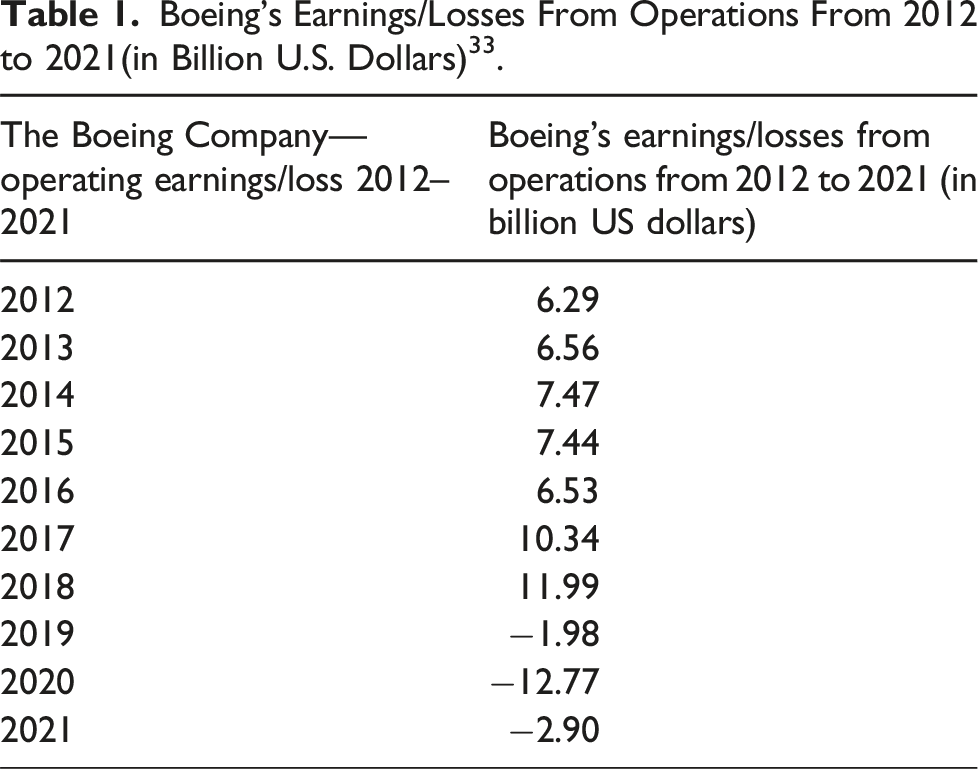
Although the FAA and several other regulatory bodies have recertified the 737 MAX, it still needs to be in service in several countries. It is expected to return to service in the coming months; however, it is still being determined how the issue will ultimately affect the 737 MAX and the aviation industry’s future 32 .
The effect on market leader position
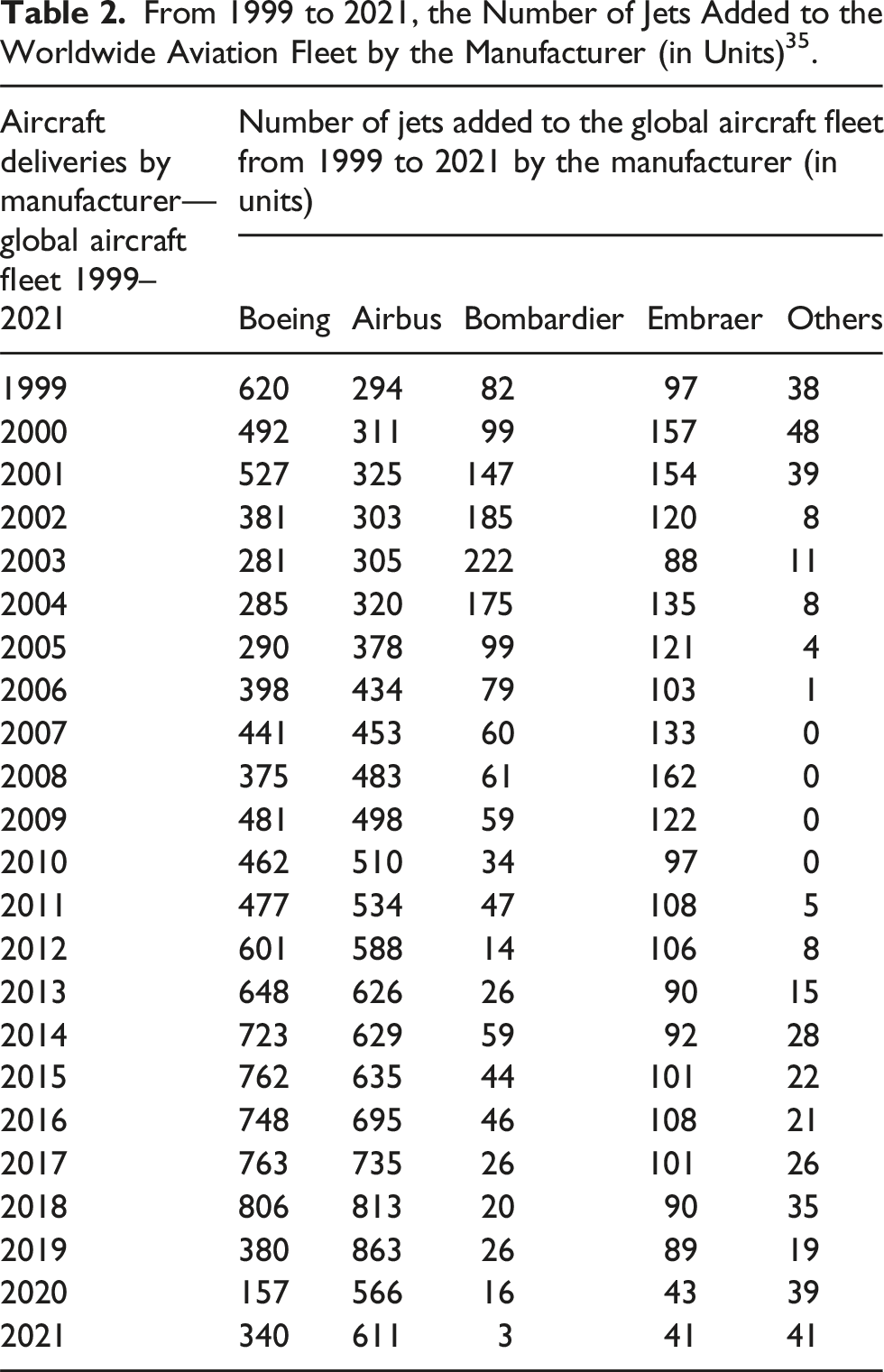
From 1999 to 2021, the Number of Jets Added to the Worldwide Aviation Fleet by the Manufacturer (in Units) 35 .
Competition with airbus
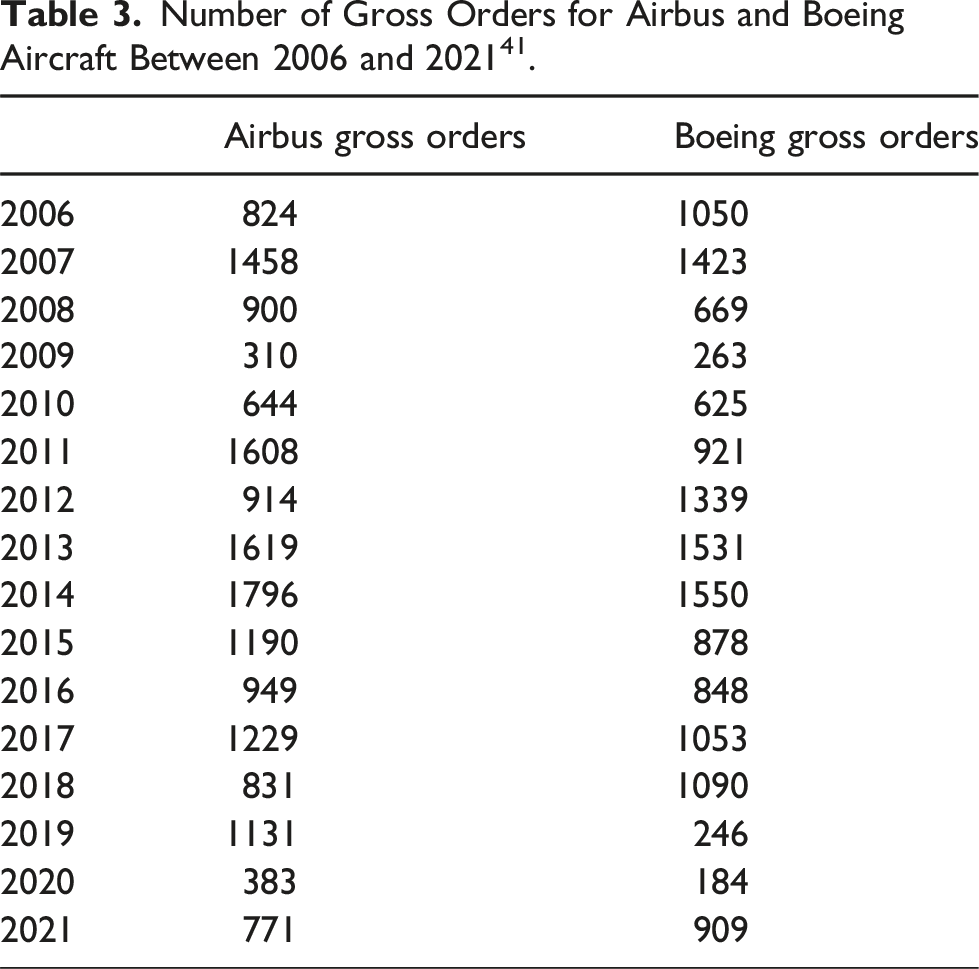
As a result of the Boeing 737 MAX problem, Airbus, Boeing’s main competitor in the commercial air carrier industry, has been presented with an opportunity to increase its market share 36 . Airbus has claimed an increase in orders for its A320neo series of aircraft, which it has actively marketed as an alternative to Boeing’s 737 MAX. Its size and capabilities are comparable to those of the 737 MAX. This is because of the similarities between the 737 MAX and the A320neo series 37 .
Number of Gross Orders for Airbus and Boeing Aircraft Between 2006 and 2021 41 .
The major concerns
The entry of Airbus 320neo intensified the competition, leading to Boeing’s decision to bring a fuel-efficient and cost-effective aircraft to match their competitor. The case raises various questions on the decisions made by Boeing in this regard and looks for strategies to revive the old trust in the market. The first question revolves around the conflicting priorities of ensuring aircraft safety while maintaining profitability. Boeing faced pressure to compete with its rival, Airbus, and develop an upgraded aircraft that would be fuel-efficient and cost-effective, leading to the decision to modify the 737 Max.
Second, The FAA decided to grant Boeing significant control over the certification and testing process for the 737 Max. This decision raises questions about the effectiveness of regulatory body in preventing such future disasters, and the balance between industry expertise and independent validation. Third, Boeing’s decision not to inform airlines and pilots about the existence and functionality of the MCAS software created a dilemma regarding transparency and accountability. The case raises questions about the ethical responsibilities of Boeing in disclosing critical information to ensure pilot awareness and safety, and fourth, Boeing faced a significant dilemma in managing the crisis aftermath. Rebuilding trust among key stakeholders, including airlines, customers, and the general public, presents a complex challenge. The company must address the root causes of the crashes, implement corrective measures, and demonstrate a commitment to safety and transparency.
The decisions made by Boeing and the FAA have had far-reaching implications. The crashes caused major global governments to halt the entire Boeing 737 Max fleet, resulting in significant financial losses for Boeing, reputational harm, and a loss of consumer trust. In addition, these events prompted investigations, legal action, and heightened scrutiny of aviation safety legislation and procedures. By confronting these crucial challenges fully, Boeing can learn from its mistakes and emerge as a resilient and responsible industry leader, establishing a standard for safety, transparency, and ethical business practices.
Boeing is looking for strategies that can help them to regain their lost trust and competitive position ?
Transition in leadership: way forward with hope
The difficulties of Boeing, the aerospace manufacturer, is persistent till 2024. On January 13, 2020, David Calhoun became the CEO of Boeing 42 . Dennis Muilenburg quit because of the problems with the 737 MAX plane. When the company hired Calhoun, it was going through a tough time because of the 737 MAX crashes and the following grounding of the planes, as well as other problems facing the aerospace industry. Calhoun’s main job as CEO was to rebuild trust with officials, customers, and other important people, and to lead Boeing through the many problems it was facing. Additionally, the COVID-19 pandemic had a severe influence on the corporation, mirroring the industry’s troubles. 43 . The dramatic drop in air travel demand resulted in a reduction in new aircraft orders and delayed deliveries 44 . To weather the storm, Boeing slashed costs and modified production rates 45 . Following two fatal crashes in 2018 and 2019 caused by a faulty flight control system, the MAX was grounded worldwide for nearly 2 years, resulting in significant financial losses and tarnishing Boeing’s reputation46,47. The business made extensive efforts to address safety concerns and have the MAX recertified. Because of the decreasing demand, Boeing was compelled to announce production cuts and layoffs in order to align output with market realities and save costs 48 . Financially, the corporation suffered significant losses as a result of the pandemic and the MAX grounding. Boeing acquired extra finance and decreased discretionary expenditure to improve its financial condition 49 . Calhoun moved his focus to repairing trust with regulators, consumers, and the public while handling Boeing’s complex difficulties. While Boeing continues to work towards a full recovery, the business has taken steps to resolve safety concerns, strengthen financial stability, and restore trust. Boeing’s future prosperity depends on its ability to negotiate the continuous challenges of the aerospace sector.
Boeing has applied software patches and worked closely with aviation regulators to recertify the 737 MAX for flight as part of its efforts to overcome the 737 MAX concerns under Calhoun’s leadership 50 . The corporation has also reduced expenses and adjusted production rates to deal with the post pandemic downturn in the aerospace industry 51 . But there are still obstacles that Boeing must overcome.
Key Questions
What were the underlying circumstances and decisions that led to the situation of downfall of Boeing?
Why did Boeing decide not to train pilots or let the carriers know about the software?
Why did the FAA let Boeing do much of testing despite FAA being the regulatory agency?
What can Boeing do to regain its market share and the lost consumer trust?
Discuss the competitive position of Boeing in relation to its major rival Airbus, using Porter’s five forces model.
Footnotes
Author Contributions
All authors whose names appear on the submission. (1) made substantial contributions to the conception or design of the work; (2) drafted the work or revised it critically for important intellectual content; (3) approved the version to be published; and (4) agree to be accountable for all aspects of the work in ensuring that questions related to the accuracy or integrity of any part of the work are appropriately investigated and resolved.
Declaration of conflicting interests
The author(s) declared no potential conflicts of interest with respect to the research, authorship, and/or publication of this article.
Funding
The author(s) received no financial support for the research, authorship, and/or publication of this article.
