







Abstract
ITC Limited, once heavily reliant on tobacco, faced a strategic challenge in reducing dependence on a controversial product while maintaining profitability and public trust. Rising health concerns, regulatory pressures, and changing consumer preferences made tobacco unsustainable as a long-term focus. This case study examines ITC’s dual transformation: diversification into fast-moving consumer goods (FMCG), personal care, and agribusiness, and integration of sustainability into its operations. The company achieved carbon, water, and solid waste recycling positivity, while investing in renewable energy, rural development, and ESG reporting. These shifts required significant operational restructuring and brand repositioning to overcome legacy perceptions. The study highlights how ITC balanced strategic growth with environmental and social responsibility, offering insights into corporate reinvention in emerging economies. It also explores how ITC’s approach can inform policy frameworks that promote responsible business conduct and long-term value creation. By analysing ITC’s integrated approach to diversification and sustainability, the study contributes to the broader discourse on corporate transformation, ESG leadership, and the role of business in advancing sustainable development.
Keywords
Introduction
In recent years, corporate sustainability (Rathobei et al., 2024) in India has shifted to becoming a key part of business strategy and regulation. India’s commitment to achieving net-zero emissions by 2070, has further encouraged firms to adopt decarbonisation, renewable energy use, water stewardship, and circular economy practices (Rajayya et al., 2025; Sinha, 2024). Alongside, the Business Responsibility and Sustainability Reporting (BRSR) framework introduced by the Securities and Exchange Board of India (SEBI) in 2021 mandates top listed companies to disclose their environmental, social, and governance (ESG) performance (SEBI, 2024). Sectoral wise, energy, IT, manufacturing, and FMCG companies have emerged as leaders in sustainability adoption (Kaith and Sachdeva, 2024). Even though firms such as ITC, Tata Group, Infosys, and Mahindra have pioneered sustainability reporting, carbon neutrality, water stewardship, and community development initiatives (Singh et al., 2025), are under increasing pressure to align strategies with climate goals, green finance, and circular economy practices particularly in greenwashing risks, inconsistent reporting quality, dependence on carbon-intensive industries, and balancing economic growth with environmental protection (Rathi et al., 2023; Sustainability Insights, 2025; TERI Year Ender, 2024). However, corporate sustainability in India has moved from charity-based activities to being built into business strategy, with companies realizing that long-term success depends on caring for the environment and society as well as making profits (Dos Santos Gaspar et al., 2017).
ITC Limited stands as a compelling example of corporate transformation in India’s evolving business landscape. Originally founded in August 24, 1910 as the Imperial Tobacco Company of India, ITC built its early success on the tobacco industry, becoming a dominant force in cigarette manufacturing. For decades, tobacco remained its core business, shaping its identity and revenue model. However, ITC faces ethical, regulatory, and reputational challenges. Tobacco carries strong public health risks, regulatory restrictions like taxation and advertising bans, and increasing social disapproval (Omowole et al., 2024). This growing global awareness of health risks, environmental concerns, and shifting consumer expectations prompted ITC to rethink its long-term strategy. This followed a deliberate and progressive shift toward diversification and sustainability.
In 2000, ITC launched the innovative e-choupal initiative, aimed at empowering rural farmers by providing digital access to market prices, weather updates, and farming best practices. This platform significantly improved supply chain efficiency and farmer incomes. In 2001, ITC introduced Kitchens of India, a line of ready-to-eat gourmet meals that brought traditional Indian cuisine to global consumers. Over the past two decades, ITC has repositioned itself as a multi-sector conglomerate with interests spanning fast-moving consumer goods (FMCG), agribusiness, paperboards and packaging, hospitality, and information technology (Ashraf et al., 2024). The company ventured into lifestyle retailing with Wills Lifestyle and Wills Sport, while also launching fashion brands like John Players and Miss Players. Its FMCG footprint grew with products such as Aashirvaad Atta, Sunfeast biscuits, MintO and Candyman confectionery, and Mangaldeep incense sticks. ITC also entered the personal care space with Fiama Di Wills and Essenza Di Wills. Additionally, it strengthened its presence in Information Technology through ITC InfoTech and leveraged distribution synergies to market safety matches, showcasing its evolution into a broad-based consumer enterprise. Thus, ITC is recognized as a global leader in sustainability, marked by numerous milestones achieved through innovative, inclusive, and impactful interventions (Palmié et al., 2025).
This transformation was not merely economic but it reflected a deeper commitment to environmental stewardship, inclusive growth, and responsible innovation. A notable example of this shift is ITC’s entry into the Carbon-Positive, Water-Positive, and Solid-Waste Recycling which emphasizes on eco-friendly packaging and sustainable sourcing.
This case study explores ITC’s strategic shift from tobacco to perfume sticks, highlighting its efforts to integrate green innovation, circular economy principles, and responsible branding especially through its diversification to consumer goods (FMCG), paperboards & packaging, hotels, agribusiness, and more recently perfume sticks and personal care products. This case study examines: (1) To identify and analyse the sustainability challenges associated with ITC’s tobacco-centric operations (2) To analyse ITC’s strategic diversification into non-tobacco sectors through sustainable lens. (3) To examine the strategic roadmap used to reposition ITC’s corporate image (4) Lessons for other firms and implications for policy.
Confronting the sustainability dilemmas inherited from tobacco practices
ITC’s journey began in 1911 with collaborative efforts to source leaf tobacco through partnerships with farmers in southern India. This initiative paved the way for the establishment of the Indian Leaf Tobacco Development Company Limited in Guntur, Andhra Pradesh, in 1912. A year later, the company set up its first cigarette manufacturing facility in Bangalore. But ITC’s legacy as a tobacco company posed several sustainability challenges that threatened its long-term viability and social license to operate. Despite these consequences, tobacco remains a highly profitable cash crop due to strong market demand, making it financially attractive for both farmers and corporations. This presents a difficult choice between pursuing short-term economic gains and securing a healthier, more sustainable future. Some of the challenges ITC faced are as follows:
Environmental Impact
The environmental impact of the tobacco industry extends well beyond the air pollution caused by cigarette smoke. It is estimated that approximately 80% of global greenhouse gas emissions are attributed to energy-related activities (Adamczyk and Dylewski, 2017). From cultivation to manufacturing and distribution, each stage of the tobacco supply chain contributes significantly to ecological degradation and urban sustainability (Gaziulusoy and Ryan, 2017). This includes widespread deforestation, intensive fossil fuel consumption, and the improper disposal or leakage of industrial waste into natural ecosystems (Tobacco and Its Environmental Impact: An Overview, 2024).
Taking ITC’s Tobacco business practices, it contributed to deforestation and air pollution. Tobacco, by its very nature, is one of the most environmentally damaging agricultural products. Across its life cycle from cultivation to consumption it contributes significantly to deforestation, depletes soil fertility, and pollutes both water and air. These impacts are not only long-lasting but also deeply harmful to human health and the broader ecosystem. The strain it places on natural resources further jeopardizes the sustainability of food production systems, especially in vulnerable regions (Figure 1). Tobacco's ecological footprint. Source: WHO report.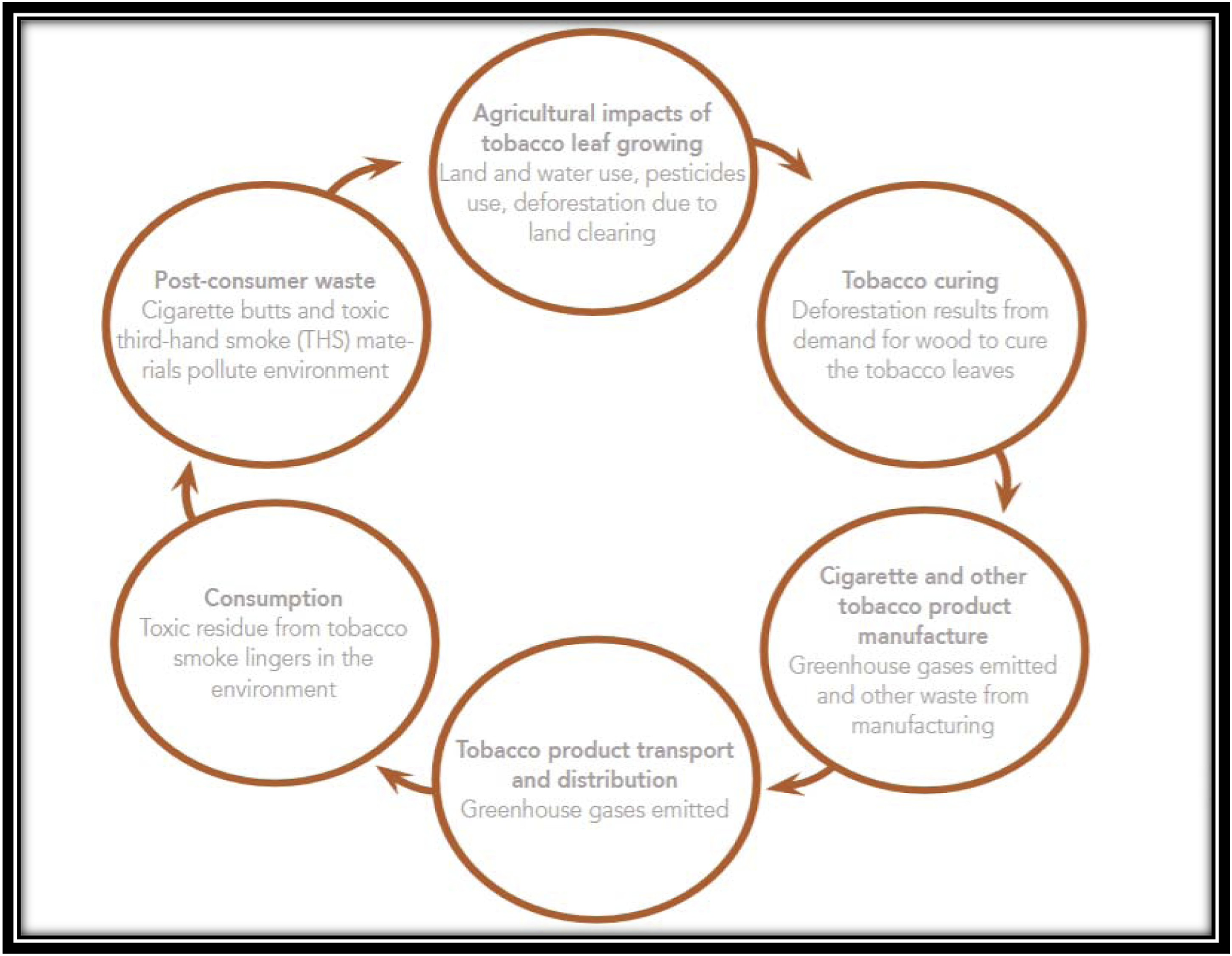
Public health concerns
Figure 1 signals the environmental impact of Tobacco (Tobacco, 2025). Tobacco is deadly in any form or disguise. Extensive scientific research has conclusively demonstrated that exposure to tobacco smoke leads to severe health consequences, including death, disease, and long-term disability. The International Agency for Research on Cancer (IARC) has confirmed through its monograph that tobacco smoking is a proven cause of multiple cancers in humans. Alarmingly, smoking is responsible for approximately 90% of lung cancer deaths among men and 80% among women, underscoring its devastating impact on public health.
Regulatory pressure
India’s tobacco industry faces significant regulatory and market pressures, with the country ranking as the fourth-largest illicit cigarette market globally, according to Euromonitor. These untaxed, lower-cost alternatives have eroded the legal market, with ITC reporting that illicit cigarettes now account for nearly one-third of the industry. As cigarettes are classified as sin goods, the government continues to impose steep taxes to discourage consumption – posing challenges for companies heavily reliant on tobacco revenues. In response, ITC has accelerated its diversification strategy to reduce dependence on this volatile segment. Meanwhile, global trends reflect a similar shift, with Statista projecting modest growth of just 2.57% in the U.S. tobacco industry between 2025 and 2030, signalling changing consumer preferences and reinforcing the urgency for transformation.
Strategic vulnerability
The tobacco industry in India operates under a stringent regulatory environment, where high taxes including GST, cess, and excise duties significantly affect product pricing and profitability. Additionally, mandatory health warnings and plain packaging laws have further dampened consumer appeal, putting pressure on both sales volumes and profit margins. Frequent budget announcements and evolving policy frameworks pose ongoing risks, as they often introduce tax hikes or stricter compliance norms. For companies like ITC, whose historical revenue has been heavily reliant on tobacco, these regulatory headwinds have accelerated the need for diversification and strategic realignment toward more sustainable and less volatile business segments (Tobacco, 2025).
Turning challenges into opportunities: ITC’s strategic response
ITC Limited’s evolution from a tobacco-centric enterprise to a diversified conglomerate has been shaped by a series of strategic challenges. These include Legacy regulatory pressures, market competition, and the resource-intensive nature of sustainability implementation.
Regulatory challenges
Policies that are formulated by the country’s Central Bank (Reserve Bank of India) are claimed to have an adverse impact on initiatives such as E-choupals due to the distortions and restrictions on distribution. In response, ITC has adopted a multi-pronged strategy. First, it actively engages with policymakers to advocate for a more pragmatic regulatory framework that reflects the unique dynamics of the agricultural sector. Second, recognizing the widespread adoption of mobile phones now exceeding 700 million users in India the company is shifting from traditional internet kiosks to mobile-based platforms as the primary mode of communication. Third, E-Choupals are evolving into their third generation, transitioning from basic customization to advanced personalization, offering tailored services that better meet the diverse needs of rural communities (Cakumanan, 2024).
Intense competition in the FMCG market
India’s FMCG sector is highly competitive, dominated by established multinational and domestic players such as Hindustan Unilever, Nestlé, and Dabur. Entering this space required ITC to invest heavily in product innovation, supply chain infrastructure, and brand building. The company leveraged its agri-sourcing capabilities and introduced differentiated products in categories like packaged foods and personal care, gradually gaining market share (NielsenIQ, 2025).
Sustainability implementation challenges
While ITC’s sustainability goals being carbon positive, water positive, and solid waste recycling positive are globally recognized, achieving them demands substantial capital and operational resources. Investments in renewable energy, afforestation, and green buildings entail long gestation periods and upfront costs. However, ITC views these initiatives as long-term value drivers aligned with global ESG benchmarks such as the Dow Jones Sustainability Index and CDP disclosures (CDP, 2023; EsgtheReport, 2025).
High capital investment
High capital was required for sustainability initiatives. Transitioning to renewable energy, implementing water-positive strategies, and adopting green building standards demanded substantial financial outlays in infrastructure and research & development. Despite these costs, ITC remained committed to long-term value creation, achieving carbon, water, and solid waste recycling positive status for over two decades.
Environmental degradation risk
India’s environmental resources are under immense pressure, with just 1% of global forest cover and 4% of freshwater reserves supporting 17% of the world’s population. In response, ITC has implemented a range of sustainability initiatives, including developing disease-resistant saplings, expanding green cover across 100,000 hectares, reducing freshwater usage, and recycling industrial effluents. The company also collected and recycled over 25,000 tonnes of waste paper through its paper business, reinforcing its commitment to resource conservation and circular economy practices (Journal, 2023).
Through strategic diversification, innovation, and sustained investment in responsible practices, ITC has navigated these challenges while reinforcing its commitment to inclusive and sustainable growth.
From challenge to change: ITC’s turnaround strategy through sustainable innovation
ITC Limited has consistently demonstrated leadership in environmental stewardship through its integrated sustainability initiatives ((Palmié et al., 2025). The company has achieved carbon, water, and solid waste recycling positive status, setting benchmarks in resource efficiency and green innovation (Corporate Social Responsibility, 2024). Its commitment to renewable energy, afforestation, and circular economy practices reflects a long-term vision for ecological balance and responsible growth. The company has embedded environmental practices into its core business operations, focussing on several key areas, such as:
Afforestation programme: A paradigm shift towards sustainability
ITC’s Afforestation Programme, also called the Social and Farm Forestry Programme, supports farmers in converting degraded or low-yield land into pulpwood plantations. Through its Farm Forestry initiative, the company encourages farmers to cultivate pulpwood on marginal lands for both higher income and environmental gains, using specially developed clonal saplings from ITC’s R&D that can withstand harsh conditions. To date, the programme has greened over 1 million acres and, in FY24 alone, sequestered around 6 million tonnes of CO2.
Solid waste management programme
The growing challenge of untreated waste in Indian towns and cities presents serious health, environmental, and resource concerns. In response, ITC launched the Well-being Out of Waste (WOW) initiative, a circular economy-based model of municipal solid waste management inspired by the Swachh Bharat Mission. The programme promotes source segregation, recycling, and awareness among communities while partnering with municipalities to train waste workers and rag-pickers and to build efficient collection systems. As of FY23, WOW operated across more than 1200 municipal wards, collecting nearly 64,000 metric tonnes of dry waste and reaching over 5.5 million households, thereby benefitting more than 22 million citizens.
Alongside this, ITC has made significant progress in plastic and solid waste management. The company achieved Plastic Neutrality in 2021–22, ahead of schedule, by collecting and sustainably managing more plastic than it introduced to the market; this status was maintained in 2022–23 by managing 60,000 tonnes of plastic waste. Furthermore, ITC’s Paperboards and Specialty Papers Division (PSPD) recycle nearly all its internally generated waste and uses external paper waste as raw material, enabling the company to achieve a recycling rate of 112% in FY23. This has allowed ITC to remain Solid Waste Recycling Positive for 16 consecutive years, reinforcing its leadership in sustainable waste management.
Leading the way with sustainable packaging solutions
As per Afande, O. F. (2015), environmental sustainability is something to be incorporated into corporate philosophy so that it can enable firms to strengthen their competitive position in the marketplace. In response to this, there is increasing demand for environmentally responsible packaging solutions, wherein ITC’s Paperboards and Specialty Papers Division (PSPD) has utilized its research and development capabilities to launch a specialized range of sustainable paperboards. These products are designed to meet the needs of the Food & Beverage industry and indoor branding applications, with a core objective of replacing single-use plastics. A key innovation within this portfolio is the Filo series, which includes FiloBev, FiloPack, FiloServe, and FiloTub. These paperboards serve as sustainable alternatives to LDPE-coated packaging and disposable items commonly used in food service. The Filo range has gained notable acceptance in both domestic and international packaging markets due to its functional performance and environmental benefits. In addition, ITC has introduced ‘SIGN-UP Green’, a virgin solid board that replaces rigid plastics and foam boards in branding materials. These initiatives reflect the company’s broader commitment to circular economy principles and its role in promoting sustainable industrial practices.
Advancing green technologies
ITC’s Paperboards and Specialty Papers Division (PSPD) has made notable progress in advancing green technologies. A major milestone is the installation of a High Efficiency Recovery Boiler at its Bhadrachalam unit, recognized as the first of its kind in India. This boiler operates with a high energy-to-renewable fuel ratio and meets global standards for emission control. It significantly reduces coal usage and enhances the company’s reliance on renewable energy sources.
Watershed development programme
Water resource management is a critical concern in India, where agriculture remains the primary livelihood for a large portion of the population. In response, ITC Limited has implemented a comprehensive Watershed Development Programme aimed at enhancing water availability and promoting sustainable farming practices. The initiative mobilizes farmers into water user groups and supports them in planning and executing interventions such as constructing micro water harvesting structures and adopting soil conservation techniques. These efforts have led to improved irrigation access and enhanced soil fertility, enabling farmers to cultivate multiple crops annually and reduce their vulnerability to climate variability. The programme contributes significantly to rural resilience and agricultural productivity. In addition to community-level initiatives, ITC has demonstrated leadership in operational water stewardship. In the financial year 2023–24, the company developed rainwater harvesting potential equivalent to more than three times its net water consumption. This achievement has enabled ITC to maintain its Water Positive status for 21 consecutive years. Through its integrated approach to watershed development and resource efficiency, ITC exemplifies how corporate action can support environmental sustainability and inclusive growth. These efforts align with national priorities and contribute meaningfully to India’s Sustainable Development Goals, particularly those related to clean water and climate action.
E-Choupal initiative
The use of e-Choupal proves that ICT can convert CE into inclusive growth policies. It improved the performance of the rural markets without incurring the costs of using inefficient intermediaries and led to transparency (Annamalai and Rao, 2023; Mukerji, 2020). Simultaneously, the project cut transaction costs and supported friendly practices towards the environment, including effective irrigation and resource use (Laskar and Maji, 2024; Mukerji, 2020). These interventions demonstrate the way ITC is implementing innovation at the border of sustainability and business competitiveness.
Driving change: ITC’s social initiatives for rural empowerment and resilience
ITC Limited has demonstrated a strong commitment to social responsibility through inclusive and community-driven initiatives. Its programmes focus on empowering rural populations, enhancing livelihoods, and promoting sustainable agriculture. By integrating social impact into its core business strategy, ITC continues to contribute meaningfully to equitable and resilient development across India. Some of the social initiatives are as follows:
Empowering communities
ITC Limited has adopted a comprehensive approach to social responsibility, emphasizing the creation of sustainable livelihoods and the advancement of rural development. The company’s community engagement strategy is rooted in long-term socio-economic empowerment, with a particular focus on enhancing the well-being of marginalized populations in agrarian regions. Through targeted interventions such as Social and Farm Forestry, Integrated Watershed Development, and the promotion of climate-resilient agricultural practices, ITC seeks to build both economic capacity and ecological resilience at the grassroots level. These initiatives are designed to improve access to natural resources, strengthen local governance structures, and foster inclusive growth. By aligning its social programmes with national development priorities and global sustainability frameworks, ITC demonstrates how corporate action can contribute meaningfully to rural transformation.
Social forestry programme
The Social Forestry Programme was introduced by ITC to address the challenges faced by small and marginal farmers who own degraded or unproductive lands unsuitable for conventional agriculture. By promoting tree-based farming as a commercially viable option, the initiative seeks to transform wastelands into sustainable sources of income. The programme extends comprehensive support to participating farmers, including access to credit facilities, subsidized clonal saplings, technical guidance, and training. A buy-back guarantee further reduces market risk, while the emphasis on sustainable practices ensures long-term environmental benefits. Importantly, the programme prioritizes the inclusion of Scheduled Tribe and Scheduled Caste households, acknowledging their position among India’s most vulnerable socio-economic groups. Along with this, ITC’s broader Afforestation Programme has made a significant socio-economic impact, generating more than 190 million person-days of employment and improving livelihoods for over six million people. Together, these initiatives illustrate how ITC integrates social equity with environmental stewardship in its rural development strategy.
Women’s economic empowerment programme
ITC Limited has implemented a Women’s Economic Empowerment Programme to support income generation and social inclusion among rural women, particularly those living in poverty. The initiative is designed to strengthen women’s economic independence and enhance their participation in household and community decision-making processes. As of recent data, the programme has positively impacted 29,184 women from extremely poor households across eight Indian states. It operates through 4192 active Self-Help Groups (SHGs), which serve as platforms for collective action, financial literacy, and skill development. Through these groups, over 418,000 women have received training and have been connected to various government social security schemes, improving their access to financial and welfare resources. This initiative reflects ITC’s commitment to inclusive development and gender equity, contributing to broader goals of poverty reduction and community resilience.
Education initiative for underprivileged children
ITC Limited’s education initiative is designed to improve school retention and learning outcomes among underprivileged children. The programme focuses on creating enabling conditions that support continuous and effective schooling. It provides infrastructural enhancements to government primary schools, including furniture, lighting, ventilation, and classroom upgrades. Educational resources such as textbooks, notebooks, and sports equipment are also distributed to foster holistic development. A key component of the initiative is the provision of sanitation infrastructure, with separate toilets for boys and girls, access to safe drinking water, and handwashing stations. These facilities are complemented by hygiene education to instil healthy habits among students. By addressing both physical and behavioural barriers to education, the programme promotes a more inclusive and supportive learning environment. ITC’s approach reflects a commitment to equitable access and long-term educational empowerment in rural communities.
Strategic roadmap: Repositioning ITC’s corporate image
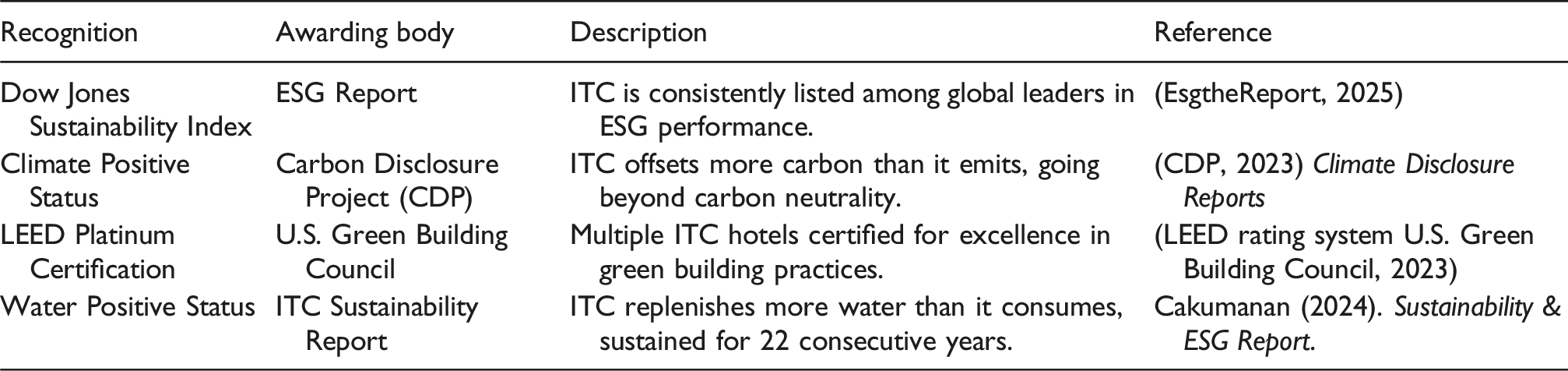
As global priorities shift toward environmental responsibility and ethical business practices, ITC recognized the urgent need to redefine its corporate identity through the lens of sustainability. With growing scrutiny over its tobacco legacy and increasing pressure from regulators, consumers, and investors, the company embarked on a strategic journey to integrate sustainability into its core operations. This roadmap reflects ITC’s commitment to transitioning from a legacy-driven enterprise to a future-ready organization – one that aligns profitability with purpose, and growth with ecological and social stewardship.
ITC’s eco-integrated approach to strategic business diversification
One of the key success factors of ITC’s transformation has been its strategic diversification into various sectors. This diversification strategy has not only reduced its dependence on the tobacco business but has also enabled it to tap into different segments of the Indian economy. ITC’s diversification was driven by both ethical concerns and market opportunities. Some of the businesses are listed below:
FMCG: ITC’s diversification into the FMCG sector represents a notable success, with the company establishing popular brands such as Aashirvaad, Sunfeast, Bingo, and Classmate, which have achieved significant consumer acceptance and strengthened ITC’s position as a key player in the Indian FMCG industry.
Agri-Business: ITC’s agri-business division engages directly with farmers to promote improved agricultural practices and provide assured market linkages for their produce. This approach has enhanced farmer incomes while securing a reliable supply of high-quality raw materials for the company’s diverse product portfolio.
Hospitality: Through its luxury hotel chain, ITC Hotels, the company has combined premium hospitality with sustainability leadership. Several properties have been awarded LEED Platinum certification, reflecting ITC’s integration of eco-friendly practices into its hotel operations.
Information Technology: ITC Infotech, the company’s global IT services arm, delivers technology solutions across industries and geographies, thereby extending ITC’s presence beyond the Indian market and contributing to its diversified growth.
ITC has positioned sustainability at the core of its business strategy, implementing initiatives that focus on environmental stewardship, social development, and responsible value chains (CSR Policy, 2021; Palmié et al., 2025). Its efforts span areas such as carbon reduction, water conservation, solid-waste recycling, sustainable sourcing, and community empowerment, making it one of India’s leading companies in integrated sustainability practices.
Corporate lessons from ITC’s transformation
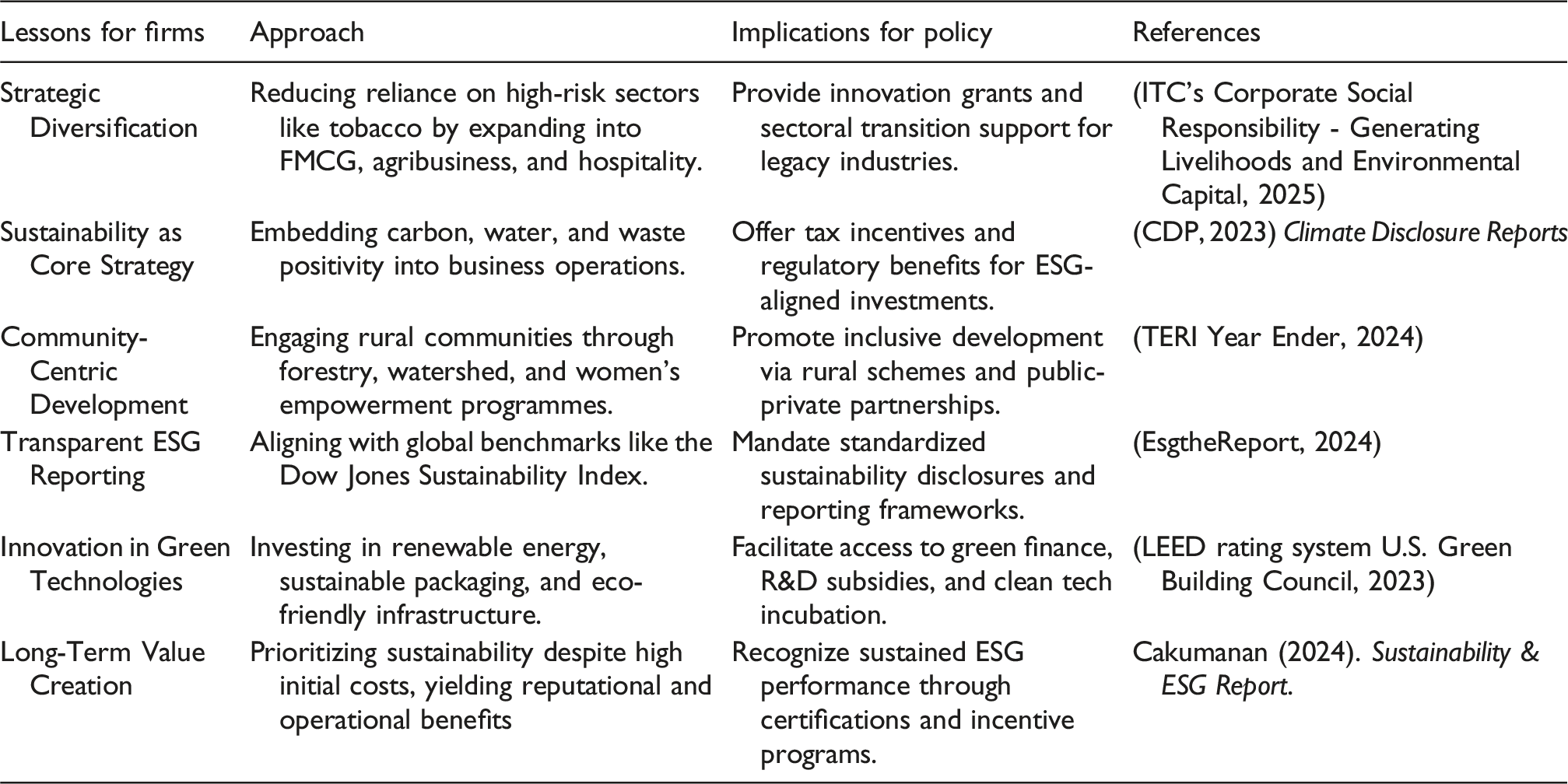
ITC Limited’s sustainability-led transformation offers a compelling case study for both corporate strategists and policy architects. As businesses increasingly face pressure to align with environmental, social, and governance (ESG) standards, ITC’s integrated approach provides actionable insights into how sustainability can be embedded within core operations (Ashraf et al., 2024; Corporate Social Responsibility, 2024). In view of Mutuc and Cabrilo (2022), CSR plays a vital role in promoting efficient market functioning and enhancing financial stability within the economic system. In the case of ITC, the company’s extensive CSR initiatives ranging from sustainable agriculture and water conservation to livelihood generation and waste management demonstrate how responsible corporate practices can enhance market credibility, strengthen stakeholder relationships, and contribute to both economic stability and inclusive growth. The company’s ability to navigate legacy constraints, regulatory complexity, and competitive markets while maintaining its triple-positive status carbon, water, and solid waste recycling demonstrates the feasibility of long-term value creation through responsible practices.
For other firms, ITC’s journey highlights the importance of strategic diversification, stakeholder engagement, and innovation-driven growth (Azrin et al., 2024). These lessons are not only relevant for corporate transformation but also carry implications for public policy. Governments and regulatory bodies can draw from ITC’s experience to design frameworks that incentivize sustainability, promote inclusive development, and encourage transparent ESG reporting.
Future Trends
ITC Limited is expected to continue its evolution as a diversified and sustainability-focused enterprise. Several key trends are likely to shape its future trajectory:
Sustainability integration
In view of Aggarwal, P. (2013), it is essential for companies to realize that governance and sustainability improvements are as vital to long-term success as financial performance enhancements. Development of renewable energy and decarbonization in the value chains of ITC. The studies suggest that the combined introduction of renewable and circular solutions may provide synergistic possibilities to reduce the degree of carbon intensity and ensure the operational resilience (Wang et al., 2025). ITC will deepen its commitment to environmental goals, with increased investment in renewable energy, circular economy models, and climate-resilient agriculture. This aligns with global ESG expectations and India’s net-zero ambitions.
Digital transformation
The ITC circular approach towards economy is likely to take a progressive direction in the future in accordance with the new requirements of sustainability at the global and domestic levels. The implementation of digital technologies and artificial intelligence to improve agriculture is one of these trends and may improve predictive analytics, resource control, and robustness of the farmer. Such kinds of innovation would suit the study that links the impact of digital change to the promotion of faster corporate sustainability transition (ITC, 2025).
Premiumization and innovation
In FMCG, ITC is likely to focus on premium product lines, health-conscious offerings, and sustainable packaging to meet evolving consumer preferences. Consumer favouritism of products that are environmentally friendly is also on the rise hence market opportunities can be sought on ITC sustainable packaging and the proposed eco-friendly luxurious products under the Responsible Luxury brand.
Rural and inclusive growth
Expansion of community-based initiatives such as e-Choupal and watershed programs will support rural livelihoods and strengthen ITC’s social impact footprint. These projects will ensure that water-positiveness is achieved, lessen the risk to agricultural supply chains, as well as, empower the rural communities. Such practices have given attention to the stakeholder involvement since farmers and the local communities themselves are personally involved in the water conservation and the agro forestry activities.
Global recognition and ESG leadership
Investment using an ESG also implies that sustainability reporting, and governance practices will ultimately assume an even greater role in the decision making of investors. Reporting transparency will thus lead to an improvement in the competitiveness of ITC. Policy Influence: ITC’s success may inform national policies on corporate sustainability, ESG reporting, and inclusive development, encouraging other firms to adopt similar models.
Conclusion
The case study of ITC Limited highlights how a legacy company can successfully transform into a diversified and sustainability-driven enterprise. ITC’s journey from being primarily known for tobacco products to becoming a leader in FMCG, agribusiness, and hospitality demonstrates the importance of strategic planning, innovation, and long-term vision. Despite facing challenges such as regulatory pressures, public perception, high investment costs, and intense market competition, ITC remained committed to sustainable growth.
One of the most notable aspects of ITC’s transformation is its focus on environmental and social responsibility. By achieving carbon positive, water positive, and solid waste recycling positive status, ITC has shown that sustainability can be integrated into core business operations. Its efforts in renewable energy, watershed development, and community empowerment have created value not only for the company but also for society at large.
For other firms, ITC’s experience offers valuable lessons in diversification, stakeholder engagement, and transparent ESG reporting (Ashraf et al., 2024). It proves that sustainability is not just a compliance requirement but a strategic tool for building resilience and competitive advantage. From a policy perspective, ITC’s model suggests the need for supportive regulations, incentives for green investments, and frameworks that encourage inclusive development.
In conclusion, ITC Limited serves as a strong example of how businesses can evolve responsibly while maintaining profitability. Its case provides insights for companies aiming to adopt sustainable practices and for policymakers seeking to promote responsible corporate behaviour in a rapidly changing global environment. ITC’s success offers a blueprint for legacy firms seeking to reinvent themselves in response to changing societal and regulatory landscapes.
Question for Discussion: (1) How did ITC’s diversification strategy help reduce its dependence on the tobacco industry and reshape its corporate identity? (2) In what ways has ITC integrated environmental and social sustainability into its core business operations? (3) How does ITC’s approach to community engagement contribute to inclusive development and long-term business resilience? (4) What are the potential risks and rewards for companies investing heavily in sustainability initiatives in emerging markets? (5) How does ITC’s sustainability practices help the Government to make better policies for responsible companies? (6) What lessons can other Indian companies learn from ITC’s sustainable business practices?
Footnotes

Ethical considerations
Ethical approval for this study was obtained from SRM University, Tamil Nadu
Funding
The authors received no financial support for the research, authorship, and/or publication of this article.
Declaration of conflicting interests
The authors declared no potential conflicts of interest with respect to the research, authorship, and/or publication of this article.
Data Availability Statement
Authors have used secondary information for the case study.