







Abstract
Digital transformation has intensified the tension between centralized data control and decentralized analytical access. Organizations often respond to rising analytical demand by either tightening central oversight to preserve consistency or expanding access to increase agility, yet both approaches introduce structural trade-offs. Ninja Xpress, a Third-Party Logistics (3PL) provider based in Jakarta, Indonesia, experienced this dilemma as it shifted between broad data democratization and strict BI centralization. Initially, the company granted broad data access across departments. Although this improved autonomy, it degraded data platform performance, weakened governance, and produced conflicting “versions of the truth.” In response, the Business Intelligence (BI) team recentralized access to restore stability. However, the centralized model soon created bottlenecks as reporting demand overwhelmed the BI team and slowed decision-making. This teaching case examines how the organization redesigned its analytics structure through a federated governance model that redistributed routine analytical responsibilities while maintaining centralized oversight. Selected departmental representatives formed a “Data Tribe,” receiving controlled data access and guidance from BI while acting as extensions of the central function. The case compares the advantages and limitations of centralized, decentralized, and federated BI governance models and illustrates how governance design influences workload distribution, metric consistency, and analytical capability. Over a 12-month period, the federated approach reduced BI request backlogs by approximately 40% and improved reporting alignment. By foregrounding governance trade-offs in scaling analytics, the case provides students with a practical lens for evaluating how organizations balance agility, consistency, and accountability in data-intensive operational environments.
Keywords
Introduction
Ninja Xpress, a fast-growing third-party logistics company, faces a growing BI bottleneck as reporting demand overwhelms its centralized analytics team. Leaders must determine whether expanding data access, strengthening central control, or adopting a federated model will best support the company’s analytical needs.
Digital transformation has intensified the demand for timely, data-driven decision-making across organizations. As analytical needs expand, firms frequently confront a structural dilemma: centralized control promotes consistency and reliability, while decentralized access enhances responsiveness but may undermine governance. Many firms, especially those operating in fast-paced environments, struggle to determine how analytical authority should be distributed without creating bottlenecks or fragmentation.
Ninja Xpress, a third-party logistics provider, encountered this challenge directly. Its experience illustrates the practical tension between three governance archetypes: centralized, decentralized, and federated Business Intelligence (BI) models. Early efforts to broaden access reflected a decentralized approach, granting departments direct interaction with data assets. While this increased autonomy, it also produced inconsistent reporting, conflicting KPI interpretations, and instability in the data platform. A subsequent shift toward strict centralization restored system stability and metric control but introduced reporting delays and heavy dependence on the BI team, resulting in growing request backlogs.
These contrasting outcomes highlight the inherent trade-offs of centralized and decentralized BI structures. Centralization strengthens standardization, oversight, and accountability, yet often creates capacity constraints within the BI function. Decentralization increases agility and domain ownership but may generate duplicated analyses, metric drift, and performance degradation if governance mechanisms are weak. In response to these tensions, many organizations are experimenting with federated governance models that aim to strike a balance between distributed analytical work and coordinated oversight.
Recent studies describe data democratization as a continuous organizational process requires coordinated development of access mechanisms, user capabilities, governance, and culture (Achanta, 2023). Rather than treating democratization as a purely technical initiative, prior research emphasizes its socio-technical nature, highlighting the importance of role clarity, stewardship, and sustained capability development. Other research highlights structured platforms and governance mechanisms that enable wider access while maintaining safeguards (Eichler et al., 2023). Despite growing academic interest, empirical evidence from logistics environments remains limited, particularly regarding how organizations navigate transitions between governance models.
In response to recurring instability and bottlenecks, Ninja Xpress introduced a hybrid model in which selected staff from each department formed a “Data Tribe.” These individuals acted as trained extensions of the BI function, combining distributed analytical execution with centralized oversight. This federated approach sought to retain the strengths of centralization while alleviating the capacity limitations inherent in a fully centralized BI structure.
This teaching case looks at the reasons, design choices, and results of this change over the course of a year. Data were collected through interviews with the Head of BI, observations of Data Tribe interactions, and analysis of BI reporting request logs. By foregrounding the structural and governance dilemmas embedded in scaling analytics, the case invites students to evaluate how organizations can balance agility, consistency, and accountability when redesigning BI governance.
Accordingly, this study makes three contributions. First, it provides a longitudinal, practice-based case study of BI governance transformation in a third-party logistics environment—a context that has been underrepresented in prior research. Second, it offers a structured comparison of centralized, decentralized, and federated analytics models grounded in real organizational experience. Third, it illustrates how governance design and role reconfiguration can reshape the BI function from a bottlenecked reporting unit into a coordinated enabler of distributed analytics.
This teaching case is designed to help students analyze the governance trade-offs between centralized, decentralized, and federated analytics models. By examining Ninja Xpress’s experience, learners can evaluate how organizations balance agility, consistency, and accountability when scaling data access across operational teams.
By the time reporting demand began to overwhelm the centralized BI team, Ninja Xpress leadership faced a strategic dilemma. Should the company expand data access again and risk repeating earlier governance failures, maintain strict centralization and accept slower decision cycles, or attempt a hybrid federated structure that redistributed analytical responsibilities while preserving oversight? The case invites readers to evaluate how organizations should balance agility, control, and analytical capability when redesigning BI governance.
Learning objectives
• Understand the organizational challenges that arise when shifting between centralized and decentralized data access models in a fast-paced operational environment such as third-party logistics. • Analyze how the DAMA-DMBOK framework can guide the design of a governed democratization initiative, particularly in assigning stewardship roles, clarifying decision rights, and maintaining data quality. • Evaluate the rationale and structure of Ninja Xpress’s Data Tribe model as a hybrid governance approach that balances agility with control while addressing BI team bottlenecks. • Assess the cultural, technical, and capability-related factors that influence the success of federated data models, including data literacy, documentation practices, and cross-department collaboration. • Identify the risks and mitigation strategies associated with expanding analytical access, such as platform performance issues, inconsistent KPI definitions, and variation in user competency. • Apply insights from the case to comparable enterprise environments where organizations must scale analytical capability without compromising governance or platform stability.
Literature review
Centralized, decentralized, and federated BI governance models
Business Intelligence governance structures are commonly discussed in the broader literature on organizational information systems and data governance. Prior studies describe three dominant governance archetypes: centralized, decentralized, and federated models. These structures reflect different ways of distributing analytical authority, decision rights, and stewardship responsibilities across the organization (Achanta, 2023; Samarasinghe and Lokuge, 2022). Understanding the trade-offs among these models is essential when designing data democratization initiatives.
In a centralized model, analytical authority, metric definition, and reporting responsibilities are concentrated within a dedicated BI function. Centralization supports strong standardization, consistent KPI interpretation, controlled platform performance, and clearer governance enforcement (Henderson et al., 2024). However, research on democratization highlights that centralized structures often create reporting backlogs and limit responsiveness when analytical demand increases (Achanta, 2023; Harland et al., 2022). As analytical¨ workloads grow, BI teams may become bottlenecks as analytical workloads grow, slowing down operational decision-making.
In contrast, a decentralized model distributes analytical responsibilities directly to business units. Such arrangements enhance agility and local ownership, enabling faster access to insights and closer alignment with operational context (Samarasinghe et al., 2022). However, studies warn that decentralization without coordinated governance mechanisms may lead to duplicated analyses, inconsistent KPI definitions, metric drift, and performance degradation (Dzanko et al., 2024; Samarasinghe and Lokuge, 2022). When shared standards and stewardship practices are weak, conflicting “versions of the truth” may emerge across departments.
A federated model seeks to balance these trade-offs by combining distributed analytical execution with centralized oversight (Eichler et al., 2023; Samarasinghe and Lokuge, 2022). In this arrangement, domain representatives perform routine analytics while centrally coordinating shared definitions, metadata standards, and access controls. Federated governance is increasingly associated with platform-mediated democratization, where structured access, documentation, and stewardship practices prevent fragmentation while reducing BI bottlenecks (Eichler et al., 2023). However, sustaining federated models requires role clarity, continuous capability development, and cultural alignment to avoid drifting toward either uncontrolled decentralization or rigid re-centralization (Samarasinghe et al., 2022).
The evolution and conceptual foundations of data democratization
Data democratization has emerged as a transformative concept in modern data management, representing a shift from centralized, gate-kept analytics to distributed, accessible data ecosystems (Achanta, 2023). As digital transformation accelerated, democratization became increasingly relevant in operationally intensive sectors such as third-party logistics (3PL), where time-sensitive workflows and distributed decision-making require rapid access to consistent and reliable information.
Beyond simple access, democratization is grounded in multiple theoretical traditions. From an information systems perspective, democratization responds to structural limitations in centralized BI architectures that create reporting backlogs and decision delays (Harland et al., 2022). Organizational behavior research frames democratization as a redistribution of analytical authority that may enhance agility, though potentially at the expense of coordination. Knowledge management theory emphasizes its role in expanding organizational learning by enabling broader participation in data interpretation.
Recent scholarship reinforces the multidimensional nature of democratization (Samarasinghe and Lokuge, 2022) distinguish between technical democratization (tools and infrastructure), cognitive democratization (data literacy and interpretive skill), and organizational democratization (governance structures and cultural alignment) (Samarasinghe et al., 2022). These dimensions highlight that rather than empowerment, expanding access without strengthening capability and governance can generate instability. Studies have documented risks associated with poorly governed democratization, including metric inconsistency, duplicated reporting logic, and performance degradation (Dzanko et al., 2024).
Across the literature, researchers increasingly view democratization not as a purely technical intervention, but as a socio-technical transformation requiring balanced attention to tools, skills, roles, and organizational culture. This perspective sets the foundation for understanding why hybrid or federated approaches—rather than fully centralized or fully decentralized models—are gaining prominence.
Governance frameworks and structured oversight
Governance frameworks provide structured guidance for sustaining distributed analytics. The DAMA Data Management Body of Knowledge (DAMA-DMBOK) is one of the most comprehensive models for organizing enterprise data practices (Henderson et al., 2024). It outlines knowledge areas spanning governance, architecture, quality, metadata, security, and operations, positioning data as an organizational asset requiring lifecycle stewardship.
Within decentralized or federated contexts, governance frameworks help prevent oscillation between uncontrolled access and rigid centralization. The governance knowledge area clarifies accountability and decision rights as analytical responsibilities are expanded. Data quality management safeguards consistency when non-specialists engage with shared datasets. Metadata management enhances discoverability and interpretability, thereby reducing KPI definition ambiguity and field usage.
Recent studies have demonstrated how structured governance mechanisms support democratization in practice. Samarasinghe and Lokuge (2022) argue that sustained democratization requires clear stewardship models and governance reinforcement to avoid fragmentation. Similarly, internal data marketplaces embed governance into platform architecture by combining curated datasets, metadata transparency, and controlled access (Eichler et al., 2023). Research in Industry 4.0 environments further emphasizes that operationally complex systems demand strong governance foundations to maintain reliability under high reporting demand (Harland et al., 2022).
Taken together, governance frameworks provide mechanisms for stabilizing analytical expansion, particularly when organizations experiment with federated structures.
These insights offer particular relevance for Ninja Xpress. DAMA-DMBOK’s structured approach to stewardship, metadata clarity, RBAC, and warehouse architecture addresses the company’s initial democratization attempt’s vulnerabilities. The alignment of the framework with federated governance concepts provides a natural foundation for the Data Tribe model, where trained departmental representatives act under guided oversight as extensions of the BI function. DAMA-DMBOK informs the theoretical framing of the hybrid approach of Ninja Xpress and provides practical methodologies for sustaining it.
Synthesis and research gap
The literature converges around a shared insight: expanding analytical access requires balancing structural design, governance discipline, and capability development. Centralized models ensure consistency but risk bottlenecks. Decentralized models enhance agility but may undermine alignment and metric coherence. Federated structures aim to reconcile these tensions by distributing analytical work under coordinated oversight.
Despite increasing conceptual clarity regarding centralized, decentralized, and federated governance models, empirical evidence on hybrid data democratization initiatives within logistics organizations remains limited. Much of the existing research focuses on digital-native enterprises or manufacturing contexts, leaving a gap in understanding how service-oriented, operation-intensive sectors navigate transitions between governance structures.
Therefore, Ninja Xpress’s experience provides practice-based insight into how a logistics organization navigates shifts between decentralization, centralization, and a federated approach, illustrating how governance design influences workload distribution, metric consistency, and organizational learning.
By documenting this transition longitudinally, the case contributes to the literature by demonstrating how multidimensional democratization, federated governance principles, and DAMA-DMBOK guidance intersect in a real-world operational context. It offers a structured comparison of governance archetypes grounded in organizational outcomes rather than conceptual abstraction alone.
Theoretical framework
This study builds on two foundations: (1) governance structure archetypes in Business Intelligence (centralized, decentralized, and federated models), and (2) multidimensional democratization supported by the DAMA-DMBOK governance framework. Together, these foundations provide a structured view for analyzing how analytical authority is distributed and coordinated within organizations because democratization involves more than technical access. It also requires analytical capability and organizational practices that encourage responsible data use (Samarasinghe et al., 2022). When capability and shared understanding are weak, broad access may produce inconsistent interpretations or unstable reporting outputs (Achanta, 2023; Dzanko et al., 2024).
Governance structure and distribution of analytical authority
Centralized, decentralized, and federated BI models differ primarily in how decision-making rights, analytical responsibilities, and metric stewardship are allocated. • Centralized models concentrate authority within the business intelligence function, thereby ensuring robust oversight and standardization, but also potentially limiting capacity. • Decentralized models disperse authority widely, improving responsiveness but raising the risk of inconsistency and metric drift. • Federated models aim to strike a balance by delegating routine analytical tasks to domain experts while retaining centralized oversight of standards, definitions, and overall system architecture
Multidimensional democratization and DAMA-DMBOK governance framework
Democratization involves more than technical access. It requires analytical capability and organizational practices that encourage responsible data use. The concept of data democratization are spread across technical, cognitive, and organizational dimensions, emphasizing that access must be paired with literacy, shared definitions, and governance reinforcement to remain sustainable (Samarasinghe et al., 2022). When capability and shared understanding are weak, broad access may produce inconsistent interpretations or unstable reporting outputs (Achanta, 2023; Dzanko et al., 2024).
The DAMA-DMBOK framework provides structure for governance domains such as quality, architecture, metadata, stewardship, and security (Henderson et al., 2024). Rather than prescribing a specific structural model, DAMADMBOK functions as a stabilizing governance scaffold that can support centralized, decentralized, or federated arrangements. Its emphasis on role clarity, stewardship accountability, metadata transparency, and controlled access mechanisms is particularly relevant when analytical responsibilities are redistributed across organizational units.
Research on enterprise data platforms further demonstrates that governed access combined with rich metadata environments enables safer distribution of analytics (Eichler et al., 2023). These insights reinforce the proposition that federated models require formal governance reinforcement to avoid reverting to either uncontrolled decentralization or rigid re-centralization.
By combining these perspectives, hybrid models become a practical option for firms operating in fast-paced environments. Ninja Xpress applied these ideas by forming the Data Tribe, which enables decentralization while maintaining oversight through DAMA-DMBOK principles. The integration of democratization dimensions with DAMA-DMBOK principles is illustrated in Figure 1. Integration of data democratization and DAMA-DMBOK.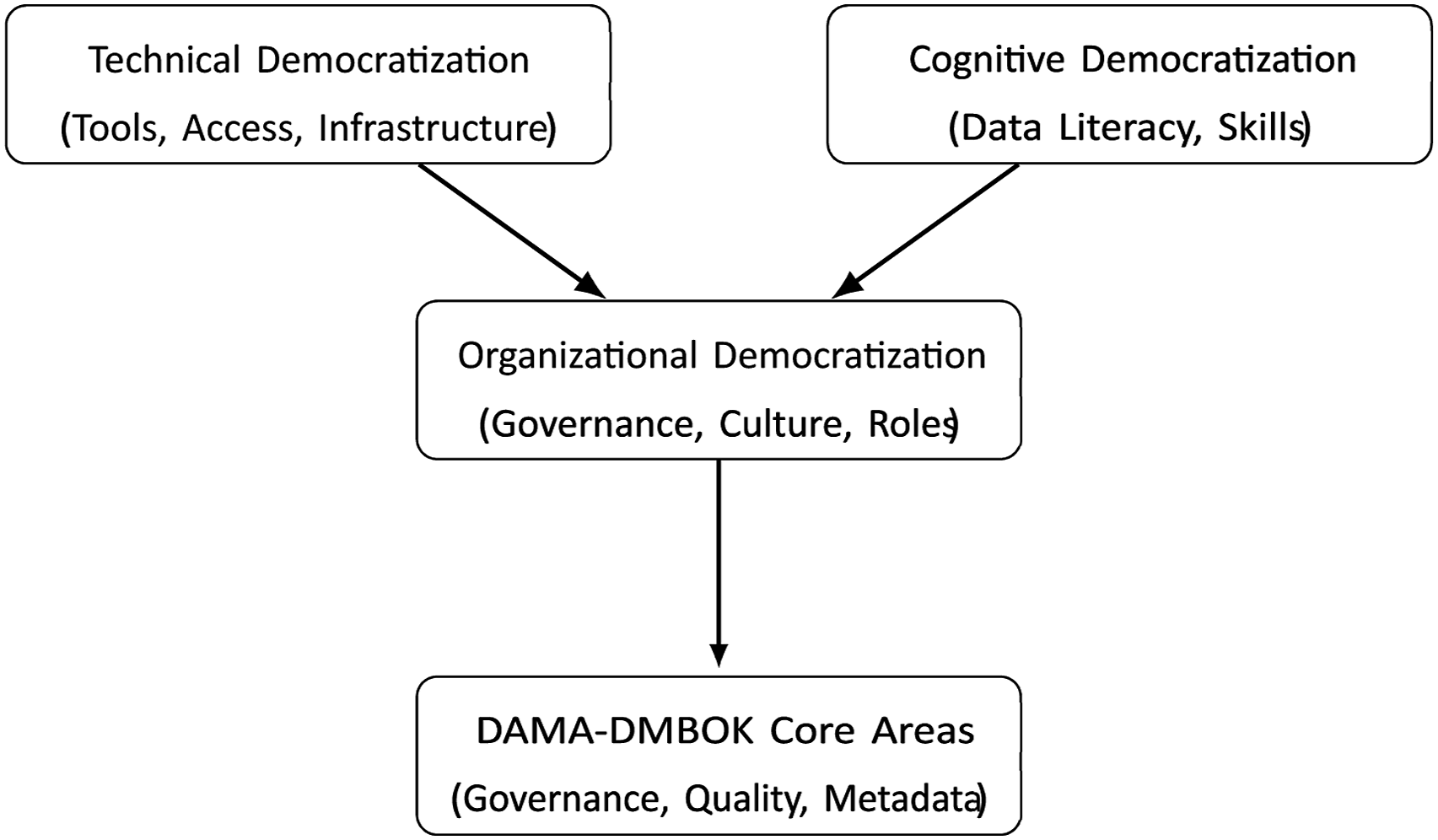
Methodology
This study adopts a qualitative case study using mixed methodology appropriate for examining the organizational and governance dynamics of Ninja Xpress’s hybrid data democratization initiative. Data were collected from three primary sources.
First, a semi-structured interview with the Head of BI provided insights into the motivations, decision processes, governance challenges, and design rationale behind the Data Tribe model.
Second, direct observation of Data Tribe operations, including kickoff meeting and monthly cadence, and interactions and coordination among Data Tribe members and BI team. This method enabled the researchers to capture actual practices and behaviors not fully articulated in interviews.
Third, analysis of BI request logs supplied operational evidence of reporting demand, workload distribution, backlog patterns, and changes following the implementation of the hybrid model.
The study covers a 12-month implementation window, capturing the evolution of the Data Tribe from initial onboarding and training, through early adoption and governance reinforcement, to the stabilization phase in which BI and departmental analysts established a sustained working rhythm.
Together, these data sources provide complementary perspectives on managerial intent, observed practice, and quantitative workload patterns. The triangulated design aligns with established qualitative case-study approaches in information systems research (Samarasinghe and Lokuge, 2022) where contextual richness and process understanding are essential for analyzing governance and organizational change.
Implementation of the hybrid Data Tribe
Ninja Xpress’s Hybrid Data Tribe model was introduced as a structured response to long-standing challenges in balancing centralized BI control with the need for faster, more distributed analytical capability. This section describes how the organization designed, built, and operationalized the model through coordinated changes in governance practices, stewardship roles, and technical access. The narrative highlights the mechanisms that allowed Ninja Xpress to decentralize analytical responsibilities while maintaining oversight through DAMA-DMBOK principles.
The full rollout unfolded gradually across 12 months, beginning with member selection and competency validation, followed by shared documentation practices, coordinated governance rituals, and increasingly mature federated analytics workflows.
The implementation involved not only technical enablement, but also required shifting organizational mindsets, redefining accountability, and building confidence in governed self-service analytics. To capture this multidimensional transformation, the section examines the step-by-step sequence through which Ninja Xpress identified Data Tribe members, validated competency, established shared documentation, facilitated ongoing engagement, and reshaped BI’s function from sole report producer to strategic enabler.
The implementation of Ninja Xpress’s Hybrid Data Tribe did not unfold as a single initiative but rather as a gradual organizational response to repeated challenges in balancing centralized control and decentralized access. After experiencing both extremes, where unrestricted democratization destabilized the data platform and yet strict centralization that overwhelmed the BI team, the company recognized the need for a more sustainable model. The Hybrid Data Tribe emerged as a middle path: a federated structure that redistributed analytical responsibilities to selected departmental representatives while BI retained governance, stewardship, and platform oversight. What followed was not only a technical redesign but a cultural shift toward shared accountability for data across the organization.
Formation of the Data Tribe
The transition began with a fundamental question: Who inside each department truly works with data? Department heads were asked to nominate individuals who consistently interacted with operational metrics, understood internal workflows, and demonstrated analytical curiosity. These individuals included reporting analysts, process analysts, and staff informally performing analytical duties. The nomination process signaled a cultural shift. Departments began to view data stewardship as part of their responsibility rather than BI’s responsibility alone.
To visualize this structural shift, the organization mapped the “before” and “after” states shown in Figure 2. What was once a hub-and-spoke model, where BI sat at the center of all reporting, began to evolve into a federated network of domain stewards working alongside BI under shared governance. Comparison of organizational structure before and after the Data Tribe model. The After model introduces a designated data representative inside each team while BI maintains governance oversight.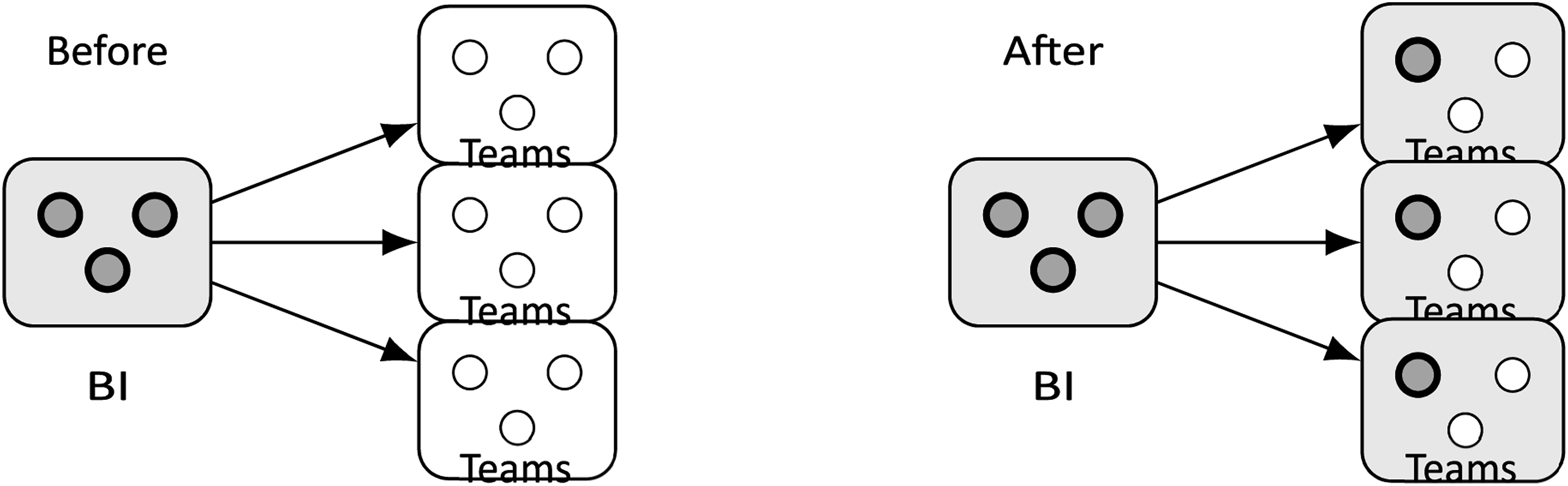
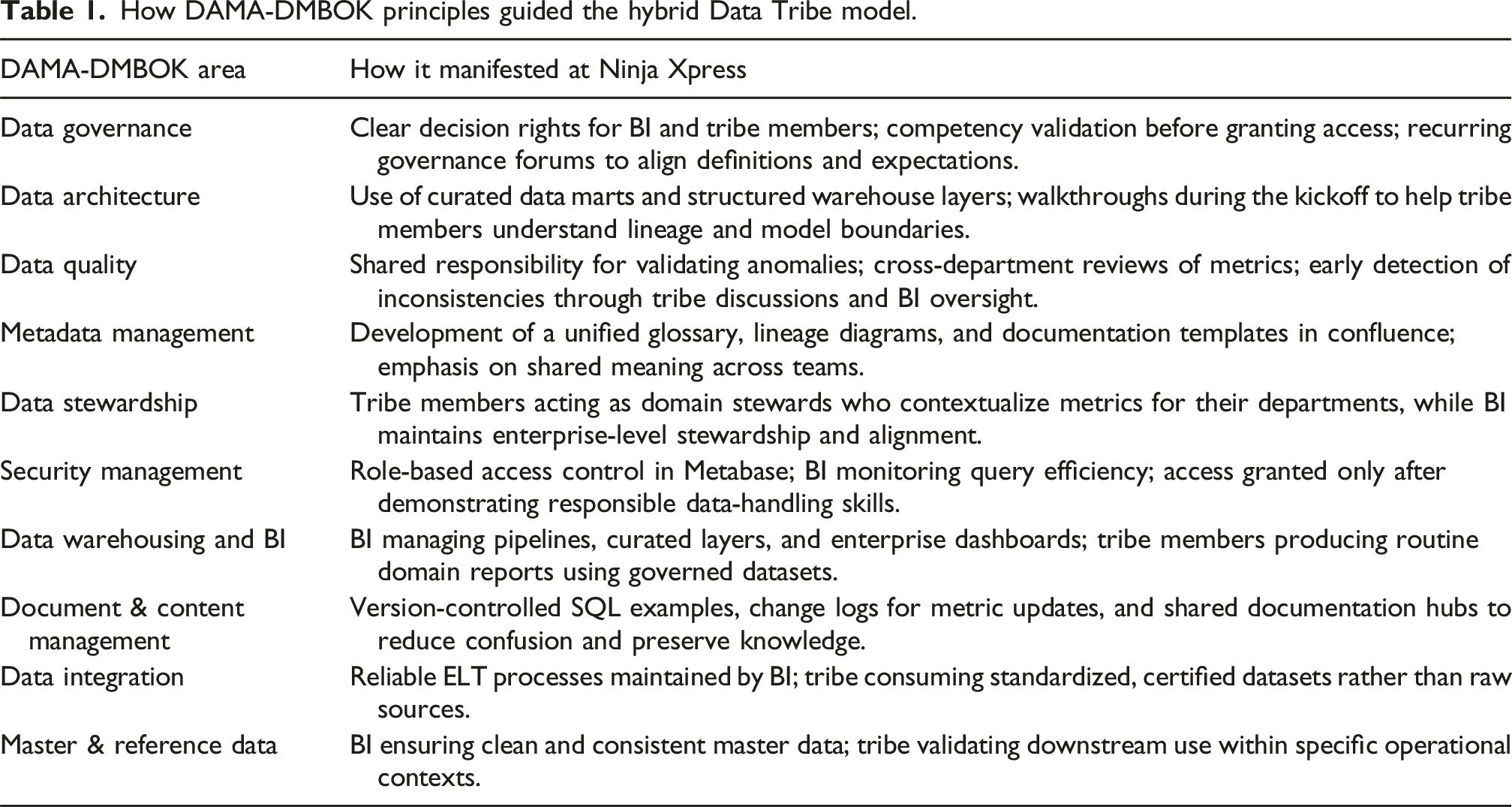
These early steps aligned naturally with DAMA-DMBOK areas such as Data Governance, Data Stewardship, and Data Quality, where clear accountability and role assignment are foundational principles.
SQL proficiency assessment
To ensure responsible use of the data platform, nominees completed an advanced SQL assessment evaluating join construction, filter logic, indexing, and performance risk. This process signaled that Data Tribe membership required demonstrated analytical competence rather than informal interest. These activities aligned with DAMA-DMBOK domains such as Security Management, Data Quality Management, Data Governance, and Data Warehousing.
BI kickoff: Building a shared language for data
Once the first cohort of Tribe members was confirmed, BI organized a kickoff session designed not merely as training but as a moment of collective orientation. For many participants, it was the first time they had seen the full landscape of Ninja Xpress’s data ecosystem laid out end-to-end. BI walked the group through how data moved from operational systems into the warehouse, where quality issues commonly emerged, how KPIs were constructed, and why certain fields behaved differently across sources. What had previously been treated as isolated departmental reports suddenly became part of a larger, interconnected story.
Participants often reflected that the session shifted their understanding of the organization itself. Metrics they had used for years took on new meaning once they were contextualized with lineage diagrams and cross-department dependencies. Misinterpretations that once led to conflicting “truths” were surfaced openly, allowing the group to align on consistent definitions and avoid repeating earlier mistakes.
Just as important as the technical content was the cultural signal embedded in the session. By bringing everyone together in a single room, BI recast its role from a reactive service desk into a partner and guide for the analytical community. The kickoff marked the first visible step toward a new governance culture that rooted in shared vocabulary, transparency, and joint stewardship. These interactions naturally reflected DAMA-DMBOK principles across Metadata Management, Data Architecture, and Data Stewardship, reinforcing the value of common understanding in sustaining reliable, organization-wide analytics.
Keeping the momentum: How BI sustained engagement and culture
The Data Tribe was never intended to be a one-off training initiative. Once the first cohort began working with real datasets, BI recognized that sustained engagement would be essential to prevent the group from drifting back into old habits of siloed reporting and inconsistent interpretations. To maintain alignment, Ninja Xpress introduced monthly synchronization gatherings that gradually became the heartbeat of the Tribe.
These sessions served multiple purposes. Tribe members shared dashboards they were building, walked through unusual data patterns they encountered, and compared how their departments interpreted operational metrics. What began as simple progress updates soon evolved into rich, cross-functional discussions. Members from Operations learned how Commercial defined productivity; Finance raised questions about revenue recognition timelines; BI clarified ambiguous fields that had long caused quiet confusion. Misalignments that once surfaced only during executive escalations were now identified early, collaboratively, and with shared ownership.
Outside these structured meetings, a dedicated Google Chat channel provided a space for real-time discussion. Although BI still answered most of the technical questions, small signs of peer-to-peer support began to emerge such as Tribe members sharing SQL snippets or clarifying metric definitions for one another. These early signals suggested a growing analytical confidence, even if the group had not yet reached the point of full self-sufficiency. Over time, BI’s role is expected to shift gradually from primary problem-solver toward a coaching and governance-oriented function as the Tribe matures.
This continuous cycle of dialogue, peer support, and shared discovery strengthened the cultural foundation needed for sustainable democratization. It brought to life several DAMA-DMBOK principles, such as Data Governance Practices, Data Quality Management, Data Stewardship, and Metadata Management, by embedding them into everyday analytical behavior rather than treating them as abstract policy. What emerged was not just a trained group of analysts, but a living analytical community capable of maintaining alignment even as Ninja Xpress’s reporting needs evolved.
Documentation as memory: Preserving knowledge across the tribe
As the Data Tribe began producing more analyses, Ninja Xpress quickly realized that analytical capability could grow only as fast as shared understanding allowed. Early discussions revealed that many of the reporting inconsistencies that plagued the organization were not rooted in technical limitations but in undocumented assumptions—how a metric was calculated, why a particular filter was used, or what business rule governed a field’s behavior. To prevent the Tribe from inheriting these long-standing ambiguities, BI introduced a structured approach to documentation that became a cornerstone of the hybrid model.
A shared Confluence repository was established as the central home for Ninja Xpress’s analytical knowledge. What started as a modest collection of metric definitions gradually evolved into a living knowledge base containing lineage diagrams, dimension descriptions, SQL examples, KPI construction notes, and explanations of common pitfalls. Tribe members contributed insights drawn from their daily work, while BI reviewed and validated entries to ensure consistency and correctness. The result was not simply a documentation site, but a space where the organization’s analytical memory could take shape.
This repository soon began to influence how Tribe members approached their work. Instead of rewriting logic from scratch or relying on tacit knowledge, members increasingly consulted the shared definitions, compared interpretations, and adjusted their SQL to ensure alignment. Over time, the documentation reduced confusion, preserved institutional knowledge, and provided new recruits with a clear starting point—something Ninja Xpress had never enjoyed before.
The emphasis on traceability and shared definitions directly reflected DAMA-DMBOK principles in Metadata Management, Document and Content Management, Data Governance, and Data Quality. By embedding these practices into everyday analytical workflows, Ninja Xpress ensured that the improvements brought by the Data Tribe would persist even as individuals changed roles or new members joined. Documentation was no longer an afterthought; it became the organization’s safeguard against drifting interpretations and a foundation for sustainable democratization.
Governed access to the data warehouse
After completing training and competency validation, Tribe members received governed access to the warehouse through Metabase. BI managed permissions through RBAC and monitored platform traffic to prevent inefficient queries. BI also provided corrective guidance when needed. The early monitoring period showed that Tribe members applied their training effectively and avoided the inefficiencies of earlier democratization attempts.
This carefully gated expansion of access reflected core DAMA-DMBOK principles in Security Management, Data Warehousing and BI Management, Data Architecture, and Data Integration. It demonstrated that democratization was not about opening the floodgates, but about creating a governed pathway where capability, responsibility, and oversight matured together. Through this approach, Ninja Xpress achieved what had seemed elusive in earlier attempts: wider access to data without sacrificing platform stability or analytical consistency.
Evolving identity: BI’s responsibilities in the hybrid model
Even as analytical responsibilities began to spread across the organization, one principle remained non-negotiable: BI would continue to serve as Ninja Xpress’s strategic analytical core. The hybrid model was never designed to replace BI but to reposition it. While the Data Tribe assumed responsibility for routine reporting and department specific analyses, BI retained ownership of work that required enterprise-wide perspective or deeper architectural and governance expertise.
Freed from the constant stream of ad hoc requests, BI could focus on the strategic analyses that shaped organizational decision-making—evaluating new business growth opportunities, monitoring operational backlogs, preparing executive and holding-company reports, and responding to high-stakes analytical questions from leadership. These activities reflected the DAMA-DMBOK emphasis on maintaining consistent business meaning, safeguarding KPI coherence, and ensuring that data-driven insights reflected a unified organizational truth.
BI’s governance responsibilities also remained central to the hybrid model. The team continued to oversee role-based access control (RBAC), manage data platform traffic, and monitor query performance to ensure that decentralization did not compromise security or system stability. These responsibilities closely aligned with DAMADMBOK domains such as Data Security, Data Architecture, and Data Operations, which emphasize controlled access, performance awareness, and the responsible use of shared infrastructure.
In addition, BI can now focus on managing the organization’s robotic process automation (RPA) workflows that relied on warehouse data to produce scheduled or repeatable outputs. This role reinforced BI’s position as the technical steward of Ninja Xpress’s data ecosystem, ensuring that automated processes remained accurate, traceable, and aligned with governance standards.
Rather than diminishing BI’s influence, the hybrid model elevated it. As Tribe members grew more capable, BI shifted from being a bottlenecked service desk to becoming the organization’s analytical steward—guiding interpretation, preserving lineage integrity, and maintaining architectural coherence. In doing so, BI embodied several DAMA-DMBOK principles at once: governance oversight, security enforcement, quality assurance, architectural stewardship, and operational reliability. The model demonstrated that democratization and strong governance are not opposing forces; under BI’s leadership, they became mutually reinforcing pillars of a sustainable analytical culture.
Weaving governance into practice: How DAMA-DMBOK shaped the model
Although the Data Tribe emerged from operational necessity, its structure did not evolve by intuition alone. Throughout the rollout, BI used the DAMA-DMBOK framework as a quiet but steady compass—guiding decisions about stewardship, access, documentation, and quality. Rather than treating governance as a separate layer, Ninja Xpress embedded these principles into the everyday routines of Tribe members.
This integration happened gradually. When BI defined competency requirements, they were echoing DAMA’s emphasis on stewardship and data quality. When documentation standards were introduced, they reflected DAMA’s guidance on metadata and content management. Even the relational dynamics such as monthly calibration sessions, shared responsibility for KPIs, joint discussions of anomalies—mirrored the collaborative governance practices described in the framework. In effect, DAMA-DMBOK became the scaffolding that allowed democratization to expand without slipping back into past issues of inconsistency or uncontrolled access.
How DAMA-DMBOK principles guided the hybrid Data Tribe model.
Findings
The implementation of the Data Tribe model produced a series of changes that reshaped how Ninja Xpress worked with data. What began as an attempt to relieve pressure on the BI team gradually evolved into a broader organizational shift in how insights were generated, shared, and governed. The key outcomes are summarized below. • Reduced BI Workload: As Tribe members took ownership of routine reporting and domain-specific questions, the volume of requests directed to BI decreased significantly. The team reported an estimated 40% reduction in operational load, allowing BI to redirect its attention to enterprise-level analyses and strategic initiatives. • Faster Reporting Cycles: With direct access to curated datasets, departments no longer waited in queue for standard insights. Analysts could generate ad hoc reports within minutes, enabling teams to respond to operational issues—such as delays, volume spikes, or customer inquiries—with far greater speed. • More Consistent KPIs: Before the initiative, different teams often interpreted business metrics differently, leading to conflicting reports. Shared documentation, joint validation sessions, and a single repository of definitions brought alignment across departments, reducing disputes and strengthening trust in reported figures. • Improved Analytical Capability: Through continuous interaction with BI—via monthly governance forums, chat channels, and KPI reviews—Tribe members gradually developed stronger data literacy. Their improved understanding of lineage, quality issues, and SQL logic equipped them to handle increasingly complex analytical tasks. • Better Cross-Department Collaboration: The Data Tribe served not only as a reporting function but also as a bridge between departments. Members frequently assisted one another, discussed anomalies, and shared reusable logic. This informal network helped uncover issues earlier and fostered a sense of shared responsibility for data accuracy. • Stable Platform Performance: Unlike the earlier phase of uncontrolled access, the federated model introduced guardrails. Training, competency validation, curated data marts, and BI monitoring helped ensure that queries remained efficient. The data platform remained stable throughout the implementation period, confirming that democratization and performance can coexist when governed effectively.
Discussion
The Ninja Xpress case illustrates a common governance dilemma faced by organizations attempting to scale analytics: how to balance centralized control, decentralized access, and federated coordination of analytical work. In particular, the case illustrates the structural tensions between centralized, decentralized, and federated governance models discussed earlier. These questions reflect broader uncertainties about how organizations can maintain governance control while enabling wider analytical access, and how BI roles evolve as analytical responsibilities become increasingly distributed. Figure 3 summarizes these core areas of inquiry. • • • • Summary of governance tensions highlighted by the case.
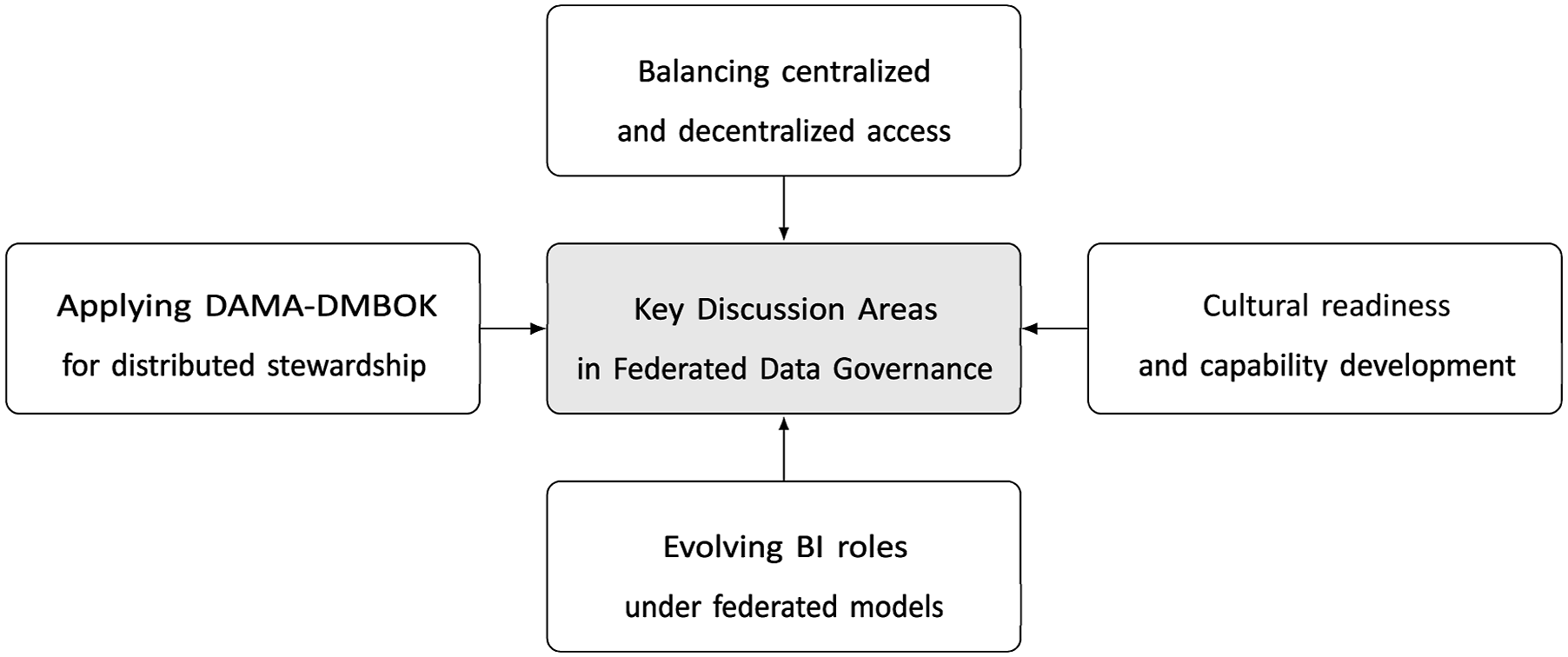
These governance tensions provide a foundation for classroom discussion on how organizations can design BI structures that balance analytical agility with governance discipline.
Discussion questions
(1) What structural weaknesses became visible during Ninja Xpress’s early decentralized data access phase? Which governance mechanisms were missing? (2) How did strict centralization restore stability, and why did it eventually become unsustainable in a growing operational environment? (3) In what ways does the federated Data Tribe model differ structurally from pure decentralization? How are analytical responsibilities and decision rights redistributed? (4) What organizational capabilities (e.g., data literacy, documentation discipline, and stewardship clarity) are necessary to sustain a federated governance model? (5) Under what conditions might a federated BI model drift back toward either rigid centralization or uncontrolled decentralization? (6) As analytical demand continues to grow, how should BI’s role evolve to maintain both governance oversight and organizational agility?
Implications
The case of Ninja Xpress offers several lessons for organizations seeking to expand data access without sacrificing control or quality. First, the experience shows that democratization becomes sustainable only when paired with clear governance boundaries. Ninja Xpress learned that access alone does not create capability; it must be supported by shared definitions, vetted data sources, and ongoing coordination between BI and business units.
Second, the results demonstrate that redistributing analytical responsibility can unlock capacity in ways that technology alone cannot. By empowering domain analysts through the Data Tribe, Ninja Xpress enabled BI to redirect its attention from routine reporting toward higher-value activities such as architectural planning, operational diagnostics, and strategic decision support. This shift repositioned BI’s role from a report-producing function toward a governance and enablement role within the organization.
Third, the case highlights the importance of cultural conditions. The most durable improvements came not from tools or permissions, but from cultivating habits of documentation, cross-team communication, and active stewardship. These practices allowed democratization to take root and helped prevent the re-emergence of conflicting metrics or unstable workloads.
Finally, the experience suggests that federated governance models may be particularly suitable for fast-paced, operationally complex environments such as logistics. The variability of analytical needs across departments makes centralized reporting difficult to scale, while full decentralization introduces risks of fragmentation and inconsistent metric interpretation. A hybrid structure anchored in DAMA-DMBOK principles can therefore offer a path that balances agility with reliability.
These implications position the Ninja Xpress case as a practical reference for organizations seeking broader data access without compromising oversight, consistency, or data quality.
Conclusion
Ninja Xpress’s experience illustrates how an organization can move from recurring BI bottlenecks to a more balanced and sustainable analytical environment by rethinking the relationship between access, capability, and governance. The company’s journey began with well-intentioned but uncontrolled democratization, reflecting a decentralized approach that created instability and conflicting interpretations of core metrics. A return to strict centralization restored order, but slowed the business, revealing that neither structural extreme could fully support the fast operational tempo of a logistics provider.
The turning point came when Ninja Xpress recognized that the challenge was not access alone, but the absence of structure, stewardship, and shared responsibility. The introduction of the Data Tribe—supported by competency validation, curated datasets, and DAMA-DMBOK principles—created a federated governance model that blended autonomy with accountability. Domain analysts gained the ability to answer everyday questions independently, while BI shifted toward higher-value analytical and governance roles. This hybrid structure reduced the workload of the BI team by approximately (≈40%), improved reporting speed, and strengthened confidence in shared KPIs.
More broadly, the case shows that successful democratization is not purely a technological decision but an organizational design choice. It requires cultural readiness, continuous learning, and clearly defined governance boundaries. Ninja Xpress’s experience highlights how a federated approach can emerge when both BI and business teams view themselves as collaborators in data use rather than requestors and gatekeepers.
As organizations increasingly pursue broader analytical access, this case demonstrates that democratization and governance do not oppose each other—they must evolve together through deliberate structural design. Future work may explore how such federated models scale over time, how governance roles adapt as organizational conditions change, and how distributed analytics can support decision-making across other operationally intensive sectors.
Finally, the outcomes of the Data Tribe initiative reinforce the learning objectives of this teaching case. Through Ninja Xpress’s experience, readers can observe how organizations navigate the tension between centralized and decentralized analytics, how DAMA-DMBOK principles provide structure for sustainable governance, and how a federated model can reduce bottlenecks while strengthening analytical capability across departments. The case therefore offers a grounded perspective through which learners can evaluate real-world data governance challenges and the evolving strategic role of BI in enabling responsible data democratization.
Footnotes
Acknowledgments
The authors used generative AI tools (ChatGPT, OpenAI) to assist with language editing and clarity improvements during manuscript preparation. All conceptual development, analysis, and final content decisions were made by the authors. This case study was developed as part of academic research and industry collaboration.

Funding
The authors received no financial support for the research, authorship, and/or publication of this article.
Declaration of conflicting interests
The authors declared no potential conflicts of interest with respect to the research, authorship, and/or publication of this article.