







Abstract
Companies experience increasing legal and societal pressure to communicate about their corporate social responsibility (CSR) engagements from a number of different publics. One very important group is that of young consumers who are predicted to be the most important and influential consumer group in the near future. From a value-theoretical base, this article empirically explores the role and applicability of ‘fit’ in strategic CSR communication targeted at young consumers. Point of departure is taken in the well-known strategic fit (a logical link between a company’s CSR commitment and its core values) and is further developed by introducing two additional fits, the CSR-Consumer fit and the CSR-Consumer-Company fit (Triple Fit). Through a sequential design, the three fits are empirically tested and their potential for meeting young consumers’ expectations for corporate CSR messaging is discussed.
Keywords
Introduction
Increasing societal pressure for corporations to engage in corporate social responsibility (CSR) has led to increasing focus on whether, and how, companies can communicate about these activities (Arvidsson, 2010). The challenges when communicating CSR are many, for example, scepticism towards the concept of CSR as well as the corporate intention behind communicating about it (Elving, 2010; Illia et al., 2013; Waddock and Googins, 2011), lack of credibility of CSR messages (Berens and van Rekom, 2008; Golob and Podnar, 2011; Morsing, et al., 2008), the promotional communication dilemma (Coombs and Holladay, 2012; Morsing, et al., 2008) and lack of interest and relevance for the target audience (Beckmann, 2006, 2007; Bhattacharya et al., 2008; Podnar and Golob, 2007). Many corporations, however, still feel that the benefits of producing corporate CSR messaging outnumber the drawbacks. Furthermore, in some countries, such as, for example, Denmark, it is even a legal requirement for companies to communicate on their CSR activities (Danish Business Authority, 2015). As a consequence, more and more companies embark on the task of engaging in dialogue with stakeholders on social responsibility issues. It is, however, often reported by companies that communicating CSR is a challenge which is even seen as an extremely complicated task (e.g. IE School of Communication and Global Alliance, 2010).
One of the ways in which recent CSR literature suggests that the challenges of communicating corporate responsibility may be overcome is for companies to ensure that there is a strong link between the company’s core identity or core business and the cause supported in the CSR engagement: a Strategic Fit (see, for example, Ellen et al., 2006; Guzmán and Becker-Olsen, 2010). This concept is strongly related to the definition of strategic CSR (CSR integrated into the strategic planning of a company with the aim of achieving maximum economic and social value) as suggested by, for example, Chandler and Werther (2014). They propose a four-pillar understanding of strategic CSR where the second pillar refers to strategic CSR as a process where ‘any actions they take are directly related to core operations’ (Chandler and Werther, 2014: 65). In a communications perspective, establishing such a strategic fit will help counter the problems with high scepticism and consequently low credibility, and positive effects of such a strategic fit have also already been reported in a number of studies, such as, for example, Becker-Olsen et al. (2006), Dawkins (2004), Elving (2010) and Gupta and Pirsch (2006).
Aim
While these previous studies have pointed to the importance of the Strategic Fit (Company-CSR fit), little research has been conducted to explain the exact nature and significance of a CSR-Consumer Fit, that is, the degree to which a company’s CSR activities relate to and match the personal values of its consumers (Green and Peloza, 2011). Research into the possible benefits of a Triple Fit, a CSR-Consumer-Company fit, is even more limited. The potential and benefit of a Triple Fit are worth exploring, however, as ‘there is general consensus in the literature that dissemination of information is not nearly enough: companies seek stronger forms of engagement and more symmetrical relations with stakeholders’ (Golob and Podnar, 2014: 248). Aligning the values of consumers, company and CSR could be one such way of creating engagement and encouraging symmetrical relations, as consumers would see themselves reflected in the CSR commitment which in turn would make them engage more in and sympathize with the company (Bögel, 2015; Dowling, 2004; Siltaoja, 2006).
Through a sequential study, this article thus explores and discusses the possibility for corporations to develop and apply such a Triple Fit in their efforts to increase credibility and relevance and simultaneously decrease scepticism towards CSR messages. The proposition put forward is that the strongest fit would be the Triple Fit as the values of company, consumer and CSR cause are here aligned. In order to explore this, first the attitudes, and hence the value preferences, of young consumers must be identified (the consumer study). Based on these findings, the different fits operationalized in CSR texts about a fictitious company can be tested (the text study). Accordingly, the article starts out by a theoretical section discussing CSR, CSR communication, rhetorical strategies, young consumers as target audience and the link between CSR and values. This is followed by a short introduction to the methodological choices made, before the two studies and the meta-inferences (Creswell, 2009; Teddlie and Tashakkori, 2009) are presented. Figure 1 provides an overview of the empirical parts of the article.
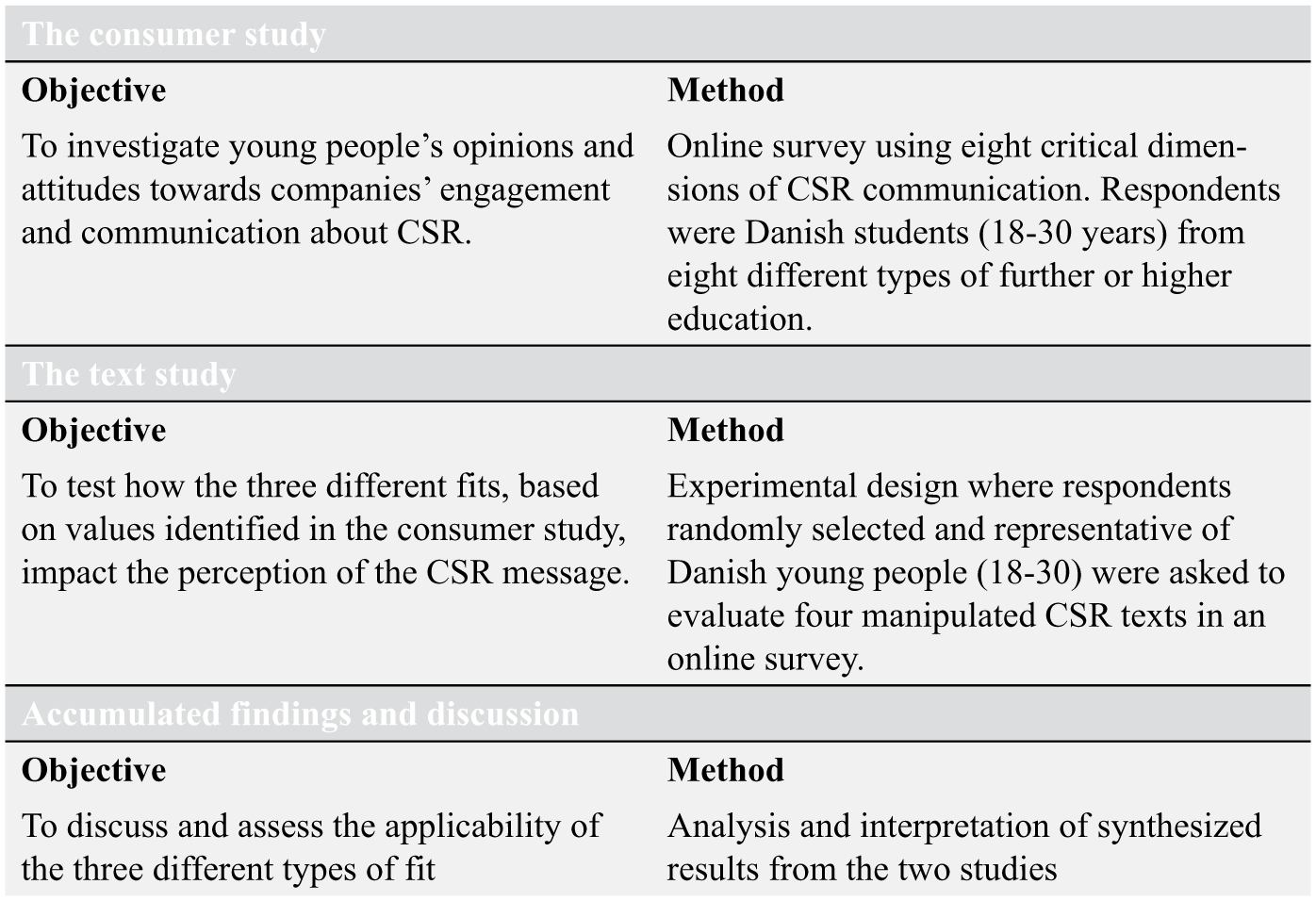
Overview of the empirical components in this article.
After the discussion of the accumulated findings, implications and further research are presented before the conclusion is drawn.
CSR and CSR communication
The concept of CSR, and the understanding of what it entails, is constantly developing, which means that there is no consensus neither among academics nor professionals on a definition (Ihlen et al., 2011; Okoye, 2009); what was considered to be CSR a decade ago is today considered to be but a basic premise of running a business (Arvidsson, 2010). With its focus on the consumer group, this article has a stakeholder-oriented understanding of the concept of CSR as described by Ihlen et al. (2011) in the first handbook of CSR communication. They see CSR as having a co-constructive nature and consequently define CSR as (Ihlen et al., 2011) the corporate attempt to negotiate its relationship to stakeholders and the public at large. It might include the process of mapping and evaluating demands from stakeholders, and the development and implementation of actions or policies to meet (or ignore) these demands. At a minimum, CSR focuses on the way corporations handle economic, social and/or environmental issues. (p. 8)
The importance and influence of stakeholders are recognized, and there is a focus on the relationship between the company and its stakeholders. In this context, one way to manage the relationship between company and stakeholders is by engaging actively in a dialogue with stakeholders, that is, by communicating CSR.
The definitions of CSR communication are also many and diverse. This article supports the understanding of CSR communication put forward by Podnar (2008), who suggests a rather elaborate definition of CSR communication as (Podnar, 2008) … a process of anticipating stakeholders’ expectations, articulation of CSR policy and managing of different organization communication tools designed to provide true and transparent information about a company’s or a brand’s integration of its business operations, social and environmental concerns, and interactions with stakeholders. (p. 75)
In this understanding, CSR communication is seen as an ongoing process, not merely as transmission of information. Stakeholders are clearly taken into account, the purpose of the activity of CSR communication is described and the definition furthermore includes an account of what CSR is. What remains, then, is how to operationalize this rhetorically, that is, which communication strategy to apply and how to execute it.
Rhetorical strategies for communicating CSR
Matten and Moon’s (2004, 2008) work on the choice of rhetorical strategies introduces the concepts of implicit and explicit CSR communication. These concepts have formed the background for much of the research done in relation to CSR-related rhetorical strategies. Other important studies have been conducted by, for example, Morsing et al. (2008) and Morsing and Schultz (2006) who argue that credibility can best be obtained through subtle, implicit ways of communicating. They strongly advocate an inside-out approach, involving and committing employees in order to increase trustworthiness (Morsing et al., 2008). They furthermore contend that companies should only communicate CSR directly when dealing with experts, and that credibility increases if this communication then happens through channels traditionally regarded as credible, such as reports and corporate websites, in a discreet manner (the expert CSR communication process). When dealing with the general public and customers, Morsing et al. (2008) suggest the endorsed CSR communication process. Here, CSR is communicated via third-party experts, who can lend their credibility to the company behind the CSR communication. Other suggested strategies in current literature include the use of a very factual language style (Berens and van Rekom, 2008; Golob and Podnar, 2011), avoiding vague words and demonstrating proof (Elving and van Vuuren, 2010; Parguel et al., 2011), third-party messages (Berens and Popma, 2014) and introducing social topic information and CSR impact specificity (Berens and Popma, 2014; Pomering and Johnson, 2009; Schmeltz, 2012).
The task of communicating CSR is often associated with difficulty in the literature (Du et al., 2010; Morsing, 2005; Morsing and Beckmann, 2006; Morsing et al., 2008; Waddock and Googins, 2011). One explanation could be that stakeholders have often experienced, and been disappointed by, misalignments between corporate talk on CSR and its practice, also referred to as greenwashing (Bartlett, 2011; Brønn, 2011; Ihlen et al., 2011; May et al., 2007; Waddock and Googins, 2011). Consequently, companies are faced with an inherently sceptical audience, who, furthermore, supposedly find it inappropriate when corporations communicate about their own good deeds. At the same time, however, the very same stakeholders expect companies to engage in CSR, and they would like more CSR information than what they are currently offered (Morsing and Beckmann, 2006; Dawkins, 2004; Podnar, 2008), a paradox referred to in the literature as the self-promoter’s paradox or the ‘Catch 22’ of communicating CSR (Arvidsson, 2010; Morsing et al., 2008). As a consequence of the self-promoter’s paradox, areas of research dealing with scepticism and credibility have grown. Quite often, however, these two concepts are treated in isolation from one another, with studies focusing on scepticism as a barrier for convincing and engaging stakeholders, and on credibility as both the prerequisite and the goal of ‘successful’ CSR communication (Bentele and Nothhaft, 2011; Brønn, 2011; Morsing et al., 2008; Pomering, 2011; Pomering and Johnson, 2009; Schlegelmilch and Pollach, 2005; Waddock and Googins, 2011). In this study, however, credibility and scepticism are seen as interdependent because, logically, high levels of scepticism will lead to decreased credibility, whereas high levels of credibility will arguably reduce scepticism.
When looking at how consumers perceive of and respond to CSR communication, that is, consumer attitudes towards CSR communication, previous research has predominantly investigated this aspect from a marketing communication perspective (see, for example, Beckmann, 2006, 2007; Bhattacharya et al., 2008), thus often related to future purchase intentions and buying behaviour. Studies exploring consumer attitudes towards CSR in a corporate communication context are, however, starting to appear (see, for example, Lauritzen and Perks, 2015). However, in this study, the notion of consumer attitude is not tied to purchase intention, but to the extent to which consumers react favourably or unfavourably towards the CSR communication they are presented with (cf. Fishbein and Ajzen’s (1975) definition of attitude).
The target audience of young consumers
According to Elving et al. (2015), corporate engagement in CSR communication has gained importance since ‘the public expects organizations explicitly confirm, demonstrate and embrace CSR’ (p. 119). In this article, focus is on the particular group of publics consisting of consumers. Current research on consumer-oriented CSR communication tends to see consumers as a homogeneous group predominantly sceptical of corporate talk on responsibility. However, this may not be the most appropriate approach to understanding the dynamics of CSR communication between companies and consumers in dealing with young consumer groups.
New consumers, new strategies?
The group of young consumers (18–30 years), sometimes referred to as the iGens, Generation Me, the Millennials (Twenge, 2006) or as the Digital Natives (Prensky, 2001), is important to consider for a number of reasons; it is the first generation to have grown up with the Internet, so it has unique media habits and is much more familiar with communications, media and digital technology than any earlier generation (Eurostat, 2009; Kongsholm, 2010; Twenge, 2006). For example, in 2014, 9 out of 10 young people in the European Union (EU) accessed the Internet on a daily basis (increasingly from mobile devices), and generally, they display ‘a more diligent use of the internet than the general population on a wide array of activities ranging from online gaming to social networking and carrying out civic activities’ (Eurostat, 2015). Thus, the widespread use and popularity of the Internet should offer ample opportunity to create more direct interaction, dialogue and participation (Castelló et al., 2013). So far, however, CSR communication on the Internet and in social media has yet to be employed and utilized by companies as ‘in practice, symmetric communication and relationship building have hardly been embraced for CSR communication online’ (Etter, 2014: 323).
Members of this cohort are furthermore ‘perceived to be more interactive … more involved in communication … and they are demanding more feedback than people over thirty’ (Zerfass et al., 2013). They are also considered to be more educated, critical and demanding than other consumer groups, and by virtue of their age, they can be ‘regarded as a yardstick for socio-cultural changes’ (Lauritzen and Perks, 2015: 179). Furthermore, the group’s spending power is considerable (Buksa and Mitsis, 2011; Henrie and Taylor, 2009), and it is predicted to be the most influential and dominant group of consumers in the near future (Kongsholm, 2010; Lazarevic, 2012). It is supposedly materialistic, yet it is argued to show ‘a concern for social causes and activism’ (Hyllegard et al., 2010: 103), and its ‘forms of consumption are central to [its] sense of identity and the acquisition of status or “cool” through this consumption’ (Ferguson, 2011).
In relation to CSR communication, there are indications that the group of young consumers favours a much more explicit approach than people in older age cohorts as described by, for example, Morsing et al. (2008) where the implicit approach is endorsed. For example, a recent study by Lauritzen and Perks (2015) demonstrates how young consumers ‘prefer corporations to be explicit and engaging in their communication about their CSR activities through interaction and involvement strategies’ (Lauritzen and Perks, 2015: 185) and also that they ‘perceive interactive CSR communication as attractive and appealing’ (Lauritzen and Perks, 2015: 186).
Thus, it seems reasonable to assume that the changed roles of both corporations (increased demands for CSR communication) and consumers (new media habits and expectations towards corporations) just described will influence and lead to a change in the communication flowing between them, and that now is perhaps the time to consider a move away from the indirect, subtle way of communication. As the traditional relationship between company and consumer is changed, communication will have to change.
CSR and values
In this study, values have been chosen as point of departure in the analysis. The reason for applying a value-theoretical base is twofold. First, values are an inherent part of the CSR concept (Aust, 2004; Morsing and Thyssen, 2003), which makes them a logical point of departure for the analysis. CSR is about companies taking responsibility for the society in which they operate by way of incorporating economic, environmental and social concerns in their way of doing business. This means that businesses are not merely focused on creating profits but also on the way in which they create profit and the impact they have on society. Consequently, businesses now operate with, and are governed by, other values than the traditional one of profit-generation (Friedman, 1970), and furthermore, a company’s CSR engagement is often also linked to and described via the company’s corporate values (Schmeltz, 2014; Siltaoja, 2006). Second, values are also the standards by which we as humans evaluate, judge, behave, persuade and influence others (Rokeach, 1973) for which reason an analysis based on values will enable us to better understand the group of young consumers and their perceptions of CSR. Values that are both relevant and important to stakeholders have higher chances of resulting in higher consumer involvement (Bögel, 2015) and consequently positive processing of both CSR messages (Petty et al., 2004) and of the companies behind the messages (Green and Peloza, 2011; Maignan et al., 2005; Siltaoja, 2006). Hence, a value-based platform for CSR communication could potentially serve the purpose of both meeting stakeholder (consumer) expectations and engaging consumers in CSR dialogue (cf. Morsing and Schultz, 2006), by way of creating a match of values between companies and consumers (Golob et al., 2008).
The Value System by Rokeach (1973) (Figure 2) is applied in this study as it offers a comprehensive and detailed, yet simple and applicable, way of operationalizing the concept of values. In this value classification system, based on numerous empirical studies, a total of 36 values are presented. They are first divided into instrumental values, that is, desirable modes of conduct, and terminal values, that is, desirable end-states of existence. Second, the instrumental values can be divided into competence and moral values, whereas the terminal values can be divided into social and personal values (Rokeach, 1973).
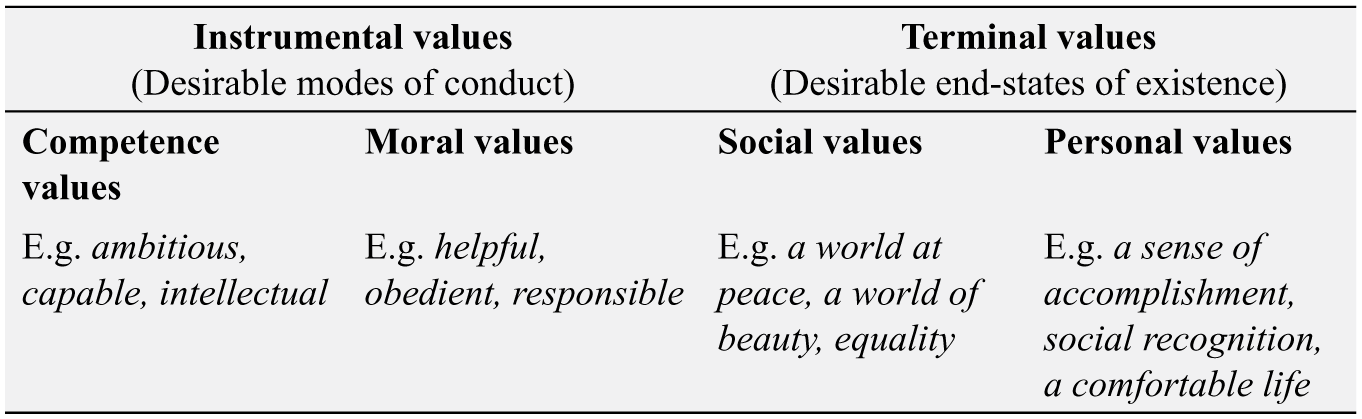
Rokeach’s (1973) Value System – Categories.
A traditional perception of CSR would tend to focus on moral and socially oriented values, seeing as CSR was in its early years perceived as consisting of ‘additional’ activities carried out by the company because of duty and obligation to give back to society, whereas more contemporary, developed understandings of CSR emphasize CSR as an integrated part of doing business, connected to the core identity and core competences of the company (see, for example, Maon et al., 2010; Schmeltz, 2014).
Method
This article employs the mixed-methods design (Figure 3) called an iterative sequential design (Teddlie and Tashakkori, 2009), which consists of two stages, two quantitative studies, followed by a qualitative synthesizing stage, also referred to as the meta-inference stage (Creswell, 2009; Teddlie and Tashakkori, 2009). Each of the two quantitative studies can work in isolation, but at the same time, they contribute to the illumination of the overall problem explored in the synthesizing stage (the meta-inference).
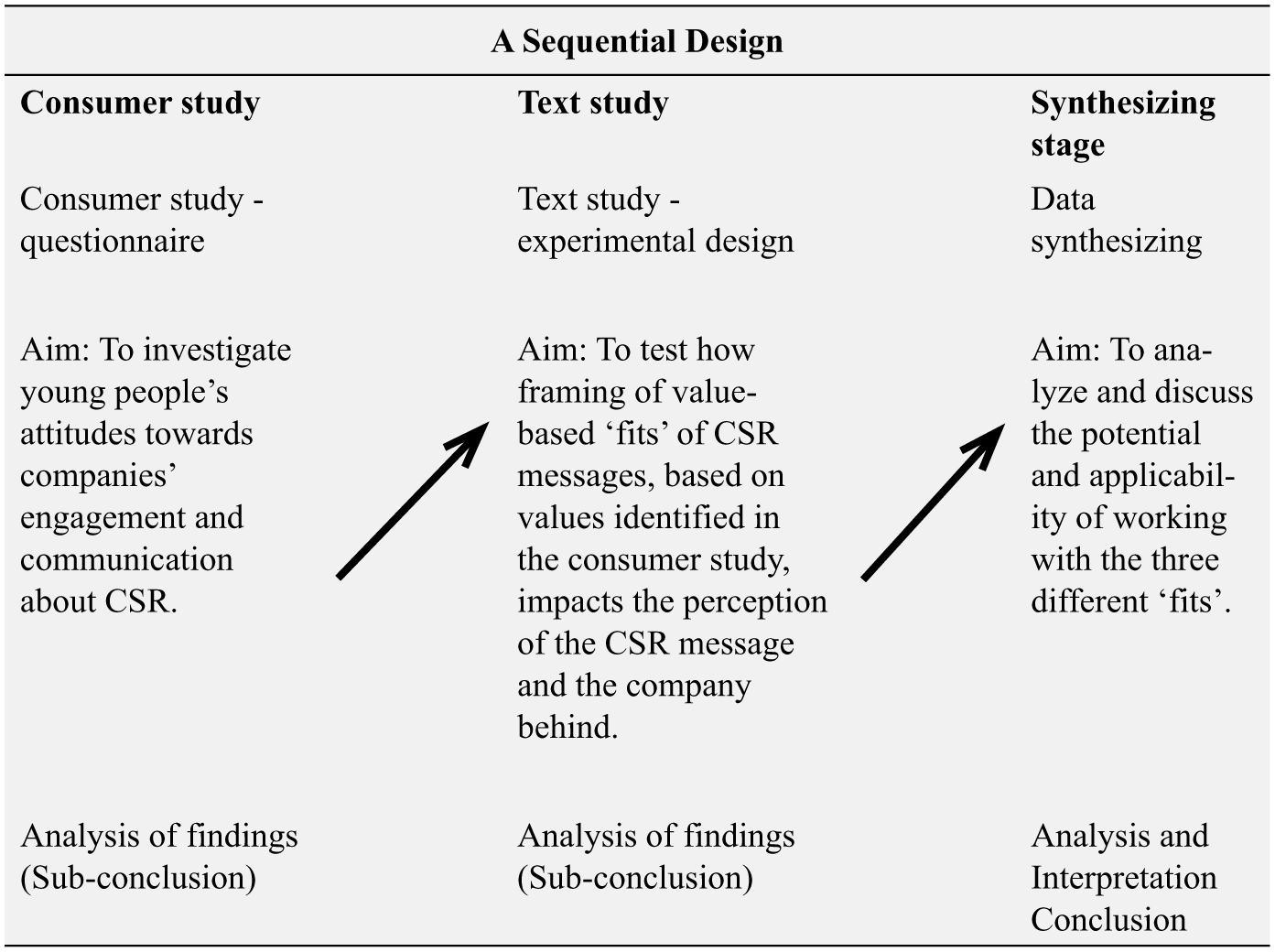
Study design.
The approaches to the analysis of the data generated in the two studies and in the synthesizing stage are both traditional and specific to mixed methods, for example, traditional descriptive statistics is combined with data transformation or conversion (Creswell, 2009; Teddlie and Tashakkori, 2009), just as the concept of instrument development (Creswell, 2009) is applied.
Research design
The consumer study
The first study is an empirical study of the attitudes towards both CSR and CSR communication among young Danish consumers – a survey that provides a first structured mapping of young consumers’ perceptions of corporate engagement in and communication about social responsibility. Due to the general lack of empirical data on young consumers’ attitudes towards CSR and CSR communication, the method of questionnaire was preferred and employed because of its ‘enduring strengths as an effective way of identifying and examining general patterns in society without having to talk with all, most or even a large percentage of the population’ (Curtis and Curtis, 2011: 123). The questionnaire was constructed around three main themes: awareness, attitude and evaluation of CSR and CSR communication. The three themes were further subdivided into 11 constructs or dimensions (introduction, awareness, importance, responsibility, initiatives, communication/media, communication/rhetoric, credibility, perception of motive, significance and demographics) and finally unfolded as questions. Figure 4 provides an overview of the themes and question types.
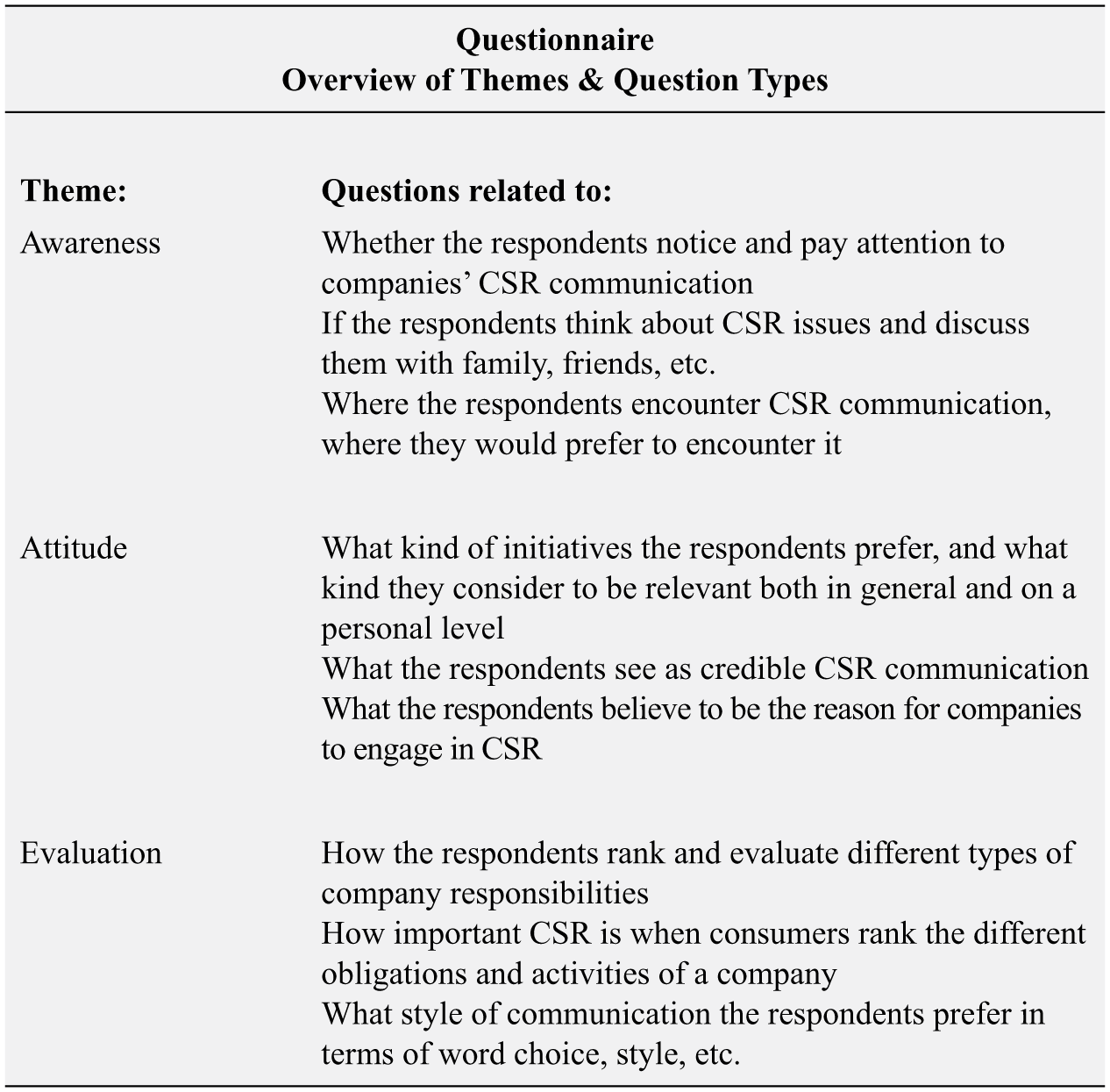
Overview of themes and question types.
As already mentioned, we do not know much about specifically young consumers’ attitude towards CSR engagement and communication. Therefore, the group of questions related to the theme of awareness is included in the first part of the survey as awareness of CSR is a prerequisite for evaluating CSR communication. As such, awareness is not directly tied to the three different fits, but rather it serves as the starting point from which the fits are developed.
When rhetorically constructing the questions, emphasis was on using a simple, plain style with the aim of creating short, easy-to-understand, neutral and unambiguous questions (Olsen, 2004). The response categories included Likert scales, semantic differential scales, checklist response formats and rankings (De Vaus, 2002); hence, the response categories were primarily closed, again to make it as simple and easy to work with for the respondents as possible. The survey was carried out in the form of a web page–based survey distributed among young people from various educational settings. The participants thus shared the characteristics of age (18–30 years), nationality (Danish) and education (enrolment in either further or higher education). The participants represented a diverse range of educations, spanning from educations focusing mainly on practical skills (e.g. pre-school teacher and farming trainees) to educations focusing mainly on academic skills (e.g. medicine and social science). A total of 204 young men and women were invited to participate, and the response rate was 40.2 percent. The participants were not offered any incentives in the form of European Credit Transfer System (ECTS) or gifts in return for their participation.
The results were analysed first through traditional descriptive statistics, and subsequently, the main analysis was carried out through a qualitative analysis applying Rokeach’s (1973) classic values system. In the qualitative part of the analysis, the responses were thus coded and grouped according to Rokeach’s value system with the aim of understanding the deeper, underlying motivations behind the respondents’ answers.
Following the approach of the iterative sequential design, the outcome of this first study informed and inspired the elaboration and design of the next study, a survey on CSR texts inspired by experimental design (Canavos and Koutrouvelis, 2009).
The text study
Study 1 serves to provide general insight into young consumers’ attitudes towards CSR communication as well as the companies behind the communication. This second study aspires to test how different rhetorical executions of CSR messages (different fits), based on the categories in the value system, will affect consumer perceptions of the messages and the companies behind. In order to do so, an adapted version of the experimental design is employed.
Experimental designs are designs where the researcher manipulates the independent variable(s) in order to observe its effect(s) on the dependent variable(s) (Shadish et al., 2002). This study thus investigated consumers’ assessment of corporate communication of CSR through four different, yet closely related, manipulated texts. The different value combinations or frames in the four texts are the factors (independent variables) that may cause variation in perceptions (dependent variables) (Canavos and Koutrouvelis, 2009). The respondents’ perceptions of both company and communication were measured in terms of credibility and relevance. The final design does not, however, meticulously include all of the traditional components of experimental design. The reason for deviating from a traditional experimental design is the desire to include a comparative dimension in the survey. By exposing all respondents to all of the four manipulated texts, the survey allowed for the respondents to directly compare the four framings of CSR messages. Such comparison would not be possible by stringently following the traditional experimental design where each group of respondents only evaluates one text before the four evaluations are compared by the researcher.
The rhetorical construction of the four texts was based on the theory of framing and frames. With traces back to Goffman’s (1974) definition of a frame as a schema enabling us to ‘locate, perceive, identify and label’ information (p. 21), today we see a frame as a reflection of the attitude or opinion of the communicator (Fairhurst, 2011; Hallahan, 1999). Framing as a process, on the other hand, can be defined as the particular perspective from which we choose to see and communicate about an issue (Entman, 1993; Fairhurst, 2011; Hallahan, 1999). In combination, frames and framing may enable us to influence and perhaps even manage the audience’s perception of a company’s CSR engagement (Waller and Conaway, 2011).
The different value-based frames (Hallahan, 1999) identified in the first study form the background against which the four texts describing the CSR initiative and engagement of a fictitious company House (inspired by IKEA) were elaborated. The framings of the texts were elaborated, tested and refined a number of times. Needless to say, to manipulate texts by way of the intangible concept of values is a highly qualitative task as our perceptions of values are fluid. However, the messages were elaborated until general consensus on their value contents was reached among the testers. The survey consisted of four pages containing four short texts on CSR, one for each of the three different fits, plus one with no apparent fit.
The Danish professional research and analysis agency, Epenion, was employed to carry out the survey in order to secure that the young consumers making up the final sample of respondents were both representative of the group and randomly selected. The respondents were recruited through an online panel, a total of 102 randomly assigned Danish participants completed the survey and the mean age was 25.6 years. Again, no incentives were offered in return for completing the survey.
Results and discussion
The findings from the two individual studies will be presented very shortly here as focus is on synthesizing the results so that the possibilities as well as challenges of the different fits can be discussed.
The consumer study
The data generated in the online consumer survey portray the group of young consumers as a very complex target audience, which can even be characterized as self-contradictory at times.
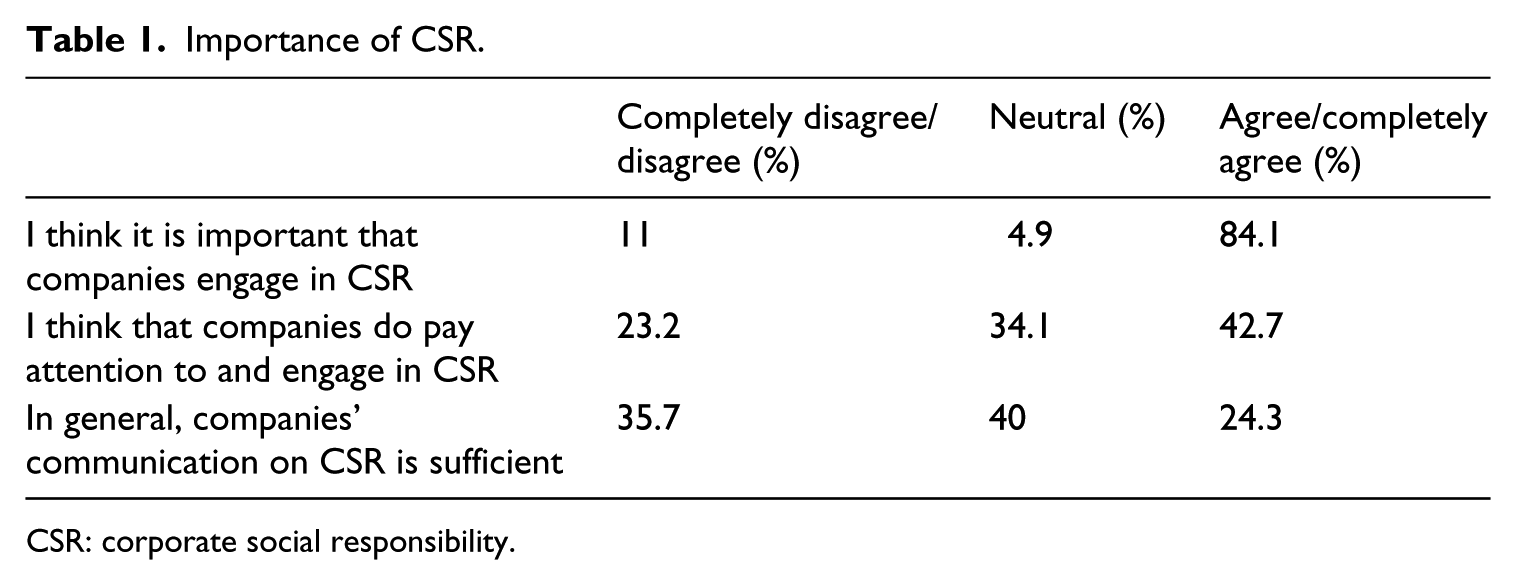
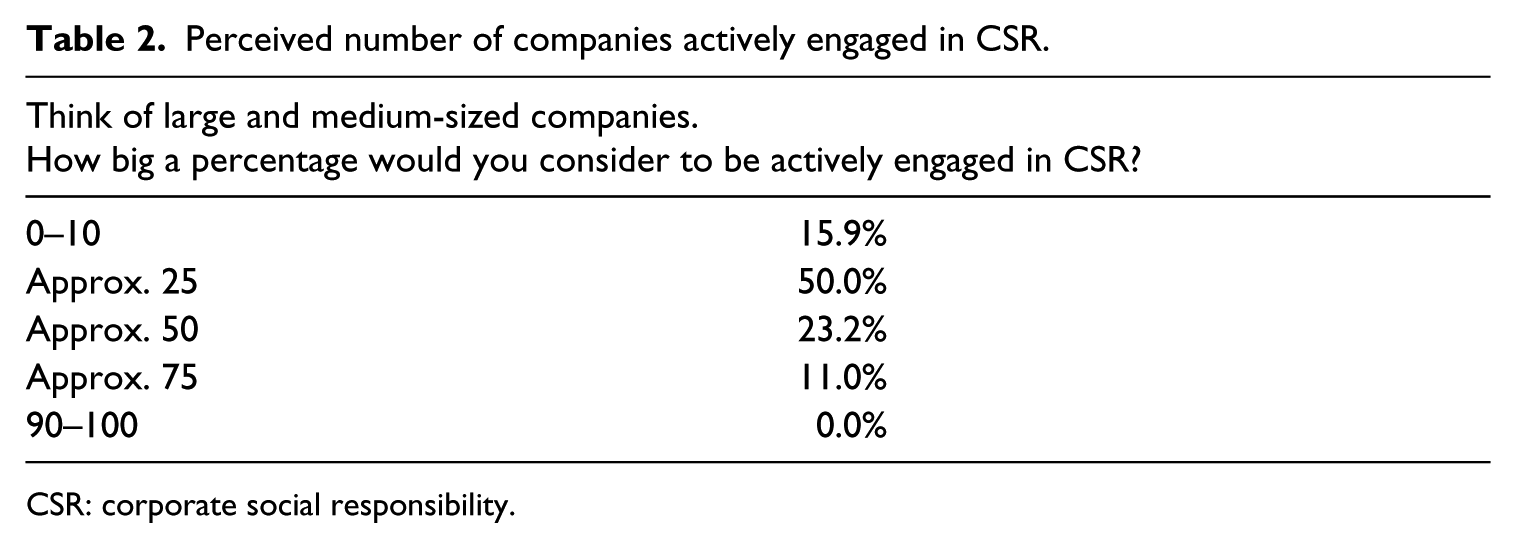
Table 1 illustrates how the survey showed that many young people (35.7%) want more CSR communication than what they are offered today. At the same time, however, they are not aware of the extent or scale of CSR engagement of corporations, nor how many CSR activities they carry out (see Table 2). As much as 50 percent of the respondents are under the impression that only approximately 25 percent of all large and medium-sized companies are actively engaged in CSR. In comparison, as much as 87 percent of the largest Danish companies report actively on their CSR engagement in the annual reports (Danish Government, 2012: Report on Responsible Growth, Action Plan for Corporate Social Responsibility, 2012–2015).
Importance of CSR.
CSR: corporate social responsibility.
Perceived number of companies actively engaged in CSR.
CSR: corporate social responsibility.
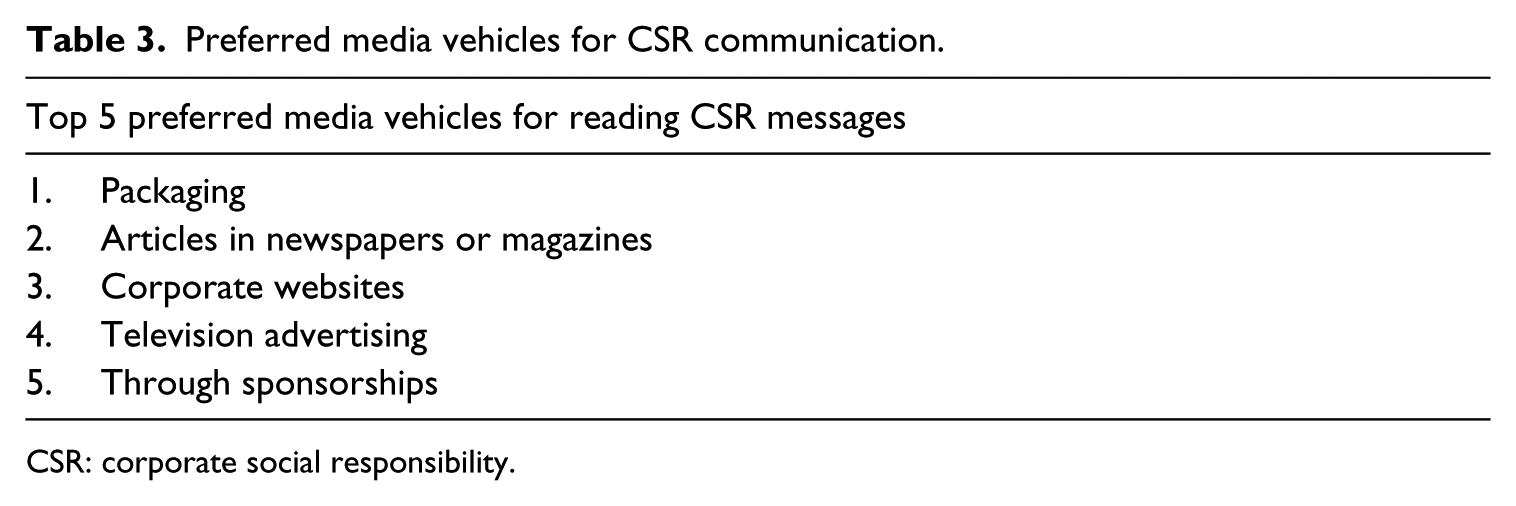
The explanation behind this contradiction could be that the young consumers simply state that they are more interested in CSR than what is actually the case, that is, a question of social desirability bias (De Vaus, 2002). But seeing as the respondents were anonymous, were offered no incentives in the form of, for example, presents or prices and as such had nothing personal at stake, another explanation seems more likely. This other explanation relates to choice of media; traditionally, companies prefer to communicate about CSR on their websites and in their annual reports (Morsing et al., 2008). The survey illustrated that the respondents, young consumers, do not pay attention to these media types in relation to CSR. Thus, companies could reduce the gap between young consumers’ demand and awareness by reconsidering their choice of media for CSR communication and, for example, use product packaging (the respondents’ preferred channel for CSR communication, see Table 3) as a medium for CSR messages.
Preferred media vehicles for CSR communication.
CSR: corporate social responsibility.
When taking a closer look at the respondents’ view on forms of CSR communication and messages, the survey demonstrates, contrary to prior research on CSR communication in general (see, for example, Morsing et al., 2008; Morsing and Schultz, 2006), that consumers in this age cohort seem to favour very explicit and direct communication forms. In order to analyse consumer perceptions of the actual content of messages reporting on CSR activities, the value system of Rokeach (1973) was, as mentioned earlier, applied. The value-based analysis revealed that young consumers display markedly different preferences from what the current CSR literature tells us about consumer evaluations of CSR communication.
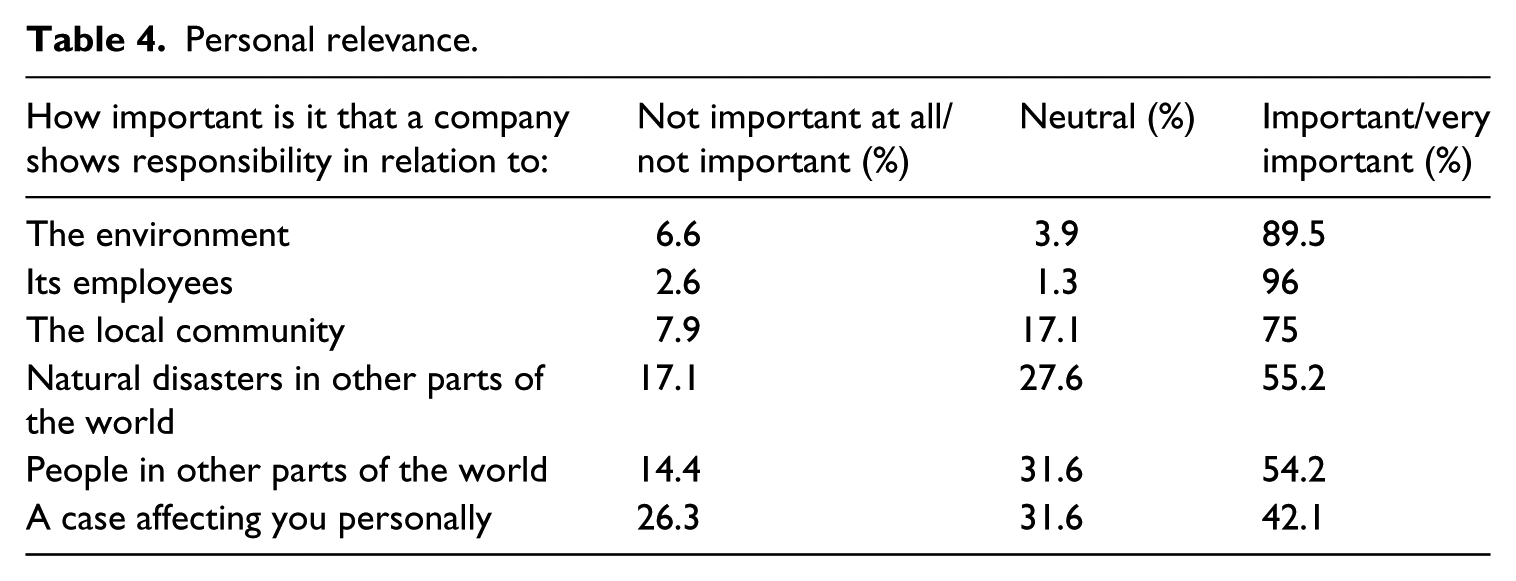
Table 4 demonstrates that young consumers display favourable attitudes towards CSR activities that also benefit themselves or have personal relevance to them (the environment, the local community, life as an employee), whereas activities focusing on issues far away from them (natural disasters, people in other parts of the world) are assigned far less importance. Following the terminology of Rokeach (1973), respondents thus respond more favourably towards messages characterized by personally oriented values than they do towards messages characterized by socially oriented values. This age group is often described as having a ‘what’s in it for me’ approach to life (Kongsholm, 2010; Twenge, 2006) and a rather egocentric behaviour which could very well be what is reflected here. Thus, companies can get a more positive response to their CSR communication by considering and incorporating aspects that directly or indirectly benefit young consumers. An example could be that a company supports the local sports association rather than a project abroad. When respondents are asked directly (the last question in Table 4), however, this pattern of preference for personal relevance and benefit is not as clear. The question is whether this can be assigned to social desirability bias or perhaps an unconscious preference for personally relevant activities as the other numbers in the table indicate.
Personal relevance.
Another result of the value-theoretical analysis of the data is that young consumers do not perceive CSR solely as a morally based concept, but rather as a competence, an inherent part of doing business today.
As illustrated in Table 5, young people mainly see CSR engagement as a way for corporations to manage their image, stay competitive and generate profits. Only 54.5 percent think companies engage in CSR because of their moral responsibility, meaning that young consumers see corporate social engagement as a required part of doing business today, not a voluntary supplement to the company’s core business. This has consequences for how companies should communicate about CSR as the voluntary, moral aspect of CSR often tends to be the dominant frame. This study thus breaks with the body of CSR communication literature suggesting a very, subtle, indirect and implicit style of communicating and suggests a much more explicit communication strategy and style. Moreover, the study also reports that although corporations engaging in CSR without benefiting financially seem to be favoured by this age cohort, respondents say that CSR engagement strongly increases credibility even when the engagement is for self-centred reasons.
Perceived motive for companies’ CSR engagement.
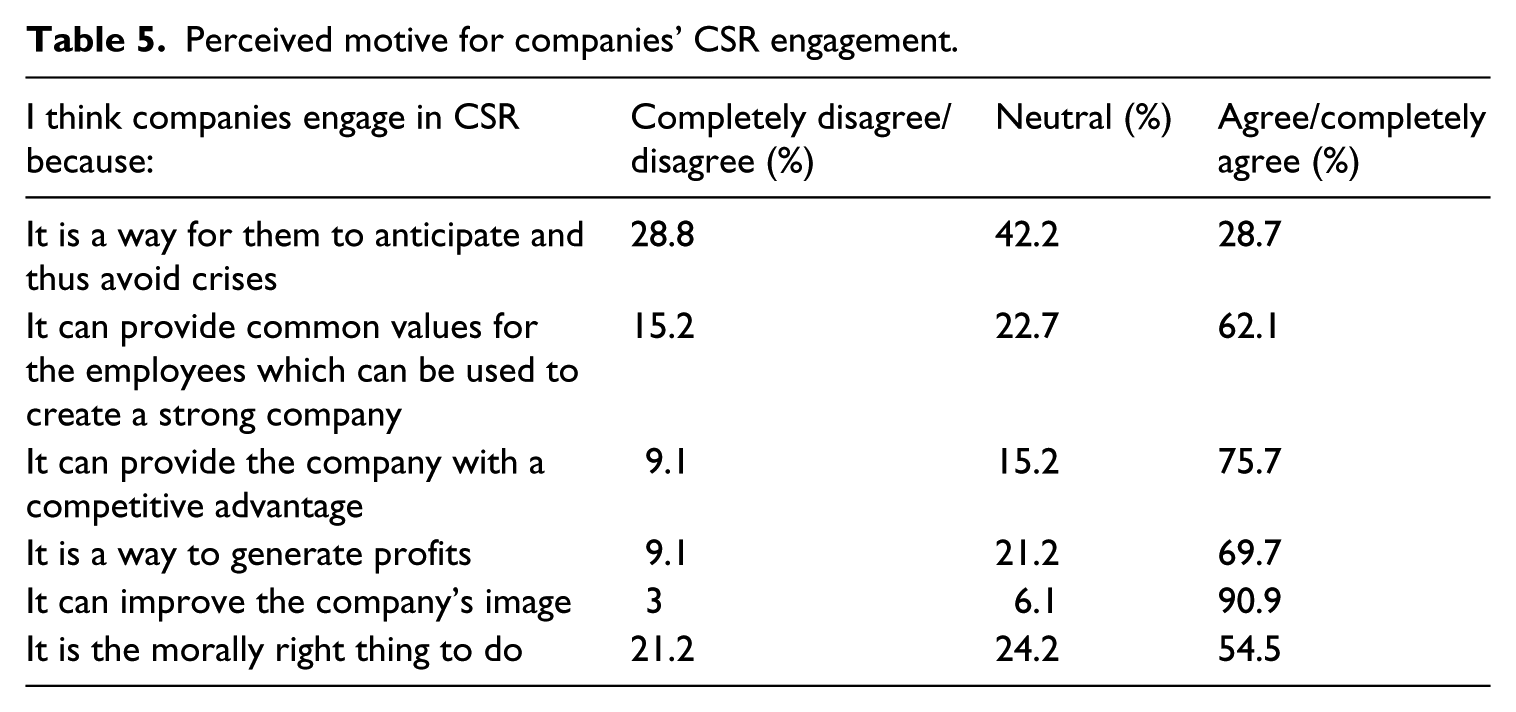
Hence, the results of this study indicate that corporations could benefit from framing CSR engagement as a natural part of, not supplement to, its core business (focusing on competence values, not moral values) while considering its target audience’s personal values, that is, incorporating personal values rather than social values. This will be tested further in the next study.
Bridging the two studies
Following the sequential study approach, the online consumer survey forms the basis of this next study. Contrary to earlier studies on CSR communication, this first study demonstrates that young consumers are indeed interested in corporate CSR messaging, but that they, at the same time, seem to be very preoccupied by themes or causes that have personal relevance to them and to favour an explicit communication style. Consequently, this first study calls for an investigation of whether or not young consumers will then respond more favourably towards CSR messages that have personal relevance to them or whether the current perception that the match between company and cause is most important is also correct in relation to this specific target audience. Finally, it could be interesting to see whether a Triple Fit combining all three components, a Company-Cause-Consumer fit, may result in even more positive perceptions of the CSR messages and the companies behind.
The text study
Based on the findings on the importance of personally oriented values (personal relevance) and corporate competence, this article thus suggests that the concept of fit can be refined to a greater extent. Figure 5 illustrates four possible types of fit based on combinations of the value types discussed.
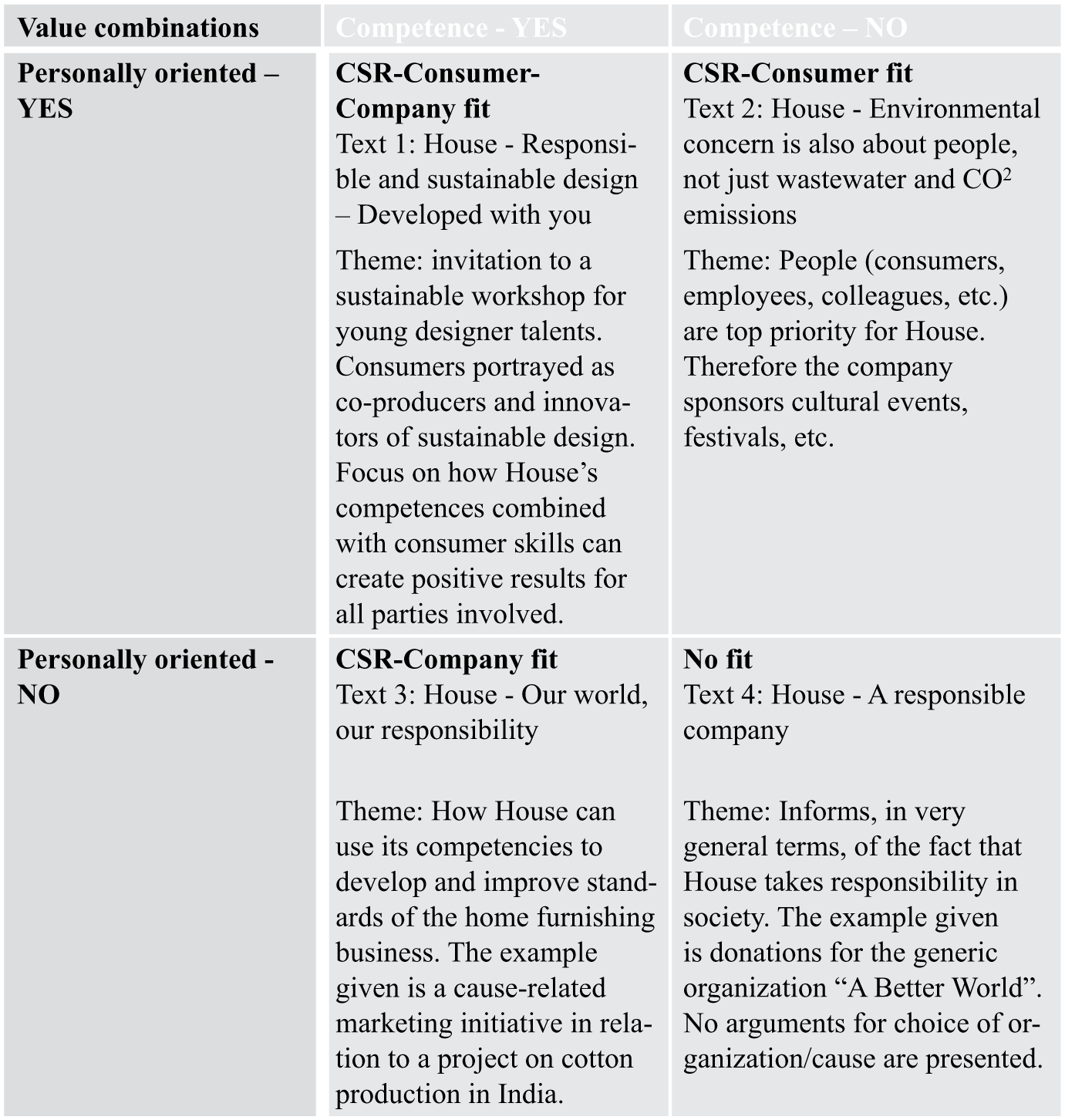
Four kinds of fit as a result of different value combinations.
The figure shows how a combination of personally oriented values and competence values will lead to a Triple Fit between CSR, consumer and company, whereas an omission of competence values will lead to a CSR-Consumer Fit and so on.
In the survey, respondents were asked to evaluate four different texts from a fictitious company (House – loosely inspired by IKEA) reflecting the four different value combinations, or fits, presented in Figure 5. The selected variables which respondents were asked to evaluate the texts by were perceived personal relevance, perceived credibility of the company, perception of the company as a socially responsible company and overall perception of the company. As such, the value orientations and their derived fits constitute the independent variables in this study, whereas credibility, relevance of message and perception of the company constitute the dependent variables.
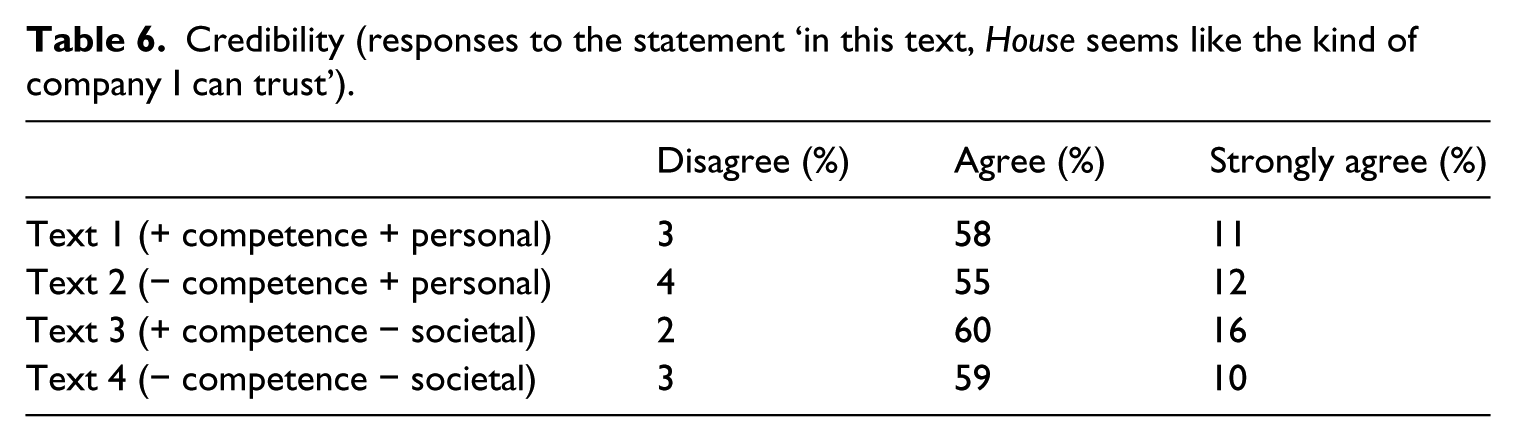
Table 6 illustrates how the texts framed around corporate competence (as opposed to morally based engagement) and personally oriented values (as opposed to socially oriented values) positively, albeit not significantly, impact evaluations of both message and the company; disagreement rates were very low, whereas agreement rates were high. Furthermore, in support of the first study, this again shows that scepticism towards CSR communication is not as prevalent among young consumers as suggested by much CSR literature.
Credibility (responses to the statement ‘in this text, House seems like the kind of company I can trust’).
When working with the different framings underpinning the texts, it is, for obvious reasons, easier to rhetorically express and underline corporate competence than personal values of the receivers (measured in terms of relevance). Despite working with a rather narrow target audience consisting of young consumers aged 18–30 with many shared traits and characteristics, this group is in this context still rather broad and naturally has personal preferences that differ from one another. In consequence, it becomes quite challenging to frame the texts appropriately and effectively. However, despite this, messages framed around personally oriented values generated very strong responses, both negative and positive.
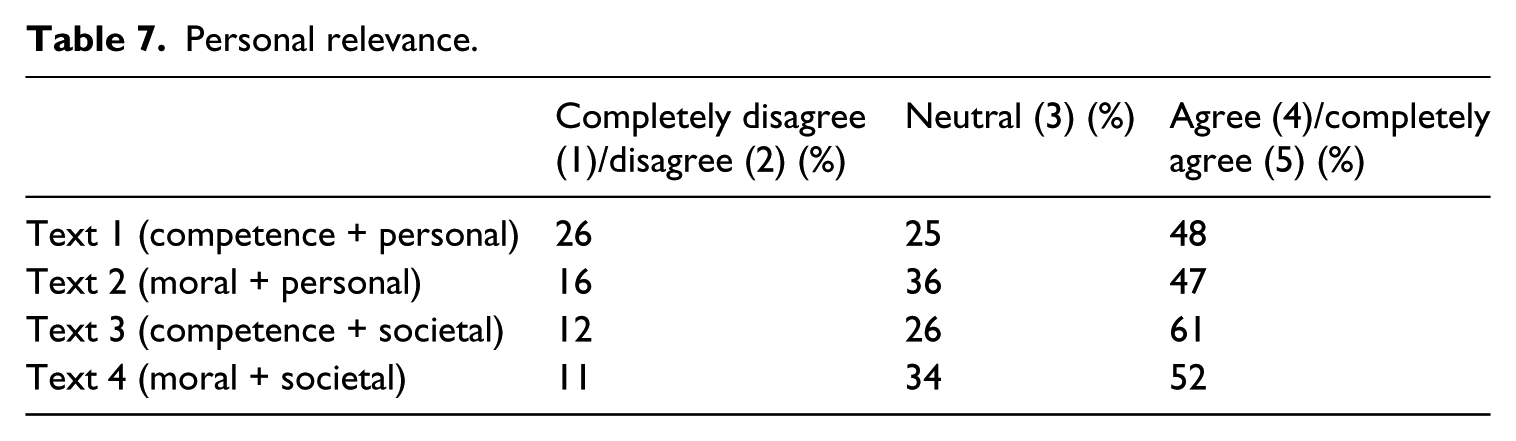
Text 1 was framed around both personal values and competence (the Triple Fit), and it was thus expected that this text would generate the highest level of agreement. As Table 7 illustrates, this was not the case – although it scored relatively high on accumulated agreement (48%), it also had the highest level of disagreement, and it could thus be argued that the study demonstrates a rather weak support for the Triple Fit. However, the responses also illustrate the importance of carefully monitoring and analysing your consumers’ value preferences. When the right match is there, companies can really benefit from the CSR communication in terms of positive responses to messages and positives perceptions of the company. Naturally, the opposite can also be the case, if, for example, the incorporated personal values do not match those of the target audience, which, arguably, makes this a rather dangerous strategy. However, it is worth noting that in a real-life setting, companies will have much greater chances of framing the texts according to their target audiences’ likings, as they will have detailed knowledge of their customers’ preferences and characteristics, which they will be able to incorporate into the message. Consequently, it is plausible that a carefully tailored Triple Fit, albeit not easy to create, could positively impact young consumers’ perception of CSR communication and the company behind.
Personal relevance.
To sum up, this second study confirms a preference for explicit CSR communication tailored around personally relevant values and corporate competence among young consumers.
Synthesizing the results
Having reported on the most important findings in relation to possible fits in the two studies, this section continues by discussing the possibility and applicability of the different kinds of fits presented in Model 1.
Model 1 illustrates the three different kinds of fit investigated in this article: (1) the Strategic Fit, where there is a logical, congruent link between a company’s CSR commitment and its core value; (2) the CSR-Consumer Fit, where the CSR cause or engagement has personal relevance and/or benefit to the consumers; and finally, (3) the Triple Fit, where all three dimensions are linked together through common values.
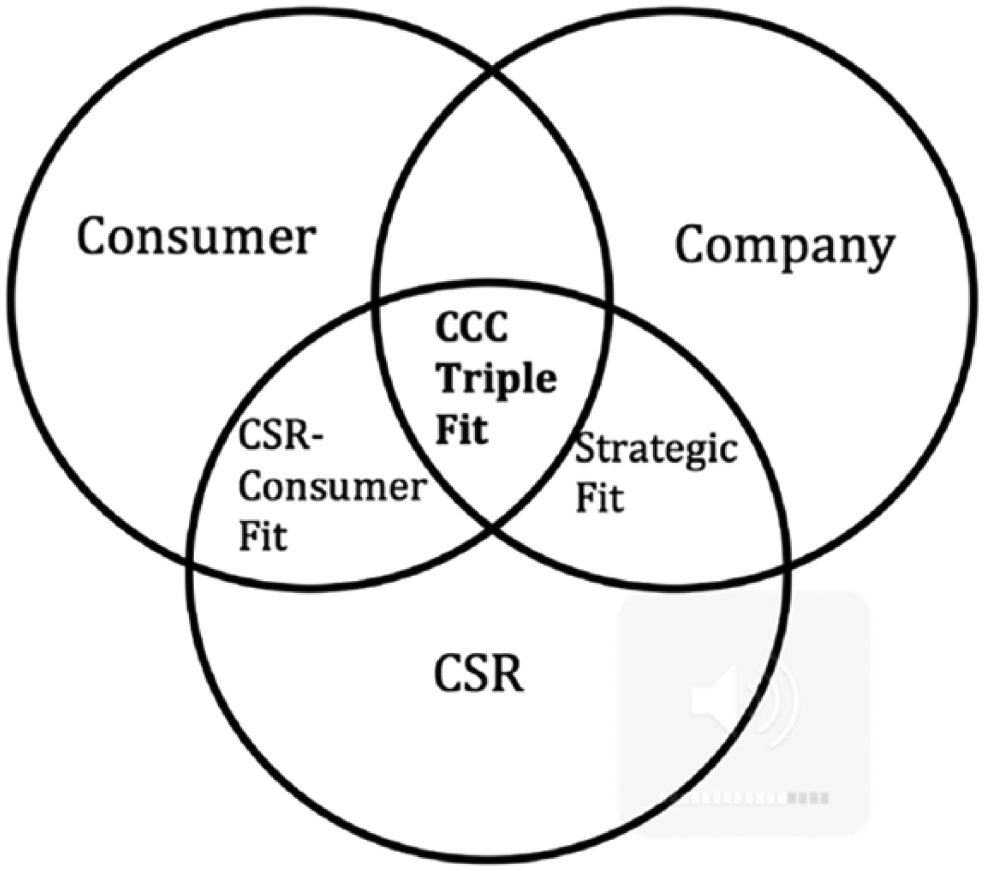
CSR communication fits.
As can be seen from the model, there is a possible fourth fit, which has not been included in these studies, a fit between company values and consumer values. This fit is of great importance as part of the Triple Fit where the CSR engagement or cause serves as the mediator between the two. One could argue that the fourth fit (consumer-company) should also be investigated further, but seeing as the focus in this article is on communicating CSR, it would not make sense to exclude the CSR dimension.
Strategic Fit through explicit focus on competence values
Focusing on establishing a logical, congruent link between a company’s CSR commitment and its core values, the Strategic Fit, has, as mentioned earlier, received much attention in buying-behaviour research, but surprisingly enough, less so in a corporate communication context. The synthesized results of two studies in this article demonstrate that companies could benefit from focusing on competence as opposed to moral when communicating CSR. Thus, a strong Strategic Fit could be generated by an increased, much more explicit, focus on corporate competence values, which will, naturally, be closely connected with the corporate identity of the company. Such a focus could also potentially lessen the perceived difficulty of communicating CSR, as most companies are arguably likely to be more confident and also accustomed with communicating their corporate identity.
The benefits of personal values
The findings furthermore underline that a tighter fit between consumers’ personal values (and hereby perceived relevance) and the CSR commitment is highly beneficial when dealing with young consumers, as they respond favourably towards activities that either benefit themselves or are personally relevant to a higher degree than towards activities far away from them geographically or personally (Table 4). In a marketing context, Green and Peloza (2011: 55) have reached the same conclusion, stating that ‘consumers typically measure how a company’s philanthropy relates to their own values, morals, standards and priorities’. In other words, the CSR-Consumer Fit may prove to be beneficial when serving as an underlying framing strategy for communicating CSR to this particular target audience.
The potential of the Triple Fit
Having established the importance of both competence values and personal values, the strongest fit possible would be one combining both Consumer-CSR fit and Strategic Fit: the CSR-Consumer-Company Triple Fit. In the second study, this Triple Fit was tested against the other two fits and a fourth text with no apparent fit. The proposition made in this article, and thus the expected outcome of the test, was that the Triple Fit would generate the most positive results. However, the Triple Fit text did not obtain the highest accumulated positive score, but it did succeed in creating stronger reactions, both positive and negative, than did any of the other three texts. This indicates that although a clear Triple Fit may be difficult to create and communicate, it holds promise of generating very positive perceptions of both CSR communication and company among young consumers. As such, a company that succeeds in establishing a Triple Fit may reap the benefits of the fit through the creation of stronger relations with consumers. This corresponds well with findings from other fields of research, for example, business strategy, where a strategic alignment between CSR, consumer and company is suggested to enable the establishment of long-lasting relationships with consumers (Menichini and Rosati, 2014) as well as with a reported growing support for the business case of CSR among both academics and practitioners (Carroll and Shabana, 2010). If we turn to one of the only other fields of research that has previously explored this specific issue of fit, marketing studies, there are also indications that similar conclusions have been reached. One example would be Öberseder et al. (2011), who, in their study on the role of CSR in the purchase decision-making process, suggest that The most valuable approach, although difficult, would be to segment consumers according to their personal concern and communicate different CSR efforts to different target groups. (p. 457)
Öberseder et al. thus also acknowledge the difficulty in obtaining such a fit while simultaneously emphasizing the value of it. Furthermore, the concept of fit or shared values is closely related to the changed context that companies need to navigate in. Porter and Kramer (2011) address the challenges of the current business environment, a capitalist system under siege as they label it, and call for a reinvention of capitalism by suggesting that Companies must take the lead in bringing business and society back together […] The purpose of the corporation must be redefined as creating shared value, not just profit per se. (p. 4)
The concept of creating shared value (CSV) has been criticized for being unoriginal and naïve (Crane et al., 2014), yet even critics agree with Porter and Kramer that ‘the social impacts of corporations are now so clearly obvious that it is impossible for business to ignore them any longer’ (pp. 142–143).
CSR as value platform
For companies to benefit from their CSR engagement while meeting consumer demands for relevant and personalized communication, companies need to continuously monitor their environment and keep track of attitude changes (value changes) in young consumers and in society at large (e.g. by monitoring social media activity, scrutinizing media and trend reports, engaging in stakeholder dialogue). CSR frequently changes meaning, importance and focus in the eyes of stakeholders, and corporations have to stay updated, be constantly attentive and ready to adapt to changes. However, if corporations succeed in doing so, CSR may have the potential to facilitate a value platform upon which companies and consumers can meet and create some sort of link or shared understanding to the benefit of both parties involved – or perhaps even create shared value.
Implications and further research
According to the European Communication Monitor (Zerfass et al., 2013), ‘the most important strategic issue for European communication professionals until 2016 is aligning communication strategies to overall business strategies’ (p. 83). This is supported by the findings of this study indicating that a Triple Fit, where corporate and CSR values are aligned with consumer values, may prove to be a very beneficial framing strategy. Skilfully combining the dimensions of CSR cause, company competence and consumer values when framing CSR texts may furthermore have additional, derived implications besides meeting consumer demands and creating strong, long-lasting relationships. If this age group, as suggested elsewhere, will both have considerable spending power (Buksa and Mitsis, 2011; Henrie and Taylor, 2009) and be the most influential and dominant consumer group (Kongsholm, 2010; Lazarevic, 2012) in the near future, establishing the right fit may also have financial consequences for companies; relevant, personalized CSR communication could turn out to be critical in a purchasing situation.
When focusing on young consumers, the digital natives, future research on possible fits within CSR communication could include a fourth C – a Consumer-Communication Vehicle Fit. It would be relevant to explore the impact of the choice of media vehicle on consumer perceptions of CSR messages. One might speculate that this particular age cohort would respond favourably towards, for example, relevant CSR messages disseminated via social media to a larger extent than would older generations. Moreover, a logical next step, as continuation of the studies presented here, would be to explore whether the consumer perceptions and preferences as presented in this article only apply to young consumers or whether older generations will display similar patterns of preference. Additional studies, for example, qualitative studies in the form of in-depth interviews, would also allow for more detailed insights into consumer attitudes towards CSR communication, taking into account that respondents’ answers can be influenced by social desirability bias (De Vaus, 2002). Yet another way of getting more detailed insights could be to repeat the study using a real-life company. This would make it possible to tailor and personalize the messages more precisely to the target audience. Finally, as this is not a longitudinal study, it remains to be investigated whether this self-focus is a permanent generational trait or whether it will diminish or even disappear as this age group grows up. These limitations of course have consequences for the applicability of the results presented here and should be investigated further.
Conclusion
The findings in this study challenge prior research within the field of CSR communication by demonstrating that scepticism, at least when working with the group of young consumers, is not prevalent to the extent that companies should refrain from or be hesitant to communicating about CSR, rather the reverse. This means that a move from a very implicit approach to communication to a much more explicit approach is called for, and one way of rhetorically executing this is by framing CSR messages around so-called ‘fits’. Subsequently, the findings of the mixed-methods study presented here imply that companies can benefit from aiming to create a Triple Fit, that is, a clear link between consumer, company and CSR engagement created by way of common values, which can serve as a framing strategy in corporate communication on CSR. While emphasizing that the Triple Fit seems to be the optimum fit, the article also recognizes that this fit did not generate the expected support in the study. One explanation could be that it may be very difficult to establish such a fit as it requires very thorough knowledge of the target audience and also to a certain extent more individually tailored messages. The Triple Fit did, however, generate responses that indicate that further testing and elaboration is worthwhile. Finally, if establishing a Triple Fit proves to be too complicated, the results of these studies demonstrate how companies can benefit from pursuing a Consumer-CSR Fit rather than the well-known Strategic Fit when working with the group of young consumers.
Footnotes
Funding
The author(s) received no financial support for the research, authorship and/or publication of this article.