







Abstract
Animal agriculture is at the centre of political and social debate due to its negative environmental, ethical, and social impacts. This article analyses the public controversy triggered by the “Less Meat, More Life” campaign launched by the Spanish Ministry of Consumer Affairs to raise awareness about meat consumption and megafarms. Using Discourse Network Analysis (DNA), the study examines how actors competed to shape the dominant interpretation of megafarming in Spanish mainstream media as a result of this campaign. By analysing 270 press articles from 10 Spanish newspapers, the study maps the coalitions of actors that emerged in public discourse, the main arguments they advanced, and how they sought to influence the framing of the debate. The findings reveal the presence of both critical and supportive coalitions, with the former being more prominent and diverse. The study also finds that political and economic arguments dominated the debate, rather than those related to environmental impacts or animal ethics. This debate reflects imbalances in media visibility, which depends not only on journalistic filtering but also on the capacity and power of the actors involved to defend their interests. This research contributes to interdisciplinary studies of communication by showing that the construction of a media-driven social debate involves both journalism and public relations.
Keywords
Introduction
Animal 1 farming has come under increasing scrutiny, primarily due to its environmental, biomedical, and ethical impacts (Hannan, 2020). On the environmental front, animal agriculture has been shown to contribute significantly to soil degradation, excessive water use, land contamination, greenhouse gas emissions, and food production inefficiency (Kemmerer, 2015). Additionally, the sector plays a key role in zoonotic diseases, as the industrial model of farming, particularly in megafarms, promotes the transmission of diseases between animals and humans. This intensification, combined with deforestation and biodiversity loss, creates what has been termed the infectious disease “trap” of animal agriculture (Hayek, 2022: 1).
Beyond zoonoses, meat consumption has also been linked to other health risks, such as cardiovascular disease, diabetes, and certain cancers (Godfray et al., 2018). From an ethical standpoint, farming systems have been widely criticized for their structural violence and further commodification of sentient beings, regardless of scale (e.g., Gruen, 2011; Hannan, 2020). Together, these concerns have contributed to growing public awareness and have gradually eroded social acceptance of the animal agriculture industry (Díaz et al., 2025; Eurobarometer, 2023). Nevertheless, an estimated 83.3 billion land animals are exploited annually for human consumption worldwide, animal-based food consumption remains dominant, and global meat production continues to rise (FAO, 2023). This persistence can be explained by a combination of factors, including cultural and social norms that associate diet with tradition and identity, psychological mechanisms that make behavioural change difficult (Joy, 2010), and the influence of strategic communication and public relations efforts by animal-based industries aimed at defending their economic interests (Hannan, 2020).
However, shifts are beginning to emerge, especially in high-income regions where citizens are increasingly demanding transparency, regulation, and change. For example, civil society initiatives—such as ‘End the Cage Age’, ‘EU for Animals’, and ‘End the Slaughter Age’ (see Díaz et al., 2025)—have succeeded in mobilising public opinion and pressuring institutions to address animal-related concerns.
Although concerns about the treatment and killing of animals for food can be traced to antiquity, the modern critique is shaped by two main dominant ethical paradigms. The welfare approach advocates reformist measures to improve animals’ conditions—such as better housing and veterinary care—while still accepting their use as resources. In contrast, the abolitionist position categorically rejects the commodification of animals, arguing that all forms of animal exploitation are morally indefensible. This perspective is rooted in a rejection of speciesism, understood as the unjustified privileging of humans over non-human animals (Díaz and Horta, 2020).
Building on this theoretical foundation, the present article examines how discursive coalitions form around the legitimation and contestation of industrial animal farming in Spanish media. Drawing on insights from framing theory and discourse analysis, it explores how different actors compete to shape the dominant interpretation of megafarming in public debate. Specifically, it focuses on the 2021 “Less Meat, More Life” campaign led by Minister Alberto Garzón, which criticized megafarming and sparked strong reactions across political and industry lines. Spain’s cultural ties to meat, its role in the EU agrifood sector, and increasing political polarization make it a compelling case for analysing how interest groups and parties shape media discourse.
In this context, the study is guided by the following research questions. First, what are the main discursive coalitions and arguments represented in the Spanish press in the context of the megafarms debate? Second, how do these discourses reveal power imbalances and competing public relations interests among actors?
To address these questions, the article maps the coalitions of actors that have emerged in public discourse, identifies the main arguments these coalitions advanced, and examines how they competed to shape dominant narratives in the Spanish mainstream press.
Theoretical framework
Critical intersections of public relations and mediated animal exploitation
Media representations play an important and complex role in shaping public understanding of social issues (Gamson and Modigliani, 1989). As is well known, the media are not neutral; they have the capacity to confer visibility—or invisibility—on different interests. Agenda-building theory emphasizes that media, political actors, and civil society—including interest groups such as lobbies or think tanks—interact to influence public and policy agendas (Rogers and Dearing, 1988). Within this process, actors compete to institutionalize their discourses, making them dominant, widely discussed, and adopted by others (Hajer, 1993). However, not all actors have an equal voice in this competition. As Rogers and Dearing (1988: 558) put it: “The mass media softly but firmly present the perspective of the ruling class to their audiences.”
In the case of animal-based industries, the media have long played an active role in legitimizing exploitative practices by framing these issues predominantly through anthropocentric and profit-oriented approach, while marginalizing the suffering and lived conditions of animals exploited by industrial agriculture (Freeman, 2014). As a result, mainstream narratives often offer limited or no explanations of the ethical dimensions of animal farming, reinforcing the invisibility of systemic violence within the sector (Almiron and Zoppeddu, 2015; Friedlander et al., 2014; Moreno and Almiron, 2021).
Nevertheless, critical avenues have emerged, calling for communication practices that consider animals’ interests and incorporate ethical, compassionate, and political perspectives (Almiron et al., 2016; Díaz et al., 2025).
Research on public debate in the media has drawn on a variety of lenses to interpret how ideas and interests interact in public discourse. A pluralistic approach to interest groups and the media understands a debate as an exchange of ideas on equal terms in a democratic society (Almiron, 2017). In contrast, a critical perspective sees both the media and the actors involved as entities driven by vested interests (Almiron, 2017), with journalistic representation resulting from the interplay amongst them (Rogers and Dearing, 1988).
The dissemination of discourses opposing climate policies offers a clear example of this agenda-building dynamic. While the media routinely filter and reinterpret the messages of interest groups that promote contrarian views on climate action—whether critically or uncritically—this selection process reflects more than ideological or editorial positioning (Moreno, 2024). Factors such as the political context, the public prominence of individuals affiliated with these groups, the public relations strategies they employ, and the type of content they circulate all play a role in shaping media agendas (Moreno, 2024).
Building on the idea of interest groups as actors competing on unequal terms for media visibility, this research draws on the field of critical public relations. While not a uniform school of thought, critical public relations shares a common concern with the analysis of power relations. Drawing on Bourdieu’s framework, this perspective focuses on symbolic power, understood as “generated by dominant groups misrepresenting their interests to the public, thereby normalizing social structures and habitus that support their position” (Edwards, 2006: 230).
Critical public relations challenges the mainstream paradigm in the field, which typically frames strategic communication as a symmetrical and transparent exercise. Instead, it expands the scope of public relations to consider how communication operates within broader social inequalities and contributes to struggles for emancipation (L’Etang et al., 2015).
It is worth noting that critical public relations does not operate in isolation but draws from other critical traditions within the social sciences and humanities (L’Etang, 2005). In this study, the intersection between critical public relations and critical animal and media studies is particularly relevant.
Adopting an animal-centred perspective within the critical study of public relations aligns with the field’s broader concern with class, power, and hegemony (Almiron and Fernández, 2021). Specifically, this approach entails several implications: an ethical interrogation of the speciesist anthropocentrism embedded in both social sciences and public relations; a critical rethinking of language that perpetuates inequality and discrimination against non-human animals; and an analysis of the political economy of animal industry actors and their influence on society (Almiron and Fernández, 2021).
These insights help contextualize the communicative practices of the animal agriculture industry within broader socio-political dynamics shaped by institutional power, public discourse, and strategic communication. In this regard, animal food policy remains a central pillar of the European Union (EU), with the Common Agricultural Policy (CAP) absorbing roughly a third of the EU budget—and within it, animal agriculture plays a pivotal role (Hannan, 2020).
This institutional prominence has contributed to the consolidation of powerful interest groups which increasingly mobilize resources and intensify their efforts to maintain public legitimacy and to influence political discourse (Hannan, 2020). Under growing scrutiny, animal agriculture industry actors increasingly use propagandistic messaging to deny harmful impacts, normalize speciesist hierarchies, and constrain political imagination around interspecies relations and animal-based food (Díaz et al., 2025; Hannan, 2020).
Importantly, such strategies also contribute to the construction and maintenance of dominant discourses. Here, framing theory helps explain how actors attempt to shape dominant interpretations in the public sphere. In public debates, actors seek to influence how issues are understood by promoting particular frames that define problems, attribute responsibility, and suggest appropriate solutions (Entman, 1993). These framing processes are inherently political, as the frames that prevail in media discourse often bear the “imprint of power”, reflecting the actors or interests that succeed in shaping news texts (Entman, 1993: 55).
In the agricultural sector, this “imprint of power” is often reflected in the farming press’s tendency to prioritize economic and agronomic approaches over environmental sustainability—a bias frequently attributed to the commercial influence of agribusiness (Rust et al., 2021). Conversely, Spanish agribusiness actors argue that the media produce narratives that highlight the sector’s social and environmental failures while overlooking improvements in sustainability (Pérez-Mesa et al., 2023).
Different actors therefore compete to make their interpretations more salient in media coverage and public discussion, while media discourse and public opinion interact in a mutually reinforcing process through which meanings are constructed and stabilized in public debate (Gamson and Modigliani, 1989). Since citizens typically form opinions based on the information available in the public sphere, the prominence of certain frames over others influences how issues are perceived (Zaller, 1992). As a result, actors with greater institutional power or media access are often better positioned to circulate their interpretations, while other actors attempt to challenge them by introducing alternative frames into the debate.
While framing theory helps explain how actors promote specific interpretations of public issues, these interpretations often become stabilized within broader discursive formations that structure public debate and align different actors around shared narratives. At the core of this process lies discourse itself, which “provides the tools with which problems are constructed” (Hajer, 1993: 45).
From a critical communication perspective, discourses are understood as the result of active processes of construction, negotiation, and circulation, shaped by specific interests. According to Hajer (1993: 47), the institutionalization of a discourse requires support from a discourse coalition, defined as “the ensemble of a set of storylines, the actors that utter these storylines, and the practices that conform to these storylines, all organized around a discourse”. Discourse coalitions are not merely alliances and do not require formal coordination or shared interests; they are “social forces acting jointly, though not necessarily in direct interaction, in pursuit of a common goal” (Plehwe, 2011: 130). These coalitions often coalesce around key moments of controversy or reform, seeking to stabilize or disrupt prevailing narratives.
Within the context of animal agriculture, previous research has identified two broad coalitions that compete to stabilize or challenge dominant narratives surrounding the sector. One coalition, typically aligned with industrial and agribusiness interests, seeks to defend the legitimacy of animal farming by downplaying or reframing its environmental, ethical, and health impacts. In contrast, a countercoalition composed of NGOs, scientists, and activist groups aims to expose these impacts and contest the social and political legitimacy of industrial animal farming.
This dynamic was evident, for instance, in the UK debate over meat taxation, linked to environmental and health concerns (Almiron and Moreno, 2021). While the coalition supporting measures to reduce meat consumption grounded its arguments in scientific evidence, the opposing coalition defended the industry by appealing to tradition and public opinion (Almiron and Moreno, 2021). Another recurring argument among those opposing meat reduction initiatives invokes “consumer freedom”, framing dietary choices as a matter of personal liberty. However, this argument obscures the fact that agribusiness actors have long influenced consumer behaviour to promote animal-based diets (see, e.g., Nestle, 1993).
To challenge the powerful discursive capacity of the agribusiness actors, activist groups often turn to alternative platforms to communicate their message to the public. One case from Western Australia shows how an activist group produced thought-provoking social media content that influenced the media agenda (Williams et al., 2022). Thus, for both sides, visibility does not rely solely on journalistic gatekeeping but also on public relations capabilities.
Such strategic communication practices echo classic public relations scholarship, which distinguishes between asymmetrical and symmetrical communication strategies aimed at influencing publics (Grunig and Hunt, 1984). In this context, agribusiness actors often rely more heavily on asymmetrical strategies designed to defend the legitimacy of the sector and shape public perceptions, while NGOs and activists tend to promote more dialogical forms of communication aimed at challenging dominant narratives and expanding the terms of public debate.
In sum, while scholarship has long examined how exploited animals are reified in the media (Almiron and Zoppeddu, 2015; Freeman, 2014; Glenn, 2004; Moreno and Almiron, 2021), and how the industry has invested in public relations to safeguard animal agriculture (Almiron, 2017; Díaz et al., 2025; Hannan, 2020; Moreno and Almiron, 2024), less attention has been paid to the processes of coalition-building that sustain these narratives in the face of mounting political, ethical, and ecological pressure. The present study addresses this gap.
Background: Media struggles over meat and megafarms in Spain
With an average annual per capita consumption of 100 kg, Spain ranks among the highest consumers of meat in the EU (FAO, 2023). Furthermore, Spain is a country where meat consumption is closely tied to national identity and culinary pride, often (mis)associated with the Mediterranean diet, as well as to social practices and traditions—some of them highly contested—such as bullfighting or Iberian ham production (Díaz et al., 2025).
As in other Western countries, meat is symbolically associated with personal freedom, and the environmental damage caused by meat production tends to receive little attention (Almiron and Zoppeddu, 2015). This and other biases are captured by the term “carnist biases”, which Joy (2010) defines as discursive and ideological mechanisms that defend and naturalize meat consumption while marginalizing its ethical and ecological implications.
Despite cultural and ideological barriers, market dynamics are shifting. In Spain, public concern about food production ranks among the highest in the EU, especially regarding the conditions of animals on farms (Eurobarometer, 2023). At the same time, national meat consumption has gradually declined in recent decades, particularly for beef (INE, 2025). This shift is reflected in the growing adoption of plant-based lifestyles, with the proportion of vegans, vegetarians, and flexitarians rising from around 8% in 2017 to about 11.5% in 2023 (Acevedo Cantero et al., 2023).
However, despite growing public awareness and regulatory changes, the Spanish media have struggled to reflect or critically interrogate these developments. Studies have shown that mainstream reporting tends to focus on economic and political aspects, while animal suffering and exploitation are either absent from or marginalized within dominant narratives (Moreno and Almiron, 2021). Even when environmental and health impacts do receive attention, such coverage remains shaped by anthropocentric and speciesist perspectives, reinforcing the idea of animals as commodities rather than sentient individuals (Almiron and Zoppeddu, 2015; Freeman, 2014). Importantly, this media invisibility of animal suffering not only shapes public perception but also narrows the scope of democratic debate and policy transformation around animal farming.
Against this evolving backdrop, tensions in Spanish public discourse intensified, culminating in the “Less Meat, More Life” campaign launched in July 2021 by Spain’s Minister of Consumer Affairs, Alberto Garzón. Garzón, leader of the left-wing Izquierda Unida federation and part of the broader Unidas Podemos coalition in government, aimed to raise awareness of the environmental, health, and ethical consequences of industrial meat consumption. However, the campaign sparked widespread controversy among interest groups of different sides. While it was welcomed by environmental and nutrition organizations, it provoked backlash not only from right-wing opposition parties and meat industry representatives but also from the Spanish Socialist Workers’ Party (PSOE), Garzón’s own coalition partners. The controversy escalated further following Garzón’s interview with The Guardian in December 2021, in which he condemned megafarms—intensive facilities where large numbers of animals are exploited to maximize production (Jones, 2021).
This episode highlights the deep cultural and economic ties to animal-based food systems in Spain and shows how different actors strategically use the media to shape opposing narratives on intensive farming. It thus provides a case study through which to analyse the interplay between media, interest groups, and ideological struggles over the ethical future of food systems in Spain.
Methodology
To examine the coalitions formed around the arguments advanced by interest groups, this study employs Discourse Network Analysis (DNA), developed by Philip Leifeld (2015). DNA combines content analysis, discourse analysis and network analysis, allowing for the systematic collection of data on individuals, affiliations, concepts, and their positions within a given debate.
This approach facilitates the construction of discourse networks that highlight both the political coordination and the ideological configurations of the actors involved, offering insights into the role of interest groups. As an emerging methodology, DNA is increasingly applied in political science and shows strong potential for communication and public relations research. For the case study of the “Less Meat More Life” campaign, the analysis focuses on mapping the stakeholders involved in the debate and identifying the main arguments circulated in the press.
To carry out the analysis, press content from 10 Spanish newspapers was examined. These were selected based on criteria such as audience reach, diversity in media ownership and editorial orientation, geographic distribution, and prior use in empirical research on related topics (e.g., Almiron and Zoppeddu, 2015; Moreno and Almiron, 2021).
The newspapers included were El País, El Mundo, ABC, La Vanguardia, El Periódico, El Confidencial, ElDiario.es, El Español, Diario de Sevilla, and InfoLibre. For outlets with both print and digital versions, the analysis focuses on the digital editions. The study period ran from 26 December 2021 to 30 April 2022, encompassing media coverage following Garzón’s interview in The Guardian.
Texts were retrieved through the Factiva platform using the keyword “macrogranjas” (“megafarms”), restricted to titles and lead paragraphs. After removing duplicates and irrelevant entries, the final sample comprised 270 texts.
To analyse the texts, the Discourse Network Analyzer (DNA), a manual coding tool developed by Leifeld (2015), was used. For each mention, we coded whether the actors referred to in the article adopted a critical or non-critical position on megafarms. A position was coded as critical when actors questioned the megafarm model and attributed health and environmental impacts to it, or supported the minister’s statements. By contrast, positions were coded as non-critical when actors did not question the intensive model, defended the industry, criticized the minister’s statements or did acknowledge the impacts of megafarms.
With regard to argument coding, an inductive approach was adopted, meaning that coders did not rely on a predefined list of arguments. The analysis followed Leifeld’s (2017) actor-frame approach, which facilitates the study of the relationships between frames or concepts and the stakeholders that promote them. This combined analysis makes it possible to identify both the configuration of stakeholders and the structure of the debate.
For each stakeholder, all arguments in each text were recorded alongside their position on megafarms. If a stakeholder was cited multiple times in a text for the same argument, it was recorded only once; however, if different arguments were presented in the same text, each argument was recorded separately.
The data were then exported from the DNA tool for visualization and interpretation using graphing software. In addition, to provide a clearer view of coalition composition, stakeholders were classified by sector: industry, animal welfare, government, academia and professional organizations, and politics. Finally, the analysis also incorporates descriptive statistics alongside qualitative interpretations and examples to provide a comprehensive understanding of the discourse.
Results
General overview of coalitions and network structure
This section begins with a general overview of the discursive network and the coalitions structuring the media debate on megafarms. The analysis of press coverage during the study period identified 1169 relevant mentions involving 140 actors. Of these, 59% took a critical stance towards megafarms, while 41% either defended the model or refrained from questioning it.
At first glance, Figure 1 illustrates how these positions coalesced into two opposing coalitions: a critical coalition (green links), composed of actors critical of the megafarming model, and an uncritical coalition (red links), composed of actors supportive of or unopposed to it. Discursive coalitions around the megafarms debate in the Spanish press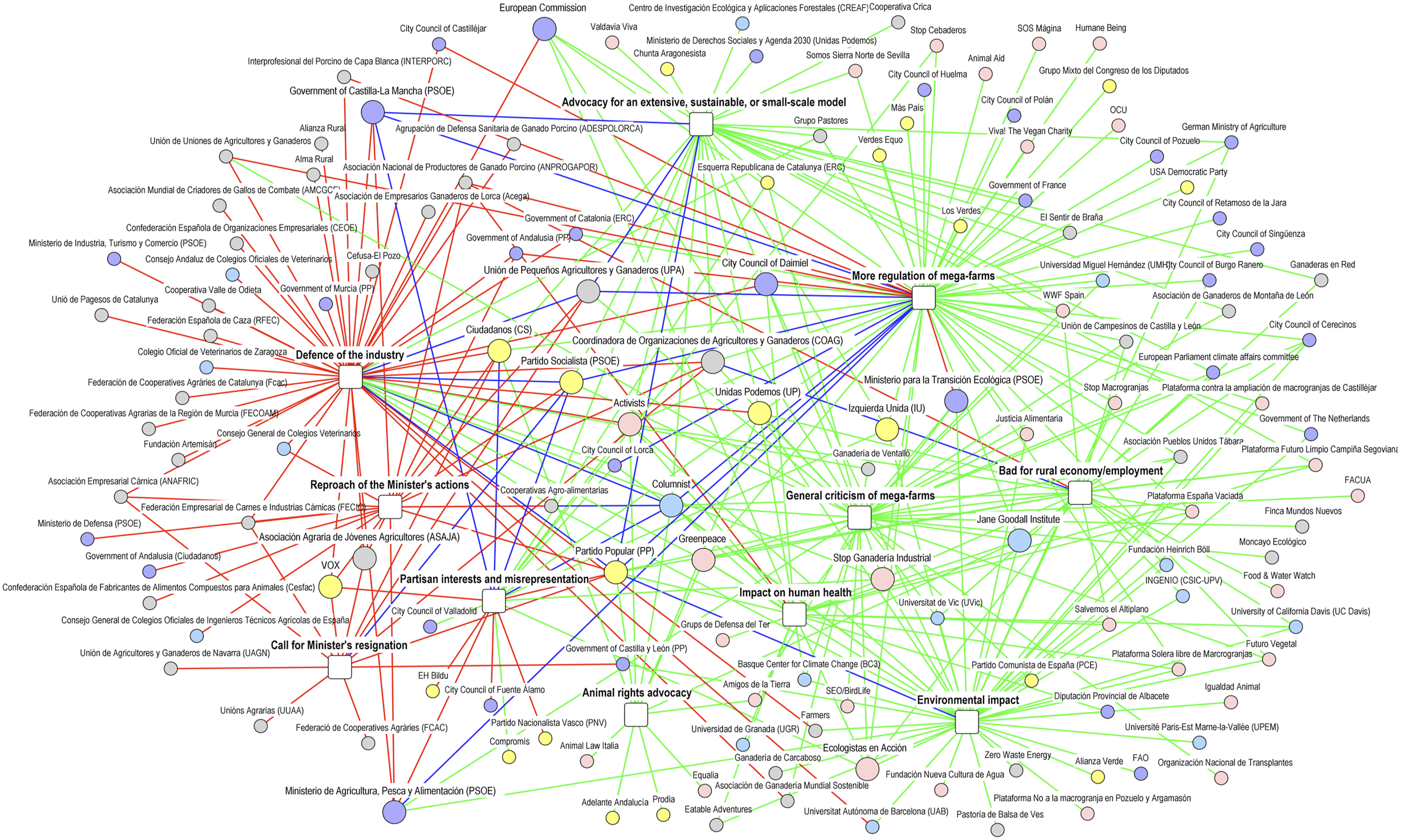
A closer examination of Figure 1 reveals significant differences between the two coalitions. The critical coalition (green links) is not only larger but also structurally more complex, encompassing a wider range of arguments and actors. It displays a denser structure, with many stakeholders connected to multiple argument nodes, positioning megafarms as a contested issue in broader political and social debates.
By contrast, the uncritical coalition (red links) appears smaller and more narrowly focused, adopting a reactive configuration in which many links are centred on discrediting the Minister of Consumer Affairs and the “Less Meat, More Life” campaign. It forms a more compact and less interconnected block, relying on a limited set of discursive links.
While the debate was structured around two opposing coalitions, some stakeholders (blue links) connected both sides, indicating strategic or ambivalent positions. Most actors, however, were clearly polarized.
The network includes 11 inductively derived arguments (white squares), forming a fragmented but insightful map of discursive alliances. A small number of actors dominated media visibility, while others—especially within the critical coalition—were less prominent but more active in linking diverse arguments.
Figure 1 also displays, through node colour, the sectors represented by the 140 stakeholders. In terms of distribution, 30% correspond to the animal agriculture industry, 23% to animal welfare interests, 21% to public administration, 14% to political actors, and 11% to academic or professional sectors.
However, this diversity at the sectoral level did not translate into equal media presence. Political actors alone accounted for 47% of the 1168 mentions, while the remaining sectors received far less visibility: 16% for industry, 13% for administration, 13% for academia and professional actors, and 12% for animal welfare. The next section explores these patterns in greater depth.
Visibility and configuration of key stakeholders
Top 20 stakeholders by number of mentions and position on megafarms.
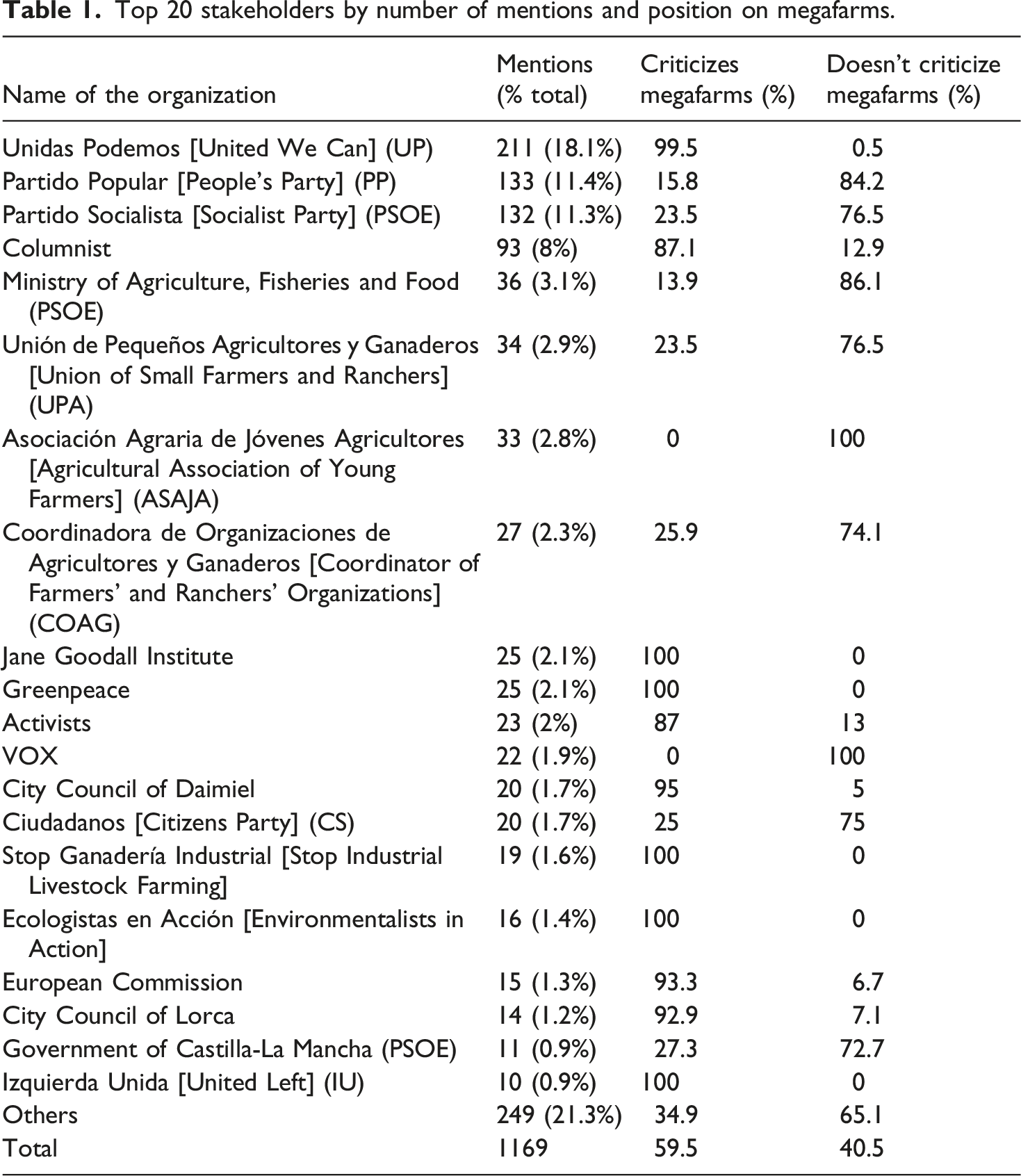
These actors can be grouped into four broad categories: (1) political parties, (2) columnists, (3) agro-industrial and institutional agricultural actors, and (4) environmental organizations and activists. Notably, each category played a distinct role in shaping the debate, both in terms of discursive positioning and media visibility.
The most dominant group is that of political parties. Unidas Podemos (UP), the People’s Party (PP), and the Spanish Socialist Workers’ Party (PSOE) alone accounted for over 40% of all mentions. Their prominence is not unexpected, given their institutional power and clearly defined ideological positions.
The UP, a left-wing party with strong environmental and social justice commitments, stands out as the most visible political actor, with 18.1% of all mentions and a strikingly consistent critical stance (99.5% of mentions opposing megafarms). This visibility aligns with its central role in launching the “Less Meat, More Life” campaign.
The PP, a conservative right-wing party traditionally aligned with agribusiness and rural interests, adopted a predominantly uncritical position (84.2%), defending the animal farming industry and opposing the minister’s campaign—an unsurprising stance given its ideological orientation and electoral base.
Interestingly, the PSOE, positioned at the centre-left and traditionally associated with progressive values, displayed a more ambivalent stance: only 23.5% of its mentions were critical of megafarms. This limited support is particularly striking given both the party’s ideological proximity to UP on other social and environmental issues and, more importantly, their formal coalition in government.
This distancing exposed internal tensions, as several PSOE ministers publicly opposed the campaign. For example, the government spokesperson declared: “Spain cannot be understood without this sector” (El Español, 5 January, 2022). Meanwhile, UP criticized the lack of coalition support and condemned the distortion of the minister’s message in the Guardian interview. The PP, in turn, escalated the debate by submitting motions in various institutional bodies demanding Garzón’s resignation (El País, 15 January, 2022).
Far behind the three main parties, other political groups such as VOX (1.9%) and Ciudadanos (1.7%) appeared only marginally in the press debate. Despite their differing ideological orientations—VOX on the far right and Ciudadanos in the liberal-conservative centre-right—both played a negligible role in shaping the controversy.
This is particularly striking in the case of VOX, which would later centre its electoral messaging on a defence of rural traditions and agricultural livelihoods. Nevertheless, their low visibility may reflect their then-limited institutional weight or a strategic decision by both parties to remain on the sidelines of an already polarized and high-stakes debate.
The second most visible group in the public discourse consisted of newspaper columnists, who accounted for around 8% of all mentions. In Spain, columnists are usually recognized professionals, commonly writers, journalists, or academics. They do not necessarily have a special interest in the topic at hand but are regular contributors to the media, selected for their public profile and authority to express opinions on a wide range of issues.
Despite the diversity of individual profiles, this group was predominantly critical of megafarms (87.1%) and its contributions often took the form of personal reflections and commentaries on visions of rurality, progress, and ecological responsibility. This suggests that a portion of the critical discourse did not originate from institutional actors or conventional journalistic reporting, but from individuals leveraging their platforms to articulate ethical and political standpoints.
A third group included agro-industrial associations and agricultural institutions. However, their discursive positions were not monolithic. The Agricultural Association of Young Farmers (ASAJA), for example, defended megafarming unequivocally (100% uncritical mentions). Its confrontational tone was particularly notable, as illustrated by a statement from its spokesperson: ‘I asked the [EU] Agriculture Commissioner if he was aware that we have a communist consumer minister who is jeopardizing the viability of many meat farms’ (ABC, 14 January, 2022).
This stance reflects its profile as one of the largest and most influential agrarian organizations in Spain, traditionally aligned with large-scale intensive producers and agribusiness interests. By contrast, the Union of Small Farmers and Ranchers (UPA) and the Coordinator of Farmers’ and Ranchers’ Organizations (COAG), organizations closely linked to medium-scale producers, displayed a more nuanced discourse: overall, they supported the sector but expressed concern over its excesses (76.5% and 74.1% uncritical, respectively).
Finally, the fourth group comprised environmental NGOs and unaffiliated activists. Despite their comparatively lower visibility (around 9%–10% of mentions), these actors played a crucial role in articulating ethical and ecological critiques of intensive animal agriculture. Organizations such as the Jane Goodall Institute, Greenpeace, Ecologists in Action, and Stop Industrial Livestock Farming expressed full rejection of the megafarm model (100% critical mentions). Similarly, individual activists quoted in the press also maintained a predominantly critical stance (87%), reinforcing the consistency and clarity of this group’s opposition to the current animal farming model.
This distribution of visibility reveals a clear imbalance: political parties dominated the press coverage, but more diverse and consistent criticism came from other social actors with lower media visibility. These findings help contextualize the arguments each group promoted, which are explored in the next section.
Discursive dynamics of the arguments
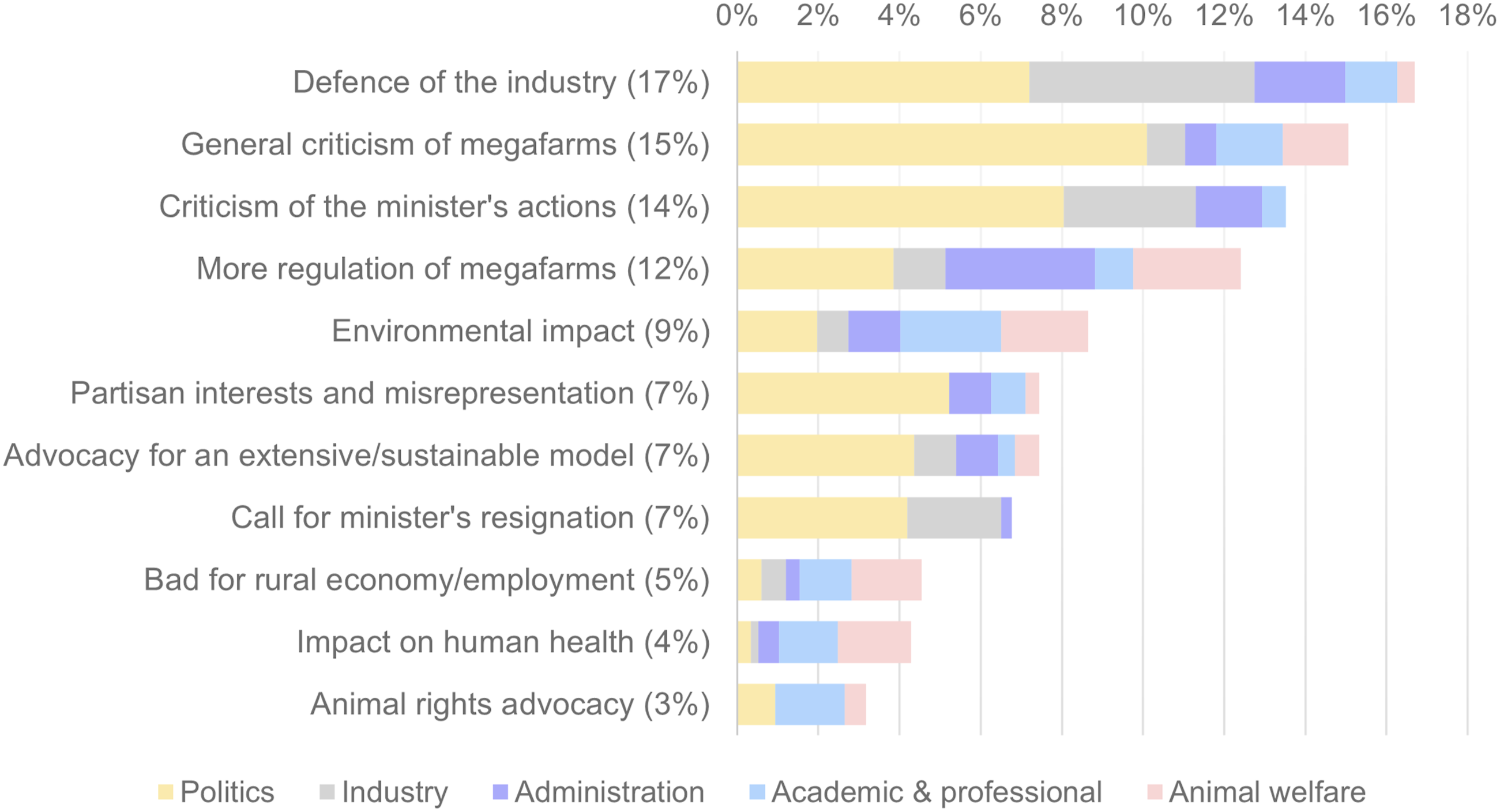
Beyond identifying which actors participated in the debate, it is essential to explore how they positioned themselves discursively. The results show that the controversy over megafarms did not unfold merely through presence or absence in the media, but through the deployment of specific arguments that reveal the underlying tensions, interests, and values at stake. Figures 2 and 3 provide insight into the 1169 arguments identified in the dataset, illustrating how they are distributed across the main discursive coalitions and across different sectors. Percentage of arguments by critical or non-critical position on megafarms (n = 1169 arguments). Percentage of arguments by type of stakeholder (n = 1169 arguments).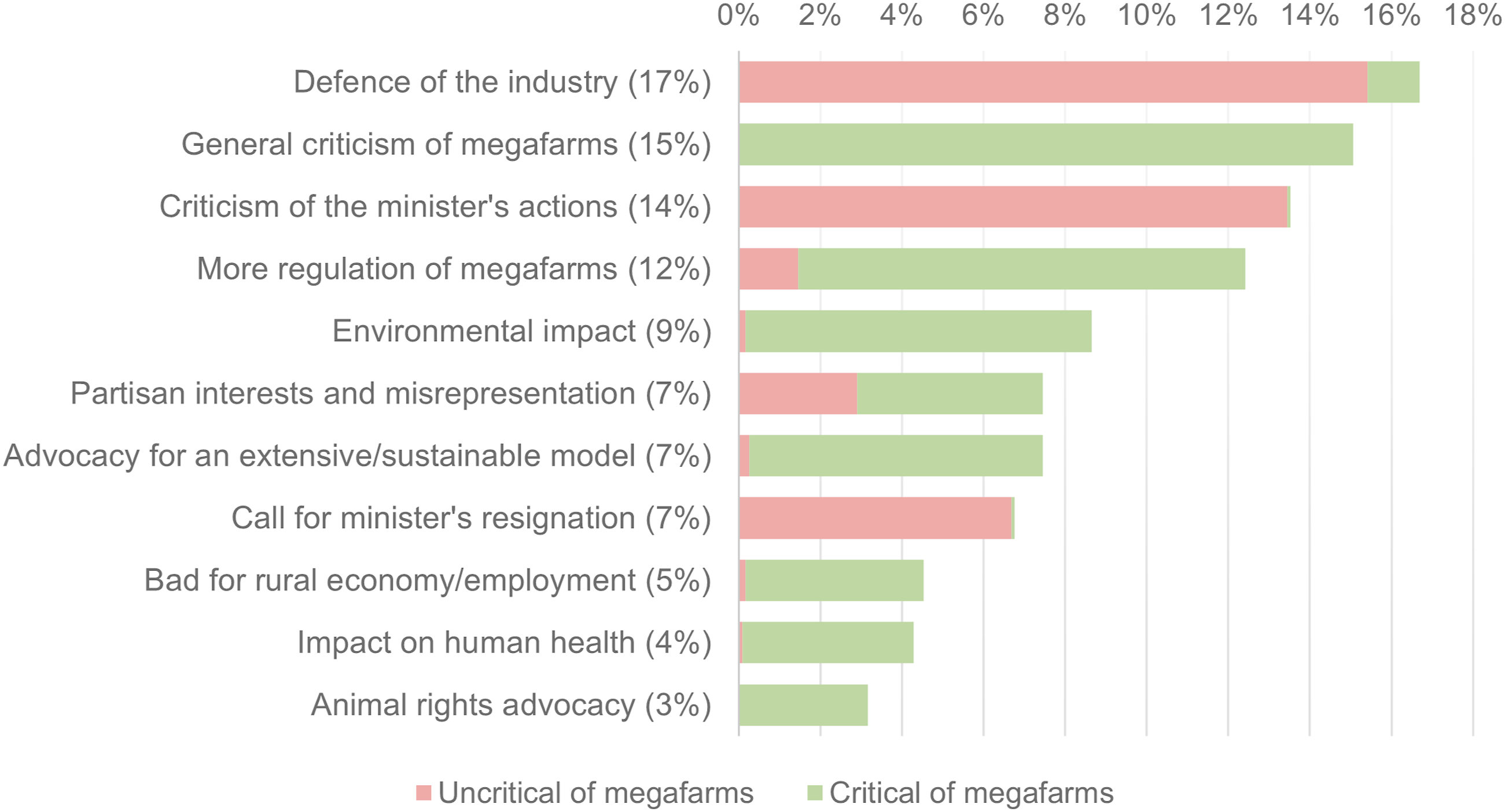
As shown in Figure 2, the distribution of arguments closely reflects the positions of the actors involved. The uncritical coalition (in red) predominantly defended the animal farming industry and targeted the minister, with reactions ranging from mild disapproval to calls for resignation. Their discourse often invoked the economic and symbolic significance of animal farming for Spain’s rural identity, coupled with accusations that the campaign harmed the country’s image.
In contrast, the critical coalition (in green) articulated a wider and more diverse range of arguments, including systemic critiques of industrial agriculture, calls for regulatory reform, environmental concerns, and support for extensive farming. This latter position did not reject animal agriculture per se, but questioned intensive models on social, territorial, and sustainability grounds. Interestingly, despite the campaign’s ecological framing, themes such as animal ethics and long-term sustainability remained largely marginal in the public discussion.
This pattern of polarized argumentation was also shaped by the types of actors involved. As shown in Figure 3, political stakeholders dominated in volume and visibility, driving the controversy through institutional authority and partisan conflict. They were particularly prominent in arguments related to the economic role of animal agriculture, regulatory control, and the political instrumentalization of the controversy, often framed within electoral strategies.
By contrast, environmental, professional, and academic actors brought forward concerns around sustainability, public health, and animals’ interests. However, their arguments received little media amplification, and the public framing of megafarms remained largely shaped by short-term political agendas, with ethical and scientific dimensions pushed to the margins.
Beyond aggregated patterns, several illustrative quotes from diverse actors help nuance the discursive landscape captured in Figures 2 and 3. One notable example is the call for stricter regulation of megafarms, which reveals a rare moment of partial consensus. Even some critics of the minister’s campaign expressed support for such measures. As reported in El País (9 January, 2022): “The Ministry of Agriculture itself [in the hands of the PSOE, critical of its Unidas Podemos coalition partners] is preparing a decree to limit the number of animals on cattle farms, after regulating pig and poultry farms.”
Similarly, environmental organizations such as WWF, Greenpeace, and Ecologistas en Acción welcomed regional initiatives to prevent the expansion of megafarms, particularly in response to pollution concerns. According to El País (8 January, 2022): ‘Environmental NGOs… call for and applaud the approval of moratoriums… due to the nitrate dumping they entail.”
Another frequently used argument within the critical coalition was the defence of extensive farming. This narrative, adopted by both political figures and professional organizations, critiques not animal agriculture itself, but rather its industrial intensification. For instance, COAG stated: “The so-called megafarms are not well accepted by those who carry this profession ‘in their veins’” (La Vanguardia, 19 January, 2022), implicitly questioning the legitimacy and values of large-scale operators.
In a similar vein, another recurring argument challenges the idea that megafarms contribute to rural development or local prosperity. Ecologistas en Acción, for example, argued that “there is no positive relationship between industrial pig farming and the fight against depopulation” (El Periódico, 16 January, 2022).
Among the negative impacts attributed to megafarms, environmental concerns were especially prominent, though mainly voiced by a limited set of organizations and grassroots platforms. Despite their limited media amplification and absence from the top 20 most visible actors, some of these groups played a noteworthy discursive role by introducing data-driven arguments. For instance, the Emptied Spain Platform (Plataforma España Vaciada) highlighted that “in the last 10 years, of the 2330 companies that exceeded ammonia emissions limits, 94% were farms” (La Vanguardia, 12 January, 2022).
Public health concerns were also raised, with a particular focus on water pollution. The Ter Defence Group (Grup de Defensa del Ter), for example, advocated reducing intensive animal farming in Catalonia, noting that “45% of the sources and springs in the Osona region exceed the legal limit for nitrates” (La Vanguardia, 16 January, 2022).
Finally, ethical concerns regarding animals’ rights and their interests in not suffering and being exploited were relegated to the background. The most visible voice in this regard was the late Jane Goodall. The primatologist, who passed away in October 2025, was involved in this case in 2022 and appeared in media interviews, contributing her expert opinion. The Jane Goodall Institute she founded has a branch in Spain and continues to be active through educational and volunteer programmes following her passing.
Her remarks brought the ethical treatment of animals into the spotlight, reminding the public that “Megafarms are immoral and destroy the environment (…). We must remember that each of these cows he is talking about is an individual capable of feeling satisfaction, fear and no doubt pain. It is a question of humanity. To treat them in this way is immoral and unethical” (El Mundo, 19 January, 2022).
Within the set of arguments, those advanced by political parties deserve particular attention, given their strong influence on the visibility and framing of the debate. Figure 4 shows the arguments used by the five parties that appeared most frequently in the media: Unidas Podemos (UP), Partido Popular (PP), Partido Socialista Obrero Español (PSOE), VOX, and Ciudadanos. Although the latter two played a more marginal role, their inclusion helps to map the full ideological spectrum. Distribution of arguments by main political parties in megafarms debate.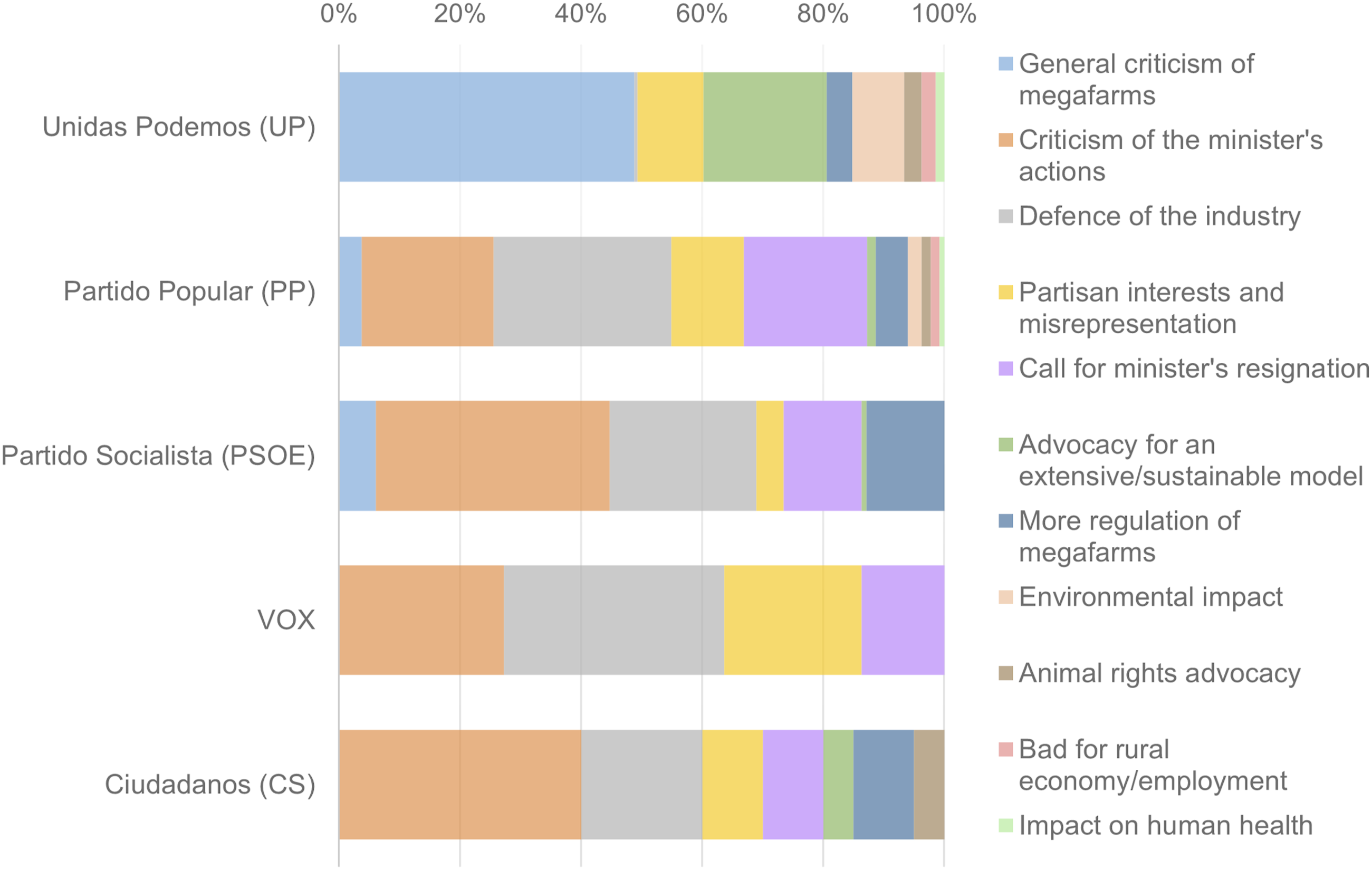
As shown in Figure 4, the parties articulated a diverse set of positions. Their arguments were shaped not only by ideological alignment but also by their strategic roles within the government–opposition dynamic. Unidas Podemos, which launched the ‘Less Meat, More Life’ campaign, stood out for using the broadest and most diverse set of arguments against megafarms, highlighting the benefits of extensive animal farming, rural development, and territorial justice. Paradoxically, however, ecological and animal ethics arguments remained marginal in its discourse, despite underpinning the campaign’s original framing.
Meanwhile, the PSOE, its coalition partner, adopted a markedly ambivalent stance, as noted above. Strikingly, it directed more criticism at Minister Garzón than even the conservative opposition, at times joining calls for his resignation. At the same time, the PSOE defended the animal agriculture sector, aligning itself with its economic importance and rural legitimacy. Yet, somewhat unexpectedly, it was also the most vocal political actor in advocating for regulatory reform, advancing more arguments related to the oversight of megafarms.
This stance reflects an attempt to balance economic growth with concern for workers’ rights: while megafarms generate employment, they are often criticized for poor labour conditions and for undermining small-scale producers. Thus, rather than taking a clear position for or against megafarms, the PSOE avoided openly questioning them, likely in order to avoid being seen as opposing the meat sector altogether. This threefold positioning reveals an effort to dissociate itself from its coalition partner, to appease key sectors, and to fulfil its institutional responsibilities, resulting in a discourse marked by internal tensions and contradictions.
Within the conservative bloc, PP and VOX led the opposition to the campaign through highly confrontational strategies. Both defended the animal agriculture industry as a pillar of the national economy and rural identity, while strongly attacking the minister and demanding his resignation. Yet their discursive styles diverged. The PP occasionally invoked regulatory measures, likely to project institutional responsibility and maintain credibility beyond partisan confrontation. This approach reflects its attempt to appeal both to its rural base and to broader audiences concerned with governance and oversight. Despite its opposition to the campaign, the PP’s discourse remained relatively measured, combining criticism with gestures of pragmatic responsibility.
VOX, by contrast, adopted a markedly more polarizing stance. Its discourse doubled down on ideological confrontation, combining nationalist rhetoric with accusations of political manipulation. The party omitted any reference to regulation, sustainability, and, of course, animal ethics, focusing instead on framing the issue as an attack on Spanish values and tradition. This strategy reinforced its positioning as the most radical force within the conservative spectrum.
Ciudadanos echoed many of these talking points, though its presence in the debate was more limited. The party mostly confined its interventions to criticism of the minister, without articulating a coherent policy position, reflecting its declining political influence at the time.
Together, these actors reinforced the politicization of the controversy while contributing little to expanding its discursive complexity. Furthermore, the confrontation over megafarms served not only as a reaction to a public campaign, but also as a stage for inter-party competition, most notably within the conservative bloc, but also among government partners. This revealed broader power struggles within the Spanish political landscape, and may also have functioned as a strategic diversion from deeper ethical questions concerning animals, national identity, and the future of food systems.
Discussion and conclusions
Animal agriculture has become a contested topic in public discourse, where concerns about food security, rural identity, environmental harm, and animal ethics intersect. In Spain, political reactions to Minister Garzón’s statements in early 2022 ignited a public controversy over meat consumption and intensive farming. The analysis of this controversy shows that megafarms became a highly polarizing symbol, subject to competing representations and political instrumentalization in the media. These dynamics gave rise to two main imaginaries: one rooted in national identity and economic productivity, and another oriented towards regulation, justice, and ecological limits. At the same time, the controversy largely sidestepped deeper ethical questions about the future of human–animal relations and the moral foundations of national identity.
As the controversy unfolded, it became evident that political actors were not merely participants in the debate; they dominated it, not only in volume but also in their capacity to shape its structure and tone. All major parties mobilized multiple, and often contradictory, arguments, suggesting that the controversy functioned as a flexible discursive platform through which diverse and opportunistic goals could be pursued. In this respect, the PSOE’s ambivalent stance (combining regulatory proposals with criticism of the minister) epitomizes this instrumental use of argumentation, as has been observed in other environmental debates (Moreno and Almiron, 2024).
The megafarms debate thus became a discursive media battleground for political agendas. Regulatory language, personal attacks, and nationalist framings reveal how ethical and sustainability concerns are often sidelined by strategic positioning. Public controversies such as this one are frequently reframed through partisan logics, in which communication is not aimed at fostering dialogue or democratic deliberation, but at consolidating political capital. As shown in the UK meat tax debate (Almiron and Moreno, 2021), the initiating actor plays a key role in shaping public discourse. Here, Garzón’s position as minister drew political actors to the forefront, overshadowing expert and civil society voices. Although environmental organizations and scientific actors raised relevant concerns, their limited media visibility reveals structural imbalances.
The controversy analysed in this paper illustrates how power asymmetries shape public debate. As framing theory suggests, the frames that prevail in public discourse often reflect underlying power relations among competing actors and tend to gain traction when they resonate with the cultural schemas through which audiences interpret political issues (Entman, 1993; Gamson and Modigliani, 1989). Since public opinion is largely shaped by the information available in the communication environment, the prominence of certain frames over others can significantly influence how issues are perceived by the wider public (Zaller, 1992).
In the case of megafarms, the prevailing political discourse of the most visible actors, particularly those linked to the meat industry, was especially influential in shaping the dominant framings of the debate, leaving concerns about animal exploitation and environmental harm on the periphery. Feedback from other actors was incorporated selectively, reinforcing persuasive business-as-usual narratives (Almiron, 2017). As a result, what initially emerged as an environmental and ethical controversy was reframed into a dispute aligned with dominant political, economic, and cultural interests.
While ecological arguments were marginalized, ethics receded beneath layers of strategic framing. As the controversy escalated, animals were rapidly pushed out of view, resituated as expendable resources within a capitalist system and subordinated to more powerful agendas. This dynamic reflects a broader pattern of double invisibility in the media arena: not only are animals systematically excluded from public narratives (Almiron and Zoppeddu, 2015; Friedlander et al., 2014; Moreno and Almiron, 2021), but even debates that originate in concern for their suffering tend to erase them as sentient subjects.
However, this silencing is not accidental, but symptomatic of deeper structural dynamics. It reflects a broader asymmetry in the public sphere, where actors with structural power not only possess greater material resources but also enjoy disproportionate access to media platforms and discursive legitimacy. Media institutions, rather than facilitating pluralistic and open deliberation, often reproduce dominant ideologies and act as gatekeepers of the status quo under the guise of balance. As a result, counterhegemonic perspectives, such as those challenging anthropocentric speciesism and economic growth imperatives, struggle to gain traction.
This paper’s findings contribute to ongoing discussions in critical public relations, political communication, and ethical contestation by analysing a mediatized controversy shaped by power asymmetries. It illustrates how emerging social concerns—such as animal ethics and environmental justice—can be reframed and diluted through strategic communication practices that favour institutional dominance. Additionally, the findings highlight the need for scholars to move beyond media-centric interpretations that focus solely on journalistic gatekeeping. Instead, it is essential to consider the broader constellation of public relations dynamics and the structural inequalities that shape public discourse.
To do so, the authors would emphasize the importance of advancing the interdisciplinary nature of critical public relations and fostering a meaningful dialogue with critical animal studies. In a cultural landscape shaped by carnist ideology, these frameworks call for a rethinking of animal rights, media ethics, and the political economy of communication. This synergy helps prevent reductive interpretations of media coverage that overlook the communicative capacities and structural advantages of different actors.
Furthermore, critical animal studies provides indispensable tools for exposing the deep entanglements between communication, speciesism, and capitalism, and invites a reconsideration of the role of media and public discourse in sustaining systems of violence and exclusion. Building upon previous research on the revisitation of language and the challenge to dominant paradigms that normalize the exploitation of nonhuman animals in communication practices (Almiron et al., 2016; Almiron and Fernández, 2021; Freeman, 2014), this study argues that unveiling these systemic power relations is a prerequisite for any meaningful analysis of media representations of interspecies relations.
In this sense, fostering a stronger dialogue between critical public relations scholarship and critical animal studies is not merely a niche intersection, but a necessary step towards challenging the anthropocentric-speciesist assumptions that have historically limited the critical scope of journalism and public relations research.
From a more practice-oriented perspective, these insights also have implications for social movements engaged in animal advocacy, as well as in interspecies and environmental justice. To avoid the distortion or co-optation of their messages, such groups must not only strengthen their presence in public debate but also diversify their communication strategies. A two-pronged strategy is recommended: reinforcing evidence-based advocacy, which tends to be more effective in policy and regulatory contexts (Almiron and Moreno, 2021), combined with disruptive grassroots interventions aimed at amplifying marginalized voices (Williams et al., 2022).
The findings also offer practical implications for public relations practitioners, especially those working in advocacy. Strategic framing and coalition-building enable actors to maintain influence over public narratives and sustain the perceived legitimacy of their positions in contested debates. At the same time, communication strategies that rely solely on symbolic adjustments (such as linguistic reframing) may be insufficient if they are not accompanied by substantive changes in organizational practices. In this sense, effective advocacy-oriented public relations require moving beyond discursive repositioning towards an ethical alignment between communication strategies, organizational values, and practices consistent with principles of interspecies justice.
That said, the study has certain limitations. Its focus on national newspapers excludes regional media and does not account for editorial lines or political orientations, which may influence framing. Future research could explore these dimensions by analysing and comparing ideological framings, as well as adopting longitudinal approaches to examine how narratives around animal agriculture evolve in response to environmental, political, or activist shifts.
Despite these limitations, the study also points to spaces of possibility. Even within a media landscape marked by political polarization and strategic communication, there are moments in which alternative voices and critical perspectives can still emerge. Media platforms, when attentive to underrepresented voices, including those advocating for nonhuman animals, can help expand the scope of democratic deliberation. In doing so, they contribute to creating the conditions for a more informed, pluralistic, and compassionate public conversation, one capable of envisioning fairer, care-based futures for all.
Footnotes

Funding
The authors disclosed receipt of the following financial support for the research, authorship, and/or publication of this article: This work was supported by the Spanish Ministry of Science and Innovation and State Research Agency (Agencia Estatal de Investigación, AEI) under grant PID2020-118926RB-100/MICIN/AEI/10.13039/5011000110, as part of the COMPASS research project (Lobbying and Compassion: Interest Groups, Discourse and Nonhuman Animals in Spain).
Declaration of conflicting interests
The authors declared no potential conflicts of interest with respect to the research, authorship, and/or publication of this article.