






Abstract
Background
Cardiac rehabilitation (CR) is an evidence-based recommendation for patients with coronary artery disease (CAD). However, CR is dramatically underutilized. Telehealth interventions have the potential to overcome barriers and may be an innovative model of delivering CR. This review aimed to determine the effectiveness of telehealth intervention delivered CR compared with center-based supervised CR.
Method
Medline, Embase, the Cochrane Central Register of Controlled Trials (CENTRAL) in the Cochrane Library and the Chinese BioMedical Literature Database (CBM), were searched to April 2014, without language restriction. Existing randomized controlled trials, reviews, relevant conference lists and gray literature were checked. Randomized controlled trials that compared telehealth intervention delivered CR with traditional center-based supervised CR in adults with CAD were included. Two reviewers selected studies and extracted data independently. Main clinical outcomes including clinical events, modifiable risk factors or other endpoints were measured.
Results
Fifteen articles reporting nine trials were reviewed, most of which recruited patients with myocardial infarction or revascularization. No statistically significant difference was found between telehealth interventions delivered and center-based supervised CR in exercise capacity (standardized mean difference (SMD) –0.01; 95% confidence interval (CI) –0.12–0.10), weight (SMD –0.13; 95% CI –0.30–0.05), systolic and diastolic blood pressure (mean difference (MD) –1.27; 95% CI –3.67–1.13 and MD 1.00; 95% CI –0.42–2.43, respectively), lipid profile, smoking (risk ratio (RR) 1.03; 95% CI 0.78–1.38), mortality (RR 1.15; 95% CI 0.61–2.19), quality of life and psychosocial state.
Conclusions
Telehealth intervention delivered cardiac rehabilitation does not have significantly inferior outcomes compared to center-based supervised program in low to moderate risk CAD patients. Telehealth intervention offers an alternative deliver model of CR for individuals less able to access center-based cardiac rehabilitation. Choices should reflect preferences, anticipation, risk profile, funding, and accessibility to health service.
Introduction
Coronary artery disease (CAD) is the leading cause of mortality and morbidity worldwide. However, an increasing number of people survive, because of the advances in diagnosis, treatment, and population risk factor modification. The exercise-based cardiac rehabilitation (CR) in hospital or rehabilitation centers is the supervised intervention with the best scientific evidence: mortality reduction, symptom relief, smoking cessation, and improved exercise capacity, risk factor modification and overall psychosocial wellbeing. 1 Based on the obvious evidence-based benefits, CR is recommended by the American Heart Association (AHA)/the American College of Cardiology (ACC), and the European Society of Cardiology (ESC) guidelines for patients with CAD.2,3 However, due to various barriers to referral and adherence, CR is still dramatically underutilized compared to other evidence-based performance measures. An average reported referral rate is approximately 30% in Canada, the UK and the USA and a little higher at around 50% in the rest of European countries. 1
Telehealth intervention delivered CR (such as the telephone, computer, internet, and videoconferencing) is able to overcome barriers of time and distance and can be carried out as a community- or home-based program, and this makes it among the alternative models available rather than the traditional center-based (hospital or rehabilitation center based) CR. 4 It has been reported that telehealth interventions have a beneficial effect on risk factor reduction and secondary prevention for CAD patients who cannot access CR and thus narrow the gap between evidence and practice. 5 However, no systematic review of the effectiveness of telehealth intervention versus center-based CR has been published. This review was conducted to determine the effective evaluation of the two forms of CR carried out within randomized controlled trials.
Methods
Literature search
Randomized controlled trials, systematic reviews, and meta-analyses were identified by searching the following databases: Medline, Embase, Chinese BioMedical Literature Database (CBM), and the Cochrane Central Register of Controlled Trials (CENTRAL) in the Cochrane Library. The complete search strategy is available in the Supplementary Material. No time limit or language restrictions were used in the search. Reference lists and bibliographies of retrieved articles and review articles, relevant conference lists, grey literature were searched manually or by contacting experts in the field or searching conference abstracts.
Selection of publications
Two independent reviewers (KH and WL) scanned titles and abstracts initially to identify potentially relevant articles. If an abstract did not give sufficiently precise information, or such information was not available, the article would be obtained for further review. Potentially relevant articles were retrieved in full text to be evaluated by two reviewers independently who reached a consensus on whether or not an article should be included according to the following selection criteria.
Inclusion criteria
The specific inclusion criteria for this review were: (a) randomized controlled trials; (b) participants included patients with myocardial infarction, angina, or patients who had undergone revascularization (coronary artery bypass grafting, or percutaneous coronary intervention); (c) telehealth intervention delivered CR was defined as a structured community- or home-based exercise program, delivered by any kind form of following technology: telephone, computer, internet, or videoconferencing; (d) center-based CR was a supervised program undertaken in a hospital or rehabilitation center with structured exercise training as core component; (e) one of the following outcomes had to be reported: mortality (cardiac or overall), adverse events, modifiable coronary risk factors (smoking, blood lipid concentrations, and blood pressure), exercise capacity, health related quality of life, or psychological state.
Exclusion criteria
The specific exclusion criteria for this review were: (a) articles in which participants were not randomized to telehealth intervention and center-based CR groups; (b) articles in which participants were not restricted to CAD patients, such as those involving patients with valve disease, heart failure not resulting from CAD or other cardiovascular disease; (c) articles that focused on information about the recovery only and did not have a structured exercise component for rehabilitation; (d) duplicate reports on the same study were also not considered.
Data extraction
Data was extracted from the identified articles independently by KH and WL. Any disagreement between reviewers was resolved through a third opinion (BH). Information extracted from relevant articles included inclusion criteria (study design, participants, interventions, outcomes, and setting), risk of bias, and reported outcomes. If insufficient details were reported, the authors were contacted for further information.
Data synthesis and analysis
The relevant references and abstracts were imported into Endnote X6 software (Thomson Reuters, Philadelphia, Pennsylvania, USA) and all duplicates removed. If articles about the same study reported outcomes at different time points, outcomes at the longest follow-up point within one year (short term) after randomization were included in meta-analysis. The outcomes over one year were described in the review. Data analysis was performed with the Review Manager Version 5 for Windows (The Cochrane Collaboration, Oxford, UK). Differences in effects were examined for two comparisons (telehealth interventions vs center-based cardiac rehabilitation). Relative risks (RRs) and 95% confidence intervals (CIs) were calculated for dichotomous data. The weighted mean difference (WMD) with 95% CI or standardized mean difference (SMD) with 95% CI was calculated for continuous data. Hypothesis testing was set at the two-tailed 0.05 level. Fixed effect model for meta-analysis was used, except where heterogeneity p ≤ 0.1, when the random effects model was used instead. For continuous data, mean changes and standard deviations (SDs) from baseline were used if available. Otherwise endpoint data were used. If the SDs of the effect sizes were not reported, they were calculated from available data. For SDs of change from baseline, a correlation estimate of 0.5 was used.
Quality and risk of bias in individual studies
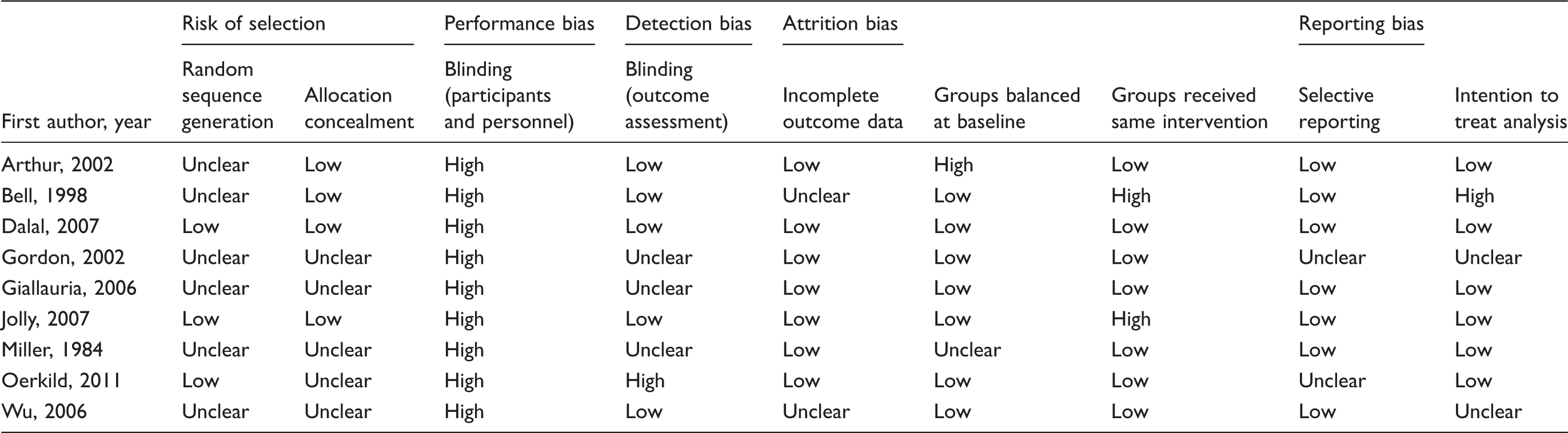
Quality assessment of risk of bias was undertaken for included studies, which was assessed by KH and WL in accordance with guideline of the Cochrane handbook for systematic reviews of interventions: version 5.0.1 (The Cochrane Collaboration, Oxford, UK). Quality was assessed in terms of random risk of selection, performance bias, detection bias, attrition bias, reporting bias, and intention to treat analysis. We also determined whether groups were balanced at baseline or received same intervention.
Results
Results of the search
From a preliminary screening of 554 titles and abstracts identified in the literature search after excluding duplicates, 33 full text articles were retrieved for closer inspection. Another 11 articles were identified through references from other sources. A total of 15 articles6–20 that reported on nine trials were judged to meet the selection criteria and exclusion criteria (Figure 1). All the articles were published in English. The trial conducted by Smith and Arthur and others was reported in three articles,7,14,18 the trial by Dalal and Taylor and others in two articles,11,15 and the trial by Jolly and others in four articles.12,16,17,19
Summary of study selection process. CAD: coronary artery disease; CR: cardiac rehabilitation; RCT: randomized controlled trial.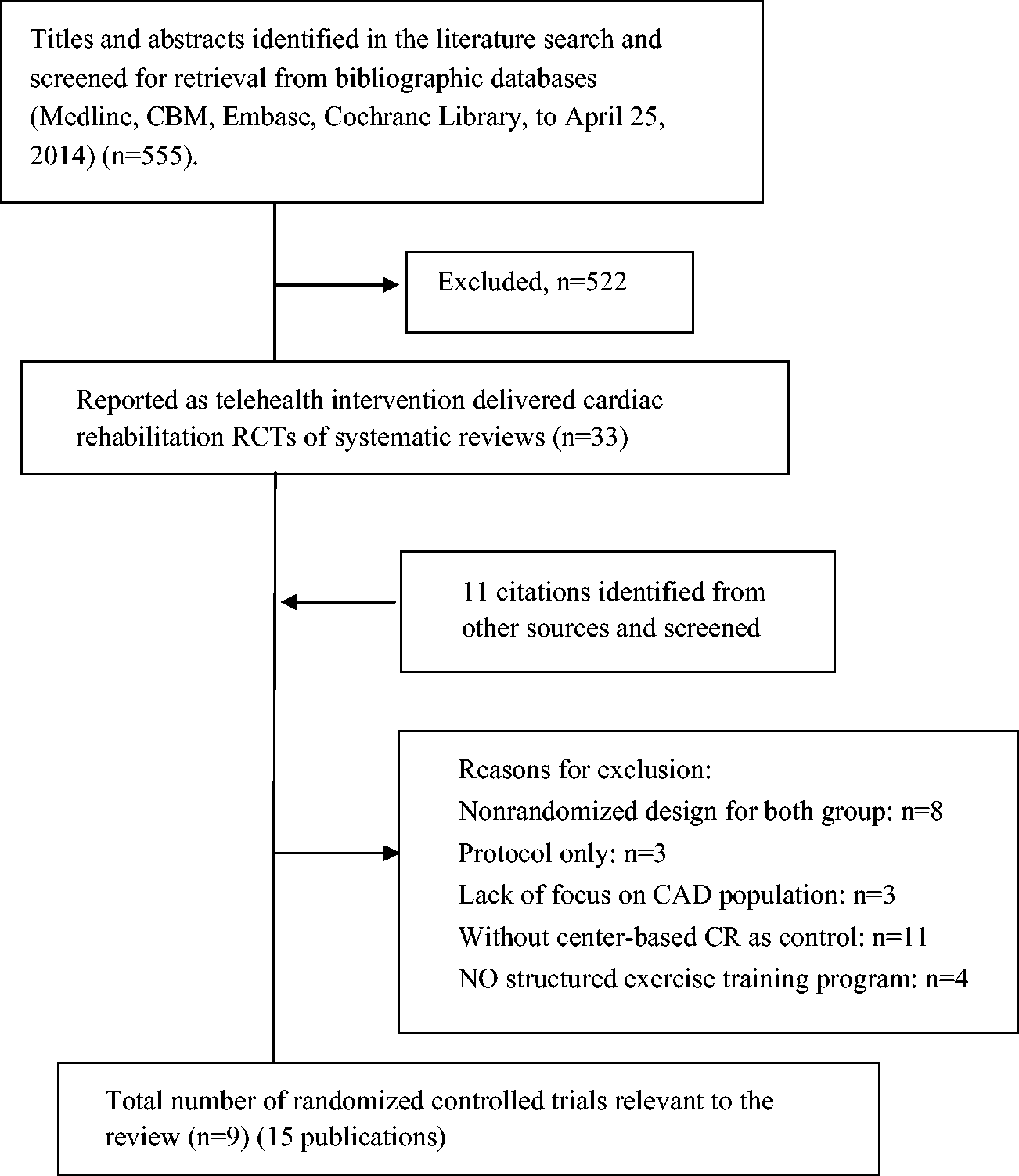
Description of studies
Characteristics of included trials.

AMI: acute myocardial infarction; BMI: body mass index; CABG: coronary artery bypass grafting; CAD: coronary artery disease; CR: cardiac rehabilitation; ISWT: incremental shuttle walking test; METs: peak metabolic equivalent of energy; MI: myocardial infarction; PCI: percutaneous coronary intervention; RCT: randomized controlled trial; VO2 peak: peak oxygen uptake. SF-36: the 36-item short form health survey; STAI: the state-trait anxiety inventory; BDI: Beck depression inventory; MOS: measures of quality of life core survey; HADS: hospital anxiety and depression scale; 6MWT: six-minute walk test; SF-12: the 12-item short form health survey. MacNew Questionnaire: MacNew Heart Disease Health-related Quality of Life Questionnaire, which was designed to evaluate status of daily activities, physical, emotional, and social functioning of patients with coronary heart disease and its treatment.
Cardiac rehabilitation in the telehealth intervention group was delivered by telephone in seven trials,6,10–14,20 telephone and computerized participant management system by the telephone and the Internet in one trial, 8 recording-transmitting electrocardiography (ECG)-device by telephone and e-mail in one trial. 9 No trial evaluated videoconferencing. Among the four phases of CR, two trials reported on phase II,8,10 one reported on phase IV, 12 which relates to the long-term review permitting continued support of lifestyle changes, drug therapy, physical and psychological wellbeing, and early intervention when required. Although the rest of the six trials6,7,9,11,13,20 did not report specifically which phase was delivered, we conclude that it is likely to be phase II. Exercise in telehealth intervention delivered CR varies in total duration (six weeks to six months), frequency (1–6 sessions/week), and session length (25–60 min/session). Training intensity was measured by a variety of methods, with intensity of maximum oxygen intake in one trial, 14 maximum heart rate in four trials8–10,20 and the Borg scale in one trial. 13 Additional education on risk factors, lifestyle modification, medication or stress management was provided in seven trials.6,8,9,11–14 The center-based supervised CR group received the same intervention as in telehealth intervention groups except the trials by Bell 6 and Arthur et al. 7 with differences in term of exercise duration, frequency, session length or intensity. All the reported outcomes in the short term varied from 12 weeks to 24 months after randomization. At long-term follow up, the trial by Jolly et al. 12 was reported at 24 months, and the trial by Arthur et al. 7 was reported at one and six years after the trials in articles by Smith et al. 14 and Smith et al. 18 No significant difference in rate of participants with outcome was found between the telehealth intervention and center-based groups.
Risk of bias in included studies
Risk of bias assessment of included trials.
Effects of interventions on outcomes
Clinical events
All-cause mortality
All trials reported on all-cause mortality during the study, with no deaths in four trials.8–10,20 The meta-analysis of eight trials reported no significant difference in all-cause mortality in the short term (Figure 2). The remaining trial by Arthur et al.
7
in 2002 did not report mortality after six months post randomization. However, no statistical difference was reported by Smith et al.
18
(six-year follow up).
All-cause mortality with telehealth intervention and center-based cardiac rehabilitation (CR) in short term. CI: confidence interval.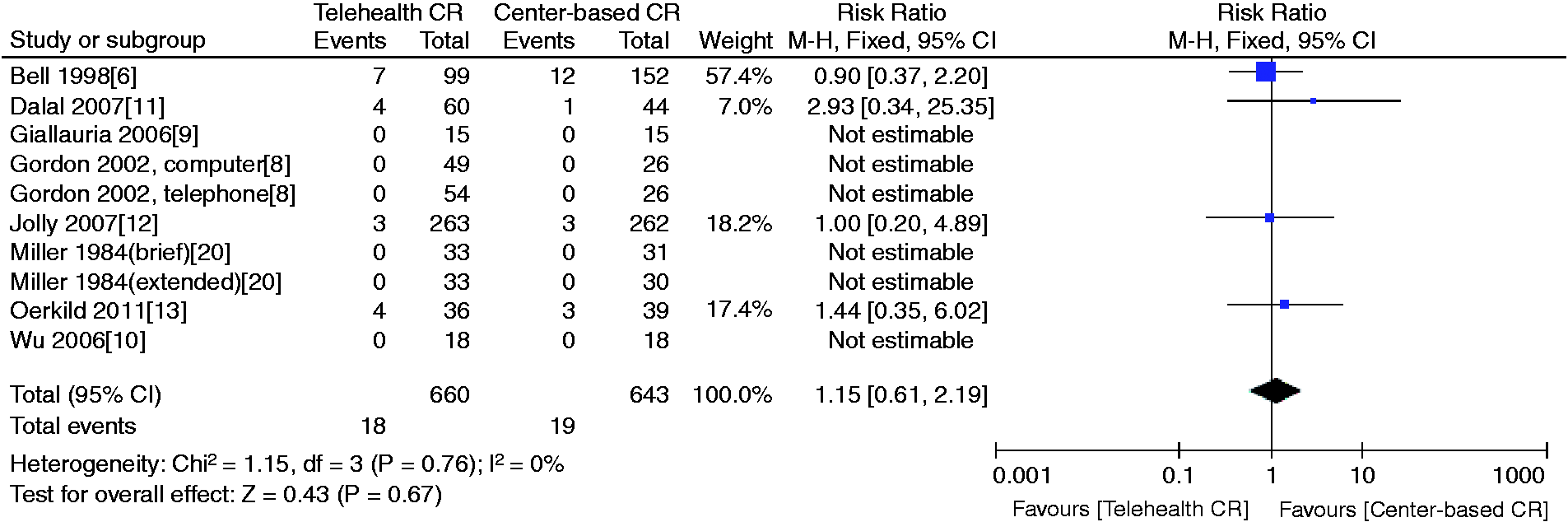
Other cardiovascular events
Five trials8,11–13,20 reported cardiac events, stroke, or admission events that happened in the short term (12 weeks to 12 months). Gordon et al. 8 found no statistically significant differences in medication use. Dalal et al. 11 reported no difference in comorbid conditions and laboratory values. Miller et al. 20 reported on difference in cardiovascular events. Oerkild et al. 13 also stated that events were equally distributed between two groups without supporting data. No comparison was made in the remaining three trials. At long-term follow up, no statistical difference was reported by Smith et al. 14 (one-year follow-up) and Jolly et al. 12 (24 months). However, and Smith et al. 18 (six-year follow up) reported higher number and the distribution of hospitalizations with telehealth intervention group.
Modifiable risk factors
Blood lipids
Five trials reported data on blood lipids profile. All five trial reported total cholesterol (TC), three trials reported high-density lipoprotein cholesterol (HDL-C), two trials reported low-density lipoprotein cholesterol (LDL-C), and only one trial by Gordon et al.
8
reported triglyceride (TG). Meta-analysis of the included trials did not show significant differences in TC, HDL-C and LDL-C in the short term (12 weeks to 12 months) (Figure 3), as well as TG in the single trial by Gordon et al.
8
At long-term follow up, Jolly et al.
12
(24 months) reported no significant differences in TC and HDL-C. There was significant heterogeneity with TC and therefore a random effects model was used. The heterogeneity in TC was minimized with no difference in findings result (fixed effects, WMD 0.09 (−0.03 to 0.21) mmol/l, heterogeneity χ2 = 0.75, df = 4, p = 0.95, I2 = 0%) when we removed data from the trial by Bell,
6
in which substantial differences exist in exercise duration, frequency, session length and intensity.
Total cholesterol (a), high-density lipoprotein cholesterol (b) and low-density lipoprotein cholesterol (c) with telehealth intervention and center-based cardiac rehabilitation (CR) in the short term. CI: confidence interval; SD: standard deviation.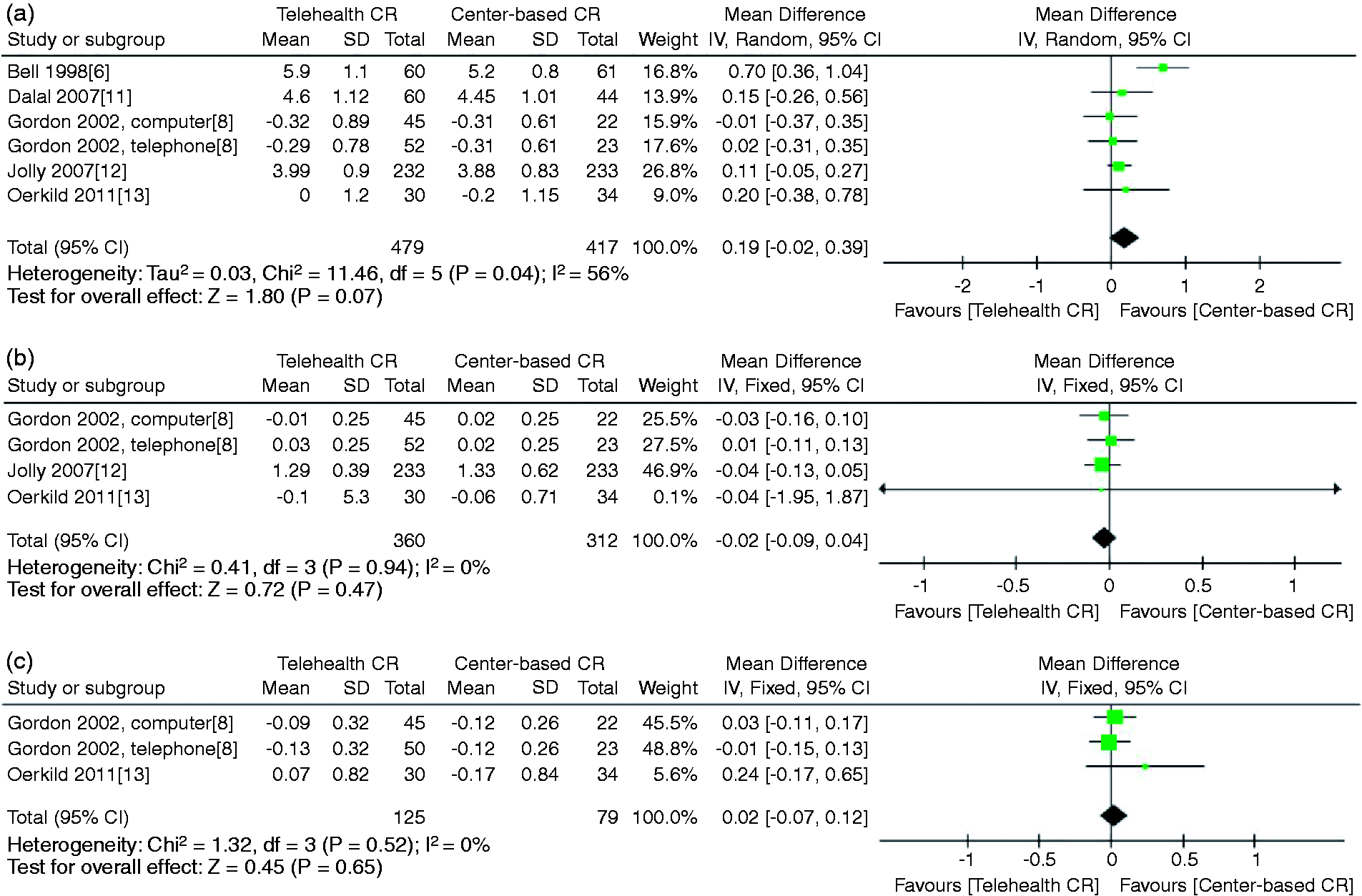
Blood pressure
Four trials reported data on systolic and diastolic blood pressure (mm Hg). One trial by Bell
6
only reported on systolic blood pressure, and the reason for this was unclear. No difference in systolic and diastolic blood pressure was found between the groups in the short term (12 weeks to 12 months) (Figure 4). At long-term follow up, Jolly et al.
12
(24 months) reported no statistical differences in systolic and diastolic blood pressure.
Systolic (a) and diastolic (b) blood pressure with telehealth intervention and center-based cardiac rehabilitation (CR) in the short term. CI: confidence interval; SD: standard deviation.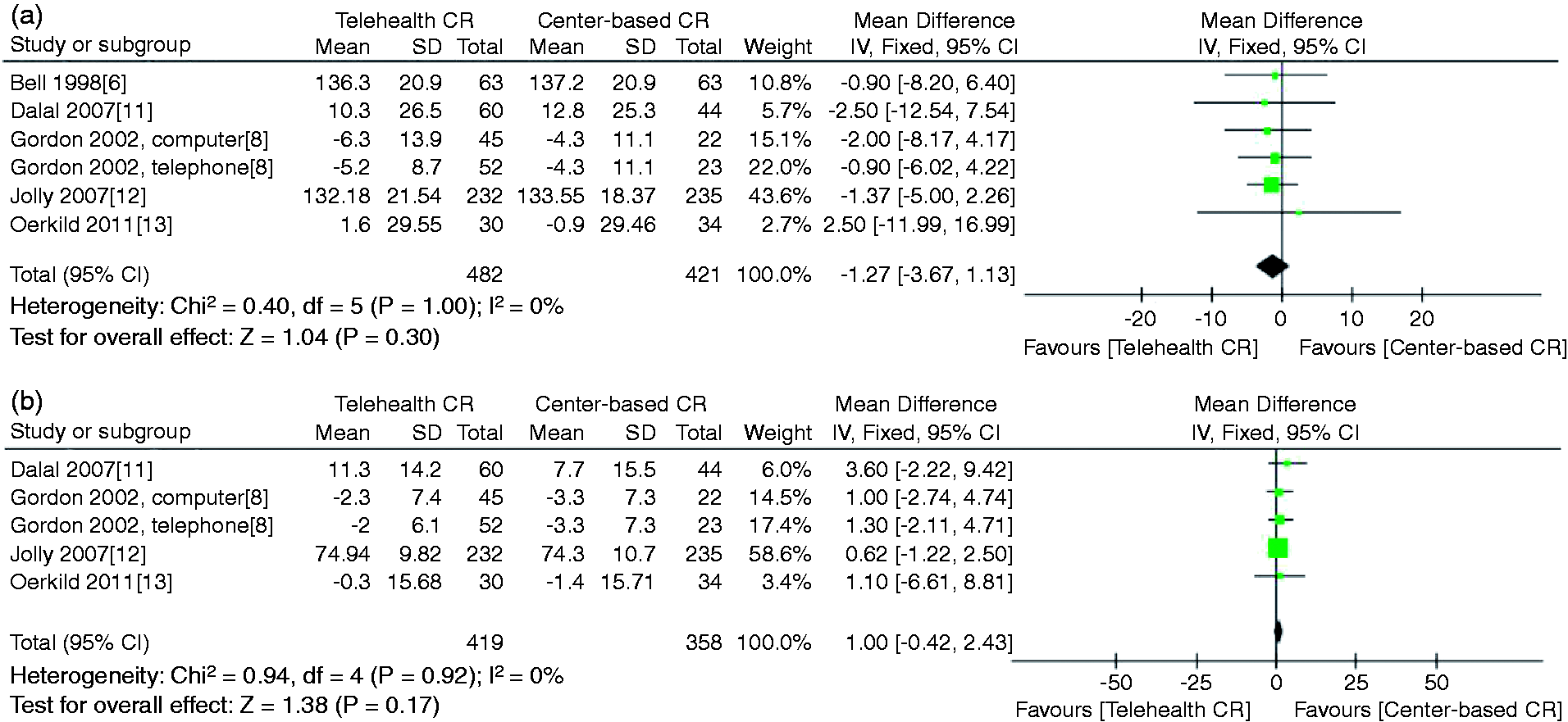
Smoking prevalence
Smoking prevalence was reported in five trials. Meta-analysis of the included four trials in the short term (12 weeks to 12 months) did not show a significant difference in smoking prevalence between the groups (Figure 5). At long-term follow up, Smith et al.
14
(one-year follow up) and Jolly et al.
12
(24 months) reported no significant improvement in current smoking between two groups.
Smoking prevalence with telehealth intervention and center-based cardiac rehabilitation (CR) in the short term. CI: confidence interval.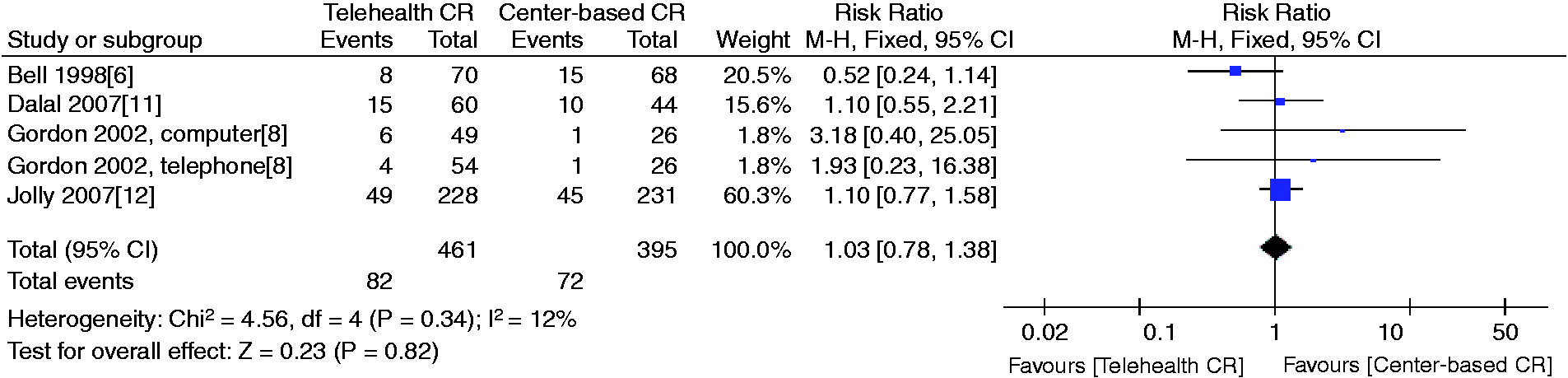
Weight
Four trials reported data on weight or body mass index (BMI). The SMD was used because of the differences in measurement scales (pounds, kg/m2). No difference in weight or BMI was found between the groups in the short term (Figure 6). At long-term follow up, Smith et al.
14
(one-year follow up) reported no significant improvement in weight between the two groups.
Weight or body mass index (BMI) with telehealth intervention and center-based cardiac rehabilitation (CR) in the short term. CI: confidence interval; SD: standard deviation.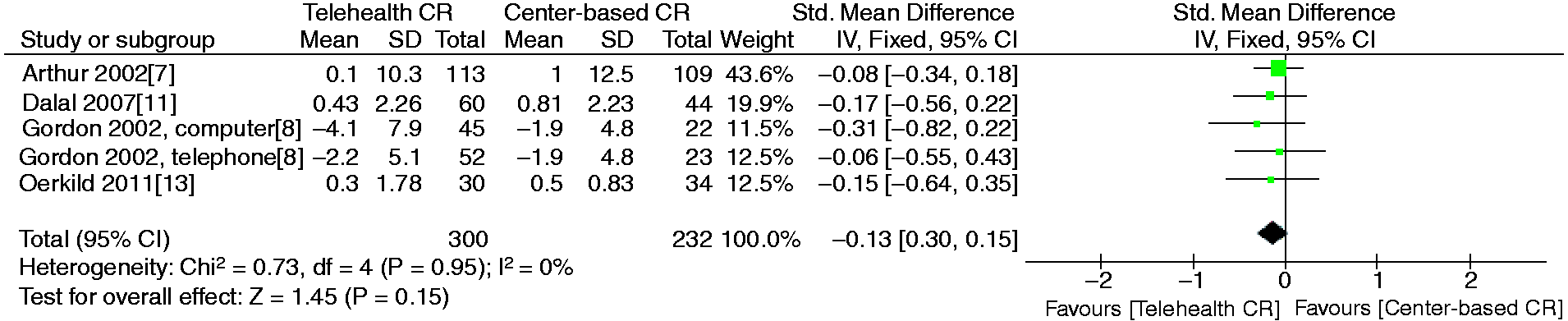
Other end points
Exercise capacity and peak heart rate
All of the nine included trials reported exercise capacity in the short term (12 weeks to 12 months) using at least one kind of measurement scales, including: peak metabolic equivalent of energy (peak METs), maximal oxygen uptake (VO2max, ml/kg/min), distance on incremental shuttle walking test (ISWT) (M) or max-workload (Watts). The SMD was used because of the differences in measurement scales. Meta-analysis of the included trials did not show a significant difference in exercise capacity between telehealth intervention and center-based CR (Figure 7(a)). At long-term follow up, Jolly et al.
12
(24 months) and Smith et al.
18
(six-year follow up) reported no significant difference in exercise capacity (distance on ISWT and peak METs respectively). However, Smith et al.
14
reported significant improvement in exercise capacity (peak METs) at one-year follow up with telehealth intervention. Additionally, four trials reported on peak heart rate (PHR), and no difference was found in PHR between the groups either (Figure 7(b)).
Exercise capacity (a) and peak heart rate (b) with telehealth intervention and center-based cardiac rehabilitation (CR) in the short term. CI: confidence interval; SD: standard deviation.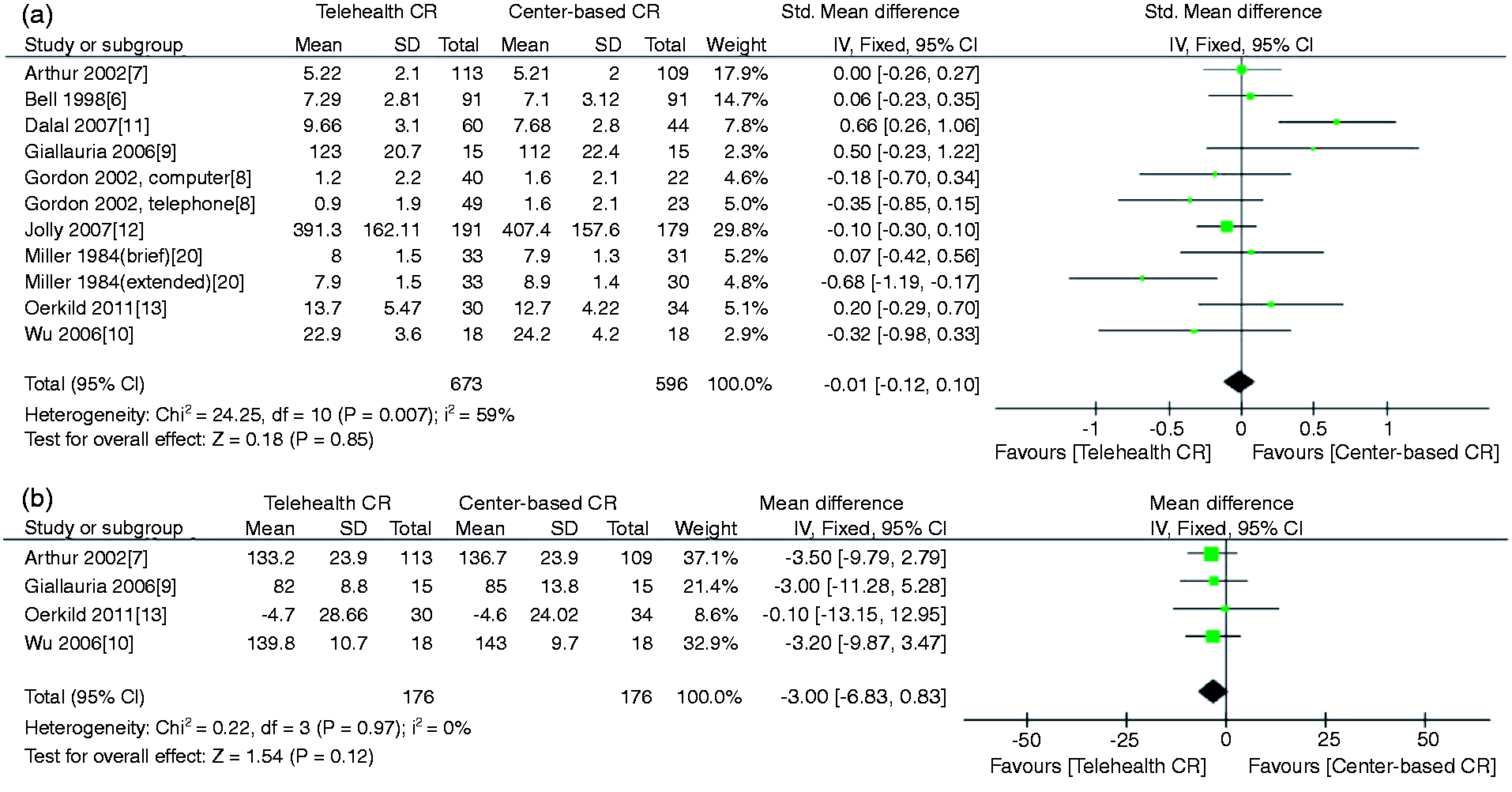
Health-related quality
The meta-analysis included four trials that reported on physical and mental score for health-related quality of life (HRQL). However, two of four trials reported on physical score only. The SMD was used because of the differences in measurement scales (the 36-item short form health survey (SF-36), the 12-item short form health survey (SF-12), self-reported physical activity and MacNew). In the short term (12 weeks to 12 months), no difference in physical score (Figure 8(a)) or the mental score (Figure 8(b)) was found between the groups. The trial by Giallauria et al.
9
reported no modification in 8/15 patients and an improvement in 2/15 patients in quality of life (measures of quality of life core survey (MOS)/SF-36) for the telehealth intervention delivered CR group. However, no data was reported in the control group. At long term follow-up, Smith et al.
14
(one-year follow up) reported that the telehealth intervention group demonstrated significantly higher physical HRQL, which can be explained by baseline difference. Jolly et al.
12
reported no difference in physical activity score at 24 months.
Physical (a) and mental (b) component score for health related quality of life with telehealth intervention and center-based cardiac rehabilitation (CR) in short term. CI: confidence interval; SD: standard deviation.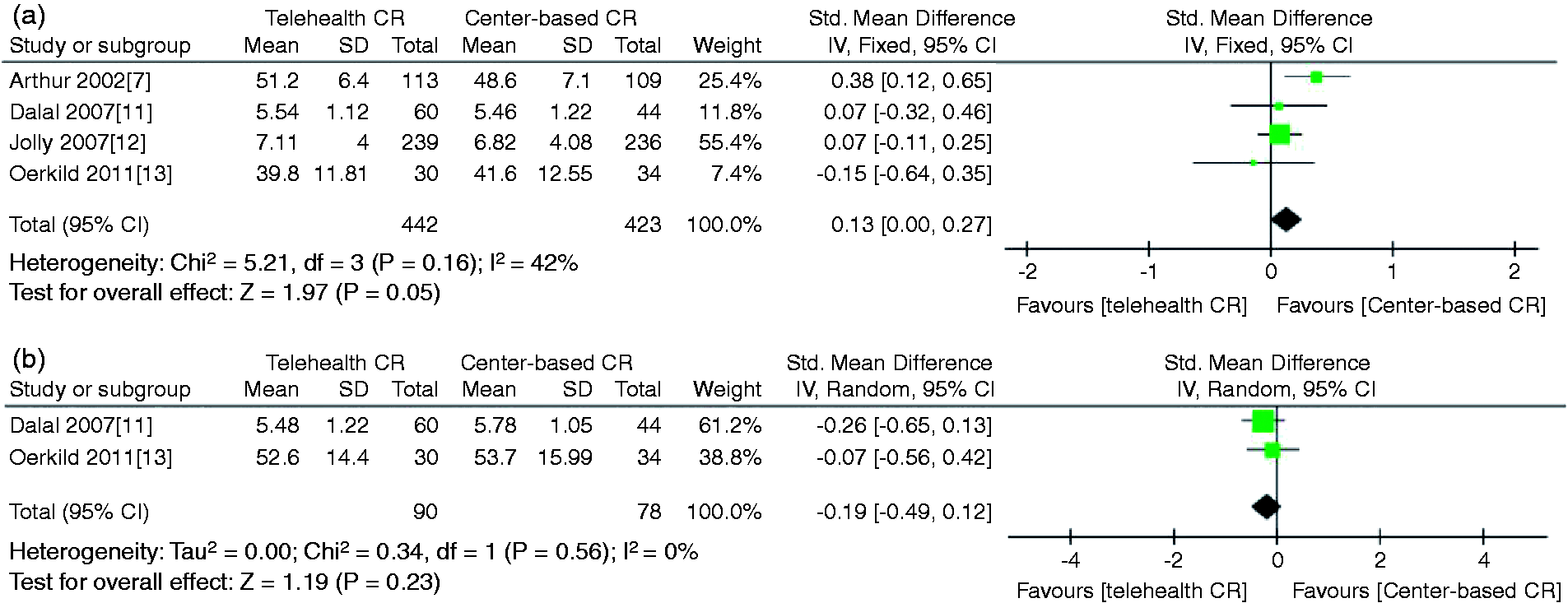
Psychosocial state
Four trials reported on anxiety score and depression score for psychosocial state. The SMD was used because of the differences in measurement scales (hospital anxiety and depression scale (HADS), the state-trait anxiety inventory (STAI), and Beck depression inventory (BDI)). Meta-analysis of the included trials did not show a significant difference in anxiety score (Figure 9(a)) or depression score (Figure 9(b)) between the groups. At long term follow-up, Jolly et al.
12
reported no difference in anxiety score and depression score at 24 months.
Anxiety (a) and depression (b) scores for health related quality of life with telehealth intervention and center-based cardiac rehabilitation (CR) in short term. CI: confidence interval; SD: standard deviation.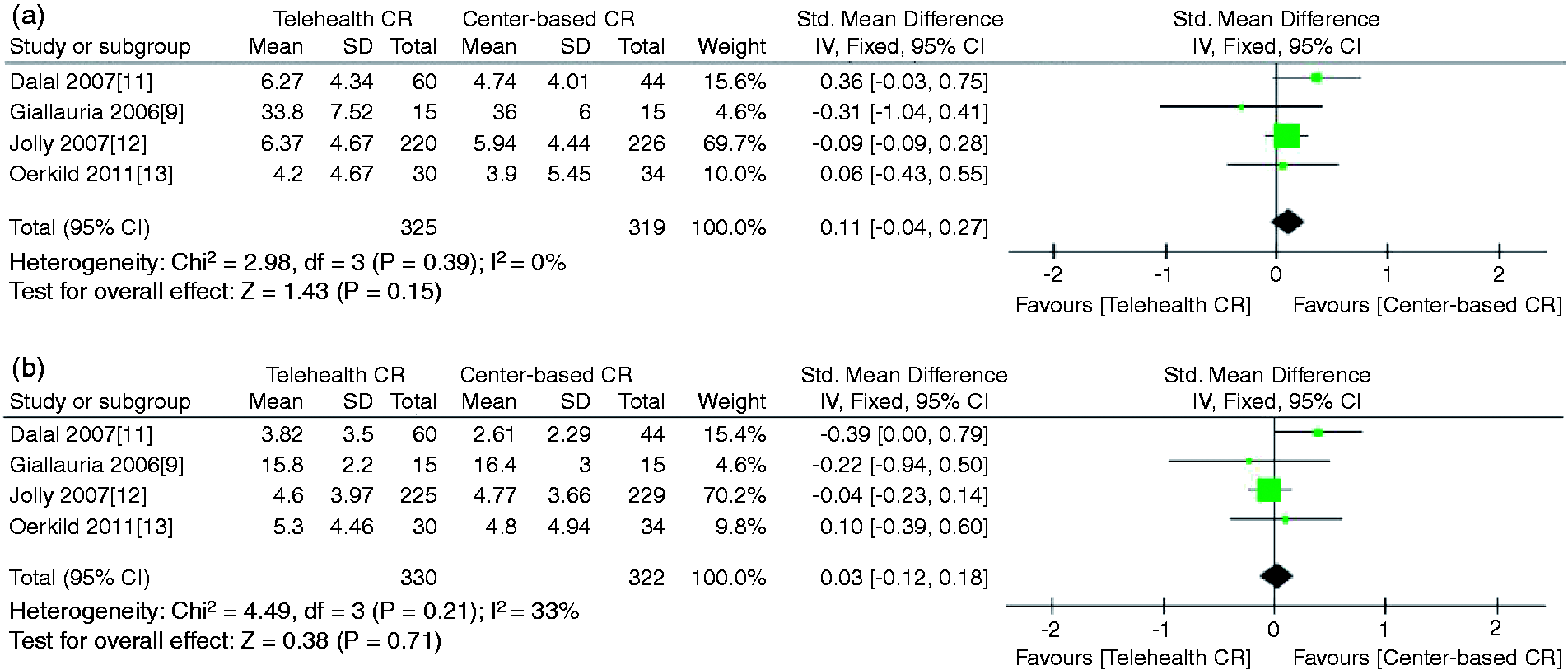
Cost
Two trials by Jolly et al. 12 and Taylor et al. 15 reported total costs of telehealth intervention and center-based CR appeared to be similar. Meanwhile, Taylor et al. 15 reported the cost of running the telehealth intervention delivered CR was lower than that of the center-based program. Conversely, Jolly et al. 12 reported that the direct rehabilitation costs to the health service were significantly higher for telehealth intervention CR.
Discussion
We present the assessment of evidence from randomized controlled trials that compared telehealth intervention delivered with center-based supervised cardiac rehabilitation in patients with CAD. In this systematic review, we found no evidence of a difference in main outcomes for those who received telehealth intervention delivered or center-based supervised CR in the short term (12 weeks to 12 months) and long term (up to six years). The main outcomes included exercise capacity, modifiable risk factors (blood lipids, blood pressure, smoking and weight), all-cause mortality, other events, adherence to studies, HRQL, and psychosocial state.
The current standard practice for cardiac rehabilitation (especially phase II) is based in hospital or rehabilitation center. Although it is an evidence-based recommendation of secondary prevention in USA and European countries,2,3 the CR participation rate is dramatically low compared to other evidence-based performance measures. Barriers to accessing traditional CR are associated with distance and transportation, self-motivation and concept, social composition, and support.21,22 Telehealth intervention is emerging as an effective alternative model for CAD risk factor reduction and secondary prevention, which could help narrow the current evidence-practice gap.5,23
We found no evidence of a difference in main outcomes, which can be further supported by several non-randomized studies.24–26 However, our review is not exactly consistent with previously published systematic reviews assessing the effect of telehealth interventions for secondary prevention. In systematic reviews by Clark et al. 4 and Neubeck et al., 5 significant favorable changes in TC, systolic blood pressure, and smoking with telehealth interventions were observed in meta-analysis. The possible explanations may be as follows: (a) our review only included trials that delivered CR with structured exercise training as a core component; (b) our review compared telehealth intervention delivered CR with center-based supervised CR rather than usual care; (c) all of the participants were restricted to CAD patients.
Due to the quality of included trials, our review indicates there is no need to rely on center-based strategies to deliver effective CR (especially phase II) in low to moderate risk CAD patients after myocardial infarction or revascularization. Telehealth intervention is a viable and effective delivery method for CR, which may solve some common problems associated with patient access to traditional CR. Telephone-based interventions have the greatest weight of evidence for secondary prevention. Patients should be given the choice of participating in a telehealth intervention delivered CR program, especially for the patients with low to moderate risk, preference and adherence to the CR at home, access to a remote communication device and without the access to center-based CR: a choice which should reflect their preferences, anticipation, risk profile, funding, and access to the health service.
Our review is limited by the wide variety of quality of trials, telehealth interventions models, telehealth contact with participants, CR characteristics (duration, frequency, length, and intensity) and the variety of outcome measures used. In addition, the patients were limited to low to moderate risk CAD patients without severe comorbidities and were relatively younger. It may not be representative of the more general patient population, such as high risk CAD, CAD with severe comorbidities, heart failure, valvular disease, and peripheral arterial disease. In addition, most of the included trials had relatively small sample size and reported outcomes in the short term, with only two trials reporting long term outcomes.
Conclusion
This systematic review and meta-analysis suggest that telehealth intervention delivered CR does not have significantly inferior outcomes compared to a center-based supervised program in low to moderate risk CAD patients. Telehealth intervention offers an alternative delivery model of CR for individuals less likely to access center-based cardiac rehabilitation. Choice of participating in a center-based supervised or telehealth intervention delivered CR program should reflect preferences, anticipation, risk profile, funding, and access to the health service. Future trials with larger sample size and long-term follow up are needed to assess the relative impact of telehealth intervention delivered and center-based supervised CR in more representative groups of patients.
Footnotes
Funding
This research received grants from the National High-tech Research and Development Program of China (grant number: 2012AA02A510, Beijing, China), the National Natural Science Foundation of China (grant number: 81370219, Beijing, China) and the Supporting Project of Sichuan Provincial Department of Science and Technology (grant number: 14ZC1845, Sichuan, China). This research also received a grant from The China Scholarship Council (CSC) (grant number: 201406240049, Beijing, China).
Conflict of interest
The authors declare that there is no conflict of interest.
Acknowledgements
The authors gratefully acknowledge the help of Debarati G Sapir from the School of Public Health, University of Louvain for her expertise in systematic review and English revision; they also acknowledge Ling Yi, Yan Wang and Guanjian Liu from Sichuan University for their expertise in search strategies and data processing.