







Abstract

This year has brought to the European Association for Cardiovascular Prevention and Rehabilitation (EACPR) the passing of one of its founding members, Pantaleo Giannuzzi (Figure 1), who was responsible for promoting the worldwide recognition of cardiovascular prevention as a major component of healthcare that needs to be better understood and more effectively implemented. Pantaleo Giannuzzi died suddenly on 20 August 2016, at the age of 64 years, during a brief summer break in his home town in the south of Italy. He had spent an active and fulfilling career in clinical practice and research in Veruno, Italy, during which he imparted his great talents, experience and warm personality to so many of us.
Dr Pantaleo Giannuzzi MD, FESC.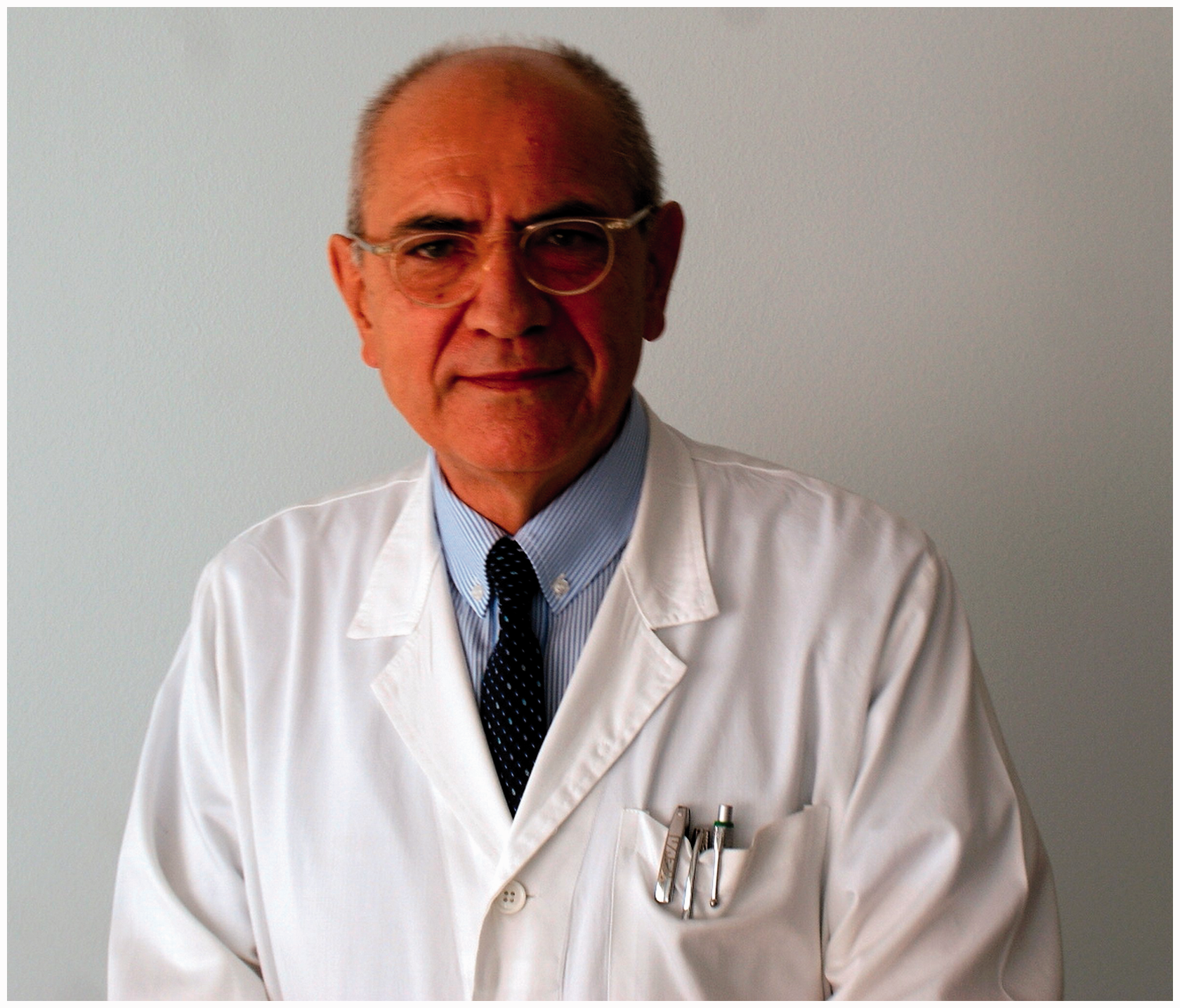
Pantaleo Giannuzzi was born in the small and charming town of Sternatia, in the heart of the Salento region in Puglia, but he was educated at Pavia University and St Matteo Hospital, after which he received his medical doctor (MD) degrees from Pavia University in July 1977 with the highest score (summa cum laude) and in 1980 he gained post-graduate specialization in cardiovascular medicine from the same university. His career as a young doctor began at the Veruno Medical Center of the Salvatore Maugeri Foundation in 1979 and then, in 1988, he moved to the University of California, San Diego, as Visiting Professor. Thereafter, he returned to Veruno Medical Center, where he became Chief of the Cardiology Unit in 1993, and then he became Clinical and Scientific Director of the Scientific Institute of Veruno (Novara) in 2002, a post which he occupied up until 2015.
He established an international reputation as an accomplished clinical physiologist and his expertise in human circulatory physiology proved to be of great value in research. He was one of the earliest pioneers of the beneficial effect of exercise training on central haemodynamics, cardiac function and remodelling in post-infarct patients with poor ventricular function (thanks to the cornerstone Exercise in Anterior Myocardial Infarction (EAMI) and Exercise in Left Ventricular Dysfunction (ELVD) trials). He was also one of the pioneers of the benefits of physical conditioning in heart failure, where he investigated the ominous signs of abnormal autonomic control and Cheyne-Stokes respiration. He was the Principal Investigator of the Global Secondary Prevention Strategies to Limit Event Recurrence after Myocardial Infarction (GOSPEL) study which successfully tested a secondary prevention intervention. Recently, he focused his interest on the more fragile groups, such as those heart failure patients recently admitted for acute decompensation in need of a tailored intervention to prevent further hospitalization and improve outcome.
Pantaleo Giannuzzi was National Coordinator of the Italian Association for Cardiac Rehabilitation and Prevention (1996–2000), a Nucleus member of the Working Group on Cardiac Rehabilitation and Exercise Physiology of the European Society of Cardiology (1998–2002), and Professor at the Post-graduate School of Specialization at the University of Novara (2011–2016). He was also a founding father of the EACPR, where he covered the position of Editor-in-Chief of this journal (2007–2010), and subsequently served as President of the EACPR from 2010–2012.
Most of all, however, Pantaleo Giannuzzi was an extremely unselfish individual who readily helped others to achieve their research aims. He leaves behind a huge bibliography of solid research achievements, together with many wise reviews.
His loss has been deeply felt in the town of Arona, on Lake Maggiore, where he lived and was President of the local Rotary Club in the year 2004–2005, an association to which he was particularly dedicated. All members remember him as a kind, serene person, always willing and attentive to the needs of the community. He is survived by his wife, Maria Grazia.