







Abstract

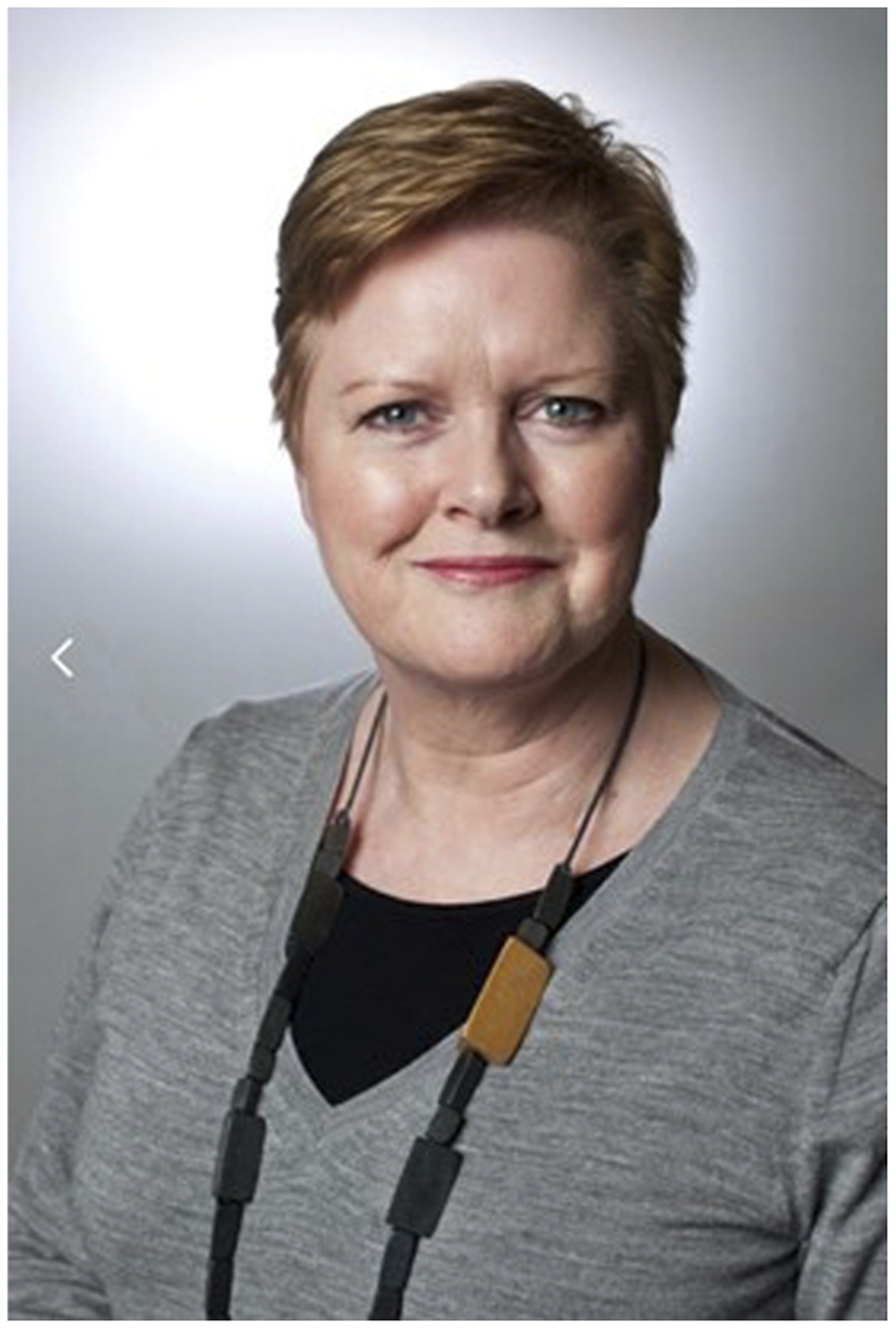
Felicia Cox, London, December 2016.
Flick Cox, who has died after a long illness, was the first Editor-in-Chief of the British Journal of Pain, a Fellow of the Royal College of Nursing and holder of the British Pain Society’s medal of distinction. In a rich and varied career, Flick moved from Australia to the UK and worked in roles that ranged from scrub nurse to theatre sister before moving into a pioneering and career-defining role as a pain specialist.
Felicia (Flick) Jane Cox (4 March 1965–18 January 2026) was born in Melbourne, Australia, and the fact that Flick was the only one of her siblings without a Tasmanian birth certificate was something the family never tired of reminding her. Her father, Berkley Cox, was an Australian Rules footballer playing at the time for Carlton FC on the mainland; her mother Junetta (née Keep) was an office worker. In 1965, the family returned to Tasmania and it was there that Flick spent the remainder of her childhood.
She was educated at Broadlands House school, Launceston, and was both a gifted scholar and a noted sportswoman, being made House Captain in her final year. She also played piano and sang in the school choir, memorably performing with the latter at the Sydney Opera House on one occasion. Style and fashion became twin passions and in her teens Flick was an avid reader of Tatler, a fact that may explain her life-long affection for leather handbags (Prada or Mulberry) and Chanel lipstick. She was an avid shopper and always immaculately dressed.
By her own admission, Flick’s interest in nursing was inspired by clothing, specifically a family photo of her ‘glamorous’ Aunt Suzanne in formal nurses’ uniform (including starched cap and bright red cape). As a child, with a dress-up version of the same outfit, her destiny was assured and in due course Flick chose to train as a nurse at the Launceston Hospital in Tasmania. The hospital, which was a regional metropolitan centre, provided the opportunity to work in a wide variety of settings and the integration of clinical practice with formal nurse training enabled Flick to gain a broad range of experience, including an ‘unheard of’ 15-week block in the operating theatre. At the time it was common to proceed post-registration to a midwifery course, but by her own admission Flick ‘never really fancied’ that, regarding it as ‘a bit too messy’!
Flick worked instead as a theatre nurse before leaving Australia (on ANZAC day–April 25th) in 1990, arriving in the UK initially on a tourist working visa. She began working at Harefield Hospital, again as a theatre nurse. But within 2 years (and having decided to settle permanently in the UK) she had been appointed surgical assistant working, among others, with Professor Sir Magdi Yacoub. It was at what was to become the Royal Brompton and Harefield Hospitals Trust that she met anaesthetist Dr John Farrimond, falling in love (to quote Flick) ‘during an Ashes series, which is never a good thing for an Aussie!’ Despite that, Flick and John were to remain lifelong and devoted partners.
Flick had a strong work ethic, was extremely capable and very highly regarded. She undertook a Master’s degree and began to publish academic papers, her first being a systematic review of ondansetron, a recently introduced antiemetic. 1 She submitted her work to the British Journal of Theatre Nursing, which is now known as the Journal of Perioperative Practice. She was invited to join the journal’s editorial board and eventually had her research published extensively in various scientific journals, including the British Journal of Pain and The Lancet. Her publications addressed numerous issues, including patient-centred care, particularly for the most vulnerable populations, education, especially regarding pain assessment, and clinical pharmacology, with a focus on ensuring patient safety.2–6 She also supported many collaborative works, in science and advocacy, leading her to author articles across a wide range of outlets, including The Daily Telegraph.
After pioneering work in post-operative pain Flick moved into specialist pain management, becoming one of the first specialist pain nurses in the UK. She was Chair of the Royal College of Nursing Pain and Palliative Care Forum, latterly helping to establish the Pain Nurse Network and as well as helping organise the first Pain Nurse Network conference. She created an assessment framework for the Royal College of Nursing which defined, for the first time, the knowledge and skills required for nurses working in pain management.
In 2005, Flick was diagnosed with acute myeloid leukaemia. Six months in hospital gave her the time to edit and produce what was to become the standard textbook of perioperative pain management (published 2008). 7 She later became the co-editor of the British Journal of Pain, a transformative role which involved negotiating and managing a move from in-house publication to SAGE, increasing readership and greatly enhancing the journal’s professional standing. She served on the Council of the British Pain Society, was Chair of the Acute Pain Special Interest Group as well a member of both the Scientific Programmes and Communications Committees. She was the Secretary of the International Association for the Study of Pain (IASP) Acute Pain Special Interest Group as well as co-chair of the European Pain Federation (EFIC) Nursing Working Group, helping to develop the European Diploma in Pain Nursing in addition to working on international opioid stewardship initiatives and setting educational standards for pain nursing. Flick’s achievements were recognised widely, including being awarded Honorary Membership of the British Pain Society in 2015. In 2017, Flick was elected Fellow of the Royal College of Nursing and in 2025 became the first nurse (and one of the only five recipients ever) to be awarded the Medal of Distinction by the British Pain Society.
Flick had a tremendous gift for making even the most casual acquaintance feel seen, heard and known. As Martin Hey says, ‘she had a wonderful way of making you feel right at home, as if you had known each other for years’. Professor Jane Reid (former President of the Association for Perioperative Practice) remarks that, ‘With her energy and passion Flick could light up a room… she had a wicked sense of humour and l recall lovely evenings of laughter, glass of wine in hand after a full day of conferencing in the Majestic lounge bar - often with her tinkling the ivories of the grand piano’.
It is clear from the many tributes on the memorial wall 8 after Flick’s death that Flick was dearly loved, respected and admired by those who knew her. She was a nurse through-and-through, the embodiment of the word’s Latin root nutrica – one who nourishes. Of the many tributes and telling phrases that attest to a life well lived, perhaps it is most appropriate to sum up Flick’s larger-than-life life with the distinctly Aussie, pithy idiom: ‘she left nothing in the shed’.
