







Abstract
The affordances of different media technologies can affect how users develop parasocial relationships with the media figures they encounter on those devices. This study examined the relationship between mobility and parasocial relationships with podcast hosts. Participants from Amazon Mechanical Turk (n = 165) responded to a survey on a memorable podcast listening experience. The results revealed a conditional indirect effect of mobility on parasocial relationship strength through narrative transportation. Media multitasking moderated this effect. Specifically, there was a positive effect of mobility on transportation that increased incrementally at moderate and high levels of multitasking.
A parasocial relationship is a one-sided, illusionary sense of a relationship that audience members develop with media figures (Horton & Wohl, 1956). When media consumers come to regard the characters or performers they encounter as friends (or even “frenemies”; Cohen et al., 2021), this is indicative of a parasocial relationship. Decades of research have uncovered several predictors of parasocial relationships that can generally be categorized as performer-related factors, such as self-disclosure (Ferchaud et al., 2018), direct interaction (McLaughlin & Wohn, 2021), or physical attractiveness (e.g., Liebers & Schramm, 2017), or audience-related factors, such as personality (e.g., Brodie & Ingram, 2021) or perceived similarity (Tian & Hoffner, 2010). Relatively few studies have examined how media and technology-related factors affect parasocial relationships, but studies that adopt an affordance-based approach to understanding these pseudo-social phenomena are critical for the development of theory on parasocial experiences in digital media environments.
An affordance-based approach centers on technology features and functions. Individuals can develop and maintain parasocial relationships on any number of devices (e.g., radio, Walkmans, iPods, and smartphones) or media platforms (e.g., Twitter, Facebook, and Twitch) where they encounter media personas. However, because these media have functional differences that change and evolve over time, understanding how parasocial relationships develop on any single, specific technology has limited explanatory power. Specification of the effects associated with the affordances of these technologies can increase the longevity and theoretical applicability of these findings by focusing on impact of the characteristics (e.g., interactivity, mobility, size, synchronicity, privacy) that vary across all media and technology (see Cohen & Myrick, 2023; Nass & Mason, 1990).
Only a couple of studies have investigated the role of specific technology features in the development of parasocial relationships. Ledbetter and Meisner (2021) found that users’ perceptions of the extent to which different social network site platforms afforded public figures the ability to interact with their audience and the extent to which the platforms allowed users to connect to other platforms increased parasocial interaction with the personas (these effects were mediated by presence and media multiplexity, respectively). Additionally, Wellman (2021) explored how the affordance of privacy in online social network site groups can cultivate parasocial relationships by enhancing feelings of intimacy.
The current study contributes to the study of parasocial media experiences and digital affordances by examining the relationship between mobility and parasocial relationships in the context of the consumption of podcasts, or serial audio programs. According to one estimate, 73% of podcasts are consumed on mobile devices, such as smartphones (Edison Research, 2022). And notably, podcast subscribers often develop parasocial relationships with podcast hosts (Marx et al., 2021; Schlütz & Hedder, 2022). This study employs a retrospective survey of podcast subscriber experiences to investigate how the mobility of podcast experiences—the ability to carry media personas with them—is a contributing factor to the development of these relationships. Narrative transportation is examined as a mediator of this effect, and media multitasking—whether podcast users are engaged with other tasks while listening—is explored as a moderator of the effect of mobility on transportation.
Literature review
Mobility and parasocial relationships
As a media affordance, mobility refers to the extent that a media device is portable, or a media experience can occur while users are in physical motion. Mobility is closely related to other affordances such as accessibility (Wei & Lo, 2006), and, because mobile devices can be anywhere and everywhere, they also provide more opportunities for media multitasking (Levine et al., 2012), and facilitating communication with others on demand, regardless of the location. But the essence of mobility is the ability to move and travel, and carry media content to different places (Campbell, 2013; Schrock, 2015).
The implication of communication device mobility for personal relationships is that people do not need to remain in one place in order to connect with close others. Technologies such as mobile phones permit users to virtually carry others with them, communicating on the go. Although the ability to remain in perpetual contact or to be tethered to people in one's social network can be a source of stress (Taylor & Bazarova, 2021), mobility can also enhance relational intimacy by creating a sense of “symbolic proximity” or nearness to other people (De Gournay, 2002; de Lange, 2009; Wurtzel & Turner, 1977). Mobile devices allow personal relationships to transcend geographic location. Even though relational partners may be physically remote, symbolically they are never further than one's pocket, purse, or palm. Mobility can provide a sense of co-presence or being with others (Clauzel et al., 2020). Mobile phone use in particular has been associated with increased relational bonding and social connectedness, social support, and a sense of security (Kalogeraki & Papadaki, 2010; Ozkul, 2013; Petrovčič et al., 2015; Taylor & Bazarova, 2021; Wei & Lo, 2006).
With some notable exceptions (e.g., Baker & Cohen, 2023), individuals’ parasocial connections to media figures tend to be experienced with less intensity than their connections to social partners in reciprocal personal relationships. However, the ways in which social and parasocial develop is more similar than not (Tukachinsky & Stever, 2019). Therefore, extending the logic that mobile communication can enhance relational closeness in two-sided, social relationships, we propose that mobility should also enhance feelings of connection in one-sided, parasocial relationships. Early studies of parasocial experiences often focused on broadcasting presenters such as television newscasters, talk show hosts, or talk radio personalities who, by virtue of their interpersonal attractiveness, conversational style, and direct address of viewers and listeners, plus their ritualized appearances in people's daily routines, seemed uniquely positioned to cultivate feelings of intimacy among their audiences (Levy, 1979; Rubin & Step, 1997; Rubin et al., 2003; Rubin et al., 1985). Podcast hosts engage in many of the same behaviors that foster a sense of connection as other types of broadcasters, but, as Schlütz and Hedder (2022) argue, there are also a number of affordances associated with podcasts that could potentially create even more favorable conditions for parasocial relationship development, such as their ability to be downloaded and accessed on demand, the ability of listeners to personalize their experience by picking and choosing episodes, and the serial, narrative nature of podcast content that encourages parasocial relationship development and engagement over time. Furthermore, podcasts are often consumed on personal listening devices using headphones or earbuds, which can create a more intimate listening experience. Kallinen and Ravaja (2007) found that compared to listening to a speaker directly, listening to the speaker with headphones elicited more positive emotions, an effect that the researchers attributed to a reduced sense of interpersonal distance. More recently, Lieberman et al. (2022) demonstrated that these auditory technologies can enhance feelings of closeness with a speaker because they create the illusion of a voice inside one's head.
This study explores mobility as an affordance that can enhance parasocial relationship strength. Just as being able to connect with people in one's social network while on the move can enhance feelings of social connectedness (e.g., Taylor & Bazarova, 2021; Wei & Lo, 2006), so too should the ability to carry a media persona with oneself enhance feelings of parasocial connectedness. In fact, parasocial relationships developed through mobile experiences such as podcast listening have the potential to be particularly strong because they position media figures as companions whose company transcends space. Mobile podcast listening also permits listeners to engage with other tasks. In focus groups with podcast listeners, Perks and Turner (2018) found that the freedom afforded by the mobile devices they used for listening was one of the primary gratifications they derived from listening. Participants appreciated being free from the constraints of other media experiences (e.g., TV watching) which demand more visual attention and require them to remain stationary, so that they could move around and engage in other activities while still being entertained. Similarly, Schlütz and Hedder (2022) found that most of their participants listened to podcasts during mundane tasks such as work commutes or while completing household chores.
We argue that the mobility of listening experiences should lead to a greater sense of intimacy with podcast hosts. While listeners are engaged with the broadcast, and are simultaneously in motion and multitasking (e.g., driving, folding laundry, cooking, walking the cats), this experience could create a stronger illusion of togetherness. That is, by moving—but more specifically, by moving with their audience—podcast hosts can occupy different roles in listeners’ minds, such as passenger, partner, co-worker, or travel companion. When they are mobile, listeners are not just sharing their time with a podcast host, they are sharing their experiences, and strengthening the intimacy as a result.
Mobility, multitasking, and narrative transportation
A handful of studies that have examined the uses and gratifications of podcasts have identified engagement in these stories, or narrative transportation, as a prominent motivation for listening (McClung & Johnson, 2010; Perks & Turner, 2018; Perks et al., 2019). Transportation refers to the temporary immersion of oneself into a story and is characterized by a perceived distance from the real world and the adoption of story-related perceptions and emotions (Green & Brock, 2000). Psychologically, Green and Brock (2000) describe transportation as “a convergent process, where all mental systems and capacities become focused on events occurring in the narrative” (p. 701). While transported into a story, individuals tend to lose track of time in the non-narrative world, which can make it feel as though time is passing more quickly (Green et al., 2004).
Narrative transportation is positively correlated with the development of parasocial relationships with story-relevant media figures (Green et al., 2004; Tukachinsky et al., 2020). In their meta-analysis of antecedents to parasocial relationships, Tukachinsky et al. (2020) demonstrated that there is a strong association between the intensity of parasocial relationships and transportation into the media content. The more absorbed an individual is into a story world, the more real and authentic their feelings of social bonding to the media personas should feel.
As audio narratives, podcasts (like audio books) are well suited to enhance parasocial relationships by providing immersive, transportive narrative experiences for listeners. Many podcast episodes are structured as either self-contained or as parts of longer, serial stories that the hosts relay to their audience. However, even podcasts that are not set up as narratives, such as interview podcasts, rely on storytelling conventions, such as guests sharing their personal experiences and music or atmospheric sound effects to help listeners visualize the story.
Beyond these conventions related to the stories themselves, the personal listening context should enhance narrative transportation. Although people regularly listen to podcasts while they are in public settings, it is typically a personal and private experience rather than a shared social activity (MacDougall, 2011). In fact, one study found that the need to belong socially was a negative predictor of podcast listening (Tobin & Guadagno, 2022). It stands to reason that the social solitude of podcast listening experiences, often facilitated by the use of earbuds or headphones, should enhance listeners’ ability to focus on and become absorbed in the narrative.
Yet, as previously discussed, these personal podcast listening experiences are often tied to movement and multitasking (Perks & Turner, 2018). Seemingly paradoxically, listeners often put themselves in a position to become most focused and engaged with audio media when they are trying to accomplish something else, such as traveling, exercising, or working (Jeong & Fishbein, 2007).
On the surface, the idea that movement and multitasking could enhance transportation may seem counterintuitive. Research on narrative transportation is often premised on the assumption that multitasking (or any distraction, external to the story) would distract from narrative engagement (Green et al., 2004) because individuals cannot focus their cognitive and emotional capacities on a story if their attentional resources are allocated to accomplishing other tasks. Consistent with this logic, studies have found that media multitasking during viewing can lessen narrative involvement (e.g., Brumby et al., 2014; Park et al., 2019; Zwarun & Hall, 2012). However, these studies have focused on the effects of multitasking on transportation into narratives presented in formats with both audio and visual modalities, such as film or television shows. Drawing from cognitive resource-based theories, Baumgartner and Wiradhany (2022) explain that the more sensory modalities a media experience draws from, the more cognitive resources media users will need to allocate to process the media content. Therefore, a media experience drawing from only one modality (e.g., auditory) can be more easily processed in conjunction with other tasks, provided that the tasks draw from cognitive resources reserved for activities that draw from other senses (e.g., visual or motor sensory modalities). Multitasking, then, should only dampen story consumer's experience of narrative transportation if the secondary tasks with which they are engaged draw from the senses that are needed to follow the story. Podcasts listeners can still become transported in a narrative while engaged with other activities (e.g., activities requiring motor senses, such as driving or folding laundry), provided that those activities do not interfere with attention to the audio.
However, our objective is not simply to argue that transportation into podcast stories can occur despite listeners’ mobility and multitasking. Rather, we propose that the more mobile listeners are, the more freedom they feel to move while listening, and the more transported in a podcast they should become. This should be particularly true if they are engaged in other tasks, and therefore motivated to shift their focus and pass time. Although multitasking is usually considered to be a distraction from narrative transportation (in the case of multimodal media), transportation into podcasts is a welcome distraction from other tasks. We propose that perceptions of mobility and multitasking should interact to enhance podcast listeners’ engagement with a story.
Mobile listening experiences are transportive, and listeners who travel with audio media do so in part to immerse themselves in mediated spaces separate from the ones they inhabit physically. As Dimmock et al. (2022) explained, mobile devices present unique opportunities for individuals to fill in life's interstices, “those odd crevices of time/space that routinely occur in our daily lives … [where] we might have some free time to spend anyway we choose,” when other types of media are less convenient to access, such in the line at the grocery store (p. 25). Mobile device users seek to kill time and escape during these interstitial media experiences, and in doing so they become transported to a different space corresponding to what they are listening to. In an analysis of urban iPod user experiences, Bull (2005) painted a vivid picture of this. He described how listeners, almost as if in an audio trance, pass through different locational contexts as they walk from their house or commute on a train to work, yet they experience this movement as a single experience which unified by a consistent listening experience and the emotions that it creates for them while in transit. Similarly, Ito et al. (2005) described the aura created by personal listening devices as an audio “cocoon” that creates a private space for listeners as they traverse public places, helping them to psychologically remove themselves from the geographic locations they pass through and seclude themselves while they are immersed in the audio.
The cocooning effect of personal listening is deliberate. The more mobile podcast users are moving and multitasking, the more transported into the narrative world they must become to forgo whatever monotony of the experiences or tasks they wish to escape. In a study of uses and gratifications for using (mobile) MP3 players, Zeng (2011) found that concentration was a motivation for using these listening devices. Specifically, users appreciated the opportunity to focus on audio content while they accomplished a secondary activity. Similarly, Perks and Turner (2018) detailed listeners’ desire to multitask not only to feel more productive, but to help listeners to feel as if time was passing more quickly when they engaged in household chores or other relatively less enjoyable activities. This echoes findings that, like other audio media experiences, podcasts are often used for time-shifting, or accelerating people's perception of time (Heye & Lamont, 2010; McClung & Johnson, 2010). Collectively, these studies suggest that the more portable the podcast experience, the more transported listeners will want to become, particularly if they are engaged in other tasks.
Predicted model
In summary, there is often a positive relationship between communication device mobility and several intimacy-related outcomes in interpersonal relationships, such as feeling a sense of nearness, co-presence, and bonding (e.g., Clauzel et al., 2020; De Gournay, 2002; Taylor & Bazarova, 2021; Wei & Lo, 2006), and these effects likely translate to parasocial relationships too (Tukachinsky & Stever, 2019), when podcast listeners gain a sense of proximity to the hosts they listen to while they are on the move. Accordingly, we predict the following:
People frequently listen to podcasts while they are in motion and engaged in other (often mundane) tasks, such as driving, exercise, or household chores (Perks & Turner, 2018). Like other auditory media experiences, podcasts provide listeners with opportunities to cocoon themselves in an aura created by the content, allowing them to psychologically detach from their physical location and the tasks they are performing simultaneously, while they immerse themselves in the “spaces” created by the audio (Bull, 2005; Ito et al., 2005). In fact, podcast audiences report that they intentionally use these personal listening experiences as time-shifting vehicles that help take their mind away from their travels and secondary activities (e.g., Heye & Lamont, 2010; McClung & Johnson, 2010; Zeng, 2011). For this reason, we expect that greater perceptions of mobility—the more than listeners feel that they are in motion as they listen—will be associated with greater transportation, and narrative transportation should influence audiences’ parasocial relationships with story-related media figures, in turn (e.g., Tukachinsky et al., 2020). As such, there should be an indirect effect of mobility on parasocial relationship strength, through narrative transportation. Yet the effect of mobility on transportation should be conditional on media multitasking. The more involved listeners feel they are with secondary tasks, the more motivated they should be to become absorbed in the story. Thus, we propose:
The entire predicted model is illustrated in Figure 1.
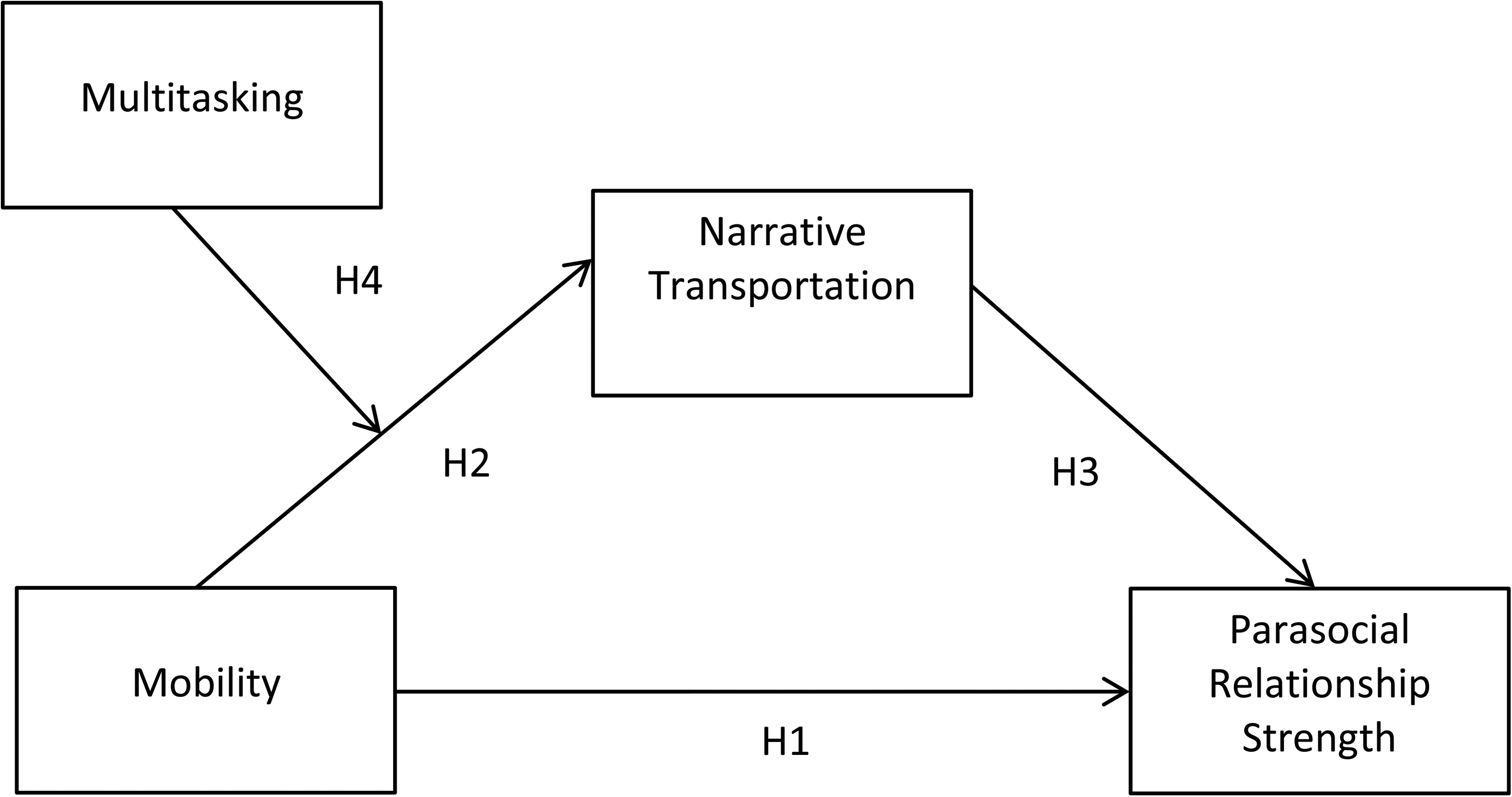
Proposed conditional process model (first-stage moderated mediation).
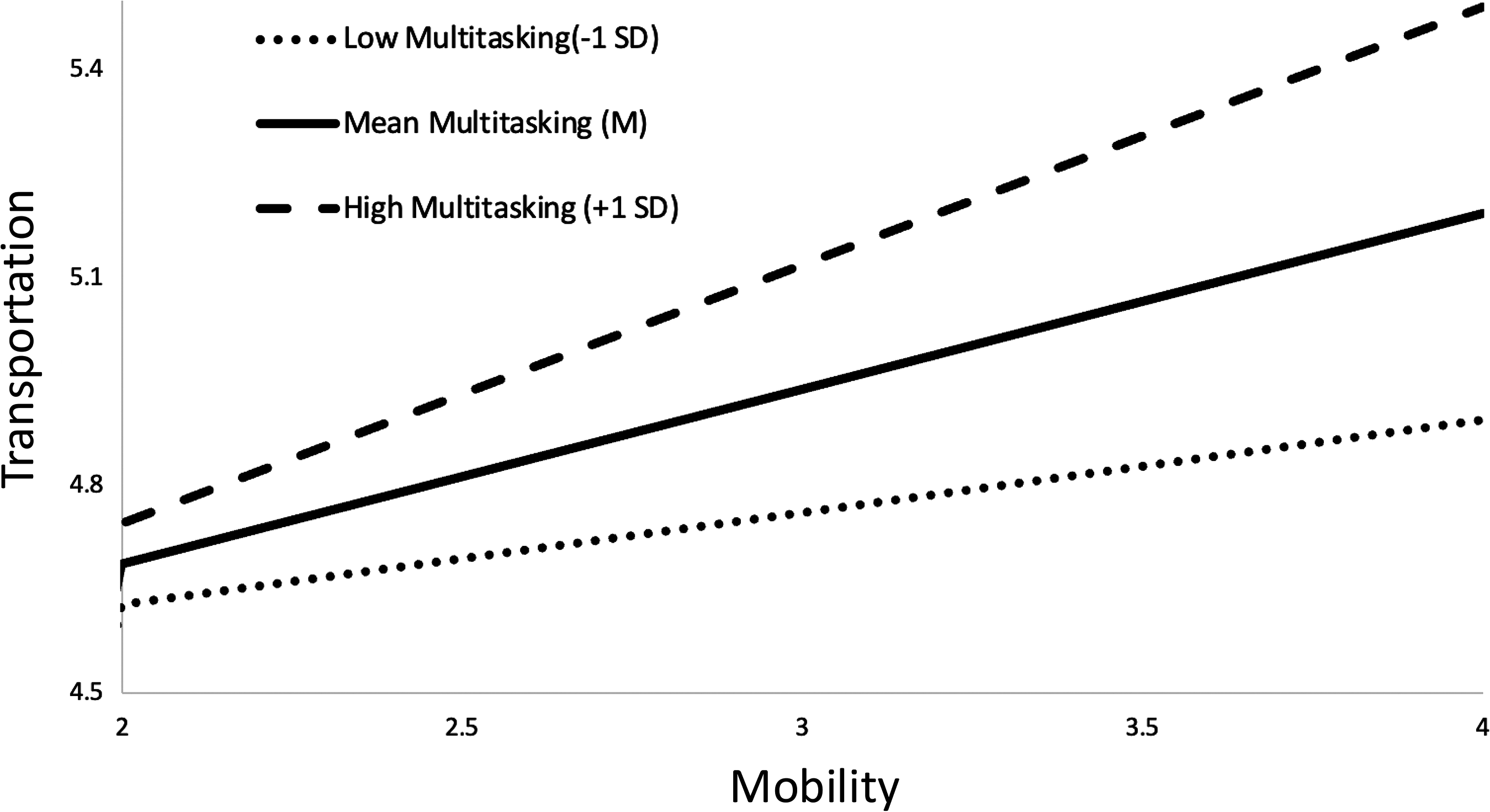
Conditional effect of mobility on transportation at different levels of multitasking.
Method
Participants
Respondents were recruited on Amazon's Mechanical Turk (MTurk). The study's advertisement specified that participants should have listened to a podcast within the last 3 months. Participation was also restricted to U.S. residents, aged 18 years or older, who had completed at least 1,000 MTurk tasks with at least a 98% approval rating. Although a total of 247 participants provided complete responses to the survey, data from 82 participants (33.20%) was omitted from the analyses because they submitted nonsensical answers to open-ended questions, incorrect answers to quality-assurance questions designed to gauge their effort and attention, or because their responses showed evidence of straight-lining. This is consistent with recent research indicating that between 25% and 35% of data provided by MTurk respondents tends to be of poor quality (Ahler et al., 2021). The final sample consisted of 165 participants, most of whom who reported being white (86.10%) and male (52.12%), with ages ranging from 20 to 66 (M = 37.01, SD = 10.32).
Procedure
This study was approved by Institutional Review Board at the authors’ university. Participants read a cover letter before agreeing to participate and then responded to a qualifying question about whether they have listened to a podcast within the last 3 months. Eligible participants first indicated how frequently they listen to podcasts (on a scale of 1 = “hardly ever” to 4 = “any chance I get”; M = 2.68, SD = .73). 1 Next, they were asked to name the most memorable podcast that they have listened to within the last 3 months and keep it in mind while answering questions about their recall of the listening experience. Participants reported on podcasts from a variety of genres, including comedy (21.8%), news or society and culture (19.1%), true crime (8.5%), learning and education (7.9%), TV and film (7.3%), and sports (4.8%), among others. They also reported listening to podcasts in a variety of places and context, including the car (52.1%), at the gym or during exercise (39.4%), before bed (35.8%), while cooking (29.1%), at work (27.9%), while cleaning or doing chores (25.5%), or while commuting on public transportation (23.6%). The remainder of the survey asked questions about their perceptions of the program and the podcast's host.
Measures
Perceived mobility
Five items were developed for this research to gauge how mobile respondents recalled feeling when they listened to the podcast. Specifically, they were asked to indicate their agreement (on a 7-point scale running from 1 (Strongly Disagree) to 7 (Strongly Agree) that they were on the go, that they moved around a lot, that they traveled freely, that they were free to move, and that they felt mobile while they were listening to the podcast. A scale was constructed from the composite of these items (M = 4.80, SD = 1.12, ω = .84).
Media multitasking
An index of two items which ask participants the extent to which they agreed that “I often engaged in other activities while I was listening to [podcast]” and “I multitasked while I was listening to [podcast]” was used to measure multitasking. Once again, respondents indicated their agreement on a 1 (Strongly Disagree) to 7 (Strongly Agree) scale, and the index was created by calculating the mean of the responses to the items (M = 4.97, SD = 1.07, r = .65, p < .001).
Narrative transportation
Narrative transportation was measured with nine items from Green and Brock's (2000) scale. Respondents indicated their agreement with statements such as “I could picture myself in the scene of the events described in the podcast.” Response options ranged from 1 (Strongly Disagree) to 7 (Strongly Agree). Items were reverse coded as needed and a scale was created by computing an average of the responses to all the items (M = 5.00, SD = .66, ω = .65).
Parasocial relationship strength
Parasocial relationship strength was measured with the six-item, parasocial friendship communication subscale in from Tukachinsky's (2011) Multiple Parasocial Relationship Scale. On a scale from 1 (Strongly Disagree) to 7 (Strongly Agree), respondents indicated the extent to which they agreed with statements such as “If I knew the podcast host(s) in person, I could trust them completely.” A scale was constructed from the composite of these items (M = 4.52, SD = 1.18, ω = .92).
Results
The correlations between the variables of interest are listed in Table 1. The first hypothesis predicted that mobility will positively predict parasocial relationship strength. To test this, a regression analysis was conducted with parasocial relationship strength entered as the dependent variable, and mobility and the frequency with which participants listened to podcasts generally (a control variable) entered as independent variables. As predicted, mobility was a significant, positive predictor of parasocial relationship strength, b = .205, SE = .079, p = .010, 95% confidence interval (CI): 0.049, 0.361.
Zero-order correlations.
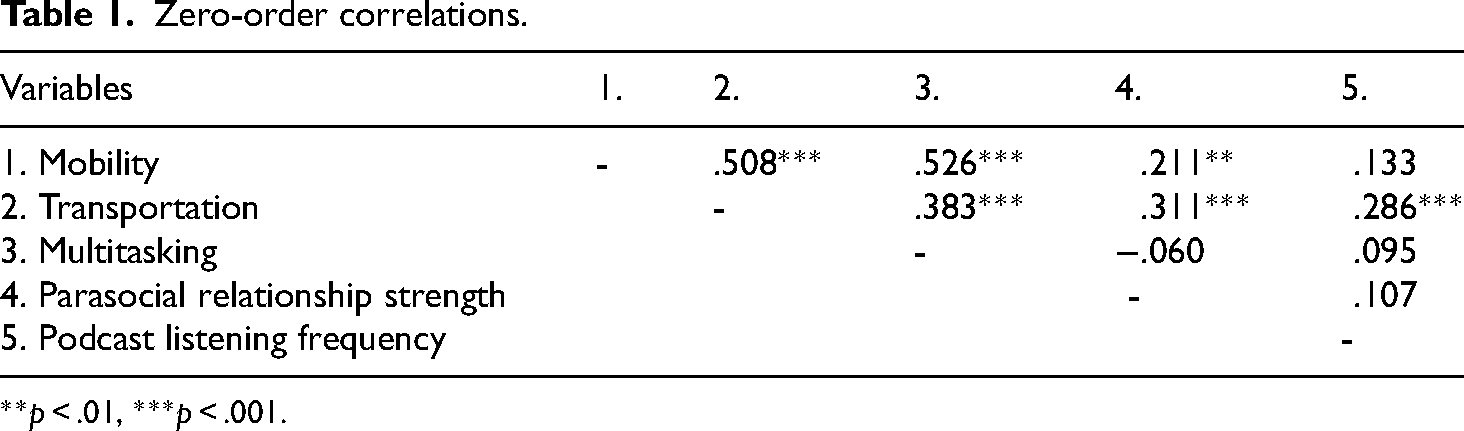
**p < .01, ***p < .001.
To test the remaining predictions, the PROCESS macro for SPSS (v4.0) was used to run model 7 with 5,000 bootstrap samples for percentile bootstrap CIs. Perceived mobility was entered as the independent variable, parasocial relationship strength was entered as the dependent variable, narrative transportation was entered as the mediator, media multitasking was entered as a first-stage moderator, and frequency of podcast listening was entered as a control variable in the model. The results of this analysis are listed in Table 2. An initial examination of the ordinary least squares (OLS) regression coefficients for the model revealed that, as predicted, there was a positive effect of mobility on narrative transportation (b = .241, SE = .042, p < .001, 95% CI: 0.158, 0.324), and narrative transportation was positively associated with parasocial relationship strength (b = .479, SE = .154, p = .002, 95% CI: 0.175, 0.782). Additionally, the effect of mobility on transportation was qualified by an interaction with multitasking, b = .103, SE = .025, p < .001, 95% CI: 0.054, 0.152. A plot of this interaction is illustrated in Figure 1, which shows that at higher levels of mobility, increases in multitasking were associated with increased transportation. Results of the Johnson-Neyman technique, listed in Table 3, show that the conditional effect of mobility on narrative transportation was not significant at lower levels of media multitasking, but perceived mobility increased transportation when listeners were engaged in moderate to high levels of multitasking. This is also shown in Figure 2. There was also evidence of moderated mediation (index of moderated mediation = .049, BootSE = .021 BootCI: 0.012, 0.093). In support of H4, media multitasking magnified the indirect effect of mobility on parasocial relationship strength through transportation.
Ordinary least squares (OLS) path model coefficients.
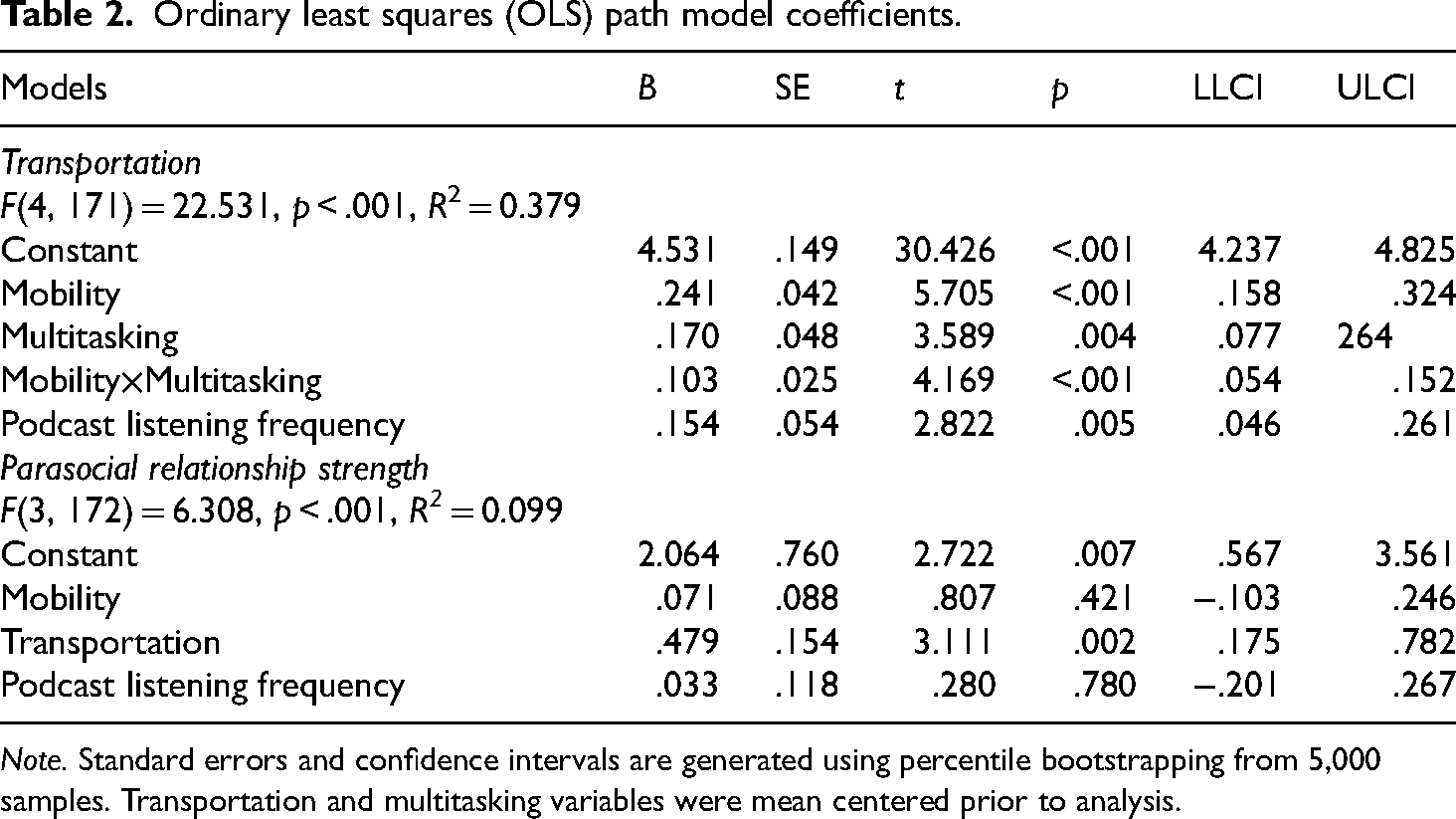
Note. Standard errors and confidence intervals are generated using percentile bootstrapping from 5,000 samples. Transportation and multitasking variables were mean centered prior to analysis.
Johnson-Neyman technique output for the conditional effect of mobility on transportation at different levels of the moderator, multitasking.
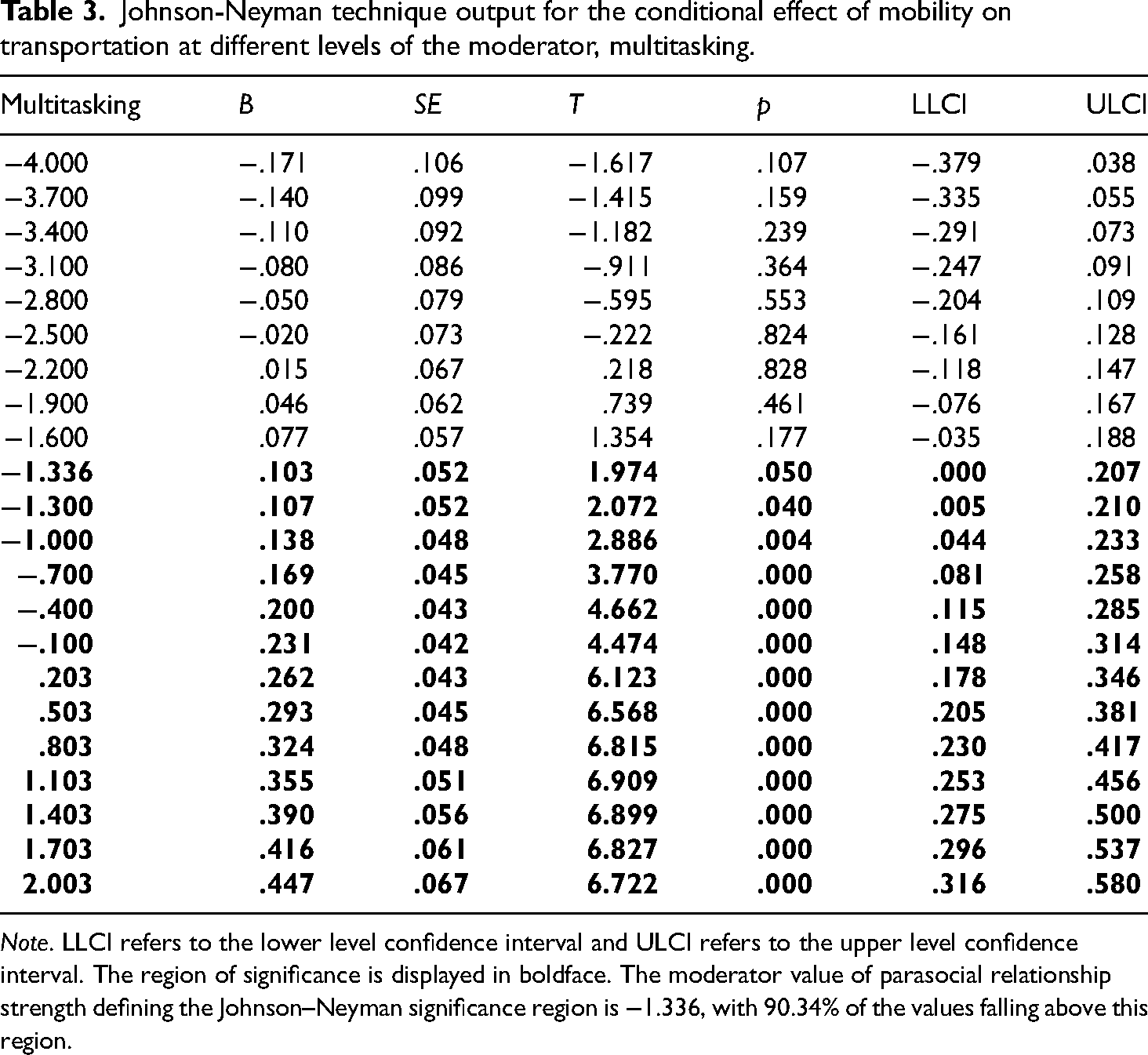
Note. LLCI refers to the lower level confidence interval and ULCI refers to the upper level confidence interval. The region of significance is displayed in boldface. The moderator value of parasocial relationship strength defining the Johnson–Neyman significance region is −1.336, with 90.34% of the values falling above this region.
Discussion
Because podcast broadcasters connect with their audience in ways that are reminiscent of other types of traditional broadcasters known to cultivate parasocial relationships with their audiences (Levy, 1979), it is unsurprising that they would be the object of many listeners’ relational affections. However, this study proposed that beyond characteristics and behaviors related to the host or even the audience, there are technological affordances associated with mobile personal listening devices that can contribute to the cultivation of these relationships too. We argued that the ability of listeners to travel with podcast hosts, to carry them along during their daily journeys, helps them bond through a sense of companionship. Listeners’ perception of mobility was predicted to influence parasocial relationships indirectly, by increasing their narrative transportation into the program, an effect that we expected to be boosted by multitasking. Perceptions of mobility and multitasking were assumed to have an additive effect on transportation into an audio story because listeners often use these listening experiences to immerse themselves in a narrative to help them psychologically detach from secondary activities they are engaged in while maintaining a consistent “space,” despite their physical movement through different places.
There was a positive relationship between mobility and parasocial relationship strength, hinting at the existence of a sort of “mere movement” effect of mobile listening on parasocial relationship development. Research on the effects of mobile device use on interpersonal relationship outcomes suggests that simply the feeling of relational partners being symbolically “with” one another via a mobile technology, even when they are not physically proximate, can be sufficient to enhance a sense of closeness (e.g., Taylor & Bazarova, 2021; Wei & Lo, 2006). For this reason, we reasoned that a similar connection to media personas could result when listeners access them while on the move. Simply feeling as though one is on the move with a parasocial “friend” during a podcast exposure could be sufficient to enhance feelings of intimacy. Yet there may be several mediators which this study did not account for that could drive this effect indirectly which should be considered in future research, such as perceptions of co-presence and co-location (e.g., Clauzel et al., 2020).
This study did examine the indirect effect of mobility on parasocial relationship strength through narrative transportation. Transportation is an avenue for the cultivation of parasocial experiences with story-relevant media characters and personas because it intensifies the experiences audiences have with these media figures (Green et al., 2004; Tukachinsky et al., 2020). The positive relationship between transportation and parasocial relationship strength uncovered in this research is consistent with past research. Mobility was expected to increase transportation because the motives for mobile personal listening experiences include focus and immersion (Perks et al., 2019). This indirect effect was conditional on media multitasking, or the extent to which listeners felt engaged with secondary tasks during the podcast program. As expected, mobility, an affordance that often makes it easier for media users to multitask, operated in tandem with media multitasking to enhance listeners’ narrative transportation. At moderate to higher levels of self-reported multitasking, mobility had a positive, incremental effect on how absorbed participants were in the story. This finding challenges some conventional wisdom on the compatibility of multitasking with narrative transportation, which assumes that synchronous engagement in secondary tasks during media exposure exhausts attentional resources and dampens narrative transportation (e.g., Park et al., 2019). However, although media multitasking should make it more difficult for one to become narratively transported into stories that are told through multiple modalities (e.g., with both audio and visual elements), storytelling that utilizes a single modality, such as an audio program, frees up attentional resources for other senses, therefore allowing listeners to become narratively transported even as they engage in activities that make demands of other senses that are within their focus (Baumgartner & Wiradhany, 2022). In fact, although the cross-sectional design of this current study is not equipped to establish the time-order of these variables, the positive, additive effect of mobility and multitasking on transportation at least provides some preliminary evidence for the possibility that having more potential distractions can encourage listeners to become more immersed in the story. Narrative transportation is both pleasurable and serves a time-shifting function (Green et al., 2004). Often in the interest of productivity, podcast subscribers report listening in order to direct their focus and pass the time while they perform other tasks that are often mundane or otherwise undesirable (Heye & Lamont, 2010; McClung & Johnson, 2010; Perks & Turner, 2018; Perks et al., 2019), suggesting that the more geographically unsettled and busier listeners feel, the more keen they may be to get lost in a narrative. And the result of this conditional process is greater feelings of intimacy with podcast hosts, the “ear buddies” who, parasocially, tag along for the ride, help pass the time, and share mundane experiences with their listeners.
By examining the association between mobility and parasocial relationship strength, this study also adds to a small but important body of research on the role of technological affordances on parasocial experiences (Ledbetter & Meisner, 2021; Wellman, 2021). Parasocial relationships have typically been theorized to be a product of either audience tendencies (e.g., Brodie & Ingram, 2021) or media persona characteristics and behavior (e.g., Ferchaud et al., 2018), but this research provides further evidence that the functionalities of the platform on which audiences encounter media personalities also play a role in cultivating imagined intimacy, albeit indirectly. However, mobility is one of several technological affordances that could affect how close people feel to the personas they come to know through media exposure. Given the diversity of platforms and devices on which individuals encounter media figures, the development of a holistic understanding of how technological features can either cultivate or hinder these illusions of intimacy will require future research that considers the effects of other digital affordances such as interactivity, visibility, accessibility, persistence, synchronicity, and haptic engagement (Banks et al., 2017; Cohen & Myrick, 2023).
Collectively, these findings connect and elaborate upon processes that other scholars have explored, each of which highlights the unique potential of portable audio storytelling as a vehicle for escape and immersion, and feelings of relational closeness with media persona. This study presents a conditional process model that is characterized by a couple of seeming paradoxes. First, the ability to consume audio stories while traveling appears to enhance listeners’ ability to stay put in a “space” created by the listening experience, at least psychologically. This perception of transportation into a story world is enhanced when listeners feel as if they are engaged in more—not fewer—tasks, presumably because activities which are external to the narrative world often motivate them to retreat further in. And second, although mobile personal listening technologies allow listeners to detach themselves from the social world as they immerse themselves in a private media experience, these isolated experiences can enhance the depth of social connection listeners feel with the media figures they encounter. In this way, mobile listening experiences are both motile and situated, and they are both solitary and social.
Limitations and future directions
This study makes several contributions to both the study of parasocial relationship development and the experience of podcast listening, but its findings and interpretations should be considered in light of several limitations and gaps in understanding that merit investigation in future research. First, as previously mentioned, the study's cross-sectional survey design makes it impossible to establish cause-and-effect relationships between the variables of interest. At best, we can conclude that mobility, multitasking transportation, and parasocial relationships are correlated, and we acknowledge the possibility that the conditional mediation model that was tested is incorrect. It is possible, for instance, that people's parasocial relationships with podcast hosts facilitate greater narrative transportation experiences, which in turn encourage people to engage in more mobile listening and media multitasking. Although the model in this study has a reasonable theoretical justification, alternative explanations for how these variables are related cannot be ruled out without the use of experimental designs.
Experimental work on the effects of mobility and multitasking during audio listening experiences on transportation and parasocial relationships is a logical next step in this line of research. In addition to the aforementioned limitations of the current study's design, the reliance on self-report measures for both mobility and multitasking limits the ability of this research to shed light on how the actual behaviors and experiences that occur during personal listening experiences influence the entertainment outcomes of interest. This is not to minimize the usefulness of understanding how the mere perception of being mobile or being engaged in several tasks affects listeners’ experiences with the story and personas they are exposed to. User perceptions of a technology can, arguably, be more predictive of their experience than the technological functions or behaviors that shape those perceptions. Yet it bears consideration that respondents’ perception might not match the reality of the situation. Participants who felt free to move may have nonetheless listened while stationary, and those who believed they were accomplishing many tasks while they were listening may not have been doing much at all. Furthermore, this study did not capture specific details about the listening context. For instance, were they alone or co-listening with others? The use of more objective measures of mobile media use and media multitasking behavior could potentially complement the findings in this research considerably.
Another limitation is that because participants were not asked about how they listened to the podcast they reported on, the data analyzed in this study cannot speak to the role of the listening device in the transportation and parasocial relationship development process. As previously discussed, there is evidence that the use of audible listening devices, such as headphones or earbuds, can create more felt intimacy between a speaker and their listeners (Kallinen & Ravaja, 2007; Lieberman et al., 2022), and when people are engaged in mobile listening or they are multitasking, they are frequently using technologies that obstruct outside noise and make the speaker seem as if they are in the listener's head. We should entertain the possibility that the effects in this study were driven by the use of these auditory listening devices which not only facilitate mobility but also could, theoretically, enhance transportation. To more precisely identify the technological affordances and contexts that facilitate closeness to podcast hosts, future research should better account for all the differences in the devices used to listen to these programs.
Finally, because this study focused on respondents’ most memorable podcast experiences its findings may not generalize to other listening experiences, particularly those which are less enjoyable or impactful. Notably, the means for both transportation and parasocial relationship strength were well above the midpoint of the scales used to measure these variables, suggesting that the experiences respondents were reporting on were considerably positive. Nonetheless, different types of podcasts, with different types of formats and storytelling conventions (e.g., fictional narratives, interviews, co-hosts), could be more or less conducive to transportation and a felt connection to the host. In order to determine how well these results generalize across personal listening experiences, and to isolate the effects of what people listen to from the effect of how much they enjoy what they are listening to, additional research should examine the interactive relationship between mobility and multitasking across different types of audio content and formats.
Footnotes
Declaration of conflicting interests
The authors declared no potential conflicts of interest with respect to the research, authorship, and/or publication of this article.
Funding
The authors received no financial support for the research, authorship, and/or publication of this article.

Notes
Author biographies
Hailey Scherer (MA, Radford University) is a doctoral student in the Department of Communication Studies at West Virginia University. Her research examines how different mediated experiences affect the formation of parasocial relationships.
Elizabeth L. Cohen (PhD, Georgia State University) is an associate professor of Communication Studies at West Virginia University. Her research explores the implications of psychological attachments to fictional characters and celebrities.