







Abstract
Since its release in 2016, Pokémon Go has enjoyed widespread popularity and attracted research interest across various disciplines. With the recent transition of ownership to Scopely, this bibliometric review offers a timely examination of the knowledge structure within Pokémon Go research. A total of 393 publications related to Pokémon Go were retrieved from the Scopus database. Performance analysis was conducted to identify key contributors, institutions, and publication trends. Cocitation analysis revealed four foundational domains shaping the scholarly landscape of Pokémon Go research. Thematic mapping further identified nine prominent research themes, ranging from physical activity and immersive experience to educational applications and safety concerns. As Pokémon Go moves into a new phase under different ownership, this review not only acknowledges its academic impact but also highlights how the game has evolved beyond entertainment to serve as a scientific tool that advances research across multiple domains.
Introduction
Pokémon Go is a free-to-play, location-based, augmented reality (AR) mobile game developed by Niantic (Anderson et al., 2016). AR overlays digital content onto the physical environment in real time, allowing players to interact with virtual objects within their real-world surroundings (Javornik, 2016). Following its release in the United States in July 2016, the game quickly achieved global recognition and became the first AR game to gain widespread mainstream acceptance. The number of downloads peaked in the third quarter of 2016 at 228.19 million, followed by a sharp decline to 29.81 million in the fourth quarter. Since then, downloads have remained relatively stable, ranging between 8.21 million and 17.55 million (Clement, 2025).
The convergence of AR technology with the Pokémon franchise contributed to Pokémon Go's massive popularity and cultural impact (Keogh, 2017). The game's development reflected a synthesis of Niantic's expertise in location-based gaming and the activity-oriented innovations of the Pokémon brand. Niantic (a Google spin-off) had previously created Ingress, a science fiction AR game that used real-world landmarks as integral elements of gameplay. Pokémon Go leveraged Ingress's location-based infrastructure and crowdsourced data to create a more immersive experience in a hybrid world filled with Pokémon elements.
The Pokémon franchise itself has long emphasized movement, exploration, and social engagement. Satoshi Tajiri, the creator of Pokémon, was inspired by his childhood experiences of exploring nature and collecting insects (Bainbridge, 2014). Even the early Pokémon games on the Nintendo Game Boy included elements of portability and cooperation. Pokémon Go extended these traditions by utilizing smartphone GPS and AR features to allow players to discover and interact with virtual Pokémon in real-world settings (Hjorth & Richardson, 2017). Game mechanics such as hatching eggs by walking mirrored earlier forms of physically integrated gameplay and further reinforced activity-based engagement.
Scientific Research Focusing on Pokémon Go
The rapid global uptake of Pokémon Go has attracted significant public and academic interest. On one hand, the game has been linked to numerous potential health benefits (Gabbatt & Levin, 2016; The Daily Dot., 2016). Empirical studies have shown that playing Pokémon Go is associated with increased daily steps (Howe et al., 2016), more time spent outdoors (Kaczmarek et al., 2017), increased frequency of exercise (Liu & Ligmann-Zielinska, 2017), and reduced sedentary behavior (Barkley et al., 2017). Given these findings, the game has been recommended as a digital health intervention to reduce cardiovascular risk (Krittanawong et al., 2017) and obesity-related diseases (Wong et al., 2017). These health benefits have been observed across diverse age groups, from children (Militello et al., 2018) to the elderly (Hino et al., 2019).
On the other hand, the game has also raised public safety concerns, particularly regarding distracted driving and pedestrian injuries (Ayers et al., 2016; Sharma & Vassiliou, 2016). Several reports have documented Pokémon Go-related accidents (for a case report, see Barbieri et al., 2017). In a field observation study, Chen and Pai (2018a) found that playing Pokémon Go was associated with inattentional blindness and decreased situational awareness when crossing the street.
Seeing Pokémon Go as a potential research subject, several editorials have called for more rigorously designed research into various aspects of the game (Baranowski, 2016; Clark & Clark, 2016). These calls have led to a surge in empirical investigations. Randomized controlled trials have tested the game's effects on cognitive performance (Hsieh & Chen, 2019) and physical activity promotion (Mateo-Orcajada et al., 2024). Qualitative studies have explored Pokémon Go's role in education (Amorim & Mercado, 2020), sense of belonging (Vella et al., 2019), and group polarization (Laato et al., 2021). Additionally, the game has been used to test and extend theoretical frameworks, including the broaden-and-build theory (Bonus et al., 2018), theory of planned behavior (Koh et al., 2017), and uses and gratifications theory (Laor, 2020).
Beyond mainstream domains, academics have also applied Pokémon Go to explore more niche research areas. For example, Pyae (2022) examined the use of the game as a mindfulness intervention, while Dunham et al. (2022) investigated its impact on local businesses through location-based advertising. In sum, it is conceivable that Pokémon Go has achieved great acceptance in both entertainment and scientific research.
The Current Study
On March 12, Niantic (2025) announced the transfer of Pokémon Go to Scopely. This transition marks a significant shift in the ownership of one of the most iconic mobile AR games to date. While existing research has examined various aspects of Pokémon Go, there remains a lack of comprehensive analysis that maps the intellectual landscape of this literature.
To date, several systematic reviews and meta-analyses have examined the effects of Pokémon Go, with a primary focus on its physical, psychological, and social outcomes (Khamzina et al., 2020; Lee et al., 2021; Pourmand et al., 2017). The scoping review by Baranowski and Lyons (2020) synthesized findings related to Pokémon Go and physical activity, highlighting the contextual factors influencing gameplay. Notably, their review emphasizes the lack of studies addressing the long-term effects of Pokémon Go on physical activity engagement. While these reviews offer valuable insights into the impact of Pokémon Go, they are largely limited to outcome-based perspectives and do not map the broader knowledge structure of the field.
Different research synthesis methods serve distinct purposes. Systematic reviews, typically qualitative in nature, are best suited to narrowly scoped topics or niche areas, allowing for a detailed thematic synthesis of findings. Meta-analyses, in contrast, are quantitative approaches that aggregate effect sizes across comparable studies, accounting for study heterogeneity and potential publication bias. Bibliometric reviews also adopt a quantitative approach, but are designed for broader research landscapes, particularly when dealing with large and heterogeneous bodies of literature (for more detailed comparisons, see Passas, 2024). Pokémon Go research spans a wide range of disciplines and methodologies (e.g., health, education, urban planning, and media studies), which makes it particularly well-suited for a bibliometric approach. While previous bibliometric reviews have examined location-based games in general (e.g., Lu et al., 2020), none have focused specifically on the scientific contributions of Pokémon Go research.
To address this gap, the current study conducts a bibliometric review of the Pokémon Go literature. Given the growing volume of research in this area, a bibliometric analysis is both timely and necessary to (1) identify the foundational studies that have shaped this field and (2) uncover research themes. Moreover, as Pokémon Go enters a new phase under Scopely's leadership, this bibliometric review serves to close the loop on the first major wave of Pokémon Go research. It offers a synthesis of what has been learned thus far and provides a foundation for charting future directions in this evolving research domain.
Methods
Bibliometric Search Strategy
This bibliometric review was conducted following the Guideline for Reporting Bibliometric Reviews of the Biomedical Literature (BIBLIO; Montazeri et al., 2023). A systematic search was performed on March 19, 2025 in the Scopus database. The search terms include “Pokemon Go” OR “Pokémon Go,” restricted to the TITLE-ABS-KEY field code. No additional filters or limits were applied to ensure a comprehensive dataset.
Screening Procedures
The identified publications underwent title and abstract screening by two independent researchers. Studies were included in this bibliometric review if they met the following criteria:
The study was written in English, and The study was a Pokémon Go-related academic publication.
Prior to screening, the researchers agreed that a Pokémon Go-related academic publication could (a) be a study that includes at least one Pokémon Go-related variable (e.g., Pokémon Go motive; Yang & Liu, 2017), (b) be a study that includes the use of Pokémon Go in research procedures (e.g., randomized controlled trial; Hsieh & Chen, 2019), (c) analyze Pokémon Go in-game data (e.g., data collection from Routes in Pokémon Go; Laato et al., 2024), (d) involve Pokémon Go users (e.g., interview; Vella et al., 2019), or (e) be a scientific communication that focuses on Pokémon Go (e.g., commentary; Serino et al., 2016).
Statistical Analysis
This study applied a bibliometric approach to quantitatively assess and visualize the knowledge structure of Pokémon Go research. Performance analysis and science mapping were employed with the bibliometrix package in R (Aria & Cuccurullo, 2017; R Core Team, 2013).
Performance analysis was used to evaluate the productivity and impact of various research constituents, including individual authors, institutions, and countries. Key bibliometric indicators were analyzed to highlight the top research constituents and significant publication outputs involving Pokémon Go.
Science mapping was employed to uncover the intellectual and conceptual structure of Pokémon Go research. In contrast to performance analysis, which focuses on the productivity and impact of research constituents, science mapping is a bibliometric approach that examines the relationships, intellectual interactions, and structural connections among these constituents (Donthu et al., 2021). The current study focuses on two forms of science mapping, namely cocitation analysis and thematic mapping (Donthu et al., 2021; Öztürk et al., 2024). Cocitation analysis was conducted using the reference lists of all included publications. When two papers are frequently cited together, they are assumed to share conceptual relevance and thus contribute to the intellectual foundation of the field. This method identifies clusters of frequently cocited studies that have shaped Pokémon Go research over time. The full text of all articles within each cluster were reviewed to synthesize a label that best represented the shared theme or conceptual focus of the cluster. Thematic mapping was performed based on author keywords extracted from the selected publications (Callon et al., 1991). By examining the cooccurrence patterns of these keywords, the method visualizes the conceptual landscape of the field. Themes are then organized into quadrants according to their centrality (relevance to the field) and density (development of the theme). This approach facilitated the identification of dominant topics and emerging trends, offering insights into the evolution and development of Pokémon Go research.
To enhance the accuracy and consistency of the dataset, the current study implemented a data standardization process for records extracted from the Scopus database. Particular attention was given to standardizing entries in the reference lists and author keywords. Variations in journal titles are common across reference data. For instance, Computers in Human Behavior may appear as “Comput. Hum. Behav.” in some citations. Such inconsistencies were standardized to ensure the reliability of the cocitation analysis. Similarly, author keywords were reviewed and standardized by addressing synonymous terms, acronyms, and plural forms. For example, “human–computer interaction,” “human computer interaction,” and “HCI” were unified under a single keyword. This standardization of author keywords was critical to producing an accurate and meaningful thematic mapping.
Results
Search Results
A search conducted in the Scopus database yielded 636 publications. After applying the inclusion and exclusion criteria, 243 publications were removed, resulting in a final dataset of 393 publications for this bibliometric review.
General Characteristics of the Literature
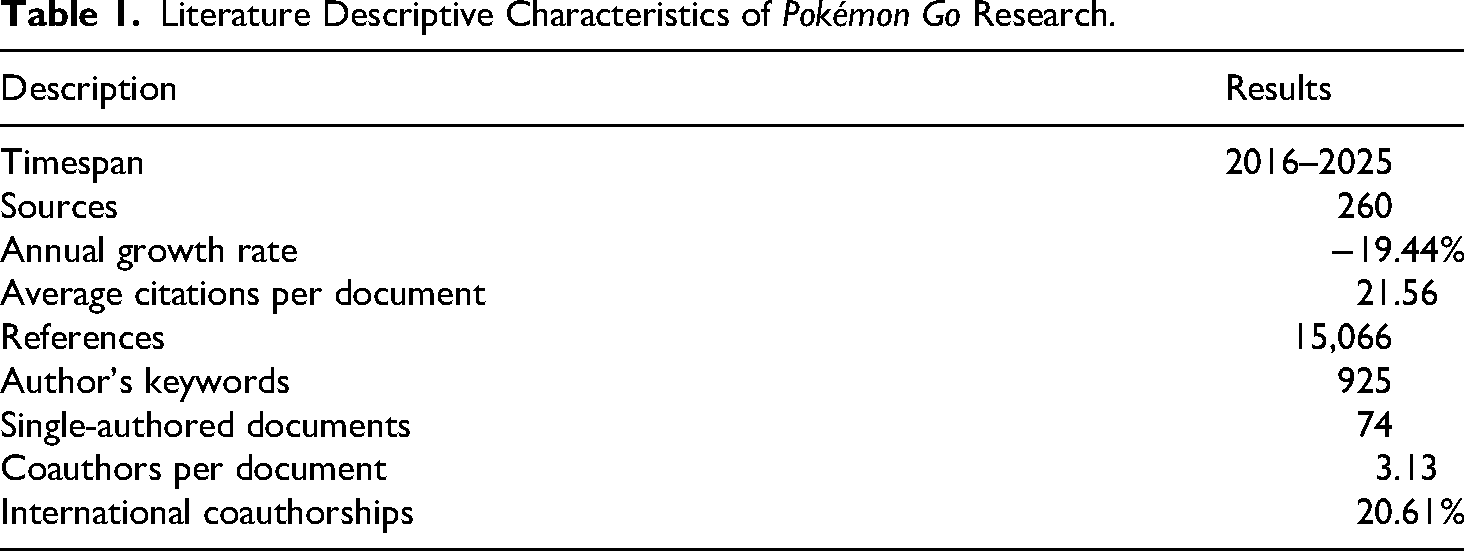
Among the 393 publications, the majority were journal articles (n = 239), followed by conference papers (n = 101), book chapters (n = 19), reviews (n = 14), editorials (n = 7), notes (n = 7), and letters (n = 6). Descriptive characteristics of the publications are presented in Table 1. Notably, research on Pokémon Go experienced a peak in 2017, followed by a gradual decline in publication output, leading to an annual growth rate of −19.44% (Figure 1). Despite this downward trend, the field maintains an average citation rate of 21.56 citations per publication, highlighting its continued academic relevance.
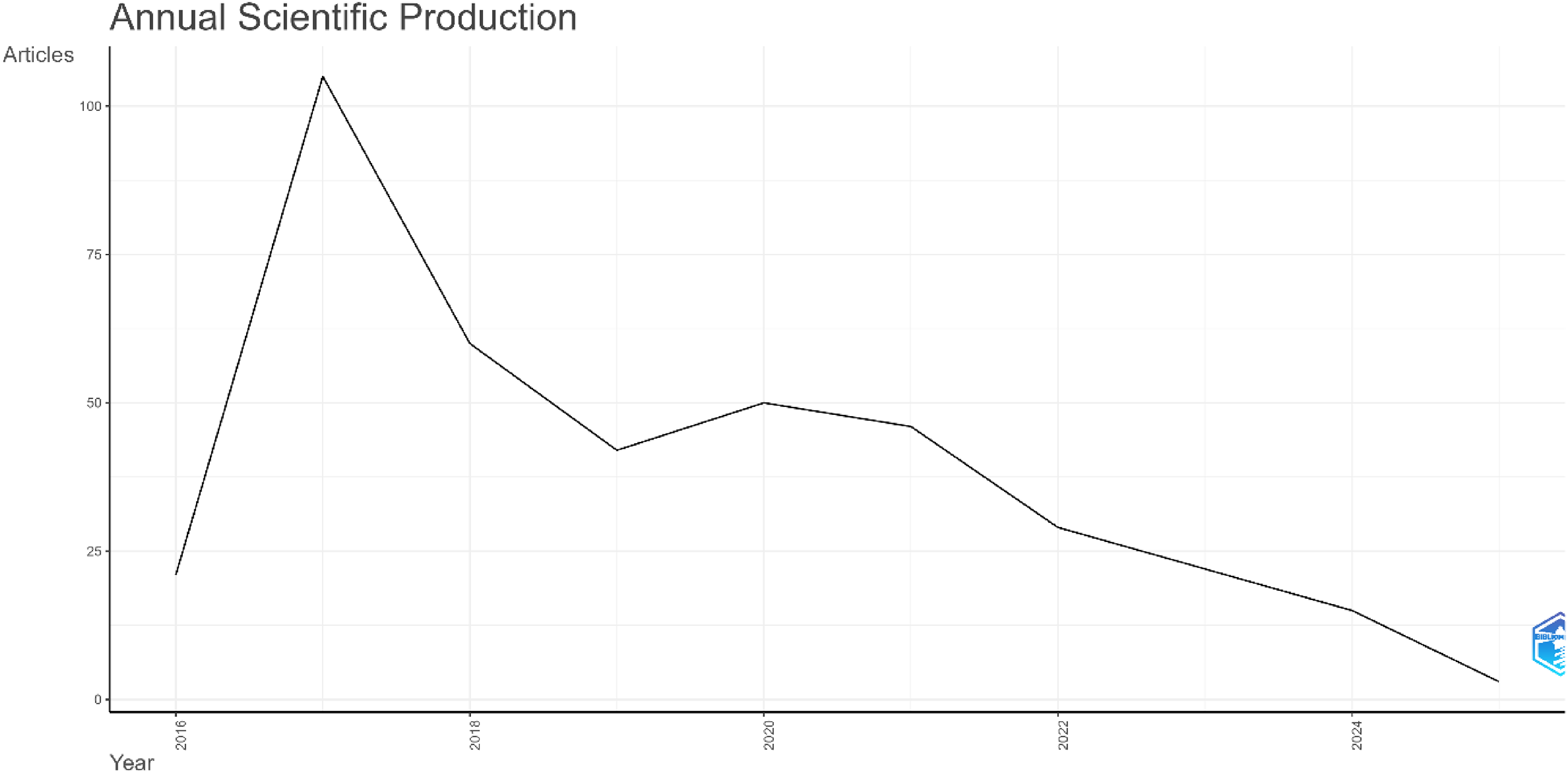
Number of Pokémon Go Research by Year of Publication.
Literature Descriptive Characteristics of Pokémon Go Research.
Performance Analysis
Publication-Related Metrics
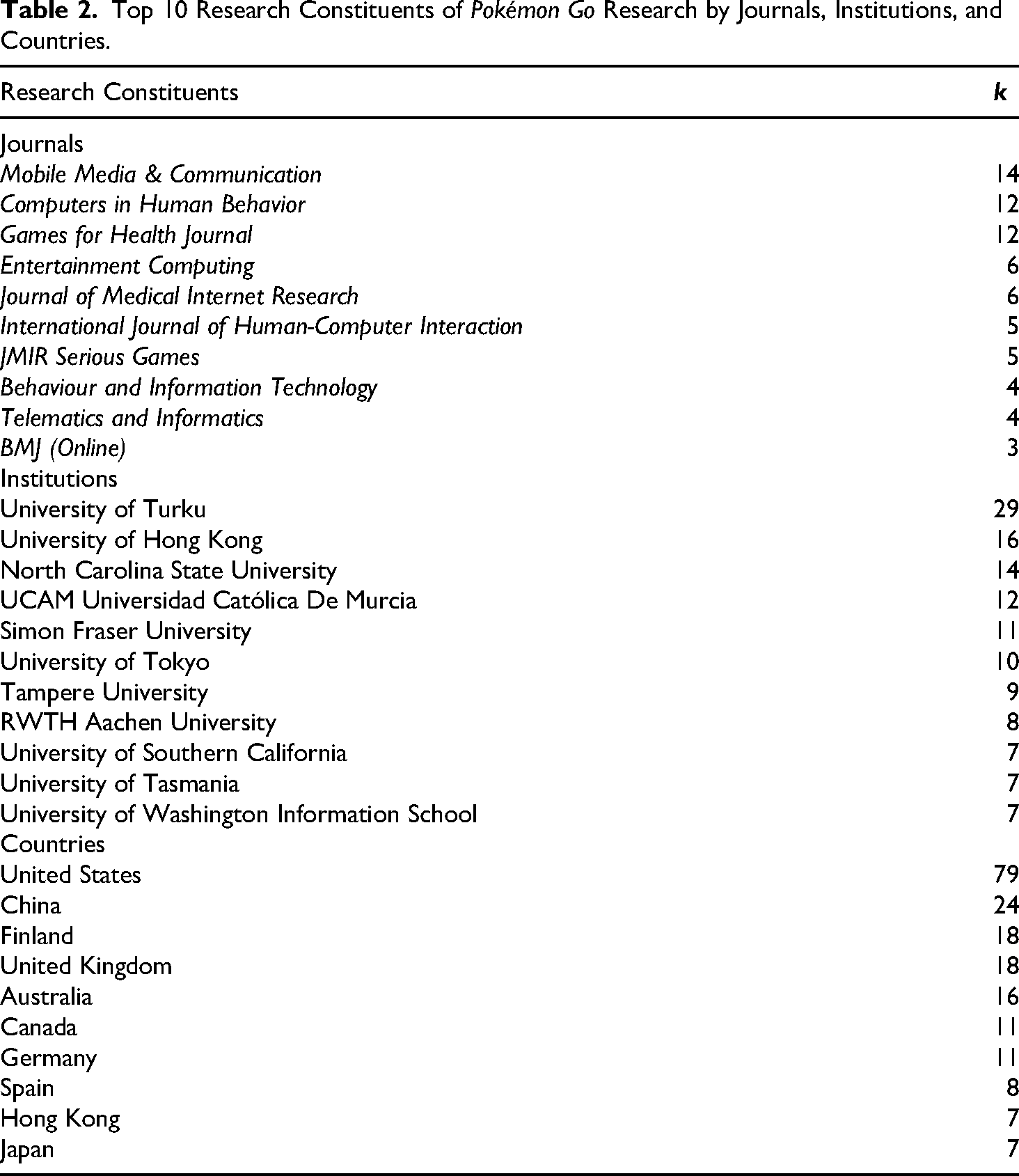
Table 2 summarizes the Top 10 research constituents to Pokémon Go research. Mobile Media & Communication published the highest number of studies (14 publications), followed by Computers in Human Behavior (12 publications) and Games for Health Journal (12 publications). The most active institutions include the University of Turku (29 publications), the University of Hong Kong (16 publications), and North Carolina State University (14 publications). For countries, authors affiliated with institutions in the United States contributed to a total of 79 publications, followed by China (24 publications), and both Finland and the United Kingdom (18 publications each).
Top 10 Research Constituents of Pokémon Go Research by Journals, Institutions, and Countries.
Citation-Related Metrics
Table 3 highlights the Top 10 most productive authors in the field based on publication count. Samuli Laato emerged as the leading contributor with 19 publications, including a highly cited study on Pokémon Go use during the COVID-19 pandemic (Laato et al., 2020). He frequently coauthored with Konstantinos Papangelis and Sampsa Rauti, both of whom contributed nine publications (e.g., Laato et al., 2024).
Top 10 Most Influential Authors in Pokémon Go Research.
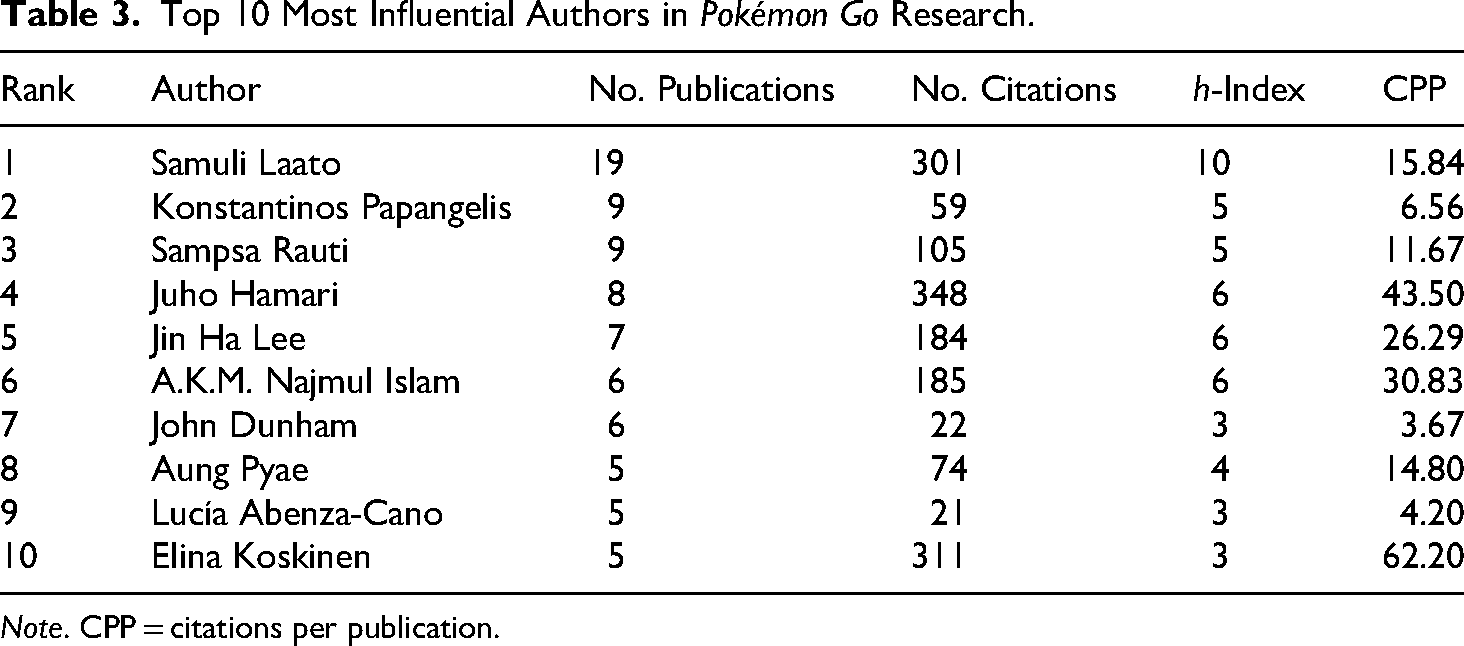
Note. CPP = citations per publication.
Science Mapping
Citation Analysis
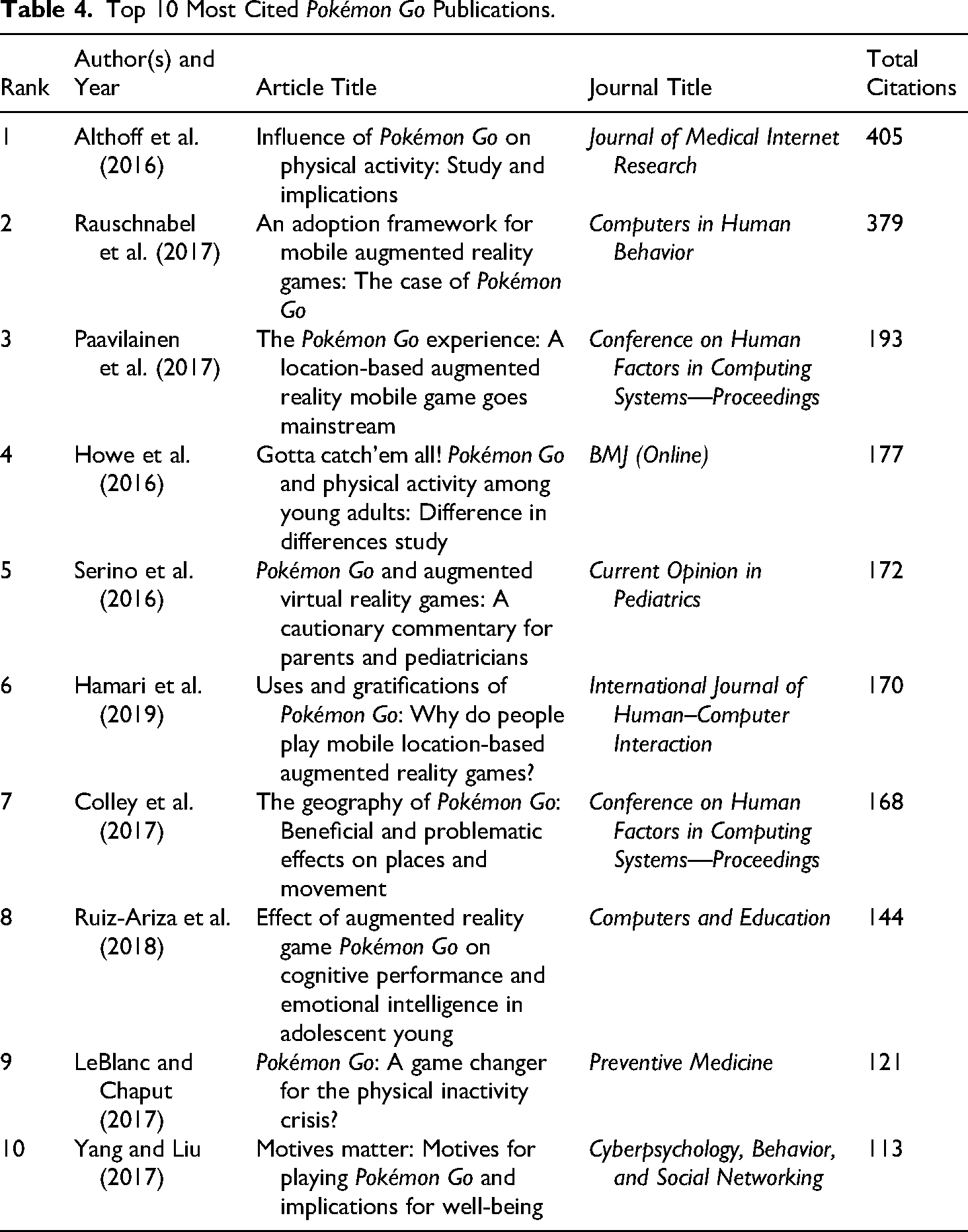
Table 4 lists the 10 most cited publications in Pokémon Go research. The top-cited study by Althoff et al. (2016) integrated large-scale wearable sensor data with search engine logs to examine the impact of Pokémon Go on physical activity. Another influential work proposed a theoretical model to explain attitudinal and intentional responses to Pokémon Go (Rauschnabel et al., 2017). Paavilainen et al. (2017) conducted a thematic analysis on user preferences and experiences. In total, 15 publications surpassed the threshold of 100 citations, reflecting their strong academic impact.
Top 10 Most Cited Pokémon Go Publications.
Cocitation Analysis
The cocitation network analysis revealed four major thematic clusters in the Pokémon Go literature (Figure 2), each representing a distinct line of foundational works. Cluster 1 (red) is labeled physical activity promotion. This cluster focuses on the potential of Pokémon Go to encourage physical activity, aligning with recommendations from the World Health Organization (WHO; 2010). Studies in this cluster employed various research designs to examine the game's health-promoting effects (e.g., Althoff et al., 2016; Howe et al., 2016; Nigg et al., 2017). Several commentaries also discussed the benefits and risks of the game, particularly concerns related to physical safety (LeBlanc & Chaput, 2017; McCartney, 2016; Serino et al., 2016). Additionally, research has noted the potential of Pokémon Go to reduce hikikomori—a condition characterized by extreme social withdrawal (Kato et al., 2016; Tateno et al., 2016).
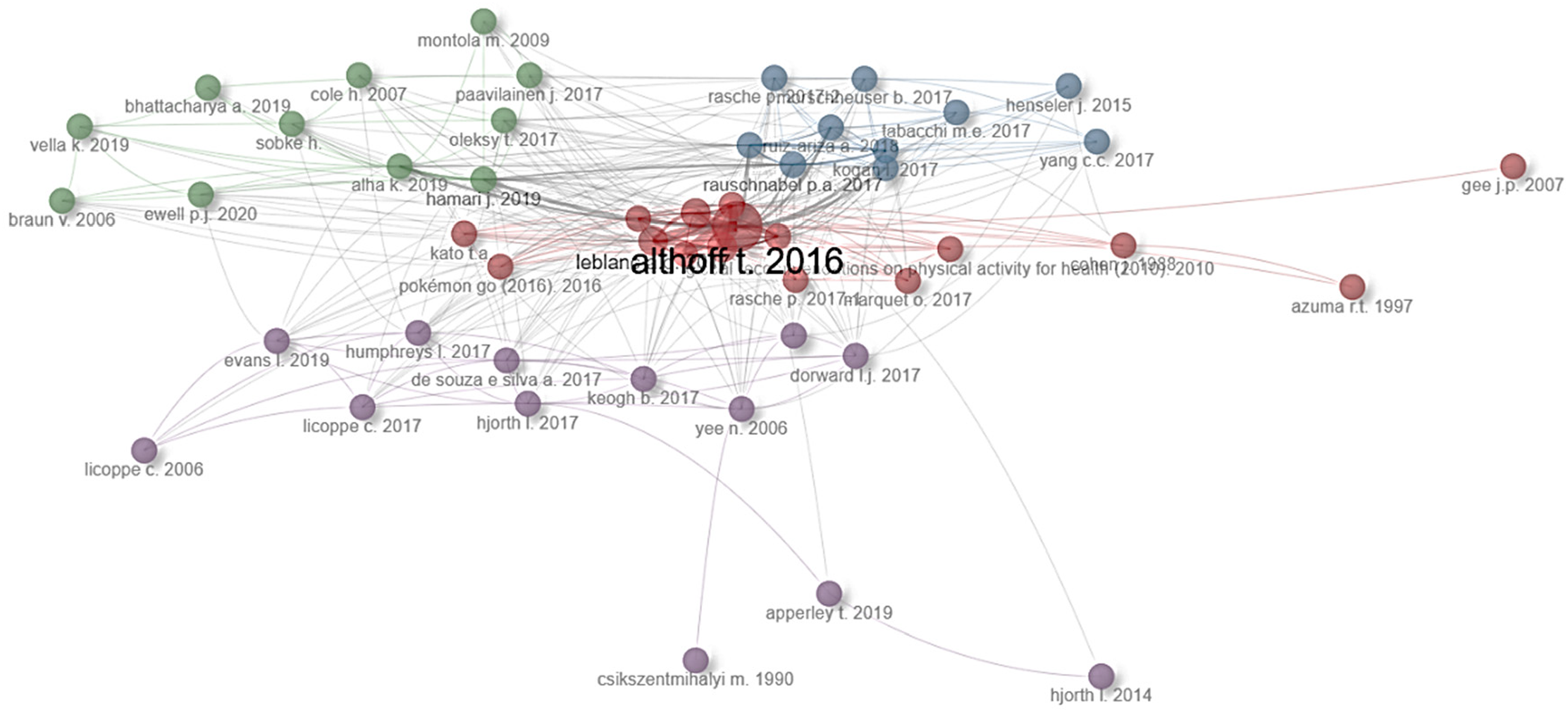
Cocitation Analysis of Pokémon Go Research.
Cluster 2 (green) is labeled Pokémon Go motivations. This cluster explores players’ motivations to engage with the game using both quantitative (Hamari et al., 2019) and qualitative methods (Alha et al., 2019; Paavilainen et al., 2017). Drawing comparisons to other sociable games such as Ingress (Söbke et al., 2017) and massive, multiplayer, online role-playing games (Cole & Griffiths, 2007), researchers have delved into the social aspects of Pokémon Go gameplay (Ewell et al., 2020; Vella et al., 2019). For example, Bhattacharya et al. (2019) theorized the social dynamics that emerge during collaborative game activities such as gym battles and raids.
Cluster 3 (blue) is labeled the Pikachu effect. Beyond physical activity and social engagement (Kogan et al., 2017), this cluster identifies broader positive outcomes linked to Pokémon Go. These include enhancements in cognitive functioning (Ruiz-Ariza et al., 2018) and the development of we-intentions, defined as intentions to collectively perform activities together with others (Morschheuser et al., 2017). Motivation emerged as a key factor mediating the relationship between gameplay and outcomes (Yang & Liu, 2017). For instance, Pokémon Go players motivated by health goals were more likely to gain health benefits from playing, a phenomenon referred to as the Pikachu effect by Kaczmarek et al. (2017).
Cluster 4 (purple) is labeled hybrid reality game. This cluster centers on the unique features of Pokémon Go as a hybrid reality game. Researchers have analyzed the game's design and mechanics, focusing on mobility, sociability, and spatiality engagement. The requirement to physically move through physical space enhances the game's immersive experience and encourages mobility (de Souza e Silva, 2017). While some argue that Pokémon Go lacks robust social networking features (de Souza e Silva, 2017; Licoppe, 2017), others highlight its potential to foster interactions among friends and local communities (Evans & Saker, 2019; Humphreys, 2017). Apperley and Moore (2019) further elaborated on how AR and location-based elements transform public spaces into interactive, tactile environments.
Thematic Mapping
The thematic mapping identified nine clusters of Pokémon Go research (see Table 5), with a graphical representation illustrated in Figure 3. These clusters are categorized into four quadrants based on two dimensions (Callon et al., 1991): relevance degree (centrality) and development degree (density). Relevance degree reflects the extent of interaction between a theme and other themes, indicating its relevance or importance to the broader research field. Development degree reflects the internal cohesion of a theme, indicating how strongly the keywords within that cluster are interconnected. The size of each bubble is proportional to the number of keyword cooccurrences, representing the volume of studies associated with that theme.
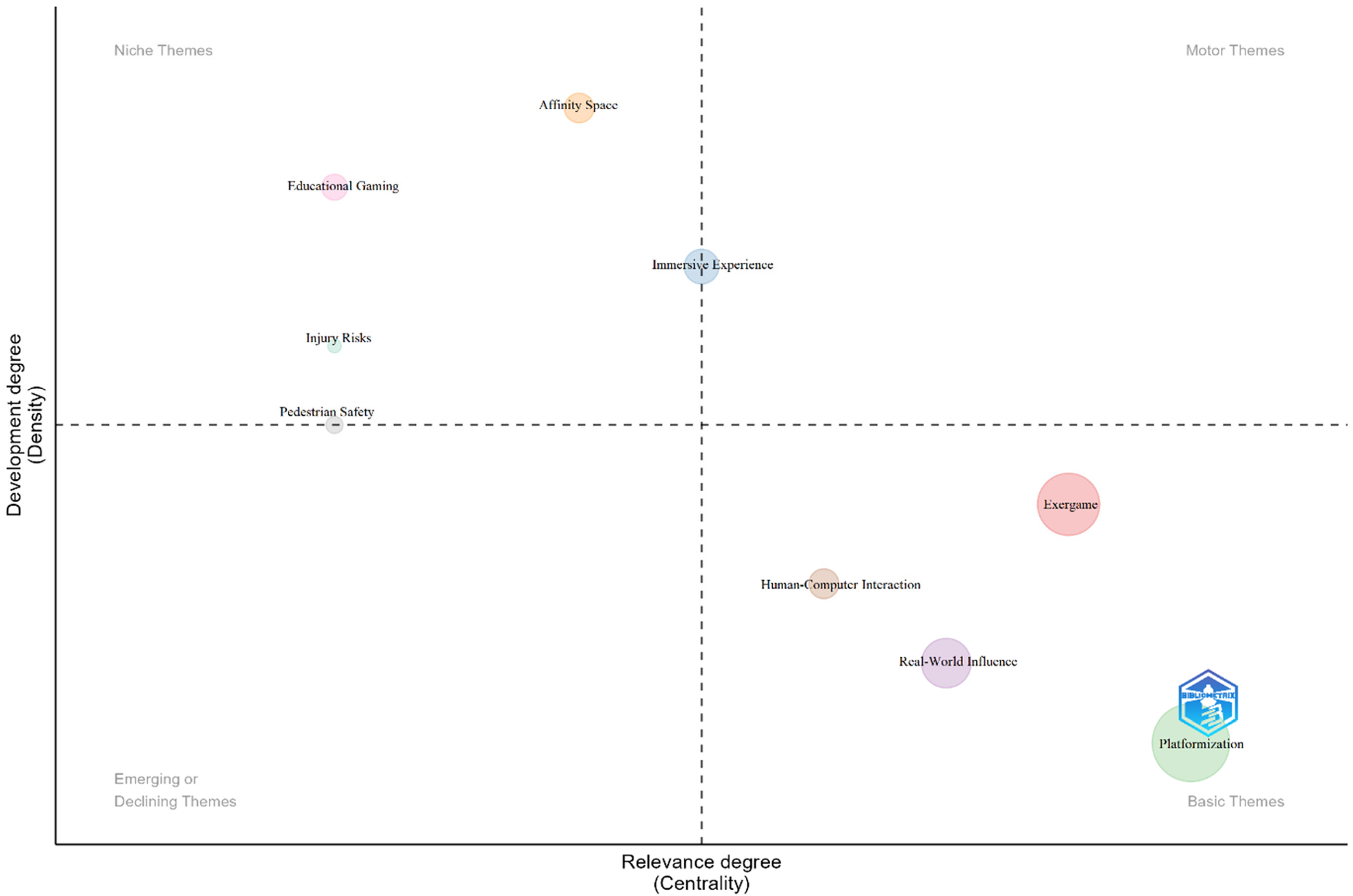
Thematic Mapping of Pokémon Go Research.
Thematic Mapping for Pokémon Go Research.
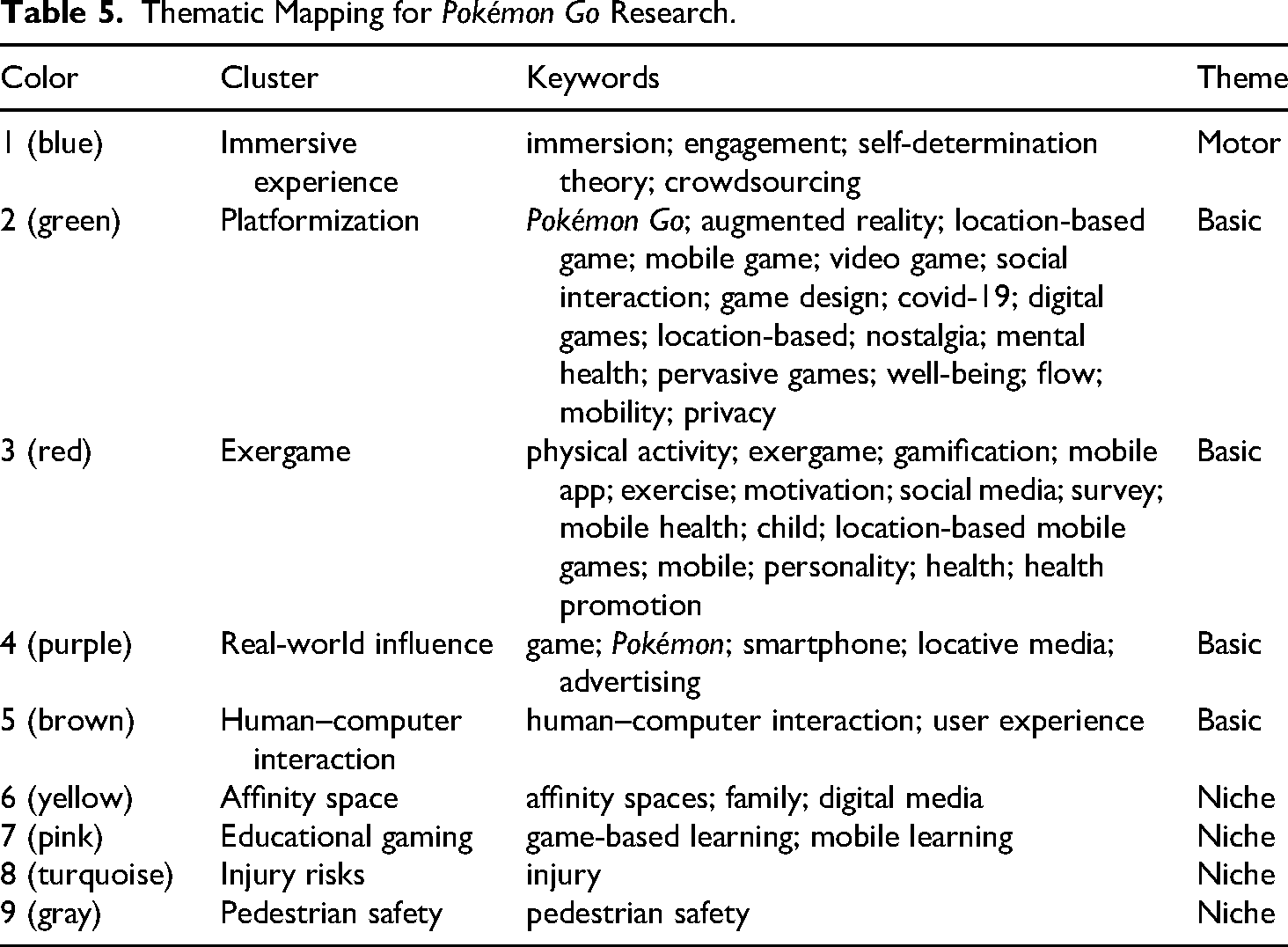
Motor themes are highly developed and central to the research domain. The only motor theme identified was immersive experience (Cluster 1). This theme examines the immersive experience among the users and how it might drive user engagement with the game.
Basic themes represent topics that are important to the field but less extensively developed. The first theme in this quadrant is platformization (Cluster 2), which focuses on how the game's design (e.g., AR, location-based features, and mobility) affects users’ experiences (e.g., mental health benefits, well-being, and psychological flow), highlighting how Pokémon Go as a platform influences user interaction and engagement beyond gameplay. Another theme under this quadrant is exergame (Cluster 3), which centers on the role of location-based games in promoting physical activity and healthier lifestyles. The third theme, real-world influence (Cluster 4), explores the practical impacts of the game on the real world, which includes its function as a platform for branding (e.g., leveraging the Pokémon franchise) and digital advertising. The final basic theme is human–computer interaction (Cluster 5), which examines the design and usability aspects of the game. It encompasses studies related to user experience, interface design, and human–computer interaction, with a focus on optimizing gameplay.
Niche themes are specialized topics that are well-developed internally but less connected to the broader research field. Affinity space (Cluster 6) reflects how the game fosters social bonds and shared digital experiences. It captures the sense of community and collective identity that can emerge through gameplay. Educational gaming (Cluster 7) focuses on the potential of the game as a tool for learning, exploring its applications in game-based education, informal learning environments, and place-based pedagogy. Injury risks (Cluster 8) explores the physical injuries and safety incidents that can occur as a result of playing the game.
Finally, pedestrian safety (Cluster 9) falls between niche themes and emerging or declining themes. This theme examines how gameplay affects pedestrian behavior, particularly the risks associated with walking in public spaces while engaged with the game.
Discussion
This bibliometric review aimed to identify foundational studies and research themes in Pokémon Go research. A total 393 publications were included in the bibliometric analysis.
Foundational Studies in Pokémon Go Research
Physical Activity Promotion
Four clusters of foundational research emerged in the cocitation analysis. Cluster 1 provides a foundational perspective on the role of mobility in Pokémon Go. The game's design encourages players to move through physical environments to achieve in-game goals, introducing a novel and engaging way to increase daily physical activity. This early body of research demonstrated the potential effect of Pokémon Go on physical activity promotion (Althoff et al., 2016; Nigg et al., 2017). It is also notable that the observed increases in physical activity were often modest but not long-lasting (Howe et al., 2016), encouraging rigorous research designs and longer-term evaluations of the effect (Khamzina et al., 2020). Collectively, these studies showcase the potential for Pokémon Go in physical activity promotion.
With growing interest in its potential for physical activity promotion, further studies examined Pokémon Go as a public health intervention for encouraging more active lifestyles (Wong et al., 2017). Studies explored its influence across diverse populations, including adolescents (Ruiz-Ariza et al., 2018), college students (Barkley et al., 2017), and the general population (Gabbiadini et al., 2018). Research methodologies in this field also became more sophisticated. For example, Marquet et al. (2018) used ecological momentary assessment and step counters to link specific gameplay characteristics with real-time changes in physical activity. More recent work by Fang et al. (2023) reported that Pokémon Go can increase physical activity and reduce sedentary time, but most players still fell short of meeting WHO-recommended activity levels. Together, these studies build on this foundation by broadening the scope of inquiry, using more rigorous methods, and evaluating the effectiveness of Pokémon Go as a health-promoting intervention from multiple perspectives.
Pokémon Go Motivations
Cluster 2 provides a foundational understanding of the motivational factors that drive player engagement with Pokémon Go. As with other media platforms (e.g., Instagram and TikTok), players are drawn to Pokémon Go by a variety of motivations. Grounded in uses and gratifications theory (Ruggiero, 2000), this cluster explores the psychological, social, and experiential motivations of gameplay using both quantitative and qualitative approaches (Hamari et al., 2019; Paavilainen et al., 2017). Although the game lacked some social connectivity features found in other social media, sociability consistently emerged as a key motivator. Players frequently reported enhanced social interaction through shared experiences such as raids and gym battles (Bhattacharya et al., 2019).
Beyond sociability, more recent studies have expanded the motivational landscape of Pokémon Go by examining additional motivators, such as escapism and achievement (Laor, 2022). Research has also begun to connect social motivations to broader patterns of territoriality, exploration, and play intensity, illustrating how social dynamics shape in-game behavior (Laato et al., 2022). Further, Dunham et al. (2025) compared hardcore and casual players to identify how individual traits and gratifications differentiate patterns of engagement. Collectively, this body of research offers essential insights into the motivations to engage in Pokémon Go and provides a valuable foundation for developing strategies to sustain user engagement over time.
The Pikachu Effect
Cluster 3 offers a theoretical foundation for understanding the conditions under which gameplay leads to positive outcomes. The term Pikachu effect was introduced by Kaczmarek et al. (2017), suggesting that benefits associated with Pokémon Go are more likely to occur among players who engage with specific motivations. This cluster moves beyond descriptive findings by introducing structural models that explain how engagement translates into outcomes (Bonus et al., 2018). These theoretical contributions advance the field by linking motivation, engagement, and outcomes within a coherent explanatory framework.
Given the potential benefits highlighted in this cluster, later studies have extended the Pikachu effect framework by examining how Pokémon Go produces different outcomes across contexts and populations. Wang and Skjervold (2021) demonstrated that the game can yield varying health and social benefits depending on player characteristics and patterns of engagement. During the COVID-19 pandemic, Huțul et al. (2024) identified Pokémon Go as an effective coping mechanism that supported well-being by enabling safe social interaction and facilitating small gatherings through in-game activities. Together, these studies show that the Pikachu effect is not uniform but is shaped by users’ goals, contexts, and social environments.
Hybrid Reality Game
Cluster 4 highlights the incorporation of AR elements that extend the spatial dimension of gameplay, positioning Pokémon Go more accurately as a hybrid reality game rather than solely a location-based game (de Souza e Silva, 2017). Hybrid reality games emerge through the interplay of mobile technologies, physical mobility, and social interaction, which together create a reciprocal relationship between digital and physical spaces. Although early studies documented players’ frustrations with elements of Pokémon Go's AR experience, such as GPS inaccuracies and limited usability (Paavilainen et al., 2017), later work has shown that continued improvements in AR features can strengthen the integration between gameplay and everyday life. For example, Alavesa and Xu (2022) demonstrated that players increasingly blend digital and physical realities through the sharing of AR screenshots, which embeds the game within daily routines. By overlaying digital content onto physical environments, the game transforms public and private spaces into interactive zones (Evans & Saker, 2019). This spatial reconfiguration alters how players move through, interact with, and perceive their surroundings (Apperley & Moore, 2019). This cluster offers important insights into the roles of mobility, spatiality, and sociability in hybrid reality games, enriching our understanding of game design and human–computer interaction.
Building on this foundational work, subsequent research has further examined how digital and physical environments intersect during gameplay. Xu et al. (2023) showed that hybrid spaces are actively produced through coordinated social interactions during activities such as raiding. Their work illustrates how players negotiate movement, communication, and decision making across both digital and physical layers, revealing the complex sociotechnical coordination that hybrid reality games require. Alavesa and Xu (2022) demonstrate that practices such as capturing and sharing AR screenshots embed game-related content into daily routines, thereby integrating hybrid play into ordinary social and spatial contexts. Collectively, these studies show that the hybrid reality foundations observed in early Pokémon Go research have evolved into a rich line of inquiry examining how hybrid spaces shape movement, social interaction, and everyday life.
Research Themes in Pokémon Go Research
The thematic mapping of author keywords revealed nine distinct clusters that reflect the multidimensional nature of Pokémon Go research. The first cluster centers on the immersive experience of the Pokémon Go player. Studies in this cluster explore various dimensions of immersion, such as narrative, sensory, spatial, strategic, and tactical immersion (Liu et al., 2017). These aspects highlight how players become deeply engaged in the game environment. Building on self-determination theory (Deci & Ryan, 2000), research in this cluster also investigates how immersion in Pokémon Go could contribute to intrinsic and extrinsic motivation, encouraging engagement among players (Sharma et al., 2021). Given that this cluster falls within the motor themes quadrant, future work would benefit from systematic reviews and meta-analyses to synthesize and consolidate findings in this area.
The second cluster supports the platformization of Pokémon Go as a hybrid reality game. Platformization refers to the integration of digital infrastructures, content, and user interactions into a cohesive platform that influences user behavior and broader social practices (Helmond, 2015). Studies in this cluster examine how Pokémon Go's game designs and infrastructures influence players’ experiences and behaviors (Paasovaara et al., 2017). Beyond physical activity and social connectivity, researchers have extended their focus to include potential impacts such as mental health benefits (Cheng et al., 2022) and risks of game addiction (Grajek et al., 2022), reflecting a growing interest in the broader psychosocial consequences. As interest in platform-based ecosystems grows, future studies could investigate how Pokémon Go shapes community formation and identity performance, especially as its platform governance evolves under new ownership.
The third cluster builds on the foundational work around physical activity and frames Pokémon Go as an exergame. This line of research is driven by growing global concerns over physical inactivity (Kohl et al., 2012). Pokémon Go has emerged as a potential digital health intervention to reduce sedentary behavior by encouraging players to engage in physical movements during gameplay (Althoff et al., 2016). Studies consistently show that Pokémon Go can increase daily step counts and promote more active lifestyles (Arjoranta et al., 2020; Ma et al., 2018). This cluster positions Pokémon Go as a valuable tool for integrating physical activity into daily routines. Future research could assess how Pokémon Go functions as an exergame across diverse populations and environments, generating safety guidelines for vulnerable groups (e.g., children, older adults, or individuals with mobility challenges).
The fourth cluster reflects Pokémon Go's real-world influence. Researchers have examined how the game has been utilized by small businesses to attract foot traffic and enhance customer engagement (Frith, 2017; Wu & Stilwell, 2018). Others have explored how the integration of locative media into everyday life raises questions about surveillance, data privacy, and the commercialization of public spaces (Hjorth & Richardson, 2017; Humphreys, 2017). As Pokémon Go continues to blur the boundaries between digital and physical environments, these studies draw attention to both the opportunities and concerns regarding the real-world impact. Future research could examine how the platform's new ownership structure influences economic strategies, data governance, and the broader societal impact of location-based AR games.
The fifth cluster focuses on human–computer interaction in the context of Pokémon Go. As a hybrid reality game, Pokémon Go presents a unique case for researchers due to its hybrid engagement with both digital and physical environments. For instance, Dunham et al. (2025) explored how the game's design influences player traits and gratifications, distinguishing between casual and hardcore players. The geographic distribution of in-game elements like PokéStops and gyms has also been studied to understand how the game's spatial design affects player movement and interaction with real-world environments (Juhász & Hochmair, 2017). Collectively, these studies underscore the importance of thoughtful interface and game design in enhancing user experience. Future studies could compare Pokémon Go's mechanics with those of newer AR games (e.g., Monster Hunter Now, Pikmin Bloom) to deepen understanding of human–computer interaction principles in hybrid reality contexts.
The sixth cluster identifies Pokémon Go as an affinity space: a space where people bond over a common interest. In the context of Pokémon Go, this space often emerges within families (Tran, 2018). It is common for parents and children to play together, creating opportunities for shared experiences, mutual learning, and stronger emotional bonds (Alha et al., 2019; Militello et al., 2018). Studies in this area highlight how Pokémon Go facilitates family gaming, offering a unique platform for family interaction that blends entertainment with meaningful social interactions. There are also studies that introduce Pokémon Go as an affinity space for language learning (Halaczkiewicz, 2020), whereby students used Pokémon Go to socialize with classmates and other players. Future research could examine how Pokémon Go and similar games foster intergenerational interaction, community formation, and informal learning across different cultural contexts.
The seventh cluster examines how Pokémon Go can be utilized as an effective tool for learning across various educational settings. Deslis et al. (2018) demonstrated that integrating the game into subjects like biology, geography, and mathematics encouraged students to engage with real-world environments, thereby enhancing their understanding of academic concepts. Similarly, Eriksson-Bergström and Jaldemark (2017) explored the use of mobile devices and game-based learning in formal outdoor educational settings, highlighting how such approaches can foster student engagement and learning. These studies collectively suggest that incorporating location-based and AR technologies into educational contexts can enhance student engagement, motivation, and learning outcomes.
The final two clusters address concerns about injury risks and pedestrian safety, both of which fall under niche but critical themes. The injury risks cluster details physical injuries that have occurred while playing Pokémon Go, such as falls, sprains, and even fractures (Pourmand et al., 2017; Serino et al., 2016). These outcomes are often associated with distracted movement or risky behavior during gameplay. In contrast, the pedestrian safety cluster focuses on behavioral changes observed in players while playing Pokémon Go in public spaces. Studies in this area have documented phenomena such as inattentional blindness (Chen & Pai, 2018a) and altered head-turning behavior while crossing streets (Chen & Pai, 2018b). Together, these themes underscore the importance of addressing safety in the design and regulation of location-based AR games.
Limitations
One limitation of the current bibliometric review is the narrow scope of the search term “Pokémon Go” used in the database query. As a result, this review excludes research that focuses on the broader Pokémon franchise. Notably, there is a substantial body of literature examining Pokémon in general. For example, Ogletree et al. (2004) is one of the earliest Pokémon studies that investigated gender portrayals in Pokémon cartoons. More recently, Kilpatrick et al. (2023) explored cross-linguistic sound symbolism in Pokémon names in relation to the in-game attribute of friendship. These studies represent research directions that diverge significantly from the clusters identified in the current review, highlighting that this study does not comprehensively capture the full landscape of Pokémon-related research. Future bibliometric reviews are encouraged to examine the broader knowledge structure of Pokémon research beyond Pokémon Go.
Another limitation is the reliance on bibliometric data, which does not incorporate actual effect sizes from empirical studies. Interpretations of impacts (e.g., health benefits) and relationships (e.g., between motivation, engagement, and outcomes) remain conceptual and do not account for statistical significance or the magnitude of effects. To address this gap, future research should adopt meta-analytic approaches to quantitatively synthesize findings and assess the robustness of observed relationships across studies.
It is also noteworthy that this bibliometric review was based solely on articles retrieved from the Scopus database. While other databases (e.g., Web of Science) may contain additional relevant studies, integrating data from multiple sources poses challenges due to differences in bibliometric formats and metadata structures, which complicates data standardization (Donthu et al., 2021). Similarly, this review did not include other nonindexed scholarly sources, as these materials typically lack standardized bibliometric metadata (e.g., author keywords and structured reference lists) that are essential for cocitation analysis and thematic mapping.
Furthermore, the analysis was limited to English-language publications. Given that Pokémon originated in Japan, this language restriction increased the likelihood of omitting critical academic contributions published in other languages, particularly Japanese.
Conclusion
This bibliometric review provides a comprehensive overview of the knowledge structure surrounding Pokémon Go research. A total of 393 publications retrieved from Scopus were included in the analyses. Cocitation analysis identified four foundational domains: (1) physical activity promotion, (2) Pokémon Go motivations, (3) the Pikachu effect, and (4) hybrid reality gaming. Thematic mapping further revealed nine key research themes: (1) immersive experience, (2) platformization, (3) exergame, (4) real-world influence, (5) human–computer interaction, (6) affinity space, (7) educational gaming, (8) injury risks, and (9) pedestrian safety. Collectively, this review synthesizes and organizes the first major wave of Pokémon Go research, marking a concluding reflection on the game's academic contributions to hybrid reality gaming research.
Supplemental Material
sj-csv-1-mmc-10.1177_20501579261452045 - Supplemental material for From Entertainment to Scientific Research: A Bibliometric Review of Pokémon Go Research
Supplemental material, sj-csv-1-mmc-10.1177_20501579261452045 for From Entertainment to Scientific Research: A Bibliometric Review of Pokémon Go Research by Jia Yuin Fam and Huiye Yip in Mobile Media & Communication
Footnotes

Funding
The authors received no financial support for the research, authorship, and/or publication of this article.
Declaration of Conflicting Interests
The authors declared no potential conflicts of interest with respect to the research, authorship, and/or publication of this article.
Supplemental Material
Supplemental material for this article is available online.
Author Biographies
References
Supplementary Material
Please find the following supplemental material available below.
For Open Access articles published under a Creative Commons License, all supplemental material carries the same license as the article it is associated with.
For non-Open Access articles published, all supplemental material carries a non-exclusive license, and permission requests for re-use of supplemental material or any part of supplemental material shall be sent directly to the copyright owner as specified in the copyright notice associated with the article.
