







Abstract
A growing body of research has attempted to understand the impact of social media platforms and digital technologies on younger generations’ daily lives and everyday experiences. Within this broader research context, previous research has shown that the various uses of the internet have become integrated into everyday life experiences, making digital technologies increasingly embedded in young people's daily routines and affecting domains such as time management, subjective experiences of time, and time perception. Using a comprehensive quantitative design, the current study explored how the continuous use of hyperconnected technologies (especially smartphones) shapes students’ subjective perception of online time and behaviors related to mobile phone use (perceived and excessive use) in students’ daily lives. Extensive questionnaires were completed by 732 undergraduate and postgraduate students. The results show that different patterns of internet use are associated with distinct ways of experiencing and managing everyday time, which in turn relate to variations in perceived and excessive mobile phone use. The findings also show how subjective online time perception contributes to differentiated experiential outcomes, highlighting the role of usage purpose in shaping digital practices. Overall, the findings shed light on experiential mechanisms linking internet use, subjective time perception, and mobile technology practices, contributing to a more nuanced understanding of hyperconnected technologies in students’ daily lives.
Introduction
Digital technologies have gained prominence in recent decades due to their permeation into everyday life, assuming a central role in social, educational, and cultural practices, particularly among younger populations. Buckingham and Willett (2022) highlight that hyperconnected digital technologies (HDT), those enabling constant internet access, are deeply embedded in contemporary youth experiences, influencing the emergence of new notions of identity and social representations. In line with Lipovetsky and Serroy's conception of a hypermodern society (2010, 2014), the term “hyperconnection” refers to the permanent, ubiquitous connectivity fostered by screen-based and mobile technologies, through which individuals remain constantly accessible, immersed in continuous flows of communication, and integrated into digital networks. These technologies are now fundamental in everyday digital contexts and have been examined using social media platforms in online communication and interaction (Bajwa & Yunus, 2024; Hall, 2018).
Central to the discussion on digital technologies is their impact on young people's perception of time. Intensive use, particularly of smartphones, alters the subjective experience of time (Aranda & Baig, 2018; Júdice et al., 2023; Ross et al., 2023; Turel & Cavagnaro, 2019) and affects the management of daily activities, contributing to a constant sense of urgency and time scarcity. This phenomenon, analyzed by Rosa (2013) as social acceleration, significantly affects both objective and subjective temporalities. In higher education, the multiple temporalities structuring students’ daily lives, such as management of personal, academic, and leisure time, are particularly impacted, shaping everyday functioning, attentional demands, and the organization of academic and non-academic routines (May & Elder, 2018; Wu et al., 2016).
Rather than referring to time as a measurable, clock-based duration, subjective online time perception is approached here as a lived and experiential phenomenon emerging during engagement with digital technologies. Drawing on sociological and psychological distinctions between objective time and experienced or social time (Lauer, 1981; Rosa, 2013), this concept encompasses sensations such as the acceleration of time, difficulties in maintaining temporal awareness, feelings of time scarcity, and perceptions of time being wasted while online. In this sense, subjective online time perception is treated as a phenomenological dimension of digital life, capturing how online engagement is experienced within the temporal organization of students’ daily lives.
Internet use has been commonly categorized into instrumental, hedonic, and social dimensions within this framework. Following Batra and Ahtola (1991), hedonic motivations relate to affective gratification and experiential pleasure, while utilitarian motivations emphasize functional or goal-oriented outcomes. Similarly, Hassenzahl et al. (2010) emphasize the hedonic qualities of interactive technologies as sources of stimulation, enjoyment, and psychological need fulfillment. In this study, “hedonic use” is employed to denote digital practices oriented toward entertainment and escapism (e.g., video browsing, streaming, gaming), in contrast to instrumental (academic/professional) and social (relational/interactive) uses.
From a communication studies perspective, these distinctions have been widely discussed within the Uses and Gratifications Theory (UGT), which emphasizes that media consumption is motivated by cognitive, affective, and social needs (Katz et al., 1973; Rubin, 1993). Instrumental uses have been associated with goal-directed and information-seeking practices; hedonic uses with entertainment, affective involvement, and forms of escapism; and social uses with social integration and the maintenance of interpersonal relationships. Importantly, UGT does not portray media users as either passive recipients or entirely rational actors, but as variably active, with degrees of intentionality, attention, and engagement that fluctuate according to individual motivations and situational contexts (Rubin, 1993).
Recent advancements in the field of uses and gratifications scholarship have challenged the assumption that media use is driven exclusively by pre-existing needs, highlighting instead the role of technological affordances (see, for example, Norman [2013], in relation to cognitive processes and human–object interaction) and interface characteristics in shaping the motivations, experiences, and outcomes of media use (Ruggiero, 2000; Sundar & Limperos, 2013). From this standpoint, digital platforms actively structure patterns of engagement and attention. Accordingly, the present study adopts the UGT perspective as a point of reference for motivation, while directing analytical attention to subjective online time perception as an experiential outcome emerging from the interaction between different types of internet use, platform dynamics, and attentional processes.
In this perspective, the excessive problematic use of digital technologies has become especially visible. The literature has reported various phenomena illustrating individuals’ paradoxical relationships with technology, such as fear of missing out (FOMO) (Marco & Cardama, 2024), joy of missing out (JOMO) (Aranda & Baig, 2018; Chan et al., 2022), fear of better options (FOBO) (Park & Kim, 2025), nomophobia (the anxiety of being without one's mobile phone) (Kuscu et al., 2021), phubbing (ignoring others in favor of mobile phone use) (Tandon et al., 2022), and brain rot (a colloquial expression describing mental fatigue or perceived cognitive decline from excessive digital consumption) (Serenko, 2026). For university students, the pressure to remain digitally connected is particularly salient, as academic requirements often need intensive technology use, which may exacerbate difficulties in balancing personal and academic time management and contribute to distorted perceptions of everyday time (Varsori, 2023).
Although a growing body of literature exists on the impact of digital technologies on young people's lives, associations between media use and young people's everyday experiences and related outcomes are often small, heterogeneous, and highly context-dependent, particularly when time spent online is treated as the primary explanatory variable (Hall, 2024; Meier & Reinecke, 2021; Orben & Przybylski, 2019). Few studies have specifically examined how different types of internet use influence subjective online time perception or how this perception may mediate between digital use and patterns of mobile technology use. Addressing this gap, the present study investigates, through a robust quantitative approach and a sample of 732 university students, the relationships between patterns of internet use, subjective online time perception, and perceived and excessive mobile technology use.
Building on this perspective, the study is guided by an experiential mechanism linking different types of internet use to subjective online time perception and, in turn, to patterns of perceived and excessive mobile technology use. This approach assumes that instrumental, hedonic, and social uses involve distinct motivational orientations and attentional demands that shape how time spent online is experienced and interpreted. Subjective online time perception is thus understood as an experiential dimension emerging from the interaction between usage goals, platform dynamics, and attentional engagement, enabling the investigation of varied experiential outcomes without implying direct causal effects on well-being.
More specifically, the study aims to answer two key questions: first, to identify which specific types of internet use are associated with university students’ subjective perceptions of online time; and second, to examine whether these perceptions are related to, or mediate, patterns of perceived and excessive mobile technology use.
Study Overview
This study examined how the continuous use of hyperconnected digital technologies, particularly smartphones, shapes students’ experience and perception of time and their everyday digital routines. Recent literature highlights that digital technologies are deeply embedded in students’ academic, social, and personal routines, directly influencing sociability practices, time management, and everyday organization (Huckins et al., 2020; Ross et al., 2023; Turel & Cavagnaro, 2019; Varsori, 2023).
Several studies indicate that intensive use of these technologies can distort the subjective perception of time, leading to feelings of time scarcity and pressure (Júdice et al., 2023; Mohammadpanah & Atabaki, 2021). This effect is particularly significant in higher education, where students must continuously integrate digital technologies across academic and social activities (Buckingham & Willett, 2022; Granic et al., 2020; Livingstone, 2021).
The study was conducted during the COVID-19 pandemic, a context that amplified the centrality of hyperconnected technologies due to lockdowns, mobility restrictions, and the abrupt transition to fully digital learning environments. For instance, significant changes were observed in sleep patterns (Cellini et al., 2020; He et al., 2021), time perception (Júdice et al., 2023), everyday routines and digital practices (Huckins et al., 2020; Mack et al., 2021), academic performance (Navarro et al., 2023; Zheng & Zheng, 2023), and students’ lifestyles and leisure activities (García-Castillo et al., 2024; Godber & Atkins, 2021). These transformations underscore how the pandemic context shaped digital and temporal behaviors, providing a relevant context for observing intensified patterns of digital engagement.
To explore these phenomena more deeply, the study was guided by two research questions.
RQ1. What types of internet use are associated with and predict students’ subjective perception of online time in higher education? RQ2. Do different internet uses relate to and influence students’ perceptions of excessive mobile use? Does subjective online time perception mediate these relations?
The use of research questions instead of formal hypotheses was intentional and stems from the exploratory nature of the study and the complexity of the phenomenon under analysis. As argued by different scholars, research questions are appropriate when examining underexplored relationships and aim to guide the analysis without constraining it to predefined assumptions (Creswell & Creswell, 2018; Punch, 2013).
By focusing on subjective online time perception as a potential mediator between internet use and excessive digital behaviors, this study contributes to a deeper understanding of how hyperconnected technologies shape university students’ experiences, digital practices, and temporal experiences, particularly within the context of accelerated digitalization during the pandemic.
Materials and Methods
The analytical model employed in this study builds upon the initial exploratory work developed by Varsori (2023) and forms part of a broader research project examining young people's digital practices and temporal experiences. The ordering of internet use was theoretically driven and reflects distinctions widely discussed in the literature on media practices and motivations, including UGT, which differentiates between goal-oriented, affective, and social motivations for media use (Katz et al., 1973; Rubin, 1993). In this study, this framework is specifically articulated with a temporal perspective, examining how different usage purposes relate to subjective online time perception and behaviors associated with mobile technology use.
Participants
Data were collected from 732 students (199 male, 530 female, 1 non-binary, and 2 undisclosed) at two Portuguese public universities. Participants ranged from 17 to 51 years old (M = 22.06, SD = 5.50). Most were undergraduate students (57.4%), 26.4% were master’s students, and 16.3% were integrated master's students, residing in different regions of the country. In terms of field of study, 51% of students were enrolled in a social sciences and humanities degree, and 49% in a STEMM (science, technology, engineering, mathematics, and medicine) degree. Most participants were studying full-time (79.8%).
Procedure
The protocol was carried out digitally since the data collection period coincided with the restrictions imposed by the COVID-19 pandemic. Requests were sent via institutional email to the program leaders to collaborate in disseminating the survey. Additionally, the request was sent to class representatives to raise awareness of the study. Participants were asked to complete a questionnaire on hyperconnected technology in students’ university lives. Participation was voluntary, anonymous, and without right/wrong answers. Sociodemographic information was also collected to characterize the sample. However, only age was used as a covariate in subsequent analyses, as preliminary checks indicated no systematic effects for the other variables. The completion took an average of 15 minutes and was available via LimeSurvey between December 6 and 31, 2021.
Measures
The full set of measures adapted for this study is presented in the appendix.
Internet Usage Evaluation
Internet use was assessed with the “Internet Usage Evaluation” scale, which was developed by adapting media access and use indicators from Melro (2019) and Pereira et al. (2015). While the specific items were adapted from these earlier instruments, conceptualizing and labeling the three dimensions—instrumental, hedonic, and social use—followed the framework presented in Varsori (2023). Instrumental use included items related to information-seeking and learning and working, such as “accessing news or searching for information online.” Hedonic use included items related to entertainment and escape, such as “watching films or series online” (entertainment). Social use included items related to social exchanges and personal expression, such as “talking with friends or family online.” In this study, “hedonic use” was operationalized in line with prior research distinguishing utilitarian and hedonic motivations (Batra & Ahtola, 1991) and user experience studies emphasizing hedonic qualities of technology use (Hassenzahl et al., 2010). Accordingly, hedonic use refers to digital practices primarily oriented toward enjoyment and disengagement from everyday demands, in contrast to instrumental (academic/professional) and social (relational/interactive) uses. All items were rated on a Likert-type scale ranging from 1 = never or rarely to 5 = more than once a day, with higher scores indicating more frequent engagement in that type of use. The respondent's average score on each dimension was computed. Cronbach's alpha for these dimensions were 0.74 (instrumental), 0.63 (hedonic), and 0.74 (social), indicating acceptable internal consistency (Hair et al., 2019).
Mobile Phone Usage Evaluation
A scale with two dimensions was developed: (a) problematic or excessive mobile use, and (b) perceived mobile use. The problematic or excessive use dimension was measured using an adapted version of the Portuguese adaptation of the Test of Mobile Phone Dependence (TMD) (Chóliz, 2012), as validated by Dias et al. (2019), while the perceived mobile use dimension was developed by the authors. Perceived mobile use included items reflecting self- and other-oriented evaluations of mobile phone use, such as “I think I spend too much time on my mobile phone.” Problematic or excessive mobile use included items capturing compulsive and uncontrolled patterns of use, such as “I have tried to spend less time on my mobile phone, but I cannot.” Participants responded using a five-point Likert scale ranging from 1 = strongly disagree to 5 = strongly agree. The average score for each dimension was calculated. Higher values indicate more frequent and intense mobile phone use, distinguishing between subjective perceptions of use (perceived mobile use) and behavioral indicators of excessive or problematic engagement (problematic or excessive use). Cronbach's alpha for these dimensions were 0.80 for perceived mobile phone use and 0.62 for excessive mobile phone use.
Subjective Online Time Evaluation
A measure was developed to evaluate participants’ perception of time spent online based on adverse sensations related to temporality (lack and loss of time and the perception of time passage). Example items include “When I am online, I feel that time passes more quickly.” Responses were indicated on a scale from 1 = never to 5 = always. Cronbach's alpha for this measure was 0.78.
Sociodemographic Variables
Participants indicated their age, gender, degree, field of study, district of residency, and technology access.
For this study, some sociodemographic variables were not analyzed to avoid overfitting while guaranteeing data quality and integrity, as analyses of such variables require a detailed and in-depth examination of the theme. Additionally, including data on device ownership was intended to characterize the broader technological ecosystem of students. While subsequent analyses focused on mobile phone use, this choice shows that mobile phones are the most recurrent hyperconnected devices among university students, integrating academic, social, and leisure practices into a single technology.
Results
Access and Use of Technologies
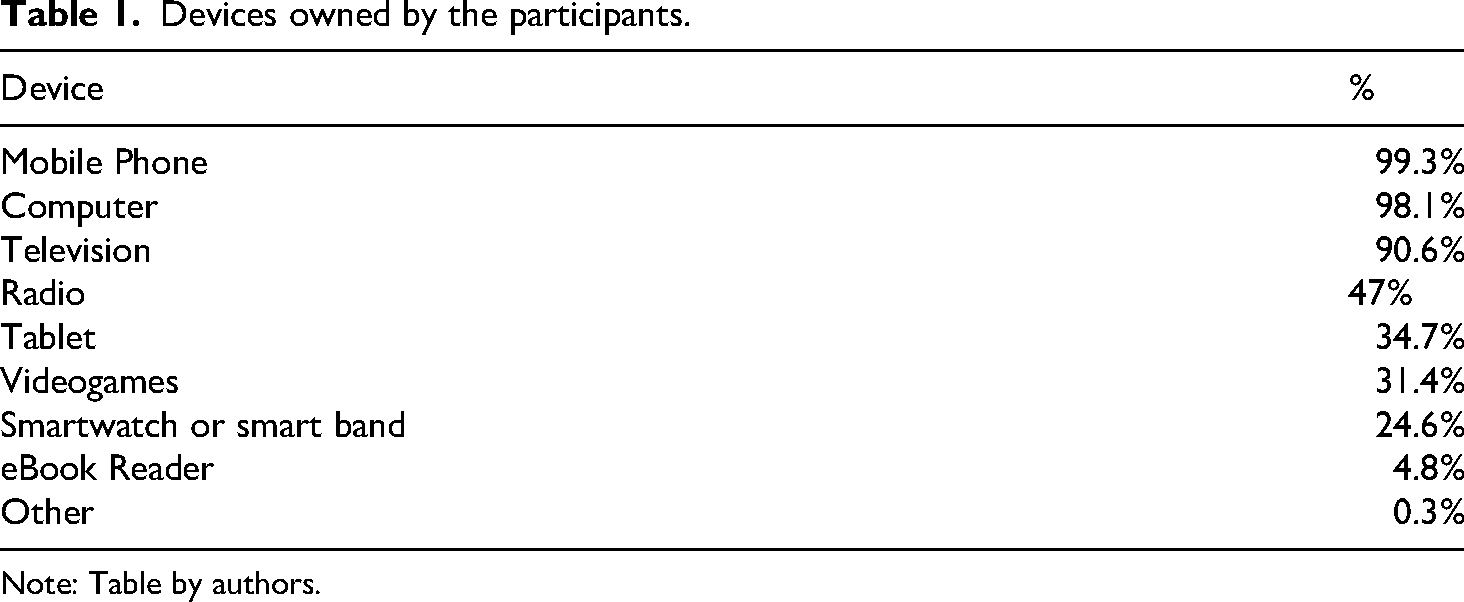
The different kinds of technologies owned by the participants are shown in Table 1. Mobile phones, computers, and televisions were the three main technologies participants owned.
Devices owned by the participants.
Note: Table by authors.
Regarding the use of social media, Instagram and WhatsApp were more frequently used during the day, followed by Spotify and YouTube (Figure 1). These descriptive data are presented to provide context for overall social media usage patterns in the sample and to aid the interpretation of the study's primary findings.
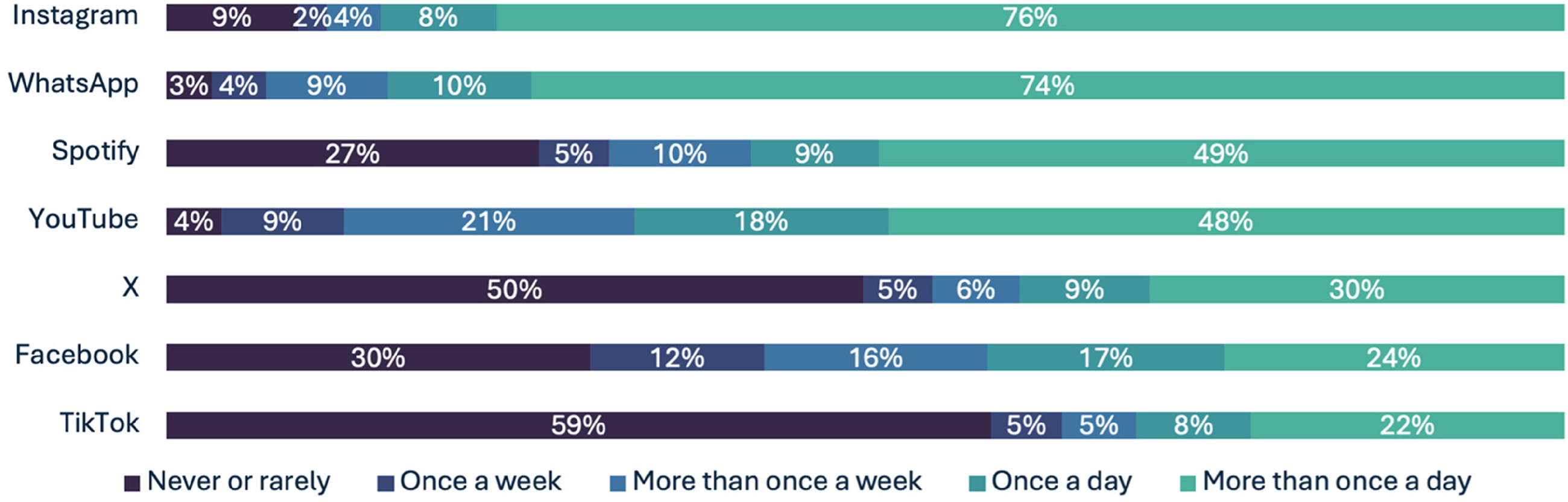
Frequency of social media use.
Use of Hyperconnected Technologies, Internet Usage, Mobile Phone Usage, and Subjective Online Time
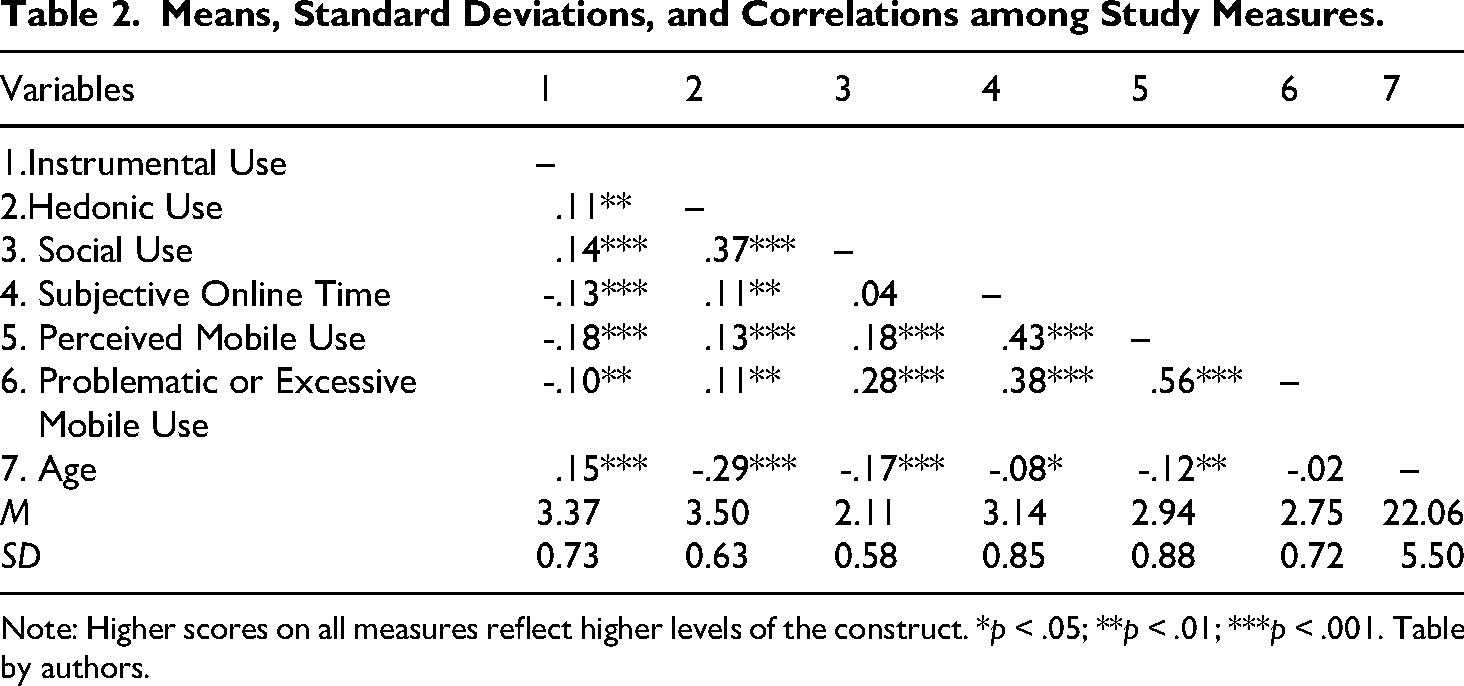
Means, standard deviations, and Pearson correlations among internet usage, subjective online time perception, mobile phone usage, and age are presented in Table 2.
Note: Higher scores on all measures reflect higher levels of the construct. *p < .05; **p < .01; ***p < .001. Table by authors.
The three distinct internet uses correlated with each other, meaning the more frequently they used the internet for learning/searching for information, the more frequently they also used it for entertainment and social interactions. Table 2 also shows that the higher the instrumental usage participants had, the lower were their subjective time online (r = −.13), perceived mobile use (r = −.18), and problematic or excessive mobile use (r = −.10). This pattern of results shows that the more participants used the internet for learning/searching for information, the less they felt like they were wasting their time, spending too much time on their mobile, or using it excessively. The opposite pattern of results was found for participants with higher hedonic use, meaning the more they used the internet for entertainment, the higher their subjective online time perception, perceived mobile use, and problematic or excessive mobile use (r = .11; r = .13; and r = .11, respectively). The results in Table 2 also show that social use was positively correlated with perceived mobile use (r = .18) and problematic or excessive mobile use (r = .28). Perceived mobile use and excessive mobile use were also positively correlated with subjective online time (r = .43; r = .38, respectively).
Age was positively correlated with instrumental use (r = .15) and negatively correlated with hedonic and social uses (r = −.29; r = −.17, respectively). This meant that the older the students were, the more they used the internet for learning/searching for information, and the less they used it for entertainment and social interactions.
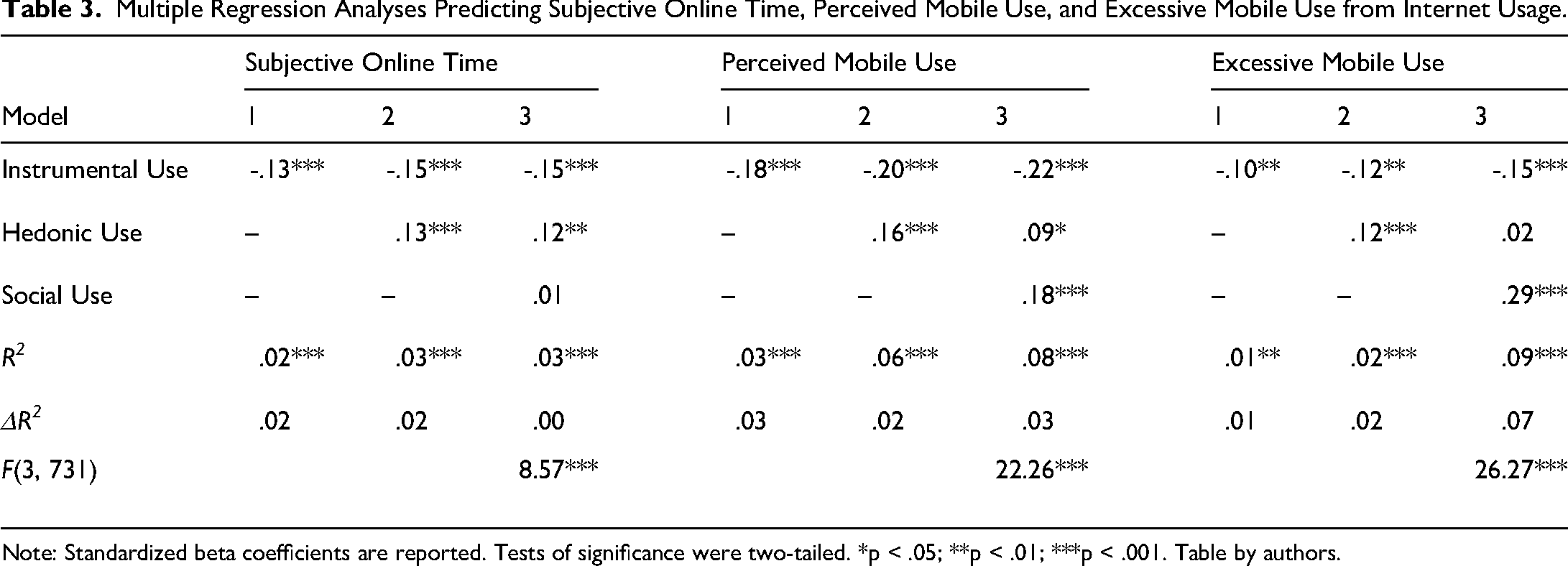
Multiple regression analyses were conducted to explore the role of different internet uses on subjective online time, perceived mobile use, and excessive mobile use. The results of the multiple regression analyses (Table 3) indicate that instrumental use was a significant predictor of subjective online time (β = −.13, p < .001), perceived mobile use (β = −.20, p < .001), and excessive mobile use (β = −.10, p < .001), meaning the higher instrumental use participants had, the lower was their subjective online time perception, perceived mobile use, and excessive mobile use.
Multiple Regression Analyses Predicting Subjective Online Time, Perceived Mobile Use, and Excessive Mobile Use from Internet Usage.
Note: Standardized beta coefficients are reported. Tests of significance were two-tailed. *p < .05; **p < .01; ***p < .001. Table by authors.
The results in Table 3 also show that regression equations of hedonic use, subjective online time, perceived mobile use, and excessive mobile use were all significant. The higher levels of hedonic use students had, the more they perceived spending time online, and used their mobile frequently and excessively (β = .13, p < .001, β = .16, p < .001, and β = .12, p < .001). Table 3 indicates that social use significantly predicted perceived and excessive mobile use (β = .18, p < .001, and β = .29, p < .001). To explore the mediating role of subjective time online on the relationship between the three internet usages and excessive mobile use, methods developed by Preacher and Hayes (2004) were followed. These analyses used the PROCESS program (Model 4) (Hayes, 2022), with bias-corrected bootstrap estimates and 95% confidence intervals (Preacher & Hayes, 2004). Table 4 illustrates the results of the mediation analyses. We employed hierarchical regression models to test the role of different internet uses. The order of inclusion (instrumental → hedonic → social) was theoretically driven: instrumental use reflects functional and academic purposes, while hedonic and social uses represent entertainment and relational practices, which are more closely linked to problematic or excessive use (Katz et al., 1973; Rubin, 1993; Sundar & Limperos, 2013). This stepwise approach allowed us to assess how much explanatory power was added by hedonic and social dimensions, beyond instrumental use. In addition, we tested models including all three uses simultaneously (see Table 4). These effects were mediated by subjective online time, as indicated by bootstrap confidence intervals entirely below zero (95% CI [−.120, −.021]) for instrumental use and entirely above zero (95% CI [.015, .081]) for hedonic use. On the other hand, the relationship between social use and excessive mobile use was not mediated by subjective online time.
Bias-Corrected Bootstrap Estimates for Instrumental, Hedonic, and Social Uses with Mediation by Subjective Online Time.
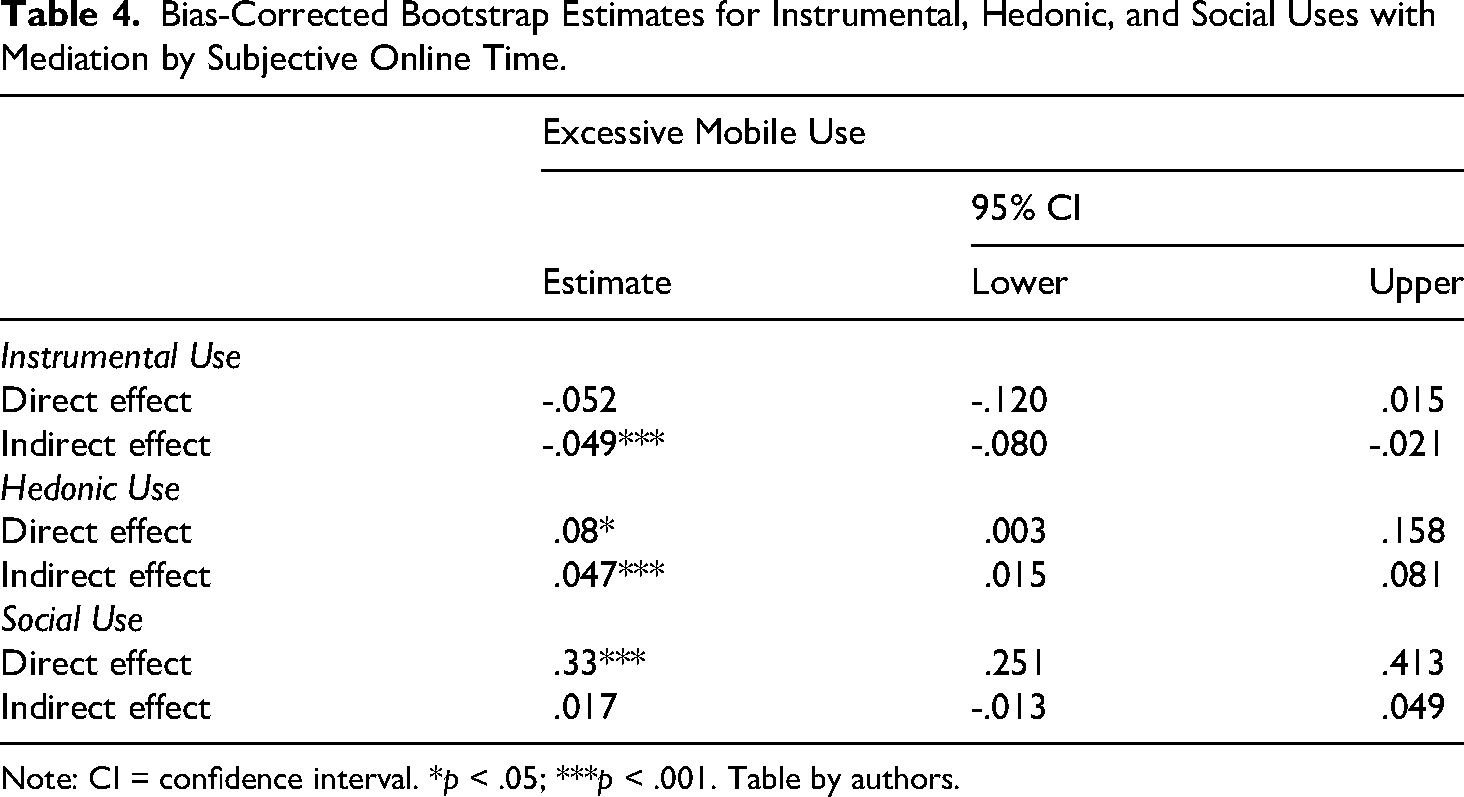
Note: CI = confidence interval. *p < .05; ***p < .001. Table by authors.
Discussion
The current study explored how the continuous use of hyperconnected technologies shapes the experience and perception of time and its relevance for students’ daily lives. When examined primarily through measures of time spent online, prior research shows that media use accounts for only a limited portion of variation in young people's everyday experiences and related outcomes, with observed relationships differing substantially across individuals and situational contexts (Hall, 2024; Meier & Reinecke, 2021; Orben & Przybylski, 2019; Varsori, 2023).
The results revealed that mobile phones, computers, and televisions were the three main technologies participants owned, and Instagram and WhatsApp were the most frequently used social media during the day. This pattern of ownership and usage has also been observed in previous studies, both in the Portuguese context (Amaral et al., 2023; Melro, 2019; Pereira et al., 2015) and globally, as demonstrated by the most recent report (Kemp, 2025).
The findings also showed that a more frequent use of the internet for learning/searching for information was positively related to more frequent use for entertainment and social interactions. This phenomenon has been discussed in various studies addressing attentional profiles. As Wellner (2019) suggested, attention can function like a spotlight, shifting rapidly from one topic or situation to another stimulus, allowing individuals to move seamlessly between different interactions. Previous research, including a systematic review (May & Elder, 2018), has consistently demonstrated that shifting between tasks—either sequentially or through multitasking—is a common feature of digital practices. Our findings should therefore be interpreted considering this broader evidence. This dynamic has also been examined in studies on different types of technology use depending on levels of digital literacy (Hargittai & Micheli, 2019) and self-reported usage patterns (Scharkow, 2016).
Prior studies indicate that the purpose of smartphone use is critical: for instance, research with Chinese adolescents found that hedonic motivations increase problematic use through greater time spent on entertainment and communication, whereas instrumental motivations predict lower problematic use via more learning-oriented time (Meng et al., 2020). Similarly, in a European adult sample, hedonic use was positively associated with smartphone addiction and poorer psychological outcomes, mediated by stress (Vujić & Szabo, 2022). Among university students, escapism and present-hedonistic orientations were also identified as mechanisms by which academic stress leads to problematic smartphone use (Wong et al., 2024). Consistent with this literature, the present study indicates that hedonic use is associated with heightened subjective online time perception and excessive mobile use, whereas instrumental use shows the opposite pattern, highlighting the relevance of usage purpose for understanding experiential and behavioral outcomes.
Furthermore, using the internet for learning/searching for information was linked to a lower perception of wasting time, spending too much time on one's mobile, or using it excessively (Varsori, 2023). Also, instrumental use significantly predicted lower subjective perception of time spent online, mobile use, and excessive mobile use. These results suggest that purposeful engagement with technology may buffer against negative subjective experiences often discussed in relation to screen time, such as guilt or cognitive fatigue (Varsori, 2023). Interestingly, instrumental use was negatively correlated with excessive mobile use in the bivariate analyses, but its direct effect was not statistically significant in the mediation model. Instead, the protective role of instrumental use operated indirectly through subjective online time perception. These findings highlight that the frequency of functional or academic technology use is associated with lower levels of excessive mobile engagement and how such use influences students’ perception of time online. Thus, when students engage in more purposeful digital practices, they may feel less “time wasted” online, reducing excessive mobile use.
The opposite pattern of results was found for participants with higher hedonic use, meaning more frequent internet use for entertainment was related to and predicted higher subjective perception of time spent online, perceived mobile use, and problematic or excessive mobile use. Additionally, social use was significantly correlated, and higher perceived and excessive mobile use was predicted. This type of usage pattern is consistently observed in studies addressing excessive use of technology and the internet, as continuously demonstrated by research in the field (Billieux et al., 2015; Király et al., 2020). Furthermore, these findings align with the reflection proposed by Sibilia and Galindo (2021), who point to the emergence of new subjectivities shaped by digital practices and consumption. It is worth noting that patterns of internet use and digital consumption changed significantly during the COVID-19 pandemic, with time optimization becoming socially valued as a marker of productivity. The notion of social acceleration (Rosa, 2013) provides a coherent explanation for the phenomenon observed, understood as an empirical, observable, and verifiable process. The acceleration of lived experiences and the optimization of tasks are generally perceived as productive and positive.
In contrast, social and hedonic uses of the internet are often associated with the negative outcomes discussed in prior literature. Previous studies have also highlighted this dynamic, particularly those focusing on university students and their identity and temporal perceptions (Varsori, 2024). In this sense, while learning or seeking information is perceived as a functional activity and not as a “waste of time” (related to the objective time flow perspective), social and hedonic uses of the internet appear to be linked to time pressure, perceived loss of time, and the more problematic forms of digital engagement discussed in prior research. These consequences are discussed here in reference to prior literature, rather than as outcomes directly assessed in the present study. Within this framework, this insight was made possible by developing and conceptualizing the Internet Usage Evaluation instrument in this study, which incorporates the dimensions of instrumental, hedonic, and social use. Beyond its conceptual innovation in integrating these dimensions, the research provides a new understanding of student profiles about internet use practices and patterns.
A key demographic pattern emerged: age was positively related to more frequent use of the internet for learning/searching for information, and negatively linked to the use of it for entertainment and social interactions. These results align with the data consistently published in reports on digital practices and usage. According to the Global Digital Overview report from February 2025, the main reason for internet use is associated with users’ age. Specifically, the 16–24 age group cites contacting friends and family as their primary reason for internet use, while for age groups 35 and older, the main reason is finding information (Kemp, 2025). These results may suggest that increased academic pressure leads to a more target-oriented and purposeful use of the internet, potentially promoting healthier digital consumption.
Interestingly, the findings also revealed that both hedonic and social uses directly affected excessive mobile use. These results are also evident in subjective behaviors related to technology use, especially mobile phone usage, as indicated by usage intentions (Varsori, 2024) and the perceived relevance of use (Amaral et al., 2023). Furthermore, internet usage is shaped by phantomization mechanisms, which encourage continuous and prolonged technology engagement to capture user attention (Marciano et al., 2021; Oliveira, 2019). An example is the attention-capturing cycle designed to create digital habits, such as the Hook Model (Eyal, 2014), which consists of the cycle: trigger, action, variable reward, and investment.
Finally, hedonic and instrumental uses of the internet indirectly affected excessive mobile use through subjective online time, shedding light on the underlying mechanisms that shape excessive mobile use. It is important to note that the present study did not assess specific applications or functions (e.g., social networking vs. academic search), but rather broader dimensions of internet use (instrumental, hedonic, and social), as conceptualized by Varsori (2023). This approach allowed us to capture general use patterns while acknowledging that future research should examine in more detail which functions are most frequently used on different devices.
Taken together, the results highlight how the purpose of engagement with hyperconnected technologies plays a fundamental role in shaping users’ subjective experiences of online time and related patterns of mobile technology use. Rather than treating screen time as a homogeneous or sufficient indicator, the present study underscores the importance of differentiating between instrumental, hedonic, and social uses, as these are associated with distinct experiential outcomes. By foregrounding subjective online time perception as an experiential mechanism, the findings contribute to a more nuanced understanding of digital practices among university students, without implying direct causal effects beyond the experiential and behavioral dimensions assessed here. This perspective aligns with analytical approaches that move beyond time-based metrics, placing greater emphasis on how digital engagement is experienced, interpreted, and integrated into everyday temporal organization.
Limitations and Future Research
Limitations of this study should be acknowledged. First, relying on self-report measures represents a methodological issue, as social desirability could affect single-source self-reports. Future research would benefit from integrating diverse measurement methods, including experimental designs, to assess the real time spent online. Another limitation is the cross-sectional nature of this study, which prevents the extraction of causal conclusions with confidence. Another important limitation relates to the timing of data collection, which occurred during the COVID-19 pandemic. This exceptional context compelled students to rely heavily on digital platforms to continue their academic, social, and personal activities, reducing their freedom of choice in technology use. As such, the extent to which students’ patterns of use were voluntary or circumstantial remains uncertain. An additional limitation concerns the internal consistency of some of the measures used in this study. In particular, the reliability coefficients for hedonic internet use and excessive mobile phone use fell slightly below the conventional threshold for reliability. These values may reflect the heterogeneous and context-dependent nature of digital practices, particularly within a student population that engages with multiple platforms and purposes. In addition, the small effect sizes observed in several analyses suggest that the relationships identified should not be overinterpreted as strong or deterministic; rather, they should be understood as subtle and context-sensitive patterns. An additional limitation concerns the gender distribution of the sample, which was predominantly female. Although this composition reflects enrolment patterns commonly observed in Portuguese higher education, it may constrain the generalizability of the findings to more gender-balanced populations. Lastly, the sample was composed only of students from two Portuguese public universities, which may limit the generalizability of the findings. Future studies should therefore test these associations in other educational and cultural settings and examine whether similar patterns emerge in other institutional and cultural contexts.
Conclusions
The relationship between different types of digital technology use and university students’ subjective experience of online time, as well as the mediating role of this temporal perception on excessive mobile phone use, served as the starting point for this investigation. Through the development and implementation of a questionnaire with specific metrics related to indicators of internet usage, mobile phone usage, and subjective online time, the study addressed the two proposed research questions. The analyses confirmed that different digital practices distinctly influence the subjective perception of time, reinforcing the central role of hyperconnected technologies in the academic and social lives of young people, particularly during the COVID-19 pandemic.
Regarding the first research question, “What types of internet use are associated with and predict students’ subjective perception of online time in higher education?”, different types of use were associated with distinct perceptions of online time. Instrumental use (searching for information, learning, and working) negatively correlated with subjective perception of online time, suggesting that students with higher instrumental use experienced less perception of wasted time online. Conversely, hedonic use (entertainment and escape) showed a positive association with greater perception of time spent online, indicating that usage oriented toward entertainment increases feelings of time wasted or excessively spent on digital platforms.
To the second research question, “Do different internet uses relate to and influence students’ perceptions of excessive mobile use? Does subjective online time perception mediate these relations?”, instrumental and hedonic uses were confirmed to directly and indirectly (mediated by subjective time perception) influence excessive mobile phone use. Specifically, instrumental use demonstrated a protective indirect effect mediated by subjective temporal perception, although the direct effect was not statistically significant. This indicates that the benefits of instrumental use do not operate directly on excessive mobile use, but rather through shaping students’ perception of online time. In this regard, it is the way functional digital practices alter temporal experience that matters, rather than their frequency alone. In contrast, hedonic use amplified these patterns, showing a small yet significant direct effect and a significant indirect mediated effect. Although directly associated with excessive mobile phone use, social use did not significantly mediate subjective time perception, suggesting that socially mediated technological interactions follow other explanatory dynamics not necessarily related to temporal perception.
The results highlighted the importance of considering the quantity, quality, and purpose of university students’ digital practices. These findings suggest the relevance of educational approaches that promote more conscious and purposeful use of digital technologies. In this sense, educational programs on digital literacy should emphasize technical skills and competencies related to temporal self-regulation and the balance of individual daily routines, aiming to prevent problematic behaviors associated with hyperconnectivity and excessive mobile phone use.
Footnotes
Acknowledgments
Not applicable.

Ethics Approval Statement
The study was conducted in accordance with the Declaration of Helsinki and the Oviedo Convention and was approved by the Ethics Committee for Research in Social Sciences and Humanities of the University of Minho (protocol code CEICSH 094/2020, approved on 1 October 2020).
Author Contributions
Conceptualization, E.V.; methodology, E.V.; validation, E.V.; formal analysis, E.V. and M.P.; investigation, E.V.; resources, E.V.; data curation, E.V. and M.P.; writing—original draft preparation, E.V. and M.P.; writing—review and editing, E.V. and M.P.; project administration, E.V.; funding acquisition, E.V. Both authors have read and agreed to the published version of the manuscript.
Funding
The authors disclosed receipt of the following financial support for the research, authorship, and/or publication of this article: This work is supported by national funds through the Foundation for Science and Technology (FCT), I.P., under the projects UIDB/00736/2020 (base funding) and UIDP/00736/2020 (programmed funding). This work was also financially supported by CESAM through FCT/MCTES national funds under the projects UIDP/50017/2020, UIDB/50017/2020, and LA/P/0094/2020. This research was also funded by the Foundation for Science and Technology (FCT) through the granting of a doctoral scholarship (SFRH/BD/147697/2019) within the scope of QREN—POPH—Type 4.1—Advanced Training, co-financed by the European Social Fund and by national funds from MCTES.
Declaration of Conflicting Interests
The authors declared no potential conflicts of interest with respect to the research, authorship, and/or publication of this article.
Data Availability Statement
The raw data supporting the conclusions of this article will be made available by the authors upon reasonable request.
Declaration
We acknowledge the use of Grammarly and ChatGPT to proofread our final draft. All written content is original work by the authors, including research sources and analysis.