






Abstract
To ensure good communication with paediatric patients, members of the dental team typically avoid dental jargon by using appropriate substitution of words. This language of word replacement is sometimes termed ‘Childrenese’. This survey was carried out to collect a formulary of perceived effective and ineffective word replacements from paediatric dental team members. It assesses the impact of factors such as age and gender on the respondents’ word choice. The formulary aims to aid general dental practitioners in communicating with paediatric dental patients.
Learning Objectives
The reader will have access to a formulary of perceived effective word choices when treating children in a dental setting
The reader will have increased awareness of what words are suggested to be avoided when describing dental treatments to children
The reader will have more consideration on the potential effect of children’s age and gender when choosing their dental terminology
Introduction
Dentistry is a field in which highly specialised vocabulary is commonplace. However, to facilitate good communication with patients, dental team members typically avoid dental jargon, replacing it as appropriate with simpler words. In particular, within paediatric dentistry, the use of descriptive language or euphemisms is an important factor for explaining procedures to children in a simple way, which in turn can alleviate dental fear and anxiety. 1
Previous literature has suggested that a child’s behaviour is dependent on the communication pattern of the treating dentist. 2 Substitution of potentially fear-evoking words for milder, more inoffensive words has been recommended as an effective approach to behaviour management for younger patients. 3 This is sometimes termed as speaking in ‘Childrenese’ or a ‘second language’.4 –6 Although ‘Childrenese’ may become second nature to those working closely with paediatric patients, recently graduated dental professionals and those who infrequently treat children may struggle with word choice and lack confidence when adapting their communication style.
Where euphemisms have been examined in the past, it has been concluded that the simpler the word substitute, the better the resulting behaviour of the child in the clinic. 4 Several textbooks and handbooks have given examples of such dental euphemisms.6 –8 However, there is limited literature on which words are effectively and currently being used by members of the dental team, with only one study found by the authors focussing on the paediatric dentist’s use of such terminology. 5 This study, published in 1980, found that there was a wide variety of possibilities for substituting words, describing them to be ‘limited only by the imagination of the dental health team’. 5
Over the last 40 years, popular culture, child management and the provision of paediatric dental treatment, have all changed. Therefore, this survey aimed to improve the communication skills and confidence of dental team members who may not be fluent in ‘Childrenese’ by collating a formulary of the most common current words or phrases in use by members of the NHS Lothian Oral Health Service in Scotland who work closely with children. Furthermore, this study evaluated whether the choice of vocabulary was influenced by patient age or gender, and investigated which words may be considered potentially ineffective and thus have a negative effect on communication with the paediatric patient.
Ethical approval
Ethics opinion was sought from the NHS Lothian research and development team and it was determined that ethical approval was not required for this survey as participants were NHS employees. Approval was given by the NHS Lothian Audit and Quality Improvement team.
Materials and methods
Questionnaire content
A voluntary, anonymous questionnaire was created using an online survey platform and distributed to NHS Lothian (Scotland) staff as a pilot study. The questionnaire was sent via email and Microsoft Teams (Microsoft Corporation, Washington, USA) to all staff in the NHS Lothian Public Dental Service (PDS) and Paediatric Dental Department, requesting that it be completed by those who regularly treat paediatric patients. The survey was open from 5 August to 21 September 2020.
Part one of the questionnaire assessed respondents’ gender, role in paediatric dentistry and number of years qualified. Part two asked the respondents to state the most common words they used for each surveyed dental term. Eight common dental treatments and three dental instruments were selected for inclusion: fissure sealant, fluoride varnish, composite restoration, stainless steel crown, extraction, local anaesthetic, inhalation sedation, general anaesthetic, aspirator, rubber dam, and drill. For each term, respondents were also asked whether patient demographics influenced their word choice, and if there were any terms which had received a negative response or were considered ineffective, including reasoning as to why.
To determine the total number of eligible staff members for the calculation of the survey’s response rate, any duplicate email addresses were excluded, as were any email addresses which had bounced back. Any staff members who responded directly saying that they did not complete the survey as they do not regularly treat children were also excluded.
Results
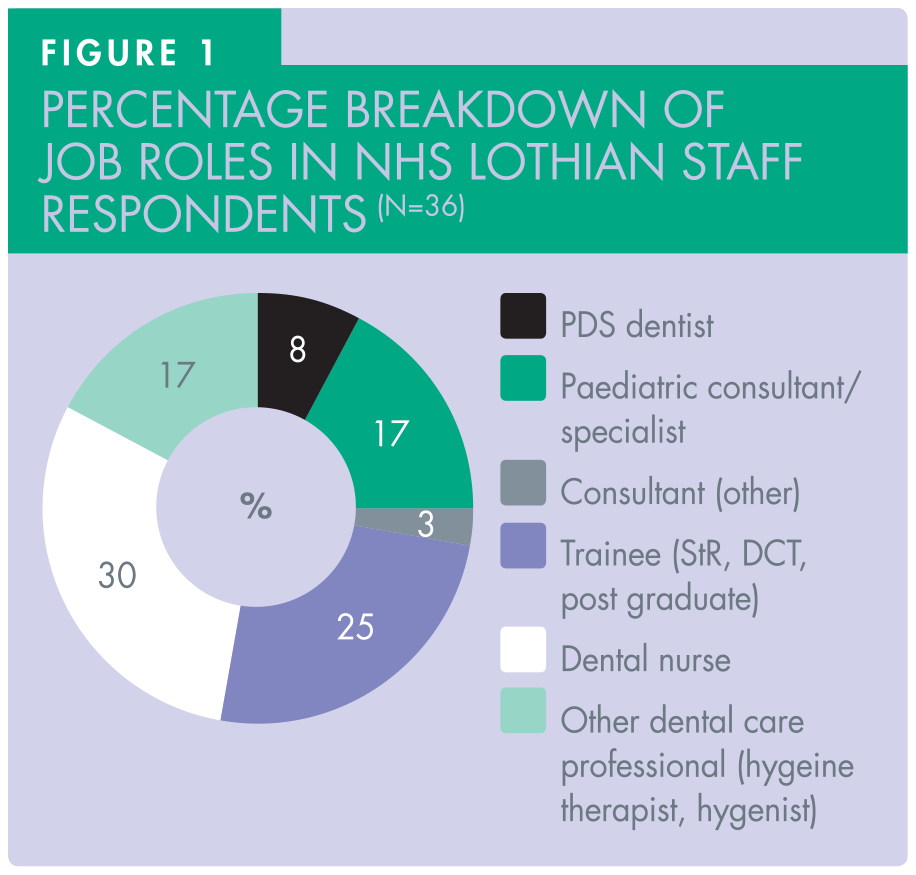
A total of 185 eligible staff members were contacted. There were 36 responses from NHS Lothian staff who regularly work with paediatric patients, which resulted in a response rate of 19.5%. Their roles are shown in Figure 1. The number of years post-qualification ranged from one year to 40 years, with a mean of 14.9 years. The majority of the respondents were female (83%).
In total, 57% of the responses from females and 45% of the responses from males indicated that the choice of word replacement would depend on the age of the paediatric patient. Regarding patient gender, 10% of the responses from females and 3% of the responses from males indicated that this would influence the choice of wording.
Table 1 shows the percentage of substituted words or phrases commonly used by members of the dental team, grouped into common themes. The number of words or phrases varies for each given treatment or instrument as some respondents listed more than one answer per question. Across the categories surveyed, the top-ranking word choices or themes were agreed upon by 29.4–63.8% of respondents. However, word choices unique to individual respondents were commonly reported in all categories.
Euphemisms commonly used by the paediatric dental team. Several of the 36 respondents gave more than one euphemism, therefore the number of answers per question varies
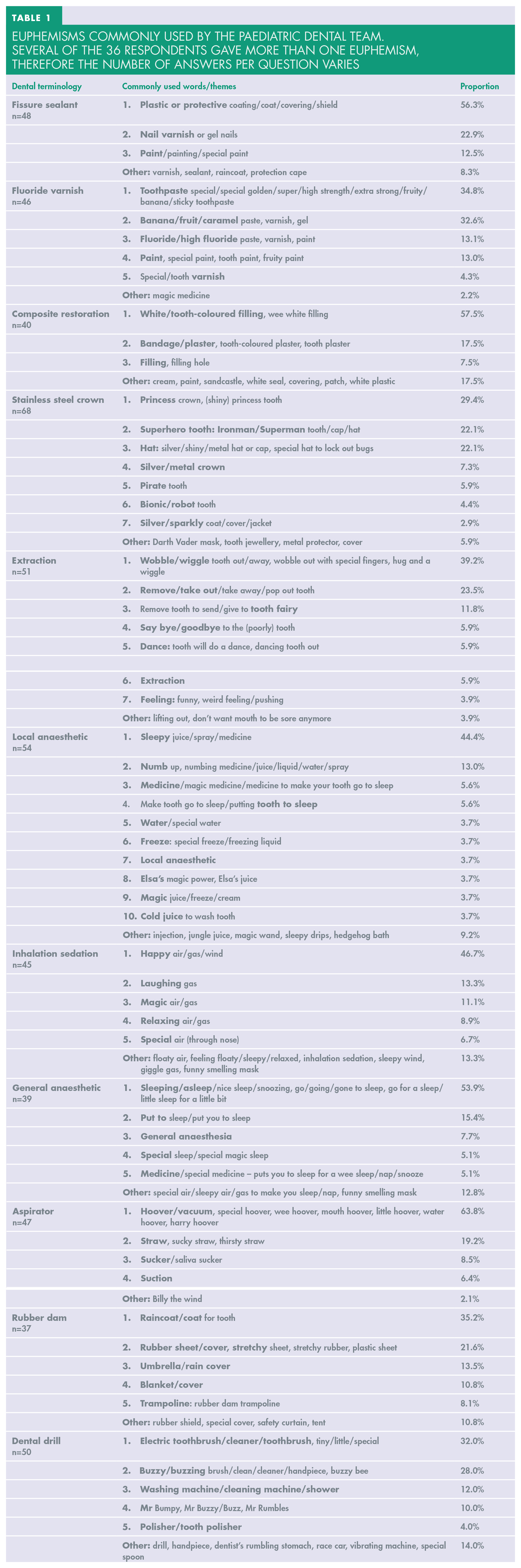
The influence of patient demographics on clinicians’ choice of wording to paediatric patients for each question is shown in Figure 2. Across all of the dental treatments and instruments surveyed, the age of a paediatric patient was shown to influence the language used by 55% of dental team members on average. The highest incidence of age-related wording change was for local anaesthetic (80.6%), with respondents commonly citing a change in their vocabulary from ‘sleepy juice’ or ‘sleepy medicine’ for younger children to words like ‘numbing’ or ‘freezing’ for older children. For the majority of participants, the patient’s gender did not tend to influence word choice. For six of the eleven included terms, at least one clinician reported that gender influenced their chosen vocabulary. However, across all responses, gender had the relatively small mean influence of 8.9%. Stainless steel crowns were a noticeable outlier, with 61.1% of respondents changing their choice of wording according to the child’s gender.
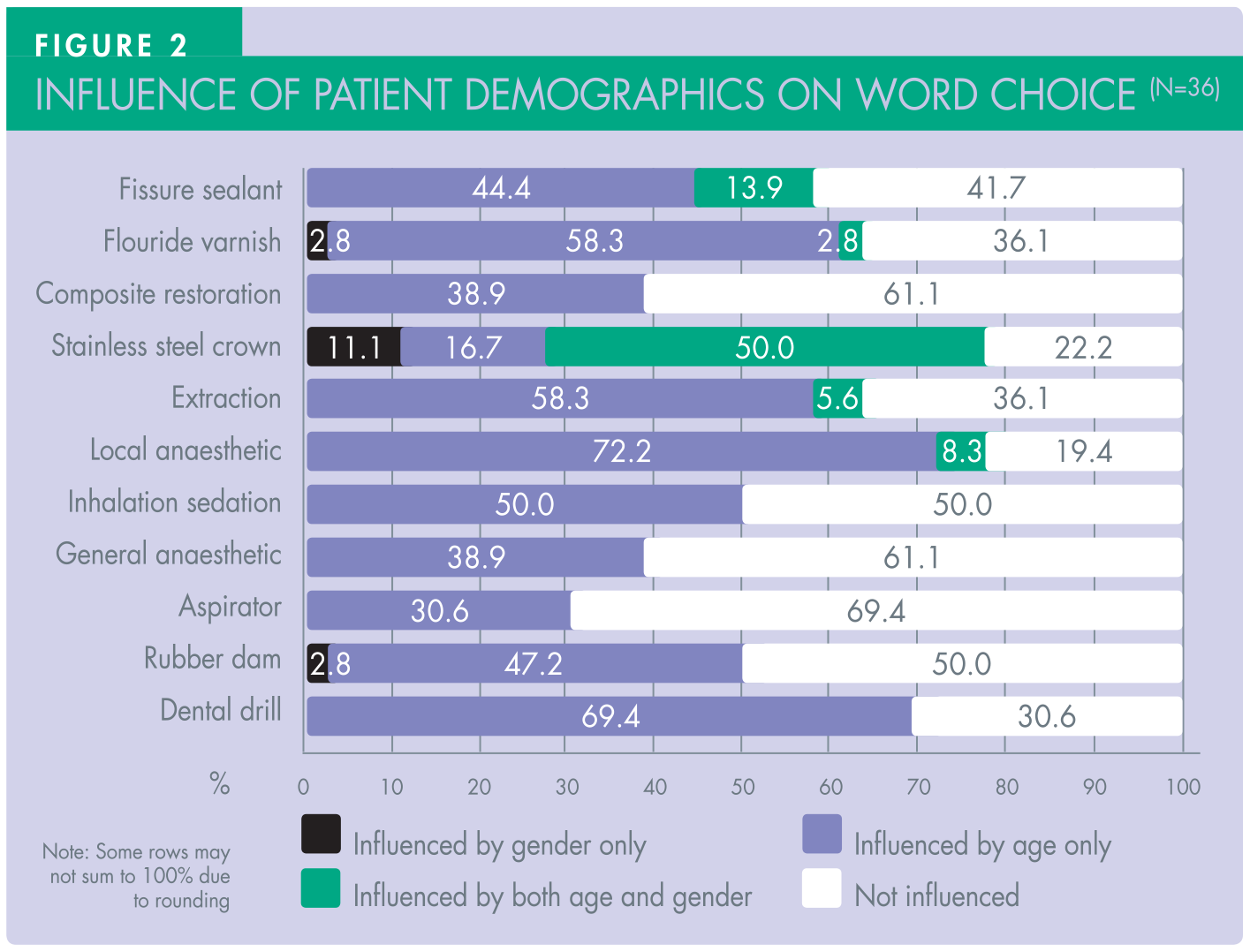
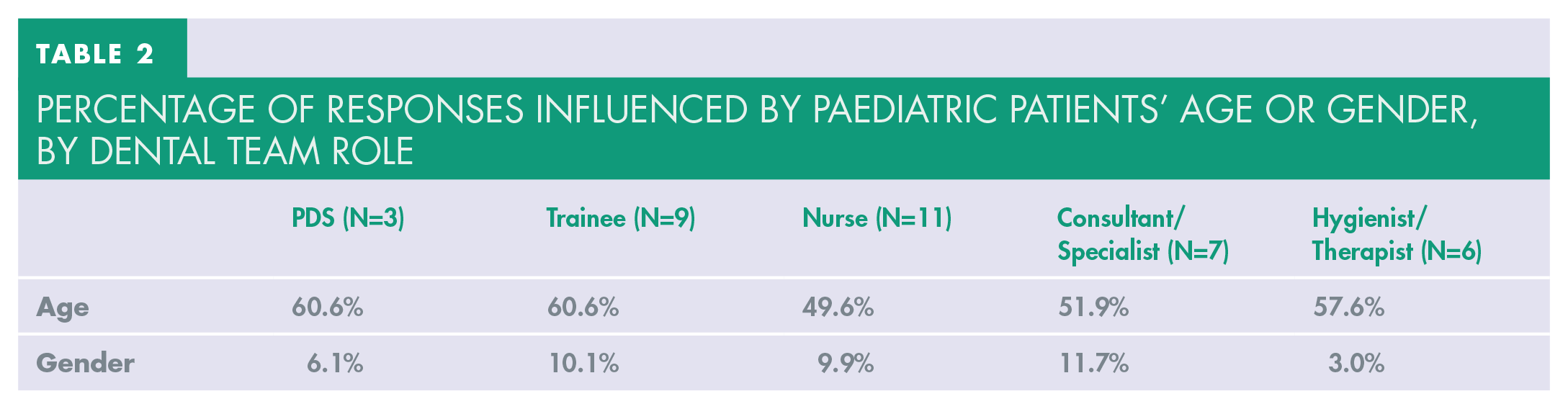
Table 2 shows the percentage of responses across all questions which indicated a change in word choice depending on the age or gender of the patient, separated according to the respondents’ roles within the dental team.
Percentage of responses influenced by paediatric patients’ age or gender, by dental team role
For each dental term, Table 3 shows the words or phrases that the respondents considered to be potentially ineffective or negatively received by paediatric patients. The key below the table details the respondents’ given reasons for the ineffectiveness or negativity.
Ineffective or poorly-received words or phrases (n=36)
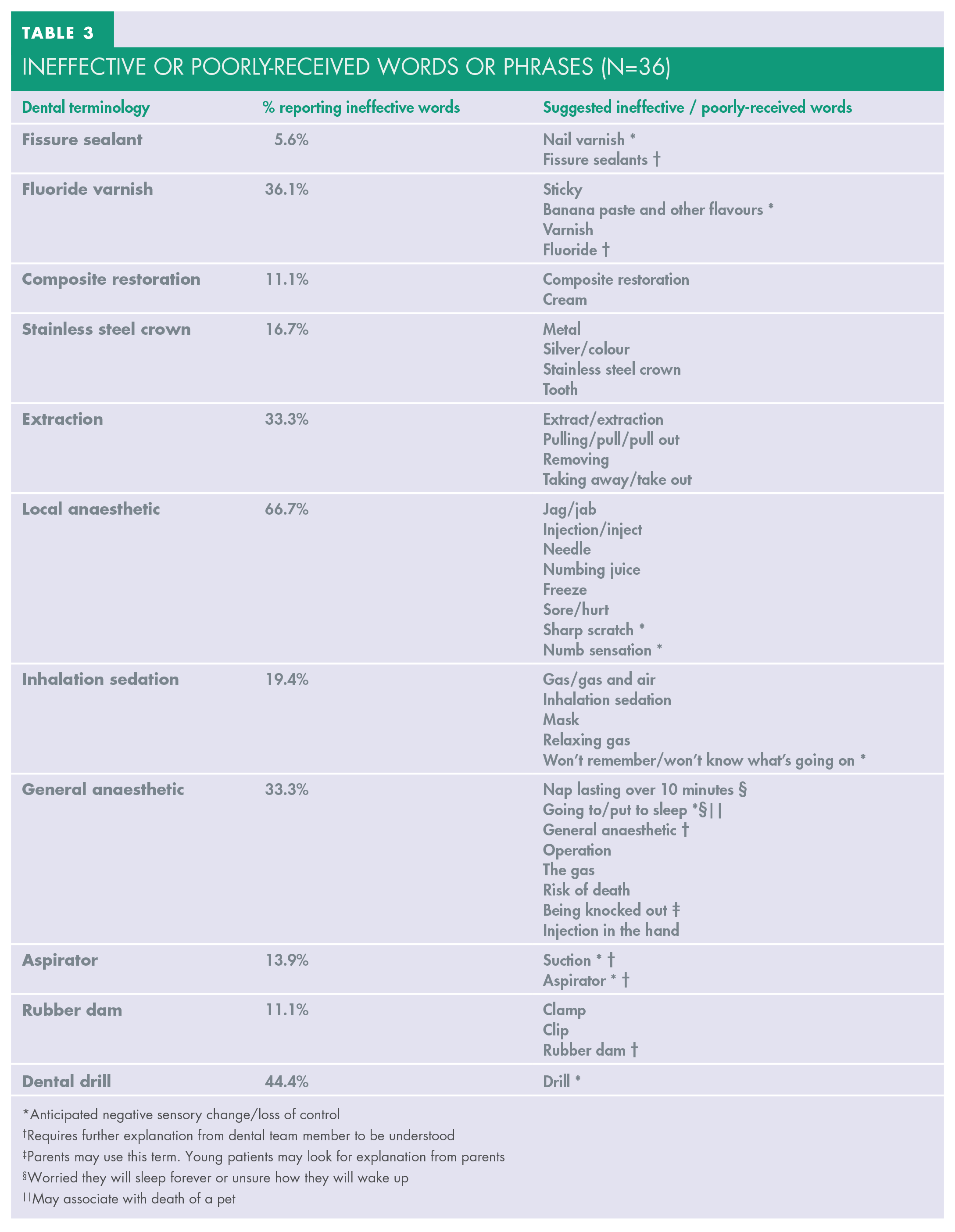
Anticipated negative sensory change/loss of control
Requires further explanation from dental team member to be understood
Parents may use this term. Young patients may look for explanation from parents
Worried they will sleep forever or unsure how they will wake up
May associate with death of a pet
Discussion
There is clearly a wide variety of replacement words used in paediatric dentistry in NHS Lothian. The large-scale study of dental terminology in the US by Berson et al. allows comparison of our results with the language used by paedodontists of 40 years ago. 5 Despite the difference in time (1980 vs. 2020), and location (United States vs. Scotland), there are marked similarities in the most common choice of words. For each of the four overlapping terminologies that were investigated in both surveys (drill, rubber dam, extraction and local anaesthetic), the most common choice of substitution was the same. Nevertheless, creativity is still in evidence, with many of the reported words being unique to individual respondents. Within our survey, there is evidence of more pop culture references, such as ‘Elsa’s juice’ to describe local anaesthetic, and ‘Iron Man tooth’, ‘Superman tooth’ and ‘Darth Vader mask’ to describe a stainless steel crown. Also of note is the regular use of colloquial Scottish terms that are present due to the location of our survey, e.g., a ‘wee filling’ or ‘wee sleep’.
The respondents’ roles within the dental team did not appear to influence the likelihood of them changing their choice of language based on the age or gender of patients. Although it appears that the gender and role of the dental team members are not a significant factor in the choice of language, the demographics of the patients themselves do have an effect.
Our survey shows that paediatric patient age factors significantly in the word choice of dental team members. Typically, wording is selected according to patients’ age, with simpler imagery being replaced by more literal explanations as the age and comprehension of the patient progresses. Several of the respondents suggested that more creative and imaginative language would be used for younger children. This concurs with the recommendation of Marwah, who also advises the use of more imaginative words for younger children. 3 For example, in dental treatments that involved structural changes, such as fissure sealant, composite restoration and stainless steel crown, respondents tended to emphasise functionality and strength-related word choices for older children (e.g., fissure sealant described as ‘painting’ for younger patients in contrast with ‘protective coating’ for older children).
In comparison to their age, the gender of paediatric patients does not appear to be a significant factor in word choice. ‘Stainless steel crown’ was the only dental term that showed a strong gender-dependent influence. The increased incidence for this case appears to be due to the dental team members evoking potentially appealing imagery for younger children, at which point the choice of words forks according to the child’s gender; the most common analogies make reference to what could be traditionally classed as girl-themed or boy-themed images, such as ‘princess crown’ or ‘Iron-Man tooth’. However, when explaining procedures or instruments to older children, the respondents focussed on the strength and protective features of the stainless steel crown, regardless of the child’s gender.
Trypanophobia, or the fear of medical procedures involving needles, is common among children, with studies reporting incidence rates of 22.2–68%. 9 Indeed, paediatric patients in hospitals have reported that procedures with needles are among their most feared and painful.10,11 It is no surprise then that local anaesthetic had the highest percentage of ineffective or negatively received words in this survey. The respondents agreed that pain-related wording should be avoided, with ‘jag’, ‘needle’, ‘sore’, ‘injection’ and ‘sharp scratch’ all cited as being ineffective or negatively received. This is emphasised by the fact that none of these particular words were suggested by any respondents as being effective to describe local anaesthetic. In general, a common finding when examining the perceived reason for negatively received or ineffective words is a fear of negative sensory changes or loss of control. This can be brought about by words related to pain or numbness, when describing local anaesthetic, but also by more innocuous phrases such as ‘banana paste’ or ‘nail varnish’, which are often used for fluoride varnish and fissure sealants, respectively. In this regard, respondents posited that children could take issue with taste-related words that evoke flavours they dislike.
With regard to negatively received or ineffective word choice, a consistent finding in this survey is that paediatric patients prefer word substitutions over dental jargon. In all cases, with the exception of the term ‘local anaesthetic’, the dental terms themselves were noted by at least one respondent to be ineffective or negatively received by paediatric patients. For example, the term ‘extraction’ is potentially poorly received by children during an extraction procedure. This emphasises the need for dental team members to be aware of their wording choice and substitute appropriately when necessary. In a previous study, the use of dental jargon was shown to be often misinterpreted by adult dental patients. 12 Hence, the use of simple wording and explanations in paediatric dentistry may indeed benefit both the child patient and their parent or guardian.
Noticeably, some of the surveyed dental treatments and instruments produced mixed verdicts, with some wordings reported as being commonly used by some respondents, while being classified as ineffective or negatively received by others. The clearest example of this is sleep-related word choice to describe a general anaesthetic. Although the majority of responding dental team members would use a sleep analogy in this situation, others reported that it can be ineffective or negatively received. Opponents of this theme of wording suggested that such analogies can be associated with the death of a pet that has been ‘put to sleep’, or that children can have a general fear of not waking up. These respondents instead suggested words such as ‘snoozing’ or ‘going for a nap in a hospital’, and, for older children, to use the term ‘general anaesthetic’ with an accompanying explanation.
Limitations
The survey was distributed to all staff in the PDS with the request to participate if they worked regularly with paediatric patients. This led to difficulty in calculating the response rate of the survey. Although administration staff on the recipient list and those who emailed to confirm that they did not work with children could be excluded, many others could not confidently be removed from the sample size. Therefore, the percentage response rate is likely to be largely underestimated.
Following distribution, it was found that the survey platform of choice was not accessible on NHS Lothian computers, meaning many respondents may have had to forward the link onto a personal email or remember to log on to their work email at home. This may also have contributed to the low response rate.
This survey distribution was restricted to NHS Lothian, leading to a limited sample size. Distributing the survey further afield in the UK or Ireland would allow for an increased sample size and may allow for investigation as to whether clinicians’ choice of words varies in different regions.
This survey looks specifically at words and phrases used by the dental team. As the survey was completed by respondents in their own time, the words given are from recall and not a real-time record of what they used in clinics. Many clinicians have differing communication styles, and as suggested in the survey answers, some may use long descriptions or sounds instead of specific words or phrases.
Although there are numerous dental instruments and treatments for paediatric patients, only eleven dental terms were investigated in this survey. This limit was imposed in an attempt to avoid possible survey fatigue, which may otherwise have led to a loss of respondents or incomplete surveys.
Conclusion
This survey has collected the most popular choice of wording for common dental procedures and instruments, as well as perceived ineffective and negatively received words, used by NHS Lothian paediatric dentistry teams. A wide variety of alternative terminology was reported, but clear favourites were identified for each category. Notably, words that were in favour internationally 40 years ago are still popular, although new words have since emerged in the lexicon. This survey also showed that the age of a child frequently influences the choice of language used, while gender plays less of a role (with the exception of word substitutions for stainless steel crowns). Although the sample size of this survey was relatively small, it may serve as a pilot for future large-scale studies in the UK.