





Abstract
Temporomandibular disorder (TMD) is a complex, multifactorial condition influenced by musculoskeletal, psychological, postural, and behavioural factors. Addressing these layers in isolation can result in partial or short-term relief. A growing body of clinicians advocate for an integrative, patient-centred approach that combines physical, psychological, and behavioural therapies to promote long-term healing. This article explores how myofunctional therapy, temporomandibular joint massage, and hypnosis can improve TMD treatment and advocates for their widespread adoption in dentistry.
Keywords
Introduction
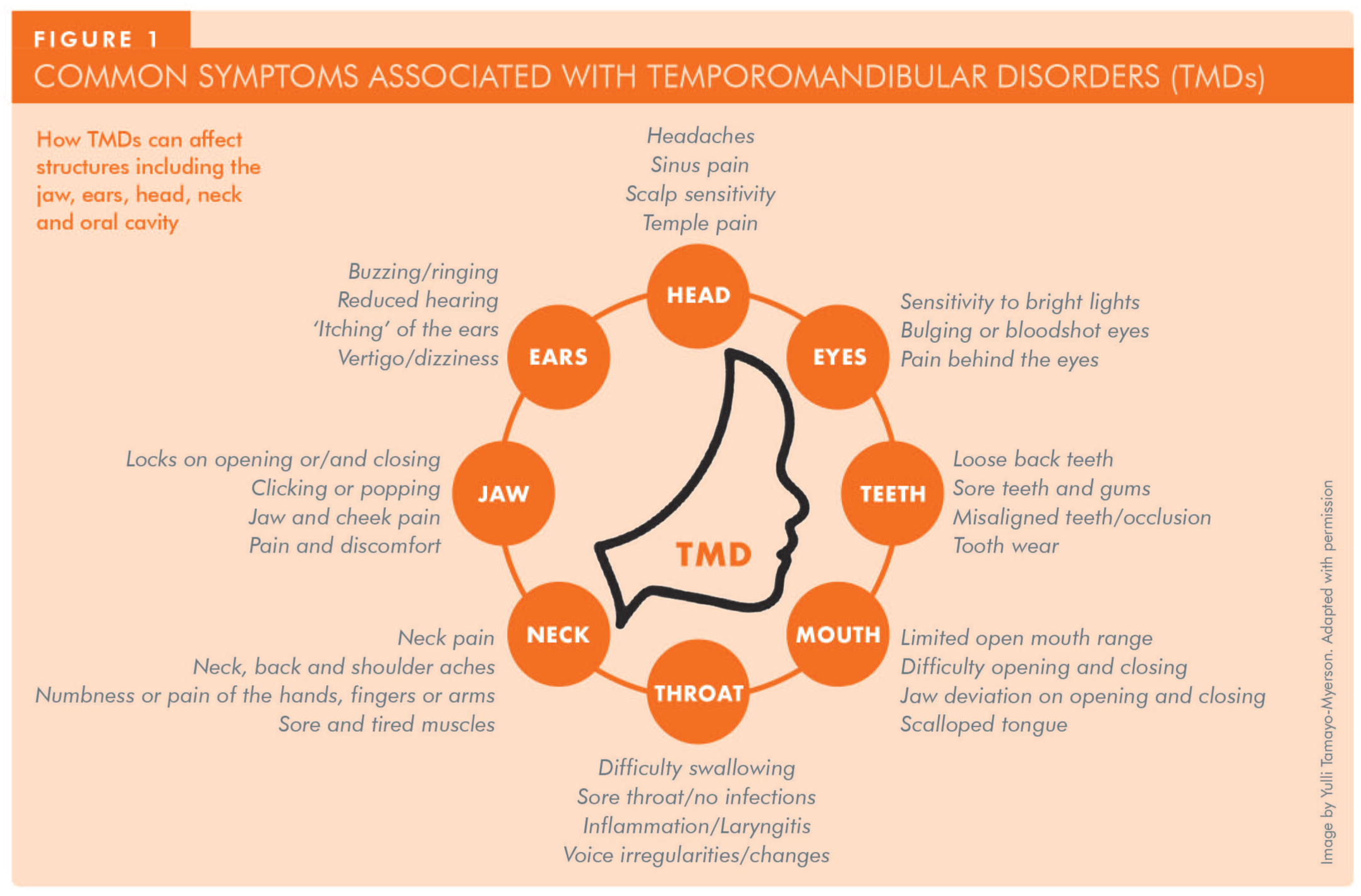
By examining the benefits of hypnosis, massage, and myofunctional therapy, this opinion piece makes the case for a more holistic approach to the care of temporomandibular disorders (TMDs) within the dental profession. TMDs can present with a wide range of symptoms affecting multiple craniofacial and cervical structures (Figure 1).
Physical rehabilitation: myofunctional therapy
Myofunctional therapy retrains orofacial muscles to improve tongue posture, nasal breathing, and swallowing patterns – reducing strain on the temporomandibular joint (TMJ) and mitigating habitual behaviours such as bruxism. 1 By enhancing muscle function and occlusal balance, it helps reduce abnormal joint loading and recurrent symptoms. 2 A key element is neuromuscular re-education, which restores optimal muscle coordination and jaw positioning. This has been reported to promote long-term stability and better patient awareness of dysfunctional habits that perpetuate TMD. 3
Tailored programmes can be easily integrated into dental care, offering a conservative and effective adjunct to conventional treatment.3,4
Hands-on relief: TMJ massage and bodywork therapies5 -9
Manual therapy techniques, such as intraoral massage, myofascial release, and trigger point therapy, have been shown to offer rapid symptom relief in many TMD patients. A structured approach often includes:
Often, improvement can be seen in just one to three sessions, making this a valuable adjunct in acute care as well as longer-term management.
Psychological support: the role of hypnosis
Psychological stress is a well-recognised contributor to TMD. Hypnosis offers a safe, non-invasive way to manage this component by:10 -12
Hypnotic language can also be used chairside to reinforce positive expectations and reduce anticipatory anxiety during dental procedures. 13 This is particularly beneficial when appliance therapy is part of the treatment plan.
A synergistic, holistic model
Combining these three approaches – myofunctional therapy, TMJ-specific massage, and hypnosis – creates a comprehensive, multidisciplinary pathway that acknowledges both the physical and psychological dimensions of TMD. This integrated strategy aligns well with the biopsychosocial model of care, offering not only symptom relief but also empowerment and self-efficacy for patients. 13
Training and professional development
Both the British Society of Clinical and Academic Hypnosis (BSCAH) and the British Society of Myofunctional Therapy (BSMFT) advocate for the inclusion of these modalities within dental practice. They offer accredited training for all GDC-registered professionals, including dental nurses, thus supporting team-wide delivery of care and continuity for patients.
Appropriate accredited training is also available for all who wish to train in TMJ-specific massage techniques which can then be integrated into clinical practice.
Courses in clinical hypnosis are available through institutions such as Birmingham City University.
BSCAH commentary
Dr Martin Wall, Chair of Trustees at BSCAH, notes:
“One of the significant benefits of the hypnotic approach is to empower sufferers to fully participate in the resolution of their symptoms. Thus, addressing a hopeless resignation as a victim of their distress often found in these patients.”
BSMFT commentary
Yulli Tamayo-Myerson, President of the BSMFT, comments:
“Combining myofunctional therapy with TMJ manual therapy and hypnosis offers a truly integrative, patient-centred approach to TMD. While myofunctional therapy restores orofacial neuro-muscular balance, manual therapy provides rapid relief from muscle tension and joint dysfunction. Hypnosis targets the underlying stress and habits that often sustain symptoms.”
This multidisciplinary model not only treats the condition holistically – it empowers patients, enhances compliance, and delivers more sustainable results. It should be part of standard TMD care.”
Conclusion
As evidence grows for the multifactorial nature of TMD, so too must our treatment approaches evolve. Incorporating hypnosis, myofunctional therapy, and TMJ-specific massage therapy into standard care protocols could represent a paradigm shift – one that offers patients more sustainable outcomes through holistic, integrated care.
Footnotes
Acknowledgements
This opinion article has been submitted with support from the BSMFT and BSCAH. Both societies encourage and support the training of the whole dental team.