





Abstract
Fellowship criteria revised

The College has revised its criteria and application process for Fellowship, and has issued an open invitation to experienced dental professionals to review the revised criteria with a view to applying.
The College’s landmark experience-based route to Fellowship, launched in 2022, offers recognition of the skills, knowledge and experience accrued by committed general dental professionals over the course of their careers. The revision, four years on, is designed to widen relevance across different aspects of professional achievement, and to further recognise, within the College’s community of practice, the diversity of contributions made to the profession in the service of patients.
As before, all those with at least ten years’ practice as a registered dental professional can apply. Applicants will need to provide evidence of meeting the criteria in at least three of the College’s five Fellowship domains, which are published openly and transparently so that prospective Fellows can easily check their eligibility and be confident in their application.
The previous distinction between ‘standard’ and ‘gateway’ criteria in each domain has been removed, and the application process has been further streamlined to suit the busy modern dental professional, with the submission of reflective statements and CVs no longer required in most cases.
Satisfying the
For example, applicants holding a relevant Master’s degree; a recognised postgraduate diploma; a specialty membership of a UK Royal College; a diploma in a specific dental discipline from CGDent, FGDP or RCS England; a diploma or membership in a specific dental discipline from RCS Edinburgh; or the MGDS, MAGDS, MDS or MRACDS, all qualify in this domain, as do CGDent Certified Practitioners and Accredited Full Members of the British Academy of Cosmetic Dentistry.
The
For example, applicants can now qualify in this domain if they have eight years’ service as an NHS Educational Supervisor (for at least 200 hours per year), together with either 27 hours’ relevant and recent CPD or Fellowship of the Faculty of Dental Trainers of the Royal College of Surgeons of Edinburgh.
The Leadership and Management domain, now called
For example, applicants can now qualify in this domain if they have three years’ experience of leadership, oversight and accountability as principal or partner of a multi-chair practice with a minimum of six registrants, together with a relevant Level 7 postgraduate certificate or ILM Level 5 diploma.
The
The
Anyone previously admitted as a Fellow of the former FGDP, of one of the surgical Royal Colleges in the UK or Ireland or their faculties of dental surgery or dentistry, of the Royal Australasian College of Dental Surgery, Royal College of Dentists of Canada or College of Dentistry of South Africa, or who holds Certification by the American Board of General Dentistry, is automatically eligible for Fellowship of CGDent by equivalence (
Marking professional accomplishment, College Fellowship celebrates both excellence in dental practice and commitment to the art and science of improving patients’ oral health. The community of Fellows lies at the heart of the College, providing leadership and collectively supporting the development of dentistry, as well as reflecting the values of the organisation and its focus on professionalism.
Those successfully admitted to Fellowship can use the postnominal designation ‘FCGDent’, and are eligible to attend the College’s regular Fellows’ Receptions, where they can have their Fellowship formally presented by the College President. As members of the College, they also receive quarterly print copies of this journal and free or heavily discounted access to live CPD events, study days and other local and national networking opportunities.
Full details of the revised domains, and how to apply for Fellowship of the College, are on pages 55–57 of this issue of the Primary Dental Journal. They can also be viewed online at

First Faculty Deans inaugurated
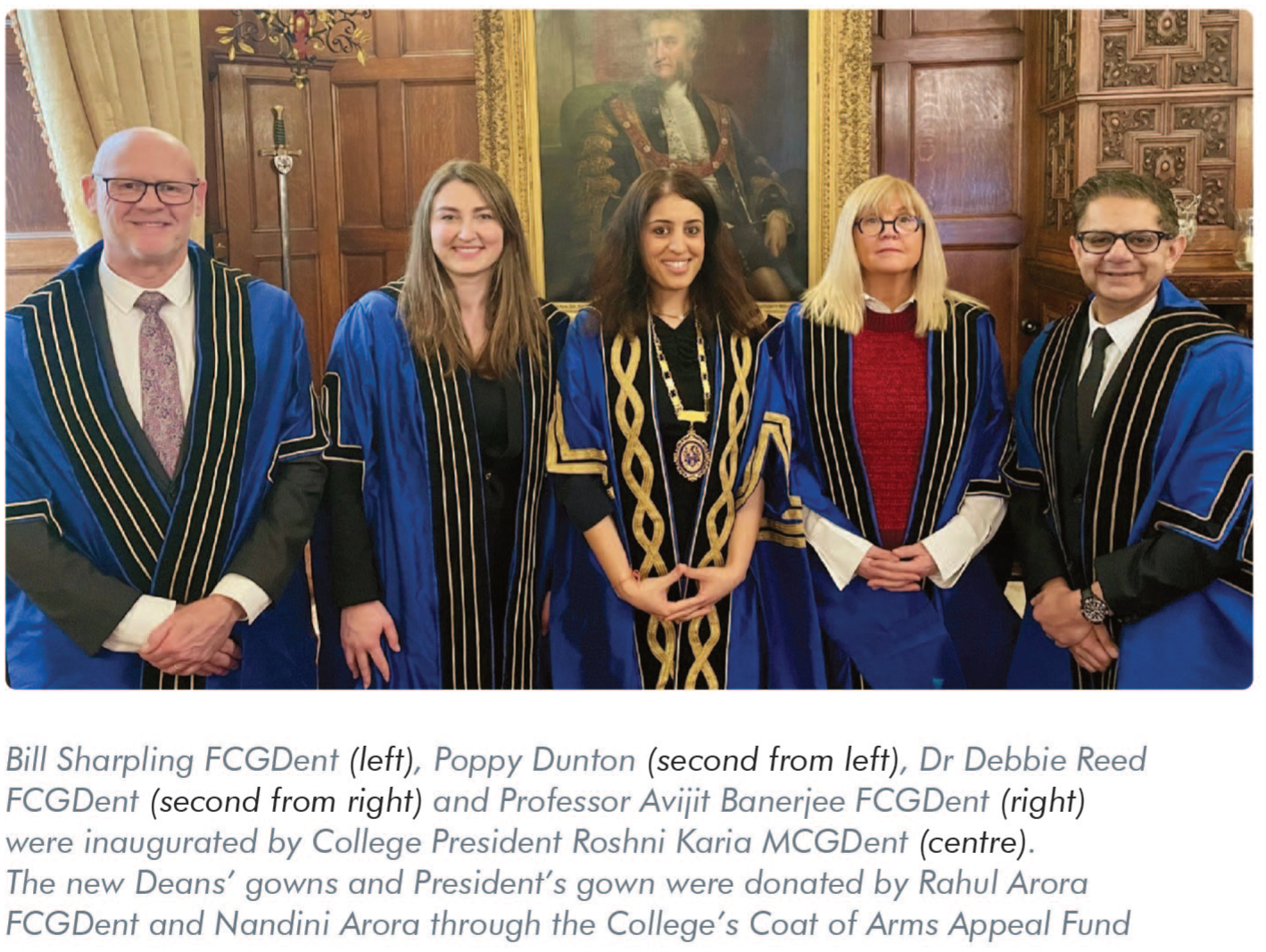
The College has inaugurated the first Deans of its four faculties, which develop its work in support of each dental team role.
Professor Avijit Banerjee FCGDent has been inaugurated as the first Dean of the Faculty of Dentists, Poppy Dunton has become the first Dean of the Faculty of Dental Hygiene and Dental Therapy, Dr Debbie Reed FCGDent is the inaugural Dean of the Faculty of Dental Nursing and Orthodontic Therapy, and Bill Sharpling FCGDent has been appointed the first Dean of the Faculty of Clinical Dental Technology and Dental Technology.
One of the founding ambitions of the College was to convene distinct faculties for the professions within the dental team, and it is the only college of its kind in the world to have done so. The Faculty of Dental Hygiene and Dental Therapy, Faculty of Dental Nursing and Orthodontic Therapy and Faculty of Clinical Dental Technology and Dental Technology were all formed in 2022, and the Faculty of Dentists created in 2024.
All members of the College are automatically assigned to the relevant faculty for their registrant group, and appointed faculty boards advise the elected College Council on the interests of their specific constituencies, and support the work of Council in developing career and membership pathways, standard-setting, development of effective teams and other areas.
Each board has to date been led by a Chair, and to reflect their increasing responsibilities as CGDent continues its journey toward Royal Charter, the role of Chair has now been replaced by the Dean, with the incumbent Chairs becoming the inaugural Deans. The new Deans were inaugurated by College President Roshni Karia MCGDent at a meeting of the College Council in London on 6 March 2026.
The Deanships will each have a three-year term of office, however the inaugural Deans will serve shorter terms as a sequential process of re-appointment is implemented. The first to be re-appointed will be the Dean of the Faculty of Dental Nursing and Orthodontic Therapy, with recruitment underway. The second Deans of the Faculty of Dentists and the Faculty of Clinical Dental Technology and Dental Technology will be appointed next year, and the next Dean of the Faculty of Dental Hygiene and Dental Therapy will be appointed in 2028.
To find out more about future appointments, visit

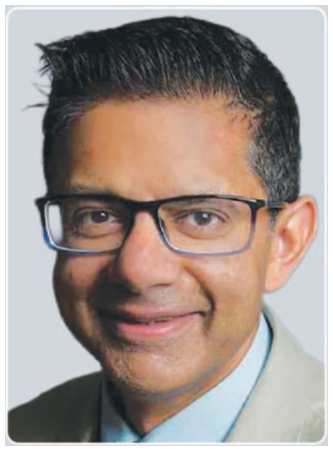
With over thirty years’ experience as a clinician, researcher, teacher and examiner, he holds an MSc in Mineralised Tissue Biology and a PhD in Cariology from University College London. In 2022 he received the International Association of Dental Research’s William H. Bowen Distinguished Scientist Award for Research in Dental Caries, and in 2024, he was awarded the British Dental Association’s esteemed John Tomes Medal in recognition of his scientific and clinical academic eminence and outstanding service to the dental profession. He currently holds three international honorary chairs, is a Trustee of both the Oral & Dental Research Trust and the Oral Health Foundation, and is Editor-in-Chief of the BDJ Portfolio. He is author of over 200 published peer-reviewed papers and author or editor of seven books, most recently A Clinical Guide to Advanced Minimum Intervention Restorative Dentistry (Elsevier).
He is Deputy Lead of the NIHR Clinical Research Delivery Network Oral & Dental Specialty, a Council Member of the European Federation of Conservative Dentistry, and a member of the BDA Health & Science Committee and BDA Indemnity Advisory Panel. He has previously served as a Council Member of the British Society of Restorative Dentistry and is currently serving as President of the British Society of Oral and Dental Research. He is an Honorary Consultant Advisor to the Office of the Chief Dental Officer for England, Visiting Professor at CEU Cardenal Herrera University in Valencia, and Distinguished Adjunct Professor at Siksha ‘O’ Anusandhan University in Bhubaneswar and at Saveetha Dental College and Hospitals in Chennai. He was previously a Visiting Professor at Oman Dental College and an Honorary Professor at Hong Kong University.
A Fellow of CGDent, he has previously served on the editorial board of the Primary Dental Journal, as Chair of the College’s Career Pathways Programme Board and as a subject matter expert for the Diploma in Restorative Dentistry of the former Faculty of General Dental Practice UK (FGDP). He has also gained Fellowship of the Faculty of Dental Surgery of the Royal College of Surgeons of England, of the Higher Education Academy, of the International College of Dentists and of the former FGDP. He was appointed Chair of the Board of the Faculty of Dentists in 2024.
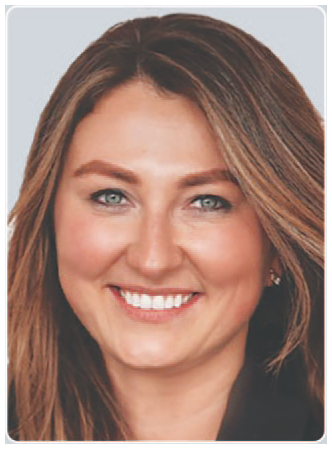
She completed the National Certificate in Dental Nursing in 2008 and graduated from Cardiff University with a Diploma of Higher Education in Dental Therapy and Dental Hygiene, where she was awarded the Johnson and Johnson Clinical Excellence Prize, in 2011. She also holds a City & Guilds Diploma in Leadership and Management, a Level 6 qualification in employment law from the Institute of Paralegals, the Perio School Diploma in Periodontics for Hygienists and Therapists and the Smile Dental Academy Diploma in Restorative and Aesthetic Dentistry for Dental Therapists, and has completed training as a Menopause Coach in order to help improve the care provided to her patients. In 2026 she launched the Diploma in Advanced Dental Health and Business Strategy, an EduQual-accredited Level 7 programme for dental hygienists and therapists which bridges clinical dentistry with leadership, reflective practice and business development.
She joined the College as an Associate Member in 2022, enrolled on the Certified Membership Scheme, was appointed to the Board of the Faculty of Dental Hygiene and Dental Therapy and was a facilitator at the College’s NextGen Leadership Workshop in 2023. She is also a member of the British Society of Dental Hygiene and Therapy, the British Association of Dental Therapists, the Association of Dental Implantology and the British Society of Periodontology and Implant Dentistry. She was appointed Chair of the Board of the Faculty of Dental Hygiene and Dental Therapy in 2025.
She became an Affiliate Member of the former Faculty of General Dental Practice UK in 2008 and was a Founding Contributor to the College, later serving as Chair of the Dental Nursing and Orthodontic Therapy Working Group which contributed to its Professional Framework for Career Pathways in Dentistry. She is a peer reviewer for the British Dental Journal and the Annual Clinical Journal of Dental Health, is on the editorial board of the Advanced Journal of Professional Practice and was a contributor to the College’s An introduction to clinical research for health and social care professionals.
She is a Doctor of Education and also holds an MSc in Human Resources Development, a Postgraduate Certificate in Higher Education, the FGDP(UK) Certificate in Dental Practice Appraisal and a BA in Post Compulsory Education. She is a Fellow of the Higher Education Academy and a past Honorary Vice President of the British Society for Dental Hygiene and Therapy. In 2020 she received the BADN Outstanding Contribution to Dental Nursing Award, and in 2021 she received the inaugural FGDP(UK) Janet Goodwin Award. Vice Chair of the inaugural Board of the Faculty of Dental Nursing and Orthodontic Therapy, in 2023 she became the College Council representative for dental nurses and orthodontic therapists and in 2024 was appointed Board Chair.
After qualifying in 1986, he spent the next ten years working as a Dental Technician, gaining advanced qualifications in fixed and removable prosthodontics. He served for 16 years in the Royal Army Dental Corps, has worked in commercial dental laboratories and continues in practice as a Clinical Dental Technician running his own dental laboratory in Surrey. He holds an HND(Sc) in Dental Technology from South London College, a Diploma in Clinical Dental Technology from the Royal College of Surgeons of England, a Postgraduate Diploma in Management Studies from the University of Portsmouth and an MBA with distinction from London South Bank University. In 2024, he also completed the MIT Sloan School of Management Executive Programme in Artificial Intelligence in Healthcare.
He is a Fellow of CGDent, the Faculty of Dental Trainers of the Royal College of Surgeons of Edinburgh, the British Academy of Restorative Dentistry, the International Team for Implantology and the British Association of Clinical Dental Technology. He also serves on the International Federation of Denturists’ education committee, and previously served on the former FGDP’s Dental Care Professionals committee and on the editorial board of the Quintessence Journal of Dental Technology. He has authored chapters in the textbooks Essentials of Aesthetic Dentistry: Principles of Practice (Elsevier) and Practical Procedures in Aesthetic Dentistry (Wiley). In 2022 he was appointed the dental technicians’ and clinical dental technicians’ representative on the College Council, and in 2024 he was appointed Chair of the Board of the Faculty of Clinical Dental Technology and Dental Technology.
Recognition of Indian postgraduate qualifications
The College has published an updated policy on its acceptance of Indian postgraduate dental qualifications when determining eligibility for its highest grades of membership.
Dentists who have successfully completed the Master of Dental Surgery (MDS) or a PhD from a higher education institution recognised by the Dental Council of India (DCI) are now eligible by default for Associate Fellowship of the College. The MDS is also recognised as fulfilling the requirements of the Clinical & Technical domain of College Fellowship, and a PhD as fulfilling the requirements of the Publications & Research domain.
The MDS is a three-year, full-time postgraduate degree which combines a wide-ranging post-BDS curriculum with additional study and research in a chosen specialist area. It is the accepted qualification for specialist practice in India, and candidates are selected via a competitive, nationally-set entrance examination.
Equivalence for other India-awarded qualifications will continue to be determined on a case-by-case basis, with applicants required to provide a Statement of Comparability from the UK National Information Centre for the recognition and evaluation of international qualifications and skills (UK ENIC, formerly UK NARIC). This can be obtained for a small fee.
A searchable register of recognised institutions in India is available on the homepage of the DCI website at
Applicants are advised to search the full list for their institution rather than filtering for MDS courses; if the institution’s name cannot be found, they should provide a letter from the DCI stating its recognition of their institution and MDS speciality branch.
The College already recognises relevant Postgraduate Certificates, Postgraduate Diplomas, Master’s-level qualifications and PhDs awarded by recognised higher education institutions or regulated awarding bodies in the UK and the European Higher Education Area (EHEA) – a list of the 49 member countries can be found at
Those awarded elsewhere, with the exception of an MDS or PhD from an institution recognised by the DCI, should be accompanied by a Statement of Comparability as above.
In all cases, Postgraduate Certificates, Postgraduate Diplomas and Master’s-level qualifications must provide, respectively, 60, 120 or 180 UK academic credits or their equivalent (60 UK credits is the equivalent to 30 ECTS or 15 US credits) at Level 7 (as defined by the relevant qualification frameworks in England, Wales and Northern Ireland) or equivalent (e.g. Level 11 in Scotland).
The College also accepts a number of awards conferred by Royal Colleges and equivalent bodies in the UK and beyond.
Full details of eligibility for each type of membership are available at

Members who practise wholly overseas and are not registered with the UK’s General Dental Council pay a concessionary membership fee which is one third of the standard rate.
Overseas members receive the same benefits as UK-practising members, including use of College postnominals and copies of this journal by post. Overseas-based Associate Fellows and Fellows are also eligible to attend the College’s biannual Fellows’ Receptions, which are usually held in London; those attending for the first time will also be ceremonially presented.
Information for those holding postgraduate dental qualifications awarded in India is now available at

Postgraduate Diploma in Primary Care Orthodontics, 2026–28
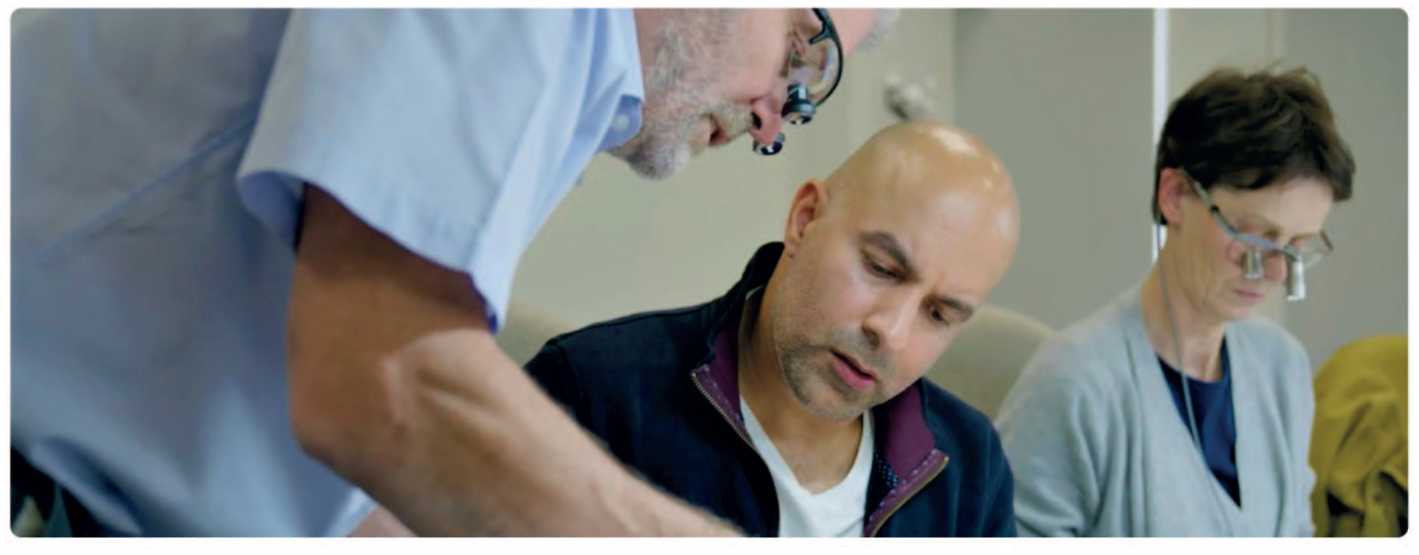
The College is now accepting applications for the next cohort of its Postgraduate Diploma programme in Primary Care Orthodontics, starting in September.
The comprehensive Level 7 programme is designed to give General Dental Practitioners the skills and knowledge needed to treat more complex malocclusions, including extraction cases, taking them up to just below specialist training level. It covers all appliance systems – fixed functional, aligners, lingual and Inman – and includes both the theory and practical aspects of orthodontic care.
Through a combination of lectures, seminar and practical sessions, the syllabus includes:
● Records, assessment, diagnosis and treatment planning
● Treatment planning for Class I, Class II div 1, Class II div 2, and Class III malocclusions
● Radiography – Ceph/OPG/CBCT
● Fixed appliances
● Lingual appliances
● Removable appliances
● Functionals
● Retention
● Aetiology of malocclusion, growth & development
● Development of the dentition and tooth movement
● Dental material & biomechanics
● Multidisciplinary care, including restorative, periodontics & surgery
● Critical reading skills
● Health education, health & safety, legislation and audit
● Marketing and practice management
During the programme, which is limited to 12 places, students will discuss multiple new cases, participate in hands-on practical sessions and weekly online planning discussions, and will be given one-to-one mentoring by specialists for ten treated cases. The 2026–28 programme is supported by six training blocks, five of three days and one of four days, which take place in September and December 2026; April, July and November 2027; and March 2028.
To ensure enough case-flow and experience, the course is recommended for dentists who have treated at least ten fixed cases, are treating a minimum of ten orthodontic cases per annum, and are familiar with using fixed appliances.
The 120-credit programme, including ongoing informal and formal assessment, is delivered by IAS Academy, with a final examination held by the College.
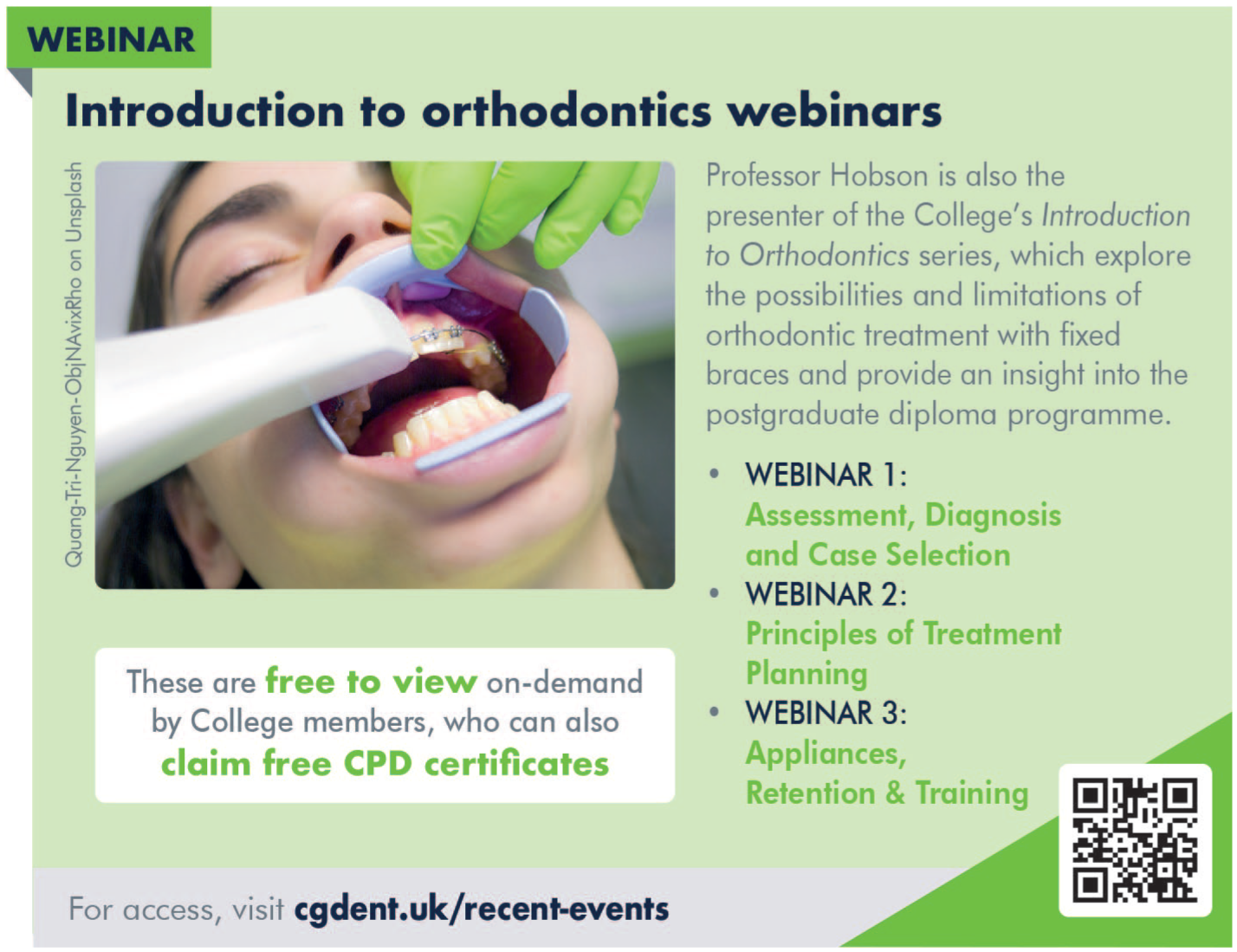
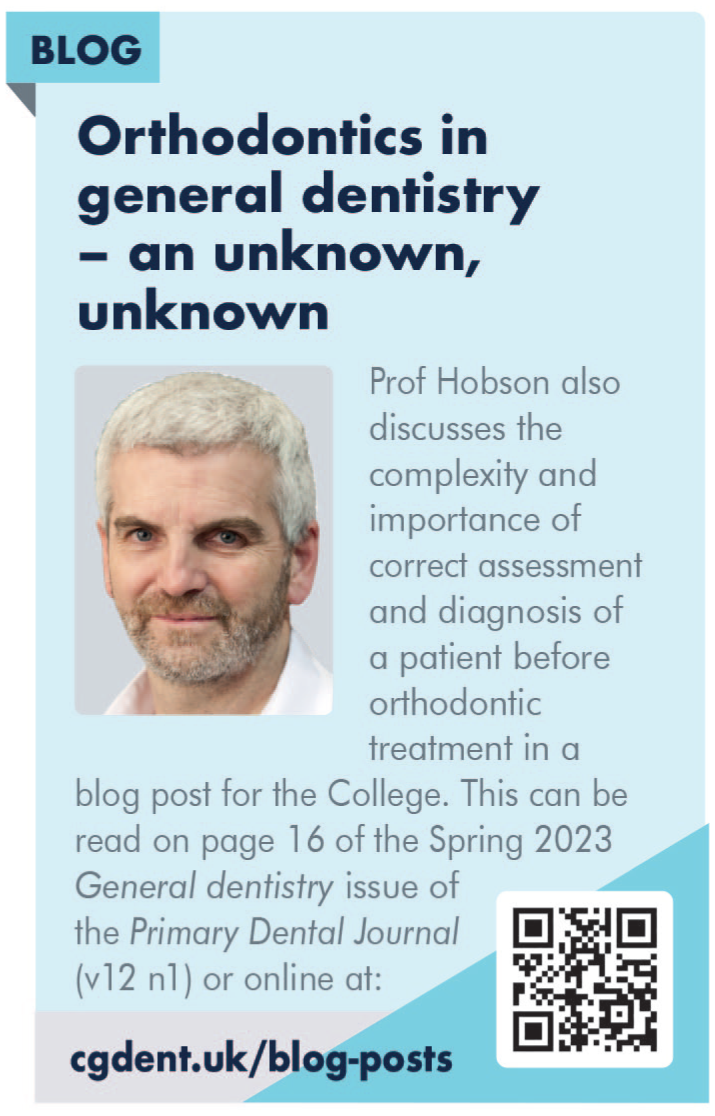
It is led by Professor Ross Hobson, a specialist orthodontist, former Head of Orthodontic MSc/Specialist training at Newcastle University, and former Chair in Orthodontics at the University of Central Lancashire. He holds a Master’s in Dental Surgery and PhD from Newcastle, a Membership in Orthodontics at the Royal College of Physicians and Surgeons of Glasgow, is a Fellow of the College of General Dentistry, the Royal College of Surgeons of Edinburgh and the Royal College of Surgeons of England, and was the first dentist to be awarded the Senior Fellowship of the Higher Education Academy.
Other tutors include specialist orthodontists Dr Asif Chatoo FCGDent, Dr Josh Rowley, Dr Nina Shaffie, Dr James Stubbs and Dr Stephen O’Connor.
Successful completion of the CGDent Postgraduate Diploma in Primary Care Orthodontics (DipPCOrth) satisfies the Clinical & Technical domain of Fellowship and brings automatic eligibility for Associate Fellowship of the College.
Full information on the Diploma programme is available at
Fast-track MSc for Associate Fellows and Fellows, 2026–27
Fellows and Associate Fellows of the College are reminded that they are eligible to enrol on a ‘top-up’ Master’s degree which can be completed during a single year of part-time distance learning. The next cohort starts in September 2026 and successful completion satisfies the Research & Publications domain of Fellowship.
Members of the College’s Fellowship Community can enter via advanced standing into Stage 3 of the MSc in General Dental Practice offered by Aston University, with their attainment recognised as equivalent to 90 credits of relevant prior learning at Level 7. The arrangement applies regardless of dental team role or location, so long as the applicant meets the university’s standard postgraduate admissions criteria.
The course consists of a 30-credit taught module in advanced research methods followed by a 60-credit individual research project pertaining to clinical dental practice.
The programme develops competence in research skills including:
development of hypotheses
research design and execution
data analysis and interpretation
critical evaluation of literature
understanding of ethical issues
reporting of an empirically-based project
On completion of the taught component, students will be able to select and implement appropriate quantitative and qualitative techniques for different research questions and designs, and will know how to manage their time and resources when undertaking research independently. They will then develop a suitable research question for their topic of choice within the field of general dental practice and plan a programme of research.
Led by Dr Stuart Ellis FCGDent, a former FGDP(UK) examiner and Clinical Director of a five-surgery general dental practice, the programme is delivered by the Cambridge Academy of Implant Dentistry. Learning methods include online lectures, seminars, tutorials, small group activity, independent study, assignments and reflections on assignment feedback. Assessment will be through a combination of continuous assessment, logbook, research proposal, presentations and a dissertation.
In meeting the requirements of the Research & Publications domain of College Fellowship, successful completion of the MSc in General Dental Practice would enable most Associate Fellows to take a step closer to full Fellowship, which requires the fulfilment of three of the five Fellowship domains.
For further information, and to register your interest, email

CGDent Midlands Study Club
The CGDent Midlands group hosts regular face-to-face midweek Study Club evenings, with CPD certificates provided. These are free for College members, with a small fee payable by non-members.
Study Club evenings are designed to provide practical, peer-led learning that can be immediately applied in general dental practice, combining short, focussed teaching with interactive discussion of real-world cases and clinical challenges.
Most recently, the group discussed aesthetic and adhesive dentistry, and other subjects covered this year include cracks and dental pain, periodontics and dental implants. Previous topics have included endodontics, difficult extractions, dental photography, occlusion, tooth wear and bruxism, paediatric dentistry, managing medically compromised patients, hands-on suturing and rubber dam isolation.
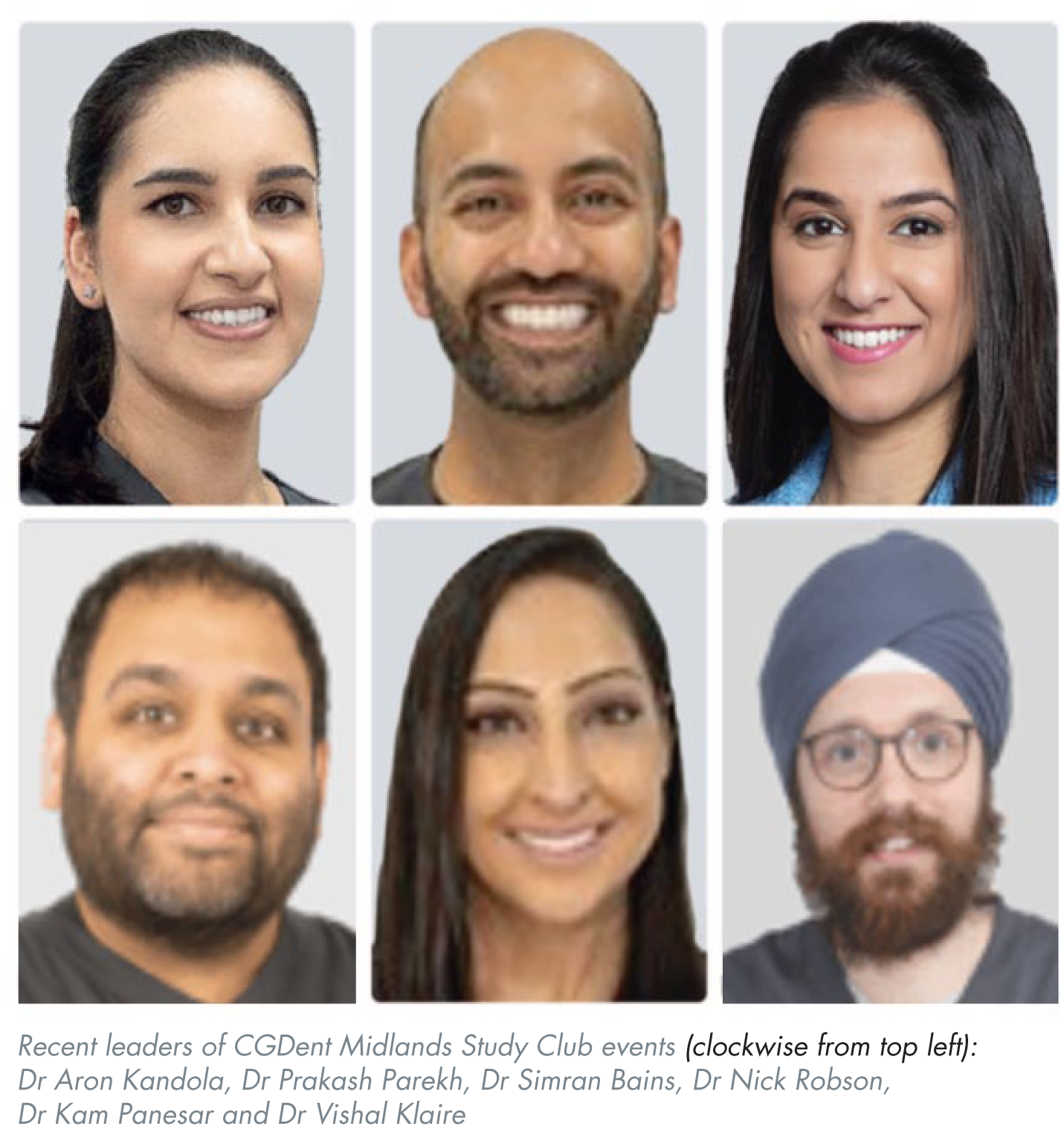
Upcoming events include Aesthetic & Adhesive Dentistry (Wednesday 8 July, led by Dr Simran Bains and Dr Aron Kandola), Restorative & Caries Management (Friday 25 July, led by Dr Kam Panesar and Dr Aron Kandola) and Endodontics for the GDP (Monday 17 August, led by Dr Nick Robson and Dr Vishal Klaire). Space is limited so early booking is advised via
It is not always possible to include upcoming CGDent Midlands study evenings in the Primary Dental Journal, so readers interested in keeping abreast of further events in the region are advised to follow the College on social media (LinkedIn, Facebook, Instagram and/or Twitter/X), to read its monthly e-newsletter or to check the College website for new listings.

Education partnership with Dentistry Show 2026
The College has once again continued as an education partner at the British Dental Conference and Dentistry Show this year.
The College delivered two lectures, which were open to all dental professionals and free of charge for members and non-members of the College alike:
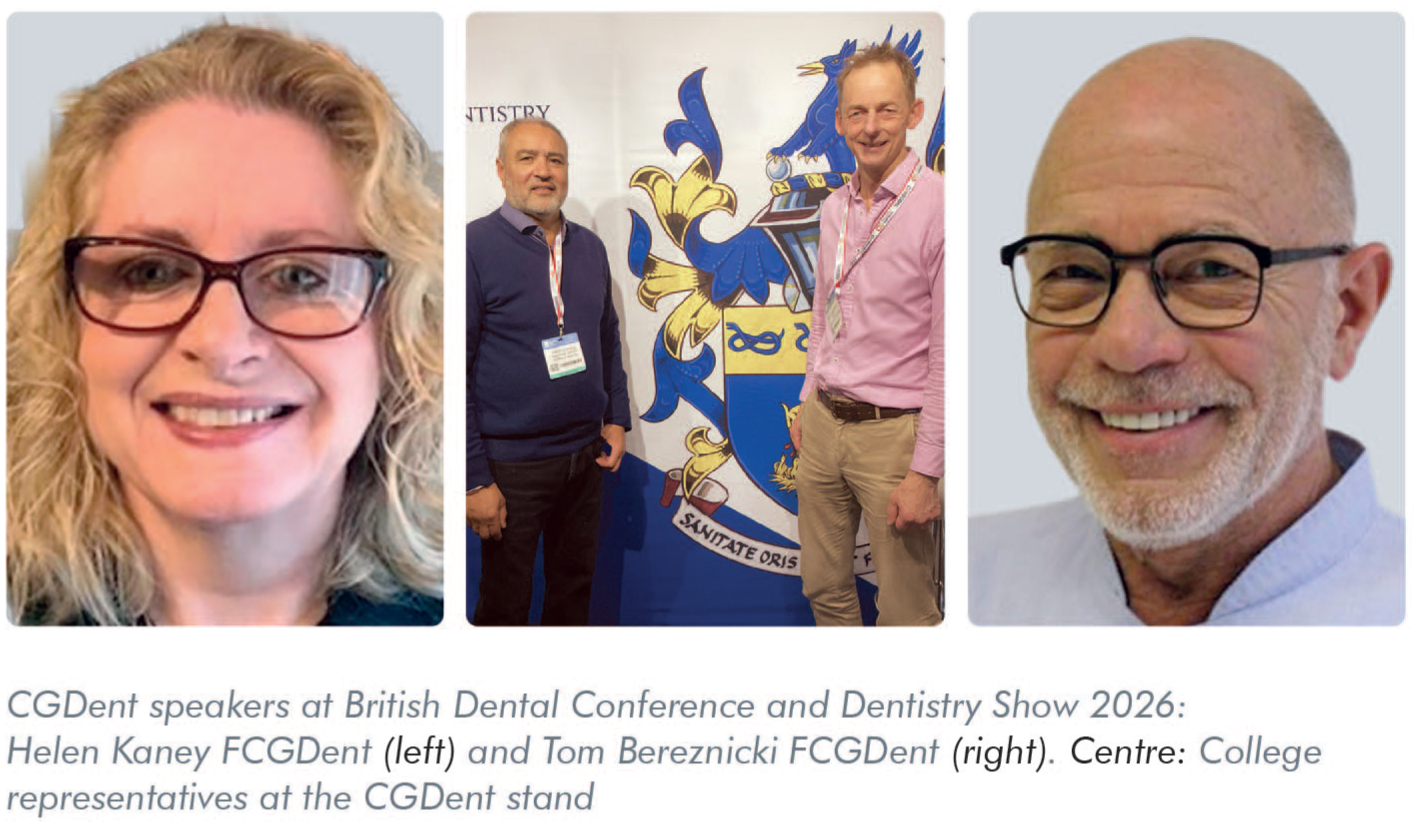
College representatives were available throughout the show at the College’s exhibition stand to talk to attendees about all aspects of membership, fellowship and the College’s vision for the profession.
Each year, BDCDS is free for all dental professionals, with attendees registering for the event in advance. BDCDS provides attendees with access to 200 CPD lectures, as well as 400 exhibiting suppliers, and the opportunity to network with 10,000 dentists, practice managers, hygienists and therapists, dental nurses, technicians and laboratory owners.
Passionate perio and oral cancer: a review of the CGDent Scotland 2025 Study Day
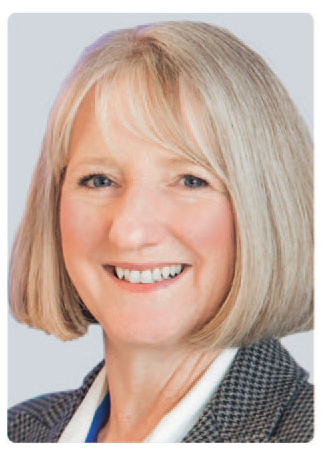
Patricia Thomson FCGDent, former Council representative for North and West Scotland, reviews the College’s recent annual study day in Glasgow.
On Friday 5 December 2025, dental professionals from across Scotland and elsewhere met at Glasgow Science Centre for the CGDent Scotland Annual Study Day. This event was established at the founding of the former Faculty of General Dental Practitioners in 1992, and has been held in Glasgow annually since then, this being the fifteenth year that we have been hosted at the Science Centre.
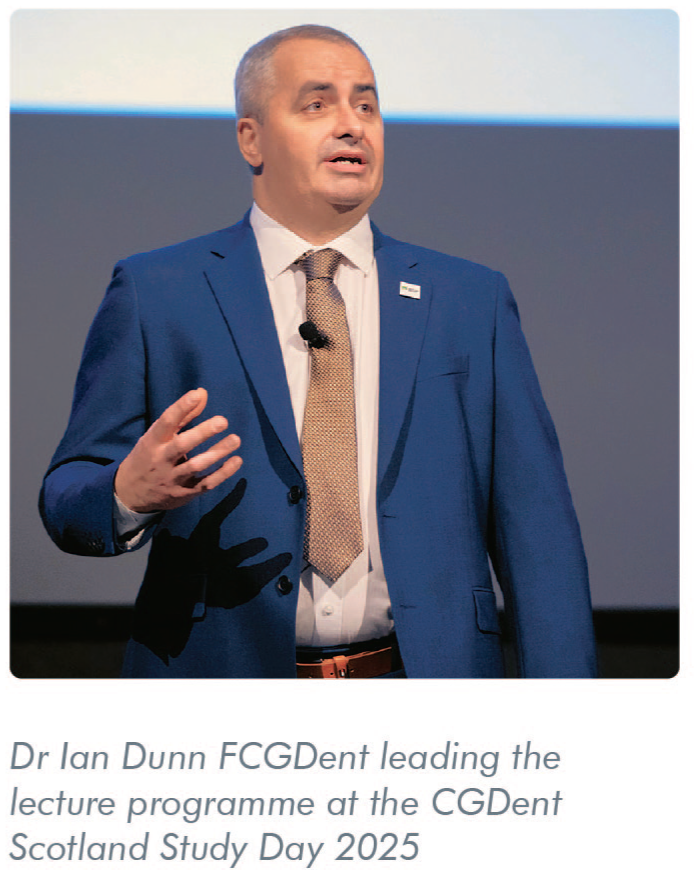
Our main speaker was specialist periodontist Dr Ian Dunn FCGDent, whose series of lectures was titled ‘Passionate Perio for the Dental Team’. The final lecture, the annual Caldwell Memorial Lecture, was delivered by Professor Jim McCaul, lead maxillofacial surgeon at the Queen Elizabeth University Hospital in Glasgow, on ‘Oral Cancer, what you need to know and what you need to do’.
Over 400 delegates joined us for the day, 361 in person and a further cohort online. The numbers comprised dentists of all levels of experience, many of whom are regular attenders, 87 final year BDS students from Glasgow and Dundee Universities, 113 Vocational Dental Practitioners, and gratifyingly, approximately 30 Dental Hygienists/Therapists.
In addition, we were joined by 12 fourth year BDS student volunteers who assisted with registration and scanning of delegates into each lecture. We were very grateful for their assistance, and they reported that they had all enjoyed the day thoroughly and looked forward to being in the audience at the 2026 Study Day.
We were delighted to host Dr Gillian Leslie, who had been recently appointed the new Chief Dental Officer for Scotland; warm congratulations were conveyed to her by our delegates who were enthusiastic at the prospect of a general dental practitioner having been selected for the role.
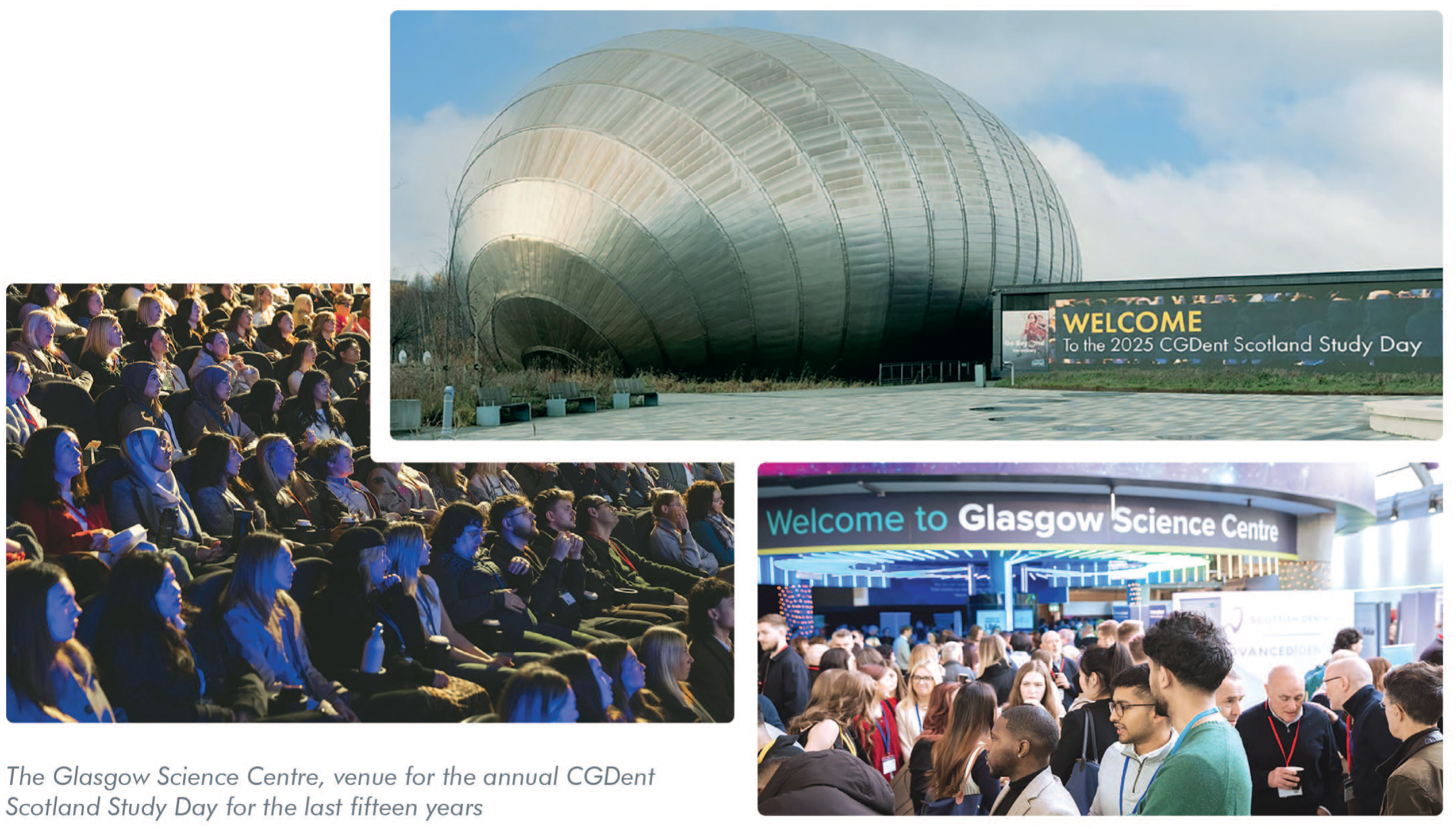
Also present was Thomas Lamont, Associate Postgraduate Dean for Workforce Development at NHS Education for Scotland (NES). Thomas has been working to create collaboration between NES, the Royal Colleges in Scotland and CGDent Scotland to better support our colleagues in the first five years in practice, and we were gratified that he attended the day to witness and support our community of practice.
Other esteemed guests included Professor Aileen Bell, Dean of Glasgow Dental School, and Billy Cameron, Assistant Postgraduate Dean for Vocational Training, both of whom have been strong proponents of CGDent Scotland.
The day started at 8am when we welcomed the first delegates with hot drinks and breakfast rolls. The early start presents the opportunity for delegates to visit the stands of our sponsors, who collectively allow us to deliver the day on this ambitious scale. As usual, I would like to reiterate our gratitude for their continuing financial contribution, as well as their enthusiasm and good humour, allowing us to deliver a successful and enjoyable day for the entire team. The exhibitors’ hall runs throughout the day, and we incorporate lengthy breaks between lectures to access the various trade stands as well as networking with colleagues and enjoying refreshments and lunch.
Once again, we welcomed Prof John Gibson, Emeritus Professor of Oral Medicine at Aberdeen University and winner of the CGDent President’s Award in 2024. John now devotes his time to running his charity, The Canmore Trust, which is dedicated to suicide prevention and postvention, and he and his wife Isobel remained with us throughout the day, manning their stand and enjoying social interaction with delegates.
In response to feedback, we opted to keep all students in the lecture theatre for the entire programme this year rather than removing them for a separate session in the afternoon. This proved very successful, and we feel that this has been a positive development to engender inclusivity, and introduce them to the community of practice that the College is endeavouring to foster.
It was with some trepidation that the organising committee elected to have most of the day devoted to periodontics. I am a part-time Teaching Fellow at Glasgow Dental School, and when I informed the final year students that the study day was going to consist of three perio lectures, they were not too impressed. However, I assured them that Ian Dunn is a superbly entertaining speaker with a deep passion for his subject, and that their apprehension was ill-founded. It was immensely gratifying to receive their overwhelmingly positive feedback the following week.
Ian used his warm Liverpool humour to guide the delegates through the concepts of disease aetiology and risk factors, and the S3 guidance with particular reference to the integration of the guidance into the Statement of Dental Remuneration (SDR – the Scottish NHS payment system). He also discussed instrumentation and the use of antimicrobials, and he particularly emphasised the methods of patient motivation and the power of the oral hygiene phase. Ian had many amusing patient interaction anecdotes such as: “Madam, do you want a longer tooth, or a tooth no longer?”; and “would you wash your dirty car by rinsing it with a bucket of water and expect it to be clean?”. Apologies to Ian if I have not quite captured the essence of the messages. I did notice that many delegates brought out their phones to take note of these interesting motivational analogies to reuse when they returned to practice. I also have to acknowledge his persistence in repeating his patients’ mispronunciation “Cordosyl” throughout the entire day.
The feedback for Ian’s lecture set was absolutely superb, and many commented that they could not believe that he held their attention for such a long period on the subject of periodontology, several expressing a new enthusiasm for the topic.
We then received Professor McCaul’s Caldwell Memorial Lecture. Jim previously worked at Bradford Teaching Hospitals and the Royal Marsden Hospital, and his unit in Glasgow has one of the highest throughput of head and neck cancer and facial trauma cases in the world. He holds a PhD in Molecular Oncology, continues to work on clinical research for head and neck cancer, and is on the editorial board of numerous international medical research journals.
He was delighted to have access to our large group of dental professionals to deliver his message. His opening comment was that we should refer to him anything that raises suspicion of cancer. He assured us that we will not be considered time wasters if the referral results in a diagnosis of lichen planus, recurrent ulceration or any other benign condition, as he is delighted that nineteen times out of twenty he can deliver good news to patients. Rather, he was concerned that when the one out of twenty referrals that is a cancer diagnosis does not reach him at an early stage, the outcome becomes much more bleak.
He proceeded to use a combination of pictures and video to demonstrate the hugely invasive procedures that these cases undergo, but also showing that faces can be put back together again, and that patients can resume their altered lives if the surgery is successful. It was immensely reassuring to note that a person who carries out this level and complexity of surgery can establish a close bond with the patient and cares deeply about the outcome for the individual. Jim went on to discuss the disturbing fact that the incidence of head and neck cancer is rising significantly among the female population, and it is unrelated to the former recognised risk factors. Work is ongoing to establish a cause.
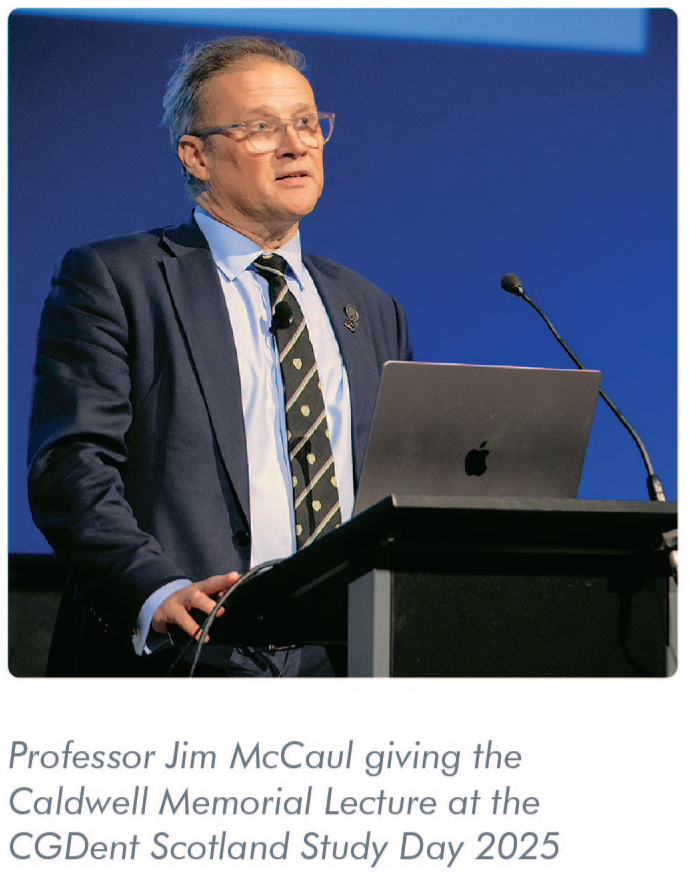
Jim also discussed the use of immunomodulation therapy, but he was wary to offer any certainty at this moment, as it appears to have some promise in a specific number of individuals, but not all.
The room was completely enraptured by Prof McCaul’s presentation, and again we received wonderful feedback; especially noted was the confidence to refer any suspicion of cancer to Jim’s department without fear of time wasting, and I would strongly encourage general dental colleagues across the UK to adopt the same approach.
We consider that we had two outstanding presenters this year, as confirmed by feedback, and we are indebted to them for coming to Glasgow to make the day such a success.
The day ended with our drinks reception, where the delegates mingled with colleagues, the dental trade, other stakeholders, and our speakers. The day concluded at 7pm with a huge sigh of relief from the organising team, including our superb events coordinator, Patricia de Vries.

We will endeavour to replicate the success of this day in December 2026, when the day will be devoted to digital dentistry. We hope that the programme will attract a number of Dental Technicians and Clinical Dental Technicians, as well as the entire dental team, and that College members and others from across the UK will consider joining us as the organising committee endeavours to make the day as worthwhile, relevant and enjoyable as ever.
The CGDent Scotland Study Day 2026: digital dentistry for the dental team
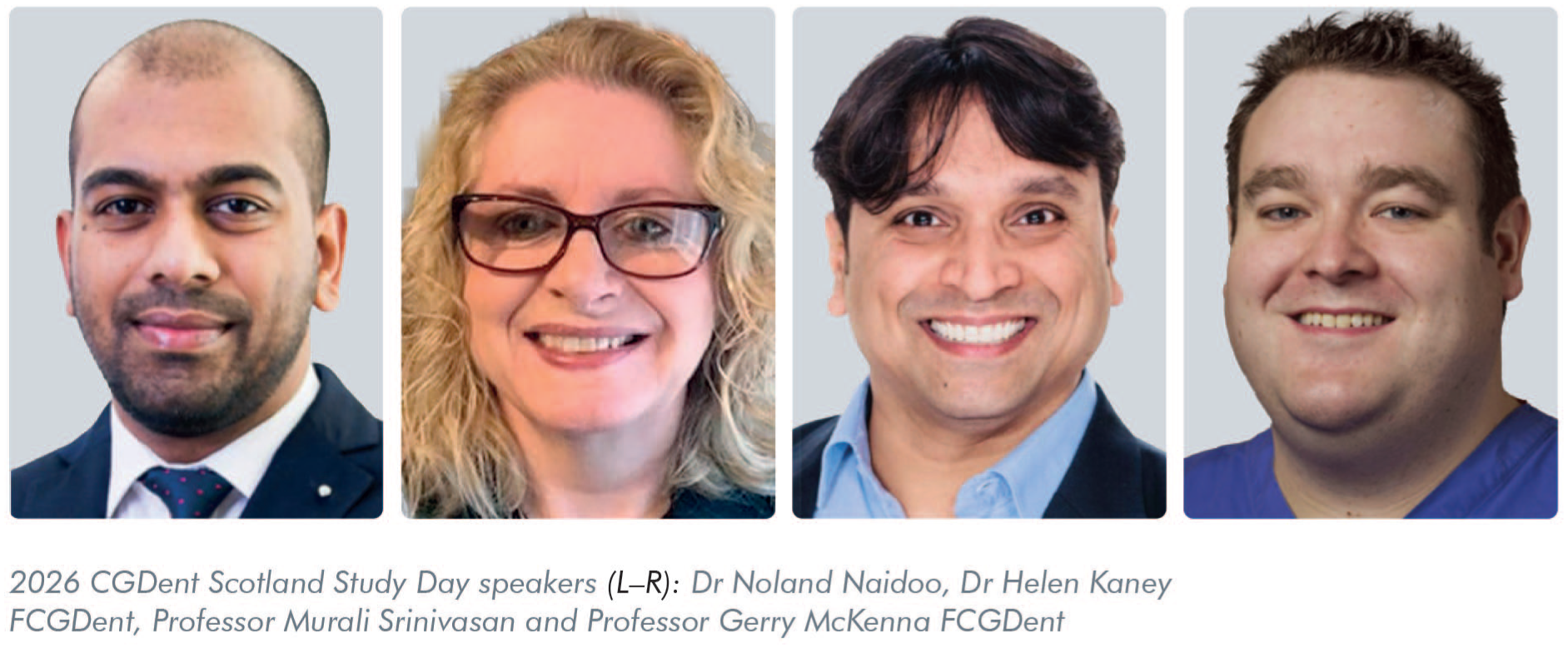
The College has announced the topic and speakers for its next annual study day in Glasgow.
Delivering lectures under the title
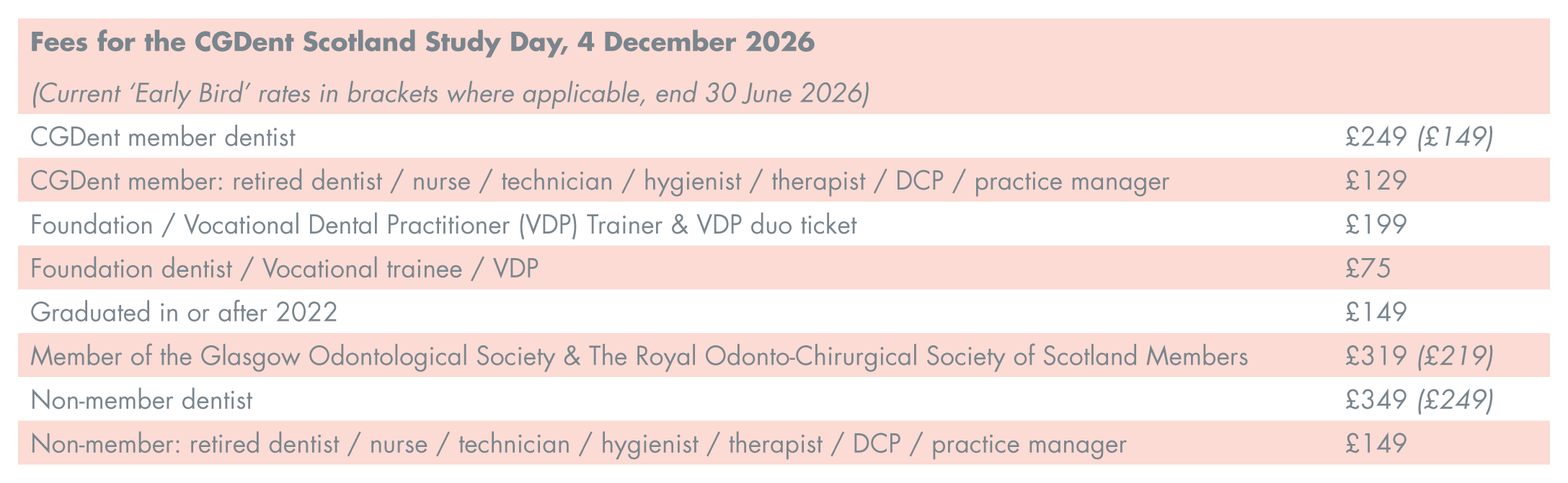
The annual study day, organised by CGDent Scotland, takes place at Glasgow Science Centre on the first Friday in December – 4 December this year. With six hours of CPD, the day is attended by up to 400 dental professionals from across the UK and finishes with a drinks reception which marks the start of the festive season for its many regular attendees.
The CGDent Scotland Study Day is open to all dental professionals, and can be attended in person or virtually. Fee discounts are available to College members in all team roles (see Table on page 23).
Breakfast rolls, a two-course lunch, refreshments throughout the day and evening drinks are all included in the attendance fee, and there will be an accompanying trade exhibition to visit.
Other discounts to the full rate are available to Foundation Dentists / Vocational Trainees and their trainers, recent graduates and members of the Glasgow Odontological Society and the Royal Odonto-Chirurgical Society of Scotland.
For further information, and to book, visit

New Trustees
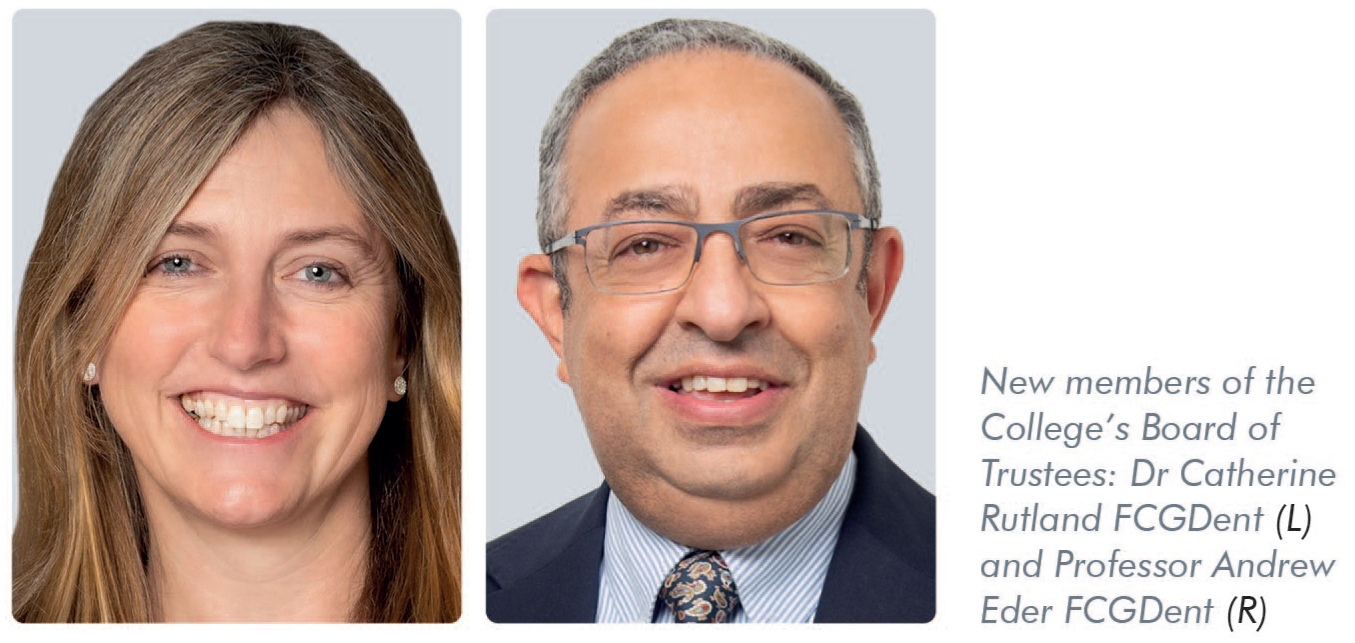
The College has appointed Dr Catherine Rutland FCGDent and Professor Andrew Eder FCGDent as members of the Board of Trustees.
After qualifying as a dentist in 1992 from the University of Leeds, where she achieved a Distinction in oral surgery, she spent two and a half years in secondary care as a House Officer at Leeds Dental Institute and Senior House Officer at Newcastle University Dental Hospital before moving into general dental practice. She completed Vocational Training in Sunderland and spent a year there as an associate GDP before practising in Reading for three years. From 2000–2019, she was Principal Dental Surgeon and a joint partner at a private dental practice in Thatcham, West Berkshire. She joined Denplan as a Dental Advisor in 2010, and was later promoted to Senior Dental Advisor, Head of Professional Support Services and Head Dental Officer before working there full-time from 2019.
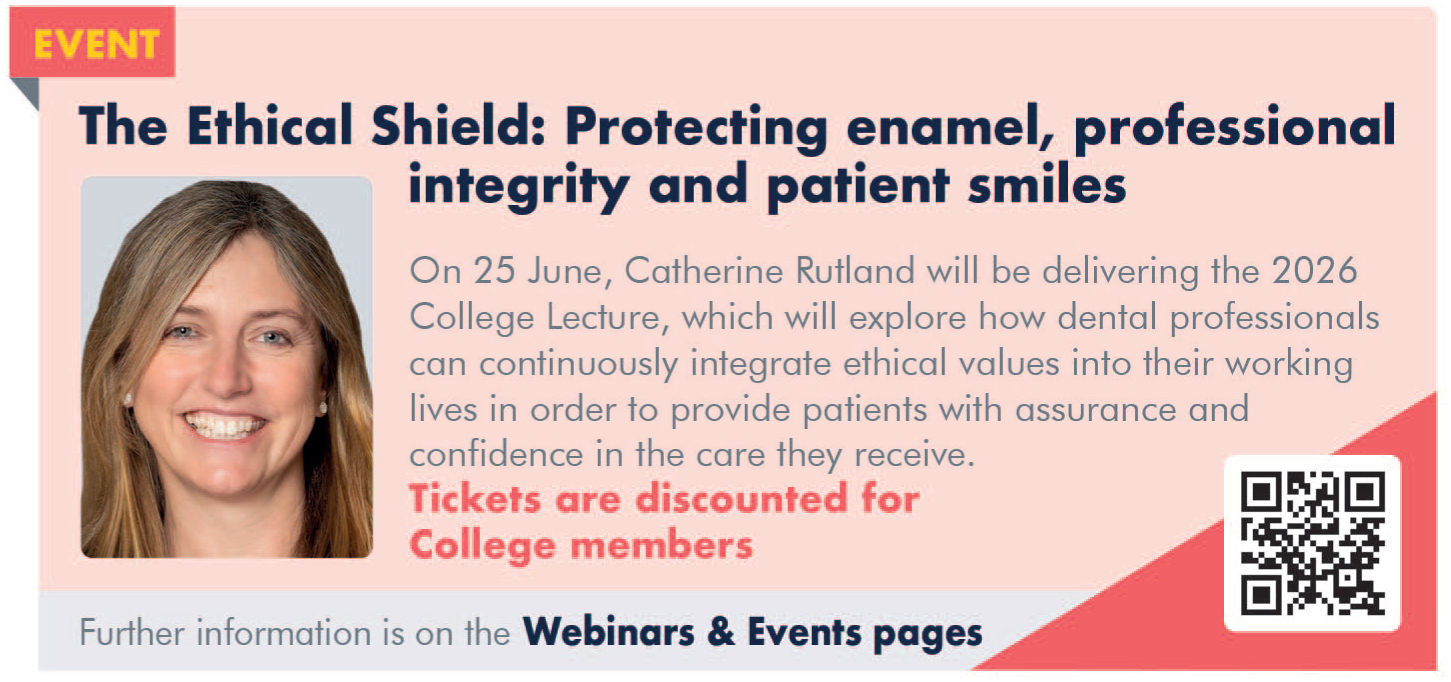
In 2013, she completed a Master’s degree in Medical Ethics & Law at King’s College London, writing her dissertation on whether both professional integrity and patient autonomy can be satisfied in fulfilling patients’ cosmetic dental desires. She became a Certified Member of the Institute of Risk Management in 2015 and was awarded a Chartered Management Institute Level 7 Certificate in Leadership Mentoring and Coaching in 2016. She became a Fellow of the College of General Dentistry in 2023, and in 2024 was a keynote speaker at the CGDent Scotland Annual Study Day, the College’s largest annual CPD event, lecturing on ethical and legal considerations in the provision of aesthetic and cosmetic dental procedures.
A Trustee of the Dentists’ Health Support Trust, which supports dentists facing mental health and addiction challenges, she also brings governance experience as a past Chair of the Clinical Governance Committee at Simplyhealth and of the Denplan Excel Board.
He is also Emeritus Professor of Restorative Dentistry and Dental Education at University College London’s Eastman Dental Institute, reflecting over three decades of commitment in a variety of roles, including developing Europe’s largest CPD centre for dental professionals during a decade as Director of Education.
He holds an MSc in Conservative Dentistry from UCL, the Diploma of Fellowship of the former Faculty of General Dental Practice UK, and the Membership in Restorative Dentistry jointly awarded by the Royal College of Surgeons of England (RCS) and the Royal College of Physicians and Surgeons of Glasgow. He is also a Fellow of the College of General Dentistry, the Royal Society of Medicine, the RCS Faculty of Dental Surgery (FDS) and the Higher Education Academy, and an Honorary Fellow of the Faculty of Dental Surgery of the Royal College of Surgeons of Edinburgh.
He is a past President of the British Society for Restorative Dentistry, the Odontological Section of the Royal Society of Medicine and the London group of the Alpha Omega International Dental Fraternity, and a longstanding member of the British Society for the Study of Prosthetic Dentistry and the British Dental Association. He is a former board member of the FDS, was Chair, now external examiner, of its restorative specialty membership examinations, and is a Specialist List Assessor for the General Dental Council.
He is the AI and digital innovation lead for the Faculty Dental Journal, was the British Dental Journal’s joint academic lead for CPD, is a past Chair of the editorial board of Premium Practice Dentistry, and has also been on the editorial boards of the European Journal of Restorative Dentistry and Prosthodontics, Private Dentistry and Dental Tribune. He has published over 100 peer-reviewed papers, co-edited textbooks on tooth wear and tooth surface loss and contributed to textbooks on special care dentistry and culturally sensitive oral healthcare.
He serves as Chair of Alpha Omega’s London Charitable Trust and brings significant governance experience from his tenure as Chair of Trustees of the Academy of Medical Royal Colleges.
Trustees, who serve three-year terms of office, are accountable for the fulfilment of the College’s legal and regulatory duties as a charity, and for ensuring the proper running of the organisation.
The other members of the Board of Trustees are Dr Mick Horton FCGDent (Chair and former FGDP Dean), Dr Onkar Dhanoya FCGDent (former FGDP Vice Dean), Dr Roy Bennett FCGDent (a dentist with a special interest in the care of anxious patients), governance specialist Jane Clarke, experienced CFO Neil Sawbridge and barrister Fred Thomson. Dental nurse Marie Parker FCGDent has stepped down from the Board after serving since 2023, and the new appointments increase the number of Trustees to eight.
Further information about the governance of the College is available at

The year in review 2025–26
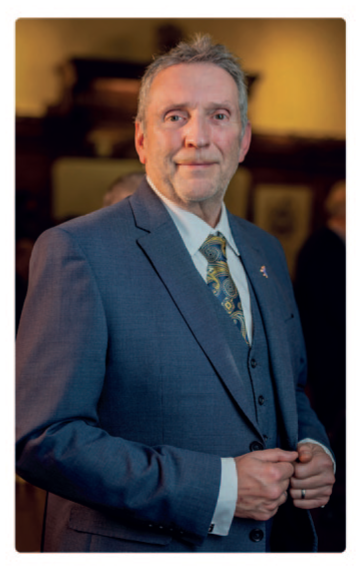
Dr Mick Horton FCGDent, Chair of Trustees and co-host of the recent Presidential online Q&A for College members, reviews the College’s achievements over the past twelve months.
As we look forward to celebrating our fifth anniversary this summer, it’s worth reflecting on our journey in the historic establishment of a College for dentistry, which had been an aspiration for 150 years.
We started with the transfer of an initial, dentist-only membership from the Faculty of General Dental Practice (UK) of the Royal College of Surgeons of England (FGDP(UK)). Since then, we have shaped our own distinct, whole-team approach, opening our arms to those among the wider team who have so much to contribute to the intellectual life of the organisation, and bringing their distinct perspectives on the development of our professional community.
FGDP(UK) made an indelible contribution, over thirty years, in postgraduate skills-based qualification, and in setting standards for practice. That legacy has been built upon by the College of General Dentistry, and transformed for a different age.
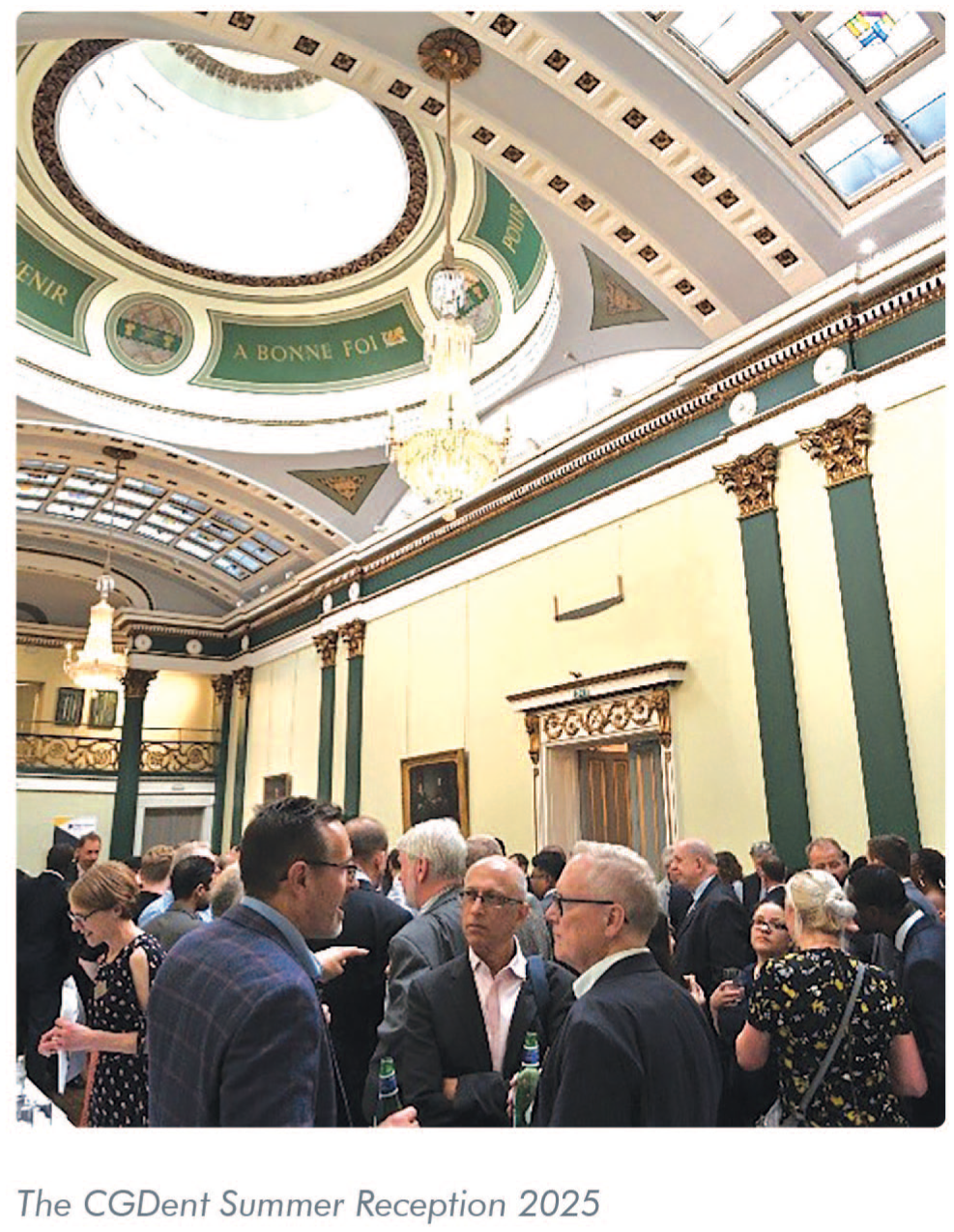
Our Summer Reception for 2025 was held in the wonderful Sheffield Cutlers’ Hall, which is a worthy competitor to its London namesake in its historic building and elegant interiors – a fine setting for our key event in the year. 2025 saw the introduction of the College Lecture, the inaugural lecture given by Martin Kelleher FCGDent. His incisive analysis provided a provocative opening salvo for the College’s interests in the philosophy of care – about which our Members and Fellows will be hearing much more.
In January 2026, we opened our long-planned credentialing scheme, Certified Practitioner, in response to an ever-more confusing market for postgraduate training, to give patients and practitioners alike a clear mark of advanced capability.
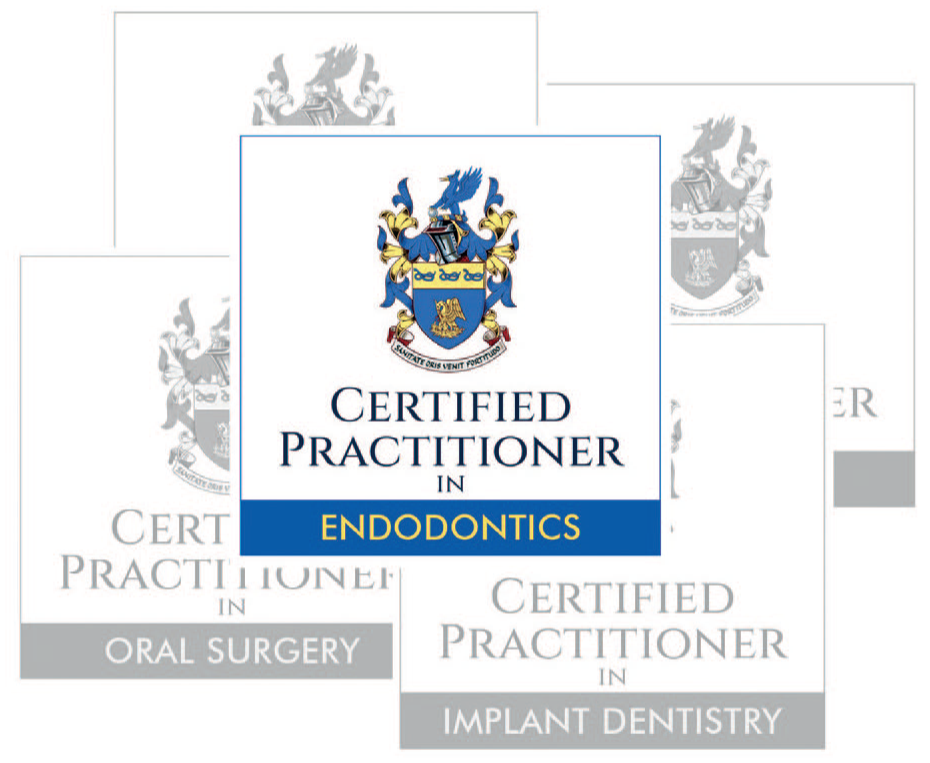
The first credential, for Endodontics, is now open for applications, and others are planned for 2026. It is sad to see the final cohort of our renowned Diploma in Restorative Dentistry completing their programme this year, but we are no less committed to career and skills development for all dental professionals and credentialing provides our way forward.
Credentialing was one focus of a key meeting on driving quality in implant dentistry, which took place prior to our Fellows’ Winter Reception this year. It also provided an opportunity to hear about the new edition of Training Standards in Implant Dentistry, now in development. Implant dentistry is just one of the many fields of practice in which the College is making its mark.
Fellowship of the College remains the ultimate mark of accomplishment for our professional community, and we have recently updated our criteria for admission to reach across a broader range of experience among practitioners – while holding true to the standard we have set (see page 55). The new scheme also widens the opportunities for Associate Fellowship, in different domains of practice, and will introduce a new Role Fellow designation for members of the wider team, for whom achievement across two domains can now be recognised.
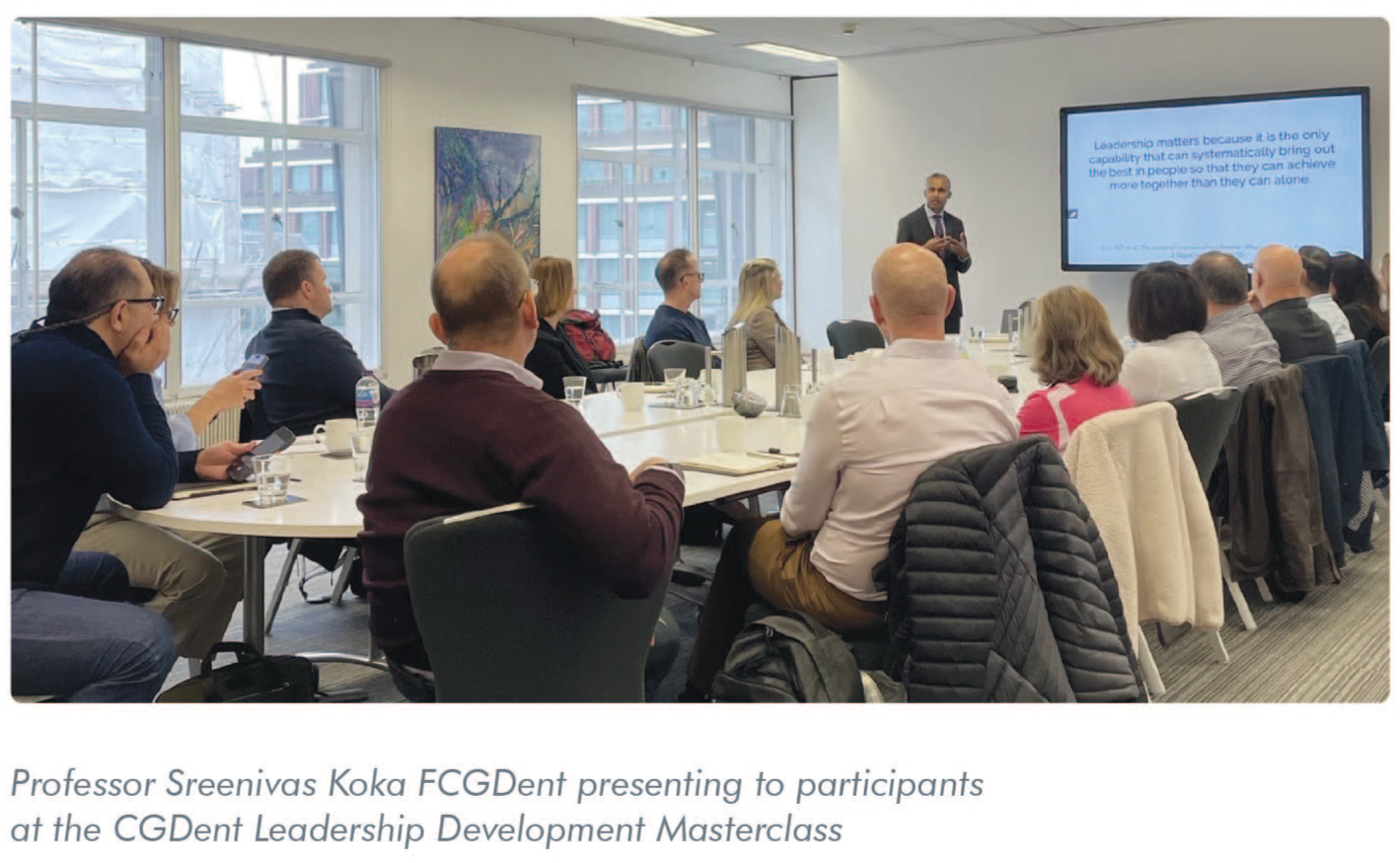
Leadership is an elusive quality that the College is interested to develop among our community of practice. We are delighted to have the opportunity to work with Professor Sreenivas Koka FCGDent, who guest edited our recent thematic issue of the Primary Dental Journal on leadership, and who together with his colleague Dr Elizabeth Carr FCGDent ran a Leadership Development Masterclass for College members in the autumn. The popular Masterclass will run again this September (see page 51).
On a related theme, we were grateful to Prof Avijit Banerjee FCGDent, Dean of the Faculty of Dentists, for his generous contribution to a new Foundation Nakao–CGDent award in mentoring and coaching for the wider dental team. This award further highlights the holistic approach that the College espouses for team development, and we plan a further round of the award in 2026.
In close partnership with the Tom Bereznicki Charitable Educational Foundation, the College’s focus on early careers has continued to expand, with the development of a further clinical award offering fantastic training opportunities, in addition to several one-day symposia around the UK, and more activities in the pipeline.
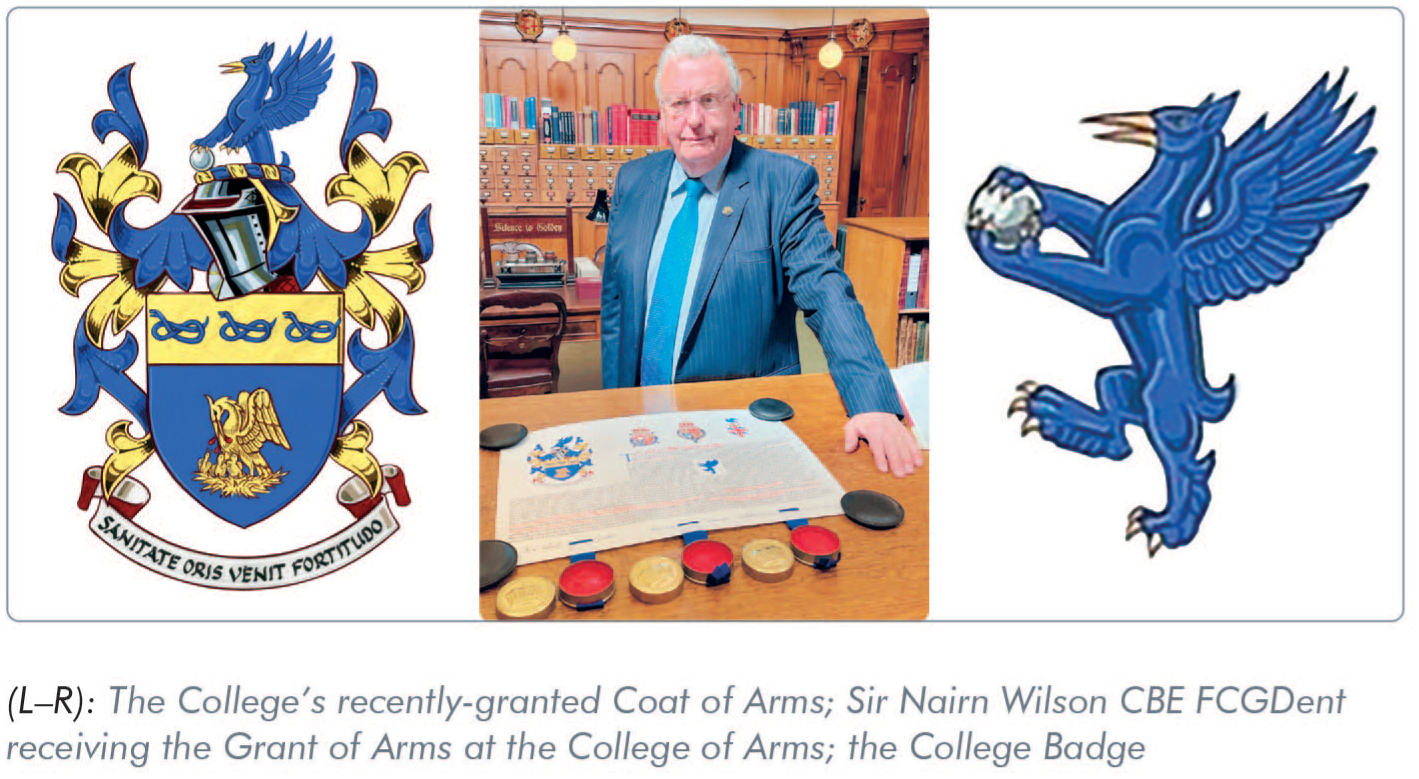
The end of the year has been marked by the completion of a very successful fundraising campaign, investing the College with its own Coat of Arms and associated branding. As we look forward to the prospect of a Royal Charter – our key aim in consolidating the authority of the College, alongside its Royal College healthcare peers – our Coat of Arms stands out with pride as a marker of our values, commitment and distinct identity. Our thanks are extended to Sir Nairn Wilson CBE FCGDent in leading the campaign, and to the many generous donors who made it possible.
‘Act now: protect our present, secure our future’: UK dental organisations support World AMR Awareness Week
Thirty million deaths directly related to antimicrobial resistance (AMR) are expected globally in the period between 2025 and 2050, with an annual mortality rate by 2050 (8.2 million) approaching that of cancer (9.7 million).
The more we use antimicrobial agents, the more AMR is expected to develop. This is leading humanity to face a situation similar to the era before the discovery of antimicrobials, when it was not possible to treat even simple infections.
Dentists prescribe approximately 10% of antimicrobials in the UK and Ireland, and there is evidence of increasing rates of reported resistance to many antimicrobials in head and neck infections. It is important that the dental community acts now in response to this global health threat. Appreciating the requirement for system-level changes to facilitate the provision of best evidence practice, we need to take the lead and protect antimicrobial use to cases when it is justified based on evidence.
This could be guided by the available resources in three major national platforms:
1. Dental antimicrobial stewardship: toolkit (UK Health Security Agency):
This includes the Antimicrobial prescribing in dentistry guidance published by the College:
2. Keep Antimicrobials Working website (British Society for Antimicrobial Chemotherapy):
3. Dental stewardship resources (Scottish Antimicrobial Prescribing Group):
In 2025, the United Nations’ focus was on non-communicable disease such as cancer, and diabetes. People with these conditions are susceptible to rapidly advancing infection.
Dr Wendy Thompson, the College’s AMR Lead, explained:
“Prevention is better than cure. Preventing non-communicable diseases, such as dental infection, reduces antimicrobial use and must be a global priority to
World AMR Awareness Week, marked annually from 18 to 24 November, is a global campaign to raise awareness and increase understanding of AMR and to promote global action to tackle the emergency and spread of drug-resistant pathogens.
Twenty-three national dental organisations came together to support the WAAW 2025 theme ‘Act Now: Protect Our Present, Secure Our Future’:
● Association of Clinical Oral Microbiologists (ACOM)
● Association of Dental Groups (ADG)
● Association of Dental Hospitals (ADH)
● British and Irish Society for Oral Medicine (BISOM)
● British Association for the Study of Community Dentistry (BASCD)
● British Association of Dental Nurses (BADN)
● British Association of Dental Therapists (BADT)
● British Association of Oral Surgeons (BAOS)
● British Association of Private Dentistry (BAPD)
● British Dental Association (BDA)
● British Endodontic Society (BES)
● British Society for Antimicrobial Chemotherapy (BSAC)
● British Society of Dental Hygiene and Therapy (BSDHT)
● British Society of Paediatric Dentistry (BSPD)
● British Society of Periodontology and Implant Dentistry (BSP)
● College of General Dentistry (CGDent)
● Dental Schools Council (DSC)
● Faculty of Dental Surgery of the Royal College of Physicians and Surgeons of Glasgow (RCPSG)
● Faculty of Dental Surgery of the Royal College of Surgeons of Edinburgh (RCSEd)
● Faculty of Dental Surgery of the Royal College of Surgeons of England (FDS)
● Oral Health Foundation
● Scottish Antimicrobial Prescribing Group (SAPG)
● Society of British Dental Nurses (SBDN)
Dr Noha Seoudi of the Association of Clinical Oral Microbiologists, who co-ordinated this year’s statement, said:
“Working together is key to improving knowledge and raising awareness of AMR.”
Minister addresses dental leaders
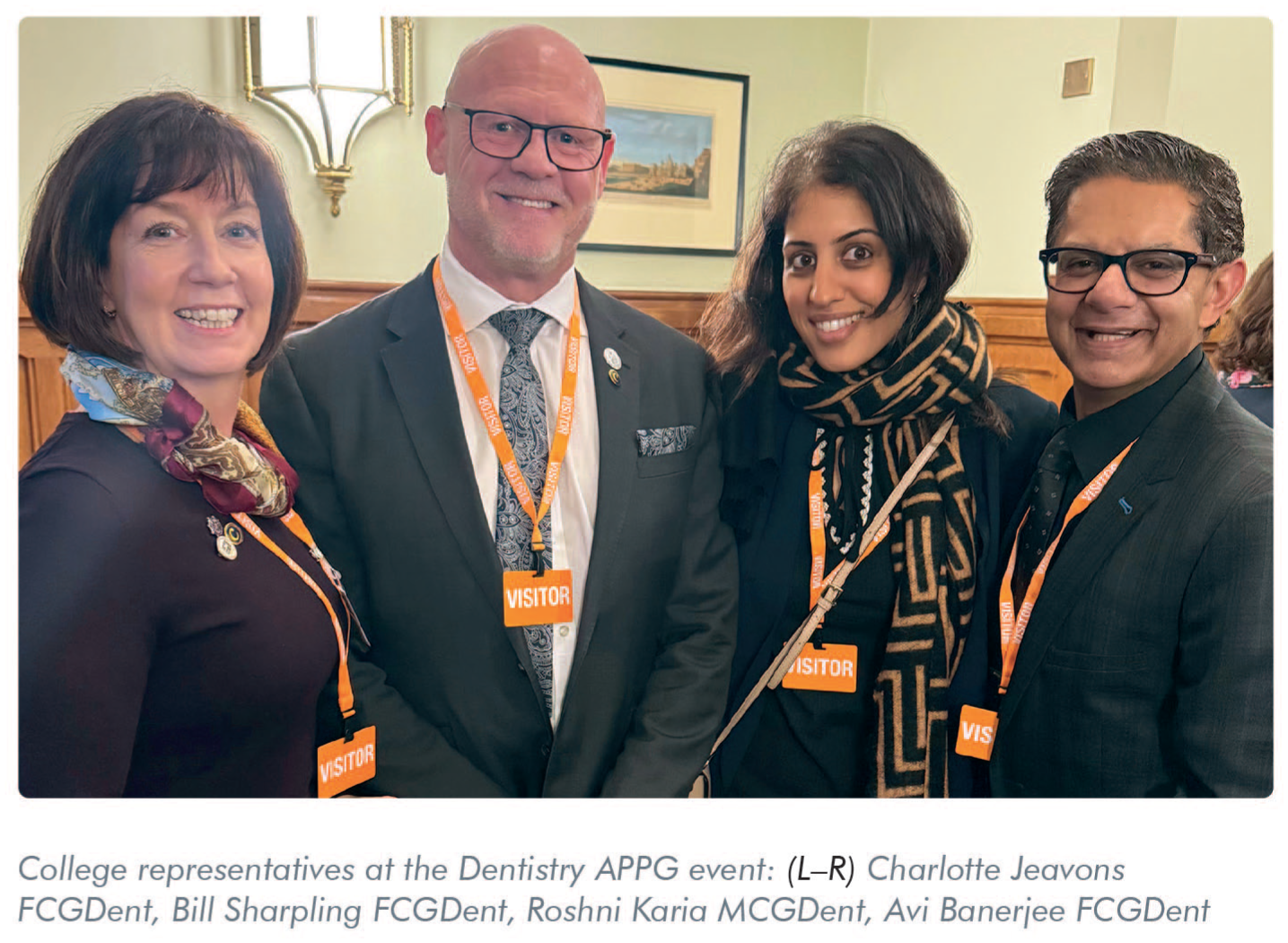
Senior College representatives were among dental leaders recently addressed by the Minister of State for Health and Social Care, Stephen Kinnock MP.
Speaking on 9 December 2025 ahead of the government’s announcement of reforms to the NHS dental contract in England, the minister, whose remit includes dentistry, recognised the pressures the sector faces, including workforce challenges and patient access. He also acknowledged the need for a more coherent, long-term approach which makes better use of the whole oral health team, alongside prevention and realistic planning, rather than relying on quick fixes.
College attendees included Dr Roshni Karia MCGDent (College President), Professor Avi Banerjee FCGDent (Chair of the Faculty of Dentists), Bill Sharpling FCGDent (Chair of the Faculty of Clinical Dental Technology and Dental Technology) and Professor Charlotte Jeavons FCGDent (Member of the College Council). Dr Jason Wong MBE FCGDent also attended in his capacity as Chief Dental Officer of England.
The event was hosted by the All-Party Parliamentary Group (APPG) on Dentistry and Oral Health and was organised by the British Dental Association (BDA). Other speakers included MPs Yasmin Qureshi and Mary Kelly Foy, both Co-Chairs of the APPG, and Eddie Crouch (BDA Chair).
College Fellow awarded MBE
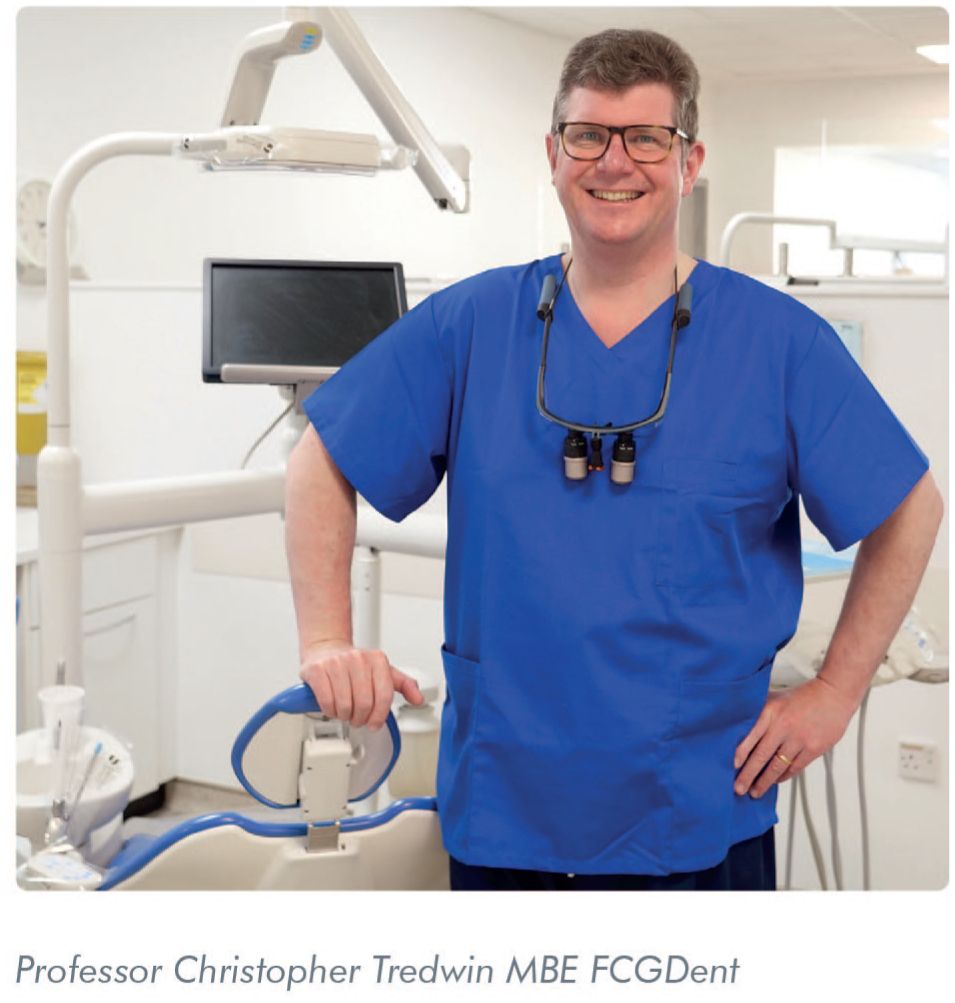
The College offers its congratulations to Professor Christopher Tredwin FCGDent, who has been made a Member of the Order of the British Empire (MBE) for services to dentistry.
Professor Tredwin is Dean and Director of Queen Mary University of London (QMUL) Institute of Dentistry, as well as an Honorary Consultant in Restorative Dentistry and Professor of Restorative Dentistry.
Born and educated in the South West, he graduated BDS from the Royal London Hospital Dental School in 1996, with a Distinction in Restorative Dentistry, later completing Specialist Registrar training in Restorative Dentistry at the Eastman Dental Hospital.
In 2010 he took up a Chair with the University of Plymouth before becoming Acting Head of its Peninsula Dental School in 2011 and Head of School in 2012. Over the course of ten years in this role, he oversaw the development of a five-year dental programme, a fully integrated dental hygiene and dental therapy degree programme and six clinical master’s programmes. He was also a Director of Peninsula Dental Social Enterprise, the school’s NHS arm.
Serving as Chair of the Dental Schools Council during the COVID pandemic, he oversaw the development of mitigations to safely return students to dental schools in England, Wales and Northern Ireland, and negotiated emergency investment into dental schools as well as additional time for entry into Foundation Training. After the pandemic, he chaired national task and finish groups to establish the UK’s future undergraduate training requirements.
Since joining QMUL in 2023, he has overseen a full review of its BDS and BSc curricula, led the development of a new LDS qualification and established the North East London Dental Outreach Collaborative.
He holds a first-class BSc in Physiology with Basic Medical Science from the University of London, both an MSc with Distinction in Conservative Dentistry and a PhD in Clinical Dentistry (Biomaterials) from University College London, the Membership of the Faculty of Dental Surgery of the Royal College of Surgeons of England (RCS) and the Diploma of Fellowship of the former Faculty of General Dental Practice UK. A Fellow of the College of General Dentistry since its inception, he is also a Fellow of both the Faculty of Dentistry of the Royal College of Surgeons in Ireland and the Higher Education Academy, as well as a Fellow in Restorative Dentistry of the RCS.
An active researcher with interests including nanomaterials and regenerative medicine, he has published almost 100 papers and supervised numerous PhD and master’s students. He was also a co-editor of both the second (2018) and third (2025) editions of Standards in Dentistry, CGDent’s comprehensive collection of standards and guidelines for primary dental care.
A registered specialist in Endodontics, Periodontics, Prosthodontics and Restorative Dentistry, he has continued to practise both general and specialist dentistry throughout his career.
College Fellow honoured with IADR award
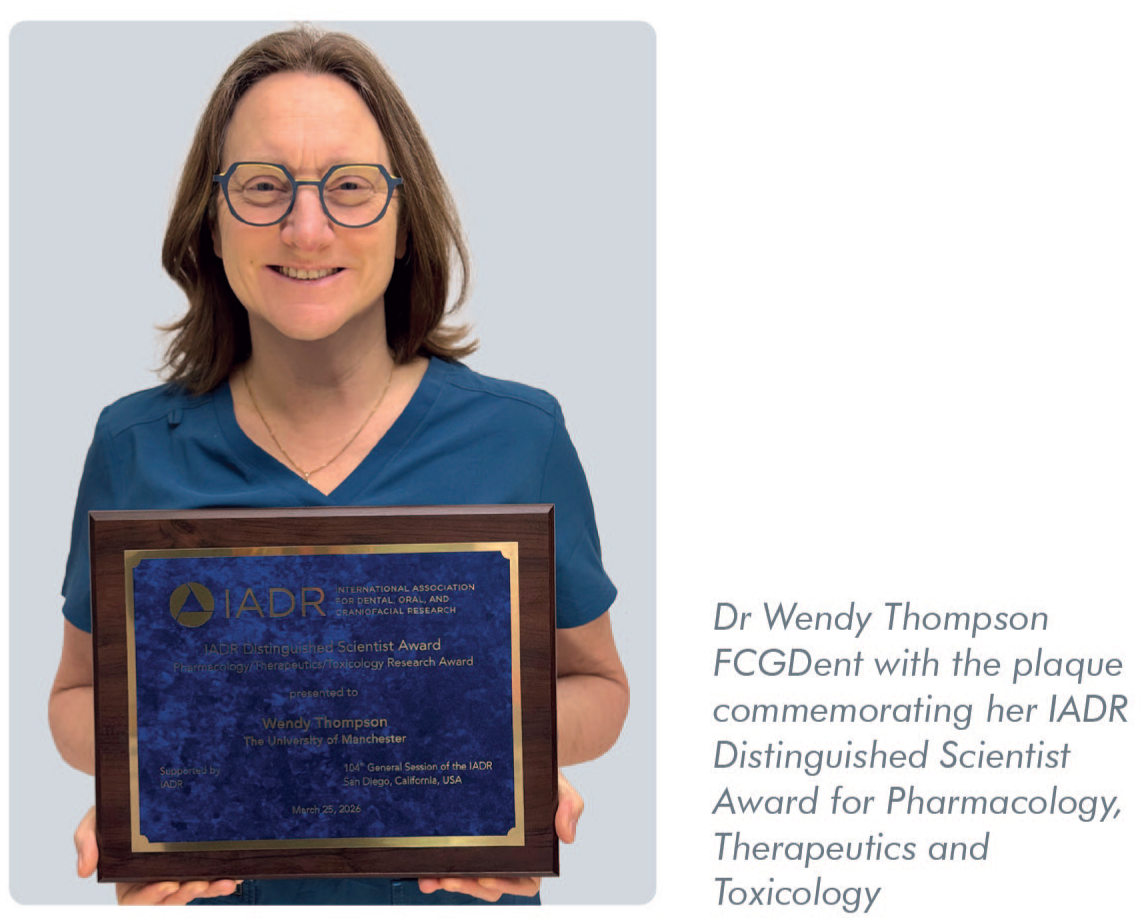
Dr Wendy Thompson FCGDent, College Lead on antimicrobial prescribing, resistance and stewardship, has received a Distinguished Scientist Award from the International Association for Dental, Oral and Craniofacial Research (IADR).
Given annually, IADR Distinguished Scientist Awards recognise outstanding research achievements in a variety of disciplines. Considered a mark of leadership in the field of dental research, they are among the most prestigious honours bestowed by the organisation. Dr Thompson has received this year’s award for research in the fields of pharmacology, therapeutics and toxicology.
A general dental practitioner in Cumbria and Clinical Senior Lecturer in Primary Dental Care at the University of Manchester, Dr Thompson researches and lectures nationally and internationally on tackling antimicrobial resistance (AMR), reducing the overprescribing of antibiotics, and optimising the prevention and control of infections. She graduated BDS from the University of Liverpool, was awarded the Diploma of Membership of the Joint Dental Faculties of the Royal College of Surgeons of England, holds a BSc in Microbiology & Microbial Technology from the University of Warwick, and completed a PhD in antibiotic prescribing at the University of Leeds.
She is a CGDent Ambassador, a member of the College’s Research Advisory Group, and represents the College on the UK Health Security Agency’s dental sub-group and oversight committee on antimicrobial use and resistance. Guest Editor of the issue of this journal dedicated to COVID-19 and urgent dental care in 2021 (v.10, n.3), she became a Fellow of the College in 2022 and in 2024 delivered the Caldwell Memorial Lecture, on using antibiotics sustainably, at the CGDent Scotland annual study day.
She has lectured for the College at the annual Dentistry Show, presented the College’s ‘Talking Standards’ webinar on antimicrobial prescribing in dentistry (see
She is also Vice Chair of the FDI World Dental Federation Science Committee, Chair of its working group on preventing antimicrobial resistance and infections, an advisor to the National Institute for Health and Care Excellence, a member of the BDA Health & Science Committee, a Council member of the British Society for Antimicrobial Chemotherapy, a member of the BNF Dental Advisory Group, Trustee of the charity The AMR Narrative and a member of Antibiotics Research UK’s Public Engagement and Patient Support Committee. She was an honorary consultant to the Office of the Chief Dental Officer for England on antimicrobial stewardship and attended the UN General Assembly’s High-Level Meeting on AMR in September 2024. She is a Fellow of both the Higher Education Academy and the International College of Dentists, and prior to becoming a dentist spent nine years working at the Ministry of Defence.
The award was formally conferred in late March 2026 at the IADR General Session in San Diego, California, where Dr Thompson delivered a keynote lecture on antimicrobial stewardship research in dentistry, spoke on the President’s Panel about research into infection prevention and control, and chaired a session on adverse outcomes from the use of antimicrobials.
Career barriers and breakthroughs for academic dental therapists and dental hygienists
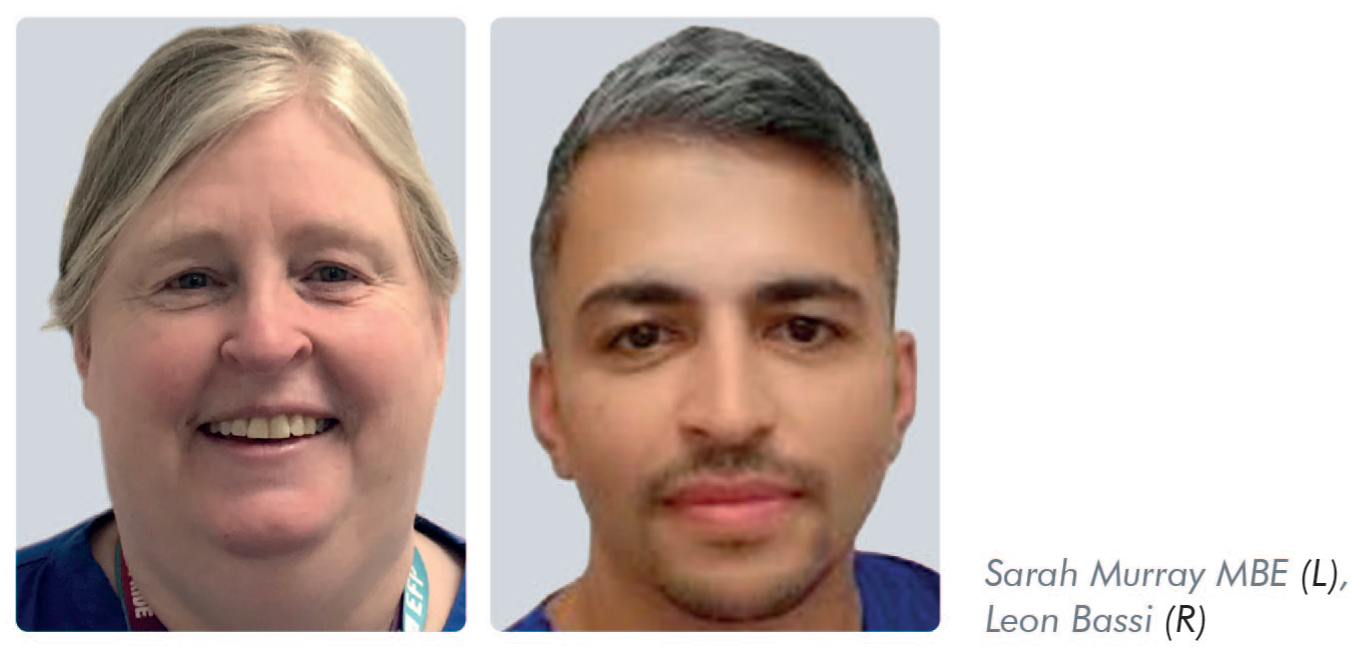
Sarah Murray MBE, Reader in Dental Therapy Education at Queen Mary University of London and Board Member of the College’s Faculty of Dental Hygiene and Therapy, and Leon Bassi, Clinical Lecturer in Primary Dental Care (Dental Therapy) at the University of Liverpool, discuss academic career pathways for dental therapists and dental hygienists.
The development of academic expertise within a professional group is essential to the process of professionalisation. To foster ownership of a specific body of knowledge, professional groups must possess adequate academic training to identify (through scholarly and research study), defend (through critical understanding and articulation), and sustain (through research and scholarship) that knowledge. Therefore, it is critical to provide opportunities for professionals to cultivate research skills and engage in research that is specific to their field. This strengthens the professional group to claim custodianship over their clinical discipline but also contributes to the broader process of professionalisation. 1
In recent years, the NHS has placed increasing emphasis on ‘Building Better Teams’, 2 recognising that high-quality care relies on the effective integration of different professional skills. This is very relevant in dentistry, where the role of dental hygienists (DH) and dental therapists (DTh) has expanded significantly over many years. In a review of the literature, Nash and colleagues concluded that “access to basic dental care will not be available without the utilisation of dental therapists in the workforce”, 3 while Johnson argues for a paradigm shift using dental hygienists to shift the culture “from treatment to prevention, wellness and self-care”. 4 Research has shown that DTh are able to undertake over 70% of tasks routinely delivered in NHS primary care and “that only around 23% of clinical time was spent on ‘dentist only’ tasks within the NHS nationally”. 5 Harnessing the potential of dental hygienists and dental therapists through skill mix not only enhances efficiency but also addresses workforce challenges, providing the population with a greater access to dental care.
The NHS Long Term Workforce Plan in 2023 highlighted the need to invest in dental education, and the Dental Schools Council (DSC) has called for an increase in both dentistry and dental therapy training places as a key priority.6,7 Chen et al. conducted a global scoping review of the education and career pathways of dental therapists, dental hygienists, and oral health therapists, synthesising 53 sources to explore their professional development. 8 The review found that, despite advocacy for expanded roles beyond traditional clinical practice, most professionals in these fields continue to primarily practise as clinicians and express dissatisfaction with limited career progression opportunities. In our opinion, the Health Education England’s Advancing Dental Care project failed to illustrate how dental hygienists and therapists can have a fulfilling academic career. 9 The World Health Organization’s Global strategy and action plan on oral health 2023–2030 10 emphasises the need to focus on the oral healthcare team, particularly mid-level care providers, which we feel includes dental hygienists and dental therapists and their unique place in offering research led preventative based care to help tackle the global burden of non-communicable diseases.
As an example, we thought we would share our own academic career journeys:
My academic journey began with a primary qualification as a dental hygienist and dental therapist. My curiosity was sparked by thinking about how different professionals across the wider healthcare community could work together, which led me to pursue an MA in Primary Health and Community Care with the University of Westminster.
During my postgraduate studies I developed a strong grounding in reflective practice and learning from other healthcare professionals that included health visitors, GPs, complementary therapists, and these interactions helped me to consider the challenges surrounding working together for enhanced patient-centred outcomes. However, at the time there were no structured academic pathways for me to take, so I had to find my own path, seeking out opportunities and mentorship for myself.
I am currently a Reader in Dental Therapy Education at Queen Mary University of London, and have held previous roles with the University of Essex as a Senior Lecturer within the Oral Health Sciences team, and the University of Suffolk in 2023 as the Curriculum Development Lead for their new BSc (Hons) in Dental Hygiene and Therapy. These opportunities have helped shape my academic career journey, each contributing differently, but complementing my academic development as an educator, leader and academic innovator.
I graduated as both a dental therapist and dental hygienist from Queen Mary University of London (Barts and The London School of Medicine and Dentistry). I went on to complete an MSc in Advanced Specialist Health Care at the University of Kent, and then a PG Diploma in Paediatric Dentistry for Dental Therapists.
My career spans community, hospital, and specialist private practice. Alongside my clinical practice, I work as a Clinical Lecturer in Primary Dental Care (Dental Therapy) at the University of Liverpool.
It is important that student dental hygienists and dental therapists are taught by colleagues within their own profession, because this ensures teaching is grounded in the specific scope of practice, professional identity, and affords the opportunities to explore what the professional boundaries are in various care settings, and real-world challenges unique to their roles. Interprofessional education is key for us to meet the WHO global oral health strategy, 10 however, peer-led education is also crucial to foster a deeper understanding of clinical competencies, role boundaries, and teamwork, while also modelling career pathways and inspiring professional confidence.
Dental hygienists and dental therapists play an integral role in oral healthcare, yet the academic pathways leading to professionalisation in these fields remain underdeveloped compared to other dental professions. As the demand for advanced clinical practice, research and teaching continues to grow, it is crucial to support the academic development of these professionals, fostering their ability to become the next generation of researchers, academics and advanced clinical practitioners.
Through the Faculty of Dental Hygiene and Dental Therapy, the College offers structured support to colleagues, helping to forge their academic career. With professional development, mentorship and networking opportunities, dental hygienists and dental therapists can enhance their skill set and strengthen their leadership, educational, policy and research skills within the wider dental community.
The authors delivered a College lecture on academic career pathways for dental therapists and dental hygienists at the British Dental Conference and Dentistry Show in May 2025.