





Abstract
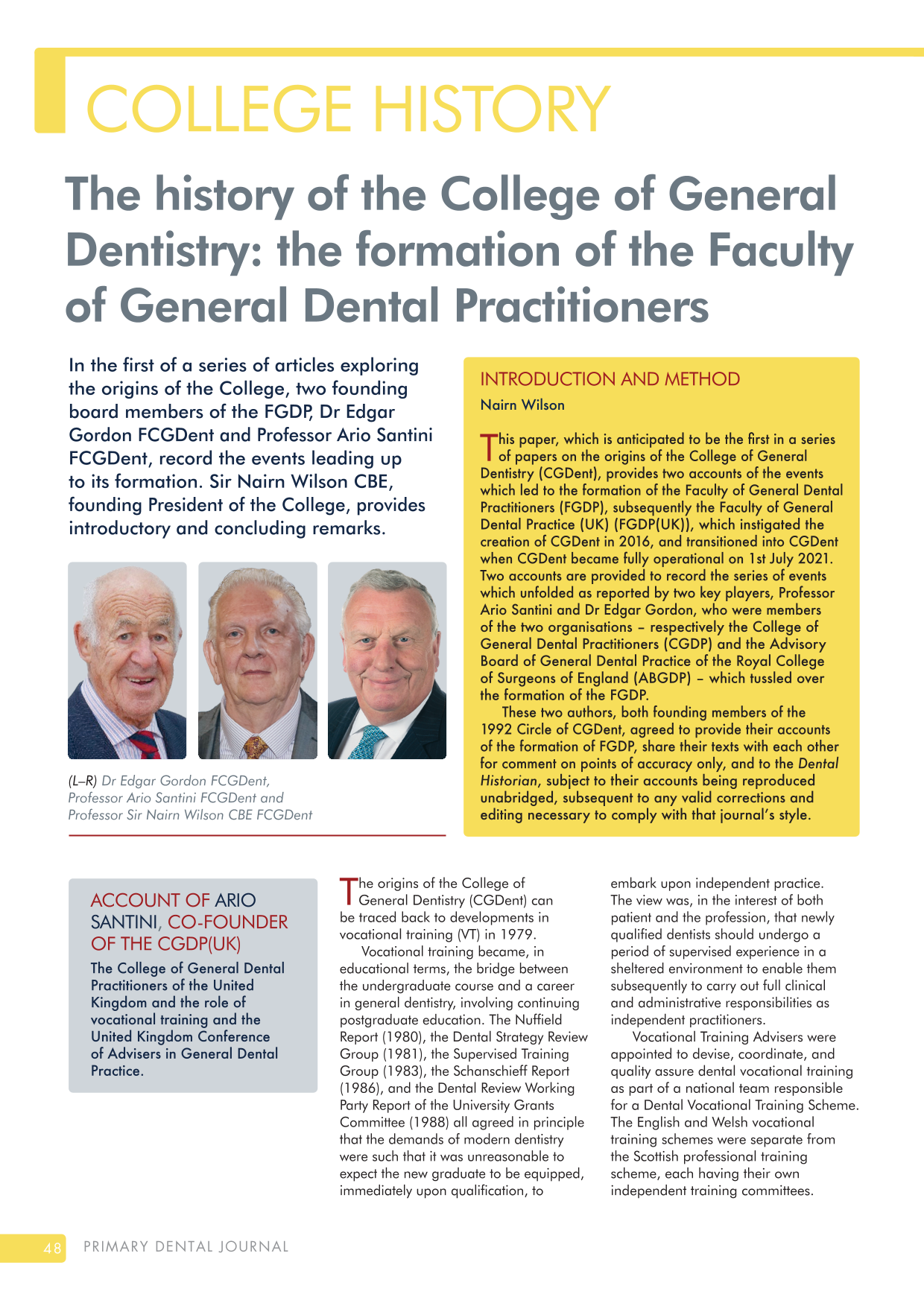
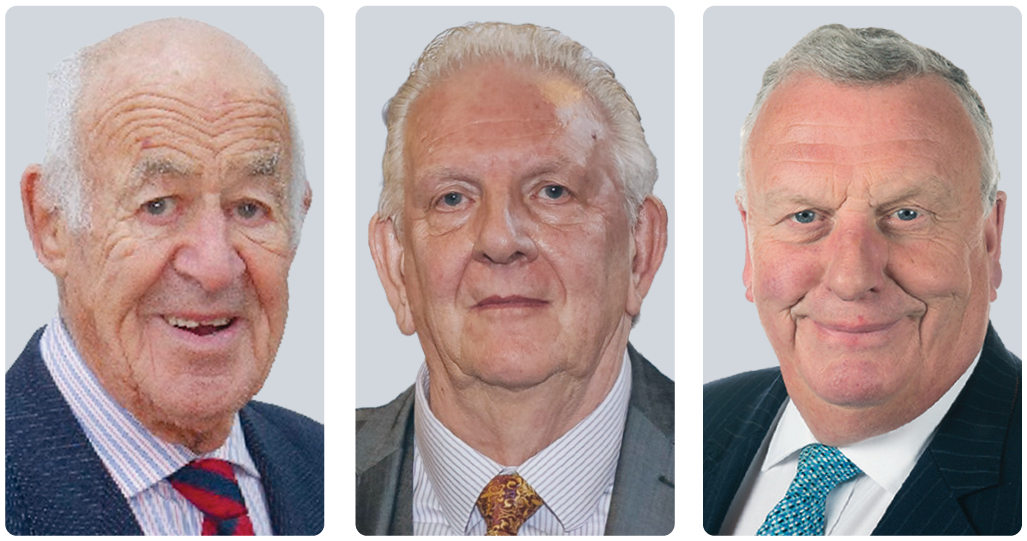
(L–R) Dr Edgar Gordon FCGDent, Professor Ario Santini FCGDent and Professor Sir Nairn Wilson CBE FCGDent
INTRODUCTION AND METHOD
The origins of the College of General Dentistry (CGDent) can be traced back to developments in vocational training (VT) in 1979.
Vocational training became, in educational terms, the bridge between the undergraduate course and a career in general dentistry, involving continuing postgraduate education. The Nuffield Report (1980), the Dental Strategy Review Group (1981), the Supervised Training Group (1983), the Schanschieff Report (1986), and the Dental Review Working Party Report of the University Grants Committee (1988) all agreed in principle that the demands of modern dentistry were such that it was unreasonable to expect the new graduate to be equipped, immediately upon qualification, to embark upon independent practice. The view was, in the interest of both patient and the profession, that newly qualified dentists should undergo a period of supervised experience in a sheltered environment to enable them subsequently to carry out full clinical and administrative responsibilities as independent practitioners.
Vocational Training Advisers were appointed to devise, coordinate, and quality assure dental vocational training as part of a national team responsible for a Dental Vocational Training Scheme. The English and Welsh vocational training schemes were separate from the Scottish professional training scheme, each having their own independent training committees.
In 1990, Vocational Training Advisers from across the UK – England and Wales and Scotland, met as the United Kingdom Conference of Advisers in General Dental Practice. All in full-time dental practice, the advisers were highly motivated activists, outwith their vocational training responsibilities. The importance of the formation of this body in the subsequent formation of an independent College of Dentistry cannot be overestimated. It should be remembered that vocational training was not mandatory then, only becoming so in October 1993.
Peter Lowndes was the first Chairman of the Conference, and the British Postgraduate Medical Federation (BPMF) provided a conference secretariat. The Chairman tasked Malcolm Pendlebury to define the structure of the College in legal terms, and Julian Scott was detailed to outline the aims and objectives of such a college.
On the 31st December 1990, the Memorandum and Articles of Association of the College of General Dental Practitioners of the United Kingdom (a company limited by guarantee and not having any share capital) was signed by Malcolm Ernest Pendlebury, Dental Surgeon, 22 Colwick Manor Farm, Nottingham, and Peter Renshaw Lowndes, Dental Surgeon, 28 Greening Drive, Edgbaston, Birmingham, in that order.
“We, the subscribers to this Memorandum of Association, wish to be formed into a company pursuant to this Memorandum.”
On the same day, 31st December 1990, the constitution and ordinances of the College of General Dental Practitioners of the United Kingdom were drawn up and signed by Malcolm Ernest Pendlebury, Dental Surgeon, 22 Colwick Manor Farm, Nottingham, and Peter Renshaw Lowndes, Dental surgeon, 28 Greening Drive, Edgbaston, Birmingham, in that order.
The aim of the College was to establish and maintain an academic and educational headquarters for general dental practitioners (GDPs) through a regional setup.
“To establish and maintain an academic and educational health headquarters for general dental practitioners; furthermore, it was to encourage appropriate research in general dental practice by general dental practitioners, with a view to improving general dental practise and to undertake or assist others in undertaking such research, and in encouraging the publication by general dental practitioners of original works on dental, medical or scientific subjects connected with General Dental Practice.”
There would be two classes of members of the College, namely Fellows and Members. Additionally, a provision was to be made for Associate Members who would not rank as members of the College but would be subject to the Articles of Association and be entitled to participate in the activities of the College.
Malcolm Pendlebury, the principal author of the Memorandum, was not blind to the fact that most members of the United Kingdom Conference of Advisers in General Dental Practice did not possess postgraduate qualifications and had little experience in formal teaching or undertaking research in practice. As such, their combined competencies were not best to advise, undertake or assist others in undertaking research in general dental practice, a principle enshrined in the articles of the College.
Before launching the College, Malcolm Pendlebury sought to strengthen the group by adding a person(s) with experience in this field. He contacted Dr Ario Santini, a full-time GDP who had submitted an unsupervised thesis, undertaken while in general dental practice and based solely on data obtained in general dental practice, to the University of Edinburgh; he was the first NHS General Dental Practitioner in the UK to be awarded the research degree of Doctor of Dental Surgery. Santini regularly lectured and published on general dental practice and on undertaking research in general practice. At a subsequent brief meeting between Pendlebury, Lowndes and Santini, it was concluded that the latter join with the current members of the United Kingdom Conference of Advisers in General Dental Practice to proceed, as founder members, to the incorporation of the College.
On the 28th February 1991, in accordance with the Companies Acts of 1985 and 1989, the College of General Dental Practitioners of the United Kingdom was incorporated, being a company limited by guarantee and not having a share capital of the company (No. 258-66360).
The incorporation records show Malcolm Pendlebury as the Company Secretary and Peter Lowndes as the sole Company Director. The company has never been dissolved, having undergone two name changes since its first incorporation.
The role of members of the Advisory Board of General Dental Practice of the Royal College of Surgeons of England
The Royal College of Surgeons of England (RCS Eng) established a Faculty of Dental Surgery in 1947, with its Fellowship in Dental Surgery (FDS) becoming a mark of recognition as part of training programmes for consultant appointments in dentistry, quickly gaining recognition as evidence of recognised specialty training. The RCS Eng (together with The Royal College of Surgeons of Edinburgh, The Royal College of Physicians and Surgeons of Glasgow, and The Royal College of Surgeons in Ireland) monopolised postgraduate education.
Dentists taking FDS examinations were, almost exclusively, those progressing to consultant positions in hospitals or academic institutions.
At the time, there was little thought about the need for postgraduate qualifications for GDPs, both by the Royal Surgical Colleges and, indeed, by GDPs themselves. Most GDPs worked in single-handed, or small practices and saw little need for further training, postgraduate qualifications or an academic home. The consensus was that general dental practice was not, and could not be a speciality in its own right. Most members of the Royal College of Surgeons of England with a FDS showed little support for the creation of a career pathway for GDPs.
In 1966, events changed these long-held views. Vocational training for general medical practitioners became compulsory and was followed by a pilot scheme for dental vocational training. The perceived wisdom at the time was that a postgraduate qualification should be developed which would identify GDP holders as suitable course organisers and trainers. In 1977 The British Dental Association (BDA) formally requested the Board of the Faculty of Dental Surgery of RCS Eng to set up a diploma to satisfy these requirements.
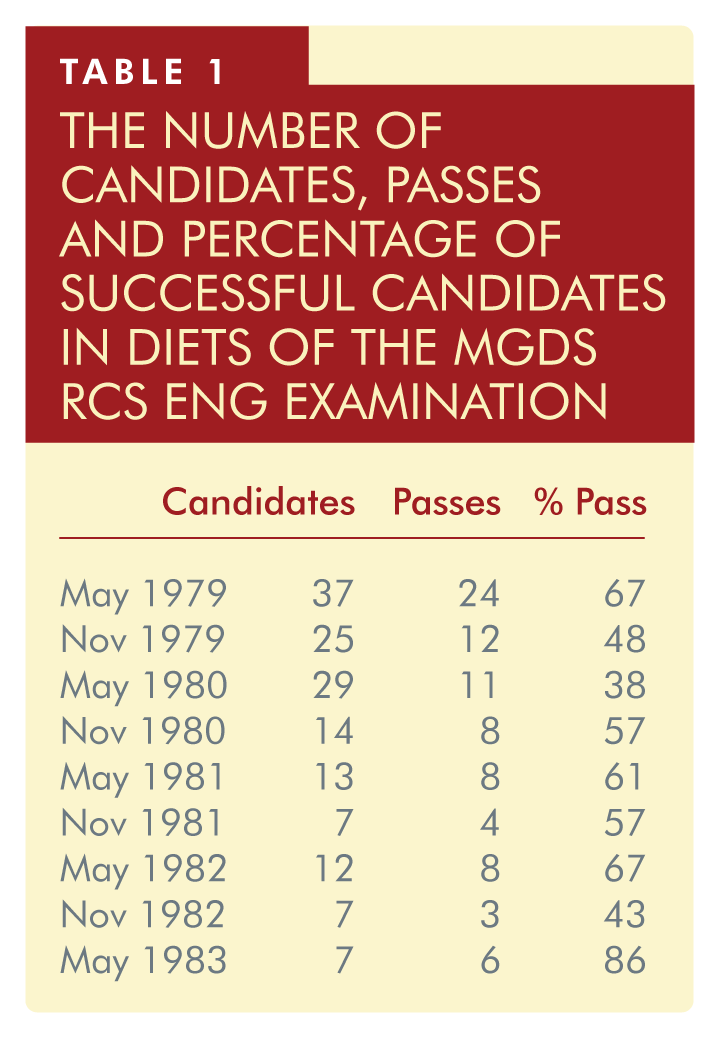
The first examination of the new diploma was held in 1979; those passing were awarded a diploma of Membership in General Dental Surgery of the Royal College of Surgeons of England (MGDS RCS Eng). The pass rate of the examination was very low; from 1979 to 1983, 151 candidates sat the examination with 84 passes. Besides the first three years, the number of candidates sitting was low-single figures.
Though the examination was not popular with GDPs for the reasons given above, it played an important role in forming the future FGDP. Machinations and manoeuvring within the RCS Eng, with regards to a collegiate home for GDPs and the place, if any, for such a home within the RCS Eng, resulted, initially, in the MGDS RCS Eng holders being represented by a Committee of General Dental Practice to advise the Board of the Faculty of Dental Surgery on standards, later to be called the Advisory Board in General Dental Practice.
On 12th March 1991, the then President of RCS Eng, Sir Terence English, issued a statement that the Council of the RCS Eng formally approved the formation of a Faculty of General Dental Practitioners within the College. At that time, the approved title of the Faculty did not include the ‘(UK)’ suffix.
The new Faculty was to be in addition to the existing Faculty of Dental Surgery. The notion was well advanced, with administration and financial matters to be dealt with by Sir Rodney Sweetman.
However, the Faculty of Dental Surgery did not know that the UK Conference of Advisors in General Dental Practice had launched the United Kingdom College of General Dental Practitioners UK two weeks before Sir Terence’s statement.
The spectre of two separate collegiate homes for GDPs raised its head. It was time for the two factions to come together to discuss and settle on a pragmatic way forward.
Peter Lowndes led for the United Kingdom College of General Dental Practitioners UK, while the Chair of the Advisory Board, Stephen Rear, led the College group.
In 1991, both groups met at the BPMF offices in Millman Street, London; Professor Alan Grant, University of Manchester, chaired the meeting. Little or no agreement could be reached between the two groups. The representatives of the College of General Dental Practitioners (UK) left, reasoning that the chairman and members of the Advisory Board had adopted an intransigent approach to the discussions. To say that the meeting was terminated on a bad note would be an understatement. No minutes of the meeting were recorded, nor was a joint statement commenting on the event. The establishment of an academic home for general dental practitioners was left balanced on a knife edge following this calamitous forum.
After much subsequent discussion, common sense prevailed, and a way forward was agreed a few months later at a meeting held during the 1991 BDA Annual Meeting and Exhibition in Manchester.
“Following joint meetings between the Advisory Board and the College of General Dental Practitioners UK, it is recognised that the interest of general dental practice in the UK will best be served by a joint approach to establish an academic home for general dental practitioners. The College (of General Dental Practitioners UK) has agreed to join with the Advisory Board (in General Dental Practice) to the establishment of the United Kingdom Faculty of General Dental Practitioners. A joint Steering Committee (comprising equal numbers from each body) will be established prior to Faculty elections in the spring of 1992. The Advisory Board acknowledges the stated long-term ambition of the independent College to establish an autonomous collegiate home for general dental practice.”
The Board of the RCS Eng Faculty of Dental Surgery was not pleased with the so-called ‘Manchester Accords’. However, in October 1991, the Council of the RCS Eng issued a statement: “Council agreed that the establishment of a Faculty of General Dental Practitioners of the Royal College of Surgeons of England would meet the need (of a Faculty of General Dental Practice) and would be encouraged.”
Further support came in November 1991 when at the Representative Board of the BDA, the Chairman of the Council recommended that the BDA offer support for, and cooperation with forming a Faculty of General Dental Practice.
The two groups, now in a pragmatic agreement, acknowledged that a joint move toward instituting an academic home for general dental practitioners was in the profession’s best interest.
Both groups brought unique merits (as well as disadvantages) to the discussion table. The College of General Dental Practitioners (UK) group, composed mainly of vocational trainers, was in direct contact with most newly qualified dentists and was uniquely positioned to encourage and direct young graduates to continue postgraduate education and qualifications. The group envisioned that at least 50% of all new graduates would become members of any new academic home.
On the other hand, the Advisory Board group had long since realised that it would take much effort for them to attract a substantial number of colleagues to become members. However, they did have the backing of the Royal College of Surgeons of England and an office within RCS Eng, subsequent to the Faculty of Anaesthetists having left to create their own College. There was also the possibility of financial support in the first years, not to mention the use of RCS Eng postnominals, which was an attraction to many GDPs.
At the meeting of the Steering Group for the Faculty of General Dental Practitioners held on 20th February 1992, Stephen Rear was elected Dean of the new Faculty, and Peter Lowndes Vice Dean. The first Dean’s Committee comprised equal numbers of RCS Eng and College of General Dental Practitioners UK members – for RCS Eng: Stephen Rear, Edgar Gordon and Dr Hans Kurer; for the College: Peter Lowndes, Malcolm Pendlebury and Dr Ario Santini.
Julian Scott, Editor of the FGDP journal, was in attendance.
The launch of the new faculty took place in RCS Eng on 16th May 1992. The event was chaired by the then President-elect of RCS Eng, Professor Norman Browse.
A new diploma had been devised – the Diploma in General Dental Practice (DGDP); it was designed to be the entrance qualification to the Faculty. Stephen Rear sought authorisation to award 300 dental surgeons the diploma by election, which was readily agreed upon by the Vice President of the RCS Eng, Sir Rodney Sweetman. Disagreements regarding the use of a ‘UK’ suffix in both the name of the Faculty and its diplomas and related inter-collegiate issues will be the subject of a subsequent paper.
The first ceremony for the presentation of diplomas was held in the Edward Lumley Hall of RCS Eng on Saturday, 21st November 1992. Sir David Mason, the then President of the General Dental Council (GDC), addressed the meeting, announcing that only that week, the GDC had approved that the diploma would be registrable.
Epilogue
Four colleagues who were instrumental in the formation of the Faculty of General Dental Practice (UK) reflected on the Faculty 20 years after its inception (Primary Dental Care, 2012; 19(3):128-130). There was general acceptance and praise for what the Faculty had achieved. Shelagh Farrell noted, however, that at that time, less than 3,500 dentists had been recruited by the Faculty out of a total UK force of more than 40,000, and the number of full members was less than 3,500. The independent collegiate home for GDPs, as envisioned by Peter Lowndes, had, however, been achieved.
The College of General Dentistry (CGDent) invites membership from all members of the dental team. Its aims and objectives are to elevate the professional standings of dentistry, specifically all those working in primary care, like the Faculty of General Dental Practice UK before it. The success of CGDent will depend on both its achievements in promoting dentistry and its ability to attract a critical membership mass.
It is important to note that CGDent is registered in Company House (No. 02586636) as an amendment to the College of General Dental Practitioners of the United Kingdom (No. 02586636), first registered on 28th February 1991; this is testament to the foresight, wisdom and motivation of the original founder members. ■
It would be absurd if orthodontists controlled the postgraduate education of oral surgeons, or that oral surgeons should decide on what is appropriate higher training for those in orthodontics. Yet, for many years principally orthodontists and oral surgeons exercised responsibility in deciding what was, and what was not appropriate training for ‘high street dentistry’. 1
As with so many academic bodies and health related institutions, the formation of the Faculty of General Dental Practice (FGDP), under the aegis of the Royal College of Surgeons of England (RCS Eng), was arbitrary and piecemeal. If management consultants had been recruited, they would have done things differently.
Gestation
The creation of the FGDP had a long gestation, and was the result of many diverse inputs into dentistry over several years. 2
Consultants and academics had been encouraged in 1948 to establish a Faculty of Dental Surgery within RCS Eng and develop a Fellowship in Dental Surgery (FDS) diploma. 3 Those awarded FDS diplomas had monopoly control of undergraduate and what then passed as postgraduate education, provided by local hospital tutors, who all held FDS diplomas. There were no inputs from general practice. The accepted wisdom was that, by definition, general practice was not, and could not be, a speciality. At that time and for many years afterwards, general dental practitioners (GDPs) worked in a cottage industry. They saw no need for further training, diplomas or for an academic home.
The tide changed very slowly. This began in 1953 when the then Minister of Health made provisions for refresher courses for practitioners, as part of the NHS Act 1946. In dentistry, these courses were to be managed by the Director of the Dental Postgraduate Bureau – Dr R. A. Broderick. The Public Health Services Act 1968 instituted Section 63 courses supported with public funds for the continuing education of NHS doctors and dentists.
In the 1960s the British Dental Association (BDA) Representative Board and Council, encouraged by a particularly charismatic practitioner, Richard Miller-Yardley who managed courses and lectures for the BDA’s Central Counties Branch, regularly debated how to recognise the merits of, and engagement in continuing education. There was talk of an association with the College of General Medical Practitioners, which became the Royal College of General Practice in 1967, or the Royal Society of Medicine, specifically the Society’s Section of Odontology. However, there was little appetite, as in the Board of the RCS Eng Faculty of Dental Surgery, to support a career structure for GDPs. The few exceptions, among those involved, were Desmond Greer Walker, the British Postgraduate Medical Foundation (BPMF) Dean responsible for vocational (now foundation) training, Ben Fickling, Sir Paul Bramley and Dermot Strahan, who embraced the findings of the 1978 Committee of Inquiry into Dental Education, set up by the Nuffield Foundation. This inquiry found that a whole generation of both patients and practitioners had experienced nothing other than the provisions set out in the 1948 Act and both the pattern of treatment and its quality had hardly changed. As with so many other dental innovations at the time, the debate about the way forward – a new dental diploma for GDPs, took place mainly in the letter columns of the British Dental Journal (BDJ).
Progress
Progress was slow. This was because of indifference among the majority of dentists. Their livelihoods were secure without the need for further examinations and they derived their self-respect and challenge from their patients, not their peers. They were unlike the hospital- and university-based holders of FDS diplomas who had a ladder to climb. For GDPs, advanced skills assessed by examination with collegiate status were not a goal. However, there were other forces at play. In 1966, in a major reform of the family doctor contract, vocational training became mandatory. Subsequently a pilot programme of dental vocational training was started, and those involved saw the establishment of a new diploma as a suitable means to identify course organisers and training practices.
Government had an interest also since policy makers continuously sought to shift resources from hospital care to the primary sector. Lastly, the constitution of the RCS Eng had been amended, for the benefit of the anaesthetists, with provisions for faculties to be set up with the College, each with its own constitution.
All these inputs in 1977 led to a formal approach by the BDA to the Board of the RCS Eng Faculty of Dental Surgery to devise a new diploma for the experienced and established practitioner. Ben Fickling, a senior Faculty of Dental Surgery member planned the format and chose the first examiners half of whom were Faculty of Dental Surgery Board members. He remained the Chief Examiner with several challenges. They included the logistics of examiners visiting practices, travel arrangements for different examination venues, and the circulation of log diaries.
The first Member of General Dental Surgery of the Royal College of Surgeons of England (MGDS RCS Eng) examination took place in May 1979. There were 37 candidates of whom 24 (67%) passed.
In November 1979 and May 1980, the pass rate dropped below 50% (Table 1).
The Number of Candidates, Passes and Percentage of Successful Candidates in Diets of The Mgds Rcs Eng Examination
There was considerable disquiet at the poor pass rates, fuelled by many of the successful candidates being in defence dental services rather than general dental practice. While such percentages might have been appropriate for FDS diploma examinations, which were well-established and which underpinned a formal career structure, the failure of so many MGDS candidates was counter to the culture of BDA Sections and Branches meetings and the dental press at the time. To many, those with MGDS diplomas appeared deliberately elitist and unapproachable.
Developments
In 1980 the RCS Eng allowed MGDS RCS Eng diplomates to form a Committee on General Dental Practice. This was to ‘advise the Board of the Faculty of Dental Surgery on affecting the maintenance and advancement of the standards in general dental practice’. The Committee included John Reeves, the first general dental practitioner to be a Postgraduate Dental Dean (Trent). In 1981 John convened a meeting of 36 MGDS RCS Eng diplomates who formed the Association of General Dental Practitioners (AGDP), subsequently the British Society for General Dental Surgery (BSGDS). It was agreed to keep colleagues in Scotland and Ireland informed. The Executive of the Board of the RCS Eng Faculty of Dental Surgery remained cautious. Soon afterwards the Board reduced the allocation of votes cast by MGDS RCS Eng diplomates when balloting to elect the Dean of the Faculty. Their reasoning was ‘not their Dean’. Tensions remained.
In February 1985 John Reeves published a letter in the British Dental Journal calling for a ‘new start in general dental practice’. 4 This was a unilateral declaration of independence and, as such, a direct challenge to the Board of the RCS Eng Faculty of Dental Surgery hegemony. With only a few exceptions, Board members resisted. Their concern was that such a move would inevitably lead to the development of a second faculty in what was considered to be a small profession. Under the headline, in the 7th March 1985 issue of Dental Practice, ‘College of General Practitioners – potential conflict?’ it was stated: “For those elitist practitioners with the magic MGDS RCS Eng, the recent letter by John Reeves, concerning a collegiate home, really let the cat out of the bag. It would seem that from now on the British Society of General Dental Surgery and the Royal College will be a matter of general debate, and it would be surprising if dental historians did not have a distinct feeling of déjà vu”.
It was not without surprise that soon thereafter John Reeves lost his place on the Board of the RCS Eng Faculty of Dental Surgery. Furthermore, under a threat of a separate development the Board, now no longer including John Reeves, upgraded the Committee on General Dental Surgery to become the Advisory Board in General Dental Practice, with Hans Kurer as chairman. This Advisory Board was given three places on the Board of the Faculty with full voting rights. They were Hans Kurer, Stephen Rear and Jeffrey Horton.
Moving on
“It was obvious from the beginning that we could attract a substantial number of colleagues to become members. Thus, I spent four long years carefully nurturing our cause with the Board of the Faculty so that we could evolve to Faculty status ourselves. The Board of the Faculty were not antagonistic, they simply wanted to see proof that there was a demand from general dental practitioners to have their own academic home.”
Meanwhile the BSGDS ran a number of very successful clinical meetings both in the UK and abroad, along with Annual General Meetings. The main item on the agenda was always the same: MGDS diplomates forming a Faculty. The main challenge was there were not enough of them.
In 1990 a fresh initiative was launched when Derek Seel, an orthodontist became Dean of the RCS Eng Faculty of Dental Surgery and Stephen Rear became chairman of the Advisory Board. It was helped by several unrelated factors. First was the circulation of 5,000 copies of the Advisory Board’s Self-Assessment Manual (SAMS), a Section 63 initiative by the then Chief Dental Officer, Brian Mouatt, himself a MGD RCS Eng. The second was that the main RCS Eng Council could not fail but be impressed by the number of general dental practitioners attending clinical days organised by MGDS RCS Eng diplomates. The third, and most important was the exponential growth of vocational training which became mandatory in October 1993. Under Gordon Fordyce of the British Postgraduate Medical Federation (BPMF) the programme had grown to 300 training places in 18 schemes. The course organisers were themselves a new breed of highly motivated activists and supported by structured university sessional fees. They called themselves The UK Conference of Advisers in General Dental Practice.
“The Council supports the principles of the establishment of a Faculty of General Dental Practitioners within the Royal College of Surgeons of England.”
Detailed negotiations concerning the financial and administrative arrangements were to be handled by the Vice-President Rodney Sweetman.
It was therefore with considerable surprise and some shock that when the Board of the RCS Eng Faculty of Dental Surgery next met, they were told by their Vice-Dean, Margaret Seward, that 15 days previous to Sir Terence’s statement the United Kingdom College of General Dental Practitioners had been launched by the UK Conference of Advisers in General Dental Practice. They had been incorporated in Malcolm Pendlebury’s dental surgery in Nottingham, and had applied to be registered with the Charity Commission. News of the new college spread rapidly and made for a field day in the dental press. Kevin Lewis in Dental Practice asked: “A collegiate home for general practice; do we need one? Do we need two?”
In May 1991 both sides – the Advisory Board and the new college – met in the BPMF offices under an independent chairman, Professor Alan Grant from the University of Manchester. Despite full and frank, and in part heated discussions, no agreement was reached, specifically on full autonomy within a defined period and a devolved structure. Following this failed meeting, talks were quickly arranged and held by the two chairmen who met at M1 service stations, each bringing only one other person: Stephen Rear brought Edgar Gordon and Peter Lowndes brought John Brookman. Both sides had to make concessions. These were accepted by the Advisory Board at their scheduled meeting on 26 June 1991. On 6 July 1991, during the 1991 BDA Annual Conference in Manchester, an eight-strong team drawn from the Conference of Advisers led by Peter Lowndes met Stephen Rear and Edgar Gordon. Both sides agreed to the general thrust of the concessions. The Advisory Board’s strong cards included the availability of an office in RCS Eng vacated by the Faculty of Anaesthetists, which had separated away from RCS Eng with the intention of forming a Royal College of Anaesthetists.
“Following joint meetings between the Advisory Board and the College of General Dental Practitioners it is recognised that the interest of general dental practice in the UK will best be served by a joint approach in establishing an academic home for general dental practitioners. The College has agreed to join with the Advisory Board in the establishment of a United Kingdom Faculty for General Dental Practitioners. A joint steering committee (comprising equal numbers from each body) will be established prior to Faculty elections in the spring of 1992. The Advisory Board acknowledges the stated long-term wish of the independent College to establish an autonomous collegiate home for general dental practitioners.”
5
The ‘Manchester Accords’ were not well received by the Board of the RCS Eng Faculty of Dental Surgery at its meeting on 3 September 1991. In particular, the Board had reservations about accepting ‘autonomy within a well-defined period’. There was also a question of territory and how to handle matters that were of interest to both Faculties. The President of RCS Eng was adamant that the College Council would not tolerate any situation in which the voice of clinical standards in dentistry was not united. The matter of an FGDP was put to the vote and although the initiative was supported there remained an undercurrent of unease.
A small Steering Committee, set up following the vote in favour of establishing FGDP and chaired by David Evans, a Past-President of RCS Eng, reported to RCS Eng Council on 10 October 1991.
“Council agreed that the establishment of a Faculty of General Dental Practitioners of the Royal College of Surgeons of England would meet should be encouraged.”
This statement was widely reported in the dental press. At a meeting of the BDA Representative Board on 9 November 1991, the chairman of BDA’s Council, whose members until that time had been very uncertain, recommended: “that the Association should offers its support for and cooperation with this initiative”.
1992
The position at the beginning of l992 was that two groups were working concurrently. There was an FGDP Implementation Group of the RCS Eng Council, which replaced the Steering Committee, that prepared a constitution, outlined a five-year plan and prepared the launch. The other group addressed the problem of numbers. A new intermediate diploma was devised that had to be accessible to all – the Diploma in General Dental Practice (DGDP). Derek Seal chaired this working party, which designed a standardised self-reporting form relating to past and continuing education with a signed declaration to take part in Faculty postgraduate activity in a devolved structure to be known as Divisions. It would be a unique diploma in that it would be registrable. Three hundred practitioners were awarded the DGDP. When Stephen Rear sought the College Vice-President’s authorisation for this, he replied: “Why so few?”
The FGDP was launched in the Edward Lumley Hall, RCS England on 16 May 1992 by the then President-Elect of the College, Professor Norman Browse, who introduced Stephen Rear as the first Dean of the Faculty.
“The aim of the Faculty is to create an environment which will bring together General Dental Practitioners who are committed to improving standards of care in general dental practice, to developing postgraduate education in the speciality and to leading research in primary dental care.”
6
The Faculty’s first Diplomates Day was held on 21 November 1992 when 175 DGDPs By Election were presented. The keynote address was given by Sir David Mason, the then President of the General Dental Council (GDC) who announced that the GDC had only that week decided that the DGDP should be registrable. 7 ■
CONCLUDING REMARKS
THIS ARTICLE
This article was originally published in the Dental Historian, the journal of the Lindsay Society, a membership organisation which promotes interest, study and research into the history of dentistry and brings together people who share these interests. It is re-published here with the kind permission of the Editor. The version of record is available in the Dental Historian (2024), volume 69, issue 2.