






Abstract
Lichen planus is a chronic immune-mediated inflammatory disorder, and vulvar lichen planus (VLP) is a debilitating subtype often refractory to standard therapy. Emerging evidence on Janus kinase–signal transducer and activator of transcription pathway dysregulation in the pathogenesis of VLP supports Janus kinase inhibition as a potential therapeutic strategy. We report a 71-year-old woman with chronic VLP, including severe pruritus, pain, erosive erythema, and progressive vulvar scarring, who failed multiple topical and systemic therapies. These therapies included topical and oral corticosteroids, mycophenolate mofetil, acitretin, tacrolimus, and roflumilast, which were discontinued due to inadequate response or intolerance. Following the initiation of topical ruxolitinib 1.5% cream twice daily, she achieved complete resolution of erythema, pruritus, and burning after 3 months, without local or systemic adverse effects. This is the first reported case of VLP treated with a topical Janus kinase inhibitor, supporting topical Janus kinase inhibition as a steroid-sparing therapeutic option for refractory disease; however, cost and access may limit its use.
Introduction
Lichen planus (LP) is a chronic, immune-mediated inflammatory disorder affecting the skin and mucous membranes. Vulvar lichen planus (VLP) is a particularly debilitating subtype, most commonly affecting postmenopausal women. VLP produces erosive inflammation, pain, pruritus, scarring, and significant impairment in quality of life.1 –3 Compared with cutaneous LP, vulvar involvement is frequently refractory to treatment and may result in progressive architectural distortion, dyspareunia, urinary symptoms, and psychological distress. 4
Emerging insights into the pathogenesis of LP implicate cytotoxic T-cell-mediated keratinocyte injury and dysregulated cytokine signaling, particularly interferon-γ-driven activation of the Janus kinase–signal transducer and activator of transcription (JAK–STAT) pathway. 5 This mechanistic understanding has prompted increasing interest in JAK inhibitors as targeted therapies for inflammatory dermatoses. While oral JAK inhibitors have shown promise in select cases of cutaneous and mucosal LP, evidence supporting the use of topical JAK inhibitors, particularly in vulvar disease, remains limited.6 –8
We report a case of severe, treatment-refractory VLP in an elderly woman who achieved complete clinical remission with topical ruxolitinib cream after failure of multiple topical and systemic therapies.
Case report
A 71-year-old female with a 10-year history of VLP presented to dermatology for persistent distressing symptoms. In 2022, a vulvar biopsy performed by a gynecologist confirmed VLP. She was subsequently treated with clobetasol propionate ointment applied twice daily for 2 years without adequate symptom control, prompting referral to dermatology.
At initial presentation, the patient reported severe, persistent vulvar pruritus lasting throughout the day and disrupting sleep, pain, burning, rawness with contact, intermittent bleeding, and dysuria. She denied dysphagia, hematuria, visual disturbances, or foreign-body sensation in the eyes. She is not sexually active, and her last pregnancy was 50 years ago. There was no family history of dermatologic diseases.
Past medical history was significant for arthritis, chronic back pain, fibromyalgia, hyperlipidemia, hypertension, and obstructive sleep apnea. She had a hysterectomy at age 34. Her medications included atorvastatin, betahistine hydrochloride, celecoxib, ferrous fumarate, fesoterodine fumarate, pantoprazole, pregabalin, trazodone, valsartan, vitamin B complex, and vitamin D3. She had no known drug allergies and denied tobacco, alcohol, or substance use.
Initial physical examination revealed phimosis of the clitoral hood, near-complete resorption of the right labia minora, and partial resorption of the left labia minora with marked edema and tenderness of the inferior aspect. There was a pink-red erythematous plaque on the labia majora extending to the labia minora with fissuring of the intra-labial commissure. No nail plate abnormalities, oral Wickham striae, flexural wrist lesions, or scalp changes. The patient was initiated on betamethasone valerate 0.1% ointment to apply twice daily and oral prednisone 40 mg daily with a taper of 5 mg every 7 days, with a follow-up with dermatology in 4 weeks.
At her follow-up, she reported significant improvement of her symptoms but not complete resolution. The examination showed persistent erythema of the labia majora and minora with 2–3 mm erosions near the anus without fissuring (Figure 1). She was then prescribed mycophenolate sodium 360 mg orally twice daily for 1 week, with planned escalation to 720 mg twice daily for 1 month. Tacrolimus 0.1% ointment was initiated every other night on the affected areas, alternating with betamethasone valerate 0.1% ointment. Premarin cream was started for vaginal atrophy. However, mycophenolate was stopped after 1 week due to gastrointestinal intolerance, and the tacrolimus ointment was discontinued after a couple of uses due to burning discomfort.
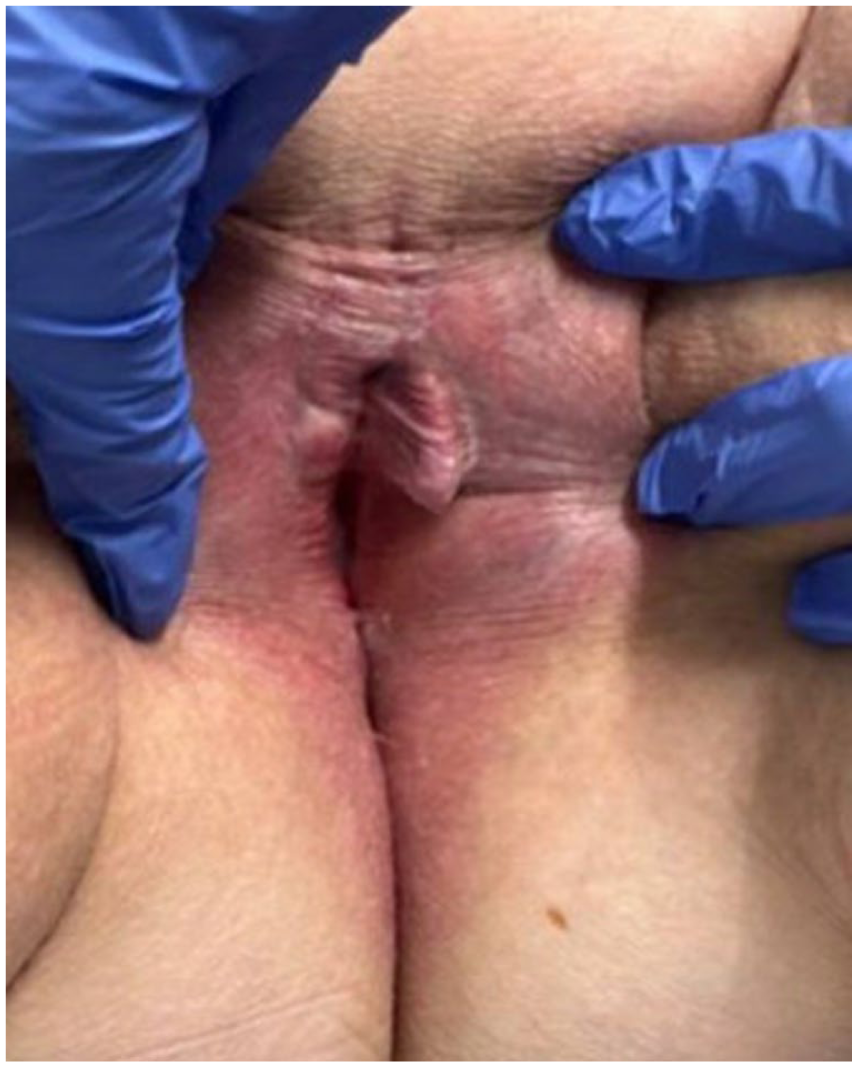
One month follow-up after being on 40 mg prednisone taper and topical betaderm. She continued to have persistent erythema of the labia majora and minora with 2–3 mm erosions near the anus without fissuring.
The patient was then evaluated by a gynecologist 2 months later for significant vulvodynia; however, there was no evidence of vaginal LP.
At her subsequent 3-month dermatology follow-up, betamethasone valerate was reduced to daily application limited to the vulva, and roflumilast cream was initiated daily to the surrounding skin. Oral acitretin was also initiated at 10 mg daily.
At her next 3-month follow-up, acitretin was discontinued due to gastrointestinal side effects. She continued roflumilast and estrogen therapy, reporting stable vulvodynia and pruritus. Examination revealed well-demarcated dark red erythema of the labia majora and minora extending to the perineum, with fissuring of the intra-labial commissure.
She was then started on ruxolitinib 1.5% cream applied twice daily. After 3 months of therapy, she achieved complete clearance of erythema with resolution of pruritus and burning (Figure 2).
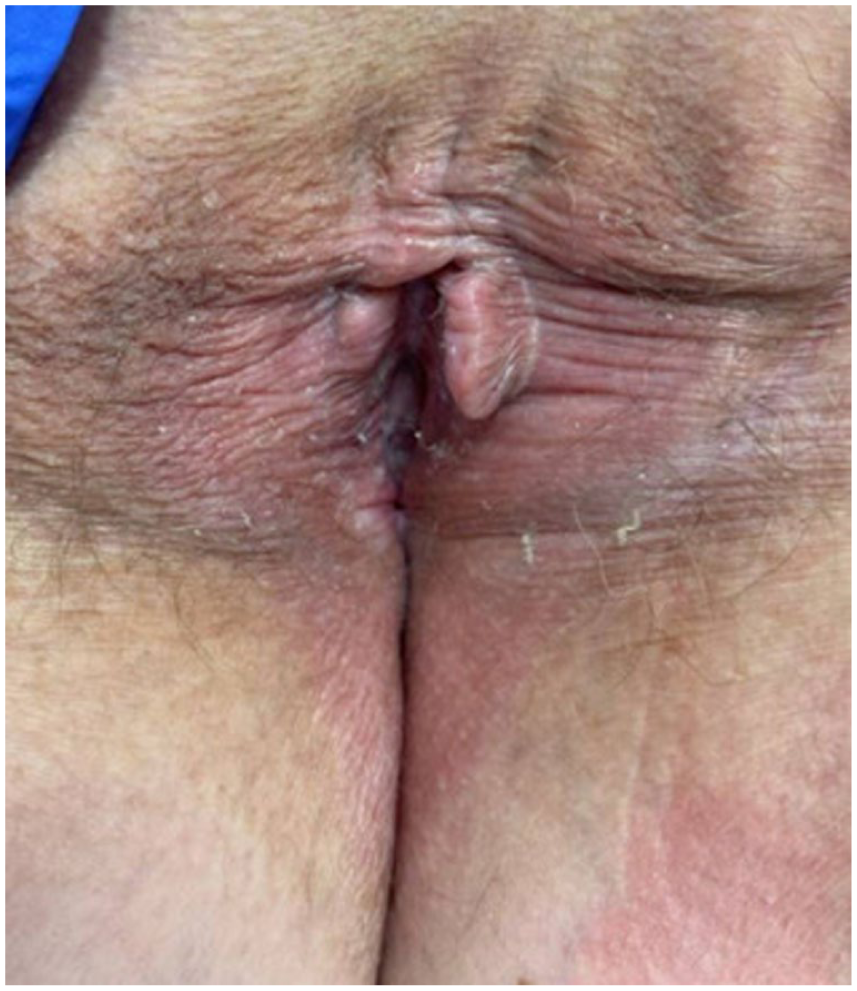
At her most recent follow-up, she had resolution of erythema, pruritus, and burning after applying ruxolitinib 1.5% cream twice daily for 3 months.
Discussion
VLP remains a therapeutic challenge, particularly in elderly patients with longstanding disease, comorbidities, and intolerance to systemic therapies. High-potency topical corticosteroids remain the first-line treatment for VLP; however, many patients experience incomplete responses or relapse, and long-term use can be associated with adverse effects such as skin atrophy and steroid-induced dermatitis. 9 Systemic therapies—including oral corticosteroids, mycophenolate mofetil, methotrexate, and retinoids—are often employed for refractory disease, though tolerability concerns and variable efficacy limit their use.10 –12
Despite prolonged treatment with high-potency topical corticosteroids and multiple systemic immunomodulators, including corticosteroids, mycophenolate sodium, and acitretin, the patient had persistent disease activity and steroid-associated cutaneous toxicity, underscoring the limitations of conventional therapies in refractory VLP.9 –12 This represents the first reported case of VLP successfully treated with a topical JAK inhibitor. In this case, topical ruxolitinib 1.5% cream resulted in complete clearance of erythema and resolution of pruritus and burning following failure or intolerance of multiple topical and systemic therapies. Importantly, treatment was well-tolerated, with no local irritation or systemic adverse effects observed during 3 months of use, supporting the safety of topical JAK inhibition in vulvar skin.
Recent advances in understanding LP pathophysiology emphasize cytotoxic T-cell-mediated keratinocyte injury driven by interferon-γ, activating the downstream JAK–STAT signaling pathway. 5 This mechanistic insight has led to growing interest in JAK inhibitors for inflammatory dermatoses. Oral JAK inhibitors have shown efficacy in isolated cases of cutaneous and mucosal LP; however, their systemic adverse effect profile limits widespread use, particularly in older patients.6,7
However, the cost and access remain significant barriers to the widespread use of topical JAK inhibitors. Ruxolitinib cream is expensive and may not be covered by insurance plans, particularly when used off-label, potentially limiting its availability for patients with chronic inflammatory dermatoses. Further studies are needed to evaluate cost-effectiveness, optimal treatment duration, and long-term safety.
This case adds to the emerging literature supporting targeted, steroid-sparing therapies for refractory inflammatory dermatoses and suggests that topical JAK inhibitors may represent a valuable treatment option for patients with severe VLP who fail or cannot tolerate standard therapies.
Footnotes

Consent for publication
Informed consent was obtained from the patient(s) for the publication of their patient information and images.
Funding
The authors received no financial support for the research, authorship, and/or publication of this article.
Declaration of conflicting interests
The authors declared no potential conflicts of interest with respect to the research, authorship, and/or publication of this article.