







Abstract

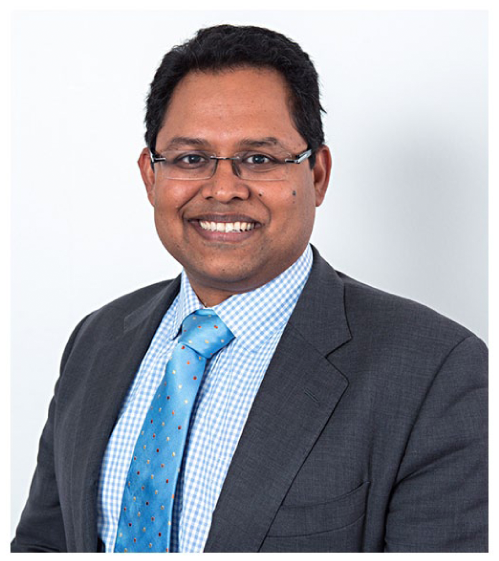


The return of the BAUS Annual Scientific Meeting to London, for the first time in 40 years, feels like an appropriate moment to pause and take stock. A few might view BAUS primarily as an annual conference, but the work represented in this special edition of the Journal of Clinical Urology is a reminder that BAUS is much more than that. It is a forum for clinical standards, education, audit, policy, workforce support, international engagement, innovation and, at its best, the collective improvement of urological care.
For this Best of BAUS edition, we have invited and selected papers that reflect some of that breadth. They do not attempt to provide a comprehensive account of everything BAUS and its members are doing. Rather, they offer a snapshot of a speciality that is increasingly data-driven, outward-looking and willing to examine its own practice. The themes are familiar to anyone working in urology today: how we use national data intelligently; how we train the next generation; how we make our work more sustainable; how we widen participation; how we respond to new technologies; and how we look after both our patients and our colleagues.

The edition opens with sustainability, an area in which urology has begun to move from aspiration to practical redesign. Following the success of the BAUS Environmental Lessons Learned and Applied (ELLA) national audit on haematuria and bladder cancer pathways, Harriet Louden and colleagues consider where the ELLA approach might next be applied across urological practice. Their review is deliberately pragmatic. It recognises that the largest gains may come not from isolated symbolic changes, but from redesigning high-volume pathways, reducing avoidable travel and admissions, using theatres more intelligently, and challenging waste in equipment and processes.
Ahmed Badr and co-authors examine another area in which BAUS has made conscious progress: equity, diversity and inclusion in the Annual Scientific Meeting. Their analysis of chairs and speakers between 2022 and 2025 suggests encouraging movement, particularly in the visibility of women and ethnic minority clinicians, while also showing that international medical graduates remain under-represented. It is a useful piece because it treats inclusion not as a slogan, but as something that can be measured, reviewed and improved.
At the time of writing, we are still awaiting the UK National Screening Committee’s final recommendations following its review of prostate cancer screening. For the first time, the Committee has considered selected screening of higher risk groups and has placed substantial weight on modelling studies, rather than relying only on historic randomised trials. This edition includes two thoughtful perspectives on risk-stratified screening. Both ask whether, in carefully defined higher-risk groups, the balance between lives saved and harms from overdiagnosis and overtreatment may shift sufficiently to justify a different approach. This debate is unlikely to end with the current consultation, and urologists will need to remain closely engaged with the evidence and its interpretation.
National audit is another central strand of current BAUS activity. Omar El-Taji and colleagues report the findings of the BAUS EMPAST national audit on suspected testicular cancer pathways, with returns from 107 units across the United Kingdom. Among several important observations, they found that almost one-fifth of areas have GP rapid access to urgent scrotal ultrasound – a straight-to-test approach which substantially reduces referral volumes to secondary care and allow resources to be focused on those most in need. The obvious next question is whether such models can be adopted more widely, while preserving safety and timely cancer diagnosis.
Alongside snapshot audits, BAUS continues to encourage members to use continuously collected national data through Model Hospital and the National Consultant Information Programme (NCIP). Urology has been a vanguard speciality in the rollout of NCIP. Sarb Sandhu, Andrew Dickinson and colleagues set out how these data can support appraisal, quality assurance and quality improvement. The aim is that the data should be used constructively as an objective starting point for reflection, peer discussion and better care.
Endourology is represented by an expert overview of Flexible and Navigable Suction (FANS) ureteric access sheaths. FANS are taking the endourological world by storm, improving stone clearance and procedure safety for intermediate-sized kidney stones. We get some useful tips on how best to use them.
Education runs through several contributions. The UK urology bootcamp has now been established for 10 years and has become one of the most recognisable examples of simulation-based surgical training. Kelly Ong and colleagues describe how it has evolved and why it remains important, particularly at a time when educational funding is under pressure. In a related paper, Ee Ngeyu, Ben Ayres and Ian Rudd review the patchy state of undergraduate urology teaching. Their argument is a simple but important one: if medical students are not exposed to good urology teaching, patients with common urological problems suffer, and talented students may never discover a speciality that could have suited them very well.
Catalina Solano and co-authors provide a timely review of generative artificial intelligence in the daily urology unit. AI is already beginning to affect documentation, patient information, triage, education and clinical decision support. The important task for the profession is to shape its use safely, with appropriate oversight, rather than allowing systems to be imposed without clinical understanding or governance.
BAUS has also long had an international outlook through various collaborations including Urolink. Mayur Gami and colleagues report current attitudes to global urology and compare them with findings from a decade earlier. Enthusiasm for supporting colleagues in low- and middle-income countries remains strong, but familiar barriers persist: time, funding, professional leave and family commitments. The paper also points to the possibility that digital engagement may create new ways to support training, mentorship and partnership, without pretending that remote contact can replace the value of sustained in-person collaboration.
Finally, the BAUS workforce team and collaborators provide important data on the burden of out-of-hours urology work. Their survey of UK urologists highlights the lifestyle disruption, stress and fatigue associated with on-call rotas. These findings matter. A sustainable workforce is not created by goodwill alone. Units need to think carefully about rota design, protected rest, seniority, childcare pressures and the cumulative effect of repeated overnight work. Workforce well-being is not separate from patient safety; it is part of it.
Taken together, these papers show a speciality that is trying to improve itself in public: measuring what it does, acknowledging variation, testing new models and asking difficult questions. That is exactly what a professional association should encourage. I am grateful to all the authors, reviewers and editorial colleagues, in particular Amelia Pietropaolo, Ben Ayres and Bhaskar Somani, who have contributed to this special edition. I hope readers find in it not only a record of some of BAUS’s current activity but also ideas they can take back to their own departments.