






Abstract
This article presents the protocol of online multi-image elicitation (OMIE) in an effort to evaluate its methodological contributions – using an example – and analyse its effectiveness as a marketing research technique. We will outline the theoretical and epistemological foundations of this mixed method approach, as well as the principles underpinning its development and the analytical possibilities available. We will show how this hybrid mechanism combines the appeal of an interpretive protocol using both images and text, while at the same time generating – on a large scale – rich- and good-quality data that can be used for statistical purposes. We will see that OMIE is suitable for analysing the experiential and emotional components of consumption.
Introduction
Experiential dimensions are of growing importance in the study of consumption practices. The emotional or symbolic responses of consumers to products or brands are also increasingly the subject of attention among researchers and practitioners. But this affective and experiential content is not easy to capture and the right research techniques are needed to correctly understand these intimate, hidden and even unconscious phenomena. Purely quantitative methods are not sufficiently spontaneous or comprehensive to achieve this, while qualitative techniques carry limitations when it comes to generalising.
Mixed or hybrid methods – combining qualitative and quantitative protocols – are being developed which serve to update some of the traditional visual techniques used in anthropology and strive for the immersion of respondents with a view to generating greater commitment to the response process. We are seeing the emergence of new mechanisms – and the resurgence of others – which benefit from the technological resources of the Internet and its capacity for high-volume deployment.
However, there is little knowledge of these instruments and researchers do not have any methodological guide at their disposal to facilitate usage. Among these methods, this article presents online multi-image elicitation (OMIE), which is particularly well suited to the analysis of the emotional or experiential dimensions of consumption. We outline its theoretical and epistemological foundations and then, using an example, show how to set up this mechanism and use the large number of results it can generate. We will see that OMIE can make mechanisms which are usually highly qualitative more systematic and more formalised. We go on to compare the quality of responses obtained through OMIE to those obtained using other questioning techniques. This allows us to evaluate its potential contributions and effectiveness as a hybrid technique for marketing research and studies. We conclude by pointing to the most pertinent contexts in which to use OMIE.
OMIE: Protocol at the crossroads of various methodological approaches
Presenting online multi-image elicitation (OMIE)
The OMIE protocol involves asking respondents to select several images from a large bank of photographs and to express their views on a specific theme, before justifying their choices and finally answering closed-ended questions. OMIE is a mixed methods (or hybrid) research technique that is attracting growing interest from marketing researchers and practitioners (Harrison and Reilly, 2011). The first step is to expose the respondent – as part of an online survey – to a large set of images prepared by the researchers and ask him to select a certain number of them in response to a question designed to identify his mental associations in respect of a given theme, for example: ‘What does this theme mean for you? From the set below, please choose n images that represent what this theme means for you’.
On the following screen, the selected images are displayed again and the respondent is prompted to justify his choice by the following text: 1 ‘You chose the following images to represent what the theme means for you. Can you tell us in a few words what you had in mind when you chose these images and why you chose them?’ This important step constitutes what Stanczak (2007) calls the ‘interpretive collaboration’ of participants. More habitual questions are used in the third step to measure behaviours, attitudes and other motivations in respect of the phenomenon being studied. The OMIE protocol is therefore made up of three successive steps: choice of images, justification of this choice and closed-ended questions.
This approach appears to be highly useful in research focusing on experiential or emotional dimensions, as it allows for a high level of respondent immersion. The projection of images makes it possible to access content that is more hidden or unconscious (Boddy, 2005). The research conducted by Albert et al. (2008) successfully used this protocol to study feelings of love for a brand. OMIE can be used to generate a high volume of information which can then be compared to other data (triangulation) in order to reach and refine one’s conclusions. Several different analyses are possible: descriptive (images chosen, keywords and concepts in recorded comments), comparative (differences in representations depending on candidate explanatory variables) or multivariate (for the purposes of segmentation for example). OMIE can be seen as an appealing methodological compromise to generate profound insights, while at the same time quantifying the results. We will now look at the methodological foundations of this technique.
Mixed methods
The principles of OMIE are perfectly in line with the elements that make up the mixed methods approaches, from a perspective that could be described as ‘post-positivist’ (Lincoln and Guba, 2000). Mixed methods can be defined as ‘research that entails the collection and analysis of qualitative and quantitative data within a single project’ (Tashakkori and Teddlie, 2010: 19). However, it is not frequently used either in marketing research or by professionals conducting studies. In our discipline, the traditional contrast between quantitative and qualitative approaches continues to be upheld. Indeed, we lack a well-established methodological basis and convincing illustrations to undertake mixed methods research (Tashakkori and Teddlie, 2010), even though such methods are widely available, particularly in the case of research with a focus on quantitative dimensions.
There are two main justifications for using mixed methods research (Onwuegbuzie and Teddlie, 2003): ‘representation’ and ‘legitimation’. Representation relates to the capacity to extract adequate information from underlying data or, according to the authors, to ‘obtain more from the data’. It is recognised that the non-structured (or semi-structured) nature of qualitative data collection protocols makes it possible to collect a greater and richer amount of data more freely and more spontaneously. In this regard, Stanczak (2007) emphasises the capacity of protocols that use images to generate unexpected knowledge. OMIE can be considered to belong to the set of projective or ‘facilitation’ techniques (Pellemans, 1999) that can be used to ‘overcome the social facade of the individual and delve into his behaviour in more depth’, but also to ‘facilitate a more spontaneous expression of affects and past experiences of a product or service’ (p. 97).
Legitimation refers to the validity of the interpretation of the data. The aim here, by switching between the two different techniques, is effectively to list the qualitative results and qualify the quantitative data: this is sometimes referred to as ‘triangulation’ (Andréani and Conchon, 2005; Jick, 1979). Using a qualitative technique to verify quantitative results (e.g. illustrating a typological analysis using the recorded comments of consumers) or vice versa (verifying statistical results by comparing them to the qualitative realities on the ground) allows the researcher or author of a study to assert the validity of his conclusions. Stanczak (2007) justifies the use of images to ‘add an additional layer of data from which a critical reader may triangulate between statistical data, theoretical or conceptual argumentation, and the subjectivity interpreted lived experience of the participants’ (p. 12).
In the academic world, mixed methods play a minority role but are gaining an increasing number of advocates. One journal is now dedicated to mixed methods – the Journal of Mixed Methods Research – and they are presented in around 15% of articles published in the field of management science (Cameron and Molina-Azorin, 2011), including empirical publications. In most cases, sequential rather than simultaneous techniques are used. Researchers use mixed methods research for the purposes of development or complementarity: a qualitative study ahead of a questionnaire-based survey for example (Molina-Azorin, 2011). Articles on strategy or entrepreneurship that use mixed methods research also have a greater impact than purely quantitative or qualitative studies and are cited 50% more often in the case of strategy and 70% more often in the case of entrepreneurship (Molina-Azorin, 2011). In the world of professionals, a certain number of renowned practitioners (Bô, 2010; Pawle and Delfaud, 2014) are trying to promote these so-called quali-quantitative approaches in order to facilitate more informed marketing decisions.
Visual anthropology and the immersive protocols of online surveys
OMIE builds on a long tradition of visual anthropology techniques. The use of images to collect information on questions relating to the social sciences is nothing new. It is one of the possible methods of conducting visual anthropology, usually categorised as qualitative methods. The images used can be produced by the researcher or by the subject(s) being studied (Dion, 2007). Some researchers consider images as a tool for recording via ‘inventories’ or by taking visual notes. These techniques provide a precise and dynamic reproduction of reality and can be complemented by an exchange between the subject and the researcher involving a categorisation process or ‘photo elicitation’ (Harper, 2002). Where the categorisation is done by the subjects themselves, this is referred to as ‘auto-driving’ (Heisley and Levy, 1991).
In the same category, methods of collecting images (collage) have recently attracted increasing levels of interest. The ZMET 2 method (Zaltman, 1997), which has been around for decades, invites respondents to produce a composition using several chosen images to express their point of view on the theme being studied. The selected images lead to a discussion with the analyst, who records and interprets the explanations given by the respondent in accordance with a clearly defined protocol (Zaltman and Coulter, 1995). The ‘photo-language’ technique is also very popular in the social sciences. It involves asking participants (in a group or individually) to express themselves in relation to a collection of images prepared by the researchers, for example, teenagers on the topic of sexuality (Baptiste et al., 1991). In the field of design, Yoon et al. (2013) have developed a tool known as the ‘Embodied Typology of Positive Emotions’, which comes in the form of a set of cards that represent and describe 25 emotions based on drawings and text. The appeal of this tool is that it facilitates a more precise expression of positive emotions, which the authors refer to as ‘emotional granularity’. Finally, it is worth mentioning the ‘Album On Line’ (AOL) method (Vernette, 2007), in which, following individual reflection on a given scenario, participants agree on a selected album of images (obtained online) to express their representations of the theme being studied. Keywords and brief narratives are also generated.
OMIE, which is also based on images collected from the Internet and which are then shown to respondents as part of an online survey, is comparable to a more recent methodological approach described as ‘digital visual anthropology’ (Pink, 2011). It is important to draw a connection between this type of method and the rise in certain contemporary Western societies of what some authors have called the ‘image culture’. In this culture, media images (e.g. via Facebook, Instagram or Snapchat) are being increasingly used as sources and expressions of cultural identity (Jansson, 2002) and are a reflection – or indeed the object – of several modern consumer phenomena, especially for teenagers and young adults, according to a more generational vision.
Nowadays, new protocols are of course available that better exploit online resources, although they are used to a limited extent (Krantz and Williams, 2010). We are seeing the emergence of interactive and ‘immersive’ protocols (Carù and Cova, 2006) as a reflection of increasingly experiential analysis of consumption (Csikszentmihalyi, 2000; Schmitt, 1999). The idea underpinning immersive online survey protocols – in line with a qualitativist tradition – is to try to partially recreate the conditions of the theme being studied through illustration and contextualisation (images are one possible medium) and then through movement and interactivity. The operational objectives are initially to create a stimulating adhesion effect to make respondents more likely to respond and then – most importantly – to facilitate the involvement or commitment of the respondent and therefore the quality of his responses (Downes-Le Guin et al., 2012; Puleston, 2011). Bradburn (1977) suggests that if the interview becomes ‘a pleasant social event in its own right’, this can alleviate perceptions of the ‘burden’ of responding and lead to better respondent commitment to the survey. Some researchers identify immersive virtual environments as the source of highly promising research tools for the social sciences, providing a certain amount of realism while at the same time guaranteeing exceptional levels of experimental control over a wider sample (Blascovich et al., 2002).
The ‘dual coding’ theory assumes the superiority of images when it comes to accessing non-verbal and more emotional reactions (Paivio, 1971). This theory was taken up and developed by Rossiter and Percy (1980), who described a ‘dual loop’ of advertising persuasion that is both verbal and visual. They argued that images influence attitudes to products or brands through the visual aspect of the loop.
We also know that images manipulated in a digital medium are highly useful when it comes to allowing respondents to formulate sensorial or emotional responses more easily, as clearly demonstrated by Pawle and Delfaud (2014) in their study on instant coffee. This type of technique can also contribute, as part of an experiential approach, to a kind of co-creation of products, as perfectly illustrated on the PixmeAway website (Neuhofer et al., 2014) in the context of tourism.
Finally, we need to locate OMIE in relation to other visual methods. Table 1 sets out the objectives, principles and main benefits and limitations of several comparable approaches. We can see that although it is not very common in marketing research, it presents a certain appeal within the set of visual techniques available to researchers. It is not designed to replace purely qualitative and exploratory protocols such as photo-language or collages, and an OMIE-based investigation is no doubt less profound and systematic than one using the ZMET, but it can be used farther downstream as part of a more confirmatory phase. Like the AOL, based on online dissemination and in line with the contemporary uses of the Internet and its profusion of images, OMIE can be used to adopt a relatively open-ended, free and spontaneous approach (selection from several dozen images – generating respondent quotes) involving a large number of participants. Beyond interpreting the selected images and texts produced, it makes it possible to statistically list one’s results in a slightly more objective way. By setting out the selected images – the second step in OMIE – one can partially reproduce a certain form of interactivity that could contribute to greater cognitive involvement on the part of the subject, thus improving his satisfaction and the quality of his responses, which will be more comprehensive, variable and rich (Bouzidi, 2011).
Online multi-image elicitation protocol compared to other visual methods.
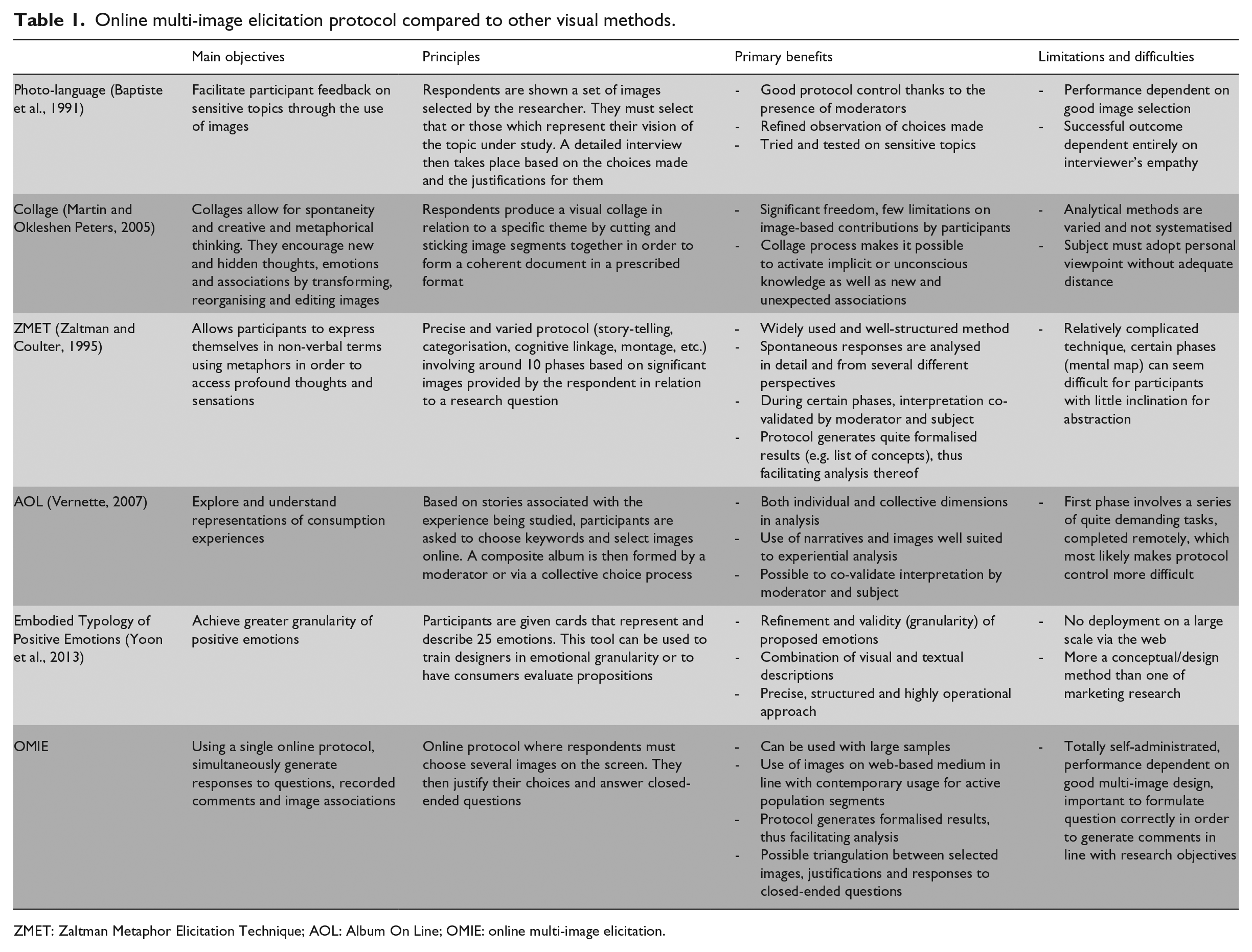
ZMET: Zaltman Metaphor Elicitation Technique; AOL: Album On Line; OMIE: online multi-image elicitation.
OMIE: Setup and usage
This section describes in more detail the procedure for setting up and using OMIE. In schematic terms, this procedure involves the seven phases described in Figure 1. These will be illustrated using the example of an online survey designed to explore representations and motivations in relation to the consumption of chocolate. The questionnaire was issued online between October and December 2012 in France to around 2,000 people who were pre-recruited by students and their teacher to respond to a questionnaire about mental representations of chocolate consumption, as part of a class on survey methodologies. More than 800 responses were viable. 3

Descriptive schema of OMIE setup and usage phases.
Image selection
The concept of OMIE can be compared to the development of similar tools involving images, such as the Embodied Typology of Positive Emotions (Yoon et al., 2013). The image search initially takes place using an online search engine. To reflect the theme being studied, the collection of images in this case focused on the following words: ‘chocolate’, ‘chocolat’ and ‘cacao’. This is an efficient method as it necessarily leads to the most popular representations of the topic concerned.
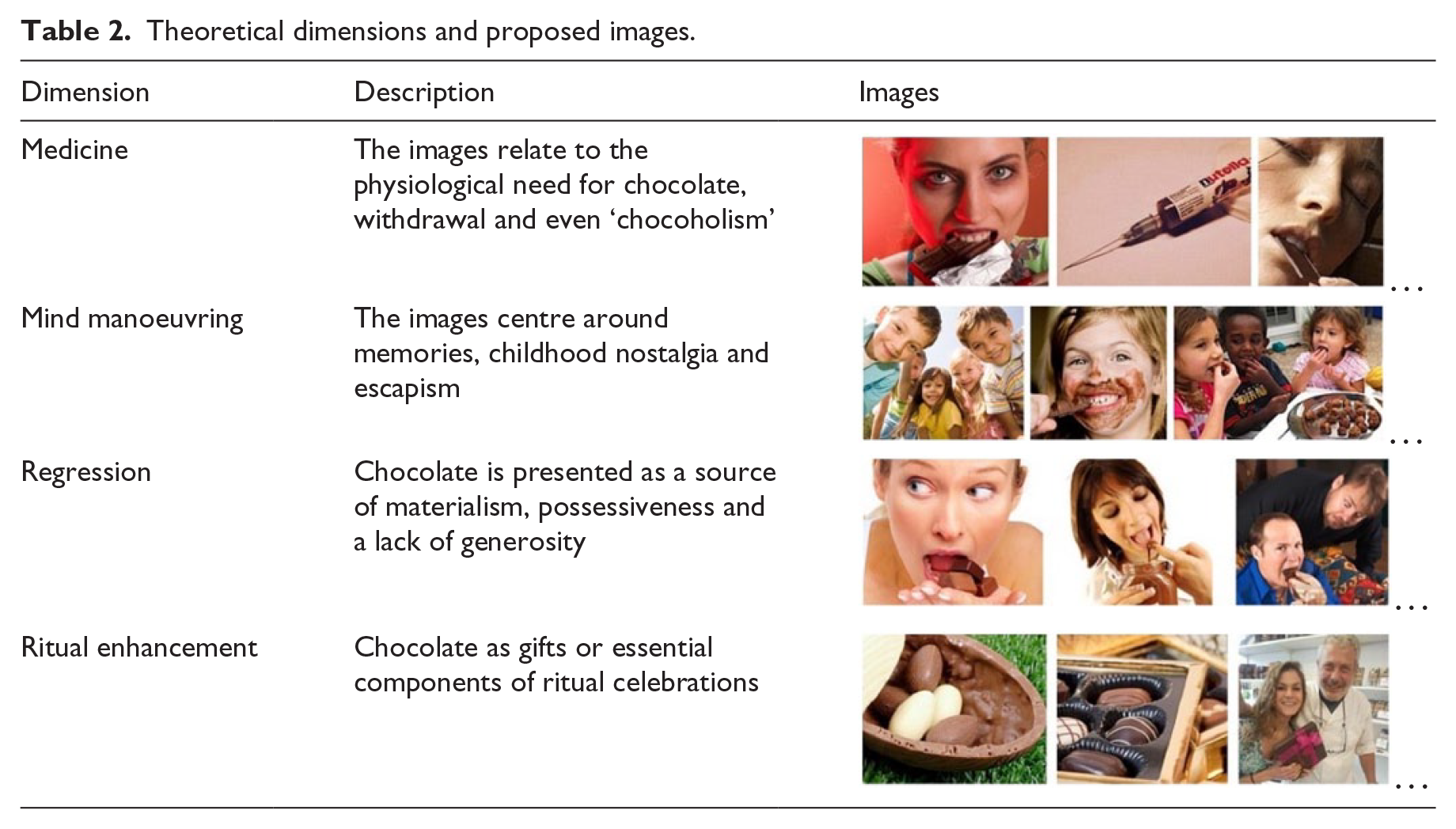
As well as representing different product types (chocolate bar, spread, hot drink, cake, ice cream, mousse, etc.), the images (all in colour, of the same size and copyright-free thanks to the advanced function of the search engine used) are above all selected to cover all of the theoretical dimensions identified in the academic literature and, in this case, relative to the motives for consuming chocolate. In our example, the researchers chose to focus on the different dimensions of the experiences of consuming chocolate based on the study by Zarantonello and Luomala (2011). Four types of motivations are presented: chocolate as medicine, ‘mind manoeuvring’ (e.g. escapism or nostalgia), regression and ritual enhancement.
The multi-image presentation is designed so that at least three images are related to each dimension. Table 2 shows some of the images used to represent the various dimensions, based on the categorisation used by the researchers. An inter-coder reliability test is recommended to verify that the right images have been associated with the different themes. Developing the OMIE technique therefore combines two effects: the emergence of the most popular images via search engine referencing, and a moderation effect on the part of the researcher, who ensures balance and consistency in terms of the theoretical concepts mobilised.
Theoretical dimensions and proposed images.
Tests and preliminary version
Having prepared the initial set of images, a pre-test was conducted on a sample of several dozen respondents. The aim of this test is first of all to verify the process as a whole: consistency of questionnaire structure, comprehensibility of questions and instructions and so on. One must also evaluate the multi-image composition in order to identify any themes or images that may be missing and check their legibility. This discussion between the researchers and the test subjects on the selection of images makes it possible to further limit the subjectivity of the image selection process. Indeed, the pre-test revealed that certain images were missing (e.g. chocolate bars sandwiched in a baguette) and that there were too many images representing the carnal aspect of chocolate. The feedback and suggestions collected during the test led to the final version of the OMIE.
Validity and consistency of OMIE
In order to account for possible response errors, the validity and consistency of the OMIE technique must be tested before drawing up the final version. As in the case of procedures applied to quantitative measures (Helfer and Kalika, 1988), validity and consistency can be evaluated using a series of adapted analyses (Rodriguez Santos et al., 2013) such as:
A study of the correspondence between the first, second and third choices, which to a certain extent represent the convergent validity of the OMIE, for example, by verifying that the respondent whose first choice is an image representing individual consumption will statistically tend to choose an image from the same category for his second and third choices;
An analysis of the associations between the chosen images and the consumption motives later given in response to the open-ended questions, thus testing for a kind of predictive validity, that is, the capacity of the chosen images to induce the attitudes of the consumer (see Figure 2 4 );
Comparing the chosen images with other consumption measures taken at a later stage via the questionnaire, thus evaluating the consistency (Helfer and Kalika, 1988) of the OMIE, for example, by testing the statistical correspondence between the preferences indicated by the chosen images and the declared consumption frequency and budget.
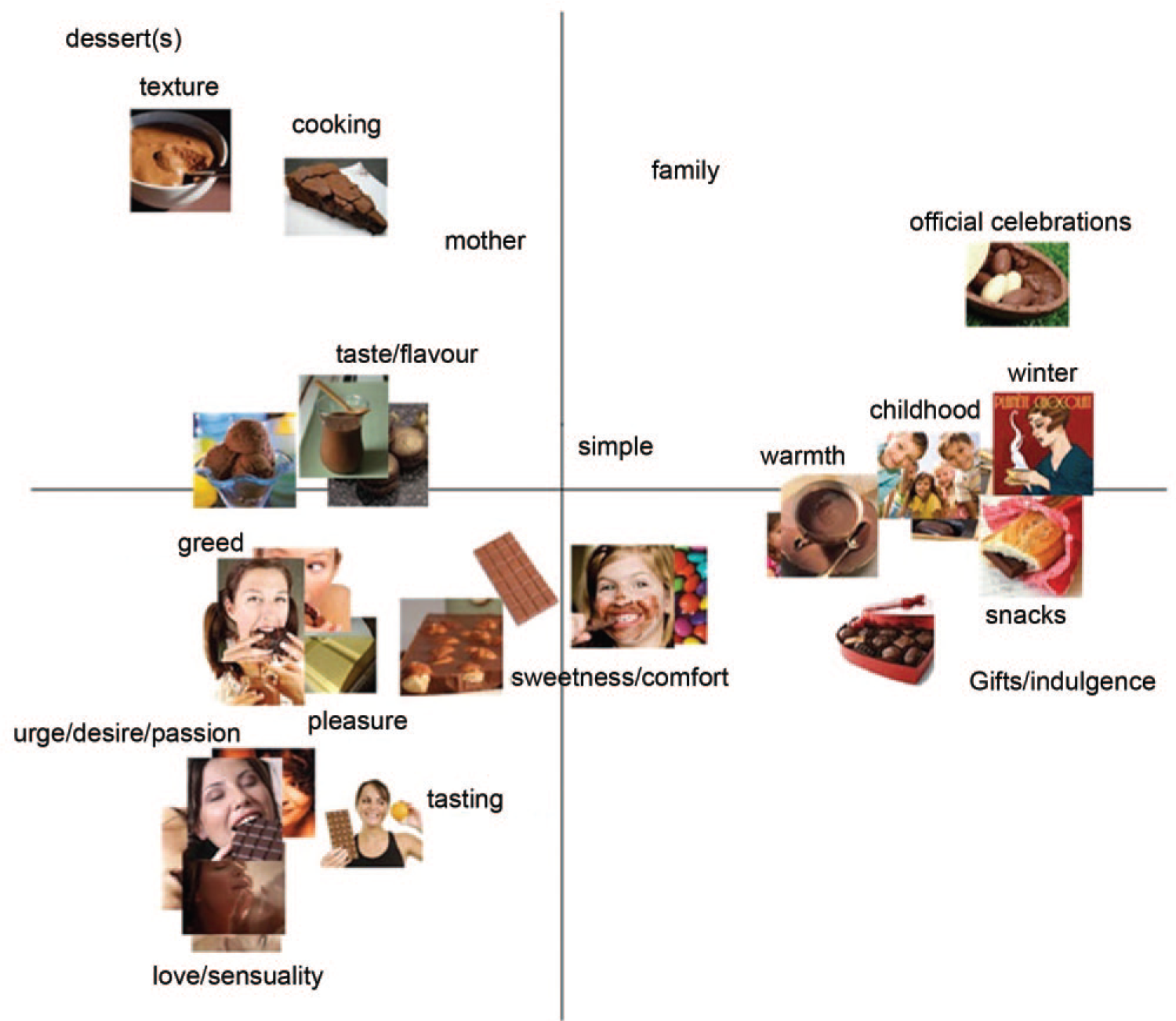
Associations between images and declared consumption motives.
Possible types of analyses
Several different analyses can be conducted using a wide range of measures, including selected images, recorded comments and responses to closed-ended questions.
Images in particular (like free texts) provide varied results depending on the questions put to respondents (Stanczak, 2007). For example, it is possible to use a descriptive analysis of the images chosen (taken individually or in categories) or to study the justifications recorded after the images have been selected. These recorded comments can be used in their unabridged format or re-coded using an analysis of textual data in order to compare the thematic categories to other variables. The meaning of the images above all lies in the way they are interpreted by participants, rather than in the inherent properties of their content (Stanczak, 2007). In the example of chocolate, one may try to determine why the image of the soft cake was chosen more than any other. Reading the associated comments reveals that, for many, this image represents a certain conviviality, whether in terms of preparing a nice home-made cake or sharing a dessert that everyone enjoys.
Depending on the research questions, bivariate analysis is possible with a view to comparing the chosen image categories based on age groups, or observing the themes referred to by respondents in relation to a single group of images (such as those that evoke nostalgia), based on gender, nationality and so on (Figure 3). We observed that representations in relation to indulgence, conviviality or gift-giving varied to a greater degree when assessed in terms of age group rather than gender.
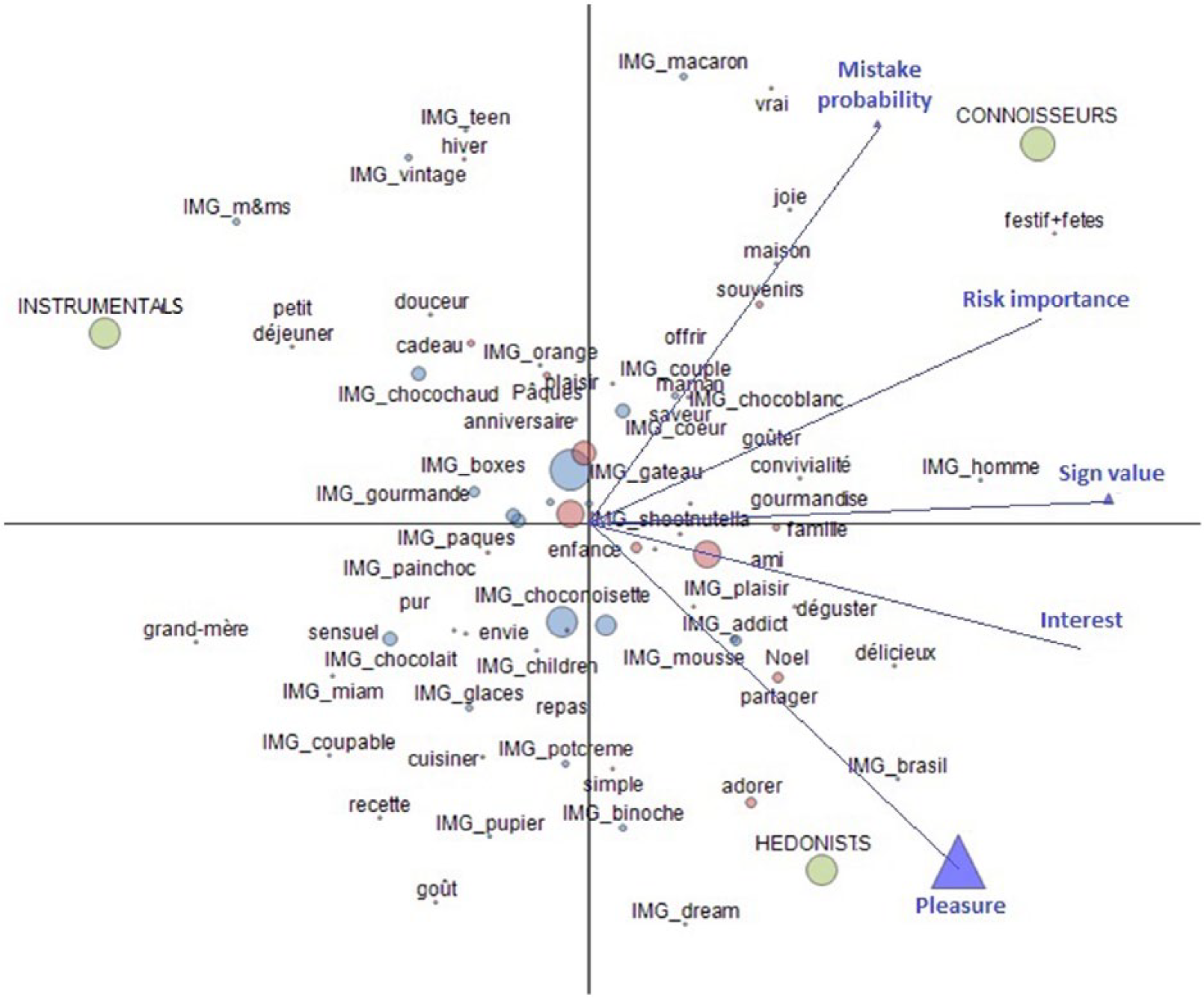
Correspondences between groups, chosen images, justifications and dimensions of involvement.
It is also possible to conduct multivariate analyses combining selected images, textual explanations and numeric variables. This procedure allows the researchers to validate their interpretation of the results observed and to refine them. This ‘triangulation’ approach is highly useful not only to avoid erroneous interpretations but also to support the conclusions of a study.
The factorial analysis below illustrates this approach by comparing the following variables:
Selected images: identified on the map by the abbreviation IMG;
Representations associated with chocolate consumption (re-coded using lexical analysis) expressed by respondents after making their choices;
Groups to which the respondents belong based on an automatic classification conducted using a simplified involvement scale comprising questions that cover the five facets proposed by Laurent and Kapferer (1986). Three groups are identified using the mobile centre procedure. ‘Connoisseurs’ are highly involved in chocolate, particularly when it comes to situational dimensions. ‘Hedonists’ score most highly on the pleasure dimension. The ‘instrumental’ respondents are less involved. The image choices of each individual combined with their justifications make it possible to precisely interpret the different groups.
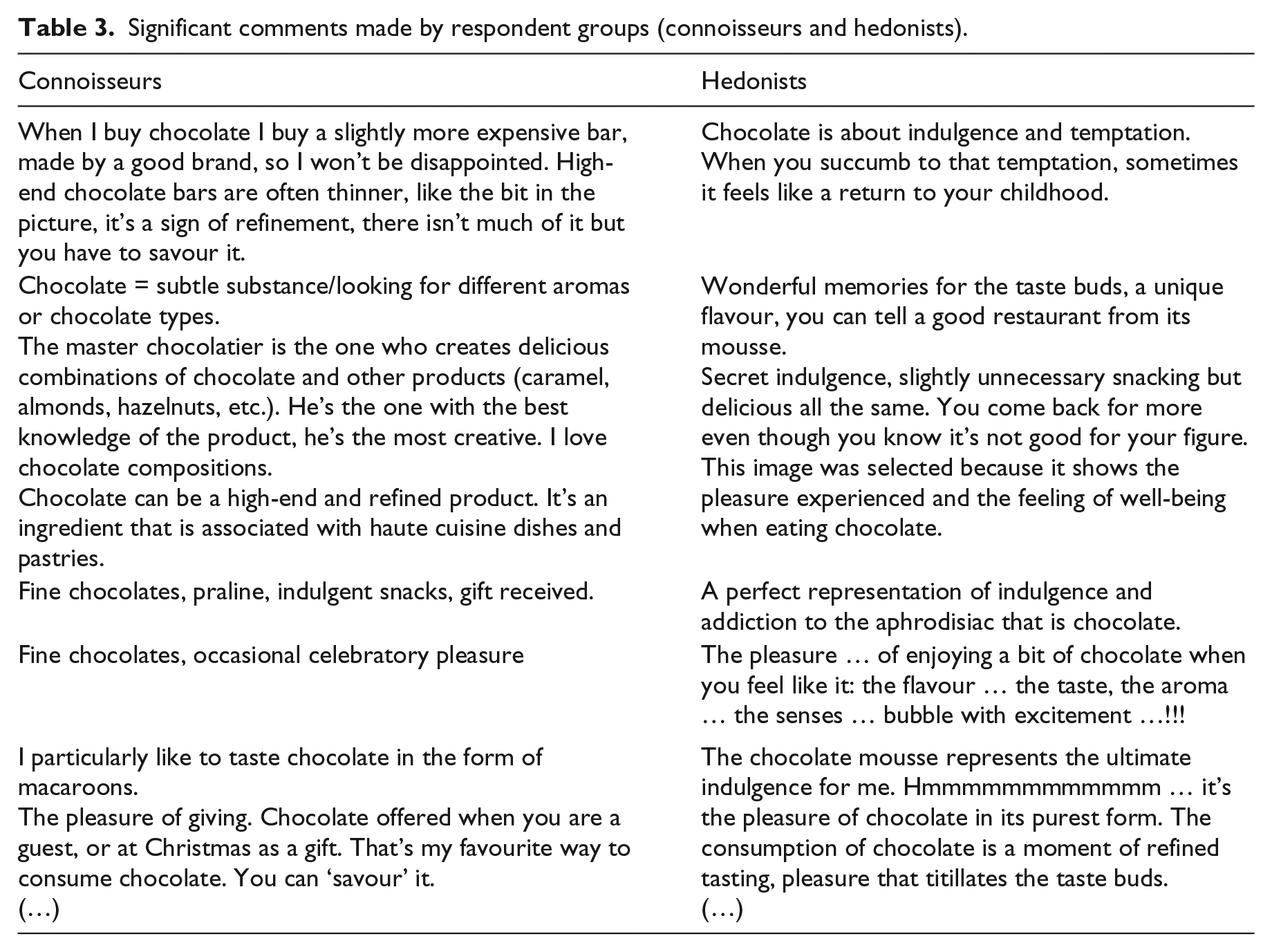
We can see from the factorial map above that there is a very clear correspondence between the interpretation of the consumer groups, the images selected and the themes cited. For example, in the north-east of the map, ‘connoisseurs’ can be seen to be highly involved in situational dimensions and refer to celebrations and memories. ‘Hedonists’ obviously emphasise sensorial dimensions: pleasure, taste and also gastronomy. ‘Instrumental’ respondents – in the west of the map – are more detached from chocolate consumption and see it as a source of warmth or as a breakfast accompaniment. The images selected revealed that these three visions of chocolate also relate to different forms of the product: liquid or warm for instrumental respondents, prepared as part of a dish for hedonists (mousse, cream or ice cream) and more elaborate for connoisseurs (e.g. boxes of fine chocolates). Furthermore, adopting a mixed approach, respondents’ comments allow for a more precise interpretation of consumer groups, as can be seen from Table 3.
Significant comments made by respondent groups (connoisseurs and hedonists).
Productive efficiency of the OMIE protocol
Beyond its appeal for combining qualitative and quantitative approaches and the possibility of triangulation, we studied the productive efficiency of OMIE and in particular its impact on the quality, abundance and richness of responses.
Response quality
Among the various sources of errors associated with surveys (Groves, 1989), response quality is of key importance. Response quality was for a long time limited to response rates alone, but more recently, the notion of quality has been extended (Ganassali, 2008; Schonlau et al., 2002) to include a much wider range of indicators, including completeness (see, for example, Deutskens et al., 2004), abundance (see, for example, Healey et al., 2005) and diversity (see, for example, Fricker et al., 2005). From this perspective, the ‘extended’ notion of response quality measures the involvement (or commitment) of respondents in the survey and therefore their propensity to express their attitudes, opinions or intentions in the most explicit and detailed way. It is recognised that the online questionnaire format has an effect on response quality (see Vicente and Reis (2010) for a relatively recent review). In reference to the model used by MacKensie and Podsakoff (2012), we believe that OMIE can optimise response quality, notably by simplifying the task of responding (it is easy to click on three images to express one’s viewpoint) and by motivating accurate responses (thanks to a visual and interactive protocol).
The same survey on chocolate was used to test the impact of this approach on response quality. We designed and distributed three different versions of the same questionnaire (see extracts in Figure 4):
The first (1) was standard and did not include any illustrations;
The second (2) provided fixed images as illustrations placed above an open-ended question;
The third (3) included a random presentation of 36 images representing the different dimensions of chocolate consumption experiences, based on Zarantonello and Luomala (2011).

Three formats of the ‘Chocolate’ survey.
Respondents were randomly assigned to one of the three questionnaires based on a predefined distribution of 60%–20%–20%, with the largest number being exposed to the multi-image presentation. 5 The emails inviting them to participate were exactly identical regardless of the version of the questionnaire. A single follow-up email was sent, 5 days after the three versions of the survey were initially sent. This recruitment system allowed us to generate a particularly high response rate of over 40%.
Response and retention rates
The response rate is the most commonly used indicator to evaluate the success of an online survey. It is calculated based on all of the successful submissions, excluding incorrect addresses and any responses rejected for technical or security reasons. The retention rate is the ratio between the final number of respondents and the initial number of people shown the very first screen in the survey. The reverse of the retention rate is the rate of abandonment, which measures the proportion of online participants who leave the survey midway without recording or submitting their responses.
Table 4 shows that OMIE has a negative effect on retention rates (82% compared to 89%). This small but significant decline can most likely be explained by the slightly complex nature of the task required of respondents, which requires a slightly greater cognitive effort. The overall effect of the response rate is neutral in our experience (41.4% compared to 40.5%), and the difference is not significant.
Response and retention rates for each protocol.
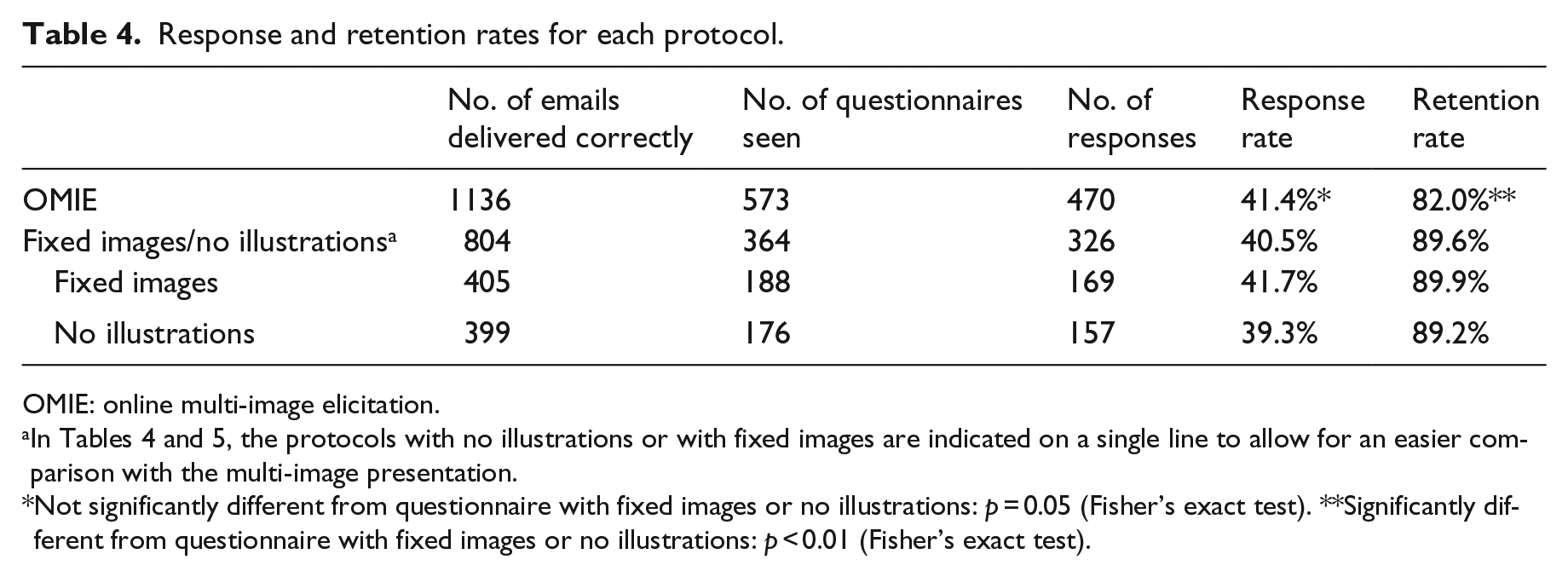
OMIE: online multi-image elicitation.
In Tables 4 and 5, the protocols with no illustrations or with fixed images are indicated on a single line to allow for an easier comparison with the multi-image presentation.
Not significantly different from questionnaire with fixed images or no illustrations: p = 0.05 (Fisher’s exact test). **Significantly different from questionnaire with fixed images or no illustrations: p < 0.01 (Fisher’s exact test).
Completeness and abundance of texts
Completeness is an indication of the percentage of questions effectively documented out of all questions put to respondents (Ganassali and Moscarola, 2004). In our online survey experiment, no response was mandatory, which meant that respondents were free to overlook any undesirable question. The abundance of texts is measured by the number of words cited in response to all open-ended questions put to respondents during the course of the survey (three in our example, each related to representations of chocolate consumption). Naturally, this excludes any questions that are conditional on certain previous responses (filter questions).
Table 5 shows that completeness is significantly higher in the case of the questionnaire that included a multi-image presentation (98.4% compared to 92%). Similarly, the effect on the quality of responses to text-based open-ended questions is noteworthy. The length of recorded comments was 28.8 words on average in the case of respondents shown the multi-image presentation, compared to 22.8 words for other respondents. We note that the questionnaire which included fixed images generated longer comments than that without illustrations, which is consistent with previous findings (Ganassali, 2008). As could be expected, we found that online participants spent more time responding to the survey when OMIE was used.
Completeness and quality of recorded comments for each protocol.
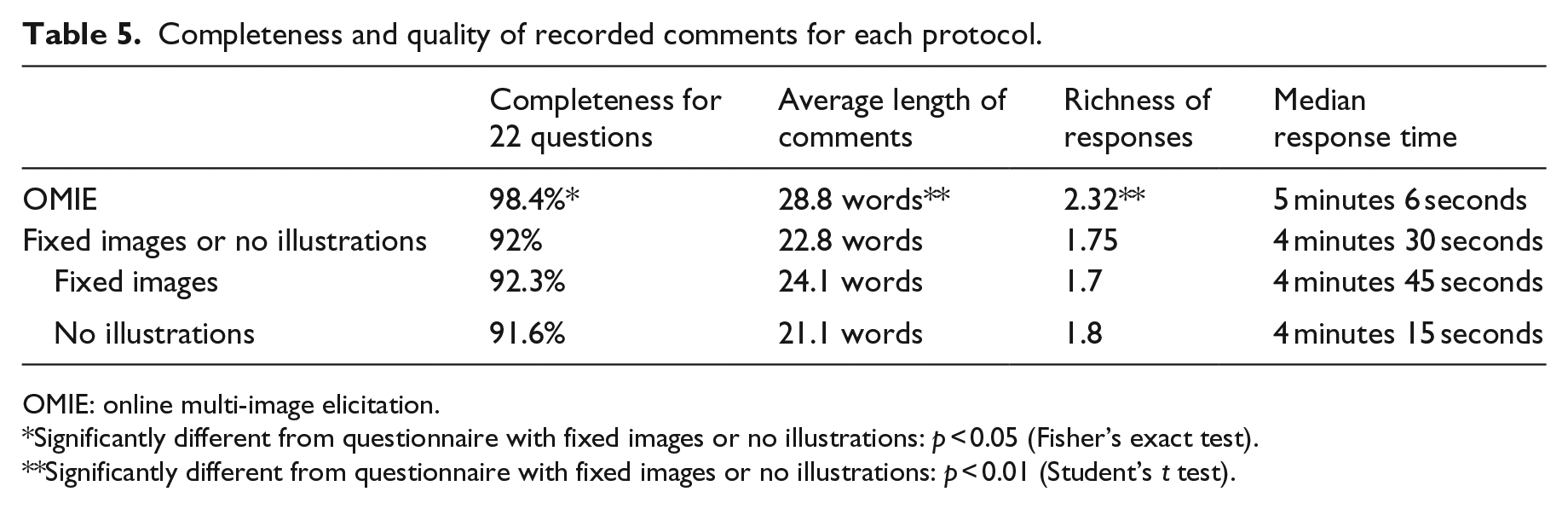
OMIE: online multi-image elicitation.
Significantly different from questionnaire with fixed images or no illustrations: p < 0.05 (Fisher’s exact test).
Significantly different from questionnaire with fixed images or no illustrations: p < 0.01 (Student’s t test).
Richness of responses
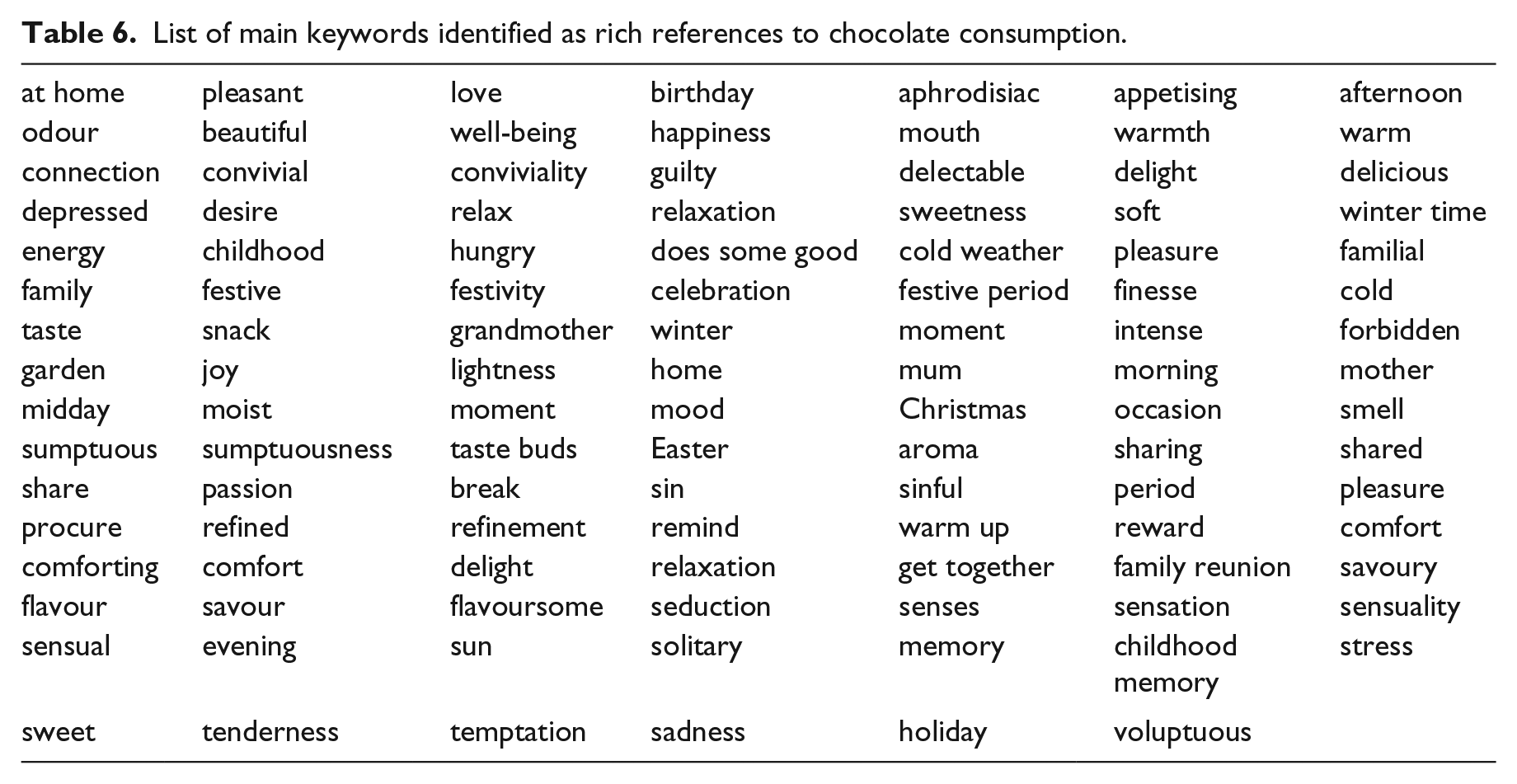
The richness of responses in itself has not often been used to measure response quality (Ganassali, 2008). It relates specifically to the way in which responses to textual open-ended questions are documented. Beyond the length of recorded comments, it indicates whether respondents have provided answers that are more or less ‘rich’ in content (Healey et al., 2005). In our survey, we measured the richness of responses by identifying and listing keywords that denote the experiential nature of the response in terms of sensations, emotions, circumstances or the people referred to by the respondent. Comments can be analysed by analysing content while reading through the responses or more systematically through the use of a lexical analysis. Given the large volume of texts and their relatively homogeneous nature, we chose the latter of these two methods, as in previous research studies (see, for example, Mossholder et al., 1995) where emotions were coded using a similar protocol. Table 6 displays around 100 keywords identified by the researchers in order to detect and code rich references to chocolate consumption in all of the recorded comments.
List of main keywords identified as rich references to chocolate consumption.
On average, respondents subjected to the OMIE protocol used 2.32 rich keywords, compared to just 1.75 in the case of other respondents, a difference that is statistically significant (see Table 5 above). This finding supports the view expressed in the first section of this article that OMIE has an immersive capacity that facilitates the depth and expression of respondents’ contributions.
Discussion and conclusion
OMIE makes it possible to enrich the survey protocol using a relatively relaxed, free and involving sequence of questions that facilitates a good level of immersion in the topic concerned. Subsequent comparison with the quantitative data recorded also allows for a particularly useful triangulation process (in this case triangulating data in accordance with the classification proposed by Denzin (1978)). Located at the crossroads between several methodological approaches, the principles of OMIE are closely aligned with the constitutive elements of the mixed approaches, and this method fits in well with the proposed classifications (Bahl and Milne, 2006) as what is known as an ‘integrated’ technique, midway between the qualitative and quantitative approaches. This protocol is one possible way to use these mixed methodological approaches and could favour a certain epistemological reconciliation. Using observation, deduction, modelling and explanations, this type of approach combines the benefits of rival stances such as positivism and constructivism (Avenier and Gavard-Perret, 2012). Positivism is present when OMIE is used to validate or reject the differences in representations between several respondent profiles for example. Constructivism is at work when the objective is to progressively discover the different possible groups of opinions or social representations in respect of a given theme by observing the images chosen and consulting the related comments. The possible use of these different analyses as part of a single study makes OMIE resolutely mixed protocol. This is particularly relevant today, following the post-modern, cultural or interpretive ‘turns’, whereby according to Stanczak (2007), ‘we no longer assume the pure objectivity of unbiased academic research and allow for or even expect transparent subject reflexivity in many projects’ (p. 8). OMIE includes a certain amount of assumed subjectivity in the choice of images and above all in the way in which these choices and the justifications thereof are interpreted. It also involves real objectivity when it comes to listing preferences, the frequency of words or the correspondence – which can be statistically validated – between the choices and texts and responses given to closed-ended questions. Stanczak (2007) confirms that
Just as subjectivity and realism interact in the space between the image and the viewer, the same occurs between the producer of the image and the subject or content. (p. 8)
In this regard, Koller and Sinitsa (2009) considered the online deployment of qualitative methods using a large sample, particularly with the aim of measuring and correlating behavioural and more psychological dimensions. In a highly schematic way, OMIE represents a numerical version of the traditional protocols which use graphic materials as part of an approach that some people now refer to as digital visual anthropology (Pink, 2011). This new process can also make mechanisms which are usually highly qualitative more systematic and more formalised. The data it produces are more structured and, in addition to semantic interpretations of the text-based and image-based materials, allow for data processing that is more quantitative and therefore more objective and even more confirmatory. Finally, the deployment of these earlier visual protocols online provides access to a greater number of samples, thus providing conclusions that provide improved reproducibility, as suggested by Blascovich et al. (2002). This points to a description of OMIE as a ‘post-positivist’ method (Lincoln and Guba, 2000), for it can be argued that it tackles a reality that cannot be fully apprehended and does so with more nuanced objectivity, while at the same time producing results which this approach describes as ‘probably true’.
In terms of memorisation, according to the dual coding theory, it has been established that the verbal system is activated when verbal stimuli are present, and it dominates in the case of tasks that require verbal, more rational responses, while the non-verbal system is activated when non-verbal stimuli are present, and dominates in the case of tasks that require non-verbal, more affective responses (Paivio, 1971). It was recently demonstrated (Herz and Diamantopoulos, 2013: 111) in a mixed study of country-specific associations that visual methods (collages in this case) perform better when it comes to detecting affective associations in relation to consumption. The authors point out that ‘the adoption of both verbal- and nonverbal-based approaches provides complementary insights on consumers’ brand associations’.
This suggests that OMIE would be highly relevant for research where the affective dimension is important. Recently, the use of images as a means of expressing emotional reactions was discussed and validated in a study by Yoon et al. (2013). The authors used images to facilitate ‘affective granularity’, that is, more refined and in-depth expression of affective responses. Derbaix and Pham (1989) propose a classification of affects with seven categories: appreciation (the most cognitive of all reactions), attitude, preference, temperament, humour, sentiment and shock (the most affective). One can therefore argue that tools like OMIE are particularly useful for detecting the most intense affects such as humour, sentiments or even strong experiences, which verbal accounts cannot always accurately render (Derbaix and Pham, 1989). In marketing, several areas are interested in the study of ‘intense’ affects; those most concerned include services marketing, advertising, experiential approaches and brand strategy.
Beyond our methodological position, our intention was to provide a concrete evaluation of the OMIE technique, both in terms of its consequences for the response process and the quality of data collected. It appears to have had a negative impact on the rate of participant retention. As with other interactive and moderated protocols (Downes-Le Guin et al., 2012), a slightly higher number of participants withdrew midway through the survey than in the case of simple questionnaires. This can most likely be explained by the slightly higher level of cognitive effort (duration) required of respondents to express themselves. Second, we note that for those who remained online – they form a very significant majority (82% in this case) – the quality of responses is significantly higher. Scores for completeness, abundance and richness of responses were higher. It appears as if this type of more involving protocol tends to introduce a slight ‘selection bias’ by discouraging unwilling respondents (Rogelberg and Stanton, 2007) and by stimulating others. To a certain extent, we encountered the same problems of representativity associated with samples made up of ‘volunteer subjects’ (Rosnow and Rosenthal, 1976); on this basis (out of caution), we advise against the OMIE protocol for surveys where generalisation is an absolute priority.
However, in many other social science surveys – and particularly in marketing – the researcher or person responsible for conducting the study expects active (or even ‘productive’) participation from the subjects solicited. They hope for their involvement and commitment so as to obtain sufficient breadth and depth of expression in their ‘insights’, which are supposed to be useful when making decisions in the future. In this respect, mixed protocols like OMIE are promising when it comes to stimulating the abundance and diversity of responses. Such an approach now offers many opportunities for research questions relating to experiential consumption, advertising persuasion or the detection and evaluation of the emotional (Albert et al., 2008) or symbolic values of a brand, particularly in certain areas like tourism, leisure activities, culture, luxury products, hygiene and beauty products, where it is sometimes difficult to express brand attributes verbally.
From a managerial perspective, the OMIE technique is a concrete example of the twofold ‘quali-quantitative’ approach by which practitioners are generally convinced (Bô, 2010). It represents excellent value for money as it generates a large volume of insights that are relatively rich and objective for relatively low implementation costs. Finally, this type of visual protocol carries good aesthetic appeal, thus contributing to a more modern and enhancing image of the organisation responsible, which is not a negligible advantage when the survey question targets customers or staff.
Possible OMIE variations can be considered. Researchers can introduce even more spontaneity to the way in which respondents express themselves by inviting them – as in the case of AOL – to search for and choose three images online and post them in a dedicated space as part of the online questionnaire and then to express their associations of ideas. However, if the aim is to reinforce the standardisation of the protocol, it would also be possible to add scales of experiential or emotional profiles, like that proposed by Holbrook and Batra (1987), or to develop more standardised visual tools like the Embodied Typology of Positive Emotions (Yoon et al., 2013).
This article has shown that mixed visual techniques have a role to play in the wider set of methods at the disposal of marketing researchers and study practitioners. It is important to pursue research in order to test and deploy these hybrid instruments in new areas of application. It would be useful, for example, to determine which categories of images generate the richest responses. Other methodological parameters would be useful when using these innovative techniques to facilitate more tailored and effective development.
Footnotes
Acknowledgements
The author would like to thank the editor and anonymous reviewers for their valuable advice and suggestions as part of the review process. The technological support for this research provided by Sphinx is also gratefully acknowledged.