







Abstract
Academics and practitioners increasingly focus on the concept of proximity, but the growing literature features a confusing diversity of approaches. This article offers a macro-analytical and conceptually unified vision of proximity. Based on an in-depth analysis of literature, this integrative synthesis offers a fourfold contribution: characterize and classify approaches to proximity, understand the place occupied by proximity in theoretical models in marketing, consider the managerial interest of proximity, and develop propositions for continued research into proximity topics.
Introduction
In highly competitive, modern markets, companies can rely on proximity as a new source of differentiation. So-called proximity formats define distribution groups such as Walmart Neighbourhood Markets (United States), Héma Fresh by Alibaba (China), Carrefour Express and Carrefour City (France). Proximity sales channels, such as those in the food sector (e.g. community-supported agriculture and direct farm sales), also are stirring increased interest among consumers (Dufeu and Ferrandi, 2013). Brands in turn capitalise on proximity as a differentiation strategy, whether this proximity is geographic, relational or identity-based, like collective brands such as ‘Terre ici’, ‘Vive la Bourgogne’, or ‘Bravo l’Auvergne’ (Charton-Vachet and Lombart, 2015). Due to the massive development of communication platforms such as Facebook or Twitter, companies are also paying increasing attention to the proximity of consumers to their brands in the context of social media (Gretry et al., 2017). This emphasis is not limited to consumer goods but also affects industrial markets, where proximity underlies supplier–customer cooperation strategies (Ferguson et al., 2005). These managerial initiatives systematically consider proximity as a new strategic option that renders it possible to create or strengthen relationships with customers (Filser and Vernette, 2010).
In parallel, academia increasingly leverages proximity-related theories in disciplinary fields ranging from economics (Craig et al., 2017), psychology (Min et al., 2018) and geography (Menzel, 2015) to sociology (Bissell, 2013). Marketing relies on proximity concepts to explain inter-organisational relations (Geldes et al., 2017), consumer–retailer links (Schultz et al., 2016) and inter-consumer relations (Brannon and Samper, 2018; Dubois et al., 2016). A common thread running across all these works is an objective to renew understanding of interactions between organisations and/or individuals, theoretically inscribing the concept of proximity in the field of relationship marketing (Morgan and Hunt, 1994). Many studies also favour micro-analytical approaches that zoom in to account for specific market characteristics, thereby offering fine-grained insights into the concept within the specific study context. However, these studies also produce a somewhat fragmented view of proximity. Thus, while some studies approach proximity from a purely spatial perspective (Ganesan et al., 2005), others favour an exclusively relational entry to proximity (Ward and Broniarczyk, 2011). While some studies consider proximity as a prerequisite for the development of trust between partners (Srivastava and Singh, 2010), others believe that it is instead a possible consequence (Nilsson and Mattes, 2015). Similarly, while some studies attribute proximity to the ability to generate positive consequences (Ferguson et al., 2005), other studies highlight its paradoxical and potentially negative effects (Geldes et al., 2015). The recent flurry of work in marketing thus has led to conflicting definitions of proximity, disparate conceptualisations and an unstabilised effect of proximity in existing models (Knoben and Oerlemans, 2006).
In contrast with such micro-analytic approaches, which have widely prevailed to date, this article proposes a synthesis of research into proximity in the marketing field using a macro-analytic approach that explicitly zooms out to reveal a unified, theoretical framework (Vargo and Lusch, 2011). Based on a narrative literature review (Appendix 1), this article seeks to specify the definition of proximity and its place and status in marketing models; this step is a necessary condition for an effective and relevant mobilisation of proximity. This research is guided by four main objectives, namely, to:
Clarify the concept of proximity – its characteristics and dimensionality – by identifying points of divergence and convergence across the multiplicity of existing approaches;
Propose a proximity measurement model and clarify the nomological network of the concept;
Identify the managerial interests associated with the mobilisation of proximity in marketing;
Develop a research agenda to encourage the emergence of a macro-analytical, decontextualised, conceptually unified vision of proximity.
The first part of this work describes the theoretical roots of the concept of proximity, rendering it possible to characterise and define the concept, and distinguish it from similar concepts in the field of marketing. The second part develops a proximity model by returning to both the proximity measurement model and the identification of the antecedents and consequences of this concept. Using this theoretical clarification work, the third part presents the main managerial interests associated with the mobilisation of proximity in marketing. Finally, on the basis of the limits of this work, the final part proposes several research avenues that might help build a more robust theoretical framework around proximity.
Proximity in marketing: Conceptual framework
Given the fragmented nature of research on proximity in marketing, this work seeks first to characterise proximity, define it, and distinguish it from similar concepts. In preparation, the theoretical roots of the concept are studied.
Theoretical roots of proximity
Whether referred to as proximity, closeness or propinquity, the concept of proximity pertains to the quality of an entity that is not far in distance, time or relationship, or else near in space, position or time. 1 Proximity thus is a polysemous concept used in many social science fields which subsequently inspired work in the management sciences (Gomez et al., 2011). Depending on the discipline involved, research focuses preferentially on a spatial or nonspatial perspective.
Concerning spatial proximity, the theoretical premises come from economics and geography. In economics, proximity initially reflected theories of localisation and urban organisation. Localisation theory deals with ways to determine optimal firm locations in a homogenous geographic space, where the factors of production are equally dispersed (Predöhl, 1928). Hotelling (1929) introduced the concept of spatial competition in duopoly, thereby linking location choice to sales prices. The theory of urban organisation also addresses land rent and location choices according to an arbitration between the cost of land and the cost of access to the market (Von Thünen, 1826). Marshall (1920) confirmed the need to take spatial proximity into account by proposing the notion of an external economy (or externalities), such that the presence of a certain number of companies nearby contributes to a decrease in the costs of production for each of them. In line with these reflections, other analyses have focused on the question of agglomeration economies and associated externalities (Krugman, 1991). Likewise, geography scholars naturally mobilise the notions of place, space and proximity and refer to the same theoreticians.
In parallel, social psychology researchers offer conceptual reflections on non-spatial proximity as a vector of inter-individual relations. The theory of interdependence (Kelley et al., 1983) examines the conceptual and methodological issues associated with the analysis of dyadic interpersonal relationships and identifies a particular class of close relationships. These authors define closeness as a high degree of interdependence in relationships characterised by relatively high frequency, diversity and strength for a relatively long duration. This approach has been extended methodologically through the development of dedicated measurement instruments such as the Relationship Closeness Inventory (Berscheid et al., 1989). It also has been extended conceptually with an enrichment based on the identification of cognitive and emotional dimensions of closeness, for which the latter represents a vector of intimacy and identification (Aron et al., 1991).
In the field of anthropology, the proxemics systems approach is one of the first theoretical attempts at global conceptualisation of proximity, integrating its spatial and non-spatial meaning. It apprehends the concept of social distance by considering that space, its occupation and its use represent an extension of the self (Fischer, 1997). Hall (1971) distinguishes four types of distance according to the degree of proximity between individuals: intimate, personal, social, and public. Physical distance then becomes an element of nonverbal communication and a determinant of inter-individual relationships. More recently, two theoretical approaches have proposed a conceptualisation of proximity designed to go beyond spatial and non-spatial perspectives. First, the school of Proximity Dynamics distinguishes geographic proximity (objectively or subjectively weak spatial distance between actors) from organisational proximity (sharing of a common space of references, knowledge, rules or operating routines), discusses potential interactions between different forms of proximity, and renews the theory of coordination (Boschma, 2005; Rallet and Torre, 1995). Second, the construal-level theory relies on the hypothesis that the psychological distance – including spatial and non-spatial dimensions – between an individual and an object (person, place and concrete object) determines resulting mental representations (Trope and Liberman, 2010). The more proximal or psychologically close an object is, the easier it is to imagine, leading to more concrete, detailed and contextualised representations that influence preferences and choices.
Such contributions on proximity in turn have informed marketing studies of retail stores’ spatial locations (Rulence, 2003), cooperation in industrial contexts (Geldes et al., 2015), consumer–retailer relations (Hérault-Fournier et al., 2014; Schultz et al., 2016), people’s interactions with frontline employees (Bove and Johnson, 2001; Clauzel and Riché, 2015; Salerno, 2001) or other consumers (Brannon and Samper, 2018; Dion and Bonnin, 2004; Dubois et al., 2016; Tu et al., 2015) and evaluations of products and communication media (Kim et al., 2008; Merle et al., 2016; Willems et al., 2017).
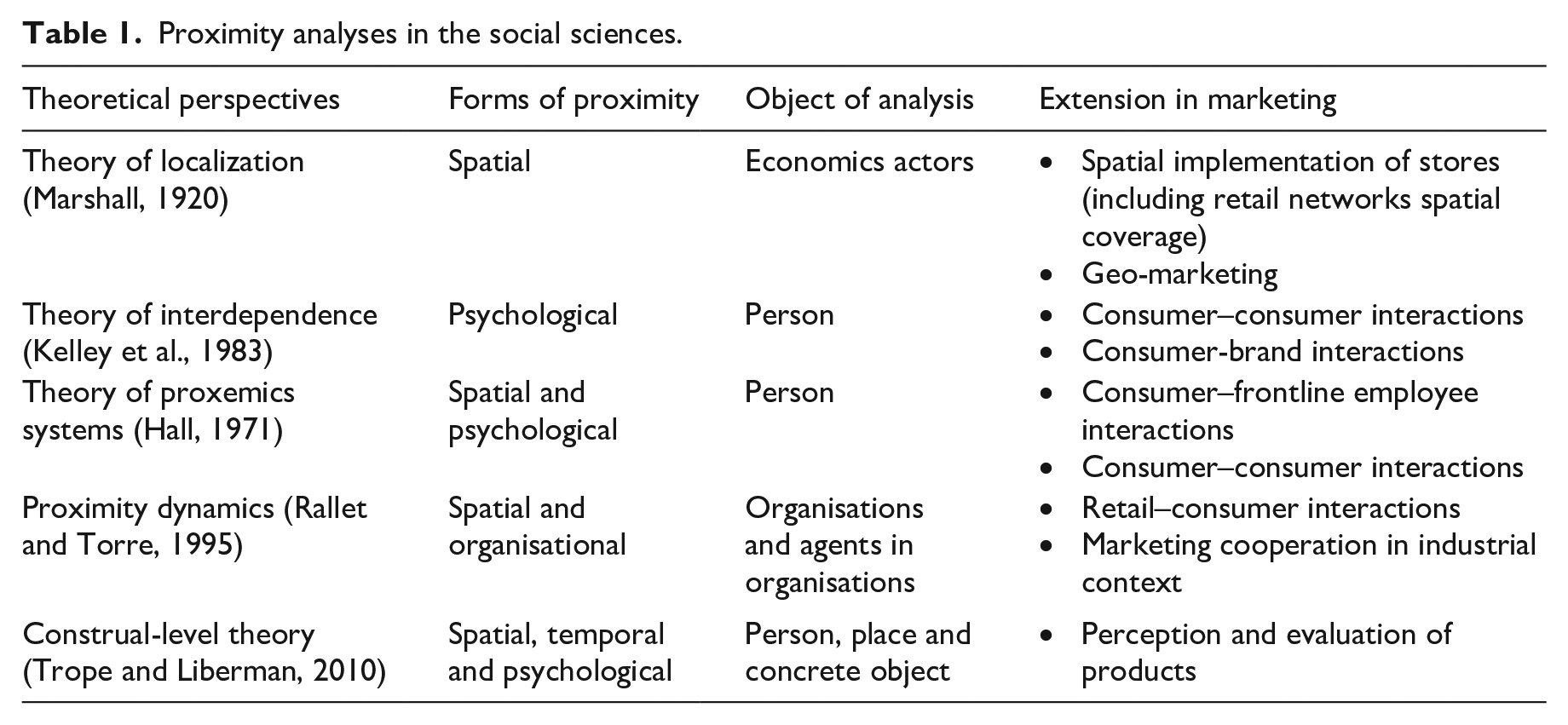
The distinct insights from these disciplinary fields, as synthesised in Table 1, help explain the variety of approaches to proximity that appear in the marketing domain. In particular, the definition and the object of the analysis vary substantially according to the seminal works used. However, the research from these different disciplinary fields converges on the theoretical objectives associated with the analysis of proximity, namely to characterise the nature of proximity and assess the consequences. It also should be emphasised that in each disciplinary field, proximity is regularly studied through distance (spatial, social or psychological). Finally, whatever the disciplinary approach, research works are oriented in an identical manner towards a gradually more extensive vision by integrating both spatial and non-spatial perspectives, thus approaching the etymological definition of proximity.
Proximity analyses in the social sciences.
Characteristics of proximity
Beyond the variety of disciplinary approaches that may have guided marketing research, several characteristics of proximity appear to be similar regardless of the approach chosen. Their identification is part of an integrative and decontextualised vision of proximity and can help to provide a definition.
In particular, the concept of proximity always takes as its unit of analysis the interaction between two entities (Wilson et al., 2008). The resulting perspective therefore is necessarily dyadic. While the proximity analysis unit is the dyad, its focal length is likely to vary, which enables proximity to be used alternatively to analyse:
Inter-organisational interactions (Geldes et al., 2015, 2017; Homburg, 1998);
Individual–organisation interactions, including brands and retail store chains (Gretry et al., 2017; Schultz et al., 2016; Sarkar and Sarkar, 2016);
Inter-individual interactions involving consumers or frontline employees (Barnes, 1997; Dubois et al., 2016; Salerno, 2001; Tu et al., 2015), and in some cases, the analysis of groups of individuals (Hautala, 2011);
Individual–space interactions, whether this space is understood from a geographical or more broadly cultural perspective (Huang et al., 2013; Kastenholtz, 2010; Ryan, 2002; Swift, 1999);
Individual–object interactions, the latter being mainly products or brands (Kim et al., 2008; Merle et al., 2016; Trope et al., 2007).
The corollary of this dyadic perspective is to shift the centre of gravity from the analysis of the client to the analysis of the interaction between two entities and then to consider proximity as an ‘interactional variable’ (Dampérat et al., 2016). This characteristic places the concept of proximity at the heart of the theories of relationship marketing. It also makes it possible to consider the effects of interactions between entities (people, places and concrete objects), which often are considered to be more important than the effects of the characteristics of the entities themselves (Srivastava et al., 1984). The mobilisation of the concept of proximity thus highlights the existence of two-way relationships (Mende et al., 2013), as well as the effects of mutual influence, forms of interdependence (Salerno, 2001; Schultz et al., 2016), and possible asymmetry effects, the degree of proximity not being identical on both sides of the dyad (Schultz et al., 2016; Wilson et al., 2008). Proximity then invites a reading in terms of the power relationship between the actors of the dyad, one of the entities being able to seek proximity when the other may want to maintain distance during exchanges. This perspective – linking proximity and power – remains, however, little explored at present (Torre and Talbot, 2018).
Proximity also involves dyads situated in time and space. This temporal feature highlights the dynamic nature of proximity (Balland et al., 2015; Dampérat, 2006; Gahinet, 2018; Lazzeretti and Capone, 2016; Menzel, 2015). Other research studies also suggest that proximity is likely to change over time in both intensity and nature; certain forms of proximity are likely to emerge, strengthen or, on the contrary, disappear (Mason and Chakrabarti, 2017; Nilsson and Mattes, 2015). Proximity also places interactions within space. Although space mainly is understood from a physical point of view (Ganesan et al., 2005), an interaction may be located in social spaces (Mason and Chakrabarti, 2017). Schultz et al. (2016) propose that proximity implies anchoring the interaction between actors in a socio-spatial environment. By inscribing them in time and space, interactions analysed according to proximity become situated and contextual, and the characteristics of this spatio-temporal inscription condition the emergence, reinforcement or weakening of proximity.
Finally, proximity pertains to both an objectifiable state and a subjective perception. Geographical proximity is often seen as a piece of physical space that can affect interactions and can be measured in physical units (distance, time and cost), as in early commercial location models (Campo et al., 2000). Yet, spatial proximity also is relative and subjective, reflecting actors’ judgements, perceptions and representations about the nature of geographical distance (Harrison-Hill, 2001; Meyners et al., 2017). Similarly, non-spatial proximity might entail perceptions of a direct relation with a dyadic partner, but it could be objectified in terms of the frequency, duration, diversity or strength of interactions (Dibble et al., 2012). Proximity thus covers both an objective reality and a perception, and these two forms likely differ significantly (Wilson et al., 2008).
There is thus some consensus in the literature regarding the dyadic and interactionist nature of proximity, situated in time and space, as well as its perceptual and objectifiable nature.
Dimensionality of the concept
To conceptualise proximity, the dimensions that structure it need to be identified and defined. Many marketing researchers have contributed to this effort, although the disparity of theoretical approaches and specific study contexts has produced a wide variety of dimensions. Certain dimensions of proximity overlap conceptually but feature divergent names, such as relational and social proximity (Bove and Johnson, 2001). Researchers accordingly note the difficulty of engaging in these conceptualisation efforts and call for work that structures and clarifies the dimensions of proximity (Boschma, 2005; Villani et al., 2017).
A detailed examination of the dimensionality of the concept (Table 2) leads to the identification of, beyond the variety of denominations, a two-dimensional (2D) macro-analytical structure making it possible to determine whether two entities are likely to be ‘near’ (spatial perspective) and/or ‘close’ (affinity perspective) to each other (Baudin, 2007; Péron, 2001). This structuring proposal thus invites one to consider proximity as a reference point in socio-spatio-temporal terms which positions the partner of the dyad in relation to ‘the self, here and now’ (Trope and Liberman, 2010). This 2D structure of proximity also avoids considering only one dimension of proximity to estimate the second. While this reasoning could be justified by the existence of a ‘propinquity effect 2 ’, it appears globally risky as illustrated by the ‘far-but-close’ paradox, spatial proximity being neither necessary nor sufficient to induce forms of affinity proximity (Felzensztein et al., 2010; Wilson et al., 2008).
Dimensionality of proximity.
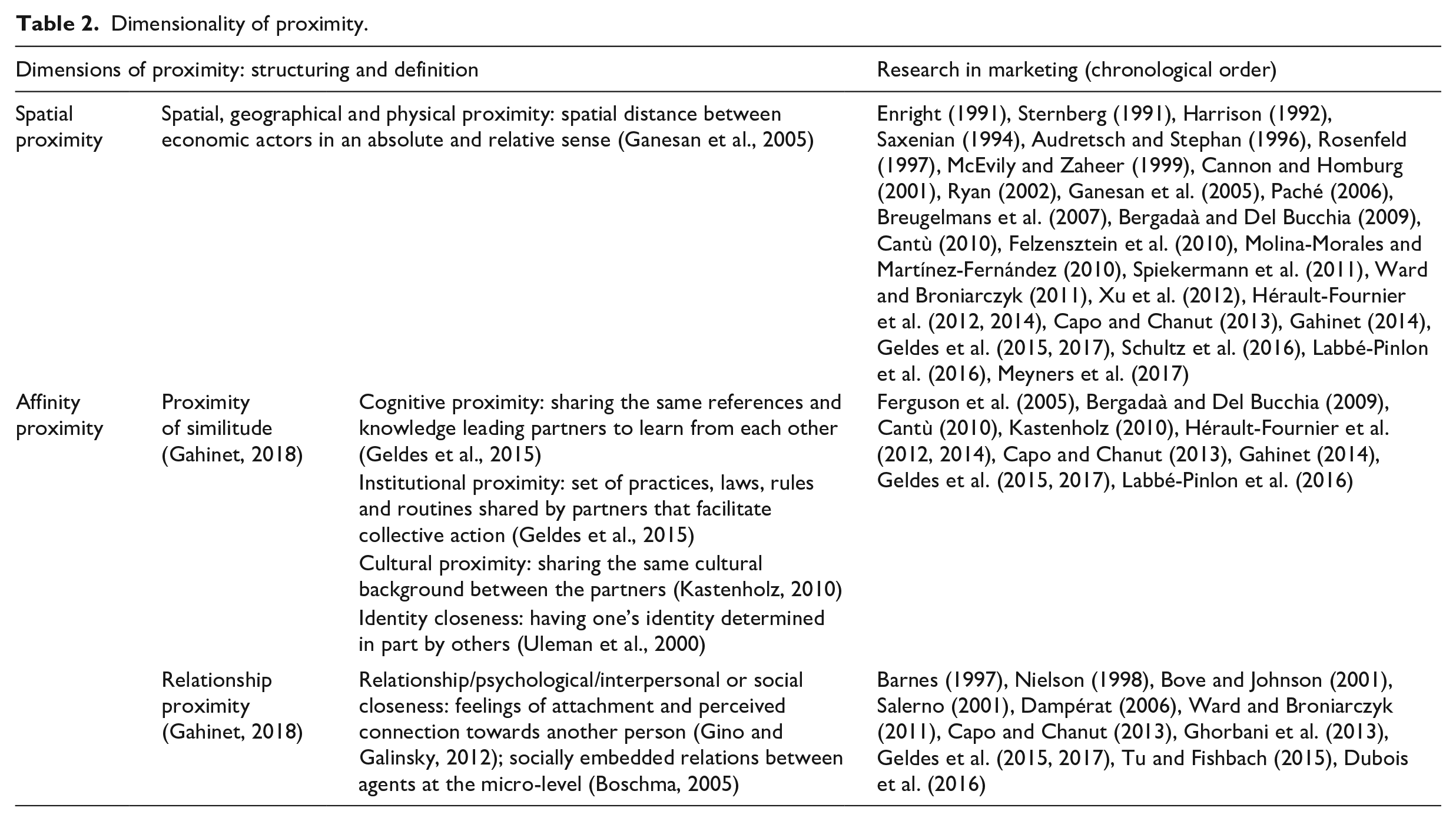
Concerning the first group of dimensions, the terms spatial, geographic and physical are generally used without real distinction and refer to a situated proximity, defined by all factors particular to a specific time and place that are common to the members of the dyad and likely favour their interactions. Nevertheless, the latter two refer to an objectified apprehension of proximity, while space is associated with the idea of ‘being in motion and becoming, consistent with a more relational school of thought’ (Giovanardi and Lucarelli, 2018). Consequently, the term spatial proximity seems preferable considering the interactionist nature of proximity. Spatial proximity can then be expressed in temporal terms and be translated into the access time necessary for the meeting between the entities of the dyad (Bergadaà and Del Bucchia, 2009; Gahinet, 2018; Gahinet and Cliquet, 2018).
Concerning the second group of dimensions, the term affinity proximity appears to be the most likely to translate different forms of rapprochement, inclusion or overlapping between the entities of the dyad (Aron et al., 1991; Baudin, 2007). According to the literal definition of affinity, 3 the forms of affinity proximity can be distinguished into two subcategories according to whether they fall under a register of similarity or a relational register (Gahinet, 2018). In the first case, the proximity of similitude reflects a sharing of values, beliefs, norms and habits, and aggregates different forms of proximity identified in the literature (cognitive, institutional, cultural and identity). In the second case, relational proximity reflects a subjective appreciation of the affective nature of interactions by the entities involved in the dyad (Barnes, 1997). While this form of proximity mainly concerns interpersonal relationships, it can also involve organisations, beyond the individuals belonging to these organisations.
In the end, the literature converges on the elements of characterisation and on the two-dimensionality of the concept of proximity. Despite these convergences, some researchers emphasise the difficulty of bringing out a canonical definition of proximity, the multiple definitions proposed reflecting the variety of forms taken by proximity (Torre and Talbot, 2018). However, from a macro-analytical perspective limited to the field of marketing, the elements of characterisation identified above lead to defining proximity as a concept which characterises – from a dynamic perspective – the real or perceived strength of spatial and affinity links existing between two entities (products, services, brands, organisations, people and places) and which affects their interactions. This definition respects the etymological characteristics of the concept (spatiality, temporality and affinity), avoids the pitfall of a definition based solely on the dimensionality of the construct and provides a basis for differentiating proximity from other concepts.
Distinguish proximity from closely related concepts
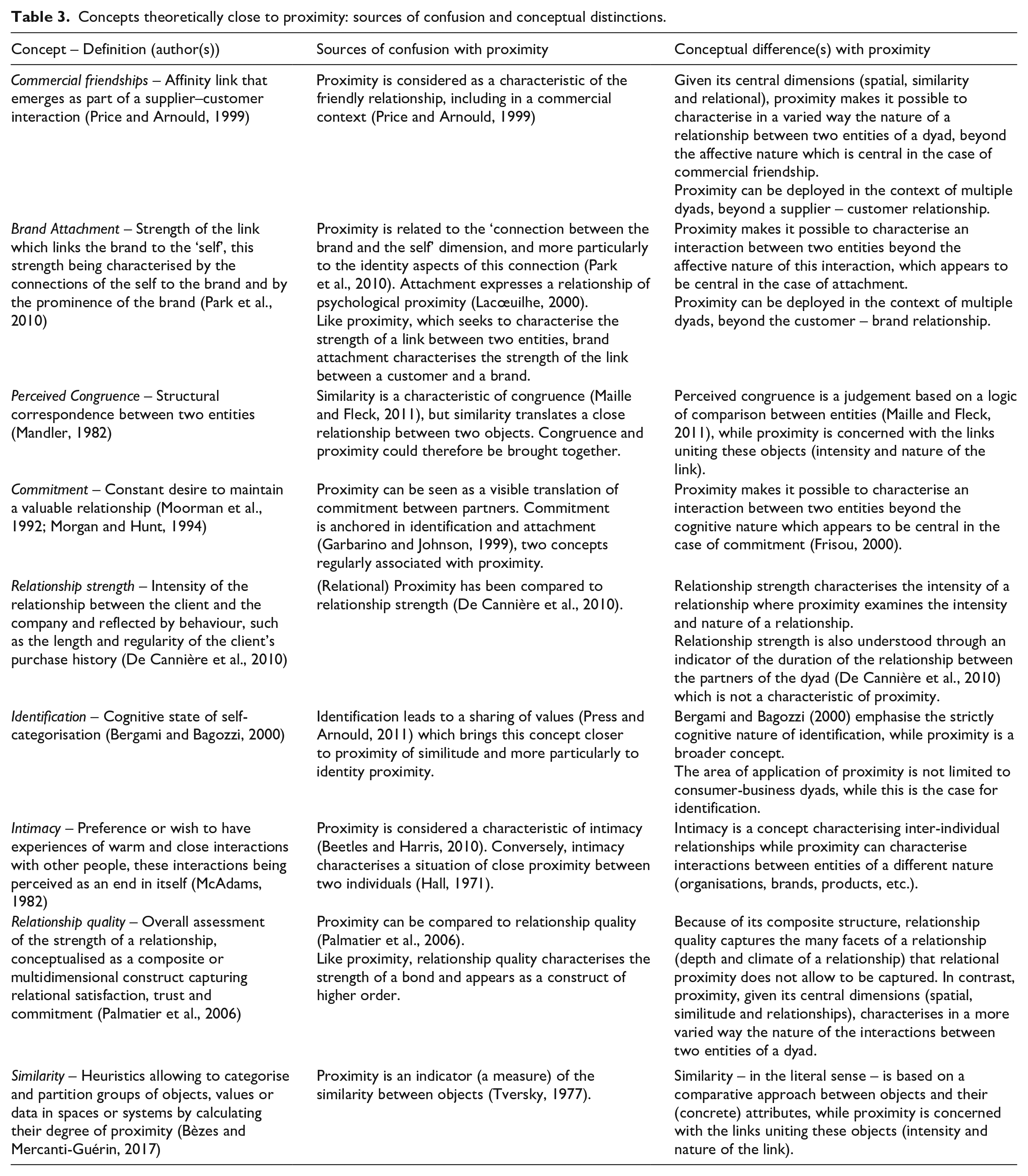
Based on this work of characterisation and definition, proximity can then be distinguished and positioned in relation to other similar concepts (Table 3).
Concepts theoretically close to proximity: sources of confusion and conceptual distinctions.
It is first of all possible to distinguish it from similarity and congruence, concepts that characterise short distances between entities. However, similarity and congruence are judgements of comparison between objects based on their concrete attributes (Tversky, 1977) or structures (Mandler, 1982). In contrast, proximity does not compare entities but characterises the nature and strength of their bond.
Proximity is also theoretically close to several concepts from relationship marketing that distinguish, like proximity, the nature and/or strength of the link between entities. Several concepts thus specify the links between entities from a cognitive perspective. This is the case with identification and commitment, which are mainly used to assess interactions between customers and organisations, and which can be compared to particular forms of proximity of similarity. In contrast to these concepts, proximity offers the possibility of appreciating interactions without restriction on their exclusively cognitive nature and on the type of dyad concerned. Proximity can also be compared to relationship quality. Relationship quality is commonly associated with relational proximity (Palmatier et al., 2006). However, its field of definition is restrictive in comparison with the concept of proximity, which also includes another form of affinity proximity (proximity of similarity) and spatial proximity. As for the strength of the relationship, it could also be compared to relational proximity (De Cannière et al., 2010). However, the characterisation of proximity shows that this concept corresponds to a state reflected by real or perceived affinities within a dyad located in space and time. The strength of the relationship therefore reflects behavioural variables likely to interact with proximity, rather than a form of proximity.
Other concepts allow the study of interactions between entities from an affective perspective. This is the case for commercial friendship (Price and Arnould, 1999), attachment (Park et al., 2010) and intimacy (Beetles and Harris, 2010). These concepts could be compared to relational proximity in the case of interactions between customers and suppliers or brands. Again, however, proximity appears to be a concept capable of encompassing more diverse aspects of the nature of relationships between different entities.
Towards a theoretical model of proximity in marketing
Measurement model of proximity
Several research studies in marketing propose to operationalise the dimensions associated with proximity, most often in specific dyadic contexts. A close examination of these studies makes it possible to distinguish different types of proximity measurement models. One approach leads to the differentiation of objective and subjective measures, these two types of measurement models echoing the conceptualisation of proximity both as an objectifiable state and as perception. Objective measurements concern in particular spatial proximity, which is understood through the distance between two entities (individuals and/or organisations) using global positioning system (GPS) positions, postal codes or declarative data concerning the estimated distance (in metres or kilometres) with the partner (Ganesan et al., 2005; Geldes et al., 2015; Meyners et al., 2017; Spiekermann et al., 2011). Subjective measurement studies are part of the psychometric tradition of marketing research and focus on the perceptions of different forms of proximity, whether in terms of spatial proximity – then understood in terms of temporal perception and convenience – or affinity proximity. In this measurement family, with the exception of Mende et al. (2013), who see it as a formative construct, existing studies hypothesise that proximity is a construct of a reflective nature.
A second type of structuring approach leads to distinguishing one-dimensional (1D) and multidimensional measures of proximity. In the case of 1D approaches, the research work does not capture a generic level of proximity through an aggregated measure but measures a particular form of proximity, whether relational (Barnes, 1997; Dubois et al., 2016; Salerno, 2001; Tu et al., 2015), cognitive (Ferguson et al., 2005) or psychological (Ghorbani et al., 2013). With the development of increasingly extensive visions of proximity, recent studies have developed multidimensional measures integrating spatial and non-spatial dimensions of proximity (Hérault-Fournier et al., 2012, 2014; Gahinet and Cliquet, 2018; Geldes et al., 2015; Labbé-Pinlon et al., 2016; Vyt et al., 2017). These multidimensional measures of proximity invite us to consider proximity as a higher-order construct (Labbé-Pinlon et al., 2016). More precisely, the conceptualisation proposed in this article leads to consider proximity as a third-order construct with two dimensions – spatial and affinity – within which the affinity dimension is itself a second-order factor which aggregates similarity and relational proximity.
Antecedents of proximity
The development of the model continues by positioning the construct of proximity in relation to the concepts which are linked to it. Regarding the antecedents of proximity, a detailed review of the literature reveals that all of the antecedents identified are dyadic in nature and systematically involve partners linked through the exchange. However, they differ according to whether they are functional or relational. The former tend to entail technical antecedents with an objective nature, such as the specificity of the assets, when the latter instead are subjective, psychological antecedents, such as identity similarity (Table 4).
Antecedents of proximity: empirical studies. 4
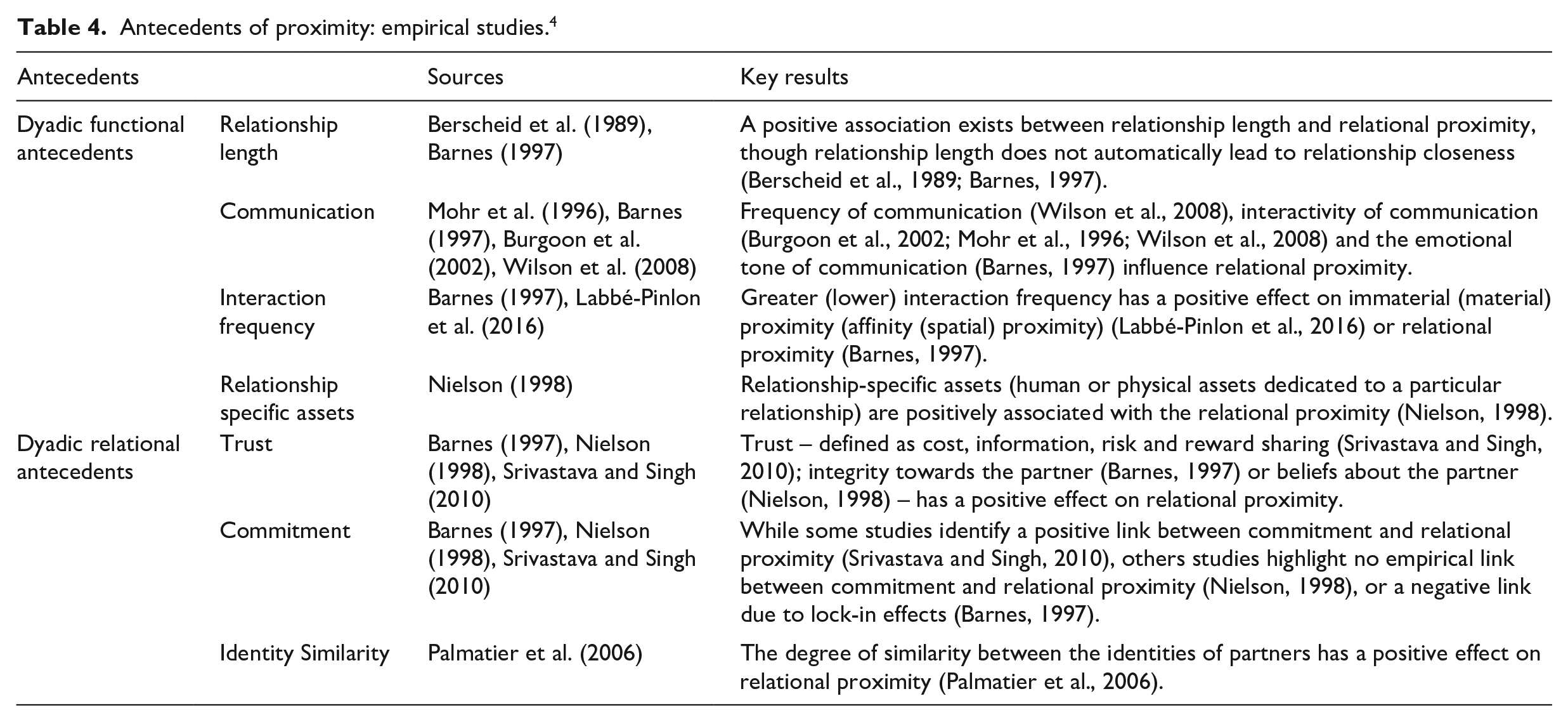
Several points deserve attention regarding the analysis of the antecedents of proximity. First, few empirical studies have addressed the etiological elements associated with proximity. At an academic level, this lack of consideration of antecedents prompts some researchers to call for more comprehensive models that identify drivers of proximity (Meyners et al., 2017). At an operational level, the situation also is problematic, in that a clearer understanding of the antecedents of proximity could enhance the returns on the investment that companies make to capitalise on a proximity strategy through their marketing efforts (Reinartz and Kumar, 2003).
In parallel with this dearth of empirical research, no extant research defines determinants of spatial proximity, probably due to the allegedly objective nature of this form. Yet several authors contest this view, highlighting the perceptual nature of this dimension (Harrison-Hill, 2001; Meyners et al., 2017).
Furthermore, though some studies appear guided by a relative empiricism, such that the choice of antecedents appears discretionary on the part of the researchers (Barnes, 1997), others address the specific mechanisms that underlie the forms of proximity that arise between partners. Whether functional or relational, these antecedents increase the cognitive salience of the partners in a dyad. They facilitate each partner’s presence in the other’s mind and thereby increase proximity (Barnes, 1997). Moreover, functional and relational antecedents reduce uncertainty within the dyad and promote the emergence of relational proximity, whereas increased uncertainty has the opposite effect and expands distance within the dyad (Wilson et al., 2008). Finally, the frequency and anteriority of interactions offer more precise insights into expectations of the partner, such that the latter’s behaviour become more predictable and comprehensible, even in the case of hidden behaviour or when information is lacking (Mende et al., 2013).
When the results do not converge, a question of Generalisability also arises. Heterogeneous results might reflect contextual effects that determine the relationship between its antecedents and proximity. Some studies also refer to the relationship between proximity and its antecedents as correlational, whereas others predict causal relationships (Nielson, 1998).
Finally, a detailed analysis of relationship marketing literature leads us to question the status of certain variables that are alternatively considered as antecedents or consequences. This is the case for frequency of interactions, communication, 5 trust and commitment, which are considered as antecedents of proximity in some studies (Table 4), and as consequences in others (Table 5). These opposing causal relationships can be explained by non-homogeneous conceptualisations of proximity. In particular, the dual conceptualisation of spatial and affinity proximity often leads researchers to postulate differentiated causal relations. However, the existence of relational chains validated by several empirical studies leads one to position communication and the frequency of interactions as antecedents of proximity (Palmatier et al., 2006; Wilson et al., 2008). Likewise, perceived value, satisfaction and perceived quality appear as established consequences of proximity (Table 5). In relationship marketing literature, these concepts are antecedents of commitment and trust. As a result, commitment and trust should be positioned more as consequences of proximity than as antecedents. However, this clarification of the causal chains between proximity and these concepts does not exclude the possibility of two-way relationships (Mende et al., 2013).
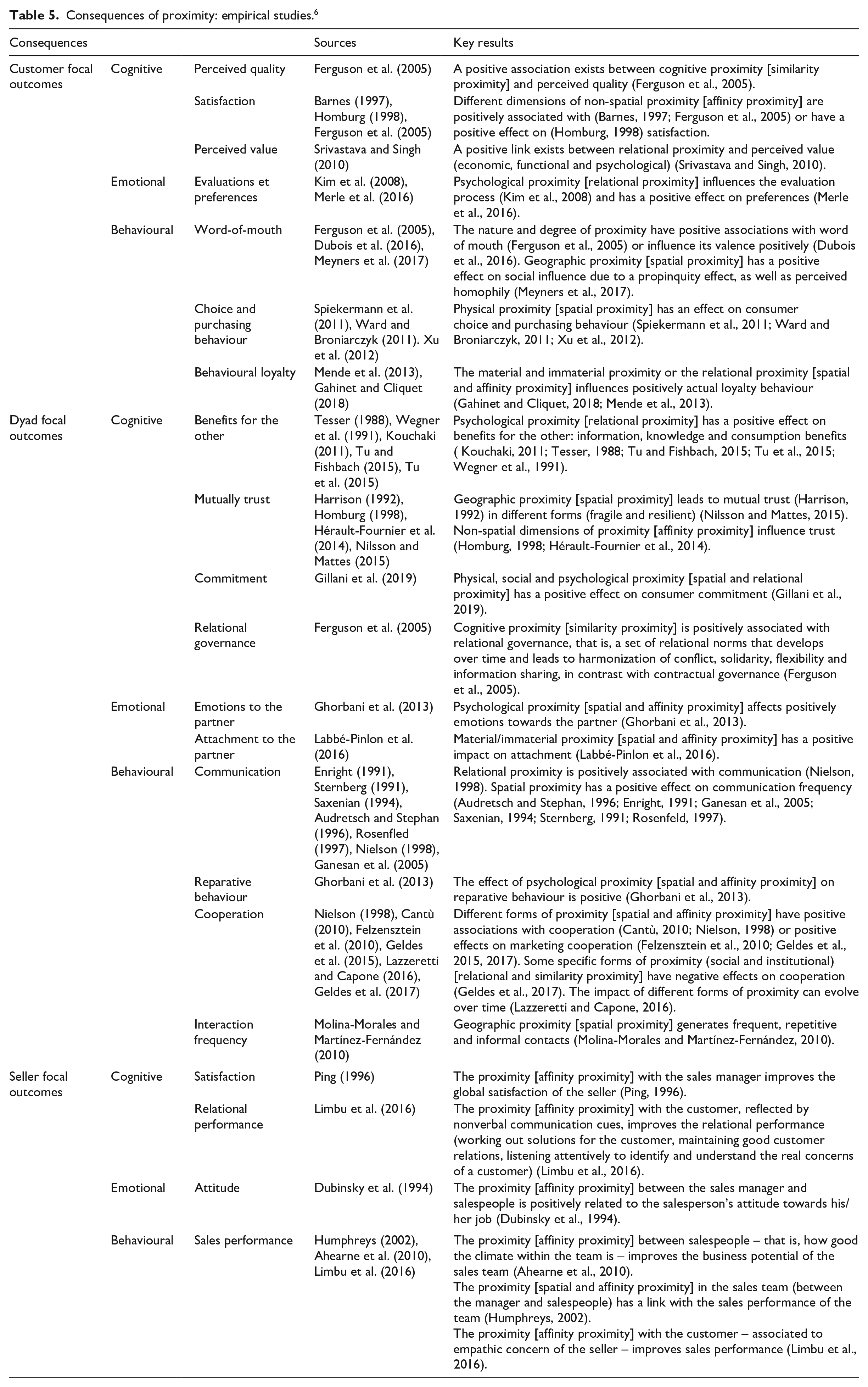
Consequences of proximity: empirical studies. 6
Consequences of proximity
Many more empirical studies have analysed the consequences of proximity (Table 5). To provide a structured approach to these consequences, a pertinent classification distinguishes whether they affect the customer (individuals or organisations), the seller/supplier or the dyad, as in the case of relationship marketing models (Palmatier et al., 2006). That is, some studies predict that proximity mainly influences customers’ judgements, others that it impacts sellers’ behaviour, and finally some studies anticipate primarily effects on interactions between exchange partners. Another categorisation might define the consequences of proximity according to their cognitive, affective or behavioural nature.
Several notable insights emerge from this consideration. First, unlike studies of the antecedents of proximity, prior research into its consequences often takes a dualistic view, integrating both spatial and non-spatial dimensions of proximity. Such work details mechanisms associated with the effects of different forms of proximity. For example, in relation to spatial proximity, small geographical distances between partners seemingly should generate positive effects (Meyners et al., 2017; Molina-Morales and Martínez-Fernández, 2010), implying a nearly magical effect of spatial proximity (Ganesan et al., 2005). However, spatial proximity only functions through an articulation with other forms of proximity, which can improve relationship quality and generate positive consequences overall. Spatial proximity also can disguise other forms of affinity proximity that tend to affect the behaviour of one partner or the interaction between partners (Cantù, 2010; Ferguson et al., 2005; Nielson, 1998). If spatial proximity is a non-sufficient condition ( ‘far-but-close’ paradox) to generate positive relational externalities, then the spatialisation of the interaction becomes a critical facilitator of social practices and therefore of all dyadic consequences that are behavioural, namely communication, frequency of interactions and cooperation (Nilsson and Mattes, 2015).
Second, similar to the relation between proximity and cooperation (Geldes et al., 2017), prior contradictory results illustrate some paradoxical effects of proximity (Carbonara and Giannoccaro, 2011; Geldes et al., 2015). Yet extant literature strongly emphasises the positive consequences associated with proximity (Boschma, 2005). Low proximity may fail to generate positive benefits for dyadic partners; excessive (spatial and/or affinity) proximity also may be likely to generate negative consequences, such as lock-in effects that induce relational asymmetry, power effects and dependence (relational, informational and functional) on the part of one partner who then cannot easily exit the relationship (Anderson and Jap, 2005; Geldes et al., 2015). These results lead to the conclusion that, in a relation such as that between proximity and cooperation, non-linear effects should be considered. Put differently, proximity can increase cooperation between partners up to a certain threshold, beyond which some negative consequences are likely to emerge. Thus, some studies also predict non-linear effects of proximity (Dampérat et al., 2016; Trope et al., 2007; Uzzi, 1997).
Based on these previous empirical studies identified, summarised and discussed, Figure 1 present a theoretical model of proximity integrating the concept, its main dimensions, antecedents and consequences. The perception of dyadic functional and relational antecedents can generate the emergence of different forms of proximity between the dyad’s entities. Proximity then fosters the development of trust, commitment, loyalty and all of the consequences identified in the model. Proximity appears to be the first link in the relational chain, and therefore a pre-requisite for the serial mediation chain usually developed in relationship marketing such as value – satisfaction – trust – commitment (Chaudhuri and Holbrook, 2001). Moreover, as relationships among different concepts may be different in nature and valence, or non-linear depending on the entities involved in the dyad, it appears necessary to introduce moderators in the conceptual model, such as the type of dyad and the characteristics of the entities (particularly the relational orientation). From a theoretical standpoint, the proposed model has several advantages. First, it is an initial integrative perspective concerning proximity in marketing. It develops a modelling of the concept and an identification of the main antecedents and consequences. Second, in contrast with traditional models in relationship marketing (Palmatier et al., 2006), the proximity framework appears original through the joint integration of spatial and relational characteristics to explain interactions between actors. Finally, the proximity-based approach also leads to a shift from a unidirectional view of dependence effects to a bidirectional view and the emergence of interdependence effects.
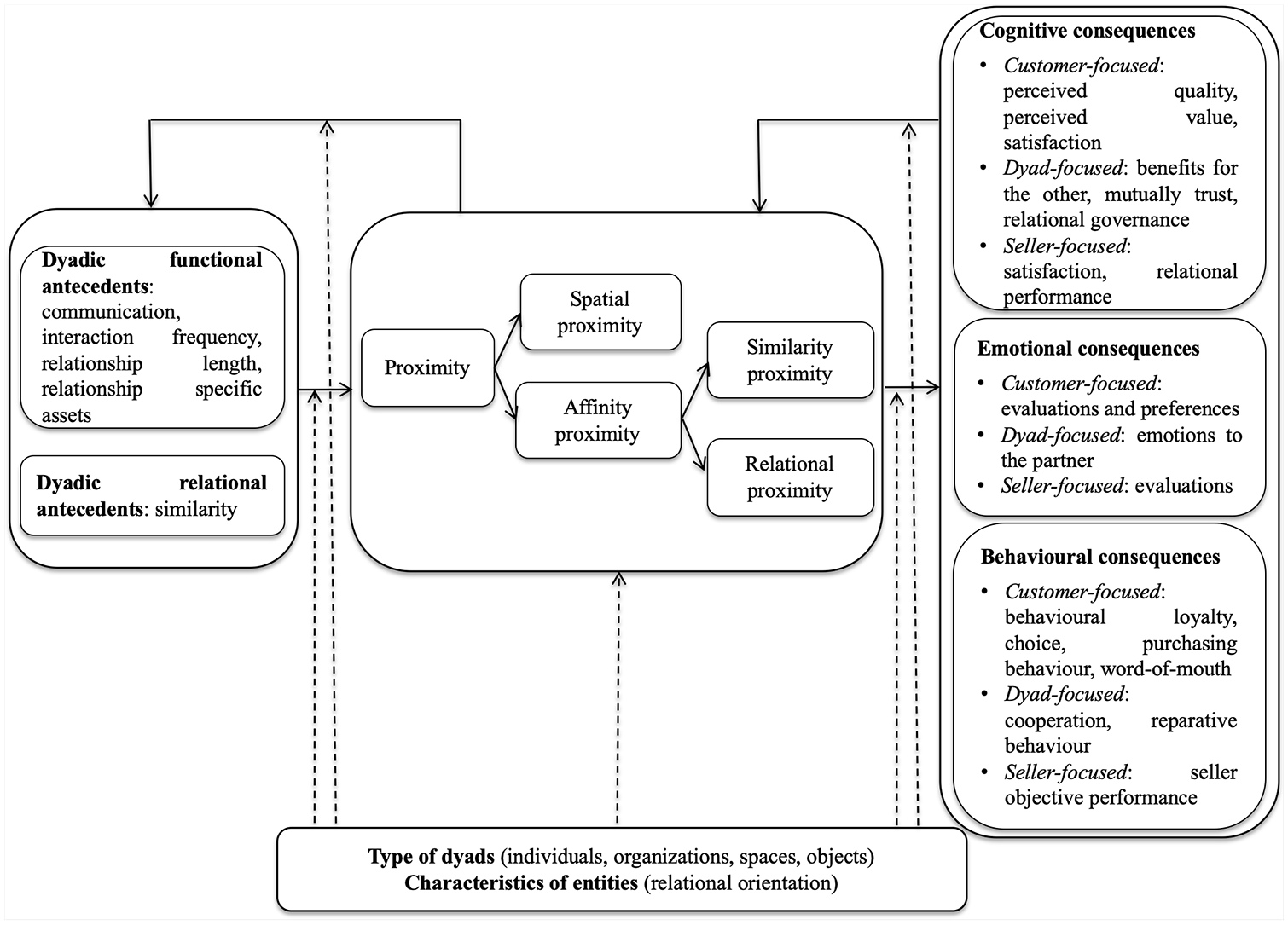
Theoretical model of proximity.
Managerial contributions of proximity
The framework of proximity also demands consideration of the potential contributions of this analysis from a managerial standpoint. At the managerial level, applying the proximity concept mainly entails renewing reflections dedicated to relationship marketing. By mobilising proximity, managers can move away from a customer-centric view to take a dyadic view, and accordingly analyse potential benefits for each stakeholder, as well as determine the mutually shared elements for every partner involved in the exchange (Möller and Halinen, 2000).
Beyond this change of perspective, two further lines of inquiry pertaining to proximity have notable managerial implications and echo the previous theoretical model:
To identify pathways to create long-term relationship through proximity and its different dimensions.
To assess the effectiveness of relationship marketing strategies using proximity.
First, drivers of long-term relationships might not apply in contexts that highlight the limits associated with relationship strategies (De Wulf et al., 2001). Simultaneous considerations of spatial and affinity dimensions of proximity (Figure 1) thus could enrich the strategic options available to managers. Such a proximity-oriented approach suggests that many drivers (spatial, relational, similarity, etc.) can create and strengthen relations with customers. In competitive market environments such as in retailing, firms have more chances to build strong, differentiated relations with customers by developing varied forms of proximity. Several empirical studies demonstrate the importance of mobilising jointly different forms of proximity to create long-term relationships with customers (Gahinet and Cliquet, 2018; Labbé-Pinlon et al., 2016; Schultz et al., 2016; Vyt et al., 2017). In particular, these works suggest that store chains should not simply foster spatial proximity (through strategies of spatial implementation of stores) but also develop in parallel forms of affinity proximity (e.g. with the help of frontline staff, partnerships with local actors and events with local associations) to encourage the emergence of strong and long-term relationships. In other contexts, such as the banking and insurance sector, where customer relations are now managed – partially or totally – remotely, an enduring relationship with the customer requires the development of a relational proximity with the advisor, even if s/he is spatially distant (Dalla Pozza and Texier, 2017). This simultaneously leads the same companies to question the need of maintaining spatial proximity with their customers through a spatial network of agencies to cover a territory. Finally, for customer–product or customer–geographical space dyads, it is possible to optimise the positioning of a regional/local product (Merle et al., 2016) or a tourist destination (Ryan, 2002) according to the proximity perceived by the different customer segments.
Second, practitioners might examine the intensity of their relationship marketing strategies by investigating both the profile of customers who seek strong relations and the effects generated by intensified relationship marketing on the customer’s behaviour (Figure 1). Not all customers are interested in building strong commercial relations (Srinivasan and Moorman, 2005). However, few approaches exist to identify customers who might be promising candidates for strong relations versus those who perceive relationship marketing as intrusive (Ferguson et al., 2005). As Mende et al. (2013) demonstrate empirically, an approach based on proximity could explain the behavioural responses of customers (purchasing behaviour and behavioural loyalty) following the implementation of a relationship marketing strategy. Hérault-Fournier (2013) is also able to identify different customer segments based on perceived proximity scores, and therefore suggests more targeted marketing strategies according to the relational orientation of individuals. Managers are able to determine the relevance of permission marketing and adjust their relationship marketing strategies in terms of interaction frequency and tools (e.g. customised communication, information sharing and frontline employees). By considering proximity, managers also can efficiently allocate their relationship marketing expenditures on the customer segments with the strongest desire for strong relations (Palmatier et al., 2006).
Moreover, although most research works that use relational concepts (attachment, commitment and identification) conclude that firms should intensify their relationship marketing strategies (Gummerus et al., 2017), a proximity-based view offers more balance. In some cases, too much proximity leads to counterproductive results for the dyad (Ganesan et al., 2005). In industrial marketing for example, proximity with a customer might reduce opportunism and uncertainty and facilitate information transmission, yet it also can generate a lack of flexibility, relational inertia, or diminished innovation capabilities. In a digital context, Dubois et al. (2016) demonstrate empirically that a strong relational proximity between individuals leads to the sharing of messages with a negative content. This result invites companies to be careful regarding the nature of the proximity linking the members of their virtual communities and, in consequence, to be attentive in selecting the virtual platforms used to trigger effective word-of-mouth campaigns. Understanding the influence of proximity and its dimensions on the durability of the relationship, and evaluating partners’ expectations in terms of interaction intensity, are important research issues for efforts to deploy effective and targeted relationship marketing strategies.
Proximity in marketing: Defining a research agenda
The final section outlines eight avenues of research to support the emergence of a macro-analytical, decontextualised, conceptually unified vision of proximity in marketing. While several promising research avenues related to proximity might be applied to contexts such as mobility (Craig et al., 2017), social media (Dubois et al., 2016) and specific cultural or economic environments (Mason and Chakrabarti, 2017; Meyners et al., 2017), such contextual perspectives favour the further development of a micro-analytical approach. They are not consequently the primary focus of the following research agenda.
Understanding the role played by the different dimensions of proximity. To reflect the theoretical complexity of the concept, recent studies adopted a multidimensional perspective. However, these studies have not yet engaged in the analysis of the role played by the different dimensions of proximity, which can be assumed not to affect identically the relations between entities within a dyad. In a static perspective, this avenue of research could lead one to specify the relative weight of each dimension of proximity on subsequent concepts. In a dynamic perspective, it could lead one to identify sequentiality effects (e.g. successive influence of different forms of proximity) or complementary effects (e.g. spatial proximity to reinforce different forms of affinity proximity) between dimensions of proximity.
Developing a reliable and valid multidimensional proximity scale. Following the first avenue of research and reflecting psychometric traditions of research in marketing, the development of a reliable, valid, parsimonious model of proximity remains a major methodological challenge. Some existing measurement models offer insights into proximity in marketing, but measurement issues have not been considered a priority. To date, no instrument offers an integrative measure of proximity. Nor have any measurement scales undergone a complete process of validation. Further research is required that goes beyond clarifying technical aspects, such as the choice between reflective and formative models or first- and second-order factors (Labbé-Pinlon et al., 2016; Mende et al., 2013). The model developed in this study (Figure 1) leads one to consider proximity as a third-order factor, affinity proximity being a second-order factor aggregating relational and similarity proximities. Furthermore, the measurement of proximity would benefit from being apprehended by the intrinsic attributes of proximity (short distance and affinity) rather than by its antecedents (frequency of interactions) as proposed, for example, by Berscheid et al. (1989). This choice would limit the risk of confusion with other related concepts and could help resolve the contradictions observed in the nature of interactions between the dimensions of proximity. It could also help clarify the conceptual characteristics of proximity (content validity), its relation to similar concepts (discriminant and nomological validity), its ability to explain other variables (predictive validity), and its stability across different contexts.
Comparing the situations of desired versus enforced proximity. A worthwhile effort could try to distinguish desired from enforced proximity (Rallet and Torre, 1995; Torre and Talbot, 2018). In the former case, actors satisfy demands for proximity; in the latter, they engage in undesired proximity. This distinction seems relevant for various forms of proximity (spatial and/or affinity proximity) and different sorts of dyads (individuals and/or organisations). The moderated role of relational orientation also seems crucial in this perspective. This issue, up to now unexplored, could help clearly identify contexts leading to negative effects associated with proximity. It could also broaden managerial implications, especially for permission marketing.
Testing an integrative model of proximity. Given the need to develop a robust, integrated proximity framework, empirical tests of the model in Figure 1 should motivate continued research. This model is difficult to test in its entirety because of its integrative and decontextualised perspective, but it combines many antecedents and consequences of proximity. Simultaneous tests of several antecedents (functional and relational) could assess their relative weights and clarify which mechanisms underlie the formation of proximity. Empirical tests also could explain the influence of proximity on various consequences. Considering its dyadic nature, proximity likely has a stronger influence on dyadic outcomes rather than on individual customer outcomes. Empirical tests also might seek to confirm the existence of two-way relationships between proximity and concepts that appear simultaneously as antecedents and consequences, such as communication, interaction frequency and trust.
Identifying new antecedents and consequences of proximity. Researchers might offer extensions of the nomological framework. The current article reveals some weaknesses of analyses dedicated to the antecedents of proximity; future studies should seek to identify other antecedents that might favour or diminish proximity, such as uncertainty, relationship-specific investments, conflicts, or switching costs (Sharma and Patterson, 2000; Verma et al., 2016). Another required field of research involves determining the explanatory power of proximity for unidentified consequences, such as reciprocity, continuity expectations or behavioural loyalty (Trope et al., 2007; Verma et al., 2016). These different concepts are all key variables in relationship marketing whose links with proximity deserve to be explored. These concepts also offer the possibility to introduce the role of power more explicitly, up to now largely ignored in proximity studies (Torre and Talbot, 2018). Finally, marketing research could also take into account different contextual variables, whether they are marketplace characteristics (service versus product, B2B market versus B2C market), relational characteristics (relations with individuals versus organisations), or the characteristics of actors (relational orientation of actors) (Palmatier et al., 2006; Seiders et al., 2005). Indeed, these different variables are likely to affect the actor’s interactions. Their integration would explain, for example, why two customers with the same level of perceived proximity to a supplier do not cooperate in the same way or do not adopt the same purchasing or loyalty behaviour due to a different relational orientation. Moderators should be explicitly introduced into models dedicated to proximity. This would contribute to a better generalisation of the results.
Integrating proximity in traditional models of marketing. Furthermore, proximity should enter into traditional models of relationship marketing, such as the value–trust–commitment–loyalty chain. Following the theoretical model (Figure 1), proximity seems to be at the origin of such a relational chain. In consequence, proximity can act as a catalyst of the relationship and play a key role for renewing traditional relationship marketing. Testing such a model could also reveal the existence of a proximity mediation effect between a series of dyadic antecedents (functional and relational) and several relational consequences. This mediating role has to date been scarcely explored empirically (Mende et al., 2013). Doing so could help stabilise the conceptual position of proximity and empirically demonstrate its explanatory power relative to that of other key concepts in marketing (Srivastava and Singh, 2010).
Adopting dyadic methodological designs. The concept of proximity is dyadic, but empirical studies of the topic (except for Schultz et al., 2016) all take the perspective of one side of the dyad, such as the customer. Beyond this problematic gap between the conceptual nature of proximity and its empirical examination, such studies may disguise the presence of potential divergences, interdependence or discrepancies between actors. The nature or intensity of proximity likely differs between the actors in a dyad. Methodological designs that simultaneously assess proximity on both sides of the dyad, such as double-sided in-depth interviews, are required (Lindgreen, 2001).
Adopting longitudinal methodological de-signs. Studies of proximity generally adopt a short-term time horizon. However, from a cross-sectional perspective, the concept is inherently dynamic, and several works report changes in proximity over time (Balland et al., 2015; Mason and Chakrabarti, 2017; Nilsson and Mattes, 2015). Similar to perceived value or trust, proximity as a process that is likely to evolve over time offers some conceptual refinement. The use of panel data or longitudinal case studies would make it possible to take into account the dynamic nature of proximity, to identify the potential causes of its evolution, and to observe the concomitance of changes in perception between partners, such as for organisational identification (Press and Arnould, 2011). Longitudinal investigations also could assess the varying intensity and nature of proximity between two actors. Finally, such a dynamic approach could highlight interaction, complementarity and substitution effects across different dimensions of proximity (Boschma, 2005).
Conclusion
While there has been increasing interest in the concept of proximity among marketing scholars and practitioners, much remains to be done to define the concept, clarify its position in theoretical models and understand how to mobilise it for marketing. Prior academic efforts prioritise the theoretical heterogeneity of proximity, creating a vast number of dimensions, unclear relations with other concepts and difficulties comparing and generalising empirical results. The current synthesis therefore adopts a macro-analytical approach to clarify the concept of proximity in marketing and to position it within a comprehensive framework. Achieving a common understanding of this key concept is crucial to advance a cohesive body of knowledge and to make research outcomes more comparable.
In particular, this study identifies several criteria for categorising and characterising proximity. The in-depth analysis of prior literature reveals where proximity should be located within the complex network of key concepts that appear in marketing literature. This synthesis also calls on practitioners to re-examine issues related to relationship marketing by integrating the concept of proximity and offers guidelines to help them do so. Extensions of this macro-analytical approach also would open new avenues of research, leading to a better organised, unified representation of proximity in marketing.
Footnotes
Appendix 1
Article identification and selection process.
In this study, the narrative literature review method was chosen to synthesise existing literature (Laroche and Soulez, 2012). This approach has been favoured insofar as the objective is to clarify and consolidate the state of academic knowledge around proximity. In this perspective, several stages made it possible to delimit the perimeter of this literature review dedicated to proximity.
In the end, the literature review dedicated to proximity was carried out on the basis of 134 articles: 81 published in marketing journals and 53 published in non-marketing journals.