







Abstract
Following the February 6, 2023 earthquakes in Turkey, schools became key settings for children’s recovery, placing substantial demands on school counsellors. This qualitative study explored school counsellors’ post-disaster challenges and support needs through focus groups with 15 counsellors. Data were analysed using Braun and Clarke’s six-phase thematic analysis. Four themes were identified: system-level, organisational, professional, and personal challenges. System-level challenges included barriers to implementing psychosocial support materials, mismatches between disaster/trauma regulations and practice, and an insufficient number of school counsellors. Organisational challenges involved limited collaboration with teachers and inadequate administrative support. Professional challenges encompassed limited access to disaster-specific training, lack of trauma-informed supervision, and professional isolation. Personal challenges reflected significant psychological strain, as many counsellors were also disaster survivors. These findings highlight the need for comprehensive disaster preparedness and recovery planning that includes sustained institutional and psychological support for school counsellors, alongside strengthened pre-service and in-service training.
Introduction
In recent years, both global and regional disasters—ranging from pandemics to natural hazards like earthquakes—have increasingly impacted educational systems (Pacheco et al., 2021). Schools are often among the most affected institutions, with children particularly vulnerable to the psychological aftermath of such events. Following the devastating earthquakes in Turkey on 6 February 2023, ten cities experienced extensive destruction. The earthquakes affected 12,550 schools, 3,972,075 students, and 209,719 teachers (Aktaş Salman et al., 2023), prompting the Turkish Ministry of National Education (MoNE, 2023) to prioritise psychosocial support as a central part of the response. In the wake of schools’ phased reopening, the provision of psychosocial support within educational institutions emerged as a pivotal element of national recovery initiatives. In Turkey, although there is no single institutionalised national framework for educational responses to disasters, several structures operate in coordination (Yıldız et al., 2023). The Ministry of National Education (MoNE), in collaboration with the Search and Rescue Unit (AKUB) and other public agencies, oversees the “Provincial Psychosocial Support Action Plans,” which are developed in advance by the Provincial Guidance and Research Centres (RAM) and implemented following emergencies. School counsellors played a key role in implementing these plans, often using psychosocial support manuals developed jointly by the MoNE (2023) and UNICEF. Approximately 4,720 school counsellors were assigned to provide this support in affected regions, yet the functional implementation of national intervention plans varied significantly across sites.
This variation highlights a critical need to examine how school counsellors experience centrally designed psychosocial support frameworks in real-world post-disaster contexts. Following large-scale disasters, school counsellors are expected to act as primary mental health responders within educational settings, yet their ability to fulfill this role is often shaped by institutional constraints, the emotional impact of crisis response, and their own exposure to trauma (Bellinger, 2023; Çitil Akyol, 2024; Crumb et al., 2021; Warbington et al., 2019). Despite this, most disaster intervention plans prioritise service delivery to students and families while paying limited attention to the lived experiences and needs of school counsellors themselves (Çitil Akyol, 2024; Crumb et al., 2021; Eberts, 2010). To address this gap, the current study adopts a trauma-informed school counselling perspective, recognising school counsellors not merely as implementers of top-down action plans but as emotionally impacted professionals whose interpretations and practices critically shape post-disaster intervention success (Adamson, 2018; Overstreet & Chafouleas, 2016; Rumsey et al., 2025).
The findings may inform policymakers seeking to strengthen school-based psychosocial support in post-disaster contexts, particularly by highlighting practices that participants perceived as useful and by pointing to potential considerations for resource prioritisation. The results also suggest implications for pre-service and in-service training for school counsellors, with attention to preparedness for mass trauma events. Finally, this study contributes to the literature by offering context-specific insights into school counsellors’ perceived needs in disaster-affected settings, which may guide the design of more responsive supports and interventions.
Literature Review
This study draws on literature examining school counsellors as frontline responders in disaster contexts and on principles of trauma-informed counselling. Early evidence suggested that disaster-related crises were among school counsellors’ lowest areas of self-reported readiness (Mathai, 2002). Similarly, in a survey of crisis situations, most school counsellors reported feeling only somewhat prepared or not very prepared to respond to natural disasters (Solmonson & Killam, 2013). The inadequacy of disaster-specific preparation is compounded by heavy workloads, high student-to-counsellor ratios, and insufficient district-level support, all of which constrain counsellors’ capacity to serve students effectively (Bellamy et al., 2019; Bellinger, 2023; Cole et al., 2013; Crumb et al., 2021; Le Brocque et al., 2017; Mathai, 2002).
Research examining hurricane-affected contexts in the United States identifies four interconnected barriers: insufficient formal disaster mental health training that leads to reactive rather than proactive responses; the emotional toll of disaster work; multiple competing professional roles that limit service delivery; and the critical importance of professional support networks (e.g. Bellinger, 2023; Clettenberg et al., 2011; Crumb et al., 2021; Eberts, 2010)
Similarly, recent work following the Turkey earthquakes found that school counsellors identified three primary needs: practical, skills-based training in trauma intervention; psychological support for counsellors themselves, including supervision and psychoeducation; and professional support through collaboration and improved working conditions (Çitil Akyol, 2024). These findings across different geographic contexts and disaster types underscore fundamental systemic inadequacies in preparing and supporting school counsellors for crisis response.
A critical but often overlooked dimension of post-disaster school counselling is that counsellors themselves are simultaneously survivors of the same traumatic event (Bayhan et al., 2023; Çitil & Akyol, 2024; Eberts, 2010). This dual positioning creates heightened emotional vulnerability, as counsellors must manage their own recovery while supporting their school communities (Bayhan et al., 2023; Bellamy et al., 2019; Knight & Borders, 2018). The concept of the “wounded healer”—practitioners who, having experienced trauma themselves, are uniquely positioned to understand and support others in distress—becomes ethically complex in disaster contexts where boundaries between helper and survivor blur. This means that counsellors operate within a “shared traumatic reality,” necessitating support systems that promote their well-being while enabling professional responsibilities (Adamson, 2018).
Beyond individual preparation, research identifies supervision and organisational support as essential infrastructure for sustainable disaster response (Çitil Akyol, 2024). Trauma-informed supervision differs significantly from conventional clinical models, engaging with complex multi-layered systems, addressing multiple sources of stress, and acknowledging marginalisation and resilience (Adamson, 2018; Knight & Borders, 2018). Such supervision functions as “multiple holding”—a layered network of support linking supervisory relationships, collegial connections, and wider professional communities to create a “chain of containment” that enhances system resilience (Adamson, 2018). Administrative and collegial support significantly enhance counsellors’ perceived job efficacy and professional well-being, while their absence contributes to professional strain and burnout (Eberts, 2010).
Despite consistent findings across disaster settings, a key gap persists. Existing studies on school counsellors’ post-disaster roles are concentrated in the United States, particularly in hurricane contexts (e.g. Bellinger, 2023; Clettenberg et al., 2011; Crumb et al., 2021; Eberts, 2010), and often treat preparedness and role challenges in isolation rather than examining counsellors’ lived experiences implementing structured response frameworks amid institutional constraints and personal vulnerability (Bellinger, 2023; Clettenberg et al., 2011; Crumb et al., 2021; Le Brocque et al., 2017; Mathai, 2002). Although international guidance increasingly calls for evaluation and implementation research within disaster-response systems (Reifels et al., 2013), few studies show how centrally designed programmes are enacted and adapted on the ground. Given Turkey’s recurrent large-scale earthquakes and the pivotal role of schools in recovery, this study investigates school counsellors’ experiences implementing Turkey’s Post-Earthquake Psychosocial Support Action Plan, focussing on practice at the intersection of institutional expectations and personal vulnerability.
Methods
This study addresses the following research question: What challenges did school counsellors encounter when implementing post-disaster psychosocial support following the February 6, 2023, Turkey earthquakes?
A qualitative research design employing focus group interviews was chosen because the research question requires understanding how school counsellors interpret, experience, and make meaning of their post-disaster role and institutional context. Qualitative inquiry is particularly appropriate when the research aim is to explore how individuals construct meaning about complex phenomena within specific social contexts, especially when that phenomenon is culturally situated and influenced by institutional structures (Rossman & Rallis, 2016). Focus groups specifically were selected as the data collection method because they create opportunities for participants to construct meaning collaboratively and to explore shared experiences within group discussion, where participants build on each other’s accounts and clarify collective understandings (Kitzinger, 1995). This approach enabled school counsellors—who shared the common experience of implementing the same national psychosocial support action plan within similar institutional contexts—to articulate both individual experiences and collectively recognised challenges. Data were analysed using thematic analysis as described in Braun and Clarke’s (2006) six-phase procedure for qualitative data analysis. This method systematically identifies patterns of meaning across the complete dataset through data-driven coding, organisation of codes into themes, and iterative refinement of thematic structure. Thematic analysis was selected because it allows researchers to identify and interpret recurring ideas, concepts, and patterns of meaning across multiple participants’ accounts, thereby illuminating shared challenges, institutional barriers, and contextual factors that shaped counsellors’ post-disaster experiences (Braun & Clarke, 2006).
Participants
Fifteen school counsellors employed in earthquake-affected regions participated in the study (Mage = 35.8 years, range = 27–52; Mexperience = 11.7 years, range = 6–22; 5 male and 10 female). Participants represented multiple educational levels: kindergarten (n = 2, 13.3%), primary school (n = 5, 40%), middle school (n = 2, 6.7%), and high school (n = 6, 40%). Geographic distribution included Adana (n = 8), Hatay (n = 5), and Kahramanmaraş (n = 2). Nine participants reported prior training in trauma-related topics; five had previous professional experience in trauma-related fields. Educational attainment included bachelor’s degrees (n = 10) and master’s degrees (n = 5). Detailed participant characteristics are provided in Table 1.
Participants’ demographic information.
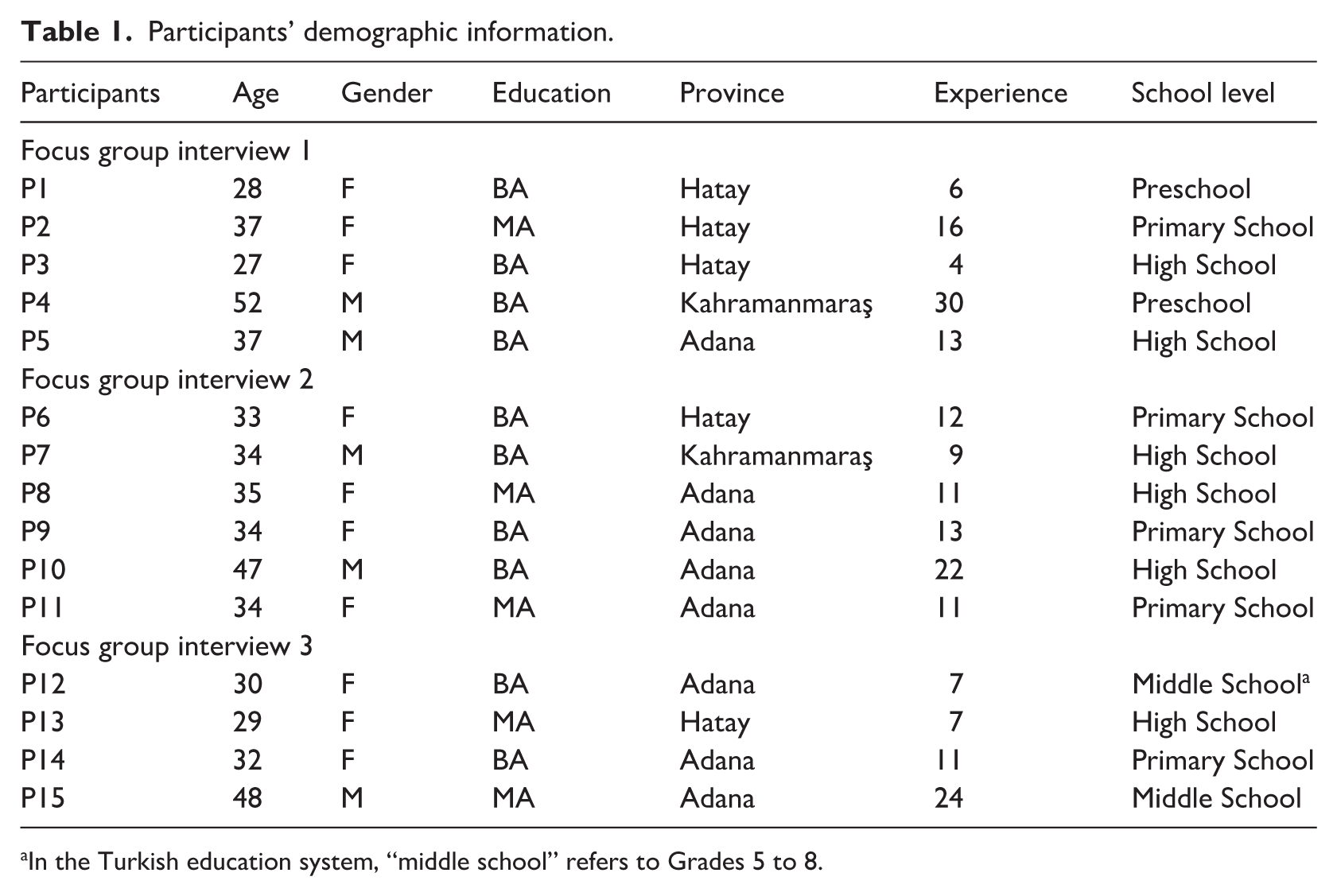
In the Turkish education system, “middle school” refers to Grades 5 to 8.
Participants were recruited through announcements in WhatsApp groups and professional communication networks used by school counsellors in affected regions, employing snowball sampling methodology. Snowball sampling was appropriate because school counsellors across earthquake-affected regions form a dispersed population without a comprehensive sampling frame, making the entire population difficult to enumerate (Patton, 2014). This method enabled recruitment of counsellors who maintained active engagement in post-disaster psychosocial support work within their schools. Inclusion criteria required participants to: (1) maintain employment at the same educational institution following the earthquake; (2) actively implement post-disaster psychosocial support activities; and (3) have direct experience with schools’ reopening and post-disaster recovery processes. Participants were excluded if they self-reported acute severe personal loss or injury (e.g. death of an immediate family member or serious injury) that they felt would make participation distressing, or if they had been reassigned outside the disaster-affected school context at the time of the focus group. These criteria were applied during screening to minimise undue distress and to maintain a consistent institutional context for discussion.
Procedure
Three focus group interviews were conducted online via Zoom in July 2023 (July 20, 21, and 26), approximately 4.5 months following the earthquakes. Each focus group lasted 1.5 to 2 hr. Group sizes were five, six, and four participants respectively, based on participant availability. The first author, a licensed trauma counsellor with expertise in school counselling and trauma intervention, moderated all three focus groups. The second and third authors observed and took field notes, ensuring comprehensive documentation of discussions and non-verbal dynamics.
Focus groups addressed two principal questions: (1) Can you describe your experiences as a school counsellor following the earthquake? and (2) Upon resuming your duties in school post-earthquake, what challenges did you encounter, and what resources and support were necessary to navigate these difficulties? These open-ended questions allowed counsellors to direct discussion towards topics they deemed most salient, while follow-up probes enabled deeper exploration of specific challenges, institutional barriers, and support needs.
All focus groups were audio-recorded with participants’ explicit informed consent and subsequently transcribed verbatim by the third author. Interviews were conducted in Turkish with native Turkish-speaking participants, and the Turkish transcripts were analysed using thematic analysis. Once themes were developed, selected quotations were translated into English, cross-checked using two AI-assisted translation tools, and finalised by the authors to ensure conceptual equivalence, clarity, and fidelity to the original meaning.
To ensure participant emotional safety during discussion of potentially distressing experiences, the moderator employed trauma-informed research practices, including grounding techniques, periodic emotional check-ins, and structured closure exercises (Isobel, 2021). Data saturation—the point at which new interviews produce no substantially new information—was assessed after the third focus group, when participant responses began repeating previously identified themes without adding novel insights, supporting the sufficiency of the sample (Guest et al., 2006).
Data Analysis
Inductive, data-driven thematic analysis was conducted following Braun and Clarke’s (2006) six-phase procedure. The third author initially transcribed all audio recordings verbatim; the first and second authors then conducted careful reviews of transcripts to ensure complete immersion in the data. Coding was performed using MAXQDA 24 software without a pre-existing coding framework, allowing concepts and codes to emerge from the data itself. Initial inductive coding yielded 213 codes representing salient meanings expressed by participants.
Semantically related codes were systematically grouped into preliminary sub-themes through iterative review and collaborative team discussion. Preliminary sub-themes were refined through multiple recursive cycles of comparison and interpretation conducted by all three researchers working together. Final themes were conceptualised as distinct yet interrelated, organised across system-level, organisational, professional, and individual domains. A thematic map was developed to visualise and clarify relationships between themes and sub-themes—for example, illustrating how systemic issues (such as staffing shortages and delays in disseminating materials) shaped organisational dynamics (such as limited teacher collaboration), which in turn influenced professional capacity for collegial support and counsellors’ individual emotional well-being.
To enhance analytic credibility and trustworthiness, analyst triangulation was employed throughout coding and theme development, with all three researchers collaborating on coding decisions and theme refinement. A member-checking procedure was conducted with one participant affiliated with a non-governmental organisation, who reviewed the thematic structure and findings against her field notes to validate alignment. An audit trail documenting coding decisions, theme definitions, and analytical justifications was systematically maintained using MAXQDA 24’s built-in documentation features, enabling transparency and reproducibility of analytical choices.
Reflexivity was actively maintained throughout the research process through regular team debriefing sessions. The research team explicitly acknowledged how their professional backgrounds—the first author’s expertise in trauma-informed school counselling and the second author’s experience in crisis education—shaped both data interpretation and facilitation. Team members openly discussed the emotional and ethical dimensions of conducting research with professionals who were simultaneously disaster survivors themselves. Despite geographic distance from the earthquake epicentre, the team acknowledged that the magnitude of destruction and documented systemic inadequacies in post-disaster response affected their own engagement with the material, generating feelings of concern and moral commitment. These emotional responses were explicitly processed in debriefing meetings, and conscious efforts were made to bracket assumptions and remain grounded in participants’ voices throughout interpretation and analysis.
This research received ethical approval from Yeditepe University Research Ethics Committee (reference number E.50532705-604.02-6467). All participants provided informed written consent. Confidentiality was maintained throughout data collection, analysis, and reporting through use of participant identification numbers and removal of all personally identifying information from transcripts.
Results
Our analysis resulted in four interpretive themes, which encompassed nine sub-themes illustrated in Figure 1: (1) System-Level Challenges, (2) Organisational-Level Challenges, (3) Professional-Level Challenges, and (4) Individual-Level Challenges. These outcomes will be further elaborated upon with quotes from the participants, with all personal identifiers removed to ensure privacy.
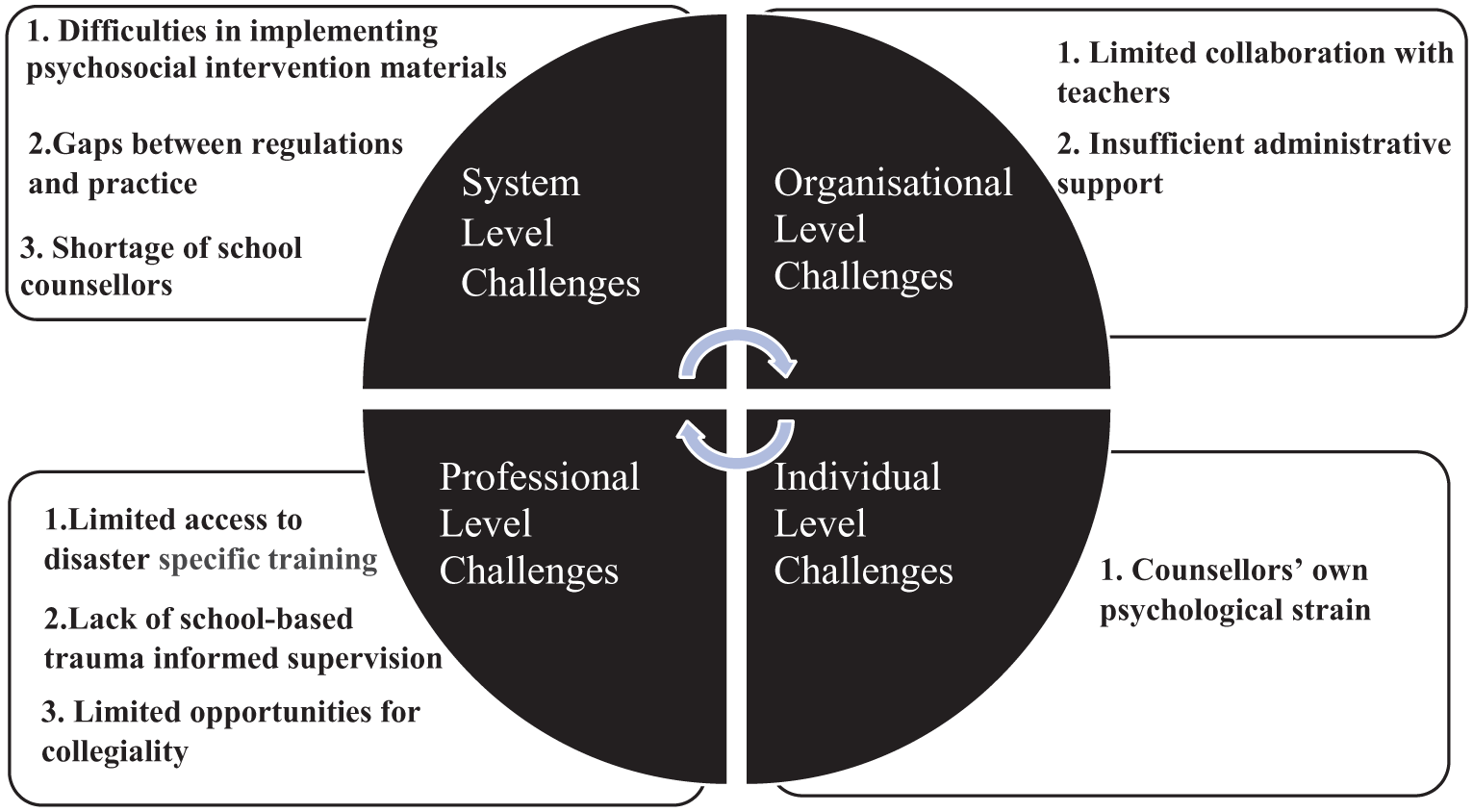
The data analysis identified four themes and nine sub-themes.
Theme 1: System-Level Challenges
The first theme, System-Level Challenges, captures the structural and policy-related barriers that constrained counsellors’ ability to deliver post-disaster psychosocial support in line with official guidelines. These challenges include misaligned intervention materials, ineffective implementation of regulatory frameworks, and insufficient staffing. This theme comprises three sub-themes, each of which is outlined below.
Difficulties in Implementing Psychosocial Support Intervention Materials
Following the earthquake, as schools gradually reopened, school counsellors engaged in delivering psychosocial support as part of the Post-Earthquake Psychosocial Support Action Plan devised by MoNE (2023). While executing this plan, which was supplemented with UNICEF-supported resources, counsellors faced challenges in effectively implementing the psychosocial support materials and programmes. The focus group discussions with the school counsellors revealed these difficulties, highlighting the delay in receiving guidance and materials from MoNE as a significant hindrance. Counsellors awaited these resources to implement psychoeducational plans and activities. This information has been marked as delayed based on school-level preparation reports, with one report highlighting the specific responsibilities of MoNE in this context, as “What happened at the school level? Again, we were unprepared. They informed us that psychoeducation plans and activities would be provided by the ministry. Act accordingly. We didn’t initiate any activities ourselves. We waited. But they arrived late” (P5). Furthermore, the implementation plan, which comprised three sessions for teachers and parents and eleven for students, was deemed insufficient due to the large group sizes, limited time, and resistance to psychological support. The counsellors noted issues with managing group sessions within a semester and adapting the programmes for larger class sizes than the materials were originally designed for, leading to extended sessions that could not be accommodated within the standard class periods.
Additionally, the structure of the 11-session psychoeducation programme for students was challenging to execute within the truncated school calendar, further complicating the implementation efforts. The participants described the sessions as follows:
We were told to conduct psychosocial support interventions with three sessions for teachers and three sessions for parents. Even if I call the parents in groups of 10 or 20 people, I cannot complete the three sessions in a semester. Also, don’t forget that our people resist such things. (P5)
Similarly, another participant emphasised the inadequacy of the programme and supporting materials, noting that: “The support materials were good. I had a problem with the activities though. The Ministry of National Education prepared a programme for classes of about 20 students, but mine had 40. The sessions were too long, not finishing during the class period” (P11).
It is noteworthy that the opinions on this issue are generally similar, especially the comments regarding the implementation period, as “The Ministry wanted us to conduct an 11-session psychoeducation study for students. Initially, they said one session per week, but there were not 11 weeks left after school opened. Due to lack of time, we could not implement all 11 sessions” (P7).
The expressions indicate that school counsellors encountered substantial challenges in implementing the MoNE psychosocial support materials within real-world school settings. These difficulties suggest a pressing need to critically review and adapt the existing materials to ensure greater contextual relevance and practical applicability in the field.
Gaps Between Disaster/Trauma Regulations and Practice
The school counsellors voiced their concerns regarding the effectiveness of the “Psychosocial Protection, Prevention, and Crisis Intervention Services Directive” issued by MoNE in April 2019. This directive aimed to create a comprehensive framework for addressing disasters and traumatic events in schools, outlining the roles of various educational stakeholders, including school administrators, teachers, and psychological counsellors, in ensuring preparedness for and coordination of psychosocial support during crises. Despite its ambitious goals, the counsellors reported that the directive’s implementation largely remained theoretical, lacking tangible application within the school environment. Participants stated that although disaster and trauma teams have been established in schools as required by regulations, their activities generally do not go beyond paperwork, and that meeting notes and team formation are merely a formality: “We have a disaster and trauma team in schools. There are regulations for this. We prepared excellent meeting notes, but they only remain on paper. They have no practical use” (P6).
Another statement indicated a significant difference between regulations and practice: “Although the regulations specify the establishment of psychosocial intervention teams and explain how they will respond to incidents, the teams are, so to speak, more of a formality” (P2), emphasising the ineffectiveness of existing preparedness plans. Another statement regarding the lack of implementation of policies was made regarding the implementation and monitoring of these policies at the school level: “According to the policy, there should be a crisis response committee. A committee is established at the beginning of each academic year, but this committee never meets. It’s as if they only meet for appearances” (P15). Participants highlighted a common problem in the implementation of disaster and trauma response plans, revealing a disconnect between the policy’s objectives and their practical implementation in schools. This gap underscores the need to more effectively translate policy directives into actionable strategies that will truly support schools in managing and responding to crises.
Shortage of School Counsellors
There was a consensus among the study participants in terms of a pronounced concern regarding the current shortage of school counsellors in schools, with unanimous agreement on the necessity for MoNE to ensure a more optimal counsellor-to-student ratio. Participants particularly emphasised their experiences following the earthquake, where the existing counsellors, already stretched thin due to their limited numbers, struggled to meet the heightened individual needs of students amid the crisis. The inadequacy of the current system was vividly illustrated by one school counsellor as:
I currently have 500 students. I often don’t have the opportunity to meet with my students one-on-one. There are children in the school who have been traumatized. I can’t deal with all of them. If I am meeting with six of them, I sometimes have to make four of them wait. We need more psychological counsellors in schools to meet the needs. (P9)
That shared experiences point to a critical call for an increased presence of psychological counsellors in schools to adequately support student needs across varying circumstances.
Theme 2: Organisational-Level Challenges
The second theme, Organisational-Level Challenges, reflects how school-level relational and leadership dynamics shaped the feasibility and acceptance of psychosocial support efforts. Teachers’ resistance to collaboration and inconsistent administrative prioritisation functioned as key influences on implementation. This theme is divided into two sub-themes, each outlined below.
Limited Collaboration With Teachers
School counsellors noted that implementing post-earthquake psychosocial support activities was hindered by teachers’ perceptions that counselling and guidance activities added to their workload or had limited relevance to their immediate responsibilities. This perception limited collaboration between teachers and school counsellors both in routine school life and after the earthquake, and made participation in post-earthquake support efforts more difficult. One participant stated, “Whenever there’s an activity related to counselling and guidance—regardless of the topic—teachers see it as a burden and unnecessary. Therefore, it was difficult to conduct post-earthquake psychosocial support activities with teachers” (P3).
Additionally, counsellors pointed out a significant gap in teachers’ understanding of the importance and benefits of psychosocial support. Their comments underscore the need for educators to recognise how trauma affects students’ learning and behaviour and to understand that psychosocial support can significantly aid in students’ recovery. One counsellor criticised teachers’ lack of awareness about the long-term effects of trauma, saying: “One of the teachers said that `the earthquake is already over. Why should we do these psychosocial education sessions? We remind children of the moment of the earthquake. Their fears resurface again`” (P9). Another counsellor implied that teachers did not understand the nature of traumatic enactment. She said:
When I observed preschool classes, the most common play theme was the earthquake. Children used toys like bulldozers and cranes that evoked the event. I found the teachers inadequate: they dismissed the play with an attitude like ‘Earthquake? Let’s not talk about it! It’s over!’ In fact, if children wanted to play the earthquake game then, they should not have been prevented. (P1)
Taken together, these accounts highlight that limited trauma literacy among teachers functioned as a barrier to effective teacher–counsellor collaboration, underscoring the need for trauma-informed professional development for educators.
Insufficient Administrative Support
The school counsellors discussed the importance of administrative support for implementing psychosocial support efforts in schools following an earthquake. They observed that the value placed by the administration on these efforts, along with their ability to coordinate such support, significantly influenced the effectiveness and acceptance of these initiatives among other stakeholders in the school community. By prioritising these efforts through proper crisis management, the school administration would send a strong message about the importance of psychosocial support. This encourages greater buy-in, especially from teachers, which in turn enhances the overall resilience of the school community during the post-earthquake recovery process. Two quotations effectively capture this sentiment. One individual stated:
It matters how well your school principal coordinates with other institutions to overcome earthquake trauma quickly—I saw this firsthand. When the principal ensures coordination and prioritises psychological services, recovery is much faster. But if the principal doesn’t care or take it seriously, our efforts become futile. (P13)
Another counsellor echoed this sentiment: “With school admin’s backing for counselling and guidance services, teachers work harder. After the earthquake, teachers were crucial for psychosocial support. When the principal and vice principal approved, more teachers contributed” (P12). Schools function as ecosystems that require strong educational leadership. Therefore, participants’ remarks about the importance of support from school principals are noteworthy.
Theme 3: Professional-Level Challenges
The third theme captures deficiencies in professional resources and support structures that hindered counsellors’ ability to sustain effective post-disaster practice. Central to this theme is the need for specialised training, access to trauma-informed supervision, and opportunities for collegial connection. This overarching theme is further divided into three sub-themes, detailed above.
Limited Access to Disaster-Specific Training
School counsellors emphasised the critical need for psychological first aid (PFA) and trauma training, especially for those working in disaster-affected areas. Their discussions highlighted the urgency and importance of such training within their profession, arguing that every psychological counsellor should receive PFA and trauma training as an essential part of their preparation. This consensus among the counsellors demonstrates the practical significance of this training, not merely as a theoretical exercise but as a vital component of their toolkit for effective disaster response and recovery in schools. One participant remarked, “I wish I had trauma training and psychological first aid; then I could help my family and my students more” (P10). The counsellors noted that effective training and resources are crucial, voicing concerns about the inadequacy of current offerings:
Existing in-service training is insufficient. It feels like it is done just for the sake of fulfilling a requirement. We cannot receive practical training support. In recent years, we have experienced various disasters, such as floods, fires, and earthquakes. Society is constantly traumatized. As a school psychological counsellor, I need trauma-specific training. (P6)
Both discourses indicate that school counsellors require in-service training on the topic, along with comprehensive studies focussed on the effective monitoring and evaluation of their practices for better disaster response and recovery in educational settings.
Lack of School-Based Trauma-Informed Supervision Structure
The school counsellors emphasised the critical importance and urgency of implementing school-based, trauma-informed supervisory frameworks for professionals, particularly those working in areas affected by disasters. One counsellor articulated a range of essential considerations for supervisory support within the profession, especially in the context of responding to major crises like earthquakes: “What I need the most is supervision support. I generally needed this before the earthquake, and it will likely be even more necessary in the future. Therefore, I believe we need to prioritise the topic of supervision” (P13). This statement highlights that the challenges faced are not only the concern of individual counsellors but are systemic issues that require a structured approach to supervision integrated into the broader educational system.
Limited Opportunities for Collegiality
In the focus group interviews, school counsellors expressed a strong sense of isolation in their work, highlighting a significant gap in the support system available to them—a need for better opportunities for collegiality. One counsellor reflected on the isolation experienced during the challenging times that followed a disaster:
During this difficult process, at least online meetings could have been held among the school counsellors at the local level. Even that didn’t happen. We felt completely disconnected. Everyone was fending for themselves. This was a significant deficiency. Even participating together in this focus group study has made me feel better right now. (P11)
Across the three focus group discussions, school counsellors consistently emphasised the value of participating in the research as a chance to share common challenges and emotions. This recurring theme highlighted a strong need for peer solidarity, a sentiment noted by the researchers facilitating the sessions. The findings illustrate the importance of establishing structured spaces for professional connection and mutual support among school counsellors, particularly in the context of post-disaster recovery.
Theme 4: Individual-Level Challenges
The fourth theme, Individual-Level Challenges, captures the profound personal impact of the disaster on counsellors, which in turn impeded their capacity to deliver post-disaster psychosocial support. The central organising concept is that these professionals were expected to support others while simultaneously managing their emotional distress and recovery. This overarching theme has a single sub-theme.
School Counsellors’ Own Psychological Strain
The most compelling finding from the data analysis of this research is the dual challenge faced by school counsellors in the aftermath of the earthquake. While the Ministry of National Education (MoNE) expected these professionals to provide psychosocial support to students and parents affected by the disaster, the counsellors themselves were also victims of the same traumatic event, dealing with their own trauma and losses. This situation placed them in a precarious position, as they struggled to manage their own grief and emotional turmoil while being tasked with supporting others in need. The counsellors discussed the profound challenge of balancing their personal emotional needs with their professional responsibilities. This situation highlighted the conflict between self-care and caring for others. One counsellor stated, “Firstly, we need to be psychologically resilient and strong to be beneficial for students. However, I am still crying. I was really shaken. We lost our loved ones; we lost two of our teacher friends from school in the earthquake” (P6). Participants expressed their losses after the disaster with deep emotional reflections, illustrating the post-impact. For instance, another participant shared, “We were called back to the schools on 27 March. I found the period after 27 March harder than the earthquake. I’m not from Hatay and didn’t have any acquaintances or relatives there. We couldn’t receive any kind of support, and I was left on my own” (P3).
These narratives reveal the significant psychological burden experienced by school counsellors who were tasked with supporting the recovery of others while simultaneously coping with the disruption of their own personal lives. The findings point to a critical need for targeted psychological support and resilience-building interventions specifically designed to address the well-being of school counsellors in post-disaster contexts.
Discussion
This study examined the multifaceted challenges school counsellors encountered in implementing psychosocial support following the 2023 Turkey earthquakes. The findings reveal systemic, organisational, professional, and individual-level barriers that collectively constrain intervention effectiveness. These results corroborate prior international research while highlighting context-specific factors relevant to the Turkish educational system.
Taken together, the four themes portray a dynamically interconnected set of challenges operating across system, organisational, professional, and individual levels (Figure 1). Participants’ accounts suggest that system-level constraints—such as delays in MoNE’s psychosocial materials, misalignment between regulations and practice, and inadequate counsellor-to-student ratios—set structural conditions that shaped school-level dynamics. Counsellors described how the late arrival and rigid design of centrally provided materials intensified existing strains in teacher–counsellor collaboration and made administrative support more contingent and inconsistent. In turn, these organisational conditions appeared to shape professional experiences by limiting opportunities for collegiality, consultation, and supervision. Finally, counsellors described how restricted professional supports may have intensified individual-level strain, as they attempted to manage their own well-being while simultaneously serving as primary responders. We discuss these interconnected barriers below, beginning with system-level constraints and their implications for school-based implementation.
System-level challenges—misaligned intervention materials, weak regulatory enforcement, and insufficient staffing—align with prior findings on disaster preparedness deficits (Crumb et al. 2021; Çitil Akyol, 2024). Participants highlighted the discrepancy between policy directives and practice, alongside inadequate counsellor-to-student ratios. These findings emphasise that national directives must align with field realities.
Similarly, organisational-level barriers—particularly teacher resistance and inconsistent administrative support—significantly impeded psychosocial programming. Research consistently demonstrates that strong school leadership substantially accelerates recovery, whereas administrative indifference renders counsellors’ efforts ineffective regardless of individual competence (Bellinger, 2023; Warbington et al., 2019). Equipping teachers with trauma-informed competencies and addressing counsellor-teacher collaboration barriers are crucial for sustaining psychosocial support efforts.
Professional-level deficiencies centred on disaster-specific training gaps, including insufficient psychological first aid preparation and limited supervisory support. These findings align with prior research showing counsellors feel least prepared for disaster-related crises (Le Brocque et al., 2017; Mathai, 2002; Rumsey et al., 2025). Beyond traditional clinical models, trauma-informed supervision tailored to disaster contexts is essential (Howard, 2019; McIntyre et al., 2019; Rumsey et al., 2025). Adamson’s (2018) concept of "multiple holding"—a layered network linking supervision, peer relationships, and professional communities—offers a framework for addressing professional isolation while enhancing system resilience. Establishing structured trauma-informed supervision and peer support would substantially enhance counsellors’ capacity to sustain practice in post-disaster contexts (Howard, 2019; McIntyre et al., 2019).
A critical finding concerns counsellors’ dual status as both helpers and trauma survivors. In large-scale disasters affecting entire communities, counsellors manage personal grief and recovery while providing psychosocial support. This duality creates inherent tensions and heightened vulnerability, yet many disaster plans prioritise student and family recovery while neglecting counsellors’ well-being. Research demonstrates that counsellors’ capacity to function as primary mental health responders is substantially influenced by their trauma exposure and cumulative crisis response demands (Bayhan et al., 2023; Bellamy et al., 2019; Bellinger, 2023; Crumb et al., 2021; Çitil Akyol, 2024). Supporting counsellors to navigate this dual role is essential for both their well-being and intervention quality. These insights indicate that disaster preparedness plans must encompass not only the recovery of students but also the provision of sustained institutional and psychological support for school counsellors.
A synthesis of the present findings indicates congruence with international research concerning the structural and emotional strains of school-based disaster response. However, the findings also highlight the necessity for context-sensitive adaptations in Turkey. Specifically, the present study contributes to the existing body of knowledge by mapping how systemic and organisational dynamics cascade into professional and personal challenges for counsellors.
Implications
The findings of this study carry implications at the policy, practice, and theoretical levels, offering insights into how post-disaster psychosocial support in schools can be more effectively structured, implemented, and conceptualised.
Policy Level Implications
The study reveals a misalignment between centrally designed psychosocial support frameworks and the operational realities of post-disaster school environments. Despite the development of intervention materials by the Ministry of National Education (MoNE) and UNICEF, delays in dissemination, rigid session structures, and limited contextual adaptability constrained counsellors’ ability to provide effective support, exposing a deficiency in the resilience capacity of the centralised education system. These field findings should be regarded as a lesson learned by policymakers. For instance, the lack of flexibility within the centralised system failed to meet the needs of schools affected by the earthquake (Hassan et al., 2020). This reinforces the importance of designing future policies that are more adaptable, sensitive to local contexts, and receptive to feedback from educators in the field.
These findings demonstrate the necessity to collaboratively develop and implement intervention plans with field practitioners, ensuring scalability to diverse class sizes and resources, flexibility in structure and duration, responsiveness to cultural and institutional dynamics, and timely coordination of resource distribution in accordance with the phases of disaster recovery. To implement this collaboration, the MoNE could establish a multi-layered coordination and feedback mechanism that connects national policymakers, provincial Guidance and Research Centres (RAM), and frontline school counsellors. Such a structure would enable central authorities to revise and adapt national psychosocial frameworks based on real-time field experiences. Institutionalising this collaborative feedback system would ensure that future psychosocial support plans remain adaptive, contextually grounded, and sustainable across different phases of disaster response and recovery.
The 2019 Psychosocial Protection, Prevention, and Crisis Intervention Services Directive marked progress in institutionalising disaster response in Turkish education system, yet its implementation has remained largely symbolic. To ensure effectiveness, MoNE must pair the directive with enforceable protocols, staff training, and accountability mechanisms. Concurrently, the shortage of school counsellors constitutes a structural impediment to effective psychosocial support (Rao, 2006). It is imperative that MoNE augment the school counselling workforce particularly in disaster affected schools for post-crisis priority and a long-term investment in student well-being.
Practical Implications
The findings of this study show several pragmatic strategies to fortify school-based psychosocial support in disaster contexts. First, the documented resistance of teachers to psychosocial activities highlights the necessity for professional development. Such development must link trauma to learning and equip teachers with basic trauma-informed strategies. Furthermore, such professional development must foster collaborative planning with counsellors to enhance ownership and reduce perceived burden. Second, school principals play a pivotal role in legitimising and coordinating psychosocial efforts (Bellinger, 2023; Eberts, 2010). Targeted crisis leadership training and clear institutional protocols can ensure that administrative support moves beyond symbolic endorsement to active facilitation. Third, the expansion of access to disaster-specific professional development is imperative, with a particular emphasis on psychological first aid and trauma training, to ensure the optimal preparation of school counsellors for effective practice. It is imperative that graduate curricula incorporate comprehensive training on trauma theory and interventions to establish a robust foundation for future professionals (Bayhan et al., 2023; Crumb et al., 2021; Rumsey et al., 2025). Fourth, the establishment of trauma-informed supervision structures and peer support networks is vital for reducing isolation, offering ethical guidance, and sustaining counsellor well-being. The dual role of counsellors as both survivors and responders indicates the necessity of structured psychological support, workload adjustments, and resilience-building measures to safeguard their well-being and, in turn, the quality of care provided to students (Bayhan et al., 2023; Bellamy et al., 2019; Çitil & Akyol, 2024; Eberts, 2010; Knight & Borders, 2018).
Theoretical Implications
The present study reveals a critical discrepancy between centrally devised psychosocial support policies and their practical implementation in educational institutions, wherein crisis mechanisms frequently remain disconnected from frontline practitioners. This gap highlights the pressing necessity for enhanced policy-focussed research in the domain of school counselling, with particular emphasis on translating national directives into school-level practices and identifying barriers that impede effective implementation. Beyond describing practical challenges, the findings contribute meaningfully to theoretical discourse by reconceptualising school counsellors as dual actors in disaster contexts—simultaneously serving as both primary providers of psychosocial support and individuals directly affected by the crisis itself.
Theoretically, these results challenge the conventional framing of school counsellors as neutral service providers. Instead, the data reveal their embeddedness within the broader crisis ecology, a positioning that resonates with trauma-sensitive school models. These models explicitly recognise staff well-being as an essential dimension of systemic resilience rather than a peripheral concern. By foregrounding the duality of counsellors’ professional and survivor roles, this study extends existing frameworks of trauma-informed practice. Critically, it positions counsellor well-being as a theoretical cornerstone—not merely a support mechanism—of sustainable crisis response in educational settings.
A particular contribution concerns an under-explored dimension of school-based psychosocial support: the necessity for trauma-informed supervision models specifically tailored to counsellors working in post-crisis contexts. Current literature emphasises clinical supervision but largely neglects the distinctive demands faced by professionals navigating dual helper-survivor roles within entire communities affected by mass disasters. Future theoretical work must develop comprehensive frameworks and empirical evidence to guide the institutionalisation of such contextualised supervision within educational systems (Howard 2019; McIntyre et al., 2019). This advancement is essential for fostering genuinely resilient educational ecosystems—environments where counsellors are not only expected to support others but are themselves sustained through structured, trauma-informed, and ethically grounded supervisory relationships.
Limitations and Directions for Future Research
This study provides insights into challenges faced by school counsellors in delivering post-disaster psychosocial support following the 2023 earthquake impacted ten cities. However, several limitations warrant consideration for future investigations.
First, participant selection was limited to counsellors from not all affected cities, potentially reducing the representativeness of findings, though they remain relevant to similar contexts. Second, the online focus group format introduced biases, such as dominant voices and missing nonverbal cues, despite trauma-informed measures and a semi-structured guide; these may not fully address virtual method constraints. Third, reliance on a single-phase focus group interview limits depth; multiple interviews or a longitudinal design could yield more nuanced insights. Additionally, snowball sampling enabled access to disaster-affected counsellors but risked homogeneity and selection bias, constraining transferability. Future research should expand to include all impacted areas, employ diverse sampling methods for broader representation, and incorporate hybrid (online and in-person) focus groups to capture nonverbal dynamics and richer interactions.
Despite these limitations, this study advances understanding of school-based post-disaster psychosocial support by showing how implementation challenges cascade across system, organisational, professional, and individual levels. By foregrounding school counsellors’ accounts—particularly their dual role as both responders and trauma-affected community members—the findings make visible barriers that may be overlooked in centrally designed programmes. The study’s contribution lies in translating frontline experience into actionable implications for better-aligned guidance, resourcing, and trauma-informed implementation support. Strengthening these supports is likely to improve not only programme delivery but also the sustainability of counsellors’ well-being in future large-scale crises.
Footnotes
Acknowledgements
The authors extend their heartfelt gratitude to all the research participants for generously sharing their time and insights. Special thanks to Umay Aktaş Salman and Özgenur Korlu from the Education Reform Initiative for their invaluable contributions to the focus groups and for assisting with member checking.

Funding
The authors received no financial support for the research, authorship, and/or publication of this article.
Declaration of Conflicting Interests
The authors declared no potential conflicts of interest with respect to the research, authorship, and/or publication of this article.