







Abstract
This research explores the protest voting phenomenon in the Surakarta, Indonesia, mayoral election in response to political oligarchy. It uses a qualitative method, and the data analysis uses NVivo 12 Plus software. The findings reveal that the protest voting movement in the Surakarta mayoral election occurred as an effort to resist political parties. The protest vote made ballots invalid, showing no trust in candidates. Political parties practiced oligarchy by jointly endorsing the president's active son as a candidate. The parties had no initiative in bringing up alternative candidates due to the pragmatism of powers. Then, this political oligarchy became headline news. This research implies that public trust in political parties as instruments of democracy has increasingly degraded due to the parties’ pragmatic behavior. Moreover, voters have understood that oligarchic practices must be resisted in order to select ideal leaders.
Introduction
This research was conducted based on the 2020 local election in Surakarta. At this time, most political parties in the Regional People's Representative Council supported Gibran Rakabuming Raka to become the mayor of Surakarta, except the Prosperous Justice Party (PKS). Gibran, who was paired with Teguh Prakosa, was promoted by the Indonesian Democratic Party of Struggle (PDI-P) together with the Golkar Party, the National Mandate Party (PAN), the Gerindra Party, the United Development Party (PPP), the National Awakening Party (PKB), the Indonesian Solidarity Party (PSI), and the Nasdem Party (Rafiq, 2020). Gibran, who is the son of active president Joko Widodo, is supported by the majority of political parties. Most parties that supported him had an affiliation with Widodo, both those that had ministerial seats and other positions or those that had joined the government coalition.
This shows that there was a political party oligarchy in Surakarta's 2020 mayoral election. Political parties jointly nominate candidates with elite blood and capital. They cannot produce candidates (Febriansyah et al., 2020; Fossati, 2018; Xue, 2018). The oligarchy is a government controlled by a small elite group. These elites are at the edge of political parties and other influential pressure groups (Michels et al., 2017). In Oligarchy, Jeffrey A Winters wrote that oligarchy is built on unlimited capital power, and that it occupies power systemically. Thus, it controls power by elites’ and groups’ wishes (Scheidel, 2017).
The oligarchy of political parties in the Surakarta mayoral election resulted in only one pair of candidates, Gibran and Teguh Prakosa. Bagyo Wahyono and FX Supardjo ran independently. However, Bagyo Wahyono and FX Supardjo were suspected of being “puppet” candidates, meaning they were only there as a formality. According to Ujang Komarudin, a political observer from Al-Azhar University of Indonesia, the two candidates, Bagyo Wahyono and FX Supardjo, could indeed have been “puppets.” Hence, Gibran had an opponent and did not fight an empty box (Iswinarno, 2020). The Gibran Rakabuming Raka and Teguh Prakosa pairing is an example of the oligarchy of political party elites due to the former being the president's son. At the same time, Bagyo Wahyono and FX Supardjo were candidates who were deliberately created to cover the empty box.
Surakarta's mayoral elections have high numbers of invalid votes. In the mayoral 2020 election, 35,476 of 295,982, or 11.99%, of ballots were invalid. In the 2019 Surakarta City Regional People's Representative Council (DPRD) election, 24,617 out of 368,112 ballots, or 6.69%, were invalid (KPUSurakarta, 2021).
Figure 1 shows public participation in the Surakarta mayoral elections from 2005 to 2020. It shows that 76.1% of voters participated in 2005, 71.81% in 2010, and 73.04% in 2015. At the same time, voter participation in the 2020 mayoral election was the lowest voter turnout, only 70.52%. This phenomenon indicates dissatisfaction from the people of Surakarta with the candidates presented by political parties, making the independent candidates not strong enough to answer the public's concerns.
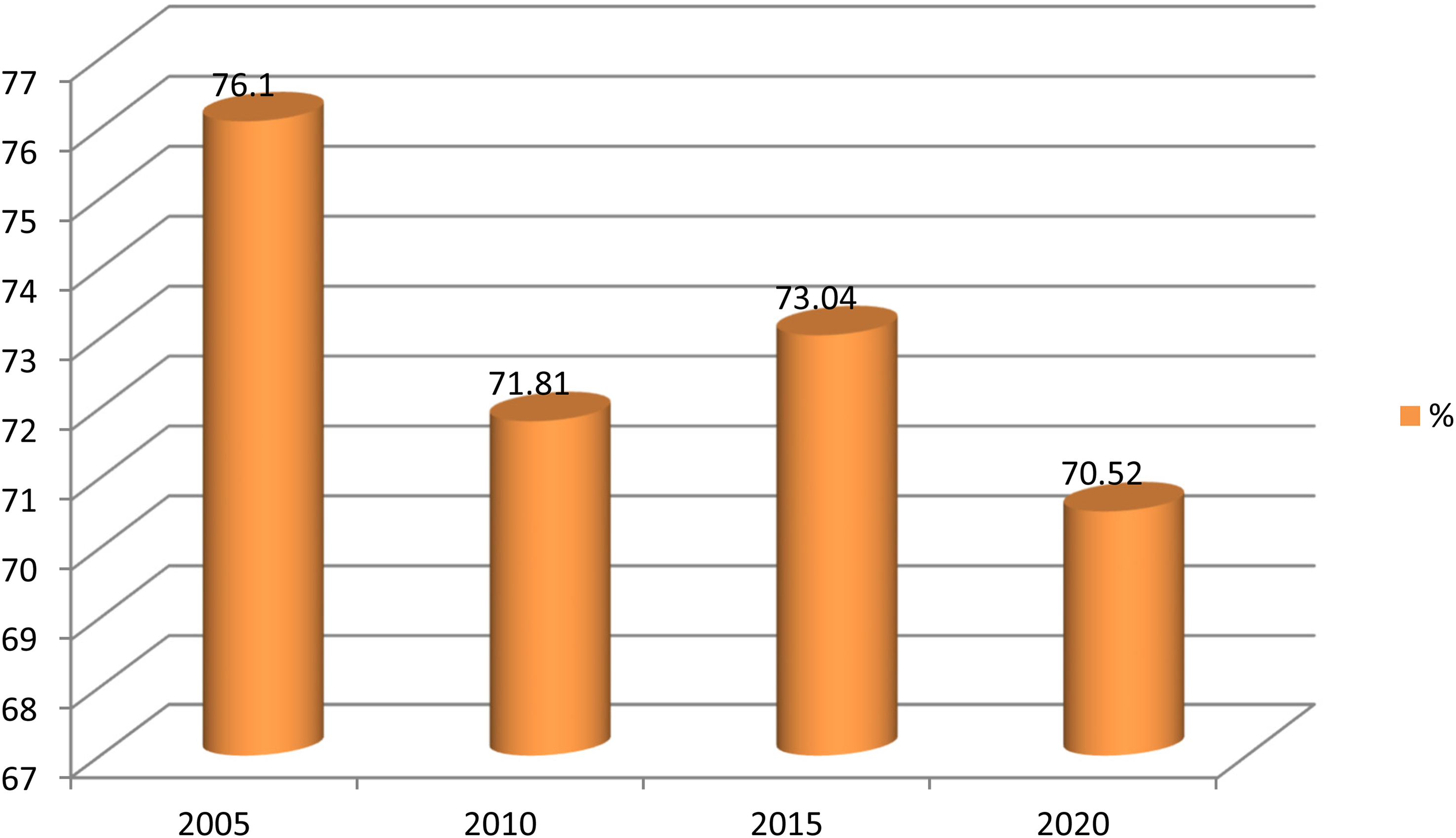
Public participation in Surakarta mayoral election from 2005 to 2020.
This research aims to investigate the oligarchic practice of political parties in regional head elections, where the community decides to protest the vote. Protest voting is to express political distrust (Myatt, 2017). It chooses a party not because of the content of its electoral message but to punish other parties (Semenenko et al., 2021). This research becomes interesting to focus more on political party oligarchs being opposed by protest voting by the public in the 2020 Surakarta mayoral election (Buehler et al., 2021; Lewis, 2020).
The previous study is relative to this issue, focusing on the effect of citizen mobilization on election results and the likelihood that new candidates will enter the race to challenge incumbent politicians (Gillion and Soule, 2018). On the other side, Damore explained that a “none of the above” (NOTA) option might allow voters to better signal discontent. NOTA voting can be a less ambiguous signal of discontent than other nonvotes (Stiers et al., 2018). Schumacher and Rooduijn have stated that populist parties are voted for based on policy preferences, protest attitudes, and leader evaluations. Only protest attitudes distinguish populist voters from mainstream voters; leader evaluations are important for both (Schumacher and Rooduijn, 2013). Hooghe and Dassonneville have explained how politics affect voting. Their research showed that distrust and vote choice reinforce each other, leading to a distrust spiral in which protest party voters become less distrustful of politics over time (Hooghe and Dassonneville, 2018). Despite protests, the ANC has remained dominant. Protests in South Africa are part of a ‘dual repertoire’ of political contestation due to the ANC's electoral support (Kouba and Lysek, 2019). In the developing protest voting, unsatisfied voters abandon their most-preferred candidate even though they have a good chance of winning, hoping that this signal of disaffection will lead to downstream improvements in that candidate's performance (Runciman, 2016).
Based on the explanations of previous studies, each study focuses on mobilizing the public on election results, political beliefs related to voting behavior, and developing a voting protest model. Meanwhile, no comprehensive research explains the oligarchy of political parties resulting in protest voting. Therefore, the novelty of this research is to debate the phenomenon of political party oligarchy that gave rise to a wave of voter protest movements. In this study, the researchers took the 2020 Surakarta mayor election case and explored protest voting in response to political oligarchy. This research is expected to be useful and reflects the impact of the oligarchic practices of political parties that lead to voting protest movements, especially in regional head elections. This study used the theory of voting protest forms, called the confused, discontent, and apathetic voters, to explain the problem (Moral, 2016).
Literature review
Political oligarchy concept
Oligarchy has been a topic studied since Ancient Greece. Aristotle was a student of Plato who divided power into three forms: monarchy with a variant of tyranny, aristocracy with a variant of oligarchy, and polity or constitutional government (Camatarri, 2022; Khrennikov, 2018). An oligarchy is a form of government in which political power is in the hands of a small group (a minority) of members of society. At the same time, ‘oligarchy’ comes from the Greek language, namely oligarkia which means a small group, and arkhein which means rule (Hooghe and Dassonneville, 2018). Power resource theory begins with the distribution of power capacities among political community members. It says people should start studying power with power resources, not power exercise. Differences in power resources, especially when significant, affect what different actors or groups can accomplish, including what they may threaten or be expected to do. It is hard to analyze the important forms of power—how they are mixed, who has power, and how it moves. Competing players must constantly assess power resources (Aspinall and Berenschot, 2019).
According to Michels’ Oligarchy Theory, the elite seems unstoppable in a political party's regional head elections since small groups dominate complex organizations. Michels found an elite oligarchy in Germany's Social Democratic Party (SPD). Oligarchy contradicts the SPD, a membership-based party (Michels, 2019). An oligarchy is an actor who controls a large concentration of material resources to maintain or increase their wealth and social position exclusively (Scheidel, 2017).
Oligarchy has four main characteristics: direct oligarch involvement in coercion that supports claims or property rights, oligarch involvement in power or government, coercion, and divided or collective power. Oligarchy can be wild or tame (Lewis and Hendrawan, 2019). It is divided into several types: warring oligarchy, ruling oligarchy, sultanistic oligarchy, and civil oligarchy (Grewal, 2022). Indonesian politics can be explained using the four types of oligarchy. With a democratic system in place, Indonesia adheres to a type of civil oligarchy emphasized in the constitution and defines Indonesia as a law-based state. Observing Indonesian politics reveals an oligarchy of collective rulers (Nge, 2018). In a democracy, power is formalized through rights, procedures, and popular participation. Democracy contrasts with oligarchy, where power is based on property and wealth. Winters (2011) said there are five main types of personal power: formal political rights, official positions in government or organizations, coercive power, mobilizing power, and material power. The oligarchs have huge power over resources that benefit themselves and their groups (Grewal, 2022).
Protest voting in elections
Protest voting means choosing a party other than the most preferred to express dissatisfaction with the most favored party. Voters do this because the candidate or party has ignored critical political issues (Stiers et al., 2018). Bowler and Lanoue explain that protest voting is when people express general dissatisfaction with the current government's performance or, more specifically, believe that government policies have harmed their lives (Hooghe and Dassonneville, 2018). Van der Brug argue that protest voting is a rational voter expressing the rejection of all political parties (Birch and Dennison, 2019)
The taxonomy of protest voting for rebel parties means that voters use their votes to defeat one of the conventional candidates or significant parties (Boulianne et al., 2020; Rød, 2019; Smyth and Turovsky, 2018). Then voters will choose an anti-establishment, extreme, unorthodox candidate or party. Tactical protest voting reveals some aspects of the most favored party's position by voting for the less favored party to punish the favored party. This choice is tactical. Blank, Null, or Spoiled (BNS) involves voting for a party or candidate listed in the letter, even if the ballot is damaged. Organized protest voting is based on rights revocation or other political factors (Rammohan et al., 2020; Toepfl, 2018). These voters are influenced by the campaign carried out by the political elite to encourage protest voting. Officially approved protest voting is an option approved by regulation through NOTA on the ballot that aims to conduct protest voting (Alvarez et al., 2018).
The first type of ideological protest occurs when there is no ideology for political parties entering parliament while society has diversity. As a result, in the election, people choose anti-mainstream political parties. The second is belief-based protest voting, where people use their right to vote as an expression of protest over the lack of trust in the mainstream political elite, especially those already in power. Third, campaign-based protest voting is where the decision to exercise the right to vote and to voice protest can be made in campaigns by parties and contesting candidates. Therefore, the campaign must attract voters’ attention (Birch and Dennison, 2019).
The first type of protest voting is the confused voter, who chooses one candidate so that they may not put a particular mark on the ballot or vote for more than one candidate. The two discontented voters are dissatisfied with the flawed democratic system, the unsatisfactory performance of political elites, and candidates who do not live up to expectations. The community expresses it by creating an invalid vote. Apathetic voters are indifferent to the administration of elections and tend not to vote in the candidate box but outside the box (Moral, 2016). First, a voter who needs to learn the candidate's profile is confused and votes despite not meeting the requirements. Disinterested voters choose more than one pair of candidates. Untrusting visitors only trust some of their votes and make invalid letters. The four voters not affected by the campaign must decide whether to vote at the last minute (Singh, 2019).
In Indonesia, regional head elections bring up one pair of candidates that most political parties carry. This method results from the failure of political parties to regenerate and a leadership crisis in the regions (Kartika and Ahas, 2021; Marbun et al., 2022; Yuristianti, 2018). Political interests are another contributing factor, so political parties flock to support one candidate. So that there is no opportunity for other candidates other than independent candidates, whose process is quite complicated and convoluted, the regional elections with a single candidate will still be held with almost the same mechanism as the regional elections with two or more candidates. A single candidate pair will compete against an empty box or empty column on the ballot paper. Those who oppose the single candidate will support the empty box, with various tactics to bring down the candidate (Panjaitan and Hulu, 2021; Rumesten, 2016).
Research methods
This research used a qualitative approach to explore protest voting in the 2020 mayoral election in Surakarta. The data collection technique was FGDs (focus group discussion) organized by Surakarta's general election commission (KPU) and a literature study. The data source was the results of a webinar held by Surakarta City's KPU with the topic “Analysis of Invalid Ballot Patterns for the 2020 Surakarta City Elections” and elaborated with credible online news.
The research data analysis also used the NVivo 12 Plus software tool. Data were obtained from online news. The stages were: first, obtaining data from online media captured and uploaded in NVivo 12 Plus; second, coding data according to the content variable; third, visualizing content with the crosstab query feature; and fourth, entering the online media data into the word frequency feature to display the narrative. The features used are crosstab query and word frequency. NVivo 12 Plus is a qualitative data analysis program that makes it easier to collect, categorize, map, analyze, and visualize qualitative data gathered from papers (memos, reports, legislations, and photographic documents) and interviews (Zamawe, 2015). It was used to present more interesting qualitative data. It aims to facilitate qualitative research effectively and to efficiently analyze data, and helps researchers analyze data using technological facilities (Edhlund and McDougall, 2018).
Result
Analysis of protest voting in the Surakarta mayoral elections
Voting protest movements in elections can easily be seen from the ballots. Whether the ballot is used correctly or not tends to lead to deliberate destructive moves. The data in Table 1 and Figure 2 come from Surakarta's general election commission (KPU).
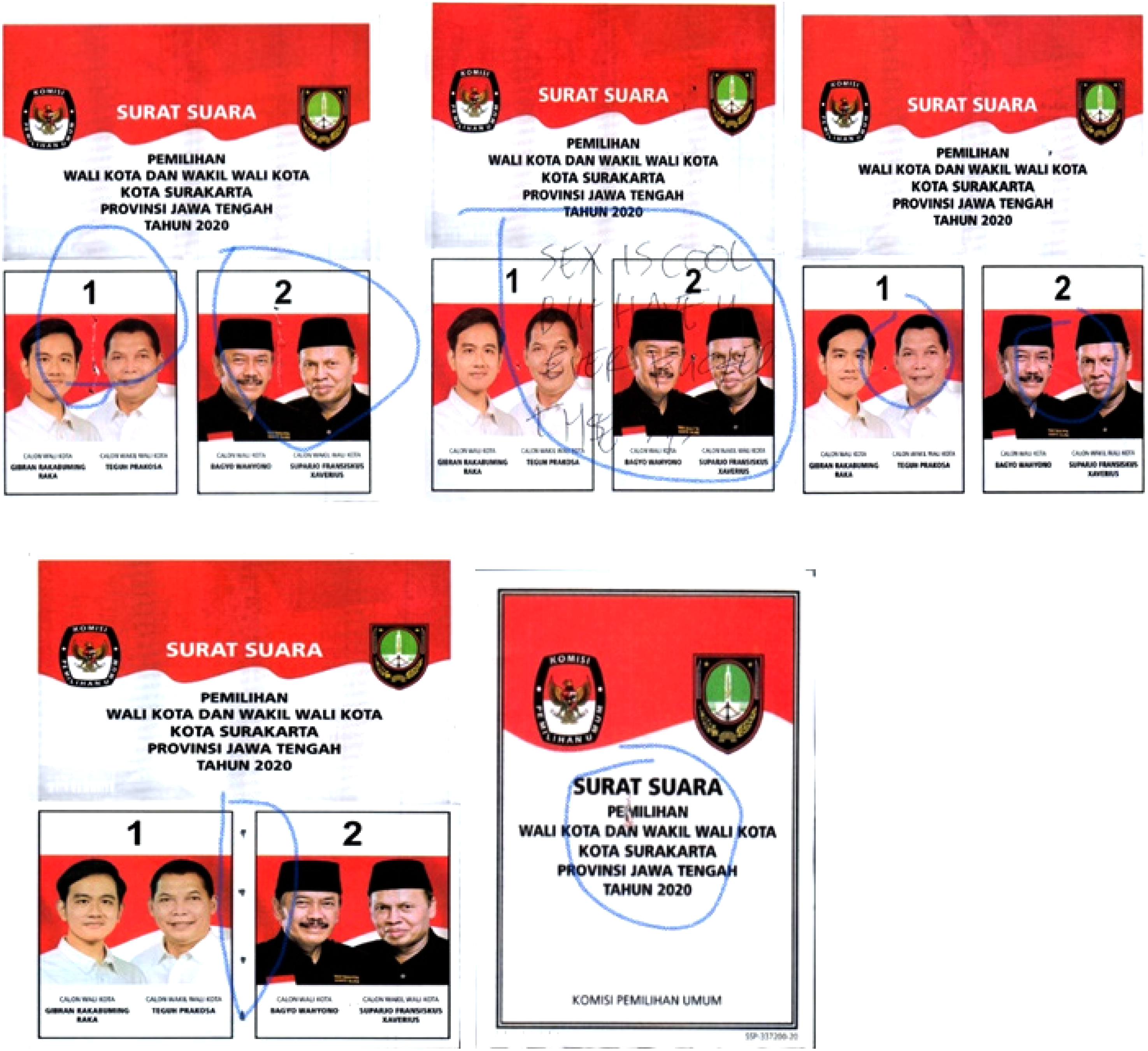
Invalid ballot. Source: KPU Surakarta City (2022).
Types of spoilt vote.
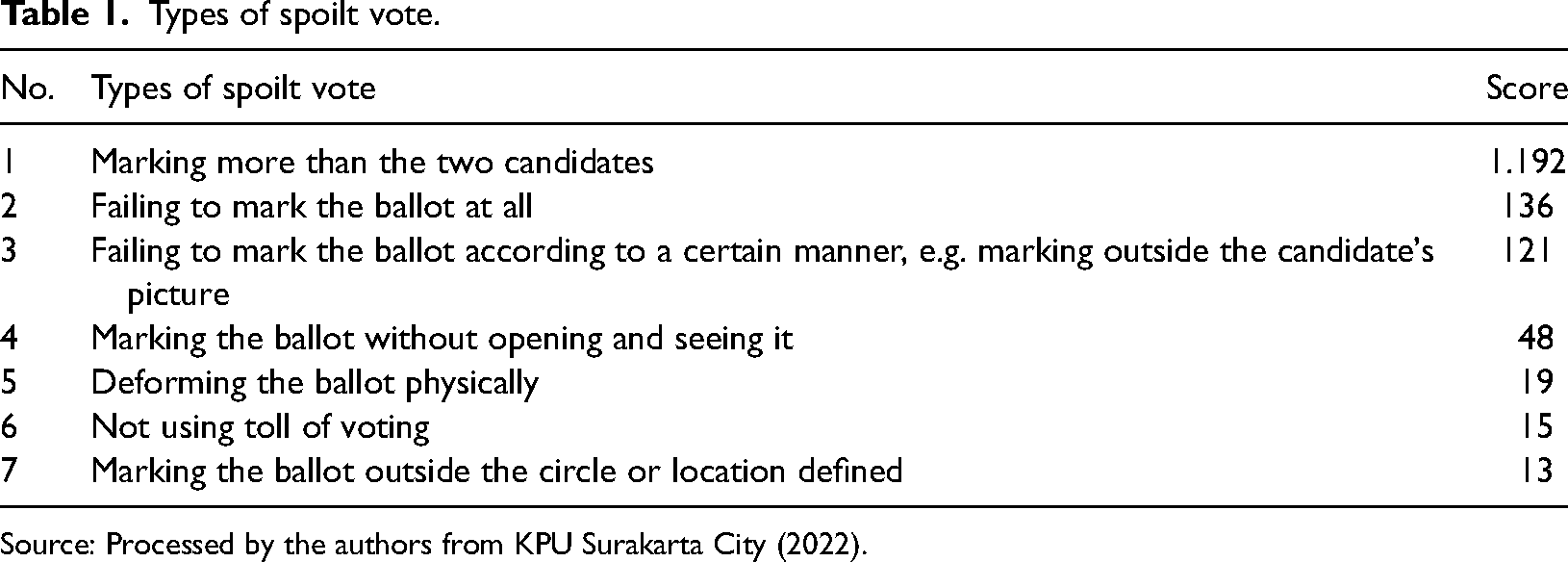
Source: Processed by the authors from KPU Surakarta City (2022).
The first type is the ballots selected for two candidates. The voters seem to have trust issues with the two candidates and end up marking the two candidates, making them invalid. KPU Surakarta revealed 1328 invalid or spoilt ballots due to confused voters, consisting of 1192 ballots marking two candidates and 136 ballots failing to leave any choice.
The second type from Figure 2 refers to making invalid ballots and showing dissatisfaction by defacing them with marks. Table 1 shows 19 torn ballots and 15 ballots not using the toll of voting. Third, 14 spoilt ballots were marked inside and outside the box. In this case, 47 invalid ballots refer to discontented voters, 121 ballots are marked outside the candidates’ pictures, 48 are marked without opening and seeing the inside, and 169 are classified as apathetic voters.
Spoilt ballots in the Surakarta mayoral election can be interpreted as voter behavior to abstain and a structured movement from the voter level to show dislike for the election organization of candidates nominated by political parties. The basis of this analysis lies in the invalid ballots, which are not just technical errors of voters but damage done to ballots by crossing out, tearing, and deforming them physically.
Analysis of political parties of oligarchs in the Surakarta mayoral election
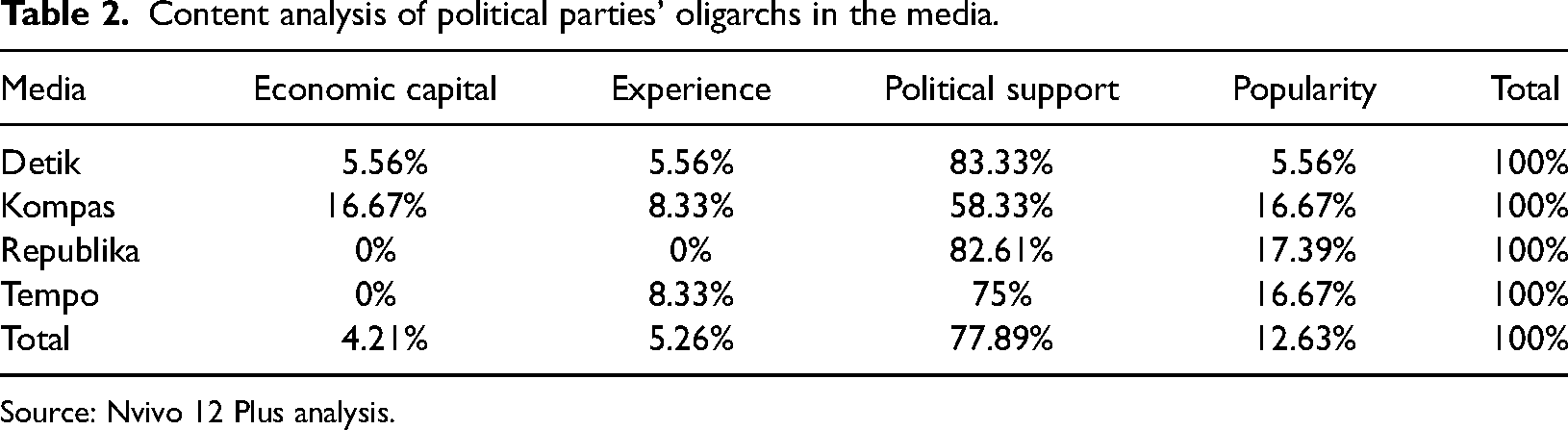
This analysis tries to explore the political parties of oligarchs in reputable media, using two kinds of analysis: content analysis and narrative analysis. It used crosstab analysis NVivo 12 Plus in Figure 3 and Table 2. NVivo 12 Plus allows researchers to organize and analyze a wide variety of data, including but not limited to documents, images, audio, video, questionnaires, web, and social media (Azeem et al., 2012; Edhlund and McDougall, 2018).
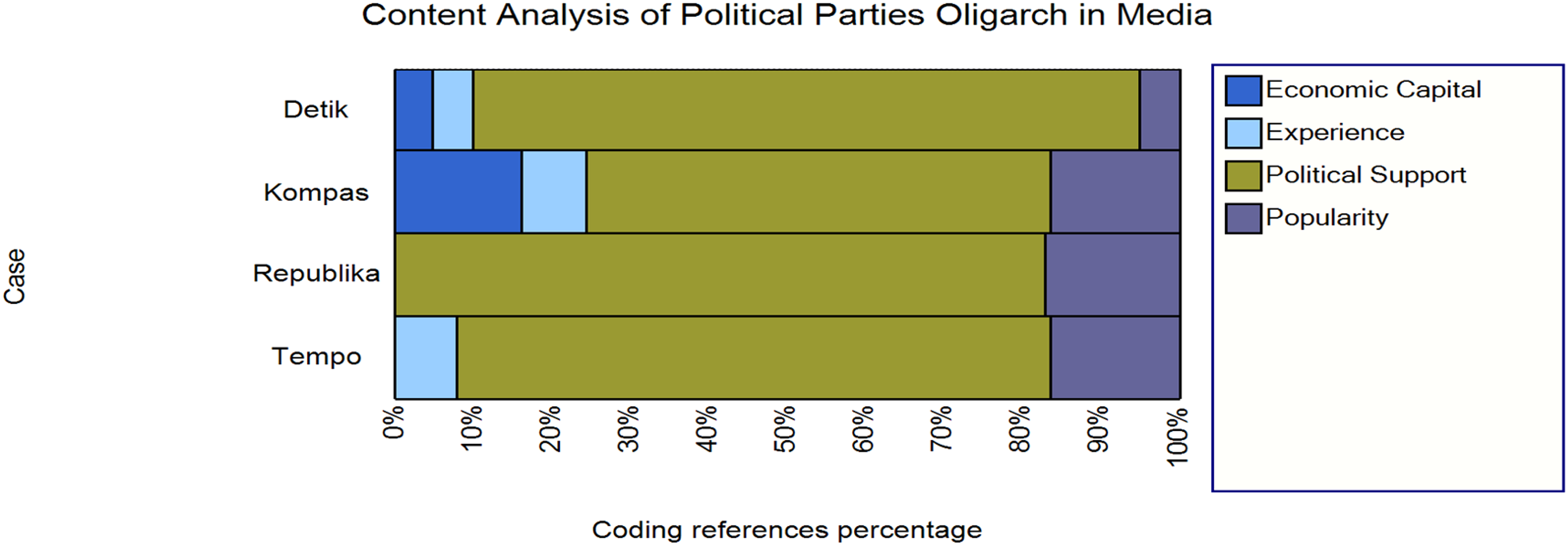
Content analysis of political parties’ oligarchs in the media.
Content analysis of political parties’ oligarchs in the media.
Source: Nvivo 12 Plus analysis.
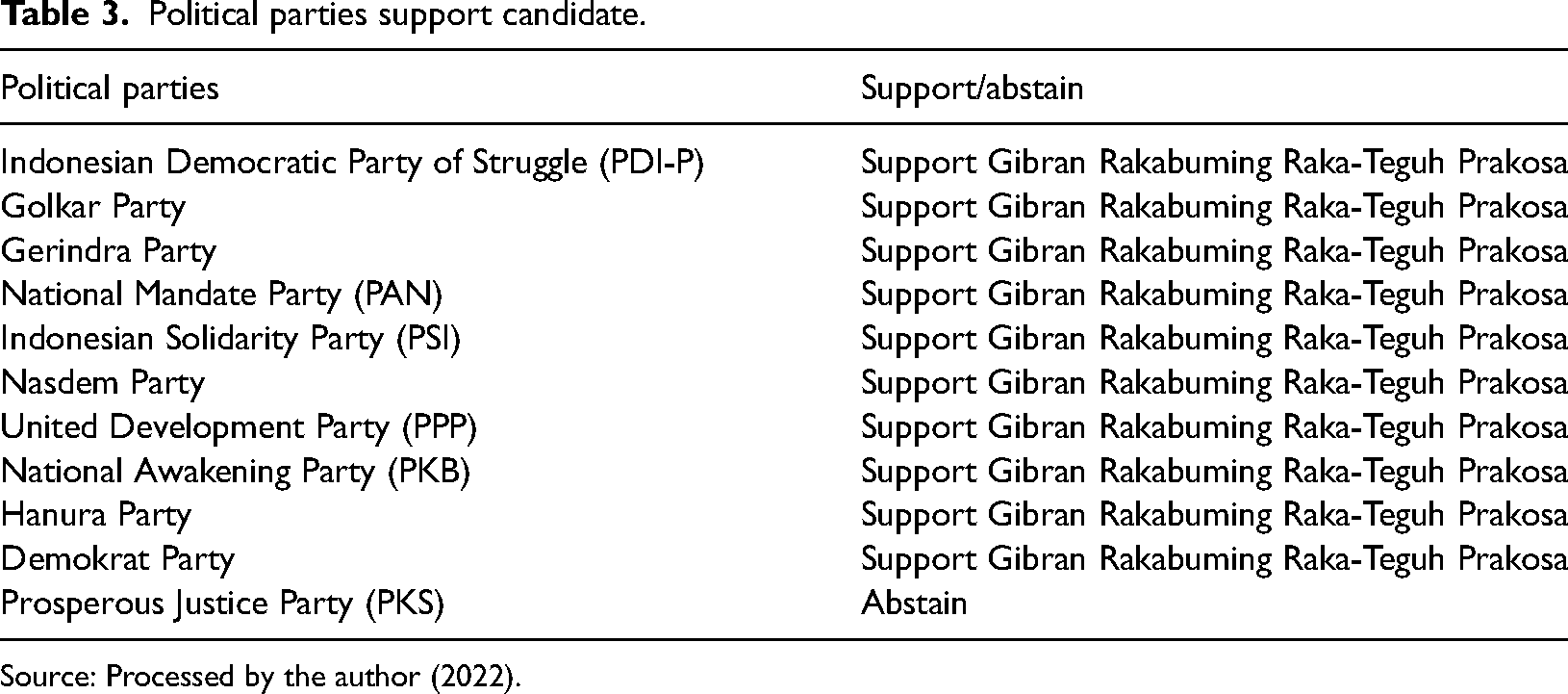
In this analysis, the content defines economic capital, experience, political support, and popularity. Figure 3 shows that political support is dominant, with 77.89% of the four media outlets in Indonesia talking about the Surakarta mayoral election. This analysis becomes valid according to the data about political party support for Gibran and Teguh Prakosa in Table 3.
Political parties support candidate.
Source: Processed by the author (2022).
In Table 3, 10 out of 11 parties supported Gibran. Only the PKS chose to abstain in the Surakarta mayoral election. The parties came together to support the president's son to run as a mayoral candidate. This interest of political party elites who want to gain the president's sympathy leads to ministerial seats and other positions. Thus, Gibran had a large bargaining position for political parties, materially and politically, to become a magnet for an oligarchy. This finding is directly proportional to political party oligarchy in Indonesia in that political party leaders have strong financial power and play a central and strategic role in all decisions and policy directions of their respective political parties. Oligarchs in Indonesian political parties include Nasdem, with the financial power of Surya Paloh, and Perindo, with the power of Hari Tanoesodibjo; the Democratic Party, with the leadership of Susilo Bambang Yudhoyono, Gerindra with the leadership of Prabowo Subianto, and, of course, PDIP with the central role of Megawati Soekarno Putri (Hasanal Bolqiah and Raffiudin, 2020; Juniar, 2021; Nge, 2018).
According to Feri Amsari, a constitutional law expert from Andalas University, almost all political parties in Indonesia are trapped in an oligarchy. Similarly, Ujang Komarudin stated that almost all parties are oligarchic. Oligarchy in political parties is a common phenomenon that has long occurred. Recently the tendency has become stronger. In almost all political parties, the regeneration, recruitment, and democratization process is not running properly (Farisa, 2021).
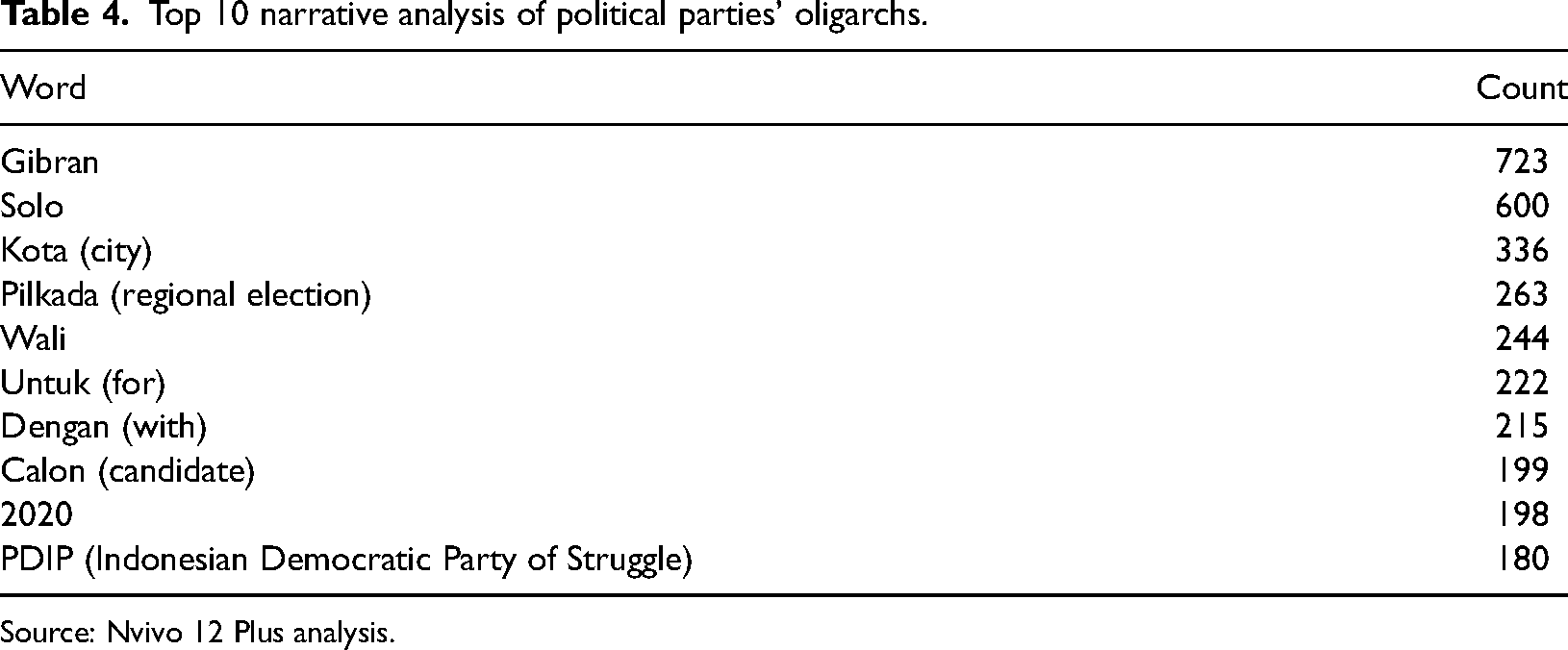
Narrative analysis of political parties’ oligarch case of the mayoral election of Surakarta explores narratives on political party oligarchs in the Surakarta mayoral election. This analysis used word cloud and NVivo 12 Plus. The analysis is shown in Figure 4 and Table 4.
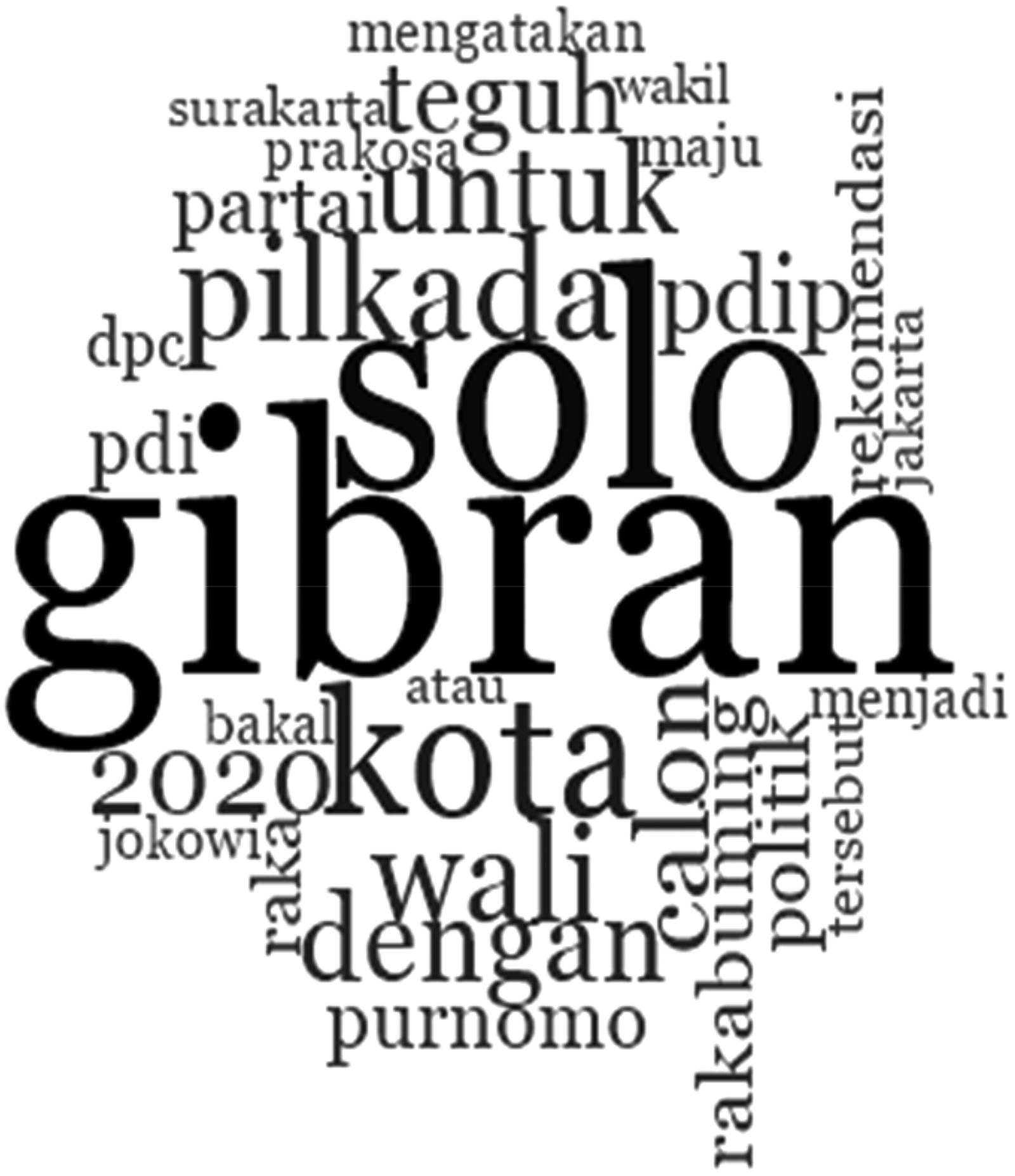
Narrative analysis of political parties’ oligarchs in the mayoral election in Surakarta.
Top 10 narrative analysis of political parties’ oligarchs.
Source: Nvivo 12 Plus analysis.
Table 4 shows the most dominant words. This data displays the narratives in online media related to political party oligarchy in the election. The word ‘Gibran’ is the most dominant, with 723 words. Online media highlighted Gibran in the election with the support of major political parties and as the son of an active Indonesian president.
In the political aspect, the word ‘PDI-P’ appears. PDIP is the top narrative in online media because Gibran is a party cadre. Moreover, his father, Indonesian President Joko Widodo, is also a cadre of PDIP. PDIP is one of many powerful parties that supported Gibran in the election, not only from the cadre aspect but also from the parliamentary political aspect. PDIP had enough parliamentary seats to endorse a candidate pair in the Surakarta mayoral election.
Analysis of political parties oligarchy and protest voting
Most parties in the Regional People's Representative Assembly (DPRD) supported Gibran Rakabuming Raka. For that reason, the Surakarta public started protesting. Data from KPU Surakarta shows the number of invalid ballots in every region in Surakarta, as illustrated in Figure 5. The number of invalid ballots in the election was high compared to in the previous regional people's representative council election in 2019. Data obtained from the Surakarta KPU reveal that in the Banjarsari sub-district, the invalid ballots in the mayoral election were 11.65%. The regional people's representative council only amounted to 6.62% in the election. In the Laweyan district, invalid ballots in the mayoral election were 14.16%, whereas in the regional legislative elections only 6.69%. Likewise, in the Serengan district, invalid ballots in the mayoral election were 12.11%, compared to regional legislative elections which were only 6.76%. Pasar Kliwon sub-district also had the same trend, with invalid ballots in the mayoral election at 14.39%, and in the regional legislative elections only 7.38%. Finally, in the Jebres sub-district, invalid ballots in the mayoral election were 8.74%, while in the regional legislative elections only 6.35%. All sub-districts in the Surakarta city area experienced an increase in invalid ballots in the 2020 Surakarta mayoral election. Thus, this forms the basis for an analysis of the voting protest movement carried out by voters due to the oligarchy of political parties who do not have the will to present candidates with quality alternatives to face the Indonesian president's son, who is advancing in the election.
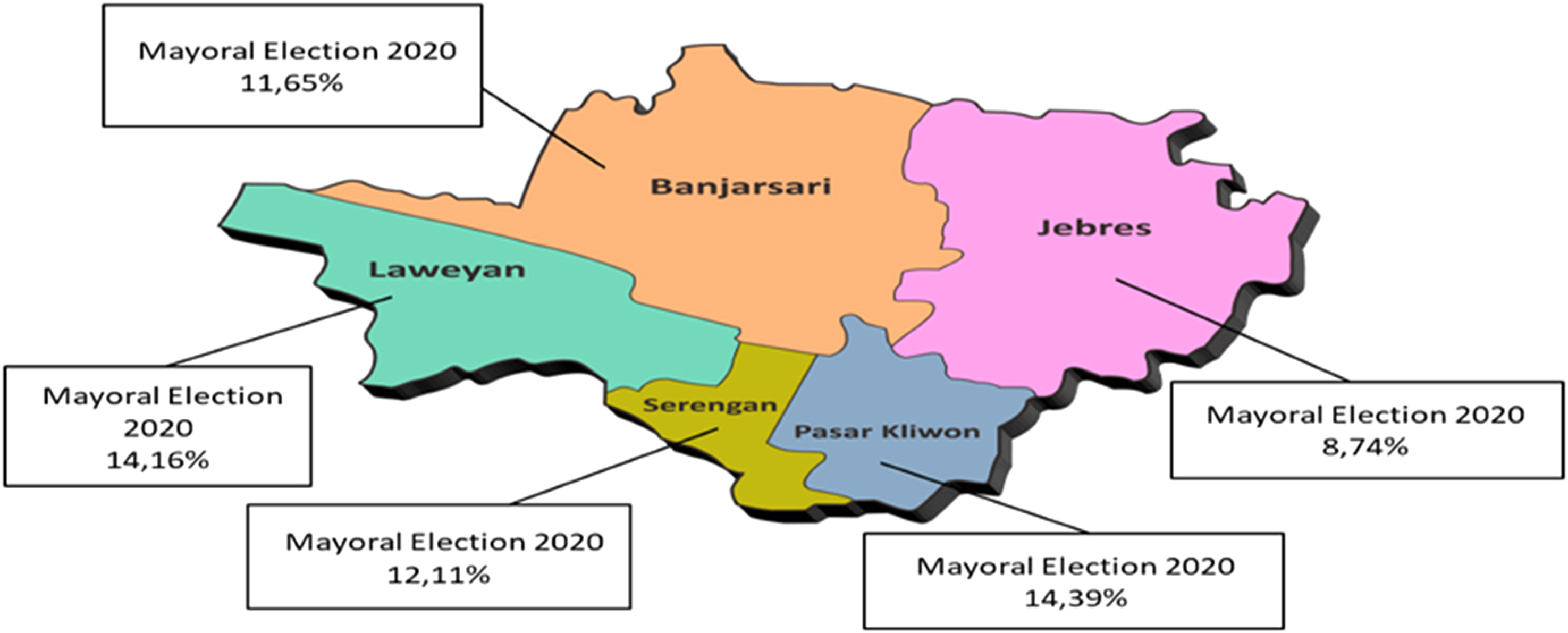
Invalid ballots in Surakarta. Source: KPU Surakarta City (2022).
Discussion
Protest voting expresses dissatisfaction with the most preferred party by voting for a different party. It is common for voters to cast their ballots for a different candidate or party to show their support for the current candidate or party (Stiers et al., 2018). Protest voting can also be a statement about government performance or about an unfair public policy that impacts social life (Birch and Dennison, 2019). It has become one mechanism for expressing unfairnesses in society caused by the authorities.
Protest voting happened during the mayoral election in Surakarta to protest the political parties oligarch that only supported Gibran; another candidate was Bagyo Wahyono-Fx Supardjo, suspected only as a puppet opposition. A voting protest occurs when voters spoil the ballots, not obeying the rules of a valid vote (Moral, 2016). Voter confusion caused some to vote for more than two candidates in the mayoral election in Surakarta (see the invalid or spoilt ballots in Figure 2 and Table 1). Based on the criteria, two types of invalid ballots proved confused voters (Birch and Dennison, 2019).
Two-pair candidates joined the contestation of the 2020 mayoral election in Surakarta. Most voters seemed dissatisfied with the candidates, leading them to mess up the ballots (Bélanger, 2017). Regarding discontented voters, three types of invalid or spoilt ballots were found. First, deforming ballots made the ballot torn. Second, the candidates’ pictures were voting marks are located on the outside and inside of the ballot, so it becomes torn. Then, the ballot is vandalized by being scribbled on. Third, they did not use the toll of voting. In this case, discontent voters are more likely to be dissatisfied with the choice of candidates competed in the Surakarta election. The discontented voters phenomenon appeared in the mayoral election in Surakarta; it can be seen from the invalid ballot criteria in Figure 2 and Table 1. Based on the criteria, there are three types of invalid ballots related to discontented voters (Fatke and Heinsohn, 2017). Figure 1 refers to making invalid ballots and showing the dissatisfaction of the option candidates by deforming the ballots.
Apathetic voters refers to an act of voting without care or desire to get to know the candidates. The voter does not care about the election aspect of the candidates or the program. They want to cancel the obligation to vote (Mutyaba, 2022). Apathetic voters break the valid rules, for example by writing outside the candidates’ pictures and without opening and seeing the ballots (Figure 2).
Based on the data from KPU Surakarta in Table 1, apathetic voters appeared in the 2020 mayoral election in Surakarta. There were 121 ballots where voters left marks outside the candidates’ pictures, 48 voted without opening and seeing the ballots, meaning 169 were classified as apathetic voters. This analysis showed that apathetic voters wanted to cancel the obligation to vote in the election without wanting to give the vote to the candidate (Cohen, 2020; Patton, 2019; Wuttke, 2020). From this analysis, protest voters in the 2020 mayoral election of Surakarta showed that the dominant type of protest voting is confused voting. They marked both candidates, making them invalid. Voters with trust issues choose two candidates, breaking the rules of valid ballots criteria (Bellucci et al., 2019; Cohen, 2018).
Furthermore, political oligarchs in the media showed the substance of political support. The four media outlets in Indonesia discussing the Surakarta mayoral election had a 77.89 percent market share. This phenomenon showed that 10 of 11 party members supported Gibran. Only the PKS abstained in the Surakarta mayoral election. Political support had become a factor that significantly affected Gibran. First, 723 points for narrative dominance on the person on the candidate-specific for Gibran. This example demonstrates that the media narrative emphasizes the candidate rather than the campaign aspect. In this instance, the top 10 words are dominated by the term's candidate, region, and political aspect. The region comprises word-specific territories such as “Kota” and “Solo/Surakarta.” Regarding political aspects, PDIP refers to the political party in Indonesia, and the regional election refers to the mayoral election in Surakarta.
Protest voting is a social-political phenomenon defined into three types: confused voter, discontented voter, and apathetic voter (Wuttke, 2020). In this case, the dominance confused voters who chose the two candidates simultaneously. The voters had trust issues with the two candidates and ended up choosing both to make invalid ballots with selected candidates. The protest voting tendency is to respond that there are only two pairs of candidates. One pair was supported at least by 10 parties, and another was independent, not endorsed by any parties.
Protest voting as a response to political oligarchy shows that the political parties could make a new axis to carry candidates other than Gibran, but this was not done. The PKS did not support Gibran and could not carry it alone because there were not enough seats in the parliament. The PKS did not support Gibran because of the opposition party in Joko Widodo's government and unfinished relations with the PDI-P at the national and local levels. The PDI-P had basic support in Central Java, especially in Surakarta. Another reason is that Gibran has a large following amongst millennials (Way, 2021).
Figure 4 reveals that protest voting is the society's response to showing dissatisfaction, confusion, and ignorance of the political aspect. In this case, there are some reasons why the political parties would support Gibran. First, they could have created a new axis to support candidates other than Gibran, but they did not. The PKS did not support Gibran and could not carry it alone due to a lack of parliamentary seats. Second, The PDI-P had base support in Central Java, particularly in Surakarta, one of the largest bases. Third, the majority of parties in the DPRD had a strong brand among millennials.
Thus, confused voting is the predominant form of protest voting, with invalid ballots tending to favor one of the two candidates in the mayoral election. This demonstrated that voters lacked confidence in the two candidates, as they chose to cast invalid ballots after selecting them.
Conclusion
This research concludes that Gibran Rakabuming Raka, with his status as the son of an active president, is the determinant of political oligarchy in his candidacy for Surakarta mayor. Political parties that prioritized their pragmatic interests flocked to enter a coalition to carry the president's son. Political parties did not give Surakarta people adequate alternative candidates, leading to a systematic protest voting movement by voters. The protest voting movement carried out by voters aimed to fight against political parties. It caused the ballots to be invalid and spoilt because voters tended to distrust candidates. Then, the news in the media regarding the case was widespread because this phenomenon was the first to occur in Indonesia, so the public, community, and academics continuously discussed this issues. This research implies that public trust in political parties as instruments of democracy is degraded due to their pragmatism behavior. More than that, it turns out that voters have understood that oligarchy in elections must be opposed due to the election of an ideal leader.
Footnotes
Declaration of conflicting interests
The author(s) declared no potential conflicts of interest with respect to the research, authorship, and/or publication of this article.
Funding
The author(s) received no financial support for the research, authorship, and/or publication of this article.
