







Abstract
Musical engagement, including actively listening or participating in music-making experiences, fosters socio-emotional development, emotion regulation, and the overall health and well-being of individuals across the lifespan. Further, musical care offers the context for practices that are inclusive and accessible beyond traditional health care environments. Building on musical care principles, the current study explores the acceptability of a music-based emotion intervention program as a form of musical care that holds the potential to ensure equal access for marginalized groups, such as students with learning difficulties, who are a growing population but often do not enjoy the same opportunities as their peers. Developed to be integrated into the academic curriculum across four European countries, the current program is built on the increasingly recognized importance of socio-emotional development as a crucial component of a comprehensive education, vital for students’ academic and career success. Findings from this applicability study provide emerging evidence that multimodal, music-enhanced psychoeducational programs can be both acceptable and beneficial for university students as they help them navigate complex emotional states. Across countries, students consistently reported high levels of satisfaction, enjoyment, and perceived relevance of the course content as evidenced by the high overall acceptability scores. Further, the app was perceived as usable and accessible across diverse user groups, with minimal barriers related to demographics, academic background, or disability status. These results are promising, as they indicate that the design, content, and implementation of the project is well aligned with the needs and requirements of university students with different geographical, cognitive, and cultural backgrounds. Recommendations for future research and policy focus on further developing music-enhanced universal psychosocial programs to enhance mental and social well-being of individuals with diverse needs.
Introduction
Growing literature emphasizes the vital role of music in fostering health and well-being. The relevance of music engagement to mental health and its potential use as an intervention tool, has been studied for decades. Promising evidence suggests that engaging with music is linked to improved mental health outcomes (Gustavson et al., 2021). Specifically, music contributes to significant improvements in cognitive functions, particularly attention, while offering psychosocial benefits such as reduced depression and anxiety, ultimately enhancing quality of life (for a systematic review and meta-analysis see Viola et al., 2023).
The concept of “musical care” refers to the use of music—both music-making and listening—to support a wide range of developmental and health needs, including physical, mental, cognitive, behavioral, and interpersonal aspects (Spiro & Sanfilippo, 2022). Unlike terms like “music therapy” or “music medicine,” which describe specific practices within structured settings, musical care is intentionally broad and inclusive. It encompasses diverse musical practices and extends beyond traditional healthcare environments to embrace a wider idea of care (Spiro et al., 2023). The interdisciplinary nature of musical care engages individuals from diverse fields, including practitioners, researchers, and those with lived experiences can influence decisions about which music practices and research areas deserve attention and resources (Spiro et al., 2022b).
Inaugural online meetings of the Musical Care International Network (Spiro et al., 2023), gathering 42 delegates across 24 countries and diverse disciplines identified critical gaps—namely, the overrepresentation of Western, discipline-specific perspectives, limited attention to culturally and geographically diverse forms of musical care, and a lack of conceptual cohesion across fields. They argue for what must now be done: embrace context-dependent, socially grounded frameworks, cultivate a collective, interdisciplinary identity to advance research, advocacy, and policy, and enhance evidence and impact debates across settings. First, exploring global and cultural perspectives is essential, focusing on how musical care is practiced and understood in diverse, and underrepresented cultural contexts. This can reveal culturally specific practices and expand global knowledge. Second, interdisciplinary collaboration should be encouraged, as different inputs from disciplines such as healthcare, musicology, anthropology, and neuroscience could enrich both theoretical frameworks and practical applications. Third, cultural sensitivity and equity must be central, examining how socio-cultural factors like race, gender, and cultural backgrounds influence the development and implementation of musical care. Fourth, impact assessment is necessary to evaluate the short- and long-term effects of musical care on health and well-being across populations and life stages through quantitative and qualitative studies. Finally, adopting a life-course perspective can provide valuable insights into the role of musical care in supporting lifelong development and well-being, from early childhood to older adulthood.
Building on these priorities, the Mash-Up n’ HEI project was developed with careful consideration of the above key factors to meet the diverse needs of university students who might be marginalized or face challenges relevant to academic achievement, mental health, and life success. Its design reflects an awareness of socio-cultural dynamics, the potential of digital tools, and the importance of co-creation in fostering meaningful, context-specific interventions. This paper examines the early phase of the Mash-Up n’ HEI project as a case study in developing culturally relevant, accessible, and emotionally supportive approaches to musical care. Through interdisciplinary and cross-border collaboration, the project reflects emerging priorities in the field—such as cultural adaptation, focus on emotion regulation, and inclusive design—and demonstrates how music-based interventions can be co-created to enhance broad acceptability and to promote mental health and well-being across diverse contexts.
The Mash-up n’ HEI Project
The Mash-Up n’ HEI project represents a collaborative effort between four European universities and a technology-oriented Small Medium Enterprise (SME) specializing in dynamic digital solutions, aiming to develop and adapt music-enhanced emotion regulation materials that integrate expertise from clinical psychology, music therapy, and music psychology. The primary goal is to create accessible resources that support students in higher education, particularly those with learning disabilities, in managing their emotions effectively. Within this context, engagement in and through music becomes a tool for empowerment and agency, a way for strengthening a sense of self with physical, psychological, and social benefits (DeNora & Ansdell, 2014; Volgsten, 2012). Music experiences enhance a range of emotional and affective states (Peters et al., 2024). Studies on music engagement for emotion regulation purposes show that certain uses of music reflect general emotion regulation skills (Carlson et al., 2015; Cook et al., 2019), favoring, therefore, the use of music for self-reflection, self-expression, and coping, all important aspects of emotional health and well-being (Saarikallio et al., 2017). Within this scope, music experiences are understood as a culturally relevant, safe emotional space of relatedness that may create a sense of community and support the expression of experiences, emotions, and thoughts (DeNora, 2000; Hallam, 2016).
In alignment with the identified critical gaps outlined earlier, this project exemplifies how accessible, culturally adapted, and interdisciplinary musical care initiatives can promote emotional well-being and mental health. By integrating diverse perspectives and prioritizing equity, the Mash-Up n’ HEI project contributes to advancing the field of musical care, making it more inclusive, evidence-informed, and globally responsive:
Global and Cultural Perspectives: We explore how musical care can be tailored to specific cultural contexts, reflecting the unique emotional, social, and musical traditions of the regions where the material is implemented. This approach enriches global understanding by identifying culturally specific practices and broadening the scope of how musical care can be effectively applied worldwide. Interdisciplinary Collaboration: Moving beyond traditional approaches to mental health, which are mostly reliant on one discipline, this project provides a holistic, interdisciplinary approach/framework that integrates insights from clinical and cognitive psychology, music therapy, and music psychology. This synergy enables the creation of innovative, evidence-based materials that combine the therapeutic benefits of music with psychological principles to address the diverse needs of students. Cultural Sensitivity and Equity: The partnership between universities in different countries fosters a vibrant exchange of ideas and perspectives. Through ongoing dialogue, we integrate diverse cultural and academic viewpoints, ensuring the material is both culturally responsive and adaptable across regions. Cultural adaptation of the manual prioritizes inclusivity, ensuring that the materials resonate with local populations and are accessible to students with learning difficulties. By assessing acceptability within each university's region, the project addresses socio-cultural and accessibility factors that influence the successful implementation of musical care. The project emphasizes accessibility by designing materials that are easy to use and adaptable to the needs of students with learning difficulties. This includes incorporating digital tools and music-based approaches that enhance usability and engagement for diverse learners. In addition, the project actively fosters socio-emotional skills which are essential for promoting equity in mental health care. By integrating both technological supports and socio-emotional development, the project ensures a more holistic, inclusive, and equitable learning environment. Impact Assessment and Pathway Development: The initial step of assessing the cultural adaptation and acceptability of an intervention is both logical and essential in paving the way for future randomized controlled trials (RCTs). Ensuring that the material is culturally and contextually appropriate establishes the foundation for rigorous testing and the development of evidence-based practices. Robust frameworks such as the NIH Stage Model for Behavioral Intervention Development (www.nia.nih.gov/research/dbsr/nih-stage-model-behavioral-intervention-development) serve as a flagship, offering a systematic pathway that begins with intervention generation, refinement, modification, adaptation, and pilot testing (Stage I), and progresses to traditional efficacy testing (Stage II). This model balances scientific rigor with stakeholder relevance. Moreover, mixed-methods and participatory approaches can maximize what is learned from feasibility studies, thereby strengthening the preparation for full-scale trials (Aschbrenner et al., 2022). Integrating acceptability studies with methodological insights into trustworthy evidence further advances the field of musical care, ensuring it becomes more inclusive, evidence-informed, and impactful. Life-course perspective: Music offers an accessible, low-cost, and culturally adaptable tool for emotional self-care, making it particularly valuable for young adults navigating the stresses and uncertainties of academic, social, and personal transitions. Strategies on active music-listening and music-making with peers enhance equity among all students through adaptive emotion regulation and the development of socio-emotional skills, and it contributes to supportive interpersonal relationships and mental health. Such training provides practical strategies for coping with immediate challenges while also cultivating longer-term capacities for sustaining mental health and flourishing within the broader framework of musical care.
Aims of the Study
This paper presents the second phase of the project, which extends the assessment of the acceptability of a music-enhanced, classroom-based emotion regulation training within the local contexts of the participating universities. Here, we report findings from three pilot single-arm studies evaluating the program's acceptability by students.
This process was essential for several reasons. First, to facilitate cultural adaptation by evaluating the relevance and resonance of the intervention components across diverse cultural and academic settings. Second, to establish a pathway to effectiveness evaluation by laying the groundwork for future research, such as randomized controlled trials (RCTs), to assess the impact of the intervention on socio-emotional skills, mental health, and academic performance. Lastly, the acceptability findings were expected to offer immediate insights into potential barriers and facilitators, enabling iterative refinements to ensure the modules are practical and scalable.
Program Foundations: Initial Development and Cross-National Design
The initial phase of the project involved developing the training and conducting local testing in Cyprus using a multiphase approach (Vaiouli et al., 2025). During this phase, the content and materials were created through an iterative process that incorporated continuous feedback from researchers, practitioners, and students. Development began with a comprehensive review of global literature on emotion regulation interventions for students, which informed the selection of core modules. Based on these findings, a cross-national version of the training was designed and finalized, establishing a foundation for further cultural adaptation and implementation in the next stage of the project. During the second phase of the project, representatives from all four participating EU universities made minor adaptations to the EU-wide version of the training to better reflect their local contexts. These adjustments were informed by additional feedback from students. The adapted course was then piloted with small student groups in each setting, and data on its acceptability were systematically collected.
Theoretical Framework of the Training
The development of the cross-national version of the training was informed by a systematic review of existing literature on Social and Emotional Learning (SEL) interventions for higher education (HE) students with learning difficulties 1 (LD) (Vlemincx, 2022). This review provided a comprehensive foundation for identifying evidence-based intervention components, research gaps, and opportunities for culturally adaptable and inclusive program design. The module development process included synthesizing insights from the review, expert consultation, and collaborative consensus-building across participating institutions. The systematic review summarized 39 studies, with 182 findings related to socio-emotional skills, mental health, and academic performance in HE students with cognitive LD. According to review findings, the most effective intervention components include cognitive-behavioral therapy (CBT)-based approaches, such as traditional CBT, dialectical behavior therapy, and CBT-inspired skills training, which consistently enhance socio-emotional skills.
Then, experts from clinical, social and cognitive psychology, music therapy, music psychology, and educational psychology convened to identify essential SEL components that align with the findings of the systematic review. The panel emphasized embedding intervention components in both academic and extracurricular settings to enhance accessibility and relevance. The Unified Protocol (UP), a transdiagnostic model for emotion regulation, was selected as a core framework (Barlow et al., 2018). Emotion regulation, as a transdiagnostic factor, is central for promoting mental health, enhancing socio-emotional skills, and indirectly supporting academic success (Castro-Camacho et al., 2022; Schuenemann et al., 2022). The selection of a transdiagnostic model for emotion regulation aligns seamlessly with the project's emphasis on fostering long-term improvements in mental health and socio-emotional well-being goals and integrates effectively with the CBT-based intervention components identified as beneficial for SEL in higher education (HE) students.
Further, the model aimed to promote accessibility and inclusivity. To address this, music-based methodologies were explored as inclusive tools that resonate with diverse learners (de Witte et al., 2020; McFerran, 2010). Music has been found to enable culturally relevant, non-stigmatizing learning experiences (Rodwin et al., 2023). That is, for individuals with learning disabilities—many of whom may experience difficulties understanding complex language—music can serve as a powerful alternative channel of communication, offering emotional cues and simplified messaging that aid comprehension and engagement. In the context of the present program, we approached music activities as an active form of care that can be used by young adults intentionally and consciously in their everyday lives. The flexibility and generalizability of the approach make them well-suited for creating culturally adaptable modules, a key aim of the project.
Based on expert recommendations, an initial module structure was proposed. This included core components (e.g., CBT-inspired exercises, group coaching sessions) flexible, culturally adaptable elements (e.g., music-based techniques tailored to local traditions) and flexible, core elements of music-based interventions (Dingle & Fay, 2017; McFerran, 2016; Saarikallio et al., 2020), which put the emphasis on emotion awareness and emotion regulation through active music-listening. At a practical level, each session consisted of two parts. First, a short, theoretical part introduced the students to the module's topic and encouraged awareness and reflection in groups. That included emotional and cognitive elements to enhance participants’ emotion awareness and emotion regulation as part of learning strategies. Then, practical music-based activities supported participants to explore and reflect further on the concepts presented at the first part. The activities were designed to be process-oriented (e.g., making music as a group) and discussion-based (e.g., lyrics analysis, sharing of emotions, and bodily sensations). For example, the participants were invited to take part in active music-making activities such as group song-writing, group singing, and body percussion experiences (clapping, body and movement) as well as receptive experiences, including listening, guided imagery, bodily awareness exercises, and lyric analysis. The development of the program—including its main themes and goals for each module and the sequence of music-based activities with illustrative examples—is described in detail in the Vaiouli et al., 2025.
The Present Study: Local Adaptation and Acceptability Testing
Stage 1: Local Adaptation of the Training
To maintain a consistent underlying model and framework across countries (Cyprus, the Netherlands, Greece, and Hungary) while allowing for adaptable content tailored to specific settings, a single international version of the training was developed as a training bundle (trainers manual and participants workbook). Feedback on this bundle was gathered from the cross-national team, and revisions were made as needed. The result was an adaptable template, designed to be customized for local contexts. Local team representatives were also instructed to gather feedback from external experts, specifically from at least two music therapists and psychologists—after incorporating local adaptations. The training material was then translated for each setting, using either professional translators or bilingual researchers, with a focus on achieving both semantic and conceptual equivalence in terminology. The final version of each setting's training bundle was reviewed by the project team, and, pending no further recommendations, the local versions received approval. In addition, the training modules were also pilot tested in a digital mode of delivery, with the smartphone application (app version, Figure 1) serving as a supplementary resource to the face-to-face materials. This digital component was incorporated with the aim of enhancing participants’ motivation, engagement, and overall learning experience. Recent studies on mHealth (mobile health) highlight the benefits of technology as a promising tool to enhance the accessibility and availability of interventions that target emotion regulation (Jadhakhan et al., 2022). More specific to music, the use of mobile app programs provides an easily accessible and familiar way for young people to regulate and manage emotion in their natural environments (Hides et al., 2019).
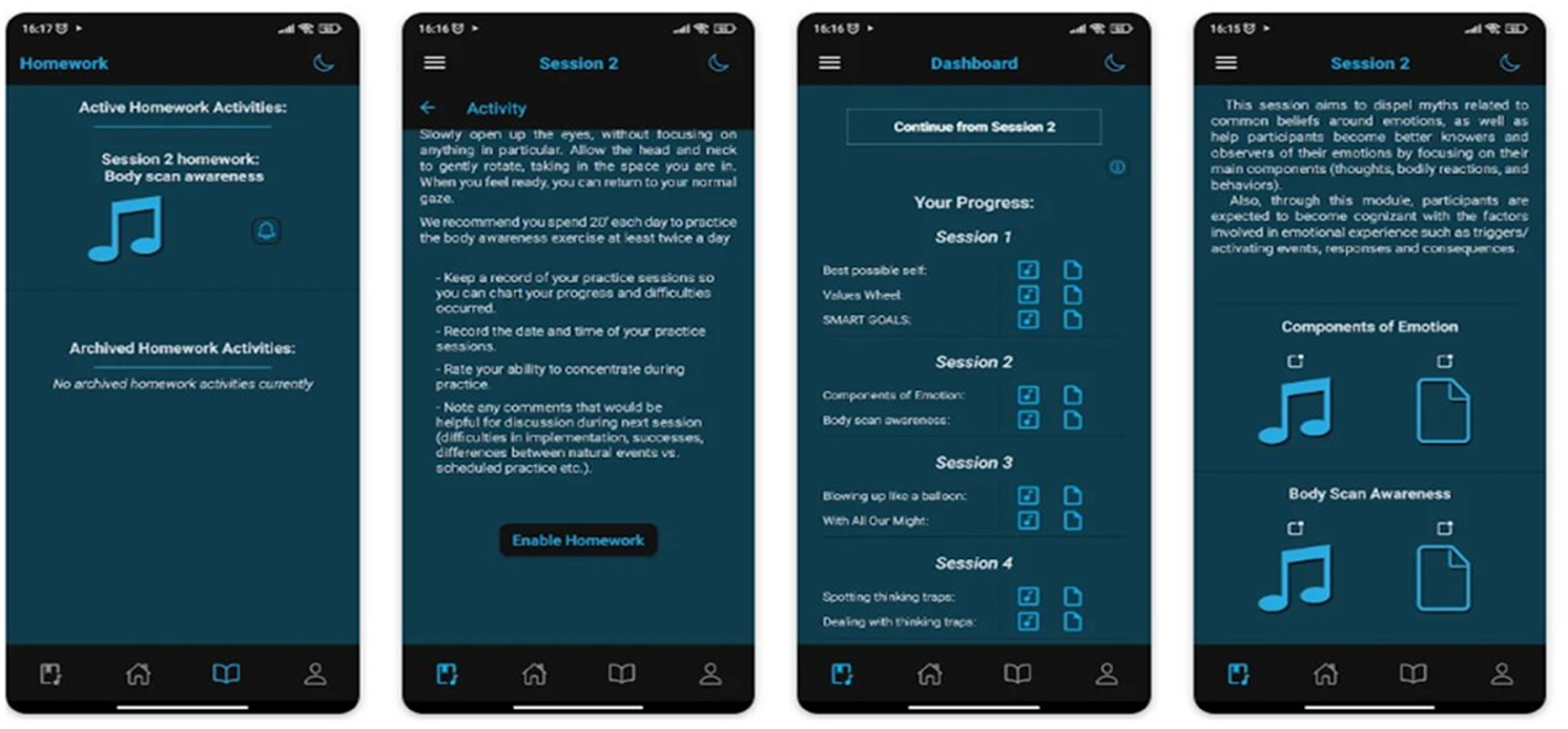
Screenshot of the MASH-UP N’ HEI app interface. Note. Screenshot of MASH-UP N’ HEI app interface. From *MASH-UP N’ HEI*, by Silversky3D Apps, 2025, https://mashup-hei.eu/. Copyright 2025 by MASH-UP N’ HEI consortium.
Stage 2: Field Testing and Acceptability Assessment
The objective of this stage was to assess the acceptability of the training and to explore the potential of using digital resources to enhance student engagement and learning outcomes. University students from the four universities participated in pilot tests of the localized music-enhanced emotion regulation training. Additional participants were recruited through university counseling centers, and social media ads. The training was delivered by members of the staff at each university (e.g., junior lecturers, psychologists working at university counseling office), all of whom had relevant experience in teaching psychology and conducting experiential learning activities. These instructors completed an introductory course on the training program and led sessions under the supervision of a training coordinator to ensure consistency. Throughout the training, students were encouraged to reflect on and share their experiences. Upon completion, time was allocated for participants to provide formal written feedback.
Method
Participants
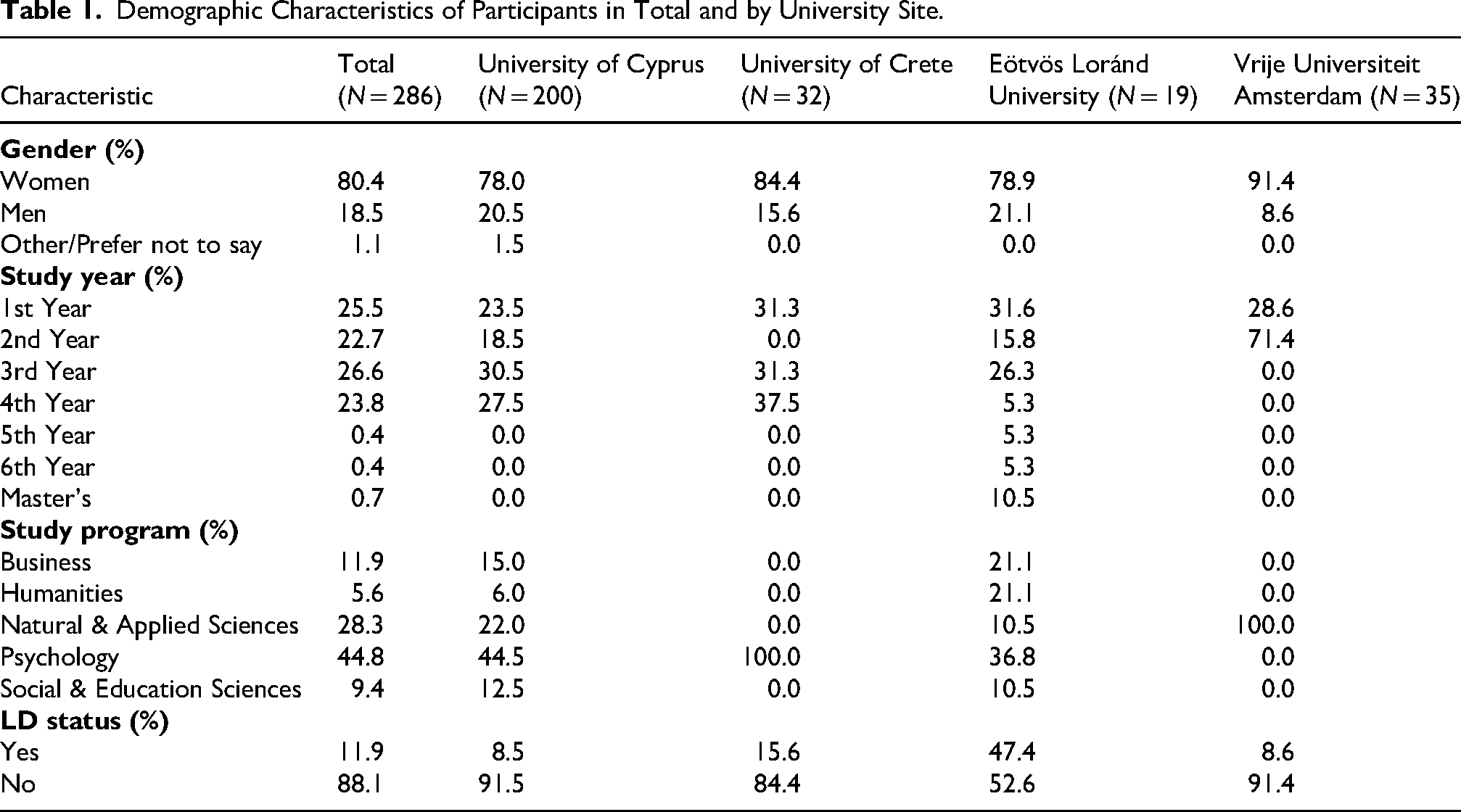
A total of 286 students 2 (men = 53 (18.53%), women = 230 (80.42%), age range: 18–56, Mage = 21.22 SDage = 4.33), studying respectively at the University of Cyprus (N = 200, 69.93% of the total sample), the University of Crete (N = 32, 11.19% of the total sample), the Vrije Universiteit Amsterdam (N = 35, 12.24% of the total sample), and the Eötvös Loránd University (N = 19, 6.64% of the total sample) participated in stage 2. Participants had different primary majors, though nearly half of them (N = 128, 44.75%) were Psychology students. The majority were evenly distributed across first- to fourth-year students, with each year group representing approximately 22–27% of participants. Table 1 summarizes the demographic information of the participants, providing a clear view of the distribution per country, year of study, age range, and primary major. As expected, the majority of the participating students (N = 252, 88.11%) in our sample reported that they have no LD and the others (N = 34, 11.88%) reported that they had some challenges related to learning.
Demographic Characteristics of Participants in Total and by University Site.
Measures
Acceptability Questionnaire
After completing the course, all participants were asked to complete a course satisfaction and acceptability questionnaire. This instrument was adapted from previously validated tools (Al-Fraihat et al., 2020; Bruijns et al., 2022; Hallis et al., 2017; Tucker et al., 2022) and was designed to evaluate students’ experience, satisfaction, and perceptions of the course's design and implementation. The questionnaire consisted of 21 items rated on a 5-point Likert scale, where 1 indicated “strongly disagree” and 5 indicated “strongly agree.” The items were organized into eight subscales capturing key dimensions of the training’s acceptability and perceived impact: overall satisfaction and appropriateness (Acceptability), clarity and ease of following the content (Complexity), perceived learning outcomes (Perceived Effectiveness), originality of content (Content Novelty), personal relevance (Compatibility), confidence in applying learned skills (Self-Efficacy), perceived real-world benefits (Perceived Benefits), and increased interest and engagement (Motivation). Supplementary Material 1 provides further information, including reliability indices and descriptive statistics (means, standard deviations, skewness, and kurtosis). In addition to the Likert-scale items, qualitative feedback was collected through a set of open-ended questions. These were designed to elicit deeper insights into students’ personal experiences with the course, including perceived impact on personal growth, suggestions for course improvement, and reflections on the digital delivery. Specifically, participants were invited to reflect on the effectiveness of the course in supporting their development, the relevance of personal development training within academic settings, preferences regarding delivery formats (e.g., in-person vs. digital), the use of mobile applications to support learning, and recommendations for enhancing the technological aspects of the training. These qualitative responses offered valuable context to the quantitative data and helped identify both strengths and opportunities for improvement in future implementations.
Learning Difficulties Checklist
To identify participants with Learning Difficulties (LD), a brief self-report checklist on all cognitive domains was administered. Participants were asked to indicate in which domains they experienced LD by selecting all applicable areas from a provided list. The checklist included the following domains: speaking, reading, writing, spelling, other language difficulties, mathematical calculations, listening, thinking, attention, memory, and an open category for other difficulties. This approach allowed for a straightforward and participant-driven identification of learning-related challenges without relying on formal diagnostic criteria.
The App Usability Scale (AUS)
A self-report instrument designed to assess users’ perceptions of an application’s usability. Drawing inspiration from the System Usability Scale (SUS) developed by Brooke (1996), the AUS comprises 10 items rated on a 5-point Likert scale, evaluating aspects such as ease of use, complexity, and user confidence. The total score provides an overall measure of the application’s usability, facilitating comparisons across different user groups and applications. Supplementary Material 2 provides further information, including reliability coefficients as well as descriptive statistics (means, standard deviations, skewness, and kurtosis).
Procedure
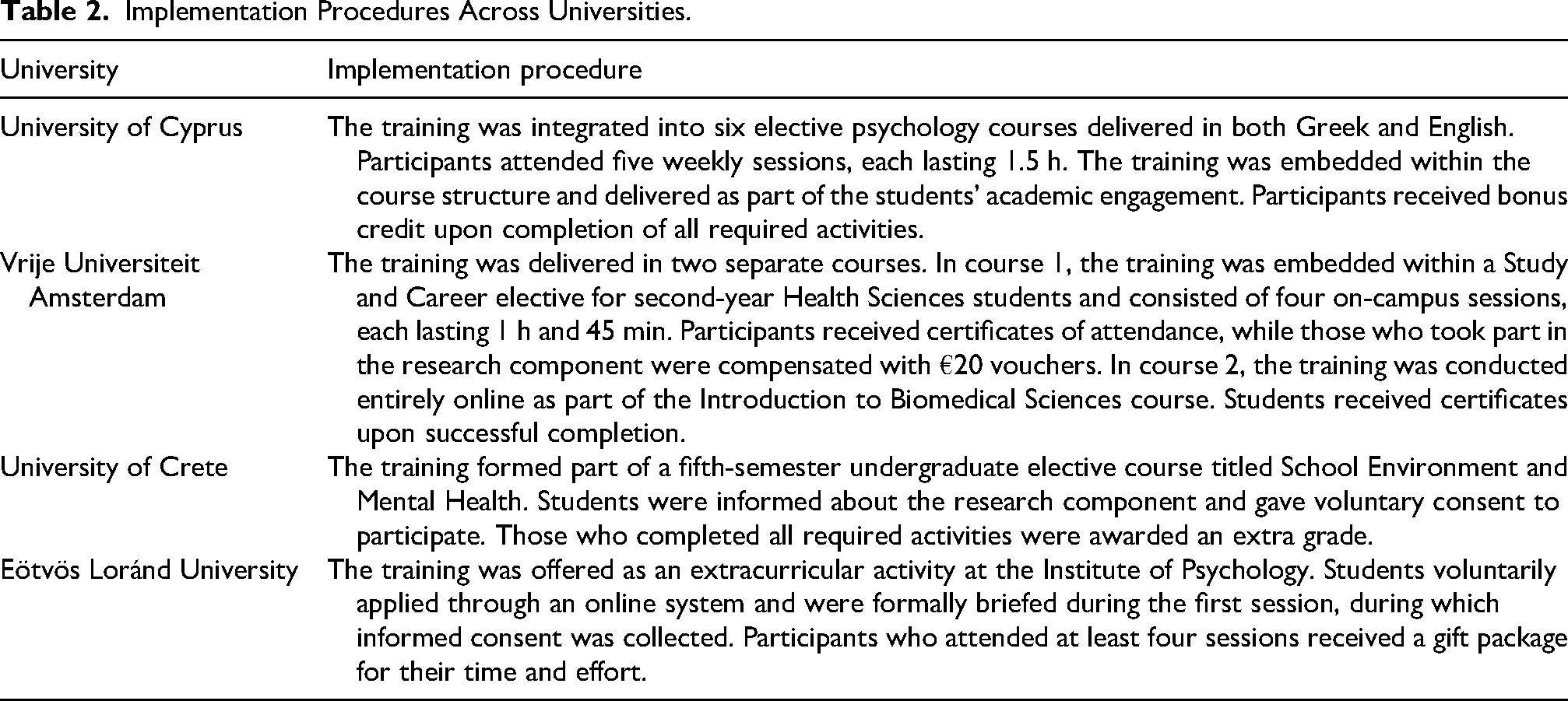
The training was implemented either as integrated learning content in elective psychology undergraduate courses (University of Cyprus and University of Crete) or as an elective extracurricular group session activity (Vrije Universiteit Amsterdam, Eötvös Loránd University) across the four universities. The implementation was conducted in each country's native language or in English, according to the official language of instruction for each university. Each group attended an average of five 1.5-h sessions with their allocated instructor. During the informational meeting, each instructor informed the class that one of the aims was to pilot a new content on emotion regulation skills and asked for students’ consent to participate in the research part towards its further development. Students who voluntarily consented to participate in the research were asked to complete an acceptability questionnaire after the completion of the training. A brief description of the implementation procedure followed in each country is outlined in Table 2.
Implementation Procedures Across Universities.
Course Content
The program involved the following modules: a) Values & setting goals for enhancing motivation, b) Understanding Emotions, c) Mindful Emotion Awareness and Relaxation, d) Thinking Flexibly, and e) Countering Inappropriate Behaviors. The rationale of the training was built based on the framework of Unified Protocol (Barlow et al., 2018) and training activities were selected and adapted in from a compilation of foundational works on contemporary evidence-based approaches, (i.e., Cognitive Behavioral approach, Acceptance and Commitment approach, and Dialectical Behavior approach). Activities were adapted using core components of music-based interventions (Dingle & Fay, 2017; McFerran, 2016; Saarikallio et al., 2020) with emphasis on emotion recognition in music, regulation of stress and negative emotions through active music-listening, self-reflective awareness of emotional responses to music, and song-writing. Each module contained a) the session outline, b) review of previous session's homework, c) theoretical background and module's rationale, d) skills activities, and e) homework assignment.
Data Analysis
Quantitative Data
Statistical analyses were conducted using the JASP software, version 018.1.0 (JASP Team, 2024). All data were initially screened for missing data and outliers. Since all participants received the same intervention protocol, materials, and facilitation guidelines, we conducted a pooled analysis—combining data from all sites into a single dataset—to examine overall program acceptability and participant feedback. One-sample tests were used to assess whether training acceptability ratings differed from the neutral midpoint (2.5). Nonparametric Wilcoxon signed-rank tests (rank-biserial correlation/rrb for effect sizes) were applied due to normality violations (Shapiro–Wilk W for all scales ranked between 0.84–0.95, p < .001). In addition, we conducted inferential comparisons across university, gender, and LD status. One-way ANOVAs with complementary nonparametric Kruskal–Wallis tests were employed to assess differences across universities, while Welch's t-tests were used to examine differences by gender and LD status.
Qualitative Data
Thematic analysis approach using a coding system to organize information from open-ended questions was implemented (Suter, 2012). The researchers initially reviewed the raw responses and implemented a process of preliminary data coding with a combination of deductive codes drawn from the research questions and inductive codes generated by the data (Graebner et al., 2012). Codes were grouped in categories to allow for patterns to emerge and help the researchers get a deeper understanding of the data set and the participants’ responses. The thematic analysis, the visualization of the data and selected quotes contributed to three main themes: a) Participants’ personal growth during the course, b) Socio-emotional development and professional development, and c) Attitudes towards the course content and delivery.
Results
Acceptability of the Training
Overall, participants reported high levels of general acceptability of the course (M = 4.23, SD = 0.61) on a 5-point scale. A Wilcoxon signed-rank test indicated that ratings were significantly higher than the neutral midpoint of 2.5, V = 40926, p < .001, with a large effect size (rrb = .99). Ratings for perceived effectiveness (M = 4.14, SD = 0.65) and motivation (M = 4.16, SD = 0.70) were also significantly above the midpoint, V = 40898, p < .001, rrb = .99, and V = 40.772, p < .001, rrb = .99, respectively, indicating strong engagement and perceived impact. Other dimensions, including self-efficacy (M = 3.94, SD = 0.77), perceived benefits (M = 4.01, SD = 0.70), and compatibility (M = 4.01, SD = 0.86), also received favorable evaluations. These were all significantly greater than the midpoint, with V = 38898, p < .001, rrb = .98; V = 38599, p < .001, rrb = .99; and V = 40249, p < .001, rrb = .96, respectively.
The complexity subscale yielded a somewhat lower mean score (M = 3.68, SD = 0.44), though still significantly above the midpoint, V = 40747, p < .001, rrb = 1.00, suggesting that while the course was generally well-received, some participants may have found aspects more challenging to follow.
Finally, novelty showed the widest variation (M = 3.67, SD = 1.09) with a significant effect, V = 37681, p < .001, rrb = .84, reflecting mixed responses regarding the uniqueness of the material. An ANOVA indicated significant differences across study programs, F(4, 281) = 7.72, p < .001, η2 = .10. Post hoc comparisons revealed that psychology students (M = 3.33, SD = 1.11) rated the content as less novel than students in natural and applied sciences (M = 4.01, SD = 0.98, p < .001), humanities (M = 4.19, SD = 0.83, p = .017), and social and education sciences (M = 4.07, SD = 0.96, p = .007). A nonparametric Kruskal–Wallis test confirmed these differences, H(4) = 28.52, p < .001.
Comparisons Across Demographic and Study Variables
By University
A one-way ANOVA revealed a significant effect of the university/country on general acceptability, F(3, 282) = 5.14, p = .002, η2p = .052. Post hoc tests indicated that participants from Hungary (M = 4.59, SD = 0.38) rated the course as more acceptable than those from Cyprus (M = 4.20, SD = 0.65, p = .036). Results were consistent with the Kruskal–Wallis test, H(3) = 19.03, p < .001.
For complexity, significant differences also emerged, F(3, 282) = 10.90, p < .001, η2p = .104. Participants from Hungary (M = 4.12, SD = 0.50) perceived higher complexity compared with those from Cyprus (M = 3.66, SD = 0.42, p < .001), Greece (M = 3.80, SD = 0.41, p = .039), and the Netherlands (M = 3.48, SD = 0.30, p < .001). Again, the Kruskal–Wallis test confirmed these results, H(3) = 26.19, p < .001.
A similar pattern was found for perceived effectiveness, F(3, 282) = 8.14, p < .001, η2p = .080. Dutch participants (M = 3.71, SD = 0.46) reported lower effectiveness than those from Cyprus (M = 4.16, SD = 0.67, p < .001), Greece (M = 4.39, SD = 0.58, p < .001), and Hungary (M = 4.35, SD = 0.41, p = .002). The Kruskal–Wallis test supported this finding, H(3) = 27.80, p < .001.
For compatibility, the ANOVA indicated a significant effect of country, F(3, 282) = 5.72, p < .001, η2p = .057. Hungarian participants (M = 4.74, SD = 0.56) reported higher compatibility than those from Cyprus (M = 3.97, SD = 0.87, p < .001), Greece (M = 4.09, SD = 0.96, p = .044), and the Netherlands (M = 3.80, SD = 0.72, p < .001). The Kruskal–Wallis test was also significant, H(3) = 20.46, p < .001.
For self-efficacy, a significant country effect was found, F(3, 282) = 7.13, p < .001, η2p = .070. Post hoc tests indicated that Hungarian participants (M = 4.45, SD = 0.55) reported higher self-efficacy than those from Cyprus (M = 3.97, SD = 0.75, p = .038) and the Netherlands (M = 3.50, SD = 0.77, p < .001). These findings were supported by the Kruskal–Wallis test, H(3) = 20.81, p < .001.
Similarly, perceived benefits differed significantly by country, F(3, 282) = 12.44, p < .001, η2p = .117. Dutch participants (M = 3.43, SD = 0.66) rated benefits significantly lower than those from Cyprus (M = 4.04, SD = 0.69, p < .001), Greece (M = 4.14, SD = 0.60, p < .001), and Hungary (M = 4.45, SD = 0.44, p < .001). The Kruskal–Wallis test confirmed this pattern, H(3) = 33.91, p < .001.
For motivation, the ANOVA indicated significant country differences, F(3, 282) = 6.57, p < .001, η2p = .065. Participants from the Netherlands (M = 3.71, SD = 0.55) reported lower motivation than those from Cyprus (M = 4.19, SD = 0.69, p < .001), Greece (M = 4.30, SD = 0.76, p = .002), and Hungary (M = 4.39, SD = 0.52, p = .003). Results were consistent with the Kruskal–Wallis test, H(3) = 25.05, p < .001.
Finally, novelty did not differ significantly across countries, F(3, 282) = 0.11, p = .952, η2p < .01, with the Kruskal–Wallis test also nonsignificant, H(3) = 0.58, p = .901. Figure 2 visually presents differences by university across countries for all variables included in the study.
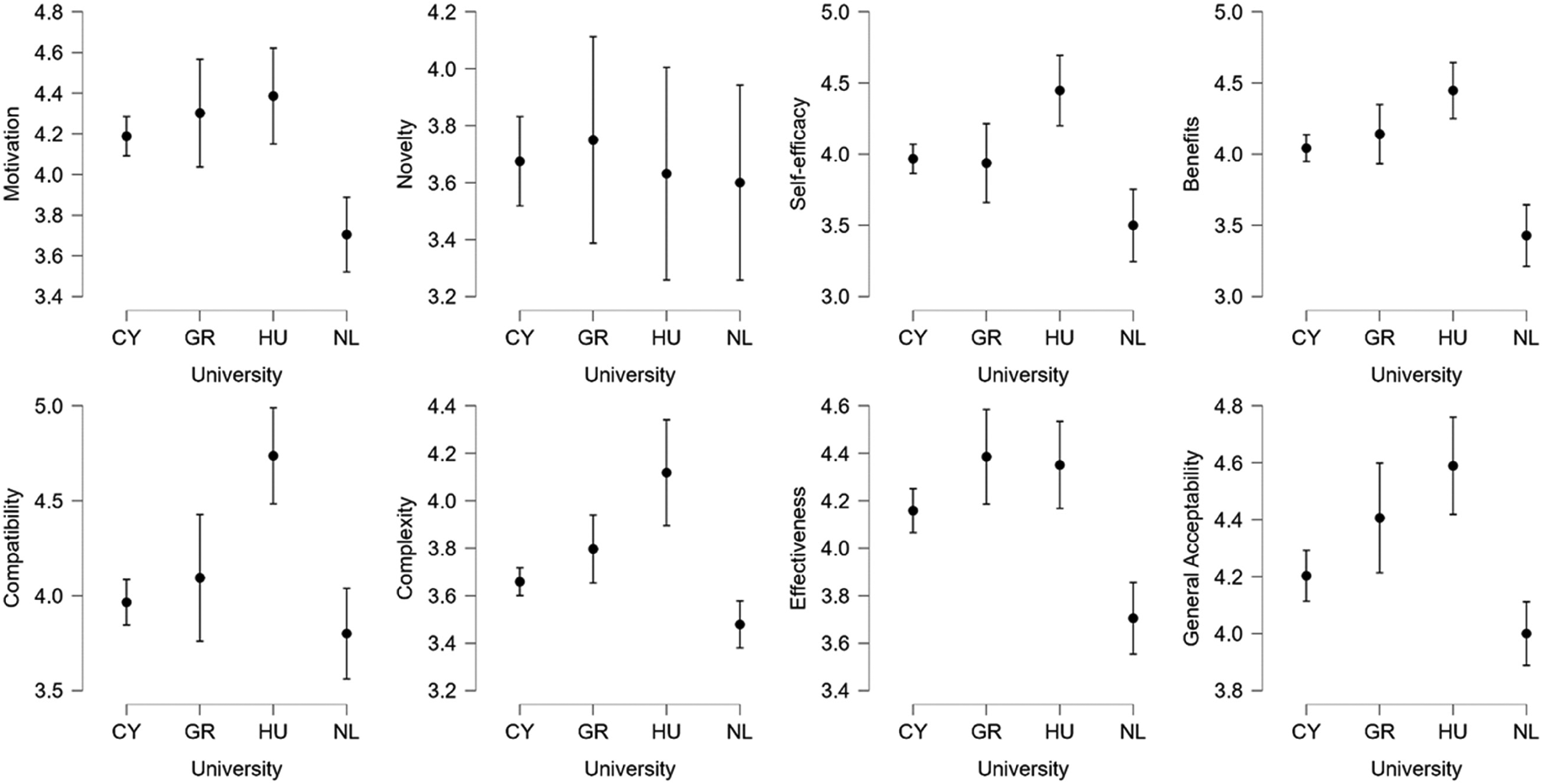
Comparison of mean study variable scores across universities (with standard errors). Note. Error bars represent mean standard errors. University codes: CY = University of Cyprus; GR = University of Crete; NL = Vrije Universiteit Amsterdam; HU = Eötvös Loránd University.
By Gender
No significant gender differences were found for general acceptability, t(69.26) = –1.52, p = .134, d = –0.24, or complexity, t(78.42) = –1.16, p = .251, d = –0.18. For effectiveness, women (M = 4.19, SD = 0.62) reported higher scores than men (M = 3.95, SD = 0.74), t(69.78) = –2.23, p = .029, d = –0.36. Similarly, women reported greater compatibility (M = 4.13, SD = 0.76) than men (M = 3.57, SD = 1.08), t(64.26) = –3.60, p < .001, d = –0.60, and higher self-efficacy (M = 4.02, SD = 0.71) compared with men (M = 3.64, SD = 0.90), t(68.01) = –2.87, p = .005, d = –0.47. Gender differences were also observed for motivation, with women (M = 4.21, SD = 0.66) reporting higher scores than men (M = 3.96, SD = 0.82), t(68.49) = –2.09, p = .040, d = –0.34. For benefits, the difference approached significance, t(67.55) = –1.82, p = .074, d = –0.30. No significant gender differences were found for novelty, t(82.76) = 1.61, p = .112, d = 0.24.
By Learning Difficulties Status
No significant differences were observed for general acceptability, t(42.04) = –0.92, p = .364, d = –0.17, complexity, t(39.22) = –0.56, p = .582, d = –0.11, effectiveness, t(44.91) = 0.76, p = .453, d = 0.13, or novelty, t(47.15) = –1.40, p = .169, d = –0.24. Similarly, there were no significant differences in compatibility, t(40.24) = –0.51, p = .615, d = –0.10, self-efficacy, t(41.60) = –0.71, p = .482, d = –0.13, perceived benefits, t(40.74) = 0.29, p = .776, d = 0.05, or motivation, t(38.73) = 0.79, p = .435, d = 0.16. Overall, participants with and without a LD reported similar levels of acceptability and usability across all dimensions.
App Usability
Usability of the smartphone application was assessed among 162 participants who accessed and used the app. This subgroup reflects a portion of the full study sample, as access to the app varied across countries and delivery formats. Across this subgroup, participants reported relatively high levels of app usability (M = 27.56, SD = 4.40, range = 10–42), indicating generally positive experiences with the app and limited usability concerns. A Wilcoxon signed-rank test confirmed that usability scores were significantly higher than the neutral midpoint of 21, V = 12,493, p < .001, with a large effect size (rrb = .92).
We next examined whether app usability scores differed by country, gender, or LD status. A one-way ANOVA indicated no significant differences in app usability across countries, F(3, 158) = 0.68, p = .564, η2p = .013. Descriptively, mean scores were comparable across sites (Cyprus: M = 27.61, SD = 4.80; Greece: M = 27.03, SD = 3.20; Hungary: M = 26.88, SD = 2.90; Netherlands: M = 29.20, SD = 4.02). The nonparametric Kruskal–Wallis test confirmed this pattern, H(3) = 1.99, p = .575. Welch's t-test showed no significant gender differences, t(56.66) = 0.44, p = .659, d = 0.08. Men (M = 27.85, SD = 2.78) and women (M = 27.55, SD = 4.67) reported similar usability levels. Similarly, no significant differences were found by LD status, t(23.05) = –1.36, p = .187, d = –0.33. Participants with an LD (M = 28.84, SD = 4.39) and those without an LD (M = 27.39, SD = 4.39) reported comparable usability. Taken together, these results suggest that app usability ratings were consistently satisfactory and did not vary meaningfully across countries, gender, or LD status.
Qualitative Data
Upon completion of the course, participating students were asked to share their experiences on the effectiveness, the course context, and the overall implementation of the program/course through three open-questions at the end of the Acceptability questionnaire. Students’ feedback did not particularly focus on the music-related strategies embedded in the course. Rather, there was a focus on the applicability of the course and the potential to transfer part of its content to their professional and personal lives.
Participation in the Program and Participants’ Personal Growth
Overall, participants’ written responses to the three feedback questions aligned with the quantitative findings. Students indicated that they found the content of the course to be helpful, relevant to their needs, and acceptable. Participating in group discussions and music-making, sharing ideas with their peers, and being more aware of their own emotions were practices welcomed by the students. During this process, they were able to make connections between the course content and their personal growth, as they had opportunities to practice self-care and explore their attitudes and core values in an easy and practical way.
For example, one of the students with self-reported LD stated: “I was able to learn many relaxation techniques during the course, I learned that negative emotions are not always bad and can be useful. I learned techniques to deal with them on a possible bad day.”
Another one highlighted that: “The course with all the experiential activities created the context for personal exploration and growth. Also, during the lectures, discussions, and reflective practices on our own school experiences, the environment, our family environment etc. motivated me for my own personal development.”
There was also enough emphasis on the experiential aspect of the course and the activities on mindfulness and tension-release methods. One of the participants shared: “It [the course] drew my attention to a higher degree of awareness possible in the field of emotions, and through concrete exercises [the course]…showed me that it was possible and how. The what do I feel? what do I think? how do I act? and the recognition of cognitive distortions are the two most useful things for me, which are also useful for (completing) studies and family life.” Similarly, one participant noticed her own process of personal change as she gradually finds merit in the course content: “I support that there should be such an opportunity at the university, because it would help many people to deal with it at all. Personally, I probably wouldn’t take it as a course during a busy period, but if I didn’t work alongside the university and had more time, maybe I would. By the way, this is a step forward, because previously I rejected such possibilities ‘on principle’.”
Socio-Emotional Development and Professional Development
Beyond notions of personal growth, the participants found the course relevant to their professional development as well. Participants majoring in psychology indicated in their responses that they could implement some of these techniques when working with their clients. Also, participants majoring in other content areas made connections between the core components of the course and their later professional growth. For example, they shared the importance of being mindful of their emotions and being more understanding and in control of their feelings during professional interactions. Further, they made connections between the course content (mainly emotion awareness and regulation) and how it can be helpful to navigate stressful situations as they advance in their studies and pursue their professional aspirations. The comment from one participant with self-reported LD, highlighted these aspects as she shared: “Such courses can help me develop skills in leadership, communication, and project management, which are essential for advancing in many professions. Taking a course in public speaking or communication can help develop our confidence and ability to convey our ideas effectively.”
Views on the Delivery of the Course
Participating students provided feedback on their needs and offered suggestions for further improvements to the delivery of the course. A recurring comment was the request for more interactive, small-group activities, especially those related to music, mediation, and breathing exercises. For future implementation of the course, the participants suggested incorporating more group work in class with their peers (e.g., role playing), more creative and music-related activities (such as playing music together). They also expressed interest in taking the class outside of the traditional classroom to more deeply experience the course content. Feedback on the use of technology was mixed as some students indicated that they enjoyed using the app while others did not find it particularly helpful or relevant to the process.
Supplementary Material 3 presents representative quotes from the open-ended questions.
Conclusion
Building on the potential of music engagement as a form of musical care to promote university students’ health and well-being, the current program encompassed various uses of music—both music-making and listening—to support a wide range of developmental cognitive, behavioral, and interpersonal needs of the participants. More specifically, the current study explored the acceptability of a music-based emotion intervention, developed to be integrated into the academic learning pathway in four different European countries and to reach out to all students, including those with learning difficulties. The findings from this applicability study provide emerging evidence that multimodal, music-enhanced psychoeducational programs can be both acceptable and beneficial for university students as they help them navigate complex emotional states. Across countries, students consistently reported high levels of satisfaction, enjoyment, and perceived relevance of the course content as evidenced by the high overall acceptability scores. Also, the intervention was met with a largely positive reception among the participants, regardless of self-reported learning difficulties, the country of attendance, or the program of attendance for the participants. Further, the app was perceived as usable and accessible across diverse user groups, with minimal barriers related to demographics, academic background, or disability status.
These results are promising, as they indicate that the design, the content, and implementation of the project is well aligned with the needs and requirements of university students with different geographical and cultural backgrounds. Further, this music-informed program provided a space for personal growth and well-being through a universal model of access, echoing the principles of musical care. It reached participants who might otherwise have limited options for support and offered opportunities for self-awareness, empowering students to manage their own emotions and challenges in their everyday lives. For example, participants highlighted that the course fostered social connection, empathy, and emotional openness, and identified benefits to their personal and professional lives. Literature on music and psychosocial interventions already highlights the benefits of group structure as a useful component for universal, psychosocial programs that enhance mental and social well-being within a community (e.g., Yi & Kim, 2023). Similarly, other studies that have explored music experiences and their role in social connectedness, highlight the role of music as a key factor in fostering community (Juslin et al., 2016) as well as the importance of implementing strategies that are relevant to the culture and lived experiences of youth, as a key element of program success (Travis et al., 2019).
The positive results of the project may be attributed to various aspects of this work. The interdisciplinary, participatory, and collaborative structure of the team allowed for ongoing exchanges and feedback among researchers and clinicians and led to the rigorous development and piloting of the materials for the program, in terms of socio-cultural relevance, accessibility, and adaptability across different universities/countries. Within this context, the identified variability in our results by country/university (in terms of compatibility, perceived effectiveness, and the complexity of the program), may be related to a variety of logistic and contextual reasons, such as the background of the instructors in each university and the variability in the delivery mode of the course in each university (e.g., delivered as part of an elective course or delivered as a stand-alone workshop).
Also, the results of this study indicated that the design, the content, and the implementation of the program were well aligned with the needs and requirements of university students who major in different content areas. The higher novelty ratings among natural and applied sciences students suggest limited prior exposure to psychosocial or arts-based perspectives. This points to a curricular gap but also an opportunity: integrating such content could broaden their skills, support mental health, and complement disciplinary training. High ratings of the project in terms of general acceptability and motivation to participate reflect findings from previous studies on music engagement as a form of care and its psychosocial benefits to the needs of young adults (Stewart et al., 2019). Overall, women consistently reported higher levels of effectiveness, compatibility, self-efficacy, and motivation than men, indicating that gender may shape how interventions are perceived and highlighting the importance of considering gender-specific processes when designing and tailoring programs. Finally, although existing research on the use of music coping strategies pinpoints to maladaptive or unhealthy coping behaviors (see McFerran & Saarikallio, 2014; Miranda et al., 2012), our data did not indicate such behaviors across our participants. Rather, our findings on the inclusivity and accessibility of the program through its interdisciplinary collaborative design and the focus on music, align with literature on mental health services that call for evidence-based, research-to practice implementation studies that may improve access to high-quality mental health services, diminish stigma, and inform scale-up services (Wainberg et al., 2017).
Despite the positive findings, this study is not without challenges and limitations. An important weakness of the study concerns the characteristics of our group and the imbalance in terms of country participation, and relevant homogeneity in terms of culture and ethnicity. Participants were self-selected and attended the program as part of their formal coursework at their university. As such, it is likely that they were already invested in self-development, and they had a positive disposition to music. In terms of the musical experiences included in the program, a rigorous process was implemented to ensure appropriateness and cultural sensitivity of the musical choices. Still, the research team's existing beliefs on music, their personal preferences, along with their training (especially, training in music therapy), and their own relationship to music may have influenced the choice of musical experiences included in the program. Finally, the reliance on self-reported measures, including the one on self-reported learning difficulties, along with the lack of follow-up assessments due to the limitations of the semester-based study design are weaknesses of the study. Future studies should incorporate validated screening tools, which assess self-perceived academic difficulties in a thorough way, to strengthen methodological rigor and improve comparability across studies.
Music-informed programs as part of social interventions are gaining growing recognition as they reach a broader population and serve various needs of individuals and society (Heard & Bartleet, 2025; Yi & Kim, 2023). Similarly, musical care is a rapidly developing field, which focuses on the use of music in supporting healthcare benefits across different contexts, disciplines, and needs. Echoing the main principles of musical care, the current study intended to explore the potential of embedding various music experiences within a universal healthcare preventive program for university students. Future research may build upon these findings through the development and evaluation of structured interventions that systematically integrate music-based activities with broader preventive strategies. Such investigations would further clarify the mechanisms by which musical care contributes to equity, engagement, and well-being in higher education contexts.
Supplemental Material
sj-docx-1-mns-10.1177_20592043261455518 - Supplemental material for Development and Acceptability of a Theory-Based and Music-Enhanced Emotion Regulation Program for University Students: A Cross-National European Study
Supplemental material, sj-docx-1-mns-10.1177_20592043261455518 for Development and Acceptability of a Theory-Based and Music-Enhanced Emotion Regulation Program for University Students: A Cross-National European Study by Potheini Vaiouli, Marios Theodorou, Elke Vlemincx, Panagiota Dimitropoulou, Alexios Arvanitis, Csaba Kertész, Ferenc Honbolygó, Tonia-Flery Artemi, Ayshe Biyikoglu, Anastasios Petrou, Alexandros Andreou and Georgia Panayiotou in Music & Science
Footnotes
Acknowledgments
The authors want to thank their colleagues for their work on the project and for their help during the conceptualization and development phase of early versions of the project training materials. Also, the authors would like to extend their sincere gratitude to the participating students for engaging in the program. Finally, heart-warming thanks to Silversky3D Virtual Reality Technologies Ltd for the development of the app and their ongoing input on technological aspects of this work.
ORCID iDs

Ethical Considerations
All participating universities obtained ethical approval from their respective local ethics committees:
University of Cyprus: Cyprus Bioethics Committee. Reference number: ΕΕΒΚ ΕΠ 2023.01.47.
Vrije Universiteit Amsterdam: The Research Ethics Review Committee of the Faculty of Science, Vrije Universiteit Amsterdam (BETHCIE). Reference number 2024-009.
University of Crete: Research Ethics Committee (REC) of the University of Crete. Reference number: 58/21.03.2022.
Eötvös Loránd University: Faculty of Education and Psychology Research Ethics Committee. Reference Number: 2023/492 and 2024/440.
The study was registered with ClinicalTrials.gov (Identifier: NCT05746234). All procedures conducted were in accordance with the ethical standards of the institutional and/or national research committees, as well as with the principles outlined in the 1964 Declaration of Helsinki and its subsequent amendments or equivalent ethical guidelines. Participants were thoroughly informed about the aims and objectives of the study and were assured of their right to withdraw from participation at any point without consequence. Written informed consent was obtained from all individuals prior to their inclusion in the study. Anonymized data will be made available upon reasonable request from the corresponding author.
Funding
The authors disclosed receipt of the following financial support for the research, authorship, and/or publication of this article: This research was funded by the European Union's Erasmus + KA2 programme (E + KA2) under grant agreement N° 2021-1-CY01-KA220-HED-000023329 (MASH-up n’ HEI). Views and opinions expressed are, however, those of the author(s) only and do not necessarily reflect those of the European Union or the European Education and Culture Executive Agency (EACEA). Neither the European Union nor EACEA can be held responsible for them.
European Union’s Erasmus+ KA2 programme (E+KA2), (grant number grant agreement N° 2021-1-CY01-KA220-HED-00002332).
Declaration of Conflicting Interests
The authors declared no potential conflicts of interest with respect to the research, authorship, and/or publication of this article.
Authors Disclaimer
The authors used ChatGPT (developed by OpenAI) exclusively for language editing, including grammar, syntax, and formatting. The AI tool was not involved in the generation of scientific content, data analysis, or interpretation. The authors remain solely responsible for the integrity and accuracy of the manuscript.
Data Availability Statement
The datasets generated and analyzed during the current study are not publicly available. Anonymized data sets will be made available from the corresponding author, and the second and last author on reasonable request (Vaiouli et al., 2026).
Supplemental Material
Supplemental material for this article is available online.
Notes
References
Supplementary Material
Please find the following supplemental material available below.
For Open Access articles published under a Creative Commons License, all supplemental material carries the same license as the article it is associated with.
For non-Open Access articles published, all supplemental material carries a non-exclusive license, and permission requests for re-use of supplemental material or any part of supplemental material shall be sent directly to the copyright owner as specified in the copyright notice associated with the article.
