







Abstract
In the past few decades, the rise of China has become the theme of heated debates, the central question of which is whether China will rise peacefully or as a “threat.” Faced with various speculations and predictions about China’s possible future course of action, Chinese political leaders and eminent scholars began engaging in the making and projecting of China’s soft power as well as a series of nation-branding campaigns. In order to study and evaluate the effectiveness of China’s nation-branding campaigns as well as how well the general public receives them, we looked into the perspectives and attitudes of the populace to find out their attitudes toward China’s national image. In this article, we intend to scrutinize the public opinions toward China as reflected by the questions and answers on social media (quora.com in this case), using content analysis. As the findings show, the ranking of effectiveness of the different aspects of China’s nation branding is as follows: (1) history, (2) place, (3) language, (4) political and economic systems, (5) culture, (6) people, (7) infrastructure, and (8) social institution. Based on the results of the study, a model for evaluating the success or effectiveness of nation-branding campaigns was proposed.
Introduction
With the advent of information technology, the development of emerging economies, as well as the changing international balance of power, the world of today is ever more complex and volatile than it was 50 years ago. Among the myriad of changes that have happened in the past half-century, the rise of China is undeniably a very salient and controversial one. The rapid expansion of China’s economic power has now placed it in a position second only to the United States and it is predicted to overtake the US economy before 2030 (Lippit et al., 2011), despite some recent slowdown. Unsurprisingly, the rise of China has become the theme of heated debates, the central question of which is whether China will rise peacefully or as a “threat,” especially to the existing international world order that is largely dominated by Western institutions established since the end of WWII. According to the realist point of view, just as any rising power or hegemony will invariably go to war, China is doomed to clash with the existing superpower, a.k.a. the United States, and challenge the world power structure (Christensen, 1996; Jacques, 2009; Johnston, 1995; Mearsheimer, 2001; Rice, 2000). This forecast seems to be more plausible given the recent scenario of the Sino-US trade war. However, the liberals hold a more optimistic view, arguing that the rise of China will not pose a threat to the world order due to its inherent weakness and vulnerability and thus its future prospect is to become a regional power at best, instead of a global superpower or hegemony (Goh, 2013; Nathan & Scobell, 2012; Shambaugh, 2013; Steinfeld, 2010). In academia, both the “China threat” theory and the “peaceful rise” theory have their respective supporters and followers.
Faced with various speculations and predictions of China’s possible future course of action, Chinese political leaders and eminent scholars began promoting the notion of peaceful rise in 2003, trying to clarify or assert China’s intention (Zhang, 2005). Zheng Bijian (2003), former vice-president of the Central Party School of the Chinese Communist Party stated in a speech at the annual Bo’ao Forum for Asia in 2003 that,
In the 25 years . . . China has blazed a new strategic path that not only suits its national conditions but also conform to the tide of the times. This new strategic path is China’s peaceful rise through independently building socialism with Chinese characteristic . . .
In the same year, Chinese Premier Wen Jiabao stressed that “China today is a country in reform and opening-up and a rising power dedicated to peace . . .” (Wen, 2003). This statement resonated with the former Chinese President Hu Jintao’s speech in which he emphasized that China must persist in taking the development path of peaceful rise and a peaceful foreign policy of independence and self-reliance (Xinhua News Agency, 2004).
In addition, China also progressively responded to the threat theory by engaging in the making and projecting of China’s soft power as well as a series of nation-branding campaigns. Chinese leaders are fully aware that a positive and peace-loving national image could help alleviate the concerns of its neighboring countries and the West as well as dispelling the doubts about China’s intentions (Wilson, 2015). One of the first flagship programs to disseminate Chinese culture and language overseas is the Confucius Institute (CI). The CI program was launched in 2004 with the establishment of the first institute in Seoul by the National Office for Teaching Chinese as a Foreign Language (Hanban), and by 2010, more than 85 CIs were set up worldwide (Yang, 2010). However, despite the initial success, the CI program is faced with harsh criticism and opposition in Western countries, especially the United States, which accuses that the CIs are proxies for Chinese propaganda and infringe on academic freedom (Ding & Saunders, 2006; Hartig, 2015; Paradise, 2009; Wheeler, 2014; Yang, 2010). The recent shutdown of several CIs in the United States cast further shadows on the prospects of such institutes, and it is difficult to evaluate the impact and effect of such programs (Times Higher Education, 2017).
Another important nation-branding campaign was the 2008 Olympic Games, held in Beijing, which was one of the first major international events hosted by China. In this event, the grand opening ceremony, the stunning performance of the Chinese athletes, as well as the showcasing of China’s infrastructure and urban planning all contributed to projecting a friendly, prosperous, and energetic national image of China. After the 2008 Olympic Games, Beijing and other major Chinese cities increasingly became conference and exhibition centers of the world, hosting a series of international events such as the Shanghai World Expo, APEC Summit, and Winter Olympics, attracting visitors from across the globe. At the same time, China has also expanded its influence on the mass media sphere. Nearly all major government news organizations in China have developed and launched foreign-language services, aiming to catch up with or even overtake CNN and BBC in providing news services to the world audience (Gorfinkel, Joffe, Van Staden, & Wu, 2014; Xin, 2012).
Undoubtedly, these nation-branding programs were mostly planned, carried out, and evaluated by government agencies, most of which belong to the category of the so-called “official cultural sources and institutions,” which are different from the popular culture. Therefore, the question that remains is how to accurately gauge the effectiveness of such programs for soft-power projection and boosting a positive national image for the general public. For example, it will be helpful if we know how the international audience reacts to China’s nation-branding campaigns.
Current studies point out that much of China’s efforts to project a positive image seem to have for the most part neglected the reaction of the audience and focused more on one-way projection but not two-way communication (Lee, 2016). Therefore, in order to study and evaluate the effectiveness of China’s nation-branding campaigns as well as how well the general public receives them, we need to look into the perspectives and attitudes of the populace to find out if they understand and accept such ideas. To achieve this goal, this article scrutinizes the public opinions toward China as reflected by the questions and answers on social media (quora.com in this case) in order to analyze and evaluate China’s nation-branding strategies and measures.
In the following sections, we provide a brief literature review of the concept and theories of nation branding as well as its relationship with soft power, public diplomacy, and international relations. In the next step, the theoretical framework that serves as the basis for this study is presented, followed by an introduction of the subject of research: quora.com. Then the research methodology, results, and discussion are provided. Finally, in the conclusion section, a model for evaluating the nation-branding strategy is proposed.
Nation branding
Nation branding refers to the adoption of marketing and promotion strategies to raise public awareness about the national image of a certain country and to attract diverse customers, including citizens, tourists, and companies (Dinnie, 2016; Kaneva, 2011; Kotler & Gertner, 2002; Page & Hardyman, 1996). Nation branding has become a popular national strategy only since the past few decades (Varga, 2013). However, its origin dates back to the 18th century when brands were considered as an essential element of product differentiation (Bently, 2011). In modern times, according to the American Marketing Association (AMA), a brand is a “name, term, sign, symbol or design, or a combination of them, intended to identify the goods and services of one seller or group of sellers and to differentiate them from those of competition” (Kotler, 2003). It is important to note that although brands are initially associated with and originate from products, quite often successful brands gain a life of their own and a value that even transcends the products they represent (Varga, 2013). Holt (2004) found that iconic brands created “identity myths” that soothe collective anxieties resulting from acute social change. Holt pointed out that conventional branding strategies focusing on benefits, brand personalities, and emotional relationships would not be able to create icons. Instead, he called for a deeper cultural perspective on traditional marketing themes like targeting, positioning, brand equity, and brand loyalty. He also outlined a distinctive set of “cultural branding” principles such as targeting national contradictions, creating myths that lead culture, speaking with a rebel’s voice, drawing on political authority to rebuild the myth, and drawing on cultural knowledge as the principles of creating iconic brands. This process of how branding works also serves to explain why certain nation-branding campaigns are successful while others are not.
The idea of branding a nation was first adopted and applied in the tourism industry when “place branding” was adopted to enable a tourist destination to become more appealing to international travelers (Hanna & Rowley, 2008). Inspired by the place-branding practices, researchers and policymakers started to borrow and readapt the concept of nation branding in political marketing to manipulate the image of one’s own country as a powerful political strategy (Fan, 2006). The examples of nation branding are ubiquitous and easy to identify. From “Four Asian Dragons” of the old days to the current “Amazing Thailand,” “Incredible India,” Bhutan with its “Gross National Happiness” initiative, or even the “axis of evil,” these nomenclatures are all trying to cast an either positive or a negative image of a certain country or countries, in a succinct and all-encompassing way. Almost every country in the world is increasingly engaging in a competition to promote its national image and having it well received by as many people as possible. To achieve this end, nation branding is no longer treated as a subdomain of international tourism or international business alone. It is now more closely related to soft-power projection and public diplomacy.
Soft power, as Nye (2004) defines it, is the ability to get what is wanted through attraction rather than coercion or payments. Nye (2004) also identified the three sources of soft power as “culture,” “domestic values and policies,” and “foreign policy substance and style.” It is easy to see that these three sources overlap to a great extent with nation branding. Therefore, nation branding can be regarded as a source of soft power, that is, a positive national image helps boost the soft power of a country. Although soft power covers a much more complex and extensive area than nation branding, yet nation branding remains an essential component of soft power.
At the same time, nation branding is a crucial strategy for conducting public diplomacy. In the world of today, when issues in international relations and diplomacy are increasingly influenced or resolved by civil society instead of the government alone, the government of a country needs to interact with the populace of foreign countries to improve their understanding of the ideology, institution, culture, nation, and government of this country, which is a new form of strategy in international relations: public diplomacy (Tuch, 1990). As this type of interaction is directed toward the populace of foreign countries, it is important that the information conveyed is easily understood and accepted by them. In this case, the brand of a nation is almost equated to its accumulated reputation and the mental image of it in the minds of people of the foreign countries. For instance, the mention of Japan immediately reminds people of cherry blossoms, ancient architectures, anime, new technology, and Japanese cuisine, which are all very well-known and well-received impressions of the country. Thus, when engaging in public diplomacy, these elements are also repeatedly used to further enhance the national image of Japan. However, it is important to note that successful nation branding may even depict a national image that is over beautified and exaggerated. For example, in the past 5–6 years, India has started to catch up in the global race of public diplomacy and nation branding by launching a series of campaigns including “Incredible India,” “Made in India,” and “Spice Road,” among other projects. Through these programs, India successfully projects the image of a peaceful, democratic, religious, prosperous, or even idyllic Acardia of Asia, while its religious conflicts, caste issues, population, and pollution problems are largely overlooked by the mass media and the populace of other countries.
Nonetheless, for most nation-branding campaigns with their clear goals and purposes, heavy investment, and extensive implementation, we are still unclear about how successful they really are. Currently, there is very limited literature on the assessment or evaluation of the effectiveness of nation-branding campaigns. Therefore, for the scope of this article, we try to assess the effectiveness of China’s national image projection that was shaped and built by its nation-branding campaigns. Traditionally, research of this nature involves extensive questionnaire surveys or opinion polls. However, with the explosive development of the Internet, most netizens will be able to express their opinions on social media, which serves as a rich resource for researchers to tap into. Katz and Lazarsfeld (1955) studied public opinion after the US elections and found that mass media alone did not change public opinions, but the change could only be possible through the following two-step process: (1) an opinion is disseminated through mass media and (2) this opinion is responded to and discussed among friends, family, and colleagues. Public opinions were formed in the second step, that is, during social interaction. The interaction happening on social media nowadays is exactly what the second step illustrates. As users of social media can express their opinions online, the analysis of their posts recorded on social media help to identify the specific reactions and attitudes toward certain issues and countries. In addition, the Internet provides anonymity and global communication to users, therefore the public opinions and attitudes collected from social media could be more reliable and accurate than those collected using traditional survey methods.
Important though it is, nation branding has always been an elusive term, the exact definition of which changes over time and the domain it is applied in. Much less clear is a framework for analyzing and assessing the different aspects of nation branding. What may serve as a quasi-standard of the evaluation criteria of nation branding could include the Portland Soft Power 30 Index, China National Image Global Survey, and the Pew Institute Polls. However, the reliability and consistency of such standards are still not perfect, as pointed out by Zhang and Wu (2019). Comparing the indices of soft power included in the Portland Soft Power 30 Index and the China National Image Global Survey, Zhang and Wu (2019) found that while the soft power indices originating from Western organizations largely normalized liberal values and the current international hierarchy, the Chinese national image survey provides a more self-reflective approach to soft-power measurement. Thus, depending on the different choice of standards for evaluating soft power, there could be contradicting results for evaluation of the national image of the same country. As a matter of fact, the opinion polls based on a certain set of standards or indices of one culture will be inherently biased toward the stereotypical thinking patterns of another culture, which in turn serves to reinforce people’s ingrained mental image and impression of a nation. For example, basing on the Portland Soft Power 30 Index, China was not rated very high on a lot of the aspects of soft power, whereas the results were totally converse when the standard of evaluation was changed to the China National Image Global Survey. This contrast is further demonstrated by the results of the opinion polls conducted by the Pew Institute, which rated China’s national image similar to that of the Portland Soft Power 30 Index (Lee, 2016). Therefore, it is crucial to select a neutral and unbiased set of indices to evaluate the effectiveness of nation branding. For example, an evaluation framework for nation branding based on business and economic theories may potentially be used as a proper criterion without much political or ideological burden. With this objective in mind, we adopt the framework for analyzing the factors of nation branding proposed by Fan (2006), from the perspective of marketing studies, as follows:
Place—geography, tourist attractions;
Natural resources, local products;
People—race, ethnic groups;
History;
Culture;
Language;
Political and economic systems;
Social institutions;
Infrastructure;
Famous persons (the face);
Picture or image.
In nation branding, not all these elements or factors are involved, as different countries may focus on different combinations of them based on the resources and characteristics of their own country. In this article, we use this framework as the categories of content analysis to classify the questions we have collected through quora.com and further calculate the distribution of positive, negative, and neutral attitudes as expressed in the answers of these questions among these categories.
Quora.com
Quora.com is one of the most popular social Q&A platforms, which was founded in 2006 by former Facebook employee Charlie Cheever and Adam D’Angelo. On its website, it states that “Quora is a place to gain and share knowledge; it’s a platform to ask questions and connect with people who contribute unique insights and quality answers; this empowers people to learn from each other and to better understand the world.” As of June 2017, the English-language Quora has over 200 million unique monthly visitors (Quora.com, 2019).
For the questions that are posted on Quora, registered users may either view or provide an answer to the questions. The other users may then upvote, downvote, or comment on the answers. As most users only “upvote” instead of commenting on an answer, the upvotes an answer gets is almost always greater than the number of comments. Therefore, the number of upvotes for the answers to a certain question can be regarded as an index of how popular the answer is.
We selected Quora as our platform of study based on the following considerations:
Quora is a knowledge-sharing social media in which most of the users are intellectuals or are well-educated, and their answers reflect more meaningful and rational attitudes and opinions instead of only venting of strong sentiments.
The questions on Quora are categorized into topics on which questions on a certain theme are concentrated, which is conducive for collecting data on a certain topic.
Although there are multi-language versions of Quora, most of the questions are in English and the users are from the international community; thus, it is a suitable platform for us to study the international audience opinions of China’s national image.
Methodology
Search terms and data collection
For the purposes of this research, we first used “China” and “Chinese” to search for the questions containing these two search terms on Quora. The questions returned are distributed under the topics of “China,” “Chinese language,” “Beijing,” “Shanghai,” “Chinese government,” “Chinese politics,” “Internet in China,” “nationalities and people of China,” “Chinese history,” “Chinese economy,” “Chinese Communist Party,” and “Chinese culture.” Based on the selection criteria stated in the previous section, from December 2016 to October 2018, we selected 384 questions with over 1000 views and collected the top 20 corresponding answers with over 50 upvotes and included them in our corpus.
Content analysis
Content analysis may be seen as a “ . . . a technique for making inferences by systematically and objectively identifying specified characteristics of verbal data” (Frankfort-Nachmias & Nachmias, 2008). The content of the message forms the basis or center for drawing inferences and conclusions about the content. This type of analysis offers several advantages, the most unique of which is its unobtrusiveness. In content analysis, the researcher has no effect on the subjects studied as the data collected by the researcher are already in written form. For its mechanism, content analysis is conducted in several procedural stages, including problem identification, defining the population of the universe, selection of an appropriate sample from the population, selecting and defining the unit of analysis, and deciding on a quantification system (Hansen & Machin, 2013). Five major recording units have been used frequently in content analysis research: words or terms, themes, characters, paragraphs, and items. The “item” may be an entire book, an article, or a speech. For quantifying data in content analysis, four most common systems have been identified: “time space system,” “appearance system,” “frequency system,” and “intensity system” (Frankfort-Nachmias & Nachmias, 2008).
Based on the guidelines and principles of content analysis discussed above, we determined that the unit of analysis for this research would be every answer we collected in our corpus, which comprises 7680 units, as each answer represented the complete and smallest semantic segment for expressing the opinion of the person who provided the answer. For the method of quantification, we used the intensity system, as this is the standard system used by a content analyst when what he or she is investigating involves “attitudes and values” (Frankfort-Nachmias & Nachmias, 2008).
For the coding process, we followed the procedure of precoding, first cycle coding, and second cycle coding as “rarely is the first cycle of coding data perfectly attempted. The second cycle (and possibly the third and fourth, and so on) of recoding further manages, filters, highlights, and focuses the salient features of the qualitative data record for generating categories, themes, and concepts” (Saldana, 2013).
We hired two annotators who were proficient in English and had in-depth understanding and mastery of Chinese economic, political, and cultural knowledge. In the precoding stage, the two annotators provided tentative coding such as “Chinese schools,” “Chinese company,” “Chinese food,” and so on, to capture the specific meaning of an answer. Then in the first cycle coding, we further summarized the specific codes in the precoding process into the following 42 codes with a broader meaning:
China–African relation;
China–DPRK relation;
China–Indian relation;
China–Japanese relation;
China–Pakistani relation
China–Russian relation;
China’s foreign policy;
China’s rise;
China–Singaporean relation;
China–US relation;
China–Vietnamese relation;
Chinese culture;
Chinese economy;
Chinese education;
Chinese food;
Chinese government;
Chinese history;
Chinese language;
Chinese media;
Chinese people;
Chinese politics;
Chinese sports;
Chinese technology;
Democracy and China;
Environment protection and China;
Experience in China;
General questions;
Great firewall;
Hong Kong;
Innovation and China;
Military;
Opinions toward China/Chinese people;
Public security in China;
Racism in China;
Religion in China;
Social custom in China;
South China Sea and China;
Taiwan;
Terrorism and China;
Tibet;
Urban planning in China;
Xinjiang.
Then based on the theoretical framework of the previous section, we further grouped these codes into the following eight categories in the second coding cycle:
Social institution;
Infrastructure;
People;
Culture;
Political and social systems;
Language;
Place;
History.
In addition, besides the coding with the theme of the answers, based on one annotator’s judgment of the attitudes expressed toward China, each answer is also given an attitude coding of <POSITIVE>, <NEGATIVE>, or <NEUTRAL>. What is worth mentioning is that for the code of <NEUTRAL>, it also includes irrelevant or contradictory opinions. Then the second annotator will conduct the annotation independently to check for disagreement. When there is a difference between the two annotators’ coding, they will discuss the problem and reach a consensus.
For the annotation process, there were in fact certain constraints that need to be clarified here. The first constraint is about the exact connotation of “positive,” “negative,” or “neutral” to China and how to define “China.” In this project, we considered “China” as a whole package, including its political regime, social customs, culture, geography, history, language, and other aspects. If an answer is positive about Chinese history but negative on Chinese social custom, we categorize it as “neutral.” In addition, we define a positive answer as one that agrees with, supports, appreciates, sympathizes, and praises any aspect(s) of China; a negative answer as one that criticizes, disagrees with, opposes, and shows contempt for any aspects of China; and a neutral answer as one that has mixed attitudes toward or is irrelevant to any aspects of China.
The second constraint was that we adopted manual annotation instead of automated or computer-aided annotation for data coding, as human annotation is regarded to be much more accurate than computers. However, there is still the possibility that there were human errors and thus the result was not 100% flawless. However, we still believe this is the closest we can get to achieving a reliable coding as humans are better at detecting the tones and rhetoric of a statement than computers.
Third, when distinguishing what counts as a “positive” or “negative” answer, the annotators followed the following principle: when discussing China, the criticism of another country does not necessarily account as a positive attitude toward China. For example, for a question on China’s education system, someone answered by complaining about another country’s education system without mentioning anything about China. This comment will be annotated as “neutral,” as it is irrelevant to our topic of research. However, if one wrote an answer that made a direct comparison by saying that China’s education system was still more efficient than that of another country, then it would be a “positive” answer.
Fourth, for questions of similar themes, that is, reposts and duplicates, we removed them from the sample. However, we cannot fully rule out the possibility that a few questions could be centered on different aspects of the same topic. This said, we still believe it represents the actual distribution of the questions in the population and their answers could be different and thus did not try to remove such questions. For example, in our sample, there were several questions about democracy and China, wherein one post focused on the benefits of democracy to China, while the other compared the current Chinese political institution and democracy. We treated these two questions as independent of each other, as they look at the same issue from different perspectives. And the fact that there were several posts on the same topic also indicates that this is an important topic.
It is also worth noting that people who add a post or comment are those who have been to China or have an interest in Chinese culture (with a few exceptions) and are thus likely to be “experts,” not the masses. So, it is fair enough to say that Quora is a better barometer of educated responses than the social media or mass media more generally, because it is more informed and is not an indicator of the overall reputation. What one finds on Quora is that many people will correct misconceptions of China rather than bash China.
After the annotators finished coding, we further grouped those answers based on the categories of the framework set out in the “Nation-branding” section. For the answers in this research, they only represent eight categories, namely, social institution, infrastructure, people, culture, political and social systems, language, place, and history. In the next step, the percentage of positive, negative, and neutral answers under each category was calculated and the eight categories were ranked based on the percentage of positive answers to find out what aspects of China’s nation branding were the most and the least effective.
Results and discussion
The results of the analysis are summarized in Table 1.
Distribution of the attitudes of answers based on eight categories.
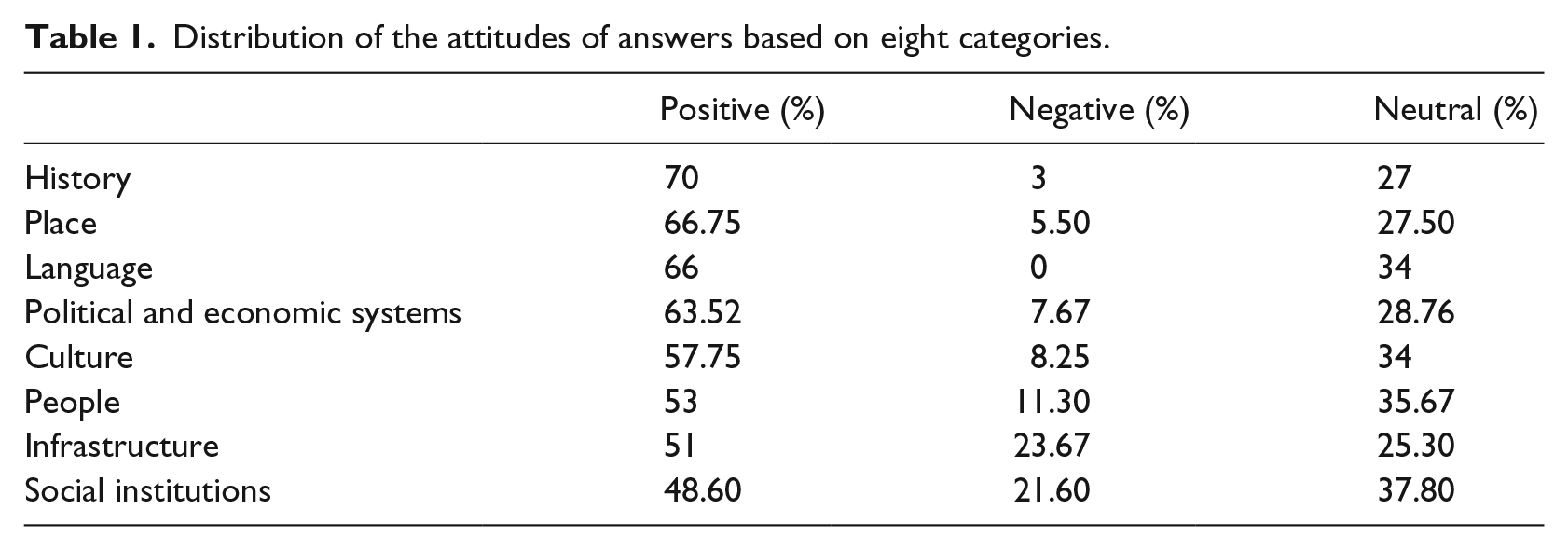
Figure 1 indicates the ranking of the categories based on the percentage of answers with a positive attitude toward China.
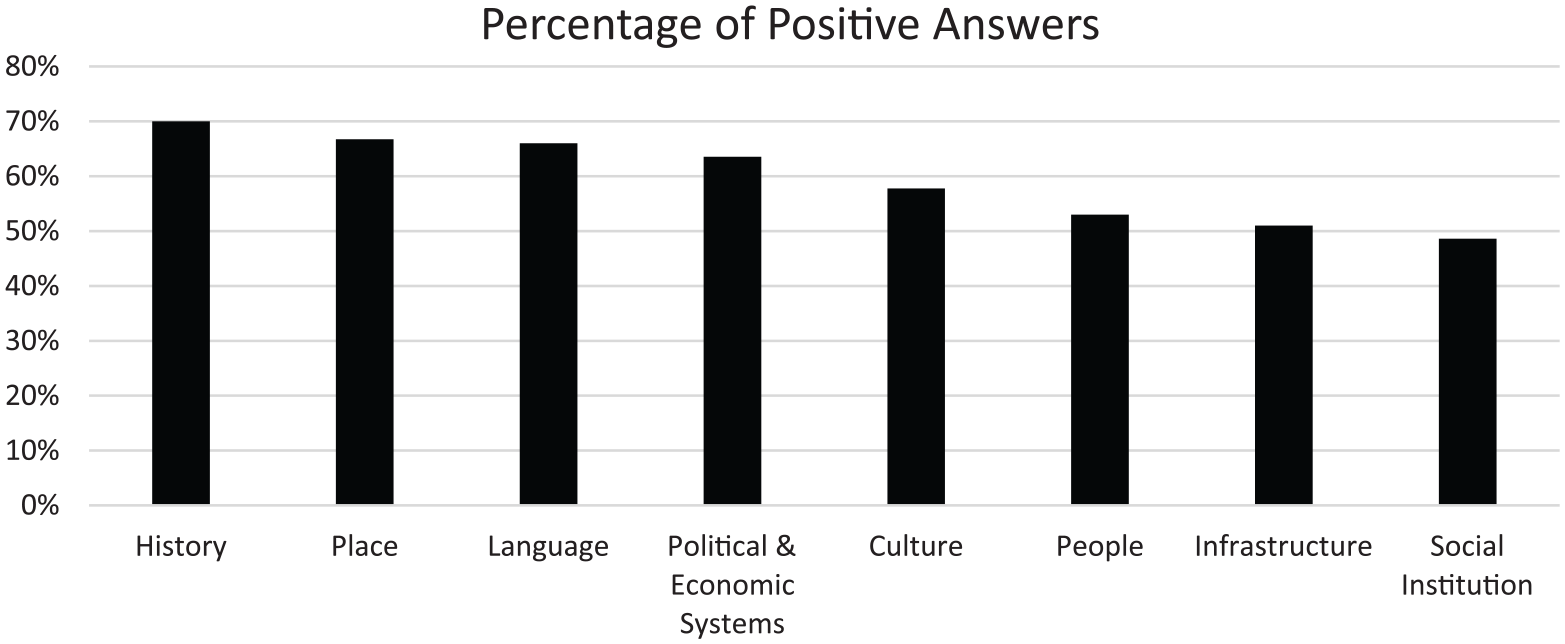
Ranking of the effectiveness of the aspects of China’s nation branding.
For the category of history, it includes question such as “China often notes it has 5000 years of history, but on what basis?” Despite the possibility that this might be a troll question, the answers were predominantly positive and supported China: 15 positive, 1 negative, and 4 neutral. This demonstrates that ancient China has been regarded highly by the international society and its civilization is well recognized (Table 2).
The distribution of answer attitudes in the category of “Place.”
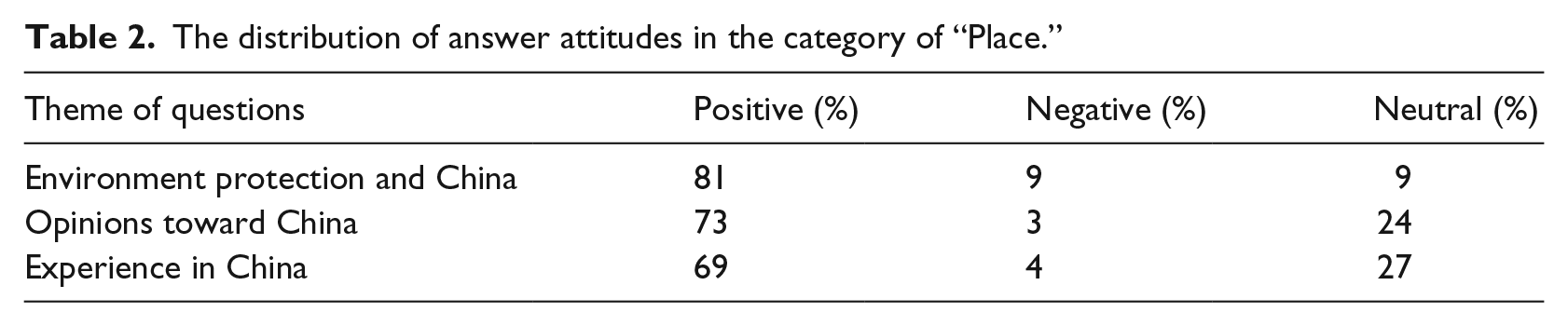
The category of place mainly involves questions related to environment protection and China, foreigners’ experience in China, and opinions toward China. Answers to questions such as “How do foreigners think about China after visiting China?” were included in this category. A closer look at the answers revealed that most of the respondents’ experience was quite positive. For example, most of the foreigners expressed that they were impressed by the beautiful scenery, historical sites, natural resources, and hustle and bustle ambience of the cities of China, which indicates that the nation branding in tourism is quite successful.
The category of language mostly refers to Mandarin, which is the lingua franca of China. The questions in this category include, “Why hasn’t China abandoned Hanzi?”, “Should Cantonese have been China’s official language instead of Mandarin,” “Is Chinese a beautiful language?,” and so on. Interestingly, the number of negative answers to such questions was almost always zero, which represented a very positive attitude toward Mandarin. This also has to do with the popularity of Mandarin in recent years when the Chinese language has become a major second language taught in classrooms around the world.
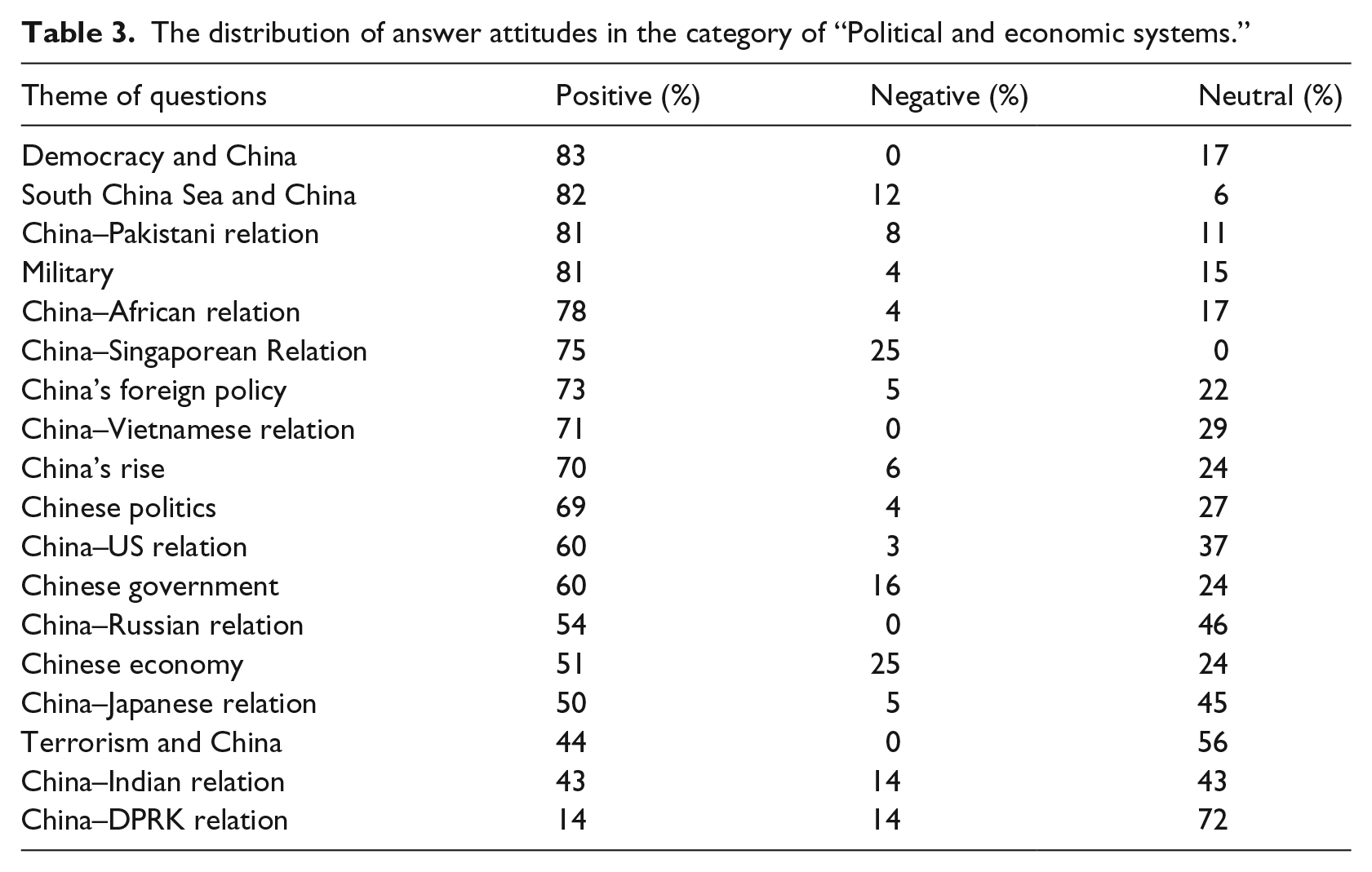
The political and economic systems category covers questions regarding China’s international relations such as the China–African relation, China–Japanese relation, China–Russian relation, as well as questions on the Chinese economy, Chinese government, and Chinese politics in general. Apparently, although the majority of the answers are with a positive attitude, this is a category with conflicting opinions. For example, for the exact questions regarding people’s attitude toward China’s rise, 70% of the answers were positive. However, for the question regarding China–DPRK relation, the distribution of attitude was 14% positive, 14% negative, and 72% neutral; for the China–Japanese relationship the figure was 50% positive, 5% negative, and 45% neutral. This divergence of opinions reflects the different attitudes toward and stances on China’s politics and economy (Table 3).
The distribution of answer attitudes in the category of “Political and economic systems.”
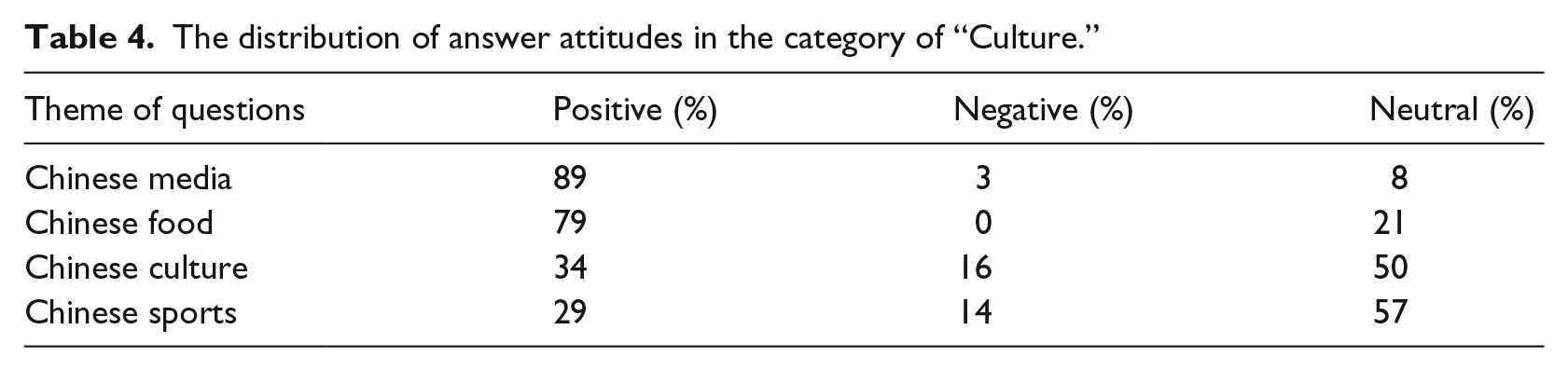
Chinese culture is ranked as the fourth category in terms of the percentage of positive answers. This category includes questions and answers covering the areas of traditional Chinese culture, modern Chinese culture, Chinese food, Chinese media, and Chinese sports. Interestingly, the attitude toward Chinese culture in general (mostly modern Chinese culture) was 34% positive, 16 negative, and 50% neutral. Contrary to the common belief about China’s efforts to disseminate its culture abroad, most of the international audience does not seem to be very interested in modern Chinese culture or have mixed feelings toward it. Another subcategory of questions with a higher percentage of neutral answers was Chinese sports. This was due to the fact that there was debate about the strict training for young Chinese gymnasts and the allegations on problems in sports ethics in certain sports events. In addition, the percentage of positive answers for the subcategories of Chinese food and Chinese media were both quite high at 79% and 89%, respectively. As regards the Chinese media, most of the questions were asking whether the Chinese media was trying to brainwash the audience. However, the answers predominantly admitted that although it was indeed brainwashing, at least it was easily identifiable and thus was not so bad at all (Table 4).
The distribution of answer attitudes in the category of “Culture.”
The category of people is ranked fifth and it mainly involves questions on foreign citizens’ opinions on and impression of Chinese people, minority issues, and racism in China. The distribution of attitude seems to vary among the three subcategories. For example, although the opinions on and impression of Chinese people in general are quite positive at 57% positive, 9% negative, and 34% neutral, the opinions on minority issues and racism in China are different. For questions regarding whether Black people are discriminated against in China, the answers are 15% positive, 34% negative, and 51 neutral. The answers for the minority population in China follow a similar distribution. This indicates that although the international audience has an overall positive attitude toward Chinese people, there are issues that they do not agree upon. However, what needs to be clarified is that the so-called racism and discrimination may have a different connotation in China and Chinese culture. Traditionally, the Chinese tend to have certain stereotypes about anyone who is even slightly different from the mainstream culture, most often in geographic location. The lasting mutual despise of the Northern Chinese and the Southern Chinese is an apt example. In addition, China has been a feudal society with many strictly defined social classes in the past centuries, and hence it is difficult to eliminate the influence of these systems in social life. For example, even nowadays, fair skin and slender figure are associated with better pedigree, urban residency, and wealth in China. Therefore, anyone with dark skin and a few extra pounds will immediately be associated with farmwork, lower social class, and so on, and this is true not only for Black people but also for Chinese people with dark skin color (Table 5).
The distribution of answer attitudes in the category of “People.”

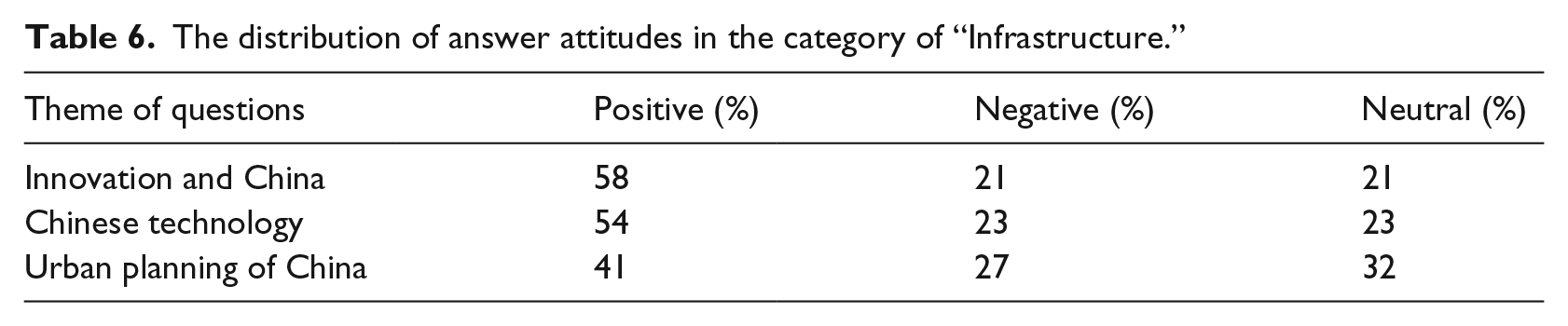
For infrastructure, the positive answers were on par with the negative and neutral answers. This was unexpected as we had witnessed ample compliments on China’s high-speed railway, skyscrapers in Beijing and Shanghai, and other architectural feats on Quora. However, a closer look at the questions in this category reveals that there are also questions regarding Chinese technology, innovation and China, as well as urban planning. For Chinese technology, the answers were most supportive at 54% positive, 23% negative, and 23% neutral. The stereotype of the Chinese not capable of making innovation seems to be also quite outdated considering the distribution of the answers at 58% positive, 21% negative, and 21% neutral. However, there were mixed feelings toward China’s urban planning. Only 41% of the answers to questions in this area were positive, while the negative and neutral answers accounted for 27% and 32%. Despite the recognition of China’s rapid urbanization and economic progress, many users also expressed concerns over the demolition of historical architecture, environmental issues, and other problems brought about by the current urban planning and urbanization process (Table 6).
The distribution of answer attitudes in the category of “Infrastructure.”
The category that was ranked at the bottom was social institution, which is a broad category and includes questions regarding Chinese education, public security in China, religion in China, and social customs in China. The distribution of answers also varies among these categories. As a matter of fact, the answers in the subcategory of public security was most supportive at 68% positive, 4% negative, and 28% neutral (Table 7). Especially, most of the answers were in high praise for the zero tolerance toward drug dealing and drug abuse, and a great number of the users also admitted that China was one of the safest countries they had ever been to. However, the answers in the other subcategories were less positive. For example, for questions on Chinese education, people were questioning the effectiveness of rote learning as well as its damage on creative thinking and students’ wellbeing. The same was true for questions regarding religion and other social customs in China. These opinions and attitudes are understandable given the fact that these areas are where China and other Western countries diverge to the greatest extent. Therefore, it is difficult for people from different social institutions to see eye to eye with each other on specific aspects of social customs.
The distribution of answer attitudes in the category of “Social institutions.”

Model for analyzing national images
The national image of country is in fact more of a mental or cultural construct than a physical existence. It mainly involves people’s perception and their mental image of this country. Perceptions, which originate from the cognitive and psychological processes of humans, could have multiple delusions. As pointed out by Duffy (2018) in his pioneering work, The Perils of Perception, there are multiple drivers of our delusion, originating from both “how we think”—our many biases and faulty mental shortcuts—and “what we’re told” by the media, social media, and politicians. The myriad interaction between the two drivers works together to create a system of delusion. Based on a survey across 40 countries and with 100,000 interviews, Duffy’s study showed that across the globe people have wrong estimations or perceptions on nearly every subject the book covered, including migration level, teen pregnancy, crime rates, obesity, trends in global poverty, and how many of us are on Facebook. The study also pointed out that the reason for the misperception was not just the media but our natural tendency to be drawn to negative information, which caused the biased view of the world.
From the above analysis, we may further infer the logic behind the results from the data as follows: the reason why history, place, and language were ranked as the top three positive aspects of China’s national image was that China was viewed by the international community as a very traditional country with a long history and an ancient civilization, which again was fully embodied by Chinese history and language as well as the physical being of China by itself. In addition, China was also the symbol of Eastern culture; therefore, the same elements are those that are the most closely related with the East or Asian culture. Those aspects of the national image that were not ranked very high include Chinese modern culture, political and social systems (mostly referring to modern China’s systems), racism, infrastructure, and modern social institutions, which, as we can easily see, are all more modern or Westernized elements of China’s national image. This indicates that regarding any country’s national image, the international community seems to have already formed a certain preconception or stereotype (not necessarily in the negative sense of the word) about it. Therefore, a successful nation-branding campaign either takes advantage of or reinforces this mental image or preconception by conforming to it, instead of trying to challenge it or create a totally different or brand-new national image. Just imagine a new nation-branding campaign that casts Bhutan as a modern, tech-savvy country run by supercomputers. That said, we still need to admit that the national image of a certain country may still be able to change, especially after decades or even centuries of transformation. Japan is a case in point.
In order to better illustrate the preconception or the preexisting mental image of countries in the world, we propose a model for analyzing national images in Figure 2.
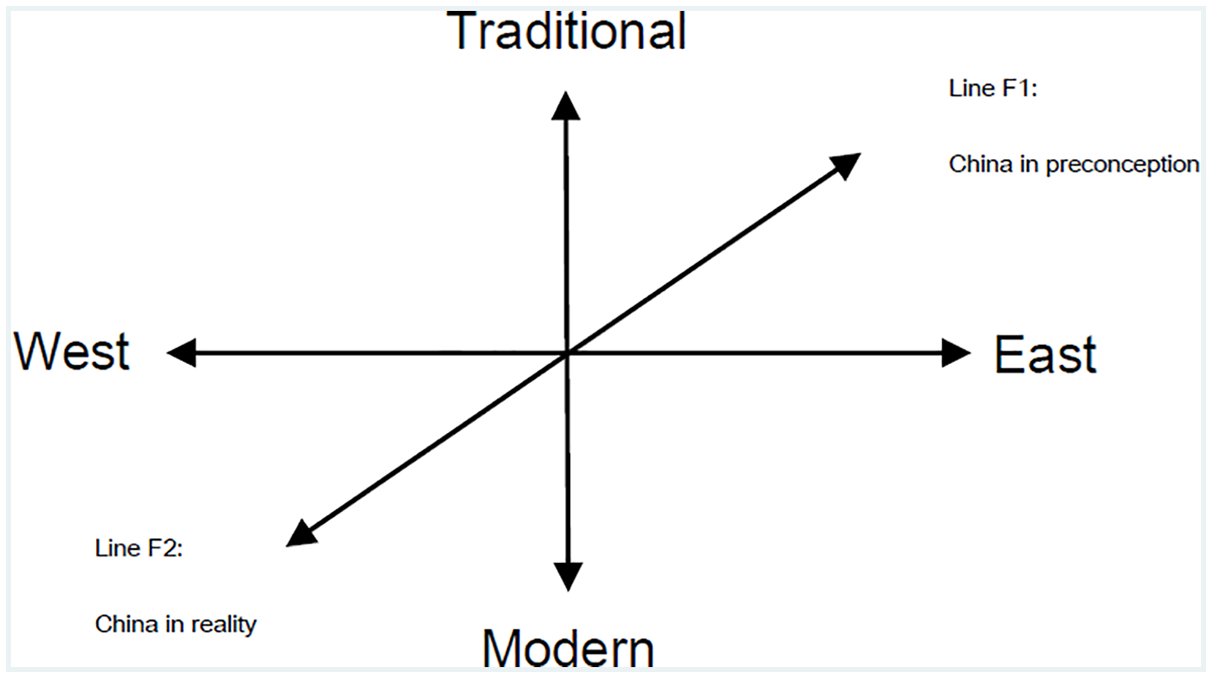
Model for analyzing national images.
We can see from Figure 2 that the national image of any nation can be summarized by this coordinate representation. On the vertical axis or temporal axis, a country could be anywhere from being very traditional to very modern; while on the horizontal or spatial axis, the same country could be very Westernized or very Eastern. It is important to note that this model may be used to analyze both the preconception about a country or the actual national image of the same country. For example, China to the foreigner’s preconception was a very traditional country with strong Asian values, represented by the line F1 in Figure 2. However, the real national image of China is in fact a very Westernized and modern one, represented by F2. We can clearly see from this diagram that the two lines were going in opposite directions, which indicates that there is a divergence or contradiction between people’s perception of China and China’s national image in reality. When this happens, a country’s nation-branding campaign may not be very successful or effective, or only those parts of the campaign which conform to the preconception will be effective.
Conclusion
When analyzing a country’s national image and nation-branding campaign, it is important to determine (1) the audience of this image or branding projection, (2) its dimension or connotation, and (3) its effectiveness. Apparently, the kind of national image in the mind of the domestic audience differs greatly from that of the international audience, although there is a certain level of overlapping between them. For the domestic audience, as they are familiar with and even well-versed in the knowledge of their own country, it is usually much easier for them to receive well and accept the nation-branding campaign of their country and even be a part of it. In addition, as the domestic audience also witnesses the changes happening every day in their country, that is, they are more immersed in this environment and culture, it becomes very natural for them to adapt to it and to change with it. For example, although most Chinese citizens have a high regard for the Chinese tradition, in their daily interaction, they follow a very modern way of communication. The traditional way of thinking and modern behavior patterns are very well reconciled and no one actually feels the contradiction between them. To put it simply, for Chinese citizens, there is no such “culture shock” that a newcomer to China will find peculiar every day.
However, for the international audience, their knowledge about any foreign country, especially one that is quite different from their own, mainly comes from the sporadic bits and pieces of information gathered from mass media, textbooks, and hearsays which form their preconception or stereotypes. When they are encountered with the new information or experience that defies their preconception, an obstacle in perception arises. That is to say, most people have a certain “expectation” about the national image of a certain country that is so ingrained in their mind that the slightest divergence from this mental image will cause a “cognition crisis.” This helps explain why news about certain people or behaviors that challenge the populace’s stereotypes about such people and behaviors almost always go viral. Although the so-called “national personality” is believed to be outdated in the world of today, examples of stereotypical thinking patterns are still quite prevalent.
For the dimension or connotation of a national image or a nation-branding campaign, they are in fact quite flexible and change with the time and context they are applied in. To boost the national image of a country or to fully exert the influence of a nation-branding campaign, there are potentially endless resources the policymakers can draw upon. For instance, a strong national image may be built on the demonstration of hard power, that is, flexing one’s muscles or showing off one’s wealth, or rely on the projection of soft power with strong culture and values that attract the audience. The exact selection and combination of nation-branding elements or resources differ on a case-by-case basis. For example, during the Cold War era, the connotation of national image was mostly related to hard power, that is, military power, which was quite effective given the international background at that time. However, in the 21st century, economic power, soft power, culture, and values are more powerful resources for building a positive and appealing national image during peacetime.
These two points lead to our conclusion on evaluating the effectiveness of the nation-branding campaign, that is, the essential elements for the success of nation-branding campaigns. Policymakers need to take into consideration the needs and wants of the international audience and try to promote an image that fits in with their preconception of a country. Instead of always attempting to defy stereotypes, policymakers may as well take advantage of them and reinforce such preexisting impressions to gain positive responses. If a nation is a product with a brand, the seller will need to understand what the consumer needs and then cater to this need for the best performance rather than trying to educate them with a whole new product that they don’t need. Therefore, a successful nation-branding campaign is one that uses the audience’s language and thinks just like the audience so it will more likely be accepted by them. In addition, as Dinnie (2016) pointed out, “The key lesson for nations to learn is the need to coordinate their nation-branding efforts. Without such coordination, a country’s nation-branding strategy will stagnate and the nation’s image will drift, almost certainly in a negative direction.” An effective nation-branding campaign would be one that has a well-coordinated goal and execution plan. By projecting a consistent image, a nation may further strengthen its brand effect.
After all, as Aroncyk (2013) rightly put it, “the long-term benefits of brand strategies were confused with tourism advertising or inward investment marketing efforts, subverted by the vagaries of political campaigns and election cycles, or misrecognized as a mere image makeover.” Nation branding has been made complicated by a series of actors, agents, and forces, which incurred a deviation from the original purpose of nation branding. However,
though our traditions may be invented, our memories selective, and our identities formed and reformed by forces and relations we cannot predict, our desire to maintain, communicate, and perpetuate the nation across time and space marks our existence in a form we seem unable to forget (Aronczyk, 2013).
Implications and limitations of the study
This study may serve as a useful reference for policymakers, public diplomats, and researchers in the fields of social media, communication, and international relations. The model proposed could potentially be adopted to represent and gauge the effectiveness of nation-branding campaigns. However, due to time constraints, we conducted our analysis on only one platform and the subject was focused on one country. Future studies may look further into the condition of other social media platforms, that is, Facebook, Twitter, and so on, or use another country or several countries for comparative analysis. In addition, we mostly conducted only qualitative analysis on the data with descriptive statistics; more quantitative and inferential analysis will help to further test the theory we proposed in this research. Finally, we only intended to provide a snapshot of the vast data on nation branding on social media, and in no way did we attempt to claim that the results of the study are safely generalizable. However, we believe this study is a useful initial step toward deciphering the populace attitudes as expressed on social media.
Footnotes
Funding
The author(s) disclosed receipt of the following financial support for the research, authorship, and/or publication of this article: The authors greatfully acknowledge receipt of grant number 16YJCZH029 from the Humanities and Social Science Research Foundation of the Ministry of Education of China.
