







Abstract
To not only celebrate the launch of this double special issue, but also to shine a spotlight on the variety of China as Method epistemological approaches shared by the special issue’s editors and authors, the Chinese University of Hong Kong’s Hong Kong Institute of Asia Pacific Studies, the University of Amsterdam’s Media Studies Department, and Global Media and China, co-organised a hybrid symposium to generate intellectual exchanges on such a de-westernising mode of knowledge production. While the research articles in this double special issue extensively examine ‘distinct’ characteristics of China, in this introduction, we reflect on if we are essentialising China. We do not want to apply a universalist logic that exists in theories by and from the Global North to be ‘experimented on’ in the Global South; yet, we also seek to move away from ‘China exceptionalism’ and express the stance that China can only be understood in its positionality to other areas (and modes of knowledge production) of the world. Thus, this special issue seeks to further deconstruct China as Method, challenge the existing power imbalance, and pluralise knowledge production.
Keywords
On 17 January 2024, The Chinese University of Hong Kong’s Hong Kong Institute of Asia Pacific Studies, the University of Amsterdam’s Media Studies Department, and Global Media and China, co-organised a hybrid symposium in Hong Kong for the launch of this double special issue (see Figure 1). The event successfully brought together Hong Kong-, Mainland China-, and Netherlands-based humanities and social science scholars to ‘reflect on and reexamine the lingering Eurocentric epistemology in media and cultural studies, sociology, anthropology, area studies, and other disciplines’ (Li et al., 2023, p. 433). In this symposium, the journal’s editors – all authors of the double special issue – as well as many young, emerging scholars shared their respective approaches to China as Method using their own empirical studies. They discussed a variety of topics: technological infrastructures and the platform economy, fashion, cinema, mobile games, sports, and art technology in China and other non-Western contexts, as illustrated by the research articles in this double special issue. Adopting a shared stance of de-westernising knowledge production in media and cultural studies under the umbrella of China as Method, the authors and discussants further elaborated on how cultural meanings are constructed locally and through cross-border exchanges, further pluralising this epistemological approach and offering critical insights into its evolving entanglement with media and cultural studies beyond the Global North. On 17 January 2024, a hybrid symposium was co-organised at The Chinese University of Hong Kong for the launch of Global Media and China’s double special issue, ‘China as Method?: Re-theorising mediations of Global South from a decolonial cultural perspective’.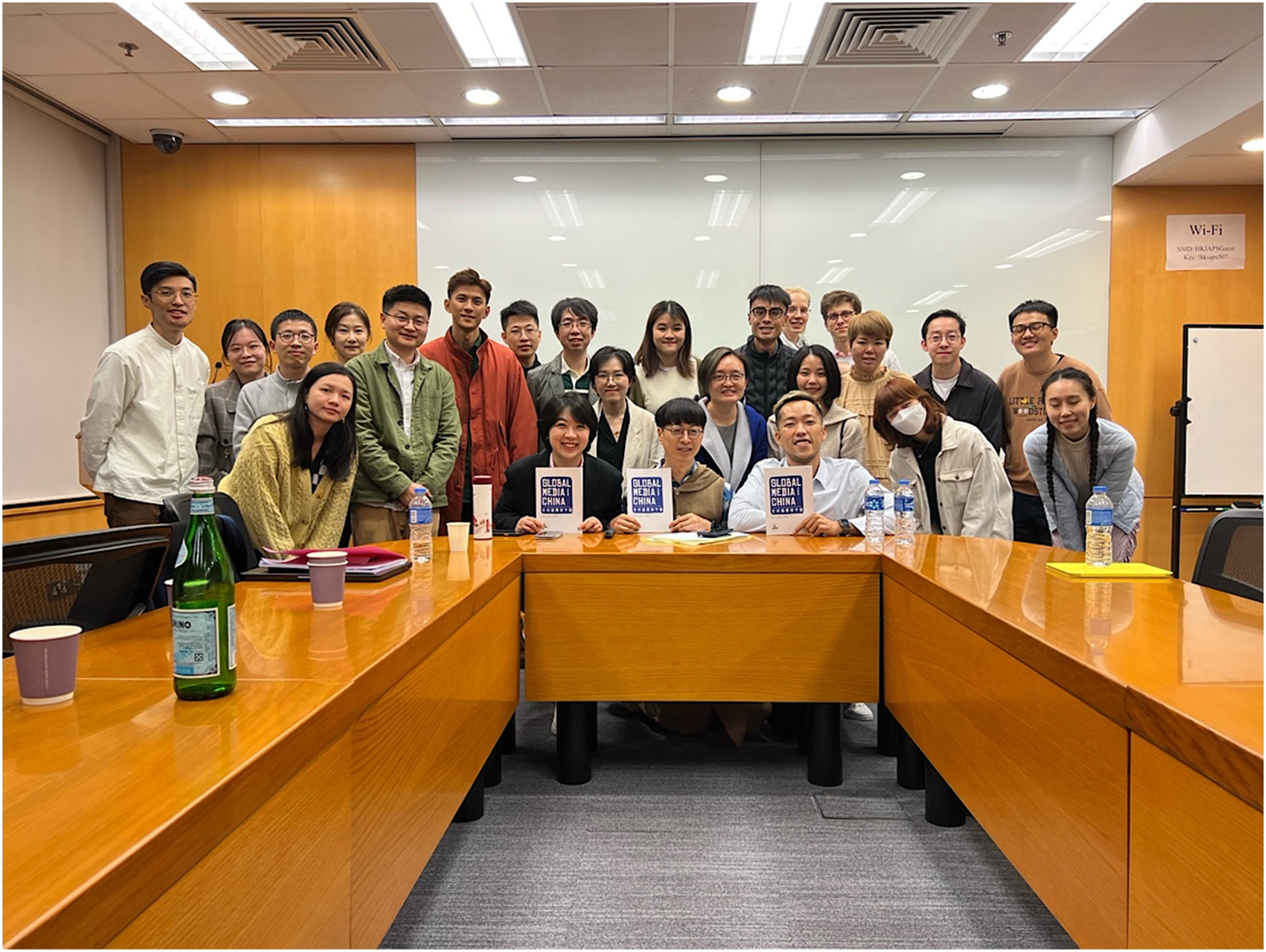
Comprised of five full-length research articles, the second part of this double special issue presents empirical studies focussing on mainland China, Hong Kong, Japan, and Mozambique. While paying attention to idiosyncrasies in each research context, the authors also collectively provide a unique lens for making sense of the increasing economic, political, and cultural power of China, and how it further shapes cross-cultural, cross-border, and South–South interactions.
Contrasting with existing scholarship in ‘state capitalism’ or ‘socialism with Chinese characteristics’, which overemphasises China’s unique capitalist model, the first article by Tse and Pun (2024) looks particularly into how discursive, symbolic, and sensorial techniques are adopted to direct and sustain the expansion of global capitalism in a context-specific, daily organisational setting, intertwined with the state-led, multi-dimensional infrastructural expansions. Highlighting the ‘phygital’ nature of infrastructure, Tse and Pun demonstrate how China’s emerging capitalist infrastructuralism serves both political and commercial goals and renders juxtaposed modes of control, exploitation, and resistance in the business as well as employment practices of its booming and globalising platform economy. Using Alibaba as a case study, the uniqueness of their epistemological approach (while not being explicitly named as a specific strand of China as Method) is to break through the existing Western-centric or Sino-centric epistemological cases for capitalism. This rare ethnographic study dissects the state–corporate relations, the technical interfaces between the two or more infrastructural systems, and their discursive, symbolic, and affective intersections, using a context-specific approach. Tse and Pun further argue that these hybrid modes of infrastructural control and resistance are also relevant for comparative studies in other developed or developing countries. To offer ‘detailed, interdisciplinary studies of situated relationships between technologies, people and ideas’ that prompt us to ‘engage with current debates around infrastructure, China, and global processes’ (de Seta, 2023, p. 250), the authors theorise three unique infrastructural mechanisms within Alibaba: public–private partnerships (PPP), corporate prosumption networks (CPN), and imagineered global competition, by tracing how various types of infrastructural power are formed, enacted, and sustained through material objects, symbols, and sensorial experiences. However, they also emphasise that the control of infrastructural capitalism is not impeccable, as the occasional disjuncture of various infrastructures was discerned, echoing a call for pushing the ‘discussions of China’s digital infrastructure beyond the reduction to authoritarian control and the triumphal rhetorics of governmental imaginaries’ (de Seta, 2023, pp. 245–246).
The following article, by von Pezold (2023), grounded in a case study of visual and textual analysis on how Mozambican and West African traders in Mozambique utilise the messenger service, WhatsApp, to mediate the desirability and ‘fashionability’ of Chinese-made garments, assesses the importance of agency and the individual in their everyday media use. By examining the personalised and creative ways these traders communicate and interact in the Global South regarding how Chinese-made garments are sold and promoted, von Pezold sheds light on China’s impact on the global media landscape. In particular, von Pezold engages with discussions of relational affordance with connections to information communication technology, particularly WhatsApp, and the connections between the theoretical discourse of Global China and mediation. Especially concerning the latter, von Pezold concurs with Franceschini and Loubere (2022) and Lee’s (2017) ideas that China cannot be framed as either being in binary opposition to the Global North nor understood solely in Asia. Rather, China, in connection with the premise of China as Method, needs to be addressed as inseparable or constantly in entanglement with the rest of the world, thereby ‘rendering any decolonial and “(trans)Asia as method” angles insufficient in comparison’ (2023, p.16). Moreover, going beyond Chinese techno-nationalist agendas and structural differences in terms of app usage and availability, language barriers and censorship, it is argued that these Mozambican and West African traders actively and agentively take on any opportunities provided to them by global media platforms, personalising features and functions to meet their everyday needs in demonstrating creativity and individuality with effects on how they themselves and Chinese fashion products are perceived and construed.
Drawing on Jansen’s (2020) critique of Eurocentrism in fashion studies, Bai’s (2023) article discusses the (potential) Eurocentric misinterpretations of Lolita dressing in the Chinese context. While the cultural symbol of Lolita originated in Europe, and Lolita dressing originated in Japan, Lolita dressing in China bears a double burden regarding its cultural meaning. In many Western contexts, Lolita is inextricably associated with paedophilia. In the Japanese context, Lolita dressing represents a youth subculture among young girls who refuse to be obedient students at school, and obedient housewives after marriage. It is ‘a practice of escaping from responsibility, adulthood, and a hard-working life’ (Bai, 2023, p. 5), namely, a counter-public rebellious subculture of escapism. Consequently, Lolita dressing in China is apt to be interpreted as a paedophile aesthetic or a counter-public subculture of escapism. However, Bai argues that these interpretations are trapped in a fallacy of ‘origin-centrism’, which ignores the local, everyday practices of Chinese Lolita girls and the cultural meanings locally constructed in their community. Based on his ethnographic research in Chengdu, Bai reveals that Chinese Lolita girls have integrated their seemingly conspicuous dress style into their daily fashion choices. In their social gatherings (‘tea parties’), Chinese Lolita girls mainly aim to take photos of well-designed Lolita dresses as fashionable goods, and meet fellow hobbyists. Bai’s research shows that the Lolita dressing culture in the Chinese context is rather depolarised. Rather than being an abnormal paedophilic aesthetic, or a rebellious youth subculture, Chinese Lolita dressing should be viewed as part of the diversity of fashion clothing practices. By showing how the cultural meaning of fashion goods is locally constructed in Chinese young women’s daily practices, Bai points to the blindness of Eurocentric interpretations of how people in the Global South perceive and consume cultural symbols from the West. His analysis also reminds us to be wary of the intricate cultural inter-referencing among Asian countries, and the idiosyncrasies in each local society. Studying Lolita dressing in China as a fashion practice also contributes to the redefinition of fashion using a decolonial approach, whereby fashion can also be generated and theorised from popular items in the Southern countries (Jansen, 2020).
While Bai’s research looks at how the meanings of ‘Western’ cultural symbols are locally transformed and reconstructed, Ma’s (2023) article examines the representation of whiteness in Chinese cinema. Using the case studies of two dark comedy films (Big Shot’s Funeral, 2001, directed by Feng Xiaogang, and Crazy Alien, 2019, directed by Ning Hao), her research examines, and compares, how white (American) people are portrayed and ‘how various meanings are ascribed to white identities in the films’ (p. 1) at two different historical moments. In the first half of this double special issue, Li et al. (2023) article about the Chineseness of a mobile game argues that Chineseness as a relational concept should be understood within the power dynamics among China, the West, and other Asian countries. Taking a similar stance, Ma argues that the representation of whiteness in Chinese cinema should only be understood in its relation to Chineseness. The meanings ascribed to white/American identities in these films perhaps articulate more than the meanings of ‘Chineseness and Chinese nationalist sentiments’ (p. 1). In both films, Ma observed that the juxtapositions of Chineseness vis-à-vis whiteness ‘evoke a sense of pride and joy in being Chinese’ (2024, p. 11), while the Chinese nationalist sentiments are articulated with nuances in self-mockery and without simplistically demonising whiteness. Meanwhile, whiteness in Chinese cinema changes along with China’s shifting status in the Sino–West relationship. When Big Shot’s Funeral was released in the early 2000s, China aspired to be integrated into the world capitalist economic system, and therefore, the plot implies that Chineseness yearns for understanding and recognition from the West. However, when Crazy Alien was released in 2019, China’s rise as a global superpower and national revitalisation had become the zeitgeist of political propaganda and popular media, and correspondingly, in the film, Americans are portrayed as a powerful, technologically advanced rival. Nevertheless, Ma also cautions that these two films still present whiteness as the hegemonic point of reference in constructing the meanings of Chineseness; decolonialisation and contesting white hegemony in Chinese media is still an ‘unfinished project’.
Drawing on participant observation at a Hong Kong creative studio and semi-structured interviews with its employees, the final article, by Shum (2023), utilises Latour’s actor–network theory (ANT) and Gell’s notion of art nexus to further conceptualise how postcolonial neoliberal nationalism (PNN) is reflected through the case of Hong Kong’s art technology as well as art and cultural practices. Drawing on the distinct relationship – with regard to art technology development in particular – between Hong Kong and mainland China, Shum (2023) conceptualises the state of Hong Kong’s arts and cultural practices as being connected to a ‘southbound imaginary’, which is further characterised by the penetration of nationalistic practices and agendas into Hong Kong’s art scene. The configuration and development of Hong Kong’s art and cultural practices differ from those of other forms of Hong Kong popular culture, such as film, music, and television, where workers are relatively constrained by a ‘northbound imaginary’, one where Hong Kong cultural practitioners need to work within the logic and trends of the profit-making mainland market in such creative sectors. Embarking on a China as Method epistemological point of departure, Shum highlights how Hong Kong’s development of its art and cultural practices can only be understood by ‘inter-referencing different timeframes of postcolonial Hong Kong in relation to mainland China, focussing on “(Hong Kong within) China as Method”’ (p. 13). In particular, the collaboration between arts and technology in Hong Kong can only be understood with reference to Mainland China, further establishing that such a kind of transboundary imaginary, adhering to the tenets of China as Method, needs to be understood as inseparable and in relation to the sociocultural, socioeconomic, and sociopolitical particularities of both locales.
While reading and hearing about the ‘unique’ characteristics of mainland China (as well as Hong Kong, Japan, and Mozambique) in these presentations, one question lingered in our minds: what is the broader insight that we can draw from our use of China as Method? When the authors emphasised the particularness of their research contexts and the temporal and/or spatial origins of cultural meanings, should non-China studies scholars read these articles, and how could they benefit from their discussions? Can China as Method, as an epistemological approach, contribute to knowledge production in media and cultural studies, sociology, anthropology, and area studies in general?
Our answer to the last question is a profound yes. China as Method critiques the Eurocentrism in knowledge production particularly because these Northern theories are often perceived as ‘universal’ knowledge, which should be ‘applied to’ or ‘tested’ in the South. In this regard, we do not want to replicate such a universalist logic in our studies of the Global South. Yet, using Franceschini and Loubere (2022) term, we do not approve of an ‘essentialist’ understanding of China either. Echoing their standpoint, China should not, and cannot, be understood in isolation from the rest of the world, and research in and about China should not produce any ‘China exceptionalism’.
Moreover, we believe that a more holistic understanding of the global system could be revealed from China’s positionality in the global system. The research on the particular characteristics of China, and how China is integrated into the global (capitalist) system, thus contributes to the understanding of China as well as other areas (regarding how they are also dynamically integrated to the global system). As Franceschini and Loubere (2022, p. 5) have mentioned in their discussion in Global China as Method: [U]nderstanding Chinese dynamics requires a certain level of particularism and any analysis that is not historicised and contextualised will unavoidably be superficial and misleading. At the same time, however, China is obviously part of the world and therefore shapes and is shaped by broader dynamics.
These broader dynamics include not only China’s power struggles with the North, but also the increasing exchanges with the South. By rejecting a universalist logic, we aim to appreciate the idiosyncrasies of local societies, as well as their unique positionality(ies) in the global system.
At the end of this symposium, a simple yet particularly insightful question was asked: ‘So what exactly is new in your discussions of China as Method? And what is missing in the existing approaches?’ In short, we contend that this double special issue offers a chance for us to not only revisit but also go beyond several existing epistemological approaches – from China as Method, Asia as Method, trans-Asia as Method, Global China as Method, or even Chineseness as Method – in our study of media and culture in China. We also believe the ‘open access’ nature of Global Media and China, and its provision of a globally accessible platform for emerging yet excellent scholars to define their own understandings of China as Method, both personify our main goals: (1) decentring the Western-centric knowledge production (dissemination and archiving) system; (2) drawing attention to the changing mode of cultural mediations between the nation-state, the media, and the public; (3) nuancing the intricate power dynamics within Asia as well as among countries in the Global South; and, most importantly, (4) empowering more young scholars in their early career stages and less privileged positionalities to generate new knowledge about China (for details, see Part 1, ‘Introduction’ (Li et al., 2023)).
When we propose China as Method as a decolonial and de-westernising epistemological approach, we do not intend to essentialise the term itself or risk a Sino-centric approach. We believe that scholars who specialise in the study of other geographical contexts can also propose their own approach(es) (e.g. (Global) Africa as Method), which would further challenge the power imbalance in the existing knowledge production system, pluralise knowledge production in the ‘multiple Souths’, and empower scholars in less privileged positions and positionalities.
Footnotes
Acknowledgements
The authors are extremely grateful for the time and effort of all the contributors to this double special issue. They also owe tremendous gratitude to Anthony Fung (Editor-in-Chief), Xiao Han (Managing Editor) and Jeroen de Kloet (Editor) for their support and suggestions to our organisation and development of this double special issue.
Declaration of conflicting interests
The author(s) declared no potential conflicts of interest with respect to the research, authorship, and/or publication of this article.
Funding
The author(s) disclosed receipt of the following financial support for the research, authorship, and/or publication of this article: The preparation and coordination of this double special issue was partially funded by the European Research Council Consolidator Grant 2021 Research and Innovation Programme, under the project ‘China Fashion Power: Fashioning Power through South–South Interaction: Re-thinking Creativity, Authenticity, Cultural Mediation and Consumer Agency along China-Africa Fashion Value Chains’ (Grant agreement No. 101044619).
Author biographies
 ). His work has appeared in the European Journal of Cultural Studies; Information, Communication and Society; Journal of Consumer Culture; Journal of Cultural Economy, and New Media & Society, among others. Previously, Tse taught at the University of Hong Kong’s Department of Sociology and Hong Kong Baptist University’s School of Communication.