







Abstract
Previous research on non-custodial sentences has pointed to the association between awareness of alternatives to prison and public opinion on these alternative measures. Using data from a public opinion survey conducted in the Czech Republic in 2018, the main objective of this study is to examine the extent to which public opinion on probation is influenced by awareness of probation service and support for probation in general. The data suggest that those generally in favour of probation, unlike those opposed, agree with this measure being imposed on a wider range of offenders, are more lenient towards offenders who violate the conditions of their probation, and perceive probation as being beneficial to the criminal justice system and society as a whole. On the other hand, the public’s awareness of the probation service per se seems not to be as important as whether or not the basic principles of probation are embraced.
Keywords
Introduction
Public opinion on sentencing and criminal policy is an interesting topic, not only for criminologists and academics, but also for criminal justice representatives and policy-makers. As many studies have confirmed (e.g. Cochran and Piquero, 2011; Maruna and King, 2004; Matthews, 2005; Roberts and Hough, 2005; Verfaillie, 2012), there is an association between public opinion and the different control measures imposed by the state. Indeed, if the state were to subject offenders to measures that were largely and fundamentally opposed by the public, this would jeopardize the people’s general confidence in the criminal justice system along with their willingness to turn to this system if victimized or bearing witness to crime (Wood and Tendayi, 2004).
One of the most important findings of existing studies on probation is that the majority of the public do not fully understand the meaning of the term probation or what the activities of probation officers entail (Allen, 2016) and, furthermore, that this lacking awareness could play a demonstrably crucial role in gaining support for the implementation of such practices (Butter et al., 2013). Unfortunately, there is a paucity of research that directly addresses public attitudes towards probation and their determinants. Moreover, existing studies often use very small and unrepresentative samples, making it difficult to draw clear conclusions on whether, and under which conditions, the public is in favour of probation (Durnescu et al., 2013).
This article takes advantage of a representative data set of 1000 Czech citizens, which contains indicators measuring attitudes towards the probation service and probation in general, as well as a wide range of indicators capturing public opinion on its application in the criminal justice system. This article contributes to existing literature by analysing how public awareness of the probation service and support for probation influences the perceived suitability of probation for different types of offenders, the probation conditions offenders should meet in order to avoid incarceration, and the potential benefits of probation for the criminal justice system.
Public punitiveness and knowledge of alternatives to prison in the era of ‘mass probation’
The issue of punitiveness is frequently raised with respect to the advocation of non-custodial sentences. The public is demonstrably in favour of harsh measures, with imprisonment often being cited as the ideal punishment, while community sentences are perceived as being unduly lenient or soft (Maruna and King, 2004; Raynor and Robinson, 2005). This has sparked debates on the efficacy of probation services in the current social climate (Maruna and King, 2008; McNeill, 2010). Nevertheless, despite certain pessimistic claims purporting ‘the end of probation’ (Nellis and Chui, 2003), recent years have seen a spike in this phenomenon which has been dubbed ‘mass probation’ (Phelps, 2017) or ‘mass supervision’ (McNeill and Beyens, 2013). In many countries, the number of offenders under the supervision of a probation officer has gradually been on the rise and far surpasses the number of those incarcerated (Aebi et al., 2015; Phelps, 2013).
The discrepancy between public attitudes towards criminal policy and the growing number of offenders sentenced to probation is particularly interesting in the Czech Republic, given that the country remains one of the most punitively inclined nations in Europe. This holds true regardless of the chosen research methodology (Verfaillie, 2012; Kääriäinen, 2019), as Czech respondents exhibit rather punitive views when asked about their general satisfaction with the severity of existing penalties or when asked about suitable punishments for specific cases (Moravcová and Tomášek, 2014). This finding is also supported by the results of the International Crime Victim Survey (ICVS), which has been carried out repeatedly in the Czech Republic and has been followed up by later studies using the same question to measure punitiveness (e.g. selecting a suitable punishment for a 21-year-old offender charged with burglary for the second time). Unlike most European citizens, Czech respondents exhibited a clear preference towards imprisonment (Tomášek, 2012). In a similar vein, the data from the fifth round of the European Social Survey revealed that in the Czech Republic, more than half of respondents (65%) voted for imprisonment in a model case with only one in seven Czech respondents (15%) opting for community service instead (Moravcová and Tomášek, 2014).
Negative attitudes towards alternatives to prison are often attributed to low familiarity with such measures or the conditions of their implementation (Allen, 2016). A study by Butter et al. (2013, p. 34), conducted on the Dutch population, revealed that awareness of non-custodial sentences was one of the key factors that influenced punitive or, conversely, rehabilitation-oriented attitudes. ‘Possessing more knowledge of probation is related to having a less punitive and more rehabilitation-oriented attitude towards probation’. In addition, experimental studies show that when given more detailed information on the use of alternative sanctions, the proportion of respondents in favour of this measure significantly increases (Sanders and Roberts, 2000; Roberts and Hough, 2005, 2011). For example, Van Gelder et al. (2015) examined the type of information that most influences a respondent’s attitude to suspended sentences. The authors found that providing respondents with detailed information about the purpose of suspended sentences bolstered the perceived effectiveness of this type of sentence and also led to more positive attitudes, while providing information about the punitive elements of suspended sentences did not lead to any changes in either opinion or attitude.
However, a number of studies have suggested that the majority of the public are rather uninformed regarding probation. Surveys conducted in the Czech Republic showed that the probation service is a virtually unknown institution for the majority of Czechs. In a survey conducted in 2008, that is, eight years after foundation of the Probation and Mediation Service of the Czech Republic, 73% of respondents acknowledged that they were entirely unaware of its existence; only 8% proved to be sufficiently informed (Rozum et al., 2009). In a study by Lulei (2011), the majority of Slovak citizens (85%) said they had never come across the word ‘probation’. In addition, the lack of such awareness does not only apply to countries of the former Eastern Bloc, where probation has a relatively short tradition, but also extends to countries where probation services have been operating for decades, such as the United Kingdom (McNeill, 2010). In 2002, half of British citizens (50%) admitted in an opinion poll that they knew either hardly anything or nothing at all about what the probation service does (Allen and Hough, 2007). Similar results were also gleaned from other European countries (see Durnescu et al., 2013).
Such findings are not surprising since, compared to other institutions of the criminal justice system, the probation service is virtually invisible for most citizens. Taking the police as an example, a relatively large proportion of the public will likely come across their work in everyday life, either by way of direct contact with a uniformed officer on the street, as the result of a firsthand experience with crime, or indirectly through exposure in the media, where the work and efficiency of the police force when tackling criminal cases receives regular coverage. It can therefore be assumed that the vast majority of the public is at least generally familiar with its activities (Allen and Hough, 2007). Conversely, only a very small number of people come into contact with probation officers in everyday life and media coverage – an important prerequisite for entering virtually any public debate – of this phenomenon is rather scarce (Háková, 2013; Nellis, 2012; Sučić, 2016; Tomášek et al., 2019). As observed by Nellis (2003, 2012), this is likely due to the weak ‘photogenicity’ of probation as well as the general scepticism exhibited by the press towards community sentences as being something ‘less than prison’.
Probation service in the Czech Republic
Czech Republic has a considerably shorter tradition of probation than other countries, which is largely due to historical and political factors. It was not until the advent of the revolution in 1989 that non-custodial penalties, considered ‘classic’ or ‘traditional’ measures in Western Europe, were gradually implemented into the Czech criminal justice system. The subsequently rapid developments in this area were bolstered by the fact that the criminal justice system saw an enormous rise in officially recorded offences during the 1990s. Moreover, the establishment of the probation service was preceded by several years’ worth of relatively successful efforts made by experts in the field of criminal law and criminology as well as students of Charles University, the Faculty of Arts, striving to create a system of social work in Czech Republic’s criminal justice system. After a number of projects had been implemented focussing on probation and the use of victim–offender mediation, probation officers began working in selected courts in 1996 (Ouředníčková et al., 2008; Štern et al., 2010). The whole process culminated in 2001 with the establishment of the Probation and Mediation Service of the Czech Republic (PMS) as an integral part of the criminal justice system. There are currently 76 PMS centres in operation. Their main task includes selecting cases to be resolved in alternative proceedings, collecting the information necessary for passing court decisions, providing mediation between offenders and victims, and lastly, organizing, enforcing and supervising community sentences and measures. The primary core of the PMS agenda, however, involves supervising offenders during the enforcement stage (Rozum et al., 2011; Hulmáková, 2018).
Current study
Public’s support of a measure is known to significantly influence its chances of being implemented by the state (Maruna and King, 2004; Matthews, 2005; Roberts and Hough, 2005). Nevertheless, previous research has shown that public awareness of probation is relatively low in many European countries (Allen and Hough, 2007; Durnescu et al., 2013; Lulei, 2011; Rozum et al., 2009) which can further be associated with relatively weak public support for non-custodial sentences and their application in practice (Allen, 2016; Butter et al., 2013; Sanders and Roberts, 2000; Van Gelder et al., 2015). Drawing on these findings, the main objective of our study is to examine the extent to which public opinion on probation in the Czech Republic is influenced by awareness of the PMS and support for probation in general.
In particular, we hypothesize that those who are aware of the existence of the PMS and those who are in favour of the essential principles of probation (1) find this measure to be appropriate for a wider spectrum of offenders, (2) are more lenient towards offenders who violate the conditions of their probation and (3) are more likely to see probation as beneficial to the criminal justice system and society as a whole.
Data and methodology
Our research focused on public opinion regarding probation and the possibilities of imposing probation on offenders. Data collection was carried out via an external public opinion polling agency in the second half of August 2018. Respondents were interviewed in person using a tablet or computer (CAPI). A research sample of 1,000 respondents was created as a representative sample of the general population of the Czech Republic over the age of fifteen. The selection criteria were the region, size of place of residence, gender, age and level of education. Ethical guidelines for survey research were followed throughout the data collection process. 1
The PMS has been operating in the Czech Republic since 2001. However, the nature of this institution is so specific that even after almost 20 years, not everyone is familiar with this service or with the activities of probation officers. Therefore, we first asked respondents if they were aware of the existence of the institution. We also asked them about their attitude towards probation as one of the key measures of the criminal justice system. Nevertheless, as probation is not a well-known concept for many Czechs, we deemed it ineffective to inquire about their opinion on the matter without first familiarizing them with the basic principles of how this practice works. The question itself was therefore preceded by a brief description of what probation means.
Nevertheless, several decisions had to be made before proceeding with this approach, as it could have had significant implications for the results of the whole research project. It is well known that the amount of information at a respondent’s disposal regarding various measures or forms of punishment can influence his or her opinion about their imposition (cf. Roberts and Hough, 2005). At the same time, however, the question itself could not be disproportionately long given the overall structure of the questionnaire and must not burden the respondent’s attention more than necessary. Therefore, we had to carefully consider every word included in the description. In light of the above, we have limited the relatively broad scope of probation activities to a suspended sentence under the supervision of a probation officer – a measure that makes up the largest part of the PMS agenda each year. We believe that the final formulation of the question selected after lengthy deliberations by our research team is appropriately neutral and corresponds to the overall intention to frame probation as an alternative to prison, as it presents the unique combination of providing offenders with both control and help: ‘The Probation and Mediation Service provides (in addition to other services) supervision by a probation officer, when imposed by the court. This mainly applies to offenders who have not committed the most serious types of crime (such as murder), yet whose crimes are serious enough that the court could send them to prison. However, if the judge deems it appropriate, he or she may impose a suspended sentence instead of imprisonment and the offender then remains in the community during the probationary period, but is also supervised by a probation officer. The officer maintains regular contact with the offender and oversees that the offender exhibits law-abiding behaviour and complies with the rules and obligations set by the court – for example, repaying damages caused by the crime. At the same time, the officer offers the offender advice and helps him or her cope with various obstacles that could lead to further crime – for example, finding a job. If such an offender complies with all conditions and obligations during the probationary period and does not commit another crime, he or she will avoid being sent to prison’.
Independent variables
To measure awareness of the PMS we asked respondents: ‘There is a specialized institution in the Czech Republic called the Probation and Mediation Service. Are you aware of its existence?’ with answer categories 1 = ‘Yes, I am’, 2 = ‘I’ve heard of it, but I am not sure’, 3 = ‘No, I am not’. Approximately one fifth of the Czech respondents (23%) were familiar with the PMS and one third (35%) had already heard of it, even though they were not entirely familiar with its activities. Overall awareness remains poor, as 43% of respondents openly admitted that they had not heard of the PMS. 2
Furthermore, to measure the respondent’s support for probation we first presented a description of what this type of sentence entails (see above) and consequently asked them: ‘What do you think of this type of sentence?’ with answer categories 1 = ‘I’m in favour, it may be appropriate in certain cases’, 2 = ‘I’m against, it doesn’t seem appropriate’. The results showed that public support for probation in the Czech Republic is quite promising when this measure is at least briefly explained to respondents. Three quarters of respondents (74%) deemed it an appropriate approach in certain cases. Only 17% of respondents refused the application of this measure, and about one tenth (9%) responded with ‘I don’t know’.
Dependent variables
Following the question measuring support for probation in general, we decided to ask respondents about their attitude towards probation for different groups of offenders. As earlier research has shown (Roberts and Hough, 2005; Van Gelder et al., 2015), people who are asked about sentencing, in general, tend to be more punitively orientated than those asked to assess specific cases. To measure the appropriateness of probation for five different groups of offenders (juvenile offenders, those who avoid regular employment, are addicted to alcohol or drugs, failed on probation in the past and recidivists) we asked respondents: ‘Czech courts have been using this method of punishment [suspended sentence under the supervision of a probation officer] for many years. When you think about the following groups of offenders, for whom do you consider probation appropriate and for whom not?’, with answer categories 1 = ‘appropriate’ 2 = ‘inappropriate’.
Furthermore, we constructed an index for ‘appropriateness rate’ in order to capture the number of situations in which probation was considered an appropriate sentence. The index ranged from 0 = ‘probation not suitable for any of the presented groups of offenders’ to 5 = ‘probation appropriate for all mentioned groups of offenders’, where higher values generally indicated higher agreement with imposing probation to a wider range of offenders. One third of respondents (32%) declared probation to be appropriate for only one of the five groups of offenders. Approximately one fifth indicated two (23%) or three (20%) groups. Overall, more than half of respondents (53%) considered probation to be appropriate for two or more of the presented groups.
We were also interested in public opinion on the violation of the conditions of probation by offenders. We thus asked respondents to assume the role of the judge and decide whether an offender should remain in probation or, conversely, be sent to prison in each of the thirteen specific situations (one failure to attend a meeting, alcohol use, contact with criminal friends, failure to seek regular employment, refusing home visits to the probation officer, repeated failure to attend a meeting, committing petty theft, defaulting on child support payments, not attending the offending behaviour program, lying about important facts about his or her life, drug use, failure to pay for damages caused by previous crime, committing a violent crime). The answer categories were 1 = ‘remain in probation’, 2 = ‘send to prison’.
In addition, we constructed an index for ‘tolerance rate’ in order to capture the total number of situations in which respondents would decide either in favour of or against the offender. The index ranged from 0 = ‘imprison the offender in each of the presented situations’ to 13 = ‘remain in probation in all situations’. Two thirds of respondents (52%) would allow the probationary period to continue in at least two of the assessed situations, though this dropped sharply as the number of presented cases increased. In fact, more than one quarter of respondents (27%) would not forgive the offender any one of the given violations; one fifth (21%) would only be lenient in one case.
In the final part of our questionnaire, we focused on public opinion regarding the benefits of probation for the criminal justice system. This can play an important role for representatives in their deliberations on imposing alternatives to prison. We focused on four specific benefits, namely reducing prison costs, increasing the victim’s chances of being compensated by the offender, rehabilitating the offender, and reducing the overall amount of crime. Respondents assessed the impact of probation on each of these benefits using a 4-point scale (from 1 = ‘definitely contributes’ to 4 = ‘definitely does not contribute’).
Control variables
Public attitudes towards crime and sentencing are traditionally examined in the context of basic sociodemographic characteristics such as gender, age, education (Wood and Tendayi, 2001), revealing that men, older people and lower-educated respondents exhibit more punitive attitudes (Mayhew and Van Kesteren, 2002; Gault and Sabini, 2000; Tyler and Boeckmann, 1997; Cochran and Piquero, 2011). However, some studies point to a rather limited effect of these factors (e.g. Sprott, 1999; Zarafonitou, 2011). A more important role is instead attributed to the respondent’s knowledge of crime and the criminal justice system (Roberts and Hough, 2005; Kääriäinen, 2019; Zeman et al., 2009), with higher knowledgeability indicating a more lenient attitude, as well as the respondent’s victimization experience, as research has shown that victims of crime are usually less punitive than people who do not have personal experience with crime (Van Kesteren, 2009).
In this study, we thus control for gender (1 = ‘men’), age (with answer categories 1 = ‘15-29’, 2 = ‘30-44’, 3 = ‘45-59’, 4 = ‘60+’) and education (1 = ‘elementary’, 2 = ‘vocational school’, 3 = ‘professional school and lyceum’, 4 = ‘university’). We further control for victimization experience (individual or someone close to the respondent) in the last 5 years (1 = ‘yes’), familiarity with existing types of sentences measured as the number of sentences spontaneously identified by the respondent in an open-ended question ranging from 0 = ‘none’ to 7 = ‘seven types of sentences’ 3 and opinion regarding the current crime trend, that is, whether crime 1 = ‘has increased’, 2 = ‘has remained unchanged’ or 3 = ‘has decreased’ over the past ten years. 4
Analytical strategy
To test our hypotheses, we first present descriptive statistics for our independent variables, that is, the appropriateness of probation for different types of offenders, violation of the conditions of probation and the benefits of probation for the criminal justice system. Second, we examine the bivariate correlations between our independent and dependent variables. Third, we estimate OLS regression models and adjusted odds ratios to assess how awareness of the PMS and support for probation interacts with our dependent variables. With respect to OLS regression, we present two models for appropriateness and tolerance rates – Model 1 includes all control variables as well as awareness of the PMS and Model 2 also incorporates support for probation. 5 We subsequently present adjusted odds ratios of awareness of the PMS and support for probation for all dependent variables separately.
Results
Descriptive statistics
Public opinion on the appropriateness of probation for different types of offenders is presented in Figure 1. Unsurprisingly, respondents were unequivocally the most lenient towards juvenile offenders. A number of studies have reached the same conclusion, as young people are more likely than adults to respond better to targeted, rehabilitative interventions (Case, 2018). In our case, this category of offenders was considered suitable for probation by 80% of respondents. This means that some of the respondents who initially rejected probation in general (38%) were willing to change their opinion in the case of juvenile offenders. Appropriateness of probation for different types of offenders (%).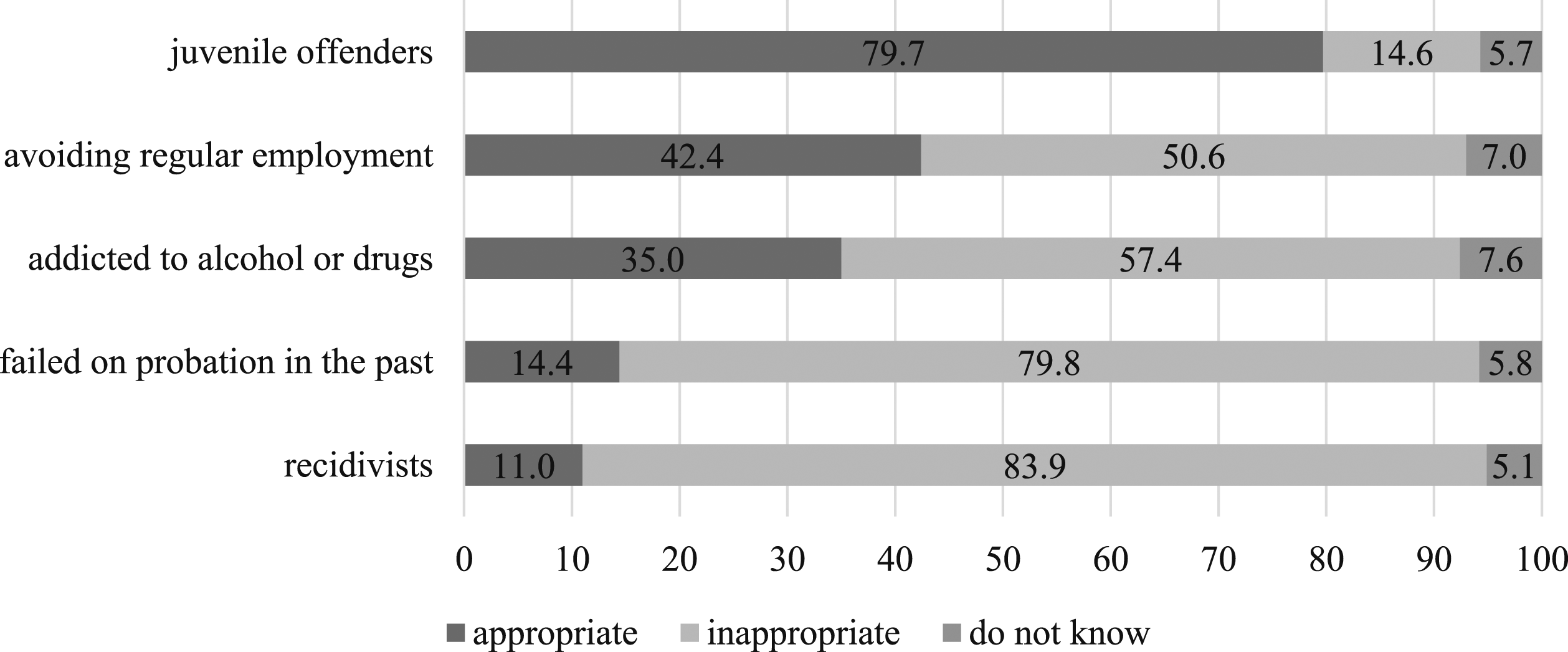
Conversely, support for probation declined considerably for all other groups of offenders. In fact, more than half of the respondents were opposed to its application in all cases. At least, a portion of respondents considered probation to be a suitable measure for offenders who avoid work (42%) or are addicted to alcohol or drugs (35%). The more lenient attitude towards cases involving substance abuse may be based on the idea that an offender who is addicted first needs treatment, rendering community sentences a more suitable alternative to imprisonment. Similarly, avoiding regular employment may not necessarily mean that the individual is a threat to society, which some respondents seem to have taken into account. Only few respondents suggested imposing probation on repeat offenders (i.e. recidivists) and those who failed on probation in the past.
Opinions regarding the violation of an offender’s conditions of probation are presented in Figure 2, showing that the Czech public would generally make very uncompromising judges for offenders under the supervision of the PMS. With the exception of the offender’s failure to attend a meeting with a probation officer, the majority of respondents would always be inclined to terminate the probationary period prematurely and send the offender to prison. Even the relatively lenient attitude in the case of missed meetings has its limits as the percentage of respondents who would allow the offender to remain on probation dropped to less than one fifth (18%) in the case of repeated failure to attend a meeting. Violation of the conditions of probation (%).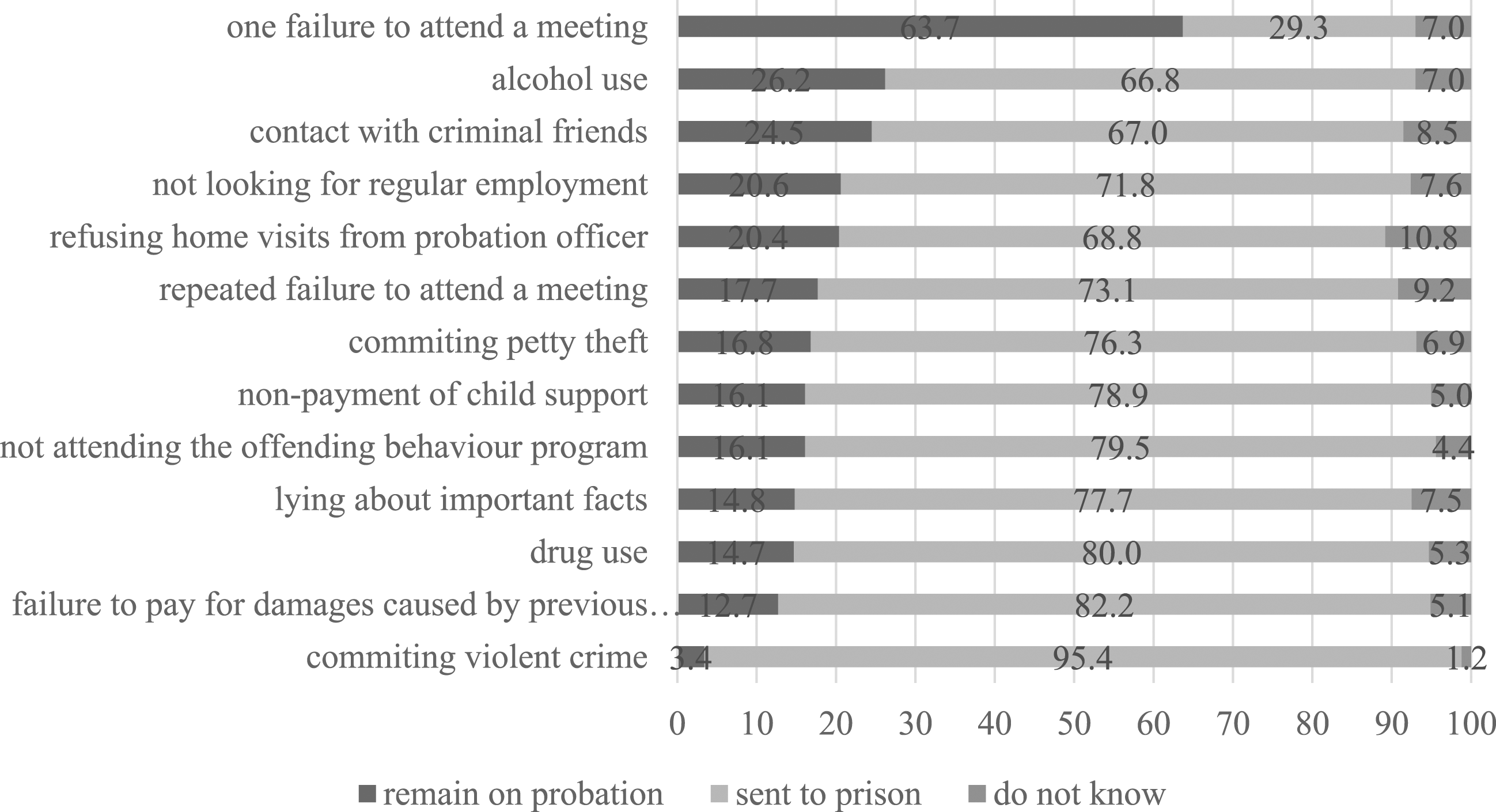
Only one quarter of respondents would forgive offenders for excessive use of alcohol (26%) and contact with problematic individuals linked to previous criminal activity (25%). Not looking for a job (21%) and refusing to let their probation officer into their home (20%) does not serve as sufficient grounds to terminate probation for one fifth of respondents. The failure to pay for damages caused by the offender’s crime was assessed by respondents as even more serious grounds to terminate probation than petty theft or the refusal to participate in the offending behaviour programme. Offenders with no desire to fulfil their obligations to their victim or the state are evidently not seen as deserving of more lenient forms of punishment. If an offender wants to prove their remorse for the committed crime and wishes to take active part in his or her rehabilitation, the most convincing way to express this is by taking responsibility for the damages incurred. To conclude, committing a violent crime was not considered grounds for imprisonment only in exceptional cases.
Finally, opinions regarding the benefits of probation the for criminal justice system are presented in Figure 3. Respondents were convinced that probation would prove economically beneficial for the state. Two thirds of respondents (67%) were generally convinced that probation would cut government spending towards the prison system. The fact that the offenders on probation serve their sentences outside of prison also somewhat increases the victim’s chances for compensation. In contrast to imprisonment, the offender can maintain a job to generate the necessary funds. The majority of respondents (56%) believed that probation would definitely or most probably contribute to this end. The remaining two questions produced less favourable results. Probation can facilitate the rehabilitation of offenders according to only two fifths of respondents (43%) and in the case of overall crime reduction, the majority of respondents (55%) assumed a negative position. Benefits of probation for the criminal justice system (%).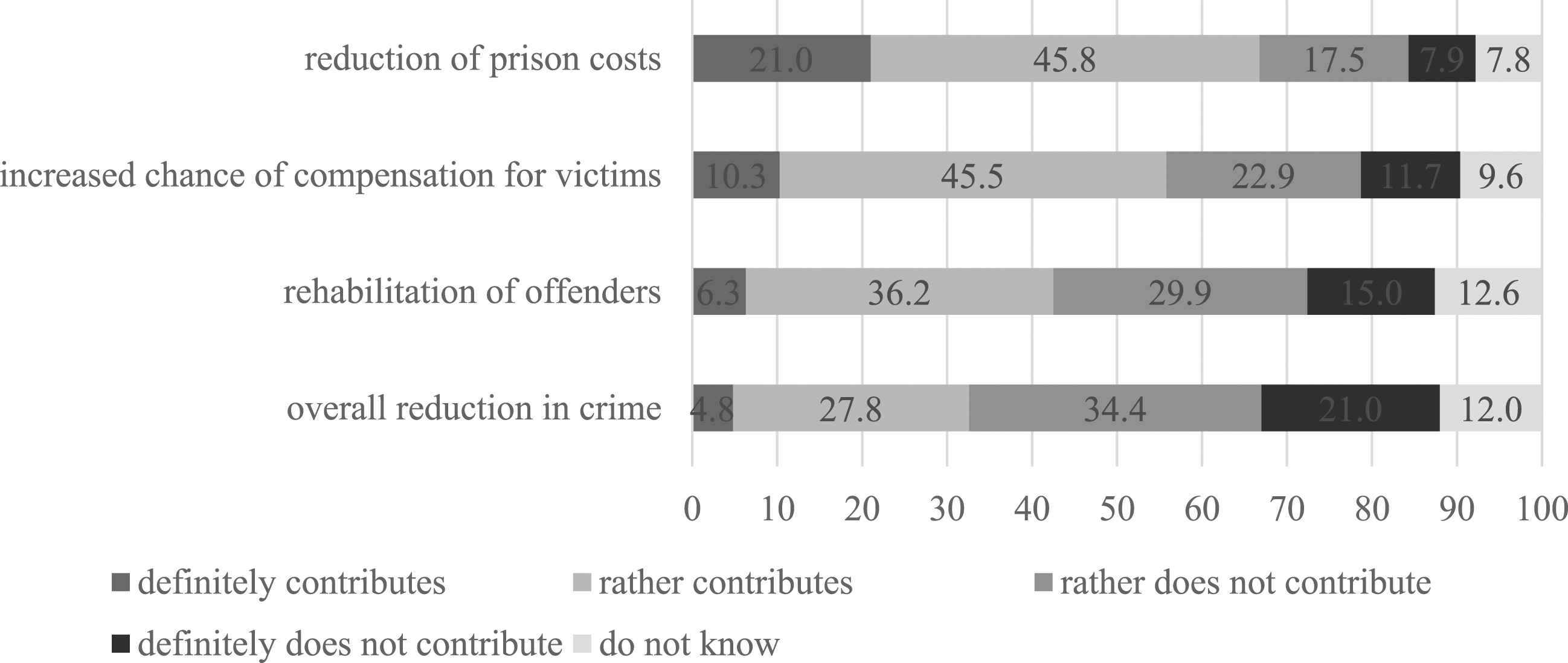
Bivariate correlations
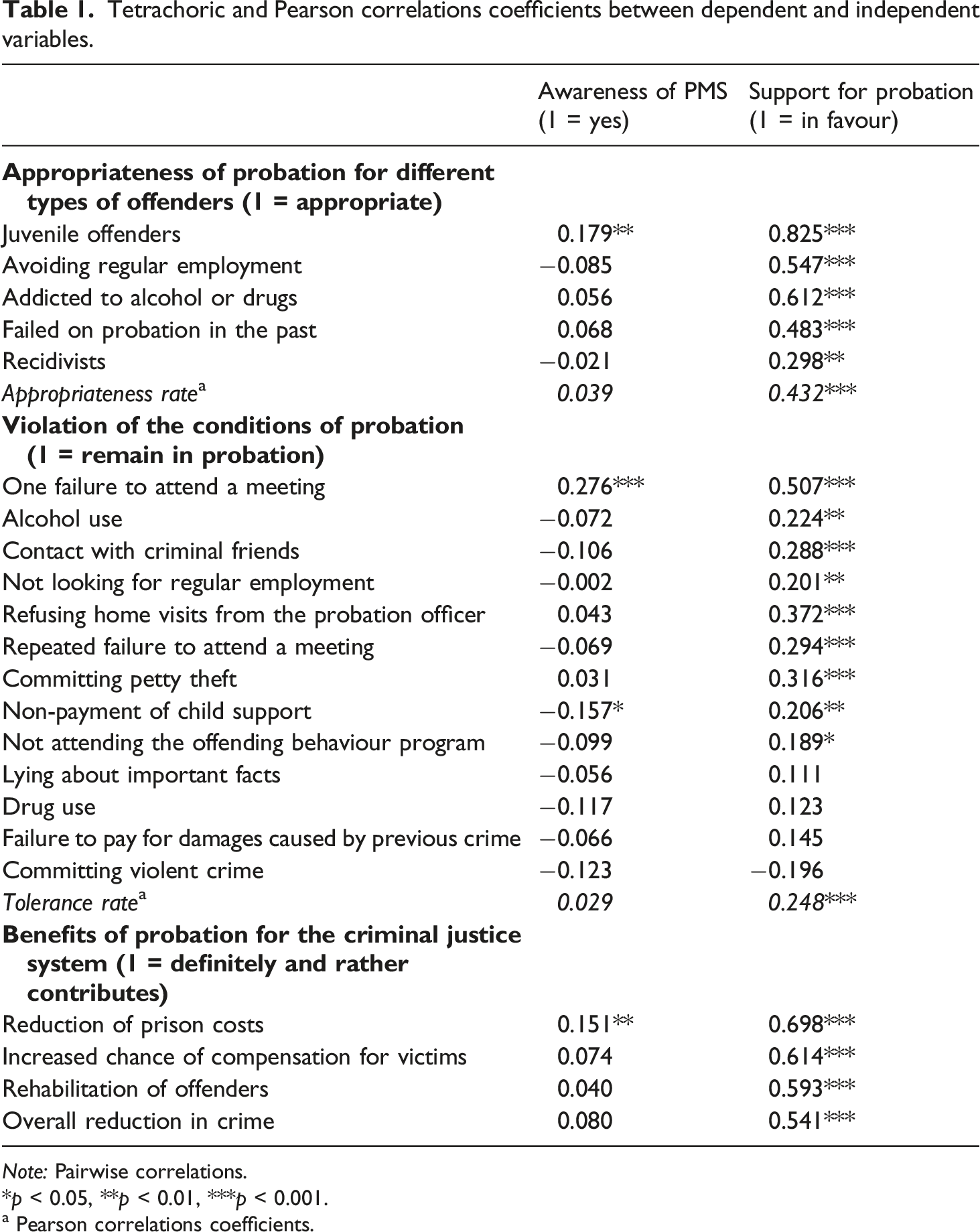
Tetrachoric and Pearson correlations coefficients between dependent and independent variables.
Note: Pairwise correlations.
*p < 0.05, **p < 0.01, ***p < 0.001.
a Pearson correlations coefficients.
Surprisingly, awareness of the PMS played an important role only in case of juvenile offenders. Those familiar with the PMS were more inclined to impose probation on juvenile offenders than those not familiar with this institution. No difference was revealed with respect to other types of offenders.
One failure to attend a meeting would more likely be forgiven by those who are aware of the PMS (0.276) as well as those in favour of probation (0.507). In general, those who are in favour of probation are more tolerant towards offenders who violate the conditions of their probation, while awareness of the PMS has no effect.
Finally, public opinion regarding the contribution of the probation service to the criminal justice system is again mainly associated with support for probation. The most commonly perceived benefit of probation is that it reduces prison costs (0.698). A moderate association was revealed with respect to awareness of the PMS (0.151), while the association with other benefits remained negligible.
The effect of awareness of PMS and support for probation on perceived appropriateness, tolerance and benefits of probation
OLS regression – appropriateness rate index.
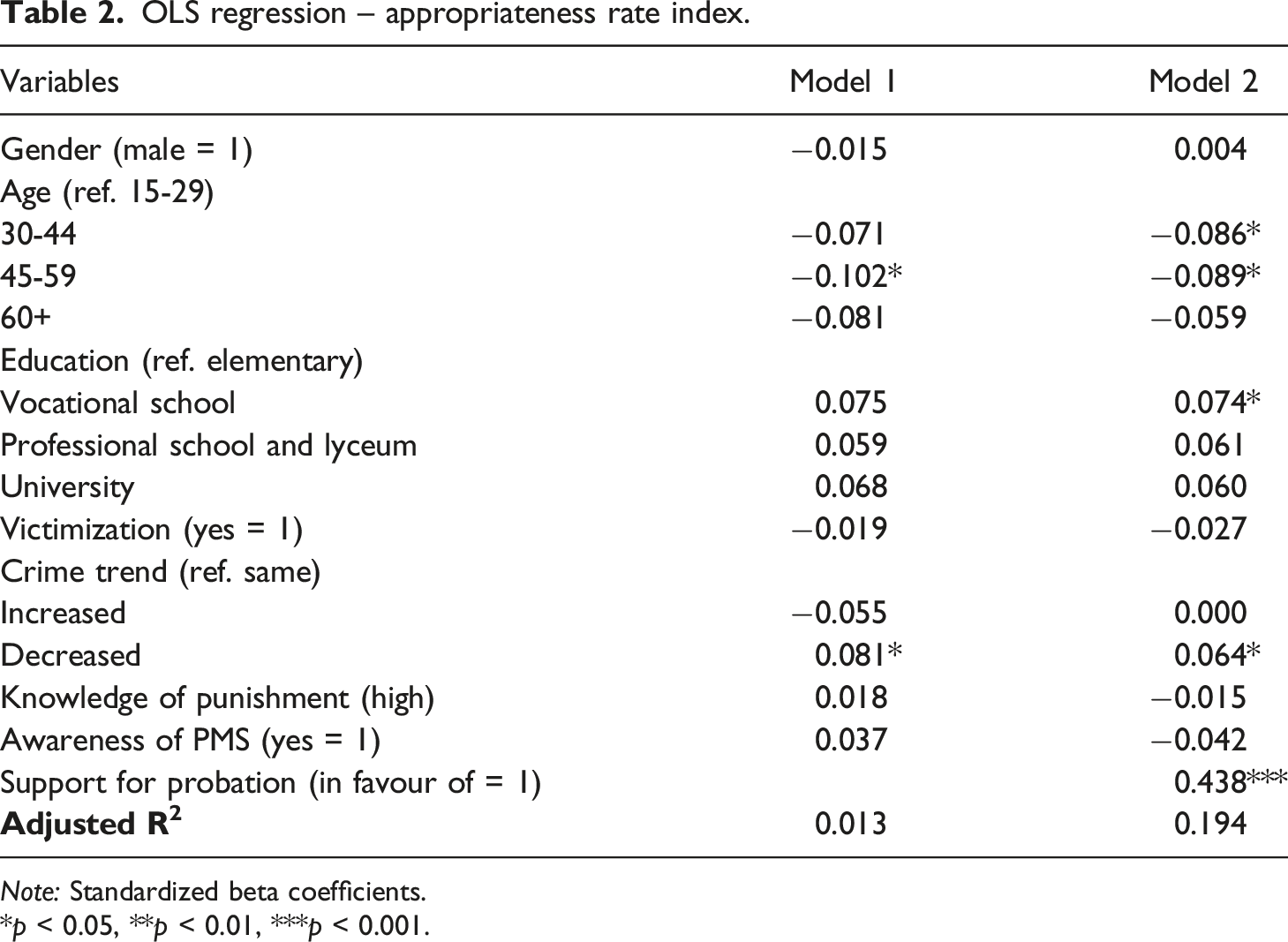
Note: Standardized beta coefficients.
*p < 0.05, **p < 0.01, ***p < 0.001.
Figure 4 presents adjusted odds ratios demonstrating that those who support probation see it as an appropriate measure to varying degrees depending on the group of offenders. It thus shows, for example, that those who are in favour of probation in general are 27 times more likely to consider probation an appropriate measure for juveniles compared to those against probation. The smallest, although still significant, difference between supporters and opponents of probation was found in the case of violating probation in the past (OR = 3,4). Adjusted odds ratio for the effect of support for probation on the appropriateness of probation for different offenders. Note: Adjusted for all variables controlled in Table 2. Based on a binary logistic regression analysis. **p < 0.01.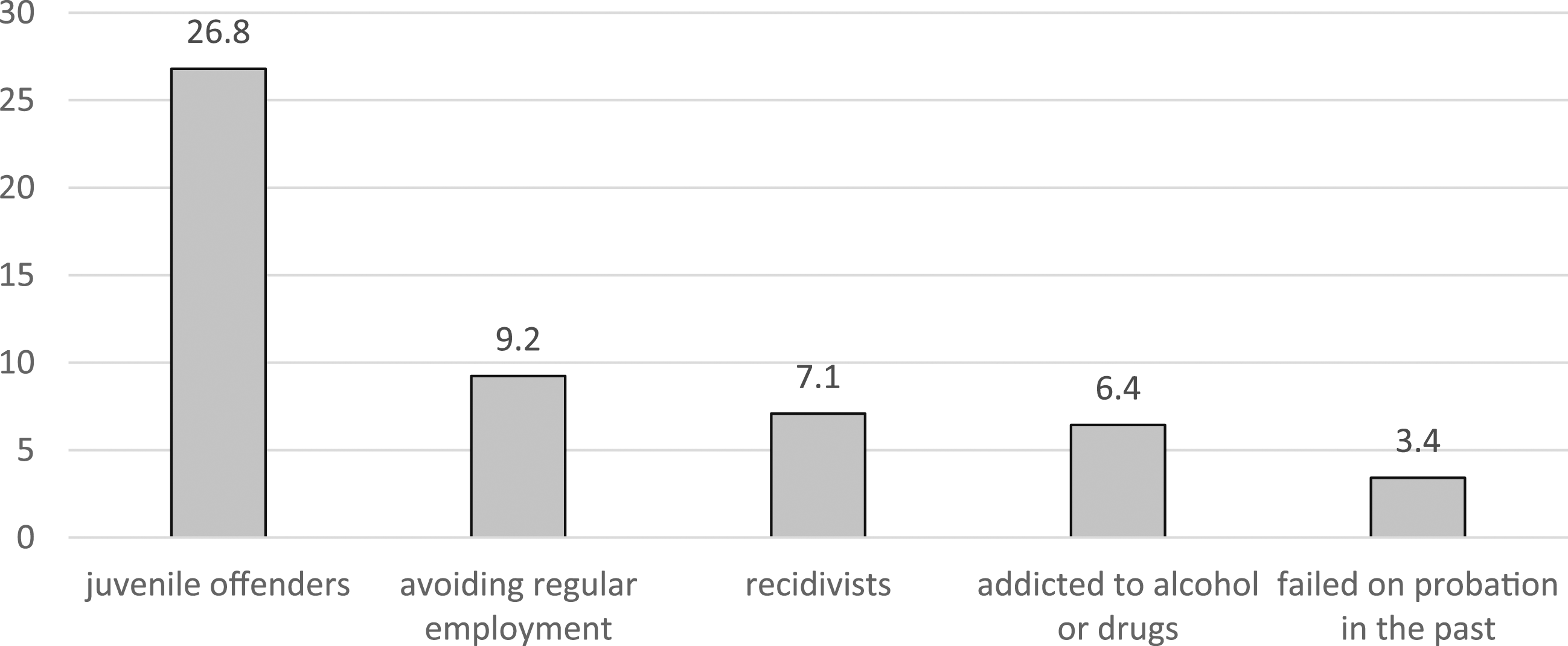
Furthermore, weaker or no associations were generally found with respect to awareness of the PMS (not presented here). Those familiar with the institution are more likely to consider probation an appropriate measure for juveniles compared to their counterparts. On the other hand, they are less likely to assess probation as appropriate for people addicted to alcohol or drugs.
OLS regression – tolerance rate index.
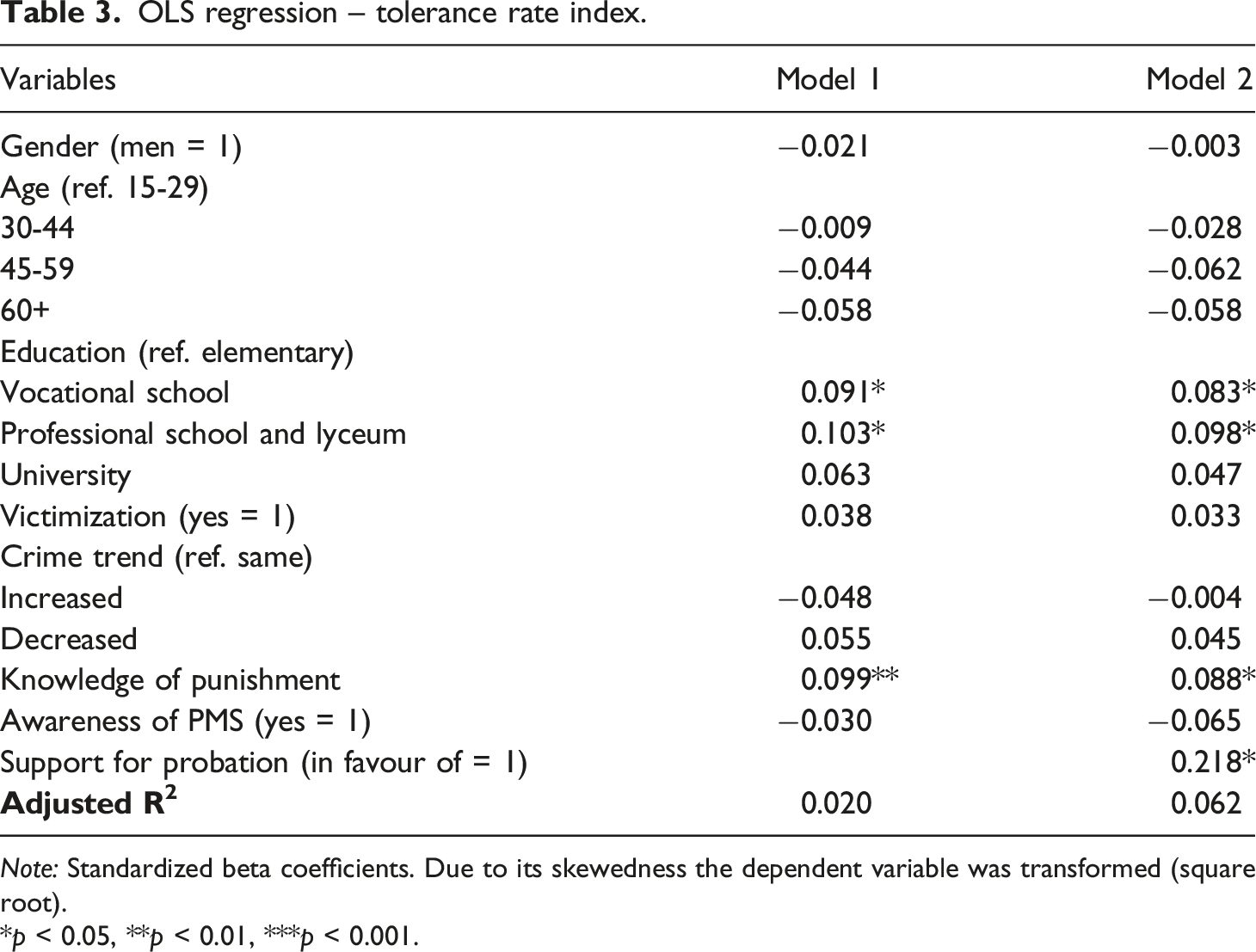
Note: Standardized beta coefficients. Due to its skewedness the dependent variable was transformed (square root).
*p < 0.05, **p < 0.01, ***p < 0.001.
Figure 5 presents adjusted odds ratios demonstrating that those who support probation exhibit varying degrees of tolerance towards the offender’s violation of the conditions of probation depending on the situation. For example, those in favour of probation in general are four times more likely to forgive one failure to attend a meeting compared to those against it. No difference between respondents was found regarding lying about important facts, drug use and the failure to pay for damages caused by previous crime. Interestingly, the data suggest that in the case of violent crime, those who support probation are less lenient compared to their counterparts (OR = 0.4). Adjusted odds ratios for the effect of support for probation on the violation of the conditions of probation. Note: Adjusted for all variables controlled in Table 3. Based on a binary logistic regression analysis. *p < 0.05, patterned (committing violent crime) p = 0.051, dark grey = ns.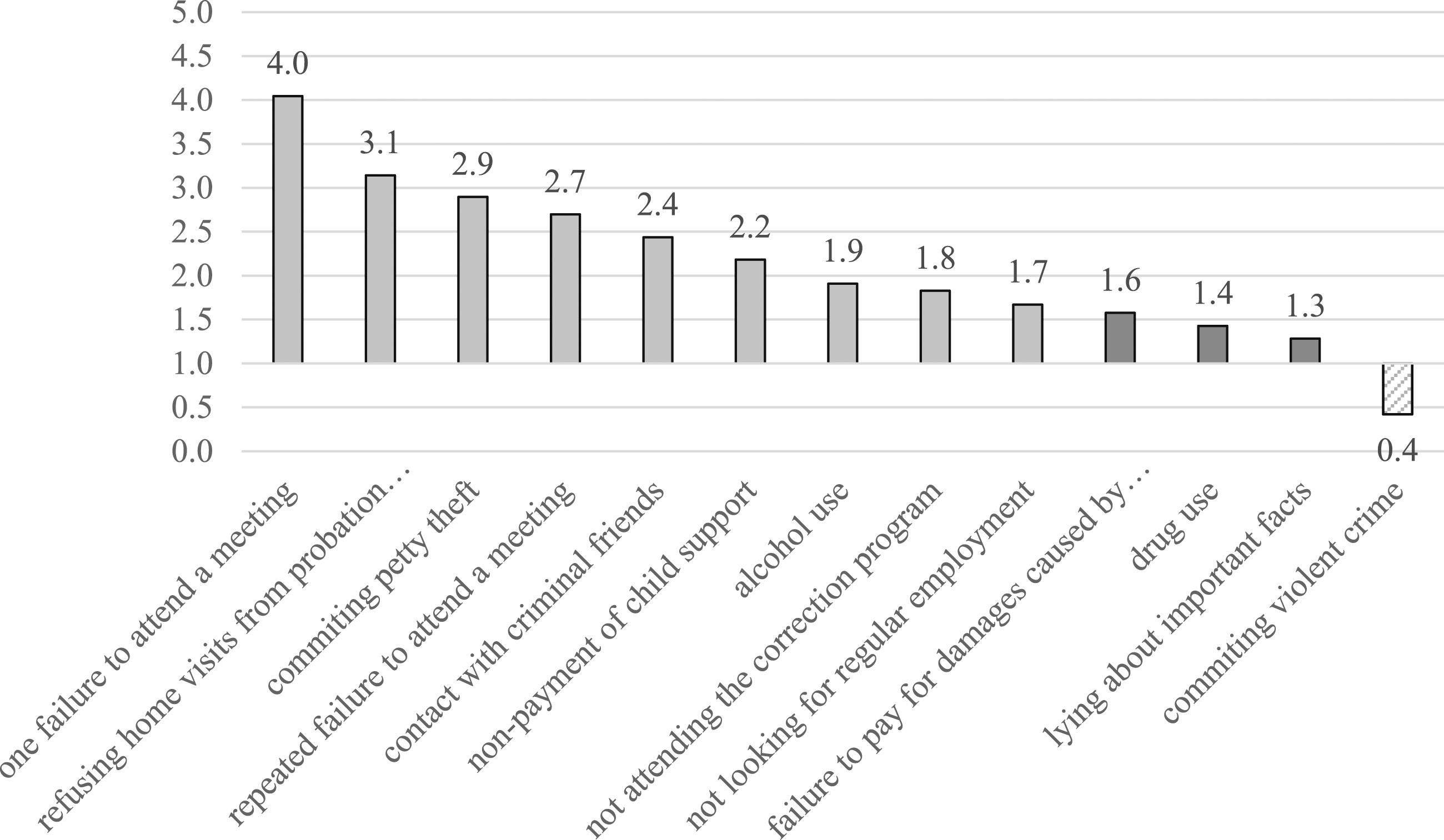
Those who are aware of the existence of the PMS are more likely to be tolerant in the case of one failure to attend a meeting compared to their counterparts (not presented here). On the other hand, they would be less lenient towards offenders who make contact with criminal friends and those who default on child support payments. In other cases, awareness of the PMS had a weak or no effect.
Finally, we estimated adjusted odds ratios demonstrating that people who support probation see it as more beneficial to the criminal justice system (Figure 6). Data showed that supporters are significantly more likely to see the benefits of probation than opponents of probation. For example, those who support probation are five times more likely to see its benefits in terms of crime reduction compared to those who do not consider probation as an appropriate way of treating offenders.
With respect to awareness of the PMS, a significant association was only revealed for the reduction of prison costs (not presented here), with those familiar with the PMS proving more likely to perceive the benefits of probation than those unfamiliar with the service. Adjusted odds ratios for the effect of support for probation on benefits for the criminal justice systém. Note: Adjusted for all variables controlled in the analysis. Based on a binary logistic regression analysis. ***p < 0.001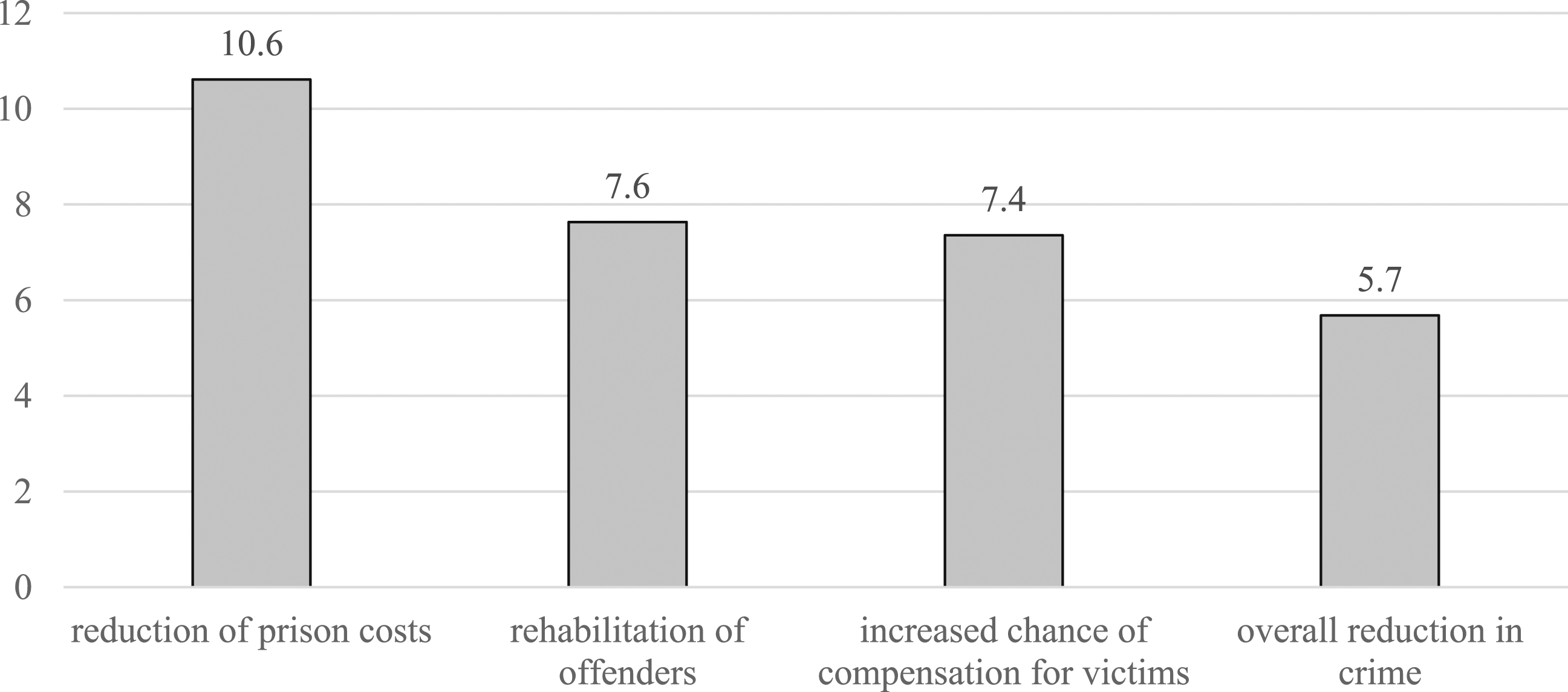
Discussion
Previous research on non-custodial sentences has pointed to the relatively low public knowledge of probation in many European countries (Allen and Hough, 2007; Durnescu et al., 2013; Lulei, 2011; Rozum et al., 2009), revealing that this lacking awareness significantly influences public opinion on alternative sentencing (Allen, 2016; Butter et al., 2013; Van Gelder et al., 2015). Nevertheless, existing studies are still relatively limited in their scope, as they are often based on small non-representative samples (Durnescu et al., 2013). The advantage of our study is that it uses a representative data set of the Czech public and focuses on a variety of specific attitudes towards probation, for example, views regarding compliance with the conditions of probation, suitability of probation for different types of offenders and the potential benefits of probation for the criminal justice system. This allows us to examine the issue of probation more comprehensively.
Before discussing the main results, the limitations of our study should be discussed. First, probation encompasses a wide range of alternative measures such as community service, parole and house arrest with electronic monitoring, rendering it virtually impossible to thoroughly examine all measures in one study. We thus had to limit our analysis to suspended sentence under the supervision of a probation officer, which the reader should take into account when interpreting the results of our study. Second, as probation is not a well-known concept for many Czechs (Rozum et al., 2009), we decided that inquiring about this measure would have to be preceded by a brief description of what a suspended sentence under the supervision of a probation officer actually means. However, it is possible that any substantial changes to the wording of the question would alter the results. Nevertheless, we still considered this necessary in order to ensure that our respondents all had a similar understanding of the measure. Future research could, however, focus on the extent to which work with offenders or different conditions of probation could alter public opinion on the application of probation in the criminal justice system. Third, we must emphasize that the Czech Republic has a significantly shorter tradition of probation and other non-custodial sentences than other Western European countries (Tomášek et al., 2016), which can affect public awareness and support regarding these measures. Therefore, the possibility of generalizing the results of our study may be limited in this regard. On the other hand, our findings are consistent with the results of comparable foreign research (Allen and Hough, 2007; Butter et al., 2013; Van Gelder et al., 2015).
Our study has broadened the scope of knowledge on public opinion regarding probation as it has generated many noteworthy findings. Some earlier studies (Zeman et al., 2010; Moravcová and Tomášek, 2014) have described Czech society as strongly punitive, with only limited support for community-based sanctions. The public debate is generally dominated by demands for harsh punishments for perpetrators of serious crimes (Háková, 2013; Tomášek, 2012) and public awareness of the PMS is relatively low. However, in line with previous research on the relationship between knowledge of probation and attitudes towards alternatives to prison (Allen, 2016; Butter et al., 2013; Sanders and Roberts, 2000; Van Gelder et al., 2015), our research has clearly shown that most people, when briefly informed about non-custodial sentences, express greater support for probation than incarceration.
This became even more evident when we asked respondents how appropriate they deemed probation for different groups of offenders. Those who agreed with the basic principles of probation were also more likely to consider its application for a wider range of offenders. Even at the level of descriptive statistics, the proportion of respondents who were in favour of probation in the case of juveniles was significantly higher than the proportion of respondents who initially agreed with probation as a generally suitable method of punishment. Similarly to studies on punitiveness (Moravcová and Tomášek, 2014; Roberts and Hough, 2005), the wording of the questions and the amount of information presented to respondents proved crucial in terms of informing the respondent’s ultimate attitude towards probation.
The respondent’s agreement with the general principles of probation also proved to be a key factor with respect to the conditions of probation and the violation of these conditions. It was revealed that probation supporters would be more lenient towards offenders who violated the conditions of their probation in 9 of the 13 situations. In three cases (lying about important facts, drug use and the failure to pay for damages caused by previous crime), no difference was found between supporters and opponents of probation. Interestingly, however, the data suggest that if the offender were to commit a violent act, proponents of probation would actually be less lenient than those who were not initially in favour of probation. In other words, those who agree with the basic principles of probation seem to be generally more lenient than their counterparts in a number of less serious violations. On the other hand, this same group seems to express low tolerance towards those who commit serious crimes – proponents of probation thus proved more likely to send such offenders to prison than opponents of probation.
Finally, we found that supporters of probation see its potential benefits for the criminal justice system and society as a whole, whether related to reducing prison costs, increasing the chance of compensation for victims, rehabilitating offenders or reducing crime in general, more often than those who oppose probation. Conversely, awareness of the PMS proved to have only a limited effect, which also extended to the violation of the conditions of probation and the suitability of probation for different groups of offenders. The data thus suggest that it is much more important to familiarize the public with the specific measures carried out by an institution rather than just the institution per se.
Other studies (Stead et al., 2002) have also confirmed the importance of emphasizing the basic principles of non-custodial sentences when seeking greater public support for these measures. As Maruna and King (2004) point out, the principles of restitution, community work and ‘giving something back’ resonate particularly well among the public. Given that victims and their needs form one of the key topics in the current public debate on crime and crime control (Karstedt, 2002), whether or not a particular form of sentencing satisfies these needs is likely to play a very prominent role when arguing for its application. This was also supported by our data, as the failure to pay for damages caused by the crime committed was the second most commonly cited reason for terminating probation and sending the offender back to prison.
We believe that if the basic principles of probation (and other non-custodial sentences) and its benefits for society are sufficiently explained to the general public, they are met with more favour and gain greater support for their implementation. In this respect, the Czech Republic is still somewhat lagging behind. Although a large proportion of respondents consider probation to be a meaningful measure, in practice they would essentially limit its application to juvenile offenders and would consider any violation, except for the offender’s failure to attend one meeting with the probation officer, as grounds for terminating probation and would send the offender to prison. The probation service should therefore find a way, in addition to informing the public of the nature of its activities, to clearly communicate the knowledge we currently have about the process of desistence to the general public. It would be particularly worth highlighting the confirmed finding that even older offenders and repeat offenders can go straight (Hanson, 2018; Maruna, 2001; Ward and Maruna, 2007). Moreover, the process of desistence itself is very complex and minor or major relapses towards problematic behaviour are the rule rather than the exception (King, 2014; Weaver and McNeill, 2010). Therefore, criminal justice supervision must be realistic and anticipate relapses (McNeill, 2016). On the same note, the public should be aware that giving second chances to offenders might be more effective in consequence than responding harshly to each setback or violation (Bottoms and Shapland, 2019). In addition, the key elements of desistence (such as employment or marriage) are usually not found behind prison walls but rather inside the community, which is precisely where probation takes place (Farrall, 2002; Healy, 2010; King, 2014; McNeill, 2006). This, too, is one of the strengths of this traditional alternative measure that is deserving of attention.
Conclusion
Our study has confirmed that support for probation in general is associated with positive views towards different aspects of probation. Those who are in favour of probation are more likely to perceive this measure to be appropriate for a wider spectrum of offenders, prove lenient towards offenders who violate the conditions of their probationary period (with the exception of violent crime) and see probation as beneficial to the criminal justice system and society as a whole. On the other hand, the public’s awareness of the probation service per se proved to have only a limited effect. Although Czechs are considered to be punitively oriented, a detailed explanation of the principles of probation significantly bolstered support for this measure. This finding is important not only for Czech criminal justice representatives and policy-makers, but also at an international level, as opening a line of communication with the public and explaining the principles of probation is likely to generate positive views towards this measure and non-custodial sentences in general.
Footnotes
Declaration of conflicting interests
The author(s) declared no potential conflicts of interest with respect to the research, authorship, and/or publication of this article.
Funding
The author(s) received no financial support for the research, authorship, and/or publication of this article.
