






Abstract
Background:
In this study, we tested the hypothesis that in pediatric patients undergoing cardiac surgery using cardiopulmonary bypass (CPB) with blood prime, the storage duration of the packed red blood cells (PRBCs) used in prime led to differences in postoperative complications and metabolic profiles of the patients.
Methods:
For this prospective observational study we included 400 pediatric patients undergoing cardiac operations using CPB and requiring PRBCs prime. To study the effect of storage duration of PRBCs on postoperative morbidity, mortality, and metabolic profile, patients were divided into four groups (based on storage duration of PRBCs used in prime). Group 1: ≤7 days, group 2: 8 to 14 days, group 3: 15 to 21 days, and group 4: >21 days.
Results:
On univariate analysis, patients transfused with PRBCs stored >14 days had significantly higher incidence of postoperative complications, for example, liver dysfunction, hematological complications, sepsis, and multiorgan failure. However, after regression analysis and adjusting for the other confounder’s effects, no significant association was found between storage duration of PRBCs and postoperative complications and mortality. Metabolic profile of PRBCs was observed to become deranged with increasing duration of storage. This, however, improved to near physiological range early after the initiation of CPB and remained normal one hour after weaning from CPB, irrespective of the storage duration.
Conclusion:
Storage duration of PRBCs used for priming the pediatric CPB circuit neither affects the metabolic profile of the patients on CPB or early after surgery, nor it has any association with postoperative complications and mortality.
Introduction
Current pediatric cardiopulmonary bypass (CPB) circuit design frequently requires priming with packed red blood cells (PRBCs) due to the relatively large priming volume. 1 The resulting PRBCs transfusion may however be equivalent to >50% exchange transfusion, especially in patients weighing <5 kg. 2,3 As in adult patients, such massive transfusion may lead to increased morbidity and mortality in pediatric patients. 2,4 Moreover, PRBCs, depending upon the duration of storage, may be associated with significant metabolic imbalances called “storage lesions.” 5,6 Transfusion of these PRBCs may have significant impact on the physiology of pediatric patients. Koch et al 4 and Ranucci et al 2 in their retrospective reviews found the storage duration of PRBCs as an independent risk factor for increased morbidity and mortality after adult and pediatric cardiac surgery, respectively. Many institutes, therefore, recommend the use of only fresh PRBCs in the CPB priming. 1 The supply of fresh PRBCs, however, is limited and most blood banks may be unable to fulfill the demand, on a regular basis. Moreover, many recent studies and meta-analysis in adult and pediatric population have raised questions concerning associations of prolonged storage of PRBCs and poor surgical outcome. 7,8 In this study, we prospectively tested the hypothesis that among pediatric patients undergoing cardiac surgery using CPB, the storage duration of the PRBCs used in prime may (1) lead to differences in postoperative morbidity and mortality and (2) cause changes in the metabolic profiles of the patients.
Materials and Methods
Study Population
Between July 2013 and June 2015, a total of 400 consecutive pediatric patients undergoing cardiac surgery at our institute using CPB and requiring circuit priming with PRBCs were included. As a protocol, we did not use the PRBCs in prime in patients weighing >10 kg, unless they were severely anemic. Based on its availability, the PRBCs were issued by our blood bank. The study protocol was approved by our institutional ethics committee, and written informed consent was obtained from parents. Exclusion criteria were emergency surgery, patient requiring >one unit of PRBCs in priming, patients with preoperative renal (serum creatinine >two times the expected for age) or hepatic failure (liver enzymes >two times normal for age), patients with any evidence of infection, and patients on mechanical ventilation preoperatively.
Anesthesia, CBP, and Cardiac Surgery Technique
Anesthetic management was carried out as per our institutional protocol. All patients were operated through midline sternotomy. Unfractionated heparin was administered intravenously at a dose of 4 mg/kg, and an activated clotting time was maintained >400 seconds during surgery. The CPB circuit included a hard-shell reservoir, a hollow fiber oxygenator (Quadrox-1 oxygenator cum reservoir; Maquet, Germany) with an arterial line filter and roller pump. Ultrafiltration unit (Spictra; Med Device Lifesciences Limited, Dublin, Ireland) was connected with the circuit and continuous ultrafiltration, and/or modified ultrafiltration was performed whenever required.
Initially, the CPB circuit was primed with 300 to 800 mL lactated Ringer’s solution depending upon the priming volume of the reservoir and oxygenator. Then, a calculated amount of PRBCs to reach a patient and circuit hematocrit of 30% on CPB was added to the reservoir, and lactated Ringer’s solution was ultrafiltered to decrease the reservoir level to nearly zero. Amount of PRBCs used for priming varied according to the patient’s baseline hematocrit and circuit prime volume. During CPB, an additional amount of PRBCs from the same bag was added to the circuit if required to maintain a hematocrit between 25% and 30% during CPB. The CPB flow was adjusted according to the patient’s body weight and patient’s temperature on CPB. The target temperature was chosen based on the type of surgical procedure and surgeon preference. Cardiac arrest was achieved and maintained using single-dose Del-Nido cardioplegia. After weaning from CPB support and removing the cannulas, heparin was reversed using protamine sulfate in a 1:1 dose.
Data Collection
In all the patients, preoperative hematochemical tests were performed. Intraoperatively, samples were obtained for arterial blood analysis from the patient, stored PRBCs used for priming, and from the CPB circuit after blood priming, 20 minutes after initiation of CPB, and one hour after weaning from CPB. The samples were analyzed using arterial blood gas analyzer (Cobas b121; Roche Diagnostics, Germany) for pH, potassium (mEq/L), lactate (mmol/L), and glucose (mg/dL) concentrations.
During surgery, data for amount of priming volume, amount of PRBCs used in priming, duration of storage of PRBC, STS-EACTS (STAT) mortality category, 9 and duration of aortic cross clamp (ACC) and CPB were recorded.
Study Outcome
Postoperative morbidities were determined per the predetermined criteria provided by International Pediatric Sepsis Consensus Conference definitions. 10 Morbidities recorded were sepsis, renal, hepatic, hematological, neurological, and respiratory failure. Multiorgan failure (MOF) was defined as >one organ failure. Postoperative blood loss, amount of PRBCs and fresh frozen plasma (FFP) transfused, duration of mechanical ventilation, ICU stay, and length of hospital stay were also noted.
Primary end points of the study were in-hospital mortality or occurrence of MOF. Secondary end points of the study were individual complications, prolonged mechanical ventilation (>seven days), duration of ICU stay and hospital stay, and changes in biochemical and metabolic parameters of the patient after institution of CPB and early after weaning from CPB.
Statistics
Results were expressed as mean (SD) for most continuous quantitative variables and as frequencies with percentages for categorical variables. The groups were compared using the one-way analysis of variance (ANOVA) for continuous variables, and the χ2 test or Fisher exact test was used for categorical variables. Postoperative morbidity and mortality between four different groups were assessed using the analysis of covariance (ANCOVA) to adjust for preexisting differences between groups with respect to potential confounding factors including age, preoperative bilirubin, preoperative alanine aminotransferase, preoperative aspartate aminotransferase, cross clamp time, lowest temperature, and STS-EACTS category. P values of <.05 were considered statistically significant. All data analyses were performed using SPSS for windows, version 20.0 (SPSS Inc, Chicago, Illinois).
Results
Table 1 lists the preoperative characteristics, intraoperative, and postoperative data of the patients. A total of 400 patients were included in the study. The mean age and weight of the patients were 409 ± 507.5 days and 5.98 ± 3.23 kg, respectively. Median STS-EACTS category was 2 (range: 1-5). Mean storage duration of the PRBCs used in CPB priming and subsequent intraoperative transfusions was 11.1 ± 7.25 days. Amount of PRBCs initially added to prime was 100.5 ± 4.94 cc, and additional 24.1 ± 10.9 cc of PRBCs were added subsequently during CPB to maintain hematocrit. Figure 1 shows the distribution of PRBCs age and the number of patients. Different surgical procedures performed are shown in Figure 2.
Preoperative Characteristics, Intraoperative, and Postoperative Data of the Patients.
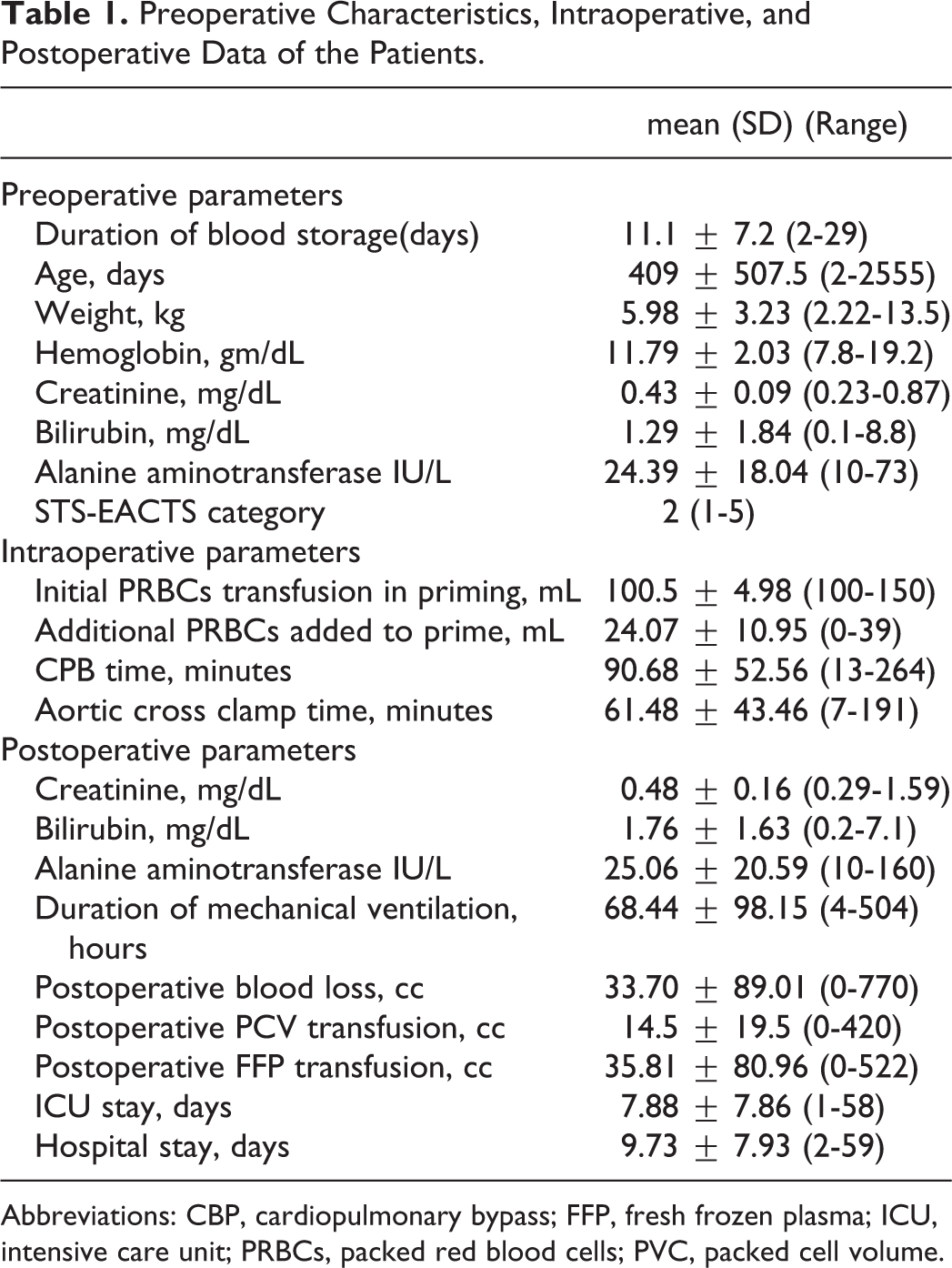
Abbreviations: CBP, cardiopulmonary bypass; FFP, fresh frozen plasma; ICU, intensive care unit; PRBCs, packed red blood cells; PVC, packed cell volume.
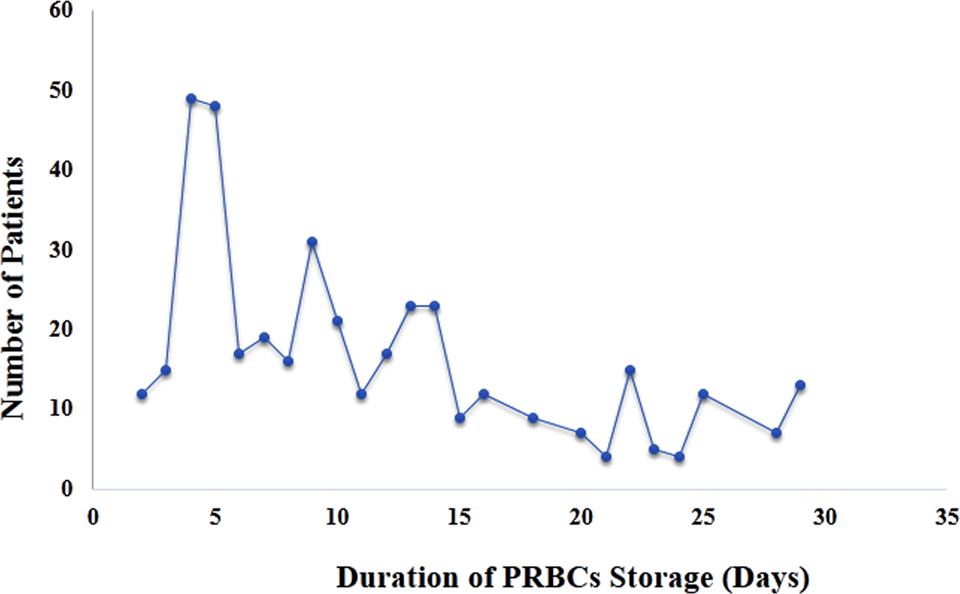
Figure shows the distribution of PRBCs age and the number of patients. PRBCs indicates packed red blood cells.
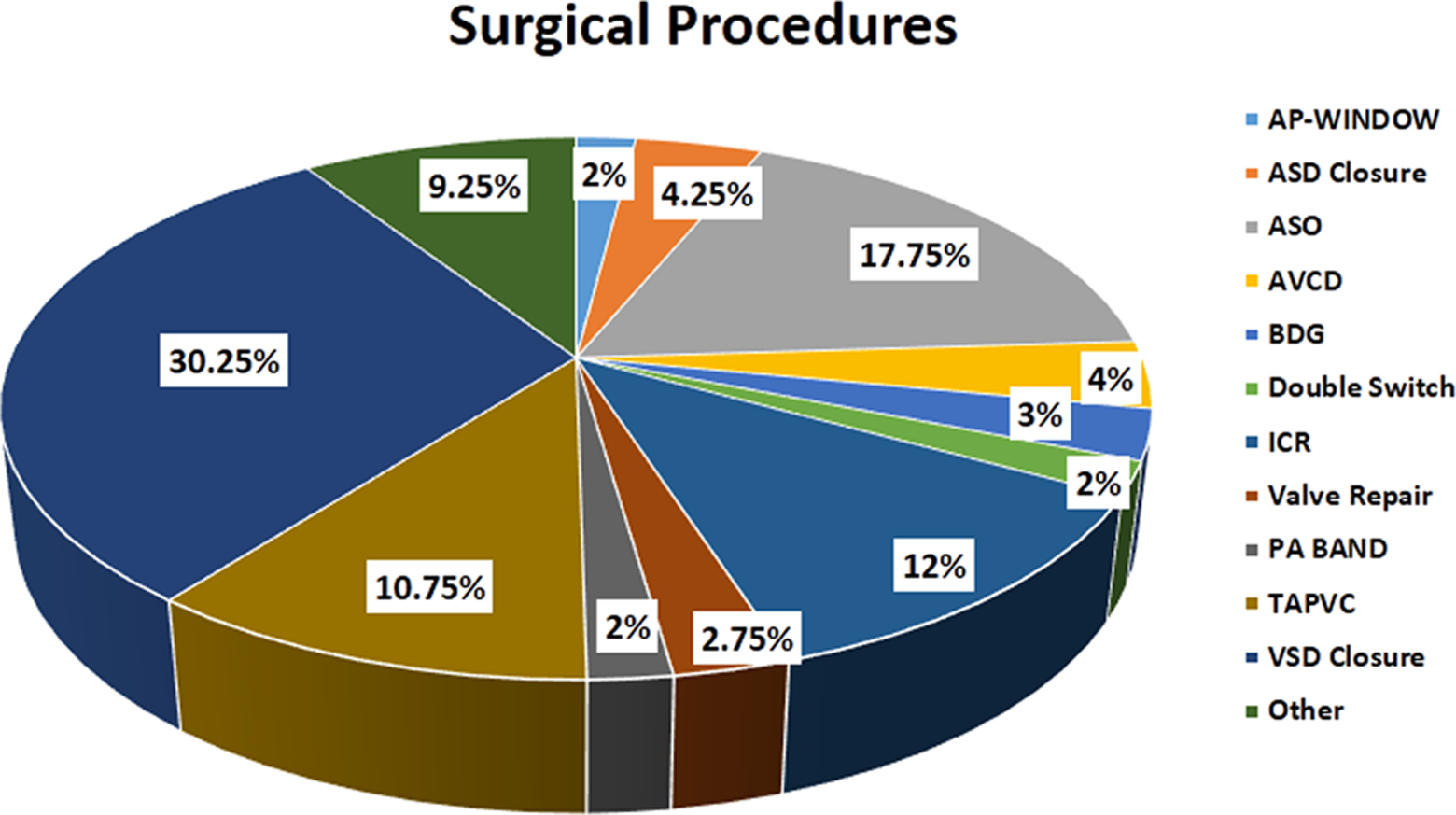
Different surgical procedures performed in all patients. AP indicates aortopulmonary; ASD, atrial septal defect, ASO, arterial switch operation; AVCD, atrioventricular canal defect; BDG, bidirectional Glenn shunt; double switch, arterial switch + atrial switch operation; ICR, intracardiac repair; valve repair, left and right atrioventricular valve repair; PA, pulmonary artery; TAPVC, total anomalous pulmonary venous connection; VSD, ventricular septal defect.
Clinical Outcomes
Median duration of mechanical ventilation was 26 hours (range: 4-504 hours). Thirty-five (9%) patients required prolonged mechanical ventilation. Mean postoperative blood loss was 33.7 ± 89.0 cc. A total of 239 patients required postoperative blood transfusion with mean transfusion amount of 14.5 ± 19.5 cc/kg (Table 1). Ninety-four patients received transfusions of FFP. Median duration of ICU stay was six days and hospital stay was seven days. A total 31% of patients developed at least one complication. The most common complication was sepsis (10%), followed by pulmonary complications (8.5%; Figure 3). Multiorgan failure developed in 11.2% of patients. There was no intraoperative death. There were 21 (5%) deaths in the postoperative period. Among the patients who died, 71.4% had developed at least one postoperative complication and 42.8% of patients developed MOF.
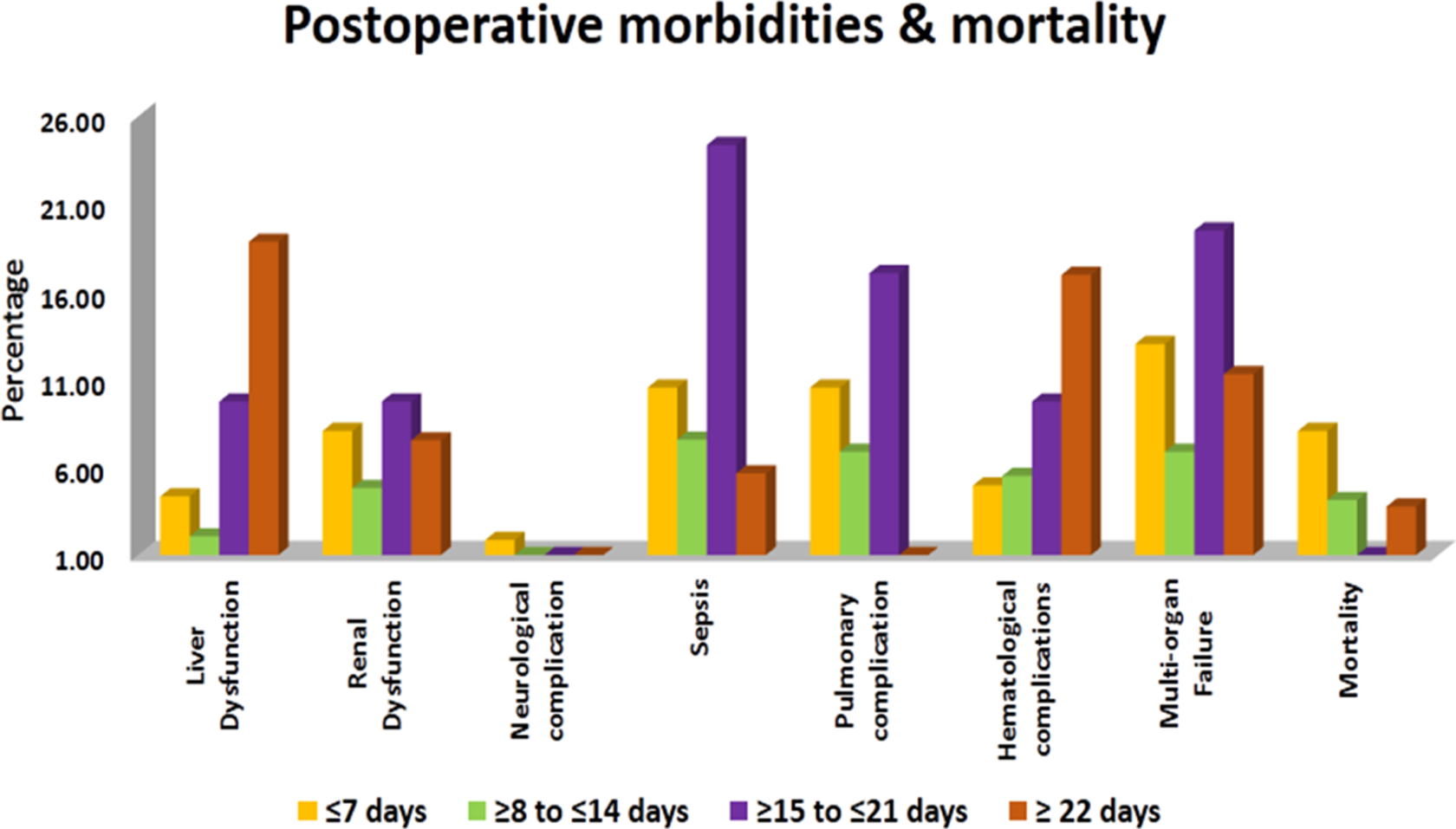
Incidence of postoperative complications including multiorgan failure mortality.
Table 2 shows comparison of patients based on the storage duration of PRBCs. Patients were divided in four groups, that is, ≤7 days (group 1: 161 patients), 8 to 14 days (group 2: 145 patients), 15 to 21 days (group 3: 41 patients), and ≥22 days (group 4: 53 patients). Mean age of patients was comparable in all four groups. There was significant difference in mean weight and STS-EACTS category in all four groups. Mean weight was lowest and median STS-EACTS category was highest in group 4, whereas mean weight was highest and STS-EACTS category was lowest in group 3. Duration of ACC and CPB was significantly longer in group 1, whereas the mean duration of mechanical ventilation and postoperative blood transfusion was significantly more in group 3. Similarly, the incidence of prolonged mechanical ventilation and duration of ICU stay and hospital stay were significantly greater in group 3. Comparing the postoperative complications, the incidence of renal dysfunction, neurological complications, MOF, and mortality was comparable across groups. The incidence of hepatic, hematological, pulmonary complications, and sepsis was significantly greater in groups 3 and 4. Liver dysfunction and hematological complications were significantly more in group 4, while sepsis and pulmonary complications were significantly more in group 3. However, on applying the regression analysis (ANCOVA), the duration of blood storage was not a significant independent risk factor for any postoperative complication including mortality.
Comparison of Preoperative, Intraoperative, and Postoperative Variables and Postoperative Complications and Mortality in Patients Based on the Storage Duration of PRBCs.

Abbreviations: ACC, aortic cross clamp; CPB, cardiopulmonary bypass; MVT, mechanical ventilation time; ICU, intensive care unit; PRBCs, packed red blood cells.
Metabolic Data During CPB
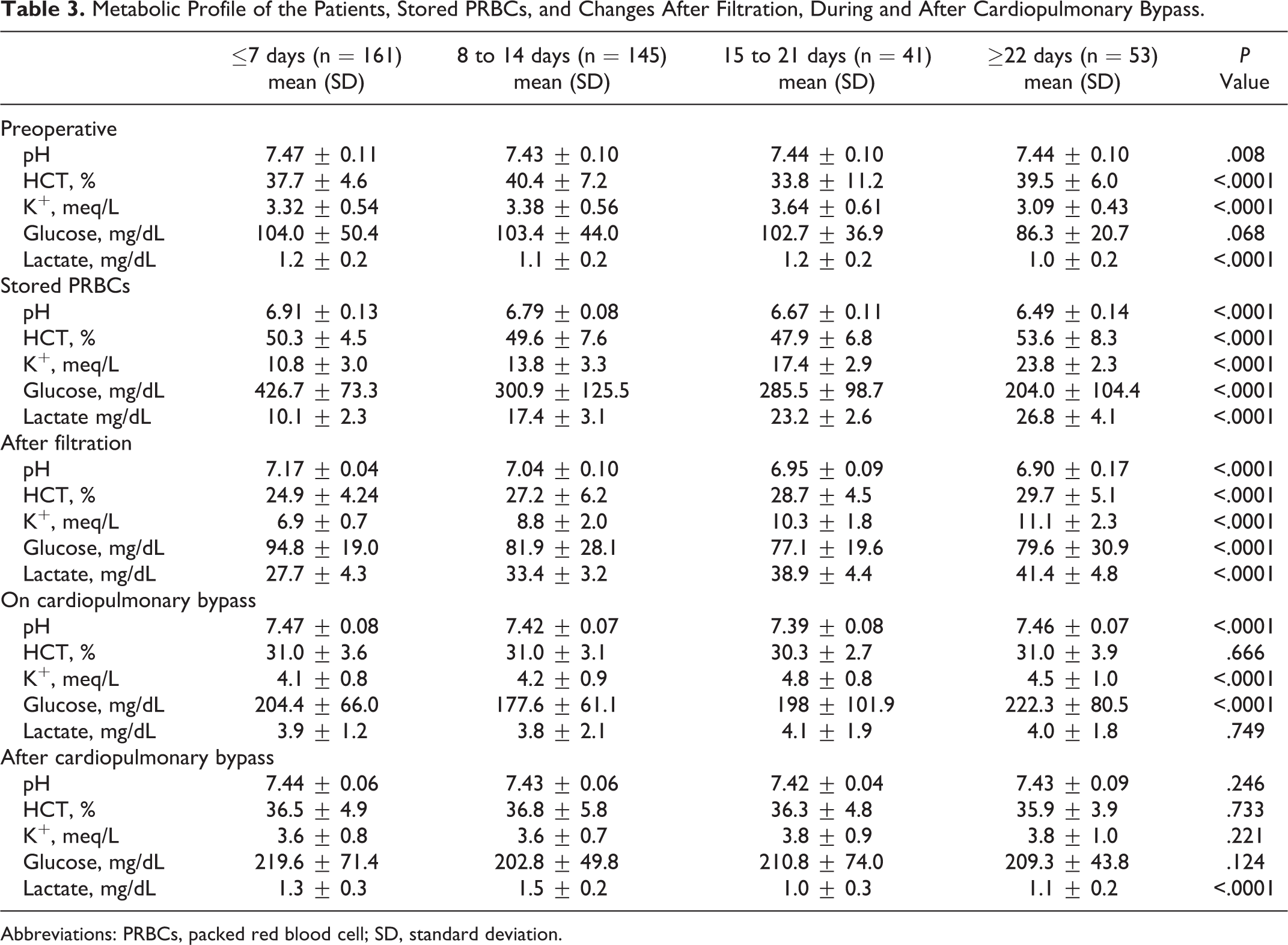
The metabolic profiles of PRBCs and the patients are shown in Table 3. Patient preoperative parameters were within the physiological range in four groups. In PRBCs used for priming, potassium and lactate levels increased while pH and glucose decreased significantly with increasing duration of storage. In metabolic profile of final prime after filtration, pH and lactate levels increased while hematocrit, potassium, and glucose levels decreased. Still, final priming solution in all four groups remained significantly acidotic and the potassium level remained significantly higher than normal. Comparison between the groups showed that pH and glucose were significantly lower, whereas potassium and lactate were significantly higher in group 4. The significance of baseline differences in metabolic profile of stored PRBCs depending upon storage duration persisted despite addition of PRBCs to the prime. Twenty minutes after initiation of CPB, metabolic profile of the prime improved to near physiological range in all four groups. Lactate levels also decreased significantly to <5 mmol/L irrespective of the storage duration of blood. Metabolic profile remained near physiological range and comparable in all four groups 1 hour after surgery except glucose levels. In all four groups, there was persistent hyperglycemia.
Metabolic Profile of the Patients, Stored PRBCs, and Changes After Filtration, During and After Cardiopulmonary Bypass.
Abbreviations: PRBCs, packed red blood cell; SD, standard deviation.
Discussion
To compare the effect of storage duration of PRBCs on metabolic and clinical outcomes of the patients, studies have compared the profiles of patients receiving old versus new blood based on storage duration of PRBCs. 2,3,6,11 –20 All these studies have used different durations as cutoff points depending upon their institutional practice, age of study population, and other criteria. However, recent studies 8,21,22 have found this division to be irrational. We also believe the same, as storage duration of PRBCs is a continuous variable with storage duration sometimes extending up to 42 days. Therefore, any cutoff point will be imaginary and arbitrary. Studies in the past with different cutoffs for old and new blood have shown variable associations between storage duration of PRBCs and outcomes. Several retrospective reviews in pediatric 2,11 –13 and adult 3,4 cardiac surgery patients found a significant association between transfusions of old PRBCs and increased incidence of postoperative complications and mortality, while others 14 –17 have failed to find any such association. The retrospective nature, arbitrary cutoff points for fresh versus old blood, and the absence of adjustment for important confounding factors have remained the major drawbacks of these studies.
We prospectively evaluated the effect of storage duration of priming PRBCs on metabolic and clinical outcome of pediatric patients. Inclusion of 125 to 190 cc of PRBCs in the prime volume of the CPB circuit amounted to massive transfusion in 25% of patients. In our study, patients received PRBCs in the CPB circuit prime that had been stored for ≤29 days, including 23.5% of the patients who received PRBCs stored for >14 days. However, on analysis adjusted for preexisting differences between groups (ANCOVA), the duration of blood storage was not shown to have an association with primary or secondary outcomes that was independent of covariates. Although the observed incidence of postoperative complications was significantly higher in >14 days storage groups (groups 3 and 4), adjustment for perioperative risk factors known to be associated with an adverse outcome in the pediatric population, including age, weight, ACC time, CPB time, coexisting conditions, and STS-EACTS category, revealed that storage duration of PRBCs was not an independent predictor of hospital mortality, prolonged mechanical ventilation, renal failure, hepatic failure, sepsis, or MOF. Our results are in agreement with the outcomes of recent randomized control trials. Randomized control trials by Steiner et al 18 in patients undergoing complex cardiac surgery, by Fergusson et al in very-low-birth-weight infants, 19 and by Lacroix et al 20 in critically ill adults failed to show any morbidity or survival advantage with transfusion of fresh PRBCs. However, all these trials have divided the patients into old and new blood groups which we feel introduces the bias in the study by arbitrarily selecting the storage duration (in days) to define fresh and old PRBCs and thus narrowing the range of PRBCs usage.
On unadjusted analysis, we observed higher mortality in patients transfused with <14-day stored PRBCs (6.2%) compared to patients transfused with >14-day stored PRBCs (2.1%), although the difference was not statistically significant. This difference may be related to higher STS-EACTS score, significantly higher ACC and CPB duration and significantly higher number of patients requiring prolonged mechanical ventilation among patients transfused with <14-day stored PRBCs.
Similar to Manlhiot et al, 21 we also observed significantly higher incidence of postoperative complications in patients transfused with PRBCs stored for >14 days; however, in contrast to their results, we did not find a significant association between storage duration of PRBCs and postoperative complications and mortality on multivariate analysis. Those authors retrospectively reviewed 1,225 pediatric patients operated for cardiac surgery on CPB and found that PRBCs stored for >14 days was a significant risk factor for postoperative bleeding, renal insufficiency, hospital stay, and mortality if the amount of postoperative transfusion was >150 mL/kg. We believe this contrast may be because in our study, only 23.5% patients were transfused with blood stored for >14 days, and mean intraoperative transfusion was only 21.7 ± 10.2 mL/kg, while the mean total transfusion was 36.2 ± 24.4 mL/kg. Therefore, we recommend consideration of a prospective clinical trial including a larger number of patients receiving >14-day stored PRBCs.
The major concerns with transfusion of stored PRBCs are potential deleterious effects of storage lesions. 5,6 These include reduced oxygen transport to target organs, greater inflammatory response, and immune modulatory effect of PRBCs. The immune modulatory effect has been incriminated for increased rates of nosocomial infections in infants and small children. 22 In our study, we tried to choose the parameters for primary and secondary outcomes that may be affected due to storage lesions. Our study along with several recent observational studies and randomized trials, however, has failed to find any clinically meaningful or statistically significant association between storage lesions and poorer outcome. 18 –20,22
The metabolic changes that develop in stored PRBCs are directly proportional to the storage duration of PRBCs. 23 We, however, find minimal if any effect of the storage duration of PRBCs on metabolic changes immediately after initiation and during the entire course of CPB and early after weaning from CPB. In our study, the lactate levels in the final prime were significantly higher compared to previous studies as we used lactated Ringer’s as the priming solution. However, lactate levels decreased to normal after commencement of CPB and remained normal thereafter till one hour after surgery. Our results are supported by previous studies. Schroeder et al 24 found no significant difference in lactate levels at the end of pediatric cardiac surgery even when the bypass circuit was primed with PRBCs stored for >12 days. Similarly, Keidan et al 1 did not find differences in blood electrolytes, lactate, or glucose levels during CPB in patients receiving newer (≤5 days) versus older (>five days) PRBCs in the CPB prime. An important finding of all these studies including ours is that the blood lactate levels at the end of CPB are normal and independent of storage duration of PRBCs . However, association between early postoperative blood lactate levels and outcomes following cardiac surgery is still not well defined. 25
Another major concern with the use of stored PRBCs is excess potassium in the supernatant that may lead to arrhythmias and cardiac arrest. However, as the plasma volume in PRBCs is less (70 mL), total potassium burden is small and becomes less important after addition of PRBCs to a relatively large priming solution. 1 Further, potassium “redistribution” in the transfused RBCs as they recover metabolic activity may lead to a fall in potassium level except in patients with renal failure or hyperkalemia. 26 Finally, fall in pH of the stored PRBCs is the result of accumulation of lactic and pyruvic acids and the high partial pressure of carbon dioxide. Acidosis due to increased carbon dioxide resolves soon after the priming solution is circulated with adequate ventilation. Final shift of pH to normal, however, happens only after commencement of CPB, as citrate and lactate are metabolized by the liver. 1,23 Our results are in concordance with other studies and show that laboratory changes that occur with PRBCs storage may not be as clinically important as once thought. However, we recommended further validation of our results with randomized control trial involving larger number of patients.
Limitations of This Study
Our study had certain limitations. First, maximum storage duration of PRBCs was 29 days, so it is unclear whether inferences would be accurate and relevant if storage duration of PRBCs is extended to 42 days. Second, we did not include critically sick patients or patients with organ dysfunction and preoperative infection. It is likely to be the case that these patients may be more likely to develop complications with transfusion of stored PRBCs. Therefore, our study is unable to address the issue of clinical effect associated with the use of PRBCs stored for 30 to 42 days and effect of transfusion in critically sick patients or patients with preoperative comorbidities. Third, only 23.5% patients received PRBCs stored for >14 days. Moreover, mean intraoperative transfusion was only 22 mL/kg. Therefore, our results cannot be extrapolated to the patients receiving larger amount of blood stored for >14 days. Fourth, this was a prospective observational study and hence there was no controlled arm for comparison.
Conclusions
The PRBCs stored for 29 days can be safely used in priming in pediatric patients undergoing cardiac surgery using CPB without significant physiological alteration in metabolic composition of prime or patient blood during and early after CPB. Storage duration of PRBCs up to 29 days neither increases the risk of postoperative morbidity including renal, hepatic, pulmonary, hematological, sepsis, and MOF nor increases the risk of mortality.
Footnotes
Declaration of Conflicting Interests
The author(s) declared no potential conflicts of interest with respect to the research, authorship, and/or publication of this article.
Funding
The author(s) received no financial support for the research, authorship, and/or publication of this article.