







Abstract

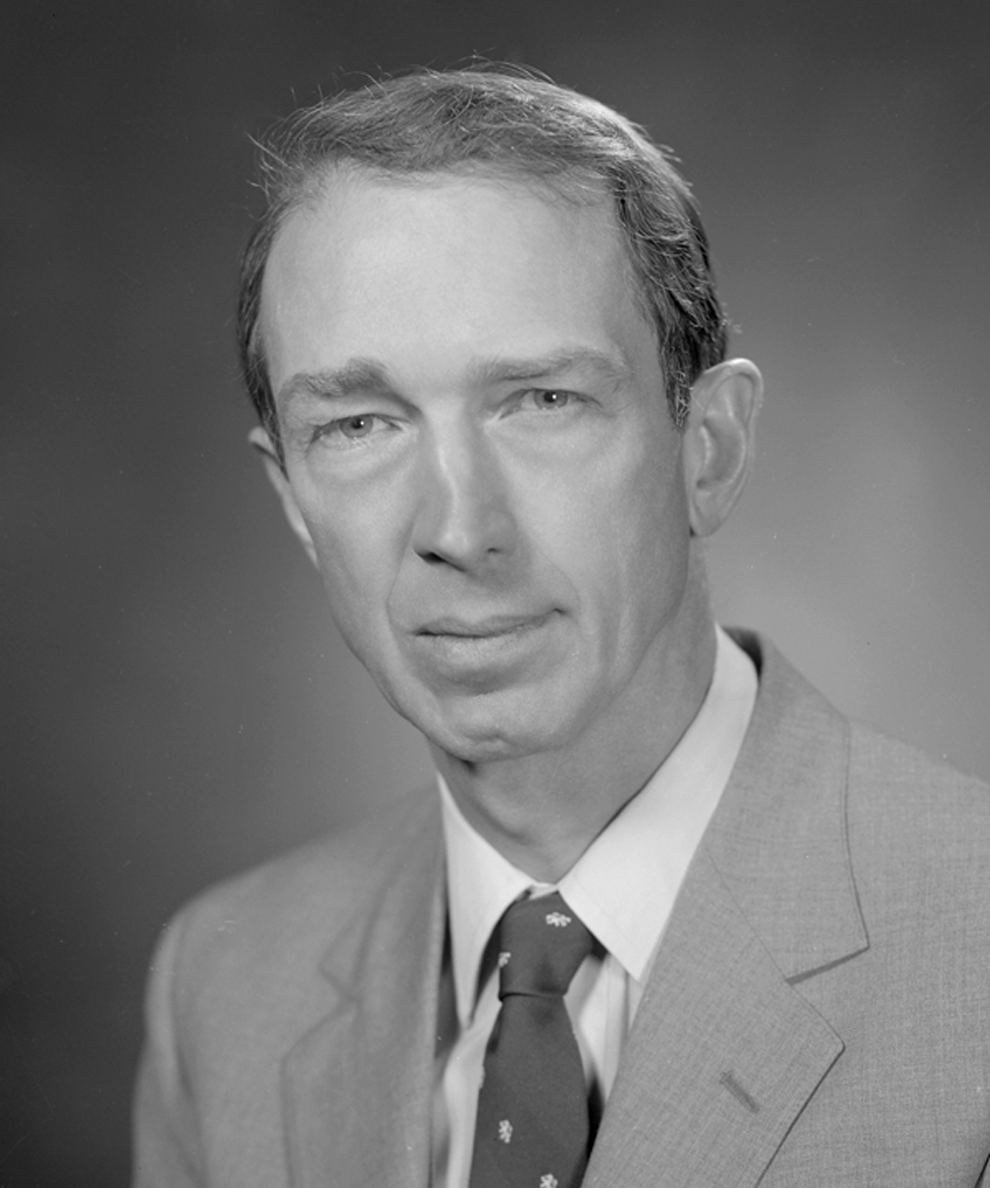
Dr Gordon Kenneth Danielson Jr died peacefully in his home surrounded by family on October 2, 2017. He was born December 5, 1931, in Burlington, Iowa, to Helen H. (Hill) and Gordon Sr. His family moved to Chadds Ford, Pennsylvania, and he graduated from West Chester High School. He graduated summa cum laude from the University of Pennsylvania School of Medicine in 1956. He married Sondra Jean Bolich on January 21, 1961. His postgraduate training continued at the University of Michigan, University of Pennsylvania Hospital, and as a visiting fellow at Thoraxkliniken, Karolinska Sjukhuset in Stockholm Sweden. He became associate surgeon and chief of cardiac surgery at the University Hospital in Lexington Kentucky. He was then recruited by Mayo Clinic in Rochester, Minnesota, and worked as a congenital cardiovascular surgeon and educator from 1967 to 2002. He was the Joe M. and Ruth Roberts Endowed Professor of Surgery, the chairman of cardiovascular and thoracic surgery from 1986 to 1992, and the program director of the thoracic surgery residency. He was a recipient of numerous prestigious scholarships and awards and was an invited speaker to medical conferences in over 50 countries. He was selected by the US State Department for a joint USA/USSR congenital heart disease exchange program and traveled to USSR several times.
He was a member and held leadership positions in many of our major societies—American Association for Thoracic Surgery, Society of Thoracic Surgeons, American Heart Association, American College of Cardiology, Congenital Heart Surgeons Society (CHSS), and he received many distinguished awards from these same societies. Importantly, the CHSS was his most prized and valued organization as it provided a close connection to his peers that were shaping the field of congenital heart disease in the early era of the specialty.
On a personal note, I had the privilege of knowing Dr Danielson for 25 years. He was my teacher when I was a cardiothoracic surgery resident at Mayo and then a mentor and colleague after I joined the Mayo staff in 1996. We did hundreds of cases together up until his retirement and we wrote numerous papers. He had a major impact on my life. He was a great surgeon, intellectually and technically, but more importantly, he was a great gentleman. He epitomized all of what a Mayo surgeon is supposed to be. He was thoughtful, innovative, hardworking, and honest and his integrity was intact. He saw each patient as an individual person and all patients as a collective source of information that could help ensure better care for the patient of tomorrow.
While he received many of the prestigious accolades that a cardiovascular surgeon can obtain, there are a few things about his illustrious career that are not apparent while scrolling through his curriculum vitae. The roots of much of congenital heart surgery originated at the Mayo Clinic. In the 1950s, 60s, and 70s, patients, surgical faculty, and trainees came to Rochester specifically to see the Mayo cardiac surgeons influencing this new heart specialty. Drs John Kirklin, Dwight McGoon, and Robert Wallace were among the first to begin the repair of intracardiac defects. They were joined by Dr Danielson and soon thereafter by Dr Francisco Puga. Dr Danielson lived through the critical era of advancing the entire specialty of congenital heart surgery. Some of the very first operations for a particular congenital heart defect were done at Mayo Clinic, many by Dr Danielson. Numerous visiting surgeons came to observe Dr Danielson—he was very connected to the international surgical community from all continents. He operated on patients from around the world and was a mentor to hundreds of residents and fellows who came to Mayo for additional subspecialty training. In that early era of congenital heart surgery, operative mortality rates were high, exceeding 25% for some lesions. It was not all sunshine and roses and the emotional wear and tear on the surgeon was real. By the end of his career, operative mortality rates were reduced to the 3% range, even for complex anomalies in newborn babies undergoing heart surgery. His efforts and those of his colleagues paved the way for my generation, quite a contribution and accomplishment, and a testament of his character to persevere and endure through the many disappointments of that early time period.
Dr Danielson exuded unparalleled confidence. He was a clear and direct communicator. He was highly intelligent and innovative. He understood cardiovascular physiology better than many cardiologists. He was a meticulous and cautious surgeon, and a detail-oriented surgeon of the tallest degree. He would check the arterial line to ensure there was no air three times before commencing cardiopulmonary bypass. He was willing to go out on a limb and offer high-risk surgery after a thoughtful and careful analysis of a patient’s complex imaging and hemodynamic data. He provided hope to many desperate patients and their families.
He was a true scholar with more than 800 publications attached to his résumé. He had literally written on every subject matter in cardiovascular surgery—congenital heart disease, valvular heart disease, pericardial disease, coronary disease, and the list goes on. He used to help me write papers every Saturday morning after rounds, and we wrote them the old-fashioned way with a red pen and ruler in hand (he insisted on straight lines and he knew shorthand) and a thesaurus and dictionary on the desk ready to go. He had an amazing command of the English language, grammar, and syntax, equivalent to a college-level professor. His academic accomplishments were substantial and they changed how we practice, many are still referenced to this day. Importantly, he was admired, respected, and praised by his peers for his academic and intellectual honesty.
When a surgeon needed advice and they approached Dr Danielson, and many did, his response was based on his enormous personal experience—the very best advice for a surgeon needing guidance with a difficult operation. He helped me settle into a career in congenital heart surgery, he helped me with cases, he critiqued my performance in a constructive way, he taught me when and how to go out of bounds when selecting high-risk patients and then taught me how to get the patient through. He knew when to say “no” to an operation and was able to do so in a way that still afforded optimism to the patient and family. He always provided hope in difficult circumstances and knew how to be compassionate and understanding with a grieving family when things did not work out. If there was a death in the middle of the night, he would come to the hospital in a suit and tie and spend as much time as was needed to clarify any issues and console the grieving family.
Dr Danielson was the definition of professionalism. He was an authentic Mayo surgeon in every sense of the word; a master of all three Mayo shields—practitioner, educator, and researcher. And finally, he was dedicated to his family all along the way—you could always count on a smile when asking him about his wife Sondra, one of his seven children, or his horses.
Dr Danielson was the first cardiac surgeon to retire from the Mayo Clinic staff after a shining 34 years of practice at Mayo in Rochester. Dr Danielson was a leader by example. He was a mentor, a role model, and a human being extraordinaire, and he was a friend. He had insisted I call him Gordon after I joined the staff, but I could never come around to doing so. He was and always will be Dr Danielson to me. I and his many friends and colleagues from around the world will sadly miss him.
Footnotes
Declaration of Conflicting Interests
The author(s) declared no potential conflicts of interest with respect to the research, authorship, and/or publication of this article.
Funding
The author(s) received no financial support for the research, authorship, and/or publication of this article.