






Abstract
Background:
Aortic coarctation is among the most common cardiovascular congenital abnormalities requiring repair after birth. Besides mortality, morbidity remains an important aspect. Accordingly, we reviewed our 20-year experience of aortic coarctation repair by thoracotomy, with emphasis on both short- and long-term outcomes.
Methods:
From 1995 through 2014, 214 patients underwent coarctation repair via left thoracotomy. Associated arch lesions were distal arch hypoplasia (n = 117) or type A interrupted aortic arch (n = 6). Eighty-four patients had isolated coarctation (group 1), 66 associated ventricular septal defect (group 2), and 64 associated complex cardiac lesions (group 3). Median follow-up was 8.4 years.
Results:
There was one (0.5%) procedure-related death. Nine (4.2%) patients died during index admission. In-hospital mortality was 0.7% in group 1 and 2 and 12.5% in group 3 (P < .001). No patient had paraplegia. Actuarial five-year survival was 97.5% in group 1, 94% group 2 and 66% in group 3. Recurrent coarctation developed in 29 patients, all but four (1.8%) successfully treated by balloon dilatation. Freedom from reintervention (dilatation or surgery) at five years was 86%. At hospital discharge, 28 (13.5%) patients were hypertensive. At follow-up, hypertension was present in 11 (5.3%) patients.
Conclusions:
Long-term results of aortic coarctation repair by thoracotomy are excellent, with percutaneous angioplasty being the procedure of choice for recurrences. Patient prognosis is dependent on associated cardiac malformations. In this study, the prevalence of late arterial hypertension was lower than previously reported.
Introduction
Although balloon angioplasty for native coarctation has shown to provide lasting relief of the obstruction in children, 1 surgical repair remains superior to balloon angioplasty in infants. 2
Coarctectomy with extended end-to-end anastomosis is commonly the preferred technique of repair. In centers of expertise, recoarctation rate after surgical repair currently varies from 3.6% to 10%. 2,3
We recently reported our experience with a modified approach to the carotid-subclavian angioplasty described by Amato et al 4 in a subgroup of patients with distal arch hypoplasia. 5
Herein, we report the long-term results of our entire cohort of patients with coarctation operated by thoracotomy over a 19-year period. Outcomes were analyzed for survival, recurrent obstruction, and the presence of late arterial hypertension.
Patients and Methods
This retrospective analysis was approved by our institutional ethical board (Cliniques Universitaires Saint-Luc, Brussels, Belgium, IRB 2017\23-01\ID 034).
Definitions
Transverse arch: Segment between the brachiocephalic artery and the left subclavian artery (LSCA), divided into the proximal arch (between the brachiocephalic artery and the left common carotid [LCC]) and the distal arch (between LCC and LSCA).
Distal arch hypoplasia was defined as (a) <−3 Z-Score (ZSc) based on echocardiography (n = 106/219) or (b) if the diameter was <1 mm/kg + 1 (n = 112/219) 6.
Recoarctation and indication for percutaneous aortic angioplasty: Any patient presenting with a clinical arm-leg gradient (or invasive gradient) >20 mm Hg and echographic signs of recoarctation. Angioplasty was also performed in a patient with left ventricular dysfunction and ≥50% reduction of the diameter at the site of repair.
Arterial hypertension: Systolic or diastolic blood pressure (BP) that exceeds 95th percentile, for age, gender, and height. 6
Early death: Death within 30 days of operation or before hospital discharge.
Prematurity: Gestational age less than 37 weeks.
Patient Demographics
Between 1995 and 2014, 214 patients (127 boys and 87 girls; median age 13 days) underwent coarctation repair by thoracotomy using one of four different techniques: end-to-end anastomosis (n = 2), extended end-to-end anastomosis (n = 102), a technique combining carotid-subclavian angioplasty and extended end-to-end anastomosis (n = 107), a reversed subclavian flap (n = 1), or patch augmentation (n = 2). All patients with proximal arch hypoplasia (except one), or bovine arch and distal arch hypoplasia were excluded from this study.
During the same period, 17 patients underwent arch repair by sternotomy and cardiopulmonary bypass (CPB), with concomitant intracardiac repairs (ventricular septal defects [VSDs], atrioventricular septal defects [AVSDs], transposition of the great arteries [TGA], total anomalous pulmonary venous return [TAPVR]).
The technical details of the repair combining carotid-subclavian angioplasty and extended end-to-end anastomosis were described previously. 5
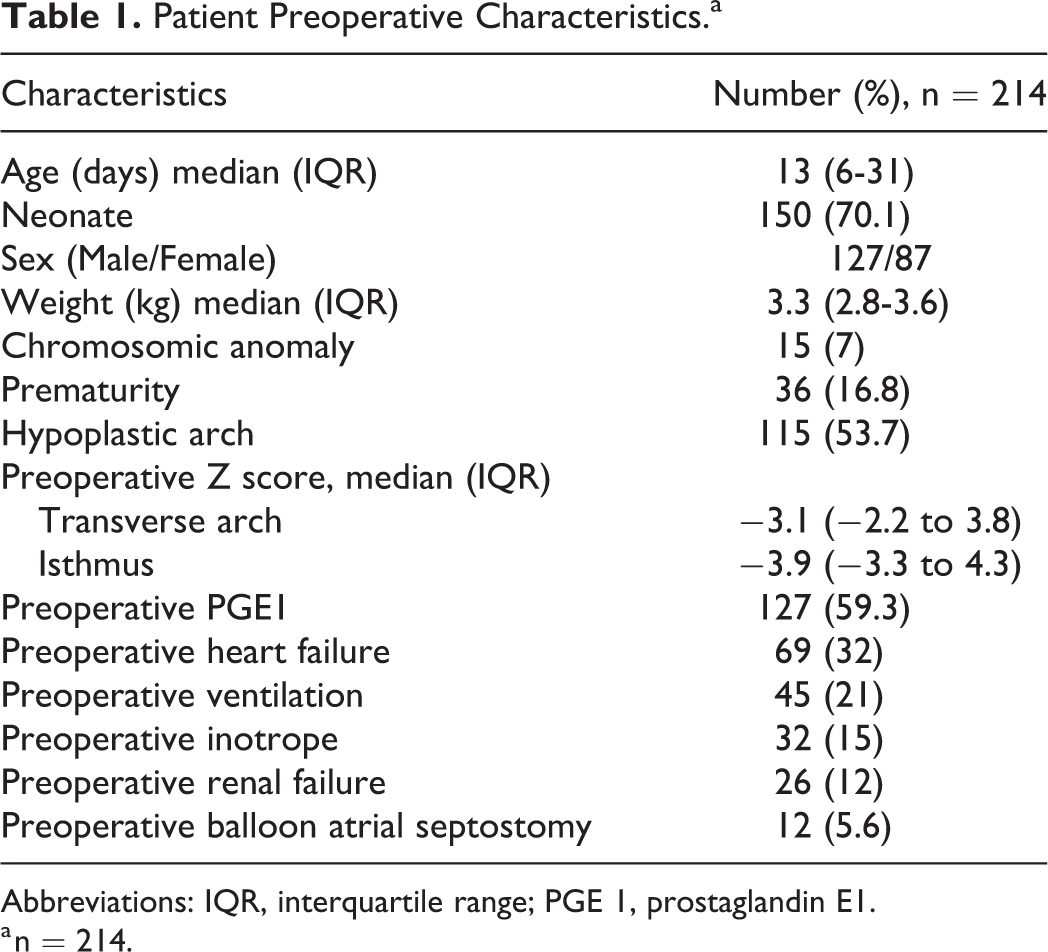
Patient’s characteristics are provided in Table 1. The median weight was 3.3 kg. Group 1 had isolated coarctation (n = 84, 39.2%), group 2 had coarctation associated with VSD (n = 66, 30.8%), and group 3 had associated complex congenital heart disease (n = 64, 30%). The most frequent diagnosis included double outlet right ventricle (DORV; n = 9), TGA-VSD (n = 16), AVSD (n = 12), Shone syndrome (n = 9), and univentricular hearts (n = 10).
Patient Preoperative Characteristics.a
Abbreviations: IQR, interquartile range; PGE 1, prostaglandin E1.
a n = 214.
For the entire cohort, distal transverse arch diameter was 4.1 mm (interquartile range [IQR]: 3.4-5 mm) or −3.1 ZSc (IQR: −2.2; −3.8 ZSc). The distal transverse arch diameter was 4 mm (IQR: 3-4.7 mm) or −3.2 ZSc (IQR: −2.3; −4 ZSc) in neonates and 5 mm (IQR: 4-5.9 mm) or −2.7 ZSc (IQR: −2; −3.3 ZSc) in infants. Importantly, 53.7% of patients had a distal transverse arch < [1 mm/kg + 1]. 7
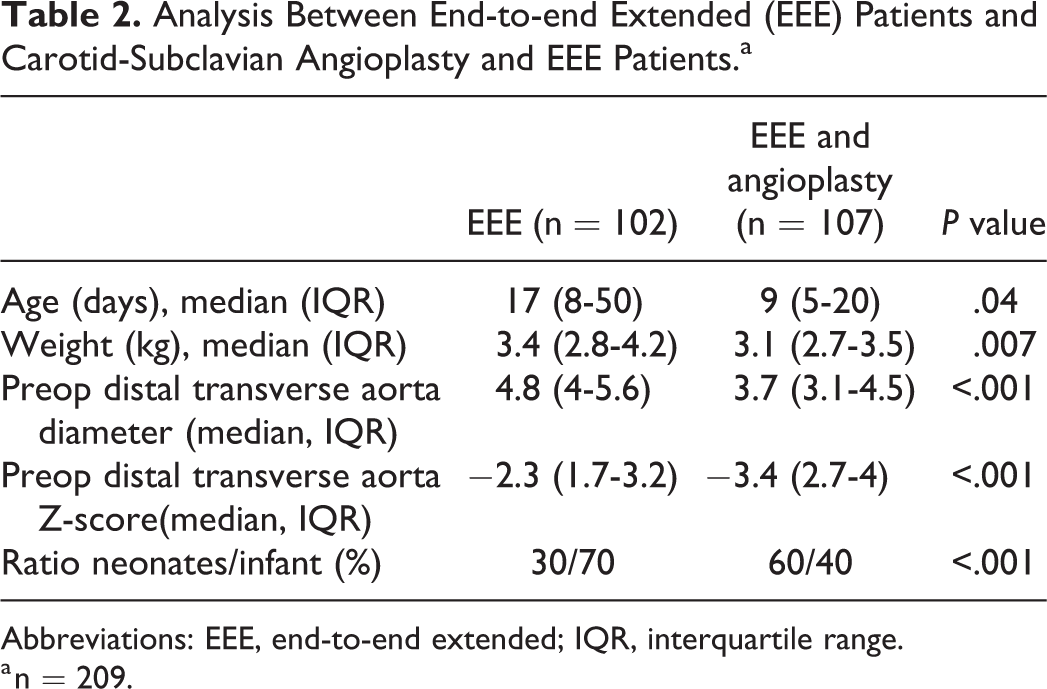
Reflecting our biased institutional policy, 5 preoperative characteristics significantly differed between the EEE group and the carotid-subclavian angioplasty combined with EEE group. Neonates were mostly repaired with the carotid-subclavian angioplasty and EEE, whereas 70% of the infants were repaired with EEE (Table 2).
Analysis Between End-to-end Extended (EEE) Patients and Carotid-Subclavian Angioplasty and EEE Patients.a
Abbreviations: EEE, end-to-end extended; IQR, interquartile range.
a n = 209.
Data Collection and Follow-Up
Preoperative, operative, and postoperative data were retrospectively collected by reviewing a computerized database, operative notes, and autopsy reports, if appropriate. Clinical and echocardiography follow-up was obtained from outpatient clinics records or referring pediatric cardiologists. All data were gathered from 2013 until 2018 (L.H. and A.H.).
Patients with arm-leg gradient greater than 20 mm Hg or discrepant pulse examination were evaluated by echocardiography. Patients with flow acceleration across the site of repair, persistence of flow in the descending thoracic aorta during diastole, or narrowing by means of 2D imaging were referred for cardiac catheterization.
Follow-up was 97% complete (207/214 patients). The median follow-up was 100 months (IQR: 25-75; 32-150 months). A clinical follow-up >5 years was available in 131 (63%) patients.
Statistical Analysis
Continuous data are presented as mean ± standard deviation or median (interquartile range) for nonparametric data. Normality of the distribution was assessed with the Shapiro-Wilk test. As variables of interest (Table 3) for group comparison were not normally distributed, we used the Kruskal-Wallis analysis of variance with Bonferroni post hoc analysis. A P value <.017 (0.05/3) was considered significant. Categorical data are presented as proportion and compared with the χ2 test or the Fisher exact test, if appropriate. Failure time data on survival, recurrent coarctation, and need for reintervention (dilatation or stenting or reoperation) are presented using Kaplan-Meier survival curves. Differences between groups were tested by the “Log Rank test.”
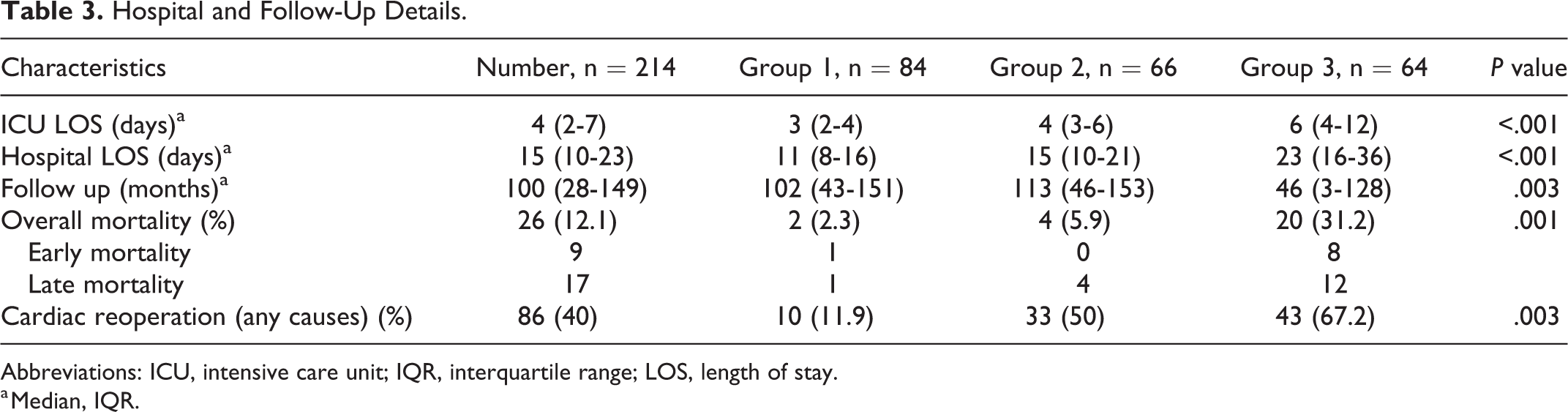
Hospital and Follow-Up Details.
Abbreviations: ICU, intensive care unit; IQR, interquartile range; LOS, length of stay.
a Median, IQR.
Pre- and intraoperative variables (Tables 4 and 6) were tested in univariable analysis for the end points of “survival” and “need for reintervention,” using the Proportional hazard model (Cox regression).
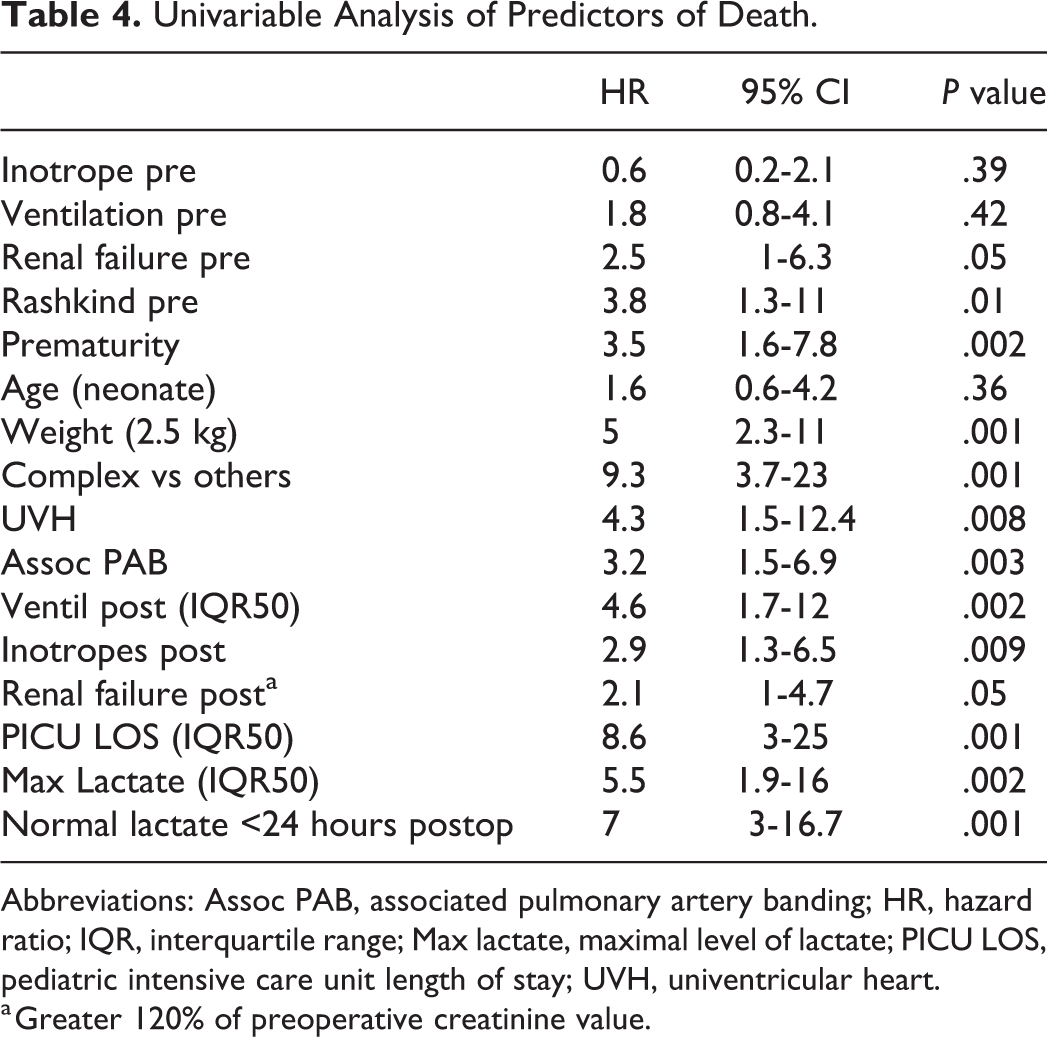
Univariable Analysis of Predictors of Death.
Abbreviations: Assoc PAB, associated pulmonary artery banding; HR, hazard ratio; IQR, interquartile range; Max lactate, maximal level of lactate; PICU LOS, pediatric intensive care unit length of stay; UVH, univentricular heart.
a Greater 120% of preoperative creatinine value.
Analysis Between Recoarctation Versus No-Recoarctation Patients.a
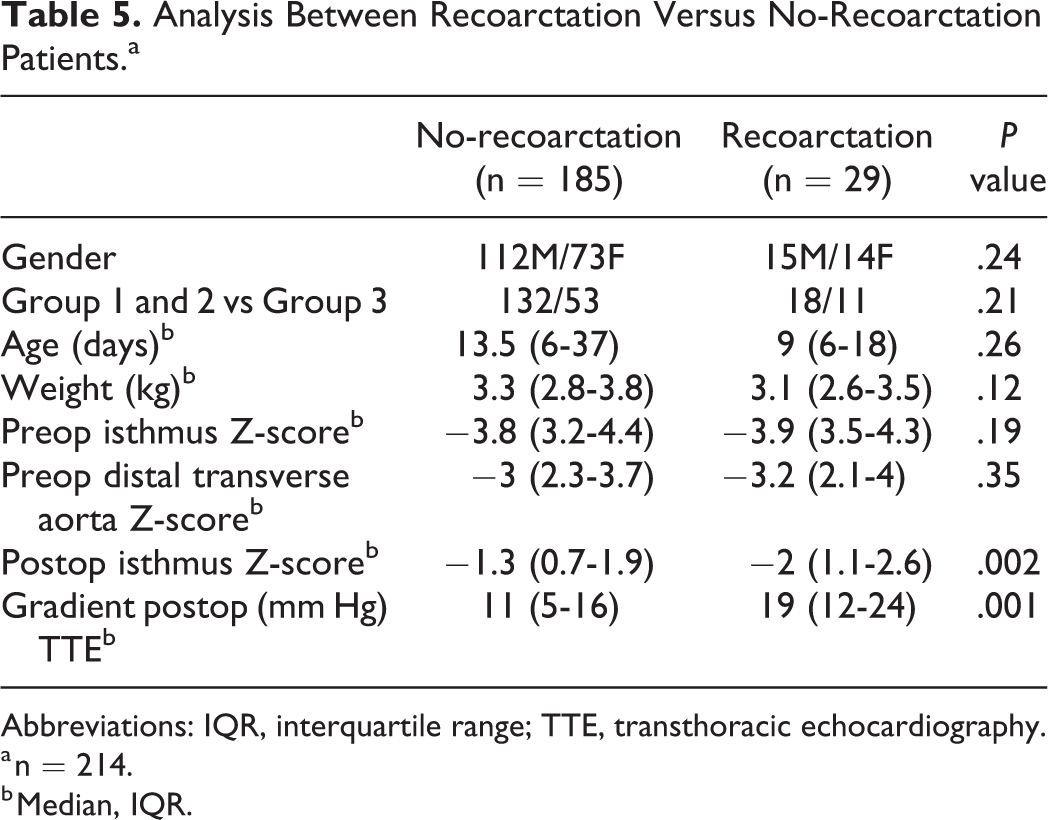
Abbreviations: IQR, interquartile range; TTE, transthoracic echocardiography.
a n = 214.
b Median, IQR.
Univariable Analysis of Predictors of Recoarctation (PTA or Surgery).
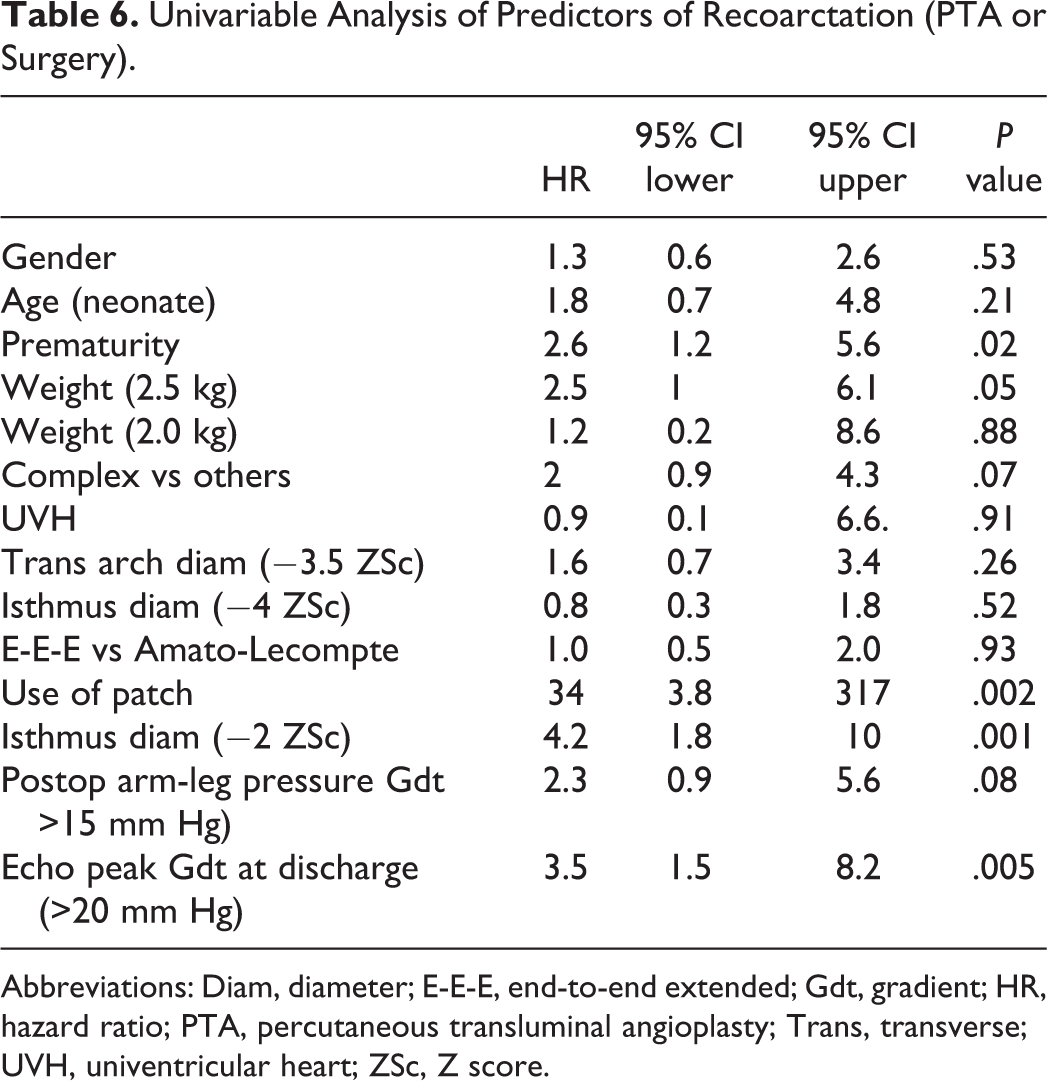
Abbreviations: Diam, diameter; E-E-E, end-to-end extended; Gdt, gradient; HR, hazard ratio; PTA, percutaneous transluminal angioplasty; Trans, transverse; UVH, univentricular heart; ZSc, Z score.
Statistical analysis was made using the IBM SPSS Statistic version 25.
Results
Thirty-Day Mortality and Morbidity
Thoracotomy was performed in all patients. There was a single intraoperative conversion to sternotomy and repair under CPB.
The median cross clamp time was 23 (17-28) minutes. In case of unrestrictive VSD, a pulmonary artery band (PAB) was placed (25 in group 2; 27 in group 3). Median invasive ventilation time was 1.7 days (IQR: 25-75: 0.8-3); 34.6% of patients needed inotropic support. Following p-RIFLE (Risk, Injury, Failure, Loss of kidney function, and End-stage kidney disease) criteria, 8 64 (28.5%) patients had some degree of acute kidney dysfunction.
The median intensive care unit (ICU) stay was four days (IQR: 25-75: 3-8.5), and hospital stay was 16 days (IQR: 25-75:10-23). Nine (4.2%) patients died during index hospitalization.
There was one (0.5%) procedural-related death: this patient (group 3 TGA-VSD-coarctation) was converted to sternotomy and repaired under CPB because of severe residual arch obstruction. He had severe ischemic brain damage. Withdrawal of therapy was initiated at parent request.
There were six cardiac-related in-hospital deaths (group 3). Five patients (DORV-TGA n = 3, TGA-VSD n = 1, AVSD n = 1) died during the same hospitalization following their intracardiac repair. One patient (Shone syndrome and borderline LV) in whom parents declined univentricular palliation died of low cardiac output syndrome on day 15. There were two additional cardiac-unrelated deaths. One patient had fulminant Clostridium necrotizing enterocolitis (NEC) and abdominal compartment syndrome 12 days after initial repair (group 3) and one premature patient with severe bronchodysplasia died from respiratory failure on day 19 (group 1).
Six patients needed early reinterventions. One patient (group 2) presented with anastomotic dehiscence on postoperative day 4. He underwent arch repair and VSD closure under CPB and made an uneventful recovery. Two patients had surgical wound revisions, one developed a descending aorta thrombosis requiring thrombectomy, one required PA band removal, and the patient with fulminant NEC (see above) required exploratory laparotomy. Chylothorax developed in 11 (5%) patients. Phrenic nerve and recurrent nerve palsy developed in one and four patients, respectively. All nerve injuries resolved spontaneously at follow-up.
Overall, six patients had neurological complications (white matter injury, seizures, ischemic, and/or hemorrhagic stroke) following the index procedure (group 1, n = 1; group 2, n = 1; group 3, n = 4). No patient had paraplegia.
Among the ten patients suspected of NEC, eight had a confirmed diagnosis by imaging studies. All but one (see above) were treated conservatively.
Late Mortality and Morbidity
Late mortality
There were 17 (7.9%) deaths during follow-up. All were unrelated to the coarctation repair but most were cardiac related (12 of 17; Table 3).
In group 1, one patient died from sudden infant death syndrome. In group 2, four patients died. One patient with a borderline LV died of pulmonary infection, one patient died of septicemia, following biliary atresia surgical repair, and one patient died during a reoperation for redo-PA banding.
In group 3, there were 12 deaths. Nine patients died following surgical correction of associated cardiac malformations (4-26 months following coarctation repair). Most surgical-related deaths were either in AVSD (n = 4) or Shone syndrome patients (n = 3). All had mitral dysplasia and their demise occurred at the time of left-sided valve surgery. Another patient died from brain hemorrhage following percutaneous balloon aortic valve angioplasty, one single ventricle (SV) patient died of superior vena cava (SVC) thrombosis and one patient died of respiratory syncytial virus infection.
Overall survival at one year and five years was 97.5% and 97.5% in group 1, 95.1% and 93.5% in group 2, and 71.9% and 66.3% in group 3 (P < .001; Figure 1).
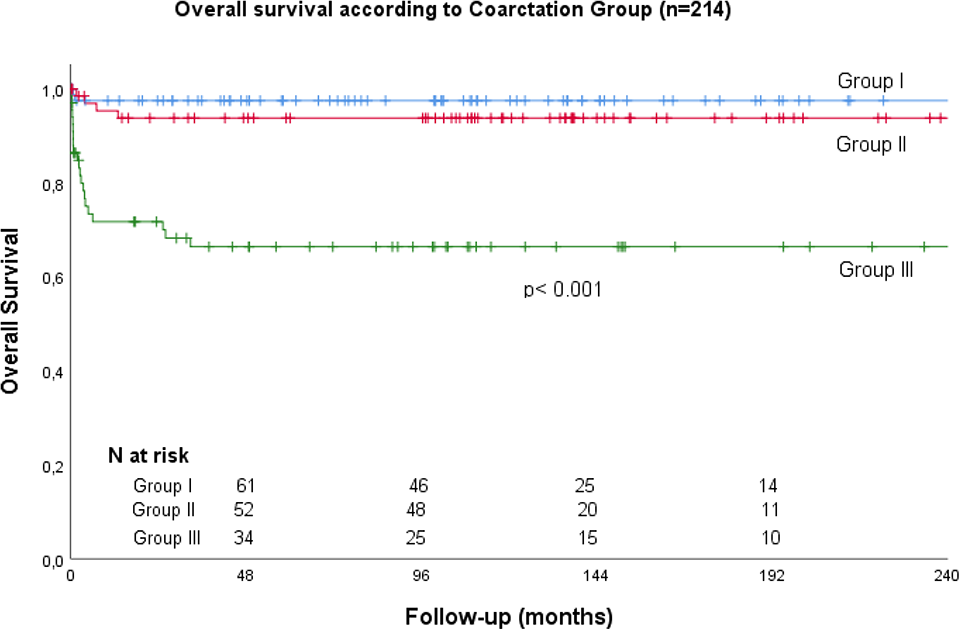
Overall survival according to patient’s group (n = 214 patients; Group I: Isolated Coarctation; Group II: Coarctation and VSD; Group III: Coarctation and complex cardiac congenital disease). VSD indicates ventricular septal defect.
By univariable analysis, preoperative prognostic factors for death were atrial septostomy (hazard ratio [HR]: 3.8, 95% CI [1.3-11]), prematurity (HR: 3.5, 95% CI [1.6-7.8]), associated complex cardiac anomalies (HR: 9.3, 95% CI [3.7-23]), weight <2.5Kg (HR: 5, 95% CI [2.3-11]), and univentricular heart (HR: 4.3, 95% CI [1.5-12.4]). Intraoperative and perioperative prognostic factors were associated PAB (HR: 3.2, 95% CI [1.5-6.9]), inotropes requirement (HR: 2.9, 95% CI [1.3-6.5]), prolonged ventilation (HR: 4.6, 95% CI [1.7-12]), and ICU stay (HR: 8.6, 95% CI [3-25]), postoperative renal failure (HR: 2.1, 95% CI [1-4.7]), and a delayed metabolic homeostasis defined as a return to baseline lactate level beyond the first postoperative day (HR: 7, 95% CI [3-16.7]; Table 4).
Recoarctation
Twenty-nine (13.5%) patients presented with a recoarctation during follow-up: either a clinical arm-leg gradient (or invasive gradient) >20 mm Hg and echographic signs of recoarctation or an aortic diameter narrowing ≥50% at the site of repair together with left ventricular dysfunction.
Twenty-seven patients underwent balloon angioplasty, with two requiring repeat surgery (see below). Most of the balloon angioplasties (73.3%) were performed within the first year. Repeat balloon angioplasty was required in five patients.
Four patients required reoperations to treat proximal (n = 3) and distal (n = 1) aortic arch stenosis. At initial repair, those patients had some degree of proximal arch hypoplasia (from −2.7 Zsc to −3.4 Zsc), and that segment failed to grow. The single patient with a proximal arch diameter <−3Zsc had interrupted aortic arch type A and was rescued from cardiogenic shock. At that time, the team judged that his clinical status was too frail to undergo a full arch repair under CPB. In all cases, arch enlargement was performed under CPB on a beating heart using splanchnic and antegrade cerebral perfusion (at 28, 89, 98, and 130 months).
Overall, freedom from recoarctation at one-, five-, and ten-year were 89.3% 87.5%, and 83%, respectively (Figure 2). Neonatal repair was not associated with an increased risk of recoarctation (Figure 3). Analysis according to the era of repair showed a trend toward decreased recurrences in the most recent era (P = .10). For patients operated after 2007 (n = 66), recurrence rate was 7%.
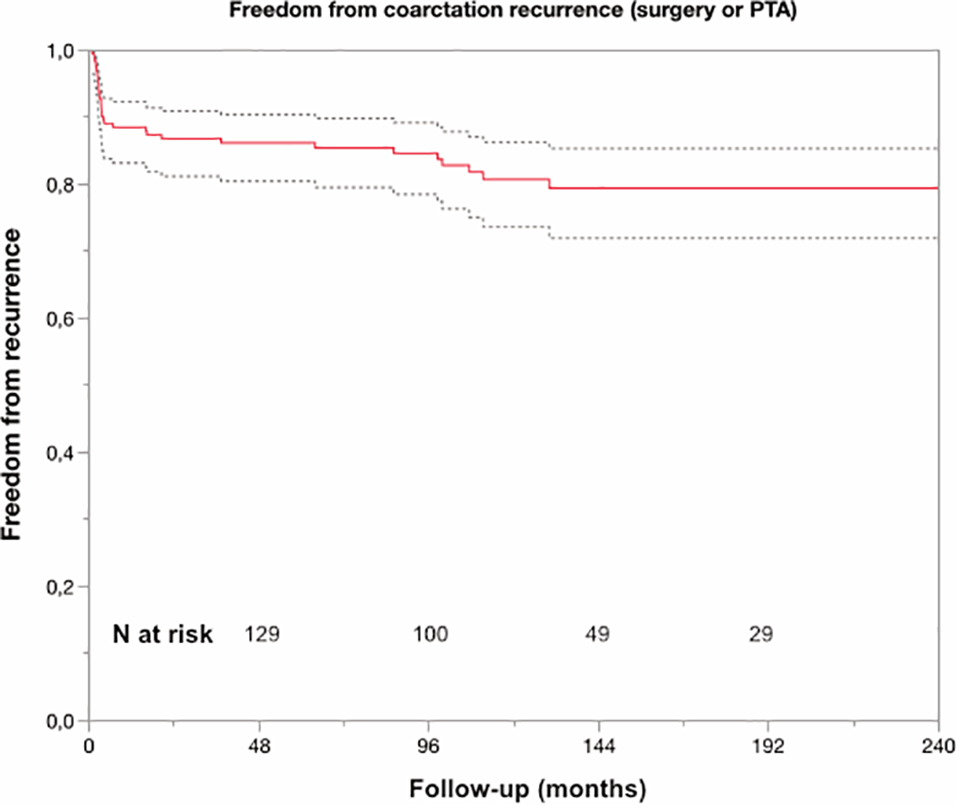
Freedom from recurrence of coarctation in the entire cohort (red line) and [CI: 5%-95%] (Dashed line; n = 214 patients).
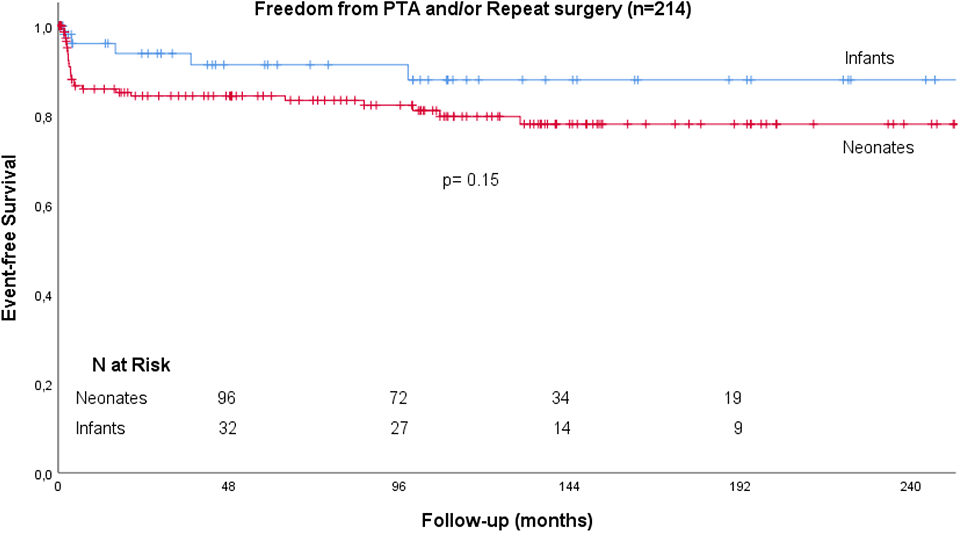
Freedom from recurrence of coarctation in neonates (red line) and infants (blue line). n = 214 patients.
By univariable analysis, preoperative prognostic factors for recurrence were prematurity (HR: 2.6, 95% CI [1.2-5.6]) and weight <2.5 kg at surgery (HR: 2.5, 95% CI [1-6.1]). Associated complex cardiac anomalies were of borderline significance (HR: 2, 95% CI [0.9-4.3]).
Among the perioperative variables, a small postoperative aortic diameter at the site of repair (<−2Zsc; HR: 4.2, 95%CI [1.8-10]), and a peak gradient >20 mm Hg on discharge echocardiography (HR: 3.5, 95% CI [1.5-8.2]) were predictors of recurrence. An early postoperative arm-leg gradient ≥15 mm Hg was of borderline significance (HR: 2.3, 95%CI [0.9-5.6]; Tables 5 and 6).
Among the five patients repaired with alternative techniques, there was one recurrence (one of two patients in the pericardial patch group).
Late arterial hypertension
Immediately after repair, arterial hypertension was present in 96 (45%) patients, requiring antihypertensive treatment (intravenous β-blockers or sodium nitroprusside) in 47 (22%) patients. At discharge, 28 (13.5%) patients remained hypertensive, 25 requiring oral antihypertensive drugs.
During follow-up, arm-leg pressure was systematically measured in all patients. When three successive measures were pathologic, a 24-hour BP monitoring was performed. Within the first year of follow-up, 49 (22.9%) patients presented with paroxystic hypertension and were left untreated, while 28 (13.5%) patients had persisting arterial hypertension. Of those, 19 patients were left on antihypertensive medication. At last follow-up (median 100 months, IQR: 28-150), persistent arterial hypertension was present in 11 (5.3%) patients, six of them requiring pharmacologic treatment.
Comment
The aim of this study was to analyze our institutional experience with aortic coarctation repaired by thoracotomy, in terms of survival (early outcome), recurrent obstruction requiring any reintervention, and/or the presence of late arterial hypertension (late outcome).
We elected to include patients with complex intracardiac anomalies (group 3). Indeed, during that era, our institutional algorithm had been to avoid the anterior approach combined with the use of CPB in this subgroup and to perform a staged repair of intracardiac anomalies (during index hospitalization or deferred). In-hospital coarctation repair-related mortality in this group was low and related to neurological complications, so that a sequential surgical repairs strategy did not seem to be detrimental to the overall outcome in this complex subgroup of patients.
During the study period, less than 10% of our patients benefited from a single-stage anterior approach with CPB. However, more recently, our group has introduced direct descending thoracic aorta cannulation for all arch repairs. As such, we now address more liberally those neonates with arch obstruction and associated intra-/extracardiac anomalies in a single-stage procedure. Our early mortality, 4.2% for the entire group, might appear higher than other studies. 3,9,10
However, early mortality was significantly lower in group 1 and 2 (0.7%) compared to group 3 patients (12.5%; 1/150 vs 8/64, P < .001). As such, those results are in agreement with Kaushal et al 9 (2%), Kumar et al 10 (1.3%), or Rakhra et al 11 in isolated coarctation (1.3%). Controversies exist for neonates with coarctation associated with VSD (group 2): one-stage or two-stage repair. 12,13
Even though some studies 12,14 claimed for a shorter overall hospital duration in one-stage repair, they could not demonstrate any advantage over a two-stage repair with regard to mortality or morbidity.
In Melbourne’s experience as well as in a recent analysis from the STS Congenital Database, in-hospital mortality was 4.3% for this subgroup with one-stage repair. 11 In Kaushal’s series, 9 one-stage repair was even a risk factor for early mortality. Recently, two groups reported decreased resource utilization in staged repair of coarctation and VSD (one or two incisions), together with reduced CPB duration. 15
Our results in this subgroup confirm that a two-stage repair is associated with a low rate of morbidity and mortality. There was a single “interstage” cardiac-related death (see above) and no patient undergoing VSD closure died during their second hospitalization. Importantly, only 28 (42%) patients of group 2 ultimately required a VSD repair, confirming data from previously published series. 14
Using univariable analysis, risk factors of early death were the association of coarctation with prematurity, weight <2.5 kg, a complex cardiac malformation (eg, UVH), preoperative renal failure, balloon atrial septostomy, associated PAB, prolonged postoperative invasive ventilation, postoperative inotropic requirement, and a longer delay to normalize lactate after repair. Those risk factors have been reported earlier in a Society of Thoracic Surgeons Congenital Heart Database study 16 as well as more recent reports. 17,18
Early morbidity such as chylothorax and NEC occurred in 5% and 4.5%, respectively. All but one patient were successfully treated using a conservative approach. Recurrent laryngeal nerve palsy was found in four (1.8%) patients, and one patient had phrenic nerve palsy. At their last follow-up, all patients had completely recovered.
Recurrence of arch obstruction was found in 29 (13.5%) patients. Looking at risk factors for recurrence, we confirm the importance of preoperative patient characteristics such as prematurity and small weight at repair surgery (<2.5 kg). 19 An echocardiographic peak gradient >20 mm Hg also predictive of recurrence, while an early postoperative arm-leg pressure gradient ≥15 mm Hg was suggestive of recurrence.
This report corroborates our recent study 5 as well as others, suggesting that patients with smaller post-repair aortic dimension or with a clinical and/or echographic gradient at discharge are at risk of recoarctation and require a closer follow-up.
Our recurrence rate is higher than the recent series of IJsselhof et al and Farag et al (10% and 8.7%, respectively). The higher proportion of neonates (70% vs 40%) could partially explain those differences. Indeed, in their neonates, Farag et al reported a 21% recurrence rate. Also IJsselhof et al found in their multivariable analysis that associated arch hypoplasia was the strongest predictor of reintervention. Comparing data, our cohort appeared to have more hypoplastic distal transverse arch (−3.1 vs −2.3 Z Score), 17,18 and a 1-mm increase in the transverse arch diameter was shown to reduce by 43% the risk for recoarctation. 19
Finally, as previously reported, 5 the learning curve of the technique which associates a carotid-subclavian angioplasty to the end-to-end extended repair might have influenced our overall results.
Interestingly, we did not observe a significant difference in recurrence of arch obstruction between neonates and infants. We hypothesize that the higher proportion of associated carotid-subclavian angioplasty with end-to-end extended repair in the neonatal group in the most recent era, 75% (vs 53% before 2008), favorably influenced our results.
Importantly, 73% of recurrences occurred within the first postoperative year and 86% of those recurrences were successfully treated with balloon angioplasty. Only four patients required surgical re-repair (1.8%). All underwent successful arch augmentation under CPB later on.
Late Hypertension
Our study confirms the high prevalence of early postoperative hypertension (nearly 50%) after coarctation repair, though only half of those required antihypertensive treatment. 20
Within the first year of follow-up, paroxystic hypertension was more frequently recorded than persistent hypertension, and at one-year follow-up, only 28 (13.5%) patients were found to remain hypertensive.
With increasing time of follow-up, this figure further decreased to only 5.3% of our initial cohort of patients (11/214) with only six patients requiring antihypertensive drugs. Pandey et al 21 also reported a 3.3% prevalence using another technique of repair, whereas a prevalence of up to 20% has been reported by others. 11,22 The majority of our patients (70%) were operated on within 30 days of life, the early repair could have positively influenced the late outcome. 23,24
Limitations and Strengths of the Study
This single-center retrospective study spans over 19 years and is based on a limited number of patients. Three surgeons were involved and the choice of the repair technique was left to their discretion, which might have influenced the results of one technique over another.
The true incidence of persisting arterial hypertension is likely underestimated. Indeed, this study relied on office BP measurements alone, whereas the studies that measured ambulatory and exercise BP reported a much higher incidence of persisting arterial hypertension. The strengths of this study are its long follow-up length (over eight years) and a 97% completeness rate.
Conclusion
Contemporary long-term results of aortic coarctation repair are excellent, with percutaneous angioplasty being the procedure of choice for recurrences and less than 2% requiring reoperations. Overall patient prognosis is dependent on associated cardiac malformations. Patients discharged with a peak echographic gradient >20 mm Hg and/or diameter <−2 Z-score at the repair site should be followed closely. In this study, the prevalence of late arterial hypertension was lower than previously reported.
Footnotes
Abbreviations
Acknowledgment
The authors thank Dr S. Mastrobuoni for his help in statistical reviewing and Mrs P. Segers for her expertise in editorial help.
Authors’ Note
L.H. and A.H. contributed equally to this article. The authors had full control of the design of the study, methods used, outcome parameters, analysis of data, and production of this written report.
Declaration of Conflicting Interests
The author(s) declared no potential conflicts of interest with respect to the research, authorship, and/or publication of this article.
Funding
The author(s) received no financial support for the research, authorship, and/or publication of this article.
